

Konosuke Matsushita
The “God of Management” who succeeded against the odds-with no money and no formal education.
Konosuke Matsushita, founder of the electronics maker Matsushita Electric Industrial Co., Ltd. (now renamed Panasonic Corporation), is widely regarded as one of Japan’s greatest business leaders and is often called the “God of Management.”
From a poor childhood spent working as an apprentice without ever attending school, how did he rise to earn that title? Let’s look back on his life through his achievements and famous quotes.
Highlights
-
He built Matsushita Electric Industrial Co., Ltd. and its group companies from the ground up and grew them into a global powerhouse.
-
He developed and manufactured a wide range of home appliances, helping bring them into everyday life across Japan.
-
He was the first in Japan to introduce the five-day workweek (two days off per week) at a company.
-
He was passionate about developing people, founding PHP Institute for ethics education and publishing, and establishing the Matsushita Institute of Government and Management to train future political leaders.
Konosuke Matsushita’s Achievements
Known as the “God of Management,” Konosuke Matsushita grew Matsushita Electric Industrial Co., Ltd. into a global company in his lifetime. Here are some of his achievements.
The accomplishments introduced here are only a small part of what he left behind.
If you’d like to learn more, we encourage you to explore further on your own.
Helping Bring Home Appliances to Japan

Based on his “tap water philosophy”—the idea that producers should fill society with goods and eliminate hardship—Konosuke Matsushita (Matsushita Konosuke) founded and ran Matsushita Electric Appliance Manufacturing Works.
Starting with light bulb sockets, the company developed and manufactured many household products, including bicycle lamps, electric irons, and dry-cell batteries.
As a result, home appliances that were still rare at the time spread throughout Japan.
Japan’s First Company to Introduce the Five-Day Workweek

Today, the five-day workweek is standard.
But in the 1960s, when Matsushita was running Matsushita Electric Industrial, a one-day weekend was the norm.
Konosuke Matsushita was the first to introduce a two-day weekend at a company in Japan.
His goal was higher productivity.
He believed, “To win the international competition ahead, we must improve efficiency.
But greater efficiency also brings more physical and mental fatigue.
To recover from that fatigue, we need one extra day of rest.”
That said, he didn’t want employees to rest for both days. He asked them to use “one day for rest, and the other for learning and self-cultivation.”
That was because the purpose of the five-day workweek was, above all, to improve productivity.
He introduced the system even before it was specified under Japan’s labor standards, showing the foresight he’s known for.
Brief Biography of Konosuke Matsushita
| Year | What happened |
|---|---|
| 1894 | Born in Wasa Village, Kaisō District, Wakayama Prefecture, as the son of a small landowning family |
| 1904 | Began working as an apprentice at a hibachi shop to help support the family |
| 1905 | Moved to an apprenticeship at a bicycle shop after the hibachi shop closed |
| 1910 | Joined Osaka Electric Light Company as a trainee |
| 1918 | Founded Matsushita Electric Appliance Manufacturing Works |
| 1922 | Expanded the business and built the first headquarters and factory |
| 1933 | Introduced a then-innovative divisional structure |
| 1935 | Established Matsushita Electric Industrial Co., Ltd. to export in-house products |
| 1936 | Founded National Electric Bulb Co., Ltd., driven by a belief in making Japanese-made light bulbs |
| 1946 | Founded PHP Institute to pursue peace and happiness through prosperity |
| 1965 | Introduced the five-day workweek for the first time in Japan |
| 1973 | Stepped down as chairman and became an advisor |
| 1980 | Established the Matsushita Institute of Government and Management to develop leaders for the 21st century |
| 1989 | Passed away at age 94 |
The Life of Konosuke Matsushita
How did a boy who worked as an apprentice to support his family carve out a future and succeed?
Let’s look back on his life.
Learning Professional Manners Through Apprenticeship

Konosuke Matsushita was born in Wakayama Prefecture in 1894.
Because his father was a small landowner, he grew up relatively well-off, but a failed rice-market investment left the family in debt and the Matsushita household went bankrupt.
The family moved to Wakayama City and started a geta shop, but the business struggled.
Matsushita was forced to leave school in the fourth grade and was sent to work as an apprentice at a hibachi shop to help support the family.
When the shop closed after three months, he moved to a bicycle shop.
There, he was taught professional manners—from how to bow, to grooming, speech, and proper etiquette.
Choosing His Path After Seeing the Future of Electricity

Five years into his apprenticeship, Matsushita saw electric railway lines being built and became convinced the electrical industry would grow. He joined Osaka Electric Light (now part of Kansai Electric Power).
He advanced steadily thanks to strong performance, but frustration grew when a socket he improved wasn’t recognized by his superiors. He also worried about the future due to fragile health and marriage, and felt he needed a clear plan.
Amid these concerns, his father’s words—“Make your way through business”—pushed him to go independent.
At the time, removing a light bulb was dangerous and usually required a specialist, so he started a business to develop a socket that anyone could use.
A Challenge That Began in a Tiny Rental Home

With only limited funds, he went independent but couldn’t afford machinery.
He also couldn’t rent a factory or office, so he used space in the rental home where he lived as his workplace.
Still, he was fortunate with people—he brought in his wife’s younger brother (who would later become the founder of Sanyo Electric), and received support from colleagues from his Osaka Electric Light days.
A Hard Start: Even His Carefully Developed Socket Wouldn’t Sell

He lacked knowledge of how to make the molded material needed for the copper parts of his socket, so he picked up scraps from a molding factory to study, and continued experimenting with help from former colleagues. Eventually, he completed the socket.
But it didn’t sell at all.
Then, in the middle of his disappointment, he received a large order for insulating plates needed for electric fans.
With steady repeat orders, his cash flow stabilized.
With finances improving, he decided to seriously pursue electrical product development and rented an office to establish Matsushita Electric Appliance Manufacturing Works.
After that, his attachment plug sold well because it was both affordable and high-quality.
The two-light plug he devised next also sold strongly, and the company’s reputation grew.
The Business Takes Off, and Group Companies Are Founded

Year by year, the company’s reputation and sales rose, and the first office he rented became too small.
To expand further, he built a headquarters and factory in Osaka.
He continued to grow the company through various initiatives, such as developing groundbreaking new products and introducing a dealer system.
He also worked hard on management innovation, including adopting a divisional structure to improve productivity.
As part of these reforms, he established Matsushita Electric Industrial Co., Ltd. in 1935.
By introducing a decentralization system, he set up nine subsidiaries by business division, forming a corporate group.
Manufacturing Military Supplies at the Request of the Japanese Military

Matsushita Electric Industrial Co., Ltd. grew steadily, but the situation changed with the outbreak of World War II.
As national policy mobilized all industrial activity for wartime production, the Japanese military requested the company to manufacture military supplies.
It began with electronic equipment such as aircraft radios, portable radios, and radar, and by the end of the war it was producing even wooden boats and wooden aircraft.
Japan ultimately lost the war, and World War II ended.
The company returned to consumer products, but restrictions under GHQ policies and directives put Matsushita in a difficult position.
Konosuke Matsushita Faces the Risk of Removal

After the war, GHQ restrictions—including asset freezes and designation as a zaibatsu family—threatened Matsushita Electric Industrial Co., Ltd. with dissolution.
Matsushita himself was also purged from public office and pressured to step down.
However, thanks to a petition movement by employees, business partners, distributors, and retailers, he avoided the purge.
Rebuilding the Company and Stepping Back from the Front Lines

After overcoming these hardships, Matsushita rebuilt and grew the company again through ongoing development and management innovation.
In 1961, at age 65, he became chairman and stepped back from the front lines.
At 80, he retired and became an advisor.
After retiring, he invested a huge personal fortune—70 billion yen—to establish the Matsushita Institute of Government and Management, contributing to politics by nurturing future leaders.
In 1989, at age 94, he passed away after an illness.
Having built Matsushita Electric Industrial Co., Ltd. and its group companies in his lifetime, he is enshrined as a deity at the Konosuke Matsushita Shrine within Tsubaki Okami Yashiro.
Books by Konosuke Matsushita
Konosuke Matsushita left his management philosophy and life lessons in books.
From his many works, here are two especially well-known titles.
The Path
A collection of short reflections written from Matsushita’s personal experiences and deep insights into life.
Read for more than 40 years, it’s a bestseller many people consider a lifelong companion.
For a Sincere Heart
Written with the hope that, instead of living in darkness while blaming and criticizing one another, we share warmth, forgive, encourage each other, and move forward.
The book emphasizes the importance of a “sincere heart,” and explores how to cultivate and strengthen it in daily life.
Famous Quotes by Konosuke Matsushita
Here are some of the famous words Konosuke Matsushita offered to guide people.
He left many more quotes than those listed here, so it’s worth looking them up.
You may find a line that speaks to where you are right now.
- No matter how much you regret it, the past won’t change. And no matter how much you worry, the future won’t become anything in particular. Do your best, now, in the present.
- There is no such thing as being too young or too old to set a goal. Where there is a goal, a path will always open—no matter your age.
- Business is about creating inspiration.
- Don’t think you’ve exhausted every option. Put yourself on the edge of a cliff. Only then will a new wind surely blow.
- No matter how dedicated you are, you must not do pointless things. Whether it’s pointless is for you to decide. Examine each thing, one by one, and ask: is this pointless? You’re certain to be doing something pointless.
Stories About Konosuke Matsushita
Why did Konosuke Matsushita succeed?
Here are episodes that offer clues to his character, perspective, and way of thinking.
Did He Save Coins by Running Errands for Cigarettes?
While apprenticing at a bicycle shop, Matsushita was often sent to buy cigarettes.
When he learned that buying 20 at once came with one extra for free, he realized bulk-buying could save time—and effectively save the cost of one cigarette.
After he started buying in bulk, he kept the money saved (equivalent to one cigarette) as his own profit and saved up small change.
It’s striking that he practiced key business habits—avoiding waste and cutting expenses—from such a young age.
A Breakthrough Promotion—and Matsushita’s Persuasion Style
After developing the “National Lamp” bicycle lamp, Matsushita used a bold promotion no one had tried: he gave away 10,000 units to shops for free to raise awareness.
But the lamps required dry-cell batteries, meaning he needed batteries to include in the giveaway.
He went to the battery supplier’s president and asked, “Please give me 10,000 batteries for free,” but the request was dismissed as absurd.
Still, Matsushita didn’t give up. He persuaded him by saying, “The National Lamp is a good product. If we give away 10,000, many people will learn about it and it will sell. And if it sells, batteries will sell too.”
Once the giveaway began, orders started pouring in after about 1,000 units were distributed. By year’s end, the number of batteries purchased exceeded more than twice what he had promised the supplier’s president.
Not only did he come up with an unprecedented promotion, he also managed to negotiate an almost impossible condition to make it happen—proof he was truly exceptional.
Places Linked to Konosuke Matsushita
Here are places where you can get a sense of who Konosuke Matsushita was through the products he developed over the years and the words he left behind.
If you want to learn more about him, consider visiting.
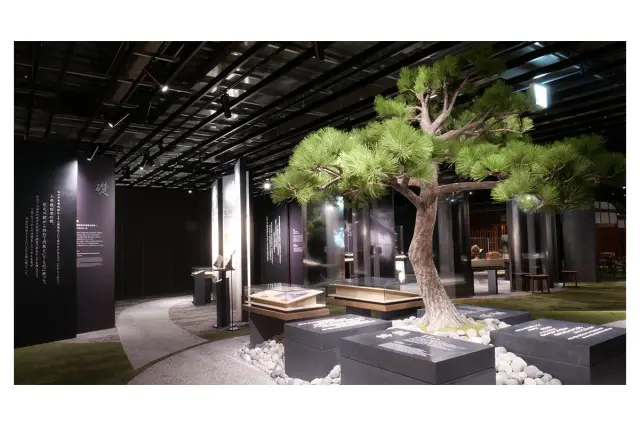
Panasonic Museum
A corporate museum renovated during Panasonic’s 100th anniversary year. The site includes the Konosuke Matsushita Museum, the Manufacturing Museum, and Sakura Hiroba.
The Konosuke Matsushita Museum lets visitors retrace the founder’s 94-year life.
Koshō-an Tea House
Nishinomaru Garden, said to have been created by Tokugawa Yorinobu—the founder of the Kishu Tokugawa clan—on the west bailey of Wakayama Castle, is beloved as Momijidani (Maple Valley). Koshō-an is a sukiya-style tea house there, with a wooden structure and a copper-sheeted roof. It was donated in 1973 by the late Konosuke Matsushita, an honorary citizen, to commemorate the garden’s restoration, and was named by combining “kō” (crimson) from “Momijidani” and “matsu” (pine) from Matsushita.
Inside is a ryūrei-style seating area where you can enjoy tea while seated on chairs, so even first-timers can casually experience matcha and traditional sweets.

Photos
-

A monument at the birthplace of Konosuke Matsushita’s business
-

An image of the home appliances Konosuke Matsushita helped popularize in Japan
-

An image of a calendar after the five-day workweek was introduced
-

An image of the bicycle shop where Konosuke Matsushita worked as an apprentice
-

An image of an electric railway that showed Matsushita the potential of the electrical industry
-

An image of the small apartment where Konosuke Matsushita began his business
-

An image of the electrical device Matsushita struggled to develop
-

An image of Matsushita Electric Industrial Co., Ltd. as it grew
-

An image of the wooden boats the company temporarily produced during wartime
-

MacArthur, head of GHQ, which governed postwar Japan
-

Tsubaki Grand Shrine, home to the Konosuke Matsushita Shrine where he is enshrined
Konosuke Matsushita: Profile
- Name
- Konosuke Matsushita
- Born
- November 27, 1894
- Died
- April 27, 1989
- Age at death
- 94
- Place of birth
- Wasa Village, Kaisō District, Wakayama Prefecture (now Wakayama City)
Popular Articles