
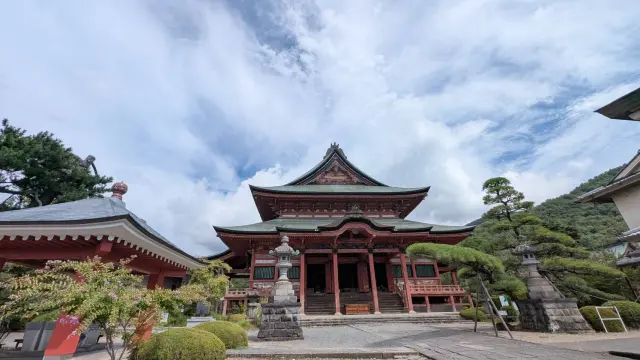
The temple architecture has a wonderfully old-school feel. The main gate and the main hall have been rebuilt, but they’re still in great shape, and you can really sense the history here.

Verified [Verified] denotes information that has been published with confirmation of its owing parties.
Kai Zenkoji Temple
A temple associated with Takeda Shingen and home to many Important Cultural Properties.
4.07
2
Step into a temple history tied to Takeda Shingen, founded in Eiroku 1 (1558) by the Sengoku-era warlord of Kai (present-day Yamanashi Prefecture). Concerned that Zenkoji Temple in Nagano might be destroyed by fire during the Battles of Kawanakajima, he moved the principal image of Amida Nyorai and other Buddhist treasures to Kofu—this move marked the beginning of the temple. Even after the fall of the Takeda clan, it continued to receive generous protection from Tokugawa Ieyasu and others.
The bell-hammer-style Main Hall is an impressive structure, with a total height of 27 m and a total depth of 49 m, making it one of the largest wooden buildings in eastern Japan. Look up at the ceiling of the inner sanctuary and you’ll find a huge painted dragon; clap your hands, and the layered echoes build into a resonance known as the “Roaring Dragon,” said to be the largest of its kind in Japan. The Main Hall and the two-story Sanmon Gate are designated Important Cultural Properties. The temple also houses many other cultural assets, including Buddhist statues and historic buildings, offering plenty to see.
The on-site treasure museum also displays artifacts handed down at the temple, rotating exhibits as needed. Highlights include the wooden Amida Triad statue (an Important Cultural Property) and a carved statue of Minamoto no Yoritomo, considered Japan’s oldest.
Highlights
-
Established by Takeda Shingen in Eiroku 1 (1558).
-
Many Important Cultural Properties on site, including the Main Hall—one of the largest wooden buildings in eastern Japan.
-
Valuable pieces in the treasure museum, including a statue of Minamoto no Yoritomo.
Photos
-

The current Main Hall and Sanmon Gate were rebuilt in Kansei 8 (1796).
-

The Sanmon Gate, designated an Important Cultural Property of Japan
-

The “Roaring Dragon,” known as the largest of its kind in Japan
Official FAQs
Frequently Asked Questions have been vetted and answered directly by each listing.
Q
Do you offer goshuin temple stamps?
A
Yes. Please refer to our website.
Q
Is there parking?
A
Yes.
Q
Are there coin lockers?
A
No.
Reviews
2
Some reviews are AI-translated.
-
-
The Buddha statues and decorations inside are incredibly detailed. You can really feel how deep the Buddhist culture is.
Details
- Name in Japanese
- 甲斐善光寺
- Postal Code
- 400-0806
- Address
- 3-36-1 Zenkoji, Kofu, Yamanashi
- Phone
- 055-233-7570
- Closed on
- Open daily
- Hours
- 9:00 am–4:30 pm
- Admission
- Adults: 500 yen; Elementary school students: 250 yen
- Access
- Approx. 7 minutes on foot from JR Zenkoji Station
- Credit Cards
- Not accepted
- Official website
- Official website (Japanese)
Popular Articles