

A Travel Guide to Tenryu-ji: Feel Zen in a Serene Setting
Tenryu-ji is one of the most popular attractions in Kyoto.
Its iconic Unryu-zu (Cloud Dragon Painting) and Daruma-zu (Daruma Painting) are images most Japanese people have seen at least once.
To help you fully enjoy Tenryu-ji, here’s the history and highlights you’ll want to know.
Knowing the history as well as the must-see spots will help you appreciate Tenryu-ji even more.
What is Tenryu-ji Like?
Tenryu-ji is located in Arashiyama, one of Kyoto’s most famous sightseeing areas.
It’s a Zen temple founded in 1339 by Takauji Ashikaga, the first shogun of the Muromachi shogunate, to mourn Emperor Go-Daigo, with the Zen priest Muso Soseki as its founding abbot.
A Zen temple refers to a temple of Zen Buddhism, such as the Rinzai or Soto schools, which are branches of Buddhism.
Tenryu-ji is the head temple (the highest-ranking temple of the sect) of the Tenryu-ji branch of the Rinzai school.
In the Muromachi period, it was ranked first among the Kyoto Gozan, the five most prestigious Zen temples in Kyoto.
In 1994, it was registered as a UNESCO World Cultural Heritage site as part of the Historic Monuments of Ancient Kyoto.
With highlights like the Sogenchi Garden, Japan’s first site designated as a Historic Site and Special Place of Scenic Beauty, plus the powerful Unryu-zu and Daruma-zu, it’s one of Kyoto’s can’t-miss attractions.
How Tenryu-ji Was Founded and Its History
At the strong urging of the Zen priest Muso Soseki, who was highly respected by samurai, Takauji Ashikaga, the first shogun of the Muromachi shogunate, founded a temple to mourn Emperor Go-Daigo, who had been something of a rival.
The name “Tenryu-ji” is said to come from a dream in which Ashikaga Tadayoshi, Takauji’s younger brother, saw a golden dragon dancing above the river to the south of Tenryu-ji.
Although Takauji Ashikaga and the emperor made donations, the funds still weren’t enough to build it.
So they restarted trade with Yuan, which had been suspended, to raise the necessary funds, and it was completed in 1345.
At the time of completion, it covered an area 10 times larger than today, but it lost buildings and land due to eight fires and land taken away during the Meiji era.
Even so, it continued to be rebuilt, and in 1935 it was shaped into the Tenryu-ji landscape we see today.

Access to Tenryu-ji
Here’s how to get to Tenryu-ji from JR Kyoto Station, the main hub for sightseeing in Kyoto.
You can reach it by train or bus, but since buses take longer, taking the train is recommended.
By train, take the JR San-in Main Line to Saga-Arashiyama Station.
From Saga-Arashiyama Station, it’s an Approx. 15-minute walk to Tenryu-ji.
Including train travel time, you can reach it from JR Kyoto Station in around 30–35 minutes.
Tenryu-ji Hours and Admission
Hours and admission for Tenryu-ji vary by area, so please refer to the table below.
Since there are days when visits are suspended for the special openings of the various halls (Daihojo, Shoin, Tahoden) and the Hatto Hall, be sure to check the official website before you go.
| Temple grounds facilities | Hours | Admission |
|---|---|---|
| Gardens (Sogenchi Garden, Hyakkaen Garden) | 8:30am–5:00pm (Reception closes at 4:50pm) |
High school students and up: 500 yen Elementary and junior high students: 300 yen Preschoolers: Free |
| Various halls (Daihojo, Shoin, Tahoden) | 8:30am–4:45pm (Reception closes at 4:30pm) | Additional 300 yen on top of garden admission |
| Hatto Hall: Special opening of the Unryu-zu (Cloud Dragon Painting) |
Saturdays, Sundays, and holidays only 9:00am–4:30pm (Reception closes at 4:20pm) |
500 yen |
Don’t Miss These! 5 Highlights of Tenryu-ji
Here are five unmissable highlights of Tenryu-ji.
You can’t really talk about Tenryu-ji without seeing these.
1. Sogenchi Garden: Experience Zen with All Five Senses
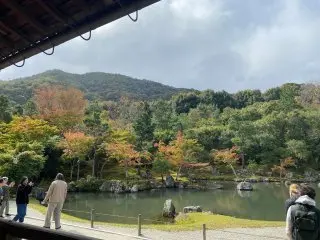
Sogenchi Garden, said to have been designed by the Rinzai monk Muso Soseki, was the first garden in Japan designated as a Historic Site and Special Place of Scenic Beauty.
Although Tenryu-ji’s buildings have been rebuilt after repeated fires, Sogenchi Garden still preserves its original form from around 700 years ago.
Its deep, expansive scenery—created by treating the natural landscapes of Arashiyama and Kameyama as part of the garden—is truly stunning.
It’s a strolling pond garden designed so you can enjoy a walk around Sogenchi Pond, so don’t just view it from one spot—walk the full loop around the pond.
After you’ve walked around the pond, be sure to enjoy the view from inside the halls as well.
The eaves and pillars act like a frame, giving the scenery a different feel.
It’s also recommended to sit and take your time, either on the wooden benches near the halls or inside the halls themselves, and soak in the view.
If you tune into the sounds and scents around you, and the occasional breeze, you might just get a sense of Zen philosophy through all five senses.

2. Seasonal Nature That Colors the Grounds
Not only Sogenchi Garden and the surrounding landscapes of Arashiyama and Kameyama, which are considered part of it, but the entire grounds let you feel the beauty of each season.
In spring, weeping cherry trees and Somei Yoshino cherry trees bloom in full glory around the Tahoden behind Sogenchi Garden.
From Bokyo-no-Oka, reached by climbing the stone steps on the grounds, you can take in a spectacular view of Approx. 200 cherry trees planted within the grounds, along with the city of Kyoto.
In autumn, fall colors brighten Sogenchi Garden, and you can stroll through a quiet, elegant space.
The “maple tunnel” behind Sogenchi Garden is an especially popular fall foliage spot.
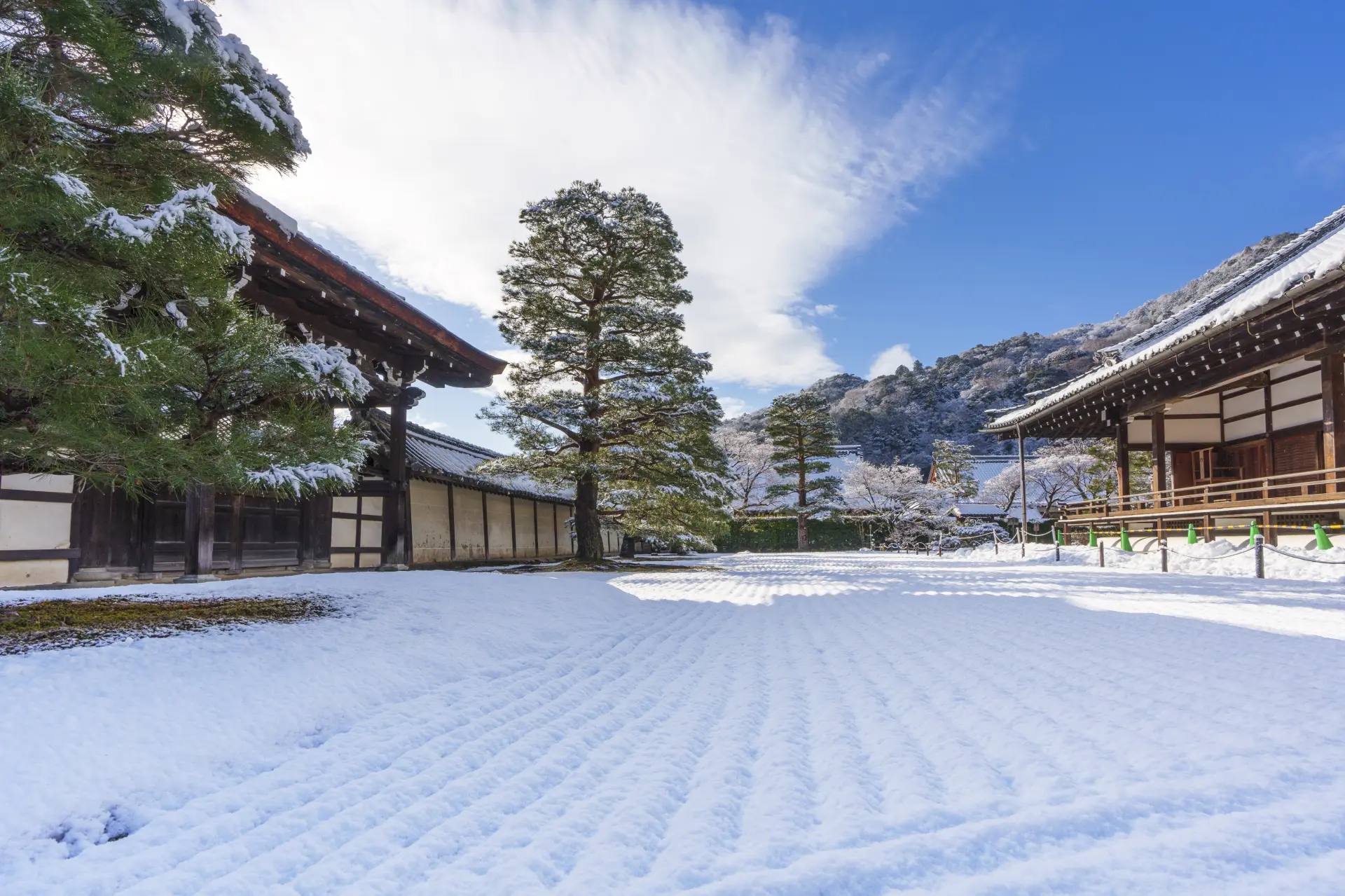
On snowy winter days, it can look like a beautiful ink painting.
Since it’s rare for snow to pile up on the grounds, if you want to see seasonal scenery, visiting in spring or autumn is recommended.
- Best time to see cherry blossoms
- Usually from late March to mid-April
- Best time to see fall foliage
- Usually from mid-November to early December


3. The Unforgettable Impact of the Unryu-zu (Cloud Dragon Painting)
The Unryu-zu is often called Tenryu-ji’s signature.
The dragon painted on the ceiling—10.6 m tall and 12.6 m wide—is overwhelmingly powerful.
Once you see it, you won’t forget it.
The composition centers on the dragon’s eyes, and no matter where you stand, it feels like the dragon is looking right at you—hence the nickname “the dragon that glares in all directions.”
The current Unryu-zu was created in 1997 by Japanese-style painter Matazo Kayama.
A dragon riding the clouds painted by the Meiji-era artist Shonen Suzuki was previously displayed, but as it became badly damaged, parts were preserved and the current Unryu-zu was painted.

4. The Daruma-zu: A Mysterious Power Born from a Unique Touch
If the Unryu-zu is Tenryu-ji’s signature, then the Daruma-zu is the face of the temple.
The Daruma-zu, painted on a partition screen facing the entrance of the kuri (which serves as both the kitchen and the temple office), features Daruma Daishi, the founder of Zen Buddhism.
Through the distinctive style of Seiko Hirata, a former head priest of Tenryu-ji, you’ll likely feel both an unusual impression and a sense of power at the same time.
The Daruma-zu is also available as an amulet, so if you become a fan of the artwork, why not pick up a Daruma-zu amulet and hope for its blessings?

5. Shojin Ryori: Buddhist Cuisine That Lets You Taste Zen
On the grounds, Tenryu-ji operates Shigetsu, where you can enjoy shojin ryori (Buddhist vegetarian cuisine).
Shojin ryori follows the Buddhist precept of non-killing and uses no meat or seafood, relying only on grains, vegetables, seeds, and seaweed.
It’s also a form of Zen training, using cooking methods refined to help you savor a sense of inner freedom born from harmony between the mind and nature.
It was featured in the Michelin Guide as cuisine that offers satisfaction beyond its price.

3 Nearby Sightseeing Spots Around Tenryu-ji
After enjoying Tenryu-ji, explore Arashiyama’s popular attractions.
Arashiyama has many spots where you can see scenery that feels “so Kyoto,” making it a must-visit area to fully enjoy the city.
The following three spots are especially popular and easy to reach from Tenryu-ji, so consider visiting them together.
1. Sagano Bamboo Grove Path
With its scenic beauty, Sagano has been loved by nobles and literary figures since the Heian period (794–1185), and many villas and hermitages were built here.
The Sagano Bamboo Grove Path is a walking path that stretches Approx. 400 m from Nonomiya Shrine, past Tenryu-ji’s North Gate, to Okochi Sanso Villa.
The beautiful sight of vivid green bamboo reaching toward the sky often appears on travel magazine covers, in TV dramas, and in commercials, and is known as one of Kyoto’s iconic views. Because the bamboo grows straight up from the ground and then leans inward as it rises, it feels like a tunnel of bamboo.
The route from Tenryu-ji’s North Gate to Okochi Sanso Villa is a gentle slope, and the top of the hill, where you can look down over the bamboo grove, is also a popular photo spot.

2. Kimono Forest
A plaza in a corner of “Arashiyama Station Hannari-Hokkori Square.” About 600 vibrant poles featuring Kyoto Yuzen patterns stand in rows. The poles are installed not only in the plaza but also on the station platform and along the tracks, making the entire Arashiyama Station feel like an art installation. Inside the facility, there are restaurants, souvenir shops, and a foot bath (300 yen), making it a relaxing spot for visitors.
Kimono Forest was designed by interior designer Yasumichi Morita.
Kyoto Yuzen produced by the long-established Kameda Tomizome Studio, in business since the Taisho era, is wrapped in acrylic poles and arranged to resemble a grove.
There are 32 patterns in total, and the area is lively with people enjoying a stroll and taking commemorative photos as they search for their favorite design.

3. Togetsukyo Bridge
This bridge is said to have first been built in the early 9th century during the Heian period, and while it has been washed away many times, it has been rebuilt each time.
It’s said that the name comes from Retired Emperor Kameyama of the Kamakura period, who described the moon as seeming to “cross” over the bridge.
It has appeared in many ukiyo-e prints by artists including Hiroshige Utagawa and Hokusai Katsushika, becoming an iconic Arashiyama view.
The current bridge was built in 1934 (Showa 9) out of concrete and is strong enough for cars to cross, but its railings are made of wood to follow traditional bridge design and harmonize with the surrounding scenery—so much so that it’s a classic filming location for period dramas.

3 Popular Places to Eat Around Tenryu-ji
Around Tenryu-ji, you’ll find standout restaurants that blend into the charming streetscape, as well as popular cafes that are easy to stop by between sights.
From here, we’ll introduce some highly recommended dining spots that are also well-regarded by locals.
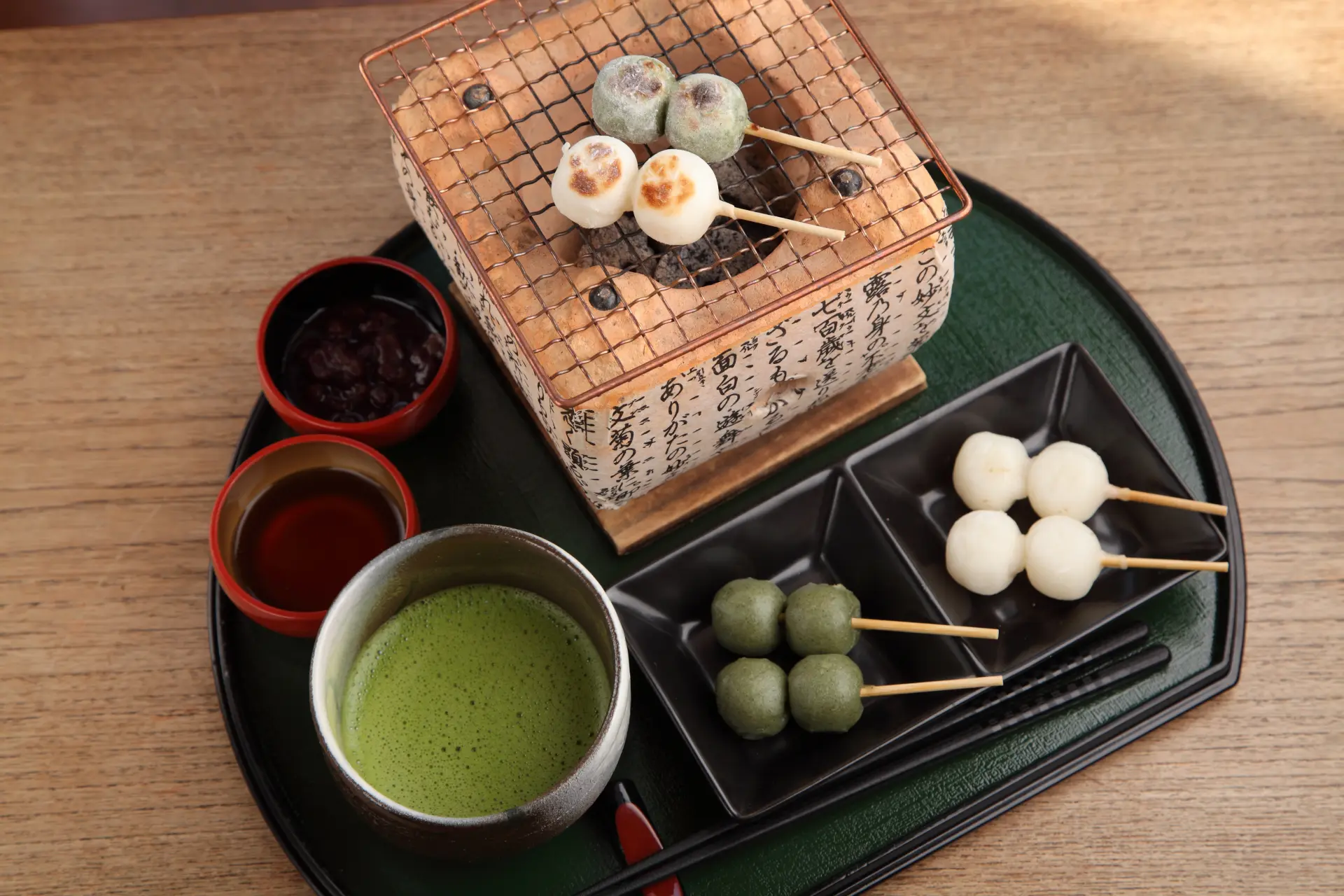
1. eX cafe Arashiyama Main Store
A popular cafe serving Japanese sweets, with an impressive gate in a renovated traditional Japanese house.
Though it’s a hidden gem tucked away in a back alley, it draws crowds of tourists lining up.
The signature Hokuhoku Dango Set is a hands-on menu item where you grill dango over a small shichirin charcoal brazier and finish them just the way you like.
2. Yudofu Sagano
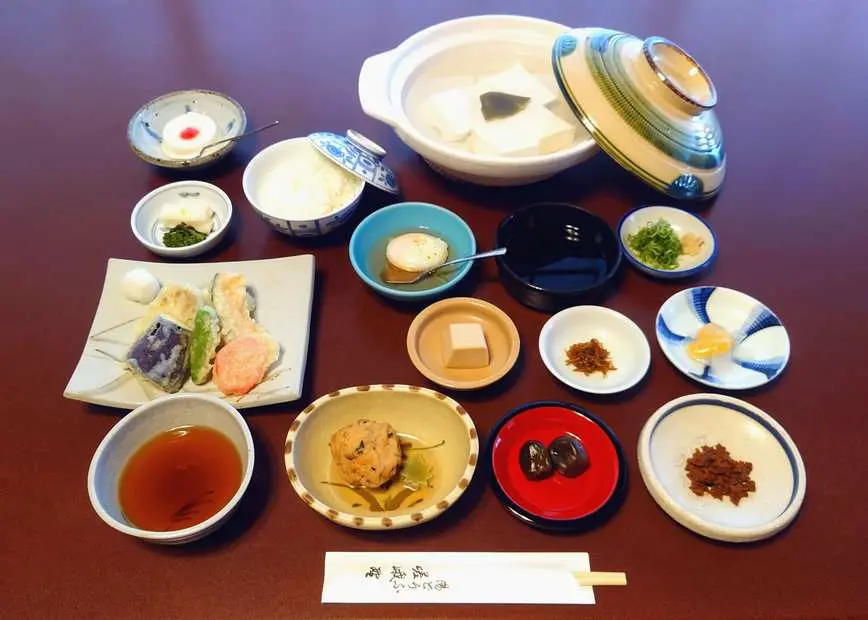
Tenryu-ji is a renowned Arashiyama temple known for Sogenchi Garden and the Unryu-zu. Located just a short walk from the temple grounds, Sagano is a yudofu (simmered tofu) specialty restaurant where you can dine in a modern sukiya-style building designed by master architect Togo Murano, while enjoying views of a beautiful Japanese garden.
The restaurant has two buildings: a main building centered around tatami rooms, and a newer building with table seating and counter seats.
On nice days, you can also dine at outdoor bench seating overlooking the garden.
3. Kyoto Kitcho Arashiyama Main Store
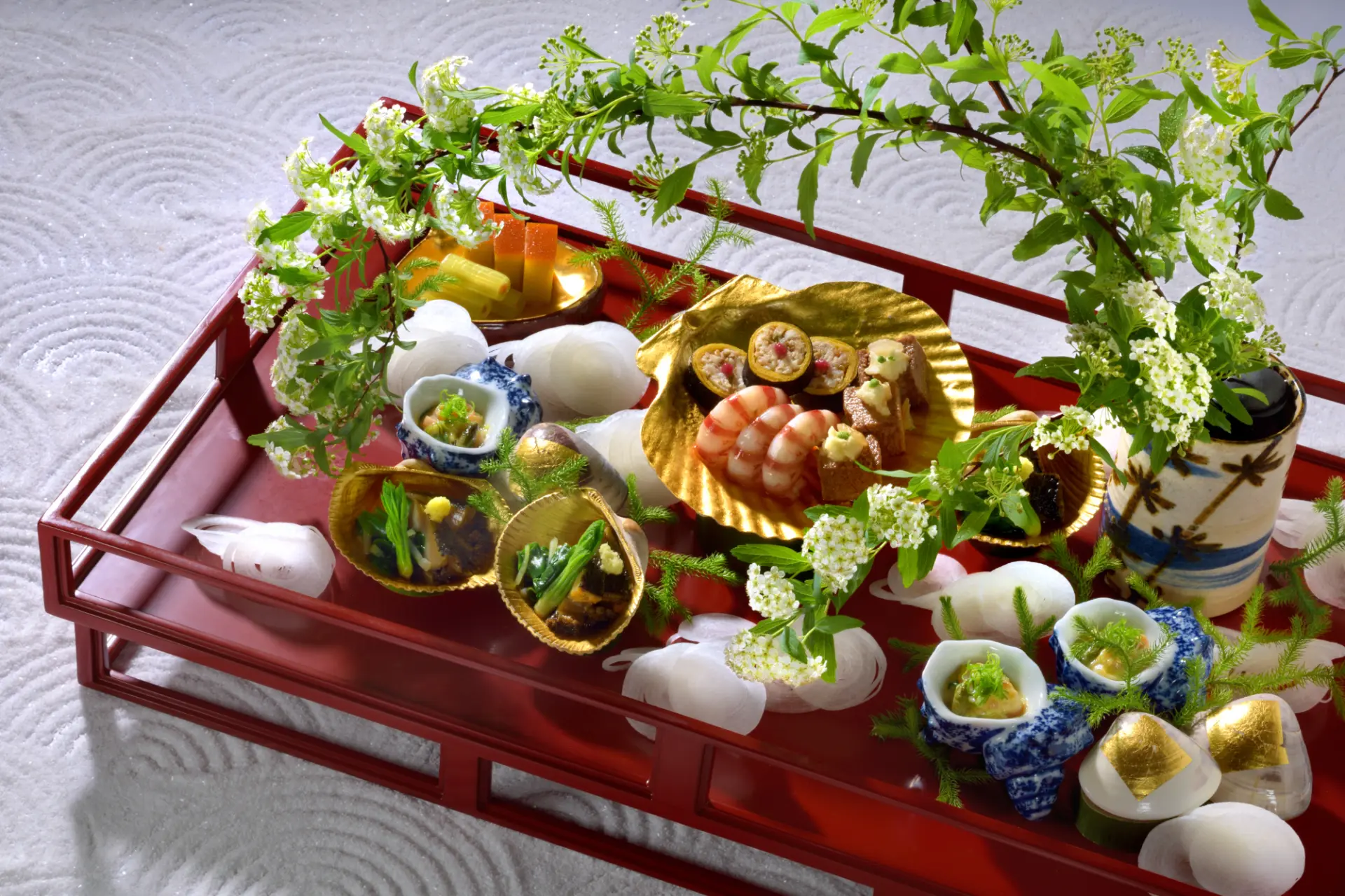
Kyoto Kitcho Arashiyama Main Store sits along the route from Togetsukyo Bridge to Tenryu-ji and is a world-famous traditional Japanese restaurant.
It serves a Japanese course meal that builds on traditional chakaiseki cuisine, which is served to invited guests during formal tea gatherings, while incorporating modern elements for a more elegant finish.
Before your meal, you can also enjoy the popular “ofunayobi,” where you charter a boat on the Oi River flowing in front of the restaurant, and in summer you can even watch cormorant fishing.
3 Recommended Places to Stay Around Tenryu-ji
Centered around the World Heritage site Tenryu-ji, Arashiyama is an area where nature and history blend beautifully.
Time spent surrounded by seasonal scenery makes your Kyoto stay even more memorable.
Here are three quality places to stay near Tenryu-ji, from inns with an Arashiyama atmosphere to hotels that balance comfort and prestige.
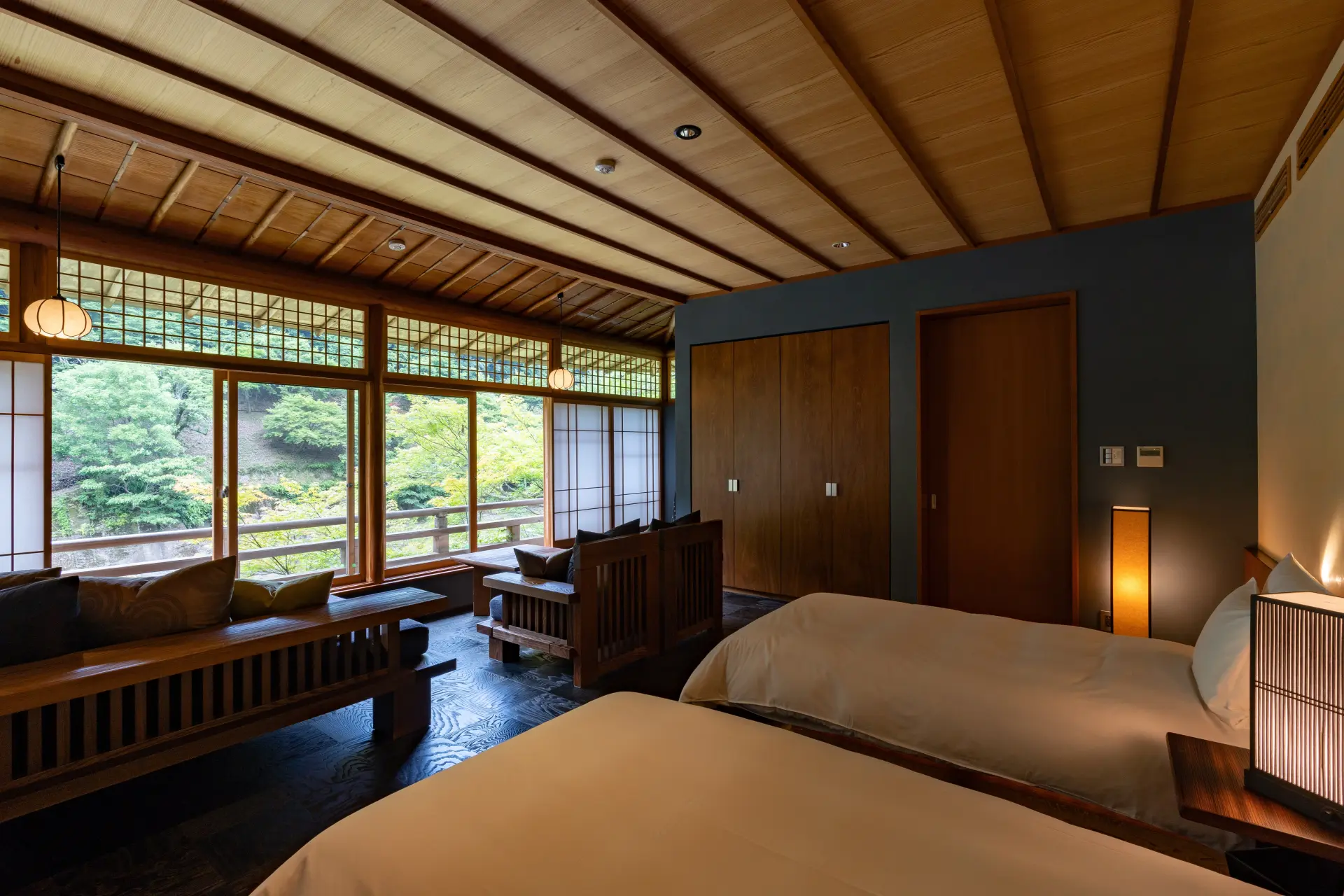
1. HOSHINOYA Kyoto
A luxury hotel on the banks of the Oi River in Arashiyama, one of Kyoto’s most scenic areas, offering an “extraordinary escape.”
With the concept of “a waterside private residence in Arashiyama, once enjoyed by Heian aristocrats,” all 25 rooms offer views of the Oi River and lush nature.
First, check in at the HOSHINOYA Kyoto Boat Lounge near Togetsukyo Bridge, then take a private boat to the hotel.
Surrounded by the calls of water birds and the beauty of the valley, you’ll already feel like you’ve stepped into another world.
2. MUNI KYOTO
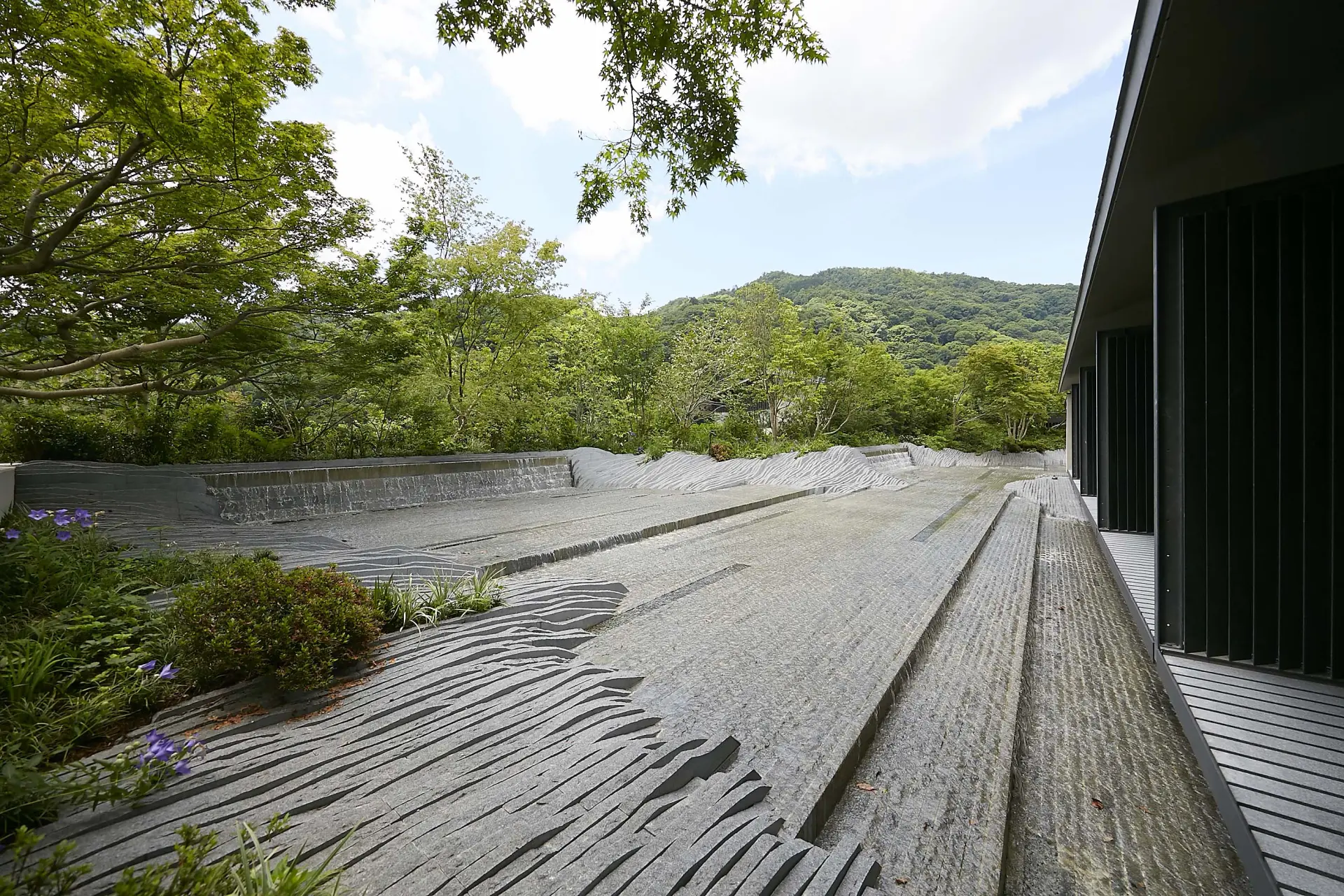
A luxury hotel offering top-tier relaxation and experiences with the concept of “one-of-a-kind views.”
There are 21 rooms in total. All are deluxe rooms of 50㎡ or more, and each room offers Arashiyama scenery that changes with the seasons.
With details like a 280 cm-wide double-room bed and original bath amenities made with Kyoto-sourced materials, the thoughtful care in every detail feels wonderfully comfortable.
3. Arashiyama Onsen Saishiki no Yado Hanaikada
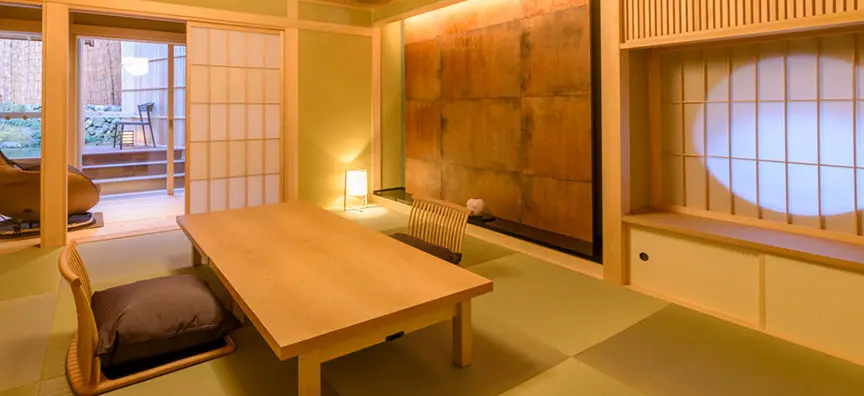
A hot spring ryokan at the foot of Togetsukyo Bridge over the Oi River, making it extremely convenient as a base for sightseeing in Arashiyama and Sagano.
In addition to Arashiyama’s only scenic open-air bath with views—where you can bathe while looking out over seasonal Arashiyama and the distant sacred peak Mt. Atago—there are also two types of indoor baths (all-hinoki cypress and stone), plus reservation-only private open-air baths.
The calm, Japanese-style guest rooms come in a range of types, including twin-bed rooms and 12-tatami rooms that can accommodate up to six people.
Reviews
4.78
Some reviews are AI-translated.
-
The garden is insanely beautiful—there’s something to see in every season. The fall colors must be unreal.
Sitting on the tatami and looking out at the garden feels so calming. I could zone out there forever. -
Walking through the Sogenchi Garden at Tenryu-ji, you can hear birds singing, feel the gentle breeze, see the play of light and shadow on the trees, and watch the ripples on the water. If you close your eyes and use all your senses to take in the subtle changes in nature, it's truly a wonderful feeling!
-
The Sogenchi Garden at Tenryu-ji blends perfectly with the distant Arashiyama scenery, making it feel like one huge garden. The landscape designer did an amazing job.


FAQ about Tenryu-ji
Q
When is the best time to see Tenryu-ji’s cherry blossoms?
A
The best time to see the cherry blossoms is from late March to mid-April.
Q
When is the best time to see Tenryu-ji’s fall foliage?
A
The best time to see fall foliage is from mid-November to early December.
Q
What are the highlights of Tenno-ji?
A
Among the many highlights, Sogenchi Garden, the Unryu-zu, and the Daruma-zu are must-sees.
Summary
We’ve introduced the history and highlights of Tenryu-ji, one of the most popular sightseeing spots in Arashiyama, a top Kyoto tourist area.
Explore Tenryu-ji’s highlights with its history in mind, and you’ll enjoy its charms on a deeper level.
Kyoto is full of other wonderful places too, so you might not know where to start sightseeing.
If that’s the case, please also use this article as a reference, which introduces Kyoto’s classic sightseeing spots and local food.