
![[Nagoya Castle Travel Guide] A Must-Read for Anyone Who Wants to Make the Most of It!](https://static.gltjp.com/glt/data/article/21000/20335/20230718_154711_ed330395_w1920.webp)
[Nagoya Castle Travel Guide] A Must-Read for Anyone Who Wants to Make the Most of It!
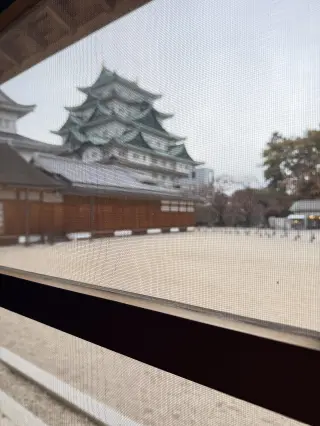
Nagoya Castle is a popular tourist spot in Nagoya, and a symbol of the city.
Many people know the “Golden Shachihoko” on the keep’s roof, but not everyone knows the specific highlights.
In this article, we’ll take a detailed look at the highlights and history you’ll want to know to fully enjoy Nagoya Castle.
We hope you’ll discover the charm of Nagoya Castle you may not know yet.
What is Nagoya Castle Like?
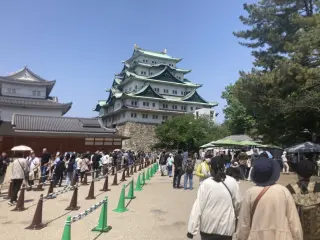
Nagoya Castle in Nagoya, Aichi Prefecture, is counted among Japan’s three great castles thanks to its vast grounds of Approx. 250,000 m² and one of the country’s largest castle complexes.
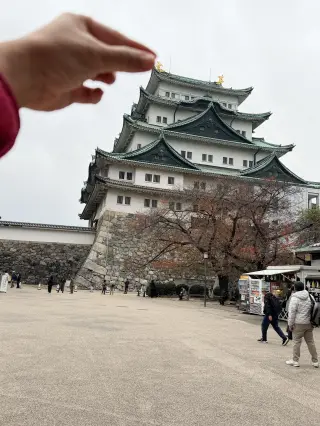
The pair of “Golden Shachihoko” (male and female) on the keep’s roof are especially famous, and the castle is also called “Kinshachi Castle” or “Kinjo.”
Nagoya Castle was built by order of Tokugawa Ieyasu, the first shogun who founded the Edo shogunate.
It helped strengthen the Edo shogunate’s foundation and became the seat of the Owari Tokugawa clan, the highest-ranking of the three Tokugawa branch families (the most prestigious daimyo line descended from the Tokugawa family).
Built at the peak of castle-building techniques, funded by the era’s most powerful leader, and constructed by daimyo with advanced engineering skills, Nagoya Castle is truly splendid and luxurious.
It’s not only lavish, but also highly artistic, with sliding-door paintings by the Kano school, the largest painting school in Japanese art history.
In 1952, it was designated a Special Historic Site of Japan.

History and Origins of Nagoya Castle
Construction began in 1610 by order of Tokugawa Ieyasu, the shogun who founded the Edo shogunate.
Its two purposes were to deter the Toyotomi family and other daimyo who could threaten the regime, and to serve as a defensive base to protect the Kanto region.
The construction of Nagoya Castle was entrusted to various daimyo, who took on the project with their pride on the line.
In 1615, the Honmaru Palace, which served as the residence of the Owari Domain lord (present-day Aichi Prefecture) and the center of administration, was completed.
The Honmaru Palace became a magnificent space adorned with beautiful wall paintings and decorative metal fittings.
After that, expansions and renovations continued, increasing its splendor and luxury.
Among them, the Jorakuden, expanded in 1634 when the third shogun Tokugawa Iemitsu traveled to Kyoto, is said to be the greatest masterpiece.
The fusuma paintings, ceiling panel paintings, and carved transoms are all highly valuable as works of art, and the “Teikan-zu” and “Setchubai Chikuchozu” painted by Kano Tan’yu are especially prized.
After the 1871 abolition of domains and establishment of prefectures, the Owari Domain became Nagoya Prefecture, which led to parts of the castle being removed. However, calls to preserve Nagoya Castle grew, and it was permanently preserved.
Although stone walls collapsed in earthquakes and the keep was burned down in air raids, it was rebuilt with donations from Japan and abroad.
Due to seismic and aging issues, the keep has been closed since 2018.
Research is underway toward restoring it in wood.

Access to Nagoya Castle
Here’s how to get to Nagoya Castle from Nagoya Station, a must-visit hub for sightseeing in Nagoya.
There are three ways to get to Nagoya Castle: subway, bus, or on foot.
It takes Approx. 30 minutes, but it’s close enough to reach on foot from Nagoya Station.
If you take the subway, ride the Nagoya City Subway Sakura-dori Line from JR Nagoya Station to Hisaya-odori Station. Transfer to the Meijo Line to reach the nearest station, Nagoya Castle Station.
From Nagoya Castle Station, it’s a 5-minute walk to Nagoya Castle.
If you take the bus, board the Kanmeieki 1 bus from the city bus terminal at JR Nagoya Station and get off at Nagoya Castle Main Gate. From the stop, it’s a 1-minute walk to Nagoya Castle.
Nagoya Castle Hours and Admission
Nagoya Castle hours and admission are as follows.
The park is closed for four days, from December 29 to January 1, but it may also close on other days due to events, so be sure to check the Official website (Japanese) as well.
One of Nagoya Castle’s highlights, the main keep, is closed as of May 2024 due to aging and seismic upgrades, so please keep this in mind.
- Hours
-
9:00am–4:30pm
*Admission to Honmaru Palace and Nishinomaru Okura Castle Treasure Museum is until 4:00pm - Admission
-
Adults: 500 yen
Middle school students and under: Free
Best Season to Visit Nagoya Castle
If you’re sightseeing at Nagoya Castle, spring is recommended.
Inside the grounds, there are Approx. 1,000 cherry trees across 10 varieties, including Somei Yoshino and weeping cherry trees.
At peak bloom, you can enjoy a distinctly Japanese view of one of Japan’s largest castle complexes framed by cherry blossoms in full bloom.
The Nagoya Castle Spring Festival, held from late March through late April, features a variety of events and illuminated cherry blossoms, so if you can plan your timing, visit in spring.

Start Here If You’re Not Sure: 5 Must-See Highlights at Nagoya Castle
Nagoya Castle has many highlights, and the grounds are large, so you may not know where to start.
In that case, try visiting the five highlights introduced below first.
You’ll not only see the castle’s lavish spaces and the Golden Shachihoko, but also spots that help you imagine what it was like when the castle was built, as well as Important Cultural Properties.
1. Honmaru Palace: A Stunningly Lavish Space
Built as the residence and administrative center of the Owari Domain lord, the Honmaru Palace also served as lodging for the shogun of the Edo shogunate.
Though it was destroyed by war, the City of Nagoya restored it over 10 years at a total cost of Approx. 15 billion yen.
The biggest draw of the Honmaru Palace is its dazzling splendor.
From the wall paintings by Kano Tan’yu to the carved transoms and decorative metal fittings, every detail is highly artistic, and you’re sure to be overwhelmed by the gold and vivid colors throughout.
Photography is allowed throughout the Honmaru Palace, but flash and tripods are prohibited, so please be aware.

2. The Iconic Main Keep, Famous for the Golden Shachihoko
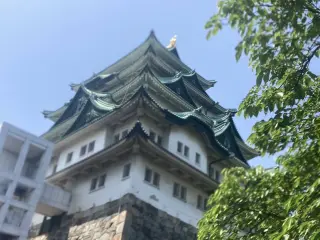
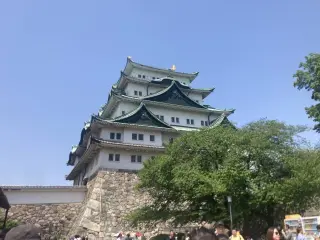
The main keep is the symbol of Nagoya Castle.
A five-story structure with five levels above ground and one basement level, it boasts one of the largest total floor areas in history and was the first castle in Japan to be designated a National Treasure.
The two “Golden Shachihoko” on its roof are famously well-known.
A “shachihoko” is not a sea orca, but a mythical creature with the head of a dragon or tiger and the body of a fish.
Legend says it protects against fire, and it is enshrined as a guardian deity of buildings.
*It is currently closed due to aging and seismic concerns, so visitors cannot enter. However, the goal is a wooden reconstruction of the keep, with completion targeted for FY2032.

3. Stone Walls and the Massive Kiyomasa Stone, Built Quickly by Edo-Period Daimyo
Nagoya Castle was built by various daimyo with their pride on the line.
This castle, often described as the pinnacle of early modern Japanese castle design, makes even its stone walls a highlight.
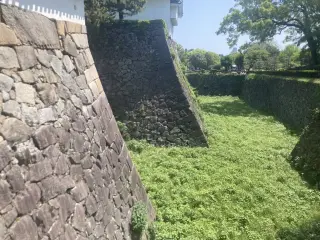
The total length of the castle’s stone walls is an incredible 8.2 km.
The stone wall of the most important base of the keep was built in under three months by Kato Kiyomasa, famed for his castle-building skills.
The stone walls of the entire castle are also said to have been built in just around a year, and it’s fun to look at the walls on-site and imagine the construction process.
Most eye-catching of all is the Kiyomasa Stone, the largest boulder used in Nagoya Castle’s stone walls, said to weigh an estimated 10 tons.

4. Ninomaru Garden, with Rare Features Found in Few Places Nationwide
Ninomaru Garden lies to the north of the former Ninomaru Palace, where the lords of Nagoya Castle once spent their time.
It consists of three areas—Kita-oniwa, Mae-niwa, and Ninomaru East Garden—and covers an area of Approx. 30,000 m².
Kita-oniwa and Mae-niwa were designated scenic spots in 1953, and in 2018, nearly the entire garden was designated a scenic spot.
In Kita-oniwa, you can see the Gyokkan style, characterized by a waterfall flowing between artificial hills and a stone bridge over the top of the falls.
Gardens where you can see this Gyokkan style, modeled on landscape paintings by the famous Song-dynasty ink painter Gyokkan, are rare nationwide.

5. Corner Turrets: Important Cultural Properties That Still Stand from the Original Construction
While major highlights like the Honmaru Palace and main keep were destroyed by fire and later restored, three corner turrets remain as they were from the original construction and are designated Important Cultural Properties.
The Southwest Corner Turret in the southwest corner of the Honmaru, the Southeast Corner Turret in the southeast corner, and the Northwest Corner Turret in the northwest corner of Ofukemaru each differ in structure and size, so it’s worth comparing them.

Kinjachi Yokocho: Enjoy Nagoya Food Too
Since it’s one of Japan’s largest castle complexes, you’ll need to walk quite a distance to see the highlights.
When you get tired, recharge at Kinjachi Yokocho, a major food spot spreading out below Nagoya Castle.
Kinjachi Yokocho is divided into two zones: one is the Yoshinao Zone, where you can fully enjoy Nagoya specialties.
The second is the Munetaka Zone, with many restaurants and cafes in a fun, pop atmosphere.
Once you’ve recharged at Kinjachi Yokocho, head back out to explore Nagoya Castle again.

3 Nearby Tourist Spots Around Nagoya Castle
Around Nagoya Castle, there are many appealing sightseeing spots, including a nature-filled park with panoramic views of the castle and another Nagoya symbol alongside it.
If you’re planning a sightseeing itinerary centered on Nagoya Castle, be sure to visit the three tourist spots introduced below as well.
1. Meijo Park
A comprehensive park spread across a vast area of Approx. 80 hectares.
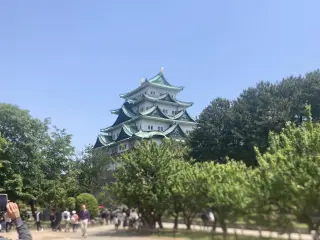
With flower beds where seasonal blooms appear, grassy lawns, Ofuke Pond with a full view of Nagoya Castle, sports facilities such as a baseball field, and more, it’s a relaxing place for Nagoya residents.
Meijo Park Flower Plaza features an atrium and sunny room filled with natural light, and hosts various exhibitions related to flowers and greenery.
There’s also an attached cafe where you can enjoy tea time surrounded by flowers.

2. Nagoya City Hall (Main Building)
The current Nagoya City Hall main building is the third city hall building.
A 53.5-meter-tall clock tower rises in the center. At the top of the tower are shachi facing all four directions, a design that emphasizes a distinctly Nagoya feel.
It is highly regarded for clearly showcasing early Showa-era architecture, skillfully blending Western architectural styles with Japanese elements. In 2014, together with the adjacent Aichi Prefectural Government Main Building, it was designated an Important Cultural Property of Japan.

3. Chubu Electric Power MIRAI TOWER
Built as the “Nagoya TV Tower” for sightseeing and TV broadcasting transmission, this symbol tower of Nagoya was completed in 1954.
After large-scale construction in 2020, the tower’s interior was renovated. A hotel also opened on the 4th and 5th floors. From May 2021, it relaunched under its new name, “Chubu Electric Power MIRAI TOWER.”
From the indoor observation deck “Sky Deck” located 90 meters above ground, you can take in panoramic views of Nagoya and distant mountains. The night view is recognized as part of the “Japan Night View Heritage,” and the scenery reflected in mirrors installed on the deck’s ceiling and floor is a must-see.

3 Popular Places to Eat Around Nagoya Castle
Here are restaurants where you can enjoy “Nagoya meshi,” plus cafes where you can take a relaxing break between sightseeing and travel.
All are easy to access from Nagoya Castle, so be sure to stop by as well.
1. Shirakawa Joshin (Main Branch)
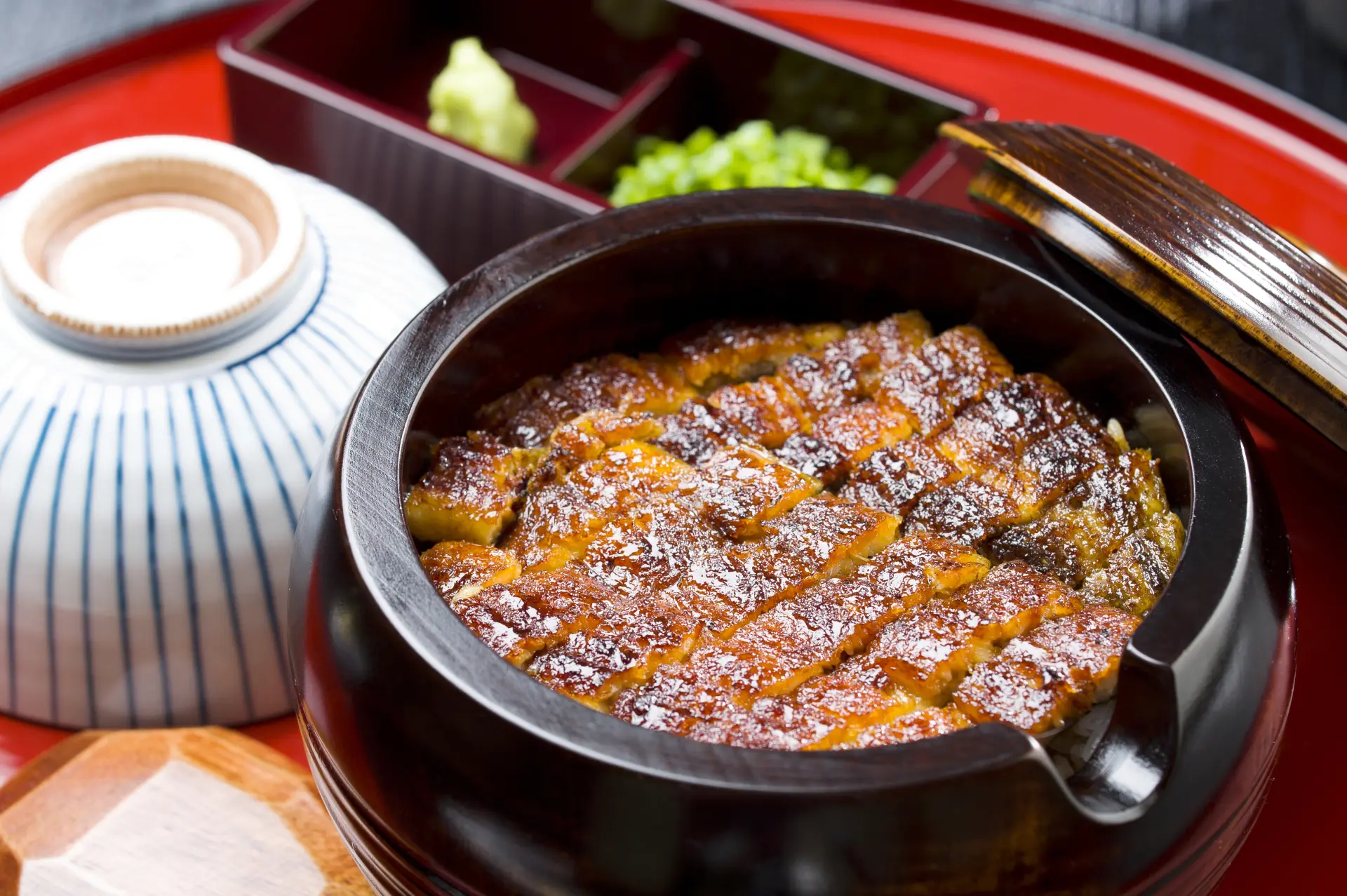
Located near Nagoya Castle, “Shirakawa Joshin (Main Branch)” is a long-established restaurant famous for hitsumabushi.
Hitsumabushi is a Nagoya specialty made with grilled eel cut into strips and served over rice.
Shirakawa’s eel is carefully selected for the season and grilled with their secret sauce, used for decades.
It’s crispy and aromatic on the outside, and plump and tender on the inside.
2. Coffee New Poppy
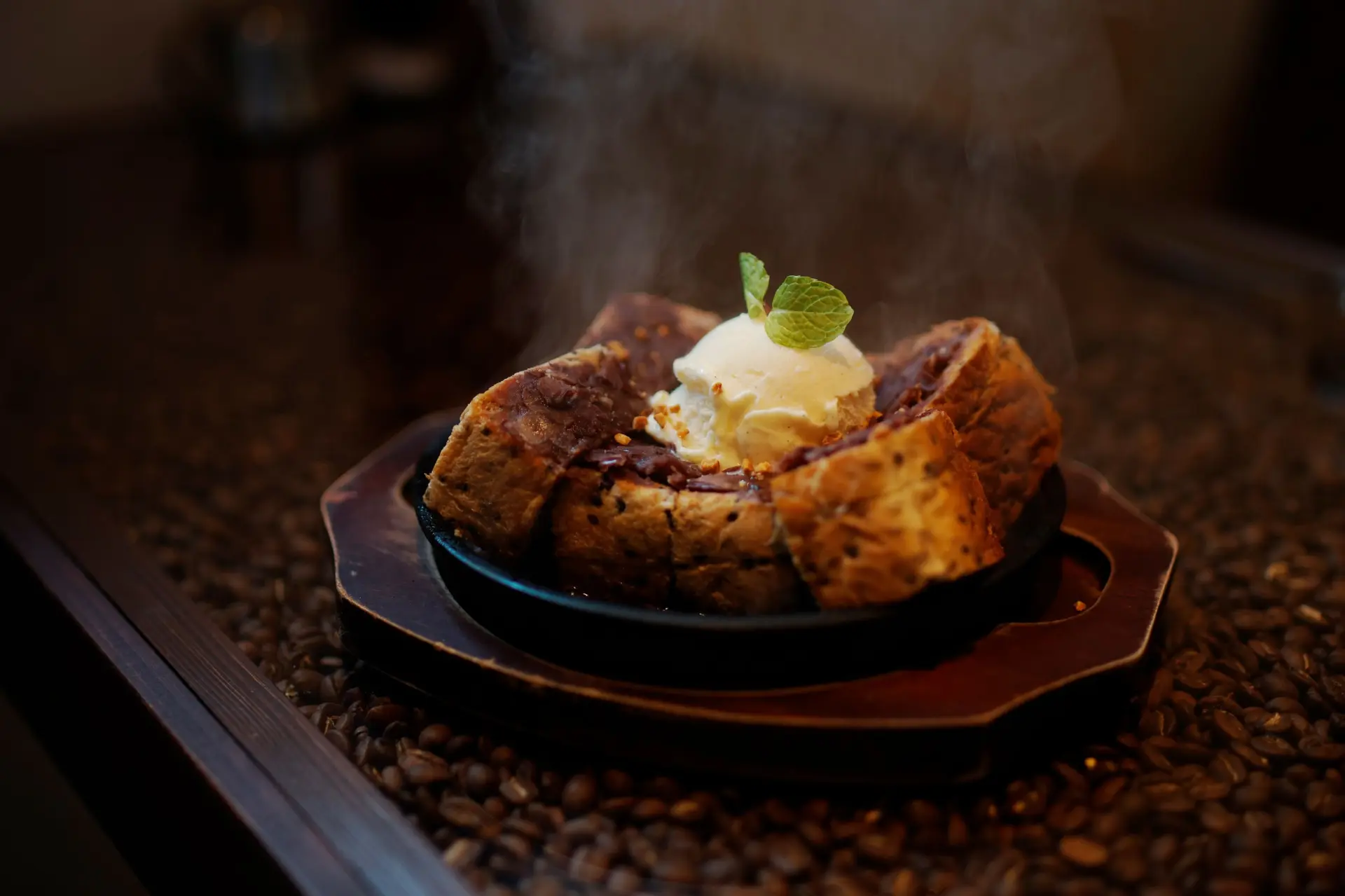
A coffee shop in Shikemichi, a merchant district created along with the construction of Nagoya Castle, where you can see scenery lined with white-walled earthen storehouses. It carries on the legacy of the renowned “Coffee Poppy,” founded at Nagoya Station in 1977.
With its tower-like loft seating, the interior is designed to evoke Japan’s classic Showa-era kissaten (traditional coffeehouse), and every angle is photogenic.
3. yoake
“yoake” is a Japanese-style cafe restaurant in the Nakono area of Nishi Ward, a bit away from the bustle.
It’s on the first floor of “Nagono Campus,” renovated from the former Nagono Elementary School after it closed. It’s a space where “Japanese” and “modern” meet.
The menu changes between morning and lunch hours. Breakfast focuses on toast, and the “Nagoya specialty! Ogura toast” is also one of their signature items.

3 Recommended Places to Stay Around Nagoya Castle
After enjoying Nagoya Castle, you’ll want to unwind at a comfortable hotel and ease the day’s fatigue.
Around Nagoya Castle, you’ll find plenty of comfortable accommodations with great convenience, plus large communal baths.
Soaking in a spacious bath at the end of your trip should help you start sightseeing the next day feeling refreshed.
This time, we’ll introduce reliable picks around Nagoya Castle with “large communal baths.”
1. Nagoya B’s Hotel
A hotel with well-equipped shared facilities, including the large communal bath “Rakuda no Yu” with a jacuzzi and sauna.
The spacious sauna room is set to Approx. 194°F, so you can really work up a sweat.
There’s also a properly chilled cold bath, making sauna fans very satisfied.
In 2020, a ganbanyoku (hot stone spa) facility opened, making it an even more comfortable stay.

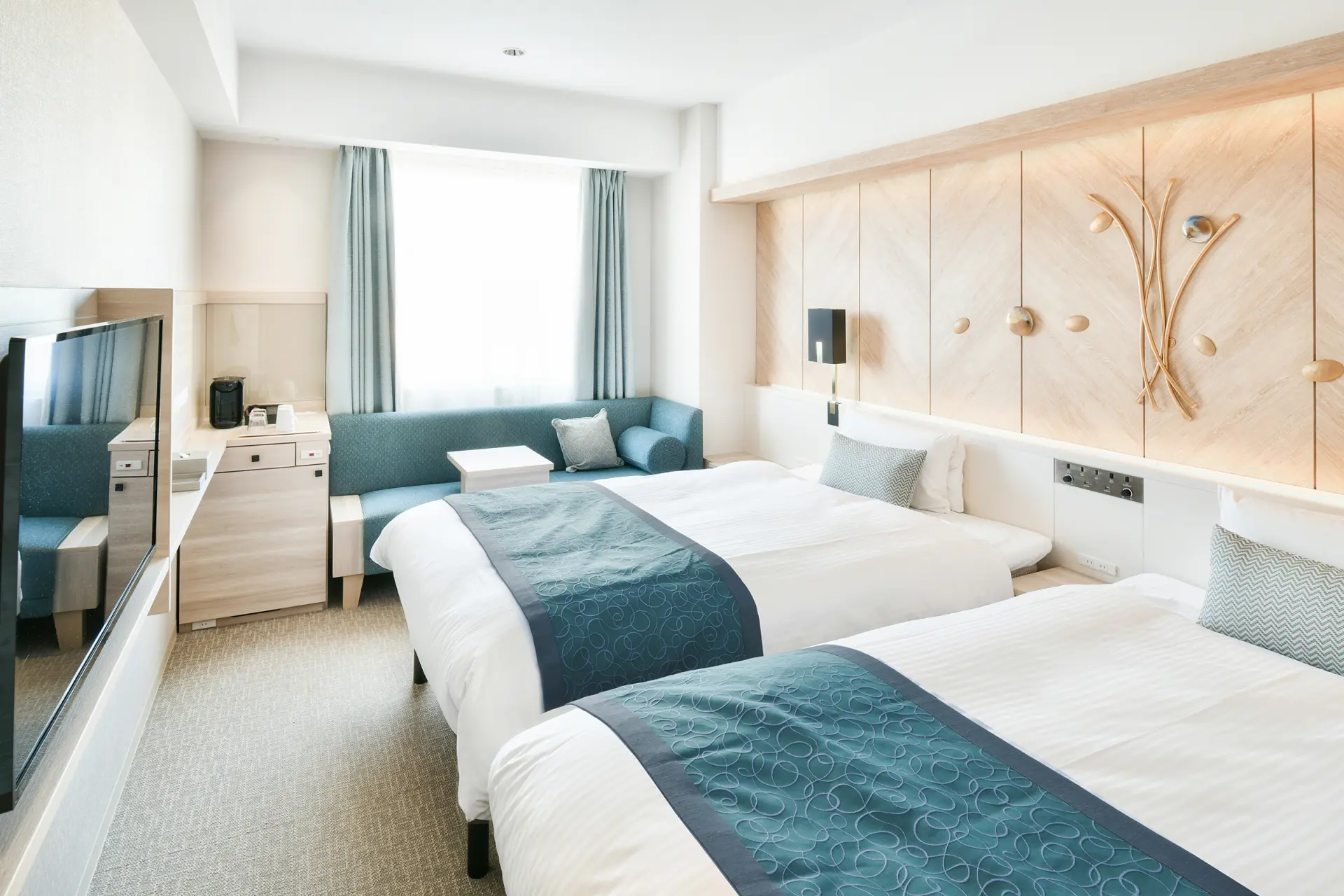
2. Vessel Hotel Campana Nagoya
A highly convenient hotel located an 8-minute walk from Nagoya Station.
It can be used for all kinds of trips, including business, family travel, and solo travel.
On the second floor, the hotel has a large communal bath with a sauna.
It also offers family-friendly services, including bath chairs and wash basins for children.
3. Dormy Inn PREMIUM Nagoya Sakae (Natural Hot Spring Nishiki Shachi no Yu)
A hotel facing Nishiki-dori, the main road running east-west through central Nagoya and connecting Nagoya Station and Sakae.
With an excellent location within walking distance of central Sakae and Hisaya-odori, plus extensive facilities and services, it has many repeat guests.
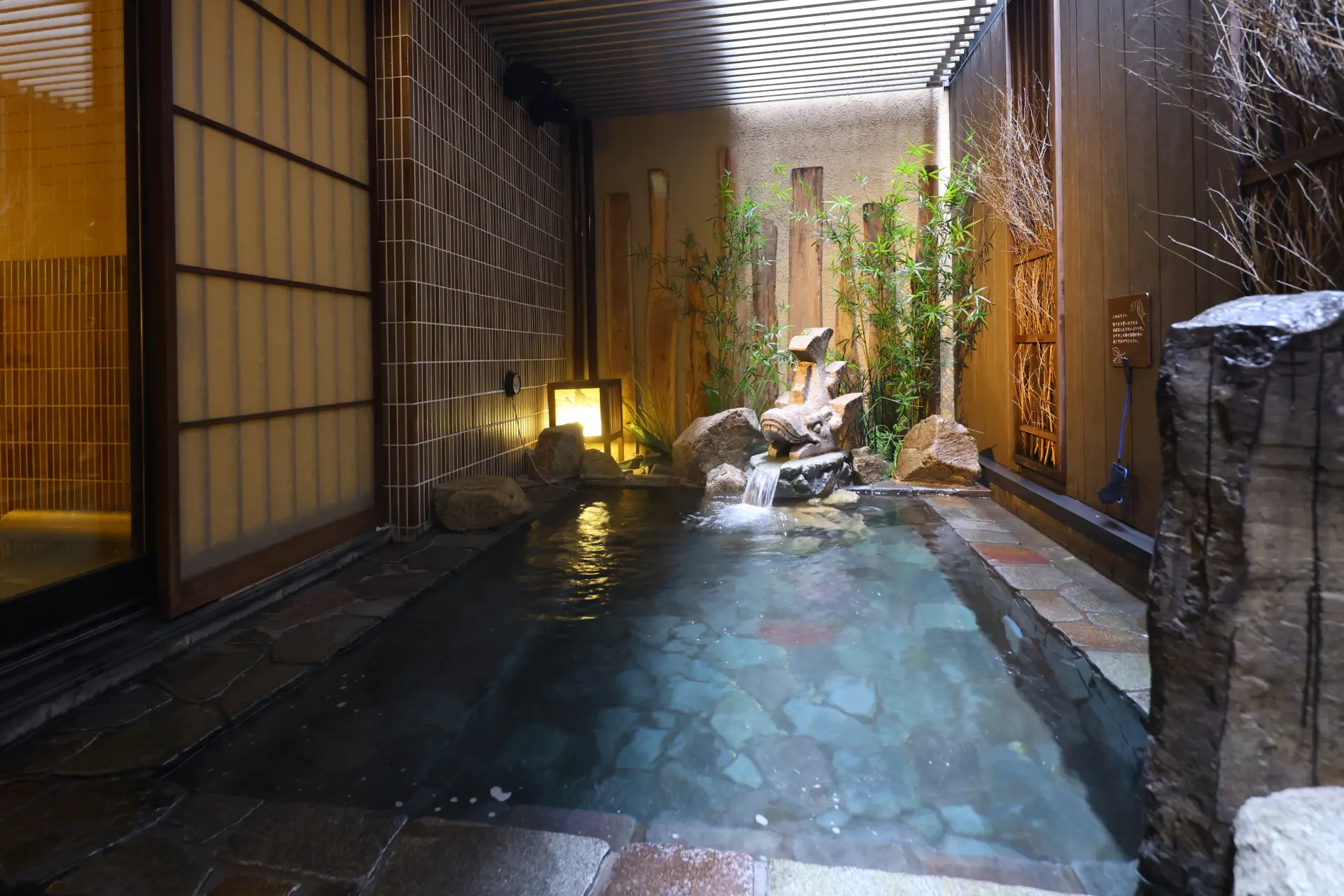
One of its features is the large communal bath using natural hot spring water brought from Gifu Prefecture.
The alkaline, silky-smooth water is said to dissolve dead skin cells and leave your skin looking beautiful.
Reviews of Nagoya Castle
4.43
Some reviews are AI-translated.
-
It was under renovation, so we couldn’t go up. Looking forward to seeing its new look after the work is finished.
-
There were a lot of tourists, but it never felt too crowded. The flow was well organized, and most of the signs had both Chinese and English, so even if you can't read Japanese, it's totally fine.
-
There's an elevator inside the main keep, which is really considerate for seniors or anyone with mobility issues.
FAQ about Nagoya Castle
Q
Who built Nagoya Castle?
A
Tokugawa Ieyasu, the first shogun of the Edo shogunate, ordered its construction.
Q
What are the highlights of Nagoya Castle?
A
The Honmaru Palace, which will leave you in awe with its lavish interiors, and the main keep, also a symbol of Nagoya, are especially popular highlights.
Q
Can you go inside the main keep?
A
Not as of May 2024. It is closed to address durability issues and other concerns.
Summary
We’ve introduced the highlights and history you’ll want to know to make the most of Nagoya Castle.
Use this article as a guide as you visit the key spots, and you’re sure to fully enjoy Nagoya Castle.
Nagoya has many more appealing places beyond Nagoya Castle and the surrounding area.
Please also check out this article, which carefully selects and introduces Nagoya’s best sightseeing spots.