

【Wakayama Castle Travel Guide】Enjoy Scenic Views Where Wakayama’s History, Culture, and Nature Come Together
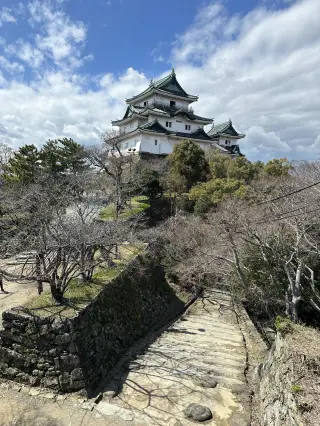
With its striking white main keep rising high above the city, Wakayama Castle is a symbol of Wakayama City.
Its beautiful presence, harmonizing with the seasonal natural scenery, is truly elegant, and it has been designated a nationally recognized Place of Scenic Beauty.
In this article, we’ll introduce the charms of “Wakayama Castle,” focusing on recommended highlights so even first-time visitors can enjoy sightseeing.
What is Wakayama Castle Like?
Wakayama Castle is located at the top of lush Torafusuyama in Wakayama City, Wakayama Prefecture.
Designated by the national government as a Place of Scenic Beauty (a place known for beautiful scenery), it is famous as a picturesque castle.
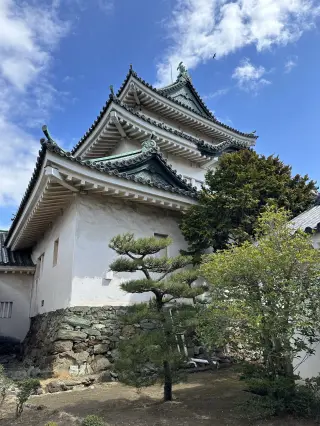
It is an early modern castle first built by master castle builder Takatora Todo, and its distinctive white, three-story main keep even has an air of dignity.
What makes Wakayama Castle so appealing is not only its beautiful scenery centered around the main keep, but also the perfect blend of history, nature, and culture.
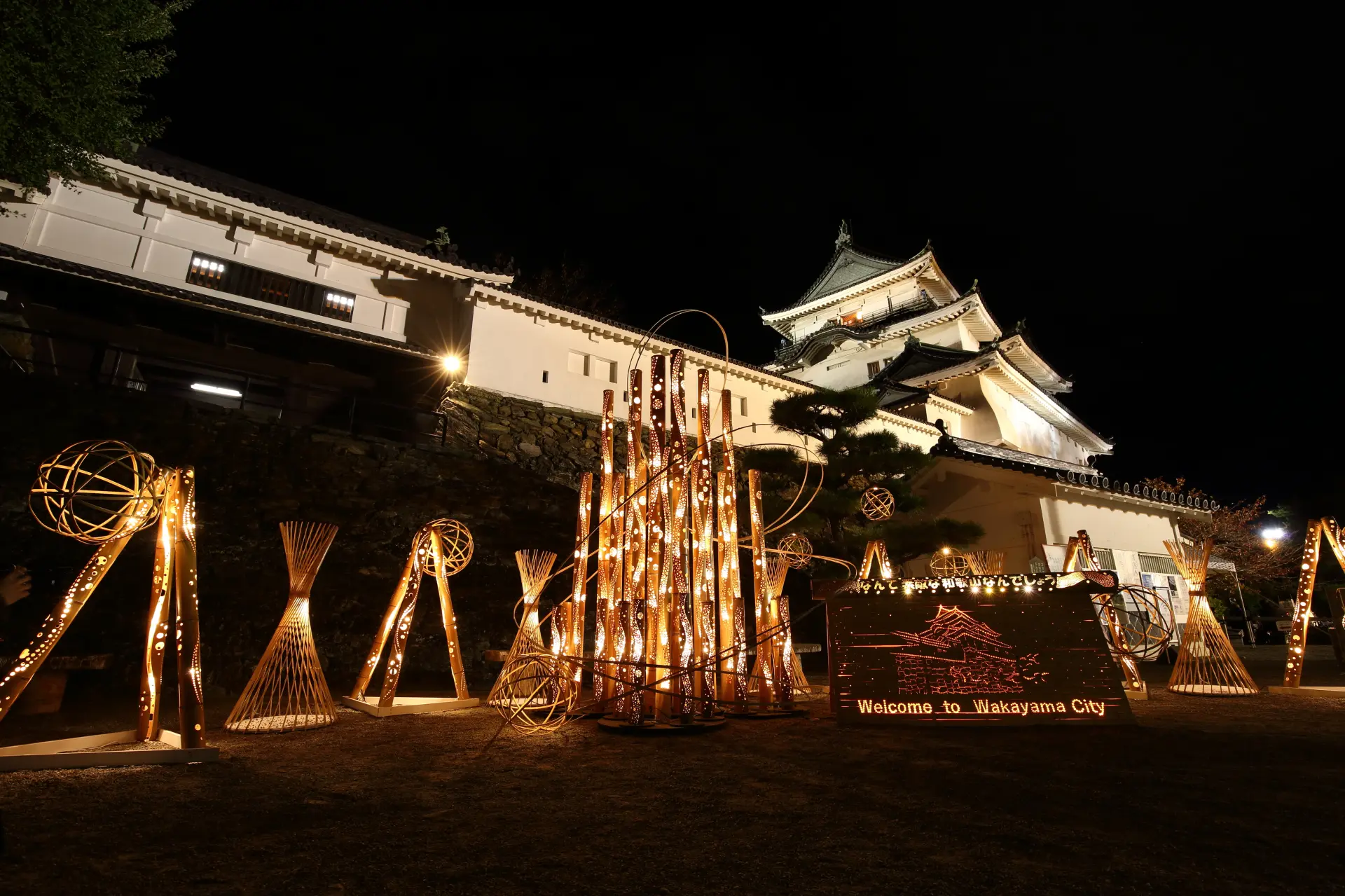
Don’t miss the magical view when it’s illuminated after sunset.
The grounds are home to many attractions, including the Okaguchi Gate, designated an Important Cultural Property, and historic turrets.
There’s also the Nishinomaru Garden and Koshoan, where you can enjoy nature and culture, plus a free zoo where you can interact with animals, offering plenty of ways to have fun.
Also, “hospitality ninjas” who share Wakayama Castle’s history and highlights may be hiding on the grounds, looking for a chance to help with your castle visit and memory-making.
Give their ninja hospitality a try when they appear out of nowhere.
The History of Wakayama Castle
Wakayama Castle was built by Hidenaga Toyotomi, younger brother of Hideyoshi Toyotomi, under instructions from Hideyoshi after he pacified Kishu (present-day Wakayama Prefecture) in 1585.
Along with the castle’s construction, Hideyoshi renamed the area, then called “Wakayama,” from “Wakayama” to “Wakayama.”
In 1600, after the Battle of Sekigahara ended, Yoshinaga Asano became the lord of the castle, and construction of the linked-tower keep and the Honmaru (main bailey) progressed.
In 1619, Yorinobu Tokugawa, the 10th son of Ieyasu Tokugawa, entered the castle, and the Kishu Tokugawa clan was established.
The Kishu Tokugawa clan was one of the “Tokugawa Gosanke,” three branches of the Tokugawa family ranked just below the shogun’s house in the Edo period.
After that, it served as the Tokugawa family’s castle for Approx. 250 years.

Access to Wakayama Castle
Here’s how to get there from JR Wakayama Station, a key hub for getting around Wakayama sightseeing.
It’s around a 30-minute walk, so it’s also a great option if you’d like to stroll through the city on the way.
- Route
-
1. From “JR Wakayama Station,” take the Wakayama Bus Route “0” or “25,” and get off at the “Wakayama-jo-mae” bus stop
2. Arrive in Approx. 1 minute on foot from “Wakayama-jo-ekimae” - Travel Time
- Approx. 5–6 minutes
Hours and Admission Fees at Wakayama Castle
Hours and admission fees at Wakayama Castle vary by facility.
Please refer to the table below for the main facilities’ hours and admission fees.
Wakayama Castle Main Keep
- Hours
- 9:00am–5:30pm (Last admission at 5:00pm)
- Closed on
- December 29–December 31
- Admission
-
, Adults: 410 yen
, Elementary school–junior high school students: 200 yen
Place of Scenic Beauty: Nishinomaru Garden
- Hours
- 9:00am–5:00pm
- Closed on
- December 29–December 31
- Admission
- Free
Tea House: Koshoan
- Hours
- 9:00am–4:30pm
- Closed on
- December 29–January 3
- Admission
- One serving (matcha and seasonal sweets): 470 yen
Zoo
- Hours
- 9:00am–5:00pm
- Closed on
-
Tuesdays from June–September and December–February
※If Tuesday is a public holiday, the zoo will be closed on the next weekday - Admission
- Free
What’s the Best Season to Visit Wakayama Castle?
If you’re visiting Wakayama Castle, spring—when the cherry blossoms are at their best—is recommended.
Approx. 600 cherry trees, mainly Somei Yoshino, bloom across the grounds, creating a beautiful scene where vivid white and pink petals complement the keep and stone walls.
From sunset to 11:00pm, you can enjoy the dreamy sight of illuminated cherry blossoms at night.
From late March to early April, during peak bloom, the Cherry Blossom Festival is held, bringing lively crowds with food stalls and events.


Enjoy Scenery Shaped by History, Culture, and Nature! 6 Must-See Highlights at Wakayama Castle
Known as one of Japan’s most beautiful castles, Wakayama Castle is a renowned landmark recognized as one of Japan’s Top 100 Castles.
Beyond historic features like the main keep and stone walls, there are plenty of appealing spots, including gardens and a zoo where you can enjoy nature.
Here are six essential highlights you won’t want to miss.
1. Nishinomaru Garden, a Famous Garden Where You Can Feel Traditional Japan
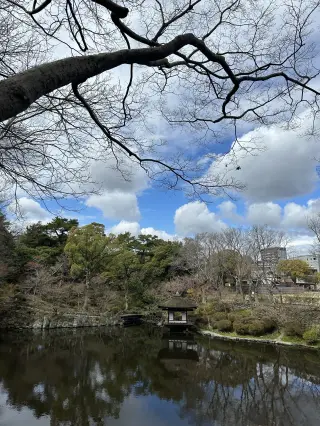
Nishinomaru Garden, located in Wakayama Castle Park, is one of Japan’s finest gardens and is designated a national Place of Scenic Beauty.
It was created in the early Edo period by Yorinobu Tokugawa as a place to enjoy tea ceremony and Noh theater.
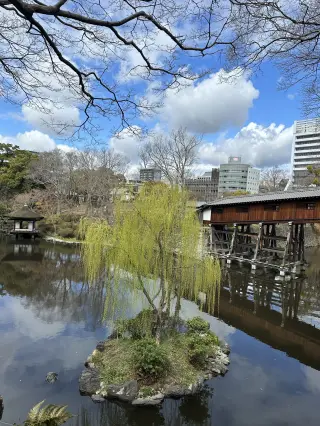
It is a strolling pond garden style (a garden built around a large pond), featuring thoughtful designs that make use of the land’s characteristics, such as a two-tiered pond and a waterfall fed by spring water.
Its charm includes the En-gyokaku pond pavilion floating within the moat, and scenic views created by bridges spanning multiple ponds.
Also known as Momijidani Garden, it lives up to its name in autumn, when the leaves turn brilliant colors—don’t miss the breathtaking view of fall foliage reflected in the pond and waterfall.


2. The Rare Slanted Bridge, Ohashi Roka
Ohashi Roka is a corridor bridge connecting the Nishinomaru, where the lord enjoyed hobbies, and the Ninomaru Ooku, the living quarters.
In the Edo period, only a limited number of people, such as the lord, could use it, so it was built with a roof and walls so it couldn’t be seen from outside.
It is rare nationwide for its diagonal slope of Approx. 11 degrees, and it has steps to prevent slipping.
Restored in 2006 based on Edo-period drawings, it can now be crossed freely, so be sure to experience the Approx. 11-degree incline for yourself.

3. The Main Keep, with Beautiful Views Both Outside and Inside
Wakayama Castle’s keep features a main keep and a smaller keep connected by a Tamon Yagura (connecting turret), and it has been selected as one of Japan’s Three Great Linked-Tower Keeps.
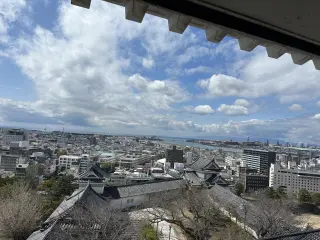
From the striking white, three-story main keep, panoramic views of Wakayama’s cityscape stretch out in all directions.
Inside, many items are on display, including arms and armor and old documents associated with the Kishu Tokugawa clan, letting you feel Wakayama’s history.
It was destroyed in the 1945 Wakayama air raid, and the current keep was rebuilt in 1958 with the same exterior as before the air raid.

4. Wakayama Rekishikan, Where You Can Learn While Enjoying Wakayama’s History and Culture
Wakayama Rekishikan is Wakayama Castle’s main guidance facility.
On the first floor, you’ll find tourist information and a souvenir center, while the second floor houses a history exhibition room where you can learn about Wakayama Castle’s history and culture.
A wide range of historical materials are on display, including the “Gold Seal handed down in the Kishu Tokugawa clan” and the “Wakayama History Picture Scroll,” along with relics and maps related to Wakayama Castle.
It’s also appealing that you can learn through hands-on experiences, not just by looking, such as the screening of “Wakayama Castle Revived,” which recreates the Edo-period castle in VR, and a faithful reproduction of the tea room “Jissai-an.”

5. Stroll the Grounds While Searching for Stone Wall Mason’s Marks
Wakayama Castle’s stone walls are famous for the many engraved marks you can see.
Approx. 170 types and over 2,100 marks have been identified, and a key feature is that they’re engraved not only on the front, but across every surface, including the top, bottom, and sides.
The designs vary widely, from symbols resembling circles and triangles to family crests, personal names, and what are thought to be dates and directions.
There are many theories about why they were carved, such as magical meanings or ownership marks, but the truth remains unclear.
Search for these marks as you walk, and imagine the meaning behind the patterns.

6. Wakayama Castle Park Zoo, a Free Zoo Loved by Locals
This zoo has been loved by Wakayama residents for over 100 years, dating back to the Taisho era.
Located within the grounds of Wakayama Castle, it keeps and exhibits 21 mammal species (79 animals), 26 bird species (83 animals), and 2 reptile species (5 animals).
It’s a small, Showa-retro zoo, but its cozy, welcoming atmosphere is well loved, and on weekends it gets busy with families and visitors touring Wakayama Castle stopping by.
Its free admission is another reason it’s so popular.

3 Nearby Sightseeing Spots Around Wakayama Castle
After enjoying Wakayama Castle, consider visiting an art museum where you can view works by artists from Wakayama, and a museum showcasing cultural assets connected to the region.
If you visit the spots around Wakayama Castle introduced below, you’ll be able to enjoy Wakayama’s charms even more.
1. The Museum of Modern Art, Wakayama
An art museum that mainly features modern and contemporary art from the Meiji period onward.
It houses a collection of over 10,000 works, focusing on local artists from Wakayama Prefecture, including Ryumon Yasuda from Kinokawa City, Western-style painter Kigai Kawaguchi known for abstract work, and avant-garde Japanese-style painter Ryushi Kawabata.

2. Wakayama Prefectural Museum
A museum that collects and exhibits cultural assets connected to Wakayama Prefecture.
It originated as a prefectural art museum established in 1963, and the current facility, designed by Kisho Kurokawa, opened in 1994.
Wakayama Castle is nearby, and The Museum of Modern Art, Wakayama is next door, so it’s recommended to visit them together.

3. O-Tensu Chaya
A shop and eatery located in front of Wakayama Castle’s main keep.
It was named “O-Tensu Chaya” because in the Wakayama dialect, the castle keep is called “otensu.”
In the shop, you can buy castle-themed items, including chaya-exclusive goshuin-style castle stamps and Yoshimune’s warlord stamps, as well as cards printed with quizzes about Oda Nobunaga, Hideyoshi Toyotomi, and Ieyasu Tokugawa.
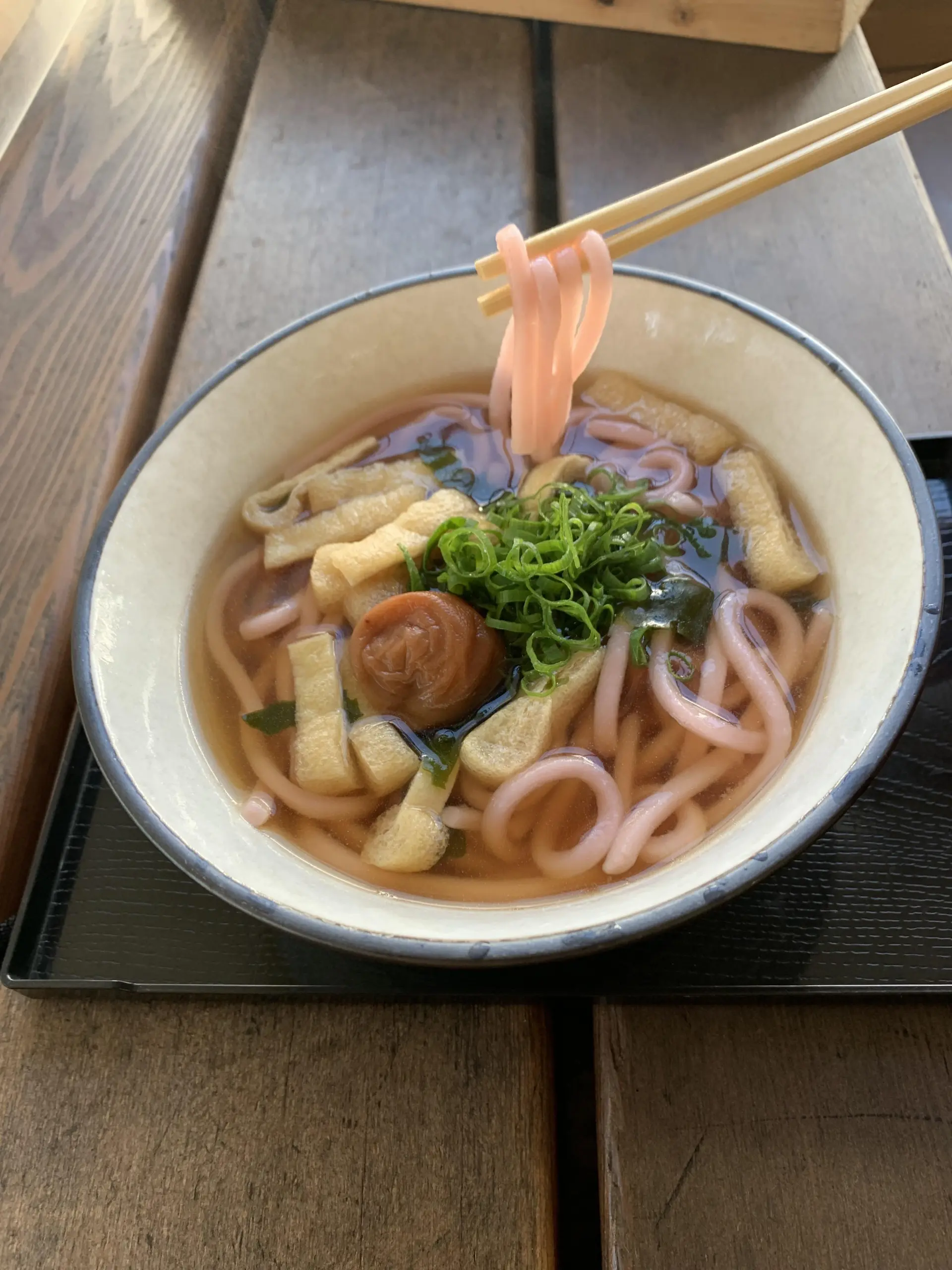
Recommended menu items include Kishu Ume Udon made with plum noodles topped with Nanko ume, Kumano Beef gyudon, and soft serve made with raw milk from Wakayama Kurosawa Farm.
3 Popular Restaurants Near Wakayama Castle
After exploring Wakayama Castle, you’ll want to fill up with Wakayama Ramen, a longtime local favorite.
Even within Wakayama ramen, each shop has its own style, from rich tonkotsu-shoyu flavor to a classic, old-school chuka soba taste.
Here are three carefully selected popular spots with a castle-town atmosphere that are easy to stop by during sightseeing.
1. Marui Junibanchoten
Marui Junibanchoten is a ramen shop serving Wakayama ramen.
Marui Junibanchoten was also featured as a Michelin Plate in the Michelin Guide Wakayama 2022.
The signature menu item is the “Chashu Men.”
Straight, medium-thick noodles mix with the rich tonkotsu-shoyu soup, enhancing the noodles’ texture and umami.

2. Yamatame Shokudo
Yamatame Shokudo, located in central Wakayama City, is a restaurant serving chuka soba and set meals.
Founded in 1953, it’s a long-established spot that has been loved by locals for many years.
With a homey atmosphere, it’s easy to drop in for an everyday meal.
The specialty is the “Chuka Soba,” also known as “Wakayama ramen.”

3. Chuka Soba Specialty Shop Ide Shoten
With a long history dating back to before World War II, Wakayama ramen has become firmly established as a soul food among locals.
This bowl—pairing a rich tonkotsu-shoyu soup with springy, straight thin noodles and topped with colorful kamaboko fish cake—is one of Japan’s best-known regional ramen styles.

Reviews
4.30
Some reviews are AI-translated.
-
A place that doesn’t need any editing at all.
No matter how you shoot it, it looks beautiful. -
Wakayama Castle is a great spot to enjoy different flowers throughout the year. The cherry blossoms in spring are gorgeous. It's definitely one of the best places for flower lovers! 👍
-
When planning a trip to Wakayama, Wakayama Castle is definitely one of the must-see landmarks. There are also plenty of other great spots in Wakayama City, like the historic Saikazaki Fishing Port and amusement parks. It's a place worth visiting again! 👍
FAQ about Wakayama Castle
Q
When is the best time to see the cherry blossoms at Wakayama Castle?
A
From late March to early April.
Q
When is the best time to see the fall foliage at Wakayama Castle?
A
From late November to early December.
Summary
We’ve introduced the highlights of Wakayama Castle—how did it sound?
To fully enjoy the beautiful scenery where history, nature, and culture come together, be sure to visit at least once.
With gardens, a history museum, and a zoo on the grounds, it’s a great destination for both family trips and solo travel.
Because you can overlook the city, Wakayama Castle is also recommended as a great starting point for sightseeing in Wakayama.
Use this article as a reference too, and enjoy Wakayama sightseeing with a curated selection of local attractions and food.