

Complete Guide to Japan's World Heritage Sites: Highlights, Attractions, and Locations
Japan is home to remarkable cultural traditions and structures that captivate people across the country.
World Heritage sites bring many of these qualities together, making them highly recommended destinations for international visitors.
However, many people may not know exactly where Japan's World Heritage sites are located or what histories they hold.
This article introduces the locations and highlights of all 27 World Heritage sites in Japan.
Read to the end to discover sides of Japan you may never have known and places you will want to visit at least once.
What Is a World Heritage Site?
World Heritage sites are cultural properties, natural environments, landscapes, and other places of “outstanding universal value” inscribed on a list for protection under the World Heritage Convention, which was adopted by the UNESCO General Conference in 1972.
“Outstanding universal value” means value that can be appreciated equally regardless of nationality, region, era, generation, ideology, or faith.
World Heritage sites can therefore be described as precious assets shared by all humanity, symbolizing the cultures and natural beauty of different countries.
The World Heritage Convention treats the protection and preservation of World Heritage sites as the responsibility of the entire international community, with the goal of passing them on to future generations.
New properties continue to be added every year, and as of July 2027, the list contains 1,248 World Heritage sites across 168 countries and regions.

World Heritage Site Categories
World Heritage sites are divided into the following three categories according to their characteristics.
When distinguished more specifically, they are referred to as World Cultural Heritage, World Natural Heritage, and Mixed World Heritage sites.
Cultural sites currently account for the largest number of inscriptions at 933, followed by 227 natural sites and 39 mixed sites.
| Category | What It Covers | Representative World Heritage Sites |
|---|---|---|
| Cultural | Monuments, groups of buildings, archaeological sites, cultural landscapes, and other works created by humanity | Statue of Liberty (United States) / Taj Mahal (India) |
| Natural | Distinctive landforms and geological features, habitats and ecosystems of valuable plants and animals, and more | Galápagos Islands (Ecuador) / Ilulissat Icefjord (Denmark) |
| Mixed | Properties with both cultural and natural heritage value | Historic Sanctuary of Machu Picchu (Peru) / Meteora (Greece) |
How Many World Heritage Sites Are There in Japan?
As of July 2027, Japan has 27 World Heritage sites.
These comprise 22 cultural sites and five natural sites.
List of World Heritage Sites in Japan
The table below summarizes the names, locations, inscription years, and categories of Japan's 27 World Heritage sites.
Use it as a reference if you plan to visit World Heritage sites during your trip to Japan.
An Easy Guide to the Attractions and Highlights of Japan's World Heritage Sites
The following sections introduce each of Japan's World Heritage sites in the order they were inscribed, with details on their inscription, highlights, and component properties.
They range from famous landmarks to lesser-known places, but each has qualities worthy of World Heritage status.
If World Heritage sites are the focus of your trip to Japan, use this guide to help plan your itinerary.
Nara: Buddhist Monuments in the Horyu-ji Area
The Buddhist Monuments in the Horyu-ji Area were inscribed in 1993 alongside Himeji-jo, becoming Japan's first World Cultural Heritage sites.
The inscription was based primarily on the following two points.
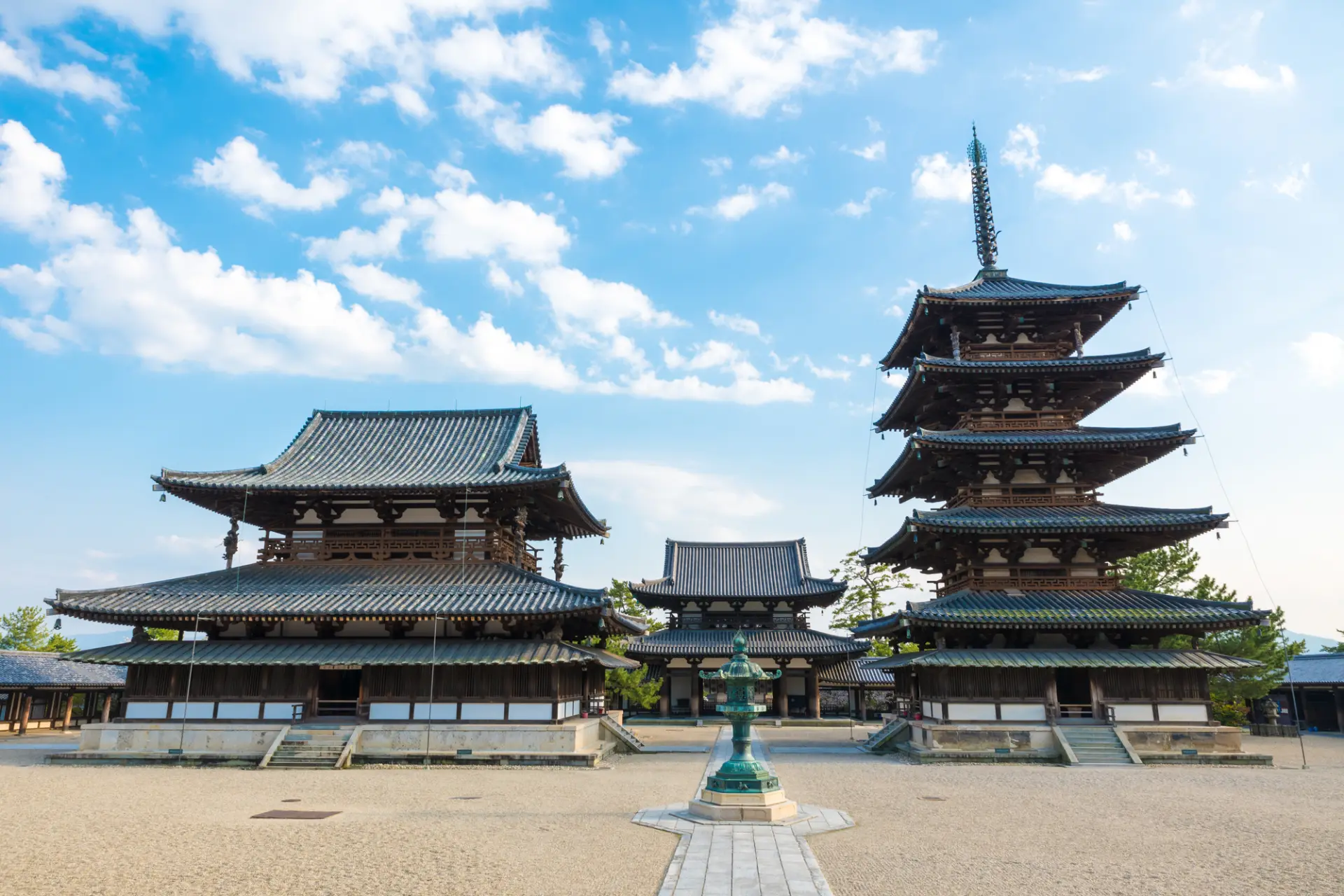
Horyu-ji, the world's oldest surviving wooden building complex, is a masterpiece demonstrating the outstanding design and decorative beauty of Buddhist architecture. It has also had a major influence as a cultural property conveying Japan's independently developed Buddhist culture.
The buildings have historical value as important evidence of the introduction of Buddhism during the Asuka period (592–710) and of cultural exchange with China and East Asia.
The property consists of 48 buildings, including Horyu-ji, and has deep ties to Prince Shotoku.
Its grand cultural treasures, including the Main Hall and five-story pagoda, evoke the spirit of the Asuka period.
Below are the attractions and highlights of Horyu-ji and Hokki-ji, which make up the Buddhist Monuments in the Horyu-ji Area.
Horyu-ji Temple
Horyu-ji Temple, located in Ikaruga, Ikoma District, Nara Prefecture, is a distinguished temple with more than 1,300 years of history.
It is the head temple of the Shotoku sect of Buddhism and is also known for its close association with Prince Shotoku.
It houses approximately 3,000 structures and objects designated as National Treasures or Important Cultural Properties, giving it exceptional historical and cultural value.
One highlight of Horyu-ji is its distinctive arrangement of buildings, known as the Horyu-ji-style temple layout.
These buildings have been passed down through the centuries as cultural assets conveying the architectural style and Buddhist culture of the Asuka period (592–710).

Hokki-ji Temple
Like Horyu-ji, Hokki-ji Temple is located in Ikaruga, Ikoma District, Nara Prefecture.
It is counted among the seven great temples associated with Prince Shotoku, although it is believed to have been founded in 638 after his death by his son, Prince Yamashiro no Oe.
Because Prince Yamashiro no Oe converted Okamoto Palace into a temple in accordance with Prince Shotoku's wishes, it is also known as Okamoto-dera and Ikejiri-dera, the latter derived from the local place name.
The highlight of Hokki-ji is its National Treasure three-story pagoda, said to be the oldest in Japan.
Built with a distinctive tapering structure that narrows toward the upper levels, its elegant 24-meter form captivates visitors.
The surrounding area is also rich in nature, with cherry blossoms in spring and cosmos flowers in fall creating a picturesque landscape.
Immerse yourself in the tranquil atmosphere and imagine life in the Asuka period.

Hyogo: Himeji Castle
Himeji Castle in Himeji, Hyogo Prefecture, was inscribed in 1993 alongside the Buddhist Monuments in the Horyu-ji Area as one of Japan's first World Heritage sites.
Built in 1609 by the military commander Ikeda Terumasa, the main keep has five exterior levels, six interior floors, and one basement. It is the largest surviving castle keep from the Edo period.
The complex of keeps and other buildings, sometimes described as masterpieces of wooden architecture, has been exceptionally well preserved. It is internationally recognized for conveying Japan's distinctive castle architecture.

Kagoshima: Yakushima
Yakushima, located approximately 60 kilometers south-southwest of Cape Sata in Kagoshima Prefecture, was also inscribed as a World Natural Heritage site in 1993, making it one of Japan's first World Heritage sites.
The island has a circumference of 132 kilometers and an area of 505 square kilometers. It has many mountains over 1,000 meters high, including 1,936-meter Mount Miyanoura, the highest peak in Kyushu. Forests cover 90% of the island, earning it the nickname “the Alps of the Ocean.”
Abundant rainfall supports a rich forest ecosystem containing more than 70% of Japan's plant species as well as endemic species. Thick moss carpets the forests in vivid green.

Aomori and Akita: Shirakami-Sanchi
Shirakami-Sanchi is the collective name for a vast mountainous region covering approximately 13 hectares across northwestern Akita Prefecture and southwestern Aomori Prefecture. Scattered throughout the area are some of the world's largest primeval beech forests, which have remained almost entirely unaffected by human activity since ancient times.
It was inscribed as a World Heritage site in 1993 because its valuable ecosystem supports a diverse range of plants and animals.

Kyoto: Historic Monuments of Ancient Kyoto
Kyoto served as Japan's capital from the Heian period (794–1185) through the Edo period (1603–1868).
Having flourished at the heart of the nation for nearly 1,000 years, Kyoto still retains many historically valuable structures.
The Historic Monuments of Ancient Kyoto, comprising 17 cultural properties that symbolize Kyoto's spirituality and beauty, including Enryaku-ji Temple in Shiga Prefecture, were inscribed as a World Cultural Heritage site in 1994.
The reasons for inscription include their preservation of architectural styles represented by National Treasures and garden styles represented by Special Places of Scenic Beauty, their significance as properties representing their respective periods and cultures, and their excellent state of conservation.
These cultural properties are far more than tourist attractions, and Kyoto's long history is deeply moving.
Below are the attractions and highlights of the principal properties that make up the Historic Monuments of Ancient Kyoto.
Kamigamo-jinja Shrine (Kamo Wakeikazuchi-jinja Shrine)
One of Kyoto's oldest shrines, Kamigamo-jinja is said to have originated when its deity, Kamo Wakeikazuchi no Okami, descended upon sacred Mount Koyama north-northwest of the main sanctuary in the age of the gods. In 678, the sixth year of Emperor Tenmu's Hakuho era, the local Kamo clan constructed the shrine buildings.
Kamigamo-jinja is its commonly used name; its official name, Kamo Wakeikazuchi-jinja, comes from the enshrined deity. Its expansive grounds, surrounded by abundant nature, contain more than 60 shrine buildings, two of which are National Treasures and 41 of which are Important Cultural Properties.

Otowa-san Kiyomizu-dera Temple
Kiyomizu-dera Temple is said to have been founded by the monk Enchin in 778, with Sakanoue no Tamuramaro constructing its Buddhist hall in 798.
Its 130,000-square-meter grounds spread across the slopes of Mount Otowa and contain more than 30 temple buildings and monuments, including National Treasures and Important Cultural Properties.
Kiyomizu-dera is also known for its seasonal scenery: cherry blossoms in spring, greenery in summer, colorful leaves in fall, and snow in winter.

Tenryu-ji Temple
Tenryu-ji is the head temple of the Tenryu-ji branch of the Rinzai school of Zen Buddhism. It was founded in 1339, at the beginning of the Muromachi period, by Ashikaga Takauji to pray for the repose of Emperor Go-Daigo's soul, with the Zen master Muso Soseki as its founding priest.
During the Muromachi period, it ranked first among the Kyoto Gozan, the city's five most prestigious Zen temples.
The temple grounds occupy the former site of Emperor Go-Saga's Kameyama Detached Palace and were among Japan's first designated Historic Sites and Special Places of Scenic Beauty.
A highlight of the temple buildings is the large screen painting of Bodhidharma directly inside the entrance to the kuri temple quarters.
Painted by former head priest Hirata Seiko, it depicts Bodhidharma, the founder of Zen Buddhism, in a distinctive style.

Other Cultural Properties Comprising the Historic Monuments of Ancient Kyoto
Gifu and Toyama: Historic Villages of Shirakawa-go and Gokayama
Inscribed as a World Cultural Heritage site in 1995, the Historic Villages of Shirakawa-go and Gokayama preserve landscapes that evoke an archetypal image of rural Japan.
The communities developed their own culture through numerous innovations designed to adapt to severe winter conditions and social circumstances.
They are particularly famous for their distinctive gassho-zukuri architecture and clusters of thatched-roof houses.
The steeply pitched roofs prevent snow from accumulating while incorporating various functional features suited to the climate.
Another defining characteristic is the enduring spirit of yui, or cooperation and mutual assistance among residents.
These traditional lifestyles and valuable landscapes met the criteria for World Heritage inscription.
Here are some of the most popular visitor destinations among the properties that make up the Historic Villages of Shirakawa-go and Gokayama.
Shirakawa-go Gassho-zukuri Village
Shirakawa-go is a picturesque region where the traditional scenery of rural Japan remains alive.
It has the largest surviving concentration of gassho-zukuri buildings, with more than 100 structures of various sizes as of 2016.
It is Japan's largest gassho-zukuri village and is designated a national Important Preservation District for Groups of Traditional Buildings.
The main cluster of gassho-zukuri houses is in the Ogimachi district, slightly north of the village center.
With places to experience traditional culture and museums displaying historical materials, visitors can glimpse the wisdom of earlier ways of life in harmony with nature.

Gokayama Ainokura and Suganuma Gassho-zukuri Villages
Located at the southwestern edge of Toyama Prefecture, Gokayama consists of 40 small settlements scattered across five valleys.
Surrounded by steep mountains, the area receives more than two meters of snow in winter.
Many gassho-zukuri houses remain, characterized by steeply pitched thatched gable roofs developed for this heavy-snow region.
The two villages of Ainokura and Suganuma are inscribed as World Cultural Heritage sites.
Both villages contain folklore museums and hands-on facilities presenting the life and history of Gokayama, as well as folk craft shops and restaurants serving local cuisine.


Hiroshima: Atomic Bomb Dome
Designed by Czech architect Jan Letzel, the Atomic Bomb Dome was completed on April 5, 1915, as the Hiroshima Prefectural Industrial Promotion Hall.
During the atomic bombing, however, it stood only 160 meters from the hypocenter.
Its exposed steel frame and crumbling exterior walls remain much as they were immediately after the bombing, and the structure eventually became known as the Atomic Bomb Dome. It is an invaluable building that conveys this tragic history to the present day.
Located in Peace Memorial Park in Hiroshima City, Hiroshima Prefecture, it was inscribed as a World Cultural Heritage site in 1996.

Hiroshima: Itsukushima Shrine
Itsukushima Shrine is located on Miyajima in Hatsukaichi, Hiroshima Prefecture. It was inscribed as a World Cultural Heritage site in 1996.
Tradition holds that it was founded by Saeki no Kuramoto in 593.
Most of the shrine buildings are designated as National Treasures or Important Cultural Properties. The great torii gate standing in the sea completed a three-and-a-half-year major restoration in 2022, restoring its vivid vermilion color and imposing appearance.

Nara: Historic Monuments of Ancient Nara
The Historic Monuments of Ancient Nara, comprising eight component properties, were inscribed as a World Cultural Heritage site in 1998.
With a history spanning 1,300 years, Nara is a traditional region described as the birthplace of Japan.
It flourished as the center of the nation during the Nara period (710–794), bringing political and cultural transformation to Japan.
Today, Heijo-kyo and various shrines, temples, Buddhist traditions, and cultural properties remain closely intertwined with daily life.
These are among the reasons for its inscription, which is also distinctive in covering Ancient Nara as a whole.
It is no exaggeration to say that the entire city is a World Heritage site, with each property contributing another layer to Nara's history.
Here are the attractions and highlights of the principal component properties of the Historic Monuments of Ancient Nara.
Todai-ji Temple
Todai-ji is one of Nara's leading temples. Its Great Buddha of Vairocana was commissioned by Emperor Shomu during the Nara period and consecrated in 752. The temple complex then took nearly 40 more years to complete.
Its grounds contain many National Treasure buildings, including the Great Buddha Hall, one of the world's largest wooden structures and home to the seated Vairocana Buddha popularly known as the Great Buddha of Nara; Hokke-do Hall, also called Sangatsu-do, the oldest surviving building at Todai-ji; and Nandaimon, Japan's largest temple gate.

Gango-ji Temple
Gango-ji originated as Asuka-dera, Japan's first full-scale Buddhist temple, established in Asuka Village by Soga no Umako in the late sixth century. It was later moved into Heijo-kyo when the capital was relocated and renamed Gango-ji.
As part of the eight properties comprising the Historic Monuments of Ancient Nara, its former monks' quarters, Gokurakudo Hall and the Zen Room, are inscribed as World Cultural Heritage.
The temple also holds many other treasures, including the National Treasure miniature five-story pagoda.

Kasuga Taisha Shrine
At the beginning of the Nara period (710–794), Takemikazuchi no Mikoto is said to have ridden a sacred deer from Kashima in Ibaraki Prefecture to Mount Mikasa to protect Heijo-kyo and ensure the nation's prosperity. In 768, the main sanctuary was built at the foot of Mount Mikasa to enshrine four deities: Takemikazuchi no Mikoto, Futsunushi no Mikoto, Amenokoyane no Mikoto, and Himegami.
Many of the shrine buildings remain in their original positions.
Every 20 years, the Shikinen Zotai renewal is held to restore the shrine buildings. All 62 auxiliary and subordinate shrines, including the four National Treasure main sanctuary buildings, are repaired and renewed in vivid vermilion.

Other Cultural Properties Comprising the Historic Monuments of Ancient Nara
- Kofuku-ji Temple
- Kasugayama Primeval Forest
- Yakushi-ji Temple
- Toshodai-ji Temple
- Nara Palace Site
Tochigi: Shrines and Temples of Nikko
Inscribed as a World Cultural Heritage site in 1999, the Shrines and Temples of Nikko collectively refers to the buildings and surrounding landscapes in Nikko City. The area is also known as Nikko Sannai and Nisha Ichiji, meaning “two shrines and one temple.”
The buildings included in the property are masterpieces by exceptional artists, and their gongen-zukuri architecture became a model for shrines and temples during the Edo period.
Nikko has also inherited a distinctive culture blending mountain worship and Shinto thought since ancient times, creating sacred spaces integrated with nature. This was another factor behind its inscription.
The Shrines and Temples of Nikko, closely connected with Tokugawa Ieyasu and the history and culture of the Edo period, leave a profound impression.
Here are selected attractions and highlights of the principal properties.
Nikko Toshogu Shrine
Nikko Toshogu is a shrine dedicated to Tokugawa Ieyasu, the first shogun of the Edo shogunate.
It is the centerpiece of a visit to the World Heritage Shrines and Temples of Nikko, with 55 lavishly decorated buildings, including eight National Treasures and 34 Important Cultural Properties.
Built by master craftspeople gathered from throughout Japan, the shrine buildings feature lacquer, brilliant colors, and numerous carvings on their pillars and other surfaces.

Nikko Futarasan-jinja Shrine
Nikko Futarasan-jinja is a shrine that venerates the three principal peaks of the Nikko mountain range as sacred mountains.
It is also known for blessings of good fortune and matchmaking.
Shinkyo Bridge, an elegant vermilion-lacquered wooden bridge marking the entrance to Nikko Sannai, belongs to Futarasan-jinja Shrine. It serves as a gateway to the World Heritage Shrines and Temples of Nikko.

Nikko-zan Rinno-ji Temple
Nikko-zan Rinno-ji is the collective name for its halls, pagodas, and sub-temples. It is said to have begun when the monk Shodo, founder of religious practice at Nikko, established Shihonryu-ji Temple.
Sanbutsudo is the largest wooden building at Nikko and enshrines three Buddhist statues: the Thousand-Armed Kannon, Amida Nyorai, and Horse-Headed Kannon.

Okinawa: Gusuku Sites and Related Properties of the Kingdom of Ryukyu
The Gusuku Sites and Related Properties of the Kingdom of Ryukyu comprise nine historic sites scattered across Okinawa and were inscribed as a World Cultural Heritage site in 2000.
One reason for their inscription was the recognition of gusuku as symbols of Ryukyuan cultural history and places of nature worship for rural communities.
Gusuku is an Okinawan, or Ryukyuan, term referring to castles, mausoleums, sacred areas, and utaki sacred sites.
The Ryukyu Kingdom flourished from the 15th through the 19th century, and distinctive styles can be seen in its walls, gates, gardens, and many other features.
These related properties are extremely important for understanding the social structure and archaeological heritage of the Ryukyu Kingdom. They also remain a spiritual foundation for the people of Okinawa.
Here are the attractions and highlights of three properties that make up the Gusuku Sites and Related Properties of the Kingdom of Ryukyu.
Shurijo Castle
Shurijo Castle stands within Shurijo Castle Park in Naha, Okinawa Prefecture.
Japan's only vividly vermilion-colored castle, it is a symbol of Okinawa.
Shurijo Castle was an imposing center of politics, diplomacy, and culture for the Ryukyu Kingdom, which existed for 450 years from 1429 to 1879.
A fire on October 31, 2019, once again destroyed Shurijo's main hall, along with seven other buildings.
Restoration and reconstruction work is underway with donations from Japan and overseas, aiming for completion in 2026.

Nakijin Castle Ruins
These castle ruins stand on the Motobu Peninsula in northern Okinawa Island. The castle was the residence of the king of Hokuzan during the Sanzan period, when Ryukyu was divided into the competing regions of Hokuzan, Chuzan, and Nanzan. It is believed to have been built in the 13th century.
The surviving walls extend approximately 1.5 kilometers and reach eight meters at their highest point. The roughly 7.9-hectare castle grounds rival Shurijo Castle in size.
The castle consists of ten enclosures, with a stone-paved path leading from the gate to the large courtyard where the main hall is believed to have stood.

Tamaudun
Tamaudun is located in Naha, Okinawa Prefecture.
This royal mausoleum was built in 1501 during the reign of King Sho Shin, renowned as the height of the Ryukyu Kingdom.
The massive stone structure is said to have been modeled after Shurijo Castle and is distinguished by three burial chambers arranged from east to west.
Remains dating from its original construction in 1501 survive intact, including the Tamaudun monument inscribed with the names of the royals buried there.

Other Cultural Properties Comprising the Gusuku Sites and Related Properties of the Kingdom of Ryukyu
- Zakimi Castle Ruins
- Katsuren Castle Ruins
- Nakagusuku Castle Ruins
- Sonohyan-utaki Ishimon
- Shikinaen Garden
- Sefa-utaki
Mie, Nara, and Wakayama: Sacred Sites and Pilgrimage Routes in the Kii Mountain Range
The Sacred Sites and Pilgrimage Routes in the Kii Mountain Range comprise three sacred sites spanning Wakayama, Nara, and Mie Prefectures, along with the pilgrimage routes leading to them.
This region has been revered as a dwelling place of the gods since ancient times and has attracted practitioners of nature worship for more than 1,000 years.
It is also a place where diverse beliefs, including Shinto, Buddhism, and Shugendo, intersect, playing an important role in the cultural and spiritual development of the Japanese people.
The cultural landscape created through this interplay of nature and faith is unparalleled and holds exceptional value.
Although routes are rarely selected as World Heritage properties, this background led to their inscription as a World Cultural Heritage site in 2004.
Here are the defining features and highlights of the principal properties comprising the Sacred Sites and Pilgrimage Routes in the Kii Mountain Range.
Kumano Hongu Taisha Shrine
Kumano Hongu Taisha enshrines Ketsumimiko no Okami as its principal deity and was founded during the reign of Emperor Sujin, Japan's tenth emperor.
Since ancient times, it attracted devotion not only from the upper classes but also from warriors and ordinary people. So many worshippers traveled here from throughout Japan in long processions that their journeys were compared to “ants making a pilgrimage to Kumano.”

Kumano Kodo
The Kumano Kodo is a network of pilgrimage routes leading to the Kumano Sanzan: Kumano Hongu Taisha, Kumano Hayatama Taisha, Kumano Nachi Taisha, and Nachisan Seiganto-ji Temple. As faith in Kumano grew, members of the imperial family used these routes for pilgrimages, and the custom eventually spread to ordinary people.
The routes are broadly divided into five groups.
Of these, the Kii-ji, Nakahechi, Ohechi, and Kohechi routes are component properties of the Sacred Sites and Pilgrimage Routes in the Kii Mountain Range.
Experience Kumano, whose tradition of nature worship greatly influenced the development and exchange of religion and culture in Japan, with respect and a peaceful heart.


Mount Yoshino
Mount Yoshino is known as Japan's foremost cherry blossom destination.
In spring, the blossoms gradually open from Shimo Senbon upward, eventually coloring the entire mountain as far as Oku Senbon.
It is also known for fall foliage. Because of the differences in elevation, visitors can watch the colors gradually spread from the summit toward the foothills.
Hiking while admiring the fall colors and visiting temples and shrines is another recommended way to explore the area.

Other Cultural Properties Comprising the Sacred Sites and Pilgrimage Routes in the Kii Mountain Range
- Yoshino Mikumari-jinja Shrine
- Kimpu-jinja Shrine
- Kinpusen-ji Temple
- Yoshimizu-jinja Shrine
- Ominesan-ji Temple
- Kumano Hayatama Taisha Shrine
- Kumano Nachi Taisha Shrine
- Seiganto-ji Temple
- Nachi Falls
- Nachi Primeval Forest
- Fudarakusan-ji Temple
- Niutsuhime-jinja Shrine
- Kongobu-ji Temple
- Jison-in Temple
- Niukanshofu-jinja Shrine
- Omine Okugakemichi
- Koyasan Pilgrimage Routes
Hokkaido: Shiretoko
Shiretoko, located at the northeastern edge of Hokkaido, was inscribed as a World Natural Heritage site in 2005.
Centered on the Shiretoko Peninsula facing the Sea of Okhotsk, this vast area of approximately 71,100 hectares contains mountains, ocean, forests, lakes, and marshes.
These natural environments are closely linked with the region's plants and animals. Their distinctive ecosystem is sustained by the rich nutrients brought by sea ice.
The area also supports many endangered and rare species, including the Shiretoko violet, Blakiston's fish owl, sperm whales, and orcas. Its global ecological importance led to its inscription.
Shiretoko's principal appeal is its wealth of untouched nature retaining a primeval beauty.
Shiretoko Five Lakes and Oshinkoshin Falls are especially recommended for their views.

Shimane: Iwami Ginzan Silver Mine and its Cultural Landscape
Inscribed as a World Cultural Heritage site in 2007, the Iwami Ginzan Silver Mine and its Cultural Landscape encompasses a silver mine developed in the early Edo period and its surrounding landscape.
This region, emblematic of Japan's Warring States period, produced one-third of the world's silver at its peak. It is therefore an indispensable historic site for understanding both Japanese and world history.
Its inscription was based on the following three points.
1. It influenced the cultures and economies of European and Asian countries.
2. Numerous remains related to silver production, including workshops and mine tunnels, survive in excellent condition.
3. The mines were operated and managed without destroying the natural environment, preserving the cultural landscape to the present day.
People still live throughout the surrounding area, lending it warmth and a nostalgic atmosphere.
Here are the highlights of several places worth visiting among the properties comprising the Iwami Ginzan Silver Mine and its Cultural Landscape.
Iwami Ginzan Omori and Ginzan Areas
The Omori and Ginzan districts were centers of mining and economic activity extending across the area around Mount Sennoyama.
The Omori district was the political and economic center of mine administration, lined with the magistrate's office, samurai residences, and other buildings.
The Ginzan district was where all processes from mining to smelting were performed by hand from the Warring States period through the Taisho period. Numerous remains survive, including approximately 900 mabu mine shafts, smelting facilities, miners' residences, temples, and shrines.

Yunotsu
Surrounded by abundant nature, the port town of Yunotsu is a hot spring community that flourished as a shipping port for silver from the Warring States and Edo periods.
Its greatest attraction is its nostalgic townscape.
The area is designated an Important Preservation District for Groups of Traditional Buildings, and its rows of old houses and hot spring inns evoke the atmosphere of old Japan.
It is ideal for a walk while taking in traces of the past.
Another highlight is Yunotsu Onsen, where the distinctive local Sekishu roof tiles, made in striking red and understated black, stand out.
The indescribable beauty of the town at sunset and amid fall foliage fills the heart, while its naturally flowing springs, known for their quality, soothe the fatigue of travel.

Other Cultural Properties Comprising the Iwami Ginzan Silver Mine and its Cultural Landscape
- Magistrate's Office Site
- Yataki Castle Site
- Yahazu Castle Site
- Iwami Castle Site
- Miyanomae
- Kumagai Family Residence
- Rakan-ji Gohyaku Rakan
- Iwami Ginzan Kaido Tomogaura Route
- Iwami Ginzan Kaido Yunotsu-Okidomari Route
- Tomogaura
- Okidomari
Tokyo: Ogasawara Islands
Located approximately 1,000 kilometers south-southeast of central Tokyo, the Ogasawara Islands are a group of around 30 islands in the Pacific Ocean.
Only Chichijima and Hahajima are inhabited. The World Heritage property covers the islands' land areas, excluding settlements and certain other areas, as well as part of the surrounding sea.
The regularly scheduled ferry from Tokyo to Chichijima takes approximately 24 hours and operates once every three to six days.
The defining characteristic of the Ogasawara Islands is that they are oceanic islands that have remained separated from any continent since their formation.
They support many endemic species that have evolved independently, including land snails and the Munin azalea, which are found nowhere else.
This ecosystem, sometimes called the Galápagos of the Orient, received high recognition and was inscribed as a World Natural Heritage site in 2011.
Recommended activities include visiting scenic viewpoints and enjoying marine activities.
The cobalt-blue sea and clear sky offer a memorable experience.

Iwate: Hiraizumi – Temples, Gardens and Archaeological Sites Representing the Buddhist Pure Land
Hiraizumi – Temples, Gardens and Archaeological Sites Representing the Buddhist Pure Land is the name of a group of historic properties in Hiraizumi, southwestern Iwate Prefecture.
Hiraizumi preserves an exceptional group of remains based on Pure Land Buddhist beliefs concerning rebirth in paradise after death.
They are outstanding designs created by the Oshu Fujiwara clan, under whom the region flourished during the Heian period, in an effort to realize an ideal Buddhist Pure Land on earth. This tradition developed independently in Japan and has no direct equivalent elsewhere.
Recognized for its archaeological value and as valuable evidence of cultural exchange with East Asia, the property was inscribed as a World Cultural Heritage site in 2011.
Its traditions continue through folk performing arts and religious rituals. Beyond its visual beauty, Hiraizumi's appeal lies in the depth of its living history and culture.
Below is a detailed introduction to some of the properties comprising Hiraizumi – Temples, Gardens and Archaeological Sites Representing the Buddhist Pure Land.
Chuson-ji Temple
Founded in 850, Chuson-ji holds more than 3,000 National Treasures and Important Cultural Properties.
It embodies a profound wish to comfort the souls of everyone who died in the long conflicts that once afflicted the Tohoku region, regardless of side, and to create a peaceful society.
The grounds contain several buildings, of which the Konjikido Golden Hall is especially popular. Its building and Buddhist statues gleam with gold, giving it the beauty of a single work of decorative art.

Motsu-ji Temple
Motsu-ji is designated by the national government as both a Special Historic Site and a Special Place of Scenic Beauty. Many remains of Heian-period Buddhist architecture survive, including foundation stones. At its height, the temple is said to have contained 40 halls and pagodas and 500 monks' quarters, making it even larger than Chuson-ji.
Its Pure Land garden has also been preserved in nearly complete condition, offering a rare glimpse into the world of approximately 800 years ago.

Other Cultural Properties Comprising Hiraizumi – Temples, Gardens and Archaeological Sites Representing the Buddhist Pure Land
- Kanjizaio-in Ato
- Muryoko-in Ato
- Mount Kinkei
Yamanashi and Shizuoka: Fujisan, Sacred Place and Source of Artistic Inspiration
Mount Fuji, Japan's highest peak at 3,776 meters, straddles Shizuoka and Yamanashi Prefectures. Its repeated volcanic activity has inspired awe since ancient times.
Although part of the natural world, Mount Fuji's coexistence with people has fostered faith and culture, giving it a rare mystical presence.
Its elegant conical silhouette has also inspired artists in Japan and abroad, most famously ukiyo-e artist Katsushika Hokusai in his series Thirty-six Views of Mount Fuji.
Recognized for its value as an object of worship and a source of artistic inspiration, it was inscribed as a World Cultural Heritage site in 2013 under the name Fujisan, Sacred Place and Source of Artistic Inspiration.
Here are the highlights of the principal component properties centered on Mount Fuji.
Mount Fuji
Straddling Yamanashi and Shizuoka Prefectures, Mount Fuji is Japan's highest mountain at 3,776 meters and is regarded as a symbol of the country.
Since ancient times, people have believed that deities and Buddhas inhabited this repeatedly active volcano. They worshipped the summit from below, and when eruptions subsided, many ascetic practitioners began climbing to the peak as an act of worship.
Its elegant conical form has also inspired numerous paintings and works of literature.
Strictly speaking, the component property is the Mount Fuji area, which includes the group of sacred sites at the summit and the Omiya-Murayama and Suyama climbing routes.

Fujisan Hongu Sengen Taisha Shrine
Fujisan Hongu Sengen Taisha is the head shrine of more than 1,300 Sengen shrines nationwide and principally enshrines Konohanasakuya-hime no Mikoto, the deity of Mount Fuji.
Its origins date to 27 BC, while the shrine was established at its present location in 806.
The approximately 56,200-square-meter grounds contain many attractions, including the unusual two-story main sanctuary built by Tokugawa Ieyasu in 1604 in the distinctive Sengen-zukuri style and designated an Important Cultural Property.

Lake Kawaguchi
Lake Kawaguchi is one of the Fuji Five Lakes and a popular destination for its views of Mount Fuji.
Seasonal scenery unfolds along the shore, with cherry blossoms in spring, purple lavender in early summer, and colorful foliage in fall.
It is also known as the only one of the Fuji Five Lakes with both an island and a bridge.

Other Cultural Properties Comprising Fujisan, Sacred Place and Source of Artistic Inspiration
- Yamamiya Sengen-jinja Shrine
- Murayama Sengen-jinja Shrine
- Suyama Sengen-jinja Shrine
- Fuji Sengen-jinja Shrine (Subashiri Sengen-jinja Shrine)
- Kawaguchi Asama-jinja Shrine
- Fuji Omuro Sengen-jinja Shrine
- Oshi Lodging House (Former Togawa Family Residence)
- Oshi Lodging House (Osano Family Residence)
- Lake Yamanaka
- Oshino Hakkai Springs (Deguchi-ike, Okama-ike, Sokonashi-ike, Choshi-ike, Waku-ike, Nigori-ike, Kagami-ike, and Shobu-ike)
- Funatsu Lava Tree Molds
- Yoshida Lava Tree Molds
- Hitoana Fuji-ko Historic Site
- Shiraito Falls
- Miho no Matsubara
Gunma: Tomioka Silk Mill and Related Sites
The Tomioka Silk Mill and Related Sites, spread across four cities including Tomioka in Gunma Prefecture, were inscribed as a World Cultural Heritage site in 2014.
In a phrase, this heritage property is a symbol of Japan's modernization.
During the early Meiji period (1868–1912), when interaction with other countries increased, modern Western technology was introduced to the silk industry, and the government promoted raw silk production as a major industry.
After the Tomioka Silk Mill was built in Tomioka, which offered ideal conditions for sericulture and ample land, it became possible to produce high-quality silk in large quantities, something difficult at the time.
The site is recognized for contributing to international technological exchange and substantially advancing modernization through innovation.
Here is an introduction to the principal component property, Tomioka Silk Mill.
Tomioka Silk Mill
The history of Tomioka Silk Mill dates back to the period immediately following the Meiji Restoration.
At the time, the Meiji government planned to modernize industry, science, and technology. To raise the necessary funds, it focused on exporting raw silk. In 1872, Tomioka Silk Mill was built as Japan's first full-scale mechanized silk-reeling factory.
The grounds contain the National Treasure silk-reeling plant, east cocoon warehouse, and west cocoon warehouse, as well as Important Cultural Properties such as the steam boiler house. Their appearance has changed little since the mill was founded.

Other Cultural Properties Comprising the Tomioka Silk Mill and Related Sites
- Tajima Yahei Sericulture Farm
- Takayama-sha Sericulture School
- Arafune Cold Storage
Parts of Kyushu, Yamaguchi, Iwate, and Shizuoka: Sites of Japan's Meiji Industrial Revolution: Iron and Steel, Shipbuilding and Coal Mining
The Sites of Japan's Meiji Industrial Revolution: Iron and Steel, Shipbuilding and Coal Mining are spread across eight prefectures: Iwate, Shizuoka, Yamaguchi, Fukuoka, Saga, Nagasaki, Kumamoto, and Kagoshima.
All demonstrate how Japan combined traditional techniques with technologies introduced from Western countries to achieve industrialization in a short period from the closing years of the shogunate through the early Meiji period.
Recognized as the first successful example of an industrial nation outside the Western world, the sites were inscribed as World Cultural Heritage in 2015.
Some of the properties remain operational today, making their historical value immeasurable.
Here are the highlights and attractions of the principal properties comprising the Sites of Japan's Meiji Industrial Revolution.
Hagi Castle Town
Hagi flourished for 260 years as a castle town with a domain assessed at 360,000 koku after Mori Terumoto built Hagi Castle in 1604.
Its attractive streets of white plaster walls, namako walls—a traditional Japanese style used for storehouses and other buildings—and black board fences preserve the Edo-period street plan so well that it is said an old map from the era can still be used today.


Shokasonjuku Academy
Shokasonjuku was a private academy run by Yoshida Shoin at the end of the Edo period.
It accepted students regardless of social status or class. Although Yoshida taught there for only a little over a year, the academy produced many notable figures active in the Meiji Restoration and new Meiji government, including Kusaka Genzui, Takasugi Shinsaku, Ito Hirobumi, Yamagata Aritomo, Yamada Akiyoshi, and Shinagawa Yajiro.
The Shokasonjuku building has been preserved as it appeared at the end of the Edo period.

Gunkanjima (Hashima Island)
Hashima, commonly known as Gunkanjima, is an uninhabited island approximately 18 kilometers from Nagasaki Port.
Its seawalls and rows of high-rise apartment buildings give it an appearance resembling the battleship Tosa, inspiring the name Gunkanjima, or Battleship Island.
Coal was mined on the island for many years after its discovery around 1810.
Approximately 5,300 people lived there in 1960, but as Japan's primary energy source shifted from coal to oil, the Hashima coal mine closed in January 1974. All residents left by April that year, and the island became uninhabited.
Many people are drawn to the distinctive atmosphere of its deteriorating ruins.

Other Cultural Properties Comprising the Sites of Japan's Meiji Industrial Revolution: Iron and Steel, Shipbuilding and Coal Mining
- Hagi Reverberatory Furnace
- Ebisugahana Shipyard
- Oitayama Tatara Iron Works
- Former Shuseikan
- Terayama Charcoal Kiln
- Sekiyoshi Sluice Gate of Yoshino Leat
- Nirayama Reverberatory Furnaces
- Hashino Iron Mining and Smelting Site
- Mietsu Naval Dock
- Kosuge Slip Dock
- Mitsubishi Nagasaki Shipyard Third Dry Dock
- Mitsubishi Nagasaki Shipyard Giant Cantilever Crane
- Mitsubishi Nagasaki Shipyard Former Pattern Shop
- Mitsubishi Nagasaki Shipyard Senshokaku Guest House
- Takashima Coal Mine
- Former Glover House
- Miike Coal Mine and Miike Port
- Misumi West Port
- Imperial Steel Works, Japan
- Onga River Pumping Station
Tokyo: The Architectural Work of Le Corbusier, an Outstanding Contribution to the Modern Movement
Inscribed as a World Cultural Heritage site in 2016, The Architectural Work of Le Corbusier, an Outstanding Contribution to the Modern Movement is a collection of works by architect Le Corbusier.
Active mainly in France, Le Corbusier is known as one of the three masters of modern architecture and had a profound influence on modern architecture and urban planning.
The new uses of space proposed through his work, including the Five Points of Modern Architecture—such as pilotis and horizontal windows—and the Dom-Ino House system, also offered potential solutions to social issues.
The National Museum of Western Art in Tokyo was selected as a component property partly because it is the only building in East Asia designed by Le Corbusier.
In addition to viewing works by masters such as Van Gogh, Renoir, and Picasso, visitors can appreciate the artistic value of the building itself.

Fukuoka: Sacred Island of Okinoshima and Associated Sites in the Munakata Region
Located in Fukuoka Prefecture, the Sacred Island of Okinoshima and Associated Sites in the Munakata Region have been places of sacred nature worship since ancient times.
Their historical value and the purity and continuity of their religious traditions were recognized with inscription as a World Cultural Heritage site in 2017.
Okinoshima in particular has been worshipped for more than 1,500 years. Offerings dating from the late fourth century to the present have been passed down there, making a major contribution to the formation of Japanese culture.
Public access is generally prohibited, adding to the island's air of mystery.
Here are the highlights of Munakata Taisha, a principal property comprising the Sacred Island of Okinoshima and Associated Sites in the Munakata Region.
The other component properties include the Okitsumiya Yohaisho worship site and the Shimbaru-Nuyama Mounded Tomb Group.
Munakata Taisha Shrine
Munakata Taisha is one of Japan's oldest shrines and appears in Japanese mythology. Its deities are the three Munakata goddesses, daughters of Amaterasu Omikami, the ancestral deity of the Imperial Family.
It is the head shrine of approximately 6,200 Munakata shrines, Itsukushima shrines, and other shrines dedicated to the three Munakata goddesses throughout Japan.
Long worshipped as guardian deities of the Imperial Family and nation, they are now revered as the highest deities of every kind of “path,” including safety at sea and on roads, life, the arts, and health.
Munakata Taisha consists of three shrines linked across the sea: Okitsumiya on Okinoshima, Nakatsumiya on Oshima, and Hetsumiya in Munakata. Each is registered as a component of the World Heritage property.

Nagasaki and Kumamoto: Hidden Christian Sites in the Nagasaki Region
Located in Nagasaki Prefecture and the Amakusa region of Kumamoto Prefecture, the Hidden Christian Sites in the Nagasaki Region tell the history of people who maintained their faith under a ban on Christianity.
The lives of Hidden Christians who endured hardship in pursuit of religious freedom remain evident, and a distinctly Japanese Christian culture survives today.
The physical evidence of a faith secretly maintained for more than 250 years and the distinctive religious traditions that developed are found nowhere else. Recognized for their universal value, the sites were inscribed as World Cultural Heritage in 2018.
The 12 component properties show how these Christians maintained their faith and how their communities changed after the ban was lifted.
Here are the attractions of two principal component properties.
Sakitsu Village in Amakusa
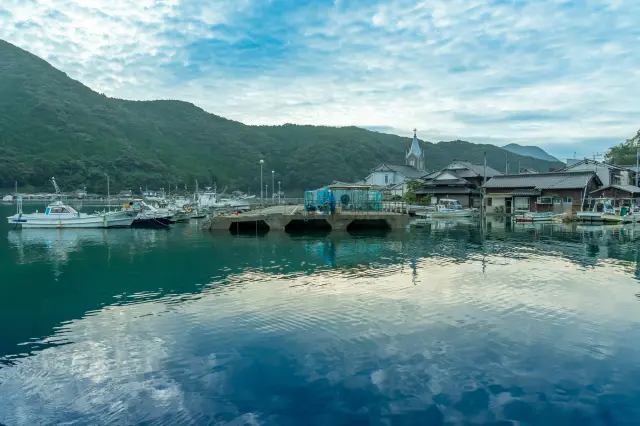
Located in the southwestern Amakusa Islands, Sakitsu Village was a place where Buddhism, Shinto, and Christianity coexisted during the period of prohibition and the faith of Hidden Christians was secretly passed down.
Recognized among Japan's 100 Best Beaches and 100 Fragrant Landscapes, its setting amid a calm sea and lush nature brings a sense of tranquility.
The principal highlight is Sakitsu Church, the symbol of the village.
Built in 1934, this imposing Gothic church has a distinctive atmosphere blending Japanese and Western influences.
In addition to its intricately designed exterior, the interior—advance reservations required—is unusually covered with tatami mats, while colorful stained glass casts a gentle light.
Photography is generally prohibited, so experience the sacred space with your own eyes.

Oura Cathedral
Oura Cathedral was built for foreign residents.
Its official name is the Church of the Twenty-Six Martyrs of Japan. Dedicated to the 26 saints martyred in 1597, it faces Nishizaka, the site of their martyrdom.
Designed by the French missionaries Father Furet and Father Petitjean and constructed by Koyama Hidenoshin, it was completed in 1864. The cathedral is a Gothic church blending Japanese and Western elements, with brick construction covered in plaster.

Other Cultural Properties Comprising the Hidden Christian Sites in the Nagasaki Region
- Remains of Hara Castle
- Sacred Sites and Villages in Hirado (Kasuga Village and Mount Yasumandake, Nakaenoshima Island)
- Shitsu Village in Sotome
- Ono Village in Sotome
- Villages on Kuroshima Island
- Remains of Villages on Nozaki Island
- Villages on Kashiragashima Island
- Villages on Hisaka Island
- Egami Village on Naru Island (Egami Church and its Surroundings)
Osaka: Mozu-Furuichi Kofun Group: Mounded Tombs of Ancient Japan
This group of kofun burial mounds belonged to rulers of the ancient Japanese archipelago and is concentrated in the Mozu area of Sakai and the Furuichi area of Habikino and Fujiidera in Osaka Prefecture.
It became Osaka's first World Cultural Heritage site in 2019.
Kofun are tombs with raised earthen mounds built during the Kofun period, from the mid-third century to the latter half of the sixth century. The Mozu-Furuichi Kofun Group was constructed from the latter half of the fourth century through the latter half of the fifth century on the Osaka Plain, then one of ancient Japan's political and cultural centers.
The diverse mound shapes and varied sizes embody the political and social structures of ancient times, offering a tangible connection to history.

Kagoshima and Okinawa: Amami-Oshima Island, Tokunoshima Island, Northern Part of Okinawa Island, and Iriomote Island
Amami-Oshima Island, Tokunoshima Island, Northern Part of Okinawa Island, and Iriomote Island form part of the Ryukyu island chain scattered across approximately 1,200 kilometers from the southern edge of Kyushu.
The property covers 42,698 hectares and consists of four islands in Kagoshima and Okinawa Prefectures.
Each is a distinctive region covered in subtropical rainforest, with rich natural environments and endemic ecosystems.
Because the islands contain habitats for threatened species and are exceptionally important for conserving biodiversity, they were inscribed as a World Natural Heritage site in 2021.
Here are the attractions and highlights of three of the islands.
Amami-Oshima Island
Amami-Oshima is the largest of Kagoshima's outlying islands. It features deep forests filled with subtropical plants and emerald-green seas with coral reefs.
Marine activities such as whale watching and diving are popular, while the natural environment supporting rare animals is a major attraction.

Tokunoshima Island
Tokunoshima is one of the Amami Islands of Kagoshima.
Striking views are found throughout the island, including the clear waters of Yonama Beach, the grand rocky shore and coastline of Mushiroze, and the Kanamisaki Observatory, which overlooks both the East China Sea and Pacific Ocean.
Visitors can also observe coral reefs, sea turtles, and tropical fish.
The island is also famous for its roughly 400-year tradition of bullfighting and as an “island of longevity” with a distinctive food culture and regional identity.

Iriomote Island
Iriomote Island is part of Okinawa Prefecture's Yaeyama Islands and is the second-largest island in the prefecture after Okinawa Island.
Approximately 90% is covered by subtropical primeval forest, which supports diverse and rare plants and animals, including the protected Iriomote cat.
The scenery changes with the location, weather, and time of day, making even a simple walk rewarding.
The island also offers plenty of adventurous activities, including water sports, botanical gardens, and water buffalo cart tours.

Hokkaido, Aomori, Iwate, and Akita: Jomon Prehistoric Sites in Northern Japan
The Jomon Prehistoric Sites in Northern Japan preserve the culture of the Jomon period, from approximately 18,000 BC to 300 BC.
Scattered across the resource-rich environments of Hokkaido, Aomori, Iwate, and Akita, these sites contain evidence of more than 10,000 years of life based on gathering, hunting, and other activities.
Recognized as valuable sites conveying the development of Jomon culture before rice cultivation and the rich spirituality and intelligence of the Jomon people, they were inscribed as World Cultural Heritage in 2021.
Here is an introduction to the Sannai Maruyama Site, one of the principal component properties.
Sannai Maruyama Site
The Sannai Maruyama Site in Aomori City, Aomori Prefecture, is the remains of a large Jomon settlement.
Investigations have uncovered pit dwellings, post-in-ground buildings—including large examples—graves, refuse areas, roads, and other features dating from the Early to Middle Jomon periods, approximately 5,900 to 4,200 years ago. These findings have revealed the overall structure of the settlement and its natural environment.
Reconstructed buildings stand throughout the grounds, including a large six-post structure, a large pit dwelling, and smaller pit dwellings. Visitors can enter some buildings, including the large pit dwelling.

Other Cultural Properties Comprising the Jomon Prehistoric Sites in Northern Japan
Odai Yamamoto Site
Kakinoshima Site
Kitakogane Shell Midden
Tagoyano Shell Midden
Futatsumori Shell Midden
Ofune Site
Goshono Site
Komakino Site
Irie Shell Midden
Isedotai Site
Oyu Stone Circles
Kiusu Earthwork Burial Circles
Omori Katsuyama Site
Takasago Burial Site
Kamegaoka Stone Age Site
Korekawa Stone Age Site
Niigata: Sado Island Gold Mines
The Sado mines in Niigata Prefecture are a group of heritage sites where gold and silver were extracted for more than 400 years.
They played a particularly important role in Japan, once described as the golden land of Zipangu.
Full-scale development began in the mid-16th century, and during the Edo period, the mines supported the shogunate's finances as Japan's largest gold and silver mining complex.
At its peak, the mining town of Aikawa had a population of approximately 50,000 and later contributed to Japan's modernization during the Meiji period.
Mining techniques and management methods established on Sado also had a major influence on the development of other mines in Japan.
The sites were inscribed as World Heritage in 2024 in recognition of their well-preserved remains demonstrating diverse technologies.

Cultural Properties Comprising the Sado Island Gold Mines
- Nishimikawa Placer Gold Mine
- Tsurushi Silver Mine
- Aikawa Gold and Silver Mine
Nara: The Asuka-Fujiwara Imperial Capitals
The Asuka-Fujiwara Imperial Capitals are a group of Asuka-period archaeological sites in the southern Nara Basin, spanning present-day Asuka Village, Kashihara, and Sakurai.
For approximately 120 years, from Empress Suiko's accession in 592 until the capital moved to Heijo-kyo in 710, this region was the center of Japanese politics and culture. Missions were sent to Sui China, the Taika Reform was enacted, and the Taiho Code was promulgated. Through successive reforms and political upheavals, the nation of Japan took shape here.
The group comprises 19 properties broadly divided into three categories: palace and government office sites, Buddhist temple sites, and burial mounds. They include the Asuka Palace Site, where political upheavals unfolded; the Asuka-dera Temple Site, Japan's first full-scale Buddhist temple; and the Takamatsuzuka and Kitora burial mounds, known for their colorful murals. Fujiwara-kyo, established in 694, was Japan's first full-scale capital based on the ritsuryo legal system. Chinese-style tile-roofed buildings and grid-patterned streets were introduced, completing a centralized state centered on the emperor.
It was inscribed as a UNESCO World Cultural Heritage site in July 2026.

Cultural Properties Comprising the Asuka-Fujiwara Imperial Capitals
- Palace-Related Archaeological Sites
- Buddhist Temple Sites
- Burial Mounds, Including Ishibutai Tumulus
Four Candidate Sites That May Become World Heritage Sites
A Tentative List is a list of candidate properties that a country intends to nominate for future World Heritage inscription.
Each country lists the cultural properties and other sites it plans to nominate and submits the list to UNESCO.
Japan's Tentative List currently includes four candidate World Heritage sites. They are summarized in the table below.
| Property | Location | Category |
|---|---|---|
| Temples, Shrines and Other Structures of Ancient Kamakura | Kanagawa Prefecture | Cultural |
| Hikone Castle | Shiga Prefecture | Cultural |
| Hiraizumi – Temples, Gardens and Archaeological Sites Representing the Buddhist Pure Land (Extension) | Iwate Prefecture | Cultural |
Kanagawa: Temples, Shrines and Other Structures of Ancient Kamakura
Kamakura in Kanagawa Prefecture was the first city in Japan to become the seat of a warrior government.
The Kamakura period lasted for approximately 150 years, from 1185 to 1333, laying the foundations of warrior culture that flourished until the Edo shogunate ended in 1868.
Because Edo became Tokyo and was transformed into a modern city, Kamakura is the only region where the history of warrior culture remains strongly visible.
Properties such as Tsurugaoka Hachimangu Shrine, Kencho-ji Temple, and the Great Buddha of Kamakura are considered exceptionally valuable as spiritual foundations of the warrior government.
Against this background, the site was added to the Tentative List in 1992 and nominated independently by the Japanese government in 2013, but a recommendation against inscription was issued.
It is currently seeking World Heritage inscription under the name Temples, Shrines and Other Structures of Ancient Kamakura.


Shiga: Hikone Castle
Hikone Castle, also known as Konki Castle, was commissioned by Tokugawa Ieyasu after his victory at the Battle of Sekigahara in 1600 and establishment of the Edo shogunate in 1603. Ii Naomasa, one of the Four Heavenly Kings of Tokugawa, began its construction.
Work began in 1604 and took approximately 20 years, with the castle completed in 1622 under Naomasa's son Naotsugu.
The keep standing atop Mount Hikone is one of only 12 original castle keeps surviving in Japan. In 1952, it was designated a National Treasure together with its attached turret and tamon turret.
Visitors can enter the keep, and the view from its top floor extending to Lake Biwa is a highlight.
The castle is a World Heritage candidate as a symbol of the political system that maintained a stable social order throughout the approximately 260-year Edo period.

Iwate: Hiraizumi – Temples, Gardens and Archaeological Sites Representing the Buddhist Pure Land
Although Hiraizumi – Temples, Gardens and Archaeological Sites Representing the Buddhist Pure Land was inscribed as a World Heritage site in 2011, some properties were excluded during the review process.
Iwate Prefecture is seeking an extension to demonstrate the site's further value to the world.
The proposed extension includes five properties: Yanagi no Gosho Site, Takkoku no Iwaya, Honedera Village Estate Site, Shirotoritate Site, and Chojagahara Temple Site.
All are important properties conveying Hiraizumi's diverse value. Following discussions, however, only the Yanagi no Gosho Site was selected for potential nomination, while the other four remain under continued consideration.
The Yanagi no Gosho Site has long been regarded as the former residence of Fujiwara no Kiyohira and Motohira.
Emergency excavations begun in 1988 uncovered a succession of exceptionally extensive and high-quality remains, including moats, ponds, and post-in-ground buildings. This has strengthened the possibility that it was Hiraizumi no Tachi, the government center described in the historical chronicle Azuma Kagami.

FAQ About Japan's World Heritage Sites
Q
How many World Heritage sites are there in Japan?
As of July 2024, Japan has 26 World Heritage sites: 21 cultural sites and five natural sites.
Q
Which areas have the most World Heritage sites?
Iwate, Nara, and Kagoshima Prefectures have the most in Japan, with three each.
Summary
This article has introduced the main highlights of all 26 World Heritage sites in Japan.
These sites, shaped and passed down through long cultural traditions, possess universal value that invites repeated visits.
Each offers something different, from timeless natural environments and nostalgic townscapes to distinctive ecosystems.
Set foot in these places and you can gain a deeper sense of the planet's history.
Consider visiting any of the World Heritage sites that caught your interest.