

History and Essential Information to Know Before Visiting the Atomic Bomb Dome, a World Heritage Site
Japan is the only country in the world to have suffered atomic bombings, with the first atomic bomb in human history dropped on Hiroshima Prefecture on August 6, 1945, and another dropped on Nagasaki Prefecture three days later.
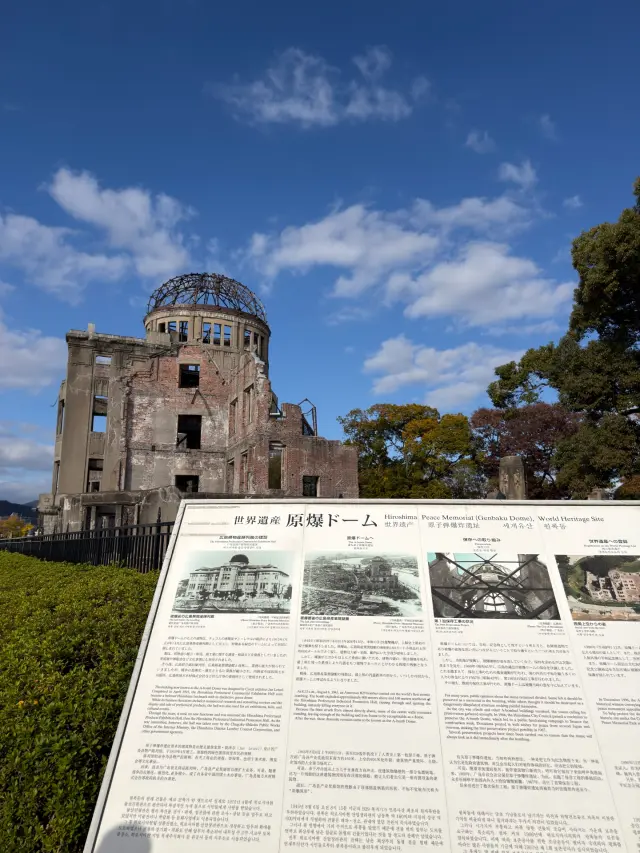
The Atomic Bomb Dome is a historic structure that conveys the tragic reality of the countless victims and stands as a reminder so that the same mistake is never repeated.
In this article, we will look back on the significance of the Atomic Bomb Dome and the devastation of the atomic bombing through its history, and introduce it in detail.
By reading to the end, you will gain a deeper understanding of the Atomic Bomb Dome and be able to feel the reality of the atomic bombing damage when you visit.
The History of the Atomic Bomb Dome to Know Before Visiting
If possible, we hope you will learn about the history of the Atomic Bomb Dome before visiting.
This is because the impression it leaves and the depth of meaning you feel when seeing it in person can change greatly.
From here, we will explain the history of the Atomic Bomb Dome and the events surrounding the atomic bombing.

Established as the Hiroshima Prefectural Products Exhibition Hall
Originally, the Atomic Bomb Dome was a facility called the Hiroshima Prefectural Products Exhibition Hall, built in 1915 to display and sell products from across Hiroshima Prefecture.
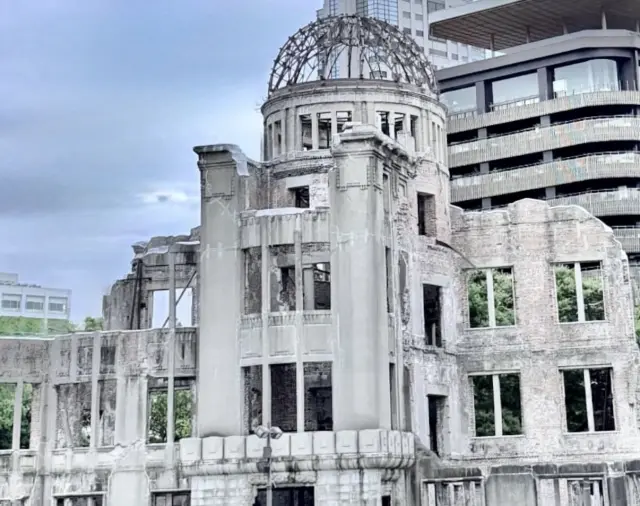
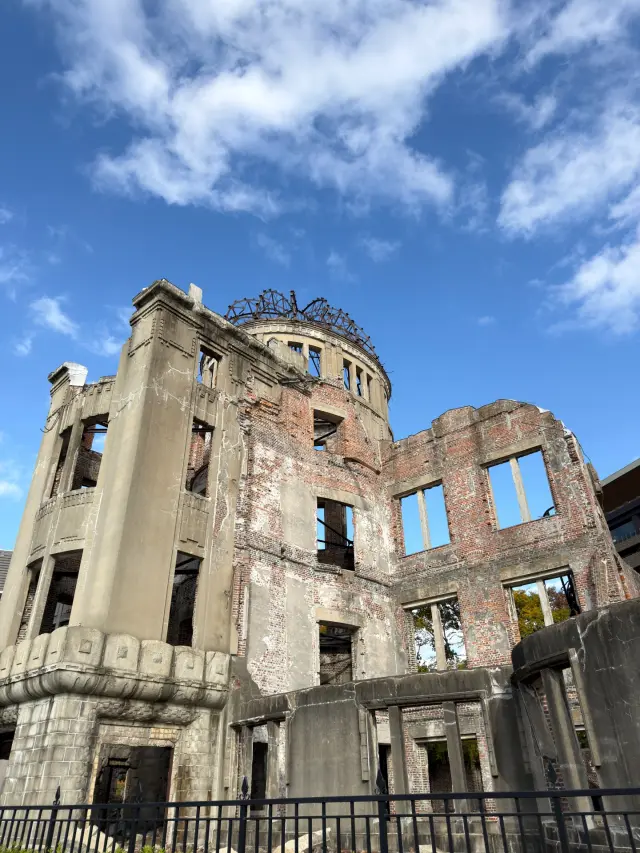
Designed by Czech architect Jan Letzel, the building was characterized by its brick construction, three stories, and oval-shaped dome.
Beautiful, modern, and European in style, which was unusual at the time, it featured bold geometric decoration known as the Secession style.
The Hiroshima Prefectural Products Exhibition Hall gradually became a Hiroshima landmark beloved by local residents, and it bustled with events such as the Hiroshima Art Exhibition and expos.
It was later renamed the Hiroshima Prefectural Product Exhibition Hall in 1921, and then the Hiroshima Prefectural Industrial Promotion Hall in 1933.

Reduced to a Half-Destroyed Ruin in an Instant by the Atomic Bombing
The Hiroshima Prefectural Industrial Promotion Hall made a major contribution to the cultural development of Hiroshima, but as the war dragged on, it ceased operations in 1944.
Then, at 8:15am on August 6, 1945, the first atomic bomb in human history was dropped east of the Hiroshima Prefectural Industrial Promotion Hall and exploded at an altitude of Approx. 600 m.
The blast and heat rays instantly destroyed buildings within a radius of 2 m of the hypocenter, causing a tragedy that took countless lives.
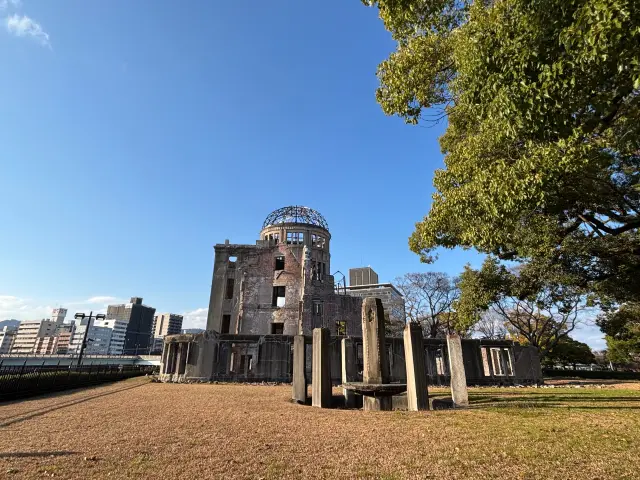
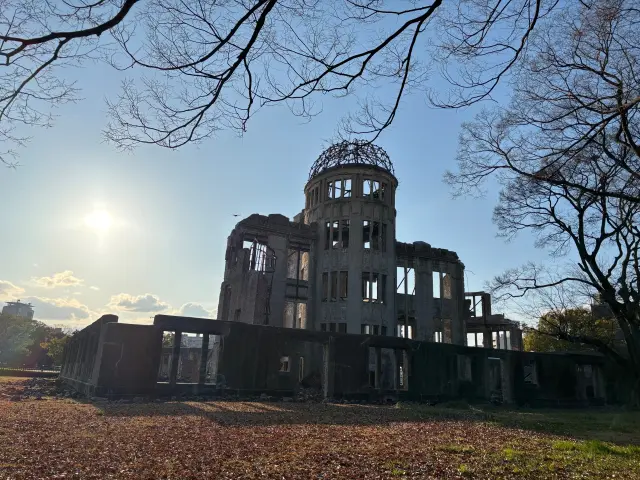
The Hiroshima Prefectural Industrial Promotion Hall was also almost completely destroyed in its main sections from the first through third floors, but the dome miraculously withstood the impact, so the framework and outer walls remained, leaving it only partially destroyed.
Although some windows and floors also remained, the building was eventually burned out in the fire, leaving only exposed steel frames and bricks.
In this way, the Hiroshima Prefectural Industrial Promotion Hall gradually came to be called the Atomic Bomb Dome.

Efforts to Preserve the Atomic Bomb Dome
After the war, reconstruction progressed across Japan, and bombed buildings were repaired or demolished.
As for the Atomic Bomb Dome, various opinions were voiced, including demolition, because it brought back memories of the tragedy, and preservation, to convey the reality of the bombing, and the debate continued for some time.
Gradually, opinion began to lean toward demolition because of the financial burden of preserving it and the risk of collapse, but a diary written by hibakusha Hiroko Kajiyama changed the course of events.
Here is one especially well-known passage from her diary in the original wording. * Sangyo Shoreikan = Atomic Bomb Dome
“Will only that painful Sangyo Shoreikan continue forever to tell the world of the dreadful atomic bomb?”
If you are interested, we encourage you to read the full text.
Kajiyama, who experienced the bombing at the age of 1, died of myelogenous leukemia, believed to have been caused by radiation, at the young age of 16 while in her first year of high school.
This diary deeply moved many people, leading to fundraising and signature campaigns calling for preservation, and in 1966 the Hiroshima City Council passed a resolution for the permanent preservation of the Atomic Bomb Dome.

Registered as a World Cultural Heritage Site in 1996
The year after the resolution, preservation work on the Atomic Bomb Dome began and was completed with donations and other support, and periodic repairs continued under the management of Hiroshima City.
In 1992, after Japan agreed to the World Heritage Convention, calls to register the Atomic Bomb Dome as a World Heritage Site grew stronger, and the Hiroshima City Council submitted a written request to the Agency for Cultural Affairs.
However, the Atomic Bomb Dome did not meet the nomination requirements stated in the World Heritage Convention, such as protection under the Law for the Protection of Cultural Properties, and the national government remained reluctant, also due to political concerns about avoiding provocation of other countries.
Still, momentum grew through written opinions from municipalities in the prefecture and the formation of citizen groups, and the total number of signatures calling for World Heritage registration eventually exceeded 1.65 million.
Supported by these efforts, the Agency for Cultural Affairs revised the cultural protection law, and in 1995 the Atomic Bomb Dome was designated a national historic site and also nominated for World Heritage status.
Then, in December 1996, the Atomic Bomb Dome was officially registered as a World Heritage Site.

The Atomic Bomb Dome Continues to Call for the Abolition of Nuclear Weapons and World Peace
A single atomic bomb took countless precious lives and changed the lives of survivors and their bereaved families forever.
The Atomic Bomb Dome, preserved in the state it was left in after the bombing, conveys to those of us living today the devastation caused by the first atomic bomb, a nuclear weapon, ever used in human history.
As the number of survivors continues to decline year by year, it will also continue to serve across generations as a witness to history.
It also holds significance as a symbol of the pledge to continue calling for the abolition of nuclear weapons and for world peace.
To ensure such a tragedy is never repeated, this painful history must never be forgotten.

What Can You Do at the Atomic Bomb Dome?
The area around the Atomic Bomb Dome is enclosed by fences, so tourists cannot enter or tour the inside.
If you would like to see the interior, use the AR marker installed on the tourist information board on the north side of the Atomic Bomb Dome.
After accessing this website on your smartphone, launch the AR camera and point it at the marker to view the inside in 360 degrees.
You are free to walk around outside the fence, so you can admire the exterior at any time.
The building is lit up every day from sunset until midnight, around 8:00pm–12:00am, and we recommend visiting then to experience its solemn atmosphere wrapped in the quiet of night.
The Atomic Bomb Dome has an overwhelming presence, and its dreamlike beauty and the tragedy of war may leave you with a sense of sorrow.
Nearby is Orizuru Tower, a 13-story complex, where the rooftop observation deck offers views of both the Atomic Bomb Dome and Peace Memorial Park at the same time.
On the World Heritage route of the Hiroshima River Cruise sightseeing boat, you can also view both the Atomic Bomb Dome and Miyajima from on board.
We hope you will experience the Atomic Bomb Dome together with these sightseeing spots and activities.


Access to the Atomic Bomb Dome
Here is how to get to the Atomic Bomb Dome from Hiroshima Station, the main transportation hub for sightseeing in Hiroshima.
There are several ways to get there, but the most common options are the streetcar and local bus.
If you choose to walk, expect it to take around 35 minutes.
By Streetcar
- Route
-
1. From JR Hiroshima Station, take Hiroshima Electric Railway Line 2 bound for Hiroden-miyajimaguchi or Hiroden-nishihiroshima, or Line 6 bound for Eba, and get off at Genbaku Dome-mae Station
2. From Genbaku Dome-mae, walk a few minutes to reach the Atomic Bomb Dome - Travel time
- Approx. 20 minutes
By Local Bus
- Route
-
1. From the Maple-Loop bus stop at the Shinkansen Exit of Hiroshima Station, take the Hiroshima Maple-Loop sightseeing bus on the Orange Route and get off at the Genbaku Dome-mae bus stop * The Green and Lemon Routes are also available
2. From Genbaku Dome-mae, walk a few minutes to reach the Atomic Bomb Dome - Travel time
- Approx. 20 minutes
Hours and Admission for the Atomic Bomb Dome
The Atomic Bomb Dome is located inside Peace Memorial Park, and both the park and the Atomic Bomb Dome are open at all times.
Admission is also free, so you can visit whenever you like.
Visit Peace Memorial Park to Learn About and Feel This Tragic History
Located around the hypocenter, Peace Memorial Park was developed and its facilities were built with the aim of praying and calling for lasting peace for humanity and ensuring that such mistakes are never repeated.
Completed in 1955, 10 years after the bombing, it remains a symbolic place for mourning the victims and praying for world peace.
In addition to the Atomic Bomb Dome, Peace Memorial Park is home to the Hiroshima Peace Memorial Museum and the Cenotaph for the A-bomb Victims introduced below.
To learn about and feel this tragic history, be sure to visit it together with the Atomic Bomb Dome.
1. Hiroshima Peace Memorial Museum
Established to pass down the devastation of the atomic bombing to future generations, the Hiroshima Peace Memorial Museum displays a wide range of materials, photographs, and models related to the bombing.
Its permanent exhibition is made up of six sections, allowing visitors to gain a deeper understanding of and experience Hiroshima before and after the bombing, the overall scale of the damage, and the danger of nuclear weapons.
Through painful and vivid exhibits such as damaged personal belongings, the anger and grief of bereaved families, and the lives of survivors who lost everything, you will once again feel the cruelty of the atomic bombing.
In recent years, the number of international visitors has also increased, and many leave with shocking impressions of the reality of the damage and the threat posed by nuclear weapons.

2. Cenotaph for the A-bomb Victims
The Cenotaph for the A-bomb Victims, officially named the Hiroshima Peace City Memorial Monument, is a stone monument erected in prayer for the reconstruction of Hiroshima, which was devastated by the atomic bomb, as a city of peace.
With the wish to protect the souls of the atomic bomb victims from the rain and dew, its roof is shaped like a clay haniwa house.
The monument is also engraved with the words, “Please rest in peace, for we shall not repeat the error.”
To help international visitors correctly understand the meaning of this inscription praying for true world peace, multilingual explanation boards in English, Chinese, Italian, and other languages have been installed, so be sure to take a look.

3 Popular Places to Eat Near the Atomic Bomb Dome
Here are some especially popular restaurants selected from the many dining spots around the Atomic Bomb Dome.
We have also included famous places where you can enjoy Hiroshima's signature okonomiyaki, so be sure to add them to your travel plans.
1. Hiroshima Specialty Okonomiyaki Reichan
Hiroshima Specialty Okonomiyaki Reichan is a specialty okonomiyaki restaurant located on the first floor of ekie, the commercial facility directly connected to Hiroshima Station.
Founded in 1957, it is known as a long-established restaurant with more than 65 years of history.
Its okonomiyaki is carefully grilled one by one, layering sweet cabbage, specially ordered noodles, pork, eggs, and other ingredients to bring out the full flavor of each ingredient.

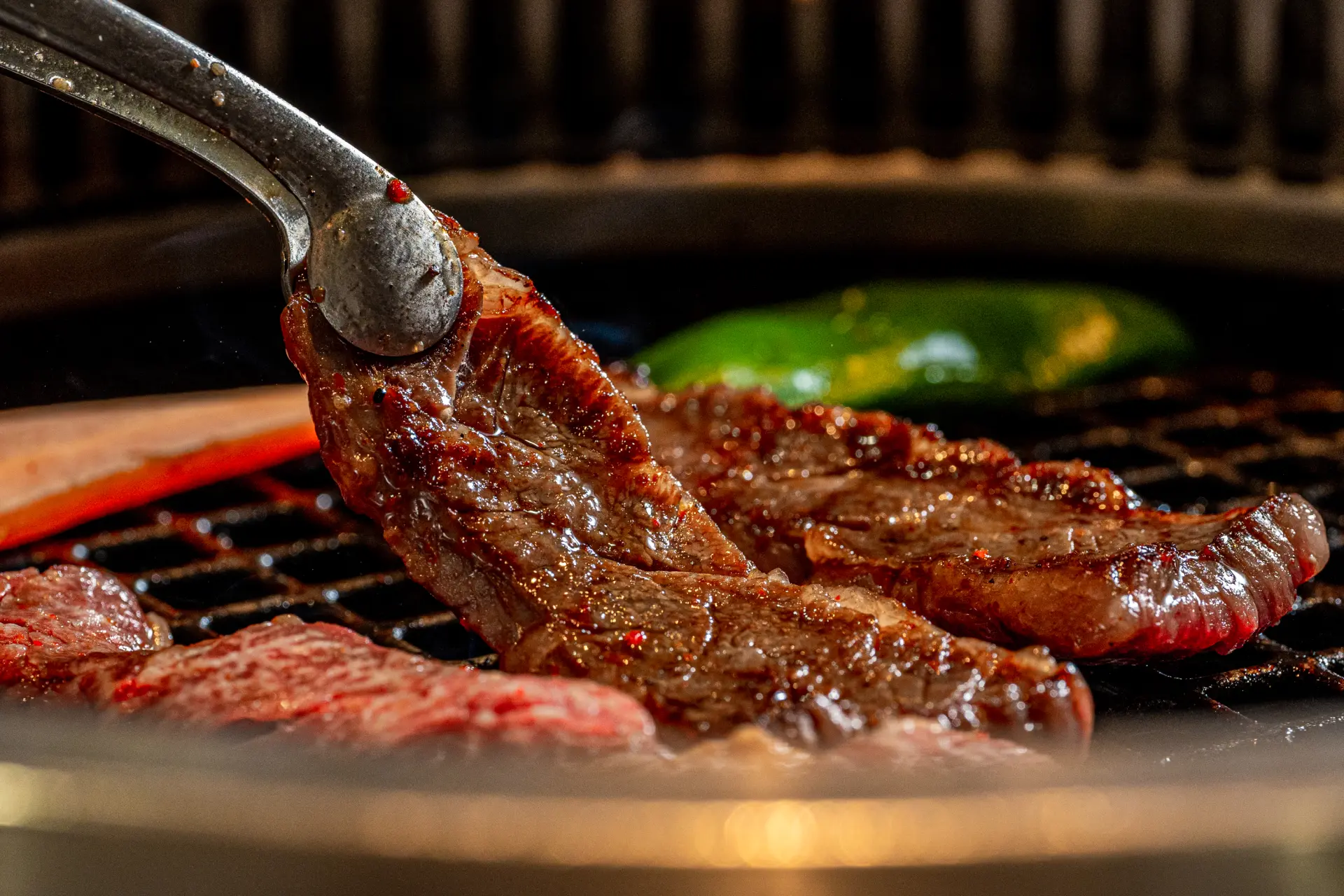
2. Yakiniku Furusato Danbara Main Store
Yakiniku Furusato Danbara Main Store is a yakiniku restaurant chain centered in Hiroshima Prefecture.
Everything from the production and shipping management of Sakakiyama Beef to wholesaling and processing is handled by Yakiniku Furusato Danbara Main Store.
Never freezing the meat at any stage from slaughter to serving is the Furusato style, bringing out its freshness and rich flavor.
3. Yagenbori Hassho
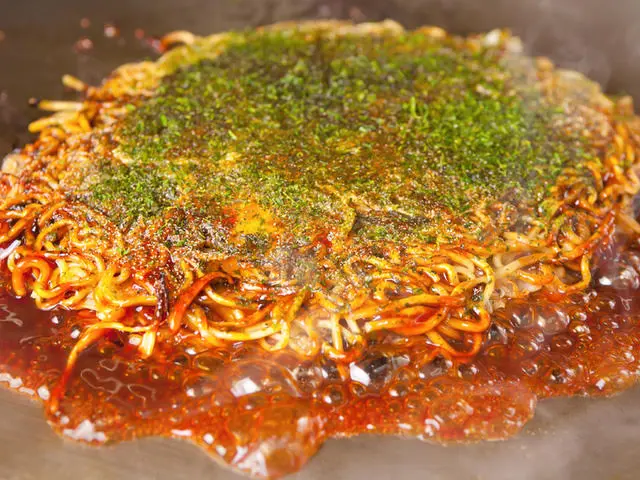
Yagenbori Hassho is one of the most popular okonomiyaki restaurants in Hiroshima City.
There are lines in front of the restaurant every day, and it has been featured in many kinds of media. Okonomiyaki takes 20–30 minutes to cook.
The Chinese noodles inside the okonomiyaki are grilled until crisp, and that texture is irresistible.
Reviews
Some reviews are AI-translated.
-
The Atomic Bomb Dome is a must-see when visiting Hiroshima. Standing in front of the building in person was even more powerful than seeing it in photos. The preserved outer walls and dome structure quietly tell the story of that unforgettable chapter in history.
-
-
I made a special trip to visit the Atomic Bomb Dome, a UNESCO World Heritage Site. Although I had seen it countless times in history textbooks and photos, standing before it in person, the visual impact and weight of its history still filled me with solemn respect and left me speechless for a long time.
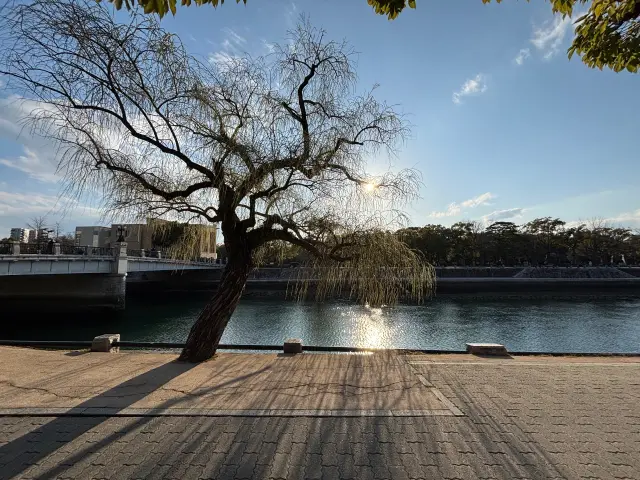
The weathered steel framework and damaged dome stand quietly along the Motoyasu River, as if silently recounting that heartbreaking chapter of history. Although the surrounding area is now the lively, green Hiroshima Peace Memorial Park, the preserved ruins still have a powerful emotional impact, making you deeply appreciate how precious and hard-won peace is.
Many visitors from Japan and abroad stop here to reflect and take photos. The atmosphere throughout the park is solemn, yet carries a hint of hope for the future. I highly recommend that anyone visiting Hiroshima come here in person. It will definitely leave you deeply moved and with an unforgettable perspective on life! -
-
原爆圓頂館靜靜矗立在和平紀念公園對側,以僅存的殘破結構,無聲地向世人訴說戰爭的殘酷,以及和平的珍貴。
不只是來到廣島必訪的景點,更是這座城市浴火重生的見證人。活在今日和平的社會,我們更應珍惜得來不易的安穩,省思戰爭所帶來的苦難與破壞,並記住那些曾經逝去的生命。
願所有逝者安息,也願溫暖的陽光照亮這片曾經受傷的土地,讓和平的信念代代延續。
-


FAQ about the Atomic Bomb Dome
Q
Can you tour the inside of the Atomic Bomb Dome?
No. Because the area is surrounded by fences, visitors cannot go inside. However, if you scan the AR marker with your smartphone, you can see the interior in a 360-degree view.
Q
Why has the Atomic Bomb Dome been preserved to this day?
It has been preserved as a symbol of peace, and as a negative legacy, to pass on the tragic history of the atomic bombing to future generations and ensure that the same mistake is never repeated.
Q
What kind of facility was the Atomic Bomb Dome originally?
It was originally a facility called the Hiroshima Prefectural Products Exhibition Hall, used to display and sell products from Hiroshima Prefecture.
Summary
This article has introduced the history of the Atomic Bomb Dome, the devastation of the atomic bombing, and the significance of preserving it to this day.
Preserved in the state it was left in at the time of the bombing, the Atomic Bomb Dome continues to speak to the world across generations about the threat of inhumane nuclear weapons.
We hope you will visit the Atomic Bomb Dome and feel the value of peace for yourself.
This article brings together useful information for sightseeing in Hiroshima from many angles, including gourmet food and hidden spots, so it should also be a helpful read.