

Mt. Otowa Kiyomizu-dera Temple

Verified [Verified] denotes information that has been published with confirmation of its owing parties.

Mt. Otowa Kiyomizu-dera Temple

A place that should be visited when traveling to Kyoto, the temple selected as a World Cultural Heritage.

4.58 40

Last update :

Opened in the year 778, the temple was registered as a UNESCO World Cultural Heritage Site in 1994. In the 130, 000 m2 area of the precincts spread out on the hillside of Mt. Otowa, there are more than 30 cathedrals and monuments, including national treasures and important cultural properties. The changes in scenery of the Kiyomizu-dera temple can be seen every season, with cherry blossoms in spring, greenery in summer, colored leaves in autumn, and snow in winter.

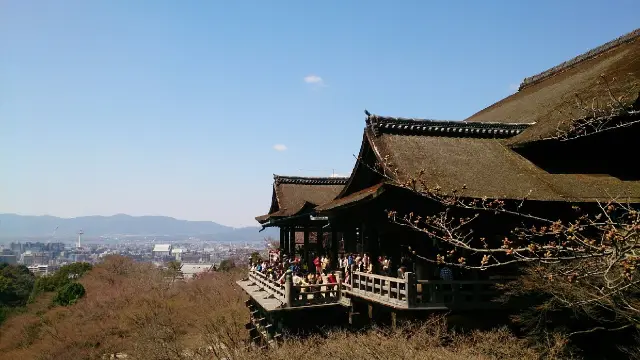
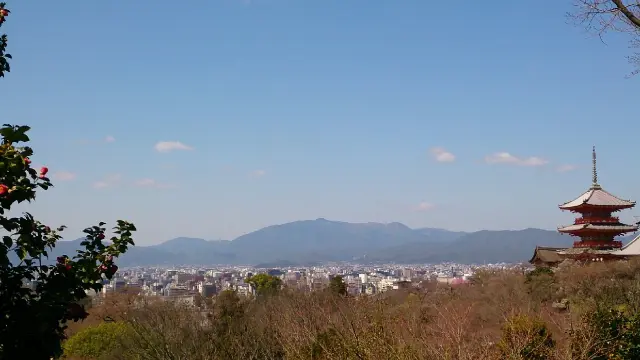
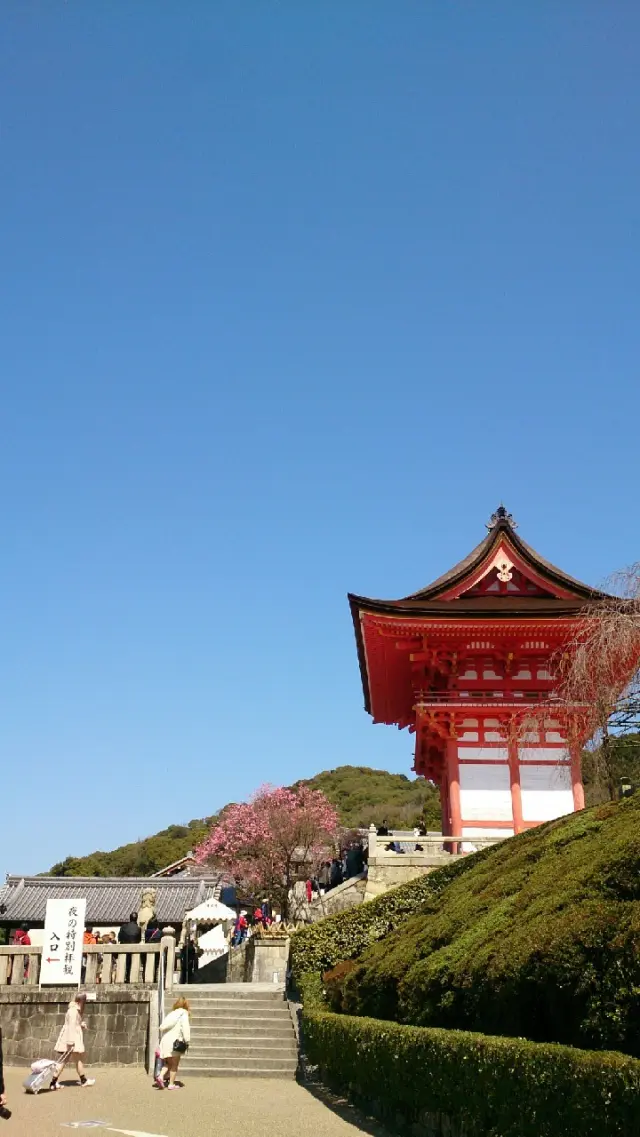
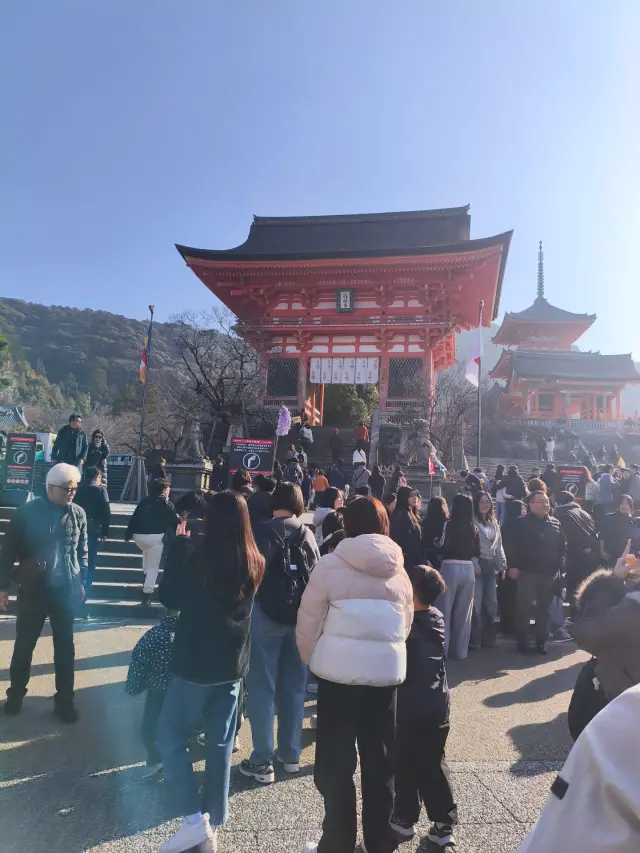
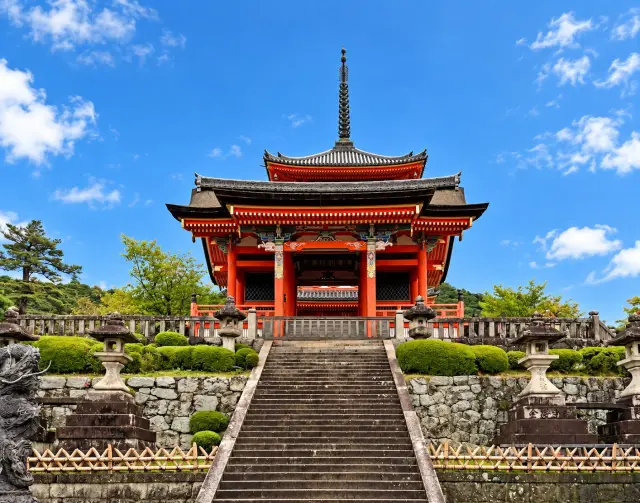
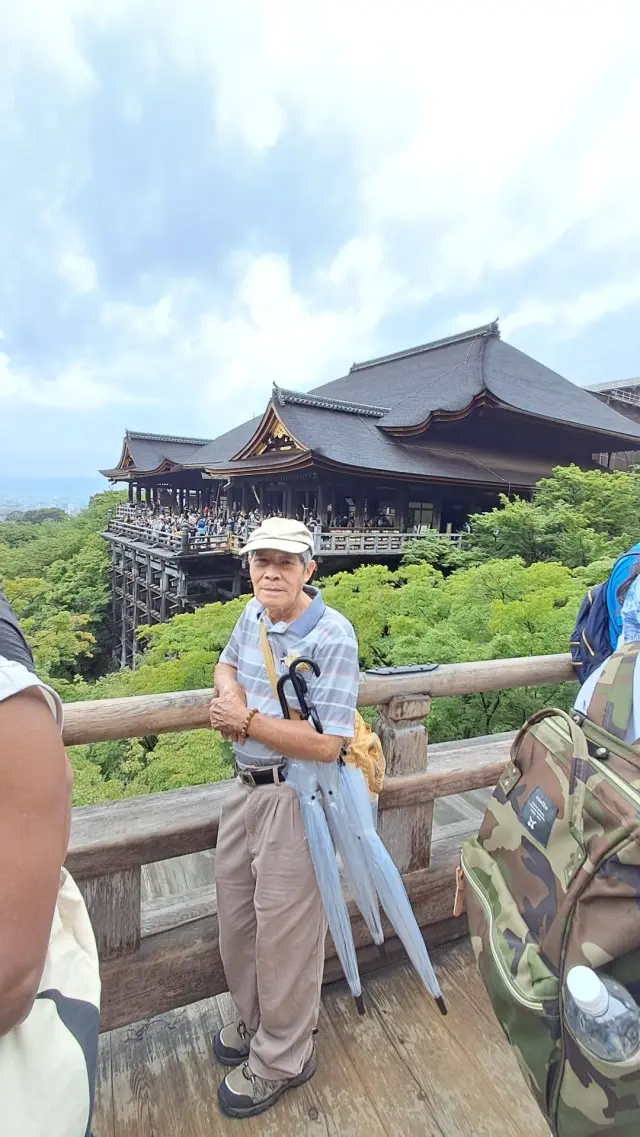
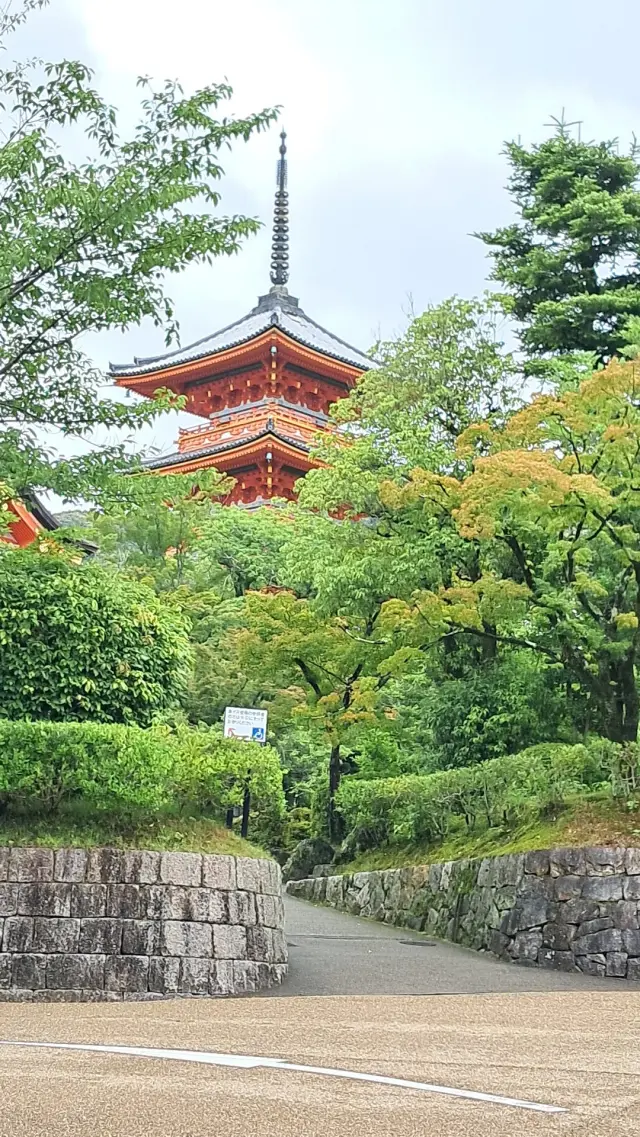
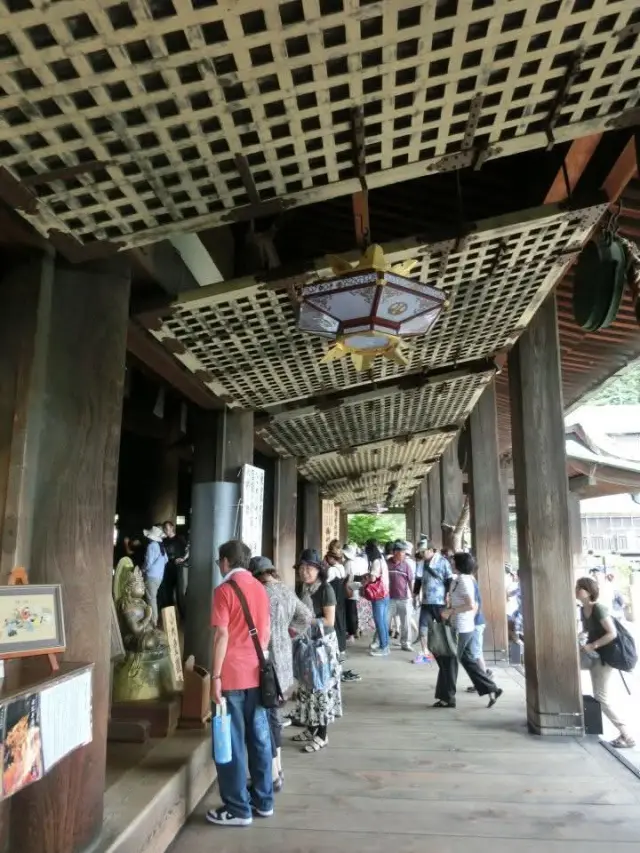
Once you climb up the hill road, you will be greeted by the vermilion-colored “Niomon.” If you continue climbing further up the stairs, you will see the 31m tall "triple tower.” It is one of the tallest in Japan and has a superb viewpoint where the vast scene of Kyoto city could be seen. The "main hall,” well-known for "jumping off the Stage of Kiyomizu (meaning to make a bold decision),” is a must-see. It is built to extend out on the slope of the mountain, and was constructed by the traditional Japanese construction method where wood is combined without using nails. It is approximately 13m in height and is equivalent to a 4-story building. The main body of worship enshrined, the "Eleven-faced Senju Sengan Kannon Statue," is a secret Buddha that, by the rules, could only be seen once every 33 years; the next time it would be shown is scheduled for 2033. Still, the "Gozen '', a slightly reduced size of the main body of worship, could be worshipped anytime.

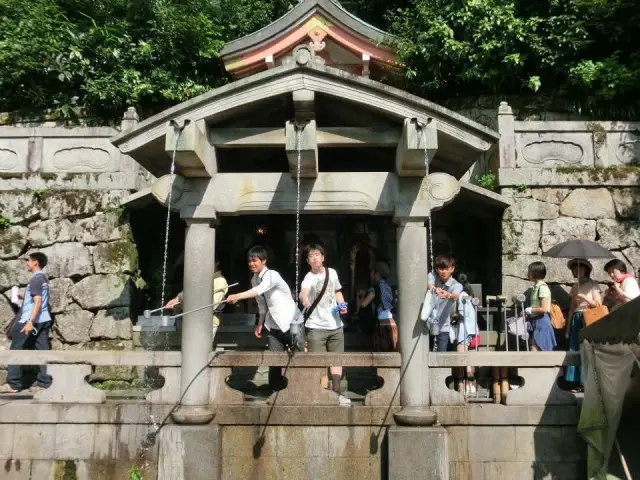
On the east side of the main hall flows the "Otowa no Taki" waterfall, which is the origin of the name of the temple. After using the ladle to scoop the sacred water of the three lines of falling water, please pray for “purification of the six roots of perception” and “fulfillment of wishes.”

Highlights

  • Is close to the center of Kyoto and is thus easy to access.
  • Is registered as a World Cultural Heritage, and is a popular tourist attraction in Kyoto.
  • Has many places to see, such as the largest "triple tower" in Japan and the "main hall" on the slope of the mountain.
  • With cherry blossoms in the spring, greenery in the summer, colored leaves in the autumn, and snow in the winter, the temple scenery could be enjoyed throughout the year.

Photos

  • The "Main hall" with the famous "Stage of Kiyomizu" built on the slope of the mountain

    The "Main hall" with the famous "Stage of Kiyomizu" built on the slope of the mountain

  • Autumn leaves and triple tower.

    Autumn leaves and triple tower.

  • Kiyomizu-dera Temple light up

    Kiyomizu-dera Temple light up

Reviews

40

Some reviews are AI-translated.

  • See More

    Kiyomizu-dera in the early morning has a charming historic atmosphere. I brought my elders to visit this historic site (I recommend coming early, as it gets more crowded around noon).

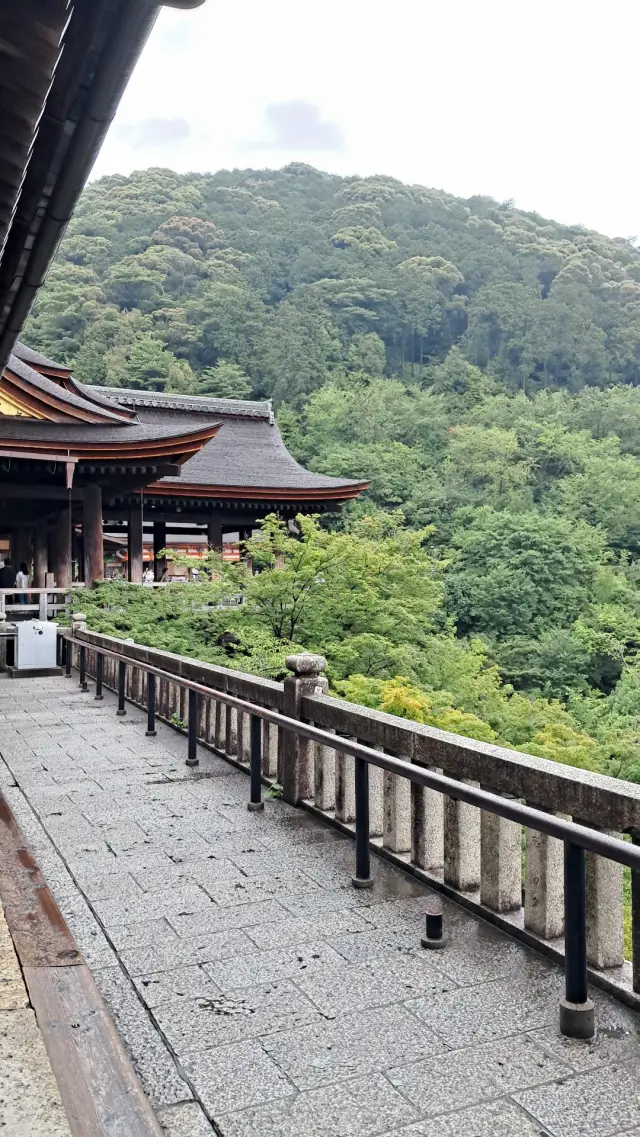
    Since we were traveling independently, we could wander around at our own pace. From high up at Kiyomizu-dera, we looked down over a sea of greenery and imagined the maple leaves turning red in the fall (I'll definitely visit again if I get the chance).

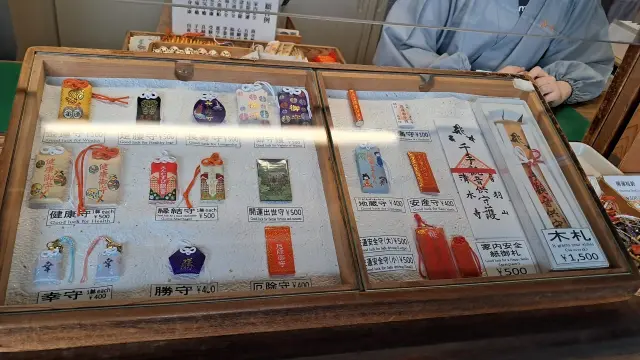
    I bought a commemorative omamori, hoping my family will stay safe and healthy〜❤️

    I fell deeply in love with the beauty of Kyoto🥰

  • See More

    The most unforgettable sight was the Kiyomizu Stage. It's hard to imagine that such a magnificent structure was built without using any nails. From the stage, you can look out over Kyoto. There are cherry blossoms in spring, lush greenery in summer, mountains covered in red maple leaves in fall, and snowy scenery in winter. It's picturesque in every season.

    After visiting the main hall, you can continue on to Jishu Shrine, then finish at Otowa Waterfall. I saw many people lining up to drink water using long-handled ladles. The three streams are said to represent different wishes. It was an unforgettable experience.

  • See More

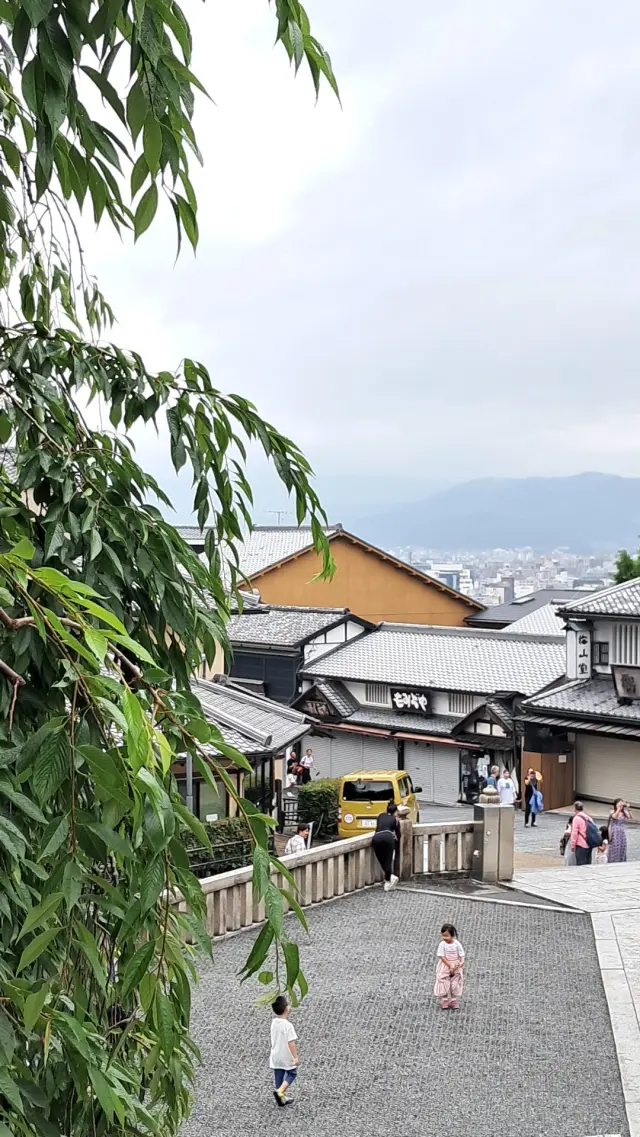
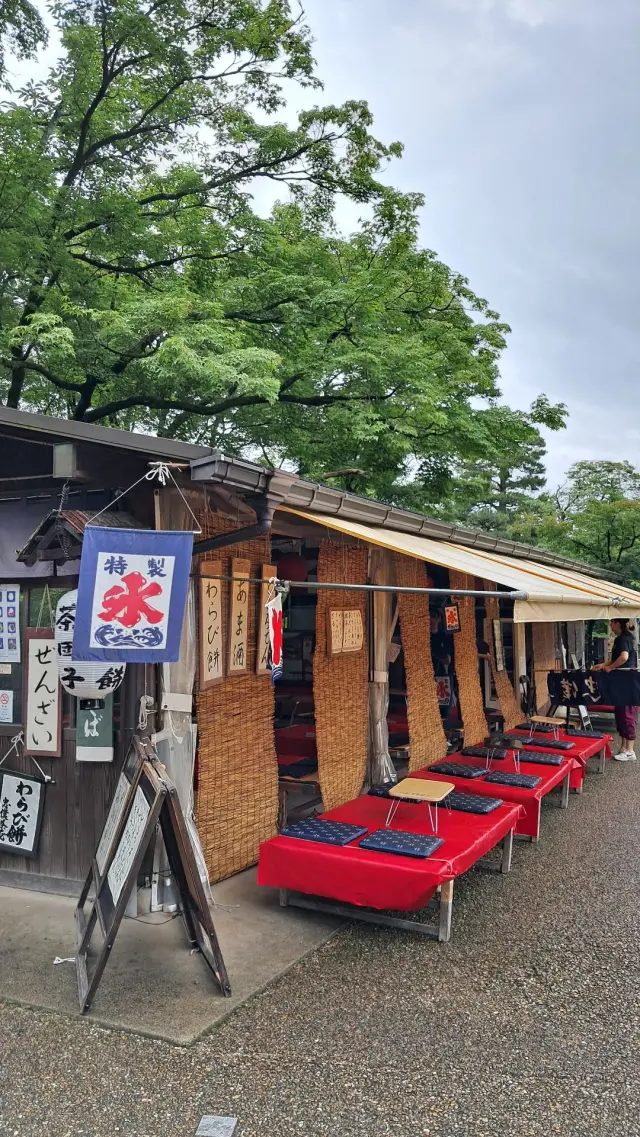
    Every time I visit Kyoto, if I could choose only one temple, Kiyomizu-dera, with over a thousand years of history and standing halfway up Mt. Otowa, would definitely be Japan's most iconic landmark! As soon as you reach Kiyomizu-zaka on the way to the main hall, the lively souvenir shops, pottery stores, and wagashi shops along the street offer so much to see. You can already feel the area's rich cultural atmosphere before even entering the temple.

    After passing through the imposing Nio-mon Gate, the most breathtaking sight is the elevated Kiyomizu Stage, built entirely without a single nail and supported by enormous wooden pillars. From the stage, you can take in the cityscape of Kyoto below while surrounded by a magnificent expanse of maple and cherry trees. Whether the hills are covered in soft pink cherry blossoms in spring or fiery red leaves in fall, the changing seasonal scenery is like a huge landscape painting you could never tire of seeing.

    After leaving the stage, don't miss the famous Otowa Waterfall below. Its three clear streams represent academic success, love, and longevity. Waiting in line to take a sip is both fun and filled with a sense of ritual and prayer. Before leaving, be sure to stop by the impressive Koyasu Pagoda nearby and experience the ancient capital's solemnity and tranquility.

    I highly recommend putting Kiyomizu-dera on your must-visit list when traveling to Kyoto. Whether you're there to experience the grandeur of a UNESCO World Heritage Site or admire the beautiful mountain scenery through the seasons, this is a timeless classic you'll never tire of visiting!

  • See More

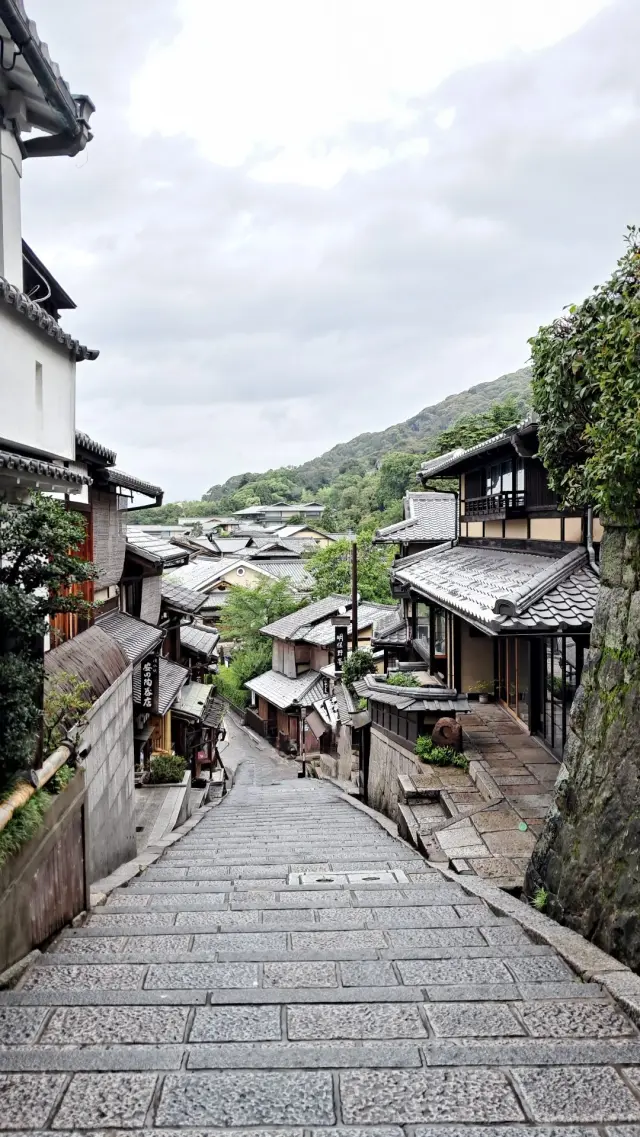
    Honestly, walking all the way up through Ninenzaka and Sannenzaka made my calves incredibly sore 😂 Those slopes are no joke, and you really start to feel tired on the way up.

    But once I passed through the red Niomon Gate and saw the Kiyomizu Stage, half the exhaustion from the climb immediately disappeared.

    I'd seen Kiyomizu-dera online many times before, so I thought that after seeing so many photos, it probably wouldn't be that impressive in person. But actually standing there was still quite breathtaking. The entirely wooden platform of the Kiyomizu Stage extends straight out, and looking down from it really made the soles of my feet tingle a little.

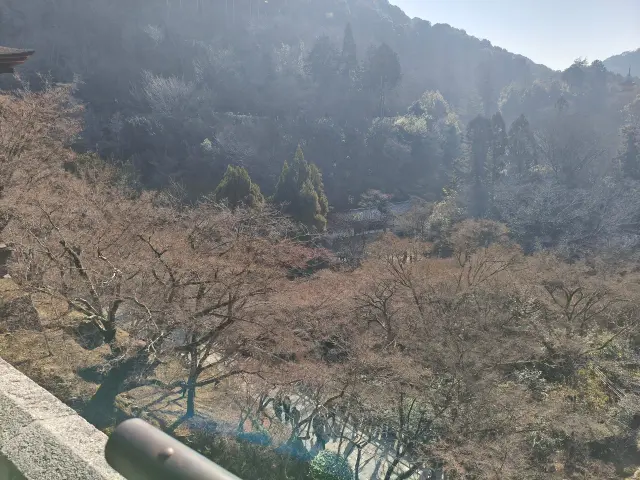
    When I visited in January, most of the trees on the mountain were bare, which looked completely different from the cherry blossom or fall foliage seasons that people usually see. But because of that, I could actually see the scenery around the Kiyomizu Stage more clearly. There were also fewer people in winter than during peak seasons, so it was quite pleasant to stand on the stage and take in the view at a leisurely pace.

    Later, when I followed the route to Okunoin, I realized this was the classic spot for photographing the Kiyomizu Stage. Looking back, the wooden stage stood against the hillside, surrounded by the bare January trees, creating a very peaceful feeling. I kept taking photos and enjoying the scenery there, and before I knew it, I'd spent almost half an hour.

    After walking down, I happened to get in line at Otowa Waterfall and used one of the long ladles to catch and drink the water. After walking for so long and climbing all those slopes, the water felt really refreshing. At least it made those climbs feel worthwhile 😂

    After leaving Kiyomizu-dera, I walked down toward Sannenzaka, browsing the small shops and buying some food along the way. My feet were really sore by the end, but the whole walk still felt very worthwhile.

    If you're visiting Kiyomizu-dera, I definitely recommend starting earlier. It's much more pleasant when there are fewer people. Otherwise, once it gets crowded, you constantly have to dodge people and say “excuse me,” and your photos can easily end up packed with people.

  • See More

    Kiyomizu-dera—of course, the first thing that comes to mind is Detective Conan. Even though I ship Conan and Ai, I still watched The Scarlet School Trip.

    This time, I climbed up to Kiyomizu-dera by myself because the weather and my family's stamina weren't great, but I was really insistent on seeing it, so they gave me an hour and a half to go up there on my own.

    But it was seriously packed!!

    I walked all the way to a place pretty far away, only to find that it wasn't even open...

    Later, when I made my way back down, I unexpectedly found a path that felt more like a secluded spot, and there was no admission fee!

    (Though it was a bit far.

    But at least I made my pilgrimage to Kiyomizu-dera〜

    I hope that next time I come, I can see Kiyomizu-dera with the fall foliage. That would make the experience feel more complete. I also want to visit Togetsukyo Bridge. I really want to see mountains covered in fall colors, but that time of year always happens to be my busy season at work (crying

Details

Name in Japanese
音羽山 清水寺
Postal Code
605-0862
Address
1-294 Kiyomizu, Higashiyama-ku, Kyoto City, Kyoto
Telephone
075-551-1234
Holiday
Open every day
Business Hours
6:00am - 6:00pm
Admission
Adults 500 yen, Elementary/ Middle School Students 200 yen
Directions
1) Ride the Keihan Main Line to Kiyomizu Gojo Station, then walk 25 minutes.
2) Ride the Kyoto Municipal Transportation Bureau (City Bus) Line 206 "Higashiyama-Dori Kitaoji Bus Terminal" or Line 100 "Kiyomizudera Gion Ginkakuji" from Keihan Main Line Nanajo Station, get off at "Gojo Zaka" bus stop, then walk 10 minutes.
Credit Cards
Not accepted
Official Website
Official Website (Japanese)
Hokkaido Tohoku Kanto Chubu Hokuriku Kansai Chugoku Shikoku Kyushu Okinawa