
![[21 Popular Date Spots in Kyoto] Heart-Stirring Moments in a City Full of Charm](https://static.gltjp.com/glt/data/article/22000/21060/20250626_201258_81ae1fbf_w1920.webp)
[21 Popular Date Spots in Kyoto] Heart-Stirring Moments in a City Full of Charm
In Kyoto, you can enjoy a date while experiencing Japanese history and culture, whether by visiting shrines and temples or strolling through historic streets in kimono.
This article introduces popular date spots, night view spots, restaurants for a special meal, and accommodations where couples can enjoy memorable time together.
Use this guide to plan your date, and you are sure to discover the many charms that make Kyoto so unique.
21 Popular Date Spots in Kyoto for a Wide Range of Experiences
Kyoto has countless places to visit, and here we have carefully selected spots that are especially perfect for a date.
From shrines and temples with beautiful scenery to leisure facilities for couples, places for street food, and a scenic trolley train ride with charming views from the window, there is no shortage of appealing options.
Visiting the places introduced here will make for a memorable trip where you can fully enjoy the charm of Kyoto.
1. Fushimi Inari Taisha Shrine
The head shrine of the approximately 30,000 Inari shrines said to exist across Japan, and beloved nationwide as a deity of abundant harvests, prosperous business, family safety, recovery from illness, and the fulfillment of wishes. It was founded in 711.
Its most famous highlight is the “Senbon Torii,” or Thousand Torii Gates. Behind the main hall, vermilion torii gates stand in a tunnel-like row.
They began as offerings dedicated by worshippers with prayers and gratitude, and across the entirety of Mt. Inari, there are said to be over 10,000 gates.


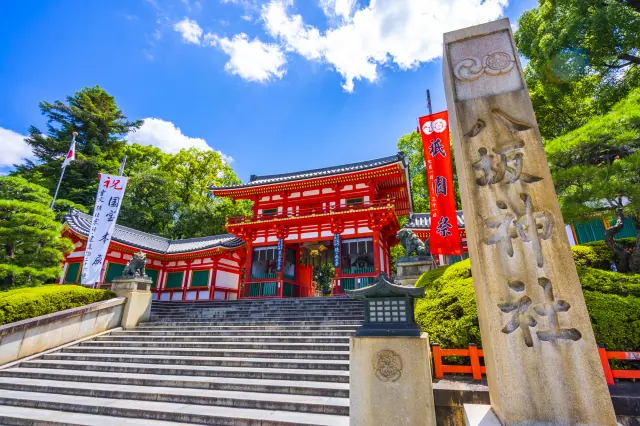
2. Yasaka Shrine
Dedicated to Susanoo-no-Mikoto, Kushiinadahime-no-Mikoto, and Yahashira-no-Mikogami, this shrine is the head shrine of approximately 2,300 Yasaka shrines and related shrines across Japan that enshrine Susanoo-no-Mikoto.
The West Tower Gate standing at the eastern end of Shijo Street, one of central Kyoto’s major thoroughfares, is a symbolic structure of the Higashiyama area and is designated an Important Cultural Property of Japan. Its beautifully vermilion-painted appearance draws the eye even from afar and makes it a popular photo spot.

3. Nintendo Museum
A public relations facility by Nintendo that opened on October 2, 2024. Renovated from the former Nintendo Uji Ogura Factory, it offers a look at Nintendo’s history and dedication to craftsmanship through a variety of exhibits.
The first area visitors see is a floor displaying the many products Nintendo has released over the years.
From the Family Computer to the latest Nintendo Switch, the sight of historic hardware and software lined up is impressive. Toys and everyday items are also worth checking out.
On the experiential exhibit floor, forms of entertainment that Nintendo has created, including Ogura Hyakunin Isshu cards and home video game consoles, are reimagined with modern technology, allowing visitors to rediscover their fun.

4. Yasaka Koshindo Temple
A temple located in Higashiyama, one of Kyoto’s top sightseeing areas, where Kiyomizu-dera Temple and Yasaka Shrine are also found. Its formal name is “Daikokusan Kongoji Koshindo,” but locals affectionately call it “Yasaka no Koshin-san.”
The most eye-catching feature on the grounds is the colorful cloth charms known as “Kukurizaru,” which have recently become popular on social media.
These charms depict monkeys with their hands and feet bound, symbolizing the calming and control of the restless heart that constantly moves about like a monkey.

5. Kyoto Aquarium
A large inland aquarium that opened in March 2012 inside Umekoji Park near Kyoto Station.
Its 10 areas house and display about 15,000 creatures from around 250 species, including the Japanese giant salamander, a Special Natural Monument of Japan that lives in the Kamo River, as well as Cape penguins, spotted seals, fish, and jellyfish.
The “Kyoto Penguin Relationship Chart,” which shows the relationships among the penguins currently on display, has become a hot topic because their complex connections seem almost human.


6. Toei Kyoto Studio Park
One of Japan’s leading movie theme parks, located in Uzumasa, Kyoto. It is famous for its film sets used in period dramas, and you can enjoy the atmosphere of old Japan even more by changing into period costume characters and strolling around the park.
There is much more to enjoy as well, with plenty of attractions such as a trick ninja house, haunted house, and 3D maze. The park also features the world’s first attraction where you can experience the Evangelion Unit-01 entry plug and fit it in your palm, along with popular exhibits of tokusatsu heroes and Toei Animation characters.

7. Togetsukyo Bridge
Said to have originally been built in the early 9th century during the Heian period, this bridge has been washed away many times, but each time it has been rebuilt.
It is said to have been named by Emperor Kameyama in the Kamakura period, who remarked that the moon seemed to cross over the bridge.
It blends beautifully with the scenery of every season, from cherry blossoms in spring and greenery in summer to autumn leaves and winter snow, and visitors with cameras can always be seen here.


8. Yasaka Pagoda (Hokan-ji Temple)
Walk east up the slope of Yasaka Street from Higashioji Street, and “Yasaka Pagoda” appears straight ahead.
It is a landmark symbolizing the Higashiyama area, and its photo is often used in travel magazines and similar media.
Yasaka Pagoda is the common name for the five-story pagoda at Hokan-ji Temple, located about five minutes by car from the nearest station, Kiyomizu-Gojo Station.
This five-story pagoda, a type of Buddhist tower, is known for its dignified appearance created by its Approx. 46 m height and layered roofs.
Visitors can tour up to the second floor of Yasaka Pagoda, and on the first floor is enshrined a set of Five Wisdom Buddhas centered on Dainichi Nyorai.

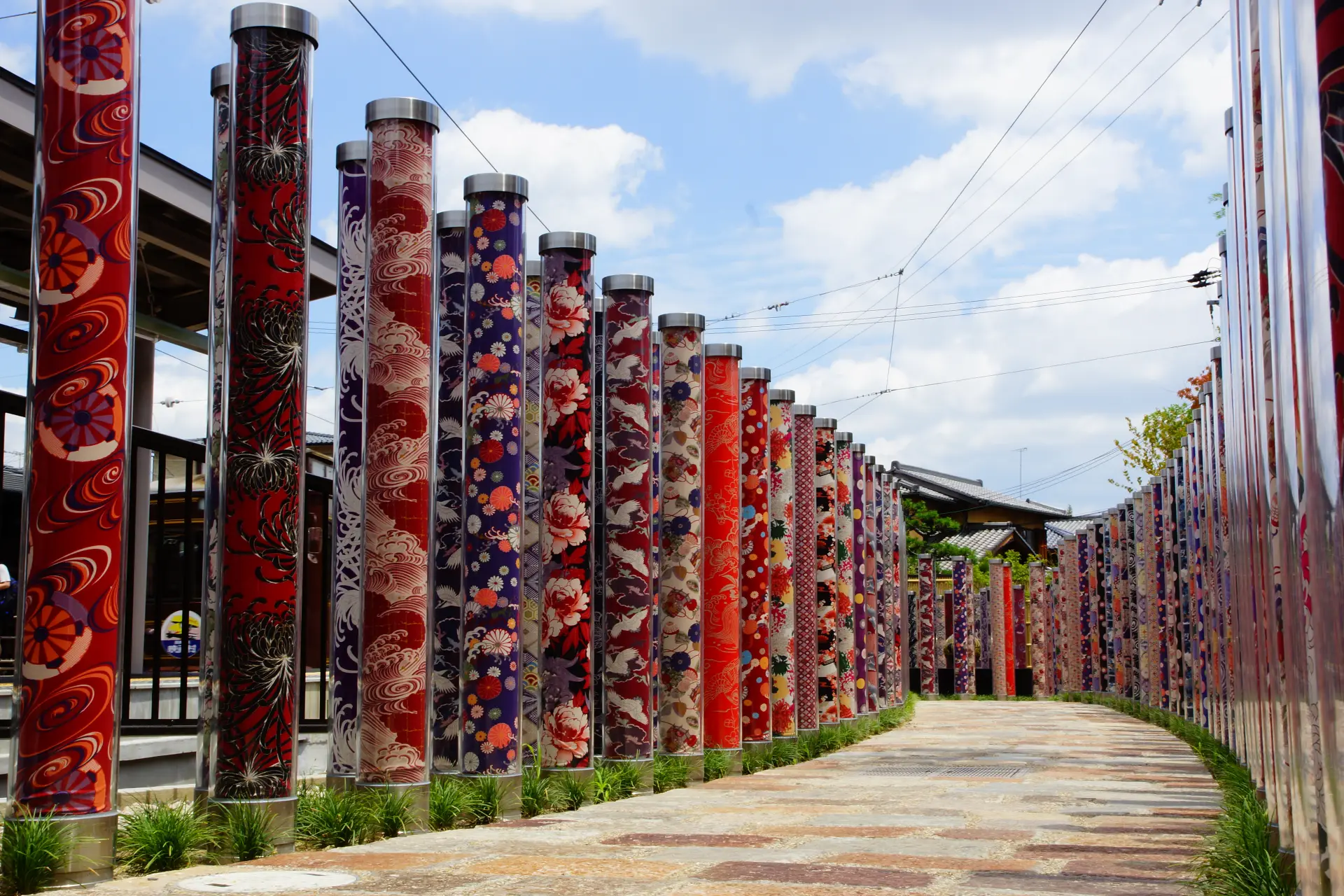
9. Kimono Forest
A plaza located in one corner of Arashiyama Station Hannari Hokkori Square. It features 600 vividly colored poles decorated with Kyo-Yuzen textile patterns.
The poles are installed not only in the plaza but also on the station platform and beside the tracks, making the entire Arashiyama Station feel like a work of art.
The facility also has restaurants, souvenir shops, and a footbath (250 yen), making it a relaxing place for tourists.
At the end of the “Kimono Path,” lined with colorful poles on both sides, is “Ryu no Atago Pond,” known as a power spot. It is said that dipping your hands into the pond brings peace to your heart and happiness.
10. Tenryu-ji Temple
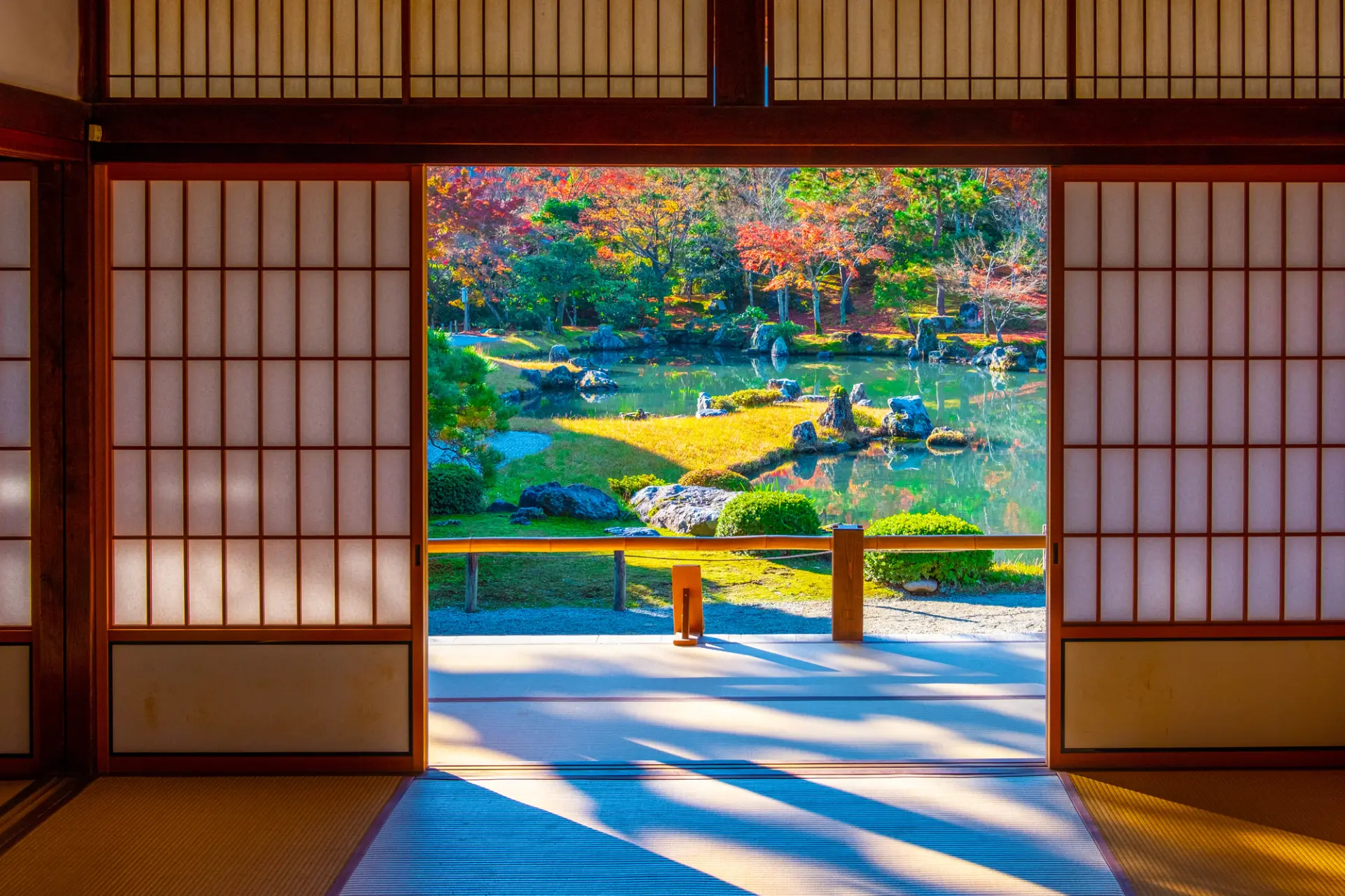
The head temple of the Tenryu-ji school of the Rinzai sect. It was founded in 1339 by Ashikaga Takauji to pray for the soul of Emperor Go-Daigo, with Muso Kokushi as its founding priest.
During the Muromachi period, it held the highest rank among the “Kyoto Gozan,” the five most prestigious Zen temples in Kyoto.
The temple grounds, which spread across the former site of Emperor Gosaga’s Kameyama Villa, were Japan’s first designated Historic Site and Special Place of Scenic Beauty, and in 1994 they were registered as part of the UNESCO World Cultural Heritage site “Historic Monuments of Ancient Kyoto.”

11. Kifune Shrine
Located along the Kifune River at the foot of Mt. Kifune in Sakyo Ward, Kyoto City, this shrine enshrines Takaokami no Kami, the deity of water, and serves as the head shrine of approximately 2,000 water deity shrines across Japan.
The shrine precincts are divided into three separate areas: the Main Shrine, Okumiya, and Yui no Yashiro. Fresh mountain water springs continuously from the stone wall in front of the main shrine building and is revered as sacred water.
The famous “Mizuura Mikuji” is a fortune slip unique to a water shrine, with characters that appear when it is dipped into the sacred water.


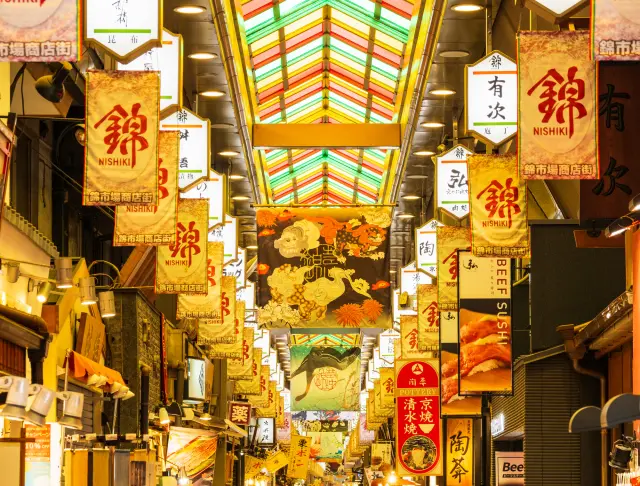
12. Nishiki Market
Nishiki Market is located on Nishikikoji Street, just north of Kyoto’s main street, Shijo Street.
Its beginnings date back to when fish shops prospered here, and in 1615 it received official approval from the Edo shogunate, leading to further development.
The arcade stretches for Approx. 390 m from east to west, with about 130 shops lining both sides.
Inside, you will find so many Kyoto specialties that it can be hard to choose, including soy milk donuts, fresh wheat gluten buns, tempura fish cakes, and yuba cream croquettes.

13. Shojuin Temple
Shojuin Temple is said to have been founded in 1200 as a sub-temple of Iiozan Iokyoji Temple. It is an ancient temple located in Ujitawara, known as the birthplace of Kyoto green tea, and its principal image is the Eleven-Headed Kannon.
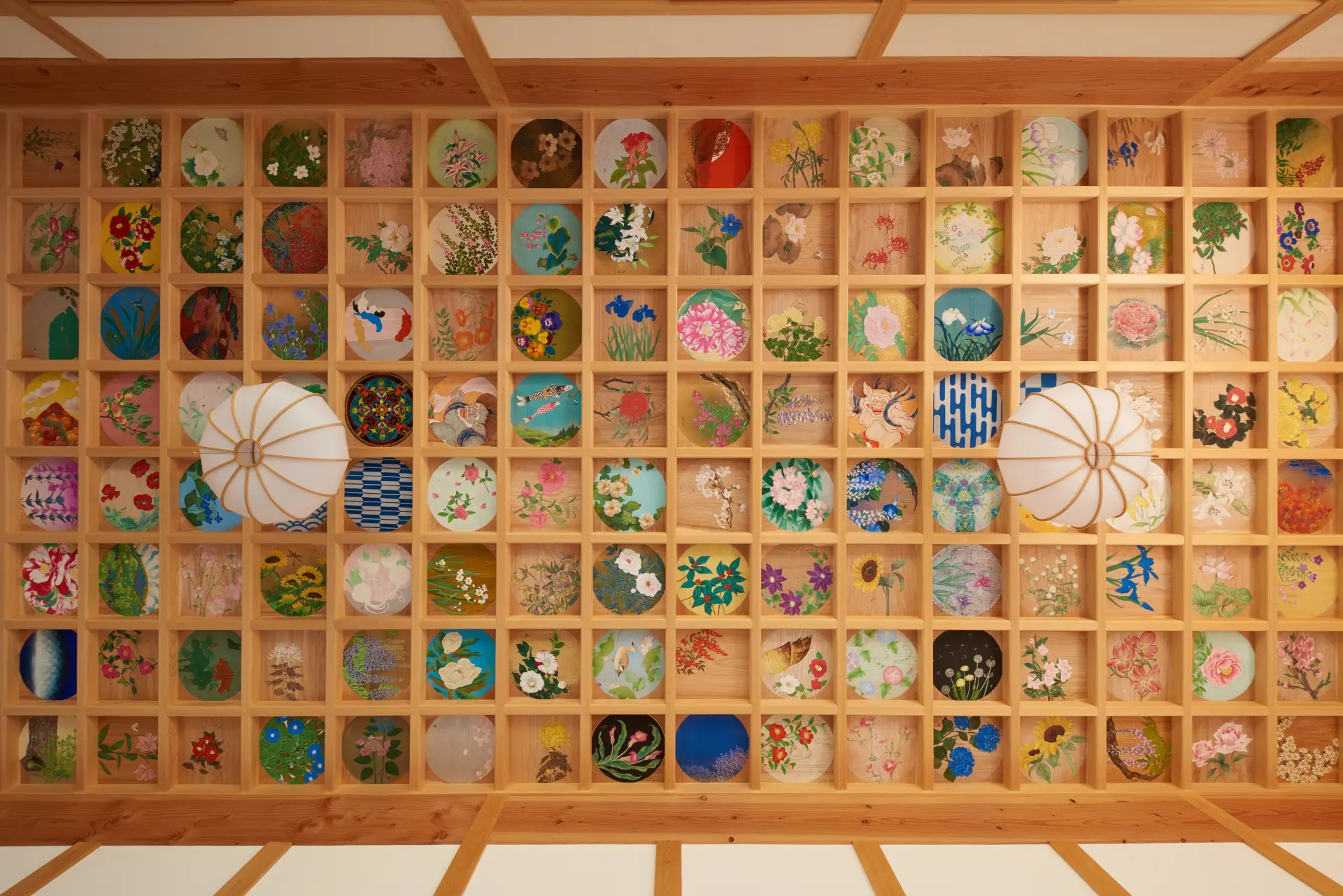
This hidden Buddhist statue is opened to the public only once every 50 years. Other highlights include a seated statue of Fudo Myoo made by Kaikei in the Kamakura period and designated an Important Cultural Property of Japan, as well as 160 ceiling paintings in the guest hall themed around flowers and Japanese landscapes.
14. Fushimi Sakagura Koji
Fushimi was once written as “Fushimi” with characters meaning “abundant underground water,” because the Kamo, Katsura, and Uji rivers flow through the area and groundwater was plentiful.
Blessed with rice suitable for sake brewing, it has long been known as one of Japan’s leading sake-producing regions. The town is packed with sake breweries, from nationally known makers such as Kizakura, Gekkeikan, and Takara to small local breweries.
Fushimi Sakagura Koji is a place where you can fully enjoy sake from 18 renowned Fushimi breweries, covering 120 labels, along with dishes paired to match.

15. Shimogamo Shrine (Kamomioya Shrine)
Its formal name is “Kamomioya Shrine.” Because it is located downstream along the Kamo River that runs through Kyoto City, it is affectionately known as “Shimogamo-san” or “Shimogamo Shrine.”
The main sanctuary, made up of two buildings standing east and west, is designated a National Treasure, and the shrine is one of the oldest in Kyoto. In 1994, it was also registered as a UNESCO World Heritage site.
The path from the entrance to the main sanctuary is Approx. 1 km long. Before reaching it, you will pass through the lush Tadasu no Mori forest.
Within the precincts are shrines associated with matchmaking, beauty, success in contracts, and more.

16. Kiyomizu-dera Temple
Founded in 778, it was registered as a UNESCO World Cultural Heritage site in 1994.
Its 130,000 sq. m precincts spread across the middle of Mt. Otowa and contain more than 30 temple buildings and monuments, including National Treasures and Important Cultural Properties.
Kiyomizu-dera is also worth visiting for its seasonal scenery, with cherry blossoms in spring, greenery in summer, autumn leaves in fall, and snow in winter.
At the top of the slope, the vermilion Niomon Gate welcomes visitors. Climb further up the stairs, and you will see the Approx. 31 m-high Three-Story Pagoda.
One of the tallest in Japan, it is a spectacular viewpoint overlooking Kyoto far into the distance.


17. Maruyama Park
Kyoto’s oldest park, created by developing land once owned by temples and shrines.
It is located straight ahead after crossing Shijo Ohashi Bridge from Kawaramachi and continuing along the Gion shopping street on Shijo Street. As you pass Keihan Gion-Shijo Station and continue through the shopping street from Shijo Ohashi Bridge, Yasaka Shrine comes into view ahead.
The area to the east from there is Maruyama Park, where traditional strolling gardens are lined with ryotei restaurants and tea houses.
The famous Gion weeping cherry tree, often considered Kyoto’s most iconic cherry blossom tree, is the second generation, grown from seeds of the original and standing here since 1949.

18. Sagano Scenic Railway
A trolley train operated by Sagano Scenic Railway, running on a revived section of the former Sanin Main Line that had been discontinued. Classical Art Deco-style passenger cars pulled by a diesel locomotive travel the one-way 7.3 km route from Torokko Saga Station, next to JR Saga-Arashiyama Station, to Torokko Kameoka Station in Approx. 25 minutes.
The train runs along the Hozugawa River gorge, where passengers can enjoy the grandeur of nature and the beauty of the ravine from the window.
The dynamic beauty of the gorge is breathtaking in every season, from cherry blossoms in spring and fresh greenery in summer to autumn leaves and, at times, snowy winter scenery.

19. Sagano Bamboo Grove Path
The Sagano Bamboo Grove Path is a walking trail stretching for Approx. 400 m from Nonomiya Shrine past the north gate of Tenryu-ji Temple to Okochi Sanso Garden.
It often appears on the covers of travel magazines, in TV dramas, and in commercials, and is known as one of Kyoto’s most iconic landscapes. The bamboo rises straight from the ground, then leans inward higher up, creating the feeling of a tunnel of bamboo.
Take your time strolling this atmospheric path, where sunlight filters through the trees and bamboo sways gently in the wind, creating soft sounds that make the experience feel far removed from everyday life. There is also a dedicated route for rickshaws without fences, so taking a rickshaw ride along the path is another great option.

20. Kamo River
It is also sometimes written as Kamogawa or Kamogawa with different kanji. The Kamo River originates near Sajikigatake, flows through central Kyoto, and empties into the Katsura River in Toba.
The area around Shijo, with Gion to the east and Kawaramachi to the west, is a bustling entertainment district and also the commercial center of Kyoto, creating one of the city’s most iconic scenes.
The riverbanks are a classic place for people to relax and spend time. True to its name, the river is home not only to ducks such as mallards, spot-billed ducks, and northern pintails, but also to wild birds such as herons and cormorants.


21. Maizuru Red Brick Park
A group of eight red brick warehouses once used as naval facilities, including torpedo storage.
Today, they have been repurposed as a multi-use complex centered on event rental spaces, with shops, restaurants, coworking spaces, and more. At the Red Brick Museum, visitors can learn about the history of bricks through exhibits of various bricks used in buildings around the world.
At Building No. 5 Cafe, you can try “Maizuru Maritime Self-Defense Force Curry,” recreated from the curry served to crew members aboard the destroyer Fuyuzuki.


5 Night View Spots in Kyoto with Scenery Unique to This Historic City
If you want to enjoy a romantic date in Kyoto, night view spots are a must.
Along with the urban night views around Kyoto Station, Kyoto also offers atmospheric nighttime scenery unique to the city, where historic streets are softly illuminated.
Among the many options, here are some of the most popular spots, carefully selected.
1. Skyway
The “Skyway” connects the 7th floor of Kyoto Station with the 10th floor of the station building.
From the aerial walkway, 45 m above the ground and 185 m long, you can enjoy a panoramic view of Kyoto City.
After sunset, you can take in a beautiful night view created by the illuminated Nidec Kyoto Tower and the lights of the city.
The walkway itself is also lit up with illuminations, adding to its appeal with a fantastical atmosphere like a futuristic tunnel of light.
The station building also has shops, restaurants, and a hotel, making it a great place to stop by after shopping or dinner.

2. Nidec Kyoto Tower
Standing right in front of you as soon as you leave the ticket gates at Kyoto Station, this tower was built with the image of a lighthouse illuminating the city of Kyoto, and at 131 m tall, it is the tallest building in central Kyoto.
From the observation deck 100 m above the ground, you can enjoy a full panoramic view of Kyoto. On clear days, you can even see as far as Osaka through the free telescopes installed there.
One of its charms is the expansive night view with a great sense of depth, made possible by the lack of anything blocking the view.
Be sure to look upward as well as below. The moon shining above Kyoto’s nightscape feels even more special than when seen from the ground and looks all the more beautiful.
The illuminated Nidec Kyoto Tower itself is also not to be missed.
It is beautifully lit in various colors such as red, blue, pink, and green according to the season or event.


3. Mantoroyama Observatory
Mantoroyama, with an elevation of 300 m, is located a little away from central Kyoto.
The Mantoroyama Observatory at its summit is a hidden gem that offers a sweeping view of the Kyoto Basin and has been registered as a Kyoto Prefecture Landscape Asset for its scenic value.
After sunset, you can see the townscape of Ide Town spread out below, with the night view of Kyoto City in the distance, highlighted by Kyoto Tower. The contrast between light and dark, created by the basin surrounded by mountains, is especially beautiful.
It is also known as a spot where you can enjoy an atmospheric night view quite different from what you see in the city center.

4. Hanamikoji Street
Hanamikoji Street is the main street running north-south through Gion, from Sanjo to Kennin-ji Temple.
Despite the word “koji,” meaning lane, it is actually a relatively wide street lined with shops and lively with many visitors.
The area south of Shijo Street is especially well known for preserving the old atmosphere of a teahouse district.
Originally, teahouses were located on Shijo Street and to its north, but from the Meiji to Taisho periods they were gathered on the south side, creating the townscape seen today.
After dark, the lantern light from the teahouses softly illuminates the buildings and stone pavement, wrapping the street in a dreamlike atmosphere.
Why not enjoy a romantic evening walk in Kyoto here?


5. Ninenzaka (Nineizaka)
Ninenzaka (Nineizaka) is known as an approach road to Kiyomizu-dera Temple from the north.
Along both sides of the gently sloping stone-paved street are cafes, souvenir shops, and other businesses housed in old machiya townhouses, creating an atmospheric streetscape.
Many shops close around evening, and after that the number of people passing through the street decreases.
By the time the lights come on in the machiya, the street fills with quietness and magical light.
Look up, and the illuminated Yasaka Pagoda rises beautifully and solemnly above.
Walking through Ninenzaka in kimono lets you enjoy the charming nighttime scenery while feeling almost as if you have traveled back in time.

5 Recommended Restaurants in Kyoto for Couples Who Want to Enjoy a Special Dinner
Here are restaurants in Kyoto that are perfect for a special occasion dinner.
The cuisine varies, from Japanese and Chinese to French, but each is a distinguished restaurant where you can feel Kyoto’s history and traditions.
Along with the food itself, be sure to enjoy the special atmosphere each restaurant creates.
1. FORTUNE GARDEN KYOTO
A restaurant renovated from the former headquarters building of Shimadzu Corporation, designed in 1927 by architect Goichi Takeda. Despite being within walking distance of central Kyoto, it offers a lush space where you can enjoy meals and cafe time far removed from the feeling of the city center.
The cuisine is served in a casual French bistro style using carefully selected ingredients. Lunch features a choice-style course with selectable main dishes, while dinner offers both a la carte dishes made with seasonal ingredients and course meals suitable for special occasions.

2. Tempura Endo Okazakitei
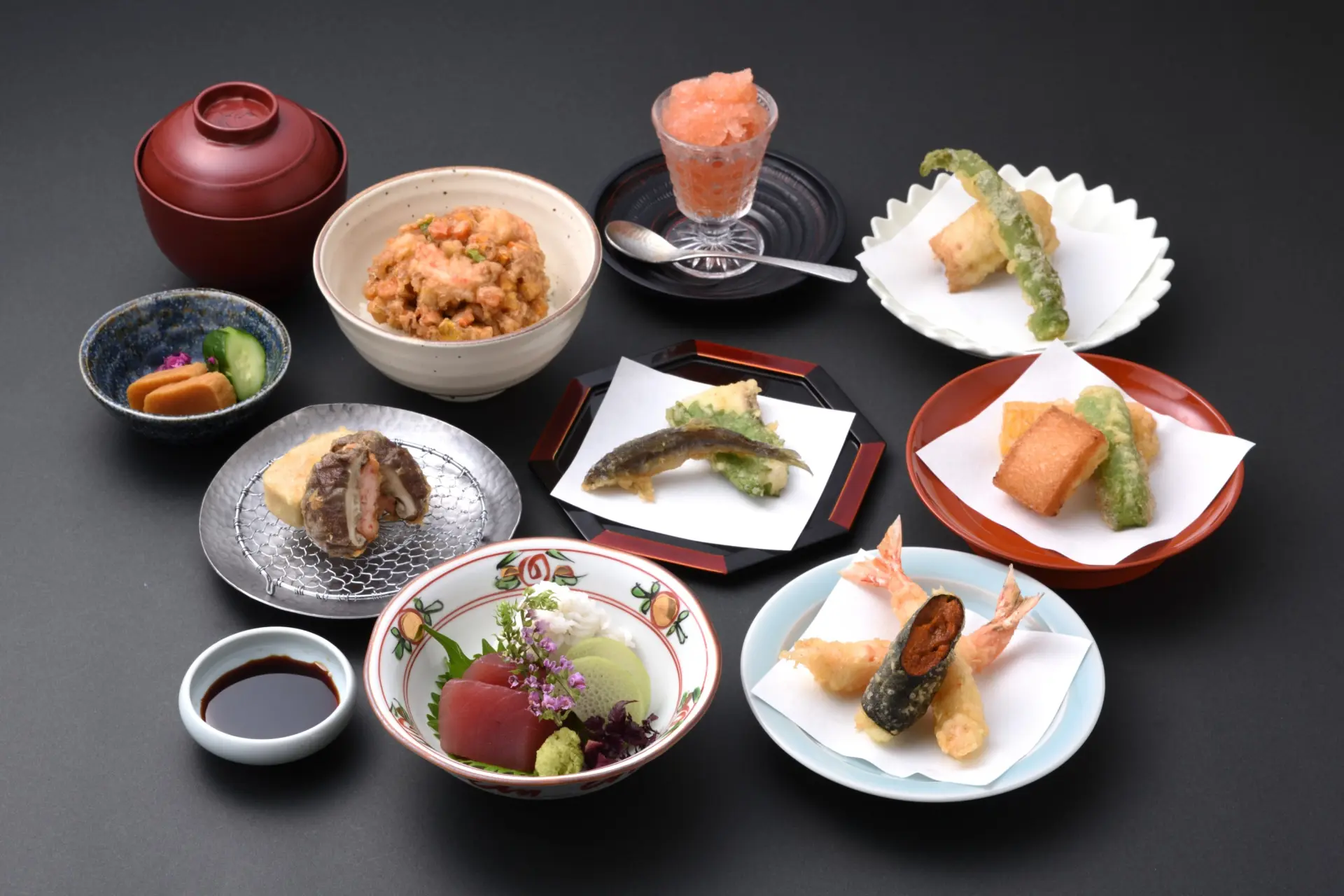
A tempura restaurant located along the Okazaki canal, not far from Heian Shrine, in an area full of Kyoto atmosphere. It is a branch of a popular restaurant with its main store in Yasaka, and this Okazakitei location opened in 2016.
It luxuriously uses seasonal Kyoto ingredients, including Kyoto vegetables and mountain vegetables, as well as fresh seafood delivered directly from the Seto Inland Sea and Wakasa Bay, and river fish raised in clear streams.
The tempura, fried crisp in the finest cottonseed oil pressed from high-quality cotton seeds, has a very light finish with a delicate batter.
3. Vicinato Kyoto
A renowned Beijing cuisine restaurant in Kyoto’s Muromachi area, which has prospered since old times as a wholesale district for kimono fabrics. Renovated from a former kimono merchant’s machiya built in the early Showa period, the building offers a unique space: step through the Western-style entrance, and inside you will find a Kyoto townhouse.
For dinner, four courses are available, featuring dishes such as whole braised shark fin, oven-roasted Peking duck, and soft-shelled turtle rice porridge.
Seating includes tables facing a lush inner garden as well as a large hall and private rooms of various sizes, making it suitable for all kinds of occasions.

4. Wagyu Yakiniku Toku
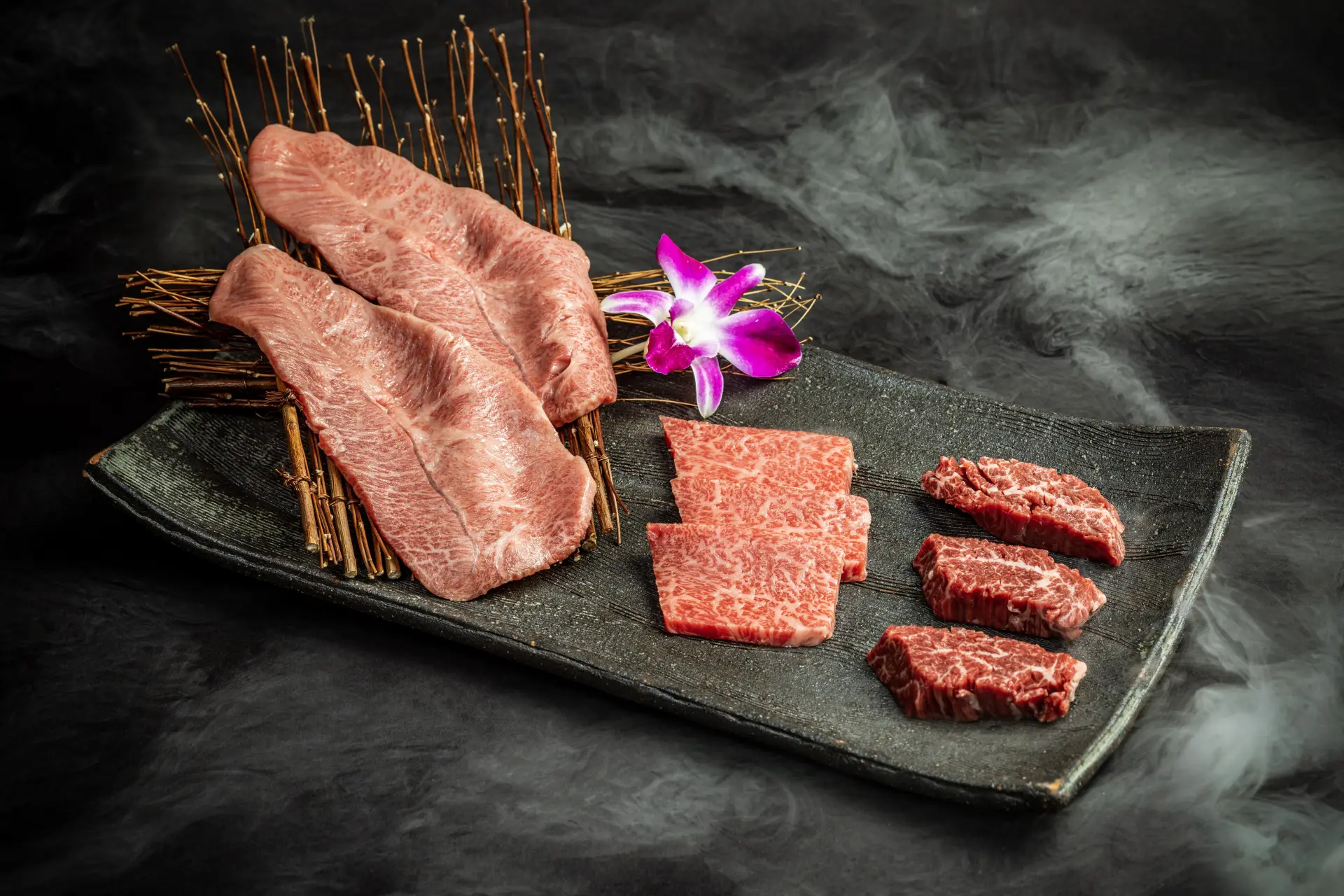
A yakiniku restaurant where you can enjoy premium Japanese Black beef while overlooking the charming Kamo River in Gion, Kyoto.
It serves carefully selected A4 and A5 rank Japanese Black beef chosen by expert buyers, including branded beef such as Shinshu Premium Beef, which is certified only for beef meeting strict standards.
Inside, the restaurant offers fully private rooms and sunken kotatsu seating in a Japanese-modern setting overlooking the Kamo River, creating the feel of an adult hideaway. The menu includes both a la carte dishes and courses, along with a wide variety of side dishes such as wagyu yukhoe, seared meat sushi, and abalone porridge.
5. Dairikitei
A residence located within the grounds of Nanzen-ji Temple, one of Kyoto’s best-known sightseeing spots, featuring the Soryu Garden designed by the 11th Ogawa Jihei.
Within the residence, meals can be enjoyed while looking out over the garden in four spaces: Higashiyama, Nanzen, the Great Hall, and the Detached Room.
The menu includes course meals and individual dishes made with A5 rank Japanese Black beef, as well as udon made with a house blend of domestic wheat flour.

5 Recommended Places to Stay in Kyoto for Couples Who Want a Great Hotel Stay
Here is a carefully selected list of accommodations where you can enjoy experiences unique to Kyoto.
Stay at any of the places introduced below, and you will be able to keep enjoying Kyoto’s charm, atmosphere, and scenery even after returning to your room.
All of them are well equipped and promise a fulfilling hotel stay.
1. Hotel Okura Kyoto Okazaki Bettei
The first small luxury hotel from Hotel Okura, opened in January 2022.
With the concepts of “Kyoto Okazaki,” “Higashiyama culture,” and “inheritance,” it creates the feel of an adult hideaway.
Its interior features include room numbers modeled after tea canisters, original lighting by Kanaamitsuji, calligraphy art, and Nishijin-ori woven wall decor.
Works by artists based in Kyoto are displayed throughout the hotel, allowing guests to feel a contemporary form of Kyoto beauty in every corner.

2. Kiyomizu Komichi Saka no Hotel Kyoto
A Japanese-style hotel with 38 rooms, located along the approach to Kiyomizu-dera Temple in Kyoto’s Higashiyama district. Surrounded by five slopes, it offers a relaxing stay where you can feel the atmosphere of Higashiyama.
It is just a five-minute walk to Kiyomizu-dera Temple, and one of its appealing points is being able to visit the temple early in the morning while it is still wrapped in quietness.
The guest rooms are warm Japanese-style spaces accented with whitewood furniture. A wide variety of room types are available, including rooms with semi-open-air baths, rooms with sunken kotatsu, and rooms with terraces overlooking Kyoto’s townscape.

3. Dusit Thani Kyoto
A luxury hotel by Thailand’s upscale hotel brand Dusit International, marking its first property in Japan.
Located Approx. 10 minutes on foot from Kyoto Station, it stands between the World Heritage sites Nishi Hongan-ji Temple and Higashi Hongan-ji Temple in a great location where you can feel the atmosphere of a traditional temple town.
The hotel offers services that blend Japan’s delicate traditional culture with Thailand’s graceful hospitality.
Its architectural design combines Kyoto’s traditional machiya townhouse style with the beauty of architecture from Thailand’s Ayutthaya Kingdom, using motifs inspired by stupas and five-story pagoda curves to create a distinctive multicultural space.
4. Kyoto Granbell Hotel
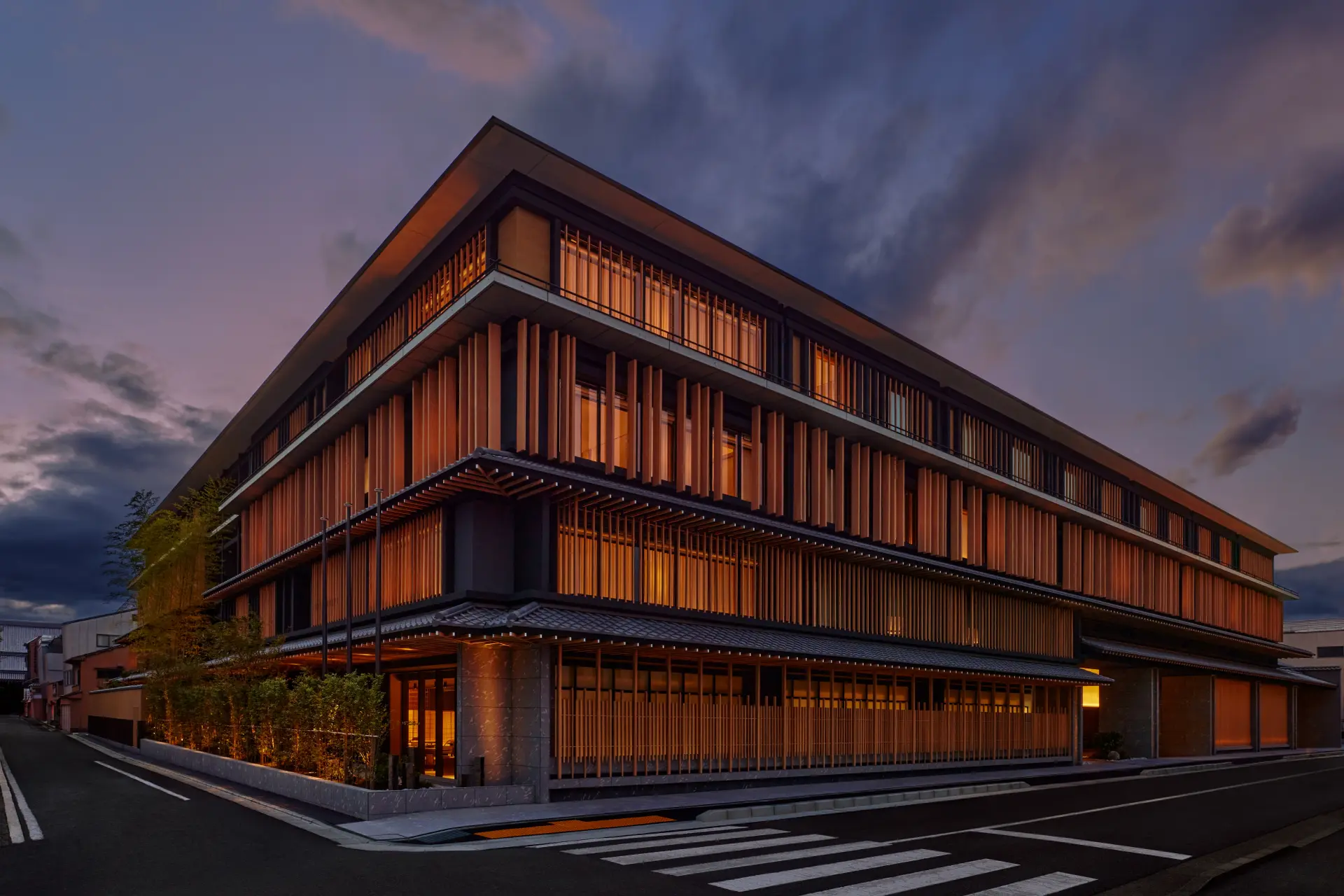
A designer hotel located a two-minute walk from Keihan Gion-Shijo Station.
Set right in the heart of Gion, an area full of Kyoto’s traditional atmosphere, it allows guests to stay surrounded by a distinctly Kyoto mood.
One reason for its popularity is that, unusual for a hotel in central Kyoto, it has a large public bath.
The guest rooms were created in collaboration with top creators of traditional crafts, and guests can choose from six room types, ranging from Western-style to Japanese-style rooms.
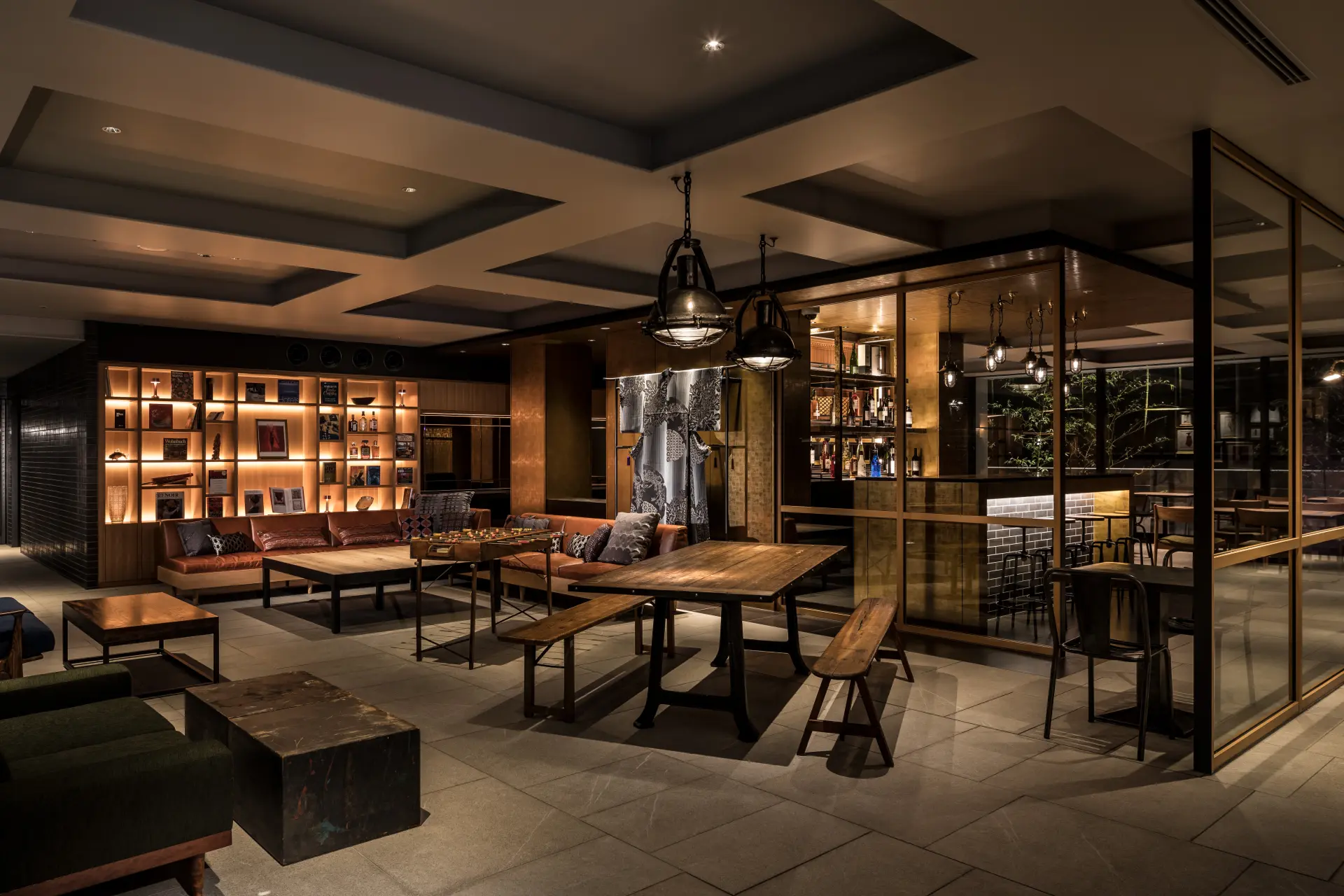
5. The Westin Miyako Kyoto
A long-established luxury hotel standing on the hills of Higashiyama, Kyoto. Since its founding in 1890, it has welcomed distinguished guests from around the world, including Albert Einstein and Helen Keller, and is known for its prestige and tradition.
The guest room design is inspired by the nature of Higashiyama, with seasonal scenery unfolding outside the windows.
At the sukiya-style annex “Kasuien,” designed by one of Japan’s leading architects, Togo Murano, the original atmosphere has been preserved while the space has been reborn anew, and one of its highlights is that guests can enjoy natural hot spring baths in their rooms.

FAQ about Kyoto Date Spots
Q
What kinds of dates can you enjoy in Kyoto?
You can enjoy dates where the two of you experience Kyoto’s history and traditional culture together, such as visiting shrines and temples, strolling around in kimono, or riding in a rickshaw.
Q
What time of year is recommended for dating in Kyoto?
Spring and fall are recommended, as the weather is relatively comfortable and you can also enjoy beautiful scenery colored by cherry blossoms or autumn leaves.
Summary
This article introduced everything from popular date spots and night view spots to restaurants and accommodations for couples planning a date in Kyoto.
With its wide range of charms, including shrines and temples surrounded by beautiful scenery and streets full of atmosphere, Kyoto is a city to enjoy together to the fullest.
If you would like to learn more about Kyoto, be sure to check out this article as well, which introduces classic sightseeing spots, souvenirs, and traditional events.