
Nishiki Market Guide: Discover Kyoto’s 400-Year-Old Kitchen
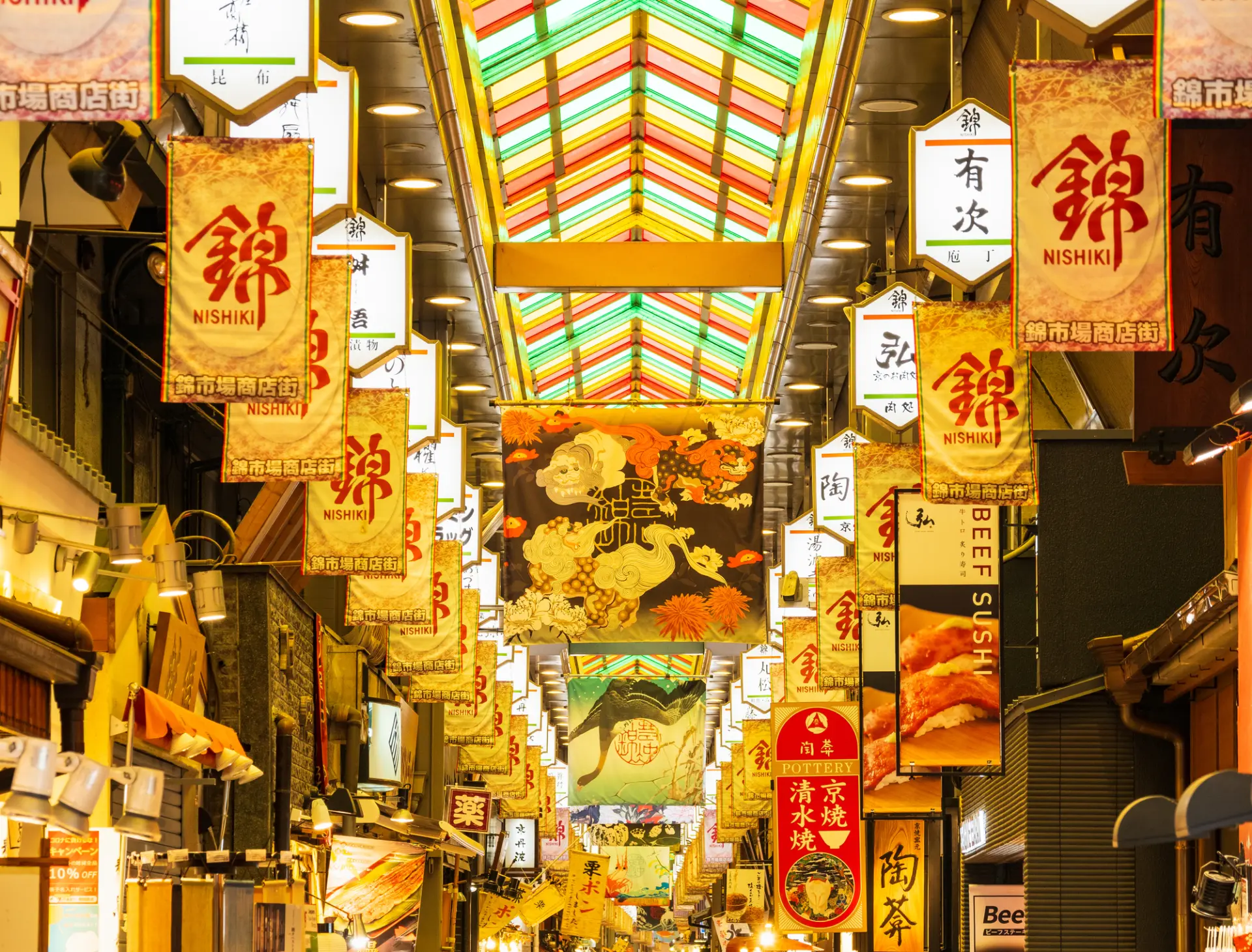
Located in the heart of Kyoto, Nishiki Market is one of Japan’s most famous shopping streets, with a history spanning around 400 years.
Beneath its covered arcade, specialty shops line the narrow street, offering everything from fresh seafood and Kyoto vegetables to pickles and other ingredients that have long been part of Kyoto’s culinary culture.
The calls of shopkeepers add to the market’s lively atmosphere, while its many cultural highlights make simply strolling through the market an experience in itself.
In this article, we’ll introduce the best ways to enjoy Nishiki Market, along with recommended places to eat and important etiquette to keep in mind during your visit.
We’ve gathered everything first-time visitors need to make the most of Nishiki Market, so read on to start planning your visit.
What is Nishiki Market Like?
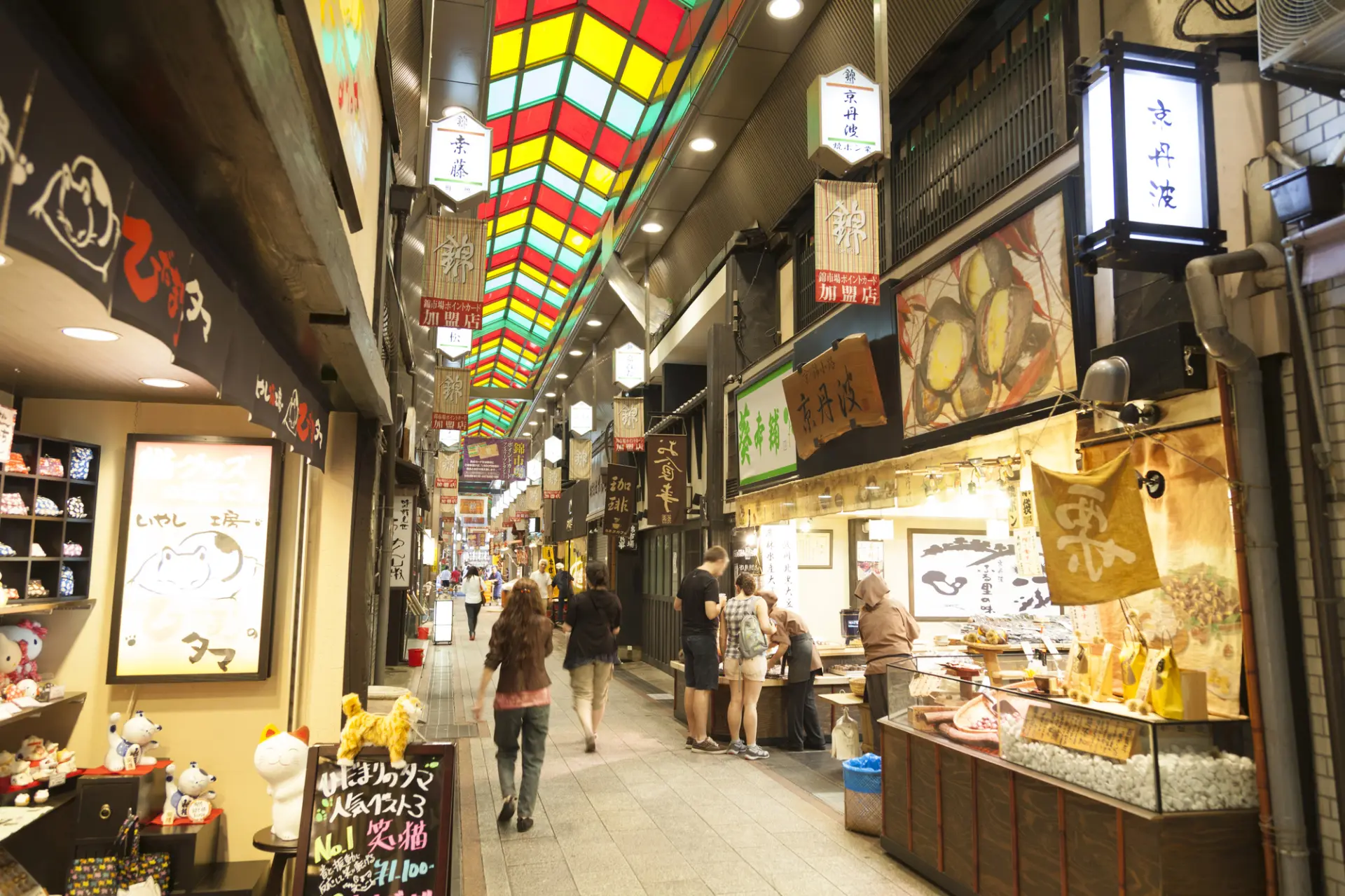
Located in Nakagyo Ward in central Kyoto, one street north of Shijo Street, Nishiki Market is a historic shopping street with a history spanning around 400 years.
Around 130 specialty shops line its approximately 390-meter-long covered arcade, selling everything from fresh seafood and Kyoto vegetables to pickles and obanzai, Kyoto-style home cooking. This wide selection of food has earned Nishiki Market its nickname, “Kyoto’s Kitchen.”
High-quality products fill the shops along the stone-paved street, which bustles year-round with everyone from professional chefs to visitors from Japan and abroad. Many shopkeepers are also happy to share their expert knowledge and recommend ways to enjoy their products, giving visitors a deeper insight into Kyoto’s distinctive culinary culture.
Another part of Nishiki Market’s appeal is its unique blend of long-established businesses preserving traditions passed down through generations and newer shops bringing fresh ideas to the market.
Allow around one to two hours to explore the market. If you want to avoid the busiest crowds, visiting between 10:00 am and 11:00 am is recommended.
Access to Nishiki Market
The three main stations near Nishiki Market are Shijo Station on the Kyoto City Subway Karasuma Line, and Karasuma Station and Kyoto-Kawaramachi Station on the Hankyu Kyoto Line.
From any of these stations, you can reach an entrance to the market in about 5 to 10 minutes on foot.
Below, we’ve summarized how to get to Nishiki Market from Kyoto Station, a major starting point for sightseeing in Kyoto, by different modes of transportation.
For international visitors, we particularly recommend taking the subway, as it is easy to navigate.
| Transportation | Route | Travel Time | One-way Fare |
|---|---|---|---|
| Subway | Take the Kyoto Municipal Subway Karasuma Line from Kyoto Station to Shijo Station, then walk for approx. 8 minutes from Exit 1 | Approx. 15 minutes | 220 yen |
| City Bus | Take Kyoto City Bus 4, 7, or 205 from the Kyoto Ekimae bus stop, get off at Shijo Kawaramachi, then walk Approx. 5 minutes | Approx. 20-30 minutes | 230 yen |
| Taxi | Take a taxi from the Kyoto Station Karasuma Exit taxi stand and get off near Nishiki Market | Approx. 10-15 minutes | Approx. 1,200 yen |
*On foot, it takes Approx. 35 minutes.
Best Time to Visit Nishiki Market
Nishiki Market can be enjoyed year-round and is lively in every season.
While there is no bad time to visit, spring and fall are especially recommended for their mild weather, making it comfortable to explore the market on foot.
From March to May, a visit to the market can easily be combined with cherry blossom viewing and sightseeing at Kyoto’s temples and shrines. You can also enjoy seasonal offerings such as spring vegetables and cherry blossom-themed sweets.
In fall, Kyoto comes alive with colorful foliage, while seasonal Kyoto vegetables and fresh fish reach their peak. It is an especially rewarding time to explore the market’s many culinary delights.
No Eating While Walking: 3 Things to Know Before Visiting Nishiki Market
Before visiting Nishiki Market, it is important to familiarize yourself with a few basic rules and manners.
Following these guidelines helps locals and visitors share the market comfortably and ensures an enjoyable experience for everyone.
Be sure to keep them in mind and follow them throughout your visit.
1. Do Not Eat While Walking
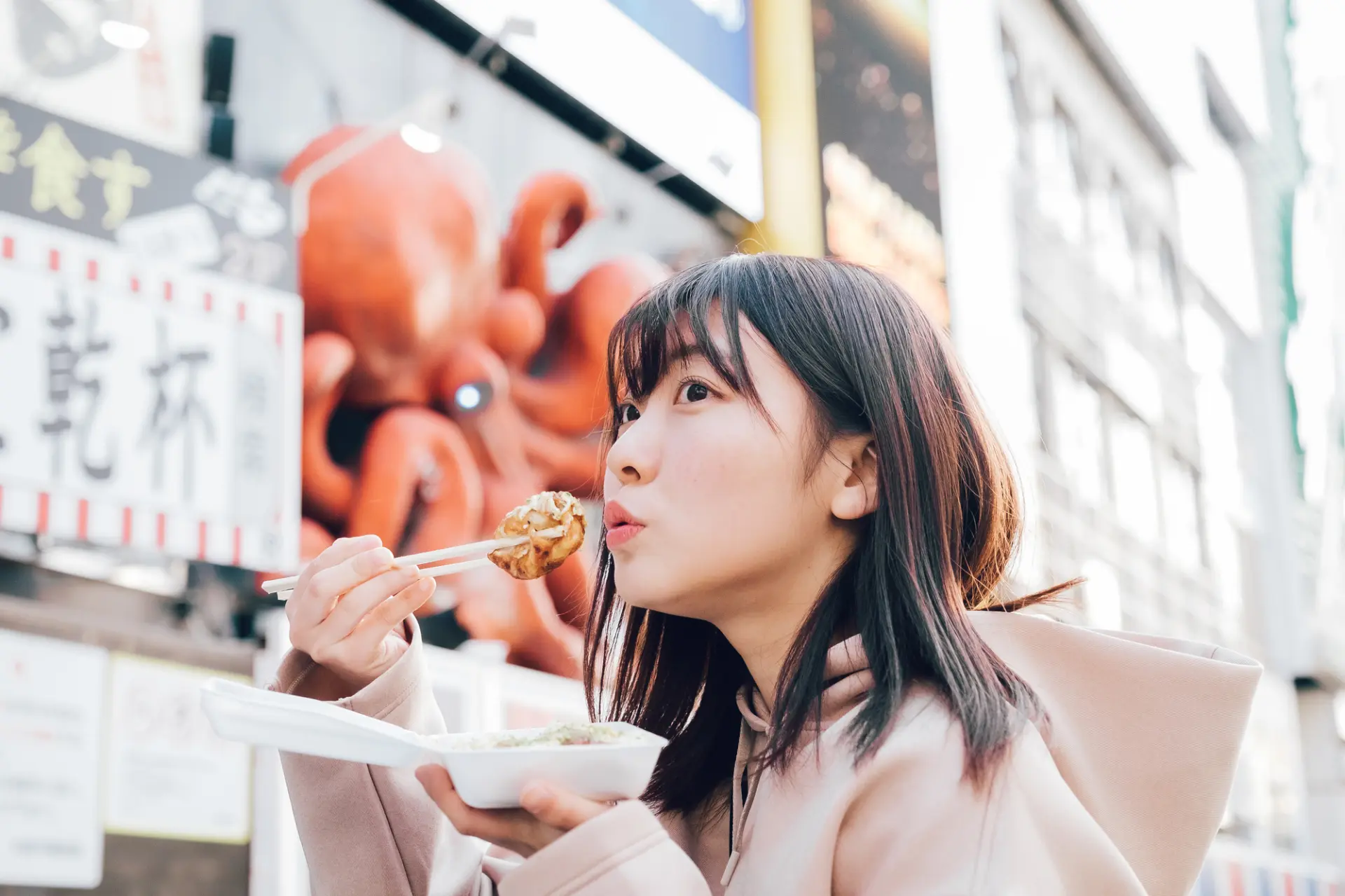
One of the most important rules at Nishiki Market is not to eat while walking.
The market’s narrow street can become very crowded, and eating while walking may cause problems such as accidentally spilling food on other visitors.
Nishiki Market officially asks visitors not to eat or drink while walking. Instead, enjoy anything you purchase in front of or inside the shop where you bought it.
Be careful not to block other visitors or spill food, and dispose of your trash in the shop’s designated trash bin or take it with you.
The rule is simple: buy your food, enjoy it at the shop, clean up when you are finished, and then continue exploring the market.
2. Be Considerate of Others When Taking Photos
Nishiki Market is full of photogenic sights and tempting food, so it is easy to get caught up in taking photos.
However, always be mindful of your surroundings and avoid inconveniencing other visitors while exploring the market.
Some shops do not allow photography of their storefronts or products, so it is good manners to ask a staff member for permission before taking photos.
Taking photos without permission can cause problems, inconvenience shop staff, and make people uncomfortable, especially when a camera is pointed directly at them.
Even after receiving permission, remember to be respectful and take care not to include other people in your photos without their consent.
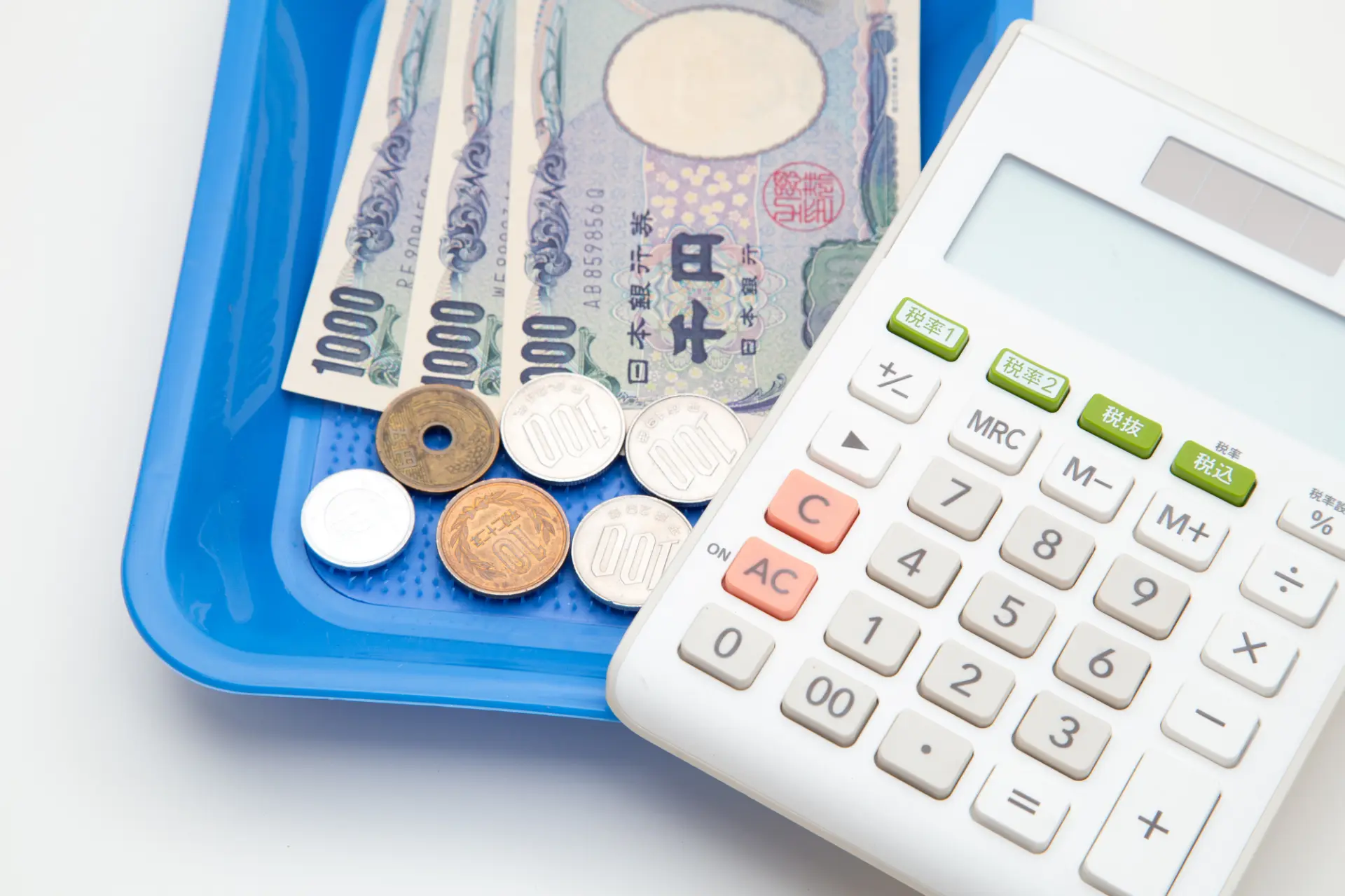
3. Bring Some Cash With You
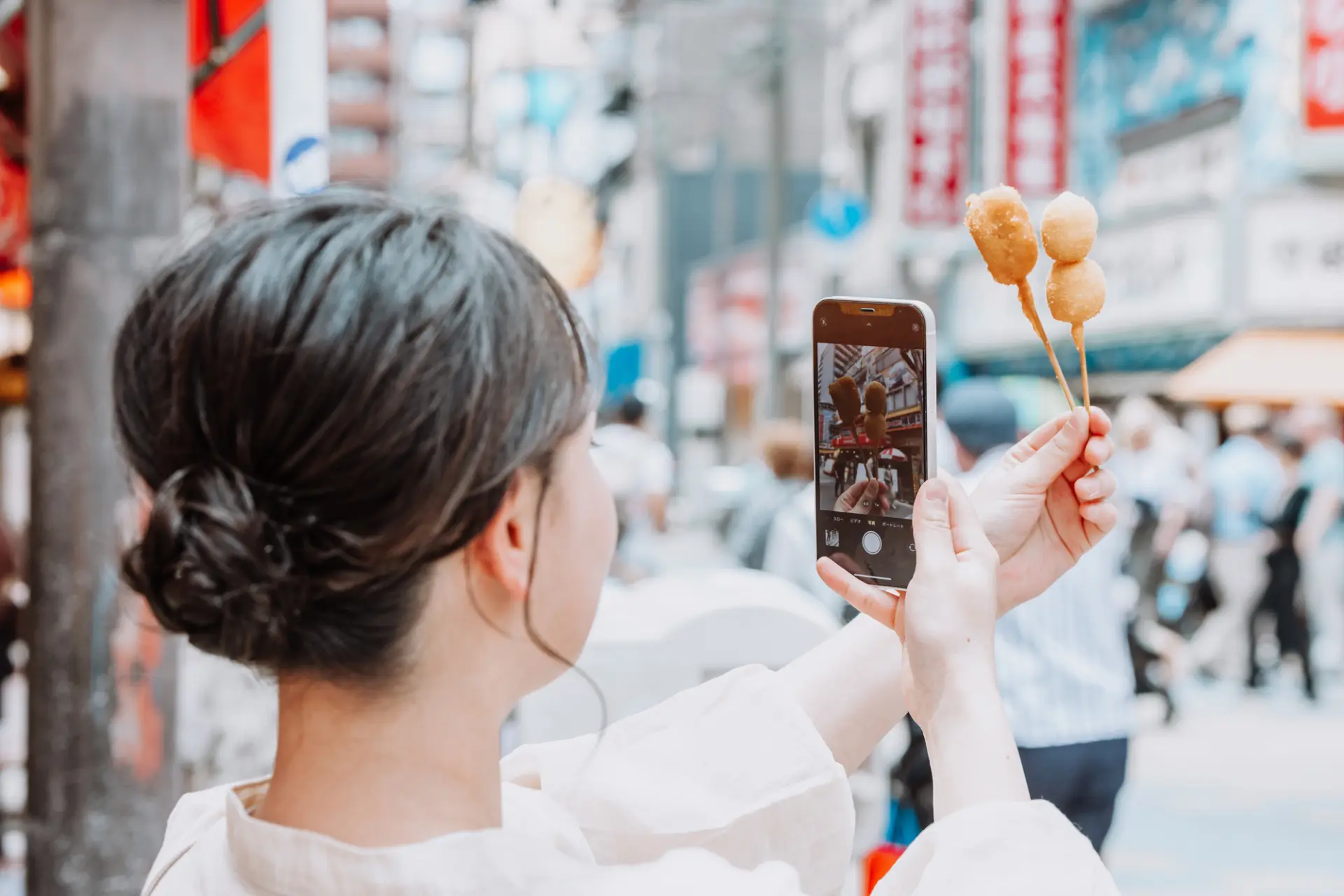
Payment methods vary by shop at Nishiki Market, and some long-established and smaller stores may accept cash only.
Many popular market foods, such as skewers, fried foods, and sweets, cost just a few hundred yen, so having small bills and coins on hand is particularly convenient.
Paying in cash can also make transactions quicker and smoother, especially when the market is crowded.
To avoid missing out on something you want to try because you do not have cash, bring a few 1,000-yen bills and some coins with you.
3 Ways to Make the Most of Nishiki Market
As you make your way through Nishiki Market, you will encounter new shops, enticing aromas, lively sounds, and people along the way, making the walk itself part of the experience.
Surrounded by the market’s historic atmosphere, you may feel as though you have stepped into the everyday life of Kyoto.
Simply wandering through the market is enjoyable enough, but here are three ways to make your visit even more rewarding.
Of course, discovering your own favorite shops and foods is all part of the fun.
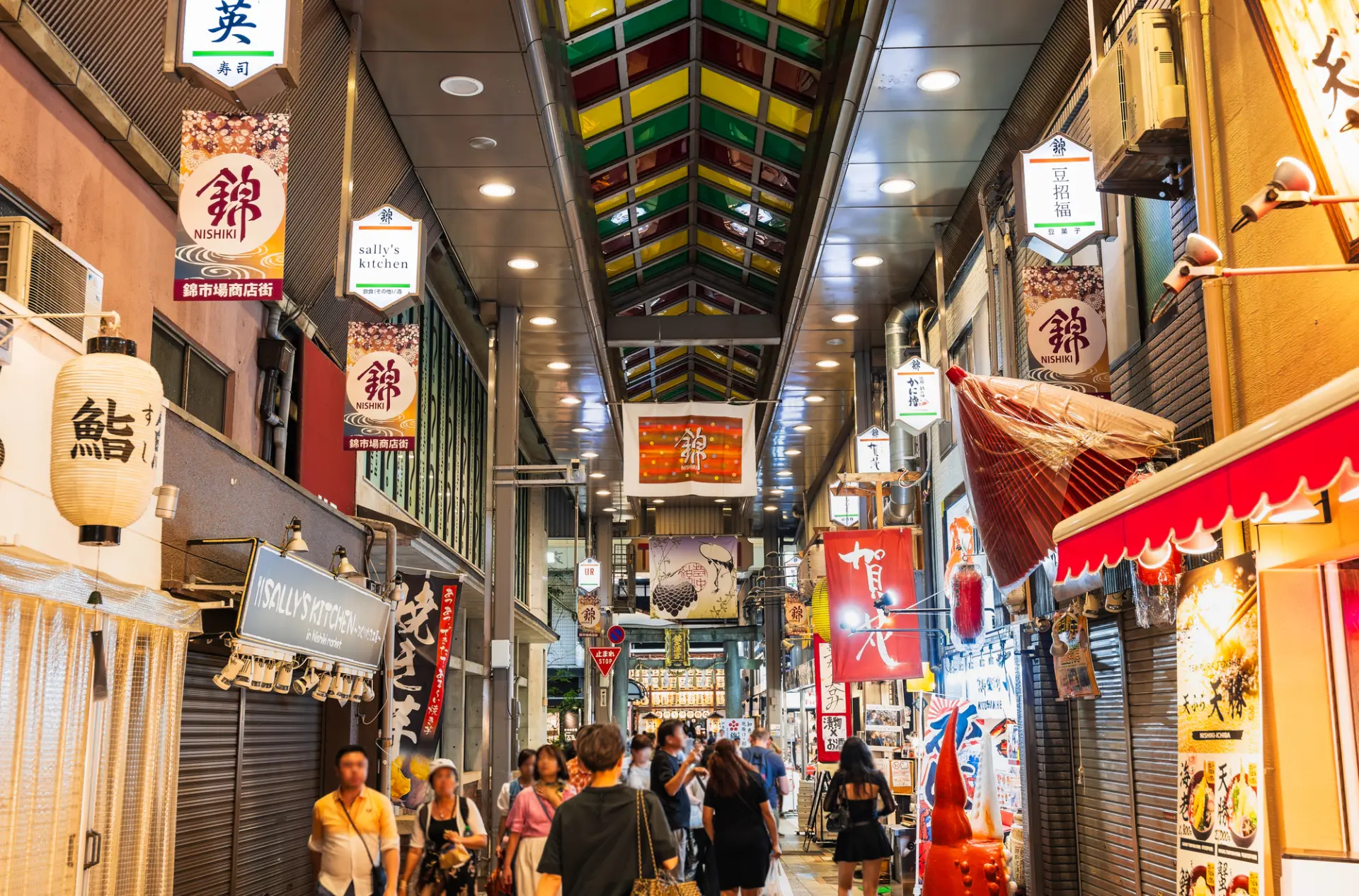
Enjoy the history and atmosphere of Nishiki Market
Nishiki Market was officially recognized as a fish market by the Edo shogunate in 1615, but its history is said to stretch back as far as the Heian period (794-1185).
Even today, town names associated with the area’s long history as a marketplace, including Higashiuoya-cho, Nakauoya-cho, and Nishiuoya-cho, remain along Nishikikoji Street.
At long-established shops, techniques and flavors passed down through generations live on, while the voices of shopkeepers, enticing aromas, and colorful displays of ingredients create a distinctive rhythm throughout the market.
As you walk beneath the arcade, you may notice traditional wooden signs and well-used cooking utensils that offer glimpses into Kyoto’s long-established food culture and everyday life.
By paying attention to these layers of history and the market’s distinctive atmosphere, you can experience Nishiki Market more deeply through all five senses.
Savor Kyoto’s Unique Food Culture
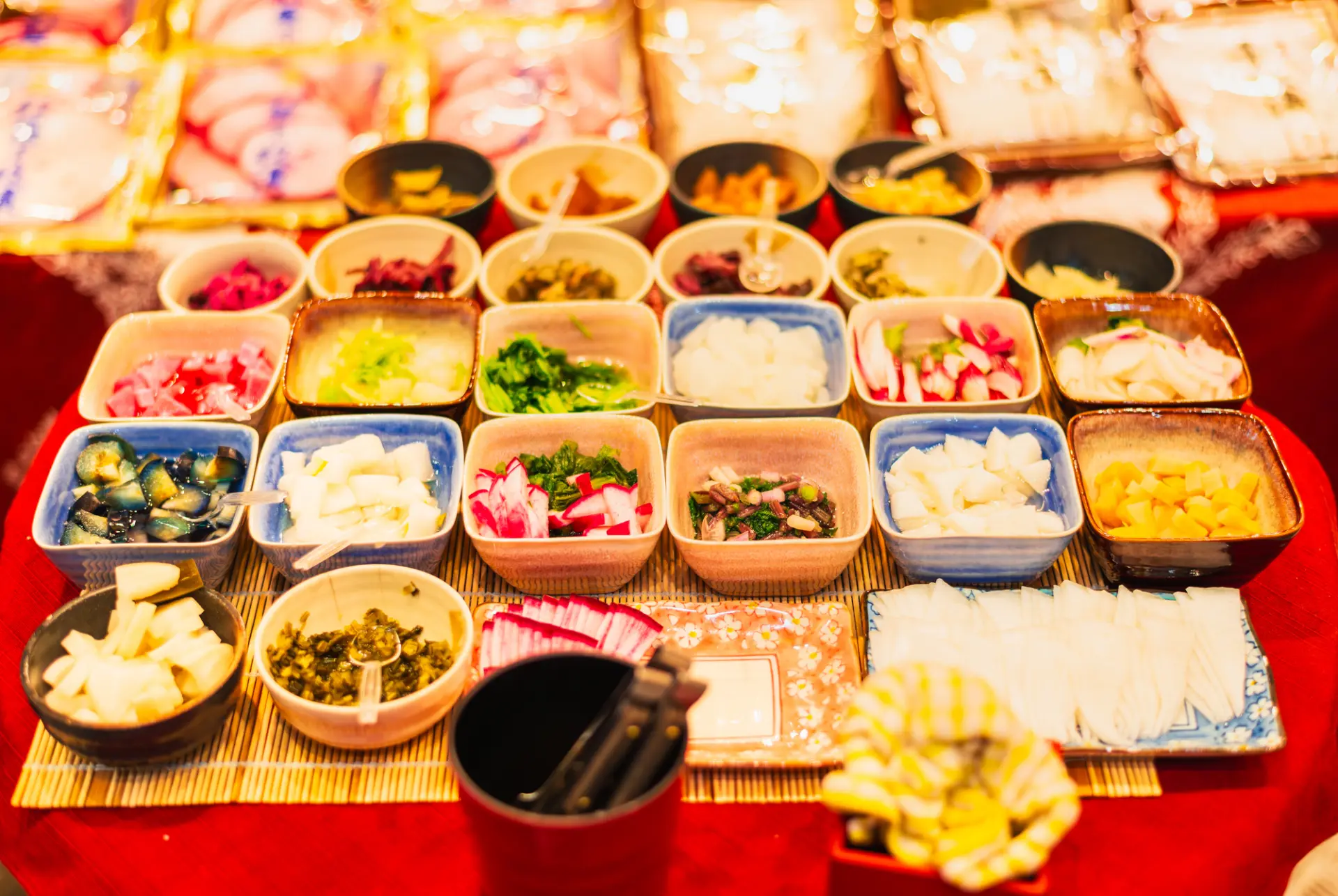
An essential part of experiencing Nishiki Market is discovering Kyoto’s distinctive food culture.
The market offers a wide variety of fresh, traditional ingredients and foods closely associated with Kyoto, including Kyoto vegetables, tofu, pickles, and fresh seafood. Many of these foods reflect the city’s rich culinary traditions, which have long been supported by Kyoto’s abundant groundwater.
Kyoto cuisine traditionally emphasizes bringing out the natural flavors of its ingredients, with delicate sweetness, umami, and textures carefully balanced to create refined dishes.
Seasonality is another important element. Different ingredients and specialties appear throughout the year, giving visitors something new to discover with each season.
Part of the fun is sampling foods from different shops and discovering the craftsmanship behind each one. Visit four or five shops, and you can begin to appreciate the remarkable depth and diversity of Kyoto’s food culture.
Shop for Kyoto Souvenirs
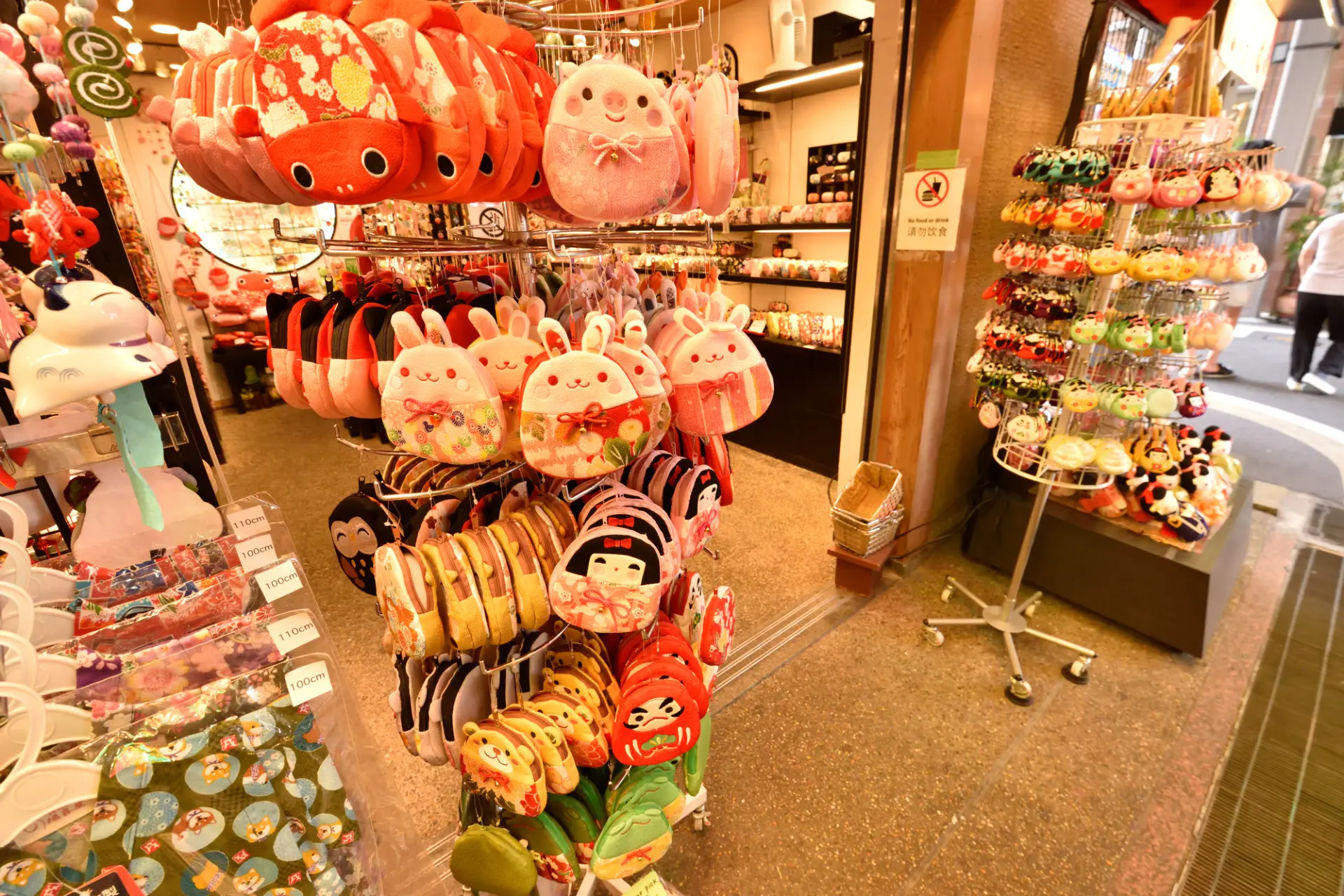
Nishiki Market may be best known for its food, but it is also a great place to shop for distinctive souvenirs and local specialties.
From sweets and practical everyday items to unique limited-edition products, there is a wide variety to choose from, making it easy to find something to suit both the occasion and the person you are shopping for.
Some food shops offer samples, so there is always something new to discover as you explore the market. Even the process of deciding what to buy can become a memorable part of your visit.
With beautifully packaged products and items showcasing traditional craftsmanship, souvenir shopping at Nishiki Market is also a great way to take a little piece of Kyoto home with you.
5 Recommended Places to Eat at Nishiki Market
Here are five recommended places to eat at Nishiki Market.
Each is a popular spot known for carefully selected ingredients and thoughtfully prepared food, offering an easy way to experience some of Kyoto’s distinctive flavors even if you are short on time.
We have selected places offering different types of food, so you can choose according to your tastes and mood.
If any of them catch your eye, be sure to stop by during your visit.
Hanayori Kiyoe
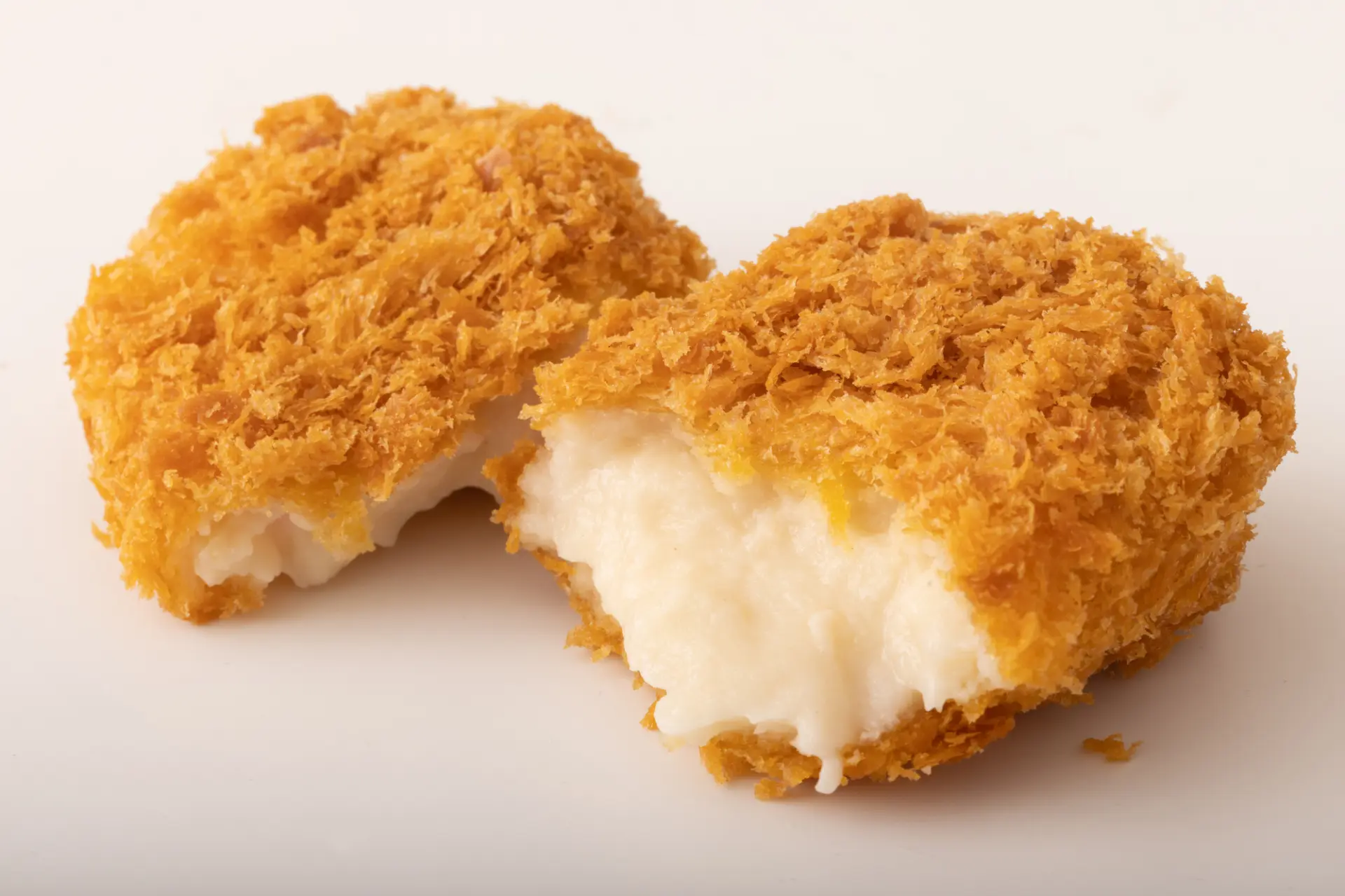
Located near the Kyoto-Kawaramachi side of Nishiki Market, Hanayori Kiyoe is a shop specializing in premium olive oil and freshly prepared fried foods.
The shop sells Kiyoe, a premium olive oil made from fully ripened olives grown in South Australia, along with a variety of fried foods prepared using the oil. One of their defining features is a light, non-greasy finish that allows the natural flavors of the ingredients to shine through.
A particularly popular choice is the Yuba Cream Croquette, a Nishiki Market favorite made with a soy milk-based filling. Crispy on the outside and soft and creamy inside, it offers an irresistible contrast of textures.
Konnamonja
Located at the corner of Sakaimachi Street, Konnamonja is a tofu specialty shop directly operated by Kyoto Tofu Fujino.
The shop offers a variety of wholesome foods, including tofu made exclusively from domestically grown soybeans, as well as yuba and sweets.
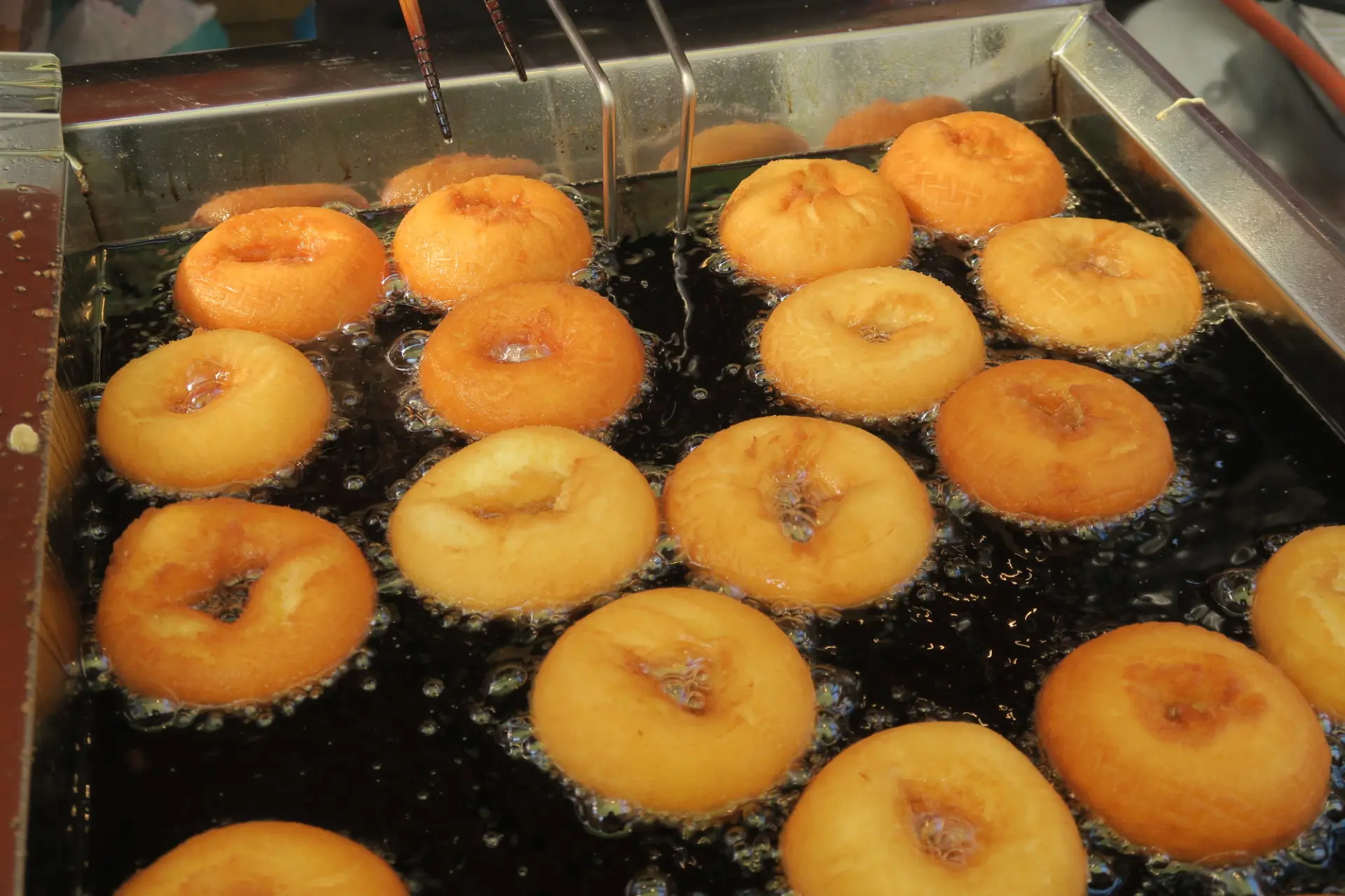
Its signature treat is the Soy Milk Donut, which has been a favorite since the shop opened more than 30 years ago. Moist and fluffy without being overly greasy, these bite-sized donuts have a pleasantly mild sweetness.
Another highlight is watching the donuts being fried right at the storefront before enjoying them piping hot and freshly made.
KAI
KAI is a specialty shop offering furikake rice seasonings, savory specialties, and snacks that pair well with drinks.
The shop is known for its distinctive selection, led by the Shogeki no Goma (“Shocking Sesame”) series of furikake, which won a Gold Award at the 2021 Omotenashi Selection.
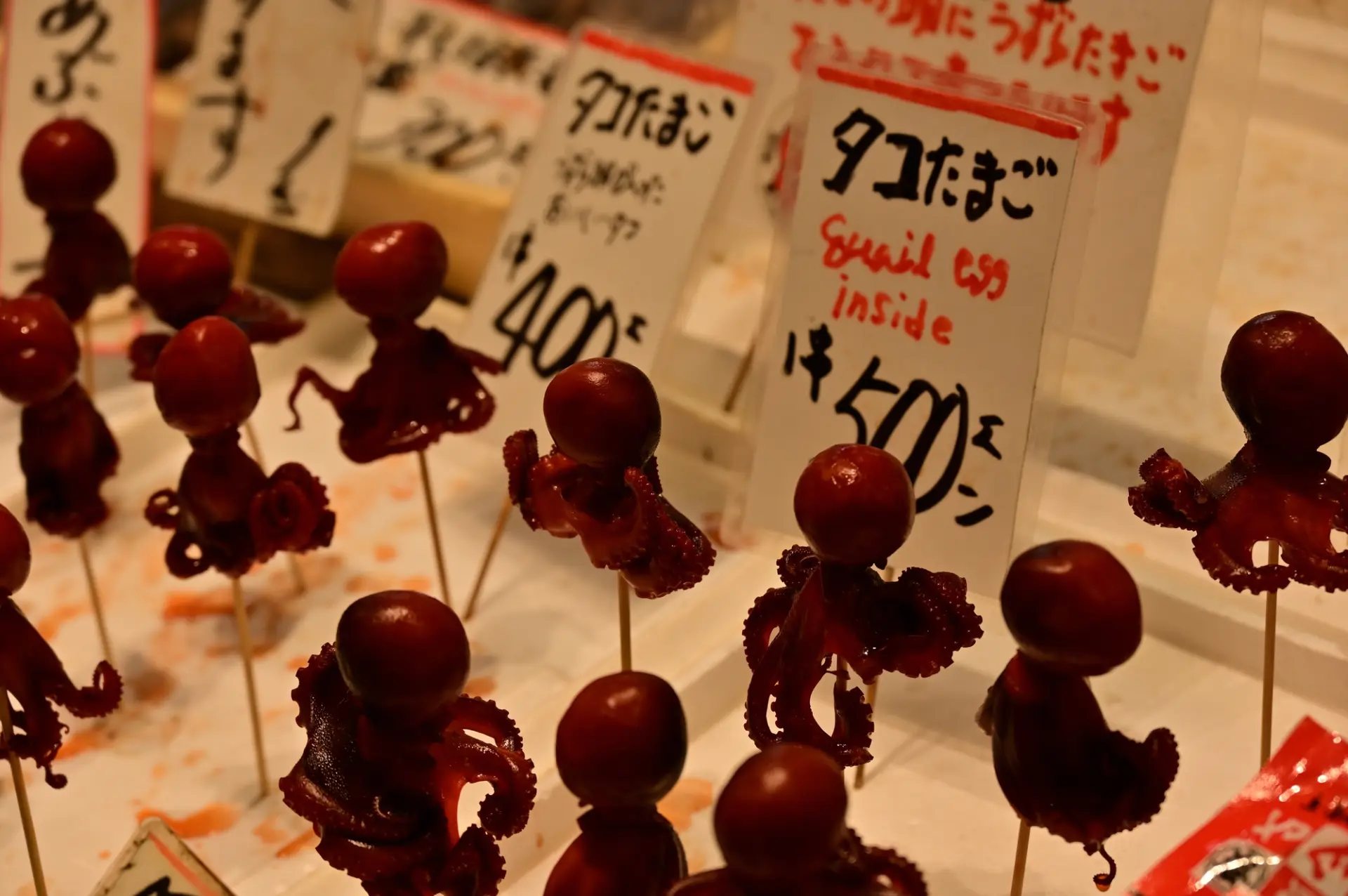
Another popular item that has attracted attention on social media and in the media is Tako Tamago, a baby octopus with a quail egg tucked inside its head.
Its unusual appearance immediately catches the eye, while the octopus is slowly simmered in a soy sauce-based sauce until tender, creating a savory flavor that keeps customers coming back for more.
Tako Tamago is available in three sizes: medium, large, and extra large.
Uoriki
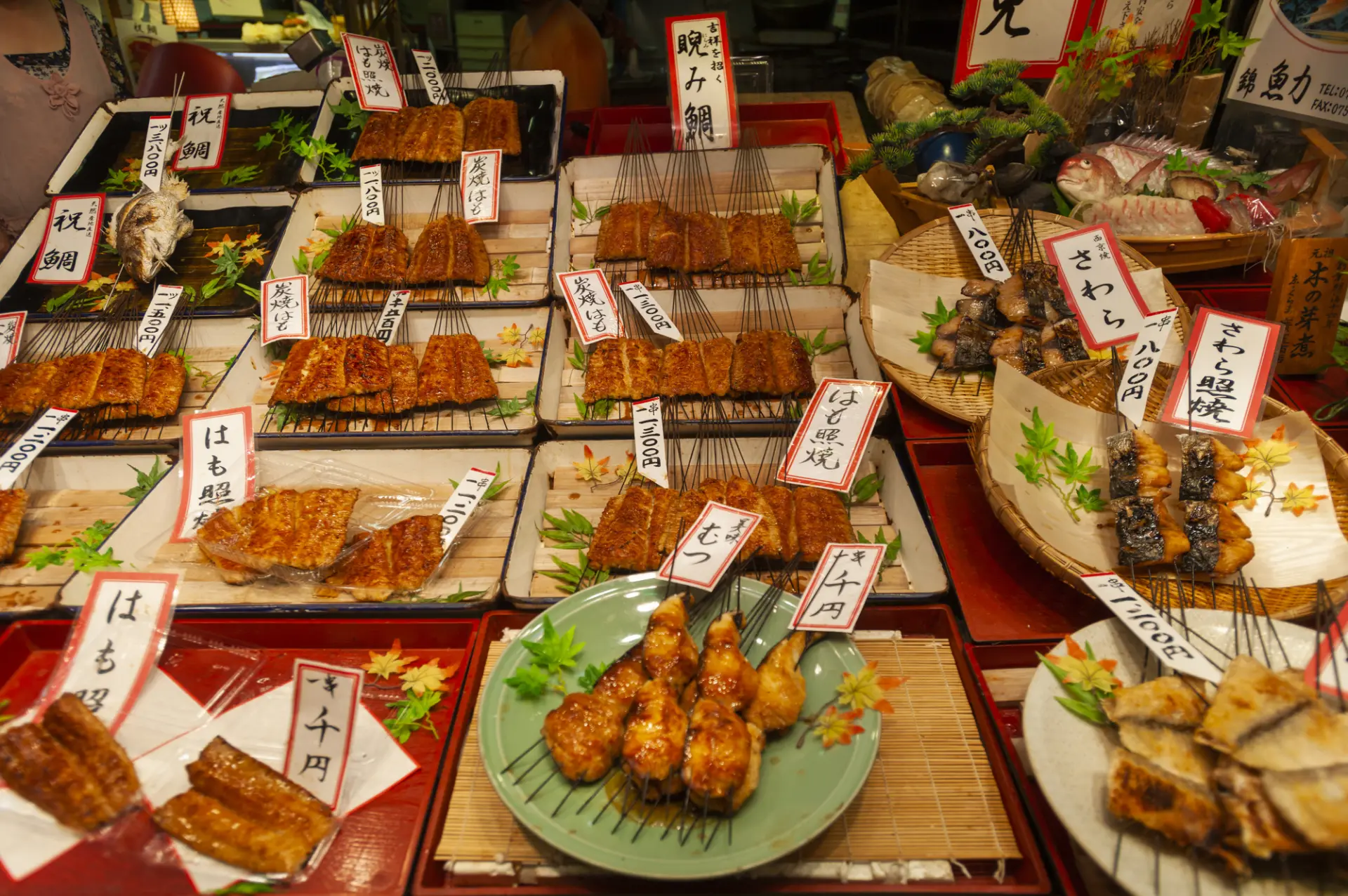
Located near the center of Nishiki Market, Uoriki is a long-established grilled fish specialty shop that has been in business since 1919.
The storefront is lined with fried and grilled dishes made with fresh seafood, while their irresistible aroma draws the attention of passersby.
The shop is particularly known for its hamo (pike conger), a prized ingredient in Kyoto cuisine. Its tempura, made primarily with hamo from the Seto Inland Sea, is crispy on the outside and fluffy inside. Despite its generous size, it has a surprisingly light texture.
Grilled scallops and hamo cutlets, both of which pair particularly well with drinks, are also popular choices.
Miki Keiran
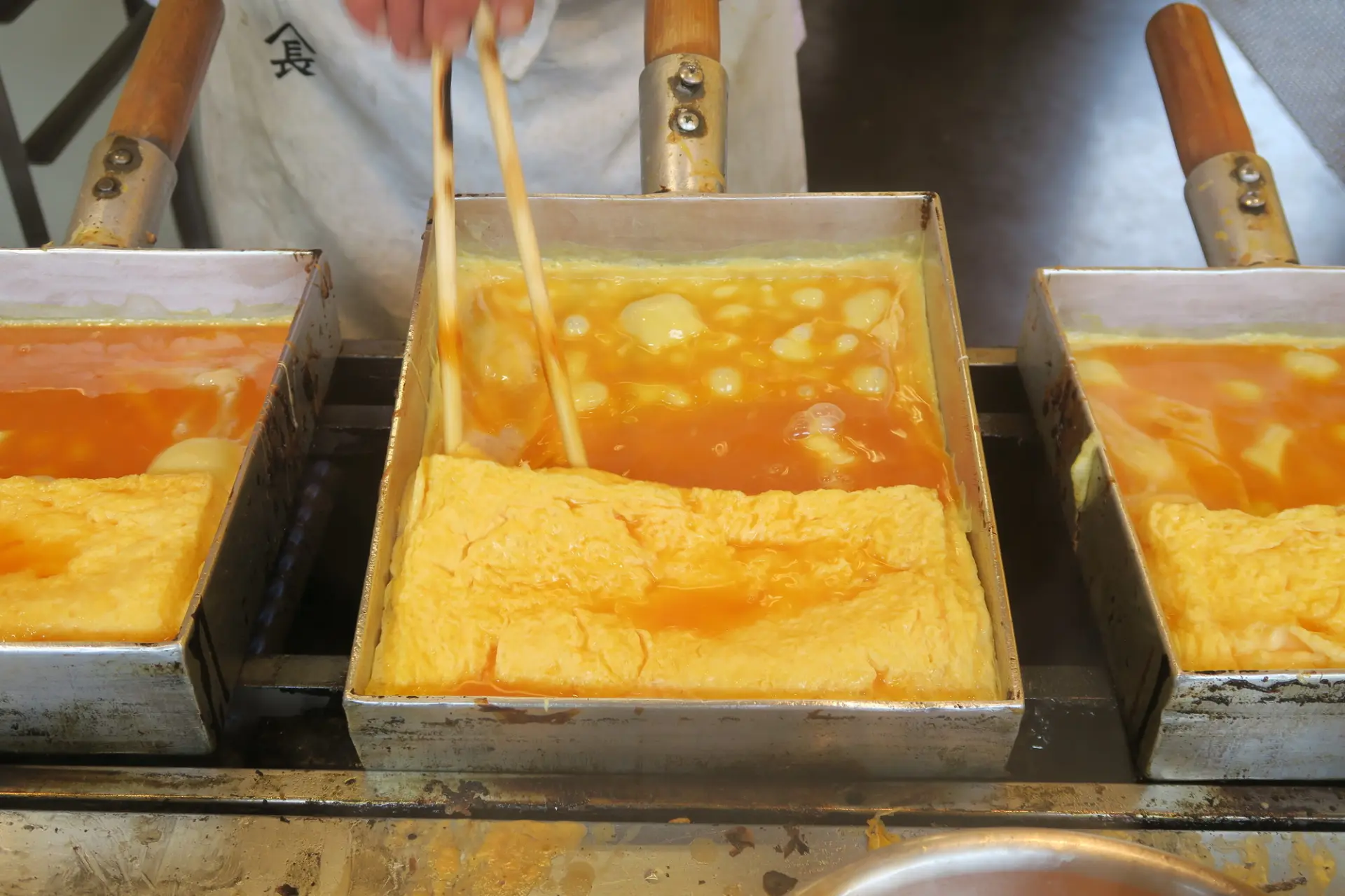
Founded in 1928, Miki Keiran is a specialty shop known for its dashimaki tamago, Japanese rolled omelet flavored with dashi.
Fresh eggs are combined with the shop’s secret dashi, carefully prepared using premium ingredients such as Rishiri kombu, bonito flakes, and herring. Skilled artisans then cook each omelet by hand using a traditional technique known as Kyomaki.
The result is a soft, fluffy texture and a refined, savory flavor that has long been enjoyed by locals and visitors alike.
The shop is also known for its homemade sweets, including petite cream puffs and Kimian-pan, a sweet bun filled with egg-yolk bean paste, making it a great place to stop for a light snack.
3 Recommended Souvenir Shops at Nishiki Market
Next, here are three recommended shops for finding souvenirs at Nishiki Market.
Each offers products that reflect Kyoto’s traditions and local character, including plenty of beautifully designed and eye-catching items.
Many of these items make great gifts as well as keepsakes for yourself, so if you are not sure what to buy, consider stopping by one of these shops.
SNOOPY Chaya Kyoto Nishiki Store
Located near Yanaginobanba Street, SNOOPY Chaya Kyoto Nishiki is a Snoopy-themed shop offering a variety of merchandise and souvenirs.
Opened in 2016, the first floor features merchandise and takeout items, while the second floor is home to a Woodstock-themed shop.
The Japanese-inspired interior is filled with a wide variety of character merchandise and other items.
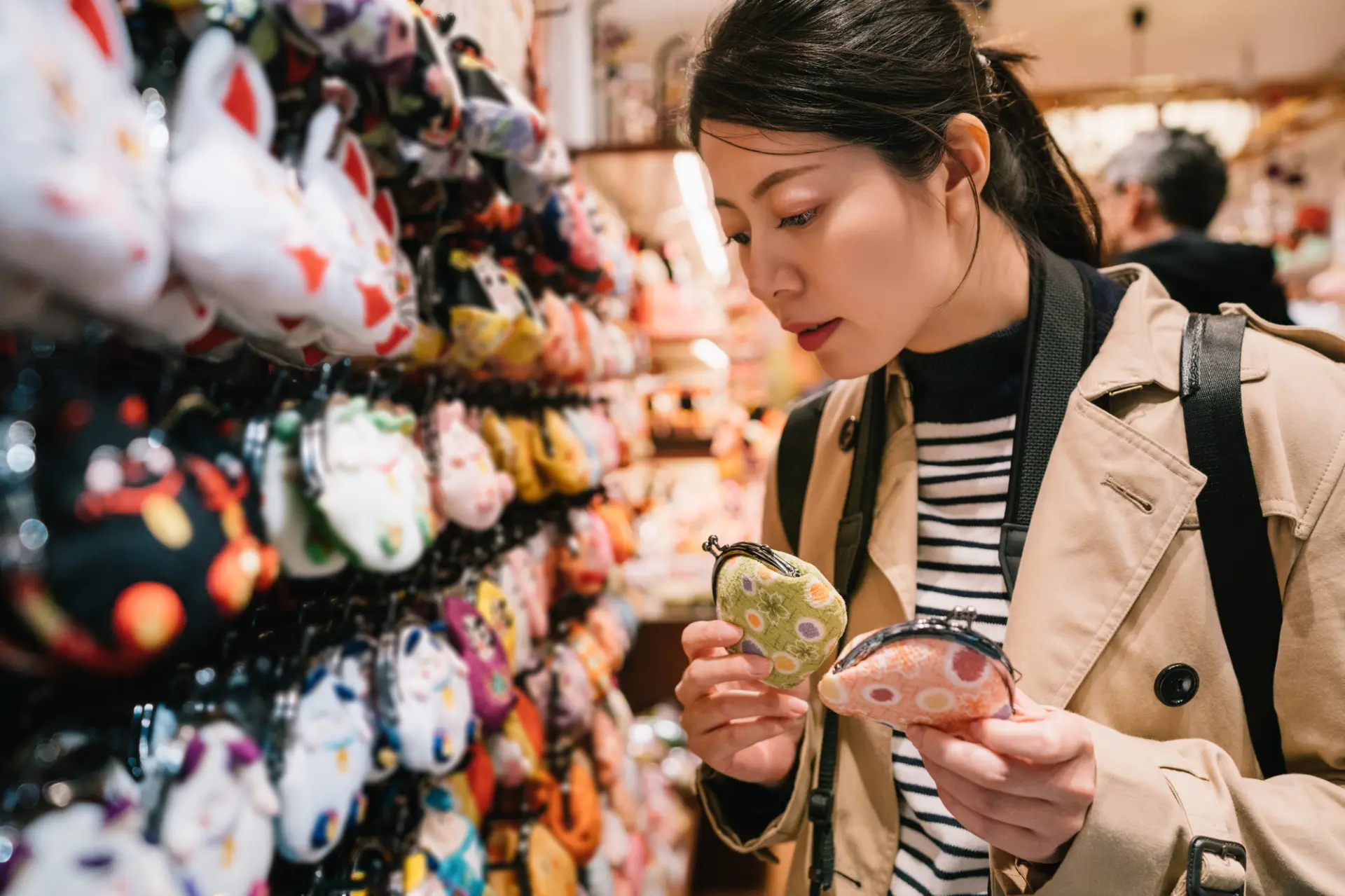
Recommended souvenirs include Snoopy Mikasa (dorayaki), featuring adorable packaging, as well as Nishijin-ori clasp purses and Kiyomizu ware rice bowls available exclusively at this location.
Ochanokosaisai
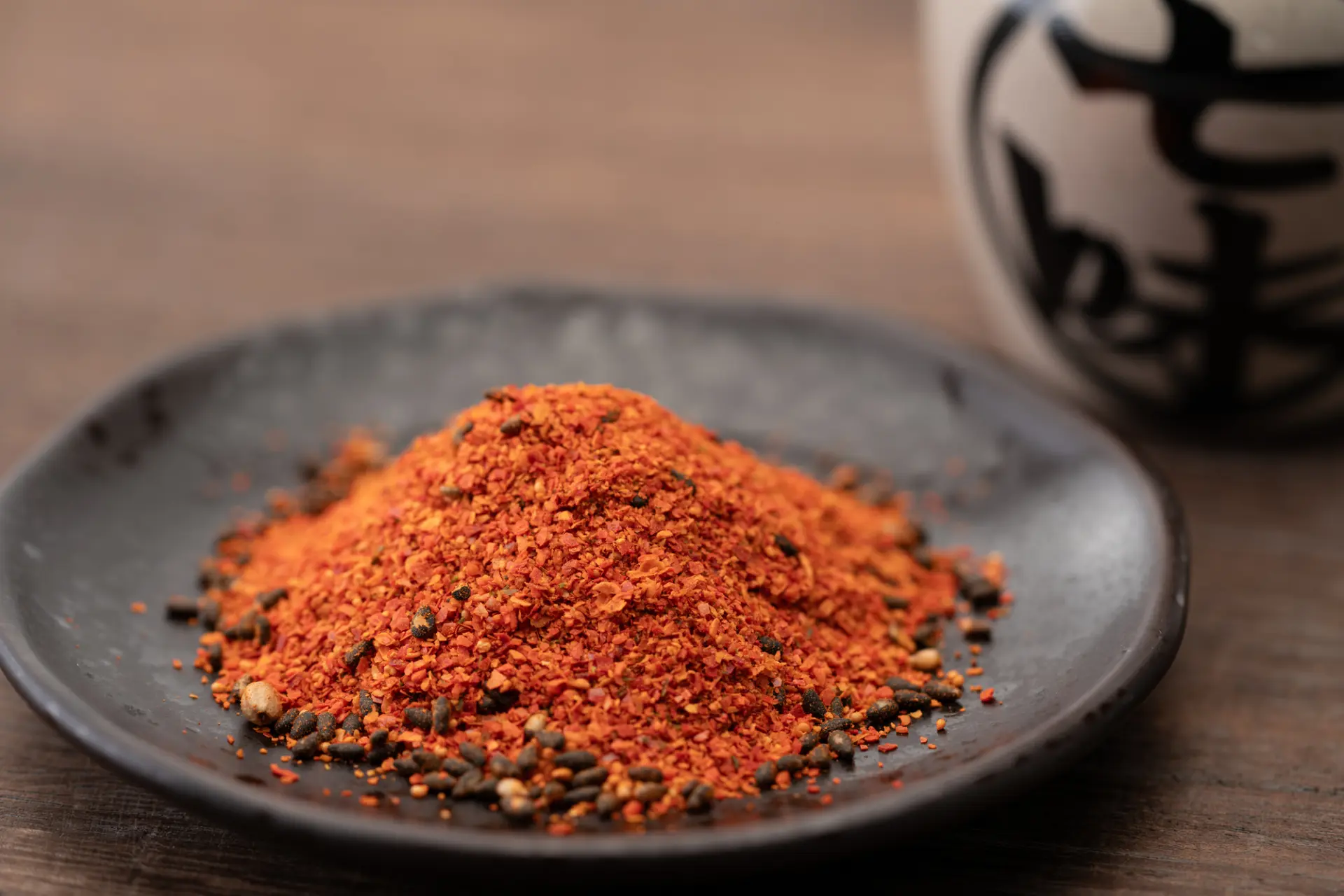
Located just inside the west entrance near Sakaimachi Street, Ochanokosaisai is a specialty shop known for its chili pepper seasonings.
Its shelves are lined with distinctive products made with carefully selected ingredients, including domestically grown chili peppers, sansho pepper, and aonori seaweed, offering a modern take on Kyoto’s traditional shichimi spice culture.
One of the shop’s highlights is its custom-blended shichimi, which can be tailored to your preferences.
You can make specific requests, such as asking for extra sansho pepper or a milder level of heat. Samples are also available, making it easier to find a blend that suits your taste.
The staff can also suggest ways to use the seasonings, making it easy even for first-time visitors to choose a blend. Custom-blended shichimi also makes a distinctive Kyoto souvenir or gift.
Nishiki Marun
Located near the center of Nishiki Market, Nishiki Marun is a charming shop filled with all kinds of cute and colorful items.
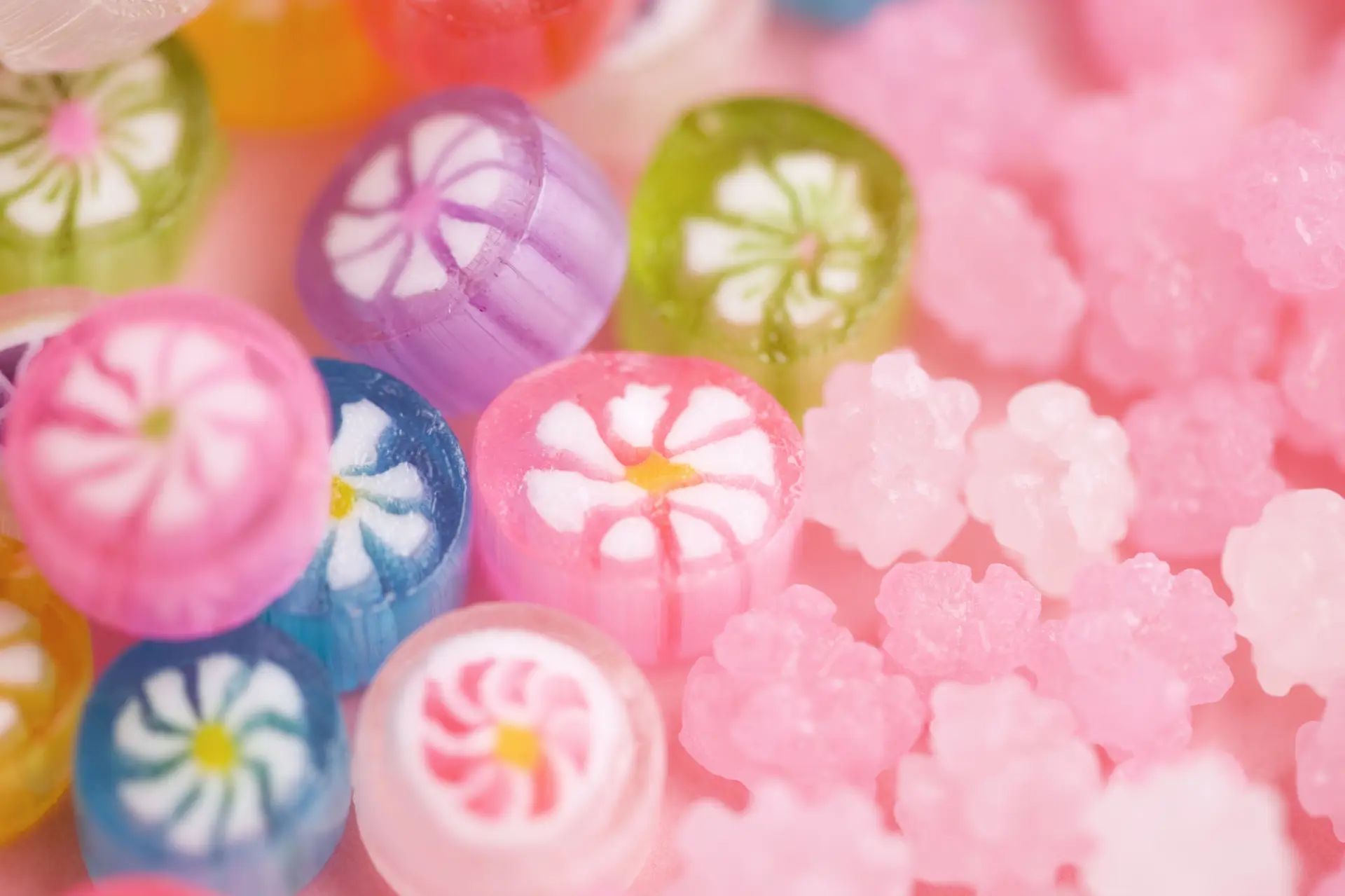
Inside the bright and cheerful store, you will find an enticing selection of products, including colorful konpeito sugar candies, traditional Kyoto candies, Japanese-style earrings, local sake, and Kyoto-exclusive cosmetics.
Simply browsing the shelves feels like a treasure hunt, with something new to discover at every turn.
Many items come in individual packages or boxed sets, making it easy to find something to suit different recipients and occasions.
Especially recommended are the photogenic Toronyan “Dream Bottles,” filled with an assortment of sweets, as well as the shop’s original cookies made at its own confectionery workshop.
2 Hidden Highlights of Nishiki Market That Tourists Often Overlook
Nishiki Market has much more to offer than delicious food and souvenir shopping.
Here are two ways to experience the market that many visitors tend to overlook.
Both offer a glimpse into Kyoto’s history and traditional atmosphere, while providing a fascinating contrast to the lively energy of Nishiki Market.
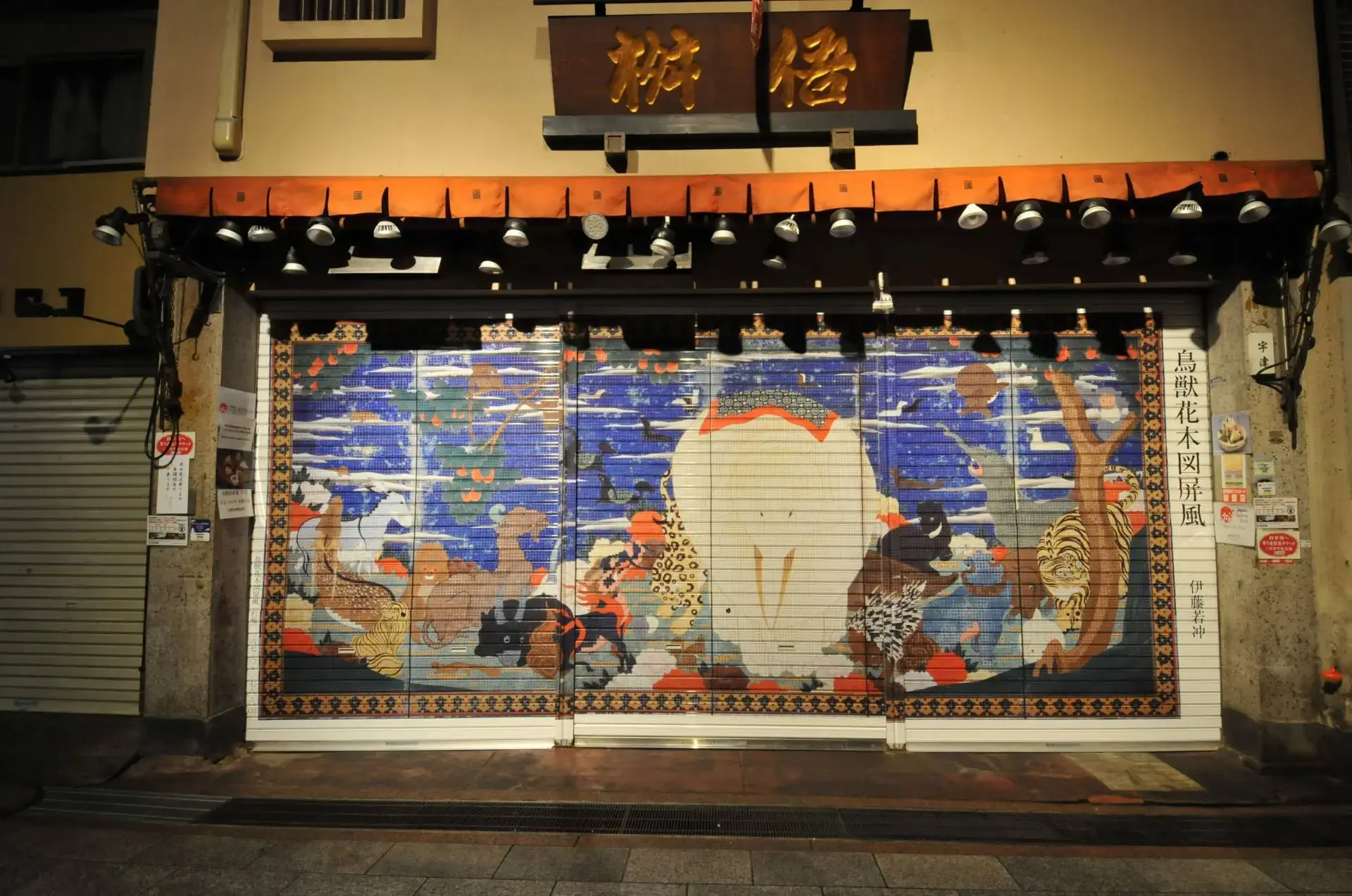
1. Nishiki Market’s Shutter Art at Night
After the shops close, the daytime bustle of Nishiki Market fades away, revealing a completely different side of the historic market.
As the shutters come down, they reveal striking works of art based on masterpieces by Ito Jakuchu, one of Kyoto’s most celebrated painters.
Jakuchu was born and raised in Nishiki Market and later played an important role in helping preserve the market. In recognition of his deep connection to the area, the shutter art project was created in 2016.
Reproductions of some of his best-known works, including Birds, Animals, and Flowering Plants in Imaginary Scene and Rooster in the Snow, appear across the shutters of about 50 shops, transforming the approximately 390-meter-long market street into an open-air art gallery after dark.
Jakuchu’s paintings are renowned for their vivid colors and remarkable sense of vitality, qualities that become even more striking amid the quiet atmosphere of the market at night.
Taking time to admire these works offers a unique opportunity to experience the history and art of Nishiki Market in a completely different setting.
2. Nishiki Tenmangu Shrine
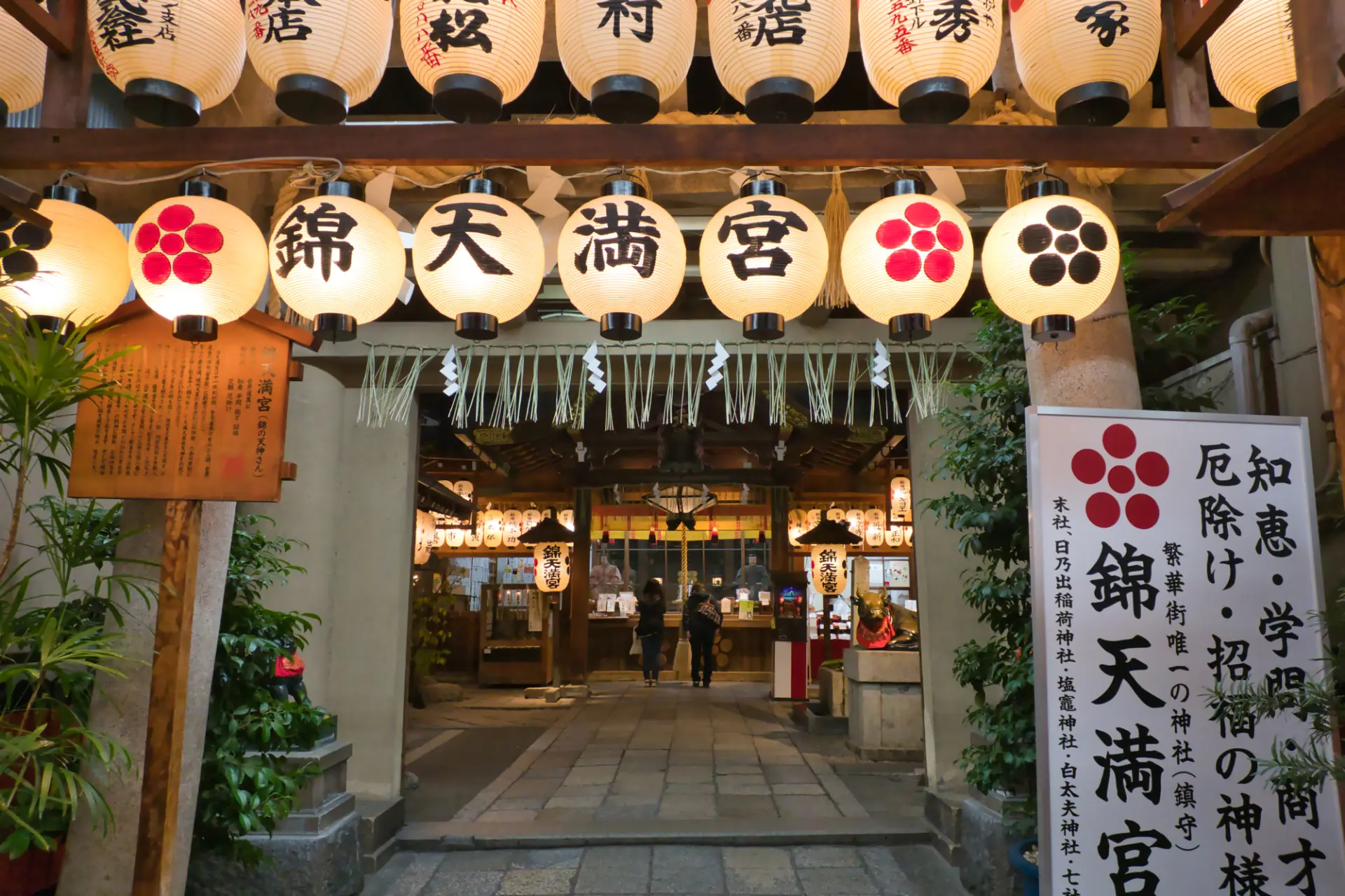
Nishiki Tenmangu Shrine is a historic shrine quietly standing at the eastern end of Nishiki Market in the busy Shin Kyogoku shopping area.
Founded in 1003, it is very old and enshrines Sugawara no Michizane, the deity of learning.
Locally known as “Nishiki no Tenjin-san,” it is said to bring blessings not only for academic success but also for prosperous business and protection from misfortune.
The grounds are full of things to see, including its distinctive stone torii gate that looks as if it is embedded into a building, and the “Karakuri Mikuji,” where a mechanical lion delivers your fortune slip.
Sacred spring water called “Goshinsui,” which stays at 62.6 to 64.4 degrees Fahrenheit throughout the year, wells up here, and you can also draw some while you visit the shrine.
Be sure to stop by at the end of your walk.
3 Popular Tourist Spots Near Nishiki Market
Finally, here are three popular attractions near Nishiki Market.
Each is rich in history and traditional atmosphere, offering visitors a chance to experience the distinctive character of Kyoto.
As all three are located nearby, combining them with a visit to Nishiki Market is a great way to make the most of your time in the area.
1. Yasaka Shrine
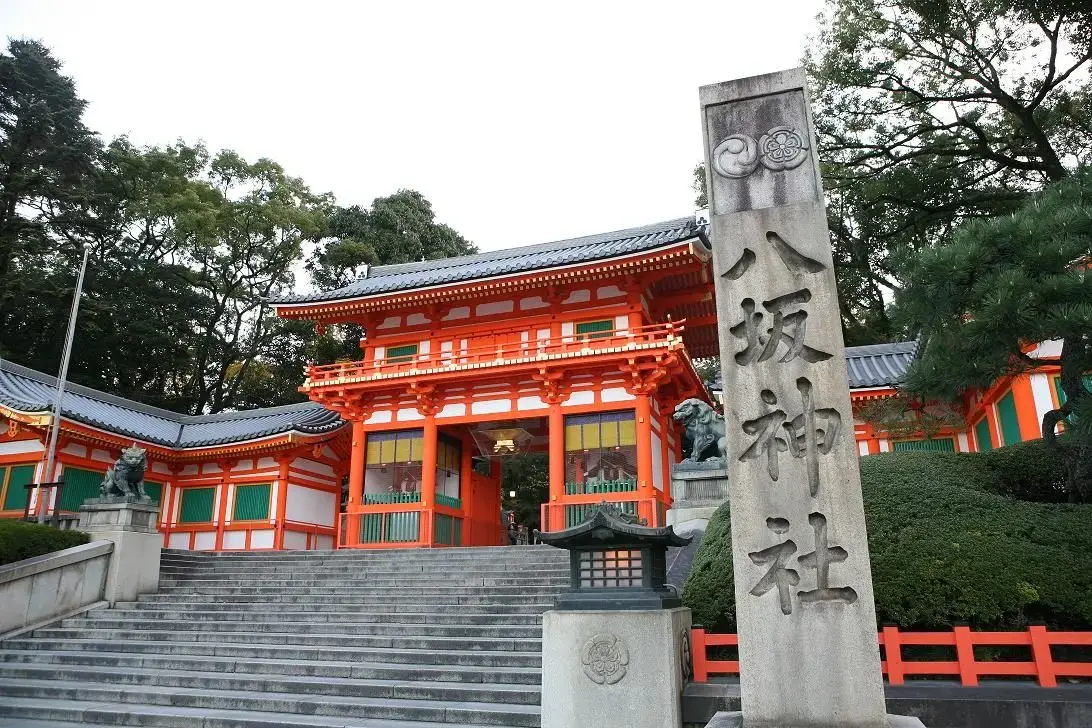
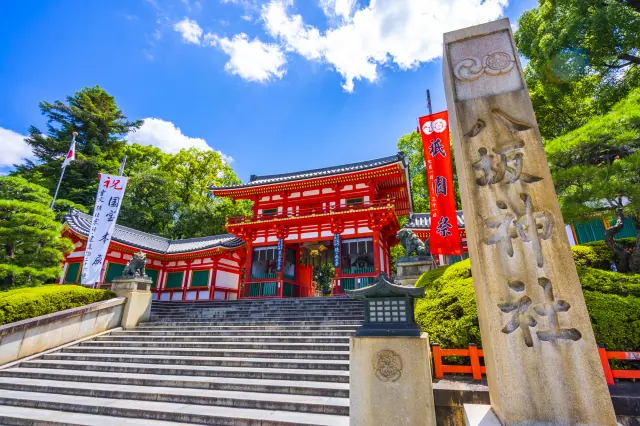
The shrine is dedicated to Susanoo-no-Mikoto, Kushiinadahime-no-Mikoto, and Yahashira-no-Mikogami. It serves as the head shrine of approximately 2,300 shrines throughout Japan, including other Yasaka shrines and shrines dedicated to Susanoo-no-Mikoto.
According to one account of its origins, the shrine was established in 656, when a deity from Mount Gozu in the ancient Korean kingdom of Silla was enshrined at this site.
Since ancient times, the shrine has been revered under names such as Gion Kanshin-in and Gion-sha. Even today, it is affectionately known to locals as “Gion-san.”
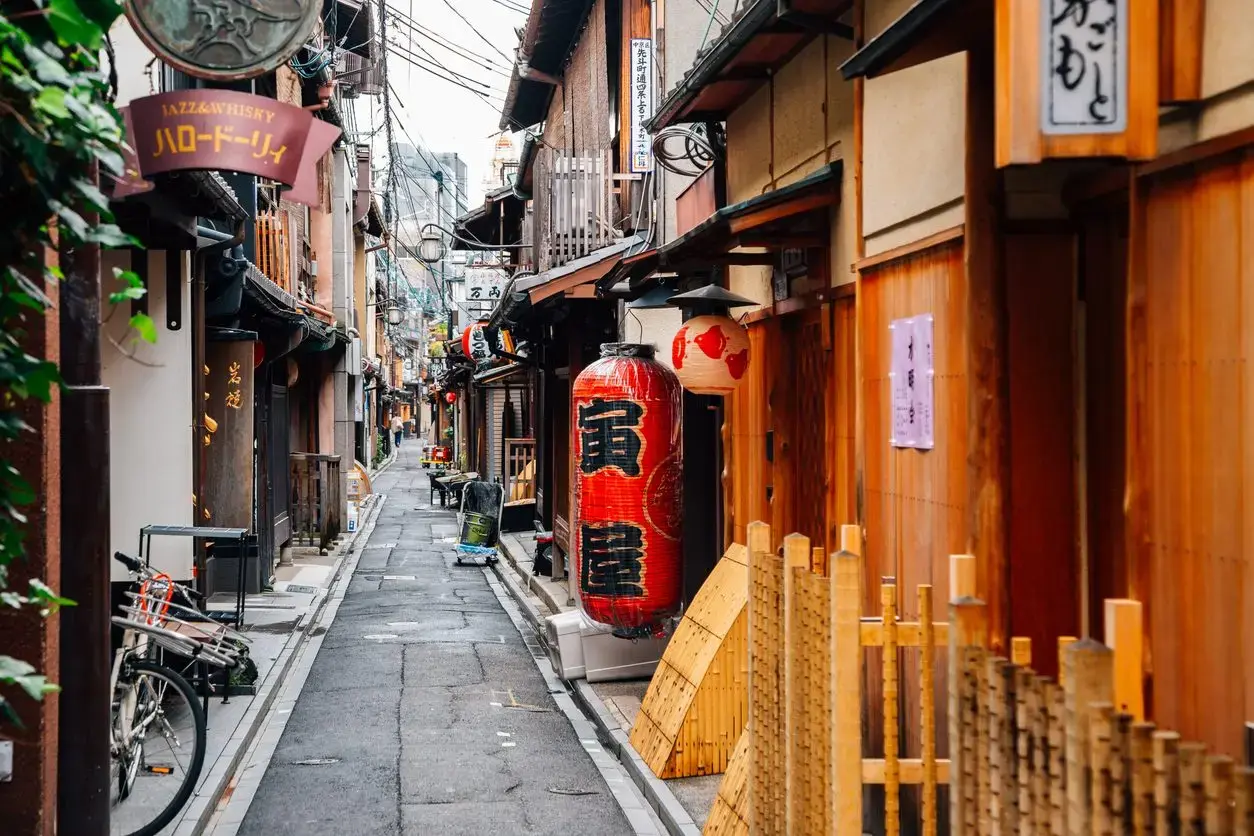
2. Pontocho
Pontocho Street runs north to south between the Kamo River and the Takase River, on land that was originally a sandbank in the Kamo River.
In the early Edo period, the construction of the Takase River connected the area with Fushimi, helping it flourish as a center of transportation and commerce. By the late Edo period, Pontocho had developed into a bustling entertainment district. During the Meiji era, performances of the Kamogawa Odori began as a way of showcasing Kyoto’s culture to a wider audience, further establishing Pontocho as one of Kyoto’s traditional geisha districts.
Today, a wide variety of restaurants line the atmospheric narrow alley stretching from Shijo Street north toward Sanjo Street. After dark, the warm glow from the restaurants and traditional buildings makes the area even more enchanting.
3. Hanamikoji Street
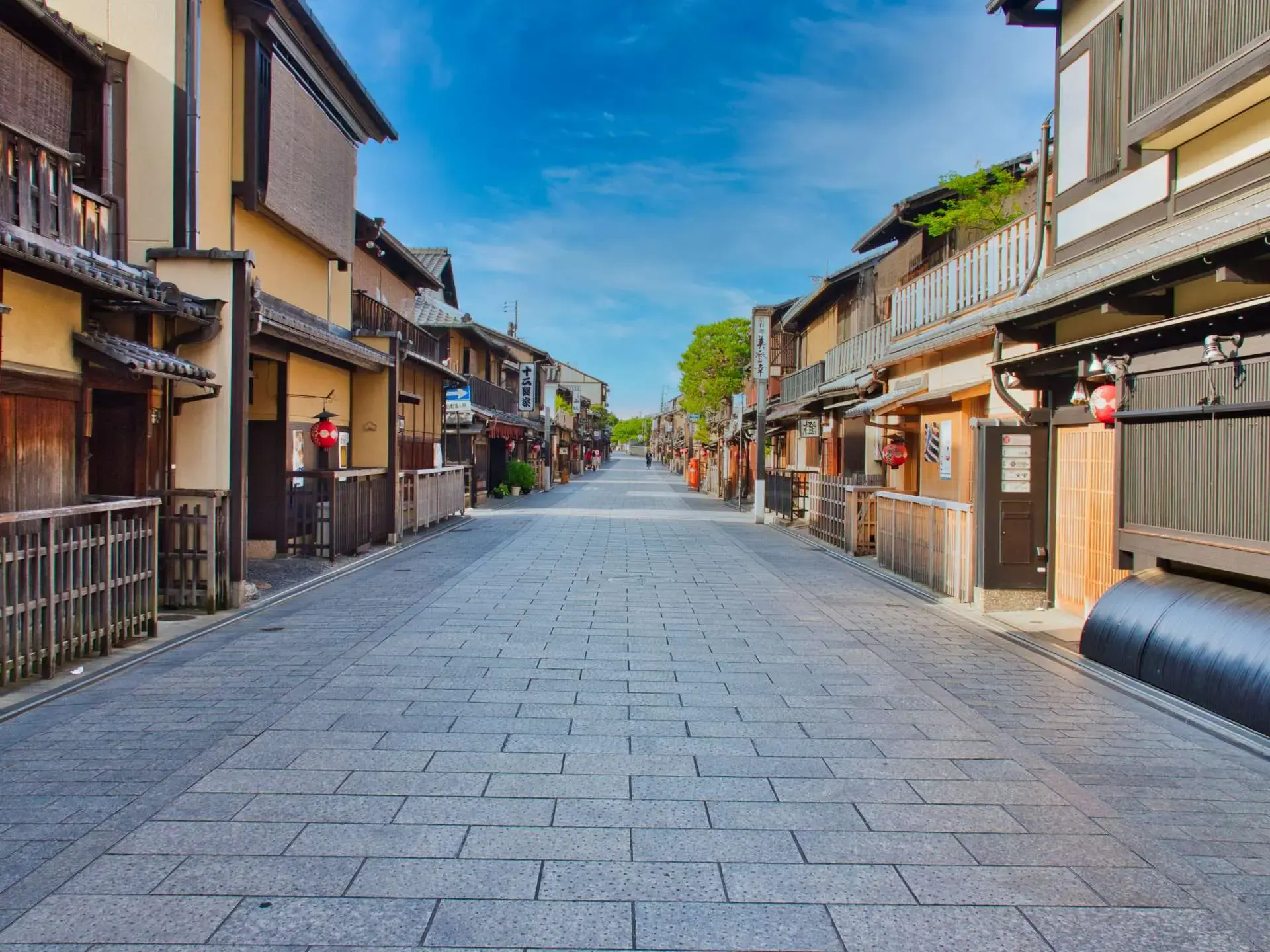
Hanamikoji Street is one of Gion’s main thoroughfares, running north to south from Sanjo Street to Kenninji Temple.
Despite the word “koji,” meaning a small street, in its name, Hanamikoji is relatively wide and lined with shops, creating a lively streetscape that attracts many visitors.
The section south of Shijo Street is particularly notable for preserving the traditional atmosphere of Gion’s historic teahouse district. Many teahouses that had originally been located along Shijo Street and to its north were relocated to the southern area during the Meiji and Taisho periods, gradually creating the streetscape seen today.

FAQ about Nishiki Market
Q
What are Nishiki Market’s Hours and Closed on days?
Hours and closing days vary by shop, but many shops are open from around 9:00am to 5:00pm or 6:00pm and are closed on Wednesdays.
Q
How long does it take to explore Nishiki Market?
If you include stopping at gourmet spots and shopping, you should allow Approx. 1 to 2 hours.
Q
Can I eat while walking in Nishiki Market?
No. Nishiki Market asks visitors not to eat or drink while walking. Please enjoy anything you purchase in front of or inside the shop where you bought it.
Q
Are there coin lockers around Nishiki Market?
Basically, there are none inside Nishiki Market. For large luggage, it is recommended to use the coin lockers at Kyoto Station or Shijo Station, or leave it at your hotel.
Summary
This article has introduced the highlights of Nishiki Market, with a particular focus on its recommended places to eat.
The market brings together an incredible variety of foods and products that reflect Kyoto’s culinary culture and everyday life. Simply walking through its lively shopping street is an experience for all five senses.
Exploring the market is part of the fun in itself and is sure to become a memorable part of your trip to Kyoto, so be sure to stop by.
For more ideas when planning your trip, check out our comprehensive Kyoto travel guide, covering transportation, highlights by area, and suggested itineraries.