

A Travel Guide to Higashi Honganji, Where Beautiful Design Meets Deep History
Higashi Honganji, known for its intricate wooden architecture and beautiful gardens, is the head temple of the Otani-ha branch of Jodo Shinshu Buddhism and a place where you can feel Kyoto’s history and culture.
It carries on the teachings of Shinran, the founder of the sect, and is an appealing temple that offers visitors a sense of peace.
This article introduces the origins of Higashi Honganji, the differences between it and Nishi Honganji, and all the highlights worth seeing.
It also includes nearby sightseeing spots and popular restaurants so even first-time visitors can enjoy the area to the fullest, so be sure to read to the end.
What Is Higashi Honganji Like?
Located in Shimogyo Ward, Kyoto City, Higashi Honganji is the head temple of the Otani-ha branch of Jodo Shinshu Buddhism.
Its official name is “Shinshu Honbyo,” and it is affectionately known as “O-Higashi” or “O-Higashi-san.”
It was founded in 1602 by the 12th head priest, Kyonyo, who received land for the temple from Tokugawa Ieyasu, the first shogun of the Edo shogunate.
Within its vast grounds, which have a history of over 400 years, are many National Treasures and Important Cultural Properties that continue to attract visitors.
From the huge tiled roofs to the golden interiors stretching from the ceilings to the pillars, the details of each structure showcase the brilliance of traditional Japanese craftsmanship.
In particular, the Goeido Hall, the main hall that enshrines Shinran, the founder of Jodo Shinshu Buddhism, is one of the largest wooden buildings in the world, and its overwhelming presence is truly impressive.
There is also Amida-do Hall, a quiet space for prayer, and Shoseien Garden, a nationally designated Place of Scenic Beauty, making the temple grounds a harmonious blend of history, architecture, and nature with no shortage of things to see.

History of Higashi Honganji
Originally, Higashi Honganji stood in a different location and was simply called “Honganji.”
Here is a brief look at how it developed over time.
Origins of Higashi Honganji
Higashi Honganji traces its origins to 1272, when Shinran’s remains were moved north of Yoshimizu (present-day Kyoto) by his youngest daughter Kakushinni and his followers, who then built a mausoleum there.
In 1321, the third head priest, Kakunyo, established it as a temple under the name “(Otani) Honganji,” and its teachings later spread under the eighth head priest, Rennyo.

Conflict with Enryakuji on Mount Hiei and Relocation to Kyoto
In the Sengoku period (1467–1615), it came into conflict with Enryakuji on Mount Hiei of the Tendai sect and was forced to relocate to Yamashina (present-day Kyoto) and Ishiyama (present-day site of Osaka Castle).
It was later defeated by the warlord Oda Nobunaga in the approximately 10-year-long Ishiyama War, and in 1580 it was forced to leave Osaka as well.
Later, when the warlord Toyotomi Hideyoshi gained power, land in Kyoto was once again granted to the sect, and in 1591 Honganji was moved to Horikawa Rokujo in Kyoto.

The Split into Higashi Honganji and Nishi Honganji
Not long after returning to Kyoto, another conflict arose, this time between the eldest son, the 12th head priest Kyonyo, and the third son, Junnyo, over succession, and the sect split into separate branches.
Following this, Kyonyo received land for a temple from Tokugawa Ieyasu and founded Higashi Honganji, a new Honganji temple, in 1602.
Meanwhile, the Horikawa site came under the Junnyo branch and became “Ryukokuzan Honganji (Nishi Honganji).”
From the Edo period (1603–1868) onward, Higashi Honganji faced many hardships, including major fires, the anti-Buddhist movement, and the separation of Shinto and Buddhism, but it was rebuilt with support from followers across Japan and remains as it is today.

Differences Between Higashi Honganji and Nishi Honganji
As mentioned above, the reason Higashi Honganji and Nishi Honganji split was a conflict between brothers over religious lineage and succession.
By the late Edo period, tensions between the two had eased, and today they maintain exchanges and cooperation.
That said, they still remain distinct and have not fully reconciled, appearing instead to share a relationship in which they encourage each other to improve.
The main differences between them are summarized in the table below.
Since they are located close to each other, it may be interesting to visit both temples and compare them for yourself.
| - | Higashi Honganji (O-Higashi-san) | Nishi Honganji (O-Nishi-san) |
|---|---|---|
| Official Name | Shinshu Honbyo | Ryukokuzan Honganji |
| Year Founded | 1602 | 1591 |
| Sect | Jodo Shinshu, Otani-ha | Jodo Shinshu, Hongwanji-ha |
| Location | Karasuma-dori, Shimogyo Ward, Kyoto City | Hanayacho, Horikawa-dori, Shimogyo Ward, Kyoto City |
| Way of Chanting the Sutra | Namu Amida Butsu | Namo Amida Butsu |
| Palace | Two-story tiled roof | One-story cypress bark roof |
Access to Higashi Honganji
Here is how to get to Higashi Honganji starting from Kyoto Station, the main gateway to the city.
Several buses stop at the nearest bus stop, “Karasuma Shichijo,” including from bus stop B3 (No. 205) and bus stop D2 (No. 206), so choose according to the time of day.
It is also only about a 7-minute walk from the JR Kyoto Station Central Exit (Karasuma Exit), so walking there while enjoying Kyoto’s charming streets is also recommended.
- Route
-
1. Walk a few minutes from “JR Kyoto Station” to the “Kyoto Ekimae Bus Terminal.”
2. Take a Kyoto City Bus from the “Kyoto Station Bus Terminal,” get off at the “Karasuma Shichijo” bus stop, and arrive after a 1-minute walk. - Required Time
- Approx. 5 minutes
Admission and Visiting Hours for Higashi Honganji
Admission and visiting hours for Higashi Honganji are as follows.
Please note that only Shoseien Garden has different admission and hours.
- Admission
-
Free
※For Shoseien Garden only, a cooperation donation of at least 500 yen is requested (at least 250 yen for high school students and younger). - Hours
-
・March–October 5:50am–5:30pm
・November–February 6:20am–4:30pm - Hours of Shoseien Garden
-
・March–October 9:00am–5:00pm (Reception closes at 4:30pm)
・November–February 9:00am–4:00pm (Reception closes at 3:30pm)
What Is the Best Season to Visit Higashi Honganji?
If you are planning to visit Higashi Honganji, spring or fall is highly recommended for enjoying both its natural beauty and historic atmosphere at their best.
It is well known as a great place to see cherry blossoms and autumn leaves, with scenic spots scattered across the grounds.
Cherry blossoms usually reach their best from late March to early April, covering the temple grounds in bright pink.
Praying amid falling petals offers a distinctly Kyoto-like atmosphere.
From early November to late November, the contrast between the wooden architecture and the red and yellow fall foliage brings out a beauty unique to Higashi Honganji.
Especially at dusk, the soft autumn light illuminates the buildings, creating a magical setting you can fully enjoy.
Shoseien Garden is also lit up during the cherry blossom and autumn foliage seasons, so an evening visit is recommended as well.


5 Highlights of Higashi Honganji, Beautiful Down to the Finest Details
The highlights of Higashi Honganji are its historically valuable buildings, many of which are designated Important Cultural Properties by the Japanese government.
The especially appealing point is their beautiful design, with careful attention paid to even the smallest details.
When visiting Higashi Honganji, be sure to explore the following highlights.
1. Goeido Hall
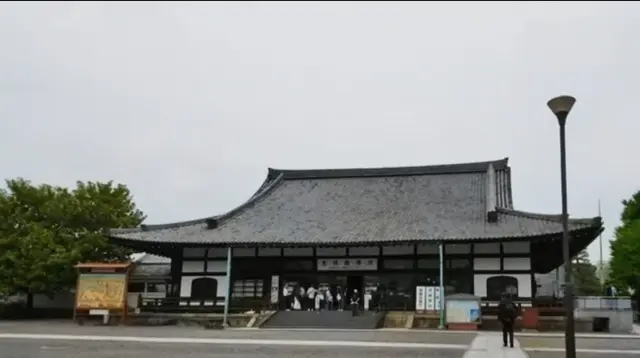
Located at the center of the grounds, Goeido Hall is a nationally designated Important Cultural Property and one of the largest wooden buildings in the world.
Its grand exterior, measuring 38m high, 76m across the front, and 58m deep, combines a dignified presence with graceful design and showcases the essence of traditional Japanese architecture.
Inside, 927 tatami mats cover the floor, while golden decorations on the ceiling and pillars create a magnificent world symbolizing Buddhist teachings.
It also enshrines a portrait of Shinran, making it the greatest highlight of Higashi Honganji.
Since its original construction in 1604, it has been destroyed by fire many times, but each time it was rebuilt through the devotion and support of followers, preserving its monumental appearance.
The current Goeido Hall was completed in 1895 after large-scale restoration work.

2. Goeido Gate
The Goeido Gate, which serves as the main gate of Higashi Honganji, is a two-story gate with doors on both sides and houses statues of Shakyamuni Buddha, Miroku Bosatsu, and Anan Sonja. ※Usually not open to the public
Its overwhelming presence and solid appearance are distinctive, and it is said to be one of the largest wooden temple gates in the world, measuring 27m high, 21m across the front, and 13m deep.
The entire gate is also adorned with highly intricate carvings and decorations, and seeing each feature up close, including the graceful roof curves and the dragon carvings at the top of the gate, is sure to impress.
Passing through the gate leads into the vast temple grounds and into the weighty world of Jodo Shinshu Buddhism.
Like Goeido Hall, it was lost to fire several times, but it has preserved its history and culture and is also designated a nationally Important Cultural Property.

3. Amida-do Hall
Amida-do Hall is a nationally designated Important Cultural Property that enshrines Amida Nyorai, the principal deity of Higashi Honganji.
The interior expresses the world of the “Butsusetsu Amida-kyo (Pure Land)” and is decorated in gold from the ceiling to the pillars.
The space of prayer based on the teachings of Amida Nyorai carries a solemn and tranquil atmosphere, radiating an almost otherworldly sacred light.
Visitors spend time deepening their faith while surrounded by its dignified air.
Another appealing feature is the design, which brings in natural light to brighten the interior and enhances the warmth unique to wooden architecture.
After praying, when you open your eyes, Amida Nyorai may somehow appear even more radiant.
Like Goeido Hall, it was rebuilt in 1895 and continues to convey the depth and beauty of Japanese religious culture to people in Japan and abroad.

4. Shoseien Garden
Known as a detached precinct of Higashi Honganji, Shoseien Garden is a stroll garden with a central pond and is designated a national Place of Scenic Beauty.
In 1641, the land was donated by Tokugawa Iemitsu, the third shogun of the Edo shogunate, and the garden was completed in 1653.
Within its vast grounds of about 10,000 tsubo are traditional Japanese buildings such as Rofutei and Tekisuiken, along with Ingetsu-chi Pond, which covers about one-sixth of the site.
Its greatest appeal lies in the harmonious scenery created by a wide variety of trees and elegant buildings, especially the 13 scenic views known as the “Shoseien Thirteen Views.”
The seasonal beauty here is stunning, especially the cherry blossoms in spring and the autumn leaves in fall.
It is also full of highlights, with a grand scale like that of a daimyo garden yet a free and open design that does not strongly emphasize religious symbolism.

5. Amida-do Gate
Amida-do Gate, one of the Important Cultural Properties, is a four-legged gate with a kirizuma-style roof and karahafu gable leading to Amida-do Hall.
Although smaller than Goeido Gate, it features a more ornate design, including elegantly curved bargeboards and decorations with auspicious bronze motifs.
The roof uses traditional Japanese cypress bark roofing, giving the structure both dignity and noble beauty.
These design elements reflect the Jodo Shinshu principle of “teachings open to everyone,” symbolized by the absence of a threshold at the gate.
During the Edo period, it was called the “Karamon,” but it was destroyed in a fire in the late Edo period, and the current gate was completed in 1911.
It also has the unique background of having been rebuilt slightly off-center from the middle of Amida-do Hall to align with the Karasuma-dori street of the time.

Can You Get a Goshuin at Higashi Honganji?
Higashi Honganji does not issue goshuin stamps or goshuincho books because of its religious beliefs based on the teachings of Shinran.
Originally, a goshuin is a certificate stamped at a shrine or temple as part of religious practice or as proof of a visit.
However, in Jodo Shinshu, it is considered more important to “encounter the teachings and, through them, feel the salvation of Amida Nyorai” than to receive a physical certificate or commemorative item.
In keeping with this way of thinking, Higashi Honganji places importance on the act of worship itself and on continuing to listen to the teachings.
In other words, its理念 is not to encourage temple visits centered on the sense of achievement from collecting goshuin, but to be a place of support in today’s fast-changing society.
Instead, commemorative stamps for visitors are available at various spots around the grounds.
At the General Information Center and Visitor Reception Area, you can also get a stamp rally sheet for free (separate from the commemorative stamps, with original goods given as prizes) and purchase a limited pilgrimage stamp at the reception counter.

Does Higashi Honganji Not Have Omamori?
At Higashi Honganji, you cannot receive omamori charms, just as you cannot receive goshuin.
To repeat, Jodo Shinshu is based on the idea that “the compassion and salvation of Amida Nyorai are given equally to all people.”
For that reason, it teaches that special blessings extend equally to everyone through faith, without relying on individual items such as charms or talismans or on rituals.
It also places importance on practicing faith in daily life, so giving special power to a specific object goes against its principles.
For these reasons, Higashi Honganji does not offer omamori and instead encourages visitors to reflect on themselves through the teachings of Shinran and the nembutsu.

Explore Kyoto’s Famous Sights! 3 Tourist Spots Near Higashi Honganji
Here are three recommended sightseeing spots near Higashi Honganji.
Each has a long history and attracts many visitors every day as one of Kyoto’s representative landmarks.
They are sure to make your trip even more satisfying, so be sure to visit them as well.
1. Ryukokuzan Honganji (Nishi Honganji)
The head temple of the Jodo Shinshu Hongwanji-ha branch, affectionately known as “O-Nishi-san.”
Registered as a World Cultural Heritage Site, its vast grounds of about 30,000 tsubo are home to Goeido Hall, Amida-do Hall, Hiunkaku (not open to the public), counted among the “Three Great Pavilions of Kyoto” alongside Kinkaku and Ginkaku, Kita Noh Stage (not open to the public), the oldest surviving Noh stage, and many other National Treasures and Important Cultural Properties.

2. Toji Temple
This temple was built together with Saiji two years after the capital was moved to Heian-kyo in 794.
Saiji fell into ruin at the end of the Heian period, but Toji’s buildings were repeatedly rebuilt after being destroyed by fire many times.
Structures that remain today include the Kondo Hall rebuilt by Toyotomi Hideyori and the five-story pagoda rebuilt by Tokugawa Iemitsu, both designated National Treasures.


3. Nidec Kyoto Tower
It rises right in front of you as soon as you exit the ticket gates at Kyoto Station. Built with the image of a lighthouse illuminating the city of Kyoto, it stands 131m tall and is the tallest building in central Kyoto.
Since opening in 1964, it has welcomed over 32 million visitors.
From the observation deck 100m above the ground, you can enjoy a panoramic view of Kyoto. On clear days, you can even see as far as Osaka through the free telescopes installed there.

Enjoy Kyoto Cuisine and Local Ramen! 3 Popular Restaurants Near Higashi Honganji
Lastly, here are three restaurants near Higashi Honganji that are worth stopping by before or after your visit.
Each belongs to a different genre, but all are long-established favorites that have been loved for many years in Kyoto, a city filled with high-quality dining options.
They are highly popular and well known, and they offer food that feels distinctly Kyoto, so be sure to check them out.
1. Hashitate
A restaurant produced by Wakuden, one of Kyoto’s leading kaiseki establishments. The name “Hashitate” comes from Amanohashidate, the famous sightseeing spot in Tango where Wakuden was founded.
Centered on rice bowls and noodle dishes, it is popular with a wide range of diners for offering casual access to traditional restaurant flavors made with seasonal ingredients and carefully prepared dashi.
The most popular item is the “Hashitate Set,” which includes a sea bream rice bowl with sesame miso and Wakuden’s signature lotus root sweet, Seiko.

2. Honke Daiichi Asahi
Located in the area known as “Takabashi,” about a 5-minute walk from JR Kyoto Station, Honke Daiichi Asahi is a long-established ramen shop founded in 1947 and one of Kyoto’s best-known names in a city full of ramen restaurants. Its popularity is clear from the long lines that form outside even before its 6:00am opening time.
Its signature ramen, loved for many years, is a pork-bone-based soy sauce ramen made with raw soy sauce from the local Fushimi area.

3. Warajiya
A long-established restaurant that has been loved for 400 years since its founding in 1624.
Its name comes from an episode in which Toyotomi Hideyoshi is said to have taken off his straw sandals and rested at this shop.
Its signature dish, “Unabe to Uzofusui,” is a popular course that lets you enjoy both “unabe,” a soup-like hot pot made with domestic eel, and “uzofusui,” a fresh pot with rice, vegetables, and grilled eel, all at once.

3 Recommended Places to Stay Near Higashi Honganji
Not far from Higashi Honganji, you will find distinctive hotels where you can enjoy Kyoto’s atmosphere, a playful touch, and genuine comfort.
From stays surrounded by art to lifestyle hotels that are kind to both your body and the environment, each offers a different mood.
Here are places to stay in convenient locations for sightseeing and strolling that let you enjoy Kyoto more freely.
1. BnA Alter Museum
A stay-style museum where you can spend the night inside spaces designed as artworks by artists.
Following Koenji, the Kyoto location opened in 2019 near the scenic Kamo River.
In Kyoto, emerging contemporary artists collaborate with art directors and architects active mainly in the Kansai area.

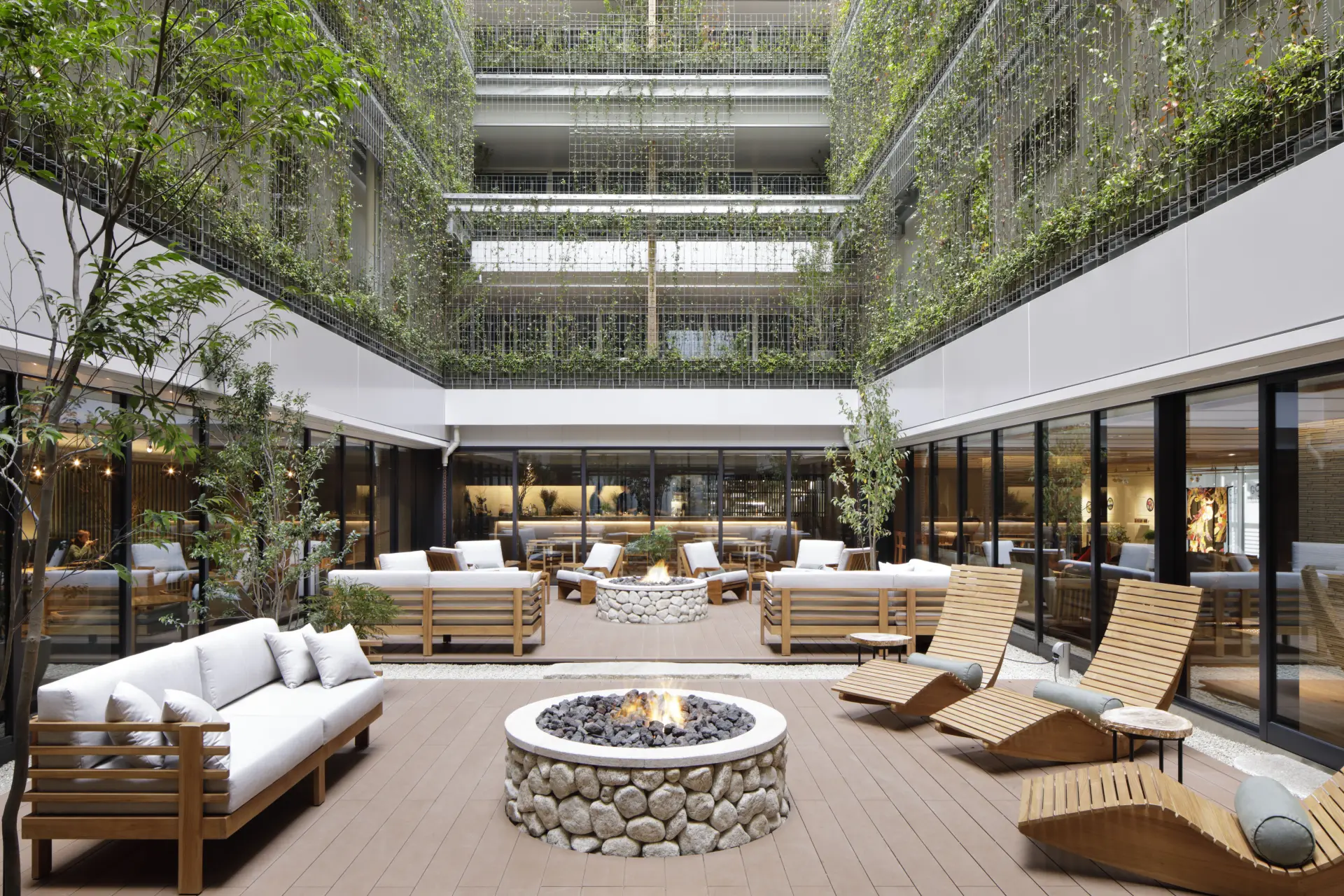
2. GOOD NATURE HOTEL KYOTO
A location worthy of serving as a base for sightseeing in Kyoto, just a 2-minute walk from Kyoto-Kawaramachi Station.
Its concept is “enjoying a new lifestyle that feels good for the mind and body and is also kind to the environment,” and thoughtful ideas can be found throughout the property.
The lobby features a large green wall recreating Kyoto’s plant life, creating a relaxing atmosphere from the moment you step inside.
3. Shijo Kawaramachi Onsen Soraniwa Terrace Kyoto Bettei
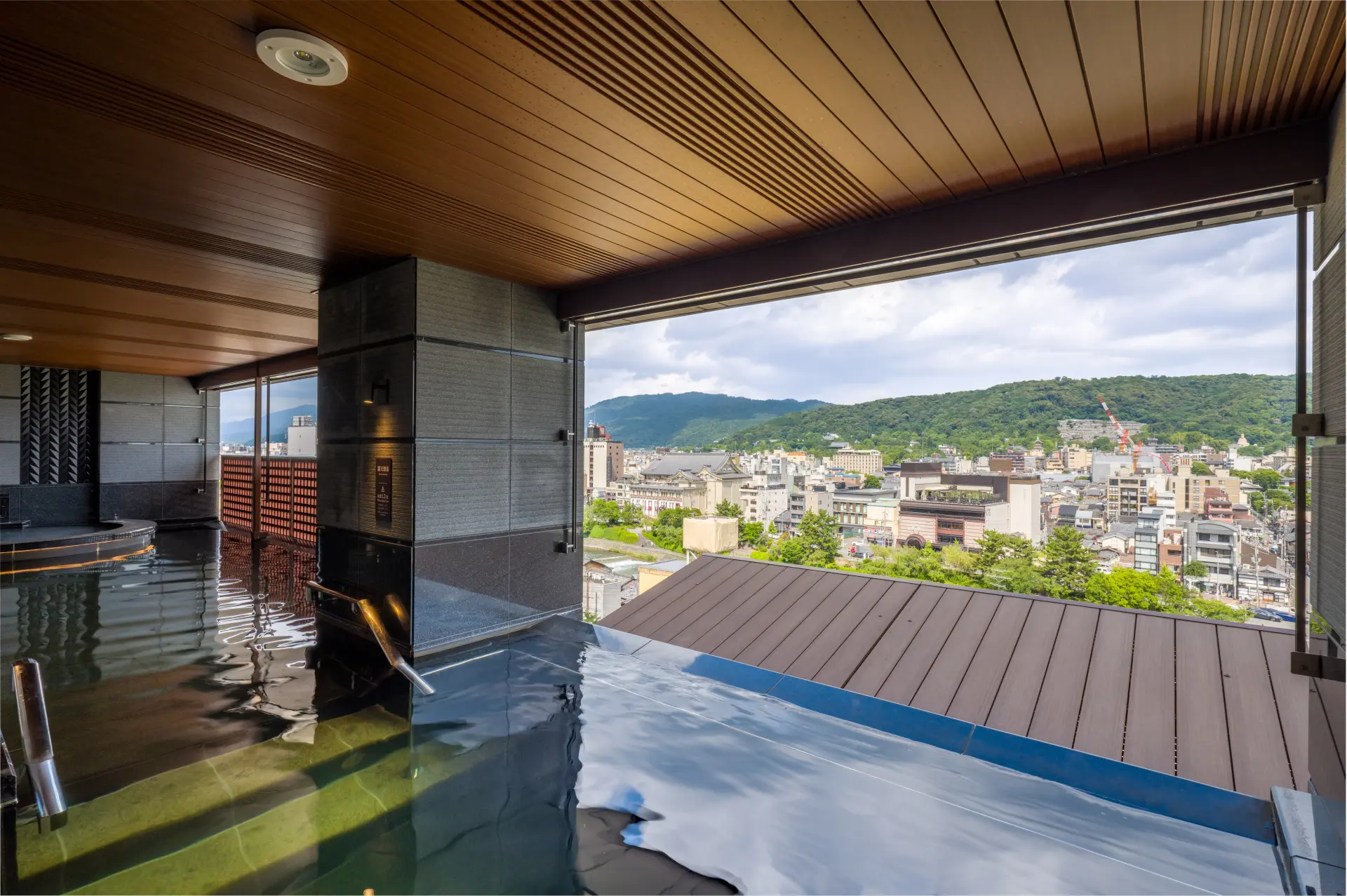
A soothing inn built around the concept of a “sky onsen,” offering sweeping views of the Kamo River and Higashiyama from above.
All 32 guest rooms come with their own open-air bath fed by the property’s private hot spring source.
In a Japanese-modern setting, you can unwind and enjoy a sense of calm and exclusivity hard to imagine in the middle of the city.
At “Yasaka no Yu” and “Niwa no Yu” on the 9th floor, you can soak in different types of baths, including standing baths and silky jacuzzis, and enjoy the “heat spring,” known for its heat-retaining and skin-beautifying effects.
Reviews
Some reviews are AI-translated.
-
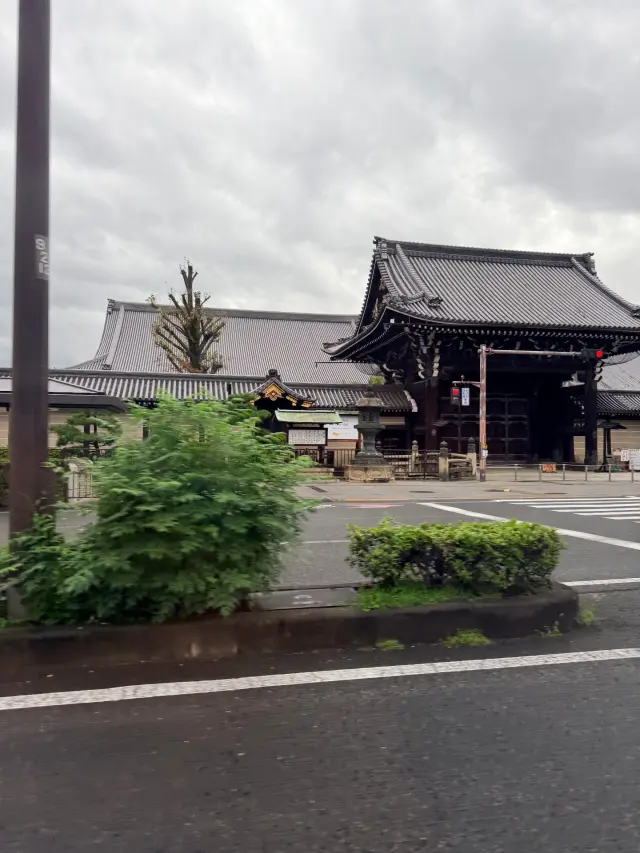
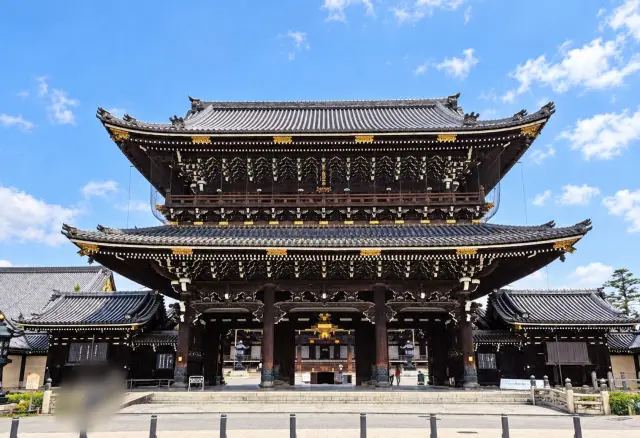
In Kyoto, Higashi Honganji Temple draws travelers with its magnificent architecture and long history. Upon entering the temple, the enormous Goei-do Hall is imposing, and its wooden architecture displays the craftsmanship and distinctive features of traditional Japanese temples, giving the place a strong sense of history.
Walking through the spacious temple grounds, the surroundings feel quiet and solemn, in contrast to Kyoto's lively streets. Seeing the buildings that have endured the passage of time and multiple reconstructions gives you a sense of Higashi Honganji Temple's important place in Kyoto's history and culture, as well as a deeper appreciation for the architectural beauty of traditional Japanese temples.
-
-
When visiting Kyoto, besides Kiyomizu-dera Temple and Fushimi Inari Taisha, there's also an incredibly impressive ancient temple hidden in the city center—Higashi Honganji Temple.
Located near Kyoto Station, it's within walking distance and very convenient to reach. When I first saw it, what struck me most was the enormous and solemn wooden building before me. Its magnificent roof, intricate layers of wooden framework, and delicate decorations really make you stop and look up for a long time.
Higashi Honganji is the head temple of the Shinshu Otani-ha school of Jodo Shinshu Buddhism and one of Kyoto's important Buddhist temples. The temple isn't only massive in scale. Once inside, you can also feel a quiet and composed atmosphere.
I especially like how it feels like a place that's worth stopping by even without making special plans.
Walking over from Kyoto Station, the bustle of the city is still behind you, but once you enter the temple grounds, the view suddenly becomes open and peaceful.Magnificent wooden architecture × Kyoto's history × a peaceful temple atmosphere. If you happen to be near Kyoto Station, consider setting aside some time for Higashi Honganji Temple and experiencing another side of Kyoto's solemn and serene beauty.
-
-
Higashi Honganji Temple is near Kyoto Station, just a short walk away, making it a convenient stop along the way.
I thought a temple near the station would be crowded with tourists, but it was actually very peaceful on a weekday, without noisy crowds. I could take my time exploring and experience the temple's solemn atmosphere. The enormous wooden buildings are truly impressive up close, especially the vast space of the Founder's Hall, which makes you naturally slow down once you're inside.
After visiting the shopping centers near Kyoto Station or before catching a train, it's worth stopping by. It doesn't take much time, but you can experience the distinctive tranquility of an old Kyoto temple. -


FAQ about Higashi Honganji
Q
How long does it take to get from Higashi Honganji to Shoseien Garden?
You can reach the entrance of Shoseien Garden in 5–6 minutes on foot from Higashi Honganji.
Q
Are there omamori charms at Higashi Honganji?
Higashi Honganji has neither omamori charms nor goshuin. This is because of its religious beliefs based on the teachings of Shinran, the founder of Jodo Shinshu Buddhism.
Summary
This article has introduced the origins and highlights of Higashi Honganji, along with popular sightseeing spots nearby.
One of Higashi Honganji’s greatest attractions is the chance to experience the culture and traditions deeply connected to Japanese history.
Based on the profound teachings of Shinran and Jodo Shinshu Buddhism, the temple has an atmosphere where tranquility and solemnity exist in harmony, offering a peaceful moment to visitors.
Kyoto is home to many famous places, including historic shrines and temples, but Higashi Honganji is also well worth a visit.
Be sure to check out this article as well, which gathers useful information for making the most of your Kyoto trip, including classic sightseeing spots, recommended accommodations, and souvenir shops.