

The Complete Kyoto Travel Guide to Read First
Kyoto is a place where you can feel Japan’s traditional culture and history through both its streetscapes and sightseeing spots.
With so many highlights, it is one of Japan’s top travel destinations, attracting visitors not only from across the country but also from around the world.
A quick online search will bring up countless attractions and local foods, which can make it hard to decide how to plan your trip.
But don’t worry. This article covers everything you should know before traveling to Kyoto, from a 2-day, 1-night model course featuring Kyoto’s classic sightseeing spots to the charms and highlights of areas beyond Kyoto City, as well as transportation information.
If you are planning a trip to Kyoto, start by reading this article carefully.
Kyoto, the Best Place to Experience Japanese History and Tradition
Kyoto is located near the center of Honshu.
Although Tokyo is the current capital, Kyoto served as Japan’s capital for Approx. 1,100 years, from 794 to 1869.
Because it was the center of the economy, culture, and politics for such a long time, and because it did not suffer major damage during World War II, Kyoto still retains many cultural assets, including historic buildings.
These include 52 National Treasures and 247 Important Cultural Properties.
Thanks to city planning that preserves traditional scenery, areas such as Kyoto City and Uji City still feature cityscapes full of Japanese charm.
With many mountains and rivers, and a northern area facing the sea, Kyoto is also rich in nature.
Its historic buildings and townscapes harmonize with the natural surroundings, conveying the beauty and aesthetic sense of old Japan.
Many shrines and temples have cherry trees and autumn leaves planted within their grounds, so in spring and fall you can enjoy spectacular scenery unique to each season.
Kyoto also has many intangible cultural assets, with plenty of opportunities to watch and experience festivals and traditional performing arts that have continued for more than 1,000 years.
It is no exaggeration to say that Kyoto is the region where you can most fully experience Japan’s traditional culture, history, and beauty.

Kyoto’s Average Temperatures and What to Wear
Because Kyoto has many mountains, its cities are scattered across basin areas.
As a result, urban areas have a large temperature difference between summer and winter.
It may also snow in the mountain areas during winter.
Be sure to prepare well for the heat in summer and the cold in winter so you can enjoy your trip comfortably.
Kyoto’s Average Monthly Temperatures
| - | January | February | March | April | May | June | July | August | September | October | November | December |
|---|---|---|---|---|---|---|---|---|---|---|---|---|
| Average Temperature (°C) | 4.8 | 5.4 | 8.8 | 14.4 | 19.5 | 23.3 | 27.3 | 28.5 | 24.4 | 18.4 | 12.5 | 7.2 |
What to Wear in Kyoto by Season
- Spring (March - May): Light jacket and thin sweater
- Summer (June - August): Light clothing, short sleeves
- Fall (September - November): Light jacket, coat
- Winter (December - February): Coat, wool suit, thick sweater or jacket
Access to Kyoto
From Tokyo, you can reach Kyoto by Shinkansen in Approx. 2 hours and 15 minutes.
From neighboring Osaka, the Shinkansen takes Approx. 15 minutes, and even a rapid local train takes Approx. 40 minutes.
Since Kyoto does not have an airport, travelers coming from overseas will usually arrive via Kansai International Airport in Osaka.

Access from Kansai International Airport to Major Stations
Here is how to get to JR Kyoto Station from Kansai International Airport, the air gateway to the Kansai region, including Osaka and Kyoto.
Since Kyoto Station is the starting point for most Kyoto trips, knowing how to get there will help you begin your trip smoothly.
- Route
- Take the Kansai Airport Express Haruka from Kansai-Airport Station and get off at Kyoto Station
- Travel time
- Approx. 1 hour 20 minutes
Main Transportation Options in Kyoto
The main ways to get around Kyoto are buses and the subway.
If you are staying within Kyoto City, you can reach most sightseeing spots by bus alone.
Buses are also used to access areas outside Kyoto City, but depending on the destination, trains such as JR may be faster.
If you would like to know more about transportation in Kyoto, please check out this article as well.

Discount Passes You Should Use for Your Kyoto Trip
Here, we introduce discount transportation passes you can use on your Kyoto trip.
If you want to keep transportation costs down while traveling in Kyoto, this is worth reading.
Subway and Bus 1-Day Pass
If you plan to sightsee around Kyoto using the subway and buses, we recommend purchasing and using the Subway and Bus 1-Day Pass, which offers unlimited rides for one day on both.
It covers all Kyoto Municipal Subway and Bus lines, as well as part of the Kyoto Bus, Keihan Bus, and West Japan JR Bus networks, so it includes most major tourist destinations.
By combining the subway and buses effectively, you can also reduce travel time, making your sightseeing both more affordable and more comfortable.
Another benefit is that you can receive discounts and other special offers at Approx. 60 facilities in Kyoto City, including shrines, temples, and restaurants.
You can buy the pass at the Bus Information Center in front of Kyoto Station, Kotochika Kyoto inside Kyoto Station on the subway, Karasuma Oike Station, and other locations. The price is 1,100 yen for adults and 550 yen for children.

3 Tips for Enjoying Kyoto Efficiently
Kyoto is one of Japan’s most popular travel destinations, and with so many places to see, it can be hard to fully enjoy in a short time unless you plan efficiently.
For first-time visitors, here are some basic tips for getting around Kyoto efficiently, so be sure to use them as a reference.
1. For Your First Trip to Kyoto, Visit Kyoto City and Arashiyama
Kyoto’s main sightseeing spots are concentrated in Kyoto City and Arashiyama.
Not only that, but many attractions are located close together in both areas, so you can visit many places in a short amount of time.
Traveling between Kyoto City and Arashiyama also takes little time, so even first-time visitors are less likely to struggle with access or planning.
If you have extra time, head out to Uji as well to enjoy Kyoto more deeply.

2. Make Kyoto Station the Base of Your Trip
Kyoto Station is Kyoto’s main gateway, where the Shinkansen also stops, and it serves as the starting point for travel not only within Kyoto City but also to areas outside the city and neighboring prefectures.
Since there are many hotels, restaurants, and sightseeing spots around the station, first-time visitors should stay near Kyoto Station.
That way, you can use Kyoto Station as your travel hub and enjoy a variety of experiences efficiently.

3. Use Trains as Well as Buses
Buses are the main way to get around Kyoto, but in some cases the subway is a more efficient option.
This is especially true if you are traveling during the busy sightseeing season.
During peak seasons, roads in Kyoto City are often congested, and buses may not run on schedule.
With the subway, on the other hand, you do not have to worry about traffic jams.
As a result, the subway may get you to your destination faster than the bus.

How Many Days You Need to Enjoy Kyoto
With so many highlights, many travelers wonder how many nights they should stay in Kyoto when planning their trip.
If you focus on the main spots in Kyoto City, the distances between them are short enough to cover them in 2 days and 1 night.
However, if you want to visit many different attractions or explore areas outside Kyoto City, you will need 4 days and 3 nights to 5 days and 4 nights.

The Charms of 5 Areas You Should Know to Enjoy Kyoto More Deeply
Kyoto has many highlights, but most of them are concentrated in Kyoto City.
As a result, many trips to Kyoto end after sightseeing only in Kyoto City and its surrounding areas.
However, there are actually many attractive spots and areas outside Kyoto City as well.
Here, we introduce the charms and highlights of five areas, including Kyoto City, so be sure to explore beyond Kyoto City too.
If you want to know more about popular sightseeing spots in the suburbs of Kyoto, please read this article as well.

Kyoto City, Home to Many Popular Sightseeing Spots
Kyoto City is located in the southeastern part of Kyoto Prefecture, in the northern half of the Kyoto Basin, surrounded on three sides by gentle mountains.
While functioning as an urban center, it is also blessed with beautiful scenery, including streetscapes that evoke Japanese culture and history, as well as seasonal landscapes created by the surrounding mountains and rivers.
Since Kyoto’s most popular sightseeing spots are concentrated here, most travelers visit Kyoto City during their Kyoto trip.
Kyoto City is further divided into five areas. Please refer to the table below for the characteristics of each area.
| Area Name | Features | Popular Sightseeing Spots |
|---|---|---|
| Rakuhoku Area | Many shrines and temples in harmony with abundant nature | Kifune Shrine/Rurikoin/Shimogamo Shrine (Kamo-mioya Shrine) |
| Rakuchu Area | Kyoto City’s main downtown area | Kyoto Station/Kamogawa Park/Former Imperial Villa Nijo Castle |
| Rakuto Area | Especially popular shrines and temples, and atmospheric streetscapes | Kiyomizu-dera Temple/Ginkaku-ji Temple/Gion |
| Rakunan Area | Many spots with scenery unique to Kyoto | Fushimi Inari Taisha/Daigo-ji Temple/To-ji Temple |
| Rakusai Area | Home to many shrines and temples | Kinkaku-ji Temple/Ninna-ji Temple/Ryoan-ji Temple |
You do not need to memorize the area names, but it is worth knowing that each area has different characteristics to the north, south, east, and west of the central Rakuchu Area.


The Sagano and Arashiyama Area, Where You Can Enjoy Spectacular Scenery in Every Season
The Sagano and Arashiyama area is located on the western edge of Kyoto City.
Although it is part of Kyoto City, it is often introduced as a separate area because it offers different charms from the area centered around Kyoto Station.
Since it has more nature than the Kyoto Station area, you can enjoy seasonal scenery throughout the year.
The historic buildings and Japanese gardens that harmonize with nature let you feel beauty and aesthetic values unique to Japan.
There are many famous cherry blossom and fall foliage spots, with bright, lively scenery in spring and deeply atmospheric landscapes in fall.
Please also refer to this article introducing popular sightseeing spots in the Sagano and Arashiyama area.


The Northern Area, with Beautiful Coastal Scenery
The Northern Area lies at the northern end of Kyoto and faces the Sea of Japan.
The biggest feature of this area is its beautiful coastal scenery.
From Amanohashidate, one of Japan’s Three Scenic Views, to the Ine Funaya boat houses, where the first floors of the buildings face directly onto the sea, and Maizuru, lined with nostalgic buildings, you can enjoy many different kinds of seaside landscapes.
Once you have visited Kyoto’s main sightseeing spots, be sure to head here as well, as it offers scenery completely different from Kyoto City and Arashiyama.


The Central Area, Full of Mountains and Forests
The Central Area offers nostalgic Japanese landscapes surrounded by mountains.
There are many places where you can fully enjoy the charms of the mountains and forests, such as Miyama Kayabuki no Sato, where thatched-roof homes from the Edo period line the mountain village, and Rurikei, where you can enjoy beautiful ravine scenery along with barbecues and hot springs.
If you want to experience traditional Japanese rural scenery and the beauty of mountain valleys, this is an area you should definitely visit.


The Southern Area, with Beautiful Scenery and Townscapes
The Southern Area includes Uji City, one of Japan’s major tea-producing regions, at the southern end of Kyoto.
In early summer, you can enjoy lush tea fields and beautiful bamboo groves, while in fall the autumn leaves are stunning.
Uji City, known for its historic streetscapes, two World Heritage sites, and Uji tea, is one of the most popular destinations in the Southern Area.
Since it is only Approx. 20 minutes from Kyoto Station, many tourists visit every day.
If you want to know more about the charms of Uji City, please refer to this article as well.


A 2-Day, 1-Night Model Course Visiting Classic Sightseeing Spots Recommended for a First Trip to Kyoto
Kyoto has so many highlights that planning a trip can be difficult.
That is exactly why we would like to introduce a 2-day, 1-night model course that takes you to Kyoto’s most classic sightseeing spots.
If this is your first trip to Kyoto, use the model course below as your base, then add attractions that interest you or include sightseeing in areas beyond Kyoto City, Arashiyama, and Uji to enjoy Kyoto to the fullest.
Day 1: Visit Classic Sightseeing Spots in Kyoto City and Arashiyama
On the first day of this model course, you will mainly visit especially popular and classic spots among the many attractions in Kyoto City and Arashiyama.
Since there will be a lot of walking, those who are not confident in their stamina should take plenty of breaks while moving between spots.
8:30am Start from JR Kyoto Station
Day 1 of the model course starts from JR Kyoto Station, Kyoto’s main gateway.
From Kyoto Station, take a city bus to Gojozaka bus stop.
From the bus stop, it takes about 10 minutes to reach Kiyomizu-dera Temple.

9:10am Enjoy Cultural Properties and Kyoto’s Townscape at Kiyomizu-dera Temple
Founded in 778 and registered as a UNESCO World Cultural Heritage site in 1994, Kiyomizu-dera Temple is one of Kyoto’s must-visit landmarks.
Its 130,000-square-meter grounds, spread across the hillside of Mt. Otowa, are home to more than 30 halls and monuments, including National Treasures and Important Cultural Properties.
Kiyomizu-dera is also famous for the way its scenery changes with the seasons, from cherry blossoms in spring and lush greenery in summer to autumn leaves in fall and snow in winter.
After climbing the slope, you will be welcomed by the vermilion Niomon Gate.
Climb a little farther and you will see the three-story pagoda, which stands Approx. 31 meters tall. One of the tallest in Japan, it is also a great viewpoint overlooking Kyoto.

10:00am Stroll Through Gion and Feel Japan’s Traditional Culture and History
After enjoying Kiyomizu-dera Temple, walk to Gion, one of Japan’s leading tourist districts where old-fashioned scenery still remains.
Step into the area and you will find yourself surrounded by Kyoto’s elegant traditional townscape, almost as if you had traveled back in time.
Gion’s main street, Hanamikoji Street, which runs north to south through the district, is especially full of highlights. Despite the name “koji,” or alley, it is actually a relatively wide street lined with shops, creating a lively and elegant atmosphere that draws many visitors.
While being mindful of local manners and rules, enjoy the scenery of Gion, including its atmospheric streets and the sight of maiko walking through them.

10:40am Enjoy Souvenir Shopping and Street Food at Nishiki Market
As you walk through Gion, head to your next stop, Nishiki Market.
Nishiki Market is located on Nishikikoji Street, just north of Kyoto’s main Shijo Street.
Its origins date back to when fish shops prospered here and received official recognition from the Edo shogunate in 1615, leading to further growth.
Known as “Kyoto’s Kitchen,” it is lined with ingredients such as Kyoto vegetables, freshwater fish from Lake Biwa, pike conger, tilefish, sasagarei flounder, yuba, namafu, and pickles.
Along the arcade, which stretches for Approx. 390 meters east to west, about 130 shops line both sides.
Some of them sell Kyoto specialties such as soy milk donuts, namafu buns, fried fish cakes, and yuba cream croquettes, making it hard to choose what to try.
Enjoy both souvenir shopping and eating as you walk.

11:40am Enjoy Hand-Rolled Sushi at AWOMB Karasuma Honten
A short walk from Nishiki Market brings you to AWOMB Karasuma Honten, where you can enjoy unique hand-rolled sushi in a renovated 100-year-old Kyoto townhouse.
The interior has a modern design, but the carefully maintained inner garden preserves Kyoto’s refined atmosphere, creating a wonderful setting.
The signature menu item is Teori Sushi (3,267 yen), inspired by the concept of “oru,” meaning to weave different elements together.
You can create your own original hand-rolled sushi by combining Approx. 50 ingredients, including obanzai made with Kyoto vegetables, sashimi, and condiments.
Enjoy not only the flavors, but also the fun of making the sushi yourself.

1:10pm Reflect on the Lives of Former Emperors and Aristocrats at Kyoto Gyoen National Garden
After lunch at AWOMB Karasuma Honten, walk to Shijo Station on the subway.
Take the Karasuma Line to Imadegawa Station, then walk 5 minutes to arrive at Kyoto Imperial Palace.
This area was once centered around the Kyoto Imperial Palace, which served as the Imperial residence until Emperor Meiji moved to Edo, and it was also home to residences of court nobles.
The Kyoto Imperial Palace and Kyoto Sento Imperial Palace are still used by the Imperial family today.
As you stroll through the residences, tea houses, and gardens, imagine what life was like for emperors and aristocrats.

3:40pm Experience Elegance and Escape the Everyday at the Sagano Bamboo Grove Path
After your walk, return to nearby Imadegawa Station and take the Karasuma Line.
Get off at Shijo Station, walk to Karasuma Station, and take another train to Arashiyama Station.
From the station, it is about a 20-minute walk to the Sagano Bamboo Grove Path.
This scenic walkway stretches for Approx. 400 meters from Nonomiya Shrine, past the north gate of Tenryu-ji Temple, to Okochi Sanso Garden.
The beautiful sight of vivid green bamboo reaching toward the sky often appears on the covers of travel magazines, in TV dramas, and in commercials, and is known as one of Kyoto’s iconic landscapes.
Take your time strolling along this atmospheric path, where sunlight filters through the bamboo and the stalks sway in the wind with a soft sound, and enjoy a moment that feels far removed from everyday life.

4:20pm Take in Seasonal Scenic Views at Togetsukyo Bridge
After enjoying the Sagano Bamboo Grove Path, walk about 10 minutes to Togetsukyo Bridge.
It is said that the bridge was first built in the early 9th century during the Heian period. Although it has been washed away many times, it has been rebuilt each time.
The name is said to come from Emperor Kameyama in the Kamakura period, who remarked that the moon appeared to cross over the bridge.
Whether framed by cherry blossoms in spring, greenery in summer, autumn leaves in fall, or snow in winter, it blends beautifully with the scenery in every season, and there is never a shortage of visitors taking photos.
Take your time and enjoy the view that exists only in that season and at that moment.

5:50pm Relax in the Refined Space of Kyoto Tower Hotel
After enjoying the view from Togetsukyo Bridge, head to JR Saga-Arashiyama Station, about a 20-minute walk away.
Take the JR train to Kyoto Station, then go to Kyoto Tower Hotel, located in the Kyoto Tower Building directly beneath Kyoto Tower, just outside the station.
Before checking in, be sure to enjoy Kyoto’s night view from the Kyoto Tower observation deck.
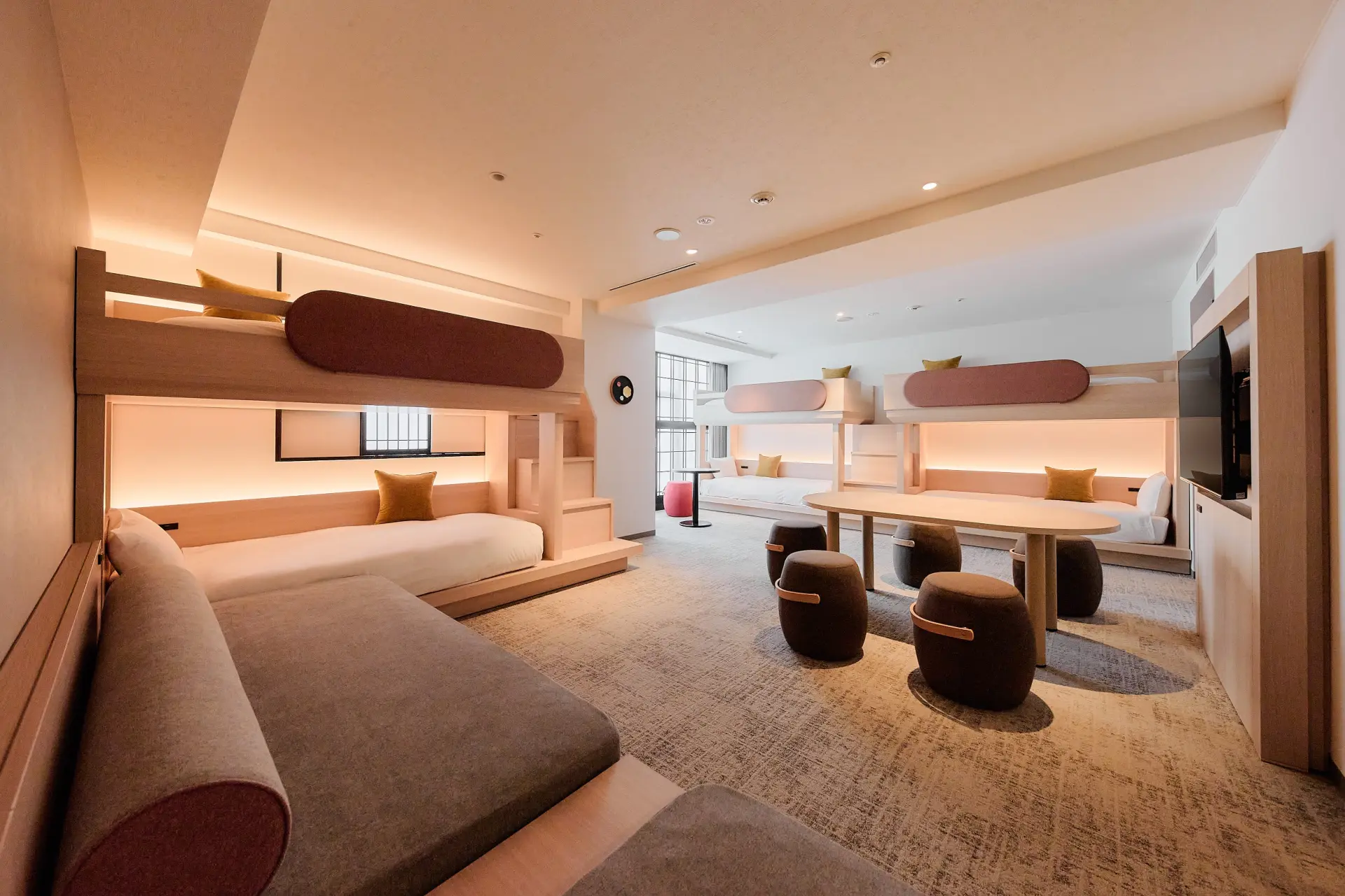
The hotel offers a wide range of room types to suit different group sizes and needs, including Single rooms convenient for solo travelers and business trips, Corner Twin rooms with views of Kyoto Station, and Deluxe Family rooms that can accommodate up to 8 guests.
In a simple yet refined space featuring Kyoto-inspired colors and design, you will be able to relax as if you were at home.
Day 2: Head Beyond Kyoto City and Explore Uji City
On the second day, visit sightseeing spots in Kyoto City that you could not cover on the first day, then head out to Uji City.
In addition to Uji’s sightseeing spots, be sure to enjoy its streetscape as well, which has a charm different from both Kyoto City and Arashiyama.
8:30am Start from JR Kyoto Station
Day 2 also starts from JR Kyoto Station, just a short walk from the hotel.
Take the JR Nara Line, get off at Inari Station, and you will arrive at Fushimi Inari Taisha in about 2 minutes on foot.

8:50am Take Photos at the Senbon Torii of Fushimi Inari Taisha
Fushimi Inari Taisha is the head shrine of the approximately 30,000 Inari shrines found across Japan and is widely worshipped as a deity of abundant harvests, prosperous business, family safety, recovery from illness, and fulfilled wishes.
Its most famous attraction is the Senbon Torii.
Be sure to take photos in this mystical space, where vermilion torii gates form a tunnel behind the main hall.
Another highlight is the Omo-karu Ishi at the Okusha Hohaisho, beyond the Senbon Torii.
You make a wish, lift the stone, and if it feels lighter than expected, the wish is said to come true.
Be sure to give the Omo-karu Ishi a try as well.

10:40am Experience the Beauty of the Pure Land at Byodo-in Temple
After visiting Fushimi Inari Taisha, return to nearby Inari Station and take the JR Nara Line.
Get off at Uji Station and walk about 10 minutes to Byodo-in Temple.
Originally used as a villa by Fujiwara no Michinaga, one of the most powerful figures of the Heian period (794–1185), it was inherited by his son Yorimichi and converted into a temple in 1052.
It was registered as a World Heritage site in 1994, and after renovations in 2014, it is said to have come closer to its original appearance.
The Amida Hall, which enshrines the principal image of Amida Nyorai, is a must-see.
You will surely be captivated by its magnificent symmetry. At the time of its founding, belief in rebirth in the Pure Land was widespread, and the hall was built to evoke a palace in the Pure Land paradise.
Take a walk through the grounds and appreciate the Amida Hall from various angles.
If you have extra time, also visit Byodo-in Museum Hoshokan, where many treasures are displayed.

11:50am Enjoy Uji’s Streetscape and Food on a Walk Around Town
After enjoying Byodo-in Temple, walk toward Uji Station.
Do not forget to enjoy Uji’s beautiful streetscape along the way.
One highlight not to miss is Uji Bridge near Byodo-in Temple.
Since Uji is famous for Uji tea, there are many places where you can enjoy Uji tea and foods made with it, so it is a good idea to stop for lunch along the way as well.

3:20pm Take In the Solemn Atmosphere of Iwashimizu Hachimangu Shrine
After arriving at Uji Station, transfer between the Keihan Uji Line and the Keihan Main Line, then get off at Iwashimizu-Hachimangu Station.
Take the Iwashimizu-Hachimangu Sando Cable, located just outside the station, to Cable Hachimangu-Sanjo Station. Once you get off, you will arrive at Iwashimizu Hachimangu Shrine.
Second in prestige only to Ise Jingu, this shrine is said to have been visited by many warlords praying for victory.
The main hall is built in the distinctive Hachiman-zukuri style, and the current structure was built by Iemitsu, the third shogun of the Tokugawa family. It is also designated as a National Treasure.
Walk around the historic buildings surrounded by rich nature and enjoy the solemn atmosphere and scenery.

4:20pm Savor Japanese Sake at Fushimi Sakagura Koji
After visiting Iwashimizu Hachimangu Shrine, take the cable car back down and return to Iwashimizu-Hachimangu Station.
Board the Keihan Main Line and get off at Fushimi-Momoyama Station.
Once you leave the station, you will arrive in Fushimi, an area lined with sake breweries that still retain an old-fashioned atmosphere.
Fushimi was once written as “Fushimi” with characters meaning abundant underground water, because the Kamogawa, Katsuragawa, and Ujigawa rivers flow through the area and groundwater was plentiful.
Blessed with rice suitable for sake brewing, it has long been known as one of Japan’s leading sake-producing regions.
Enjoy the atmosphere as you walk to Fushimi Sakagura Koji.
Fushimi Sakagura Koji is a place where you can fully enjoy Japanese sake from 18 breweries in Fushimi, covering 120 labels, along with dishes paired to match.
The Sakagura bar, which serves sake from all 18 breweries, features a 23-meter-long bar counter. Its signature menu item, the “18 Breweries Tasting Set,” lets you sample 18 kinds of sake, one from each brewery, chosen from among 120 labels, making it irresistible for sake lovers.
To wrap up your Kyoto trip, take your time enjoying sake and snacks that pair well with it.
If you find a sake you like, buy a bottle to take home as a souvenir.

3 Local Foods You Shouldn’t Miss on a Kyoto Trip
Kyoto flourished as Japan’s capital for a long time, and its food culture is equally rich, with many dishes that let you experience the appeal of Japanese cuisine.
From here, we will introduce a carefully selected list of Kyoto foods that you absolutely should not miss.
If you are not sure what to eat on your Kyoto trip, be sure to try the foods introduced below.
1. Kyo Obanzai
“Obanzai” refers to Kyoto-style home cooking and side dishes in general.
It is one of Kyoto’s representative traditional food cultures, characterized by simple cooking methods using seasonal Kyoto vegetables such as daikon radish, turnips, and chili peppers.
It also emphasizes minimizing waste and drawing out the natural flavors of the ingredients, and is usually served in small dishes.
Typical obanzai dishes include colorful items such as ohitashi, takiawase, and nimono.
Each dish has its own flavor and high nutritional value, making obanzai a healthy and well-balanced meal.

2. Yudofu
Yudofu, said to have originated in Kyoto, is a very simple hot pot dish made with just water and tofu.
It is generally prepared by boiling water with kombu in an earthenware pot, then adding a pinch of salt and tofu and warming it slowly and carefully.
It is delicious even as is, thanks to the kombu broth, but part of the appeal of yudofu is enjoying it with condiments and dipping sauces.
The ability to create your own favorite flavor depending on the combination is one of yudofu’s charms.
Although it is a simple dish, it is nutritious and warms the body, so it is especially popular during the cold winter months.

3. Matcha Sweets
Kyoto is especially famous for sweets made with matcha, and there are many shops where you can enjoy matcha and traditional Japanese sweets.
In Uji, on the outskirts of Kyoto, tea leaves have been cultivated actively since the early Kamakura period (1185–1333), when tea was introduced from China.
Later, in the Azuchi-Momoyama period (1573–1603), tea master Sen no Rikyu perfected the culture of tea ceremony, which is why Kyoto became so well known for matcha and wagashi.
As you walk around the city, you are sure to come across delicious matcha sweets such as roll cakes, yatsuhashi, and daifuku.


Staying in Kyoto? 3 Popular Accommodations in Kyoto City and the Arashiyama Area
Just like sightseeing spots, Kyoto also has many places to stay.
Among the many options, here are three carefully selected popular accommodations in Kyoto City and Arashiyama, areas many travelers visit during their trip.
If you are not sure where to stay, consider choosing one of the accommodations introduced below.
1. Hotel Okura Kyoto Okazaki Bettei
Opened in January 2022, this is Hotel Okura’s first small luxury hotel.
With the concepts of “Kyoto Okazaki,” “Higashiyama culture,” and “inheritance,” it creates the feel of a hidden retreat for adults.
The interior features details such as room numbers modeled after tea canisters, original lighting by Kanaamitsuji, calligraphy art, and Nishijin textile walls.
Works by artists based in Kyoto are displayed throughout, allowing guests to feel a contemporary expression of Kyoto beauty in every corner.

2. Kyoto Century Hotel
Kyoto Century Hotel boasts an excellent location just a 2-minute walk from JR and subway Kyoto Station.
While ideally located for both sightseeing and business, stepping inside reveals a modern classical space that makes you forget the bustle of the city.
Founded in 1928, this distinguished hotel is full of history and tradition, with guest rooms available in a variety of grades designed in pursuit of comfort and relaxation.

3. Kyoto Arashiyama Onsen Kadensho (Kyoritsu Resort)
A Japanese-style hot spring inn in Kyoto’s popular Arashiyama area. There are 105 guest rooms in total, available in three types, “Kyomachiya,” “Kyowafu,” and “Kyomodern,” with 10 layouts in all.
Rooms can accommodate from 1 to 4 guests, making it easy to choose based on your group size and travel style.
From the furniture and bedding to small details such as tea and incense, every element is thoughtfully designed to create a relaxing Japanese space filled with Kyoto charm.

3 Classic Souvenirs to Buy in Kyoto
Kyoto offers many souvenirs that let you feel Japan’s traditional culture, including Japanese sweets, matcha-flavored treats, items with traditional patterns, and handicrafts.
As a popular tourist destination, it also has a huge number of souvenir shops and souvenir options.
From here, we introduce some classic souvenirs that Japanese travelers often buy when visiting Kyoto.
If you are unsure what to buy, why not start with the classic souvenirs introduced below?
1. Shogoin Yatsuhashi Sohonten “Nama Yatsuhashi”
Shogoin Yatsuhashi Sohonten is a famous shop for yatsuhashi, one of Kyoto’s classic souvenirs.
Its baked sweet Shogoin Yatsuhashi and “Hijiri,” which wraps bean paste in nama yatsuhashi, are especially well known, but its “Nama Yatsuhashi,” released before “Hijiri,” is also a popular product with many fans.
Made from simple ingredients such as rice flour, sugar, and cinnamon, it offers a soft texture along with the chewy feel of rice flour and the elegant flavor of cinnamon, making it a perfect match for tea.

2. Yojiya “Oil Blotting Paper”
“Oil Blotting Paper” is the signature product of Yojiya, a long-established cosmetics maker founded in 1904.
Lightly pressing it onto the skin before touching up makeup absorbs excess oil and helps makeup apply more smoothly.
By repeatedly pounding finely made special washi paper with a foil-beating machine, the paper fibers are activated, resulting in a soft feel that is gentle on the skin and excellent absorbency.

3. Rich Matcha Langue de Chat “Cha no Ka”
This signature sweet is offered by Malebranche, a Western confectionery shop founded in 1982 with its main store in Kyoto Kitayama.
Made by baking langue de chat cookies with Uji tea, including tea from Shirakawa in Uji, Kyoto, and sandwiching them with original white chocolate, its flavor is truly one of a kind.
It is now often described as a classic Kyoto sweet.


Famous Cherry Blossom Spots You Shouldn’t Miss on a Spring Trip to Kyoto
Many of the shrines and temples scattered throughout Kyoto have cherry trees planted within their grounds, and in spring they become famous cherry blossom spots.
If you are traveling to Kyoto in spring, be sure to include some of these well-known cherry blossom shrines and temples in your plans.
Heian Jingu, where 300 cherry trees of 20 varieties bloom across grounds that feel like stepping back into the Heian period, is one of them.
Another is Kiyomizu-dera Temple, known for its magical scenery when as many as 1,000 cherry trees around the main hall are illuminated at night.
Ninna-ji Temple, designated both as one of Japan’s 100 Best Cherry Blossom Spots and as a nationally designated Place of Scenic Beauty, is another especially popular spot.
There are many more cherry blossom spots in Kyoto as well, so a Kyoto trip focused on cherry blossom viewing is highly recommended.
Please refer to the table below for Kyoto’s average blooming date, full bloom date, and best viewing season.
However, the timing of blooming, full bloom, and the best viewing season varies depending on the year’s climate, temperatures, and the spot, so be sure to check in advance.
- Blooming Date
- March 17
- Full Bloom Date
- March 24
- Best Viewing Season for Cherry Blossoms
- March 24–April 1
Reference: Japan Meteorological Agency, Cherry Blossom Blooming Status
Reference: Japan Meteorological Agency, Cherry Blossom Full Bloom Status


Riverside Dining Culture You Should Experience on a Summer Trip to Kyoto
One of Kyoto’s signature summer traditions is kawadoko.
“Kawadoko” refers to temporary outdoor tatami seating set up by restaurants along riversides or in gardens.
It is said to have begun as a way to stay cool during Kyoto’s hot and humid summers.
You can experience kawadoko in two areas: Kifune, surrounded by nature, and the Kamogawa area, which is easy to access from Kyoto Station.
If you are traveling to Kyoto in summer, enjoy kaiseki cuisine at a kawadoko while listening to the sound of the river and feeling the cool breeze.


Kyoto’s Famous Fall Foliage Spots and Best Viewing Season
Kyoto is beautiful in spring when it is brightened by cherry blossoms, but Kyoto in fall, colored with autumn leaves and full of atmosphere, is beautiful as well.
There are endless scenic fall foliage spots to mention, from Kifune Shrine, where the grounds are covered in autumn leaves and lit up at night by the soft glow of lanterns, to the Philosopher’s Path, where maple trees along the canal turn a deep crimson.
Togetsukyo Bridge, which harmonizes with the red and yellow colors of Arashiyama, is another memorable example.
Many spots are best from mid-November to early December, but the timing varies depending on the year’s climate, temperatures, and the location, so be sure to check before your trip.


If You’re Lucky, You May See Them? Scenic Spots in Kyoto Where You Can Enjoy Beautiful Snowy Views
Kyoto rarely gets heavy snowfall, but its snow-covered streets, shrines, and temples are exceptionally beautiful.
If you are traveling to Kyoto in winter, consider adding spots where you can enjoy beautiful snowy scenery to your plans.
Especially recommended are Kinkaku-ji Temple, where the golden Shariden hall stands out against the pure white snow, Kifune Shrine, where the contrast of red lanterns and torii gates with white snow is striking, the Philosopher’s Path, where snow-covered trees and the stone-paved path along the canal create a deeply atmospheric scene, and the Sagano Bamboo Grove Path, where light reflecting off the snow creates beautiful shadows and contrast among the bamboo.
If you are traveling to Kyoto from late January to around February, when snowfall is possible, be prepared in case you get the chance to go see snowy scenery.


FAQ about Kyoto Travel
Q
What is the best season to travel to Kyoto?
Spring and fall are recommended, as you can enjoy especially beautiful scenery during the cherry blossom and autumn foliage seasons.
Q
How long does it take to get from Kyoto to Osaka?
It takes Approx. 15 minutes by Shinkansen and Approx. 40 minutes by local train to reach Osaka.
Summary
Kyoto is filled with Japan’s traditional culture, history, and beauty.
With so many highlights, planning your trip can feel like a challenge.
However, if you use the area guides, model course, and transportation information introduced in this article as references, even a first trip to Kyoto should let you enjoy its charms to the fullest.
You can also use this article, which introduces sightseeing spots not fully covered here, as a reference to create your own ideal travel plan.