
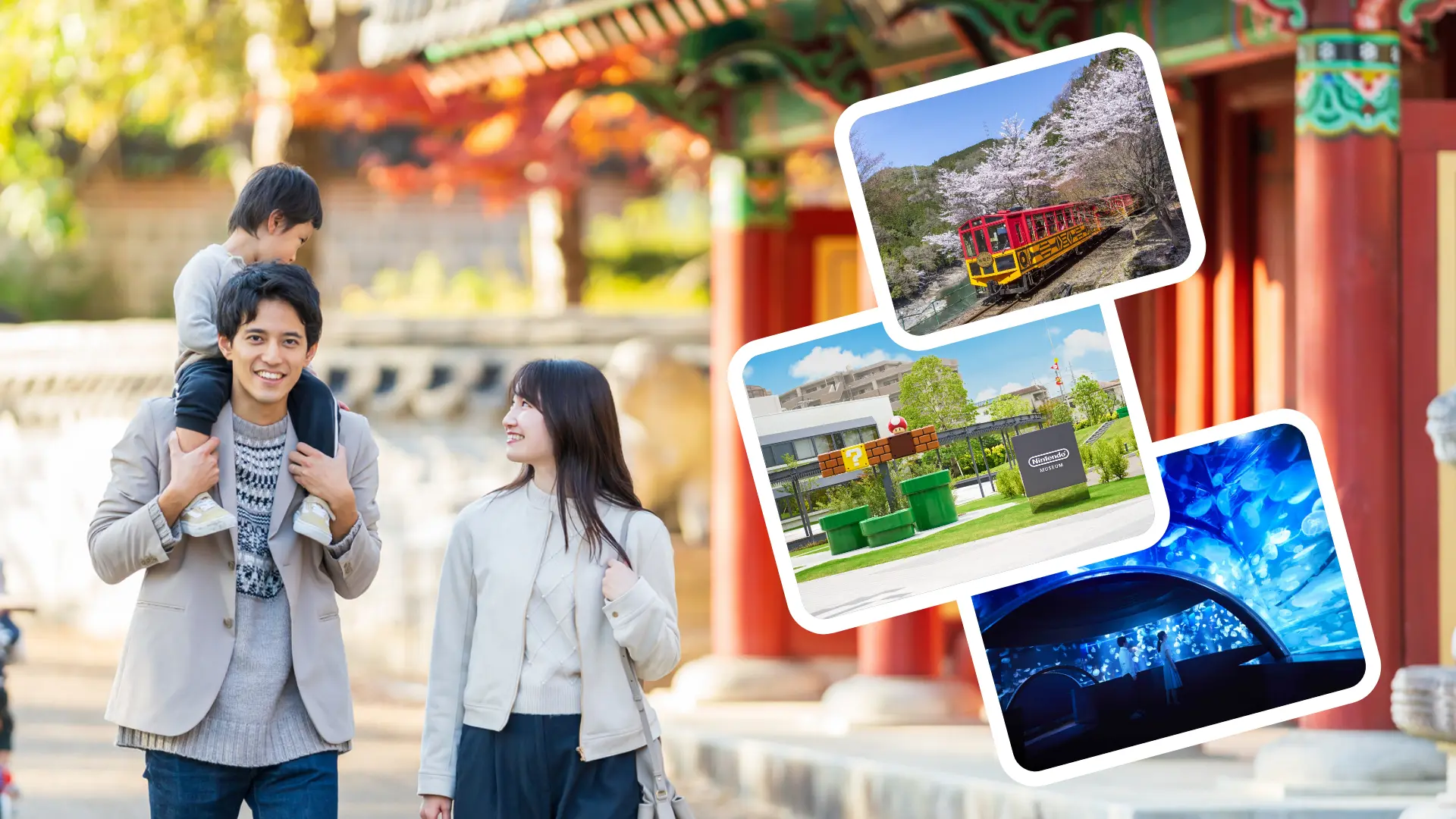
More Than Shrines and Temples! 21 Recommended Kyoto Attractions for Family Trips with Kids
Kyoto is known for Japan’s history and traditional charm, but it also has plenty of places that are perfect for family outings.
In this article, we’ll introduce tips for traveling in Kyoto with kids, along with popular sightseeing spots.
Use this guide to plan a Kyoto trip that combines historic shrines and temples with kid-friendly attractions so the whole family can enjoy the city to the fullest.
3 Tips for Enjoying Kyoto Sightseeing with Kids
Here are three tips to help you enjoy Kyoto with your children.
If you keep these points in mind, you should be able to plan a trip that lets both parents and kids enjoy Kyoto while reducing the burden of getting around.
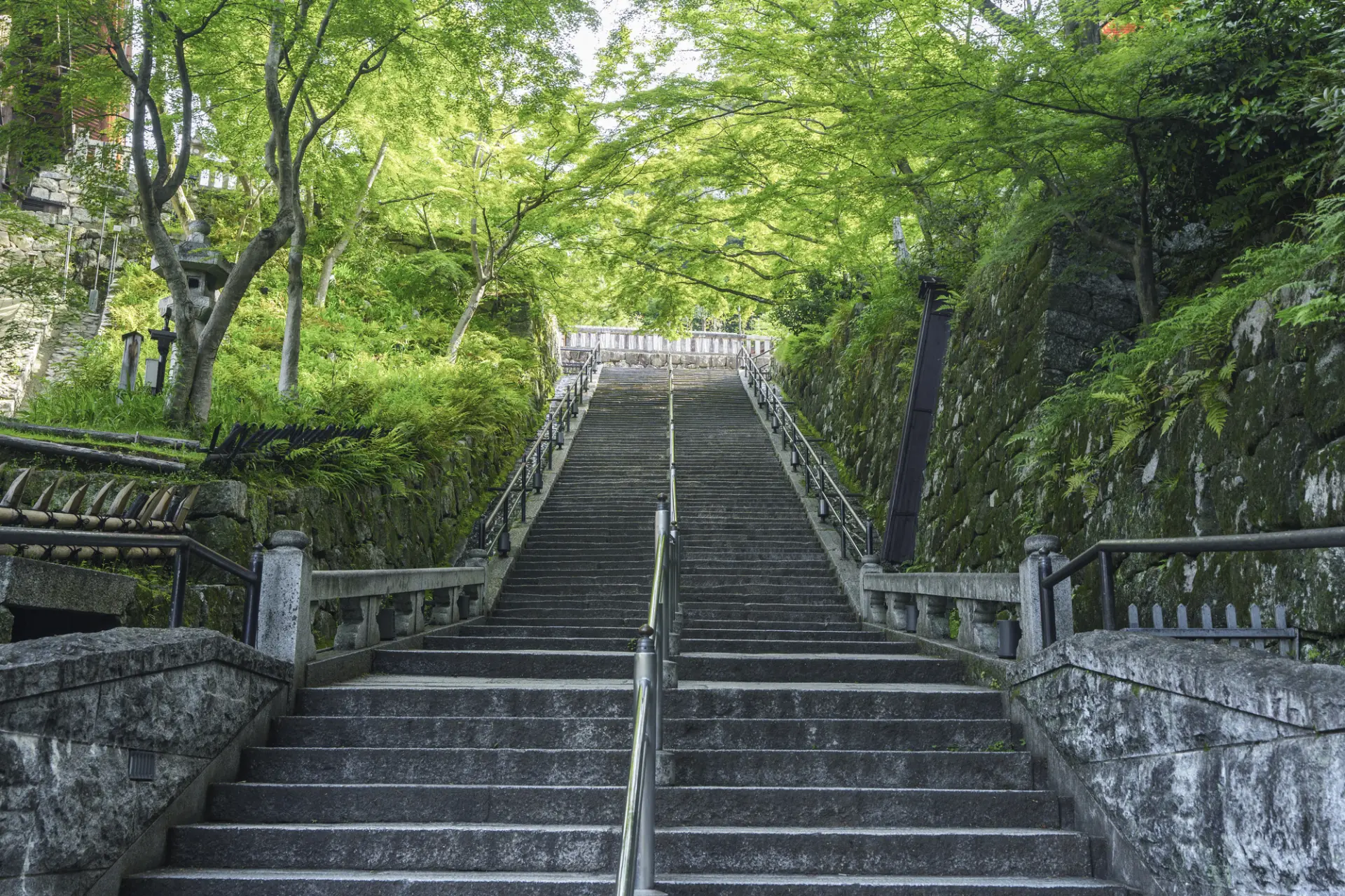
1. Visit spots with lots of slopes and stairs in the morning
Many shrines and temples in Kyoto, as well as the areas around them, have lots of slopes and stairs, and you may often need to walk long distances.
For example, when visiting Kiyomizu-dera Temple, Fushimi Inari Taisha Shrine, or Kifune Shrine, you will need to climb long slopes and stairways.
So, be sure to check not only how to get to your destination, but also whether there are many slopes or stairs in the grounds and surrounding area.
If you are sightseeing with children, it is recommended to visit shrines and temples with lots of stairs and slopes in the morning, and choose spots that can be enjoyed with less walking in the afternoon.
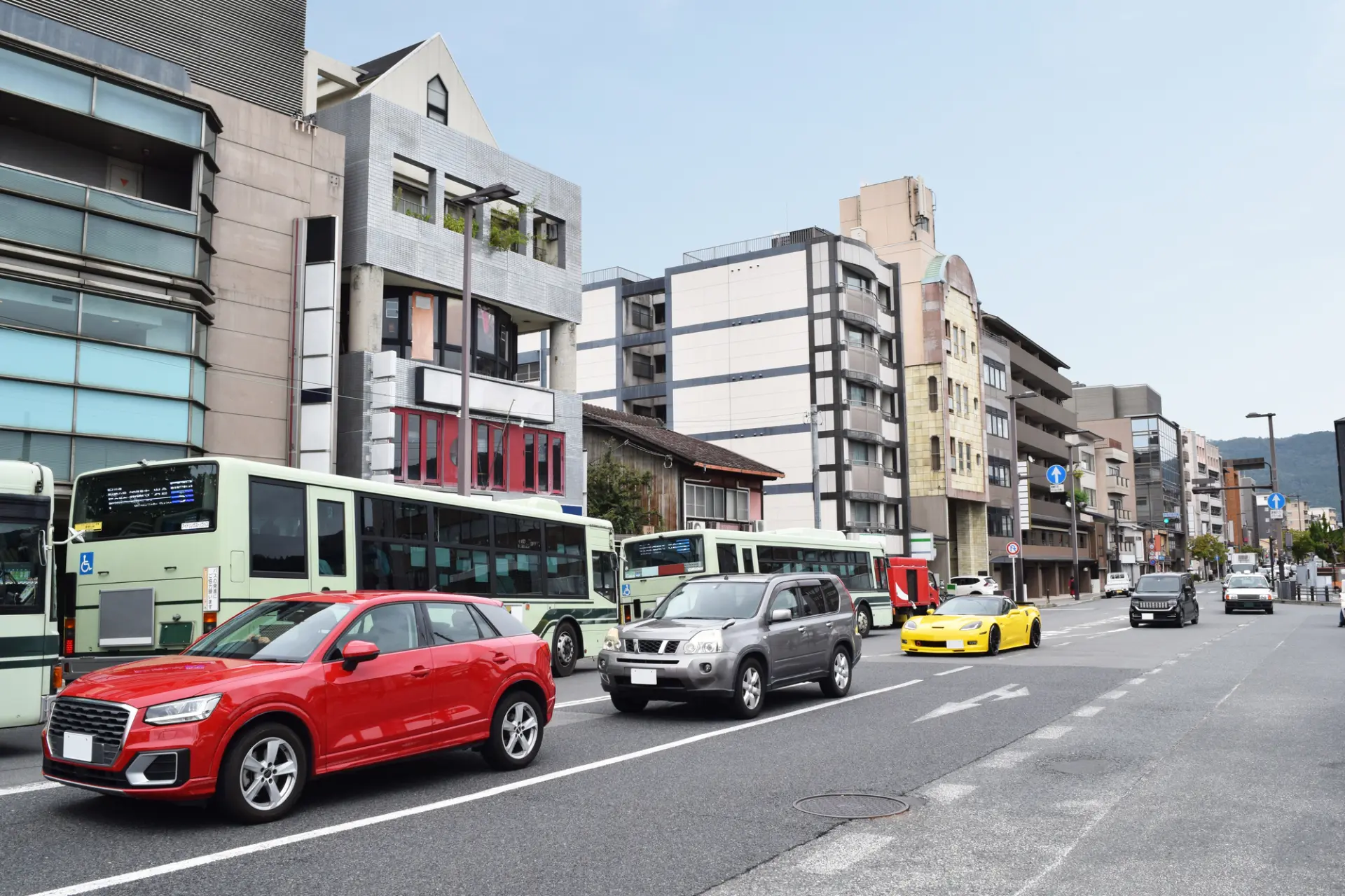
2. Avoid crowded buses and use the subway as well
Buses are the main way to get around Kyoto City, where there are many sightseeing spots, but they are often crowded.
Spring and fall in particular are popular travel seasons, and buses tend to be crowded regardless of the time of day.
So, if you are sightseeing with small children, consider using the subway as well.
If you combine the subway with buses or taxis, it may take a little more time, but you should be able to get around more comfortably.
3. Add a workshop where you can experience Kyoto’s traditional culture
If you are visiting Kyoto, be sure to include a workshop where parents and children can experience Japanese traditional culture together in your itinerary.
There are many workshops that even small children can join, such as Japanese sweets making, matcha tea preparation, and weaving.
Depending on the activity, one of the attractions is that you may be able to take home what you made as a souvenir.

Best Places for Family Outings: 21 Kyoto Attractions Kids and Adults Can Enjoy
Here are sightseeing spots that you can enjoy with children, including leisure facilities such as aquariums and zoos, as well as theme parks and parks.
If you visit them along with Kyoto’s famous shrines and temples, your family should be able to enjoy Kyoto to the fullest.
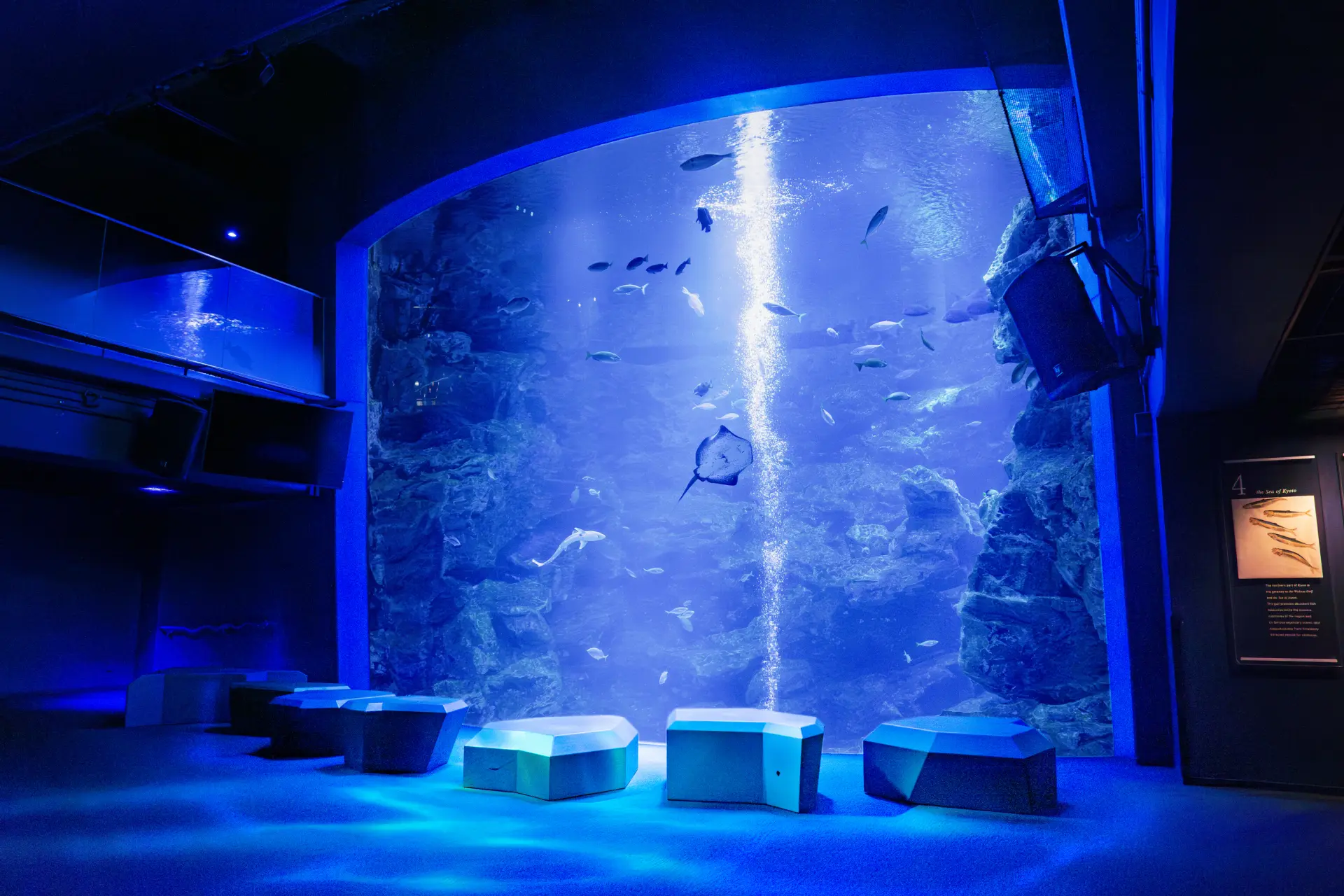
1. Kyoto Aquarium
A large inland aquarium that opened in March 2012 inside Umekoji Park near Kyoto Station.
Inside its 10 areas, around 15,000 creatures from about 250 species are kept and displayed, including the Japanese giant salamander, a Special Natural Monument of Japan that lives in the Kamo River, as well as Cape penguins, spotted seals, fish, and jellyfish.
The “Kyoto Penguin Relationship Chart,” which shows the relationships among the penguins currently on display, has become a hot topic because the penguins’ complicated relationships seem almost human.
2. Nintendo Museum
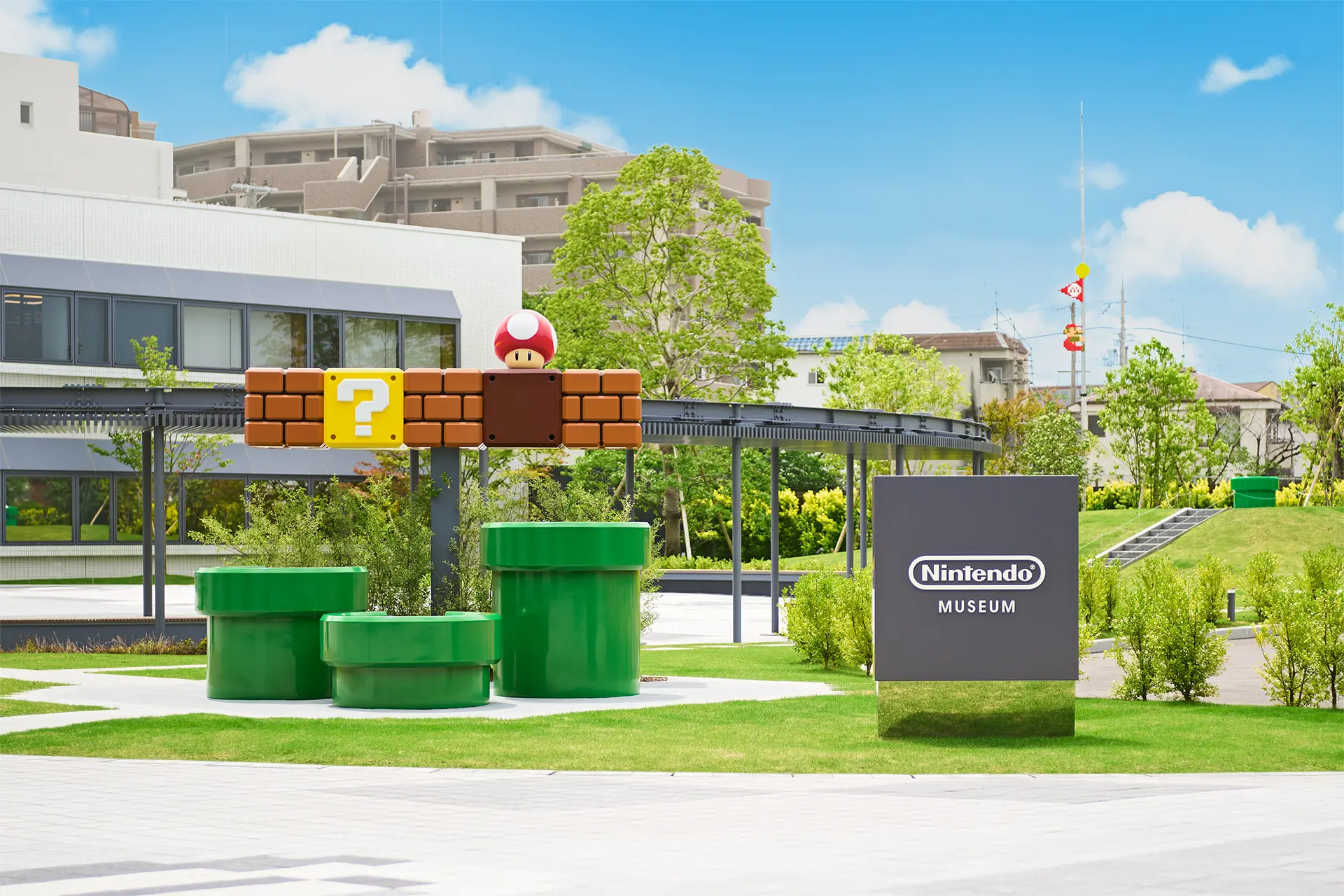
A public relations facility operated by Nintendo that opened on October 2, 2024. Renovated from the former Nintendo Uji Ogura Factory, it features a variety of exhibits where visitors can learn about Nintendo’s history and dedication to craftsmanship.
The first area you visit is a floor displaying the many products Nintendo has released over the years. From the Family Computer to the latest Nintendo Switch, the sight of generations of hardware and software lined up is impressive. Toys and household goods are also worth a look.
On the hands-on exhibition floor, many forms of entertainment created by Nintendo, such as Ogura Hyakunin Isshu and home video game consoles, have been reimagined with today’s technology, letting visitors rediscover how fun they are.
3. Kyoto Railway Museum
Kyoto Railway Museum opened in 2016 after renovating the Umekoji Steam Locomotive Museum, which had been beloved as a mecca for steam locomotives since opening in 1972.
Based on the concept of being a “railway culture hub that grows with the community,” it is one of Japan’s largest railway museums, where visitors can learn about railway history, safety, and technology through real experiences full of surprise and excitement.
On the first floor, a total of 53 railway cars are housed and displayed, including steam locomotives inherited from the Umekoji Steam Locomotive Museum.
Many valuable vehicles that remain in Japan’s railway history are on display, including the C62 steam locomotive, one of the largest from the Japanese National Railways era that pulled limited express trains after the war, the Series 0 Shinkansen, the first Shinkansen train, and the Series 500 Shinkansen, which was listed in the Guinness Book for commercial operation at 300 km/h.
4. Arashiyama Monkey Park Iwatayama
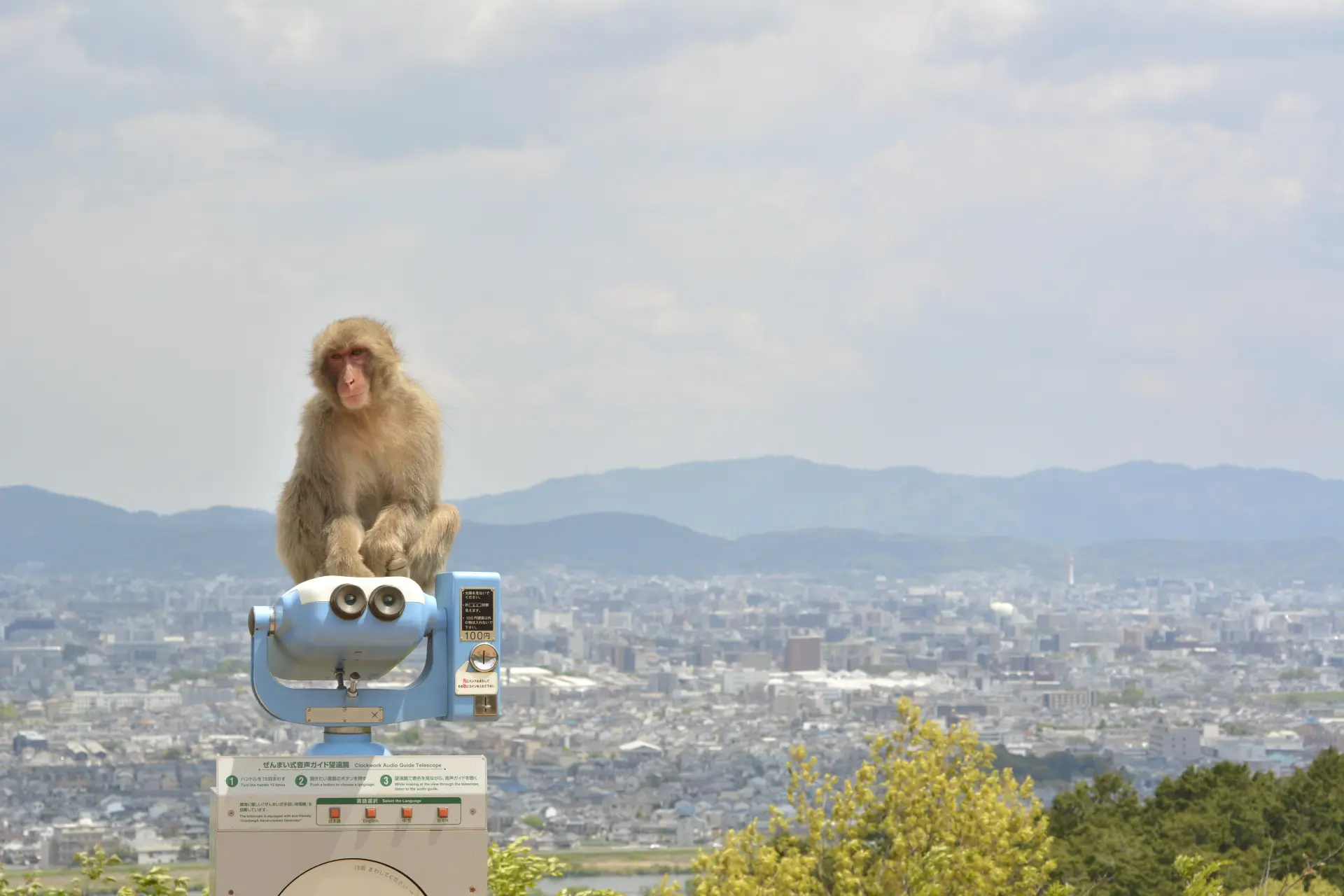
Arashiyama Monkey Park Iwatayama has its entrance near Togetsukyo Bridge, one of Arashiyama’s famous sights, about Approx. 20m upstream along the river, where you enter the grounds of Ichitani Munakata Shrine.
About 120 Japanese macaques currently live here in the wild, delighting visitors with seasonal scenes throughout the year.
It takes Approx. 20 minutes of mountain climbing from the entrance to reach Monkey Mountain, and after climbing 120 steps, the path becomes a gentle uphill slope.
The trail is well maintained, so even small children can walk safely.
5. Toei Kyoto Studio Park
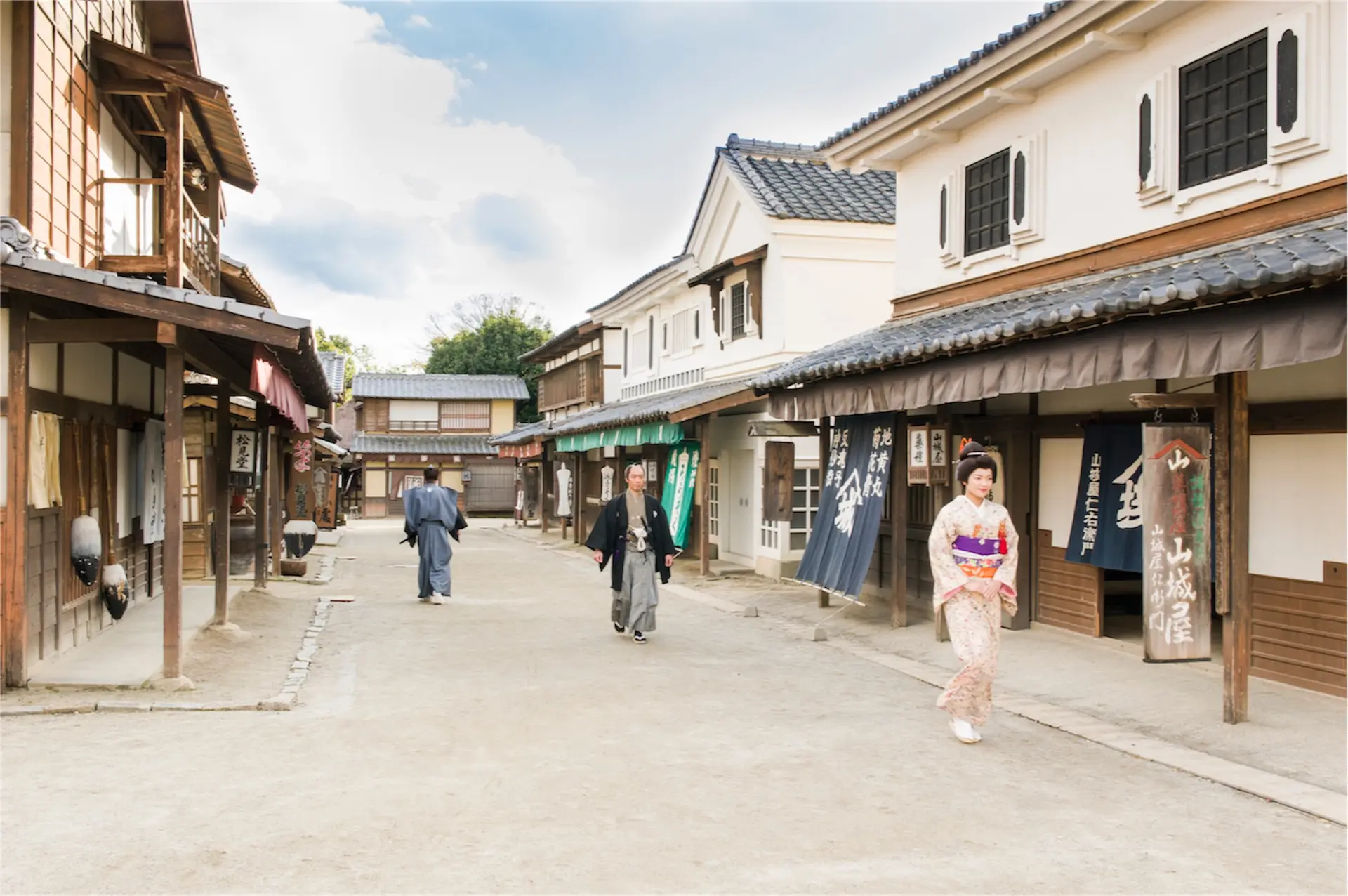
One of Japan’s leading movie theme parks, located in Uzumasa, Kyoto. It is famous for its sets used in period drama filming, and if you change into period costume characters and stroll around the park, you can enjoy the atmosphere of old Japan even more.
And that’s not all. The park also has many attractions, including a trick ninja mansion, a haunted house, and a 3D maze. It also features the world’s first attraction where you can ride inside Evangelion Unit-01’s entry plug and even have it fit in the palm of your hand, while displays of tokusatsu heroes and Toei Animation characters are also popular.
6. Kyoto International Manga Museum
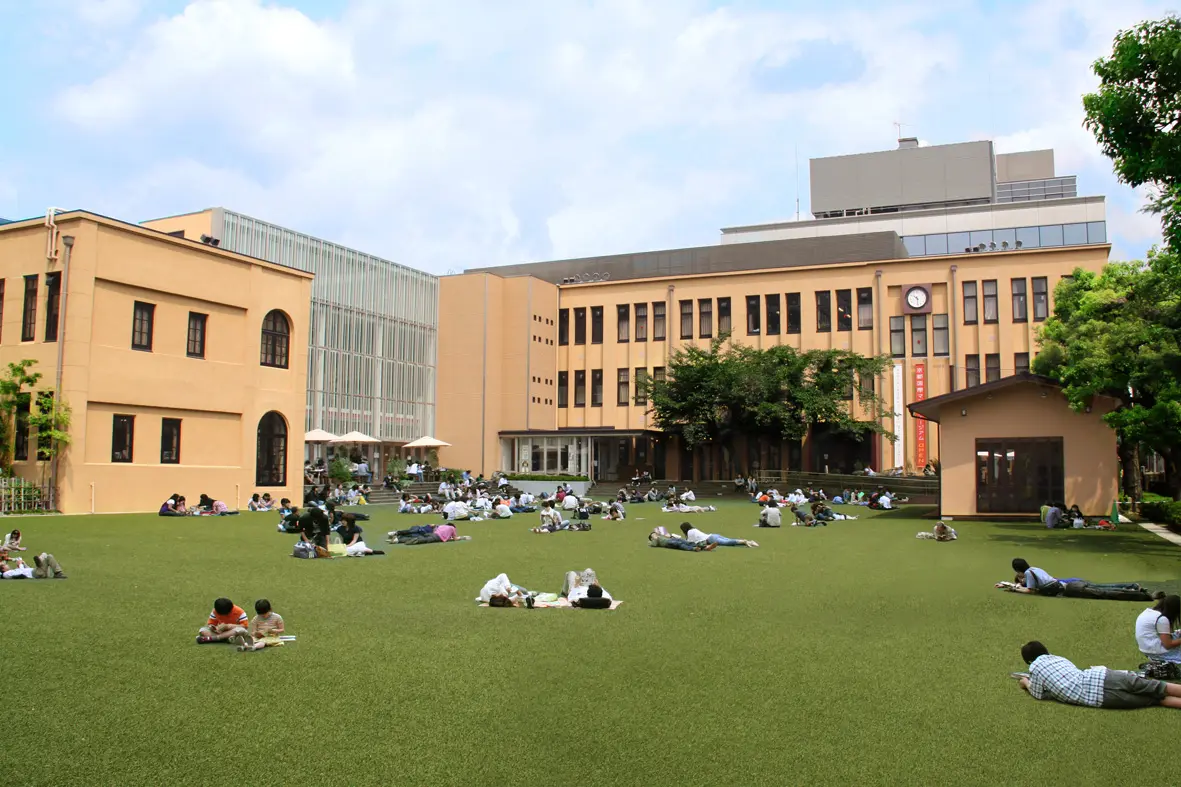
Japan’s first comprehensive manga culture facility, opened in 2006 as a joint project between Kyoto City and Kyoto Seika University, which established Japan’s first manga department.
Dedicated to manga, now attracting attention from around the world, the facility is operated as both a museum and a library, with the aim of collecting, preserving, and exhibiting materials, researching manga culture, and hosting exhibitions and events based on that research.
Its collection includes over 300,000 manga-related items, ranging from caricature ukiyo-e from the Edo period to magazines from the Meiji, Taisho, and early Showa periods, postwar rental books, current popular works, and overseas titles.
7. Kyoto City Zoo
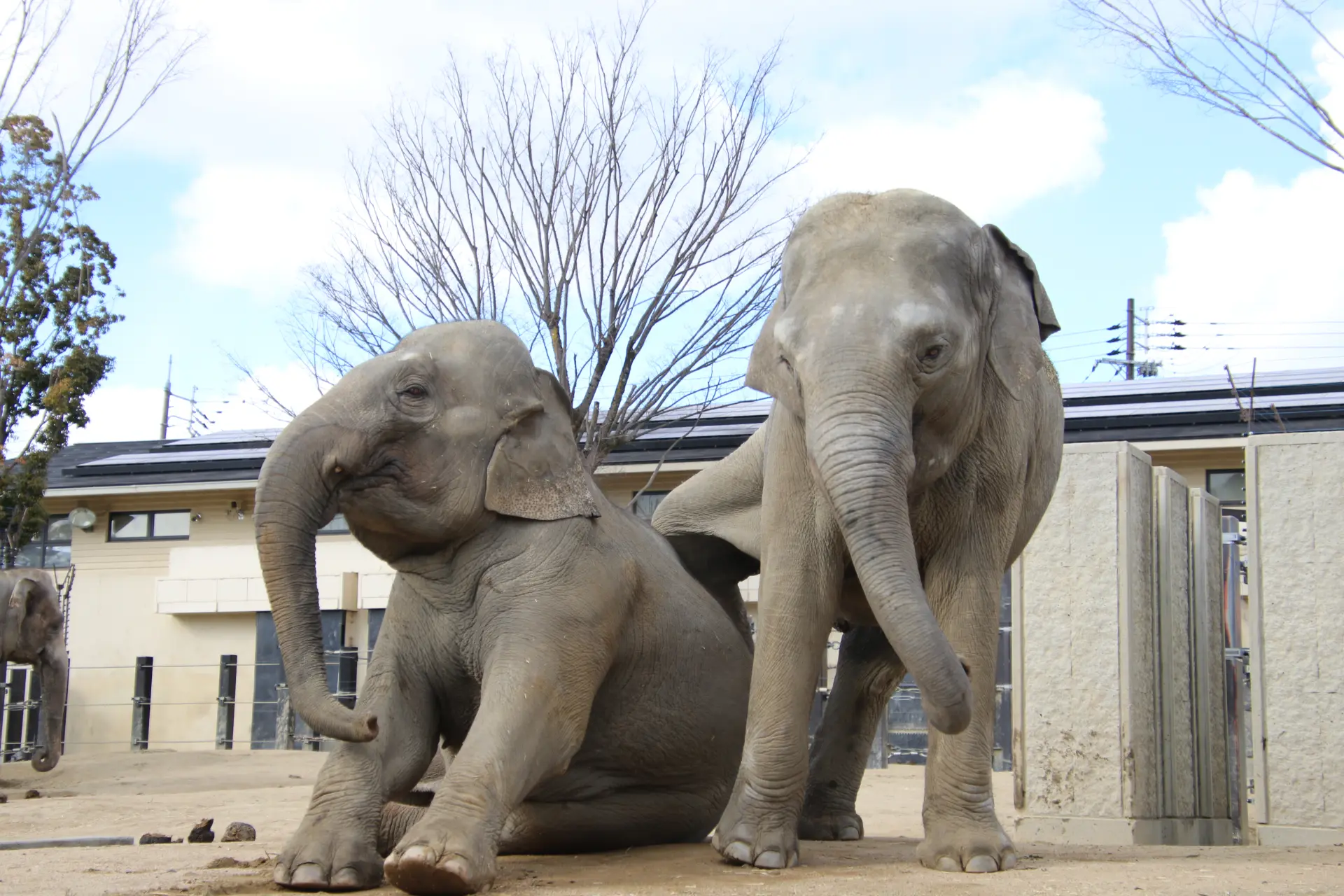
Kyoto City Zoo is located in a corner of Okazaki Park. It first opened in 1903, giving it the second-longest history of any zoo in Japan after Ueno Zoo.
It reopened after renovation in 2015 and marked its 120th anniversary in 2023, and it continues to be loved by people of all ages as a place of relaxation for Kyoto residents.
The zoo offers many exhibits where animals can choose how they behave, including “African Savannah,” where giraffes and zebras are displayed together in a setting like the savannah, and “Gorilla’s House,” where gorillas show natural behavior using poles and ropes designed to resemble tropical rainforest trees.
8. Kyoto Municipal Science Center For Youth
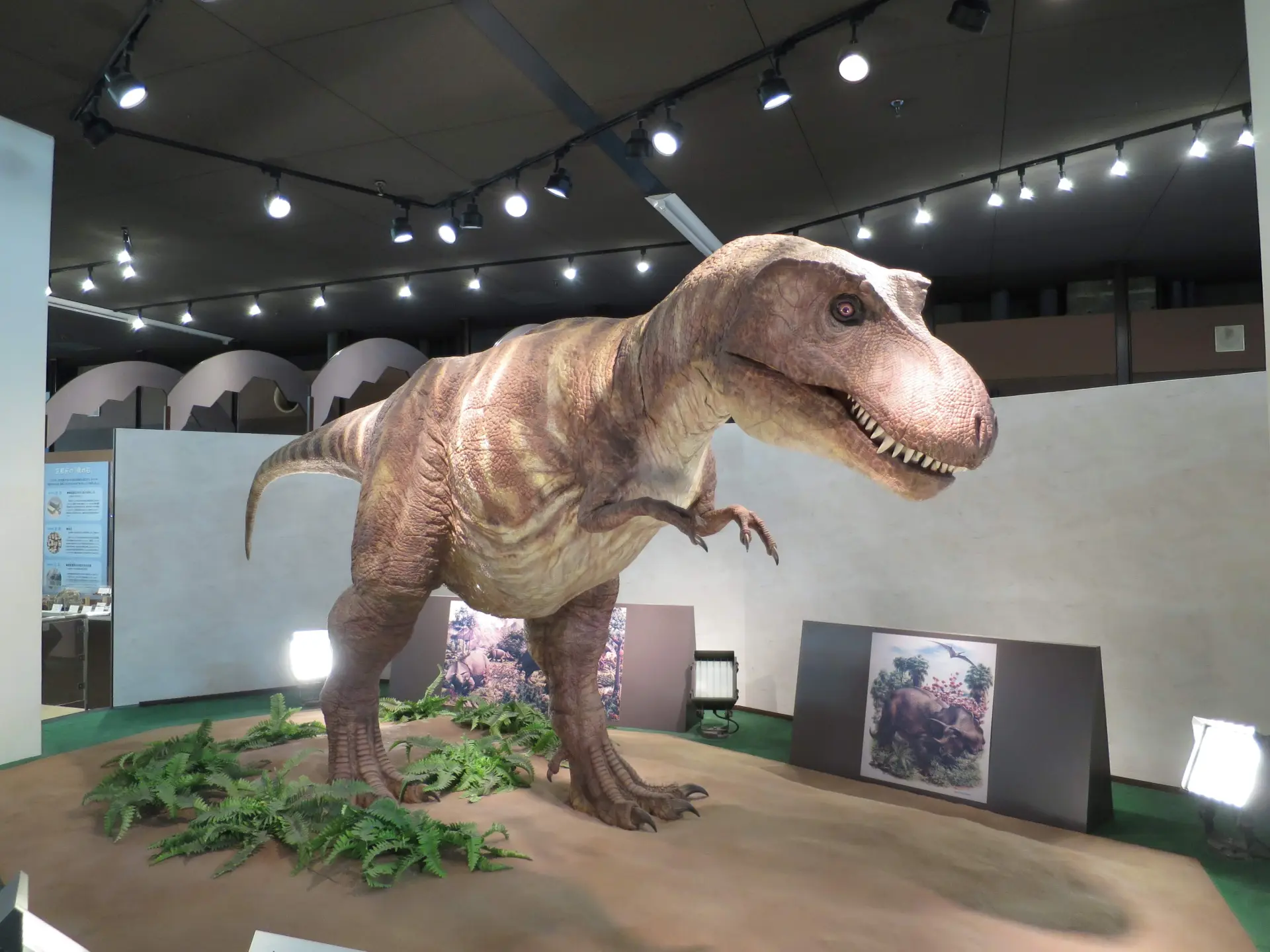
An interactive science museum where you can learn by seeing, touching, and moving things. Right after you enter, you are welcomed by giant moving models of Tyrannosaurus and Tarbosaurus.
The powerful dinosaur displays spark the curiosity of not only children but adults as well.
In the exhibition rooms, hands-on experiences line up around themes such as light, sound, air, and electricity.
There are plenty of exhibits that let you get closer to the workings of science while having fun, such as creating mini tornadoes and trying your hand at flying drones.
9. Sagano Scenic Railway
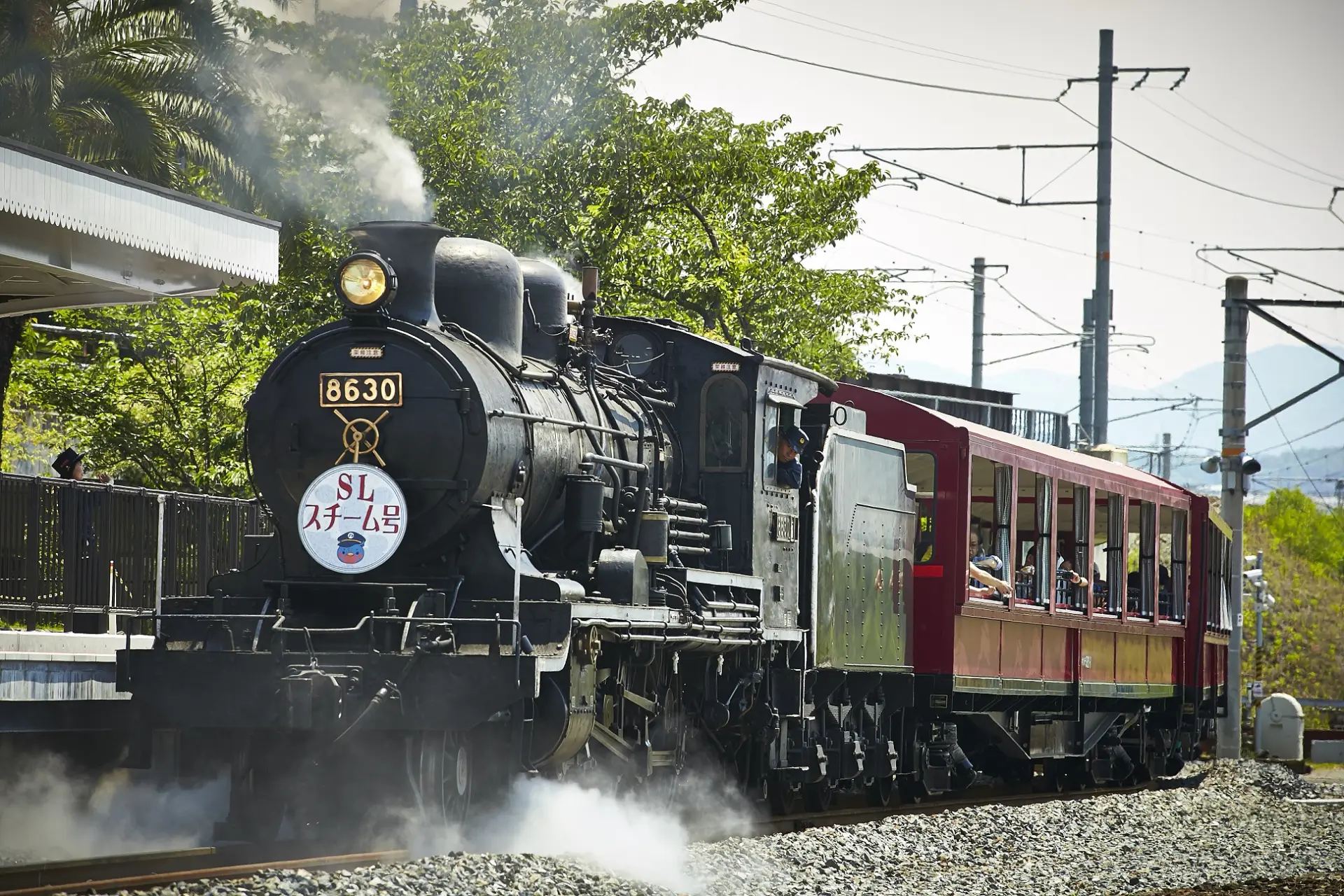
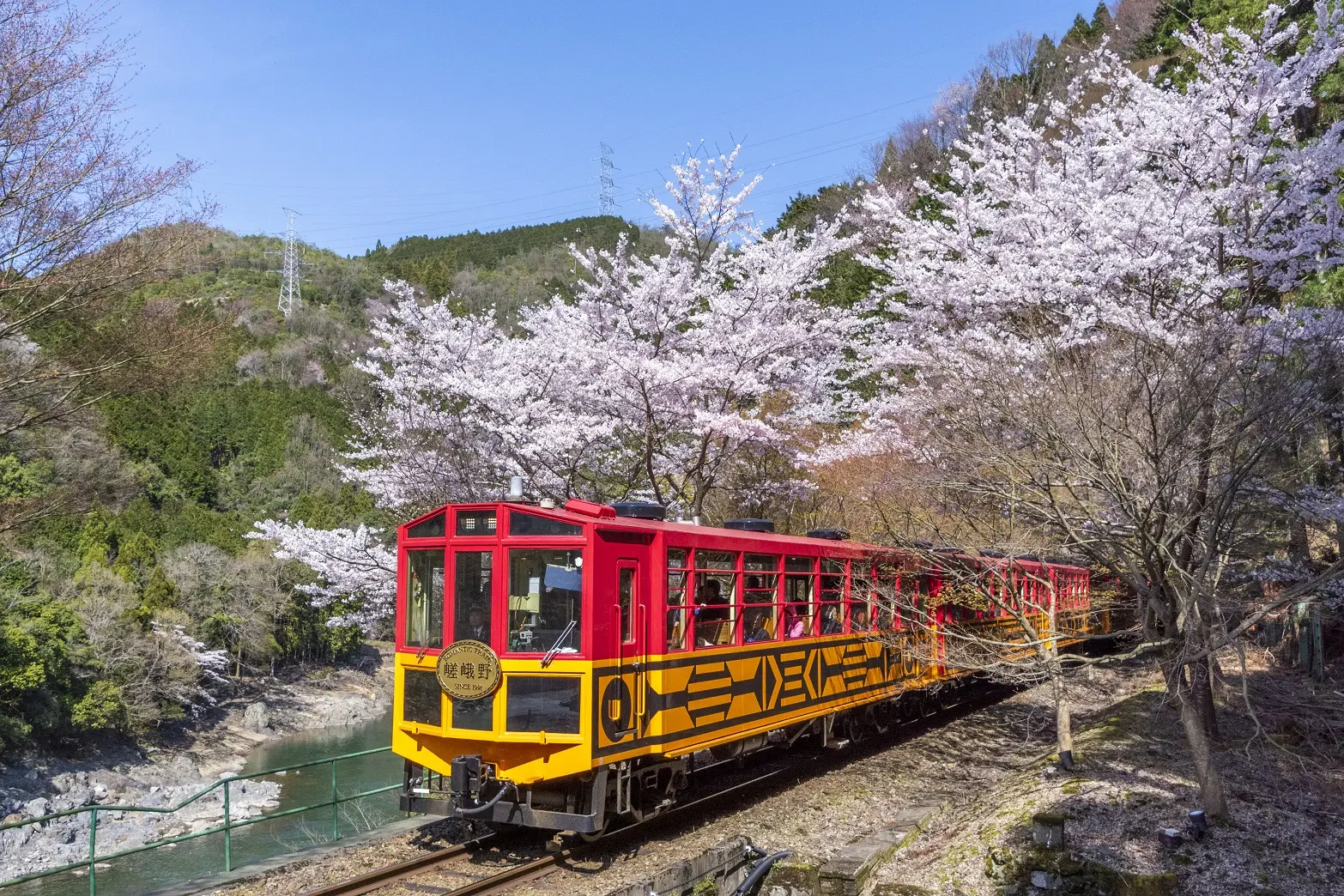
A sightseeing train operated by Sagano Scenic Railway, running on a revived section of the former Sanin Main Line that had been discontinued. Pulled by a diesel locomotive, its classical Art Deco-style passenger cars travel the 7.3 km one-way route from Torokko Saga Station, next to JR Saga-Arashiyama Station, to Torokko Kameoka Station in Approx. 25 minutes.
The train winds through the gorge along the Hozugawa River, and from the windows you can enjoy the river’s magnificent nature and beautiful ravine scenery.
From cherry blossoms in spring and fresh greenery in summer to autumn leaves and, at times, snowy winter landscapes, the gorge’s dynamic beauty throughout the four seasons is breathtaking.
10. Kyoto Prefectural Yamashiro Sports Park Taiyogaoka
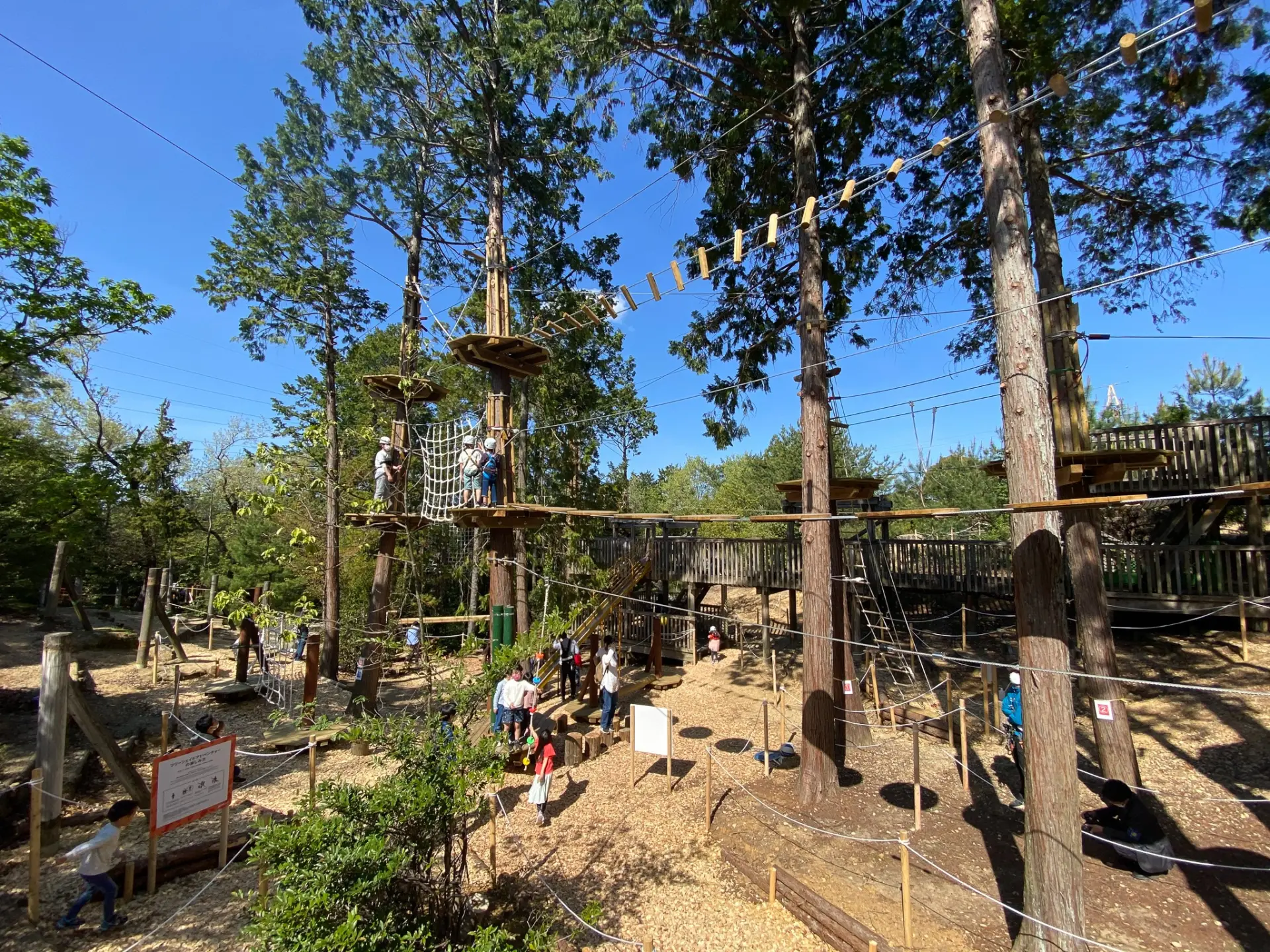
A large leisure spot in the hills of Uji, Kyoto, where nature and sports come together, covering a total area of Approx. 108 hectares.
The park has natural forest areas divided by theme, such as “Adventure Forest,” “Play Forest,” and “Friendship Forest,” with giant athletic equipment and field playground equipment scattered throughout, making you forget the noise of the city.
A popular summer feature is the family pool. With slides and a stream area, even small children can enjoy it safely.
11. Amanohashidate View Land
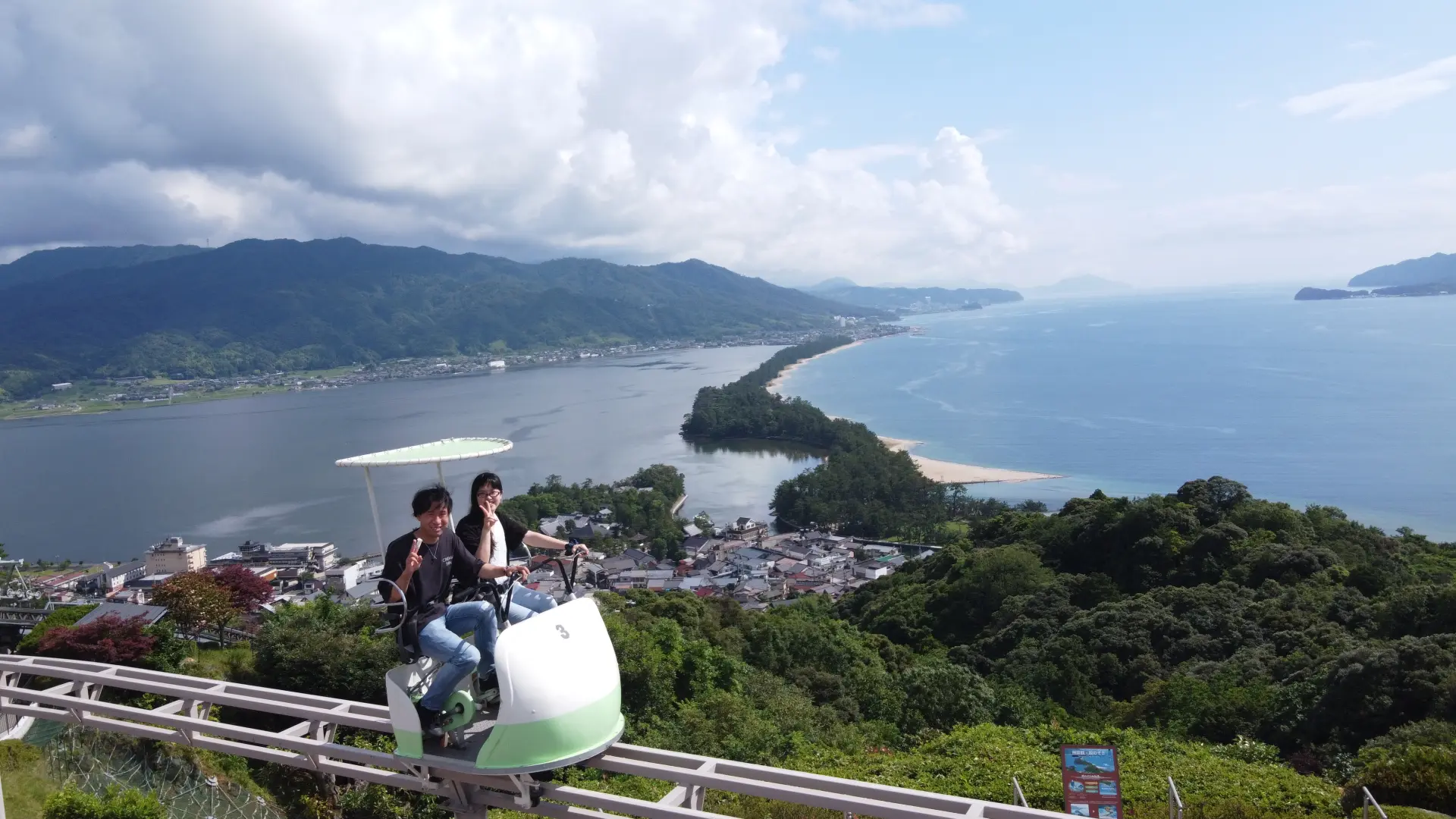
A scenic viewpoint on Mt. Monju where you can enjoy a sweeping view of Amanohashidate, one of Japan’s Three Scenic Views, from the south side.
The view of Amanohashidate seen by bending over and looking at it upside down from here is called “Hiryukan,” because it looks like a dragon soaring up to the sky. There are seven upside-down viewing platforms in the park, so be sure to try one.
From the Hiryukan Corridor, which is Approx. 250 m long and up to Approx. 8.5 m high, you can enjoy a 360-degree panorama overlooking Miyazu Bay and Amanohashidate below.
12. Kyoto Botanical Gardens
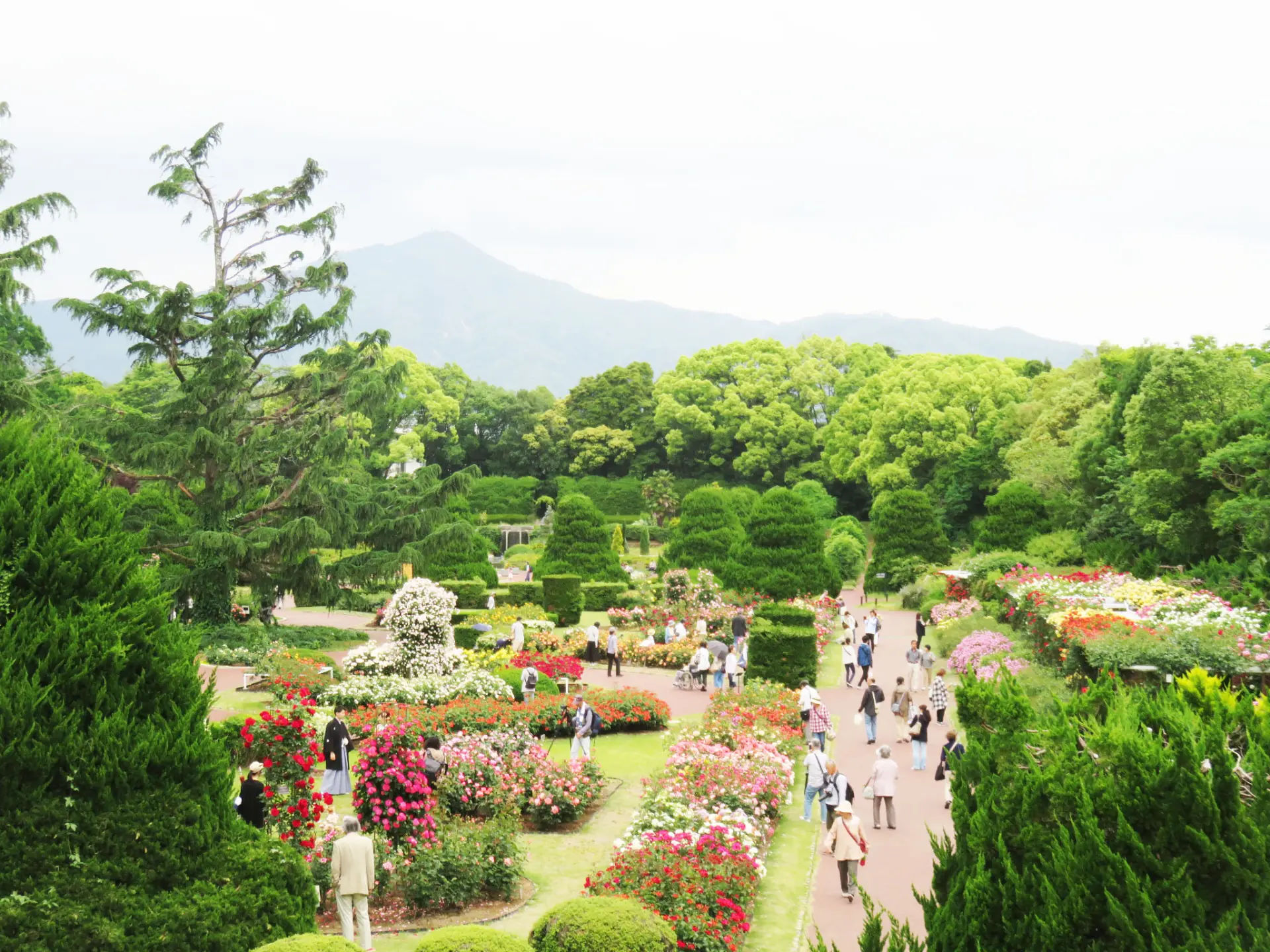
Japan’s oldest public comprehensive botanical garden, it opened in 1924 as the “Daiten Memorial Kyoto Botanical Garden” and now has a history of Approx. 100 years.
Its vast grounds of Approx. 24 hectares are planted with and display around 12,000 kinds of plants. Highlights include the Main Gate flower beds blooming with seasonal flowers, a 200 m camphor tree avenue, a rose garden, cherry grove, plant ecology garden, and a greenhouse.
Among them, the greenhouse is one of the largest in Japan, with Approx. 4,500 kinds of plants on display, including many rare plants shown or blooming in Japan for the first time.
13. Diorama Kyoto JAPAN
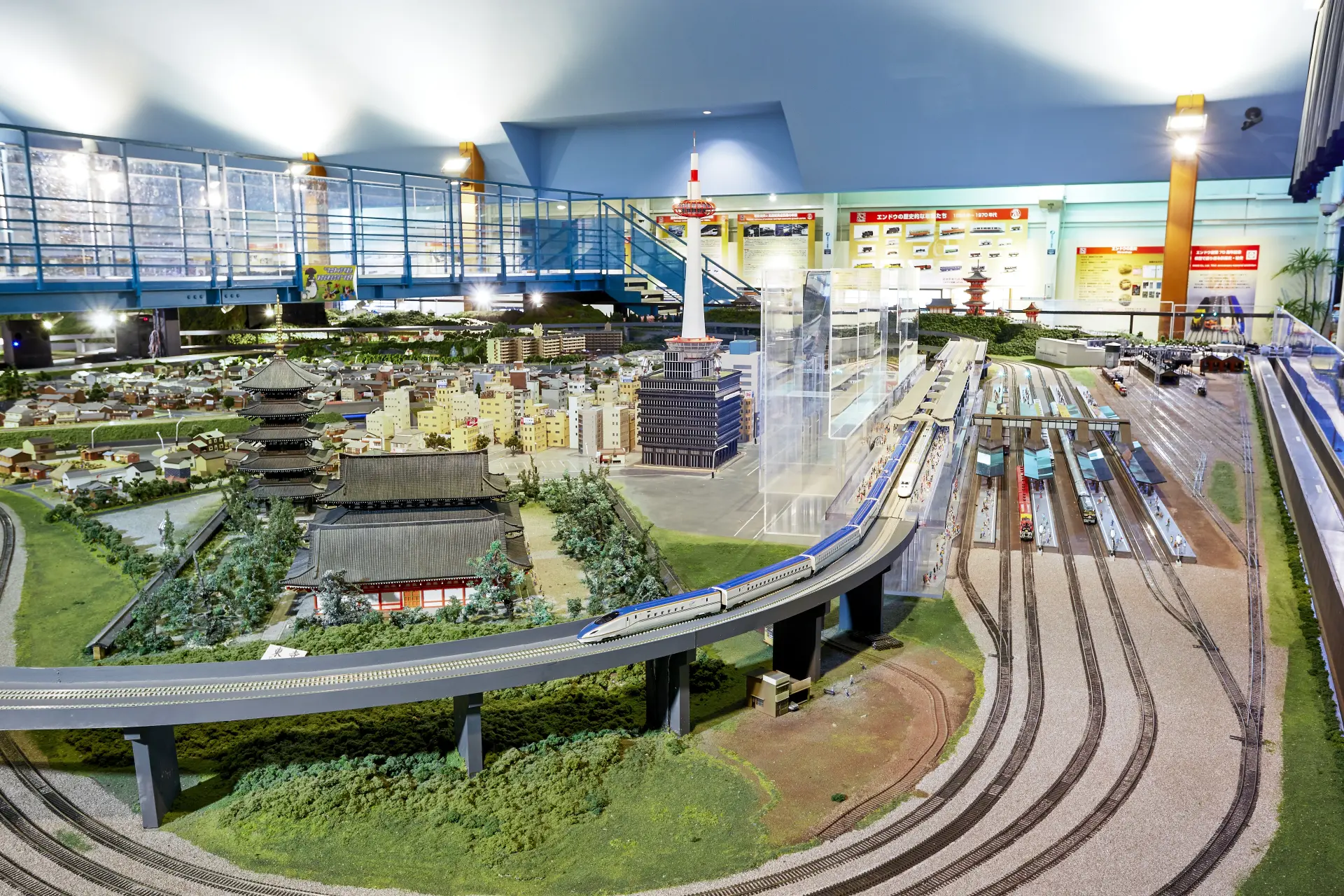
One of western Japan’s largest railway model diorama theme parks, located in Ukyo Ward, Kyoto City, next to Torokko Saga Station and JR Saga-Arashiyama Station.
Opened in 2011 to mark the 20th anniversary of the opening of Sagano Scenic Railway, it precisely recreates Kyoto’s shrines, temples, and streetscapes, including Kiyomizu-dera Temple, Kinkaku-ji Temple, and the five-story pagoda of To-ji Temple, with model trains running through them.
Visitors can operate model trains, including Shinkansen and limited express trains running on the tracks, using the same master controller used in real train driver’s cabins.
14. Umekoji Park
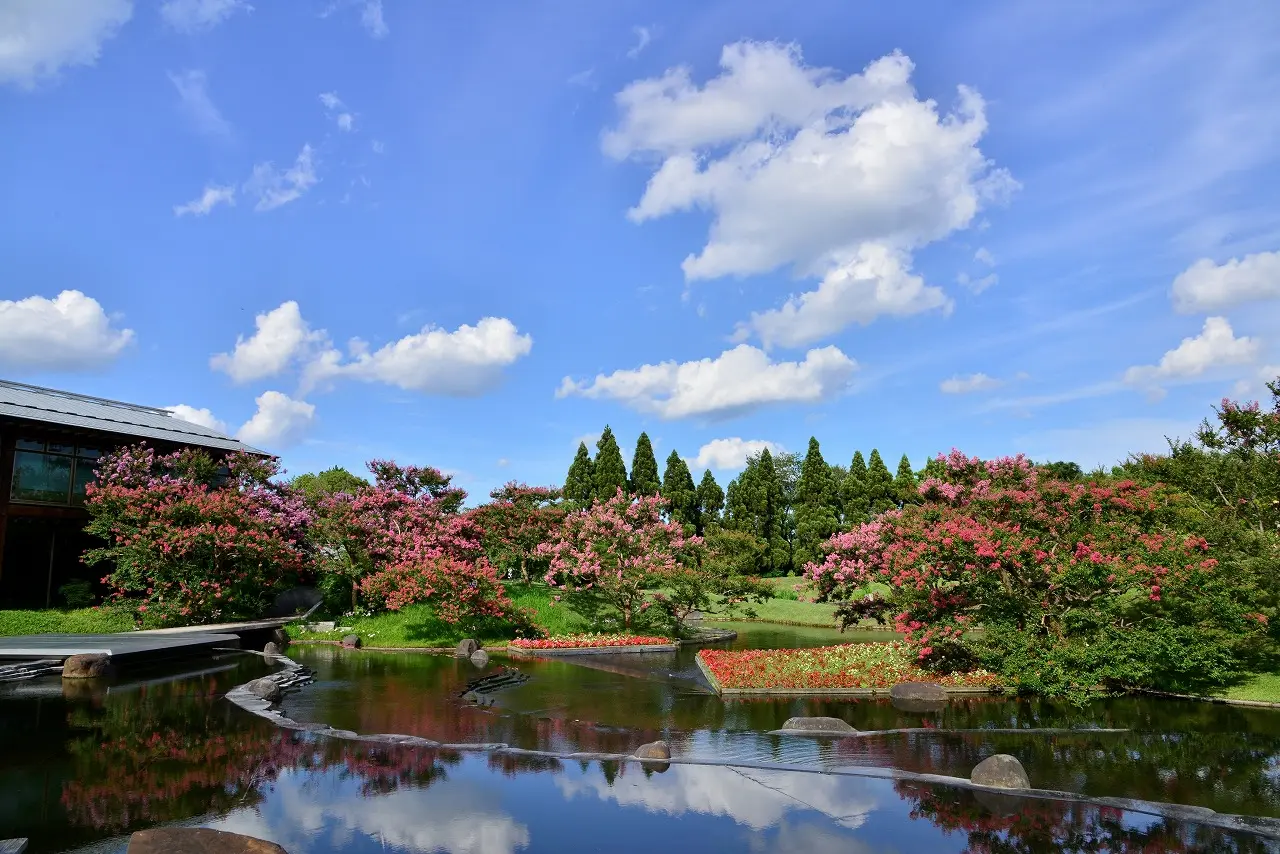
Although within walking distance of JR Kyoto Station, this urban park offers grassy fields and trees where you can enjoy nature.
At the centrally located “Suzaku Yume Hiroba,” children’s sense of play is sparked by facilities such as a 14 m roller slide and a huge jungle gym.
In the spacious lawn area, families enjoy picnics and spend their time as they like.
15. Nishiki Market
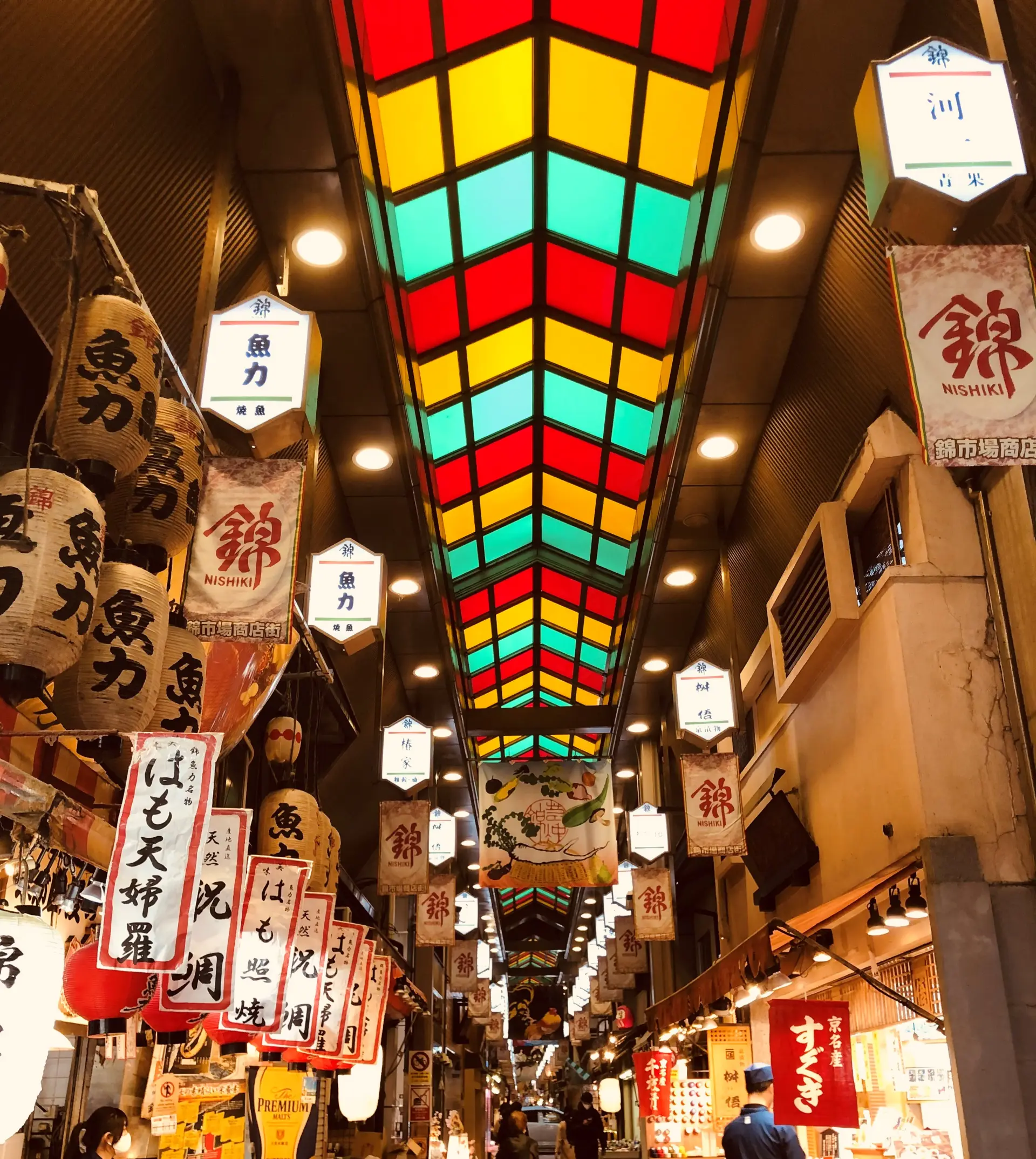
Nishiki Market is located on Nishikikoji Street, just north of Kyoto’s main street, Shijo Street. Its origins date back to the prosperity of fish shops here, and in 1615 it received official recognition from the Tokugawa shogunate, leading to further development.
Along the arcade street, which stretches Approx. 390 m from east to west, Approx. 130 shops line both sides. Many sell Kyoto gourmet foods that make it hard to choose, such as soy milk donuts, fresh wheat gluten buns, tempura fish cakes, and yuba cream croquettes made with Kyoto ingredients.
16. Nidec Kyoto Tower
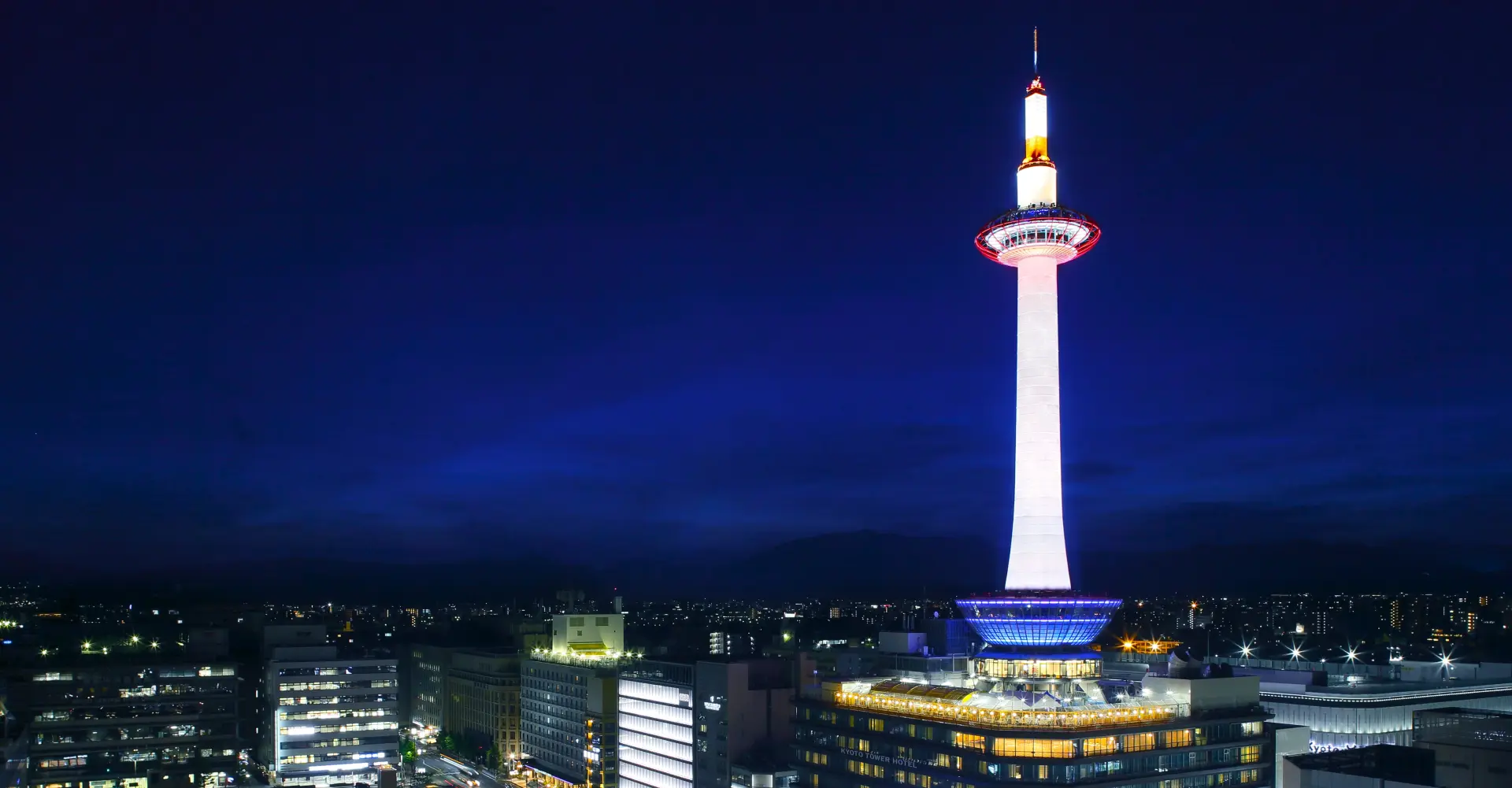
Towering right in front of you as soon as you exit Kyoto Station’s ticket gates, it was built with the image of a lighthouse illuminating the city of Kyoto, and at 131 m tall, it is the tallest building in Kyoto City.
Since opening in 1964, it has welcomed more than 32 million visitors.
From the observation deck 100 m above ground, you can enjoy a panoramic view of Kyoto’s cityscape. On clear days, you can even see Osaka through the free telescopes installed there.
17. Kamo River
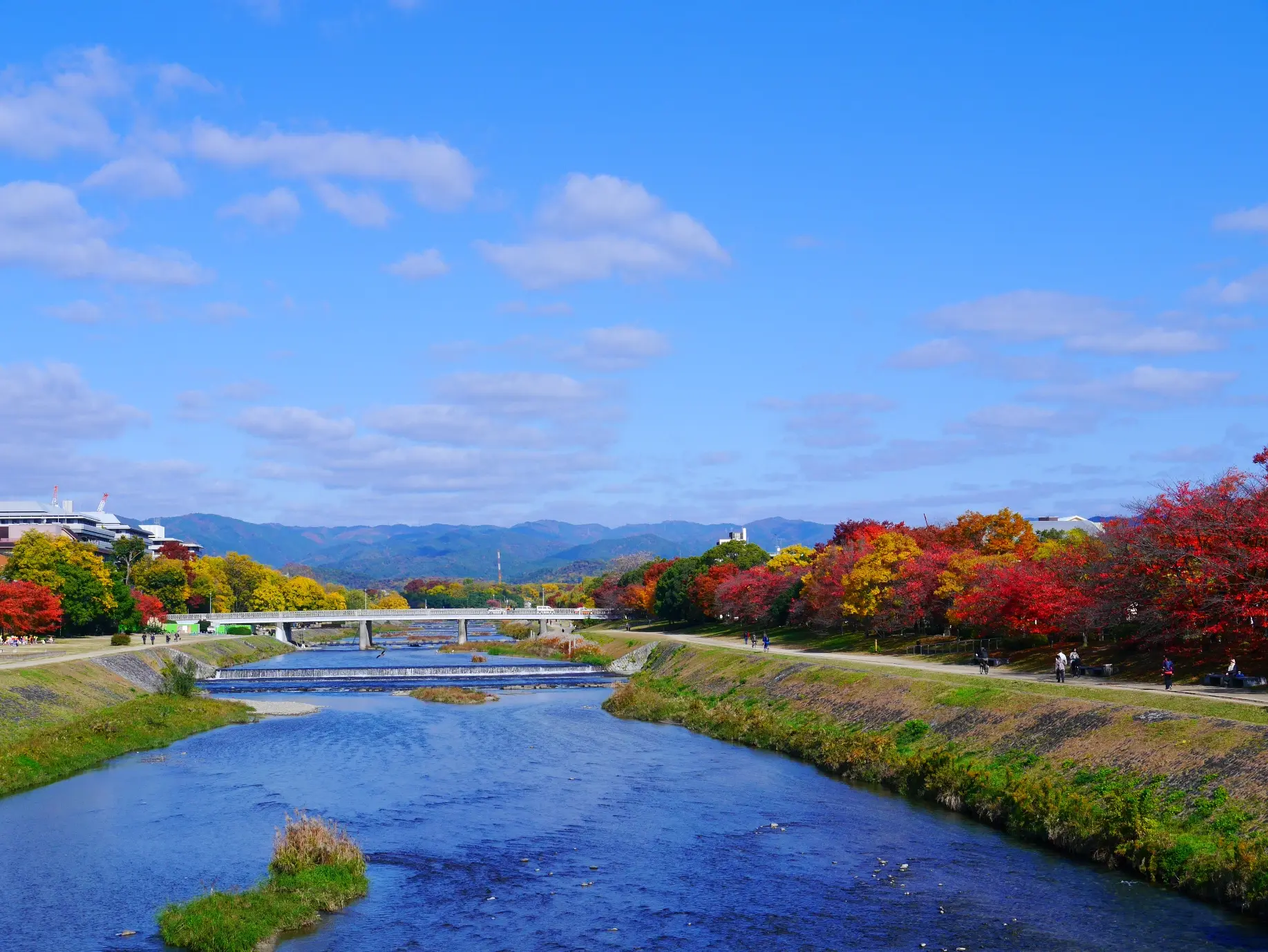
It is sometimes also written as Kamogawa or Kamo-gawa. The Kamo River originates near Sajikigatake, flows south through central Kyoto, and empties into the Katsura River at Toba.
The area around Shijo, with Gion to the east and Kawaramachi to the west, is a bustling downtown district and also the commercial heart of Kyoto, making it one of the city’s iconic landscapes.
The riverbanks are a classic place for people to relax. True to the river’s name, you can see not only ducks such as mallards, spot-billed ducks, and pintails, but also wild birds such as herons and cormorants.
18. Uji City Botanical Park
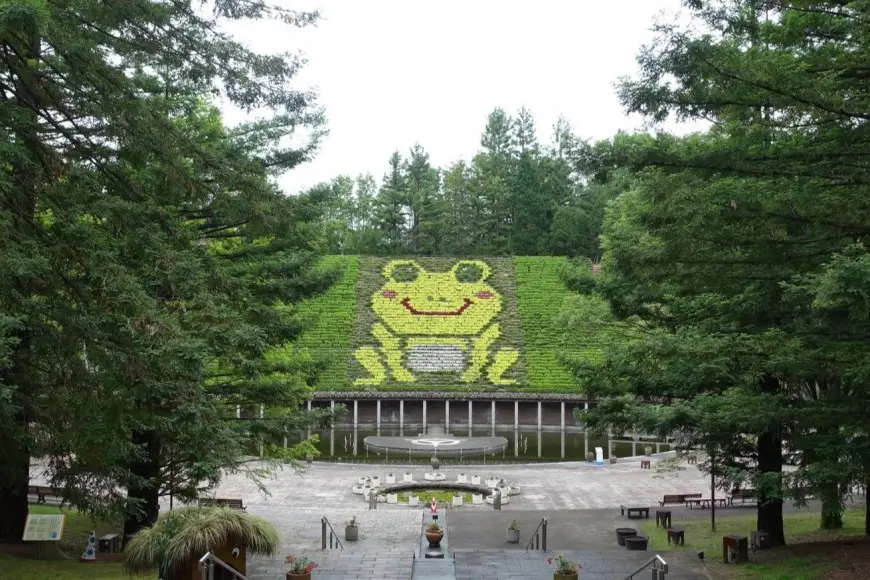
A botanical park of Approx. 10 hectares spread across the hilly area in the southwestern part of Uji City. The “Flower and Water Tapestry” at the front of the entrance is Japan’s largest three-dimensional flower bed, with 3,675 planters arranged on a grand tiered display 62 m wide and 18 m high.
This giant flower bed, depicting motifs connected to Uji City in the style of nishiki-e using seasonal plants, offers both strong visual impact and beauty.
19. Kanji Museum
Japan’s first museum where you can have fun while learning about kanji, which came from China and developed into Japan’s own unique written culture.
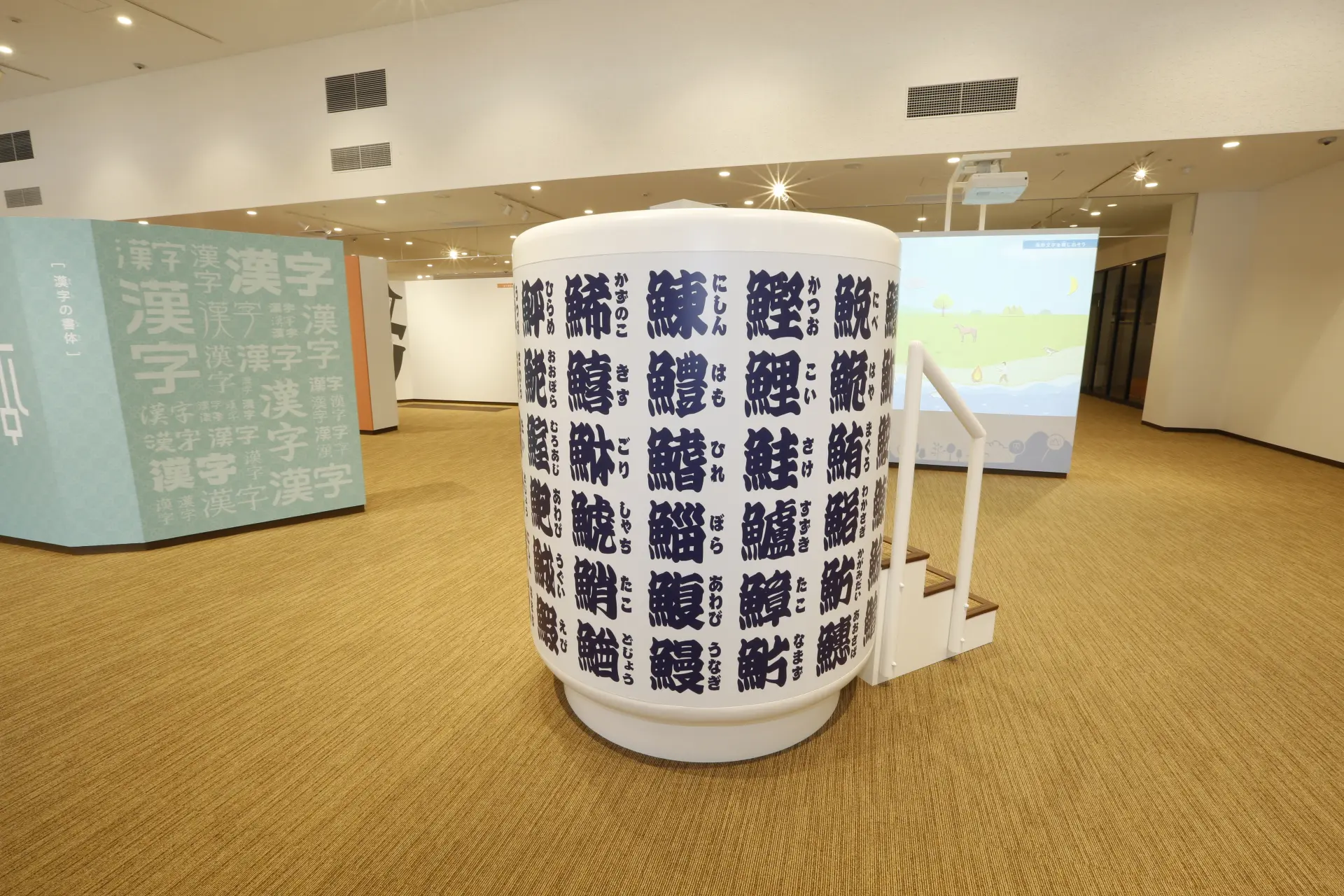
On the second floor, there are more than 20 hands-on exhibits that let visitors learn kanji through play, such as completing four-character idioms by inserting kanji and solving quizzes about fish used in sushi toppings.
A giant teacup covered with fish-related kanji is a very popular photo spot, and visitors can step inside it to take pictures.
20. Tea and Uji Town Historical Park
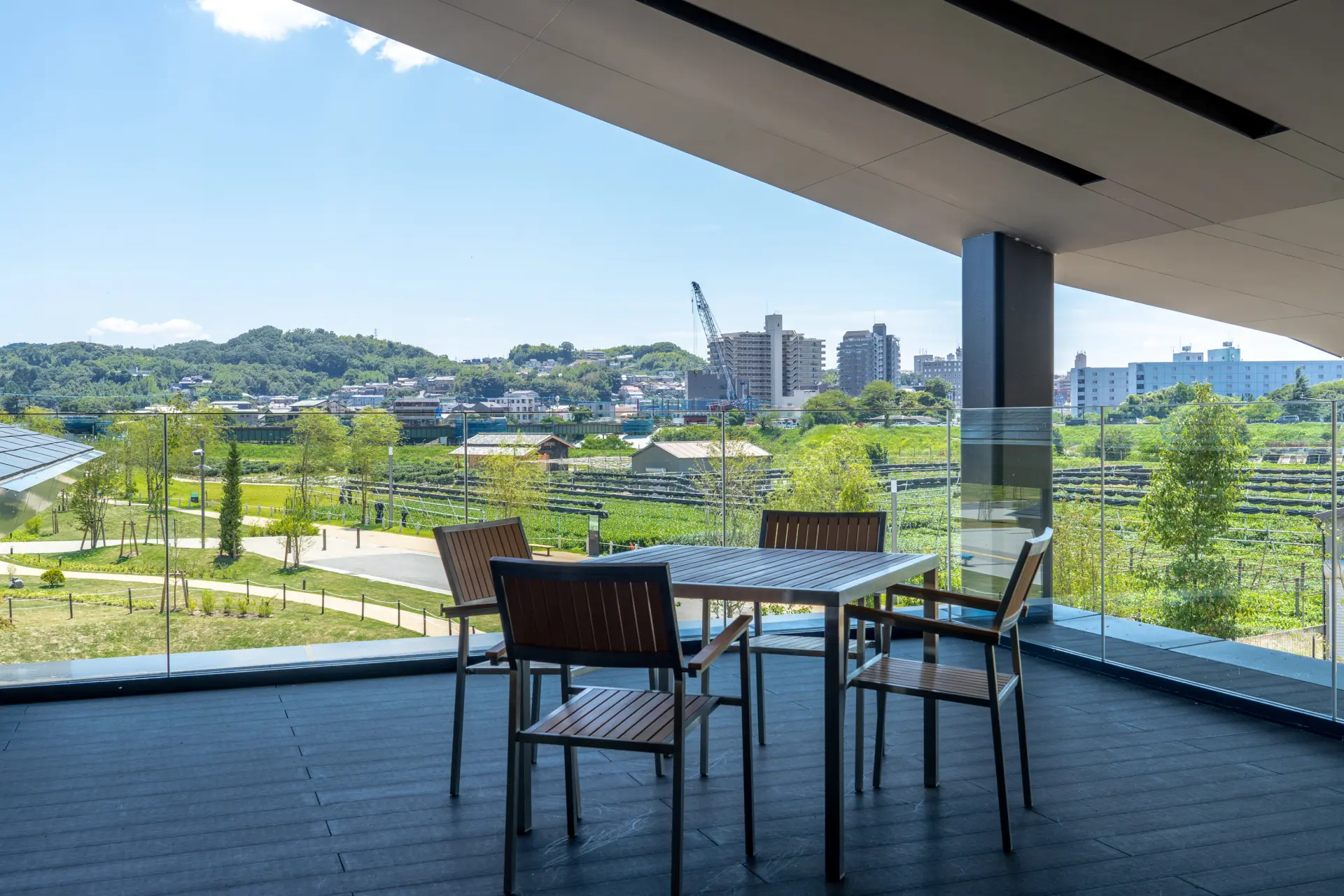
A facility in Uji, known as a tea-producing area, that shares the appeal of Uji tea as well as the history and culture of Uji.
In the “Exchange Zone,” the main attraction is “Chazuna,” which includes a museum, restaurant, and shop introducing the appeal of Uji tea and the history of Uji.
Various tea-related experience programs are also held daily, including a matcha-making experience where you grind tea leaves yourself with a tea mill and learn the characteristics of freshly ground matcha and commercially sold matcha, as well as craft experiences.
21. Hozugawa River Boat Ride
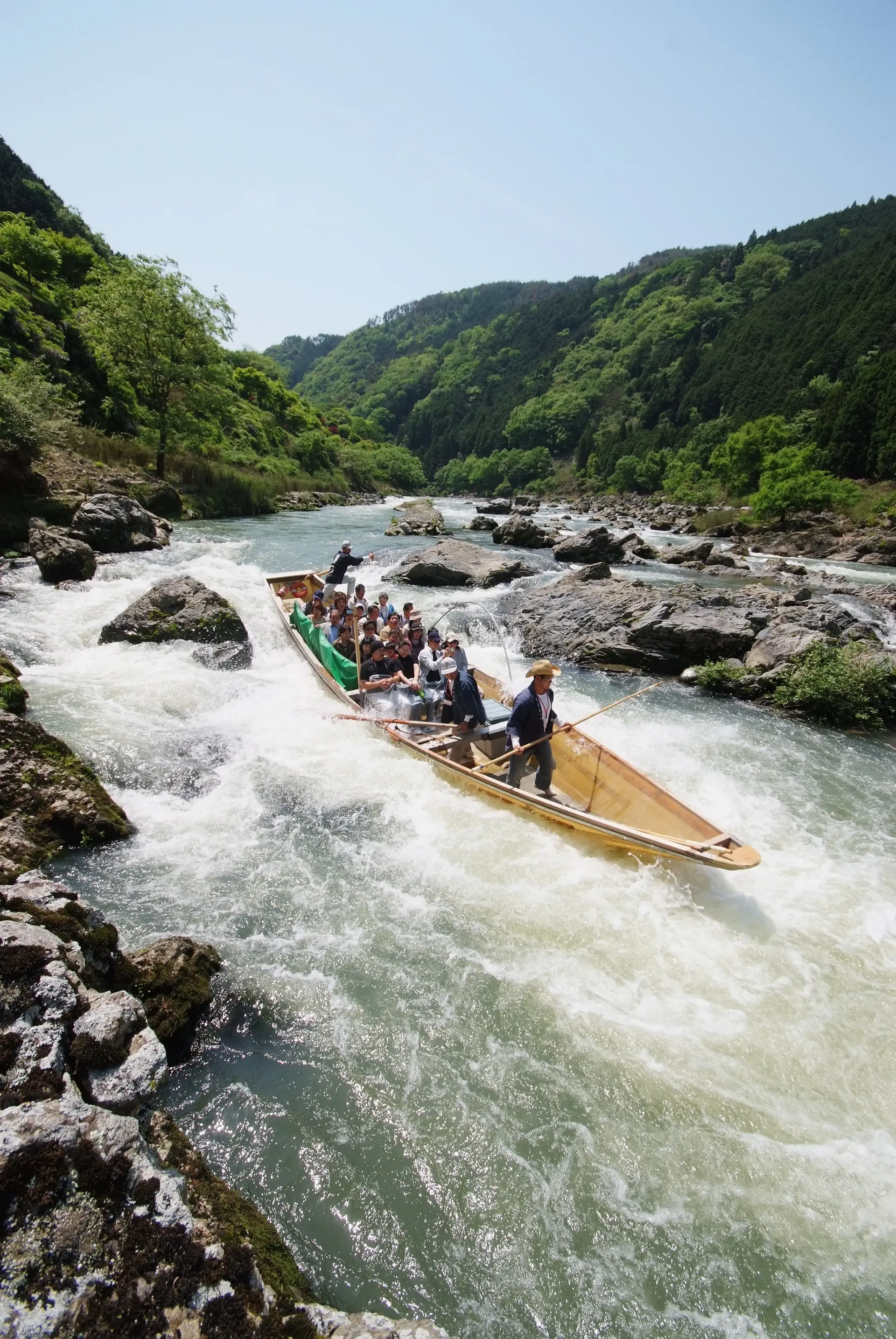
This boat ride descends the Approx. 16 km gorge section of the Hozugawa River from Kameoka to Saga-Arashiyama in a small flat-bottomed boat over Approx. 2 hours.
Three skilled boatmen steer each boat, guiding it dynamically through rapids and between rocks for an exciting river journey.
Originally, this waterway was developed in the early Edo period to transport timber, firewood, charcoal, and other products from the Tamba region to Kyoto, and along the course there are also points where the current becomes fierce and large splashes rise up.
Convenient Locations and Great Services for Families with Kids! 5 Recommended Places to Stay in Kyoto
Here are carefully selected accommodations with convenient locations and family-friendly services, making them ideal bases for sightseeing in Kyoto.
Family trips often come with plenty to think about, so choose a comfortable place to stay and make your trip even more enjoyable.
1. The Westin Miyako Kyoto
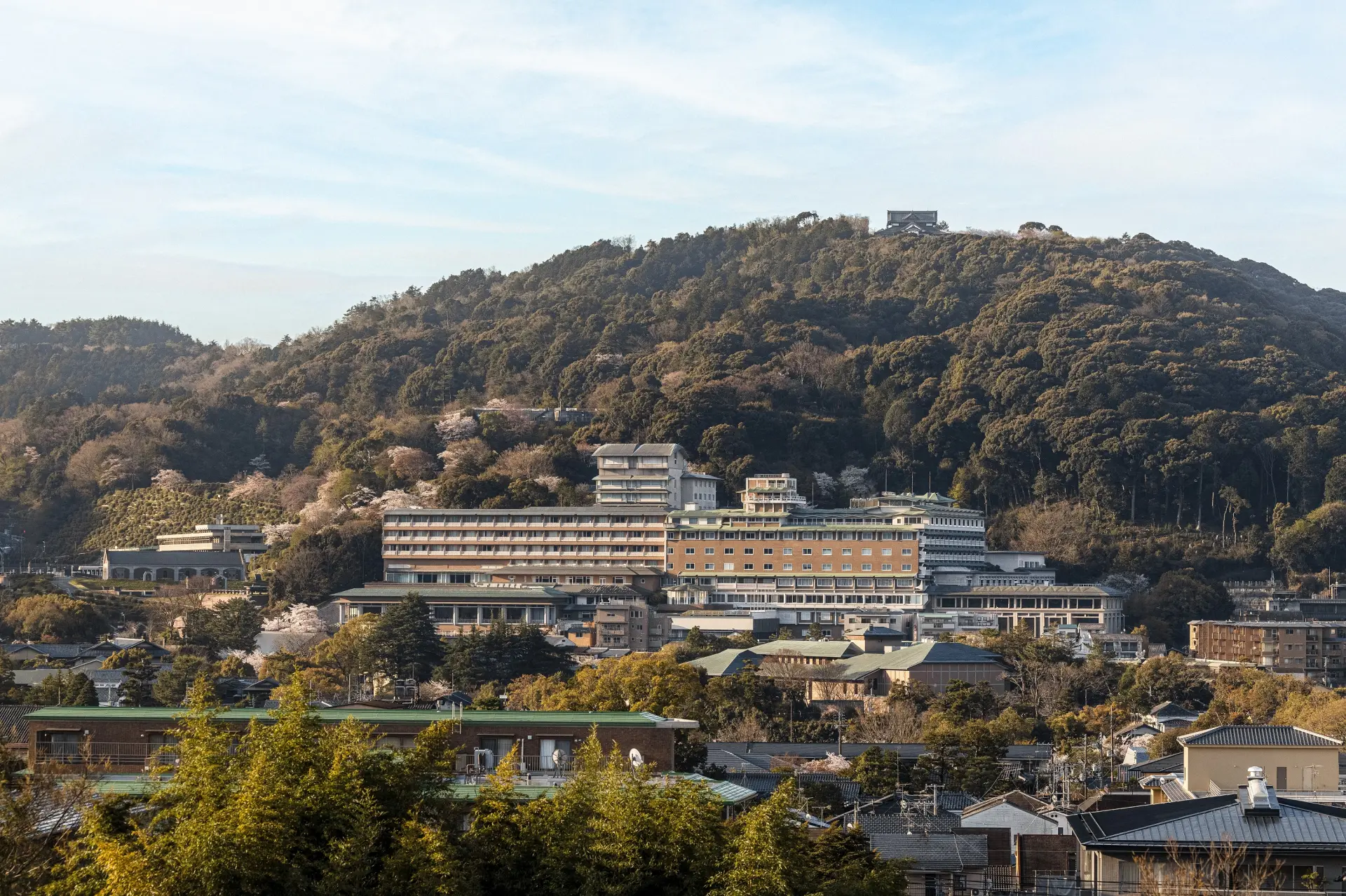
A long-established luxury hotel standing on a hill in Kyoto’s Higashiyama area. Since its founding in 1890, it has welcomed distinguished guests from around the world, including Albert Einstein and Helen Keller, and is known for its prestige and tradition.
In April 2021, the hotel completed a large-scale renovation under the concept of “THE QUEEN OF ELEGANCE,” giving it a more luxurious new look as it marked its 130th anniversary.
The number of guest rooms was reduced to about half of what it was before the renovation, while the average room size was expanded from Approx. 35 square meters to Approx. 50 square meters. The design is inspired by the nature of Higashiyama, and seasonal scenery unfolds outside the windows.
2. Village Kyoto
A hotel located a 2-minute walk from Hankyu Omiya Station and Keifuku Shijo-Omiya Station, making it an ideal base for Arashiyama and sightseeing around the city.
Guest rooms range from compact designer-style Japanese rooms to Japanese-Western rooms that can accommodate up to six people, meeting a wide range of needs. Another welcome feature is the spacious public bath where you can stretch out and relax.
Throughout the hotel, experiences and services are offered under the concept of “Enjoy Kyoto with all five senses,” allowing guests to feel the essence of Kyoto without leaving the hotel.
3. Cross Hotel Kyoto
A hotel located on Ryoma-dori Street, one street back from Kawaramachi Sanjo.
With “casual luxury” as its concept, it offers comfortable service and is convenient for trips to Kyoto, with sightseeing and shopping areas such as Kawaramachi and Gion, as well as train stations, all within walking distance.
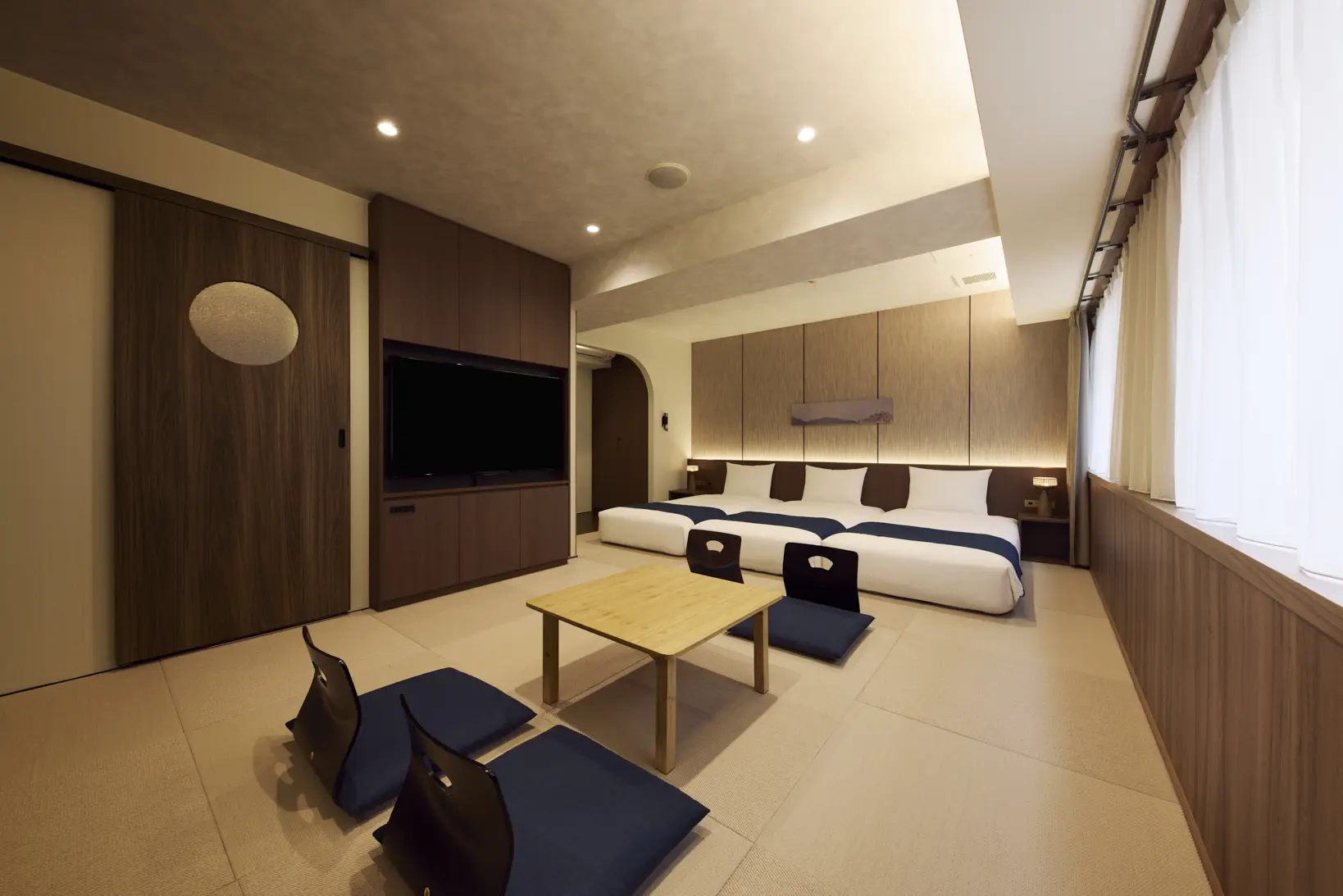
The guest rooms come in four types, from standard rooms to suites, and all are equipped with separate bathrooms, toilets, and wash areas.
Materials that evoke a Japanese feel, such as wood and washi paper, are used to create spaces that are functional yet warm and calm in atmosphere.
4. Kyoto Tower Hotel
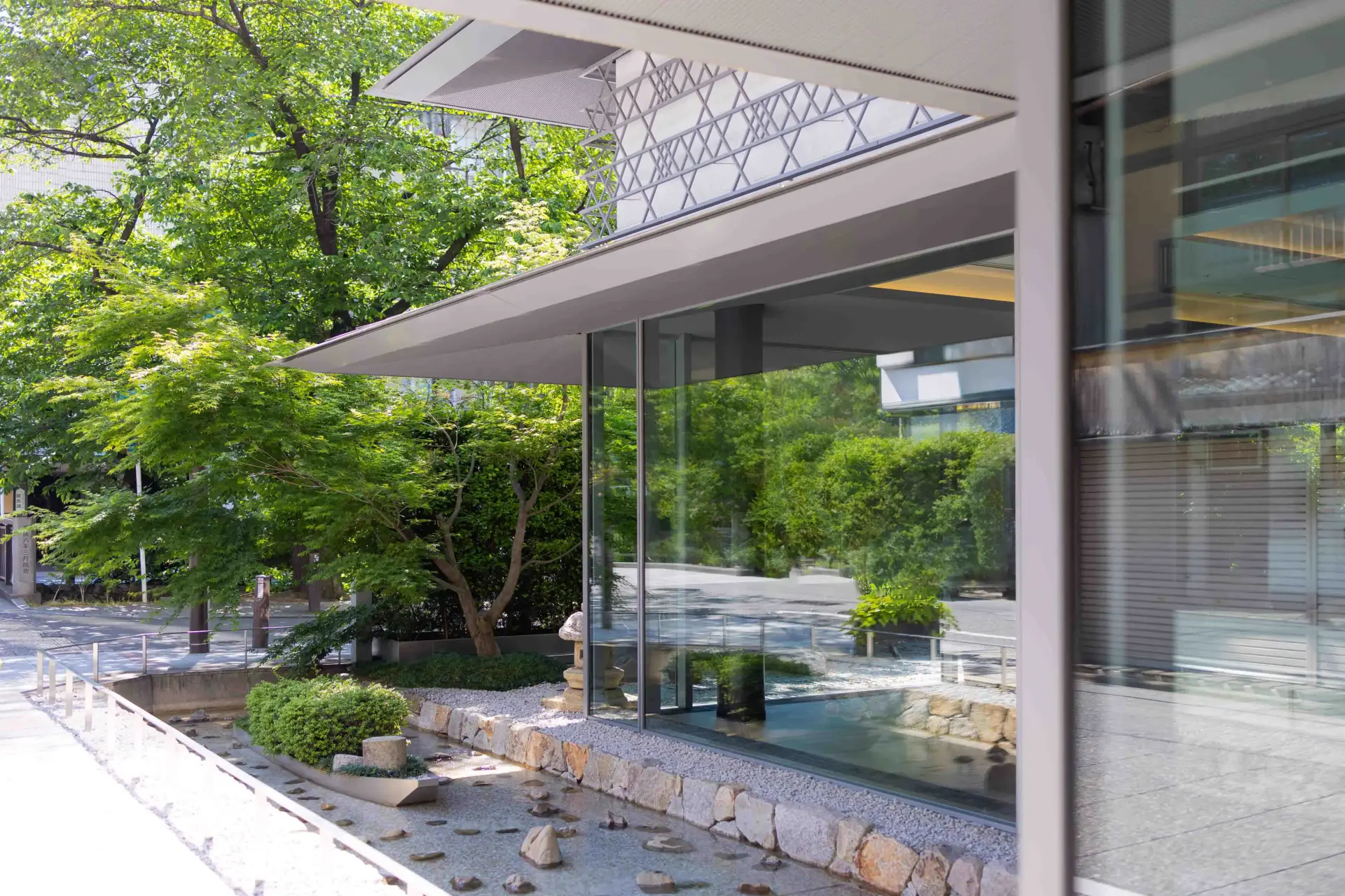
A hotel inside the Kyoto Tower Building, located directly beneath Nidec Kyoto Tower, which rises in front of JR Kyoto Station, the gateway to Kyoto, welcoming visitors to the city.
Not only is it directly connected to Kyoto Station through the underground shopping mall, but the bus terminal is also just a short walk away. Higashi Hongan-ji Temple and Nishi Hongan-ji Temple are both within walking distance, making it a great base for sightseeing in Kyoto.
The hotel offers a wide variety of room types to suit different group sizes and purposes, including “Single” rooms convenient for solo travelers and business use, “Corner Twin” rooms with views of Kyoto Station, and “Deluxe Family” rooms for up to eight guests.
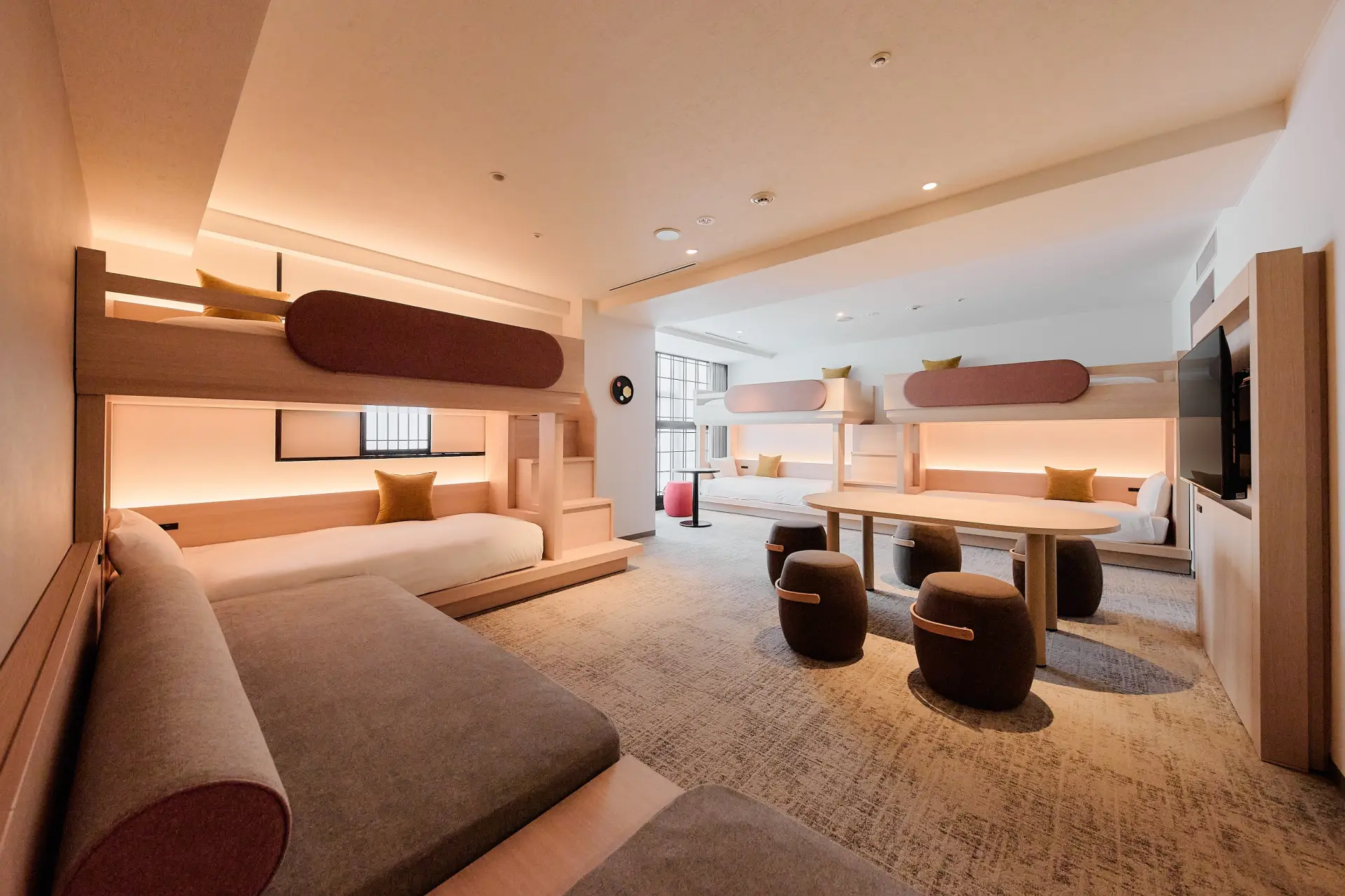
5. GOOD NATURE HOTEL KYOTO
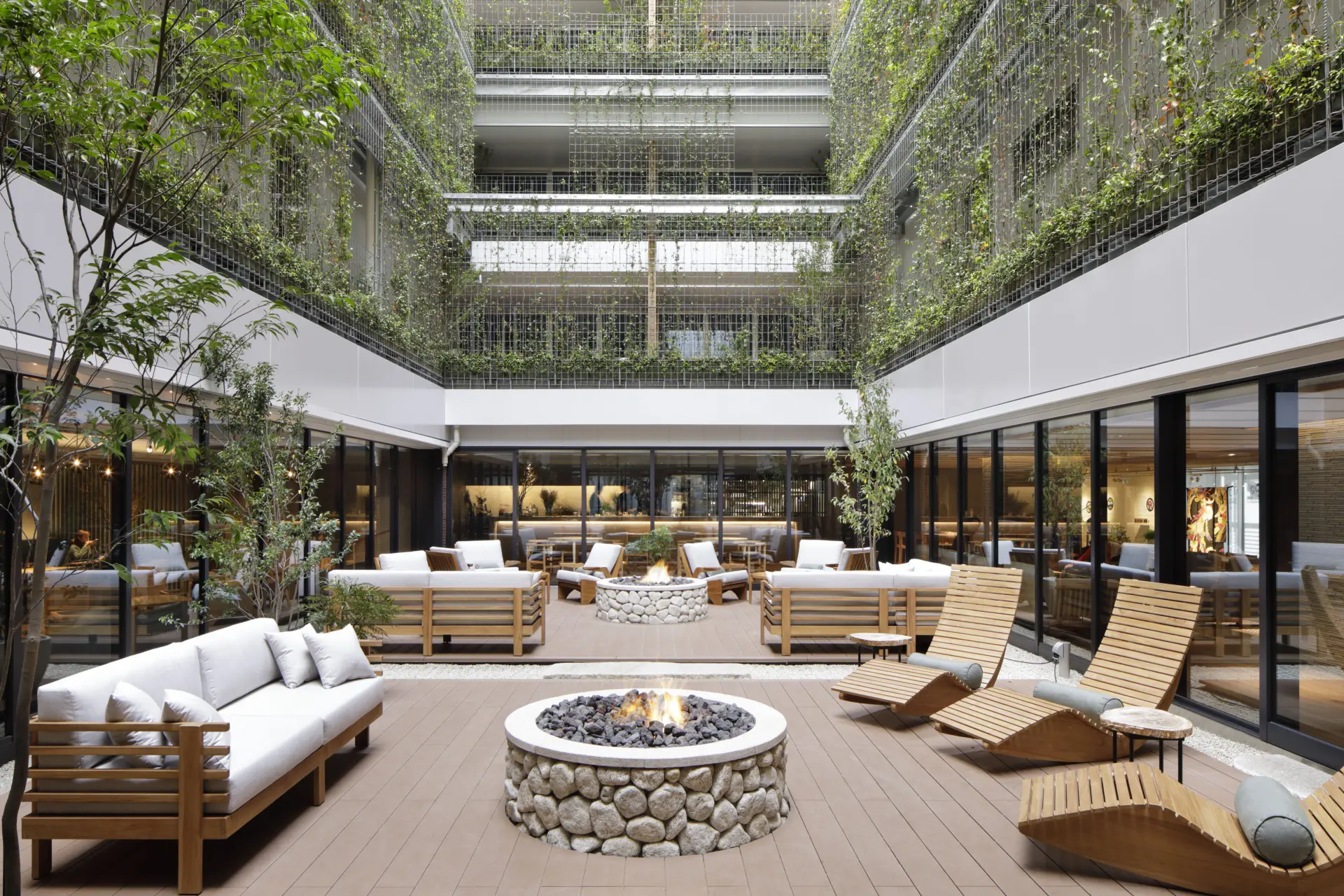
A 2-minute walk from Kyoto-Kawaramachi Station, in a location well suited as a base for sightseeing in Kyoto.
Its concept is “Enjoy a new lifestyle that is comfortable for the mind and body and kind to the global environment,” and thoughtful ideas can be found throughout the hotel.
To begin with, the building itself meets global standards for environmental and health considerations, while the guest rooms provide clean and safe spaces with antibacterial and antiviral treatment.
In addition, the lobby features a “large green wall” that recreates Kyoto’s native vegetation, creating a relaxing atmosphere from the moment you step inside.
A 3-Day Model Course to Use as a Reference for Kyoto Sightseeing with Kids
Here is a 3-day model course centered on the spots introduced in this article, covering popular areas such as Kyoto City, Arashiyama, and Uji City.
Since this relaxed plan visits two spots a day that can be reached by train and on foot, it should help reduce travel fatigue.
If you are sightseeing in Kyoto with your children, be sure to use this plan as a reference.
- Day 1
- Kyoto Station→Sagano Scenic Railway→ Togetsukyo Bridge→Arashiyama Monkey Park Iwatayama→Village Kyoto
- Day 2
- Village Kyoto→Nintendo Museum→Kyoto Aquarium→Kyoto Tower Hotel
- Day 3
- Kyoto Tower Hotel→Kyoto Railway Museum→Nishiki Market→Kyoto Station
FAQ about sightseeing in Kyoto with kids
Q
Are there places in Kyoto that children can enjoy too?
Yes. With leisure facilities and theme parks as well, Kyoto offers plenty to enjoy even when traveling with children.
Q
What season is recommended for sightseeing in Kyoto with kids?
Spring and fall, when cherry blossoms and autumn leaves are at their best. They are also recommended because the weather is relatively comfortable compared with the other seasons.
Summary
In this article, we introduced information to help you enjoy a family trip to Kyoto, focusing on sightseeing spots that parents and children can enjoy together.
If you combine the model course introduced here with shrines and temples you would like to visit, you should be able to fully enjoy your time out in Kyoto.
If you want to learn more about sightseeing spots in Kyoto, be sure to check out the article below as well.