Kamigamo Shrine (Kamowakeikazuchi Shrine)

Verified [Verified] denotes information that has been published with confirmation of its owing parties.

Kamigamo Shrine (Kamowakeikazuchi Shrine)

This is the oldest shrine in Kyoto, with a history of more than 2,600 years since the arrival of its god in the Kamishiro period. The shrine grounds are lined with more than 60 shrines and temples, including two National Treasures and 41 Important Cultural Properties.

3.32 5

Last update :
Supervised by :  Kamigamo Shrine

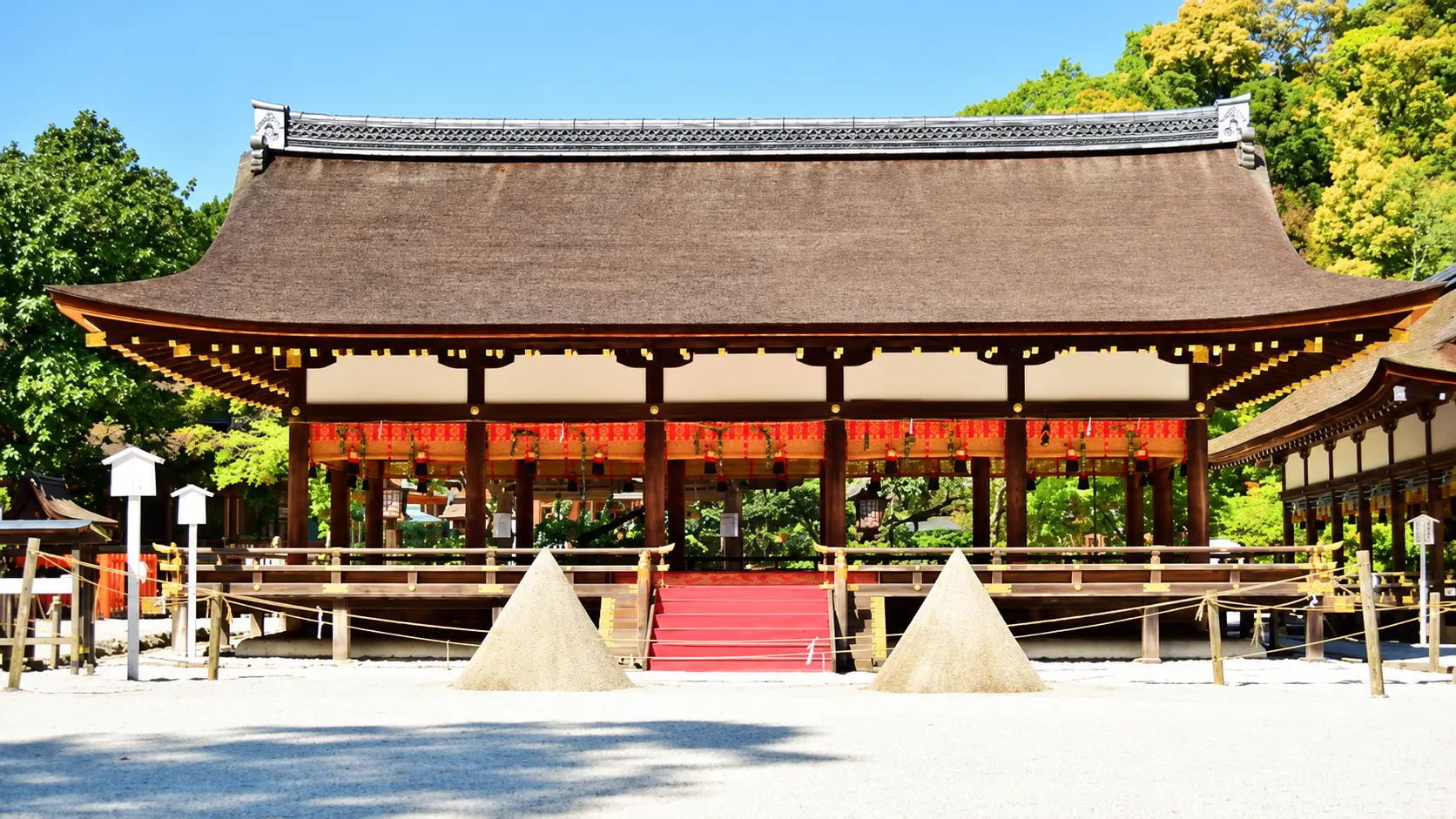
In ancient times, Kamowakeikazuchi-no-okami, the god of the shrine, descended to the mountain northwest of the main shrine, and the Kamo clan, a powerful local family, built a shrine building in 678, and it is the oldest shrine in Kyoto. The name of Kamigamo Shrine is a common name, and the official name is Kamowakeikazuchi Shrine, named after the god. The mountain of sand in the precincts is called "tate-zuna," and it resembles a sacred mountain.

Kamowakeikazuchi-no-kami is a god who purges all kinds of misfortune with his power strong enough to separate thunder. After the transfer of the capital to ancient Kyoto, Kamowakeikazuchi-no-kami was deeply worshiped by the imperial family as a god of protection for the imperial castle and a guardian of the devil's gate. The Tokugawa family, whose family crest derived from this shrine’s sacred crest, also reveres the shrine. It was the second most prestigious shrine after the Ise Jingu Shrine. Even today, Kamowakeikazuchi-no-kami is worshipped as a god of protection against bad luck, protection from all directions, protection for electricity, and a god of victory.

Surrounded by rich nature, there are more than 60 Shinto buildings in the vast precincts, two of which are designated as National Treasures and 41 as Important Cultural Properties. In 1994, the entire Shinto precincts were registered as a UNESCO World Heritage Site as one of the "Historical Monuments of Ancient Kyoto.”

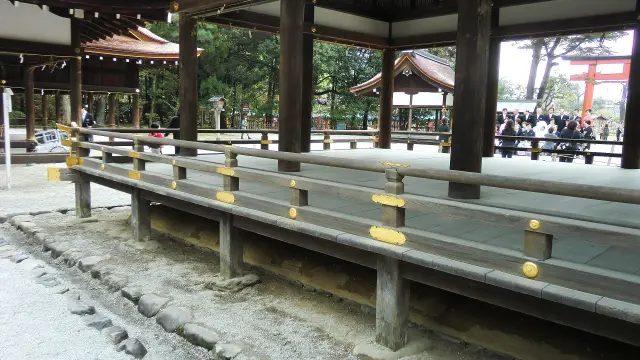
The main hall and the Gonden hall, both National Treasures, are of the Sankensha architectural style, and are said to be the prototype of Nagare-zukuri, a now typical style of shrine architecture. In front of the main hall is dedicated a painting of lion guardian dogs called "Kage-koma," which was painted by the Kano school, the largest school in the history of Japanese painting. Both the main hall and the Gonden hall are usually closed to the public, but if you apply for a special visit at the reception desk, you can visit and be guided by a priest. It is a sacred place where you can quietly hang your head and receive the blessings of the gods.

Highlights

  • The sand mounds (‘tate-zuna’) in the shape of the mountain where the gods descended.
  • The main hall, Gonden, is a National Treasure.
  • The Kamo Festival (Aoi Matsuri), an annual festival held in May.
  • The rich nature and sacred air of the temple grounds.

Photos

  • First torii gate

    First torii gate

  • A clear stream, Nara creek

    A clear stream, Nara creek

  • Sand mounds ‘tate-zuna’ in the shape of the sacred mountain

    Sand mounds ‘tate-zuna’ in the shape of the sacred mountain

  • National Treasure, Honden, and Gonden halls

    National Treasure, Honden, and Gonden halls

  • Procession of the Kamo Festival (Aoi Matsuri)

    Procession of the Kamo Festival (Aoi Matsuri)

Reviews

5

Some reviews are AI-translated.

  • See More

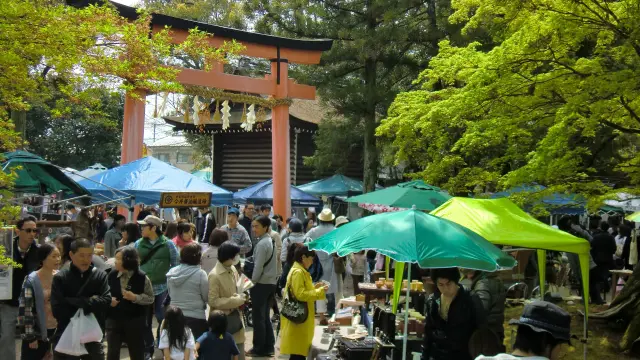
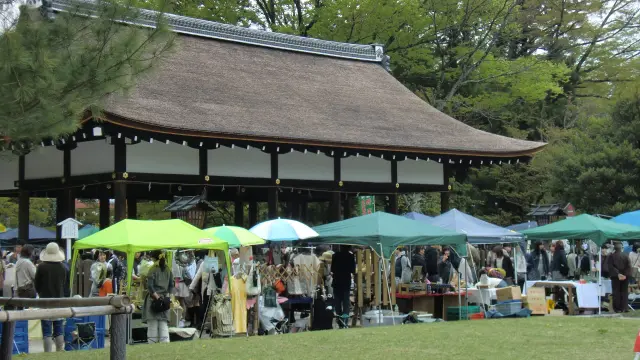
    I happened to catch the Kamigamo Handicraft Market, held at Kamigamo Shrine on the fourth Sunday of every month. I have to say, Japan's handicraft markets are really great for shopping. The vendors aren't just local Japanese people—you'll also see international artists taking part. They sell everything from fabric goods, leather items, pottery, and woodwork to household goods, and many of the pieces aren't just attractive but also highly practical. Some stalls even clear out materials or unfinished items at very reasonable prices.

    Because of that, even though I hadn't particularly planned on buying anything, I ended up shopping the whole way through. The item that left the strongest impression on me was an orange canvas bag with cowhide handles. I still use it today, and it's truly very durable. The market also has some food stalls, but they mostly sell small baked goods, coffee, and handmade snacks rather than full meals. So if you plan to stay for a while, I'd recommend eating beforehand. The market is currently held from 9:00 to 15:00 on the fourth Sunday of every month, so check the date in advance if you want to catch it.

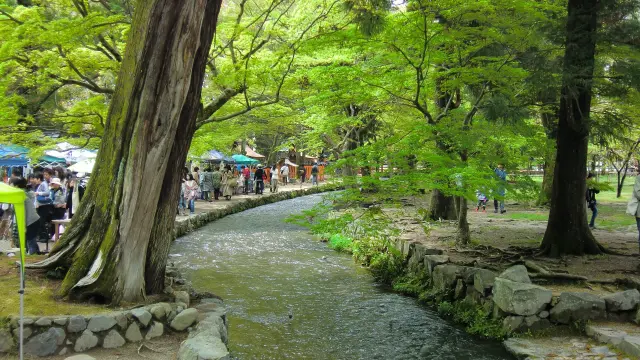
    Another thing I really like about visiting in summer is the stream that runs through the shrine grounds where the market is held. When you get hot from browsing, you can take a walk by the water. Lots of children play in the stream. If you plan to visit in summer, I'd recommend bringing an extra towel or a pair of sandals so you can play in the water more easily. After all, this kind of atmosphere is rarely seen in Taiwan.

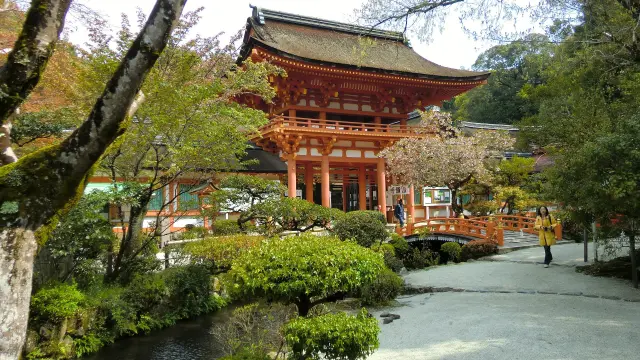
    As for the shrine itself, Kamigamo Shrine and Shimogamo Shrine are both important shrines for the Kamo Festival, also known as the Aoi Festival. Both have striking vermilion tower gates, but they felt different to me. Shimogamo Shrine's gate feels grander, while Kamigamo Shrine's feels a little more refined and elegant. That may also have something to do with the large lawns, streams, and more open surroundings.

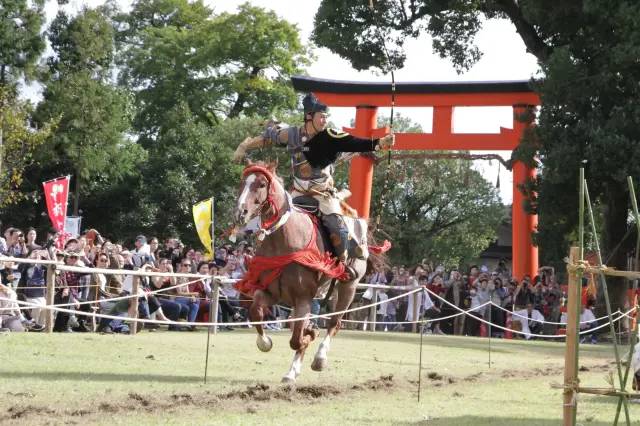
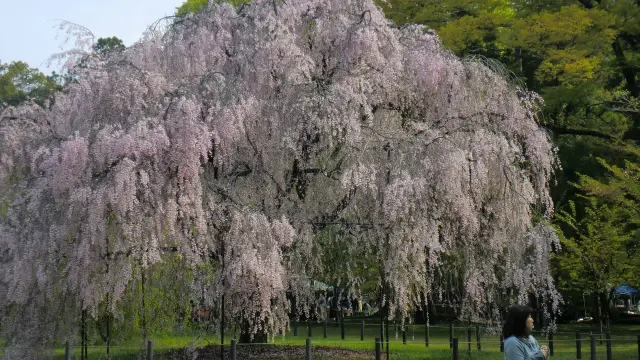
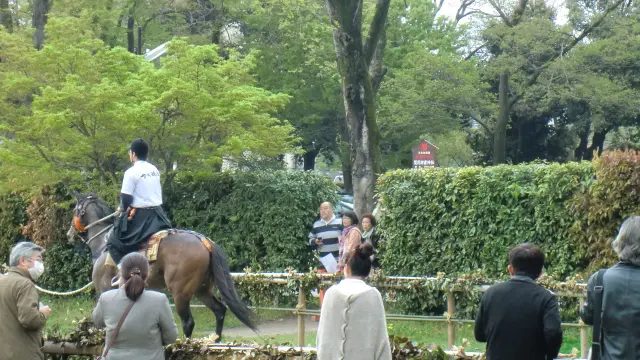
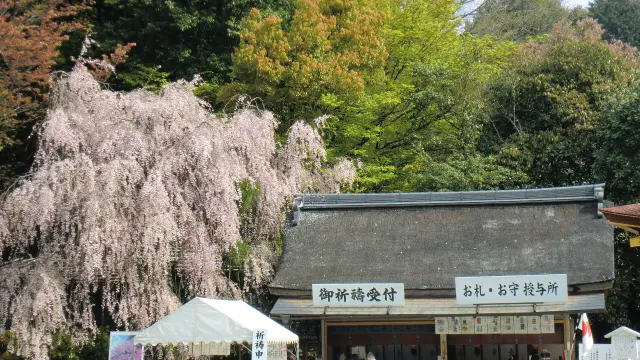
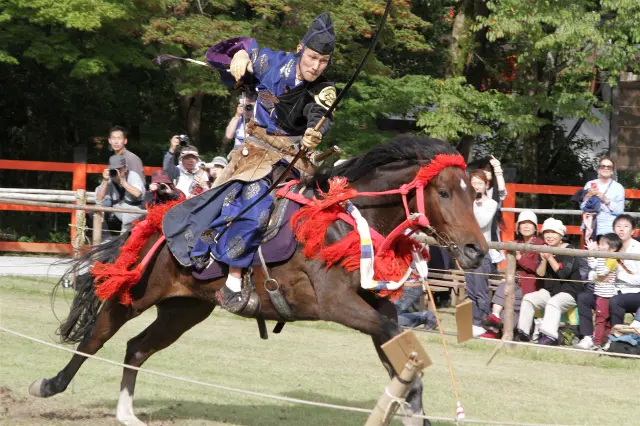
    I visited near the end of cherry blossom season, so I wasn't expecting much. To my surprise, the large weeping cherry tree on the grounds still had blossoms, so I was very lucky. It was also almost May and just before the Kamo Kurabeuma horse race, so I saw riders and horses moving around the grounds. Kamigamo Shrine's Kamo Kurabeuma is held every year on May 5 and is an ancient equestrian ritual that has continued for over 900 years. Just seeing the horses being prepared was already very impressive, though unfortunately I didn't get to see the actual event this time.

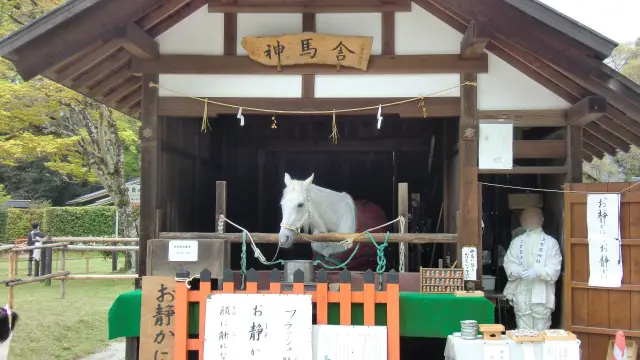
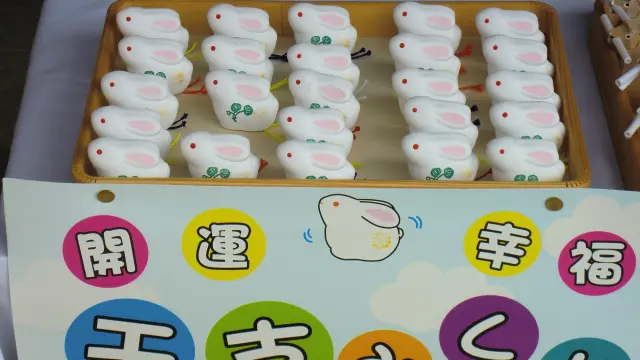
    There is also a sacred horse stable on the grounds, and I was lucky enough to see the white horse this time. Kamigamo Shrine has long had deep ties to horse worship and equestrian rituals, so everything from the sacred horse to the Kamo Kurabeuma gives this shrine a distinctive character that's less common among other shrines in Kyoto. Of the shrine items, my favorite is still the rabbit-shaped fortune slip. The tiny rabbit is truly adorable and is one of their signature items.

    Overall, I really like Kamigamo Shrine. If you happen to visit on the fourth Sunday of the month when the handicraft market is held, I highly recommend setting aside half a day to browse at a leisurely pace, plus about another hour to properly visit the shrine grounds. That will pretty much fill the day. If you're even luckier, you may come across a Shinto wedding. I saw a bride in a white shiromuku kimono here, and she fit the atmosphere of the shrine beautifully.

  • See More

    Kamigamo Shrine is one of the oldest shrines in Kyoto and is also a World Heritage Site. The grounds are lush and green, surrounded by flowing streams, with a quiet and peaceful atmosphere. It is full of history and culture, and strolling through the shrine lets you feel the unique charm of Kyoto’s ancient capital.

  • See More

    Among the many shrines in Kyoto, this one has a lot of historical significance. The grounds are spacious and it's pretty quiet, so it's a great place to relax and clear your mind.

  • See More

    Along with Matsuo Taisha and Fushimi Inari Shrine, this is one of Kyoto's three oldest shrines, with over 2,000 years of history. There are more than thirty ancient buildings, creating a simple and elegant atmosphere.

  • See More

    There's a lively handmade market held here once a month.

Details

Name in Japanese
賀茂別雷神社(上賀茂神社)
Postal Code
603-8047
Address
339 Kamigamomotoyama, Kita-ku, Kyoto City, Kyoto
Telephone
075-781-0011
Holiday
Open every day
Hours
Ninotorii 5:30am - 5:00pm, Tower Gate and Awarding Office 8:00am - 4:45pm, Special Worship 10:00am - 4:00pm (4:30pm on weekends and holidays)
Admission
Free admission to the precincts, special admission 500 yen
Directions
(1) From Kitayama Station on the Kyoto Municipal Subway Karasuma Line, take the city bus and get off at Kamigamo-jinja Mae Stop.
(2) From Kitaoji Station on the Kyoto Municipal Subway Karasuma Line, take the city bus to Misonoguchi Stop.
Credit Cards
Not accepted
Official Website
Official Website (English)
Hokkaido Tohoku Kanto Chubu Hokuriku Kansai Chugoku Shikoku Kyushu Okinawa