
![[World Heritage] Toshodai-ji Temple Visitor Guide: Highlights and Essential Info Before You Go](https://static.gltjp.com/glt/data/article/22000/21056/20250623_171850_291d61be_w1920.webp)
[World Heritage] Toshodai-ji Temple Visitor Guide: Highlights and Essential Info Before You Go
Toshodai-ji Temple, the head temple of the Ritsu sect, is one of the most important historic temples in Japanese Buddhist history.
It is home to a remarkable collection of cultural properties that preserve architecture and Buddhist art from the Nara period (710–794), and it is also part of the UNESCO World Heritage site “Historic Monuments of Ancient Nara.”
This article introduces the overview, history, and highlights of Toshodai-ji Temple.
It also brings together useful information, including goshuin stamp features and the best season to visit, so first-time visitors can make the most of their trip.
What is Toshodai-ji Temple Like?
Located in Nara City, Nara Prefecture, Toshodai-ji Temple is the head temple of the Ritsu sect, one of the Six Schools of Nanto Buddhism.
It was founded in 759 by the eminent Chinese monk Ganjin Wajo, who came to Japan from Tang China to transmit the proper Buddhist precepts.
Many Buddhist statues and buildings designated as National Treasures and Important Cultural Properties still remain, including the Kondo Hall and Kodo Hall built in the Nara period.
In 1998, it was also registered as part of the UNESCO World Heritage site “Historic Monuments of Ancient Nara.”
Even today, the temple retains the atmosphere of its early days, and its solemn grounds offer a chance to experience Tang-style architecture that strongly reflects Tenpyo culture, along with the history connected to Ganjin Wajo.
The seasonal gardens, the temple buildings standing beautifully against the blue sky, and traditional events held throughout the year are also highlights.
The principal image is the seated Rushana Buddha, which represents the truth of the universe.
It is believed to grant peace and well-being, and worshippers come to pray for blessings such as peace of mind and family harmony.

The Origins of Toshodai-ji Temple
Overcoming repeated failed attempts and even blindness, Ganjin Wajo finally arrived in Japan in 745 on his sixth voyage.
At the time, Japan had no officially recognized ordination master, a monk qualified to confer Buddhist precepts, so his arrival held great significance for the training of monks and the development of Buddhism.
Later, he was granted the former residence site of Prince Nitabe by the imperial court, and in 759 he opened a private training temple called “Toritsu Shodai.”
At first, it was modest and consisted only of structures such as the scripture storehouse and treasure storehouse, but it functioned as a place to learn Ganjin Wajo’s teachings and precepts and trained many monks.
After Ganjin Wajo’s death, it is said that thanks to the efforts of his disciple Nyoho and others, the Kondo Hall was completed in the late 8th century, the temple complex was fully arranged, and the temple was renamed “Toshodai-ji” after being granted official government recognition. Since then, it has been rebuilt and restored through changing eras to reach its present form.
Access to Toshodai-ji Temple
Below is a summary of how to get to Toshodai-ji Temple starting from JR Nara Station, a main transportation hub for sightseeing in Nara.
If you take a route bus, you can get there directly without transfers and stop right in front of the temple, but buses run only about once every 30 minutes, so checking the timetable in advance is recommended.
You can also access the temple in the same way by taking the listed bus from Kintetsu Nara Station.
By the way, the nearest station to Toshodai-ji Temple is Kintetsu Nishinokyo Station, which is about a 10-minute walk away.
Since Yakushi-ji Temple, another World Heritage site, is also nearby, it is also recommended to visit both temples while enjoying a stroll through the surrounding streets.
- Route
-
1. Walk from JR Nara Station to JR Nara Station East Exit, Bus Stop No. 6.
2. From JR Nara Station East Exit, Bus Stop No. 6, take Nara Kotsu Bus Route 78 bound for Nara Prefectural General Medical Center, get off at “Toshodaiji,” and walk 1 minute
*You can also take Nara Kotsu Bus Route 98 bound for Horyuji-mae and get off at “Toshodaiji Higashiguchi” - Travel Time
- Approx. 25 minutes
Admission Fee and Visiting Hours at Toshodai-ji Temple
Hours at Toshodai-ji Temple are 8:30am–5:00pm. Reception closes at 4:30pm.
Admission is as follows.
- Adults, University Students
- 1,000 yen
- High School Students
- 400 yen
- Junior High School Students
- 400 yen
- Elementary School Students
- 200 yen
What Is the Best Season to Visit Toshodai-ji Temple?
Spring is the best season to visit Toshodai-ji Temple.
A major reason is the rare and celebrated flower known as keika, which was gifted from Yangzhou in China, the hometown of Ganjin Wajo.
From late April to early May, during the best viewing season, a special opening of the Keika Garden is held, allowing visitors to enjoy the delicate white keika flowers, which resemble lacecap hydrangeas, blooming in the Goeido Kuge-en Garden, an area that is usually closed to the public.
You can also admire picturesque scenery where pale seasonal flowers and fresh greenery harmonize with the historic temple buildings and precincts.
In a space wrapped in tranquility, visitors can spend a relaxing moment surrounded by the soft light of spring and the fragrance of keika flowers.

Don’t Miss These! 5 Highlights of Toshodai-ji Temple
Toshodai-ji Temple is home to a great number of valuable structures that preserve its history and traditions, including National Treasures and Important Cultural Properties.
Here, we will introduce five especially recommended highlights.
Each one is a highly valuable spot where you can see architectural styles and culture found only here, including the oldest buildings and the only surviving remains of their kind.
Use this guide as a reference when you visit Toshodai-ji Temple, and make sure not to miss them.
1. Kondo Hall
The National Treasure Kondo Hall is the only surviving Kondo Hall built in the Nara period, making it an extremely valuable structure.
It is the central building of the temple, a space where Buddhist statues are enshrined and where monks and worshippers study Buddhist teachings and offer prayers.
Its solid hipped roof structure with hon-gawara roof tiles reflects Tang-style design while also showing a beauty adapted to Japan’s climate, and it is characterized by its imposing façade with seven bays across the front and four bays in depth.
Inside the hall, softly lit by natural light, National Treasure Buddhist statues including the principal seated Rushana Buddha, Yakushi Nyorai, and Senju Kannon stand in a row, preserving the solemn atmosphere of the Tenpyo period (729–749) to this day.
Be sure to take in the simple yet powerful spirit of Toshodai-ji Temple and feel the history that has endured for Approx. 1,300 years.

2. Kyozo
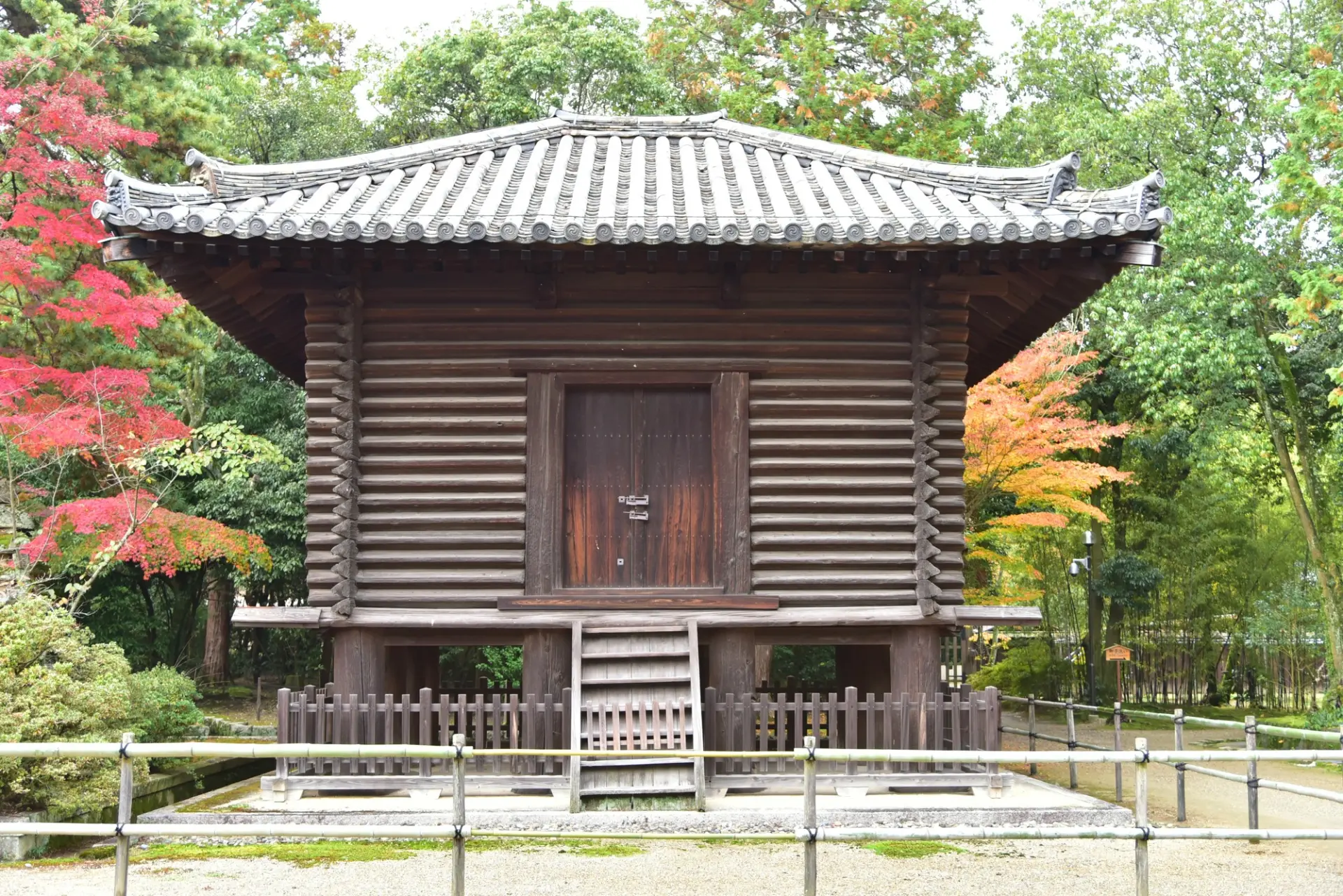
The National Treasure Kyozo is the oldest building at Toshodai-ji Temple and the oldest surviving azekura-style structure in Japan, a construction method in which timbers are stacked horizontally.
It was created by remodeling a rice storehouse from the residence of Prince Nitabe that existed before the temple was founded, and it features a simple gabled structure with hon-gawara roof tiles.
Incidentally, “kyozo” refers to a building used to store Buddhist scriptures and temple treasures, and its main role is to pass Buddhist teachings on to future generations.
Its greatest appeal is that you can closely observe an azekura-style structure said to be older than the Shosoin Repository.
The building has an overall air of serenity, and the bracket complexes on the pillars and beams as well as the wood grain convey the dignity that comes with great age.
The Hozo Treasure House to the north is also worth seeing, and the sight of it standing alongside the Kyozo is beautiful.
3. Korou
The National Treasure Korou, built in 1240, is the only two-story tower building in the temple grounds.
Located between the Kondo Hall and the Kodo Hall, it is known for its rare Shin-Wayo style, based mainly on traditional Japanese architecture while also incorporating Daibutsuyo (also called Tenjikuyo) elements from the Kamakura period.
Both stories have verandas and balustrades, the walls are made up of doors and lattice windows, and inside the hall’s zushi shrine is the National Treasure Kinki Sharito, a reliquary shaped like a tower mounted on a golden turtle.
Originally, a “korou” is a structure paired with a bell tower, mainly used for beating drums to announce services or the time.
However, at Toshodai-ji Temple, instead of a drum, it enshrines sacred Buddhist relics brought from Tang China by Ganjin Wajo, so it is also often called the “Shariden.”

4. Kodo Hall
The National Treasure Kodo Hall is a building relocated from the Higashi Choshuden Hall of Heijo Palace.
When it was moved, it was remodeled into an irimoya-style roof to suit temple use, fitted with a ceiling that reveals the deep attic space, and given windows and entrances, creating an open interior.
By the way, a “kodo” is a place where monks study Buddhist doctrine and hold discussions and services.
Its present appearance is said to have been greatly shaped by repairs made during the Kamakura period (1185–1333), but as the only surviving palace architecture from the Nara period, it is an extremely valuable building that still preserves the atmosphere of that time.
Inside are enshrined the Important Cultural Property seated Miroku Nyorai, the principal image from the Kamakura period, as well as National Treasure standing statues of Jikokuten and Zochoten from the Nara period.
It is a special place where you can feel the historic atmosphere of a hall that long served as a place of learning, as well as the changes and fusion of architectural techniques across different periods.

5. Kaisando Hall
Originally, Kaisando Hall was built in the Genroku era (1688–1704) as a spirit hall enshrining successive Tokugawa shoguns, and in 1881 it was relocated to its present site to house a revered image of Ganjin Wajo.
Later, when the image of Ganjin Wajo was moved to the Miedo Hall, it was renamed Hongan-den and came to enshrine Tokugawa Ieyasu and others.
In 2013, the name was changed back to Kaisando Hall, and today it enshrines a substitute image representing Ganjin Wajo’s form.
One of the attractions of Kaisando Hall is that visitors can view an image of Ganjin Wajo at any time along with its historic architectural style. (Except during special periods, the seated statue of Ganjin Wajo cannot be viewed.)
The interior is wrapped in a tranquil atmosphere, and the contrast with the surrounding moss garden is also beautiful.
It is a good place to offer thanks for Ganjin Wajo’s great achievements and contributions to Japanese Buddhism, while paying respects in remembrance.

Can You Get a Goshuin at Toshodai-ji Temple?
A goshuin is a temple or shrine seal and calligraphy inscription received as proof of worship or as part of religious practice.
At Toshodai-ji Temple, you can mainly receive the following four types of goshuin.
- Rushana Buddha Goshuin
-
A representative goshuin of Toshodai-ji Temple. It features brush-written “Rushana Buddha,” the principal image of the Kondo Hall, with the temple name and seal stamped in the center.
There is also a version that doubles as the goshuin for the 26th sacred site of the Northern Yamato 88-Temple Pilgrimage. - Senju Kannon Goshuin
- This goshuin bears brush-written “Senju Kannon” and the temple seal for the Senju Kannon enshrined in the Kondo Hall.
- Ganjin Wajo Goshuin
- A goshuin honoring the spirit of the temple’s founder, Ganjin Wajo. It is distinguished by a seal impression depicting his figure.
- Lotus Road (Rengezo) Goshuin *Limited time only
- A special goshuin with layered lotus designs, enjoyed by visiting four temples: Toshodai-ji, Saidai-ji, Kikou-ji, and Yakushi-ji.
These are granted at the goshuin office (nokyojo) next to the shop in the temple grounds, and for an offering of 500 yen, you can receive either a pre-written version or one written directly for you.
Buying Toshodai-ji Temple’s original goshuin book is also recommended.


Perfect as a Souvenir or Travel Memento! Items to Buy at Toshodai-ji Temple
The shop at Toshodai-ji Temple sells not only amulets but also a variety of other items.
Here are two products that attract particular attention.
Both are perfect as souvenirs or travel keepsakes, so if anything catches your eye, be sure to pick it up when you visit.
Incense, Deeply Connected to Toshodai-ji Temple and Ganjin Wajo
One especially recommended souvenir is incense, which lets you feel the temple’s history and tradition.
Ganjin Wajo is known not only for transmitting Buddhist culture, but also for introducing incense blending methods, aromatic materials, and herbal medicine to Japan.
At Toshodai-ji Temple, the following four kinds of incense, all deeply connected to Ganjin Wajo, are sold and are also very popular with visitors.
- Tenpyo Incense Keika
- Incense recreating keika, the famous flower of Yangzhou, the hometown of Ganjin Wajo, featuring a refreshing fragrance that balances coolness and sweetness
- Tenpyo Incense Jinko
- Made mainly with jinko, also used medicinally, and known for its deep and elegant fragrance
- Toshodai-ji Temple Lotus Incense
- Incense blended with the seeds of double-petaled crimson lotus flowers, featuring a dignified fragrance woven from elegance and sweetness
- Toshodai-ji Temple Blue Lotus Incense
- Incense blended with the seeds of single-petaled blue lotus flowers (greenish white), featuring a transparent floral fragrance

Hosen Fans, Said to Bring Various Blessings
A “Hosen” is a special heart-shaped fan.
There are various theories about its origin, but it is said to have begun as a fan offered by nuns of Hokke-ji Temple in memory of the teachings of Kakujo Shonin, the Kamakura-period restorer of the temple, so they could brush away mosquitoes without killing them.
Toshodai-ji Temple’s Hosen fans are handcrafted one by one inside the temple using Japanese paper, and are printed with Sanskrit characters representing the mantras of Senju Kannon and Ususama Myoo. They are known for blessings such as protection from evil, warding off illness, and repelling insects.
At the “Uchiwamaki” memorial service held every year on May 19, these fans are scattered to worshippers while prayers are offered for good health and good fortune in the coming year.
It is a seasonal tradition that colors early summer in Nara, drawing many worshippers who gather to receive one in a festive atmosphere. *They can also be purchased at the shop during regular periods

3 Nearby Attractions to Visit Along with Toshodai-ji Temple
Lastly, here are three recommended sightseeing spots near Toshodai-ji Temple.
All of them are popular places where anyone can enjoy experiencing the history, culture, and traditions unique to Nara.
Since each is a highly popular spot, be sure to visit them together with Toshodai-ji Temple to make your trip even more fulfilling.
1. Yakushi-ji Temple
The head temple of the Hosso sect, registered as a UNESCO World Heritage Site as part of the “Historic Monuments of Ancient Nara.”
It was the first in Japan to adopt the “Yakushi-ji-style temple layout,” with the Kondo Hall enshrining the principal image at the center, flanked by pagodas on both sides and enclosed by corridors. It is also known for the “Ryugu-zukuri” architectural style, in which decorative pent roofs called mokoshi are added to Buddhist halls and pagodas, making them appear more multi-storied than they really are and giving them a magnificent impression.

2. Heijo Palace Site Historical Park
This area prospered as Japan’s capital after the transfer of the capital to Heijo-kyo in 710. It is said that more than 100,000 people once lived in this large-scale capital, modeled after Chang’an, the capital of Tang China, with a total area of about 2,500 hectares. “Heijo Palace” was the core facility of Heijo-kyo, where political affairs and official events were conducted as the emperor’s residence.
Today, reconstructed Suzaku Gate, the Former Imperial Audience Hall, the South Gate of the Former Imperial Audience Hall Compound (currently under reconstruction), the Later Imperial Audience Hall, and the East Palace Garden are preserved and maintained as Heijo Palace Site Historical Park.

3. Nara Kingyo Museum
One of Japan’s largest goldfish museums, established in Nara Prefecture, an area known as one of the country’s leading goldfish production regions. Inside the sightseeing-oriented commercial complex Mi Nara, visitors can enjoy a cutting-edge “entertainment aquarium” created by up-and-coming artists.
You can explore distinctive areas such as “JAPANESE AQUARIUM DISCO,” which adds stained glass and mirror ball effects to the world’s first diamond-cut aquarium tanks, and “JAPONE Alley,” which recreates an Edo-period townscape with 21 Japanese umbrellas and alluring lighting, allowing visitors to enjoy the beauty of Japan.

3 Popular Restaurants Near Toshodai-ji Temple
After visiting historic Toshodai-ji Temple, it is nice to take a relaxing break at a nearby spot.
We selected popular places that are easy to stop by before or after your visit, including calm cafés and sweets made with local ingredients.
Here are some shops that can add a leisurely touch to your trip along with temple-hopping.
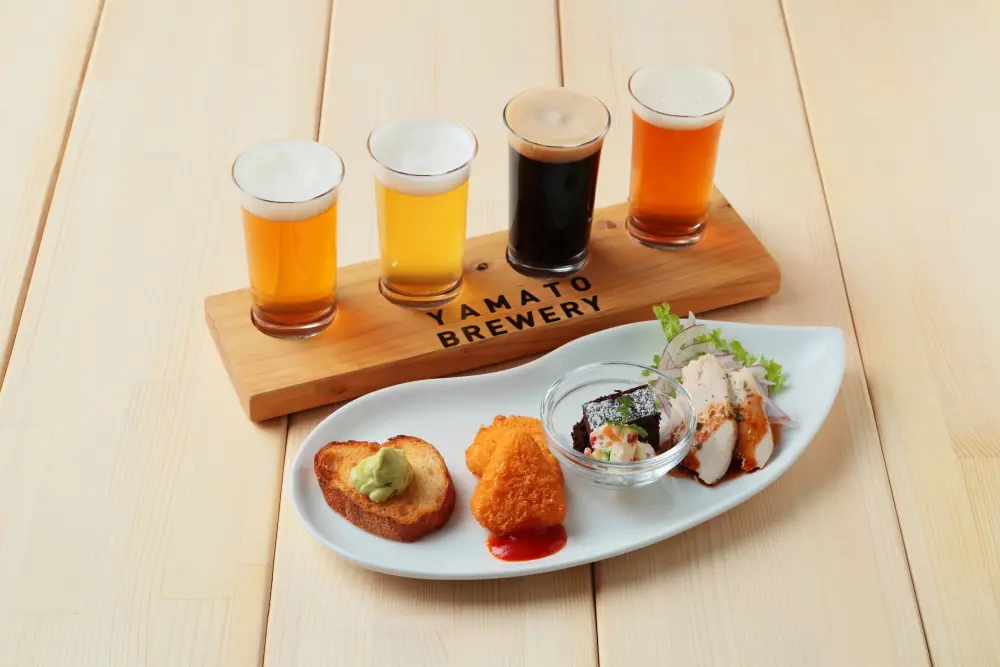
1. YAMATO Craft beer table Nara Sanjo Branch
A directly operated restaurant of the craft beer brand “Yamato Brewery.”
Located along Sanjo-dori Street, it is conveniently close to both JR Nara Station and Kintetsu Nara Station, making it easy to stop by between sightseeing spots.
It serves more than 10 kinds of carefully selected craft beers at all times, including the original craft beer “Hajimari no Oto,” brewed at the brewery in front of Kintetsu Nara Station. The food menu is also extensive.
Its authentic dishes, such as oven-baked pizza cooked at a high temperature of Approx. 200 degrees and spare ribs slowly cooked at low temperature to lock in the meat’s flavor, pair perfectly with craft beer.
2. Yoshino Honkuzu Tengyokudo Nara Main Store
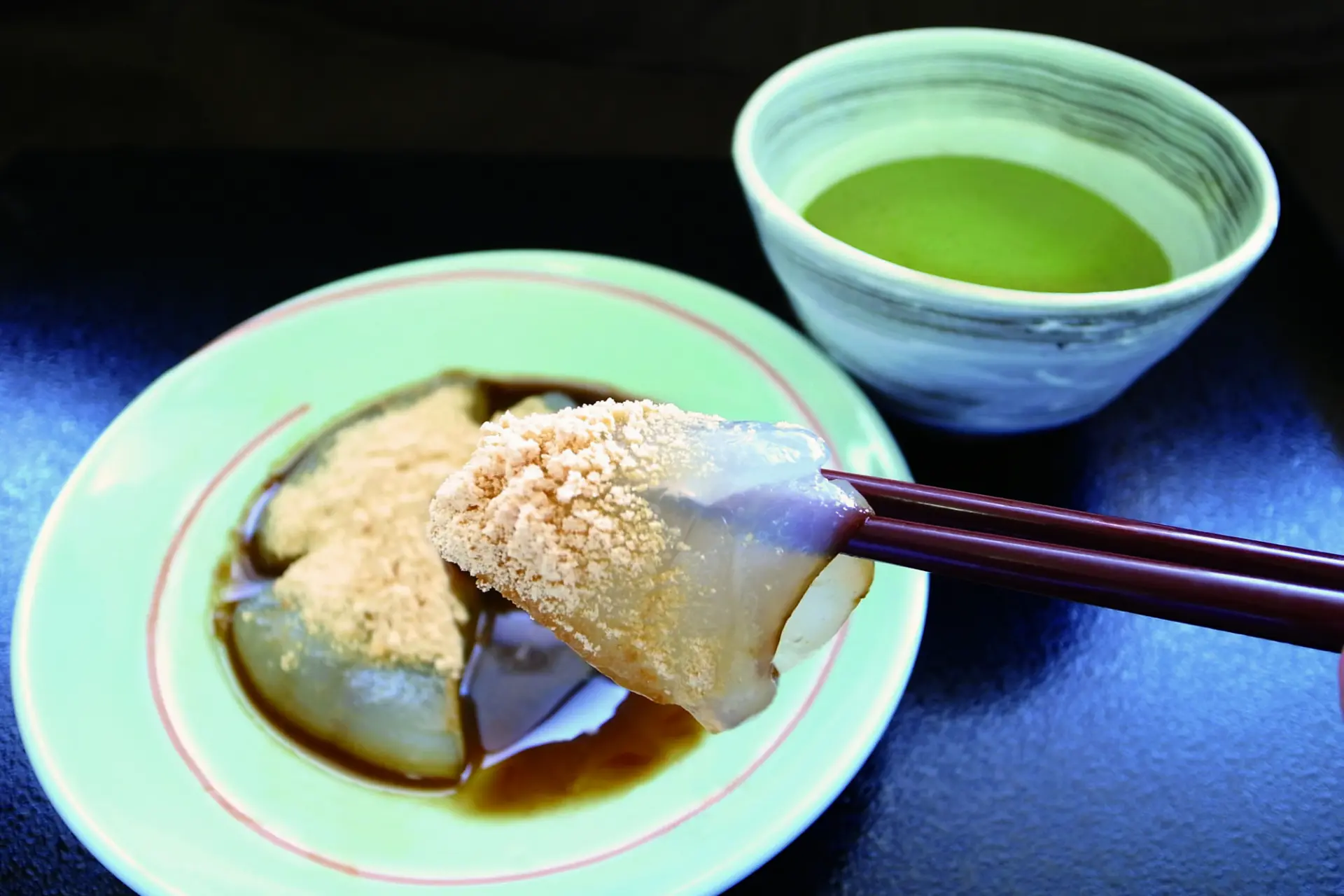
A directly operated shop of Inoue Tengyokudo, which has produced Yoshino honkuzu in the former Kuzu village of Gose City, Nara Prefecture, since 1870.
This specialty kuzu shop stands at the former site of the west gate of Todai-ji Temple, famous for the Great Buddha, and offers dishes and sweets made with kuzu.
Tengyokudo Nara Main Store uses Yoshino honkuzu refined by the “Yoshinozarashi” method, preserved since the company’s founding.
Freshly made kuzumochi with an irresistibly soft, jiggly texture and smooth, chewy kuzukiri are served ready to enjoy.
You can also try a wide variety of dishes, including sesame tofu that makes the most of Yoshino honkuzu’s elasticity and healthy kuzu porridge.
3. IRACA COFFEE
Heijo Palace Site Historical Park is a national park spread across the Heijo Palace Site, one of the component assets of the UNESCO World Heritage site “Historic Monuments of Ancient Nara” and one of Japan’s leading historic and cultural treasures.
Inside the park, “Suzakumon Hiroba,” which opened in March 2018, features five buildings organized around the themes of history, culture, and food.
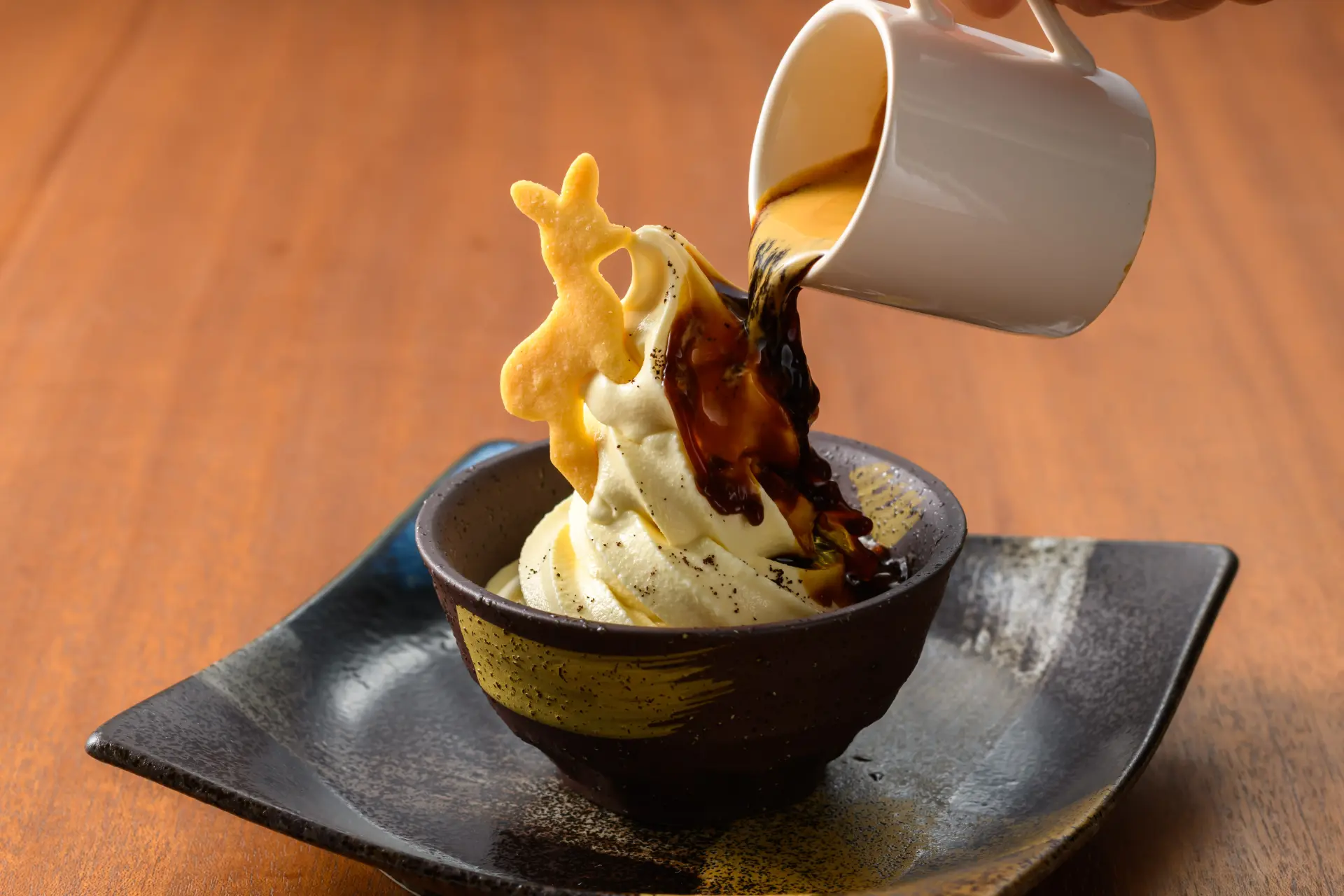
One of them is “Tenpyo Umashi-kan,” a food-themed building home to the café IRACA COFFEE, where you can enjoy espresso and drip coffee.
Using mainly beans from Japanese roasters and equipped with Japan’s first high-performance latte art machine, the café serves cups that are authentic both in taste and appearance.
3 Recommended Places to Stay Near Toshodai-ji Temple
From the accommodations scattered around Toshodai-ji Temple, here are a few especially recommended places to stay.
Each one lets you enjoy the distinctive atmosphere of Nara, making them great bases for sightseeing.
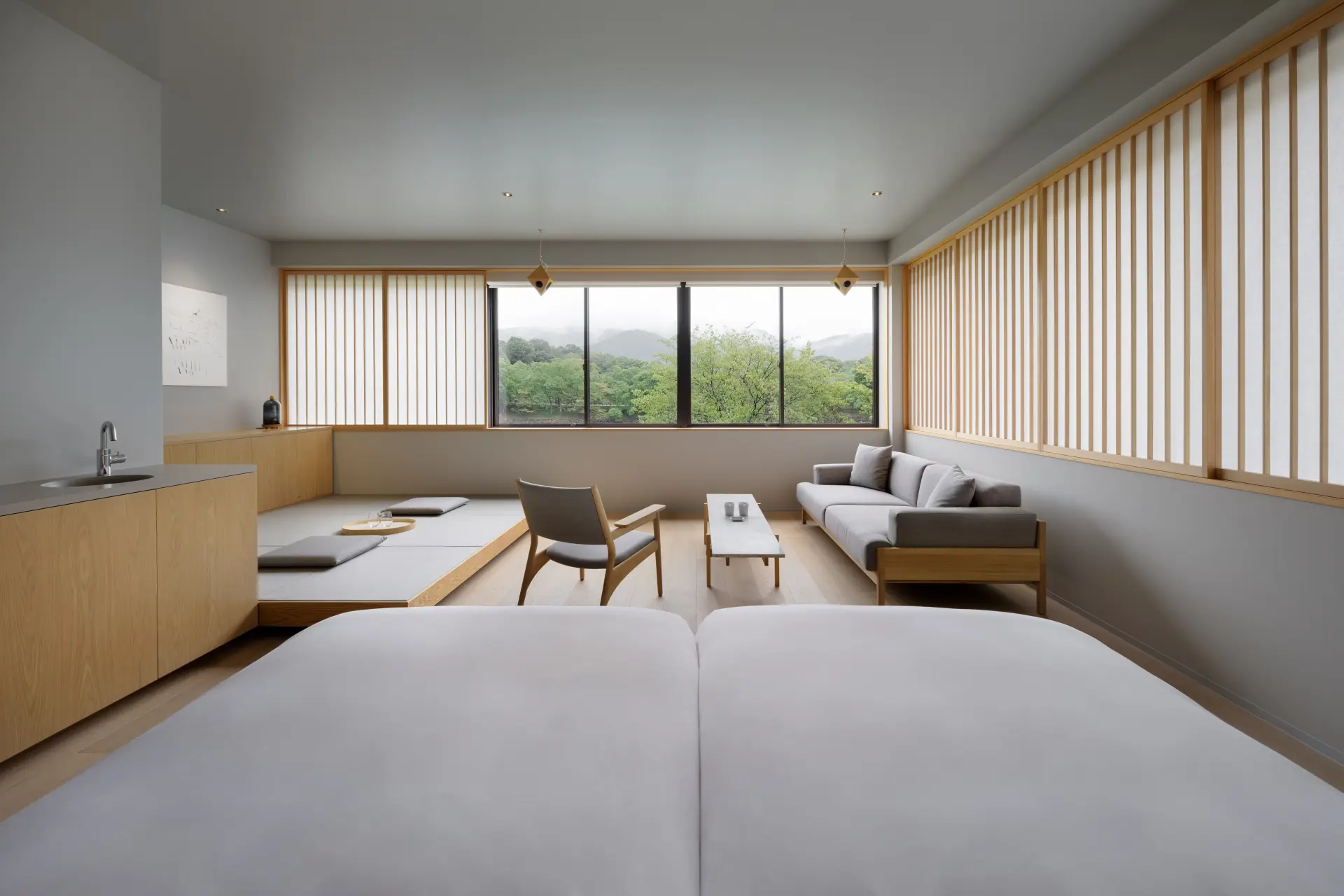
1. MIROKU NARA by THE SHARE HOTELS
The ninth property of the lifestyle hotel brand THE SHARE HOTELS, opened in September 2021 by the Arike Pond at the southern edge of Nara Park. The name “MIROKU” comes from Nara’s beautiful foothills and deer (“Mi” for beauty + “roku” evoking foothills and deer), as well as Miroku Bosatsu, the Buddha believed to save people in the future.
The location is excellent, with Nara Park to the north and Naramachi to the west, where the natural beauty and townscape of the ancient capital come together.
The Nara-like views overlooking the five-story pagoda of the World Heritage site Kofuku-ji Temple and the Kasugayama Primeval Forest are also exceptional.
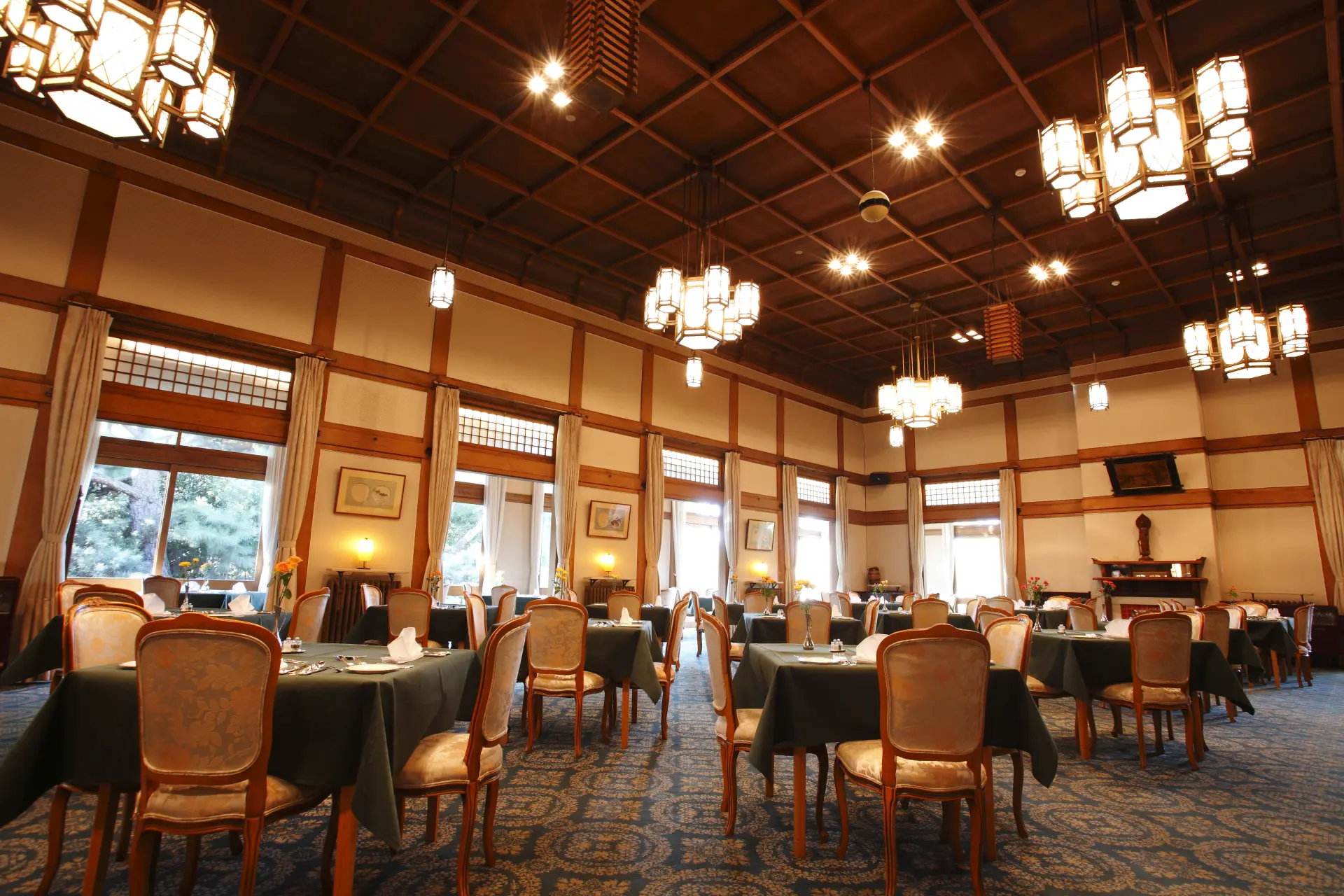
2. Nara Hotel
Opened in 1909 as the “Guest House of Kansai” within Nara Park.
It is a hotel with more than 100 years of history, having welcomed distinguished guests and notable figures from Japan and abroad since its founding.
Today, it consists of two buildings, the Main Building and the New Building, each offering guests a different atmosphere.
The Main Building, which strongly preserves the appearance of the hotel’s founding days throughout, was designed by architect Kingo Tatsuno.
Built in a Momoyama-style cypress design, it allows guests to feel the atmosphere of the time through details such as carpets with hōsōge floral patterns and fireplaces.
The New Building, built in 1984, is characterized by spaces where guests can enjoy a sense of nature, including views of a lush Japanese garden from every room.
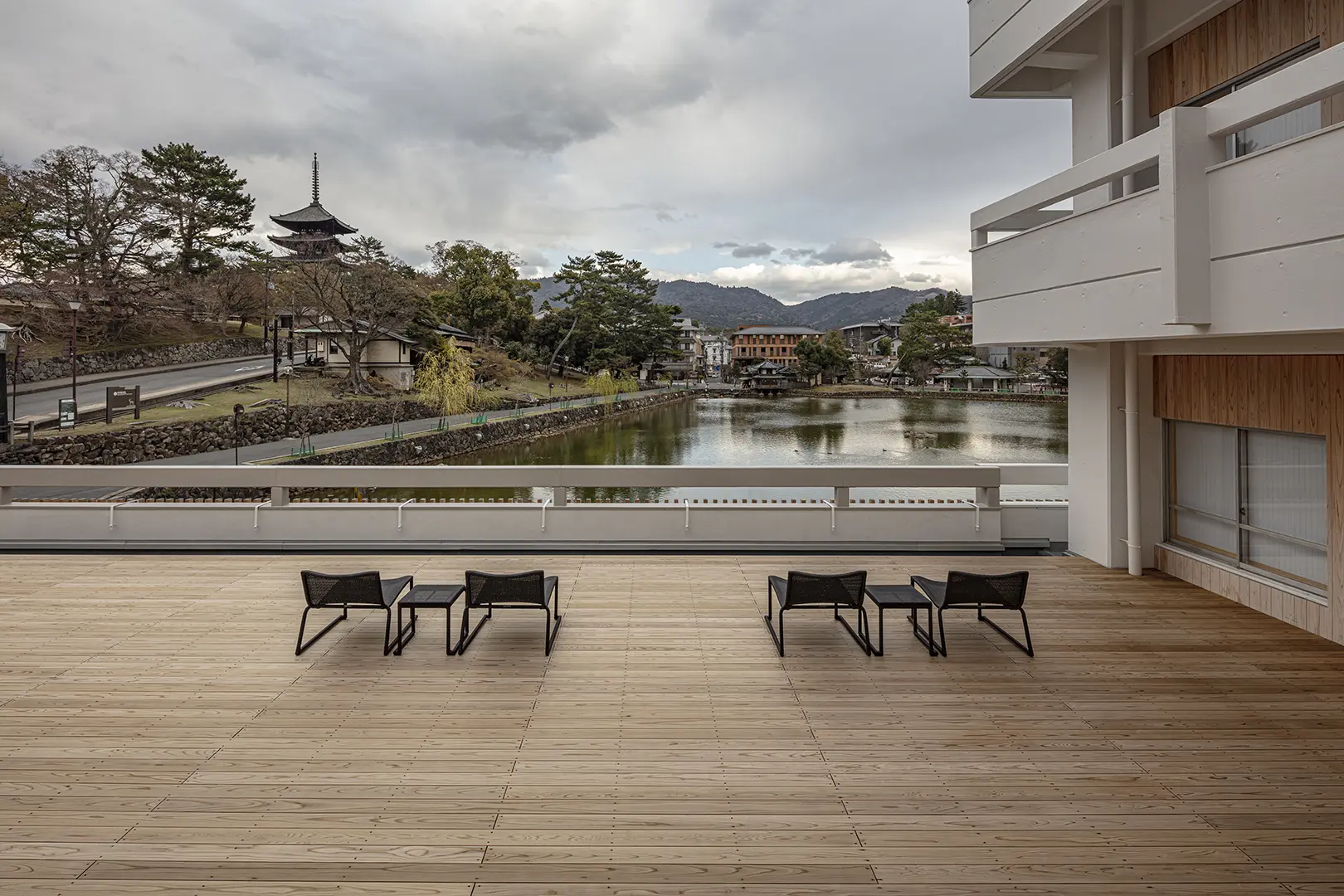
3. Hotel Tenpyo Naramachi
A gallery hotel themed around calligraphy, standing by Sarusawa Pond near Kofuku-ji Temple, one of the World Heritage “Historic Monuments of Ancient Nara.”
Each of its 44 guest rooms is decorated with works such as waka poems and passages from rakugo connected to Nara, written by monks from famous temples, rakugo performers, calligraphers, and artists.
As a gallery hotel, it displays a variety of artworks throughout the building.
The lobby is subtly arranged with folding screens, armor, and a tea room, giving it the feel of an art museum filled with Japanese atmosphere.
FAQ about Toshodai-ji Temple
Q
Who built Toshodai-ji Temple?
It was built in 759 by the eminent Tang monk Ganjin Wajo.
Q
What is Yakushi Nyorai?
Yakushi Nyorai is a Buddha who holds a medicine jar and is believed to heal illness and protect physical and mental health. As the lord of the Eastern Pure Lapis Lazuli World, Yakushi Nyorai is widely worshipped as the “Medicine Buddha.”
Summary
This article has introduced the origins and highlights of Toshodai-ji Temple, along with popular attractions nearby.
One of the temple’s greatest charms is its atmosphere, which lets visitors feel more than 1,300 years of history.
Within the grounds, the quiet air and seasonal garden scenery help calm the mind, while visitors can view National Treasures and Important Cultural Properties, including some of Japan’s oldest surviving buildings and dignified Tang-style architecture.
Be sure to visit Toshodai-ji Temple as well as the other World Heritage Historic Monuments of Ancient Nara to fully experience the depth of Buddhist culture.
Also check out this article, which brings together the essential information you need to enjoy sightseeing in Nara, including classic attractions, recommended food, and places to stay.