

Nara Park Travel Guide: Stroll Through a Scenic Blend of History and Nature
Nara Park is one of Nara’s most popular sightseeing spots.
Its grounds are scattered with precious historical and cultural landmarks, letting you enjoy Japan’s history—older than Kyoto’s—along with seasonal natural scenery.
Approx. 1,300 deer live in the park, and one of the highlights is feeding them deer crackers, interacting up close, and taking photos together.
The park is huge and packed with things to see, so visiting all the major spots can take a full day.
That said, if you narrow down where you want to go and plan efficiently, you can still enjoy it in half a day.
This article introduces Nara Park’s key details, can’t-miss highlights, and tips to help you enjoy your visit even more.
Read to the end, and you should be able to enjoy Nara Park efficiently.
What is Nara Park Like?
Nara Park is located in Nara City, Nara Prefecture, and spans a vast Approx. 5.11 km².
It’s not only designated as a National Scenic Beauty, but some of the historic buildings scattered throughout the park are also registered as a World Heritage site as part of the “Historic Monuments of Ancient Nara.”
In particular, Todaiji Temple—home to the “Great Buddha of Nara”—as well as the World Heritage sites Kasuga Taisha Shrine and Kofukuji Temple are must-sees.
Its abundant nature is also a major draw, with many places designated as Natural Monuments of Japan, including the Kasugayama Primeval Forest and the Nagi grove within the Kasuga Taisha grounds.
Another defining feature of Nara Park is the chance to interact with the deer that live here.
Events and festivals are held throughout the year, including the “Light-up Promenade,” “Deer Antler Cutting,” and “Wakakusa Mountain Burning.”

Access to Nara Park
The two main transportation hubs for sightseeing in Nara are JR Nara Station and Kintetsu Nara Station.
If you’re heading straight to Nara Park, we recommend using Kintetsu Nara Station, which is within walking distance.
You can reach Nara Park within 10 minutes after leaving the station.
On the other hand, it takes Approx. 20 minutes on foot from JR Nara Station to Nara Park, so taking a bus is a good idea.
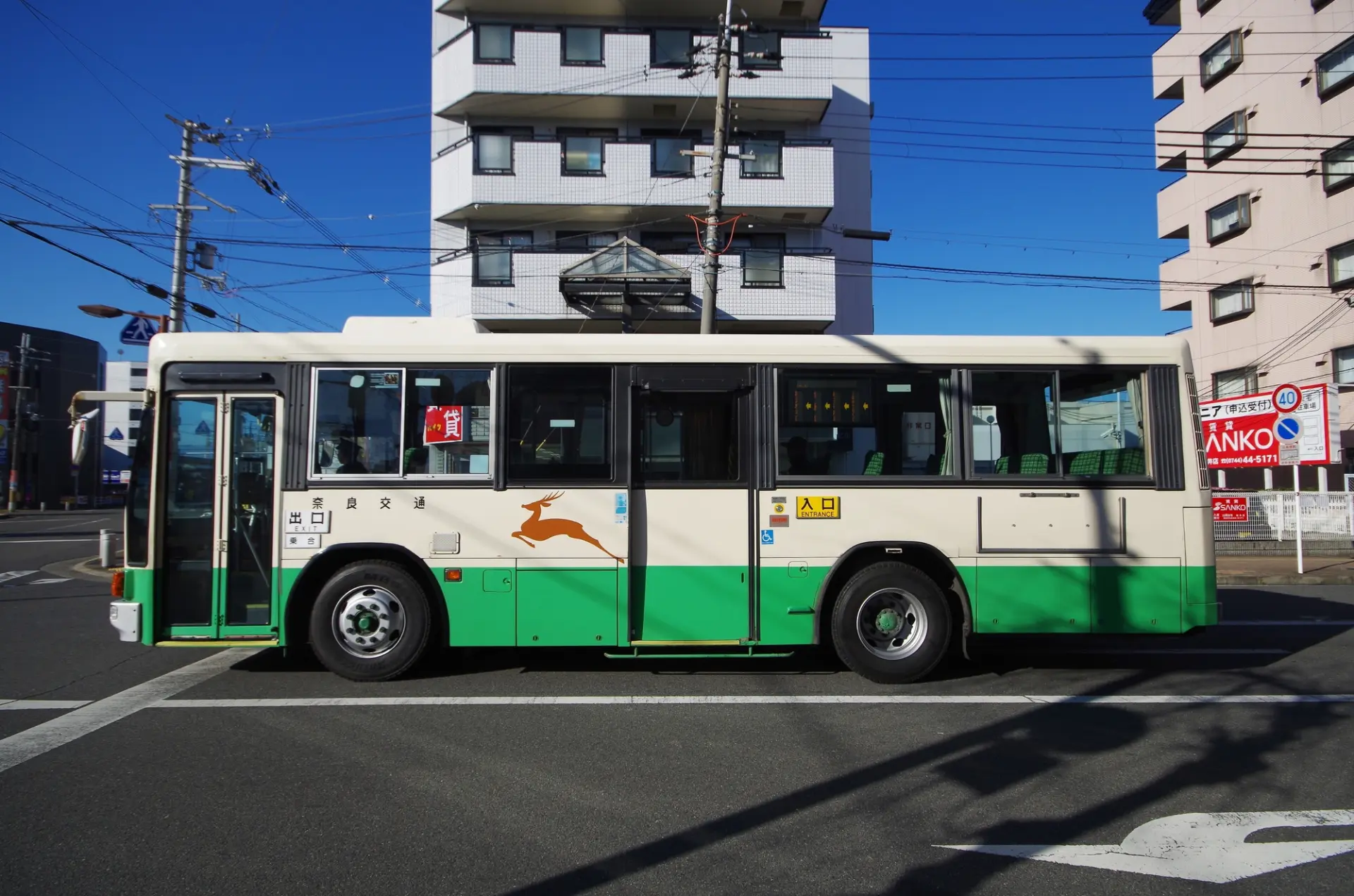
On weekdays, Nara Kotsu buses run, and on Saturdays, Sundays, and holidays, the “Gurutto Bus” also operates.
Either way, it’s 250 yen one way and takes around 15 minutes, so choose the one that best fits your arrival time.
Access from Kyoto to Nara
From Kyoto Station to Kintetsu Nara Station, the fastest option is the Kintetsu Kyoto Line Limited Express (bound for Kintetsu Nara), taking Approx. 35 minutes. No transfers are needed, so there’s little chance of getting lost.
Even including the trip to Nara Park, you can get there within an hour, making it easy to enjoy on a day trip.
For more detailed directions from Kyoto to Nara, see the article below.

Access from Osaka to Nara
Nara Park is also doable as a day trip from Osaka, not just Kyoto.
From Osaka’s major stations—Osaka Station and Namba Station—you can reach Kintetsu Nara Station within an hour.
Even including the trip to Nara Park, the total travel time is Approx. within 1 hour 30 minutes.
Use the table below for travel times and routes from Osaka Station and Namba Station to Kintetsu Nara Station.
| Departure Point | Travel Time | Route |
|---|---|---|
| Osaka Station | Approx. 55 min |
1. Take the JR Osaka Loop Line (Outer Loop) 2. Transfer at Tsuruhashi Station to the Kintetsu Nara Line (Rapid Express or Express bound for Kintetsu Nara) and arrive at Kintetsu “Nara Station” |
| Namba Station | Approx. 40 min | Take the Kintetsu Nara Line Rapid Express bound for Kintetsu Nara and arrive at Kintetsu “Nara Station” |
If you’d like even more detailed access information, check the article below as well.

Nara Park Hours and Admission
Nara Park is open year-round, and admission is free.
Hours are 9:00am–10:00pm (last entry at 9:30pm).
Hours and Admission vary by facility within the park, so if there’s a place you want to visit, be sure to check in advance.
When Is the Best Season to Visit Nara Park?
Nara Park offers beautiful scenery in every season, but the best times to visit are spring and fall.
It’s famous for cherry blossoms and fall foliage, and at peak season you can enjoy truly stunning views.
If you can choose your timing, plan to visit in spring or fall.
Nara Park in Spring: Historic Architecture and Cherry Blossoms
We recommend spring because we want you to see the scenery selected as one of Japan’s “Top 100 Cherry Blossom Spots.”
Approx. 1,500 cherry trees are planted throughout the park, creating beautiful pairings with historic architecture.
In particular, the magical scene of Ukimido Pavilion floating on Sagiike Pond together with illuminated cherry blossoms at night is a must-see.
Cherry blossoms are usually at their best from late March to early April. If you visit a bit earlier, from late February to mid-March, you can also enjoy the sight of 250 plum trees in full bloom.


Nara Park in Fall: Colorful Foliage in Many Shades
Nara Park in fall, painted in vivid autumn colors, is also recommended.
Shrines and temples across the grounds turn red and yellow, offering beautiful, uniquely Japanese scenery in many different settings.
Another highlight is the variety by timing: ginkgo trees in late October, and Approx. 800 maple trees from mid-November to early December.


Interacting with the Deer Is the Classic Way to Enjoy Nara Park
When you visit Nara Park, be sure to enjoy interacting with the deer.
Based on a legend that the deity enshrined at Kasuga Taisha arrived riding a white deer, deer have long been protected as messengers of the gods.
Even today, they are designated as a Natural Monument of Japan and live throughout the Nara Park area as wild animals, not kept in captivity.
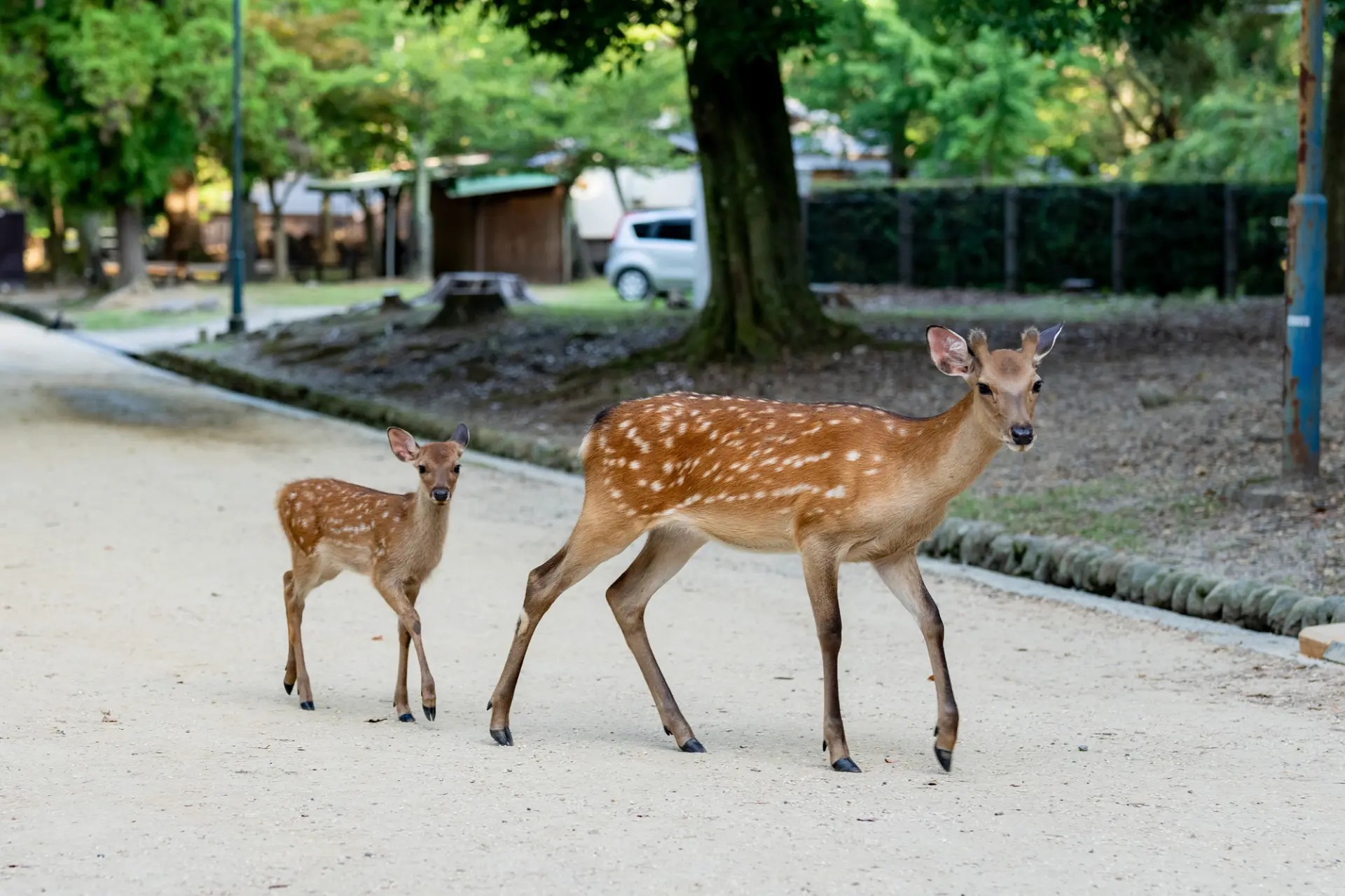
Approx. 1,300 deer live in the park, and you can spot them around the park during the daytime.
In the evening, they return to quieter resting areas, so if you want to interact with deer, visiting from morning to late afternoon is recommended.
Buy “Shika Senbei” (Deer Crackers) and Enjoy Interacting with the Deer
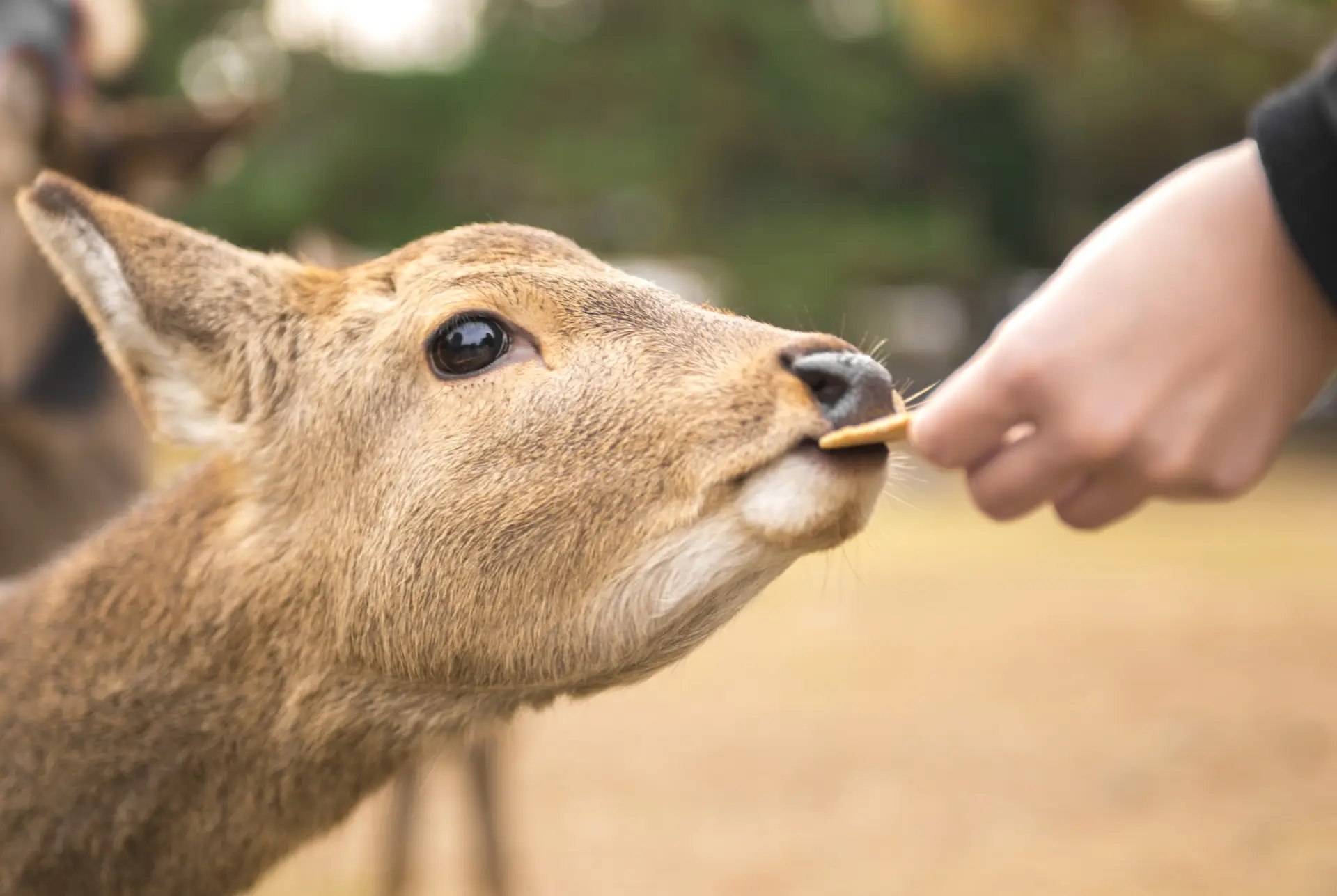
If you want to enjoy interacting with the deer, buy “shika senbei” (deer crackers) from shops or vending machines in the park.
Shops and vending machines are placed throughout the park, so you should find them as you stroll around.
Deer crackers cost 200 yen per bundle (10 pieces).
They’re made mainly from rice bran and wheat flour, and contain no coloring, so they’re made with the deer’s health in mind.
When feeding them, the key is to offer one piece at a time quickly, without hesitation.
If a deer can’t get a cracker, it may tug at your clothes or bite, so be careful.
When you run out, spread both hands to show you “don’t have any more.”
This helps prevent trouble while letting you safely enjoy interacting with the deer.
Important Safety Tips When Interacting with the Deer
Even though they’re used to people, the deer in Nara Park are wild animals and are not kept in captivity.
To interact safely—and to protect the deer that local people have carefully safeguarded—please be sure to follow these rules.
- Do not feed them any food or drinks other than deer crackers
-
At Nara Park, feeding deer anything other than deer crackers is prohibited.
Giving them snacks, bread, drinks, and so on can make them sick. - Don’t approach or touch them carelessly
-
Deer can become aggressive depending on the situation.
Be especially careful in spring, when does protect their newborns, and in fall, during the rut, when bucks are more likely to be irritable. - Don’t let children approach them alone
-
When interacting with deer, a guardian should always watch closely nearby.
To prevent injuries from unexpected behavior, an adult should stay together. - Watch your belongings so they don’t get taken
-
Deer may mistake plastic bags, paper bags, maps, and more for food and put them in their mouths.
Bags can also get caught on antlers, so keep your belongings under control. - Don’t litter
-
There’s a risk that deer may accidentally eat trash.
There are no trash cans in the park, so take your trash home in a bag. - Don’t let dogs get close
-
Because deer are timid animals, if a dog approaches, they may panic and it could lead to various accidents.
In some cases, deer may attack dogs to protect themselves, so please be careful.
Absolutely No Harmful Acts Toward Deer
After a video of assaulting deer spread on social media, the Enforcement Regulations of the Nara Prefectural Urban Park Ordinance (Article 12) were revised.
It is now clearly prohibited to commit violent acts against deer that could cause physical injury, or to cause or encourage actions that could do so.
If you do any of these acts, you may violate the Law for the Protection of Cultural Properties and could face penalties.
The deer of Nara Park are a Natural Monument of Japan and, even before being a tourist attraction, are beings that must be protected.
Needless to say, you must never harm them by hitting, kicking, or chasing them.
Respect Nara’s history and culture of living alongside deer, and act responsibly.
Enjoy Rich History and Nature! 7 Must-Visit Spots Inside Nara Park
Nara Park is packed with fascinating spots where you can enjoy its rich history and nature.
Here are the can’t-miss places you should definitely visit when you’re in Nara Park.
1. Todaiji Temple
The grounds include many National Treasure buildings, such as the Daibutsuden (Great Buddha Hall)—one of the world’s largest wooden structures—housing the seated statue of Vairocana Buddha, affectionately known as the “Great Buddha of Nara,” as well as the Hokke-do (Sangatsudo), the oldest of Todaiji’s buildings, and the Nandaimon Gate, Japan’s largest temple gate.
Another highlight is Tegaimon Gate on the west side of the Shosoin Repository, which escaped two wars and still offers a glimpse of the original temple complex layout from the time of its founding.

2. Kofukuji Temple
It began as Yamashina-dera, a private temple built at the residence of Fujiwara no Kamatari in Yamashiro Province, Yamashina Suehara. In 710 (Wado 3), with the relocation of the capital to Heijo-kyo, it was moved to its current location under a plan by Fujiwara no Fuhito and renamed “Kofukuji.”
The grounds are lined with National Treasure buildings such as the Northern Round Hall rebuilt in the Kamakura period, the five-story pagoda and Eastern Golden Hall rebuilt in the Muromachi period, as well as Important Cultural Properties including the Southern Round Hall rebuilt in the Edo period.

3. Kasuga Taisha Shrine
Mikasa-yama (Kasuga-yama) has been revered since ancient times as a sacred mountain where deities reside.
Because hunting and logging were prohibited in the Heian period, the primeval forest remains to this day and is designated as a Special Natural Monument of Japan.
In 1998, Kasuga Taisha Shrine and the Kasugayama Primeval Forest were registered as part of the World Heritage site “Historic Monuments of Ancient Nara.”
The “National Treasure Hall” within the grounds is a museum that houses Approx. 3,000 items, including National Treasures and Important Cultural Properties.
It displays sacred treasures made in the Heian period, as well as Japan’s representative armor and weapons such as swords, and is known as the “Heian Shosoin.”

4. Mount Wakakusa
Mount Wakakusa stands 342 meters high. It’s a gentle mountain covered entirely in grass. Because it looks like three hats stacked together, it’s also known as “Mount Mikasa.” It’s also famous for the Wakakusa Yamayaki, a traditional Nara event held every January.
From the foot-of-the-mountain gate to the summit, it takes around 30 minutes on foot. From the top, you can look out over Nara’s scenery, including Kofukuji Temple and Todaiji Temple.

5. Nara National Museum
Opened in 1895 (Meiji 28) as Japan’s second national museum.
Focusing on Japanese Buddhist art from the Asuka period through the Kamakura period, it holds a large collection of Buddhist statues and artifacts, including many National Treasures and Important Cultural Properties.
Located in a corner of Nara Park and surrounded by Todaiji Temple, Kofukuji Temple, Kasuga Taisha Shrine, and more, it offers a relaxed environment to learn about Buddhist art and the rich history and culture behind it.

6. Asajigahara Park Area & Ukimido Pavilion
Asajigahara Park Area sits in one corner of Nara Park, where cultural heritage sites are scattered across the vast grounds.
It’s a hilly area on the south side of the park, stretching along the south side of the approach from the first torii gate of Kasuga Taisha Shrine to the main sanctuary, and is known as a scenic spot rich in varied terrain.
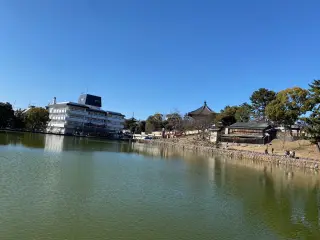
In particular, the view of Sagiike Pond, where Ukimido Pavilion stands, is breathtakingly beautiful.

7. Sarusawa Pond Park Area
Nara Park is home to cultural heritage sites like Kasuga Taisha Shrine and Kofukuji Temple, along with grand, lush natural scenery.
Among the park’s scenic spots, Sarusawa Pond Park Area is especially easy to visit thanks to its location close to downtown.
It’s a man-made pond with a 360-meter perimeter, located past the Sanjo-dori shopping street, and lined with willow trees for a wonderfully atmospheric feel.

After Sunset, Enjoy Magical Views at Night Illumination Events
In and around Nara Park, “Light-up Promenade Nara” is held daily.
The event runs from 7:00pm–10:00pm (in September only, 6:00pm–10:00pm).
Historic buildings including Todaiji Temple and Kasuga Taisha Shrine are illuminated, creating a magical atmosphere that’s completely different from daytime.
The illumination venues are the following 7 locations.
- Kasuga Taisha Shrine
- First torii gate
- Kofukuji Temple
- Five-story pagoda
- Todaiji Temple
-
, Great Buddha Hall
, Chumon corridor
, Nandaimon Gate - Nara National Museum
-
, Main Building
, Buddhist Art Research Center - Sarusawa Pond
- -
- Ukimido Pavilion
- -
- Heijo Palace Site
-
, First Daigokuden Hall
, Suzaku Gate - Yakushiji Temple
-
, East Pagoda
, West Pagoda
*1. Kofukuji Temple’s five-story pagoda is currently suspended for the time being
*2. Todaiji Temple’s Chumon corridor is suspended due to lighting equipment upgrades
*3. Ukimido Pavilion is scheduled to be temporarily suspended due to LED conversion work
Along with sightseeing during the day, try building in time to take a relaxed walk through Nara at night.
-
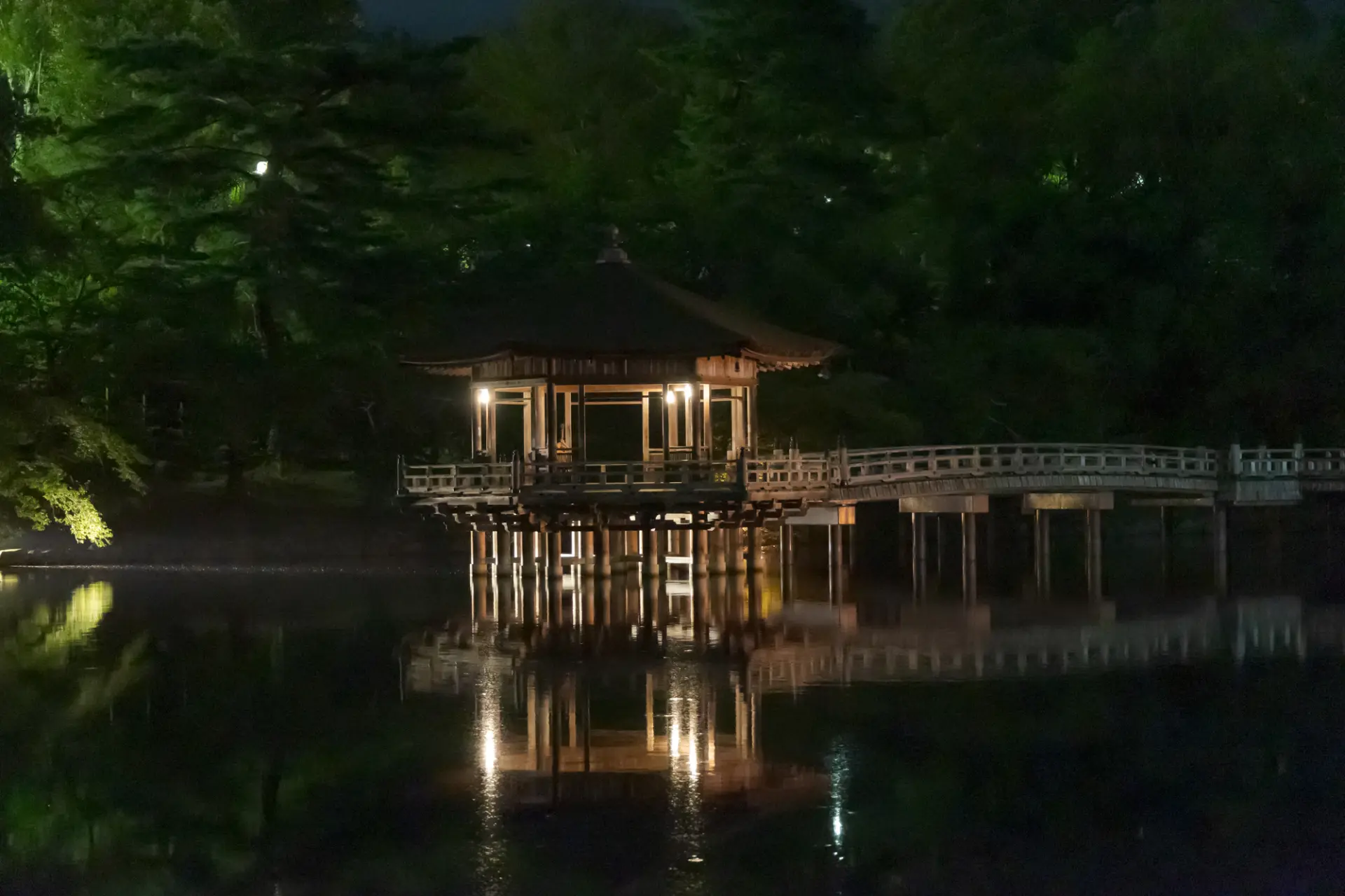
Ukimido Pavilion illuminated with a mysterious, elegant atmosphere
-
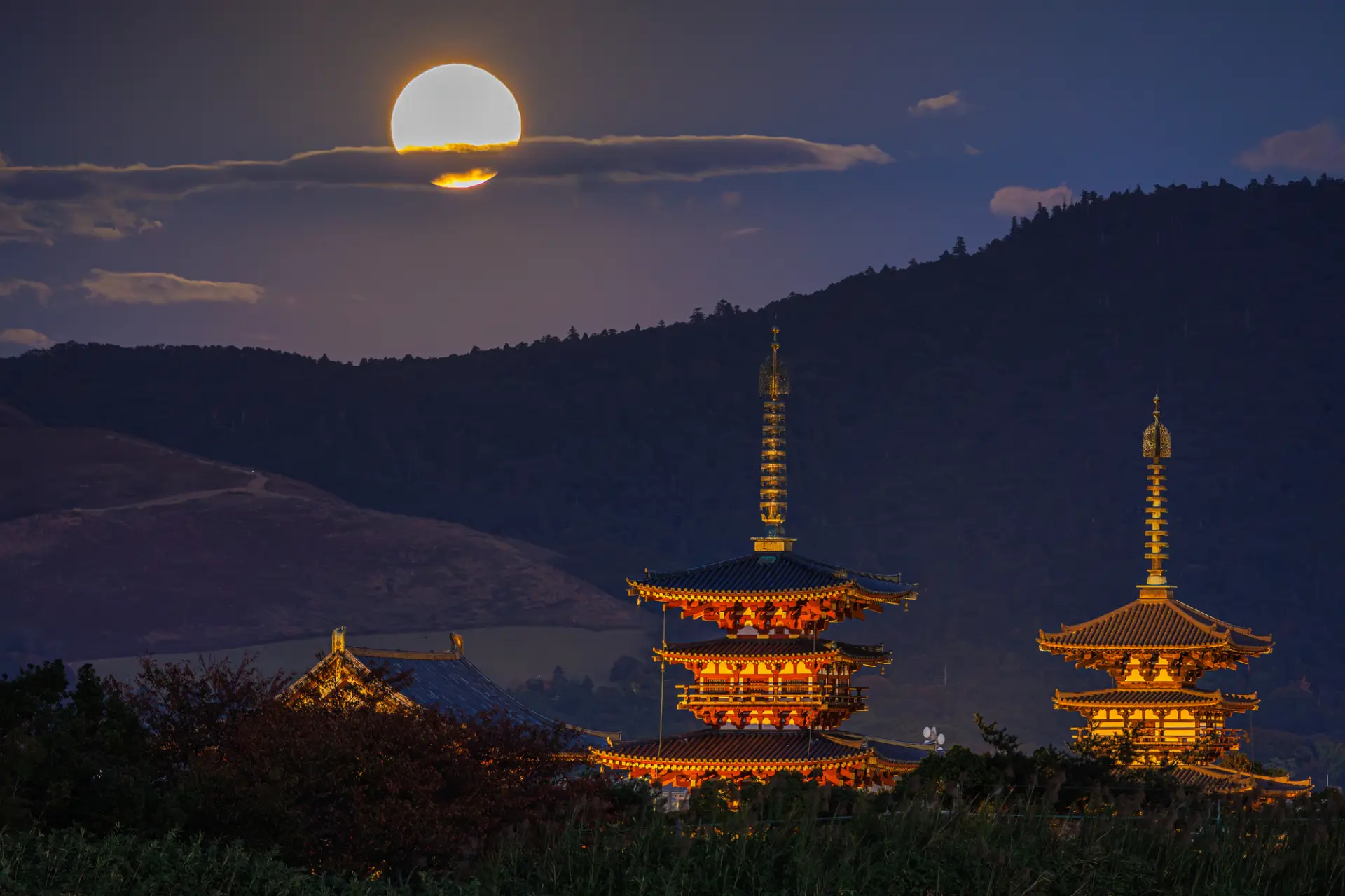
The East and West Pagodas of Yakushiji Temple in a magical glow
-
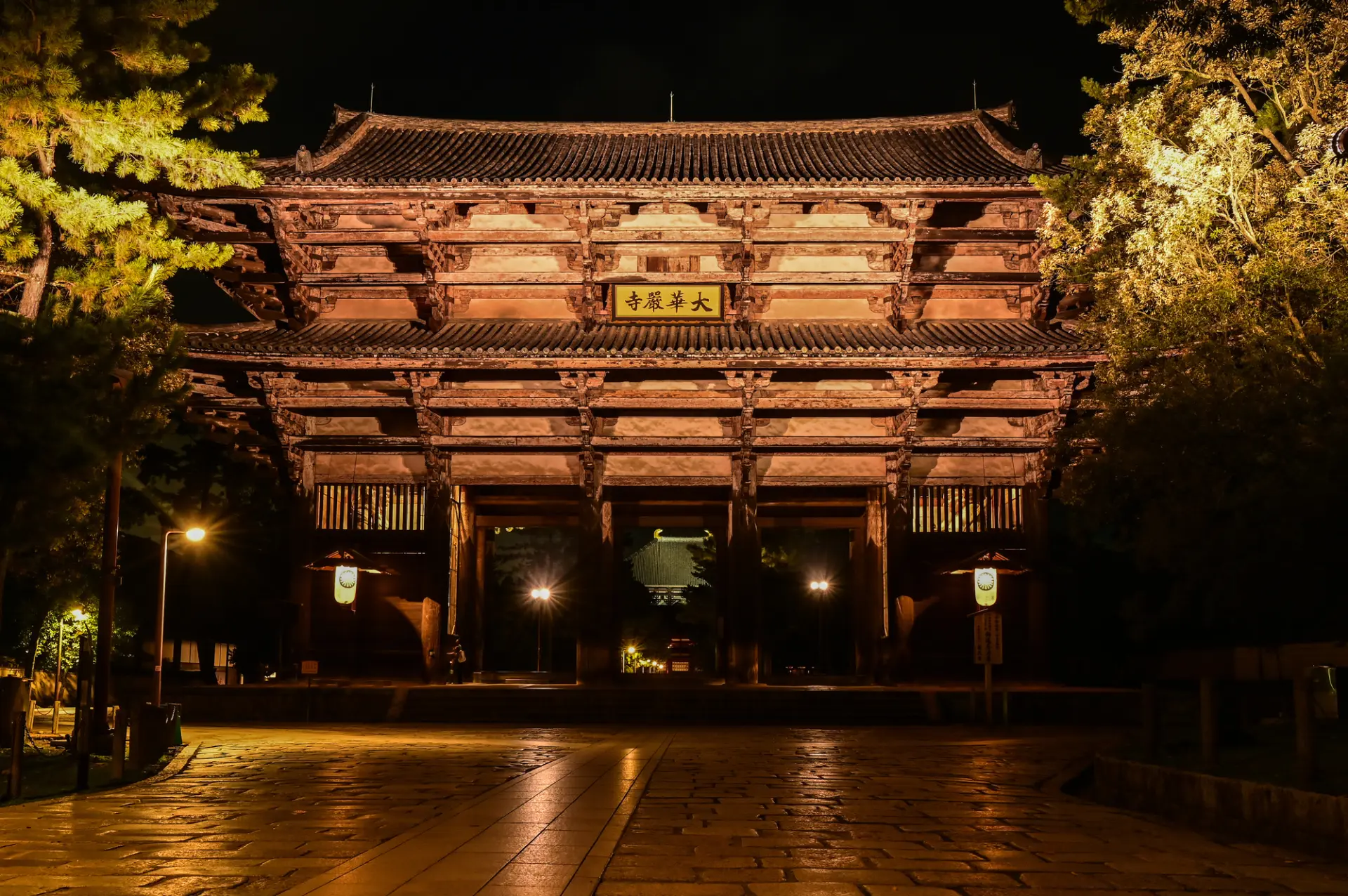
Todaiji Temple’s Nandaimon Gate beautifully lit up
3 Key Tips to Enjoy Nara Park Even More
Here are some helpful points to know in advance so you can enjoy a highlight-packed Nara Park efficiently.
By keeping these tips in mind, you can fully experience Nara Park’s charm even with limited time.
1. Narrow down the spots you’ll visit and plan your itinerary
Nara Park is vast and has lots to see.
If you try to visit all seven spots introduced in this article, you should expect it to take a full day.
- Todaiji Temple
- Kofukuji Temple
- Kasuga Taisha Shrine
- Mount Wakakusa
- Nara National Museum
- Asajigahara Park Area & Ukimido Pavilion
- Sarusawa Pond Park Area
All of the main spots are within walking distance of each other, but when you factor in breaks, interacting with the deer, and taking photos, it can take more time than you’d expect.
So if you want to enjoy Nara Park within a limited stay, it’s recommended to decide in advance which places you’ll visit.
For example, a plan that visits the World Heritage sites Todaiji Temple, Kofukuji Temple, and Kasuga Taisha Shrine and includes time to enjoy the deer can be comfortably done in half a day.
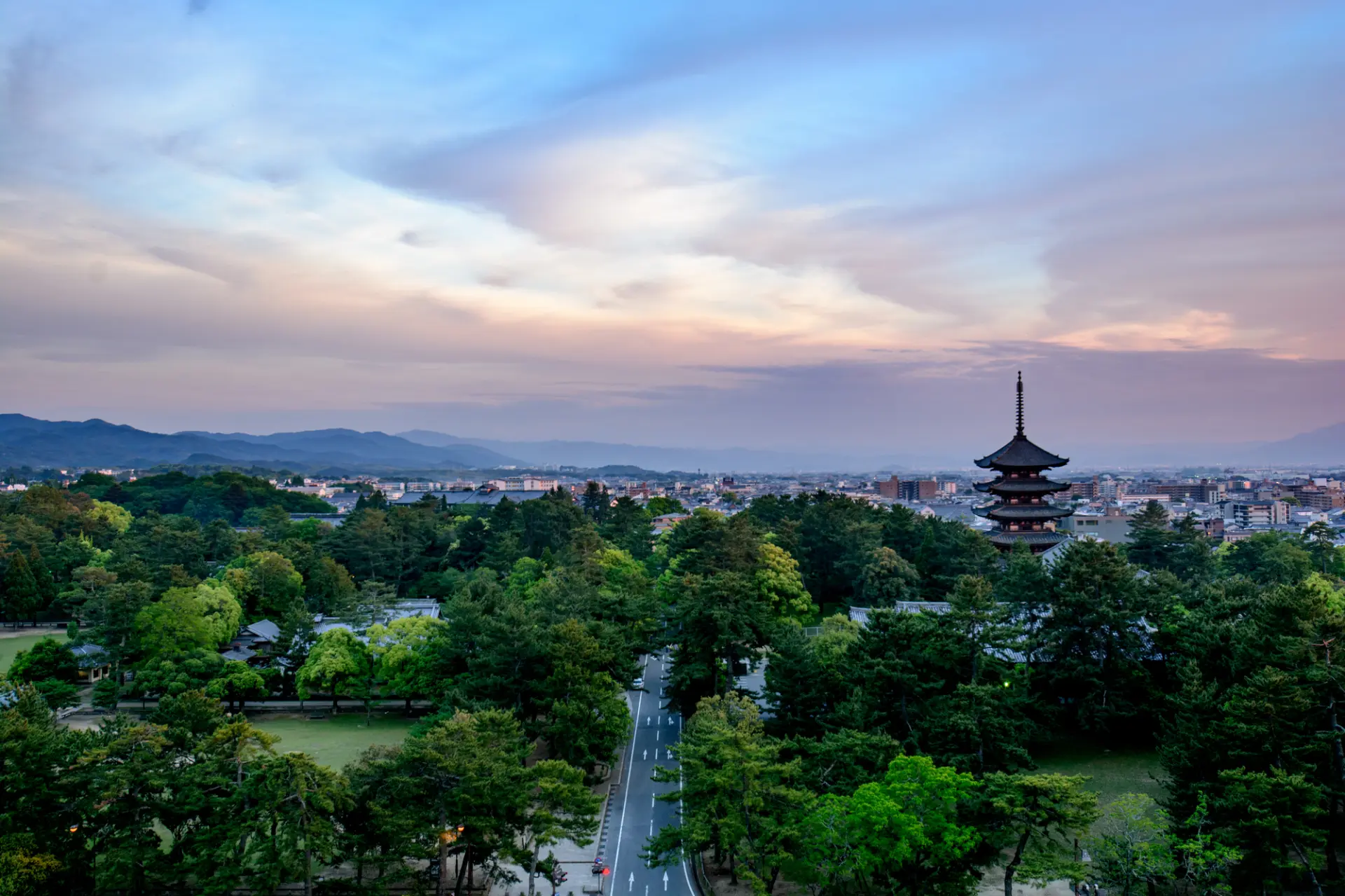
2. Consider taking the bus, not just walking
As mentioned above, you can visit the main spots in Nara Park on foot alone.
However, since the walking distances can add up, if you want to reduce the strain or cut down travel time, it’s worth considering the bus.
With Nara Kotsu buses and the Nara Park Gurutto Bus, you can also reach major spots like Todaiji Temple, Mount Wakakusa, Kasuga Taisha Shrine, Ukimido Pavilion, Nara National Museum, and Kofukuji Temple by bus.
By combining walking and bus rides well, it becomes easier to create a comfortable sightseeing plan.
Please choose your transportation based on your schedule and energy level for the day.
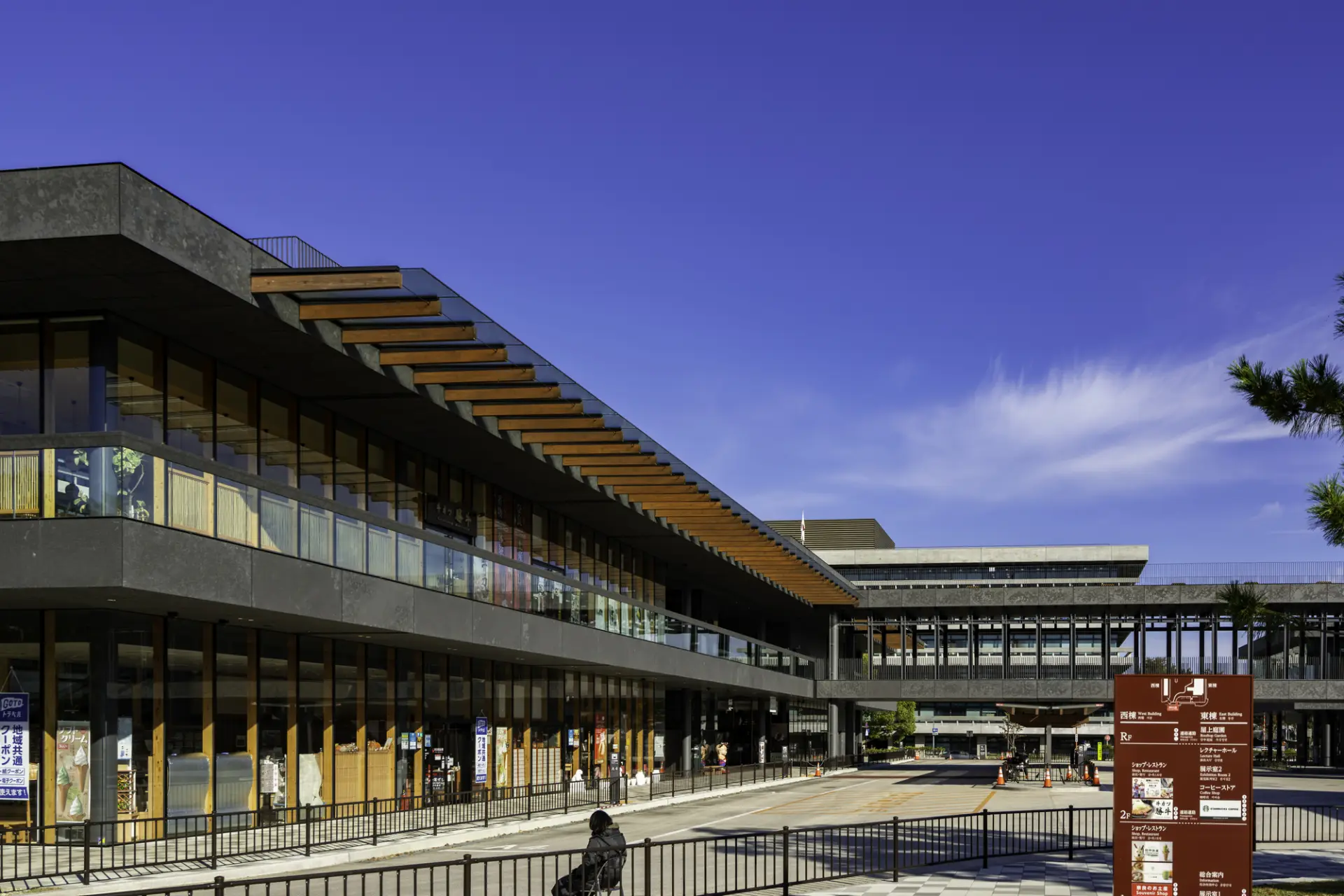
3. Make the most of the Nara Park Bus Terminal
Located in the heart of Nara Park on the east side of the Nara Prefectural Government Office, the Nara Park Bus Terminal is a facility you’ll want to use as a base for exploring Nara Park.
If you use it well, you can enjoy the vast park more efficiently and more deeply.
In the 1F exhibition room, you can use the “Nara Walking Map,” which lets you choose places you want to visit—from nearby attractions to restaurants and shops—and create and print your own custom map.
Inside, you’ll also find a diorama model that shows the overall layout of Nara Park, a cafe that’s easy to stop by during a walk, and shops where you can buy souvenirs.
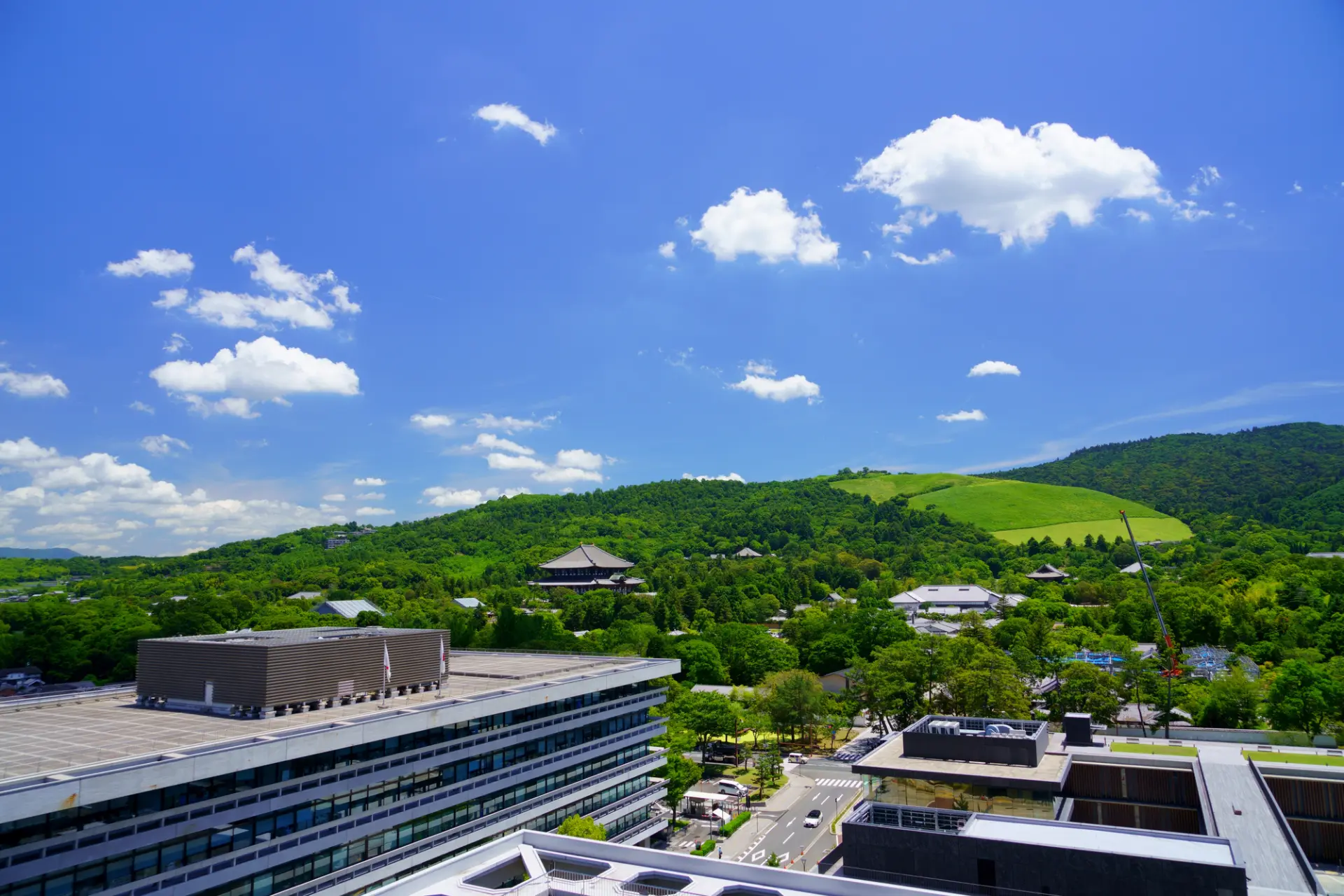
Head up to the rooftop garden, and a 360-degree panorama opens up, giving you a sweeping view over Nara Park.
Another big draw is being able to see several of Nara Park’s historic landmarks at once, including Kofukuji Temple’s five-story pagoda, Mount Wakakusa, and Todaiji Temple’s Nandaimon Gate and Great Buddha Hall.
Famous Events and Traditional Festivals in Nara Park You Should Join for a Deeper Experience
If you want to spend more time enjoying Nara Park, try joining an event.
Events are held throughout the year, and here we’ve carefully selected some of the best-known ones that really capture the spirit of Nara.
You’ll be able to experience traditional culture passed down in the ancient capital, while feeling the shift of the seasons.
1. Nara Tokae Lantern Festival
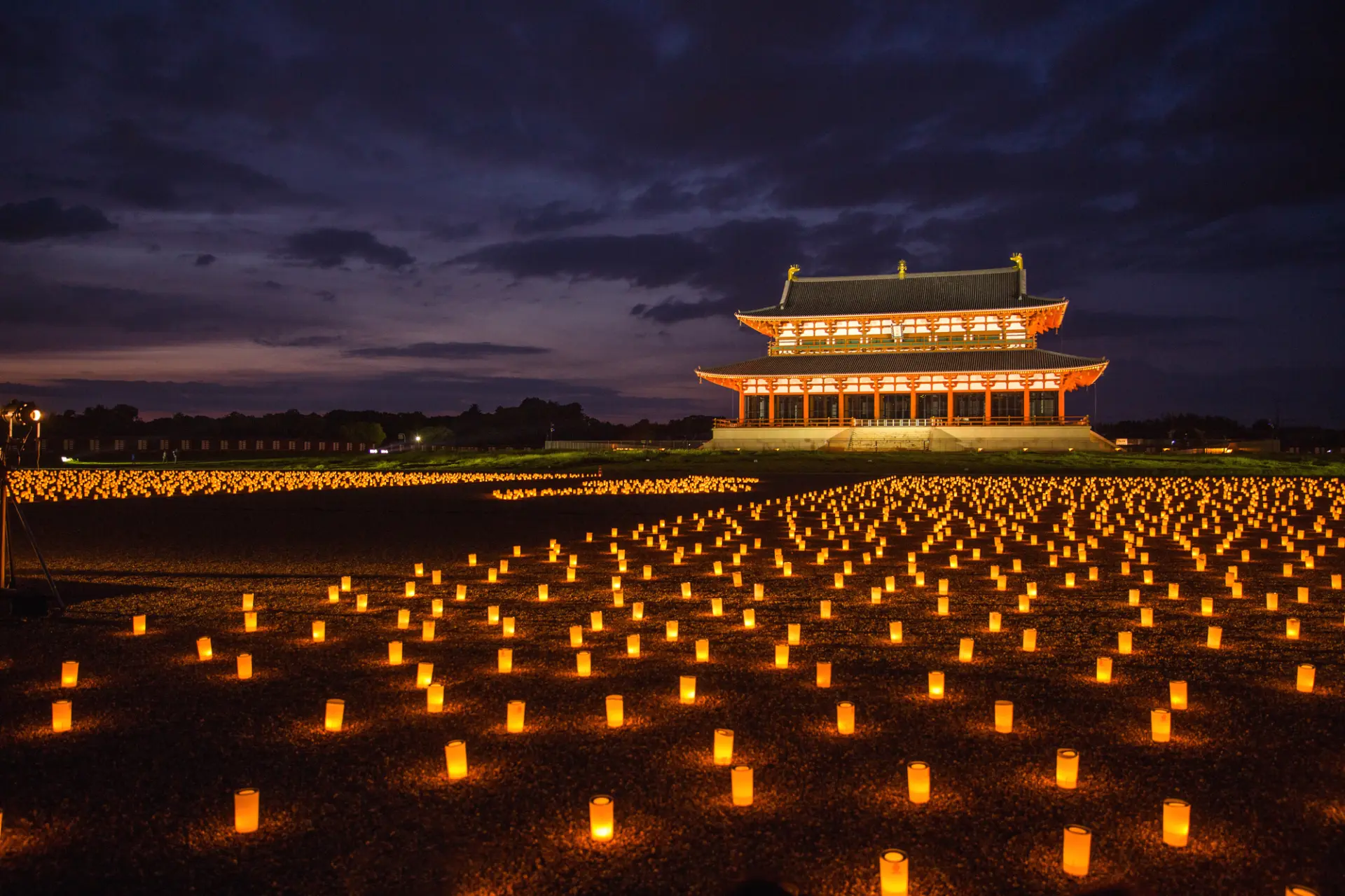
A summer tradition in Nara, where the entire Nara Park area is wrapped in gentle candlelight.
“Tokae” refers to the flower-shaped clump that forms at the tip of a candle wick, and it’s said to bring good luck when it appears.
At the Nara Tokae Lantern Festival, candles are lit with the wish that everyone who visits will find happiness.
It’s also fun that the same candlelight feels different depending on the location, such as Ukigumo Garden Area where candles set on the lawn look like the Milky Way, and Asajigahara where candles are scattered among bamboo objects.
2. Deer Antler Cutting
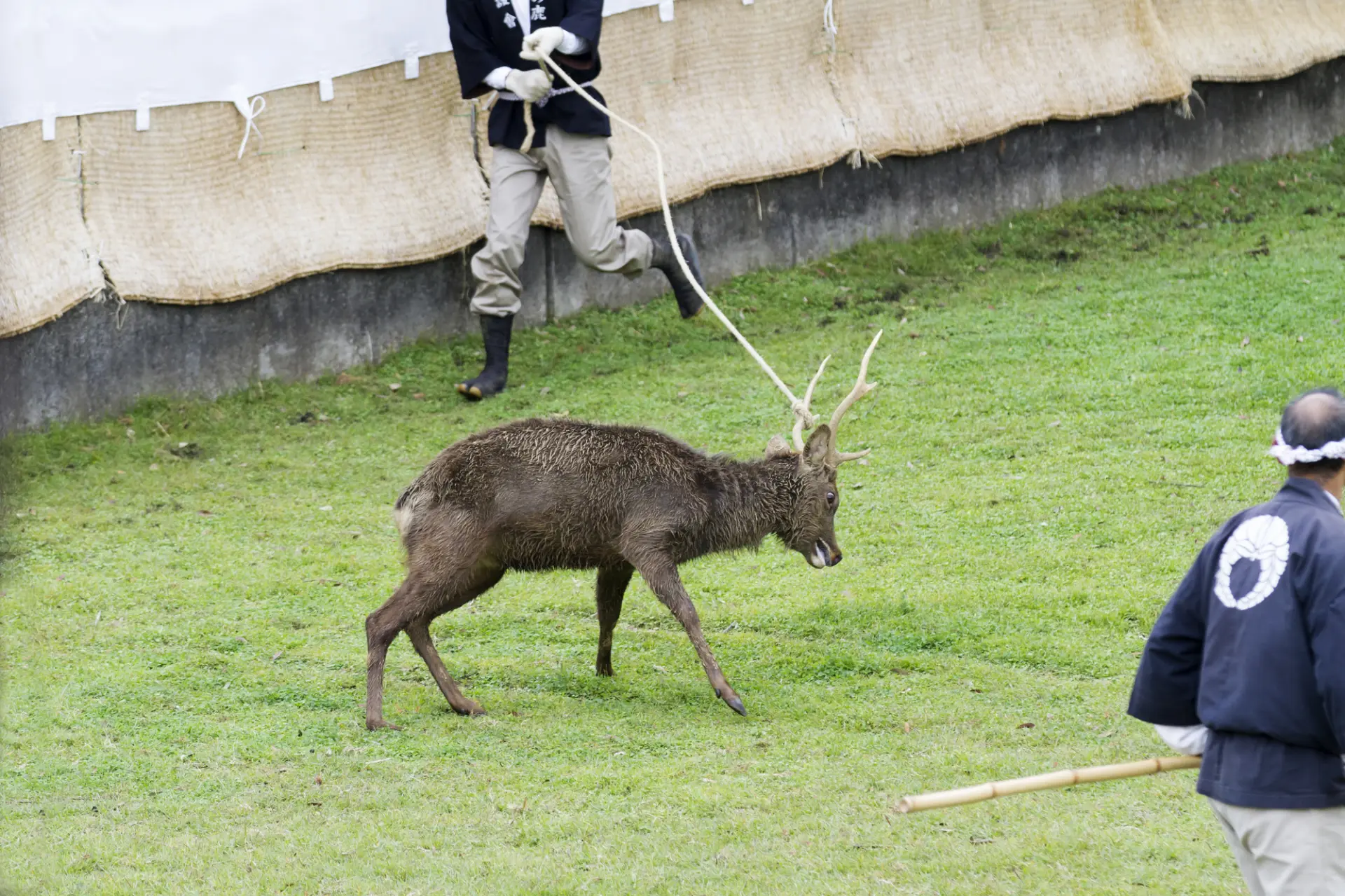
A traditional event passed down since the Edo period, rooted in Nara’s coexistence with deer.
Because fall is the breeding season for male deer, they can become aggressive and may injure people or other deer, so the event began as an accident-prevention measure.
It’s held every October at the “Rokuen Antler-Cutting Grounds” set up within the Kasuga Taisha Shrine grounds.
On the day, people called seko use red flags to drive male deer into the grounds; once captured, their antlers are cut off by Shinto priests.
Since deer have long been regarded as sacred messengers of the gods (“shinroku”), the cut antlers are offered before the deities.
3. Wakakusa Yamayaki (Mount Wakakusa Burning)
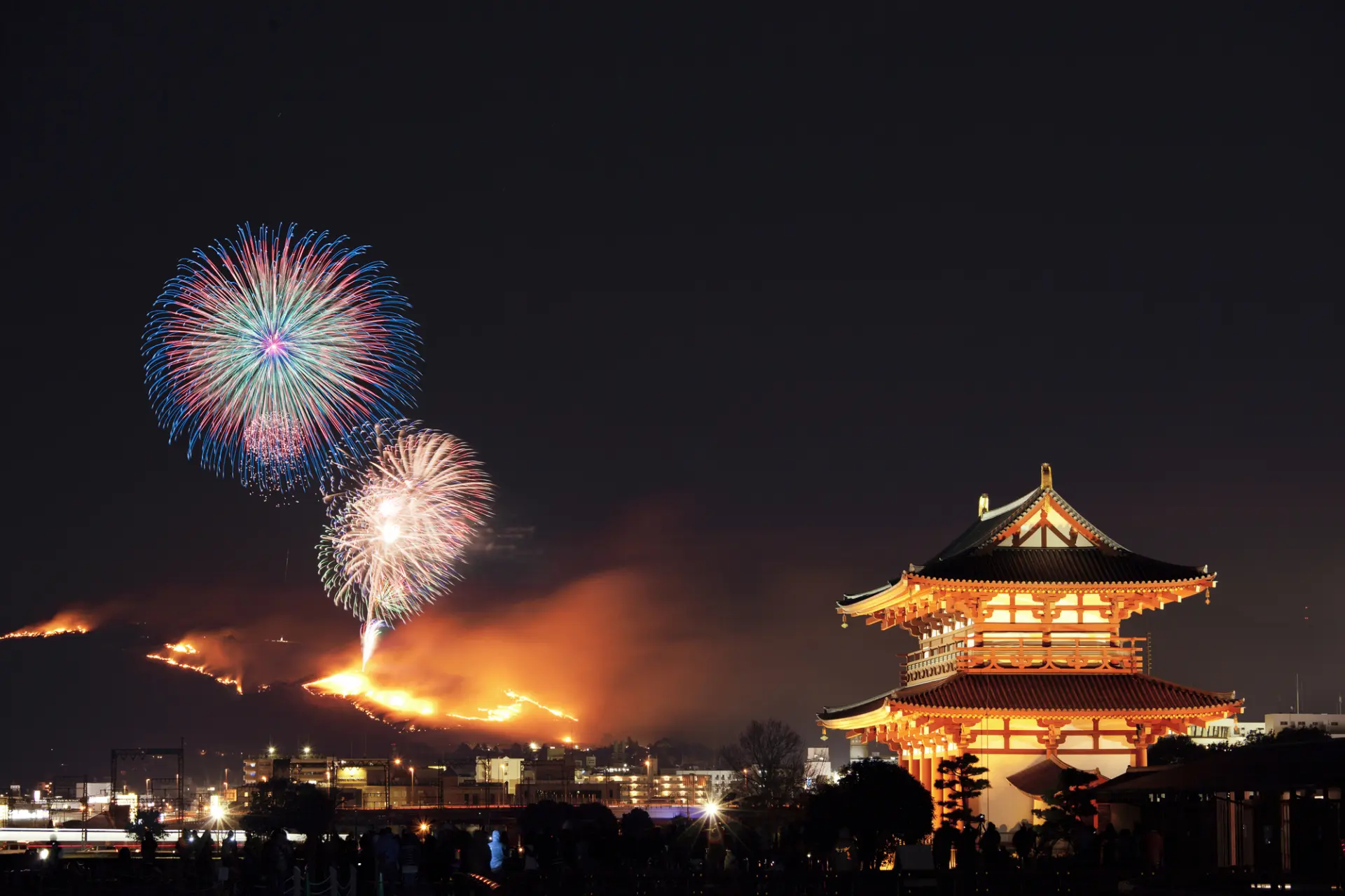
A traditional event held every year on the fourth Saturday of January across the Mount Wakakusa area in Nara Park.
After around 600 large fireworks light up the night sky, sacred fire is transferred to torches by around 300 members of the Nara City Fire Brigade.
With signals from conch shells and trumpets, everything is lit at once, and the mountainside is engulfed in flames, creating a spectacular scene as the whole mountain burns. The flames rising as if scorching the night sky are incredibly powerful.
During the day, the “Giant Deer Cracker Tossing Contest” is held, where oversized deer crackers are thrown from Mount Wakakusa.
Also at Kasugano Garden Area, an “hospitality event” is held with Japanese taiko drum performances, Yosakoi dance, hands-on workshops, and more, so you can enjoy the entire day from daytime into night.
3 Recommended Tourist Spots Near Nara Park
Not only within Nara Park’s grounds, but also nearby, there are plenty of sightseeing spots where you can feel Nara’s history.
Enjoy Nara’s attractions, where traces of history older than Kyoto remain.
1. Gangoji Temple
Its origins trace back to Asukadera, Japan’s oldest full-scale Buddhist temple, founded in Asuka Village in the late 6th century by Soga no Umako. Later, with the relocation of the capital to Heijo-kyo, it was moved into Heijo-kyo and renamed Gangoji.
As one of the eight component parts of the “Historic Monuments of Ancient Nara,” the former monks’ quarters—Gokurakudo (Gokurabo Main Hall) and Zen Room (Gokurabo Zen Room)—are registered as a World Cultural Heritage site.
Some roof tiles relocated from Asukadera still remain on part of the roof, conveying the atmosphere of the past.

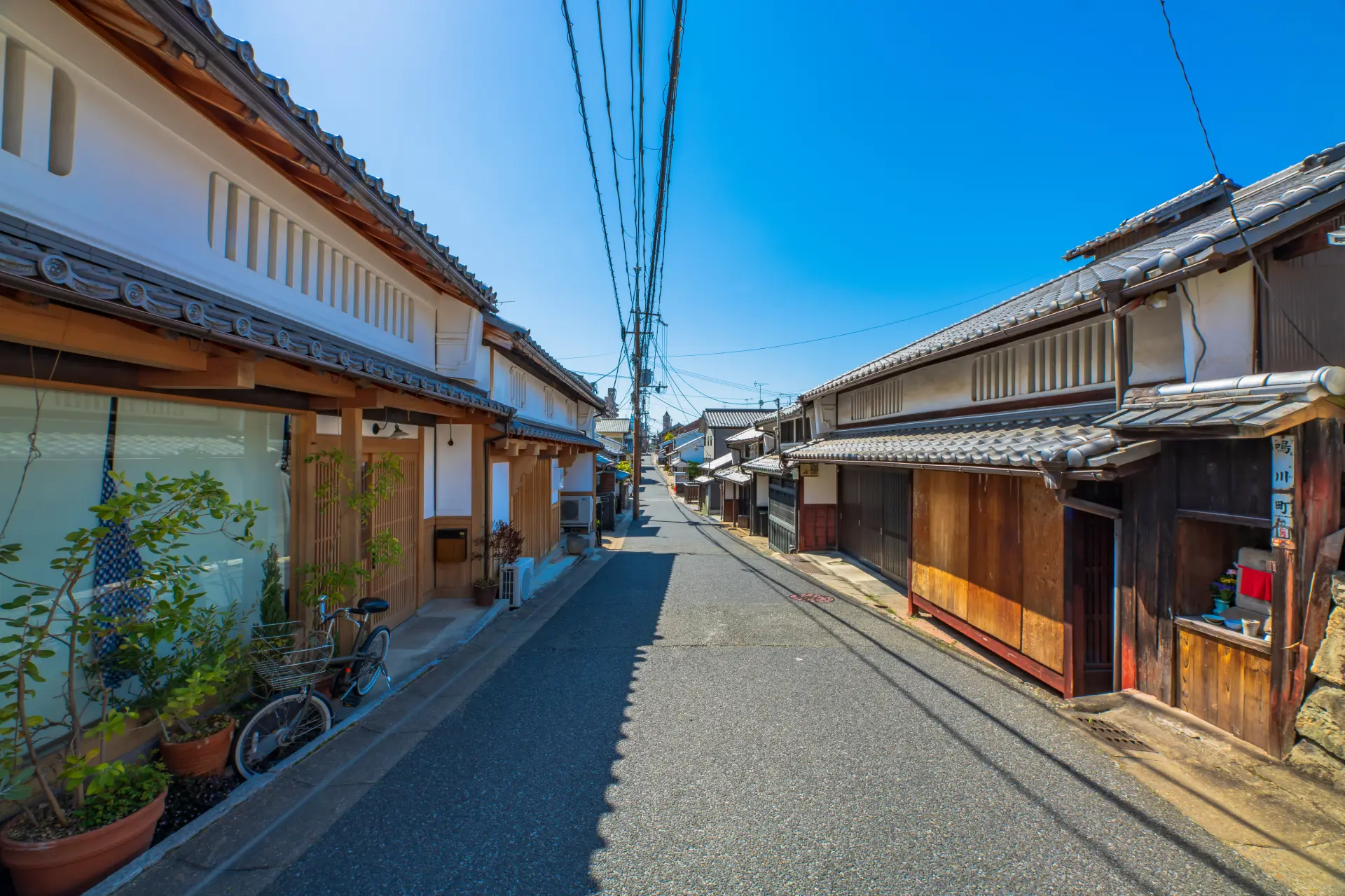
2. Naramachi
One of Japan’s rare old town districts, alongside Kyoto and Kanazawa.
Machiya townhouses built from the Edo period to the Meiji period still remain in the area centered around the former precincts of Gangoji Temple, making it a great place for a retro stroll.
Today, the nostalgic streetscape is lined with cafes, restaurants, and variety shops, making it a tourist spot visited by a wide range of generations.
The “Naramachi South Tourist Information Center” is a visitor center that repurposes machiya townhouses that once stood throughout the area. It has walking maps at the reception window, and it’s recommended to stop by before exploring.
3. Heijo Palace Site Historical Park
A place that flourished as Japan’s capital after the relocation to Heijo-kyo in 710.
The large-scale capital city, with a total area of around 2,500 ha and modeled after Chang’an, the Tang dynasty capital, is said to have been home to over 100,000 people.
“Heijo Palace” was the core facility of Heijo-kyo, where politics and ceremonies were conducted as the emperor’s residence.
Today, reconstructed sites such as Suzaku Gate, the First Daigokuden Hall, the First Daigokuden-in South Gate (under reconstruction), the Second Daigokuden Hall, and the Toin Garden are maintained and preserved as Heijo Palace Site Historical Park.

3 Popular Restaurants Near Nara Park
As you walk through Nara Park with deer passing by, even the flow of time starts to feel calmer.
Here are some places nearby that offer a wide range of charms that feel right at home in an ancient capital.
Stop in casually during your stroll, and you’ll be soothed by Nara’s gentle flavors.
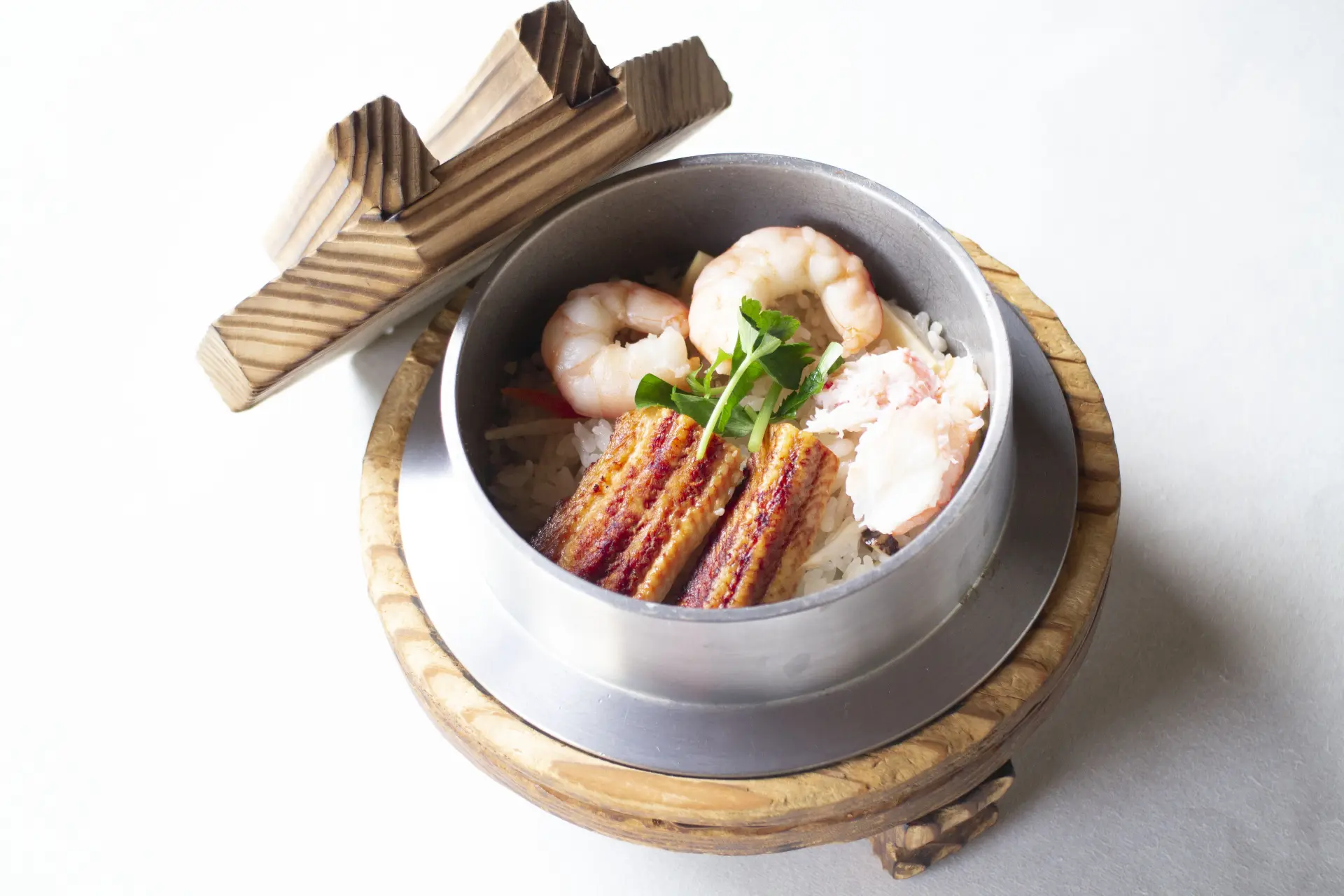
1. Kamameshi Shizuka (Koen Branch)
For over 60 years since its founding in 1959, the long-established kamameshi restaurant “Kamameshi Shizuka” has operated two locations in Nara City.
Even now, as a famous restaurant that always comes up when people talk about kamameshi in Nara, it has stuck to its style of carefully cooking each order over an open flame, one pot at a time.
That’s why lunchtime lines are an everyday sight at the Koen Branch, located in front of the Nara National Museum.
2. Kanakana
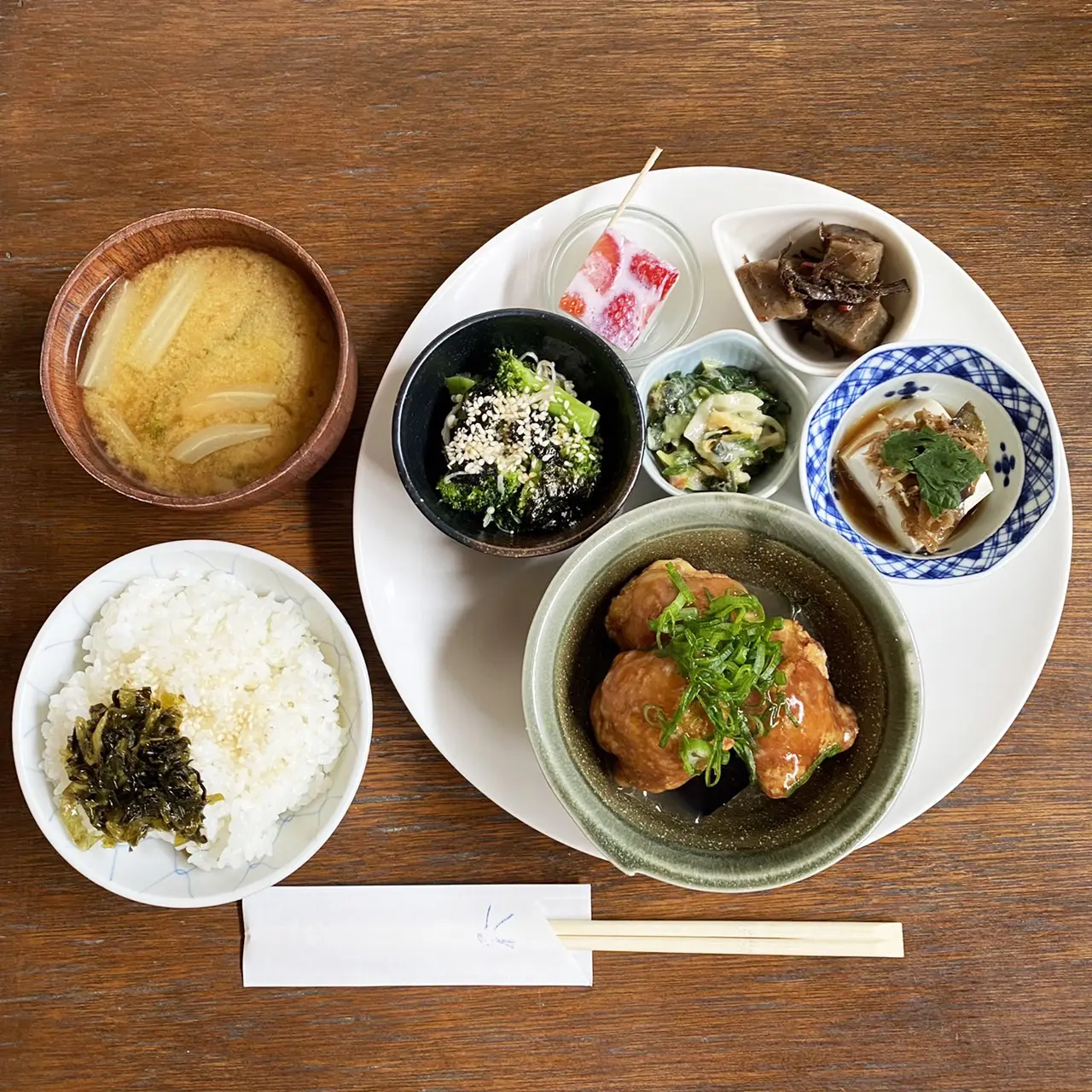
The Naramachi area is lined with many machiya townhouses from the Edo to Meiji periods, and in recent years it’s been lively with refined cafes and shops.
One pioneering spot in the area is “Kanakana.”
This traditional-house cafe is a renovated machiya over 100 years old, and stepping inside feels pleasantly like tracing back a nostalgic memory.
3. Fukuden
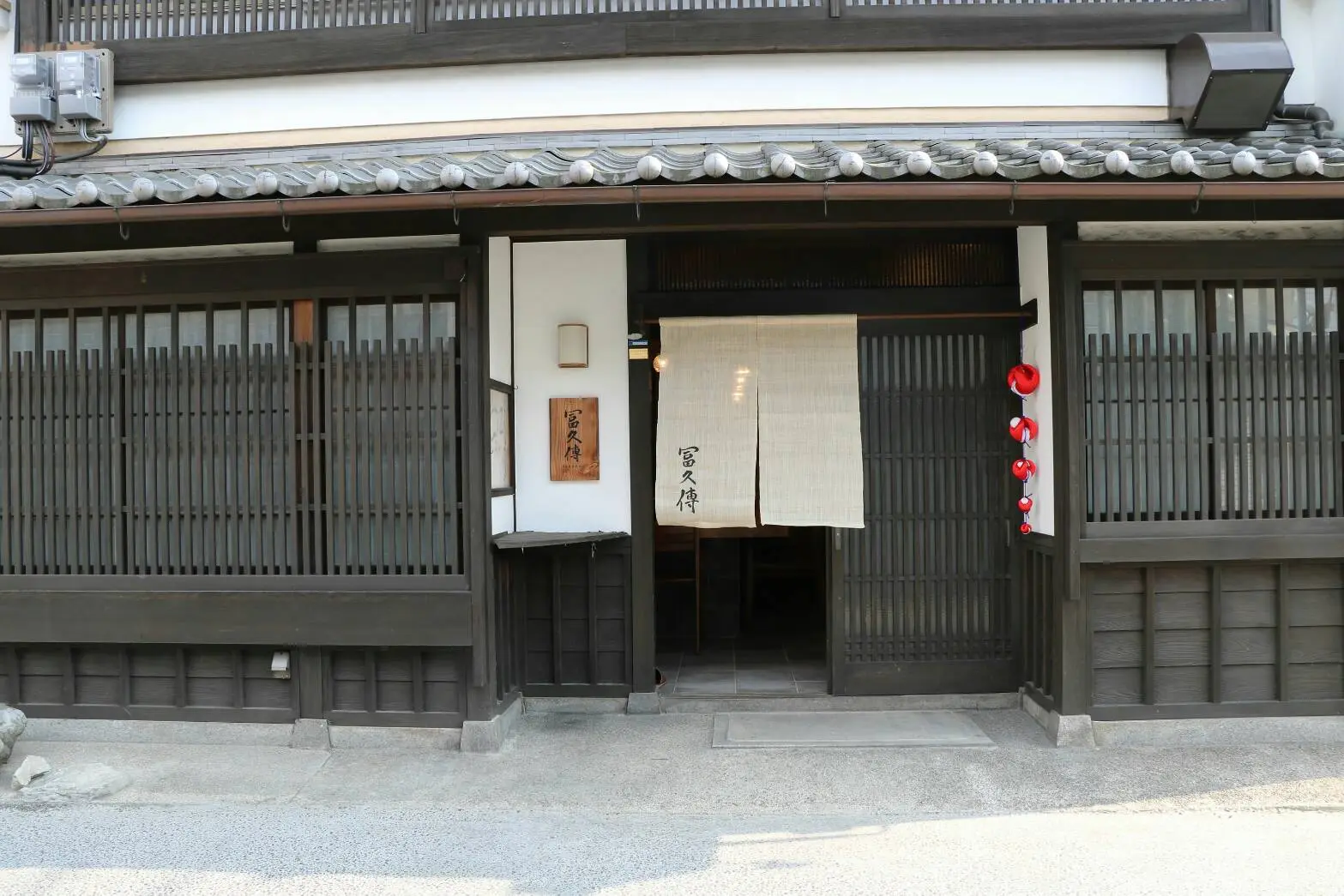
A specialty restaurant for shabu-shabu and meat kaiseki, standing in Naramachi’s atmospheric streets.
The building is a renovated former residence over 100 years old, with a calm, Japanese-modern space that retains wooden latticework, earthen walls, and beams, creating a relaxed atmosphere.
The signature menu is shabu-shabu made with Nara’s branded Yamato beef, branded pork, and plenty of fresh Yamato vegetables grown by local farmers.
3 Recommended Places to Stay Near Nara Park
With its vast greenery and historic buildings, Nara Park is an area that symbolizes the ancient capital of Nara.
Another highlight is being able to enjoy a calm, quieter side of the park in the early morning or at dusk, when there are fewer tourists.
From here, we’ve carefully selected accommodations where you can savor peaceful time. Enjoy a relaxing stay while feeling the calm that only an ancient capital can offer.
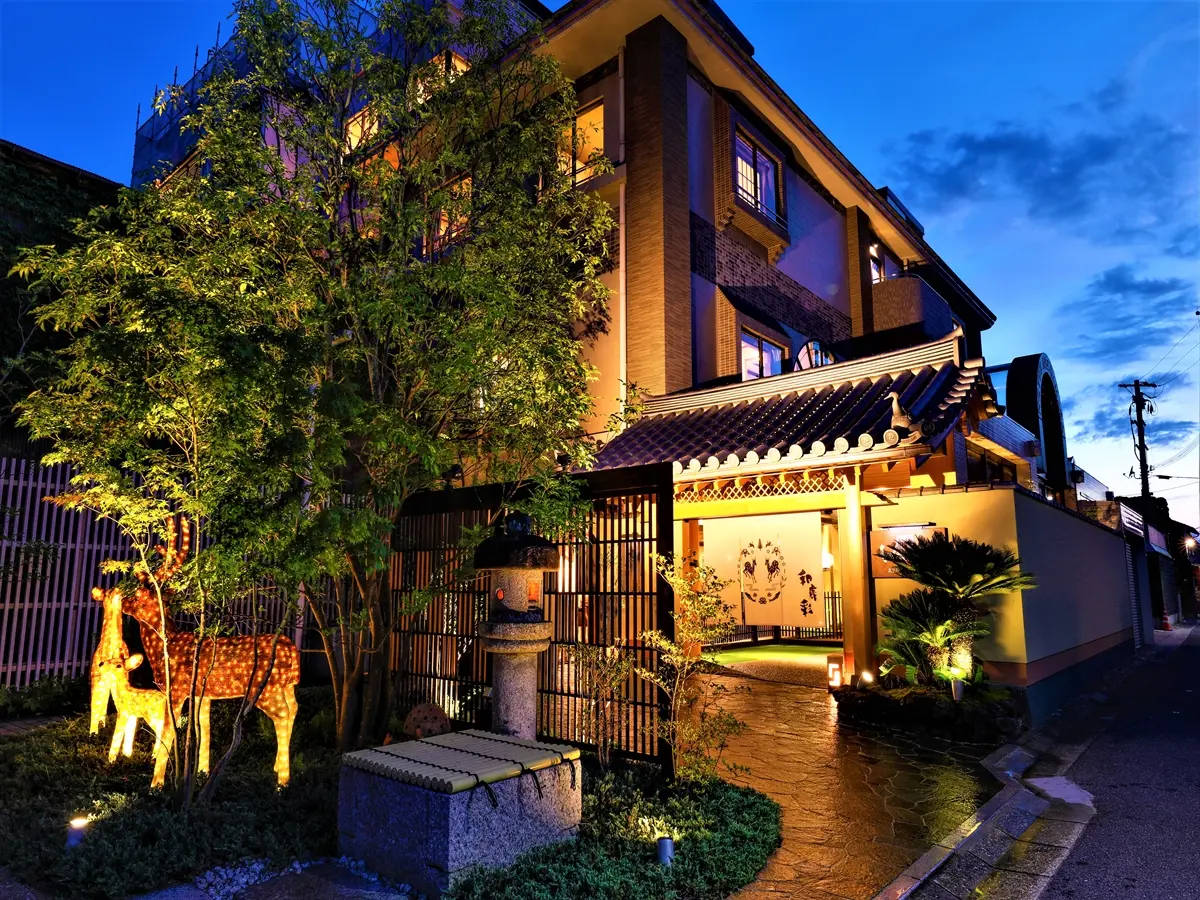
1. Fufu Nara
Located in one corner of Nara Park, it offers a great location that’s perfect as a base for sightseeing in Nara.
The building was designed by master Japanese architect Kengo Kuma. Outside the windows, trees sway in the breeze, and you can feel the sacred atmosphere of Nara Park. The rooms also feature open-air baths, letting you relax at your leisure.
Five types of all-suite rooms are available, from Stylish Suites to Fufu Luxury Premium Suites, and another appeal is the attention to detail—fabrics and furniture vary by room.

2. Nara Machiya Wakasa Bettei
A small culinary ryokan on the far northern edge of Nara Park, near where the Great Buddha Hall of Todaiji Temple sits, with the atmosphere of a classic Nara machiya townhouse.
Pass through the stone-paved entrance sprinkled with water, and you’re welcomed by a distinctive building featuring a dirt-floor space and an open atrium ceiling.
Each of the 12 guest rooms has its own character and furnishings, with a variety of styles available, including mainly tatami rooms scented with rush grass and Japanese-Western rooms with beds.

3. Hotel New Wakasa
A refined ryokan located Approx. a 10-minute walk from “Kintetsu Nara” Station, close to Nara’s main sightseeing areas such as Nara Park and Todaiji Temple.
From inside the property, you’ll find wonderful views that let you feel the World Heritage atmosphere of ancient Nara, including Todaiji Temple.
Rooms include a range of designer options with different concepts, such as luxurious rooms with open-air observation baths overlooking Mount Wakakusa, a Premium Kids Room with a slide, and compact Japanese-modern rooms with a raised sitting area.
Reviews
4.31
Some reviews are AI-translated.
-
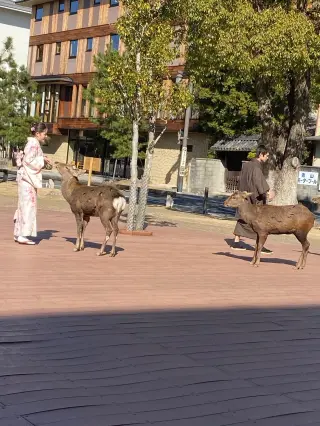
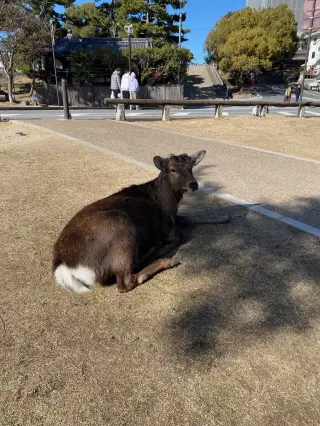
If you feed the deer crackers, you’ll get surrounded—it’s kind of scary but also hilarious. Some of the deer are really gentle, and some have a ton of attitude. If you’re not paying attention, they’ll start nibbling on your clothes.
-
Today I visited Nara Deer Park and, unfortunately, it turned out to be one of the worst experience I have had in Japan. Instead of a peaceful place where deer freely roam, the park gives the impression of a neglected space where animals suffer because of mass tourism.
Many deer had visible wounds and traces of blood on their heads. Their antlers seem to be partially or fully removed, leaving sharp edges that cause injuries during fights, which often happen due to tourists feeding them rice crackers. I also saw deer that were limping, had open wounds, and looked exhausted and frightened.
Because they are constantly competing for food and surrounded by crowds, the deer behave aggressively: they bite clothing, tear bags, and desperately fight over crackers. Making the situation even worse, a seller at one of the cracker stands repeatedly hit the deer with a stick to push them away, shouting and creating stress both for visitors and the animals. (To clarify: this was a specific vendor, slap him for me please.)
This behavior is inhumane, irresponsible, and contrary to any form of ethical treatment of animals. In its current condition, the park is not a place of enjoyment but a warning.
For these reasons, I sincerely do not recommend visiting Nara Deer Park to anyone who cares about animals and values ethical tourism. I believe the authorities in Nara urgently need to take action and improve conditions to ensure proper care and protection of the deer.
Avoid this dark trap of Nara!
FAQ about Nara Park
Q
What is the admission fee for Nara Park?
A
Admission is free.
Q
How long does it take to visit Nara Park?
A
We recommend setting aside at least half a day. If you want to visit all the major spots, plan for a full day.
Q
When is the best time to see cherry blossoms in Nara Park?
A
It depends on the variety, but it’s from late March to early April.
Q
When is the best time to see fall foliage in Nara Park?
A
You can enjoy it from late October to early December.
Q
What time is Nara Park open?
A
It’s open 24/7, 365 days a year.
Q
When is Nara Park less crowded?
A
Weekday mornings, and early mornings even on Saturdays and Sundays, tend to be relatively less crowded.
Summary
We’ve covered what you should know before visiting Nara Park, including its appeal, must-see highlights, and the best seasons to visit.
Use this article as a guide as you explore historic cultural heritage sites and soak in the atmosphere of the ancient capital, Nara.
Nara, with its history older than Kyoto’s, has plenty of other attractive places beyond the sights introduced here.
If you want to explore Nara even more, check out the article below, which introduces recommended sightseeing spots and local food.