
![[Ritsurin Garden Visitor Guide] A Scenic Spot Where You Can Experience Japanese Atmosphere and Culture](https://static.gltjp.com/glt/data/article/21000/20428/20230920_102118_c5ca8787_w1920.webp)
[Ritsurin Garden Visitor Guide] A Scenic Spot Where You Can Experience Japanese Atmosphere and Culture
Set on expansive grounds, Ritsurin Garden offers scenery rich in Japanese charm as well as opportunities to experience Japanese culture.
Its beauty changes with the seasons, and even a short stroll brings you to landscapes with their own distinct appeal.
Here is useful information to know before your visit, including the best seasons to go and the garden’s highlights.
What is Ritsurin Garden Like?
Located in Takamatsu City, Kagawa Prefecture, Ritsurin Garden is Japan’s largest cultural property garden and is designated as a Special Place of Scenic Beauty by the national government.
The flat garden area covers 16 hectares.
Including Mt. Shiun in the background, the total area is Approx. 75 hectares.
It was built during the Edo period as a villa for the Matsudaira family, the feudal lords of Takamatsu Domain, now Kagawa Prefecture.
Successive lords continued improving the garden, and it was completed around 300 years ago.
It was awarded the highest three-star rating in the Michelin Green Guide Japan, and its vast grounds feature a strolling garden.
A strolling garden is designed so visitors can walk around and appreciate features such as stepping stones, artificial hills, stone lanterns, and waterfalls placed throughout the grounds.
There are six ponds and 13 artificial hills, and each walk offers a different beautiful view.
Along with seasonal natural scenery, don’t miss the Approx. 1,400 carefully maintained pine trees.
Neagari Goyo Matsu, a five-needle pine grown from an Edo-period bonsai, is also especially impressive, standing Approx. 8 meters tall with a trunk circumference of Approx. 3.5 meters.
If you want to fully enjoy the scenery of Ritsurin Garden, try the Nanko Sightseeing Japanese Boat, which takes you around the garden by boat.
There are also restaurants and teahouses, so you can enjoy Ritsurin Garden while taking a break.

Access to Ritsurin Garden
Here’s how to get there from Takamatsu Station, a main transportation hub for sightseeing in Kagawa.
From Takamatsu Station, you can reach the nearest station on a single train, so it’s easy to get there without getting lost.
- Route
-
1. Take the Kotoku Line and get off at JR Ritsurin Koen Kitaguchi Station
2. Walk 3 minutes from the station - Travel time
- Approx. 8 minutes
Ritsurin Garden Hours and Admission
The opening hours and admission fees for Ritsurin Garden are summarized in the table below for your reference.
Hours vary depending on the season, so check the official website for details.
- Hours
- From around sunrise to sunset on most days
- Admission
-
・Adults: 500 yen
・Children: 170 yen
What Is the Best Season to Visit Ritsurin Garden?
Beautiful scenery can be enjoyed in any season, but the best times to visit Ritsurin Garden are spring and fall.
It is also well known as a great place to see plum blossoms and cherry blossoms in spring, and autumn leaves in fall.
If you can plan your trip timing, try to visit in spring or fall.
Spring at Ritsurin Garden, When Plum and Cherry Blossoms Add Color to the Grounds
In spring, Ritsurin Garden is filled with breathtaking views of plum and cherry blossoms blooming across the grounds, creating a scene rich in Japanese atmosphere.
Plum blossoms are best seen from mid-February to early March.
Around 150 lovely trees can be seen, mainly in the North Plum Grove and South Plum Grove.
Cherry blossoms are best seen from late March to early April.
Around 300 beautiful trees, including Somei Yoshino and Edohigan, come into bloom.
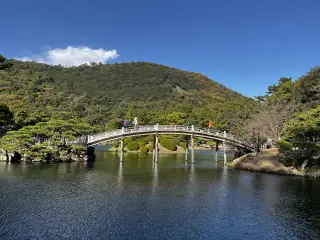
The view of cherry blossoms together with Engetsu-kyo Bridge is as beautiful as a painting.
The illuminated tunnel of cherry blossoms after sunset is also a must-see, with a beauty so vivid it will take your breath away.


Autumn at Ritsurin Garden, Rich and Beautiful with Fall Colors and Pine Trees
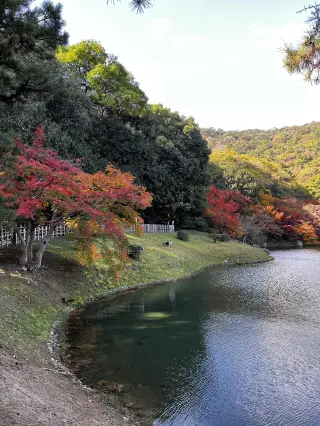
In autumn, the trees across the garden turn color, giving Ritsurin Garden the look of a famous fall foliage spot.
The best time to see the autumn leaves is from late November to early December.
Around 270 trees, including maples, ginkgoes, and wax trees, color Ritsurin Garden in autumn shades.
Take a walk through the grounds and enjoy the fiery reds and warm oranges.
The illuminated autumn leaves reflected on the lake surface create a truly spectacular sight.
Combined with the green of the pine trees, the scenery becomes unbelievably magical.


Enjoy Japanese Atmosphere and Natural Beauty! 5 Highlights of Ritsurin Garden
Ritsurin Garden is filled with highlights throughout the grounds, and even a casual stroll is enjoyable.
Still, if you’re visiting, it’s worth knowing the key spots before you explore.
Here are carefully selected highlights of Ritsurin Garden that you won’t want to miss.
1. Hiraiho, the Best Viewpoint in the Garden
Hiraiho is an artificial hill built to resemble Mt. Fuji and is the finest viewpoint in the garden.
From the summit, you can enjoy a spectacular view of Nanko Pond with Engetsu-kyo Bridge and Mt. Shiun in the background.
You may even be looking at the same scene the feudal lords saw in the Edo period.
Near the top are fossilized plants called keikaboku, which are said to represent both landslide prevention and the snow of Mt. Fuji.

2. Fuyoho, Does It Look Like Mt. Fuji?
Heading north from Hiraiho, you will find another artificial hill called Fuyoho.
From the top of Fuyoho, try looking out over the North Pond and Mt. Shiun rising in the distance.
You can also see the vermilion-colored Bairin-kyo Bridge, making it easy to feel a distinctively Japanese atmosphere in the beautiful natural setting.
When viewed from Bairin-kyo Bridge across the North Pond, Fuyoho is said to look like Mt. Fuji, so be sure to check for yourself.

3. Nanko Sightseeing Japanese Boat, Enjoy the Garden’s Spectacular Views from the Lake
The Nanko Sightseeing Japanese Boat takes about 30 minutes to circle the Approx. 7,890-square-meter Nanko Pond.
Enjoy views from the water with a charm different from those on land.
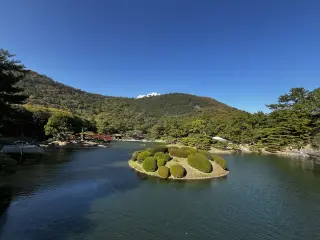
Highlights include the heart-shaped Koi Tsutsuji, the Ryushi no Matsu pine extending out over the water, Tennyo-jima, created around the theme of eternal youth and immortality, and Sengi, which expresses an ideal world using only rocks.
If your timing is right, you may also spot gray herons and kingfishers.
A reservation by phone or through the website is required to board.
By phone, reservations are accepted from the first day of the month before your desired boarding date until the day before use.
The fares for the Nanko Sightseeing Japanese Boat are shown in the table below.
Please note that children under 3 cannot board.
- Adults
- 620 yen
- Children (junior high school age and under)
- 310 yen

4. Sanko Shoreikan, Enjoy Kagawa’s Culture and Art
Sanko Shoreikan is a facility where you can learn about the culture, art, and industries of Kagawa Prefecture.
On the second floor of the main building, you can view furniture created by well-known artists. In the north building, works created for Ritsurin Garden by contemporary artists are on display.
The west building features exhibits on the history and development of Sanuki udon, one of Kagawa’s specialties, as well as a dining area where you can enjoy ingredients from Kagawa.
The east building displays Kagawa lacquerware, and on weekends you can also watch live demonstrations by craftspeople.

5. Tsurukame Matsu, a Pine Tree with an Interesting Story
Tsurukame Matsu stands in front of Sanko Shoreikan and is also known as Hyakkoku Matsu.
Its nickname comes from a story that a chief retainer of the Matsudaira family, a high-ranking samurai official, became so absorbed in caring for the tree that he was late for work and had 100 koku deducted from his salary, worth Approx. 10 million yen today.
A turtle is represented by 110 arranged stones, while the pine branches are shaped to look like a crane with its wings spread in flight.
Be sure to take in its powerful appearance, as striking as Neagari Goyo Matsu.

Enjoy Uniquely Japanese Scenery and Food! 3 Dining Spots Inside Ritsurin Garden
Inside Ritsurin Garden, there are several restaurants and teahouses where you can enjoy Japanese cuisine, tea, and desserts while taking in the scenery.
Experience Japanese food culture while admiring the beautiful views.
1. Hanazono-tei
Hanazono-tei is located about 50 meters south of the main gate of Ritsurin Garden, along a row of pine trees.
You can enjoy meals and tea while looking out over this famous garden, which shows different expressions through the four seasons.
For meals, the morning rice porridge served in the refreshing early-morning air is available not only in the main building but also at the tea room Hanka-tei across from it.
The menu also includes Chagaisan, tea porridge made with the rare tea known as Goishi-cha.
As quantities are limited, it is recommended to inquire in advance.

2. Kikugetsu-tei
Located inside the garden, Kikugetsu-tei is a purely Japanese-style building from the early Edo period, notable for its sukiya-style shoin architecture with a four-sided design that appears front-facing from every direction.
Successive lords of Takamatsu Domain called it the “Ochanoya” and used it to entertain guests.
By paying the admission fee for the teahouse, you can also tour the interior and enjoy matcha or sencha while looking out at magnificent scenery, including Neagari Goyo Matsu, said to have grown from a bonsai gifted by Tokugawa Ienari, the 11th shogun, and the pond known as Nanko.

3. Fukiage-tei
Ritsurin Garden is a nationally designated Special Place of Scenic Beauty that received the highest three-star rating in the Michelin Green Guide Japan.
Within its vast grounds, which span 16 hectares in the flat garden area alone, you will find several dining spots, one of which is Fukiage-tei near Nanko Pond.
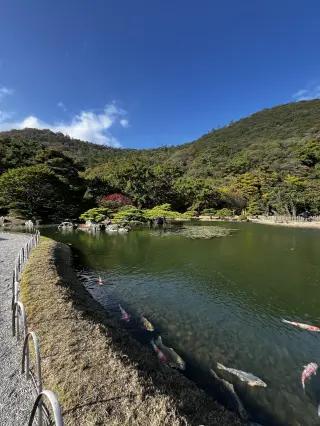
Located just across the famous Engetsu-kyo Bridge over Nanko Pond, it is a place where you can enjoy meals and tea while viewing the seasonal garden scenery and colorful koi swimming in the pond.

3 Popular Kagawa Sightseeing Spots to Visit Along with Ritsurin Garden
Kagawa is full of historic sightseeing spots beyond Ritsurin Garden.
Visit the places introduced below along with Ritsurin Garden and enjoy Japan’s history and culture.
1. Kotohira-gu Shrine
Built on Mt. Zozu, this is the head shrine of all Kotohira shrines and welcomes Approx. 4 million worshippers each year.
The main deity, Omononushi no Kami, has been known since before the medieval period as a guardian deity of maritime traffic and a god who brings abundant harvests and prosperity in industry and culture.
The deity is enshrined in the main sanctuary, which is said to date back to before the Taika Reform.
From the temple town to the main shrine, a long stone stairway continues for no less than 785 steps.
Take your time climbing, one step at a time, with your wishes in mind.

2. Marugame Castle
A symbolic landmark of Marugame with 400 years of history, this hirayama-style castle was built over five years by the warlord Ikoma Chikamasa together with his son Kazumasa.
The stone walls rising from the inner moat to the castle tower boast a height of Approx. 60 meters, the tallest in Japan, and are known for their distinctive curve as the “fan-shaped slope.”
The castle tower is also one of only 12 original wooden castle keeps remaining in Japan and is designated as an Important Cultural Property.

3. Takamatsu Castle Ruins (Tamamo Park)
Takamatsu Castle once served as the residence of the successive feudal lords, four generations of the Ikoma family and 11 generations of the Matsudaira family.
Also known as Tamamo Castle, it is a seaside castle built facing the Seto Inland Sea and is counted among Japan’s three great water castles.
Today, it is open to the public as Tamamo Park.
The castle tower, once the largest in Shikoku, was dismantled in 1884 due to deterioration, but buildings such as Tsukimi Yagura, Mizute Gomon, Watari Yagura, and Ushitora Yagura remain, are designated as Important Cultural Properties, and can be toured.

3 Places Near Ritsurin Garden to Enjoy Authentic Sanuki Udon
Near the famous Ritsurin Garden, you’ll find a number of well-known spots where you can casually enjoy Kagawa’s proud local specialty, Sanuki udon.
From classic bowls with freshly made, satisfyingly chewy noodles to carefully crafted udon with fragrant broth, here are places worth stopping by during your trip to enjoy authentic local flavor.
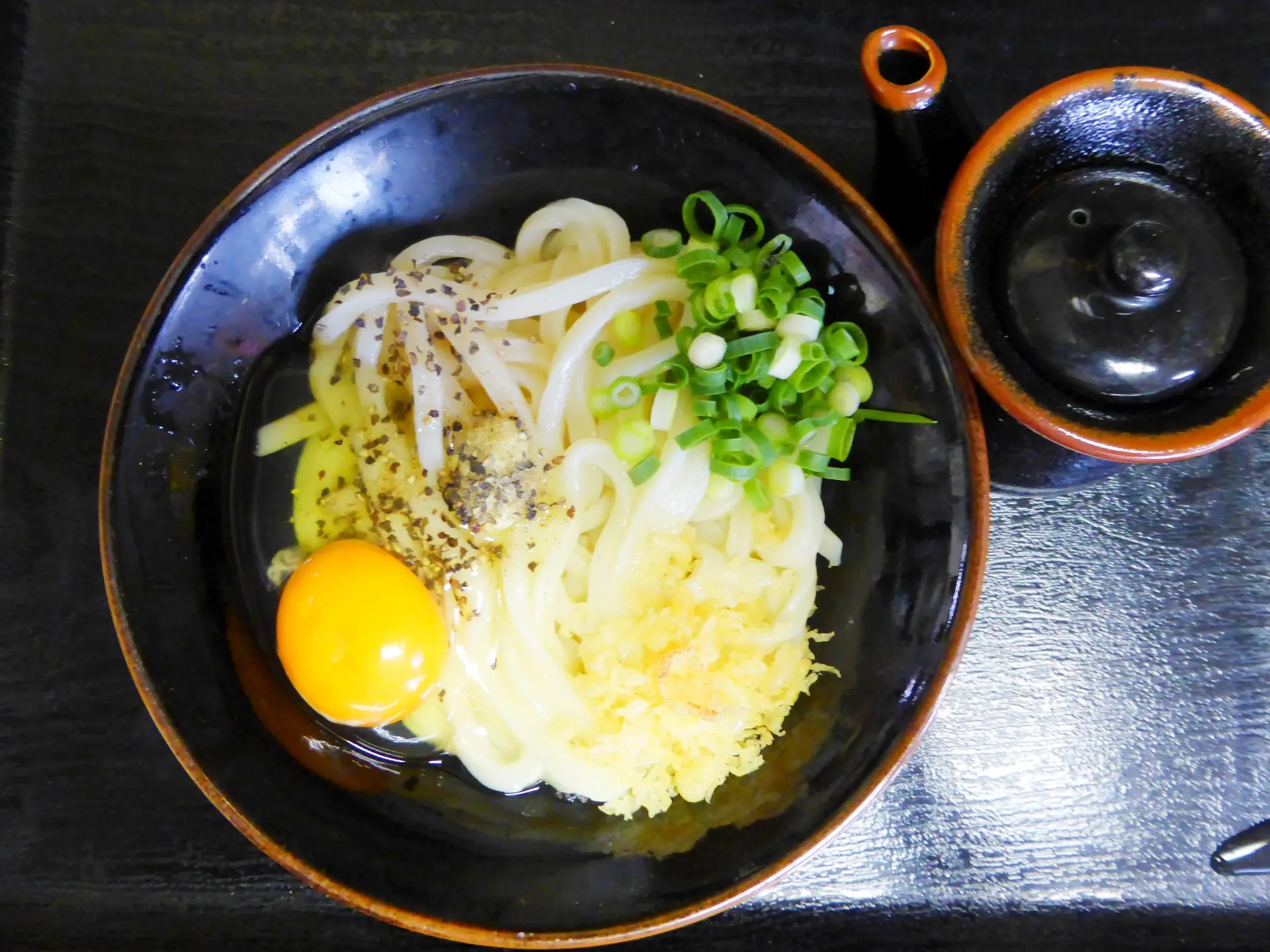
1. Tedan Udon Baka Ichidai
Udon Baka Ichidai is a famous udon specialty shop about a 7-minute walk from Kawaramachi Station on the Kotoden line, and it is well known for its long lines.
It has been featured in TV programs, magazines, and other media, and many celebrities also visit.
The noodles are made using specially selected flour and carefully hand-prepared by hand.
The shop is so committed to freshness that it considers udon more than 10 minutes out of the pot to be past its best, which is why fresh-made udon is served whenever you visit.
2. Merikenya Takamatsu Ekimae
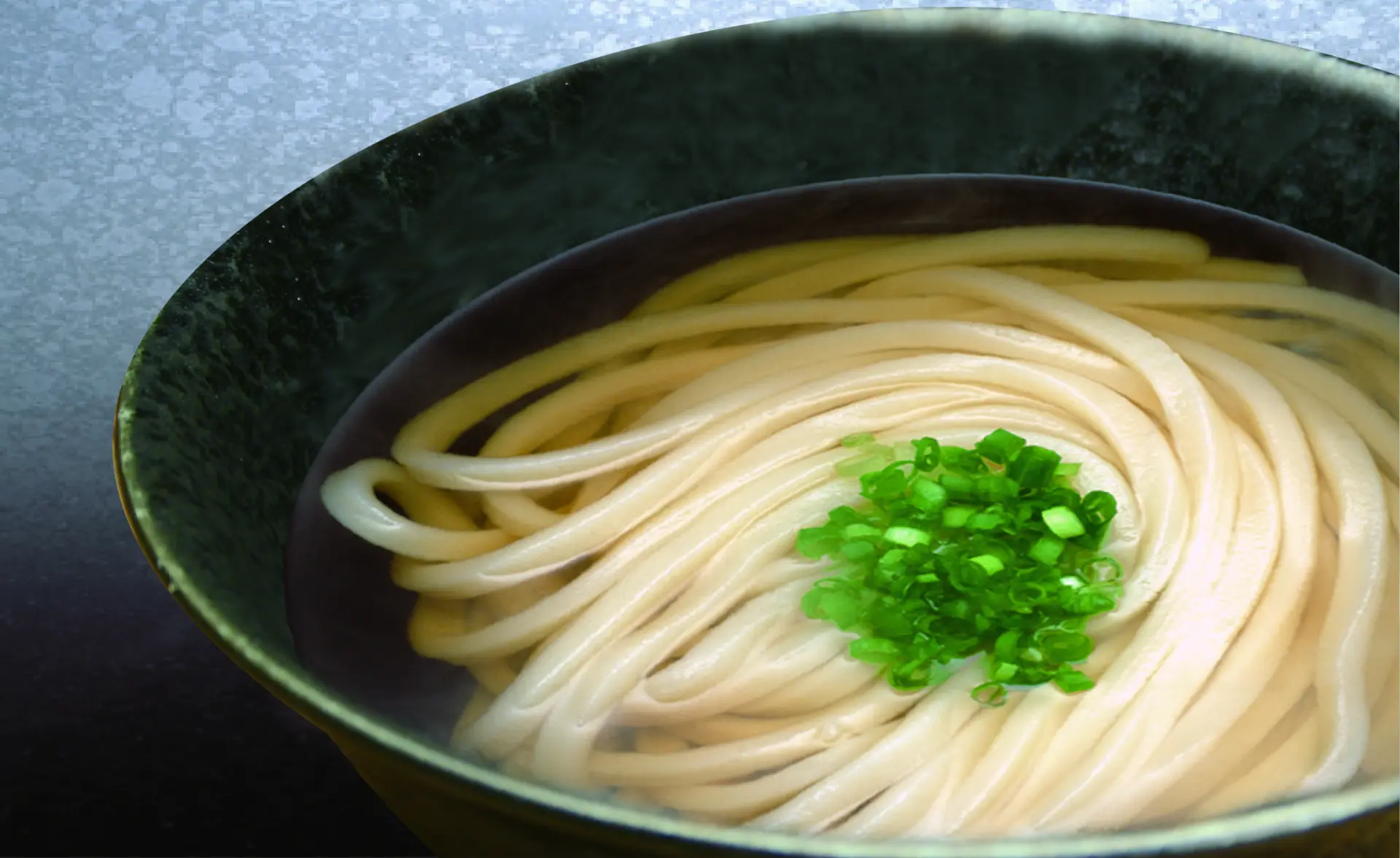
Merikenya Takamatsu Ekimae is about a 2-minute walk from Takamatsu Station.
It is a self-service Sanuki udon chain where you carry a tray and place your order.
Along with udon, you can also add fried toppings or rice balls to suit your taste.
There are more than 10 kinds of udon, including kake udon, meat bukkake udon, and soy sauce udon.
The fried items are also varied, including croquettes, tempura flounder, sweet potato, shrimp tempura, rapeseed blossoms, and, depending on the season, tempura conger eel from the Seto Inland Sea.
3. Sakaeda Udon Main Store
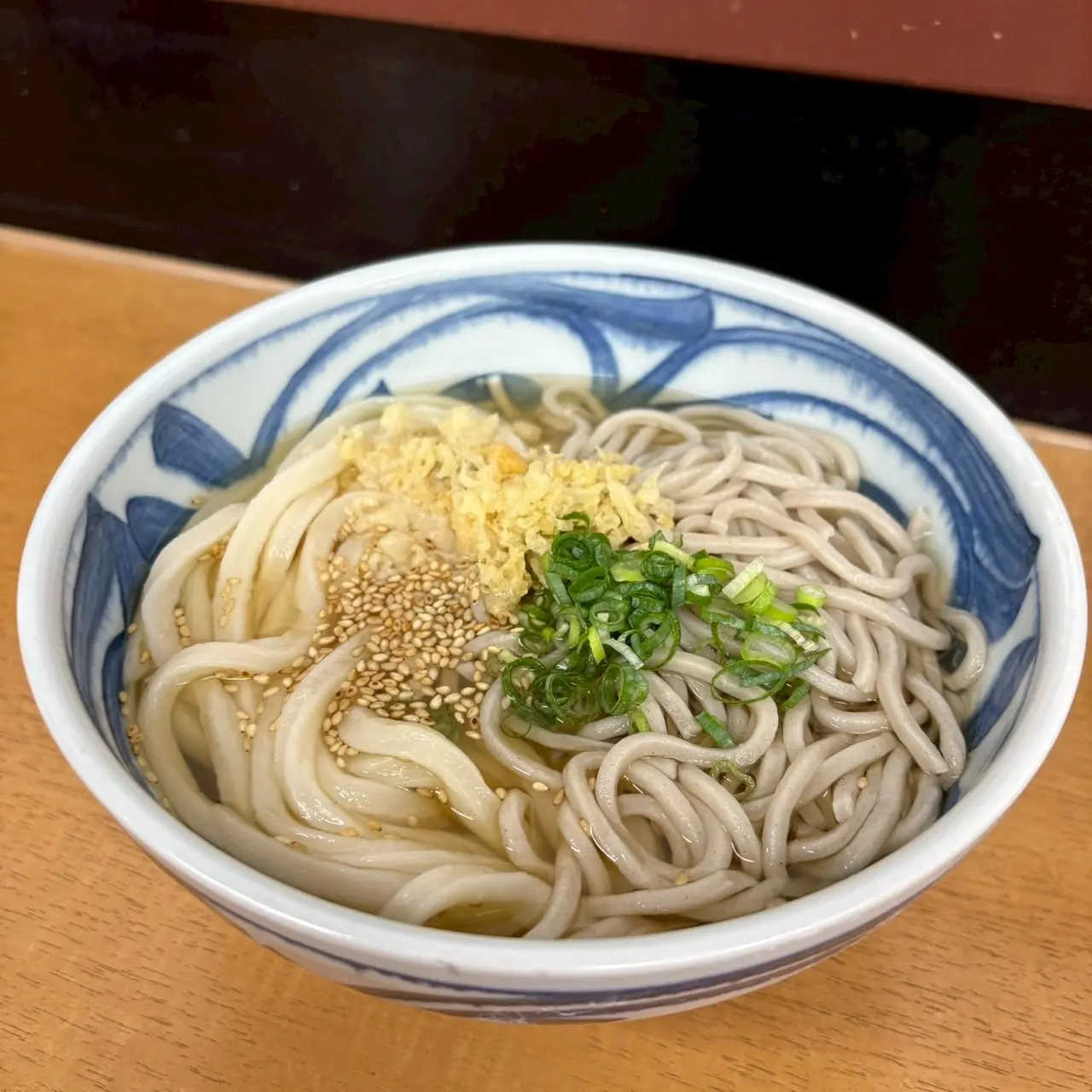
Sakaeda Udon Main Store is located behind the Kagawa Prefectural Government Office in Takamatsu City.
It is a long-established hand-made udon shop founded in 1963.
Open from 7:00am, it is busy with both locals and tourists.
Customers warm the noodles themselves, add broth from a faucet, and top them with ingredients of their choice.
The menu includes eight kinds: kake udon, hiyakake udon, bukkake udon, meat udon, meat bukkake udon, kamakake udon, kamatama udon, and kamaage udon.
More than 60 kinds of tempura are lined up, and you can freely choose what you like.
Reviews
4.68
Some reviews are AI-translated.
-
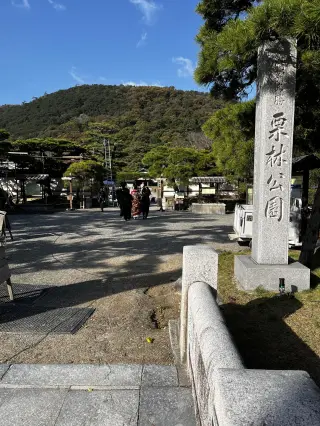
The moment you walk in, you’re greeted by a beautiful garden. No matter where you wander, it’s picturesque, and every view makes you want to stop and take it in for a while. It’s the kind of place you don’t want to leave.
-
Such a peaceful place. As soon as you walk in, you automatically slow down. The little bridges, flowing water, pine trees, and ponds—every view feels so poetic.
-
If you're going for a walk in Ritsurin Garden, it's best to go early in the morning before the crowds arrive. You can really take your time and enjoy the scenery, and every photo of the Japanese garden turns out beautiful! After exploring, have your pre-booked breakfast and soak up the peaceful, relaxing vibe.
FAQ about Ritsurin Garden
Q
How much time do you need to visit Ritsurin Garden?
A
If you're just strolling, 1 hour is enough. If you plan to have lunch or shop, allow 2 to 3 hours.
Q
Are there places to have lunch inside Ritsurin Garden?
A
Yes, you can enjoy Japanese food and Italian cuisine.
Summary
In this article, we introduced the highlights, dining spots, and other useful information to know for enjoying Ritsurin Garden.
Its vast grounds are filled with places where you can experience the beauty of Japan.
Enjoy the views from a Japanese boat, as well as the cherry blossoms in spring and autumn leaves in fall. If you take an early morning walk, you can also try the gentle and comforting morning rice porridge.
Be sure to visit Ritsurin Garden and take in its scenic beauty.
Beyond Ritsurin Garden, Kagawa also offers many places where you can enjoy history, nature, food, and shopping.
If you want to enjoy sightseeing in Kagawa, be sure to read the article below as well.