
![[Dejima Travel Guide] A One-of-a-Kind Spot Where Edo and Western Cultures Blend](https://static.gltjp.com/glt/data/article/21000/20437/20230926_101955_337a6308_w1920.webp)
[Dejima Travel Guide] A One-of-a-Kind Spot Where Edo and Western Cultures Blend
Dejima is filled with an exotic atmosphere, where historic streetscapes blend with modern city scenery.
It is a popular sightseeing destination known for its unique charm and character that you will not find in other cities.
This article introduces the highlights you should know before visiting Dejima, the best seasons for sightseeing, and nearby tourist attractions.
If you are planning a trip to Dejima, be sure to read this article before you go. It will help you enjoy your visit even more.
What is Dejima Like?
Located in Nagasaki City, Nagasaki Prefecture, Dejima was Japan’s first full-scale artificial island and was once fan-shaped.
After the Meiji era, land reclamation for port development turned it into inland land, making it far removed from its original fan-shaped form and image as an “island.”
Restoration to its Edo-period appearance (1603–1868) began around 1951, and some parts have regained their original look.
Today, it is designated by the national government as a valuable historic site.
Dejima was built during the Edo period to control the Portuguese and prevent the spread of Christianity.
It was one element of Japan’s so-called national isolation policy.
It served as a residential area for Portuguese and Dutch people and functioned as the only open gateway to the West during that period of isolation.
Today’s Dejima features buildings that faithfully recreate both the exterior and interior of the Edo period, with a level of quality that makes it easy to imagine how people lived at the time.
Its blend of Japanese and Western architecture also makes it a popular photo spot.
There are also many places where you can experience, observe, and learn about Edo-period culture, making it a great destination for anyone interested in Japanese history.
You can also enjoy Dejima-style gourmet food made with ingredients from Nagasaki, so there are many ways to enjoy your visit.
There is a shop inside Dejima where you can rent a kimono, so exploring Dejima in traditional dress is also recommended.
That way, you can enjoy sightseeing in Dejima while soaking up even more of its atmosphere.
One of Dejima’s greatest attractions is the chance to experience Japanese history and culture in a place that once served as a site of international exchange during Japan’s isolation in the Edo period.


Access to Dejima
Here is how to get to Dejima starting from Nagasaki Station, a key transportation hub for sightseeing in Nagasaki.
- Route
-
1. Take a local bus bound for Shinchi Chinatown and get off at Shinchi Chinatown
2. Approx. 5-minute walk - Travel time
- Approx. 10 minutes
Dejima Hours and Admission
Please refer to the table below for Dejima’s hours and admission fees.
Hours vary by facility within Dejima, so if there is a place you want to visit, be sure to check its hours in advance.
- Hours
- 8:00am–9:00pm (Last admission at 8:40pm)
- Admission
-
, Adults: 520 yen
, High school students: 200 yen
, Elementary and junior high school students: 100 yen
What Is the Best Season to Visit Dejima?
If you are planning to visit Dejima, spring or fall is recommended.
You will be exploring the area on foot, so it is best to visit in a season with comfortable temperatures.
Nagasaki, including Dejima, is a popular sightseeing destination that draws many visitors year-round.
To avoid the biggest crowds, it is safest to skip peak vacation periods such as summer holidays and New Year.
A Distinctive Blend of Japanese and Western Styles! 7 Popular Spots in Dejima
Dejima is full of one-of-a-kind sightseeing spots where Edo- and Meiji-period culture blends with Western influences.
While it may feel nostalgic in some ways, you will also get to experience a fresh culture unlike anything you have encountered before.
Among Dejima’s many fascinating attractions, here are the spots you should definitely visit.
1. Dejima Omotemon Bridge, a Bridge from the Present to the Past
Dejima Omotemon Bridge was built in 2017 as a new bridge connecting Nagasaki and Dejima.
It was designed with a modern look so it would not be mistaken for a restoration of historical Dejima, while also preserving the surrounding scenery.
As a result, the visually unique and attractive Dejima Omotemon Bridge was completed.
It also won the Good Design Award in 2018.

2. A Popular Photo Spot, the Kapitan Room
“Kapitan” refers to the Dutch trading post chief, and the Kapitan Room was his residence.
The first floor was used for storage and other purposes, while the second floor served as both living quarters and an office, and was also used for entertaining guests.
The highlight of the Kapitan Room is its interior.
The walls are covered with wallpaper featuring traditional Japanese patterns, creating a harmonious space that blends Western-style interiors with Japanese-style wallpaper.
This unique setting has also made it a popular photo spot.

3. The Exotic Former Dejima Seminary
The Former Dejima Seminary is the oldest surviving Christian seminary building in Japan.
Here, “Christian” refers specifically to Protestant Christians.
It was used both to spread Christianity in Japan and to train pastors.
With its strong foreign atmosphere, it has the distinctive charm that perfectly suits Dejima’s exotic character.
Next to the Former Dejima Seminary is a miniature called “Mini Dejima,” which recreates Dejima at one-fifteenth of its original size.


4. Warehouse No. 14, Where You Can Learn About Dejima’s History
Warehouse No. 14 was a storage building where imported sugar was kept.
There were many warehouses in Dejima used to store sugar, showing that sugar was one of Dejima’s main imports.
Warehouse No. 14 was restored in 2016, and its appearance gives a glimpse of the high level of restoration craftsmanship behind its period look.
Today, the building houses exhibits about the construction of Dejima and Dejima Bridge.

5. Hetor Room, Where You Can Learn About Life and Culture in the Edo Period
Hetor referred to a person ranked just below the trading post chief, in other words, the second-in-command. Like Kapitan, it is also a Portuguese term.
At the time, the Hetor Room was used as a residence.
Today, you can buy Dejima goods at the museum shop on the first floor, and enjoy special exhibitions on the second floor.
It is a place where you can learn about daily life and culture of the time through hands-on experiences.

6. Hairei Hissha Oranda-jin Room (Rangakukan), Where You Can Experience the Connection Between Edo and the Netherlands
The Hairei Hissha Oranda-jin Room (Rangakukan) was used as the residence of the chief clerk and secretary of the Dutch trading post.
Today, it is a valuable facility where you can see exhibits related to Rangaku, the study of knowledge learned from the Dutch.
Items such as microscopes and pillar clocks used in the Edo period are on display, allowing you to feel the history of exchange with Western culture firsthand.

7. Nagasaki Naigai Club Restaurant, Where You Can Taste Nagasaki Specialties
At this restaurant, housed in the historic Meiji-era building of the former Nagasaki Naigai Club, you can enjoy Western-style dishes and sweets connected to Nagasaki.
The classical building is a British-style Western building from the Meiji period, built in 1903.
At the time, the Nagasaki Naigai Club was established as a place where foreigners living in Nagasaki and Japanese people could interact.

4 Tourist Spots with an Exotic Atmosphere Around Dejima
Because Dejima has long been connected with foreign cultures, many nearby spots also feature the culture and architecture that grew out of those exchanges.
After fully enjoying Dejima, be sure to visit the places introduced below as well.
You will likely gain an even deeper understanding of Dejima and the culture around it.
1. Nagasaki Shinchi Chinatown
Shinchi Chinatown is one of Japan’s three major Chinatowns, along with those in Kobe and Yokohama.
Though small and compact, about 40 shops line a cross-shaped area stretching Approx. 250 meters east to west and north to south, selling Chinese food, Chinese sweets, and Chinese goods.
Along with trying champon and sara udon, it is also fun to snack as you walk on local favorites such as hatoshi, a fried shrimp paste sandwich, and kakuni manju, a bun filled with melt-in-your-mouth braised pork belly.

2. Dutch Slope
One of Nagasaki’s best-known sightseeing spots, Dutch Slope refers to the stone-paved slopes that remain in the hillside district where the foreign settlement once stood.
The best-known Dutch Slope areas are the slope below Kwassui Gakuin, Katsuizaka, and the slope in front of Jokoin Temple.
The slope below Kwassui Gakuin was cut through when the settlement was developed, and if you walk up it, you will see a stone monument marking Dutch Slope. The slope continuing beyond that is Katsuizaka, also used as a school route for Kwassui Gakuin.

3. Higashiyamate Building No. 12
This nationally designated Important Cultural Property stands in one corner of the Higashiyamate area, where the former foreign settlement was developed from the late Edo period to the early Meiji period.
It is a representative example of early Western-style architecture in Japan, and you can see several highly original architectural styles in one building.
On the front side is a main building with a wide veranda, and its dignified appearance is fitting for a structure that was once used as a consulate.

4. Nagasaki Dejima Wharf
In front of the two-story building stretches a 150-meter deck with panoramic views of Nagasaki Port, including ferries and cruise ships entering and leaving the terminal, as well as yachts moored in the harbor.
The observation deck connecting the two buildings is also a scenic spot with views of Mount Inasa and Megami Bridge.
The port at night is also a must-see, when the harbor and sailing ships are illuminated and the atmosphere turns romantic.

3 Popular Places to Eat Around Dejima
As you walk through Dejima’s streets, where foreign influences remain strong, the variety of food naturally draws you in as well.
The area is home to a wide range of distinctive restaurants, including casual spots where you can enjoy flavors unique to Nagasaki.
Be sure to try the colorful local food that makes you want to stop by during a stroll.
1. Nagasaki Wagyu Yakiniku Pure
Nagasaki Wagyu Yakiniku Pure is a yakiniku specialty restaurant located near Shinchi Chinatown. It is just a short walk from the Nagasaki Electric Tramway’s Shinchi Chinatown stop.
It is operated by JA Zen-Noh Nagasaki and has deep ties to local agriculture and livestock products. It is recognized both inside and outside the prefecture as a base for promoting the quality of Nagasaki Wagyu, and has long been used by local residents as well.
The menu centers on Nagasaki Wagyu, known for its well-balanced meat quality with both lean meat and marbling.

2. Kaisen Ichiba Nagasakiko Dejima Wharf Main Store
Kaisen Ichiba Nagasakiko Dejima Wharf Main Store is a seafood izakaya located inside Nagasaki Dejima Wharf.
Facing Nagasaki Port, it serves fresh local seafood and is known as a place where you can enjoy seafood from Nagasaki.
The menu mainly features seafood from Nagasaki, and sometimes includes tuna, sea urchin, and salmon roe shipped directly from Tokyo’s Tsukiji.

3. Bistro Bordeaux
Bistro Bordeaux is located in the Hamamachi Arcade in Nagasaki City. It is a Western-style restaurant known as one of the birthplaces of Turkey Rice.
It is widely recognized as a restaurant serving one of Nagasaki’s signature local dishes. Since opening in 1987, it has focused on carefully selected local ingredients.
Its signature dish is Turkey Rice, served in the restaurant’s own style with pilaf, tonkatsu, tomato sauce pasta, and demi-glace sauce.

3 Recommended Places to Stay Around Dejima
Dejima, which still tells the story of a place where Japanese and Western cultures once crossed paths, is an important base for sightseeing in Nagasaki.
The surrounding area is easy to explore on foot, whether you want to stroll around the port or the city center, letting you stay close to the changing character of the city throughout your trip.
From here, let’s look at convenient accommodations that make it easy to enjoy walking around Nagasaki and getting to sightseeing spots.
1. Hotel H2 Nagasaki
Set against the backdrop of Nagasaki’s history as a place of cultural exchange with overseas countries since the Edo period, this hotel carries on the spirit of hospitality once found in traditional Japanese inns.
The lobby has an inviting atmosphere where even strangers can gather casually, with a space designed to feel as relaxing as a living room at home.
Guest rooms range from compact 9-square-meter Minimal Singles to Smart Twins of at least 20 square meters and 34-square-meter Connecting Rooms, all featuring minimalist design focused on functionality and comfort.

2. Hotel Monterey Nagasaki
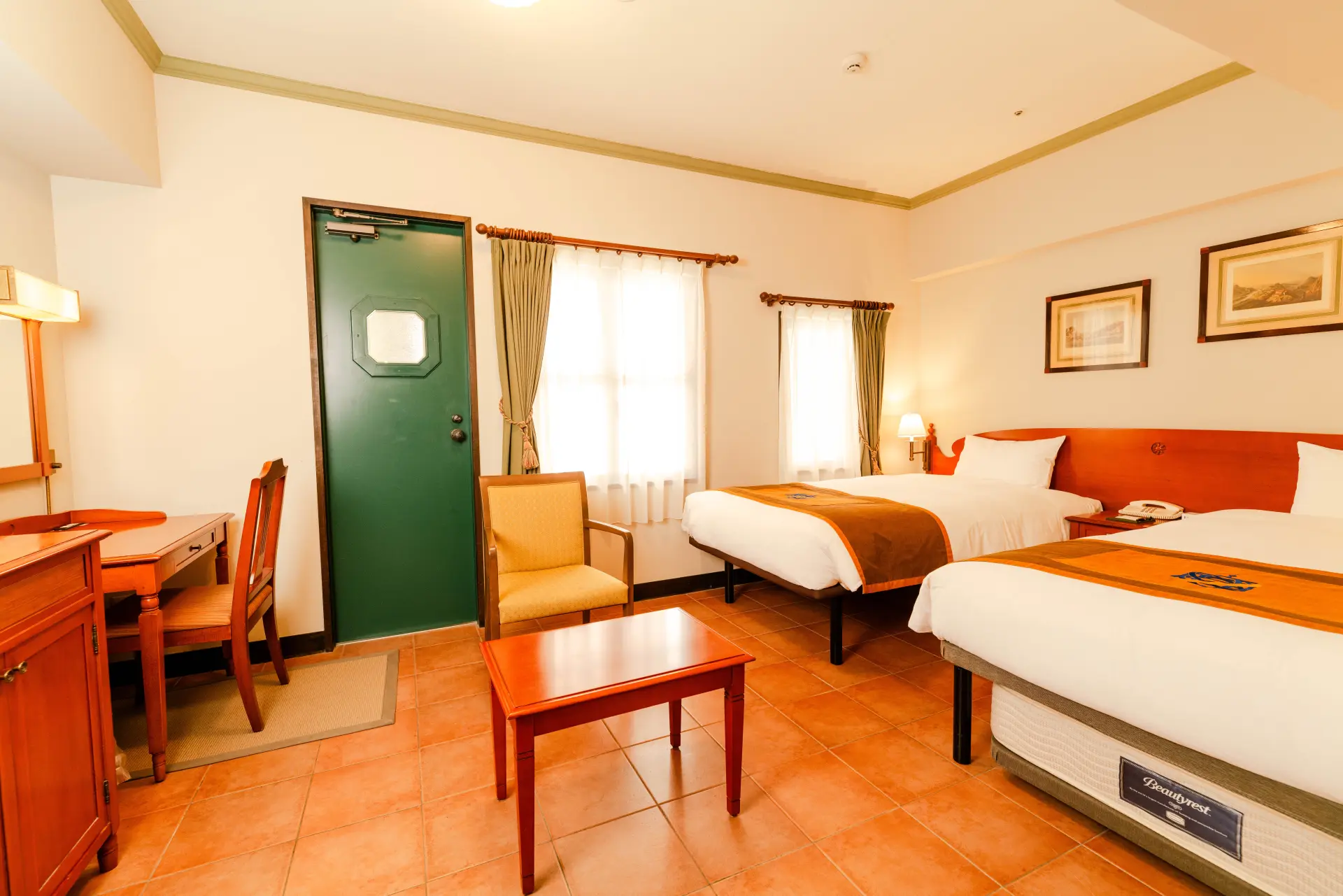
This hotel features an exotic atmosphere with a Southern European Portuguese-inspired design.
Its exterior, with white walls, orange roofs, and a stone-paved courtyard, creates a striking appearance that seems to symbolize Nagasaki’s history of intercultural exchange.
Inside, antique furniture and tile decorations known as azulejos create a space reminiscent of a Southern European residence.
3. Garden Terrace Nagasaki Hotel & Resort
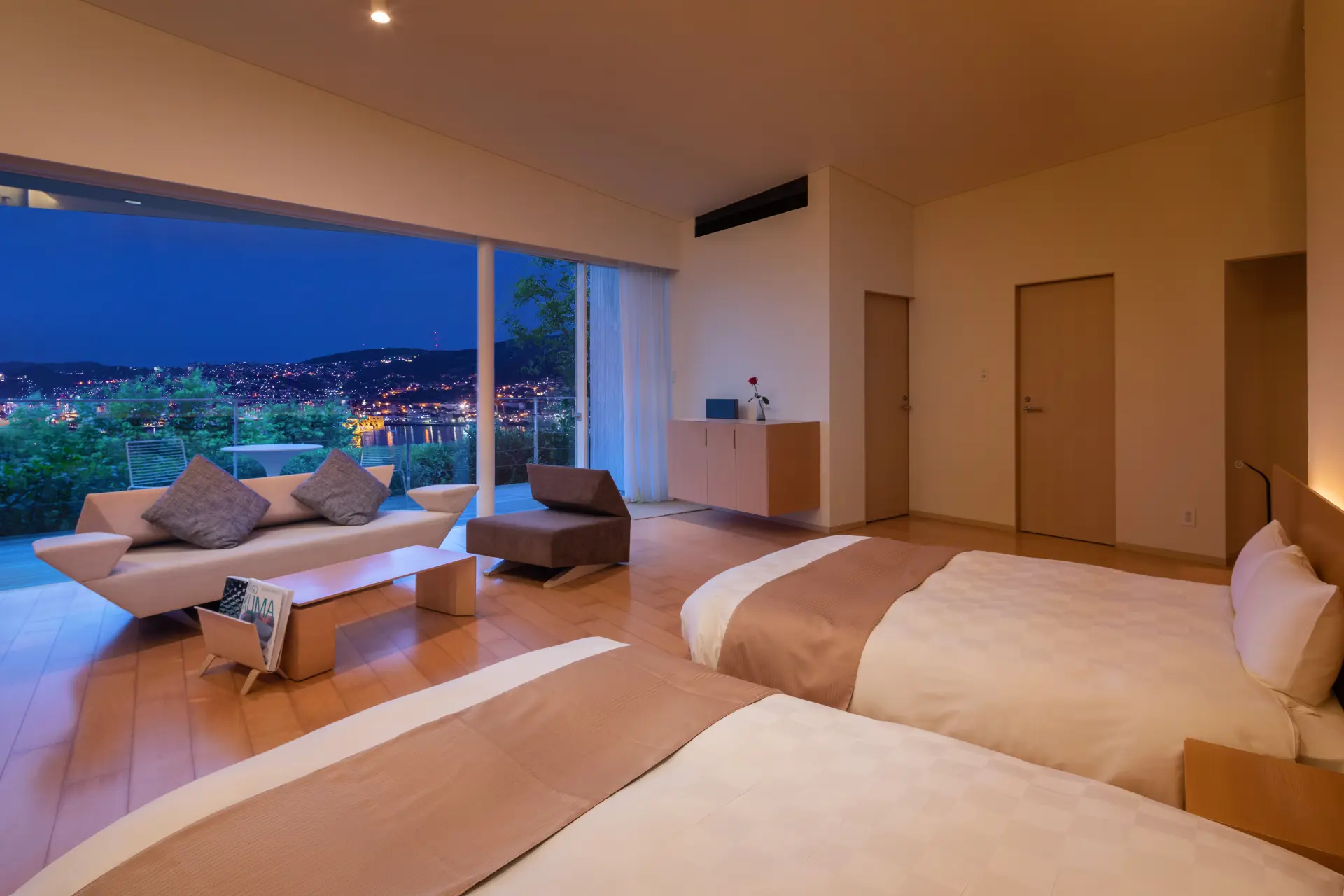
With three accommodation buildings, the Main Building, detached villas, and the New Building, this hotel stands on a hill overlooking Nagasaki Port and the city.
Spread out before you are houses lining the mountainside and regular ships departing from Nagasaki Port.
At night, a jewel-like cityscape comes to life, offering a Nagasaki view you will want to keep gazing at.
Reviews
3.63
Some reviews are AI-translated.
-
It’s a port town, but unlike Kobe or Yokohama, you can stroll around quietly and just enjoy the views.
Right across the way is Mount Inasa, so after you finish walking around here during the day, you can head over there to see the night view. -
They've restored the lively atmosphere from when trade with the Dutch was happening. If you're interested in Nagasaki, you should definitely check this place out.

FAQ about Dejima
Q
Does Dejima still remain in its Edo-period shape today?
A
Its original appearance was lost after the Meiji era, but restoration is now underway.
Q
Why was Dejima built?
A
It was built to control the Portuguese and prevent the spread of Christianity.
Summary
This article has introduced Dejima’s basic information, history, and sightseeing spots.
The unique space found in Dejima, where Western culture was incorporated into Edo-period culture and architecture, exists nowhere else.
If you are visiting Nagasaki, be sure to stop by Dejima and enjoy experiences you can only have here.
If you are planning a trip to Nagasaki, you may also want to check out this article featuring a carefully selected list of Nagasaki’s most attractive spots.