
![[Okazaki Castle Travel Guide] Discover a Historic Castle Tied to Tokugawa Ieyasu and Stunning Cherry Blossom Views](https://static.gltjp.com/glt/data/article/21000/20470/20231011_192921_6db839da_w1920.webp)
[Okazaki Castle Travel Guide] Discover a Historic Castle Tied to Tokugawa Ieyasu and Stunning Cherry Blossom Views
Tokugawa Ieyasu, the founder of the Edo shogunate that lasted for 265 years.
Okazaki Castle, rising in Okazaki City, Aichi Prefecture, is the very place where he was born.
Its deep history is fascinating, and its grandeur as a piece of architecture is equally striking.
Thoughtfully curated exhibits are another highlight, giving the castle plenty of appeal as a sightseeing destination.
In this article, we’ll take a closer look at the highlights of Okazaki Castle, the best seasons to visit, and more.
Before visiting Okazaki Castle and nearby sightseeing spots, be sure to check the key information you should know.
What is Okazaki Castle Like?
Okazaki Castle is located in Koseicho, Okazaki City, Aichi Prefecture, in an area once known as Okazaki Domain in Mikawa Province, the eastern half of present-day Aichi Prefecture.
It is known as the birthplace of Tokugawa Ieyasu, one of Japan’s Three Great Unifiers alongside Oda Nobunaga and Toyotomi Hideyoshi, and is also known by the alternate name Tatsugajo Castle.
Okazaki Castle has been selected as one of Japan’s Top 100 Castles and is highly regarded for its historical and cultural importance.
Okazaki Park, a historic park centered around Okazaki Castle, covers 10 hectares and is such a famous cherry blossom spot that it has been selected as one of Japan’s Top 100 Cherry Blossom Viewing Sites.
When the cherry blossoms reach their peak, Okazaki Park and Okazaki Castle become lively with many visitors from Japan and abroad.
Its deeply historic buildings and natural scenery are major attractions, and the museum and extensive exhibits inside Okazaki Castle are also among its highlights.
Even if you are not familiar with castles or history, this famous castle offers plenty to enjoy.
Okazaki Park also has a good selection of dining spots, so if you get tired while sightseeing, it is recommended to take a break and enjoy a meal.
History of Okazaki Castle
The history of Okazaki Castle begins with its construction by Saigo Yoritsugu.
The original site was different from that of the present-day castle, and it is said to have once stood around what is now Myodaiji.
Later, Matsudaira Kiyoyasu, the grandfather of Tokugawa Ieyasu, moved it to its current location, and it came to be known as Okazaki Castle.
Also called Tatsugajo Castle, Okazaki Castle has long been associated with dragons, and one legend says that when Takechiyo, later Tokugawa Ieyasu, was born, a golden dragon that brought black clouds and wind appeared and ascended to heaven.

Access to Okazaki Castle
Here is how to get to Okazaki Castle starting from JR Nagoya Station, a major base for getting around while sightseeing in Aichi.
- Route
-
1. Walk from JR Nagoya Station to Meitetsu Nagoya Station
2. Take the limited express from Meitetsu Nagoya Station and get off at Higashi-Okazaki Station
3. Approx. 15 minutes on foot from Higashi-Okazaki Station - Travel time
- Approx. 1 hour
Admission Fees and Hours for Okazaki Castle
The hours and admission fees for Okazaki Castle are summarized in the table below for your reference.
Please note that it is closed from December 29 to 31, so take care if you plan to visit at the end of the year.
Okazaki Park is open 24 hours a day, and there is no admission fee.
- Hours
- 9:00am–5:00pm (Last admission at 4:30pm)
- Admission
-
・Adults (junior high school students and older): 300 yen
・Ages 5 and older: 150 yen
What Is the Best Season to Visit Okazaki Castle?
If you are planning a sightseeing trip to Okazaki Castle, spring is highly recommended.
That is because Okazaki Park, including Okazaki Castle, is such a famous cherry blossom spot that it has been selected as one of Japan’s Top 100 Cherry Blossom Viewing Sites.
When the cherry blossoms are at their best, a spectacular landscape of 800 cherry trees in full bloom spreads across Okazaki Park and the surrounding area.
The scenic view of Okazaki Castle and the blossoms is a highlight, as is the contrast with the nearby river.
The cherry blossom festival held at Okazaki Park is also not to be missed.
Although the dates may change depending on blooming conditions, it is usually held around late March to early April each year.
The illuminations are another highlight, and the magical beauty of the cherry blossoms at night is especially popular.
The best time to see the blossoms is from late March to early April.


Okazaki Castle Keep, Packed with Highlights
Although Okazaki Castle has been rebuilt many times, its current form was reconstructed in 1959.
The castle’s most distinctive features are its three-tier, five-story reinforced concrete structure and the faithful recreation of features such as the yagura turrets in their Edo period (1603–1868) style.
Each floor of Okazaki Castle features engaging exhibits.
The first floor is an anagura cellar surrounded by stone walls, where you can observe the foundation stones that supported the pillars of the former keep.
The second floor presents materials related to Okazaki Castle, focusing on its origins and including models and illustrated maps produced during the Edo period (1603–1868).
The third floor is notable for its AR and diorama displays, where you can experience the lively castle town that once prospered as a transportation hub and learn why its traditional industries flourished.
The fourth floor is an interactive theater, with images of the castle town projected onto the floor and walls.
In this immersive space, you can enjoy comparing life today with life in those days.
The fifth floor, which serves as an observation room, offers a sweeping panoramic view over Okazaki City and its beautiful townscape.

Experience the History and Appeal of Tokugawa Ieyasu! 5 Highlights of Okazaki Park
The highlights of Okazaki Park are not limited to the castle keep.
Inside the park are many sightseeing spots connected to the history and legends of Okazaki Castle, and some are also known as lucky power spots.
Enjoy Okazaki Castle from various angles while learning about its history.
From here, we will introduce a carefully selected list of especially unmissable spots among the many highlights of Okazaki Park.
1. Mikawa Bushi no Yakata Ieyasu-kan, where you can learn about the life of Tokugawa Ieyasu
At Mikawa Bushi no Yakata Ieyasu-kan, permanent exhibitions in five sections introduce the life of Tokugawa Ieyasu from his birth to the unification of the country, along with seasonal special exhibitions.
Swords and armor are on display, and there are also hands-on corners where you can try on armor and experience the weight of helmets. Experience firsthand the appearance and lives of the warriors who lived in that era.

2. Toshogu Ubuyu no Ido, a power spot for good fortune and career success
When Takechiyo, later Tokugawa Ieyasu, was born at Okazaki Castle, the water from Toshogu Ubuyu no Ido is said to have been used for his first bath.
Because Tokugawa Ieyasu later rose to greatness, it is also known as a good fortune spot and is said to bring blessings for luck and career success.
You can draw up and touch the well water, making it one of the highlights of Okazaki Park.

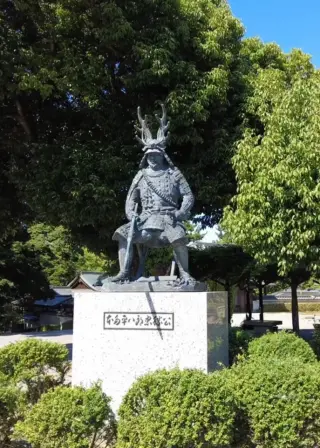
3. The Shikami Statue, preserving the image of Ieyasu after defeat
The Shikami Statue, modeled after Tokugawa Ieyasu, is distinctive for its grimacing expression and pose with its cheek resting on one hand.
This statue was created by a sculptor from Okazaki City and donated in 2007.
It is based on a famous story from the Battle of Mikatagahara, known as one of Tokugawa Ieyasu’s three greatest hardships, in which he had an artist paint his own 모습 after fleeing defeat and kept it as a lesson.
The Shikami Statue is a three-dimensional version of the image from that story, revealing Tokugawa Ieyasu’s character as someone who sought to learn from failure.
That said, there are many doubts about this story, and the view that it was not an actual event has grown stronger.

4. Seikai-bori, a moat of high historical value
Named after the Buddhist name of its builder Saigo Yoritsugu, Seikai Nyudo, Seikai-bori is a dry moat without water that served to prevent enemies and animals from entering the castle.
During the Sengoku period (1467–1615), castles with stone-walled moats were rare.
The current stone walls are Approx. 9 meters high, though they are said to have been 12 meters high at the time.
Its inward-curving shape is another distinctive feature, and you can truly feel its grandeur as a wall blocking the way forward.

5. Tatsuki Shrine, where Tokugawa Ieyasu and his retainer are enshrined
Located inside Okazaki Park next to Okazaki Castle, Tatsuki Shrine enshrines Tokugawa Ieyasu and Honda Tadakatsu as its deities and is said to bring blessings for career success and good fortune.
In 1876, Toshogu, which enshrined Tokugawa Ieyasu inside Okazaki Castle, and Eisei Shrine, which enshrined Honda Tadakatsu, were merged to form Tatsuki Shrine, and the shrine buildings were constructed.
Its appearance is attractive for being both solemn and powerful. It draws many worshippers, especially during the New Year holidays.

3 Tokugawa Ieyasu-Related Sightseeing Spots to Visit Along with Okazaki Castle
Aichi Prefecture is home to many sightseeing spots connected to Tokugawa Ieyasu, not just Okazaki Castle.
The places introduced below are all deeply tied to him as well.
Be sure to visit them together with Okazaki Castle.
1. Nagoya Castle
One of Japan’s largest castles, built in the early Edo period by order of Tokugawa Ieyasu, founder of the Edo shogunate.
At the top of the castle keep with its five-tiered roof shine a pair of golden shachihoko, male and female, making it a symbol of Nagoya.
Honmaru Palace, built in 1615 as the residence of the domain lord and a place of government, is also well worth seeing.
It was destroyed by fire along with the keep in 1945 during the war, but wooden reconstruction work began in 2009 and it was completed and opened to the public in 2018.

2. Inuyama Castle
Its castle keep, designated as one of only five National Treasure castle keeps in Japan, is famous for being said to be the oldest surviving one and for having the characteristics of an early watchtower-style keep.
It is said to have been built in 1537 during the Muromachi period by Oda Nobuyasu, the uncle of Oda Nobunaga. Standing on a small hill with the Kiso River protecting its rear, it is known as a “ushiro-kengo no shiro,” or a castle strong from the rear.
Integrated with the castle town, it became an important center for trade, politics, and the economy.
Because it stood on the border between Owari and Mino Provinces, Oda Nobunaga, Toyotomi Hideyoshi, and Tokugawa Ieyasu all sought to seize it during the Sengoku period, and its lord changed one after another.

3. The Tokugawa Art Museum
An art museum that preserves and displays many treasures passed down through the Owari Tokugawa family.
It opened in 1935, founded by the 19th head of the family, Tokugawa Yoshichika, with the aim of passing daimyo culture on to future generations.
Its collection includes fine swords, armor, tea utensils, Noh theater items, and other masterpieces passed down from Tokugawa Ieyasu to the Owari Tokugawa family, as well as cherished belongings of successive heads of the family and their wives, for a total of more than 10,000 daimyo tools and artworks.

3 Popular Restaurants Near Okazaki Castle
Around historic Okazaki Castle, you will find a variety of places to eat, from casual conveyor-belt sushi for fresh seafood to comforting kamaage udon for a relaxing break, making them perfect stops during your trip. Be sure to check them out.
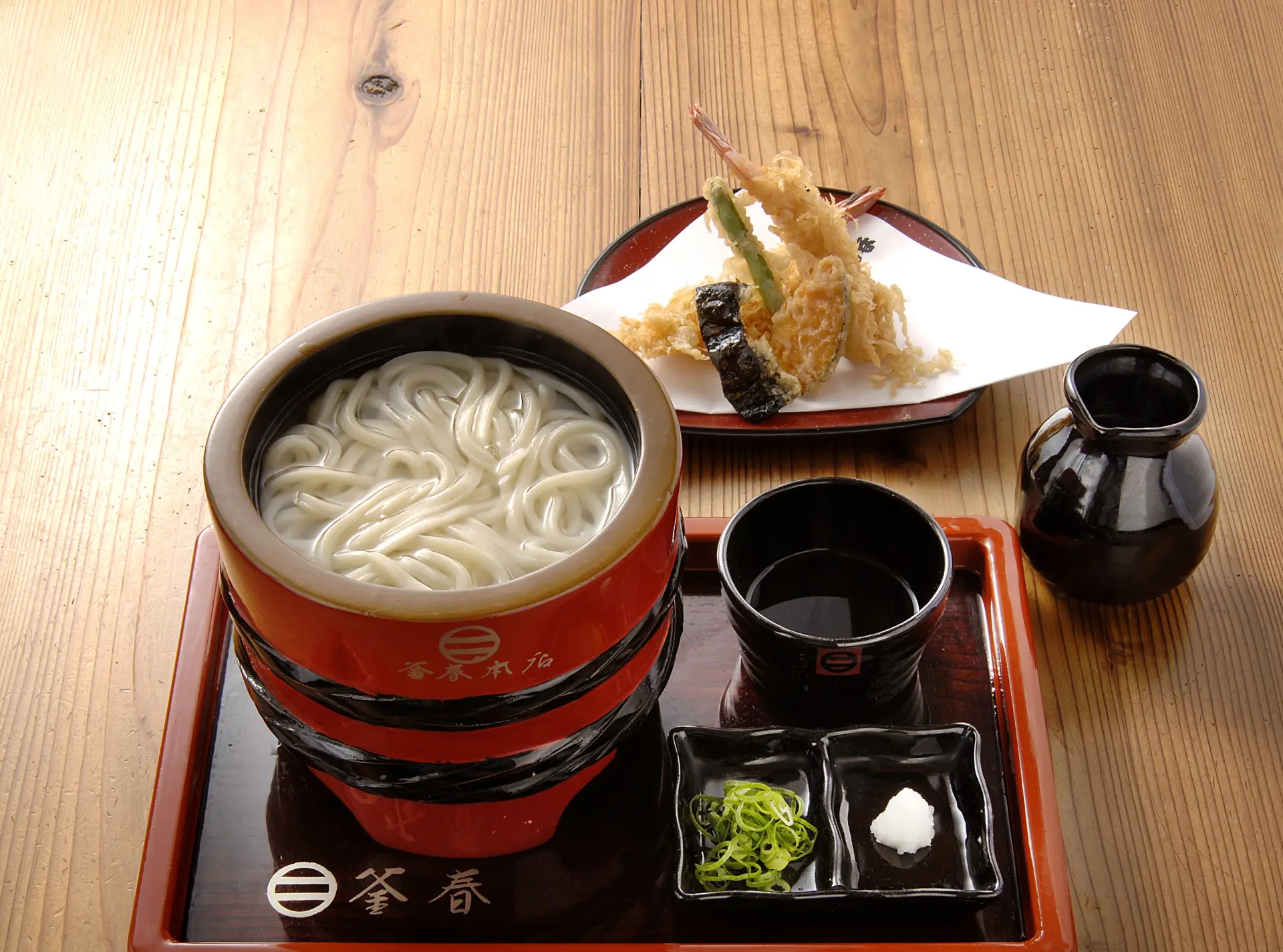
1. Taishoan Kamaharu Main Store
A long-established favorite founded in the mid-Meiji period and known as the birthplace of kamaage udon. Its noodles are highly praised, made with an original flour blend and carefully kneaded with the water and salt balance adjusted according to the day’s temperature and humidity.
The noodles for each day are made that same day, with every effort made to serve them freshly prepared.
The signature kamaage udon pairs perfectly chewy, piping-hot noodles with richly flavored broth.
There is also a wide variety of options, including tororo kamaage udon and tempura kamaage udon.
2. Janome Sushi
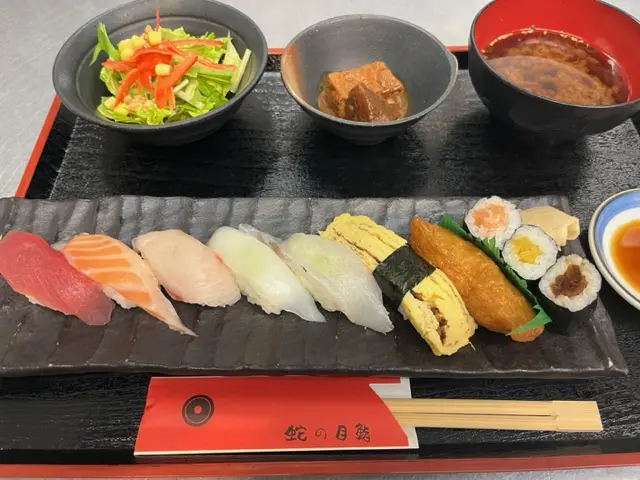
A sushi restaurant conveniently located a 5-minute walk from Meitetsu Higashi-Okazaki Station. The renovated interior has a modern, chic look unified in white, black, and red tones.
With counter seats and sunken kotatsu-style tatami seating, it is easy to use whether you are dining alone or visiting with women or children.
At lunchtime, it is a popular spot among locals who frequently come for the reasonably priced sushi set meal that includes seven pieces of nigiri and rolled sushi.
Its evening sushi set meal is also very satisfying, with eight pieces of nigiri, simmered fish, chawanmushi, red miso soup, and ice cream.
3. Kaisen Edomae Sushi Totomaru Chiryu Main Store
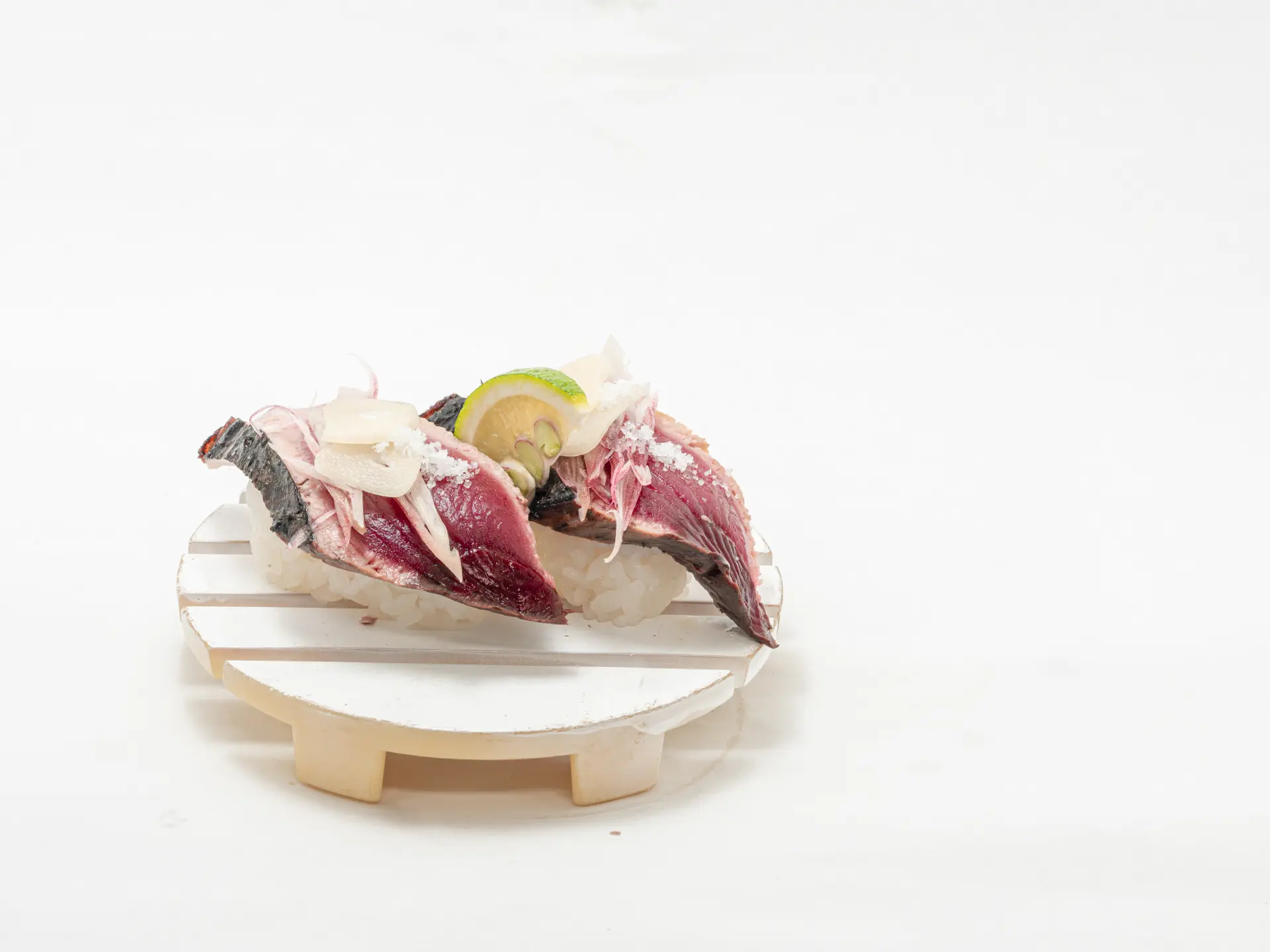
The main branch of Totomaru, an authentic gourmet conveyor-belt sushi chain that originated in the Mikawa region and operates multiple locations mainly in Aichi Prefecture.
With the concept of “freshly cooked, freshly cut, freshly made,” fresh fish is sourced daily from local fishing ports and delivered to the restaurant the same day.
In addition, buyers select carefully chosen ingredients from around Japan. By cutting them fresh in the restaurant, their freshness is preserved.
Another feature is its reasonably priced offerings, including sushi rice made with an original blended vinegar and a special dipping soy sauce designed to harmonize with the toppings.
3 Recommended Places to Stay Near Okazaki Castle
If you want to visit Okazaki Castle while also making the most of sightseeing in Nagoya, these hotels near Nagoya Station are excellent choices.
Along with convenient access, each offers a comfortable space with careful attention to design and atmosphere.
They are also well located for shopping and dining, helping make your trip even more fulfilling.
1. Nagoya Kanko Hotel
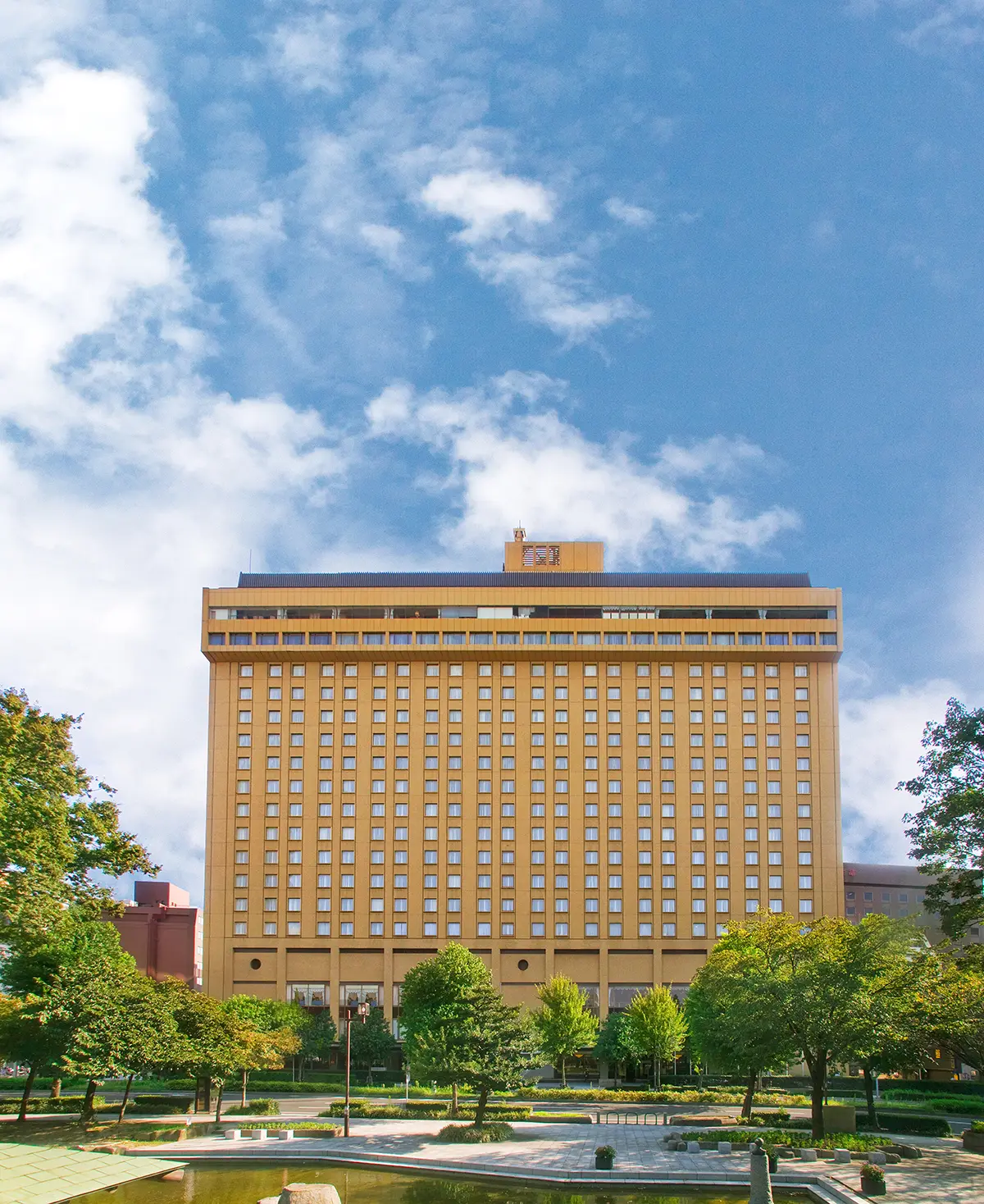
A hotel with the longest history and tradition in Nagoya City, opened in 1936.
Known as the “State Guest House of Chubu,” it has welcomed many distinguished guests and VIPs from Japan and abroad.
Its attentive service, cultivated through its long history, is one of its greatest charms and makes every stay more rewarding.
Guest rooms range from functional business types to family and luxury types, meeting a wide range of accommodation needs.
High-quality amenities such as organic cotton linens are provided so guests can relax in comfort.
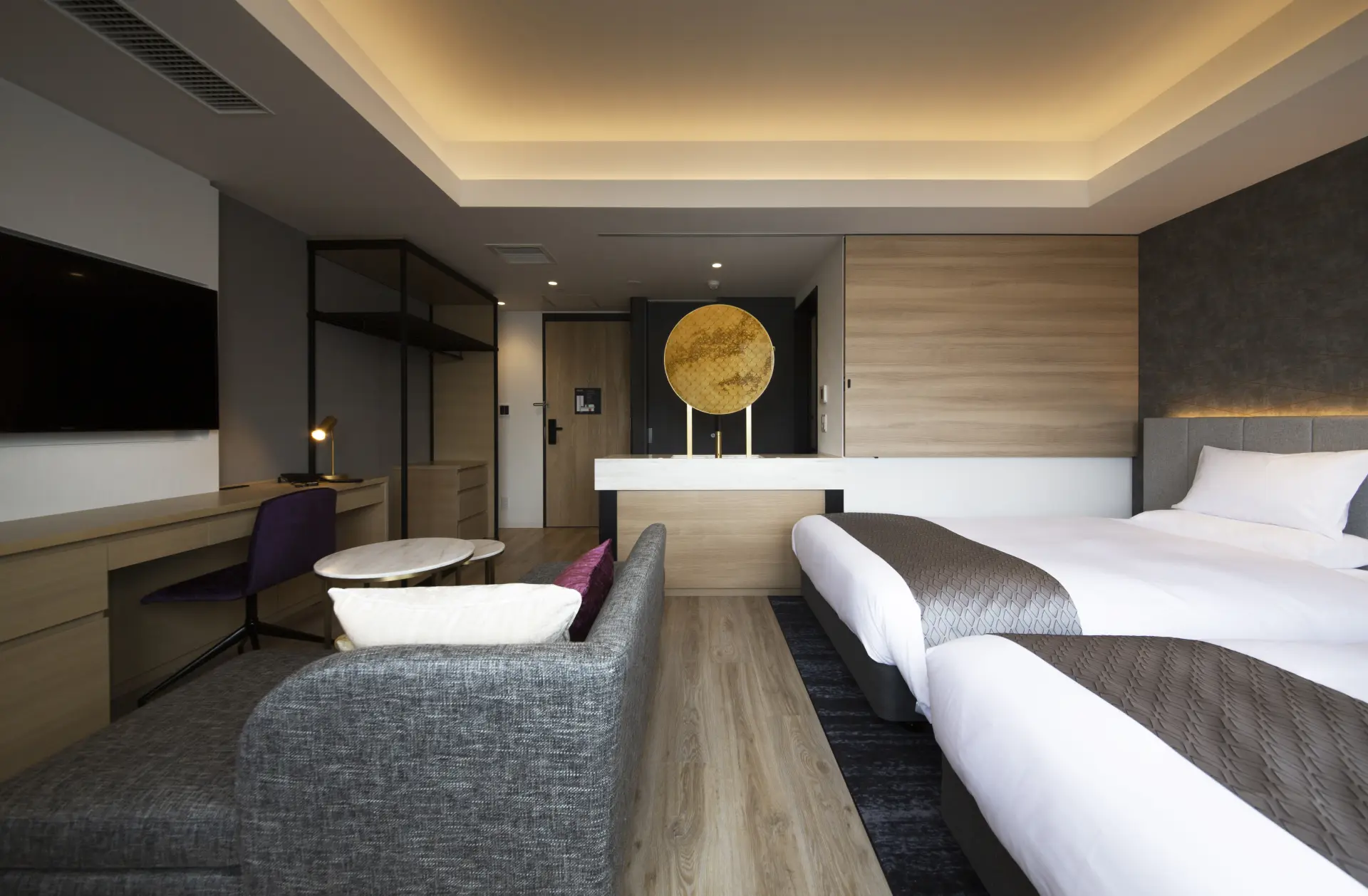
2. Nikko Style Nagoya
A lifestyle hotel with a calm atmosphere, located a 10-minute walk from Nagoya Station.
Inside, the space feels like a gallery decorated with traditional crafts from the Tokai area such as Arimatsu shibori and Mino ware, while original background music creates a pleasant Nagoya stay.
All guest rooms are spacious at 30 square meters and have an open feel. They are equipped with high-quality GENEVA Bluetooth® speakers, Balmuda kettles, and 49-inch large-screen 4K TVs, and the beds feature mattresses designed for restful sleep.
You can enjoy such a comfortable stay that you may never want to leave your room.
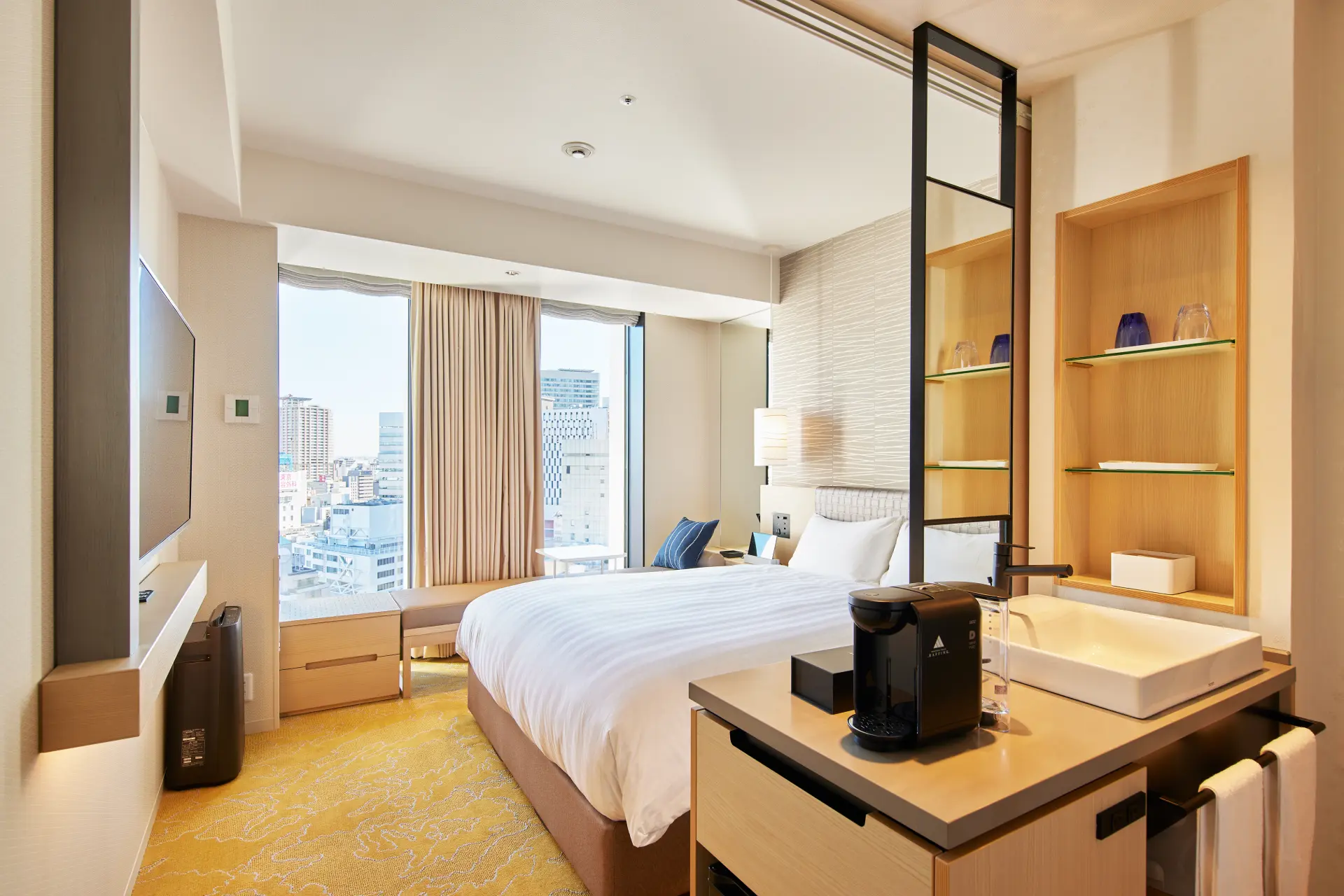
3. Montblanc Hotel Raffine Nagoya Ekimae
A business hotel that reopened at a new location in December 2021.
It offers eight room types to suit different travel styles.
In addition to standard, twin, and double rooms with semi-double beds, it also has triple and quad rooms, which are rare for business hotels in central Nagoya, making it ideal for families and groups.
Functional and refined services are another attraction, including in-room tablets that bring travel information together in one place and easy-to-use drip coffee machines.
Reviews
3.86
Some reviews are AI-translated.
-
Okazaki Castle looks super grand from the outside, and it photographs really well. If you’re into Tokugawa Ieyasu, this place will feel extra meaningful.
-
The exhibits inside are pretty seriously done—not the kind of place you just breeze through. If you’re a history nerd, you can easily spend longer here than you’d expect.
-
Compared to Nagoya Castle, Okazaki Castle feels more like a cozy, neighborhood-style little castle. It’s not insanely crowded, so it’s really pleasant to walk around.
FAQ about Okazaki Castle
Q
When is the best time to see the cherry blossoms at Okazaki Castle?
A
It is said to be from late March to early April.
Q
What are the attractions and highlights of Okazaki Castle?
A
The highlights are its three-tier, five-story reinforced concrete structure and the thoughtfully curated exhibits on each floor.
Summary
In this article, we introduced Okazaki Castle along with the highlights of Okazaki Park in detail.
The grand architecture of Okazaki Castle is impressive, and its carefully curated exhibits and the many sightseeing spots scattered throughout Okazaki Park add to its appeal.
Try planning your visit to Okazaki Castle in spring, when the cherry blossoms are at their best.
The article below also introduces many attractive sightseeing spots in Aichi Prefecture.
It is well worth checking out as well.