

Zao Onsen Travel Guide: A Mountain Resort Where You Can Enjoy Nature and Outdoor Activities
Known as one of the largest all-around mountain resorts in Tohoku, “Zao Onsen.”
Set amid the magnificent nature of the Zao mountain range, you can enjoy a charming hot spring town, Yamagata cuisine, and a wide range of activities.
With a ski resort right next door, winter is the perfect time to fully enjoy skiing among Zao’s Snow Monsters (juhyo).
In this article, we’ll introduce the highlights of “Zao Onsen,” how to enjoy it, recommended day-use hot spring facilities, public bathhouses, and more.
Use this guide and you’ll be able to fully experience the many charms of “Zao Onsen.”
What is Zao Onsen Like?
Located on the western foothills of the Zao mountain range in Yamagata Prefecture, “Zao Onsen” is a historic hot spring with a history of over 1,900 years.
In Zao Onsen’s atmospheric hot spring town, filled with the scent of sulfur and rising steam, you’ll find three public bathhouses, four footbaths, and five day-use hot spring facilities scattered throughout, making it perfect for onsen-hopping.
Be sure to stop by the popular day-use facility “Zao Onsen Daigentenburo.”
With the soothing sound of the stream and crisp, cool air, it’s a pleasure—and you can choose between two types of baths: lukewarm water and a hotter bath.
“Zao Onsen” is known for its abundant water and strongly acidic sulfur springs, offering outstanding benefits.
It’s said to absorb well into the skin, with antibacterial effects and benefits for skin conditions, earning it the nickname “the hot spring for beautiful skin” and “the hot spring for becoming beautiful.”
That said, there are also many precautions: it can sting badly if it gets in your eyes, it can blacken and corrode precious metals if you bathe while wearing them, and if you don’t dry off well after bathing, your clothes may be damaged.
Another charm of “Zao Onsen” is the nearby spots with spectacular natural scenery and activities that make the most of the great outdoors.
The crater lake “Okama” and the “Zao Ropeway,” where you can take in panoramic seasonal views, are must-sees.
With “Zao Onsen Ski Resort” right nearby, you can also fully enjoy skiing in winter.
There’s also a wide range of family-friendly activities, including trekking, terrain-based sliders, and shooting experiences that take advantage of the area’s dramatic nature.
It’s a mountain resort that’s fun no matter who you visit with.
The History of Zao Onsen
With over 1,900 years since its discovery, “Zao Onsen” is the oldest hot spring in Yamagata Prefecture.
Its history is said to have begun around 110 AD, when it was discovered during a military expedition east led by the Japanese royal figure Yamato Takeru (Yamato Takeru no Mikoto).
Legend says that one of his retainers, injured by an arrow, bathed in the waters and recovered in just a few days.
During the Edo period (1603–1868), it flourished as a gateway for climbing the Zao mountain range and developed into a hot spring town lined with inns.
In the Taisho period (1912–1926), various facilities such as roads and town infrastructure were developed.
Starting with the opening of the ski resort in the Showa period (1926–1989), it became a popular destination known as one of the largest resorts in Tohoku.


Access to Zao Onsen
Here’s how to get to Zao Onsen starting from Yamagata Station, the gateway to sightseeing in Yamagata.
Since Zao Onsen has no train station, you’ll take a bus to reach it.
From Yamagata Station, board the Yamakō Bus bound for Zao Onsen Bus Terminal, and you’ll arrive in Approx. 40 minutes—easy access.
What’s the Best Season to Visit Zao Onsen?
The best season to visit “Zao Onsen” is winter.
Soak in an open-air bath as snow falls around you, then enjoy a stroll through the atmospheric hot spring town.
In the Zao mountain range, winter also brings a breathtaking sight created by the rare phenomenon known as Zao Snow Monsters (juhyo), where trees are coated in snow and ice.
It’s also a big draw that you can enjoy skiing at “Zao Onsen Ski Resort” while viewing the Zao Snow Monsters.

3 Ways to Fully Enjoy the Best of Zao Onsen
Packed with many attractions, “Zao Onsen” offers more than hot springs and a hot spring town—you can also enjoy Yamagata cuisine, skiing, and a variety of activities that take advantage of the region’s magnificent nature.
Try the tips below to fully experience the charms of “Zao Onsen” and the Zao mountain range.
1. Stroll the Hot Spring Town for Local Food and Souvenir Shopping
With ryokan and hotels lining the streets, the hot spring town—filled with a sulfur scent and classic onsen atmosphere—is fun to explore just by walking around.
Along with visiting hot springs and footbaths, sampling food as you go is also recommended.
There are plenty of places to try Yamagata specialties, including soba and jingisukan (grilled mutton), as well as great street snacks like “tama-konnyaku.”
There are also many souvenir shops—pick up items like bath salts concentrated with “Zao Onsen” minerals, or local specialties such as traditional kokeshi dolls (wooden dolls) to take home.

2. Enjoy Skiing in Stunning Scenery Shaped by Majestic Nature
If you’re visiting “Zao Onsen” in winter, we hope you’ll enjoy not only the hot springs but also skiing to the fullest.
“Yamagata Zao Onsen Ski Resort” is one of Japan’s largest snow resorts, with 26 courses and 34 lifts.
This big ski area takes advantage of the complex terrain and is made up of six main areas, offering a wide variety of courses from beginner to advanced.
It’s also known for excellent snow quality, drawing skiers and snowboarders from across Japan in search of fluffy powder snow.
The top-area Juhyo Plateau Course is world-famous for its artistic Snow Monsters.
The combination of sweeping views over the Zao mountains and the majestic Zao Snow Monsters is breathtakingly beautiful.

3. Take in the Majestic Nature of the Zao Mountain Range
Using “Zao Onsen” as your base, enjoy sightseeing and trekking in the Zao mountain range.
If you visit in summer, try trekking for an easy way to enjoy breathtaking natural views and observe alpine plants and rare insects.
You can also be guided by a mountain instructor, so you can enjoy the mountains with peace of mind.
There’s plenty more to do in nature as well, from camping in grassy fields and feeling the refreshing breeze on terrain-based sliders to trying a paintball shooting experience.
In winter, don’t miss “Zao Snow Monsters,” the Zao mountain range’s biggest highlight.
Snow Monsters are ice formations that appear when fog or clouds cooled below freezing blow onto trees, causing ice to stick to their surfaces.
These uniquely shaped, massive clusters are also called “snow monsters,” and can only be seen in Japan.
Enjoy the Zao mountain range’s magnificent nature and winter-only scenery.
If you want to learn more about Zao Snow Monsters, please also refer to the article below.

3 Recommended Day-Use Hot Spring Facilities in Zao Onsen, Known for Outstanding Benefits
“Zao Onsen” also offers plenty of footbaths and day-use hot spring facilities.
Here are some hot spring facilities that are especially worth a visit among the day-use options.
We hope you’ll relax to your heart’s content at the hot springs introduced here.
1. Zao Onsen Daigentenburo
This popular drop-in bath is a great way to casually enjoy Zao’s waters, known as one of Japan’s strongest acidic springs and also called “the hot spring for beautiful women,” as it removes oil even without scrubbing and is said to whiten the skin.
Pass through the charming gate and head down the stairs, and you’ll find an open-air bath built from natural stones along the stream.
The bath is large enough to hold around 200 people at once, and bathing while listening to the babbling river and birdsong feels wonderfully open and freeing.
In summer you can soak while viewing fresh greenery, and in autumn, colorful fall leaves.

2. Yunohana Chaya Shinzaemon no Yu
Along with 100% free-flowing water straight from the source that lets you feel Zao Onsen’s benefits directly, there are also baths such as the Shi-Roku no Yu and Kame Yu that even those with more sensitive skin can enjoy. Relax in the outdoor bath wrapped in greenery or the indoor bath.
There’s also an on-site dining area and souvenir space for after your bath. At the restaurant, you can enjoy Yamagata staples such as 100% buckwheat juwari soba and a sukiyaki set made with Zao’s local brand beef, “Zao-gyu,” while the souvenir area is lined with Yamagata Prefecture specialties.
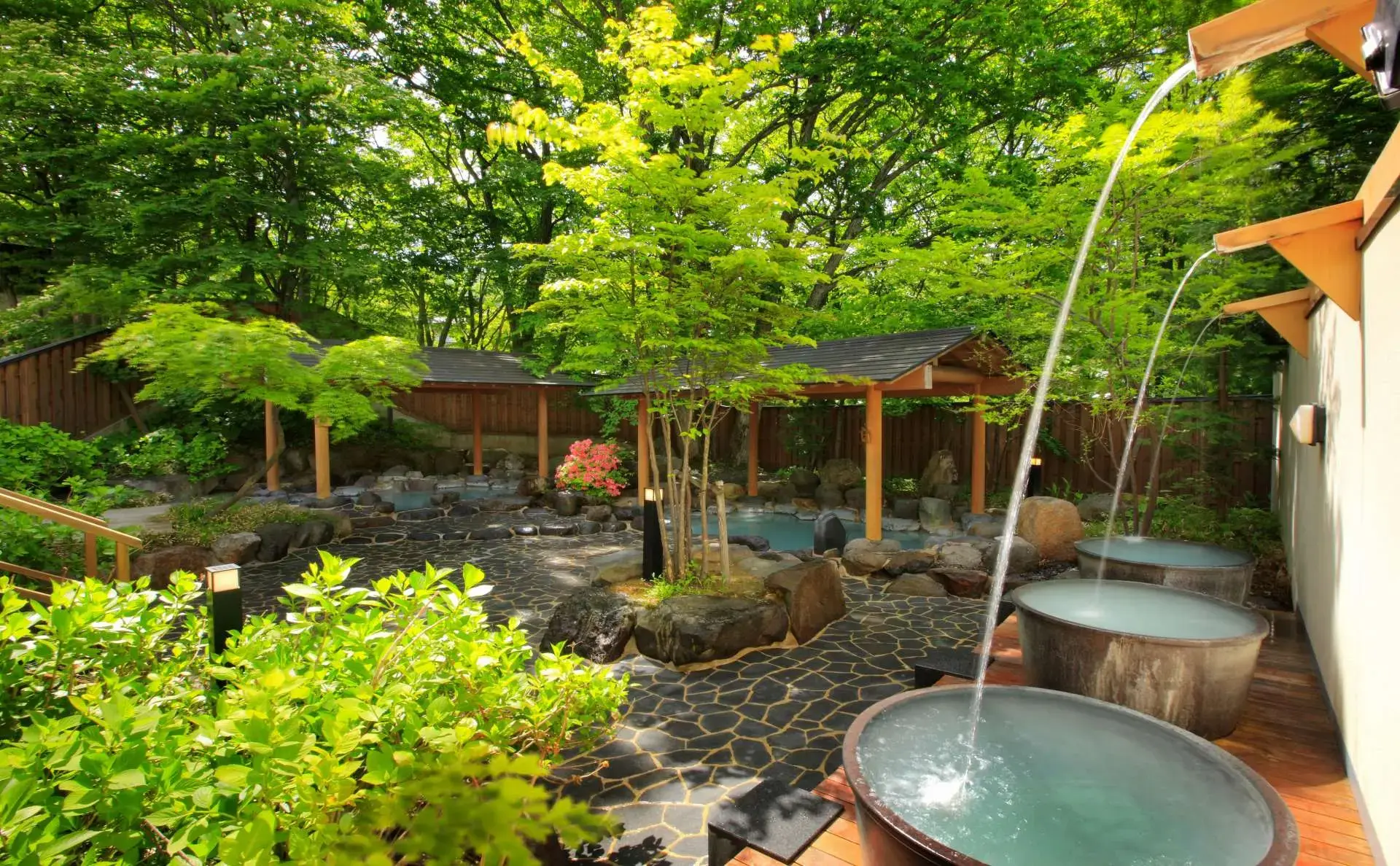
3. Genshichi Roten no Yu
A casual day-use bathing facility. Zao Onsen’s spring water is a strongly acidic sulfur spring.
Sulfur springs are said to rejuvenate the skin and blood vessels, provide antibacterial effects on the skin’s surface, and strengthen the skin, and have long been loved as “the hot spring for beautiful skin.”
The baths are set right next to the property’s own abundant hot spring source, so fresh water is supplied at all times. The continuously flowing water can be enjoyed in an open-air bath with a great sense of openness surrounded by nature, and is also luxuriously used in the indoor bath where the refined scent of hinoki cypress gently fills the air.

Try the Public Bathhouses Managed by Local Residents
“Zao Onsen” has three public bathhouses: “Kami-yu Kyodo Bathhouse,” “Shimo-yu Kyodo Bathhouse,” and “Kawara-yu Kyodo Bathhouse.”
A public bathhouse is a bathhouse used and managed by local residents.
Unlike day-use hot spring facilities, there are no coin lockers in the changing area, so be careful not to bring valuables.
Also, towels are not provided, so please don’t forget to bring your own.
Hours are long—from 6:00am to 10:00pm—so it’s nice that you can enjoy the hot springs at your preferred time, such as for a morning bath or between strolls.
Another appeal is that if you stay in the hot spring town, all of them are within walking distance.
Admission is just 200 yen, and if you stay at an accommodation that offers the “Free Public Bathhouse Service,” you can even use the public bathhouses for free as many times as you like during your stay.
In addition to day-use facilities, be sure to visit these charming public bathhouses as well.

Stay Overnight in Zao Onsen and Take Your Time Enjoying Its Famous Waters and Mountain Charm
Zao Onsen is easy to enjoy as a day trip, but if you want to fully experience the area, an overnight stay is recommended. In addition to strolling the steamy hot spring town, you can soak in renowned waters at your lodging and take your time enjoying Zao’s seasonal scenery and local flavors. Rather than rushing around, staying the night lets you savor the changing atmosphere from morning to evening—something you can only get with an overnight trip. Here, we’ll introduce recommended places to stay that will make your time in Zao Onsen even more special.
1. Waka no Yado Wakamatsuya
This is “Waka no Yado Wakamatsuya,” a ryokan in Zao Onsen known as a place associated with Mokichi Saito.
Wakamatsuya’s hot springs come from its own source, producing 72 liters per minute. You can enjoy this highly regarded hot spring—popular as “the hot spring for beautiful skin”—as free-flowing water in an open-air bath carved from an 18-ton boulder, as well as in private family baths. Both dinner and breakfast feature plenty of seasonal ingredients from Yamagata, and the Japanese-style kaiseki dinner, “Yamagata Shuntsuzuri Zen,” especially praised for its delicate flavors, lets you enjoy items such as Yamagata beef. Located on a hill, the ryokan offers an excellent location with spectacular views of the Zao mountain range from the windows. Relax and unwind in calming traditional Japanese rooms or modern Japanese-Western style rooms.
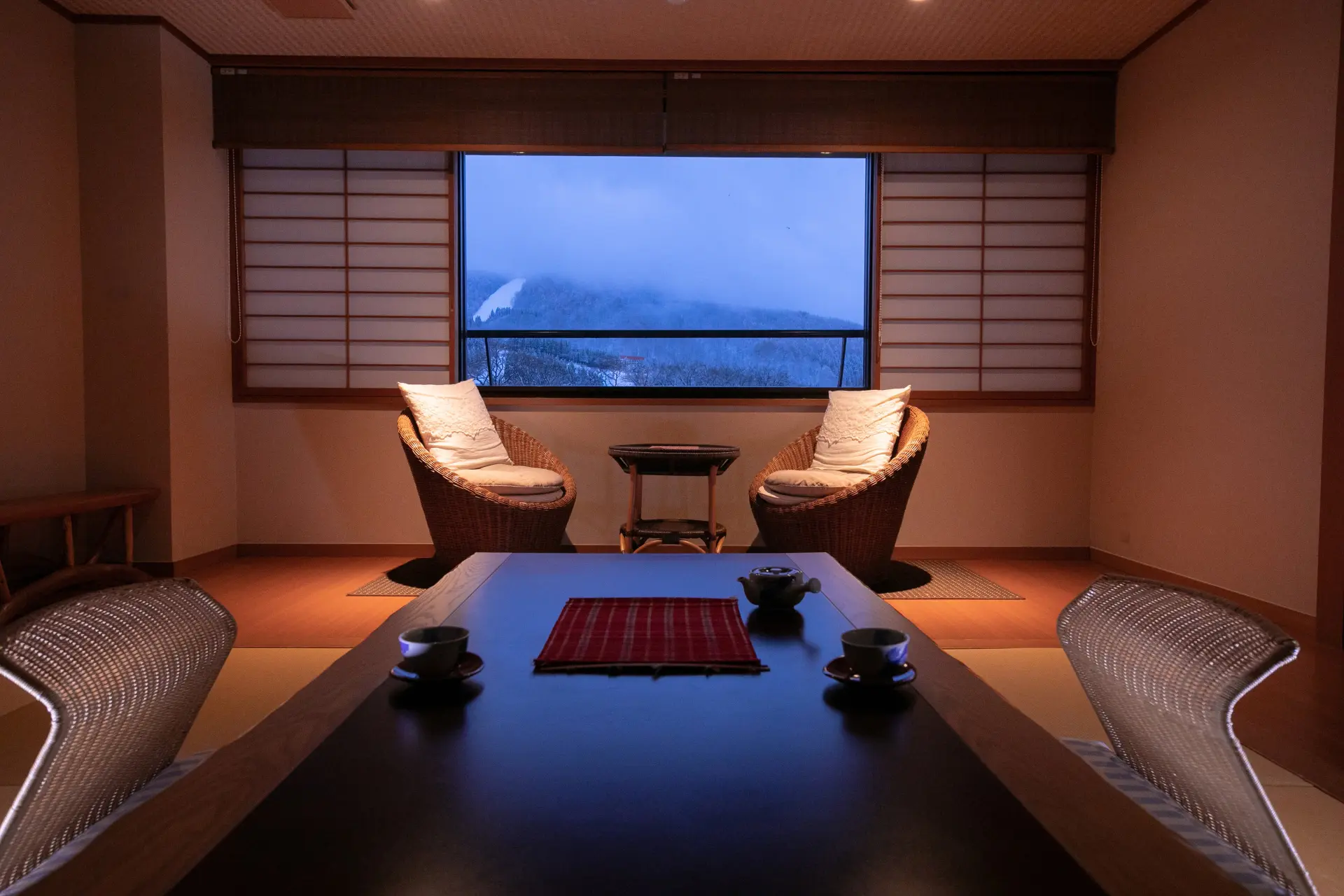
2. Miyamaso Takamiya
A long-established ryokan founded in 1716. As if telling its history, the purely Japanese-style building allows you to see traditional Japanese beauty in many places throughout the property.
One of this ryokan’s highlights is its hot springs. It has three private hot spring sources in Zao Onsen, the oldest hot spring in Yamagata, so you can enjoy pure, free-flowing water straight from the source. Experience its essence in open-air baths where you can feel the babbling river, and in an open-air barrel bath crafted by traditional artisans. Cuisine centers on mountain flavors and the local brand beef “Zao-gyu,” served as kaiseki dishes that bring out the full taste of the ingredients.
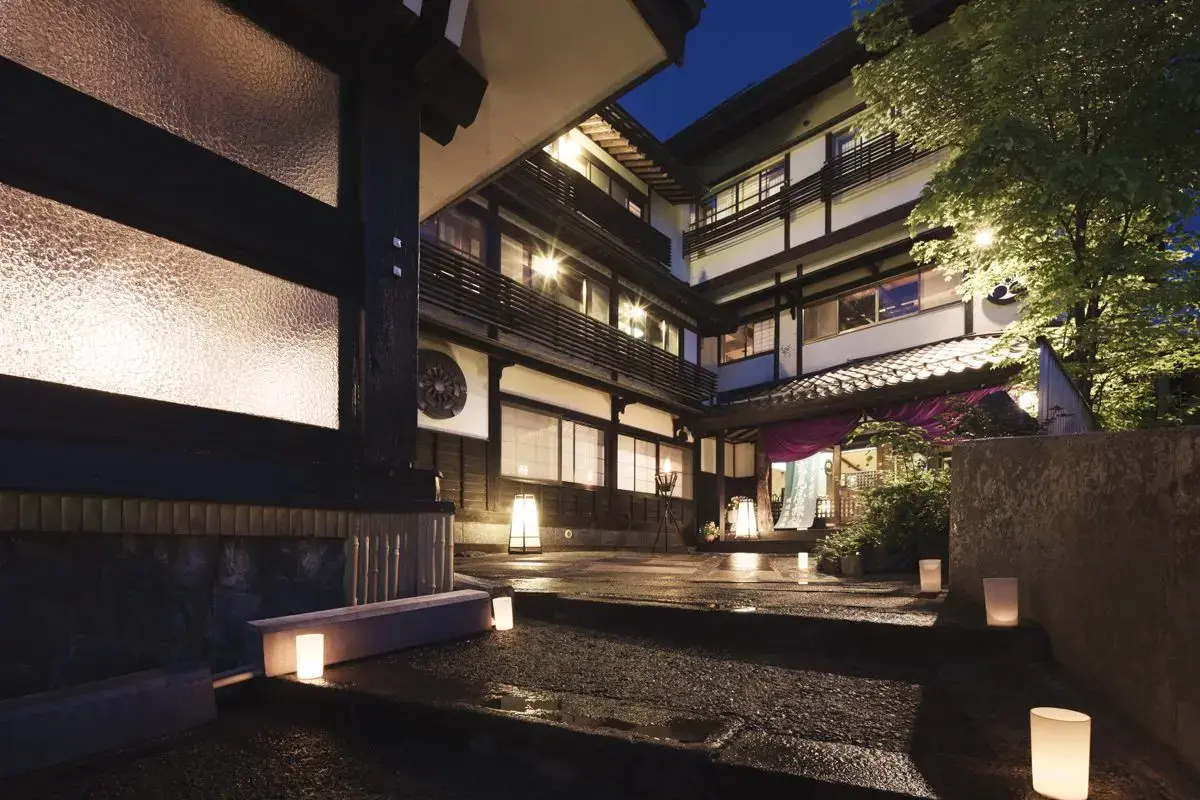
Spend Your Second Night at Ginzan Onsen, Famous for Its Taisho-Romantic Streetscape
“Ginzan Onsen” is a hot spring town whose history grew alongside mining at the Nobesawa Silver Mine, which flourished during the Edo period.
After the mine closed, it became lively as a therapeutic hot spring retreat, but a major flood in 1913 devastated the hot spring town. Later, with support from the local business community, it was restored by around the early Showa era to a state close to today’s scenery, with Western-style wooden multi-story buildings lining both banks of the Ginzan River.
The vivid relief decorations called kote-e on the chic ryokan exteriors are also worth seeing, and the hot spring town also has footbaths and public bathhouses.
Since it’s located within around 2 hours by taking buses and trains from Zao Onsen, if you stay in Zao Onsen, we hope you’ll spend your second night at Ginzan Onsen.


FAQ about Zao Onsen
Q
Who should not bathe in Zao Onsen?
A
Because sulfur springs can strongly irritate the skin, people with sensitive skin or mucous membranes, or those with dry skin conditions, should be careful not to soak for too long.
Q
What are the highlights of Zao Onsen?
A
It’s the chance to fully enjoy both outdoor activities and hot springs surrounded by magnificent nature.
Summary
We’ve introduced the many attractions of “Zao Onsen,” ways to enjoy it, and recommended hot spring facilities.
Beyond the hot springs, you can enjoy natural scenery and outdoor activities, so you likely won’t get bored no matter how many nights you stay.
If you visit in winter, be sure to see the rare “Zao Snow Monsters,” even by Japan standards.
If you’re sightseeing in Yamagata, please also refer to this article, which carefully selects Yamagata’s classic must-visit spots.