
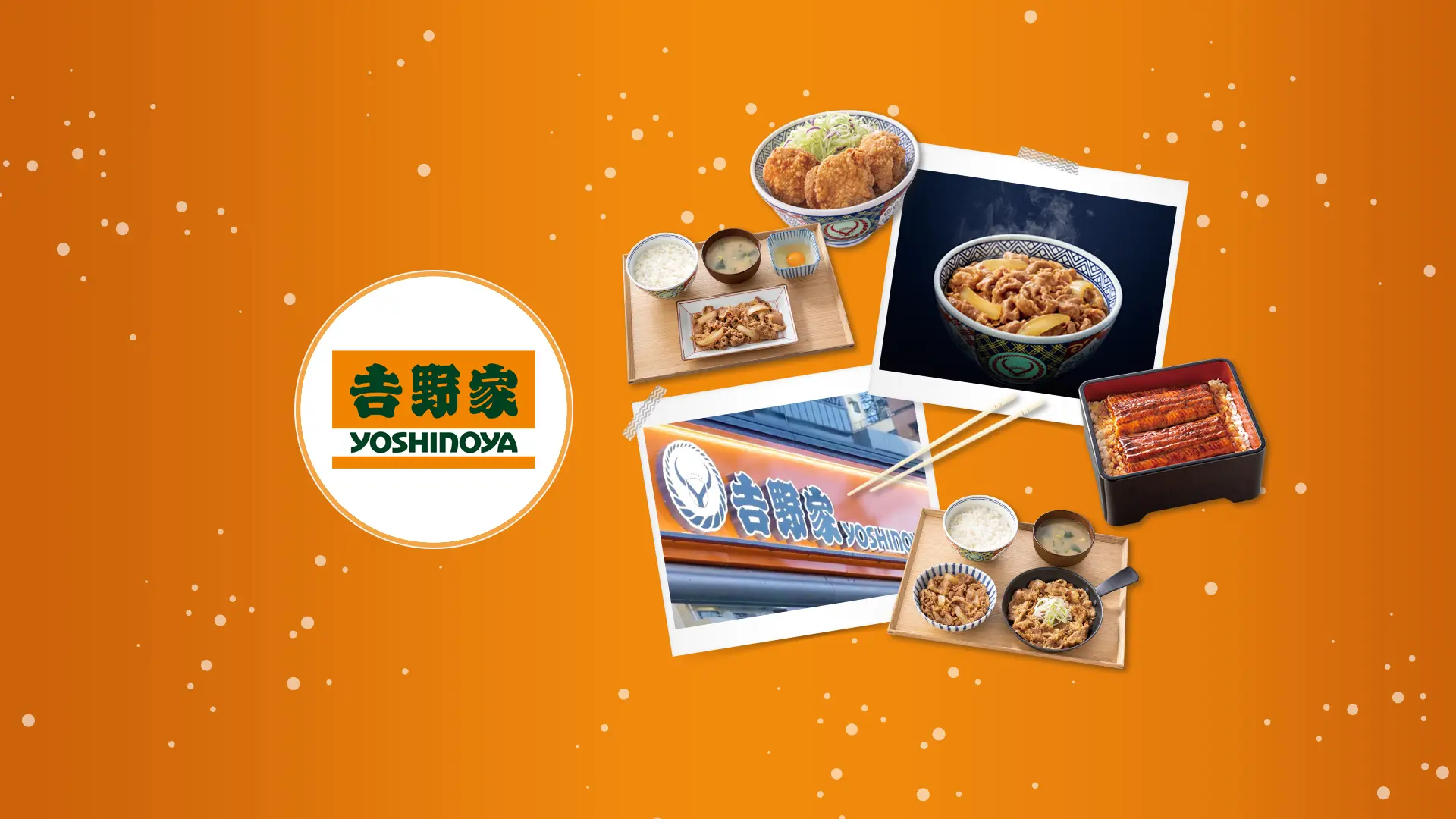
Yoshinoya Complete Guide: The Gyudon Chain That’s Been Fueling Busy Japan for Over a Century
When you’re out in Japan and need something warm, quick, and genuinely filling, “Yoshinoya” tends to be right there in the flow of everyday life.
With over 120 years behind it, the chain has long been known for its signature gyudon (beef bowl), a simple dish that keeps people coming back for the steady flavor and the ease of a satisfying meal in little time.
In this article, we’ve rounded up what makes Yoshinoya special, along with its most popular menu items, so you can enjoy your visit even more—stick with it to the end.
What is “Yoshinoya” Like?
“Yoshinoya” is a major Japan-born restaurant chain operated by Yoshinoya Co., Ltd.
Since its founding, it has promoted the concept of “tasty, affordable, and fast,” and is one of Japan’s most popular spots, with gyudon as its signature dish.
Often affectionately nicknamed “Yoshigyu,” it has faced fierce competition in the gyudon market for decades while developing its own strategies and brand identity.
The History of Yoshinoya
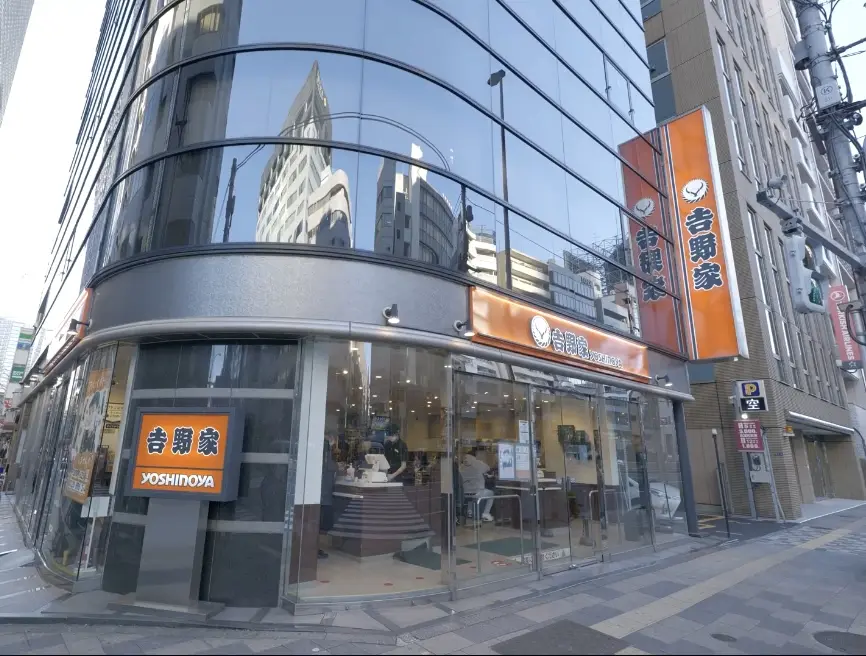
Yoshinoya traces its origins to 1899, when Eikichi Matsuda opened a small shop called “Yoshinoya” at the fish market in Nihonbashi, Tokyo, serving people who worked there.
The shop burned down twice—once in the 1923 Great Kanto Earthquake and again in the 1945 Tokyo air raids—but continued to rebuild, eventually establishing Yoshinoya Co., Ltd. in 1958.
In 1975, Yoshinoya also expanded overseas into the United States.
In 2007, after a business restructuring, it adopted a holding-company structure and became Yoshinoya Holdings Co., Ltd., while newly establishing the operating company Yoshinoya Co., Ltd.
In recent years, while maintaining a commitment to the quality of its gyudon, it has also developed and sold a wide range of other menu items.
Seeking an even better version of “tasty, affordable, and fast,” Yoshinoya will likely keep evolving.
Yoshinoya: A Quick, Filling Stop in the Gaps of Everyday Life
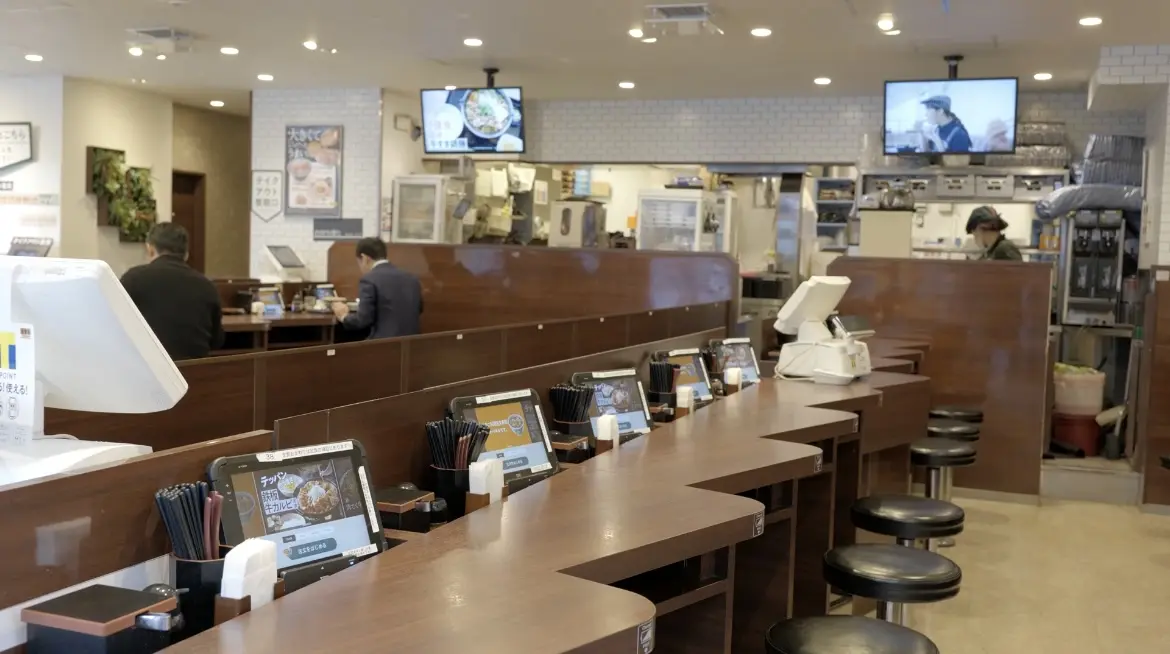
Step into a Yoshinoya at almost any hour and you’ll see a surprisingly broad mix of customers—people drop in for all kinds of reasons, across ages and genders.
During morning and evening commute hours, office workers stop in to finish a meal quickly, while at lunchtime, nearby office workers and students gather for a fast lunch.
With its affordable prices, it’s also popular with families and young people living on their own, and it’s often chosen not only for lunch but also for breakfast and dinner.
It’s a familiar part of everyday life in Japan—handy when you’re out and need to grab something filling in a hurry.
In recent years, with the addition of healthier options and increased demand for remote work, takeout and the number of female customers have been on the rise.
Why Yoshinoya Remains So Beloved
Gyudon is a simple dish, which is exactly why the details—ingredients and preparation—show up directly in the taste.
What keeps Yoshinoya so widely loved is its uncompromising commitment to making delicious gyudon, from ingredient selection to cooking in each store.
Buyers carefully evaluate ingredients that meet Yoshinoya’s strict standards—beef, onions, sauce, rice, and ginger—and thoroughly manage every step to bring each one to its best condition.
In stores, both full-time staff and part-time employees serve each bowl with the confidence that “the gyudon I make is the best.”
Even with a manual, small differences—like pot management and timing when plating ingredients—can change the flavor.
Sensing those subtle differences and finishing the taste by hand rather than leaving it to machines—this “craftsmanship” builds a sense of reliability and trust for customers in a chain industry that can easily become standardized.
[By Time of Day] Popular Menu Items You Should Try at Yoshinoya in Japan
From here, we’ll introduce some of Yoshinoya’s most popular menu items among Japanese customers, divided into breakfast, lunch, and dinner.
Some items are only available in the morning or only at lunch and dinner, so if you get the chance, be sure to try them.
3 Popular Yoshinoya Menu Items for Breakfast
First, here are three popular picks for the breakfast hours.
All of them are breakfast-only (4:00 am-11:00 am), so if there’s a Yoshinoya near your hotel, it’s a great place to grab breakfast.
Many Yoshinoya locations open early, so it should be easy to fit into your schedule.
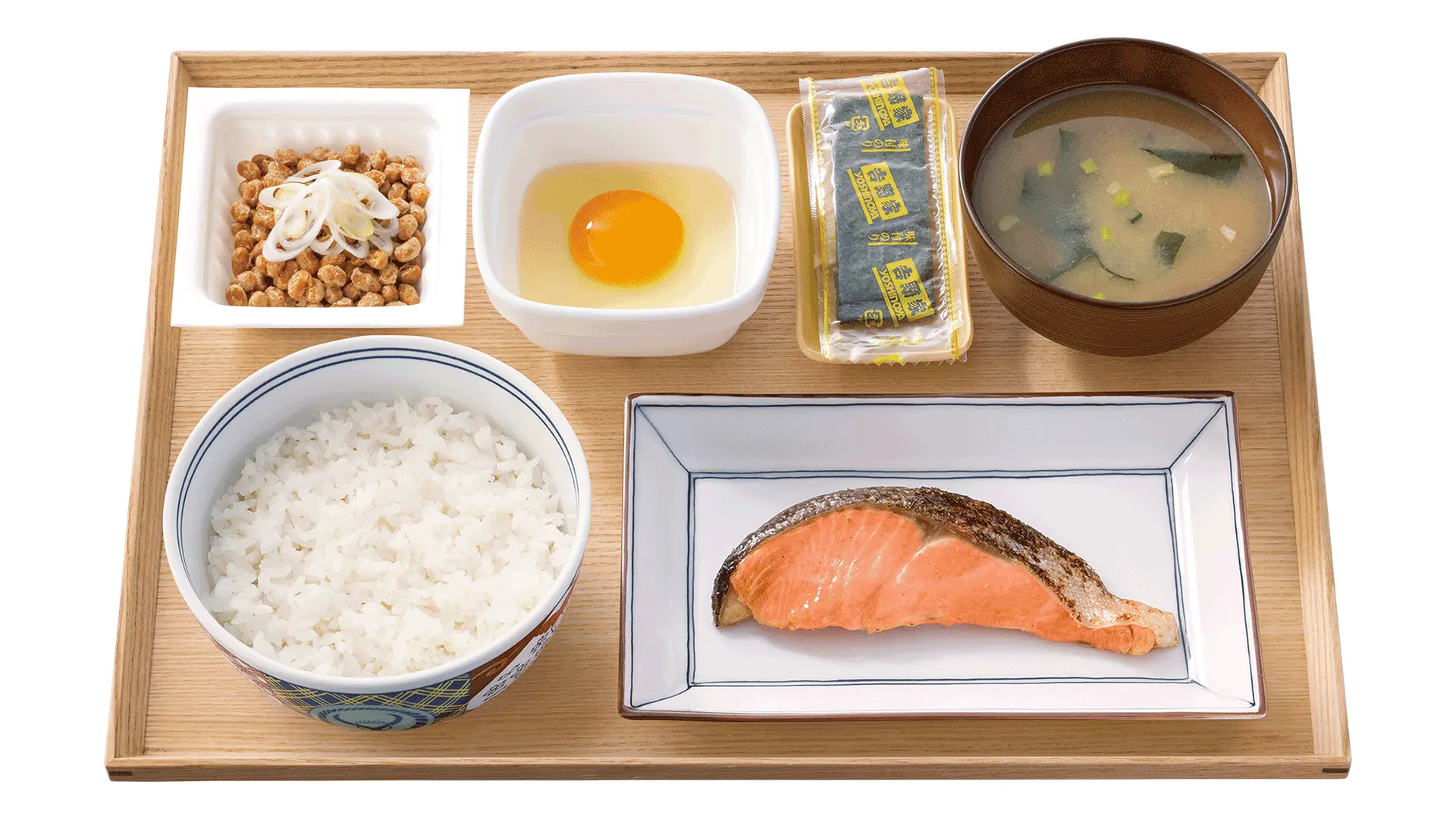
1. Tokuasa Teishoku (Special Breakfast Set)
The “Tokuasa Teishoku (Special Breakfast Set)” is a popular set meal featuring classic Japanese breakfast staples. It comes with seven items—grilled salmon, natto (fermented soybeans), egg, miso soup, rice, chopped green onions, and nori (seaweed)—a well-balanced combination that’s high in protein and low in fat.
Despite its low price, it’s very satisfying, and you can also get a free large serving of rice or free refills, which is a nice bonus.
Recommended for anyone who wants a hearty start to the day or prefers a healthier meal.
*Not available for takeout
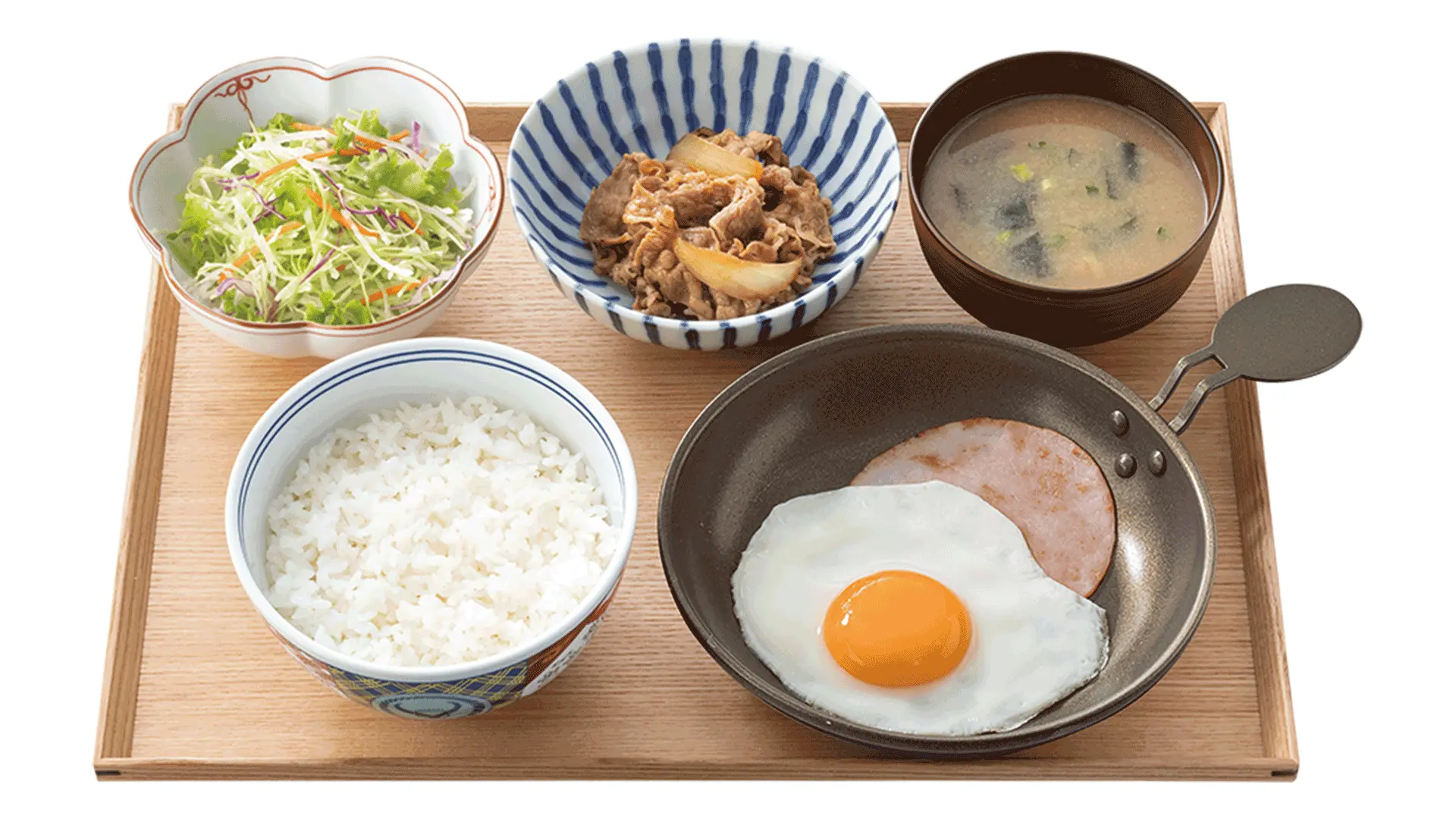
2. Ham & Eggs with Mini Beef Dish Set
The “Ham & Eggs with Mini Beef Dish Set” is a breakfast set that includes rice, miso soup, a mini salad, ham and eggs, plus a small dish of simmered beef—a very Yoshinoya-style touch.
Its biggest appeal is getting both Japanese and Western flavors in one meal.
The smoky, salty ham and the creamy soft yolk pair well with rice, and the sweet-and-savory beef adds another layer of umami, creating a depth you don’t get from a single dish alone.
It’s also fun to customize—mix the egg with the ham or beef, eat the ham first and then pair it with the beef, or add chili pepper and beni shoga (pickled red ginger) to sharpen the flavor.
Perfect not only for breakfast but also for an early lunch.
*Not available for takeout
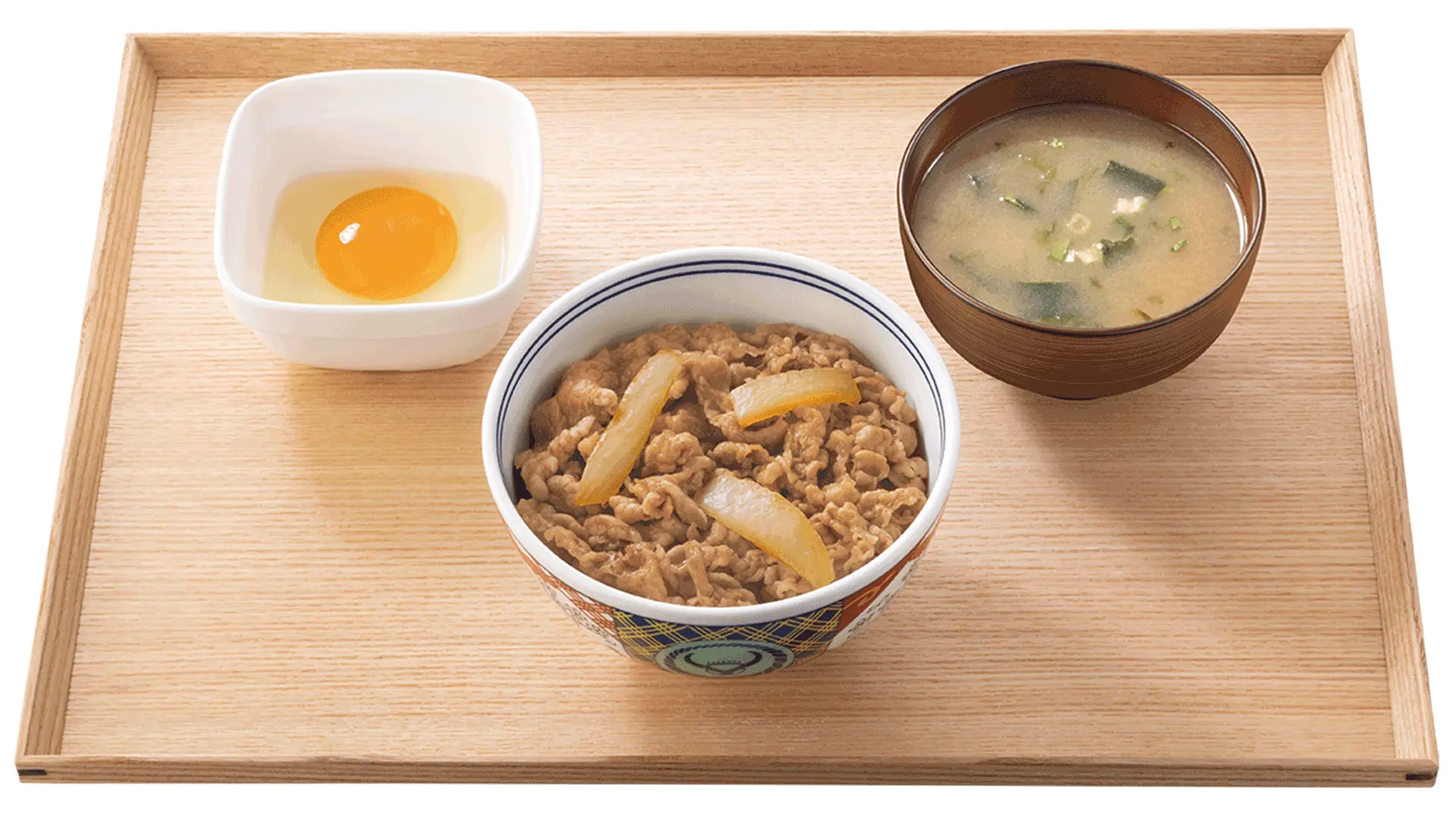
3. Asa-Gyu Set (Breakfast Beef Bowl Set)
The “Asa-Gyu Set (Breakfast Beef Bowl Set)” is a breakfast-only set that includes a gyudon (sizes from small to extra-extra large) and miso soup, plus one small side of your choice (raw egg, soft-boiled egg, mini salad, natto, or pickles).
It’s designed for anyone who wants a warm beef bowl quickly in the morning.
Since you can choose the side, you can adjust the flavor and nutritional balance depending on how you feel that day.
It’s also a great value: outside breakfast hours at regular locations, a regular gyudon (tax included: 498 yen), miso soup (tax included: 96 yen), and a side dish (tax included: around 150 yen) would cost more, but this set is 552 yen tax included for a regular size.
*Not available for takeout
3 Popular Yoshinoya Menu Items for Lunch
Next, here are three popular choices for lunchtime.
In particular, Yoshinoya’s signature “gyudon” is something you should try at least once, whether it’s lunch or not—especially if it’s your first time.
It gets very crowded during the peak hours of around 11:00 am–2:00 pm, so depending on the situation, it’s recommended to go at an off-peak time.
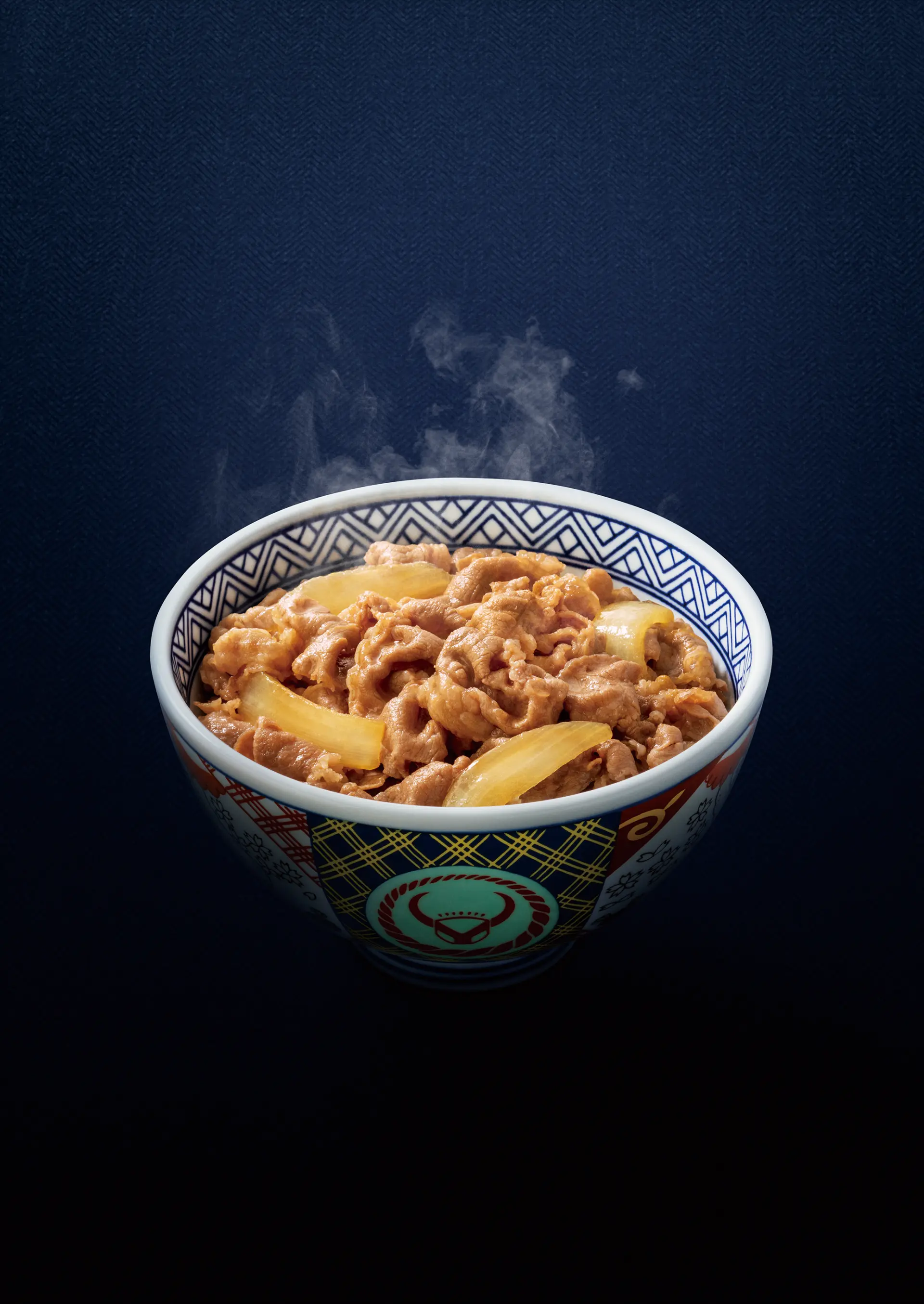
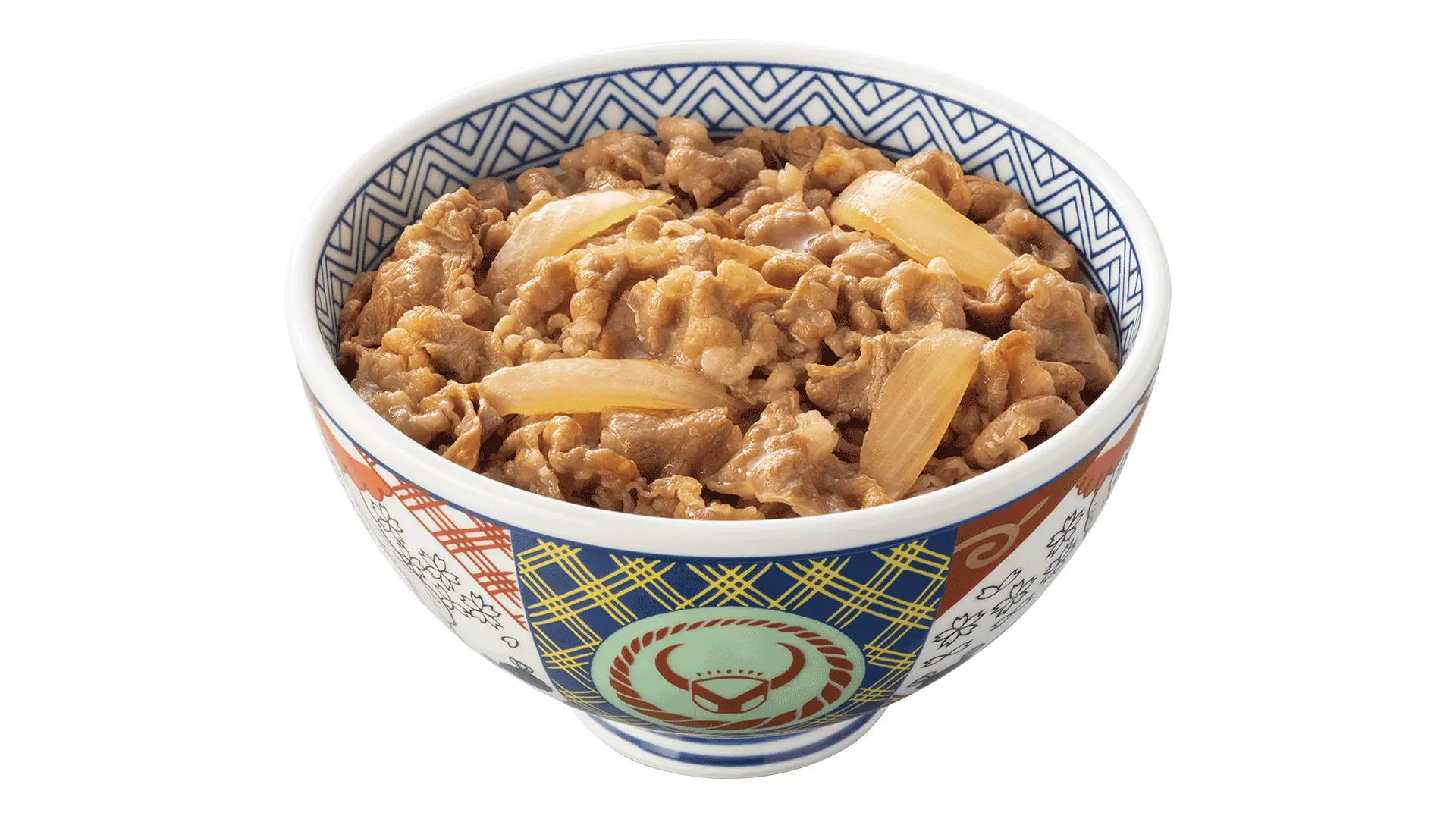
1. Gyudon (Beef Bowl)
Yoshinoya’s “Gyudon (Beef Bowl)” may be simple, but its greatest strength is its reliable flavor—thanks to the balance of its secret sauce and carefully selected ingredients.
As the flagship dish since the company’s founding, it’s overwhelmingly popular, and its concept—lightly sweet-and-savory sauce soaking into beef, onions, and rice—embodies “tasty, affordable, and fast.”
Built on over 120 years of know-how, each store preps it daily, and the dedication to keeping the flavor consistent nationwide supports a level of quality that doesn’t feel like a typical chain.
We also recommend the “Cheese Gyudon,” where rich melted cheese rounds out the umami, and the “Negitama Gyudon,” which offers a fun contrast of texture and aroma.
2. Karaage Don (Fried Chicken Bowl)
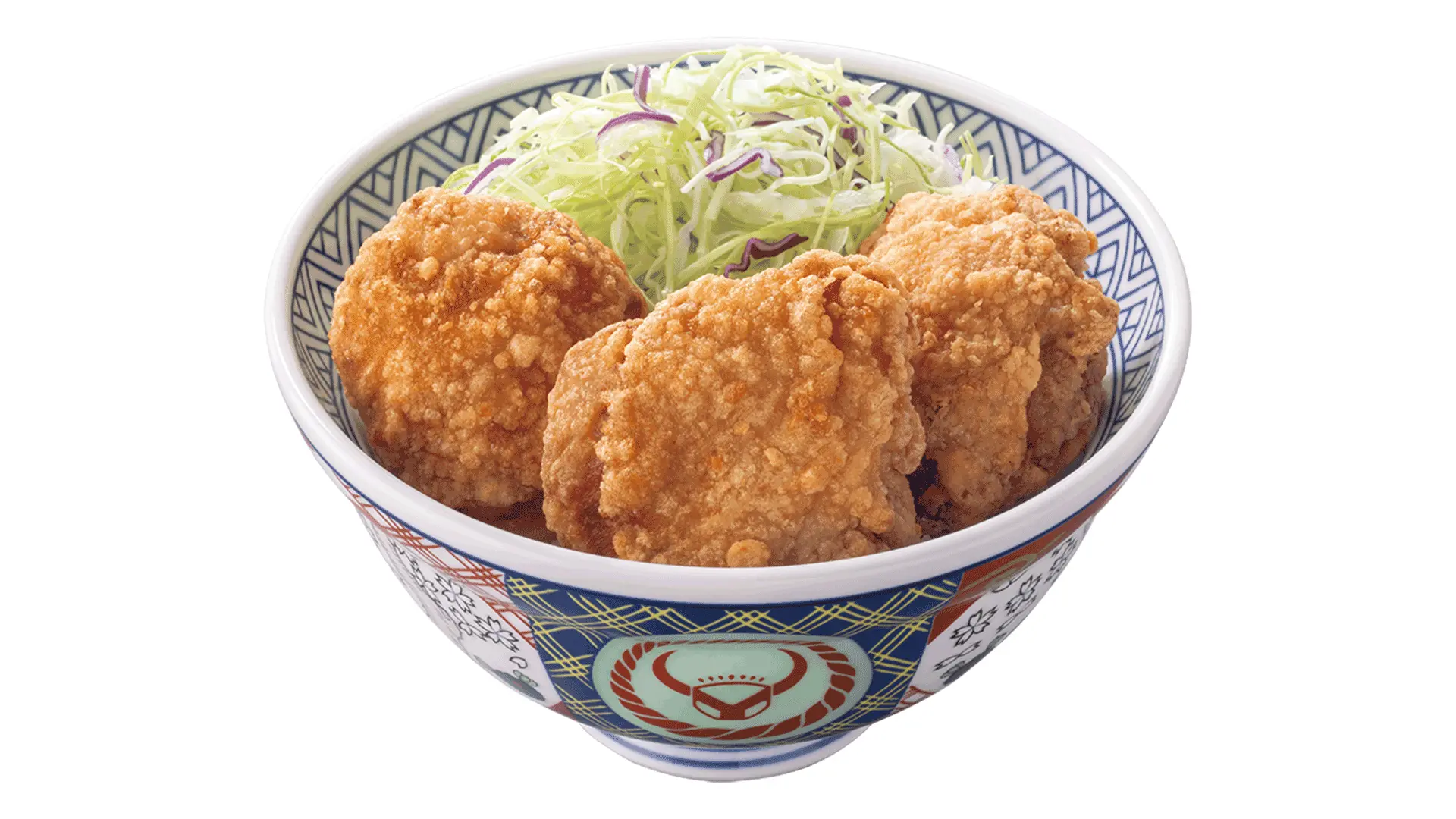
The “Karaage Don (Fried Chicken Bowl)” is Yoshinoya’s second signature dish after gyudon.
It’s a hearty bowl topped with large pieces of fried chicken made from chicken thighs marinated for 48 hours in a special ginger sauce, then coated one by one in a proprietary flour mix and fried at high heat to lock in the flavor.
With the first bite, you’ll get a crisp exterior and well-seasoned aroma, followed by a juicy, rich taste that spreads through your mouth.
Even though it’s a filling option, it’s easy to eat without getting tired of it, and it leaves you feeling surprisingly refreshed afterward—making it satisfyingly filling.
You can also order karaage on its own (from one piece), so it’s great to pair with gyudon or curry as well.
3. Gyuzara Teishoku (Beef Plate Set Meal)
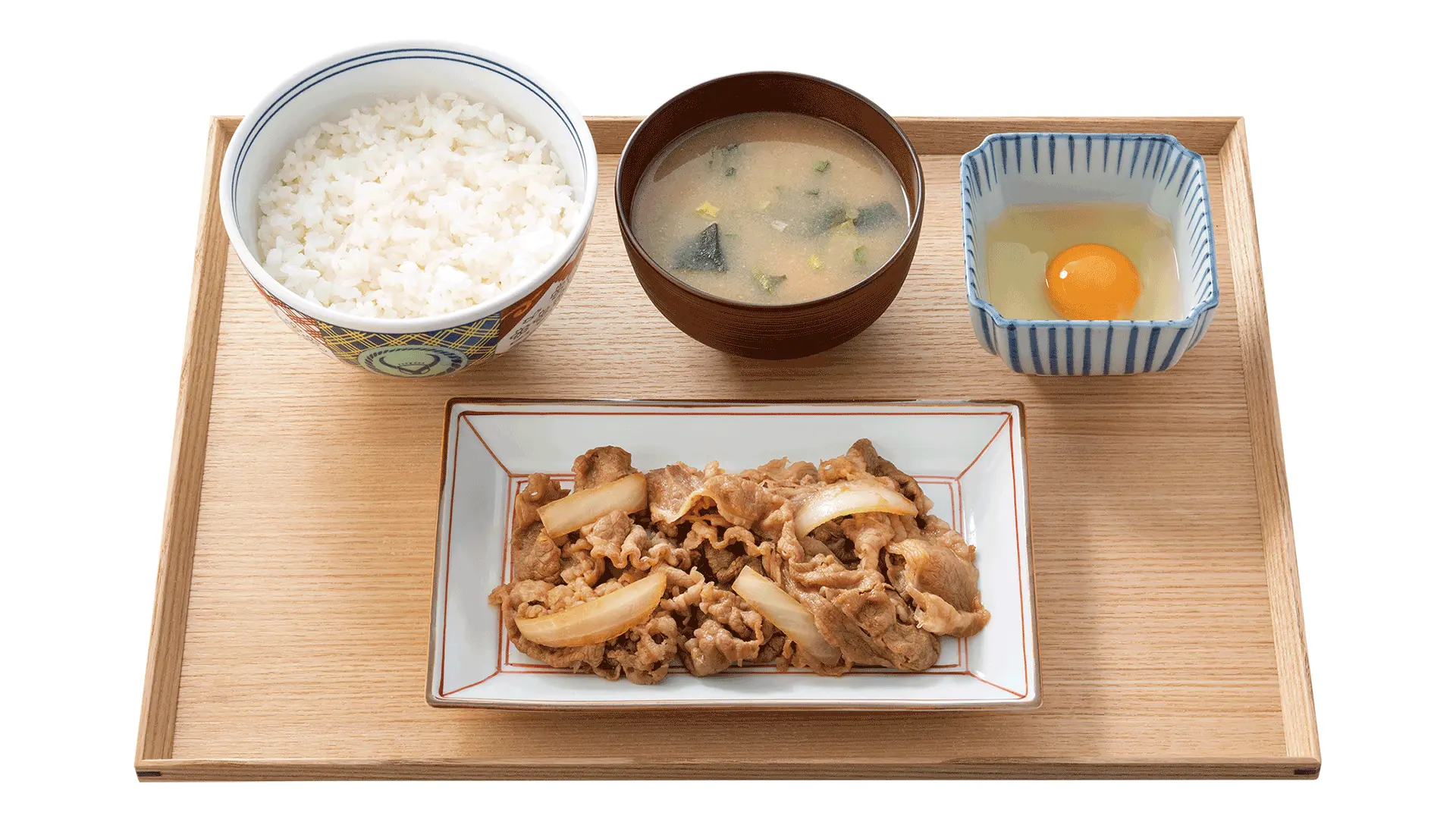
The “Gyuzara Teishoku (Beef Plate Set Meal)” is a popular set featuring Yoshinoya’s classic “gyuzara” (the beef-and-onion topping from gyudon served on its own), plus rice, an egg, and miso soup.
While fully enjoying the beef’s umami, you can freely customize it by adjusting the amount of rice and pairing it with the egg or condiments.
For example, you can start with tamago kake gohan (egg over rice) with gyuzara, then get a rice refill and turn it into a gyudon-style bowl—there are plenty of ways to change up the flavor.
Since it’s priced more affordably than ordering each item separately, it’s also a great chance to find your own favorite way to eat it.
*Not available for takeout
3 Popular Yoshinoya Menu Items for Dinner
Finally, here are three popular choices for dinnertime.
Another easy option is to get takeout from a Yoshinoya near your hotel and eat in your room. *Note: Set meals are generally not available for takeout
Many Yoshinoya locations are open late, which makes them easy to use.
1. W Teishoku (Double Set Meal)
The “W Teishoku (Double Set Meal)” is a filling set that combines gyuzara, rice, and miso soup with one additional popular main dish.
Options include beef ribs, negishio pork (scallion salt pork), negishio beef ribs, karaage, and more—and you can get free rice refills.
With two different mains, it’s especially satisfying and perfect if you want a substantial lunch or dinner.
*Not available for takeout
-
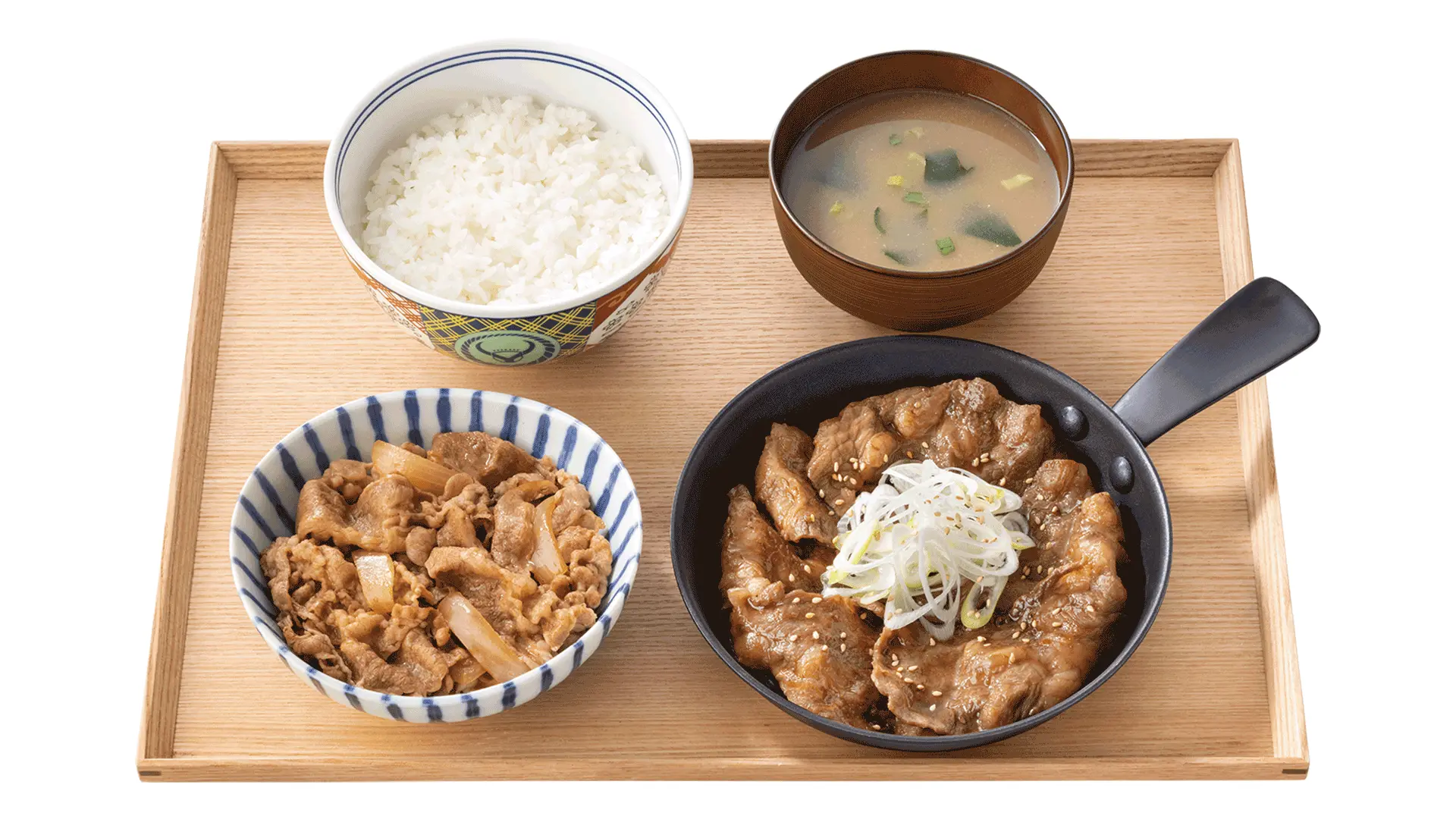
W Teishoku (Gyuzara & Beef Ribs Set)
-
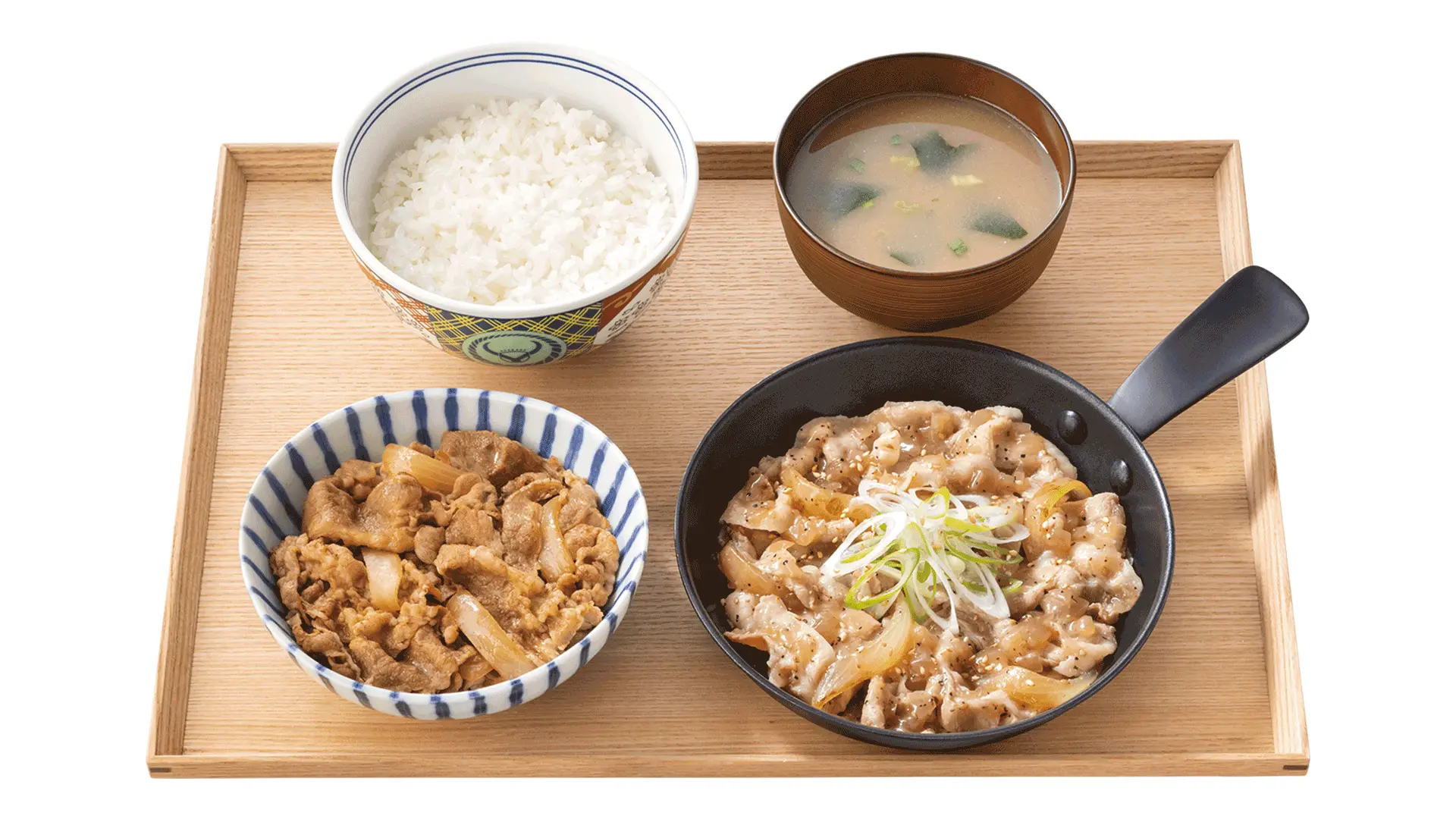
W Teishoku (Gyuzara & Negishio Pork Set)
-
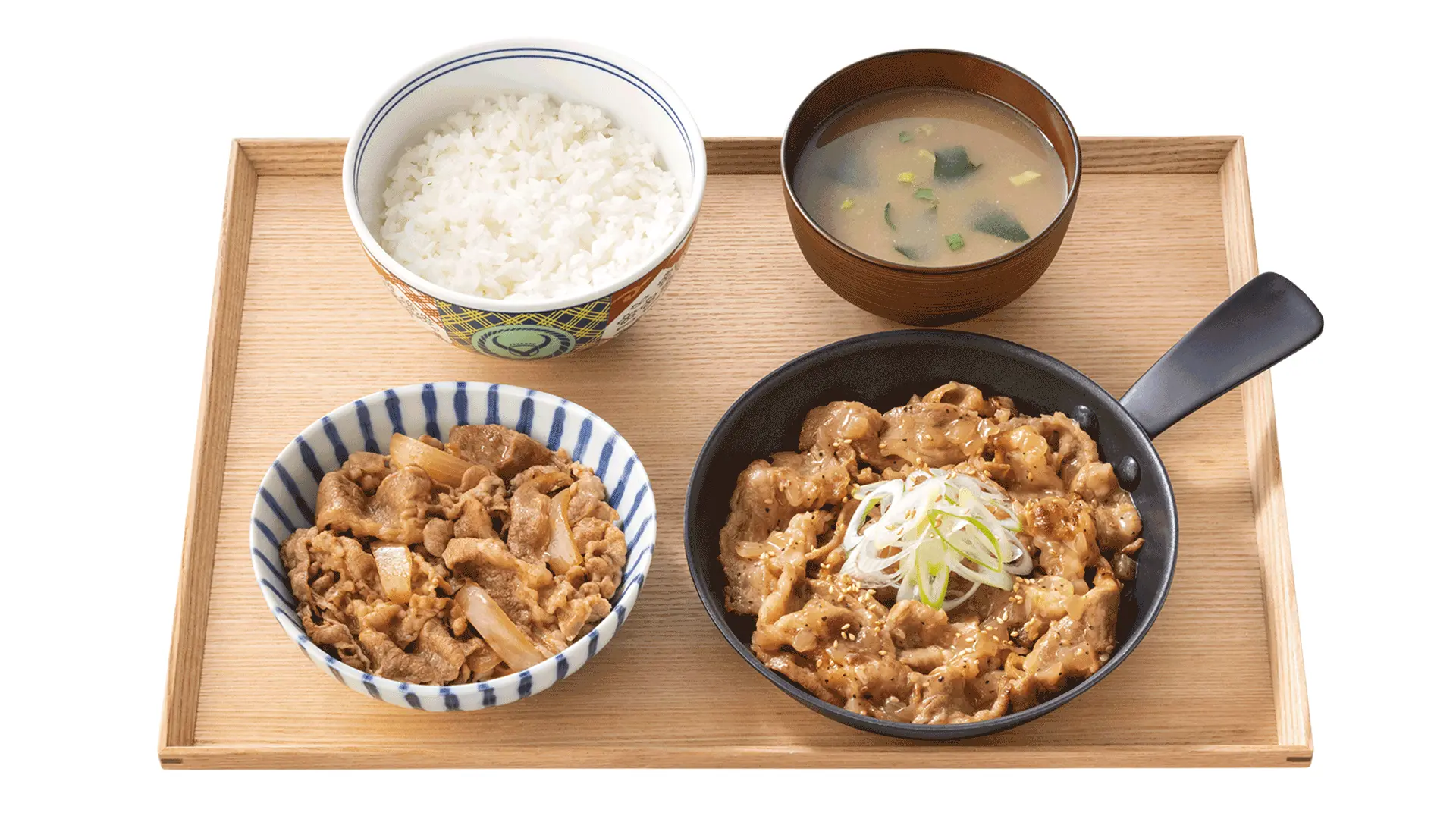
W Teishoku (Gyuzara & Negishio Beef Ribs Set)
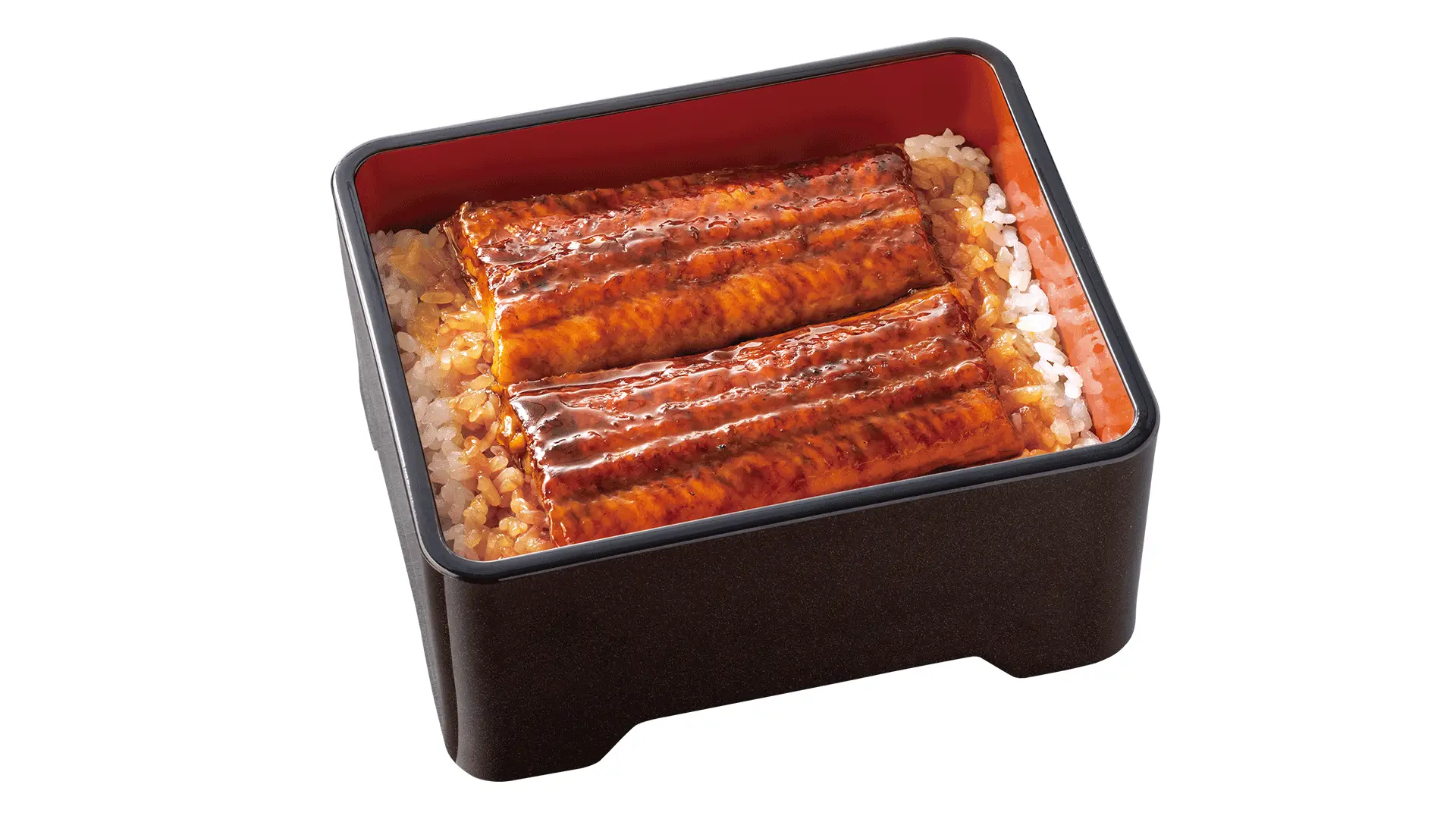
2. Unaju (Grilled Eel Rice Box)
Yoshinoya’s “Unaju (Grilled Eel Rice Box)” is a rare eel menu item available year-round.
Using Chinese eel raised at the company’s own eel farms and a proprietary four-stage grilling method, it delivers both a fragrant char and a plump, tender texture for an authentic taste.
The firm flesh and the sweet-and-savory sauce soaked in are quality that even gyudon fans can appreciate.
It’s more affordable than specialty eel restaurants and is well received as an easy, casual way to enjoy eel.
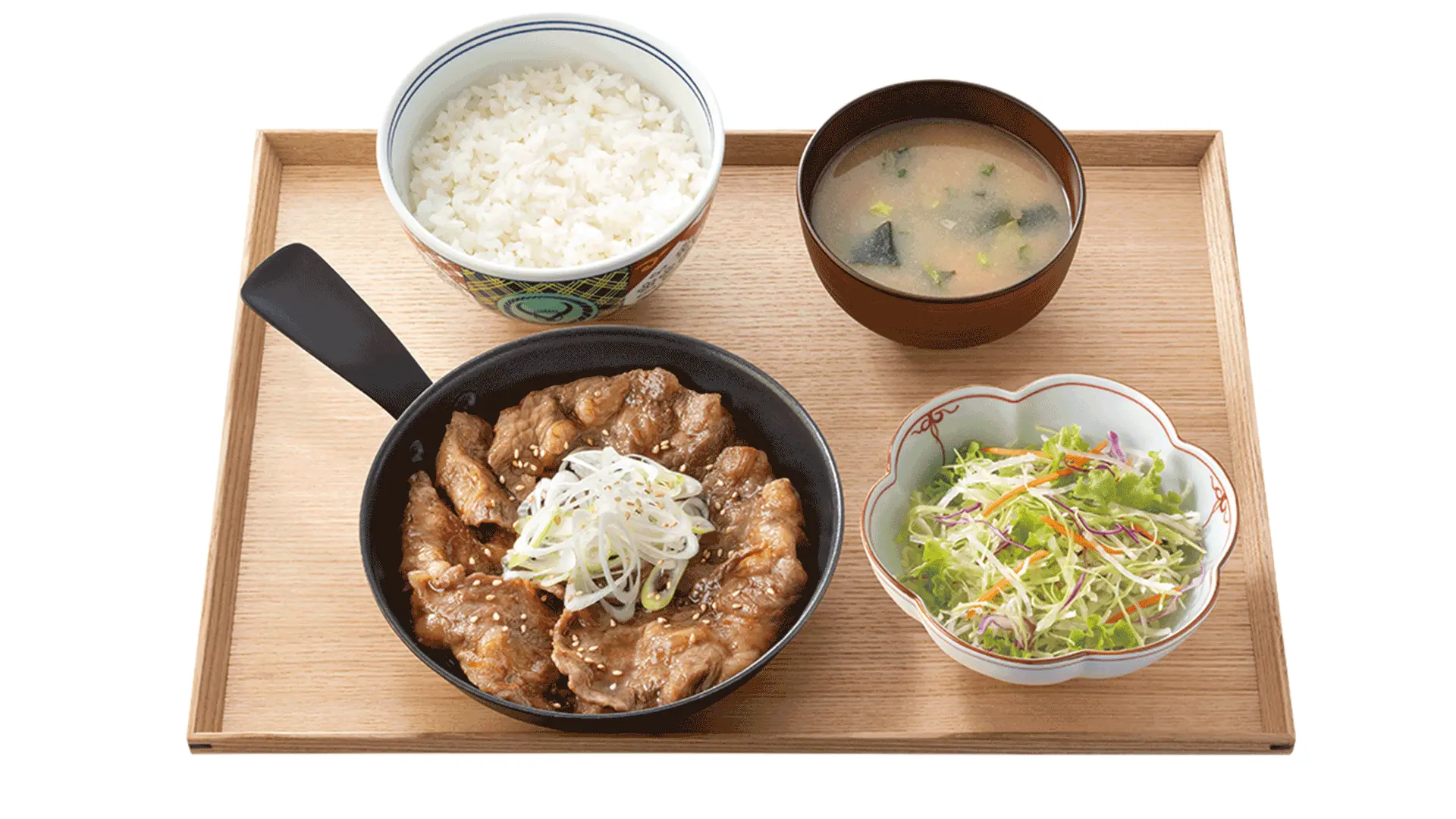
3. Beef Ribs Set Meal
The “Beef Ribs Set Meal” is a hearty set featuring fragrant grilled beef ribs as the main dish, served with rice, miso soup, and a mini salad.
It arrives piping hot, and the sizzling sound from the iron plate does a lot for your appetite.
With a satisfying bite and a direct hit of beefy umami, it makes the rice go down fast.
The deep, sweet-and-savory sauce delivers a different kind of satisfaction from gyudon, making it a great choice for dinner.
*Not available for takeout
Not the Usual Orange Sign? Try the “Black Yoshinoya” If You Spot One
Since 2016, Yoshinoya has been rolling out a new type of store format called the “Cooking & Comfort” style.
Also known as “Black Yoshinoya,” these locations are easy to spot by their black sign with white lettering (traditional stores use orange signage).
Inside, the modern design focuses on table seating and is built for comfort, with power outlets, Wi-Fi, and a drink bar.
By offering freshly made food and a relaxing space, these locations attract a broader range of customers than regular stores, including women and families.
It’s a format that feels closer to a family restaurant or cafe than a traditional gyudon shop.
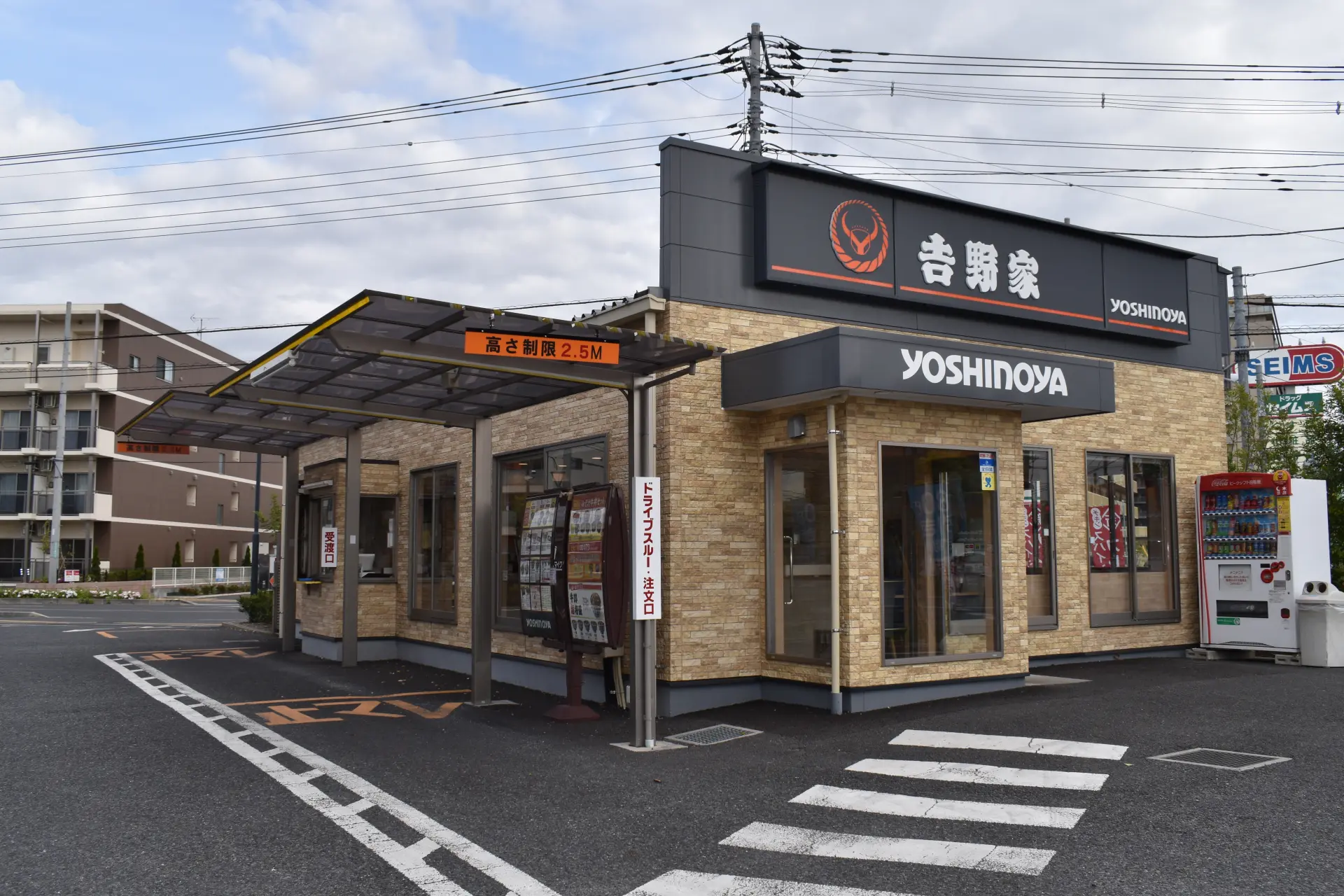
-

A few locations offer table and sofa seating for a more relaxed visit
-
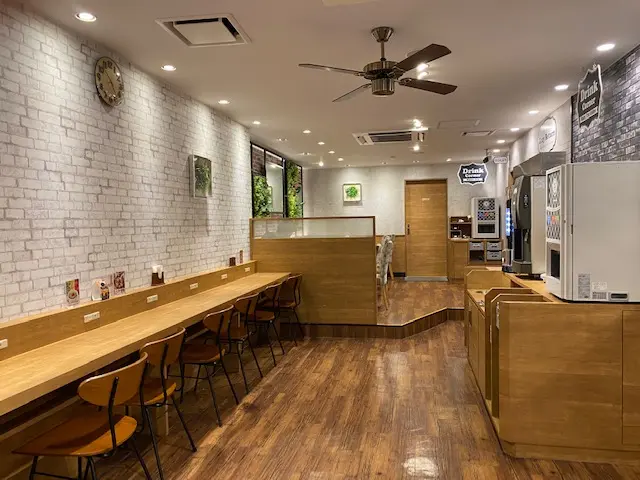
Some seats come with power outlets for charging
Special Yoshinoya Orders You Should Try at Least Once
Over more than 120 years, Yoshinoya has picked up plenty of “special orders”—requests that began with regulars and gradually spread nationwide.
It started at Yoshinoya’s very first location, “Yoshinoya Tsukiji,” where the restaurant flexibly accommodated food professionals working in the fish market who wanted a more connoisseur-style gyudon.
Although these weren’t listed on the menu, a wide range of requests caught on, such as “tsumeshiro” (served with cooled rice) and “torodaku” (with fattier cuts of beef). *Not available today
Over time, the well-known “tsuyudaku” became widely popular, and “atama no omori” (extra topping only) and “negidaku” were even commercialized as menu items, such as the “Negidaku Gyudon.”
Next, we’ll introduce three special orders that are available at locations nationwide—if any catch your interest, give them a try.
1. Tsuyudaku (Extra Sauce)
“Tsuyudaku” is a special order that gives your gyudon more of Yoshinoya’s secret sauce (tsuyu) than usual.
The sauce soaks into the rice more easily, and the bowl ends up noticeably juicier than normal.
You can either select “Tsuyudaku” on the touch panel or tell the staff when ordering, such as “Tsuyudaku, please,” and they’ll accommodate you.
By the way, you can also order “tsuyudakudaku,” which comes with even more sauce than “tsuyudaku.”
Recommended for anyone who likes a porridge-like, sauce-soaked rice texture or wants a stronger hit of the sauce’s flavor.
2. Tsuyunuki (No/Light Sauce)
“Tsuyunuki” is a free special order where your gyudon is served with less of the secret sauce (tsuyu) than usual, or with none poured over it at all.
It lets you enjoy the natural textures and flavors of the beef, onions, and rice more directly.
Note that sauce will still remain on the beef, so it won’t be completely sauce-free.
You can either select “Tsuyunuki” on the touch panel or tell the staff when ordering, such as “Tsuyunuki, please,” and they’ll accommodate you.
This is a good option for anyone who wants the pure taste and texture of gyudon or prefers a lighter seasoning.
3. Neginuki (No Onions)
“Neginuki” is a free special order where the onions are removed from the gyudon topping.
The amount of beef stays the same, but without the onions, it feels more meat-forward, letting you enjoy a simple combination of beef, sauce, and rice.
It also makes the bowl easier to eat for anyone who doesn’t like the sharpness or distinctive smell of onions.
You can either select “Neginuki” on the touch panel or tell the staff when ordering, such as “Neginuki, please,” and they’ll accommodate you.
Recommended for meat lovers who prioritize the beef’s pure umami and texture, or for anyone who dislikes the smell or texture of onions.
Customize Your Bowl and Find Your Perfect Gyudon
Gyudon’s flavor profile is pretty straightforward, which is exactly why it’s so easy to make it your own with toppings and seasonings.
Three classic toppings to try first are:
- Raw egg / soft-boiled egg
- Adds a mellow richness and helps everything come together with the rice for a more indulgent, savory finish
- Pickles (oshinko)
- Gives you a refreshing accent with light tanginess and a crisp crunch, helping cleanse your palate
- Kimchi
- Adds heat and acidity for more depth of flavor, pairs extremely well with rice, and offers excellent nutritional balance
The side menu is also extensive, and depending on what you pair together, there are many ways to enjoy your meal.
You can also customize with table seasonings like beni shoga (pickled red ginger), chili pepper, and soy sauce.
For reference, Tetsuya Naruse, President and Representative Director of Yoshinoya Holdings Co., Ltd., enjoys “Gyuzara Teishoku (regular) + oshinko” in the following way.
- Soak a slice of beef in sauce, wrap it with rice, and eat it
- Pour beaten egg over the rice, then add oshinko, gyuzara, and a pinch of beni shoga on top
- Finish with an even sprinkling of chili pepper
Because gyudon is such a classic, standard dish, simple tricks like these make it easy to enjoy changes in flavor.
Finding your own favorite way to eat it is part of the fun at Yoshinoya.
Don’t Miss Yoshinoya’s Seasonal Limited-Time Menu
Yoshinoya also rolls out seasonal limited-time menu items every year.
These seasonal offerings are only available during certain periods, and the lineup can change depending on the year.
For that reason, please treat the examples introduced here as representative references.
- Karaage Oyakodon (spring)
- A hearty rice bowl topped with large, juicy karaage over a silky egg oyakodon
- Gyutama Stamina Mazesoba (summer)
-
Featuring beef and onions made with the signature sauce, tossed with smooth noodles for a satisfying bite
*Yoshinoya’s first noodle dish, debuting for the first time in summer 2025 - Tsukimi Gyutoji (fall)
- Features beef simmered in the signature sauce, bound with beaten egg, and finished with a special sukiyaki sauce for a rich taste.
- Gyusuki Nabezen (winter)
- Enjoy large slices of beef and vegetables simmered in a special sukiyaki sauce, served piping hot.
Hanamaru Udon, Also Run by Yoshinoya Holdings, Is Worth a Visit Too
Yoshinoya Holdings operates many brands besides Yoshinoya.
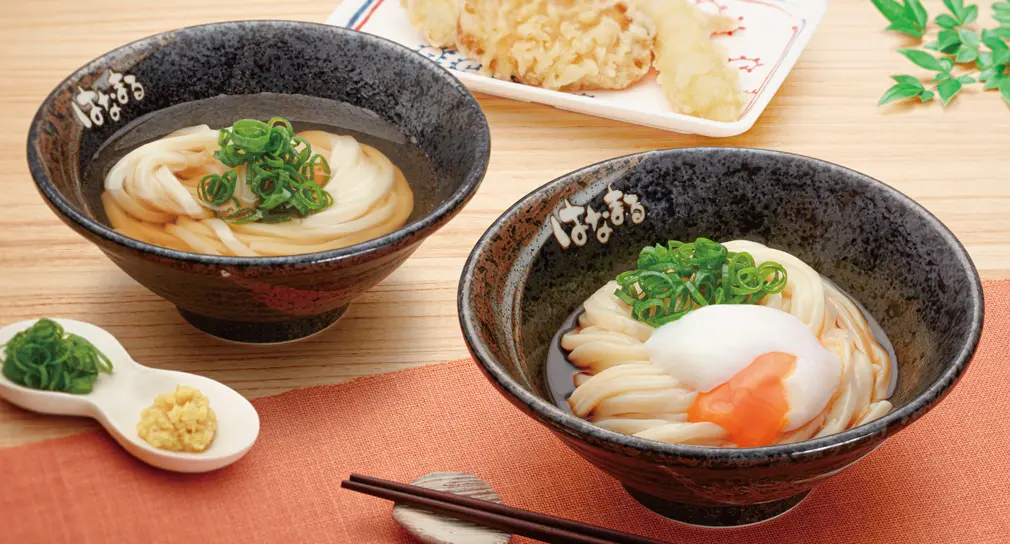
Among them, the Sanuki udon chain “Hanamaru Udon,” which originated in Kagawa Prefecture, is especially popular.
It’s known for its firm, hand-cut noodles and iriko dashi (broth made from dried sardines), and with its signature “kake udon” leading the way, you can enjoy delicious udon in little time.
There’s also a wide selection of tempura and side dishes (onigiri, croquettes, oden, and more), making it fun to mix and match freely.
With reasonable prices and a clean self-serve style, it’s used by everyone from families to solo diners at all times of day.
With locations nationwide, it’s well worth stopping by—along with Yoshinoya—when you’re in Japan.
FAQ about Yoshinoya
Q
What payment methods can I use at Yoshinoya?
A
You can pay with cash, QR code payments (such as PayPay), e-money (such as Suica), and credit cards (such as Visa and Mastercard). *Non-cash payment options are not available at some locations.
Q
Which special orders are available at locations nationwide?
A
They are “tsuyudaku” (extra sauce), “tsuyunuki” (less sauce, or served without sauce poured over it), and “neginuki” (no onions).
Summary
In this article, we’ve covered Yoshinoya’s history, why it remains so beloved, and its most popular menu items by time of day.
Deeply rooted in everyday life in Japan, Yoshinoya is a dependable option built around the “tasty, affordable, and fast” idea—handy when you’re busy and just want something solid, quickly.
People trust the familiar balance of beef and sauce, and it’s the kind of comforting taste that fills you up anytime, anywhere.
When you visit Japan, stop by Yoshinoya and try its carefully crafted gyudon for yourself.