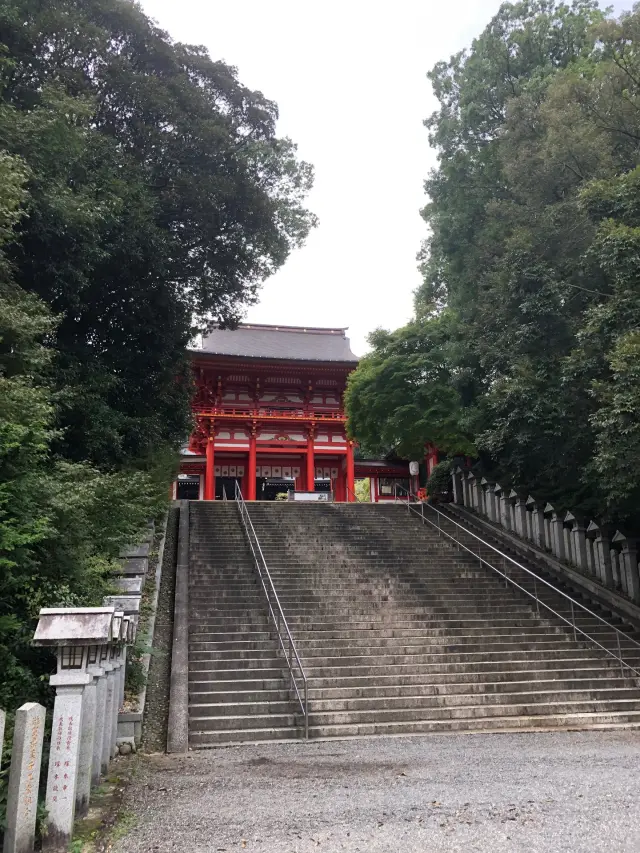
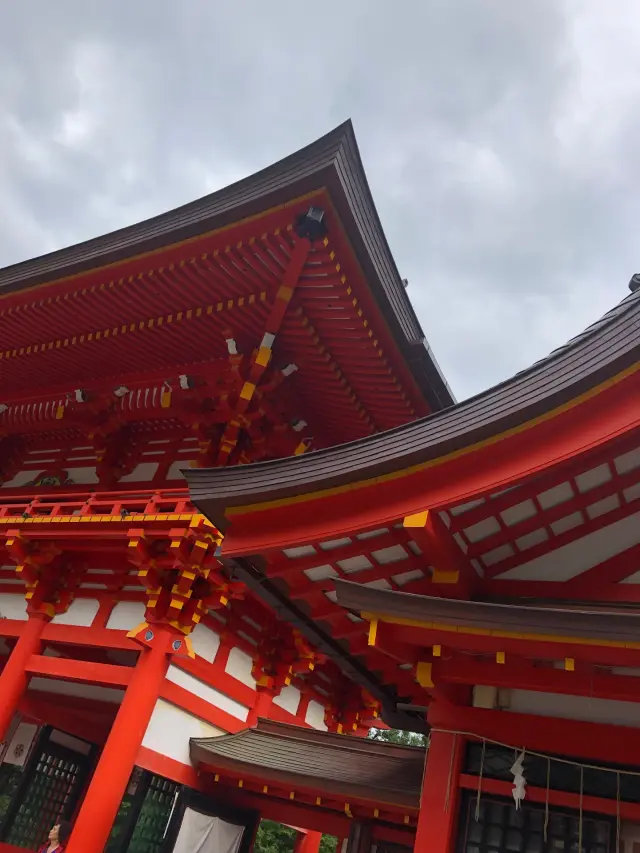
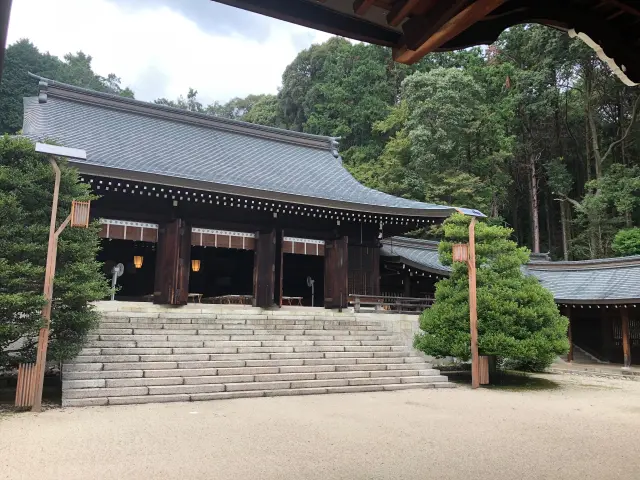
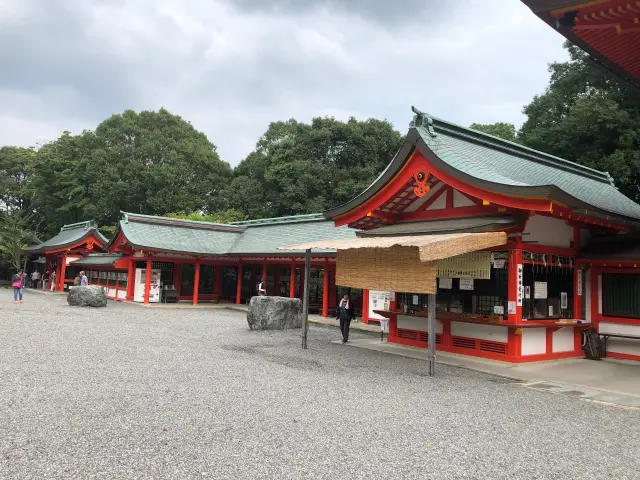
The Omi Shrine is located on the site of the Omi Otsu no Miya Palace, which was the capital of Japan for five years from 667. The shrine is dedicated to Emperor Tenji, the 38th Emperor of Japan, who was involved in the Taika Reform as Naka no Oe no Oji Prince and moved the capital from Asuka in Nara to Otsu in Omi. It is one of the 16 imperial shrines in Japan, and an imperial envoy is sent from the Imperial Palace to attend the annual festival on April 20.
The shrine was built in 1940 (Showa 15), so it has a short history as a shrine.
However, since the transfer of the capital to Otsu no Miya led to the development of Omi Province, reverence for Emperor Tenji has been strong for a long time.
In the Meiji era, a movement to build a shrine dedicated to Emperor Tenji grew among the people of Shiga Prefecture. And then in the Showa era, the shrine received the Emperor's permission to be built, and it was built with the support of the people of Shiga Prefecture and other admirers throughout the country.
It can be said to be a historic shrine that conforms to the history of more than 1,350 years since the transfer of the capital.
Emperor Tenji is revered as the god of luck and guidance, industry, culture, and scholarship for his many achievements, including the enactment of the Omi Order, the foundation of the Constitution, the creation of the school system, the establishment of the family register, the reform of the land system, and the development of industry. Among his many achievements, Emperor Tenji is well known for making Japan's first water clock and starting the time signal. In addition to the water clock and sundial, there is also The Clock Museum and Treasure House on the grounds of the shrine.
It is also famous as a sacred place for Uta Karuta (playing cards). Every year in January, the national karuta tournament is held, and the shrine grounds are crowded with fans.
Highlights
-
The 38th Emperor Tenji, known for the Taika Reform, is the enshrined deity of the shrine.
-
It was founded in 1940 as a result of the veneration of many people.
-
It is also known as the ancestor deity of time and the ancestor deity of Uta Karuta.