It feels really მშვიდ and quiet here, unlike some of Kyoto’s more popular shrines that get super crowded. As soon as you walk in, your mind starts to calm down.
It’s especially well known for prayers for love and relationships, so a lot of people come here for that. The atmosphere feels old and traditional, without much of a commercial vibe, so it’s very pleasant to walk around.
After your visit, it’s also a nice bonus to stop by one of the two famous shops at the entrance for ajari mochi or grilled mochi. Walking around while eating gives the area that classic old Kyoto feel. It’s the kind of place where you can take your time and really soak it in.
Imamiya Shrine (Kyoto) | Review by Wei Chen
Other Reviews by Wei Chen
-
Goza-no-ishi Shrine
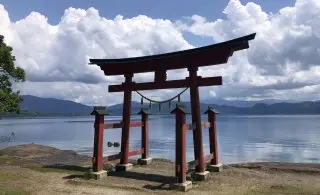
A shrine known for its striking vermilion torii gate near the north shore of Lake Tazawa. Local tradition says that in the Muromachi period, mountain ascetics devoted to Kumano Gongen used this area for training. The name is said to come from Keian 3 (1650), when Akita Domain lord Satake Yoshitaka toured Lake Tazawa and sat on a stone here to rest.
It feels small, quiet, and kind of spiritually charged. It’s right by Lake Tazawa—walk a few steps and you’ll see that insanely blue water.
It’s not a big place, but it has a really calm atmosphere, and you don’t get that “too many tourists” pressure. -
Myooin Temple (Hiroshima Prefecture)
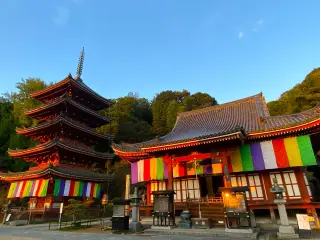
A historic Shingon Buddhist temple (Daikakuji branch) said to have been founded in 807 by Kobo Daishi (Kukai). Its Main Hall and Five-Story Pagoda are designated National Treasures. Built in 1321, the National Treasure Main Hall features Secchuyo-style architecture, which blends traditional Japanese (Wayō) design with elements of Chinese (Karayō) style. It is the oldest of its kind among similar structures around the Seto Inland Sea.
Walking around the grounds felt really relaxing, and it’s super photogenic.
Especially when the sunlight hits the wooden buildings—such a soft, peaceful vibe.
If you’re looking for a place to unwind, take a stroll, and soak up a bit of culture, it’s totally worth a visit. -
Akanko Onsen
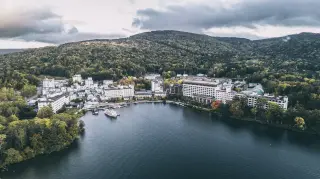
Lake Akan is known as a natural habitat of marimo, a Special Natural Monument of Japan. On its lakeshore sits Akanko Onsen, the leading hot spring resort area in eastern Hokkaido with a history of over 100 years. A hot spring town stretches along the shore of Lake Akan, lined with around 20 ryokan, hotels, and guesthouses. Many hot spring facilities face the lake, and their location is outstanding, offering panoramic views of Lake Akan and Mt. Oakan from the baths and guest rooms.
The whole area wraps around the lake, and soaking in the hot spring while looking out at the water is super relaxing. In winter, you can even watch the snow fall, which feels absolutely magical.
There are lots of ryokan to choose from here, and some even have open-air baths where you can soak and look at the stars.
The area is also pretty lively at night, with restaurants, little shops, and even Ainu cultural performances to enjoy.
The only small downside is that the location is a bit remote, so getting there without a car can be inconvenient. Still, the overall atmosphere is fantastic, and it’s definitely worth staying a night just to unwind.