

Right from the entrance, you see crowds of people—it's super lively!
Shinsaibashi | Review by 張幸宜
Other Reviews by 張幸宜
-
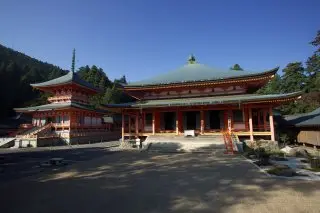
Head Temple of Tendai Buddhism: Hieizan Enryakuji
This vast temple complex encompasses all of 848-meter-high Mt. Hiei and was founded in 788 by Saicho, who established the Tendai school of Buddhism in Japan. Oda Nobunaga, who was in conflict with Mt. Hiei, burned down its halls, pagodas, and other temple buildings, as well as the monks’ residences in Sakamoto. The complex was later restored and rebuilt by Kannonji Senshun, Shiyakuin Zenso, the high priest Tenkai, and others. Serving as a comprehensive center of Buddhist learning, it became known as the “mother mountain of Japanese Buddhism” and has had a profound influence on Japanese history. It was also tasked with protecting Kyoto during the roughly 1,000 years that the city served as Japan’s capital. It was designated a UNESCO World Heritage site in 1994.
The autumn scenery here is so pleasant. Being up in the mountains really makes you feel far away from the everyday world.
-
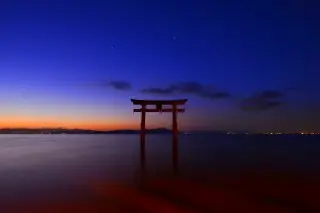
Shirahige Shrine
Standing in the northwestern part of Lake Biwa, the largest lake in Japan, this is the oldest Shinto shrine in Omi, which is said to be over 2,000 years old. The vermilion-lacquered Otorii gate stands in the middle of the lake across Route 161, reminiscent of the Itsukushima Shrine in Miyajima, Hiroshima Prefecture, and is called the "Itsukushima of Omi”.
The torii gate standing in the lake is definitely one of the most beautiful sights at Lake Biwa.
-
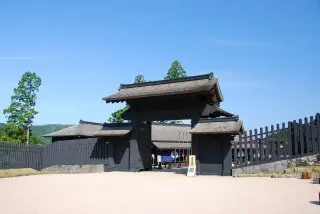
Hakone Sekisyo
After Ieyasu Tokugawa entered the Kanto region and established the Edo shogunate, the importance of the Tokaido highway connecting Edo and Kyoto increased, and it was necessary to strictly control the entry and exit of people to maintain the security of Edo.
The Edo period historical scene is really well restored here.