

So Much More Than the Keep! A Guide to Hikone Castle’s Top Highlights
Hikone Castle is famous for its National Treasure castle keep.
In fact, there are plenty of other things to see besides the keep, including four turrets designated as Important Cultural Properties and a garden recognized as Japan Heritage.
It’s easy to reach from major cities like Tokyo, Nagoya, and Osaka, and it’s also close to Lake Biwa—making it an unmissable sightseeing spot in Shiga.
Here are some carefully selected highlights you’ll want to know before visiting Hikone Castle.
What is Hikone Castle Like?
Hikone Castle stands atop Mt. Hikone, right near Lake Biwa in Hikone City, Shiga Prefecture.
On the orders of Tokugawa Ieyasu, the first shogun who founded the Edo shogunate, his close retainer Ii Naomasa began construction of Hikone Castle in 1604.
After about 20 years of work, it was completed in 1622.
Only 12 original castle keeps built before the Edo period still survive today.
Five of them are designated National Treasures and are known as the “Five National Treasure Castles.”
One of them is Hikone Castle’s three-story, three-tier-roof keep.
Hikone Castle’s four turrets are designated Important Cultural Properties, and the adjacent Genkyu-en and Rakuraku-en are designated Places of Scenic Beauty, making the site rich in historically valuable buildings and grounds.
The keep and turrets are said to have been built using recycled materials such as timber and stone walls from nearby castles, including Sawayama Castle (Hikone City), Azuchi Castle (Omihachiman City), and Nagahama Castle (Nagahama City), which is why it’s also known as a “recycled castle.”

Access to Hikone Castle
Hikone Castle is in a location that’s easy to reach from major cities like Tokyo, Nagoya, and Osaka.
The nearest station, JR Hikone Station, is one stop from JR Maibara Station on the JR Biwako Line.
JR Maibara Station is served by the Tokaido Shinkansen and Sanyo Shinkansen, so you can access it from each city in the travel times below.
- From JR Tokyo Station to JR Maibara Station
- Approx. 2 hr 10 min
- From JR Nagoya Station to JR Maibara Station
- 30 min
- From JR Shin-Osaka Station to JR Maibara Station
- 40 min
It’s about a 15-minute walk from JR Hikone Station, but it’s also fun to stroll along streets that still retain the atmosphere of the old castle town.
Hikone Castle: Open Days, Hours, and Admission
Hikone Castle can be visited year-round, but note that only the Kaikoku Kinenkan Museum is closed from December 25 to December 31.
- Open Days
-
Open year-round
(Kaikoku Kinenkan Museum is closed from December 25 to December 31) - Hours
- 8:30am–5:00pm
- Castle Admission Ticket
-
(Admission to Hikone Castle, including Genkyu-en)
, Adults: 1,000 yen
, Elementary, middle school students: 300 yen
What’s the Best Season to Visit Hikone Castle?
If you’re visiting Hikone Castle, spring is recommended for the stunning views of the castle paired with cherry blossoms.
Along the castle moat, there are around 1,100 cherry trees, and you can take a traditional roofed boat cruise in the moat to enjoy the scenery at a relaxed pace.
During the Cherry Blossom Festival, the blossoms are illuminated at night, creating an ethereal scene as they reflect on the water’s surface.


See National Treasures, Important Cultural Properties, and Japan Heritage! 5 Must-See Highlights at Hikone Castle
Hikone Castle is best known for its National Treasure keep, but there’s plenty more to see beyond it, including turrets designated as Important Cultural Properties and a garden recognized as Japan Heritage.
Along with the keep, here are the highlights you should visit at Hikone Castle.
1. The National Treasure “Keep,” Excellent for Both Design and Defense
When it comes to Hikone Castle, the National Treasure keep is a must-see.
It’s not a particularly large keep, but one of its defining features is its beautiful exterior, with three types of gables that protect the building from rain and fire, plus black-lacquered kato-mado windows shaped like pointed arches.
It also has openings for shooting bows and guns, making it excellent not only in design but also in practicality.
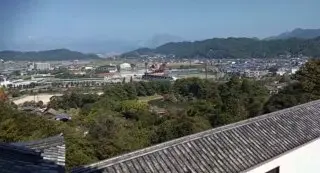
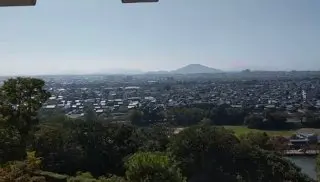
You can also tour the inside, and from the top floor you can take in sweeping views of Hikone’s cityscape, Lake Biwa, and the ruins of Sawayama Castle.

2. Four Turrets Designated as Important Cultural Properties
All four turrets that remain at Hikone Castle—Tenbin Yagura, Taikomon Yagura, Nishinomaru Sanju Yagura, and Ninomaru Sawaguchi Tamon Yagura—are designated Important Cultural Properties.
Each turret has different features, so comparing them is part of the fun.
Tenbin Yagura
As its name suggests, Tenbin Yagura is known for its balance-scale-like shape.
Symmetrical turrets are rare, and its beautiful structure has made it a popular spot.

Taikomon Yagura
Taikomon Yagura is the final stronghold protecting the Honmaru (main bailey).
Inside Taikomon Yagura, the east wall is missing—a rare structure—said to be designed to let the sound of a drum resonate to alert others when enemies approached.

Nishinomaru Sanju Yagura
Nishinomaru Sanju Yagura is a key defense point guarding the west side and the rear of the castle.
It forms an L-shape facing north and east, and has three stories like the keep.
Outside Nishinomaru Sanju Yagura are a deep moat and a dema-guruwa-like projection called a deguruwa that connects the turret to the outside, a structure designed to make it harder for enemies to enter.

Ninomaru Sawaguchi Tamon Yagura
Ninomaru Sawaguchi Tamon Yagura is the east gate leading to the main entrance.
It consists of a two-story corner turret and a tamon yagura, and the walls alternate triangular and square loopholes (windows for firing arrows and guns) to strengthen its defenses.
Because it’s the gate you reach by walking “Iroha Matsu” from Hikone Station, it now serves as the main gateway for tourists.

3. An Unusually Large “Stable”
This facility once managed the horses of the lord of Hikone Castle, and a building that can house 21 horses still remains today.
There are few other examples of a stable this large, and it’s designated an Important Cultural Property of Japan.
The L-shaped building has a small tatami room at the east end where it meets the Sawa-guchi turret gate, and aside from the gate near the opposite west end, the rest of the structure was used for resting horses and caring for them.

4. Genkyu-en, a Garden Recognized as Japan Heritage
Genkyu-en is a daimyo garden whose construction began in 1677—around 50 years after the castle’s completion—when Ii Naooki, the fourth lord of the Hikone Domain, started building it along the moat. It was completed in 1679.
Together with the Ninomaru Palace known as Rakuraku-en, it was designated a national Place of Scenic Beauty in 1951 as “Genkyu Rakuraku-en.”
In 2015, it was also recognized as Japan Heritage as a component cultural property of “Lake Biwa and Its Waterfront Landscape—A Water Heritage of Prayer and Life.”
Built around a large pond, this strolling garden offers many different views, including nine bridges spanning inlets and islands in the pond.

5. Cruise Hikone Castle’s Moat Like a Lord
You can cruise the moat on a restored yakatabune, modeled after boats once used for inspections by the castle lord and for entertaining feudal lords.
Hikone Castle seen from below in the moat feels more impressive than from the ground.
The moat area is rich in nature, with cherry blossoms in spring and fall foliage in autumn.
Reservations are required, but you can also order a bento and eat it on board.
Why not cruise Hikone Castle’s moat and enjoy the experience like a castle lord or feudal lord?

3 Sightseeing Spots Near Hikone Castle
Around Hikone Castle, there are many spots that still preserve the atmosphere of the old castle town, and pairing them with a visit to Hikone Castle should make your Shiga trip even more rewarding.
Here are sightseeing spots you should visit along with Hikone Castle, plus accommodations where you can feel the area’s history.
1. Tobaya Ryokan
A Japanese-style ryokan that has welcomed guests for around 140 years since 1880, right in the heart of Hikone Castle’s castle town.
It operates along Hanashobu-dori, an area designated as an Important Preservation District for Groups of Traditional Buildings.
As you step into the entrance filled with the scent of incense, you’ll see retro noren curtains and lanterns, woodblock prints, and framed works left behind by Ii Naosuke—furnishings that tell the story of its history.
All 12 guest rooms retain the charm of the Edo period, with a calm, inviting atmosphere. From the first-floor hallway you can look out onto an inner courtyard, which is lit up at night so you can enjoy its garden beauty and fully experience the appeal of this traditional inn.

2. Sawayama Castle Ruins
These castle ruins sit on Mt. Sawayama (232.5 m) on the north side of JR Hikone Station, and are said to have been built in the early Kamakura period by the Sasaki clan, the shugo (military governor) of Omi.
In 1595, Ishida Mitsunari, a warrior who served Toyotomi Hideyoshi during the Azuchi-Momoyama period, became the lord, and it’s said that at its height the castle featured a five-tier keep with structures such as the Honmaru, Ninomaru, and Sannomaru, with Toriimoto as its main approach. It’s also said that a castle town had already formed within the moats.
A hiking course of around 30 minutes from JR Hikone Station leads to the summit, where you can enjoy historic sites and scenic spots such as the Nishinomaru and Honmaru ruins, the “Kiridoshi” pass that runs along the north side of the castle, and the remnants of corner stone walls known as “Sumi Ishigaki.”

3. Lake Biwa
Lake Biwa, in central Shiga Prefecture, belongs to the Yodo River system (a Class A river) and covers Approx. 670 km²—about one-sixth of the prefecture’s area. Fed by rivers flowing from surrounding ranges such as Mt. Ibuki, the Suzuka Mountains, and the Hira Mountains (with peaks over 1,000 m), it holds 27.5 billion tons of water, making it Japan’s largest lake by both surface area and water volume.
A narrow lake that once formed near today’s Iga City in Mie Prefecture is said to have been shaped by fault activity and other forces, shifting in form and location over time before settling in its current position around 400,000 years ago—making it one of only around 20 ancient lakes confirmed worldwide.
Because of this, many of the creatures living in Lake Biwa have evolved in unique ways, and it’s also known for its diversity, with over 60 endemic species found nowhere else in the world.

3 Popular Places to Eat Near Hikone Castle
Here are some restaurants near Hikone Castle where you can enjoy local flavors that instantly add to the travel mood.
Be sure to try meat dishes made with Omi beef and Shiga’s rich, distinctive champon.
1. Omi Niku Sennaritei Kyara
Omi Niku Sennaritei Kyara is a specialty Omi beef restaurant located on Yume Kyobashi Castle Road.
In a storehouse said to have been built in the Edo period (1603–1867), you can enjoy the special kaiseki course “Ichigo Ichie” in the “Kura Special Room,” limited to one group per day (up to 10 people).
There’s a wide menu selection, including set meals, kaiseki, sukiyaki, steak, and sushi. The signature dish is “Cha-shabu,” shabu-shabu in kombu broth infused with Shiga-grown Asamiya tea.

2. Shikisai (Shiga Prefecture)
A set-meal restaurant inside a shopping center in front of JR Hikone Station.
You can try “Hikone-don,” made with Omi beef and local ingredients, created in fall 2011 to commemorate the 75th anniversary of Hikone’s incorporation as a city.
Of the 10 official recipes, Shikisai serves “Hikotorodon.”
It features plenty of Omi beef tendon and the local specialty red konnyaku cut into shirataki-like strands, topped with green shiso and a soft-boiled onsen egg.

3. Champontei Sohonke Hikone Ekimae Honten
A specialty Omi champon shop carrying on the flavors of “Menrui wo Kabe,” which opened in 1963.
Champontei Sohonke’s signature golden broth is made with a base of Omi chicken bones, kombu from southern Hokkaido, and six types of shaved dried fish, including bonito and mackerel.
By simmering it in a small pot over high heat, it draws out the sweetness of the vegetables and emulsifies the fat from the meat, creating a deep, comforting flavor that’s light yet rich.

3 Recommended Places to Stay Near Hikone Castle
Just a short distance from Hikone Castle, the area opens onto calm views of Lake Biwa and offers a range of accommodations where you can settle into a laid-back lakeside pace.
Here are places to stay that make for a relaxing, peaceful visit—like a breath of fresh air carried over the water.
Enjoy a trip that blends castle-town strolling with a resort-like escape.
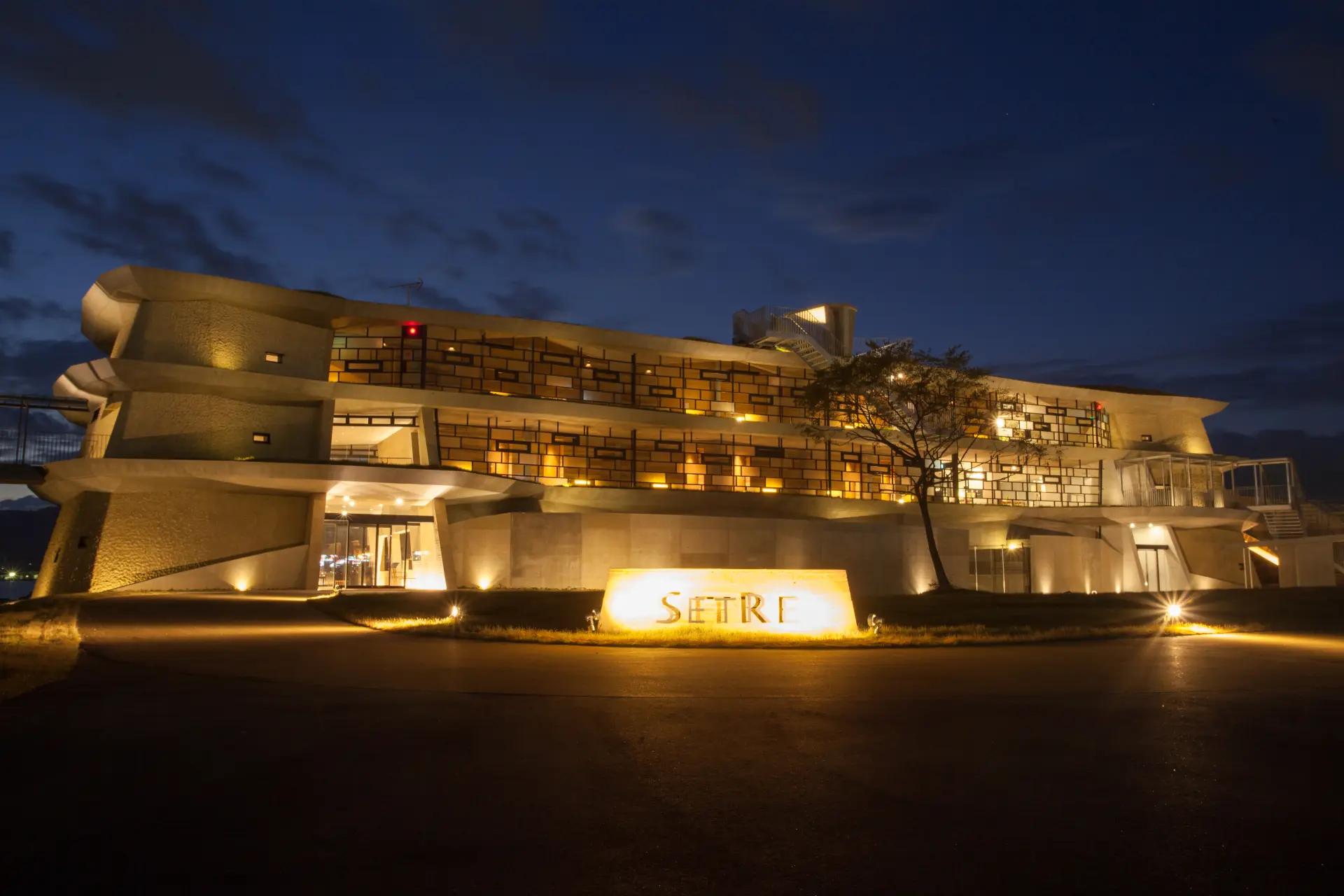
1. Setre Marina Biwako
A resort hotel on the shores of Lake Biwa, offering sweeping lake views not only from the guest rooms, but from anywhere in the building.
With the theme “Born in Shiga,” you can feel it throughout the property—not just in the food—and it’s popular for a luxurious stay that lets you forget everyday life.
The guest rooms, furnished with original pieces made from Shiga wood, are small in number: six rooms on the second floor and eight on the third, for a total of 14 rooms.
Guests also receive a “Welcome with Aroma” service, choosing from four scents, so you can relax while surrounded by your preferred fragrance infused into Shiga-grown hinoki cypress.
2. Ao no Kotei BIWAFRONT HIKONE
A multi-use resort hotel that opened in August 2023. Located on the eastern shore of Lake Biwa, it sits in a signature Omi resort area near attractions like the National Treasure Hikone Castle and Matsubara Swimming Beach.
As a Hotel New Awaji Group property, it’s designed so you can fully enjoy the waterfront scenery.
The front desk, the hotel’s main entrance point, is on the top floor. When the crimson doors open, the first thing you see is a grand panoramic view of Lake Biwa. From the observation lounge, you can soak in the lake views—an uplifting welcome that quickly captures guests’ hearts.

3. Kita Biwako Hotel Grazie
A lakeside resort hotel set in a naturally beautiful location, with Mt. Ibuki to the east and Lake Biwa to the west.
From the guest rooms, you can take in sweeping views of the lake’s dramatic seasonal scenery.
Inspired by the streets of Verona in northern Italy, the interior has an international feel that makes you feel like you’re traveling abroad.
Rooms range from Western-style twin rooms and Japanese-style rooms to compact singles and suite rooms with different interiors inspired by Italy’s regions.

Reviews
3.77
Some reviews are AI-translated.
-
Compared to other Japanese castles, getting to Shiga isn't that convenient, so there aren't as many tourists here.
-
You can actually go inside the main keep and see the original architecture. It's really well preserved for a castle of its age.

FAQ about Hikone Castle
Q
Where should I go to enjoy Hikone Castle’s castle town?
A
“Yume Kyobashi Castle Road,” which recreates the atmosphere of the castle town streets, is recommended.
Q
When is the best time to see the cherry blossoms at Hikone Castle?
A
Late March to mid-April is the best time.
Q
How long does sightseeing at Hikone Castle take?
A
There’s a lot to see, so plan for at least 1 hour. If possible, set aside 2 hours for sightseeing.
Summary
That wraps up our introduction to the top highlights of Hikone Castle—how was it?
You can enjoy not only historic sites like the National Treasure keep, Important Cultural Properties, and Japan Heritage, but also the cherry blossoms blooming along the moat in spring.
Beyond Hikone Castle and the nearby sightseeing spots, Shiga Prefecture has many other appealing destinations.
If you’d like to know more must-visit spots for Shiga sightseeing, check out this article, which handpicks top places to visit.