

17 Popular Arashiyama Attractions Where Japan’s Culture and Nature Create Stunning Scenery
Arashiyama is known for its distinctly Japanese scenery, where beautiful nature changes with the seasons and historic architecture come together.
It is also one of Japan’s most popular sightseeing destinations.
This article introduces Arashiyama’s popular attractions, transportation options, and other useful information to know before your visit.
By visiting the sightseeing spots featured below, you’ll be able to discover breathtaking views and culture unique to Japan.
Use this article as your guide and enjoy exploring Arashiyama.

What is Arashiyama Like?
Arashiyama is the name of a mountain in western Kyoto City with an elevation of 382m.
More often than not, however, “Arashiyama” refers not just to the mountain itself, but to the surrounding mountains and the area at their foot.
The area known as Arashiyama includes the Oi River, the three mountains known as the Arashiyama Sanzan, Mt. Matsuo, Arashiyama, and Mt. Karasudake, as well as Mt. Ogura and Mt. Kame, and is blessed with abundant nature.
Because it is in a basin, temperatures vary greatly, with hot and humid summers and severely cold winters.
For this reason, autumn leaves in Arashiyama turn especially beautiful colors, and there are many famous fall foliage spots.
Many temples and shrines in the area also have cherry trees planted on their grounds, and Arashiyama is well known for its many cherry blossom spots as well.
Even outside cherry blossom and autumn foliage seasons, one of Arashiyama’s greatest charms is its beautiful scenery, where picturesque natural landscapes and historic architecture exist in harmony.
There are also many restaurants, accommodations, and activity facilities where you can experience traditional Japanese culture.
If you are sightseeing in Kyoto, be sure to make time for Arashiyama too, where you can enjoy beautiful Japanese scenery and culture.

What is the best season to visit Arashiyama?
If you are visiting Arashiyama, spring and fall are especially recommended for enjoying cherry blossoms and autumn leaves.
Winter is also one of Arashiyama’s unique charms, offering a quiet snowy world different from spring and fall.
Here, we introduce the appeal of spring, fall, and winter, when Arashiyama shows some of its most beautiful scenery.
Arashiyama in spring, colored by cherry blossoms
One of the charms of Arashiyama in spring is how its appearance changes depending on the spot, area, and timing.
Early-blooming cherry blossoms begin to flower in mid-March and reach full bloom in about a week. After that, late-blooming varieties such as weeping cherry and mountain cherry blossoms begin to bloom one after another, allowing for a long cherry blossom viewing season.
Among the many cherry blossom spots, one of the most popular is Nakanoshima Park along the Katsura River.
The view of cherry blossoms in full bloom harmonizing with Togetsukyo Bridge and the Arashiyama mountains is a symbolic beauty of spring in Arashiyama.
Tenryuji Temple, a UNESCO World Cultural Heritage site, is also known as a famous cherry blossom spot, and the weeping cherry blossoms decorating its garden are especially impressive.
-
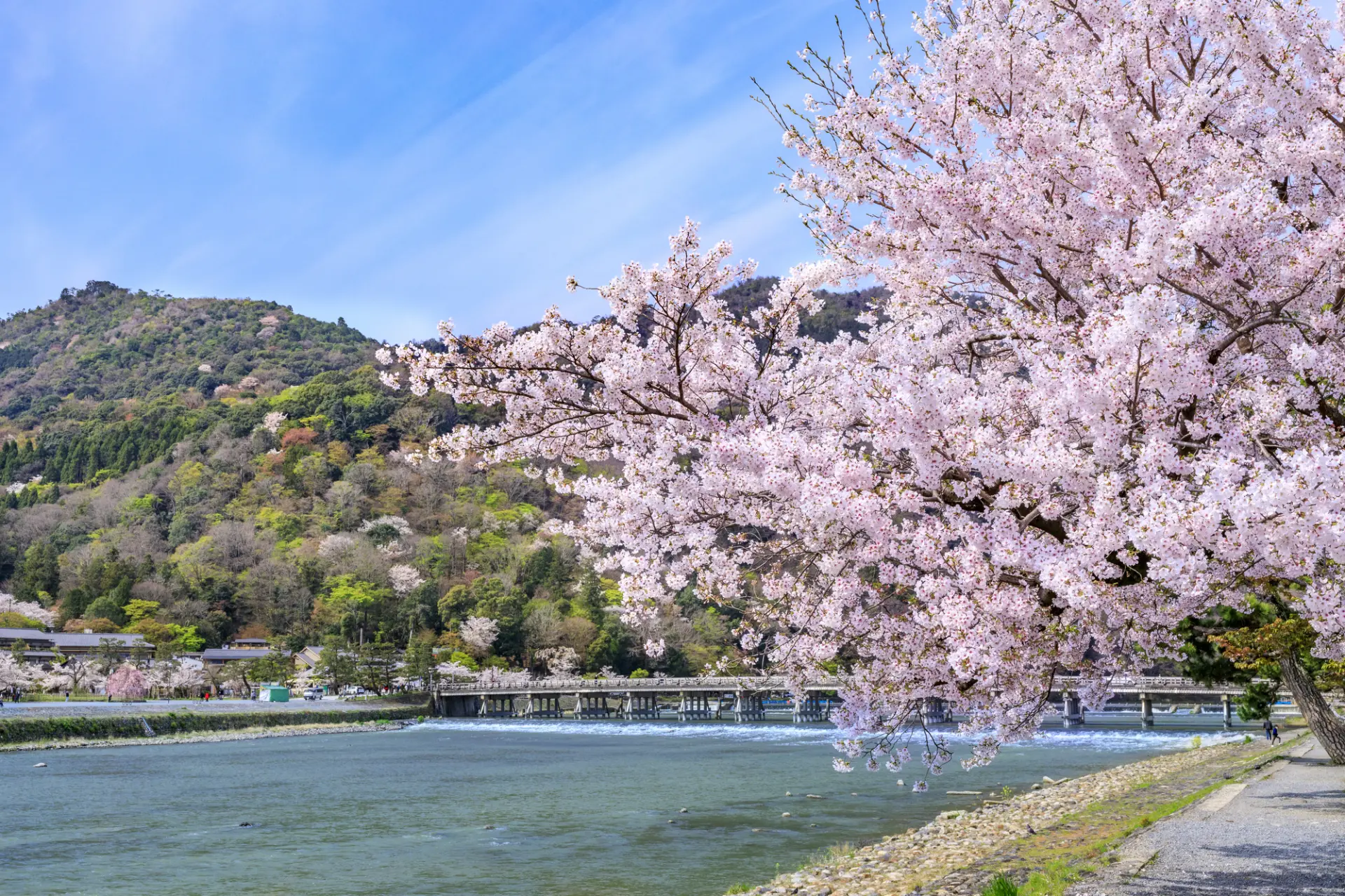
Togetsukyo Bridge and the Arashiyama mountains seen beyond cherry blossoms in full bloom
-
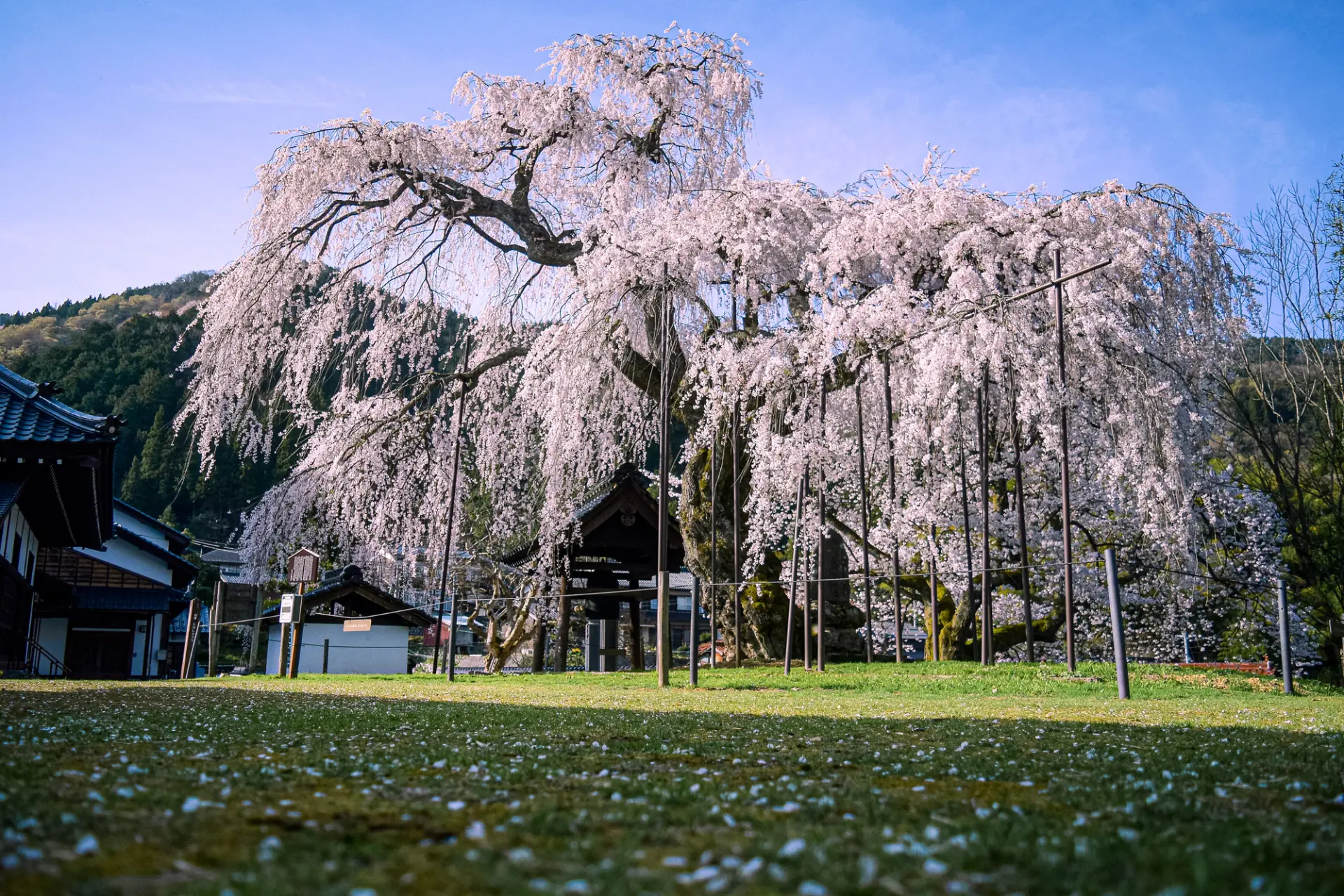
Weeping cherry blossoms at Tenryuji Temple
Arashiyama in fall, wrapped in autumn colors
Arashiyama’s autumn leaves usually begin to change color in mid-November and reach their best from late November to early December.
In autumn, the mountains turn red and yellow, creating charming scenery full of atmosphere.
Along with temples and shrines in Arashiyama surrounded by fall foliage, the Sagano Romantic Train, where you can admire beautiful autumn valleys from the train window, is also highly popular.
After sunset, the railway line is illuminated, creating a magical scene.
-
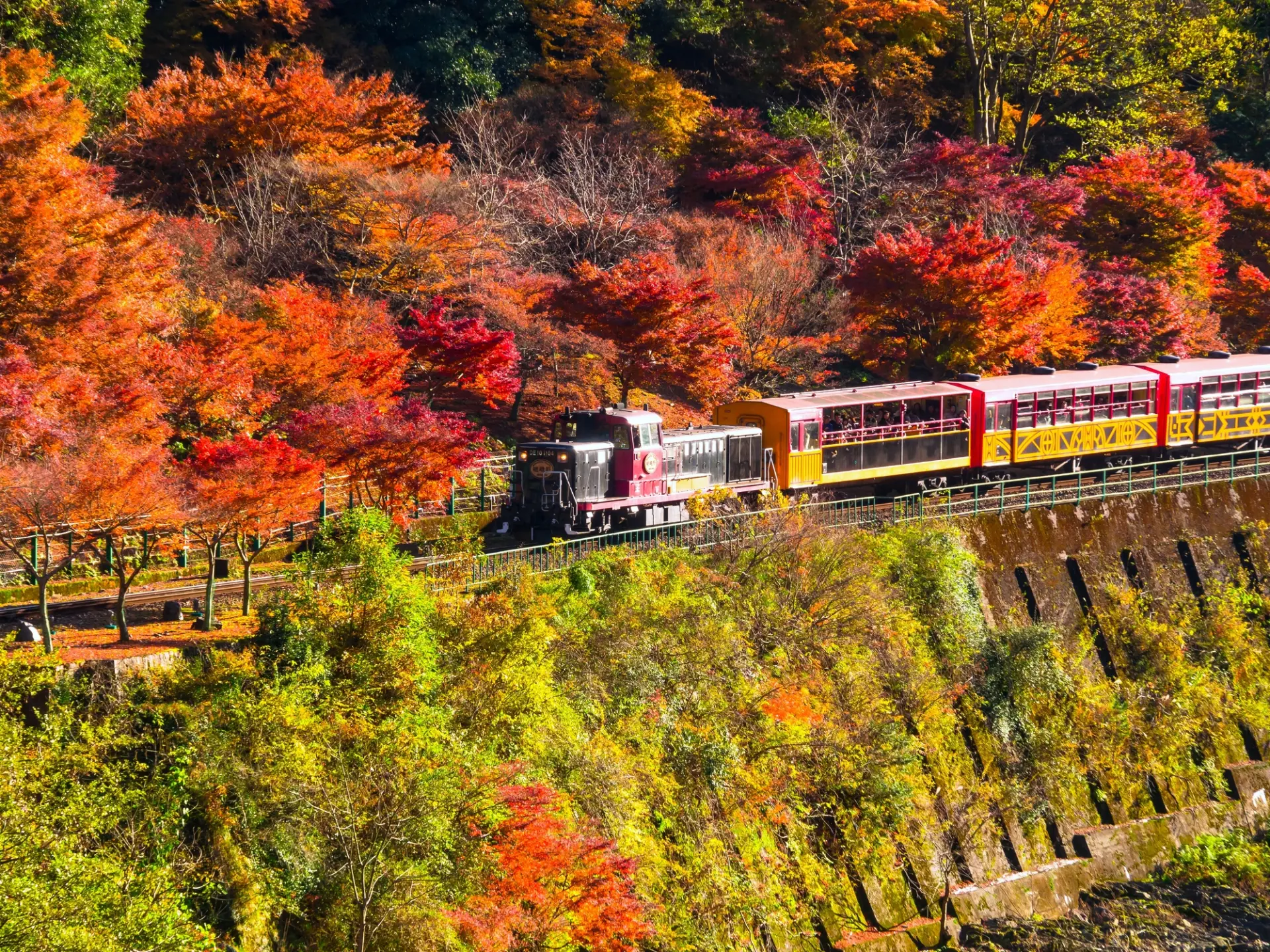
The Sagano Romantic Train running through a vividly colored valley
-
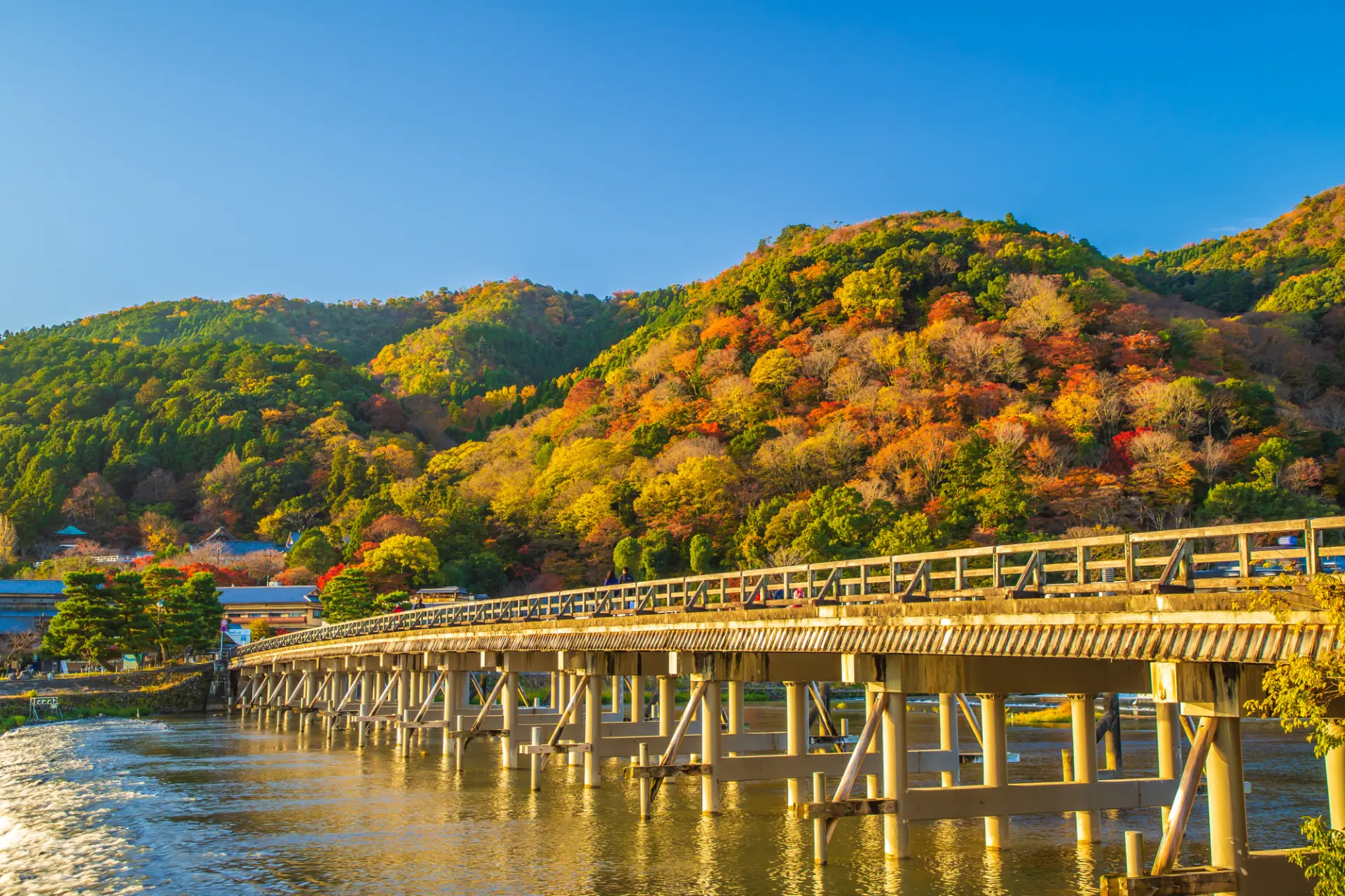
Arashiyama colored by autumn leaves
Arashiyama in winter, surrounded by silence
In contrast to the vibrant beauty of spring and fall, winter in Arashiyama is wrapped in crisp air and quiet stillness.
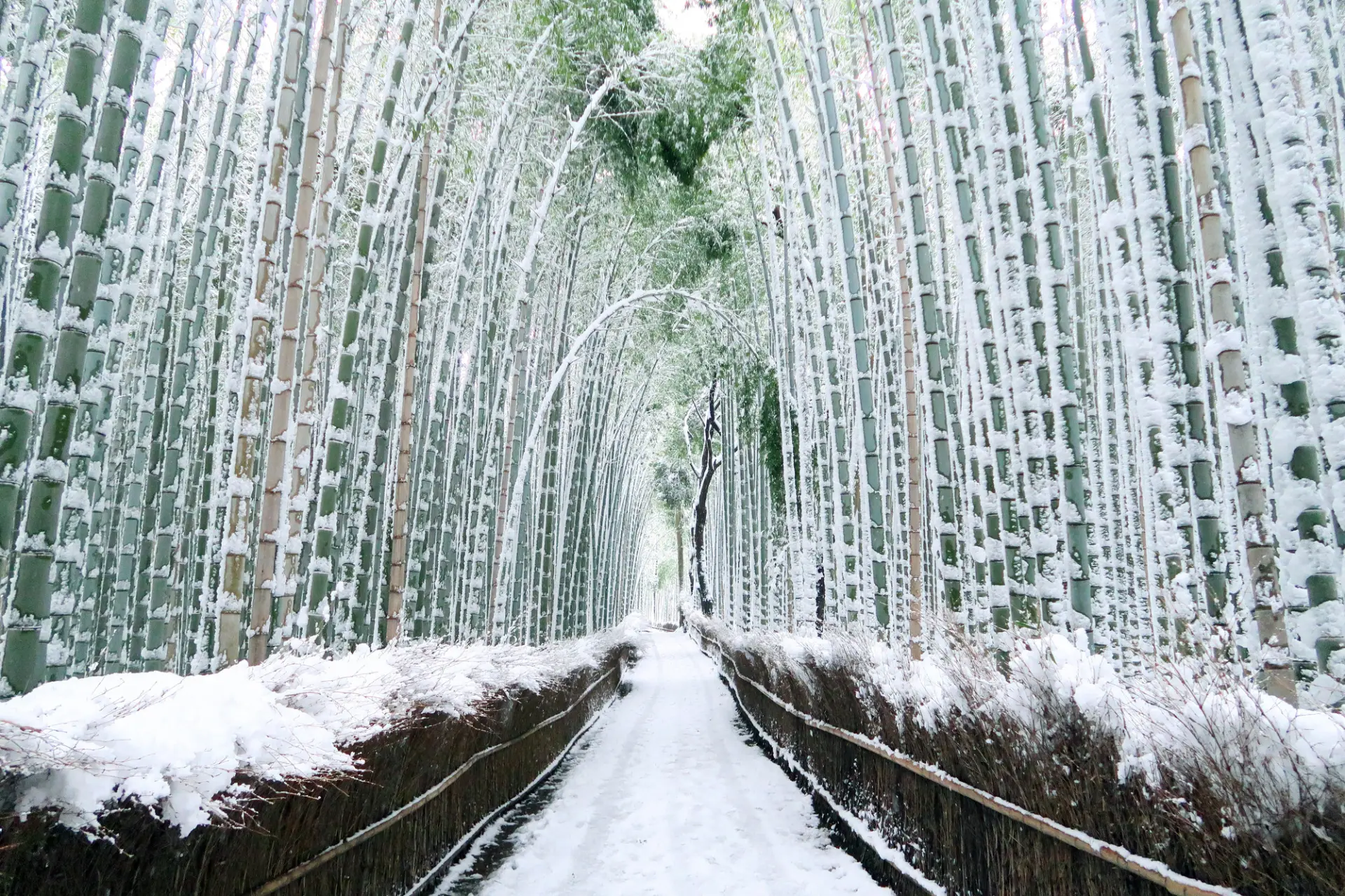
The sight of Arashiyama, Togetsukyo Bridge, and the Bamboo Grove Path covered in snow has a beauty unique to this season.
Since this is not originally a snowy area, days with accumulated snow are rare and especially popular with visitors.
Snow tends to fall from late January to late February each year, but it often melts within a few hours.
For that reason, if you want to see snowy scenery, it is best to visit early in the morning.
What to wear in Arashiyama by season
- Spring (March - May): Light jacket and thin sweater
- Summer (June - August): Light clothing, short sleeves
- Fall (September - November): Light jacket, coat
- Winter (December - February): Coat, thick sweater or jacket
How do you get to Arashiyama?
Here is how to access Arashiyama starting from Kyoto Station, the main transportation hub for sightseeing in Kyoto.
- Route
-
1. Take the JR Sanin Main Line Rapid Service from Kyoto Station and get off at Saga-Arashiyama Station.
2. Approx. 12 minutes on foot from Saga-Arashiyama Station - Travel Time
- Approx. 30 minutes
Main ways to get around while sightseeing in Arashiyama
You can generally get between sightseeing spots in Arashiyama on foot.
If you get tired of walking, use the bus.
Even if there is no train station near a sightseeing spot, there is often a bus stop nearby.
A one-day pass is also recommended if you want to save on transportation costs.
17 Popular Arashiyama Attractions to Enjoy Scenery and Culture Unique to Japan
If you are visiting Arashiyama, plan your trip around the popular sightseeing spots introduced below.
Many of them feature buildings and scenery carefully preserved through a long history, and every one offers a distinctly Japanese atmosphere. Arashiyama’s picturesque natural landscapes are another major draw.
Enjoy scenery and culture that are uniquely Japanese.
1. Togetsukyo Bridge
This bridge is said to have first been built in the early 9th century during the Heian period. Although it has been washed away many times, it has been rebuilt each time.
It is said to have received its name because Emperor Kameyama of the Kamakura period remarked that the moon seemed to cross the bridge.
It has appeared in many ukiyo-e prints by artists such as Utagawa Hiroshige and Katsushika Hokusai, and has become one of the most iconic views of Arashiyama.

2. Tenryuji Temple
The head temple of the Tenryuji school of the Rinzai sect.
It was founded in 1339 by Ashikaga Takauji, with Muso Kokushi as its founding priest, to pray for the soul of Emperor Go-Daigo.
The temple grounds, which spread across the former site of Emperor Gosaga’s Kameyama villa, were Japan’s first designated Historic Site and Special Place of Scenic Beauty, and in 1994 were registered as a UNESCO World Cultural Heritage site as part of the Historic Monuments of Ancient Kyoto.

3. Sagano Bamboo Grove Path
Known for its picturesque scenery, Sagano was loved by aristocrats and literary figures from the Heian period (794–1185), and many villas and hermitages were built there.
The Sagano Bamboo Grove Path in this area is a walking trail that runs Approx. 400m from Nonomiya Shrine, past the north gate of Tenryuji Temple, to Okochi Sanso Garden.
The beautiful sight of green bamboo stretching toward the sky often appears on travel magazine covers, in TV dramas, and in commercials, and is known as one of Kyoto’s most iconic views.

4. Ogurayama Nisonin Temple
Founded in the Jowa era (834–848), this temple is known for the mausoleum said to hold the divided ashes of Emperor Saga, Emperor Tsuchimikado, Emperor Go-Tsuchimikado, Emperor Gosaga, and Emperor Kameyama, and is also associated with the monk Honen.
Its principal statues, the Yugyo Nisonzo, are designated Important Cultural Properties and are said to have been made by Kasuga Buddhist sculptors in the mid-Kamakura period.

5. Arashiyama Monkey Park Iwatayama
Arashiyama Monkey Park Iwatayama has its entrance inside the grounds of Ichitani Munakata Shrine, Approx. 20m upstream along the river from Togetsukyo Bridge, one of Arashiyama’s best-known sightseeing spots.
Today, Approx. 120 Japanese macaques live here in a wild state, delighting visitors year-round with the changing scenery of the seasons.

6. Kyoto Orgel-do Saga Shop
Kyoto Orgel-do Saga Shop is located a 1-minute walk from Arashiyama Station on the Keifuku Arashiyama Line.
A charming maiko statue greets visitors at the entrance, making it a must for social-media-worthy photos.
Inside, you’ll find a wide variety of music boxes, from cute palm-sized ones to larger decorative pieces for the home.

7. Kimono Forest
A plaza located in one corner of Arashiyama Station Hannari Hokkori Square.
There are 600 vividly colored poles decorated with Kyoto Yuzen textile patterns.
The poles are installed not only in the plaza, but also on the station platform and beside the tracks, making the entire Arashiyama Station feel like a work of art.
The facility also includes restaurants, souvenir shops, and a footbath (300 yen), making it a relaxing spot for visitors.

8. Nonomiya Shrine
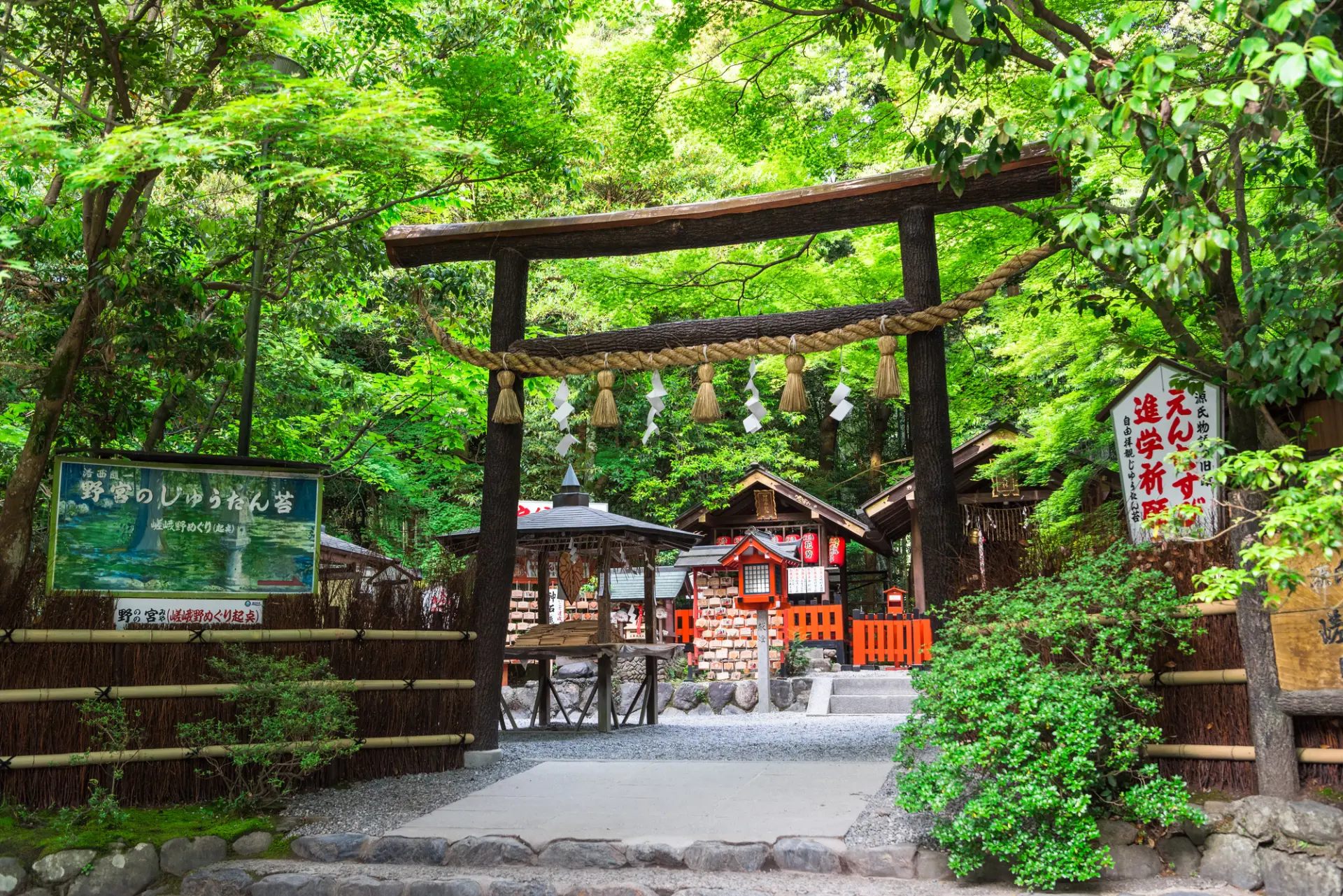
Nonomiya Shrine stands along the famous Bamboo Grove Path, one of Arashiyama’s most iconic sightseeing spots.
Its unstripped wooden torii gate, surrounded by bamboo, creates a beautiful contrast with the vivid green stalks and has a unique atmosphere.
Another highlight is Nonomiya’s “Carpet Moss,” a beautiful moss garden that spreads out behind the main shrine building on the right.
The shrine is also known for blessings for matchmaking, and next to the auxiliary shrine dedicated to Nonomiya Daikokuten, the deity of good relationships, stands a sacred stone.
It is said that if you make a wish while touching this stone, it will come true within a year.
9. Jojakkoji Temple
Jojakkoji Temple, founded in 1596, stands on the middle slope of Mt. Ogura.
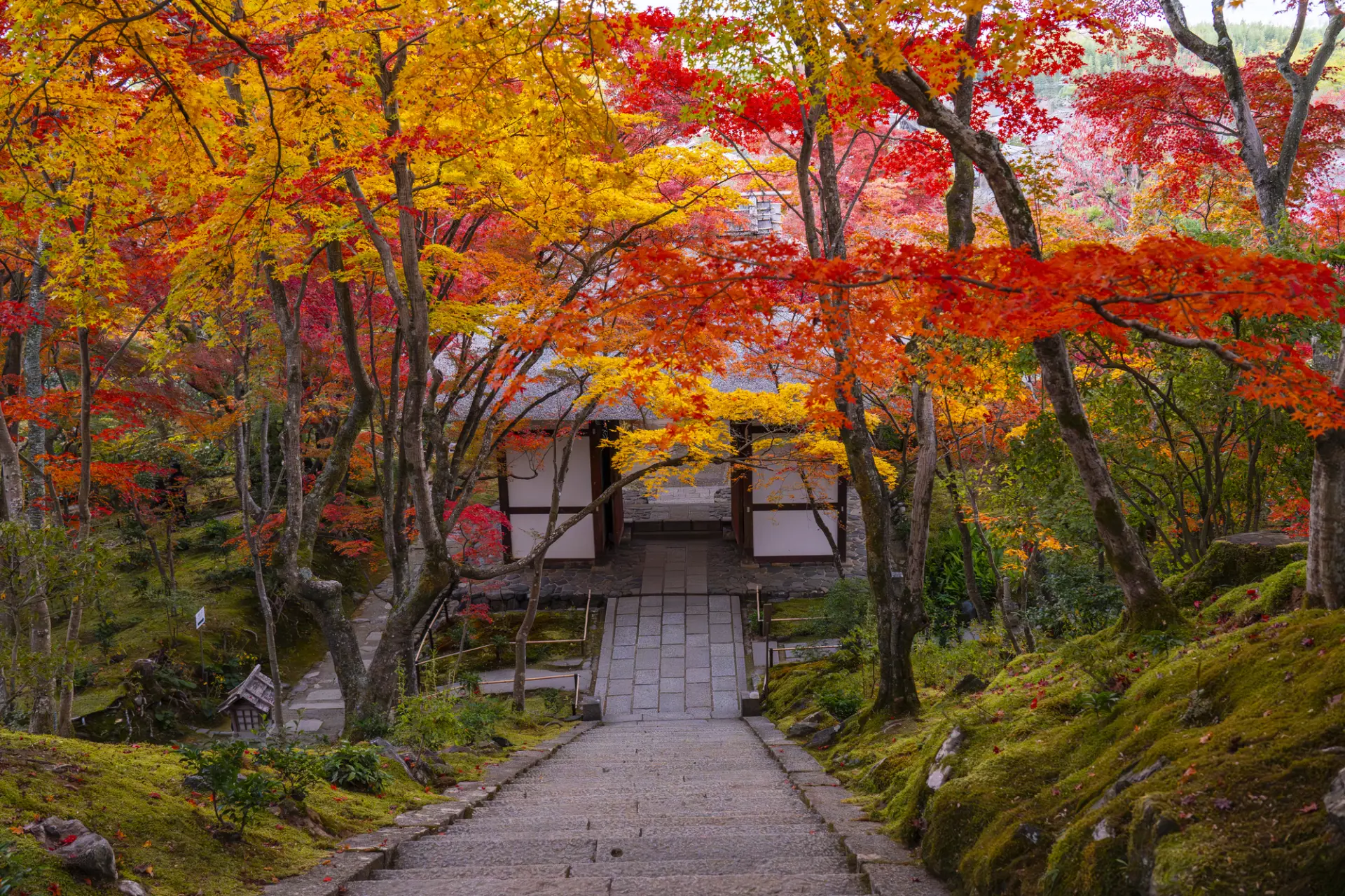
Highlights are scattered throughout the grounds, including the thatched Niomon Gate that still retains the atmosphere of the temple’s founding period, the Tahoto Pagoda designated as an Important Cultural Property, and an observatory with sweeping views over Kyoto City.
Surrounded by abundant nature, the temple’s charm also lies in the peaceful way you can enjoy seasonal scenery in silence.
Approx. 200 maple and ginkgo trees are planted on the grounds, and in autumn the entire temple is wrapped in vivid fall colors.
The stone steps leading to the main hall are especially striking, covered in bright red maples and creating a magical experience like walking through a tunnel of autumn leaves.
10. Hogonin Temple
One of the sub-temples of Tenryuji Temple, founded during the Muromachi period (1336–1573).
It is open to the public only twice a year, in spring (from mid-March to the end of June) and fall (from early October to early December).
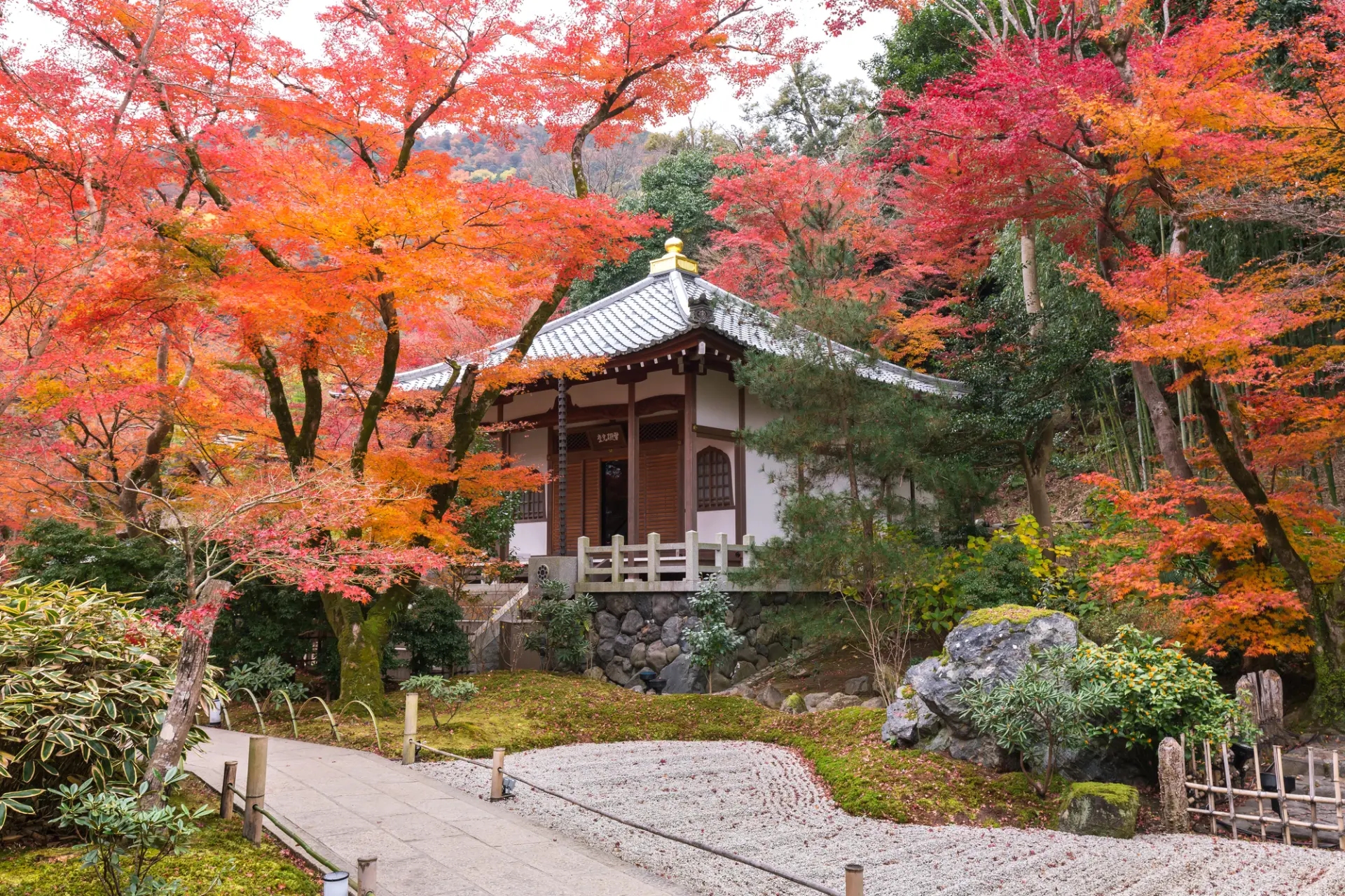
The temple grounds offer beautiful scenery where Arashiyama’s nature harmonizes with the main hall, study hall, and tea room.
One highlight not to miss is the Shishiku no Niwa Garden. This stroll garden, which uses Arashiyama as borrowed scenery, is colored by fresh greenery in spring and autumn leaves in fall, letting visitors enjoy the beauty of every season as they walk.
11. Arashiyama Park
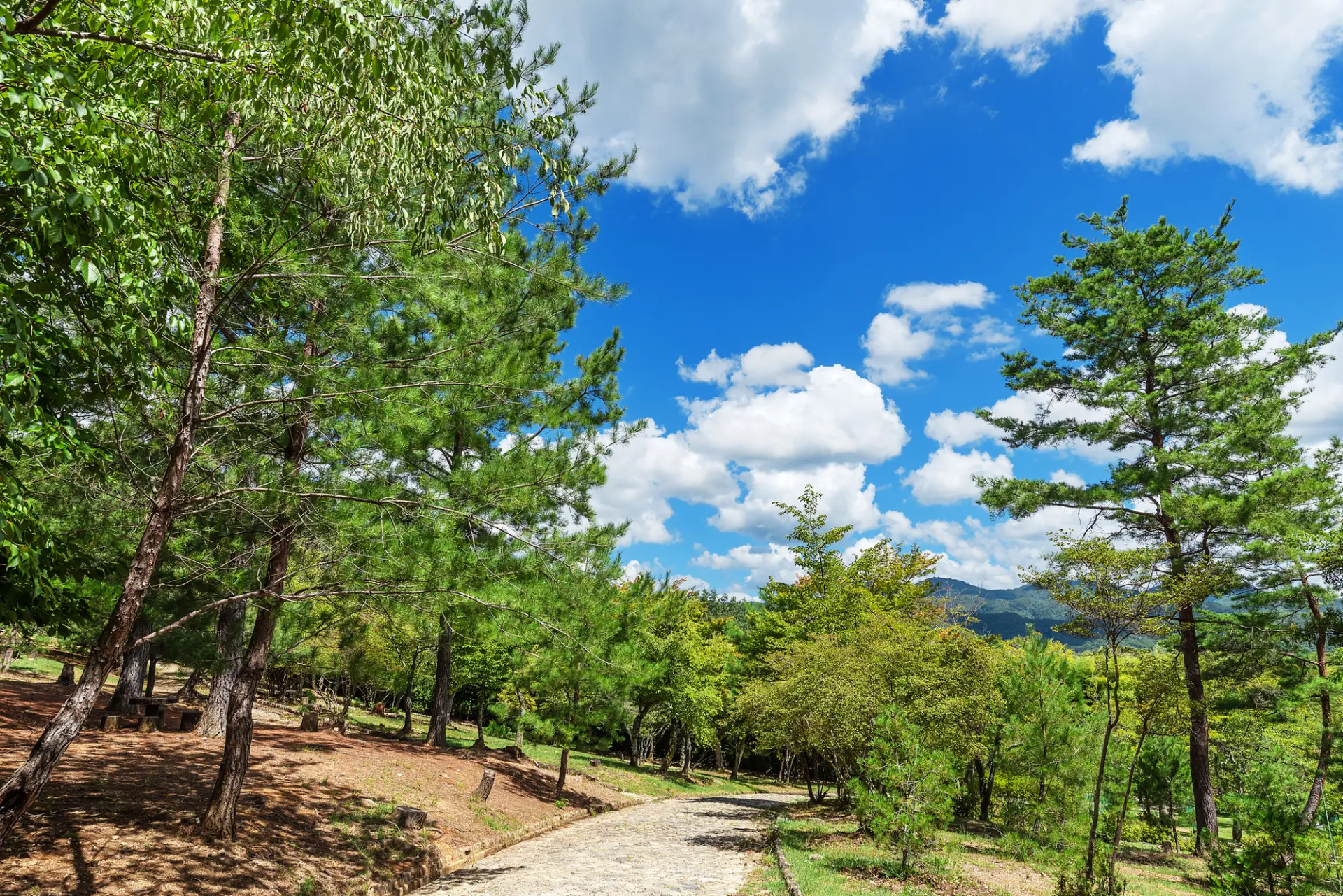
Arashiyama Park stretches from the area around Togetsukyo Bridge to the entire Kameyama district. Divided by the Katsura River, it consists of three areas, Kameyama, Nakanoshima, and Rinsenji.
The hilly Kameyama area is filled with a wide variety of trees and flowers, letting visitors enjoy nature throughout the seasons.
Nakanoshima, located on a sandbank in the Katsura River, has many cherry trees and becomes lively with cherry blossom viewers in spring.
Meanwhile, in the Rinsenji area downstream of Togetsukyo Bridge, you can enjoy elegant scenery created by pine and cherry trees.
The park also has observatories, famous spots, and historic sites scattered throughout, making it a great place to take a relaxing walk while experiencing Arashiyama’s nature and history.
12. Okochi Sanso Garden
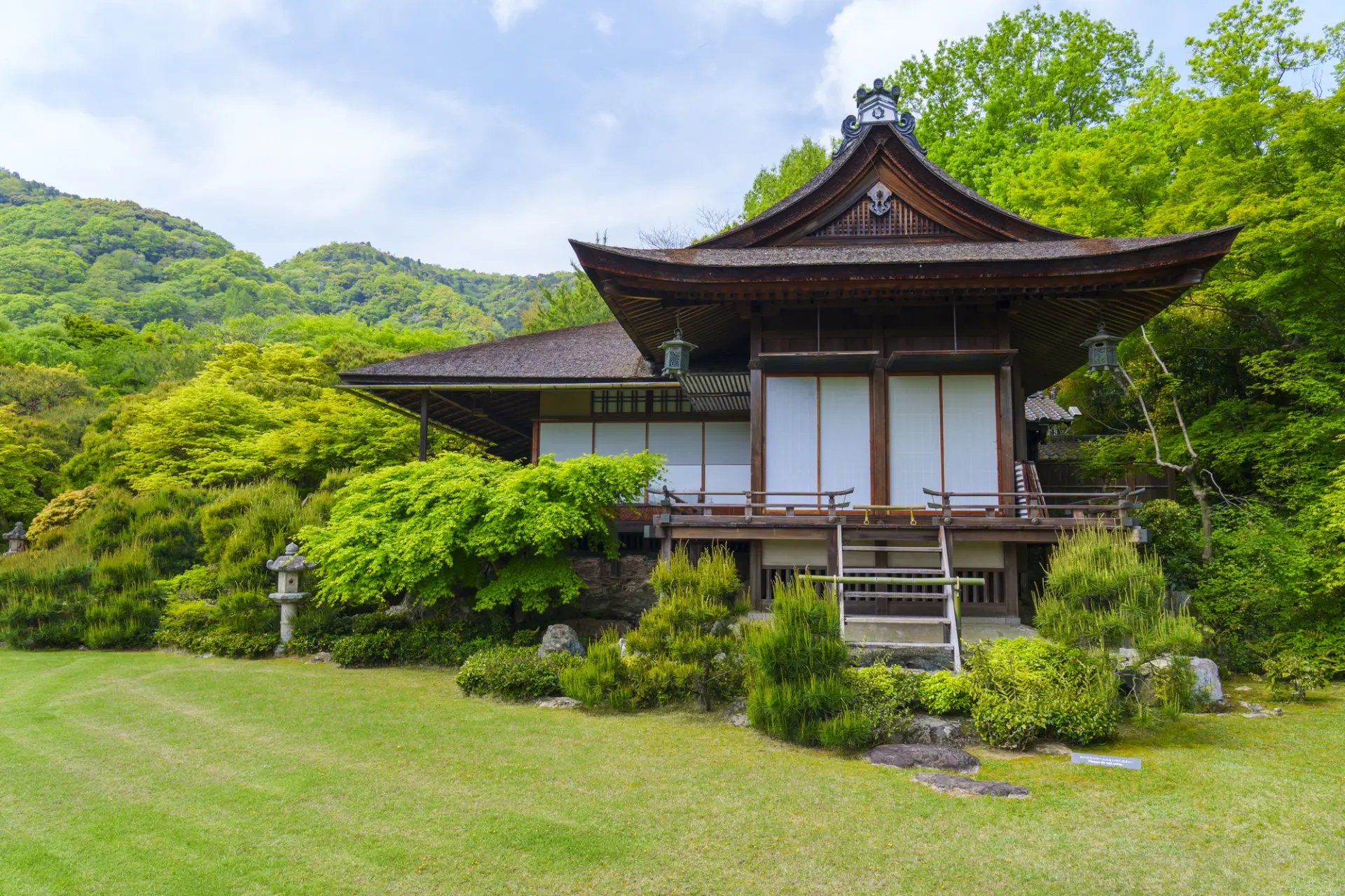
Okochi Sanso Garden is a Approx. 20,000㎡ garden located beyond the Bamboo Grove Path.
With the grand Arashiyama mountains rising in the background, the scenery created by vast nature and the garden is truly spectacular.
From Daijokaku at the back of the garden, you can enjoy panoramic views of Arashiyama and the sacred Mt. Hiei, and in autumn vivid fall leaves spread out across the landscape.
Admission includes matcha and Japanese sweets, and you can spend a peaceful moment at the charming tea house Tekisuian while looking out over the garden.
- Address
- 8 Sagao-gurayama Tabuchiyamacho, Ukyo-ku, Kyoto, Kyoto 616-8394
- Hours
- 9:00am–5:00pm
- Closed on
- Open daily
- Admission
-
Adults: 1,000 yen
Elementary and junior high school students: 500 yen
*Includes matcha and rakugan sweets
13. Gioji Temple
Gioji Temple, located in Arashiyama and Oku-Saga, was founded in the Kamakura period (1185–1333).
It also appears in the famous war tale The Tale of the Heike and is known as a nunnery associated with a tragic love story.
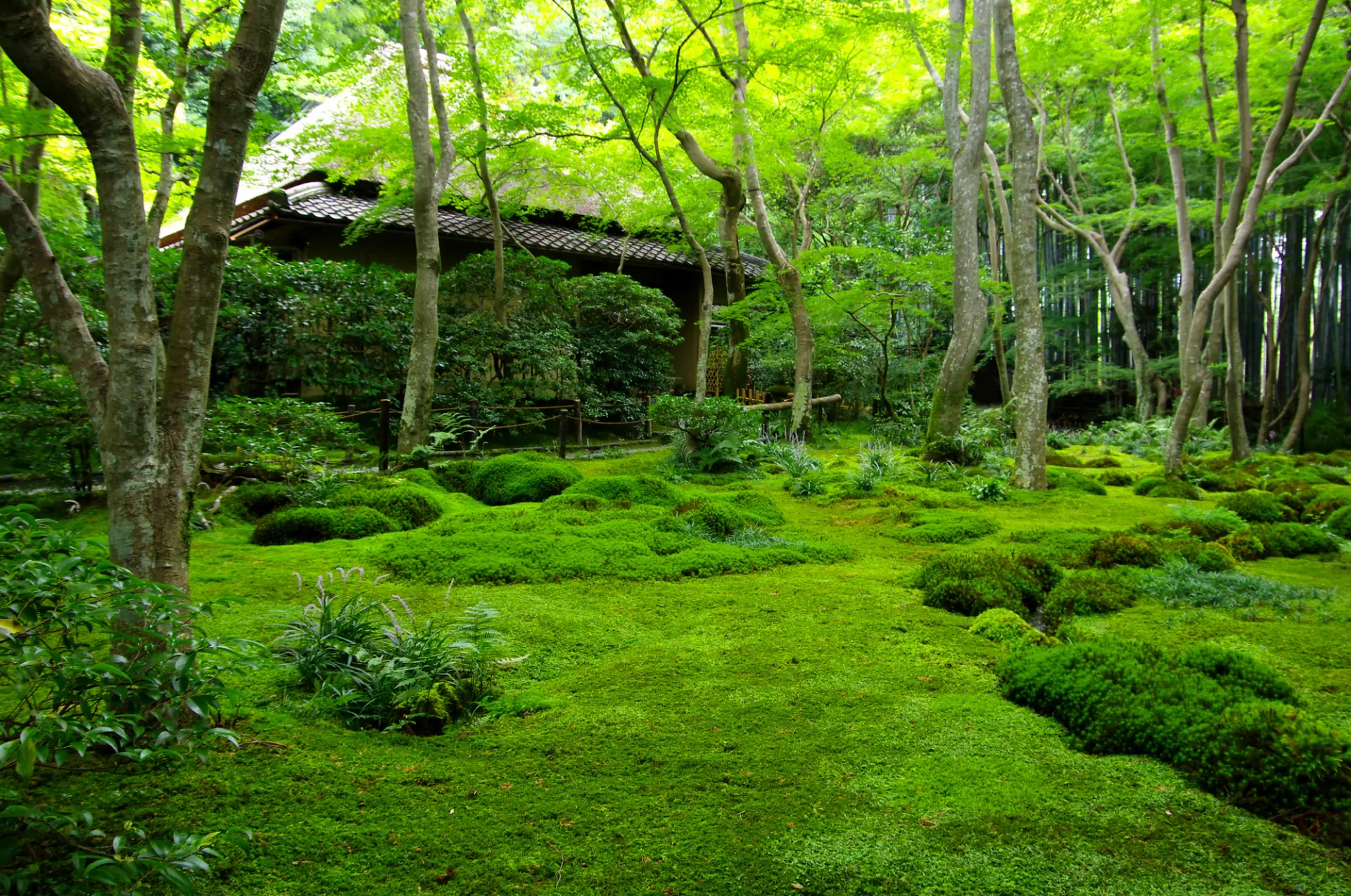
As soon as you step onto the grounds, a garden covered in vivid green moss opens before you.
The view looks like a green carpet spread across the ground, and after the rain it takes on an even more mysterious glow.
The beautiful colors framed by the round window of the grass hut, a small house made of simple materials, are also not to be missed.
In autumn, the moss garden is decorated with fall leaves, and the beautiful contrast of red and green captivates visitors.
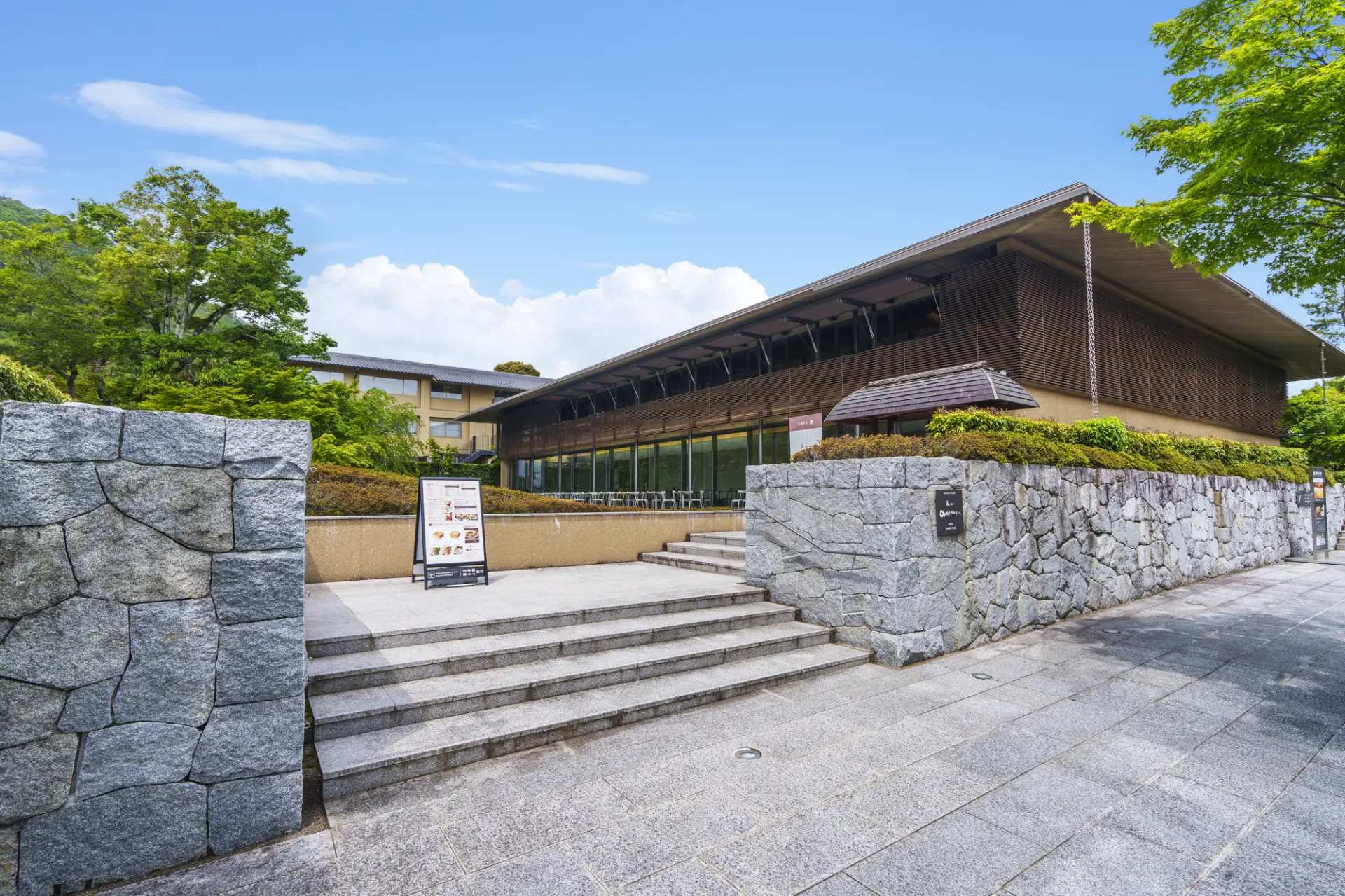
14. Fukuda Art Museum
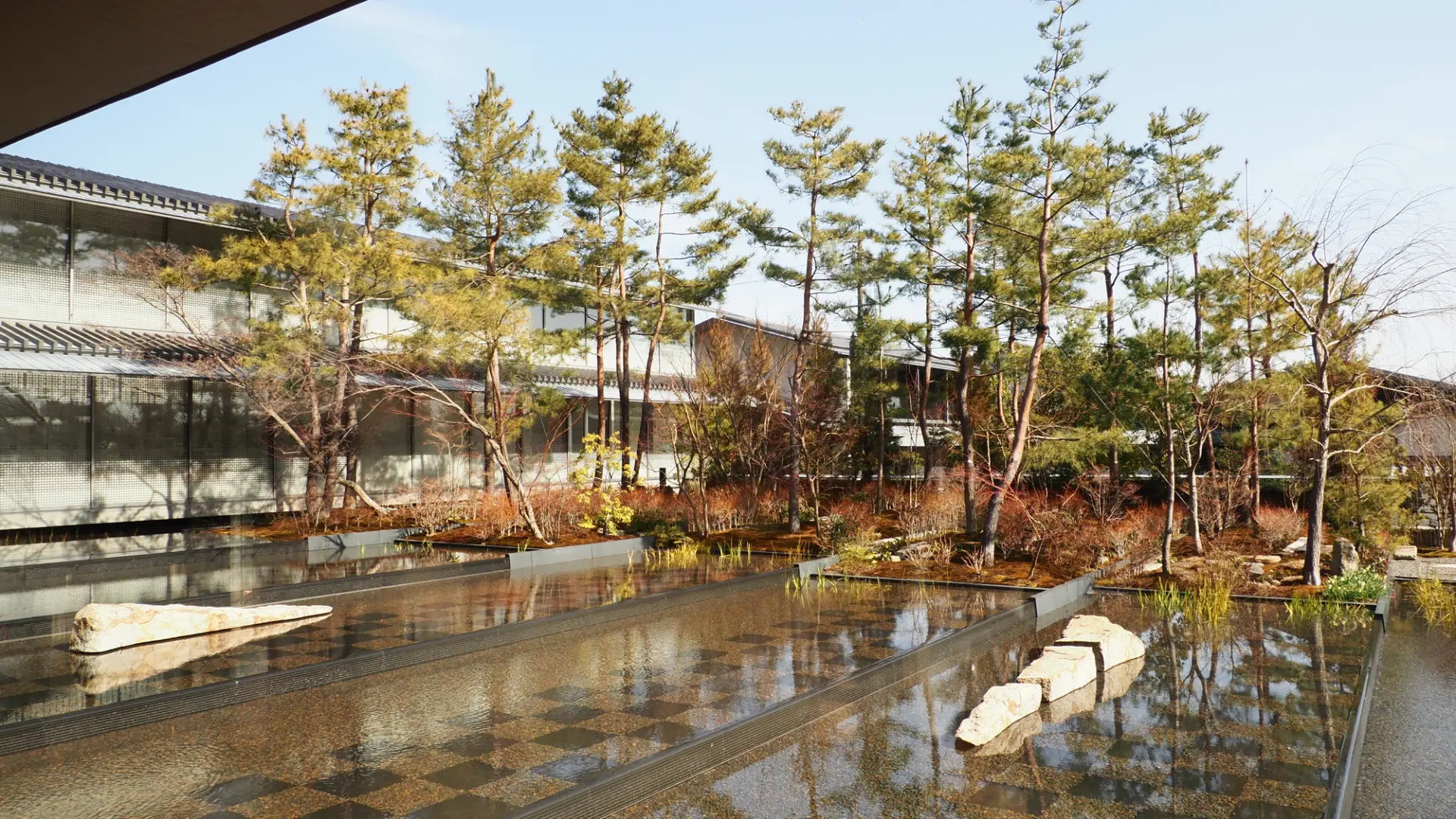
Fukuda Art Museum is a private museum located near Togetsukyo Bridge in Kyoto’s Arashiyama district.
Its modern and refined architectural design, incorporating elements of Kyoto’s traditional wooden machiya townhouses, is also one of its highlights.
The museum houses a collection of Approx. 2,000 works, centered on Japanese paintings from the Edo period (1603–1868) through modern times.
Many works by famous Japanese painters are on display, allowing visitors to appreciate the depth of Japanese art simply by stopping in.
There is also a sister branch of the bakery cafe Bread, Espresso &, where you can relax while enjoying the view of Togetsukyo Bridge.
15. Saga Arashiyama Museum of Arts & Culture
A museum themed around the Hyakunin Isshu poetry anthology and Japanese paintings, sharing the charm of Japan’s traditional culture.
The permanent exhibition clearly introduces the history of how the Hyakunin Isshu was compiled in this area and the background of the poems.
Surrounded by a garden that uses Mt. Ogura and Arashiyama, both associated with the Hyakunin Isshu, as borrowed scenery, the museum offers beautiful seasonal views from inside.
A cafe is attached to the terrace facing the garden, where you can spend a relaxing time while feeling Arashiyama’s nature.
The museum shop, which sells original goods related to the Hyakunin Isshu, is also popular.
16. Saihoji Temple
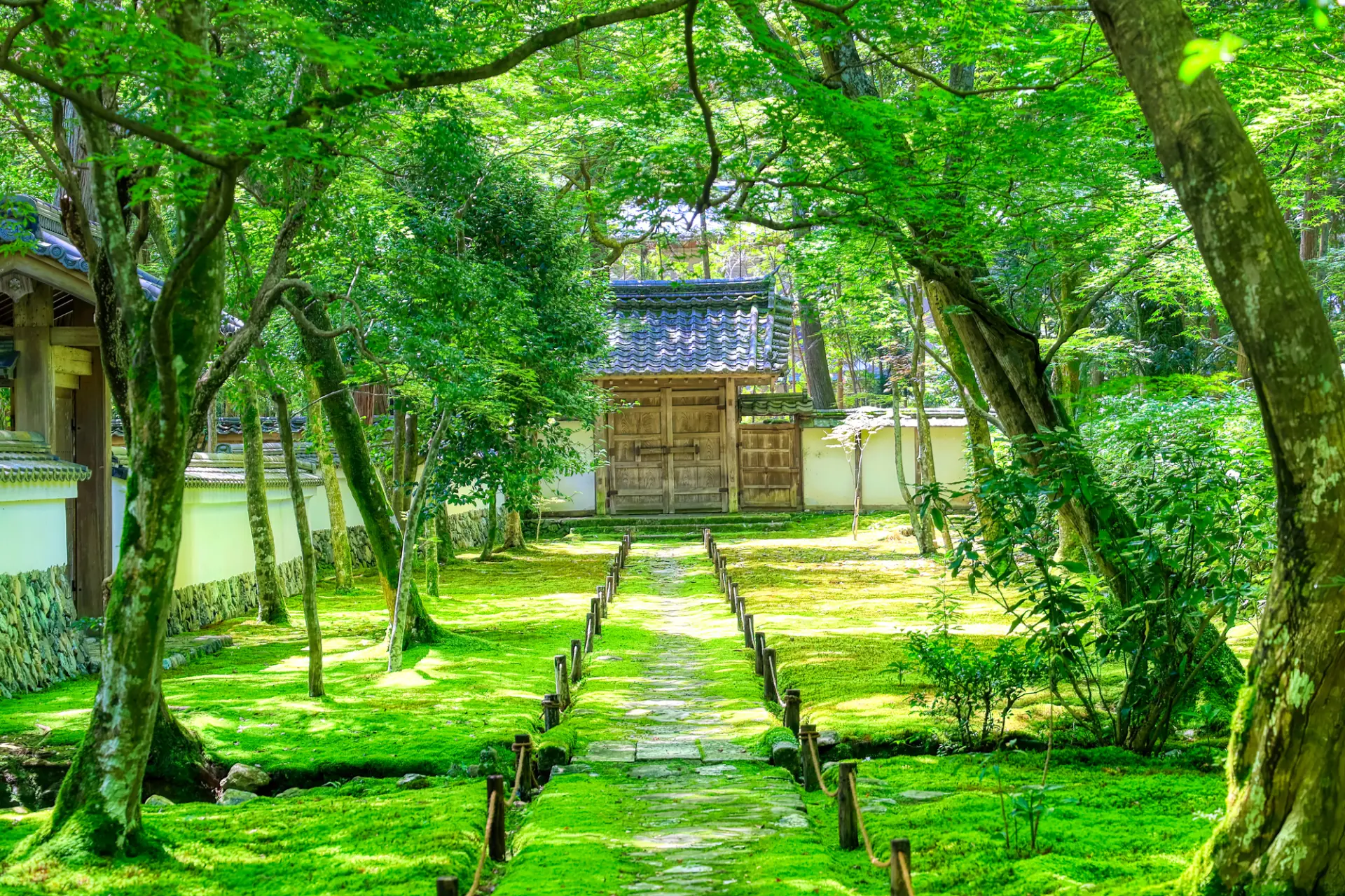
Most of its vast Approx. 35,000㎡ grounds are covered with more than 120 kinds of moss.
The garden, spreading out like a green carpet, has a magical beauty filled with silence.
The garden is arranged on two levels, with an upper dry landscape garden, usually closed to the public, and a lower pond stroll garden.
Especially on rainy days, the moss glows an even more vivid green and captivates visitors.
To help preserve the moss garden and maintain a quiet environment, advance online reservations are required for worship.
17. Suzumushidera Temple
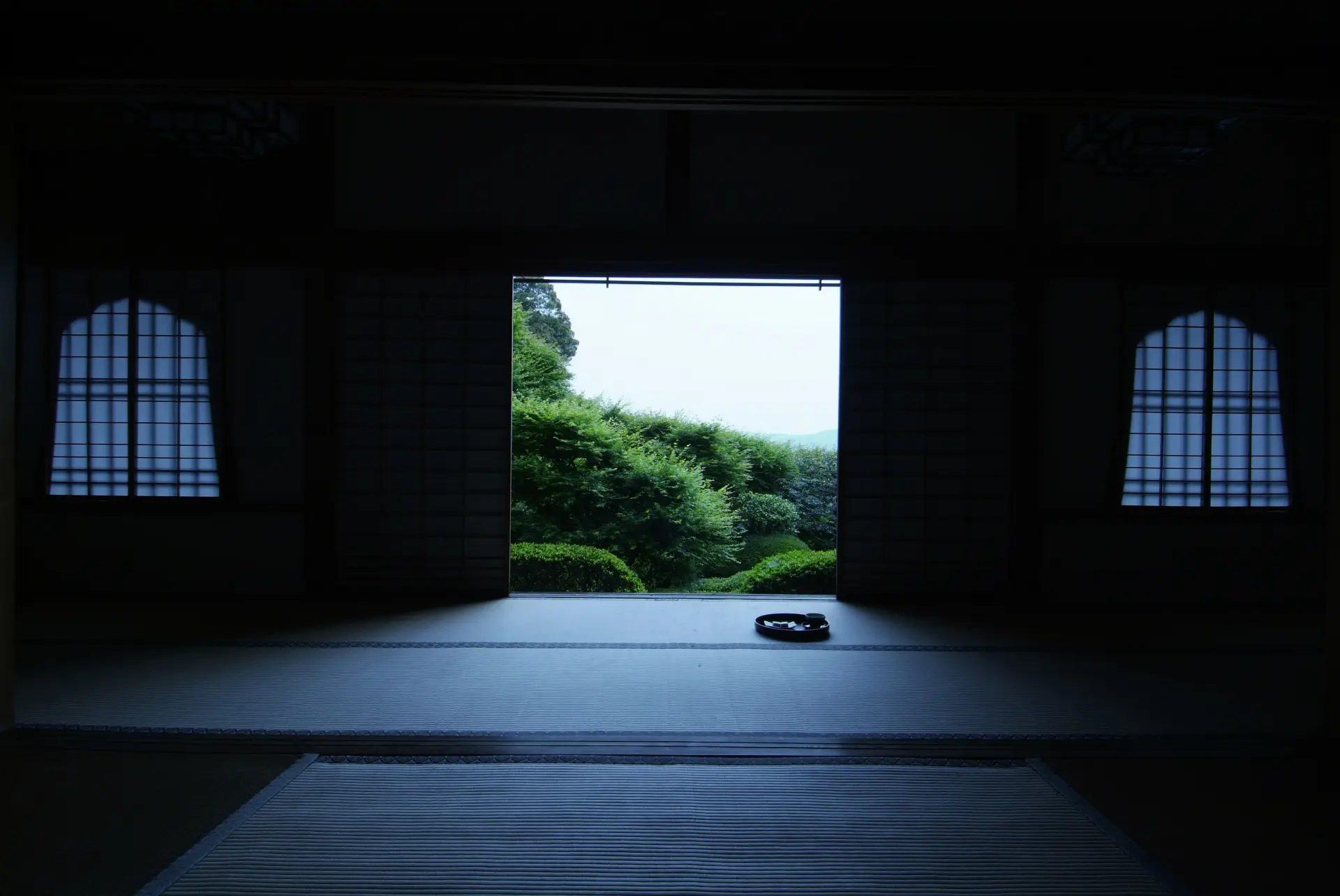
An old temple founded in 1723 by the scholar-monk Hotan Shonin.
Because Approx. 5,000 to 10,000 adult bell crickets raised on the grounds fill the temple with their song throughout the year, it is also known as “Suzumushidera,” or Bell Cricket Temple.
When visiting, guests first enjoy tea and sweets in the reception hall while listening to a Approx. 30-minute Buddhist talk called “Suzumushi Sermon” in a room filled with the sound of crickets. The talk is delivered with humor, making it easy to enjoy without feeling formal.
Enjoy Arashiyama-Only Experiences That Let You Feel the Seasons and Tradition
Arashiyama is a place where you can experience the essence of Japan with all five senses.
From riding the trolley train through a gorge that changes with the seasons, to thrilling river boat rides with spectacular views, to relaxing on a yakatabune boat along the Oi River, or enjoying a rickshaw ride in a kimono, Arashiyama offers experiences you can only have here.
Here are some memorable experiences that make a trip to Arashiyama even more special.
Enjoy seasonal gorge scenery on the “Sagano Romantic Train”
A trolley train operated by Sagano Scenic Railway, running on a revived section of the former Sanin Main Line that had once been discontinued.
Classical Art Deco-style passenger cars pulled by a diesel locomotive travel the 7.3km one-way route from Torokko Saga Station, next to JR Saga-Arashiyama Station, to Torokko Kameoka Station in Approx. 25 minutes.
The train runs along the gorge beside the Hozu River, where you can enjoy the grand nature and valley scenery of the river from the window.
In spring, cherry blossoms bloom along the tracks. In summer, fresh green leaves and bamboo fill the view. In autumn, the trees turn crimson and gold, and in winter, the mountains are covered in snow. Another charm is how the scenery changes with each season.
Set out on a scenic train journey and enjoy Arashiyama’s rich natural beauty.

Enjoy thrills and spectacular scenery at the same time on the “Hozugawa River Boat Ride”
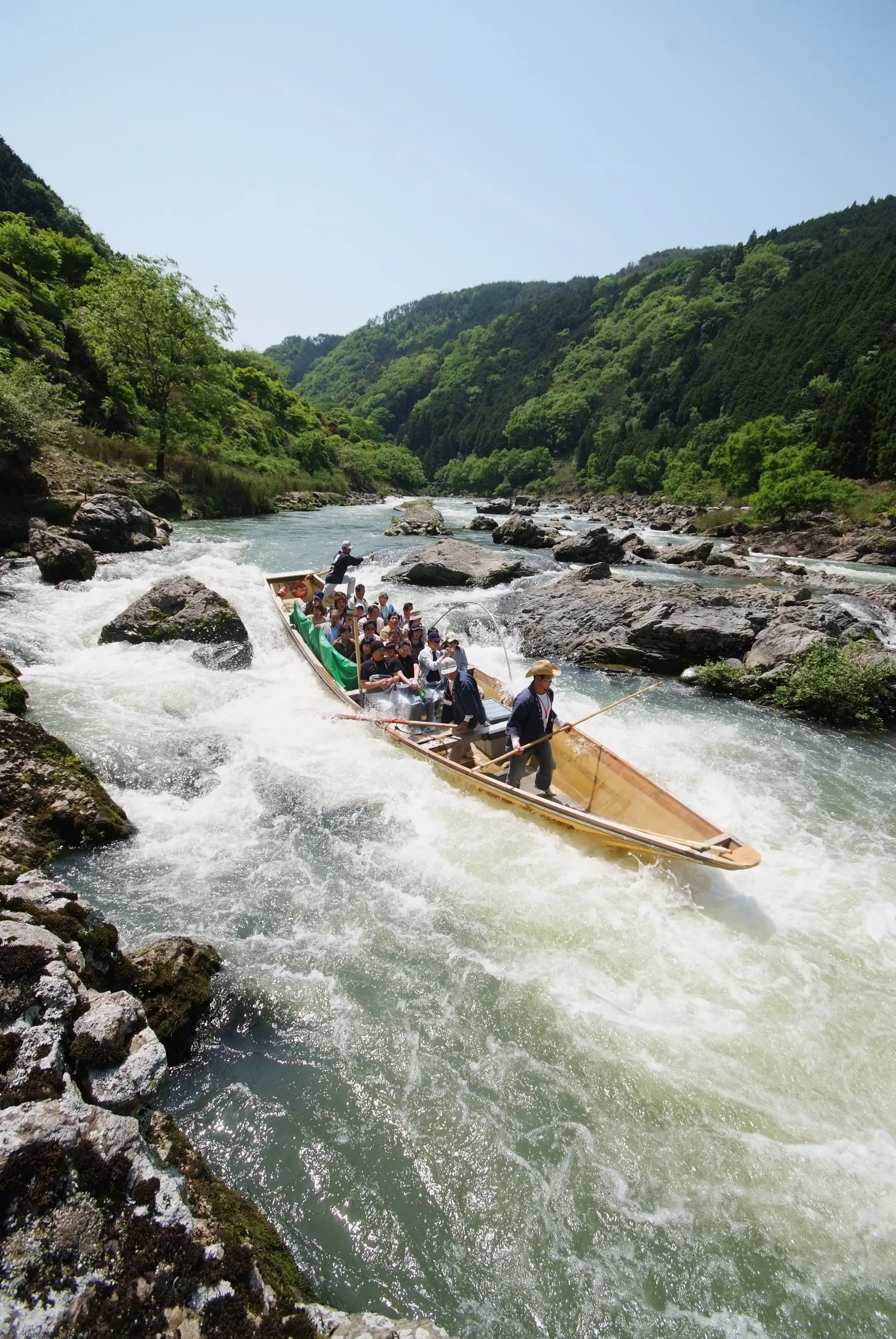
This boat ride takes you down Approx. 16km of the Hozu River gorge from Kameoka to Saga-Arashiyama in a small flat-bottomed boat over the course of Approx. 2 hours.
The boat is steered by three skilled boatmen, allowing you to enjoy a dynamic trip through rapids and between rocks.
Originally, this waterway was developed in the early Edo period to transport Tanba products such as timber, firewood, and charcoal to Kyoto, and there are points along the course where the current becomes rough and large splashes rise up.
Feel the thrill while enjoying the beauty of Hozukyo Gorge colored by cherry blossoms, fresh greenery, or autumn leaves.
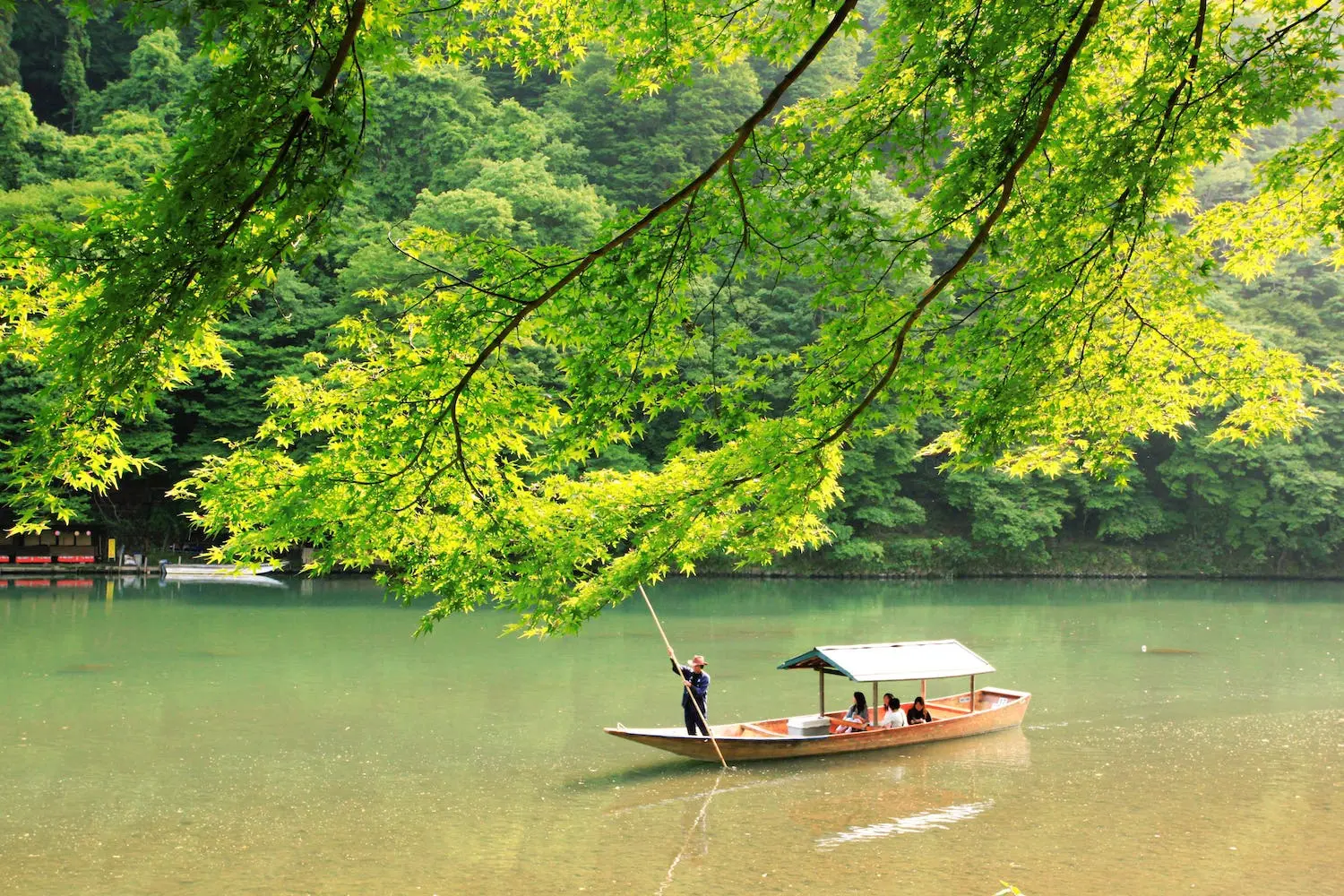
Experience an aristocratic pastime dating back to the Heian period on an “Arashiyama Yakatabune Boat”
A graceful pastime of cruising the upper Oi River, which flows beneath Togetsukyo Bridge, by yakatabune boat.
It began around 805 in the early Heian period as one of the pleasures enjoyed by aristocrats, and gradually became popular among the general public as well.
Today, shared rides can be enjoyed casually without a reservation, making it one of the standard experiences of Arashiyama sightseeing.
Shared boats depart every Approx. 20 to 40 minutes and take about 30 minutes to leisurely cruise 1km upstream from the pier. The view of Arashiyama from the water is exceptional.
Enjoy Japanese atmosphere and scenery on a rickshaw ride in kimono
If you want to enjoy Arashiyama, where you can feel traditional Japanese culture and natural beauty, even more, renting a kimono and touring the area by rickshaw is also recommended.
A puller called a shafu draws the rickshaw by hand and guides you to your destination.
From a rickshaw, you can enjoy the scenery of Arashiyama from a slightly higher viewpoint than when walking.
Because it moves more slowly than a bus or taxi, it is also appealing that you can take your time enjoying the scenery around you.
Many shafu are also experienced guides who explain Arashiyama’s history, culture, and local highlights.
Some even guide visitors through backstreets and hidden spots not listed in guidebooks.
If you request a shafu who can speak Chinese or English, international travelers can also use the service with peace of mind.
Rickshaws wait at the north end of Togetsukyo Bridge, and you can simply speak with a shafu, discuss the course, and pay to ride on the spot.
If you want to be sure of getting a ride, it is best to make an online reservation in advance.
Although prices vary depending on the time, course, and shafu, the going rate is around 10,000 yen for 30 minutes.
If you rent a kimono from a shop around Arashiyama Station before heading out, you’ll be able to enjoy Arashiyama’s atmosphere even more.
-
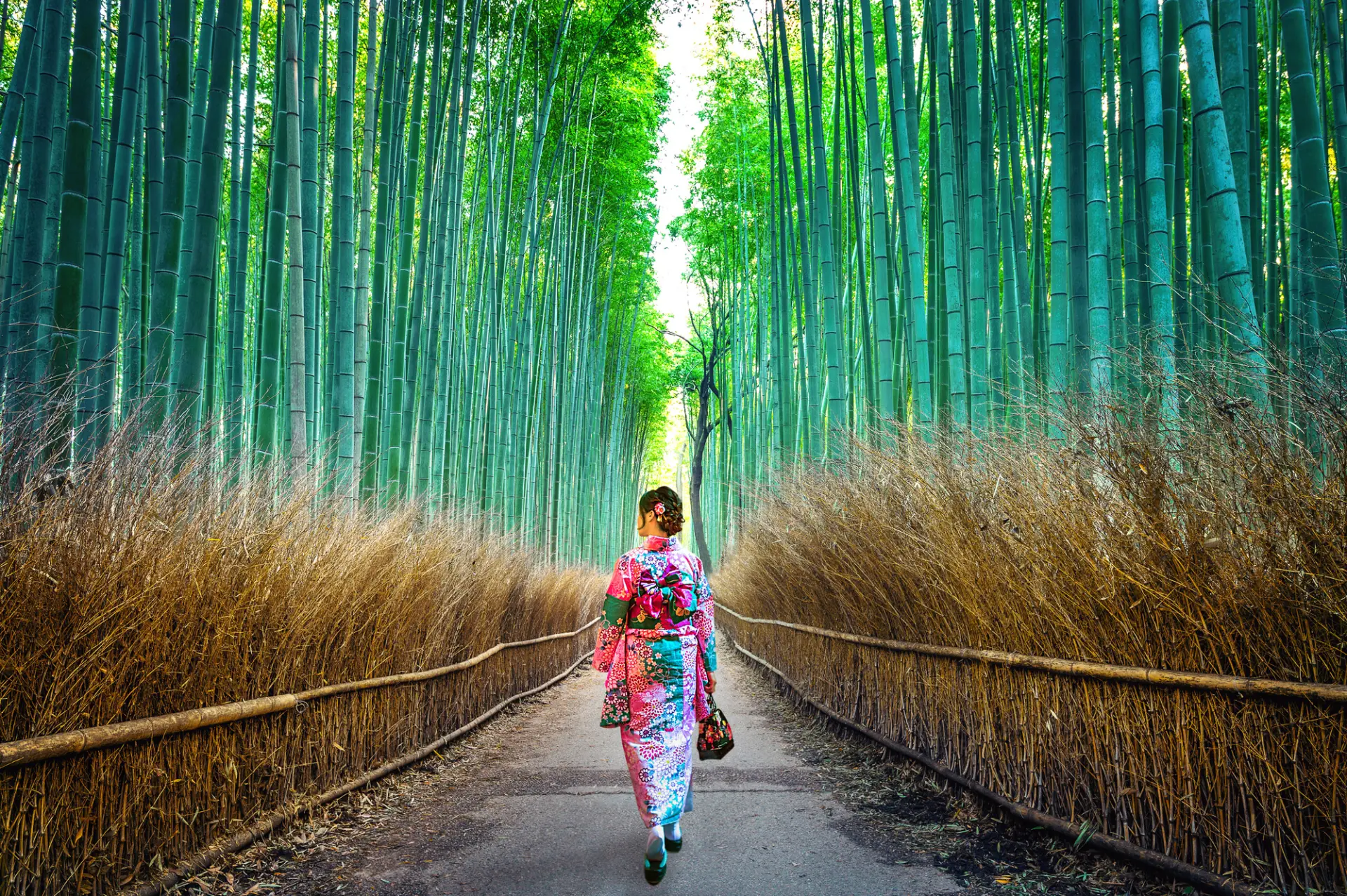
Exploring Arashiyama in a kimono lets you enjoy its atmosphere even more
-
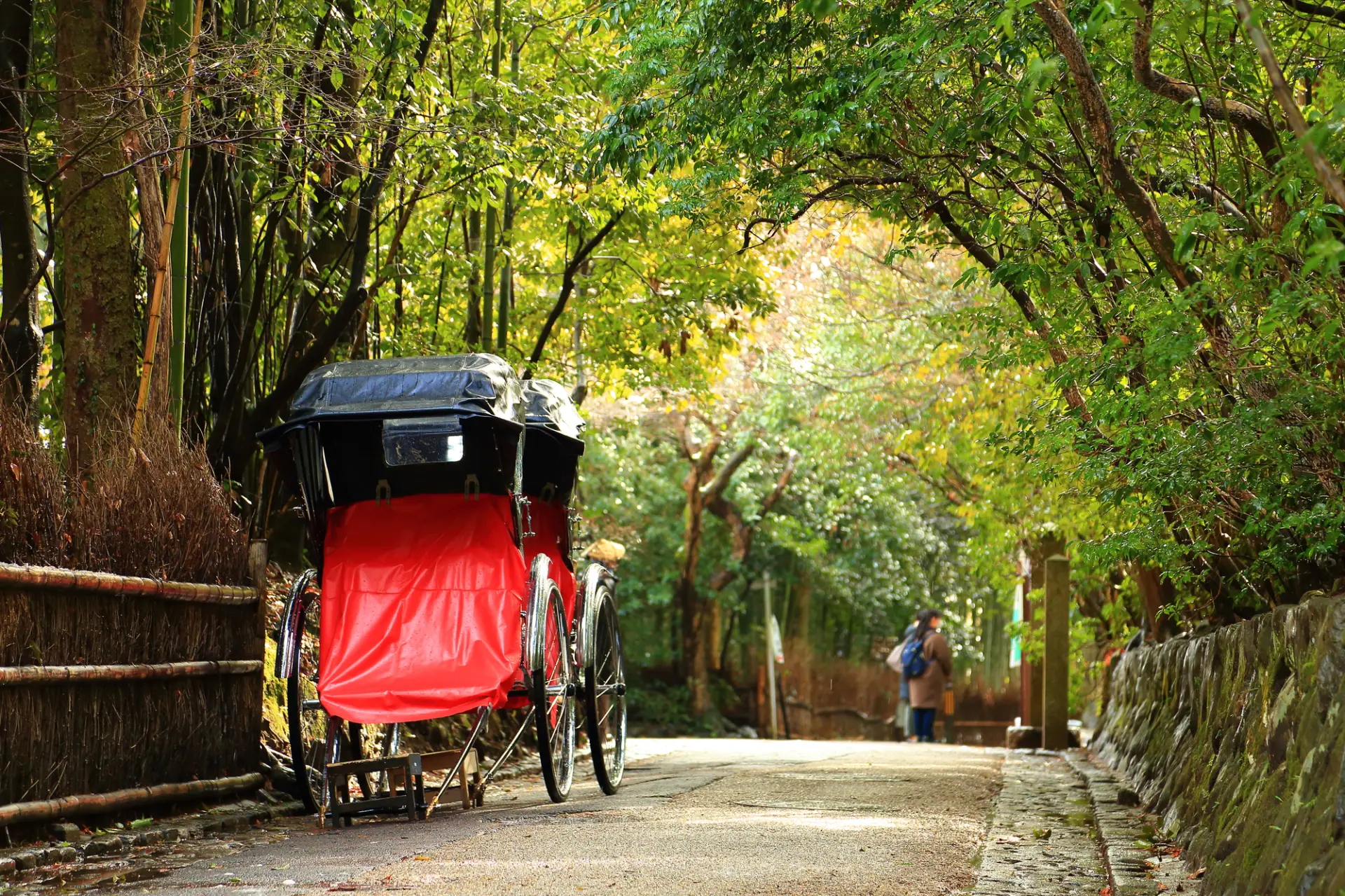
Take your time enjoying Arashiyama’s scenery from the unique perspective of a rickshaw
Great for Street Food Too! 7 Popular Places to Eat in Arashiyama
When you visit Arashiyama, great food is something you’ll want to enjoy along with the beautiful scenery.
From long-established restaurants preserving traditional flavors to playful cafes and specialty shops selling food perfect for snacking as you walk, here is a carefully selected list of places where you can enjoy food unique to Arashiyama.
1. eXcafe Arashiyama Main Shop
A popular cafe known for Japanese sweets, with an impressive gate and a solemn atmosphere created by a renovated traditional Japanese house.
Though quietly tucked away in a back alley like a hidden retreat, it still draws long lines of visitors.
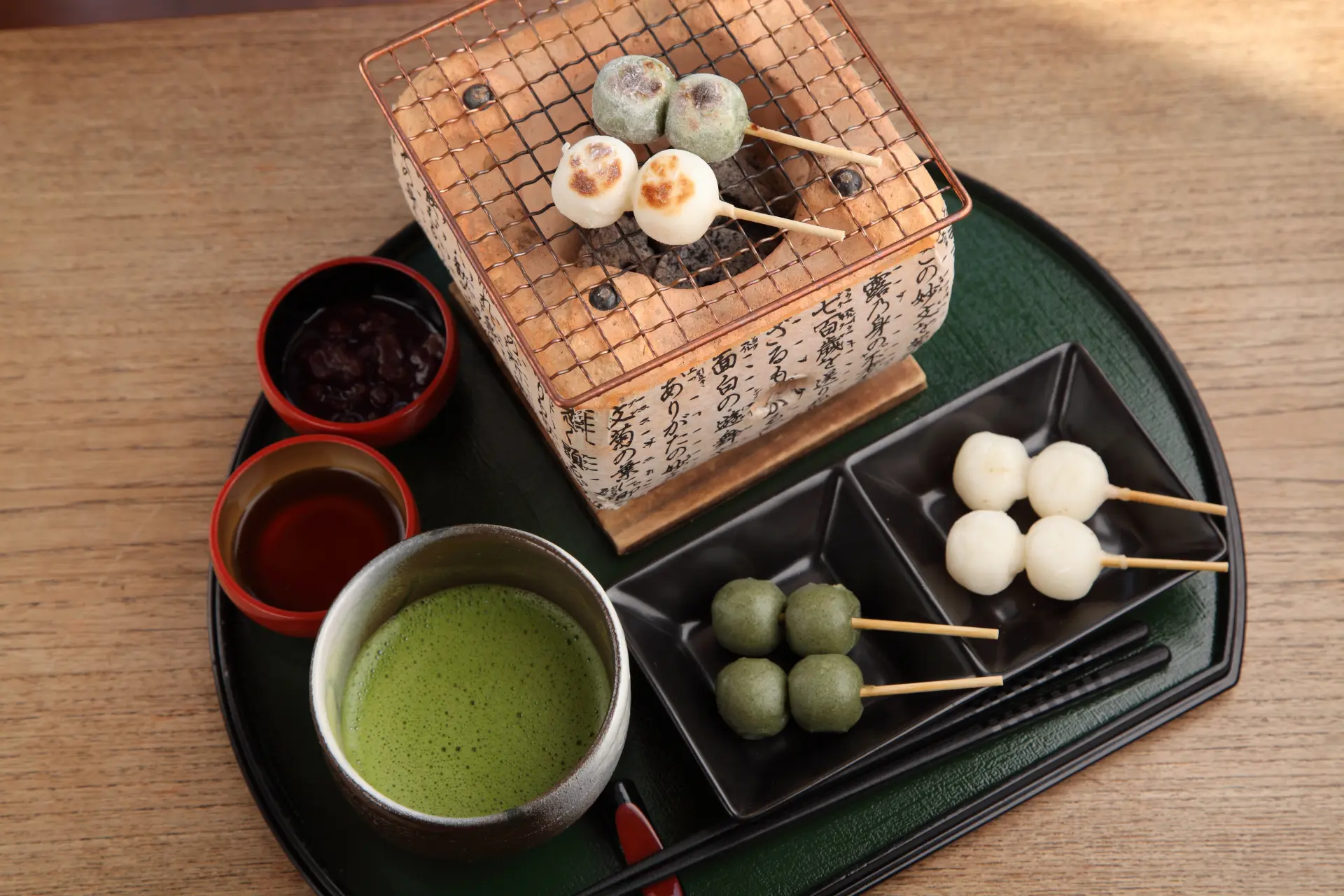
The signature Hokuhoku Dango Set is an interactive menu item where you grill the dumplings yourself over a shichirin charcoal brazier to your preferred doneness.
It’s also fun to enjoy the skewered dumplings, three mugwort and three plain, with different levels of grilling.
2. Arashiyama Yoshimura
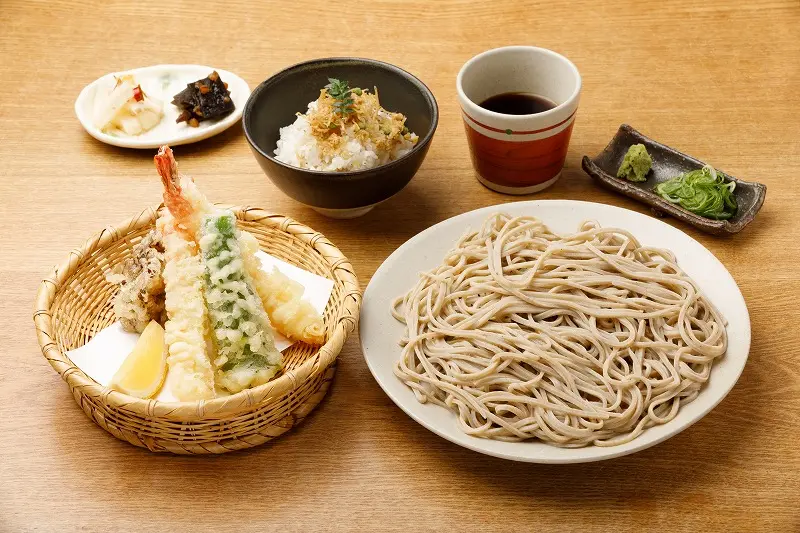
Here, you can enjoy handmade soba, carefully crafted soba dishes, and seasonal a la carte dishes.
The soba is made entirely by skilled artisans using only domestically grown buckwheat.
Freshly harvested buckwheat still in its husk is sourced directly from producers, then only the needed amount is hulled and carefully ground over time with a stone mill.
The most popular item is the Tenzaru Zen, which includes assorted tempura, soba, rice with simmered herring, and pickles made with soba koji.
3. Nakamuraya Sozai Seisakusho
Nakamuraya Sozai Seisakusho is a prepared foods specialty shop operated by Nakamuraya Sohonten, a long-established butcher shop in Arashiyama.
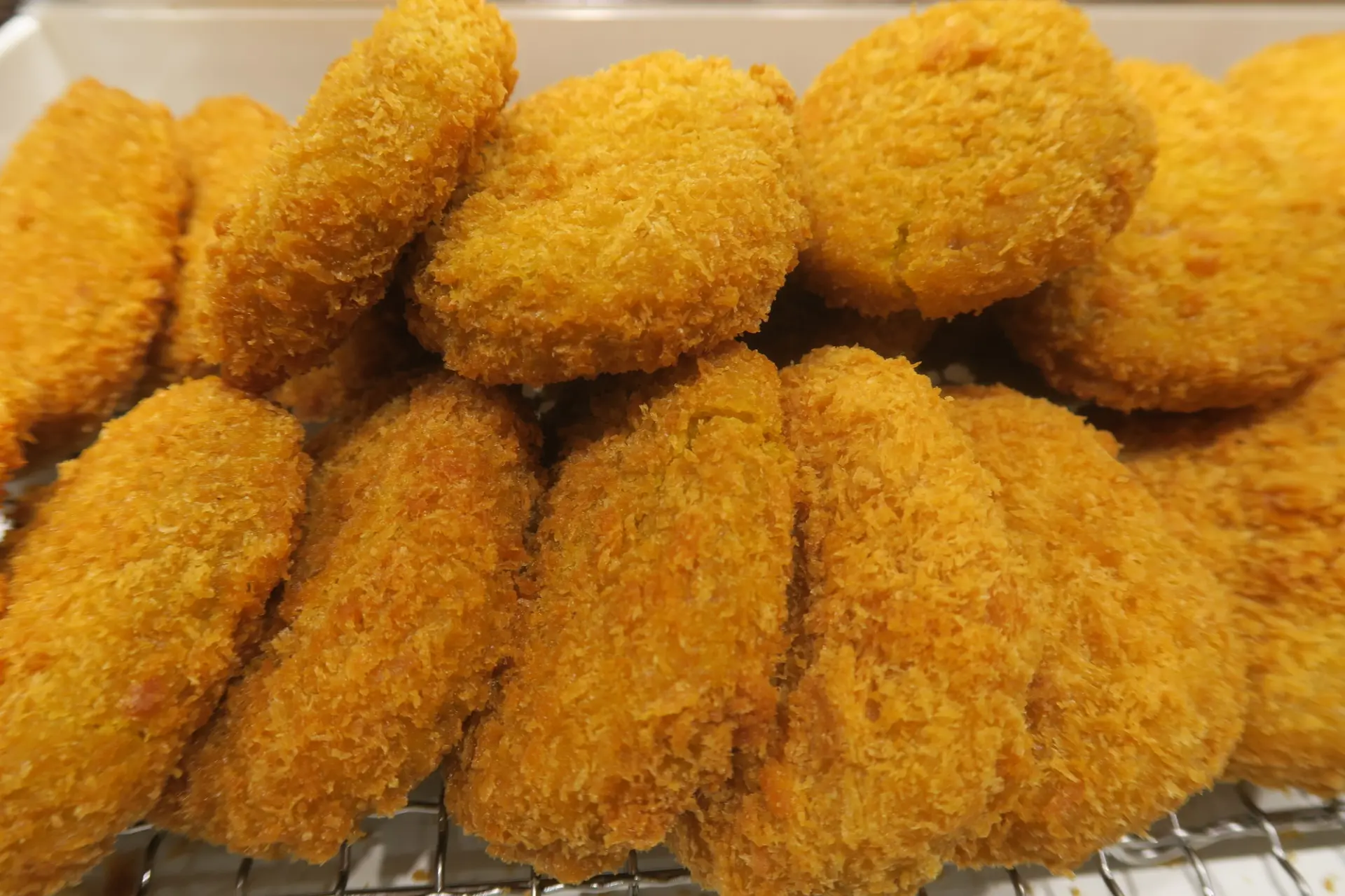
In addition to croquettes and minced meat cutlets made with Kyoto beef, it also sells bento boxes and sandwiches.
Among its offerings, the especially popular Kyoto Croquette is known for its perfect balance of sweet potatoes and savory beef flavor.
Inside its crispy coating is a generous filling of fluffy potato and flavorful beef.
4. Nakagawa Hatsumeido
A cafe located Approx. 5 minutes on foot from Togetsukyo Bridge, based on the concept of “an innovative invention space that offers deliciousness and fun.”
Here, you can enjoy unique rice burgers, sandwiches, sweets, and drinks that you won’t find elsewhere.
One especially popular menu item is the Dashimaki Rice Burger, which sandwiches rolled omelet between rice buns and combines it with shibazuke pickles and shiso leaves.

5. Okaki-dokoro Terakoya Honpo Arashiyama Shop
A specialty shop for rice crackers and dango located inside AKOGAREYA, a multi-shop facility at the foot of Togetsukyo Bridge.
Inside the shop, shelves are lined with rice crackers and okaki made from domestically grown glutinous rice and aged soy sauce.
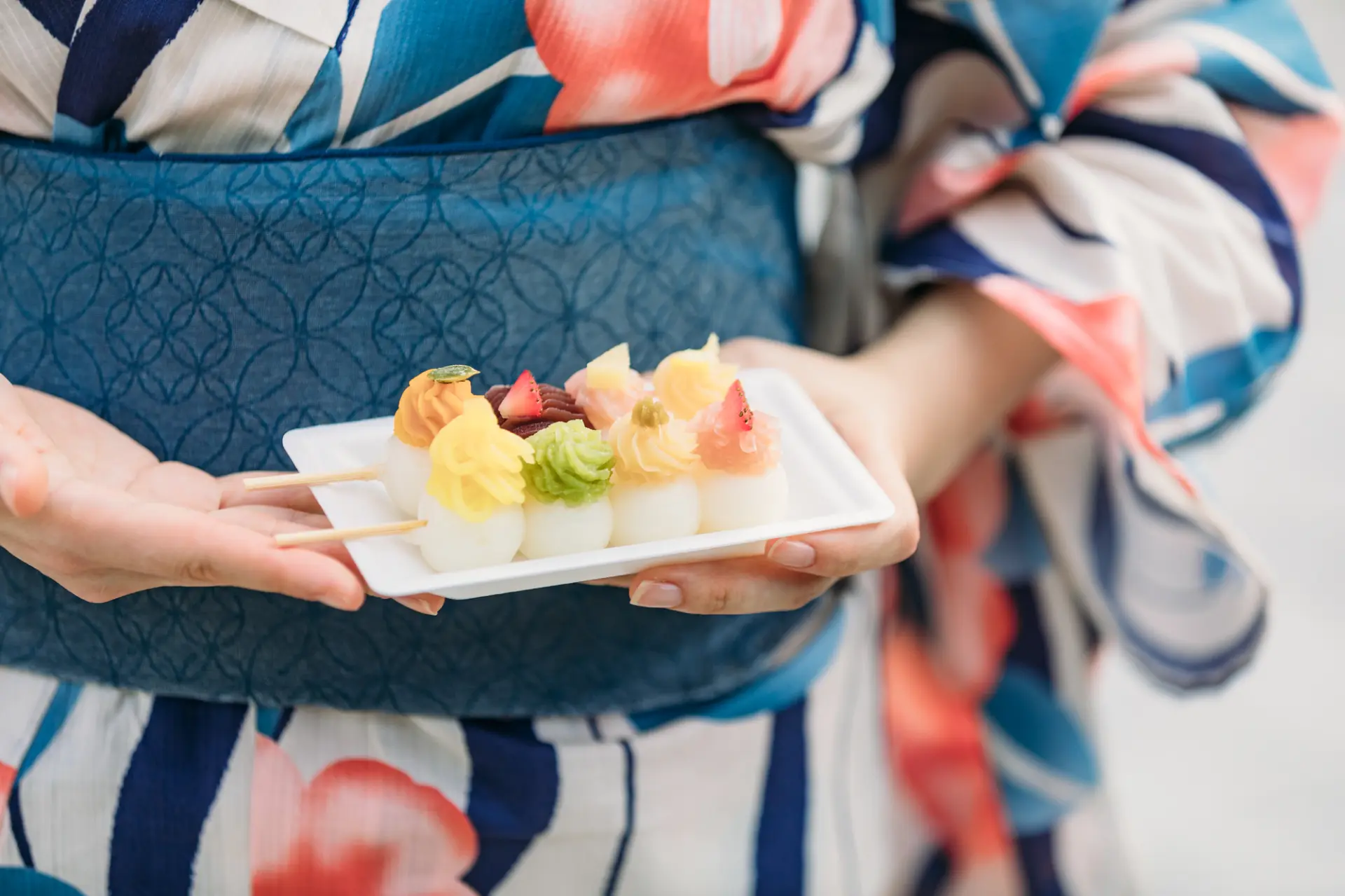
Among them, the colorful Hanabi Dango topped with fruit and cream is a popular item that has gained attention on social media.
In addition to classic mitarashi dango and three-color dango, seasonal limited-edition dango sometimes appear as well.
Many visitors enjoy strolling around Togetsukyo Bridge and the Bamboo Grove Path with Hanabi Dango in hand.
6. Kyoto Kitcho Arashiyama
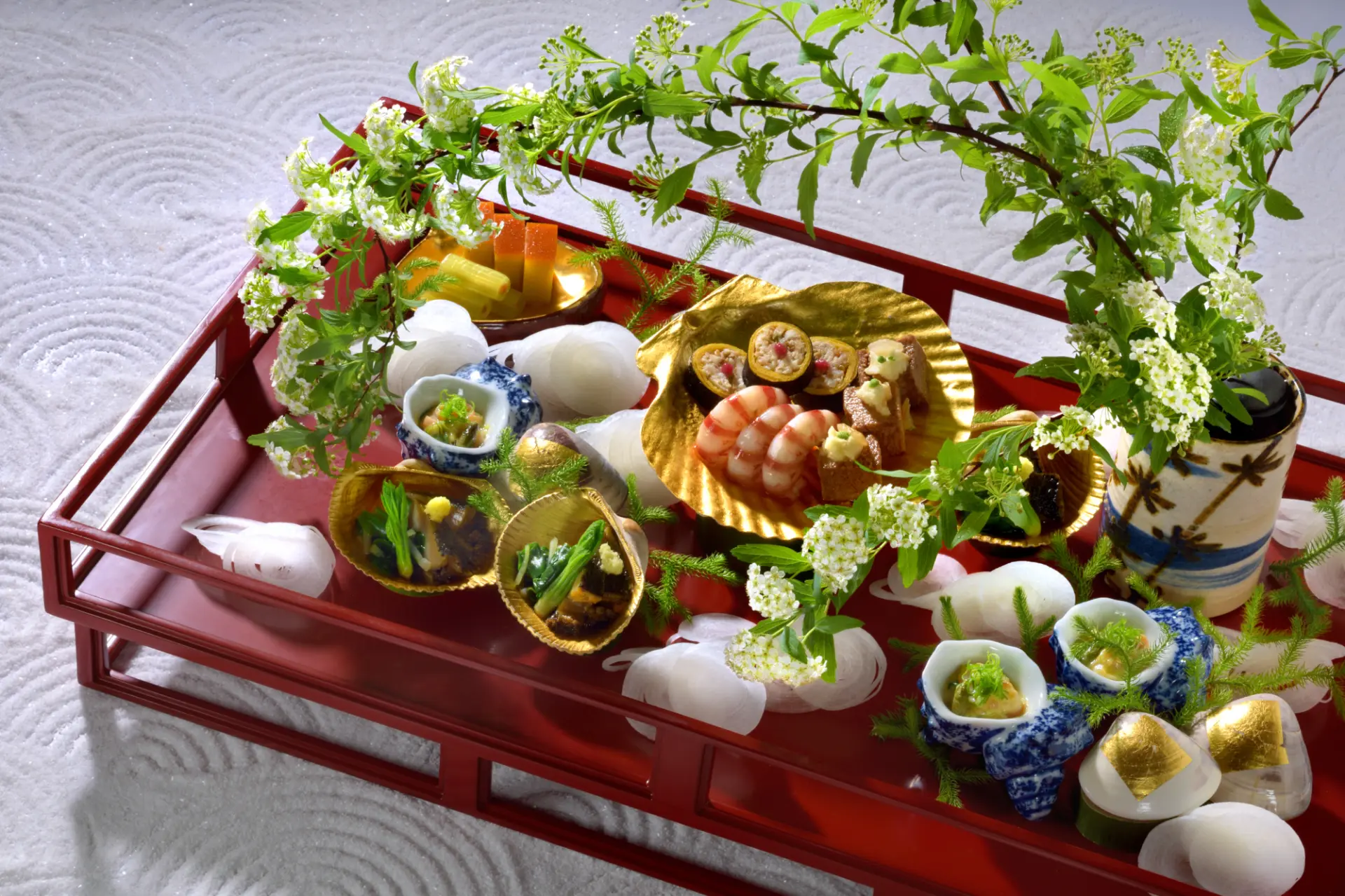
Kyoto Kitcho Arashiyama, located along the road from Togetsukyo Bridge to Tenryuji Temple, is a traditional high-end Japanese restaurant known not only across Japan but around the world.
Today, Kunio Tokuoka, grandson of founder Teiichi Yuki, serves as the third-generation executive chef.
Based on the traditional tea kaiseki cuisine served to invited guests during formal tea gatherings as a gesture of hospitality, the restaurant offers Japanese course meals refined with modern elements for a more elegant presentation.
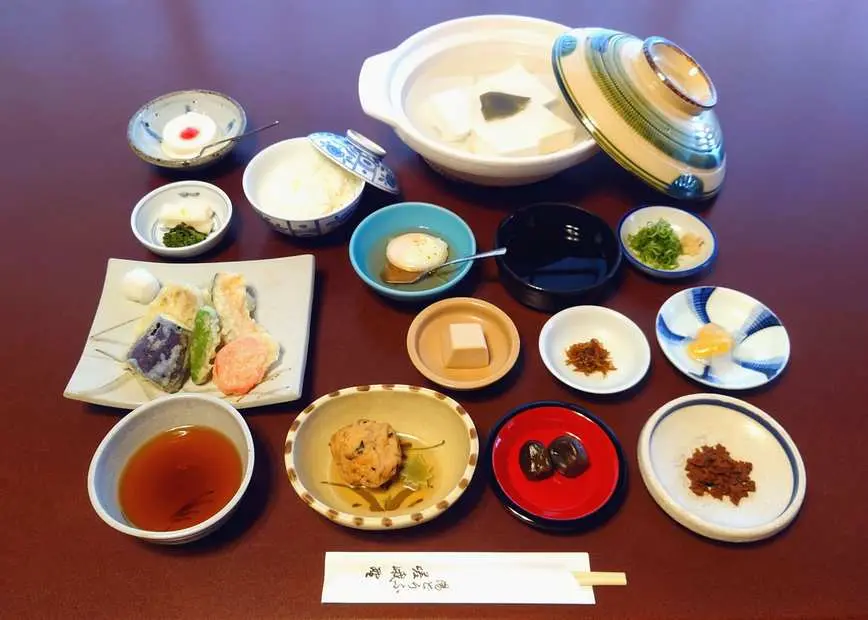
7. Yudofu Sagano
Tenryuji Temple is one of Arashiyama’s most famous temples, known for the Sogenchi Garden and the Unryuzu painting.
Located close to its grounds, Sagano is a specialty restaurant for yudofu cuisine where you can dine in a modern sukiya-style building designed by master architect Togo Murano while looking out over a beautiful Japanese garden.
The restaurant consists of two buildings, the main building centered on traditional tatami rooms and a newer building with table and counter seating. On fine days, outdoor engawa-style terrace seats facing the garden are also available.
5 Popular Places to Stay in Arashiyama for Ultimate Relaxation and Scenic Views
If you are staying in Arashiyama, you’ll want to choose accommodations where you can fully enjoy the beautiful scenery that changes with the seasons.
The places introduced below offer not only great views, but also truly relaxing stays.
Another nice point of staying in Arashiyama is that it makes it easier to explore in the early morning or evening, when the area is relatively less crowded.
1. MUNI KYOTO
A luxury hotel offering exceptional relaxation and experiences under the concept of “one-of-a-kind scenery,” MUNI KYOTO opened in August 2020 at the foot of Arashiyama in Kyoto, right in front of Togetsukyo Bridge.
There are 21 guest rooms in total. All are deluxe rooms of at least 50㎡, and each offers views of Arashiyama’s scenery as it changes with the seasons.
With careful attention paid to every detail, from 280cm-wide double beds to original bath amenities made with Kyoto materials, the hotel’s thoughtful touches create a comfortable stay.

2. Hoshinoya Kyoto
A luxury hotel standing on the banks of the Oi River in Arashiyama, one of Kyoto’s most scenic areas, offering an “overwhelming sense of escape from everyday life.”
With the concept of “a private waterside retreat standing in Arashiyama, where Heian aristocrats once enjoyed themselves,” all 25 guest rooms overlook the Oi River and rich natural surroundings.
Guests first check in at Hoshinoya Kyoto Funamachiai by the foot of Togetsukyo Bridge, then head to the hotel by private boat. Surrounded by birdsong and gorge scenery, you already feel transported beyond the ordinary.

3. Arashiyama Onsen Saishiki no Yado Hanaikada
A hot spring ryokan located at the foot of Togetsukyo Bridge over the Oi River, making it an especially convenient base for sightseeing in Arashiyama and Sagano.
In addition to Arashiyama’s only open-air observation bath, where you can bathe while looking out over seasonal views of Arashiyama and the distant sacred Mt. Atago, the inn also offers indoor baths in two styles, all-hinoki wood and stone, as well as reservable private open-air baths.
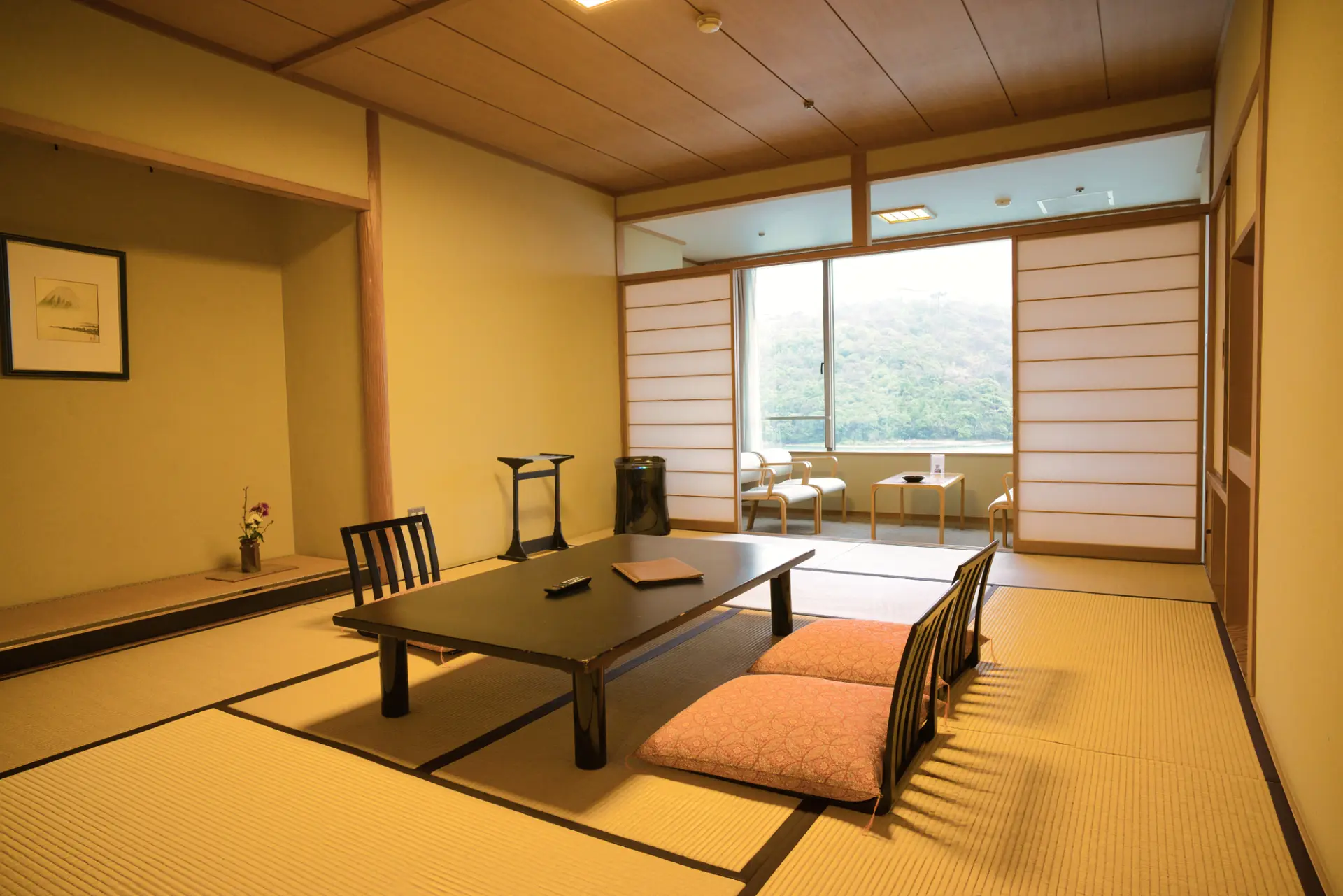
The guest rooms have a calm atmosphere with traditional Japanese style, and come in a variety of types, including twin-bed rooms and 12-tatami rooms that can accommodate up to 6 guests.
4. Kyoto Arashiyama Onsen Kadensho (Kyoritsu Resort)
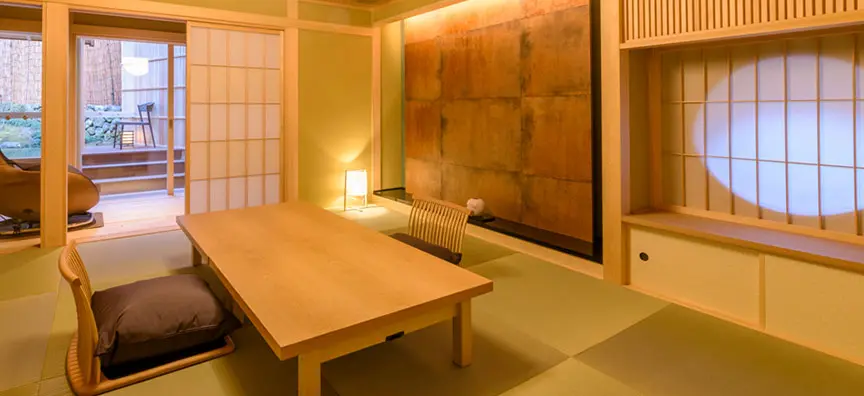
A Japanese-style hot spring inn standing in Kyoto’s popular Arashiyama sightseeing area. Its 105 guest rooms come in three styles, Kyoto Machiya, Kyoto Japanese, and Kyoto Modern, with 10 layouts in total.
From the furnishings and bedding to smaller touches such as tea and incense, every detail has been designed to create a relaxing Japanese space filled with the charm of Kyoto.
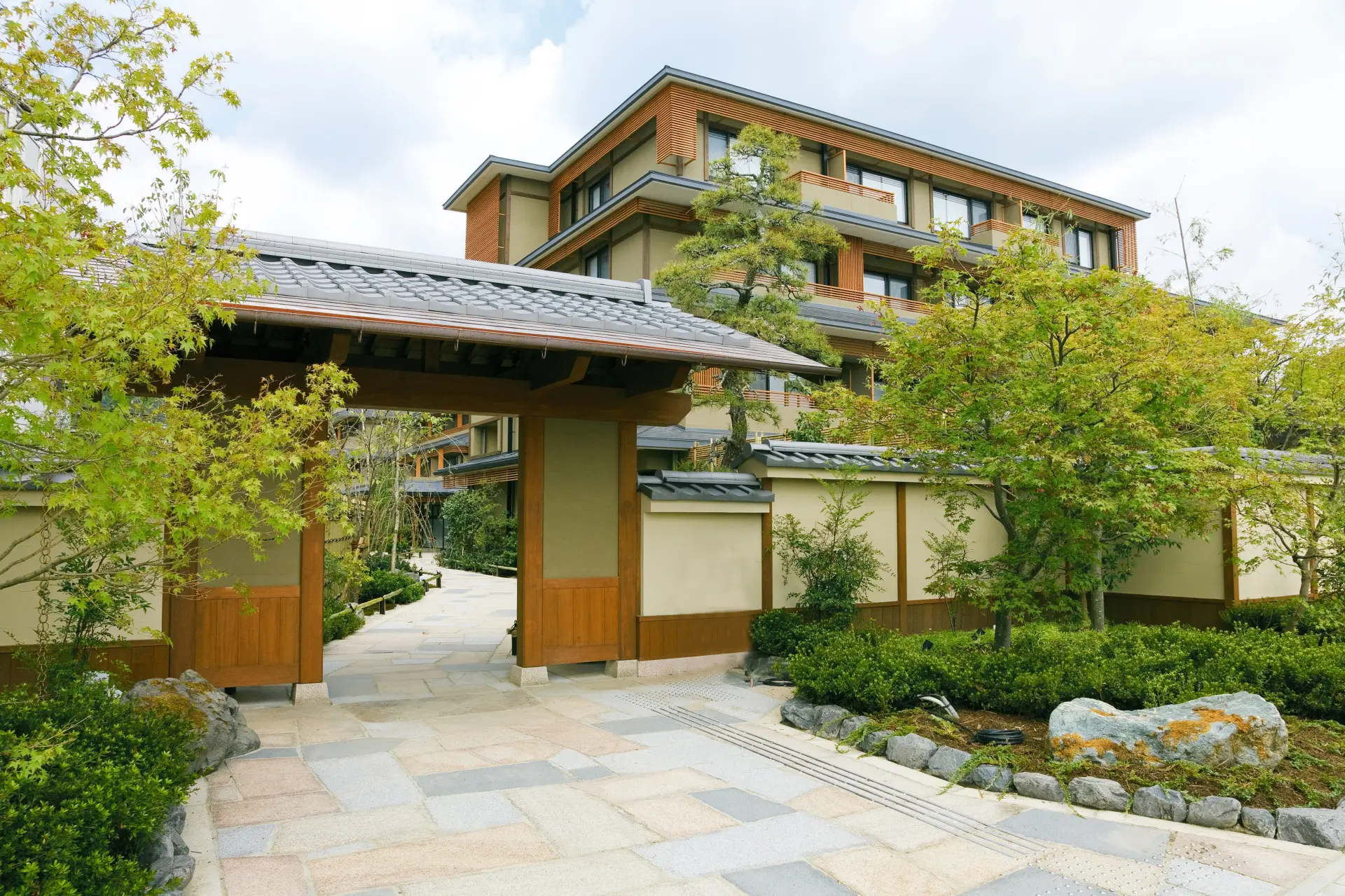
5. Kyoto Arashiyama Hana no Ie
A ryokan located Approx. 7 minutes on foot from JR Saga-Arashiyama Station along the Katsura River.
It stands on the former villa site of wealthy Edo-period merchant Suminokura Ryoi, and the grounds still preserve a garden, detached rooms, and a tea house.
The inn has 19 Japanese-style rooms and 1 Western-style room, with a calm atmosphere centered on traditional Japanese spaces.
From the rooms facing the inner garden, guests can enjoy elegant seasonal scenery.
It is also conveniently located for sightseeing, Approx. 7 minutes on foot to Tenryuji Temple and Approx. 20 minutes on foot to the Bamboo Grove Path.
FAQ about Arashiyama Sightseeing
Q
What are the main highlights of Arashiyama?
A
Its many historic buildings and its picturesque natural scenery.
Q
What is the appeal of the Sagano Romantic Train?
A
Its classical atmosphere and the grand natural scenery, including the gorge views from the train window.
Q
What time of day is best to avoid the crowds?
A
If you want to avoid crowds in Arashiyama, early morning and evening are recommended.
Summary
This article has introduced popular sightseeing spots, food, and recommended accommodations in Arashiyama.
The many historic buildings that tell of its deep and long history, along with the beautiful natural scenery that changes color with the seasons, are what make Arashiyama so appealing.
By visiting the sightseeing spots introduced here, you can experience Japanese culture and history while enjoying natural scenery filled with traditional Japanese atmosphere.
The article below introduces classic sightseeing spots in Kyoto, so be sure to check it out as well.