

A Travel Guide to Sanjusangendo: A Majestic Space Lined with More Than 1,000 Buddhist Statues
Sanjusangendo is famous for its more than 1,000 Kannon statues and its extraordinarily long main hall.
It is a temple filled with highlights, where you can see many National Treasure sculptures and buildings designated as Important Cultural Properties.
This guide covers the history, highlights, and best seasons to visit so you can make the most of Sanjusangendo.
It is just a short bus ride from Kyoto Station, so be sure to stop by.
What is Sanjusangendo Like?
Sanjusangendo is located in Kyoto’s Higashiyama Ward, not far from Kyoto Station.
Its main hall is Approx. 120 meters long, making it exceptionally long for a wooden structure even by world standards.
The sight of more than 1,000 standing Thousand-Armed Kannon statues enshrined inside the hall is truly spectacular.
You are sure to be overwhelmed by its sheer scale and presence.
The main hall and all of the Buddhist statues inside it, including the Thousand-Armed Kannon statues, are designated as National Treasures due to their cultural value.
In addition, the temple grounds are home to the huge Nandaimon Gate, built by the warlord Toyotomi Hideyoshi during the Azuchi-Momoyama period (1573–1603), and the Taiko Wall, made of earthen plaster, both of which are designated as Important Cultural Properties of Japan.
The traditional New Year event known as Toshiya is also famous.
Held annually with Approx. 2,000 participants, including skilled archers and young adults celebrating Coming of Age Day, it is widely known as a seasonal tradition of the New Year.

The Origins of Sanjusangendo
Sanjusangendo was built in 1164 by the retired Emperor Goshirakawa with financial support from Taira no Kiyomori, a warrior who rose to aristocratic status.
It was constructed in one corner of Hojujidono, the residence of the retired Emperor Goshirakawa.
Its formal name is Rengeoin, and Sanjusangendo is the main hall of that temple complex.
Rengeoin was completely destroyed by fire in 1249 during the Kamakura period (1185–1333), but in 1266, Sanjusangendo, its main hall, was rebuilt by the retired Emperor Gosaga.
The name Sanjusangen comes from the 33 spaces between the pillars in the main hall.
The number 33 symbolizes Kannon taking on 33 different forms to guide people toward salvation.
Access to Sanjusangendo
Here is how to get to Sanjusangendo starting from JR Kyoto Station, a major hub for getting around while sightseeing in Kyoto.
It takes only Approx. 15 minutes from Kyoto Station, making it easy to include in your travel plans.
- Route
-
1. Take a city bus from Kyoto-ekimae and get off at the Hakubutsukan Sanjusangendo-mae bus stop
2. Approx. 1-minute walk to the temple - Time Required
- Approx. 15 minutes
Admission and Hours at Sanjusangendo
Please refer to the table below for admission and hours at Sanjusangendo.
Note that the hours vary depending on the season.
- Admission
-
・Adults: 600 yen
・Junior high and high school students: 400 yen
・Elementary school students: 300 yen - Hours
-
・April 1–November 15 8:30am–5:00pm
・November 16–March 31 9:00am–4:00pm
What Is the Best Season to Visit Sanjusangendo?
The best time to visit Sanjusangendo is early summer, from May to June.
At the Totei Chisen Kaiyu-shiki Garden on the east side of the main hall, you can enjoy seasonal scenery and admire the garden decorated with early summer flowers such as azaleas and satsuki azaleas.

Packed with National Treasures and Important Cultural Properties! 4 Highlights of Sanjusangendo
The grounds of Sanjusangendo are full of highlights, including buildings designated as National Treasures and Important Cultural Properties, as well as a garden newly restored in 2021.
From here, we will introduce four must-see highlights selected from the many attractions of Sanjusangendo.
1. The Main Hall, Lined with More Than 1,000 Kannon Statues
Built in the irimoya style and topped with hon-gawara roof tiles, the main hall commands attention with its exceptionally long exterior.
It houses 1,032 Buddhist statues, including the principal seated Thousand-Armed Kannon statue and 1,000 standing Thousand-Armed Kannon statues. Both the hall itself and all the statues inside are National Treasures.
This is the only place where you can see the striking sight of more than 1,000 Thousand-Armed Kannon statues lined up together.
Take your time admiring the Buddhist statues in the solemn atmosphere.
When the hall was first built, the original pillars were painted vermilion, and the interior was decorated in vivid colors.
Though the colors have faded today, traces can still be seen in various places, so be sure to look for them.

2. Totei Chisen Kaiyu-shiki Garden, a Japanese Garden Where Nature and Historic Architecture Blend Beautifully
Totei Chisen Kaiyu-shiki Garden is located on the east side of the main hall.
This scenic spot lets you enjoy a charming landscape where carefully placed natural elements such as trees, stones, and rocks around a central pond harmonize with the architecture of Sanjusangendo.
A chisen kaiyu-shiki garden is one style of Japanese garden.
It is a representative garden style of the Edo period, designed with a pond at the center and paths around it so visitors can appreciate the garden while walking through it.
It was originally landscaped in 1961 by garden designer Kinsaku Nakane as part of a commemorative project marking the 770th memorial of the retired Emperor Goshirakawa.
In 2021, it was restored based on historical materials by Yukihiro and Naoki Nakane, the grandsons of Kinsaku Nakane.

3. Nandaimon Gate, Where You Can Feel the Splendor of the Momoyama Period
Located to the south of Sanjusangendo, the massive tiled Nandaimon Gate is an impressive sight.
Its distinctive structure is an eight-legged gate, with a total of eight supporting pillars placed in front of and behind the four main pillars.
It is designated as an Important Cultural Property of Japan as a surviving structure that conveys the brilliant culture of the Momoyama period.
Although it is a gate, it is not directly connected to the grounds of Sanjusangendo, because Nandaimon is a remnant of a different temple.
Sanjusangendo once stood within the grounds of the Great Buddha Hall of Hokoji Temple, founded by Toyotomi Hideyoshi.
Most of the buildings of Hokoji’s Great Buddha Hall were destroyed by repeated fires.
Nandaimon narrowly escaped the fires and remains near Sanjusangendo today as a surviving structure of that former temple complex.

4. Taiko Wall, Bearing the Crest of Toyotomi Hideyoshi
Like Nandaimon Gate, Taiko Wall is also a surviving structure from Hokoji’s Great Buddha Hall.
It was built as a wall to protect the Great Buddha Hall of Hokoji.
This earthen wall was made by compacting mud, and its round and flat roof tiles are decorated with the paulownia crest of the Toyotomi clan.
Together with Nandaimon Gate, it is a representative surviving structure of the Momoyama period and is designated as an Important Cultural Property of Japan.

Features of the Buddhist Statues, One of Sanjusangendo’s Greatest Attractions
One of the greatest attractions of Sanjusangendo is the more than 1,000 Buddhist statues inside the main hall.
It is astonishing that every one of them is designated as a National Treasure.
To fully appreciate their appeal, it helps to know their features in advance.
1. Seated Thousand-Armed Kannon Statue
The Seated Thousand-Armed Kannon Statue is the principal image of Sanjusangendo.
It is enshrined in the center of the main hall, flanked on both sides by standing Thousand-Armed Kannon statues.
Thousand-Armed Kannon is a compassionate Buddhist deity with a thousand hands and eyes, reaching out to all people.
The statue is 3.55 meters tall, and including the sculpture behind it, it reaches Approx. 7 meters in height.
You will likely be struck by the form of the Thousand-Armed Kannon itself, the fine details of the statue, and its sheer size.
2. One Thousand Standing Thousand-Armed Kannon Statues
The collective name for the 1,000 Kannon statues standing in two rows of 500 on either side of the Seated Thousand-Armed Kannon is One Thousand Standing Thousand-Armed Kannon Statues.
Each has 11 faces above the head and 40 arms extending from both sides.
The formal name is Juichimen Senju Sengen Kanzeon Bosatsu.
Of these, 124 Kannon statues date back to the early Heian period (794–1185), when the main hall was first established, while the rest were recreated over 16 years during the rebuilt Kamakura period by famous Buddhist sculptors.

3. Statues of Fujin and Raijin
The Statues of Fujin and Raijin are placed at opposite ends of the entrance and exit of the main hall.
Fujin and Raijin are known as deities originating in India, and in Japanese Buddhism, they are worshipped as gods who protect Buddhist teachings, encourage good and punish evil, and govern wind and rain. They also serve as protectors of Thousand-Armed Kannon.
Standing on cloud-shaped pedestals, these statues are captivating for their dynamic and powerful appearance.
When viewing the Statues of Fujin and Raijin, try kneeling down and looking up.
The ceiling rafters will appear like flashes of lightning, making the statues feel even more dramatic.
4. Statues of the Twenty-Eight Guardian Deities
The Statues of the Twenty-Eight Guardian Deities consist of a total of 28 figures, with four surrounding the Seated Thousand-Armed Kannon and 24 standing in front of the One Thousand Standing Thousand-Armed Kannon Statues.
There are various theories, but they are traditionally said to be deities who serve Thousand-Armed Kannon and protect Buddhism and its followers.
Each statue has a different expression and pose, clearly showing its individual character and traits.
Enjoy these uniquely expressive deities, including statues wearing armor and others holding musical instruments.

Toshiya, a New Year Tradition That Has Continued Since the Edo Period
Toshiya is a traditional event in which participants shoot arrows at a target 60 meters away and compete for accuracy.
It is said to have begun in the Edo period, when samurai competed to see how many targets they could hit in a single day.
Held around mid-January each year, it is one of the customary New Year events.
Skilled archers and young adults celebrating Coming of Age Day gather from all over Japan to compete.
The biggest attraction of Toshiya is the competition performed by young adults dressed in traditional Japanese attire.
In particular, the sight of young women in brightly colored furisode drawing their bows has become a well-known New Year scene in Kyoto.

3 Sightseeing Spots Near Sanjusangendo
Besides Sanjusangendo, Kyoto’s Higashiyama area is home to many shrines and temples with plenty to see.
The three sightseeing spots introduced below are all easy to access from Sanjusangendo, so be sure to visit them together.
1. Kenninji Temple
Kyoto’s oldest Zen temple and the head temple of the Kenninji school of the Rinzai sect. It was founded in 1202, when Minamoto no Yoriie, the second shogun of the Kamakura shogunate, donated the temple grounds, and the Zen master Eisai became its founding priest.
At the center of its vast grounds is a temple layout in which the Sanmon Gate, Dharma Hall, and Hojo are aligned in a straight line facing the Imperial Messenger Gate, with the Honbo adjacent to the east side of the Hojo.
The Imperial Messenger Gate, which serves as the entrance, is a four-legged gate with a gabled roof covered in copper plates, and is designated as an Important Cultural Property of Japan as a surviving structure that preserves the style of the late Kamakura period.

2. Yasui Konpiragu Shrine
This shrine in Kyoto’s Higashiyama Ward enshrines the retired Emperor Sutoku, Minamoto no Yorimasa, and Omononushi-no-Kami, invited from Kotohiragu Shrine in Sanuki, and has long been affectionately known as “Yasui no Konpira-san.”
The reason it is so popular as a shrine for cutting bad ties is the Enkiri Enmusubi Monument on the grounds.
This giant stone next to the worship hall is shaped like an ema plaque and measures Approx. 1.5 meters high and Approx. 3 meters wide, and is said to hold the power to cut bad ties and bring good ones.

3. Otowasan Kiyomizudera Temple
Founded in 778, it was registered as a UNESCO World Cultural Heritage site in 1994.
The 130,000-square-meter temple grounds spread across the middle of Mt. Otowa and contain more than 30 temple buildings and monuments, including National Treasures and Important Cultural Properties. Kiyomizudera is also stunning in every season, with cherry blossoms in spring, lush greenery in summer, autumn leaves in fall, and snow in winter.
The main hall is especially not to be missed. Built to project out over the mountainside, it was constructed using traditional Japanese building techniques that join timber without nails. It stands Approx. 13 meters high, about the height of a four-story building.

3 Popular Restaurants Near Sanjusangendo
Around Sanjusangendo, you will find restaurants serving carefully prepared dishes that bring out the best in their ingredients, along with comforting Japanese flavors.
Here are three popular places that are easy to stop by. After sightseeing, treat yourself to a meal that will gently refresh both body and mind.
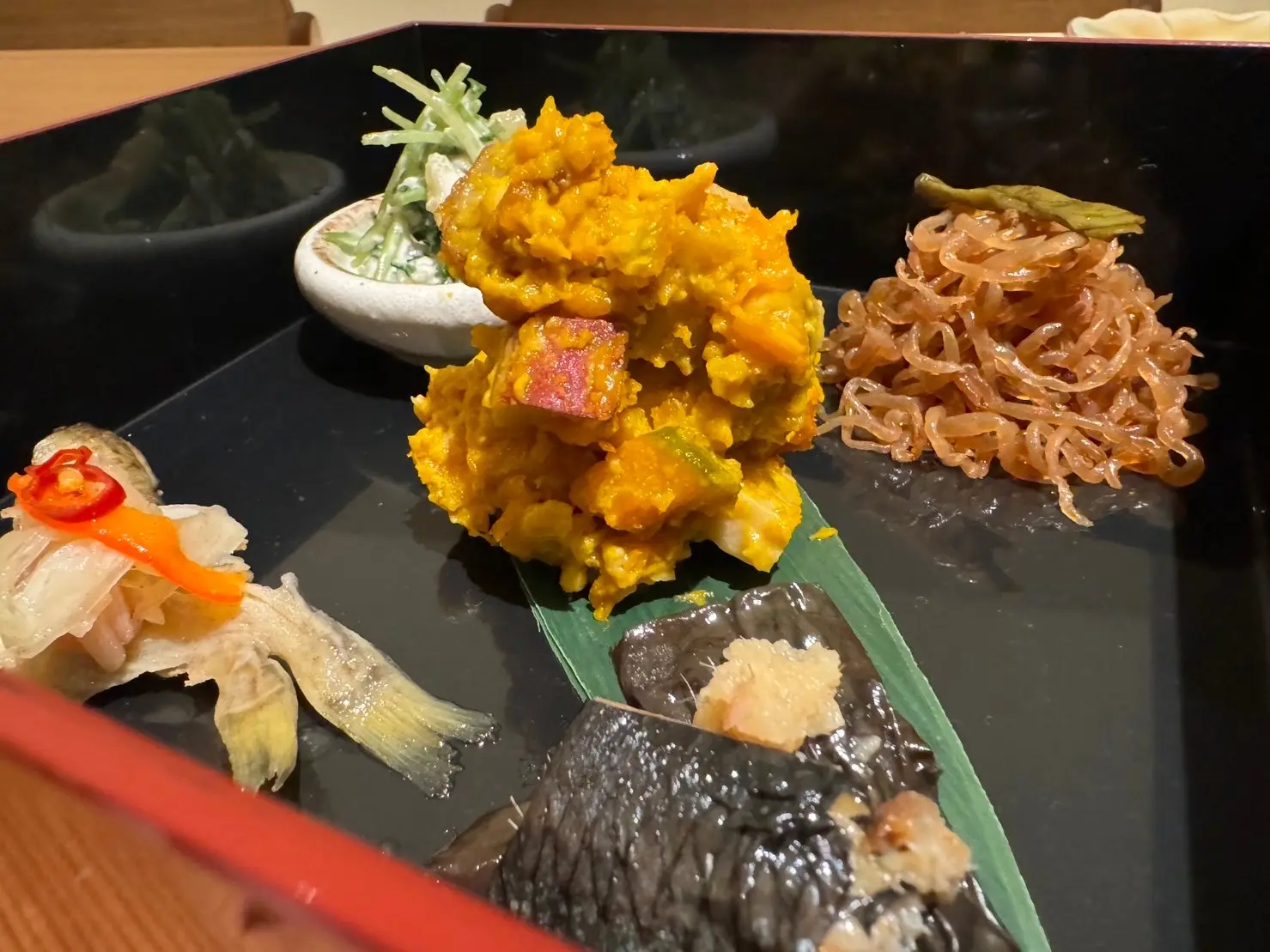
1. Tempura Obanzai Ishikawa
A popular restaurant where you can casually enjoy obanzai made with seasonal ingredients and seasonal tempura à la carte.
Large bowls of obanzai are lined up at the first-floor counter, and depending on your mood that day, you can choose whether to use it like an izakaya or focus on tempura.
An omakase course is also available with advance reservation by the previous day.
The tempura menu features carefully selected ingredients such as white amadai and golden eye snapper, along with seasonal vegetables, and you can order your favorites à la carte.
2. Yakigama Matcha Sweets Chasen
A specialty shop for kiln-baked sweets with the concept of “cool, hot, and melty sweets” that can only be enjoyed freshly made.
The signature item is the “Chasen Matcha Tamatebako Sweets,” served in a paulownia wood box.
When you open the lid, steam rises up, making it feel just like the legendary gift Urashima Taro received from Princess Otohime.
Inside is a lineup of matcha sweets inspired by hassun, an elegant assortment in Kyoto kaiseki cuisine.
In addition to sweets, the shop also offers a wide variety of savory pizzas, making it a popular lunch spot as well.

3. Waguri Senmon Saori
A specialty shop for Japanese chestnuts that opened along the Kamo River in Kyoto’s Kiyamachi area in 2019.
It serves Japanese sweets made generously with top-grade Tanba chestnuts, considered the finest among Japanese chestnuts.
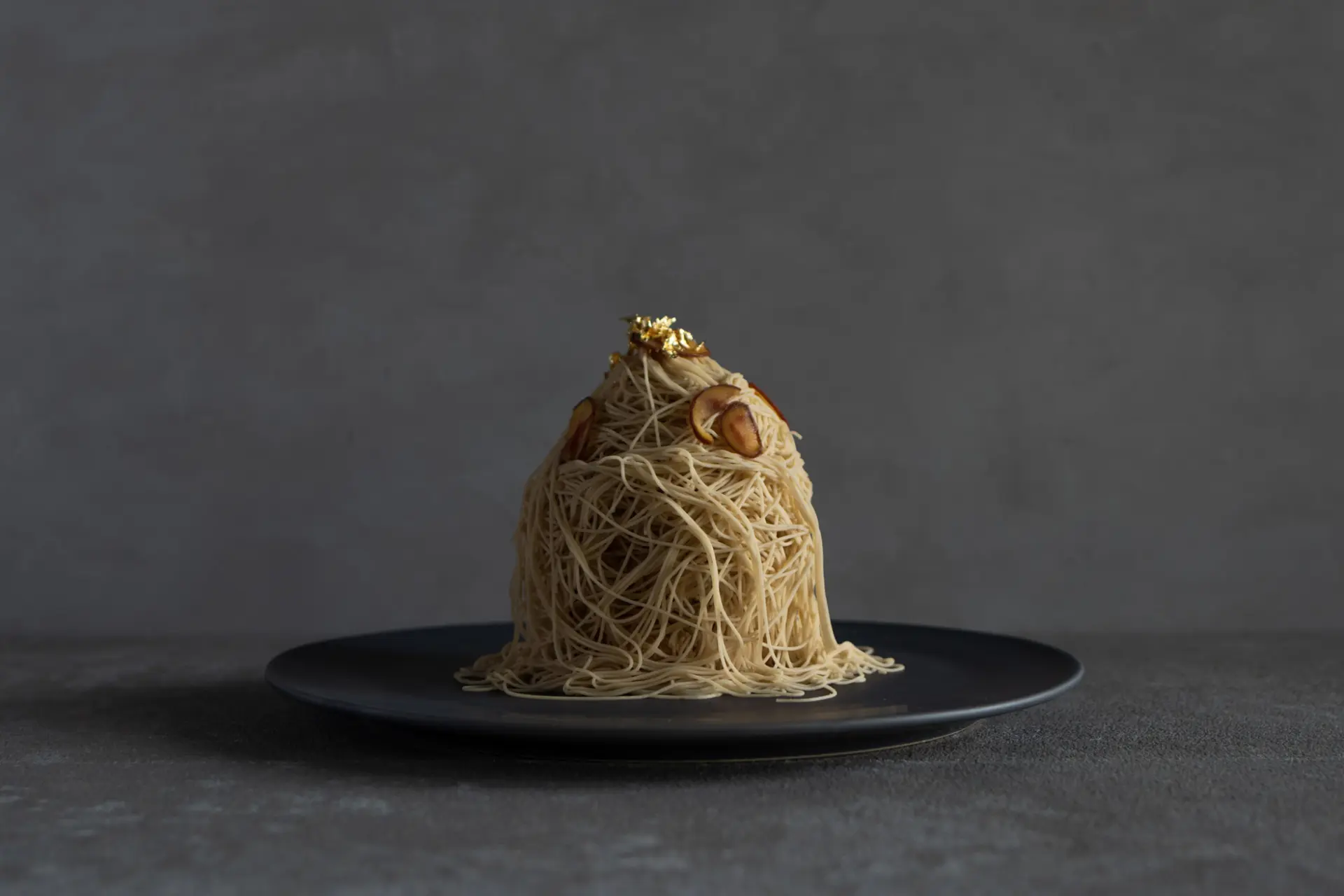
The signature menu item is the mont blanc “Saori - Sha, Finest Tanba Chestnuts,” made with Approx. 1 mm strands of Japanese chestnut layered delicately like woven fabric.
Only rare Tanba chestnuts are used, and only 100 servings are available per day.
FAQ about Sanjusangendo
Q
Who built Sanjusangendo?
A
It was built by order of the retired Emperor Goshirakawa with financial support from Taira no Kiyomori.
Q
Why was Sanjusangendo built?
A
It was created as a space where the retired Emperor Goshirakawa could offer prayers to Kannon.
Summary
This article has introduced the history and highlights of Sanjusangendo.
Be sure to enjoy not only the main hall and Buddhist statues designated as National Treasures, but also the seasonal natural scenery in the Japanese garden on the temple grounds.
Sanjusangendo is in a convenient location for sightseeing in Kyoto, making it easy to add to your itinerary.
Kyoto is also home to many other fascinating shrines and temples, so use the article below as a reference when planning your trip to enjoy the city even more.