

Soak Up the Epic Views of Mount Aso! 12 Must-Visit Spots in Aso
Aso City is home to Mt. Aso, a symbol of Kumamoto.
Many tourists visit day after day to see the spectacular views created by the majestic Mt. Aso.
Shrines deeply connected to Mt. Aso, family-friendly theme parks, and hot springs are also part of Aso’s appeal.
In this article, we’ll introduce what makes Aso special, along with popular sightseeing spots, restaurants, and more where you can fully enjoy it.
With this article as your guide, you’ll not only enjoy Mt. Aso’s stunning scenery, but also make the most of Aso City and the surrounding area.
What is Aso Like?
Aso City lies in northeast Kumamoto and borders Oita Prefecture.
In the southern part of the city, Mt. Aso—Kumamoto’s symbol—spreads out across the landscape.
“Mt. Aso” is a general term for a mountain range running east to west, centered around five peaks known as the Aso Five Peaks; in a broader sense, the caldera rim mountains and the crater floor are also included as part of “Mt. Aso.”
The caldera rim mountains refer to the ridgeline along the edge of the caldera (a depression formed by volcanic eruptions), and the crater floor is the flat area inside the crater or caldera.
The Aso caldera, vast grasslands, and other epic natural scenery are Aso’s biggest draw.
There are also many facilities and activities to enjoy nature, letting you feel the power and appeal of Mt. Aso with your whole body.
Another plus is being able to soothe your tired body in hot springs after sightseeing.
Don’t miss the local food either, including dishes made with Aso takana mustard greens and akaushi beef, as well as dengaku grilled over charcoal.

What’s the best season to visit Aso?
If you’re sightseeing in Aso, fall is recommended.
The vast grasslands that are lush and green in spring and summer turn into pampas grass fields in fall.
It’s especially beautiful at dusk, when the pampas grass shimmers silver and creates a dreamy scene.
What to wear in Aso by season
- Spring (March–May): A light jacket and a thin sweater
- Summer (June–August): Light clothing, short sleeves
- Fall (September–November): A light jacket, coat
- Winter (December–February): A coat, a thick sweater or jacket
How do you get to Aso?
If you’re heading from Aso Kumamoto Airport (which has international flights) to Aso City, it takes Approx. 1 hour by express bus.
Even if you’re visiting from overseas, such as Taiwan, it should be easy to get there.
From Fukuoka, the gateway to Kyushu, you can access Aso in around 2 hours 40 minutes by Shinkansen.
Main transportation for sightseeing in Aso
When visiting Aso’s sightseeing spots, buses are the main way to get around.
Convenient shuttle buses also run between popular attractions.
Along with buses, consider using taxis or a rental car as well.
12 Popular Sightseeing Spots to Fully Enjoy the Charm of the Aso Area
Aso City’s biggest draw is the spectacular scenery shaped by the majestic nature of Mt. Aso.
Here are popular sightseeing spots not only in Aso City but also scattered around Mt. Aso, with a focus on places where you can fully enjoy its greatest appeal.
Beyond the views, there are also plenty of ways to have fun, including family-friendly theme parks and shrines deeply connected to Mt. Aso.
If you’re sightseeing in Aso City, be sure to visit the spots introduced here.
1. Daikanbo
Daikanbo is located on the north side of the caldera rim and offers sweeping views of the massive caldera landscape.
Set at an elevation of 3,071 ft, it overlooks Aso’s townscape and farmlands, the Aso Five Peaks, and even the Kuju mountain range.
Because the Aso Five Peaks seen from here look like a reclining Buddha, they are sometimes also called the “Nirvana Statue.”

2. Kusasenrigahama
A vast grassland spreading across the northern foothills of Eboshidake, one of the Aso Five Peaks that form the core of Mt. Aso.
It has been celebrated by many poets since ancient times and is even featured in textbooks, so many people likely picture Kusasenrigahama when they think of “Aso.”
Kusasenrigahama is a crater remnant from Approx. 30,000 years ago at an elevation of Approx. 3,740 ft, with grasslands spreading across a diameter of Approx. 0.6 miles and two ponds formed where water collected in a double-crater depression.

3. Aso Shrine
A shrine enshrining Takeiwatatsunomikoto, the deity of Aso’s founding, along with 12 family deities.
It is the head shrine of Approx. 500 branch shrines across Japan.
Its history is said to span over 2,000 years, and it merged with volcano worship that regards the crater of Mt. Aso as the sacred object, making it a shrine of the highest rank as Higo Province’s ichinomiya (the top shrine of the province).
No records remain of exactly when the shrine was first established here.
The current shrine buildings were rebuilt from 1835 to 1850 through donations from the Kumamoto Domain.

4. Nakadake Crater
Nakadake (4,941 ft), located in the center of Mt. Aso, is an active volcano that continues vigorous activity, and you can see the crater billowing smoke up close.
Of Nakadake’s seven craters lined up, the one currently active and open for viewing is the First Crater, and you can go close to this huge crater with a circumference of Approx. 2.5 miles.

5. Shirakawa Springs
Shirakawa Springs is one of the spring sources in the Minami-Aso Village spring group, where groundwater from the Aso caldera bubbles up. It is the source of the Shirakawa River, a Class A river flowing through Kumamoto City, and is a famous spring selected for the former Environment Agency’s (now the Ministry of the Environment) “100 Exquisite Waters of Japan.”
The water is moderately hard water containing trace amounts of carbon dioxide, well known for its smooth taste, and is also used as source water for local sake and bottled mineral water.

6. Komezuka
A cone-shaped volcano at the foot of Kishimadake, one of the Aso Five Peaks that form the core of Mt. Aso.
This small mountain is Approx. 262 ft tall and is said to have formed in an eruption Approx. 3,300 years ago.
Its slopes are covered in grassland, and from spring to summer the mountain turns a beautiful green.

7. Milk Road
The Aso caldera is vast, and its caldera rim stretches Approx. 80 miles around.
The scenic road running for 28 miles along the northwest ridgeline is Prefectural Routes 339 (Kita-Gairinzan Ozu Line) and 45 (Aso Park Kikuchi Line), commonly known as “Milk Road.”
Because it originally served as a farm road for transporting milk from ranches along the route, it became affectionately known as Milk Road.

8. Aso Farm Land
A health-promotion complex produced by health experts, gathering a wide range of facilities for both adults and children across a vast site of Approx. 10.8 million sq ft.
With sports facilities, an interactive park, hot springs, dining, and hands-on experiences, it’s packed with things to do all day—and you can also stay overnight in dome-shaped hotels in the forest.

9. Kamishikimi Kumanoimasu Shrine
A shrine that became a hot topic on social media as a “power spot” and “a gateway to another world.”
It enshrines three deities: Izanagi-no-Mikoto, Izanami-no-Mikoto, and Ishikimi Daishogun, and is affectionately called “Gongen-san” by locals.
On the grounds are “nagi,” said to bring good fortune in love and relationships, and “Ugetoiwa,” said to bring good luck for exams and victory.

10. Aso Cuddly Dominion
A zoo at the foot of Mt. Aso where animals from around the world live on a site of Approx. 3.2 million sq ft.
It offers plenty of animal interaction experiences, and performance shows by the animals are also popular.
It’s also known as home to TV-famous favorites, including the chimpanzee Pan-kun.

11. Takamori Spring Water Tunnel Park
Of the Takamori Spring Water Tunnel, which is Approx. 1.2 miles long and known for its abundant spring water, Approx. 1,804 ft has been turned into a park.
The tunnel originally began as railway excavation planned by the former Japanese National Railways, but during construction it was hit by massive water outflow.
After repeated water outflow accidents, construction was suspended.
Today, part of the tunnel has been developed as a park, where you can walk along the tunnel’s pathway; there is also the water museum “Yusuikan,” where you can learn about the importance of water and the tunnel’s history.

12. Tsuetate Onsen
A hot spring town spreading around the Tsuetate River in Aso District, Kumamoto Prefecture, known as Kyushu’s inner retreat.
Its origins date back 1,800 years, with legends saying it was used as the first bath for an infant who later became Emperor Ojin.
The spring quality includes mildly alkaline simple hot spring and chloride spring.
In addition, it contains a high amount of metasilicic acid, which supports the hot spring’s effects, and is known for feeling gentle on the skin and leaving it pleasantly moisturized after bathing.

Taste Local Ingredients and Brand-Name Beef! 3 Popular Restaurants in Aso
Local vegetable-based regional dishes and Aso’s brand-name beef, “akaushi,” are must-tries if you want to enjoy Aso’s food scene.
At the popular restaurants introduced next, you can taste excellent dishes made with akaushi, so be sure to stop by.
We’ll also introduce shops near the popular attraction Aso Shrine that offer great food for eating on the go.
1. Aso Hanabishi
A local cuisine restaurant in Aso, just a short walk from Aso Shrine.
To let guests enjoy Aso’s natural bounty, it mainly uses seasonal local ingredients such as locally grown vegetables and serves them using traditional cooking methods.
The menu is diverse, with a wide variety of Japanese and Western dishes, from beef cutlet rice bowls and sukiyaki to soba and the local specialty dago-jiru dumpling soup.

2. Teppan-yaki Aso Mabo
An akaushi-specialty teppanyaki restaurant in the Monzen-machi shopping street near Aso Shrine.
It serves hearty dishes made with Aso’s famous akaushi beef.
The most popular item is “Akaushi Garlic Rice,” a mouthwatering dish topped with spicy, flavorful akaushi steak over garlic rice.

3. Aso Confectionery Tanoya
A Western-style pastry shop in the Aso Shrine Monzen-machi shopping street.
It’s run by Masafumi Tano, the third-generation pastry chef and owner.
“Tano Choux,” created by Mr. Tano, who is particular about fresh cream, is the shop’s top specialty.
Inside the choux pastry topped with fragrant toasted almonds, custard made with pure fresh cream oozes out smoothly.

3 Recommended Places to Stay in Aso
Here are recommended places to stay for those who want to enjoy sightseeing in Aso.
We carefully selected them to suit a wide range of situations, including your preferences, travel purpose, and who you’re traveling with.
All are popular facilities highly rated by guests and offer a comfortable stay to soothe everyday fatigue.
If you haven’t decided where to stay yet, use this as a reference.
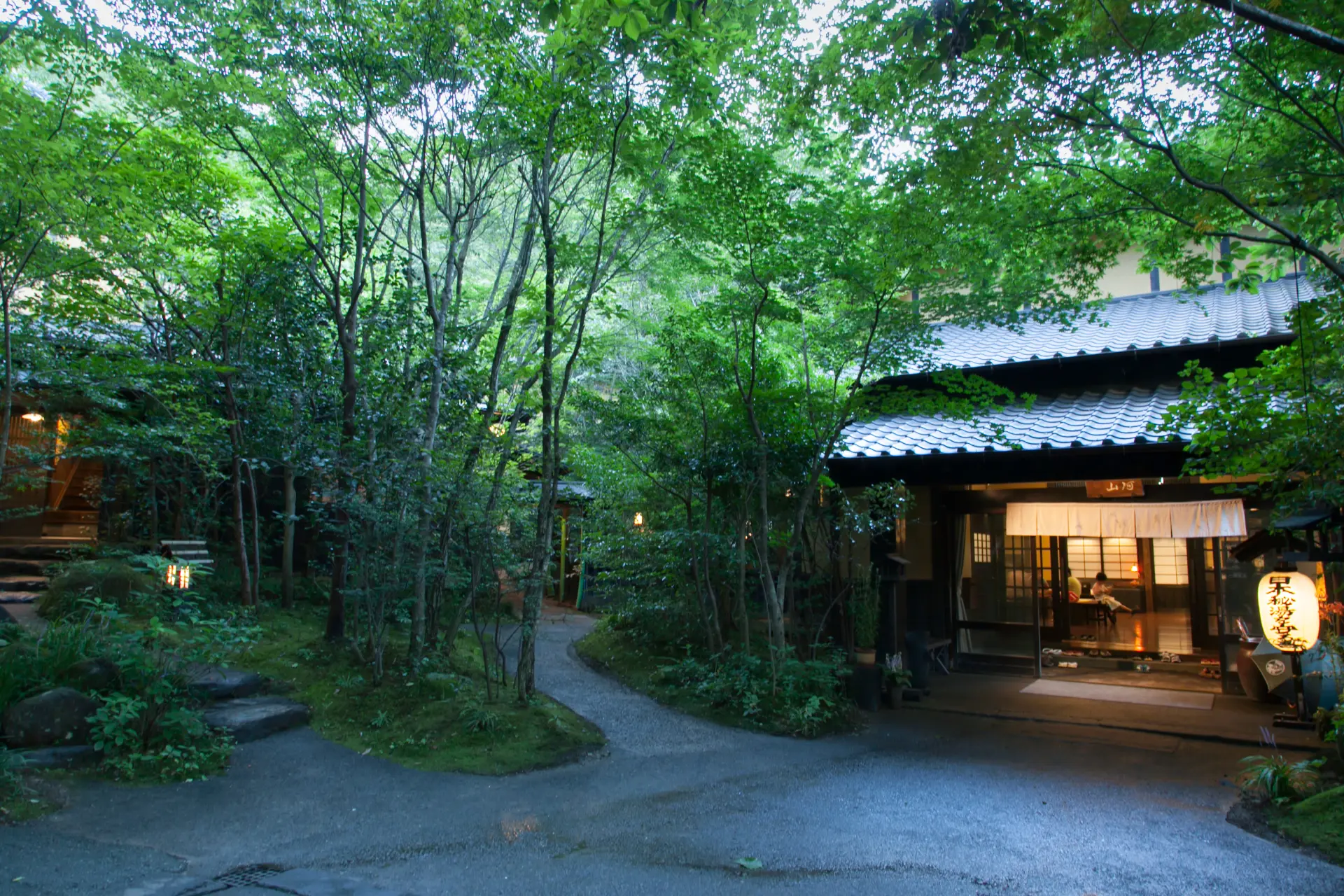
1. Kurokawa Onsen Ryokan Sanga
Kurokawa Onsen is a hot spring village on the north side of Mt. Aso, an active volcano located in the Aso region of Kumamoto.
It’s also known as one of Japan’s hidden hot spring destinations, and until 2000, its name reportedly wasn’t even printed on maps published by local newspapers.
Ryokan Sanga is a hot spring inn that stands quietly like a hideaway deep in the forest, a little farther away from the mountain-lined Kurokawa Onsen town.
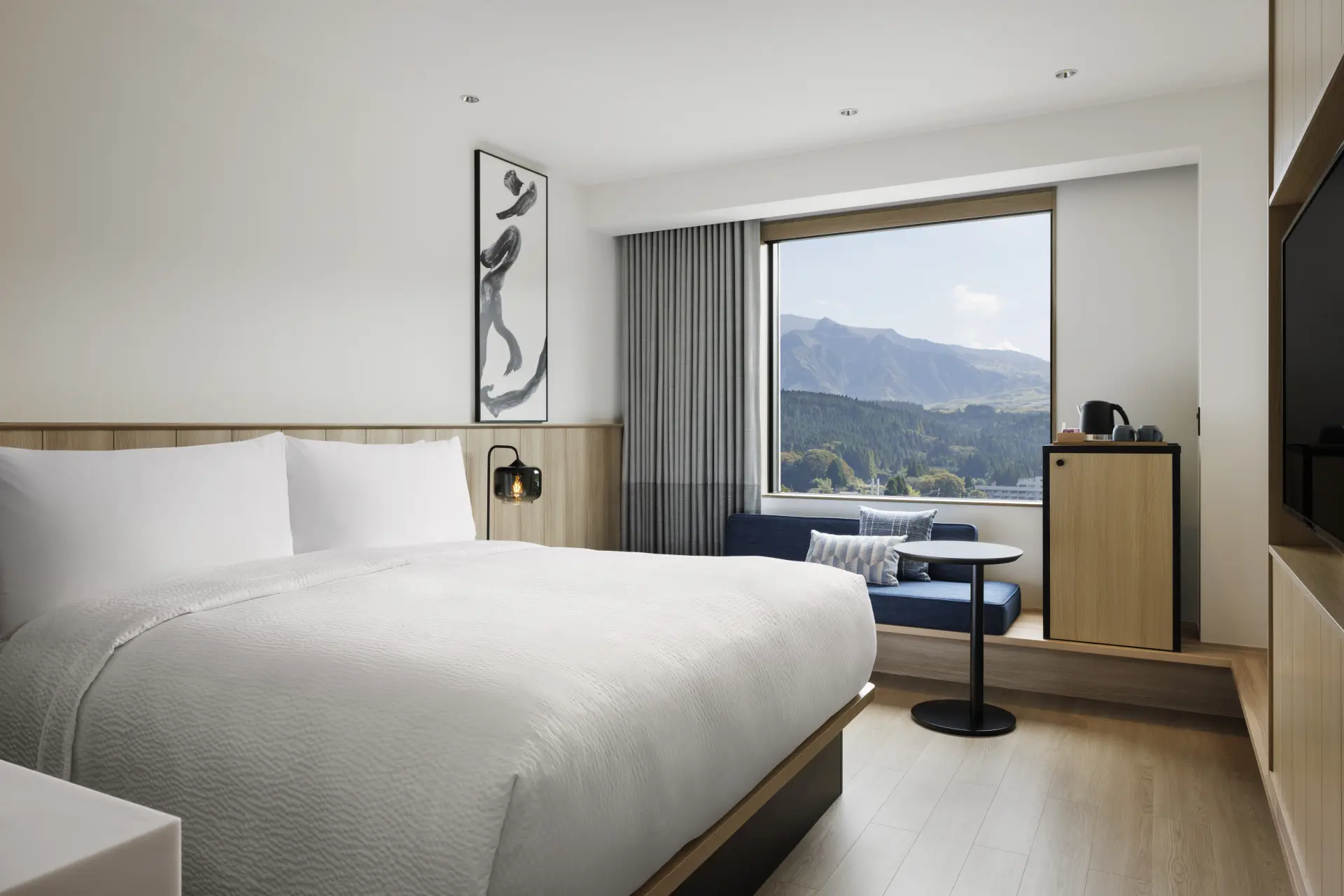
2. Fairfield by Marriott Kumamoto Aso
The “Fairfield by Marriott Michi-no-Eki Project” operates hotels near roadside stations across 29 locations in 14 prefectures.
Fairfield by Marriott Kumamoto Aso is next to Michi-no-Eki Aso, making it an ideal hotel for fully enjoying Aso’s great outdoors.
Around the hotel are scenic spots such as Mt. Aso with one of the world’s largest calderas, the lush Kusasenrigahama grasslands, and Daikanbo with its sweeping views.
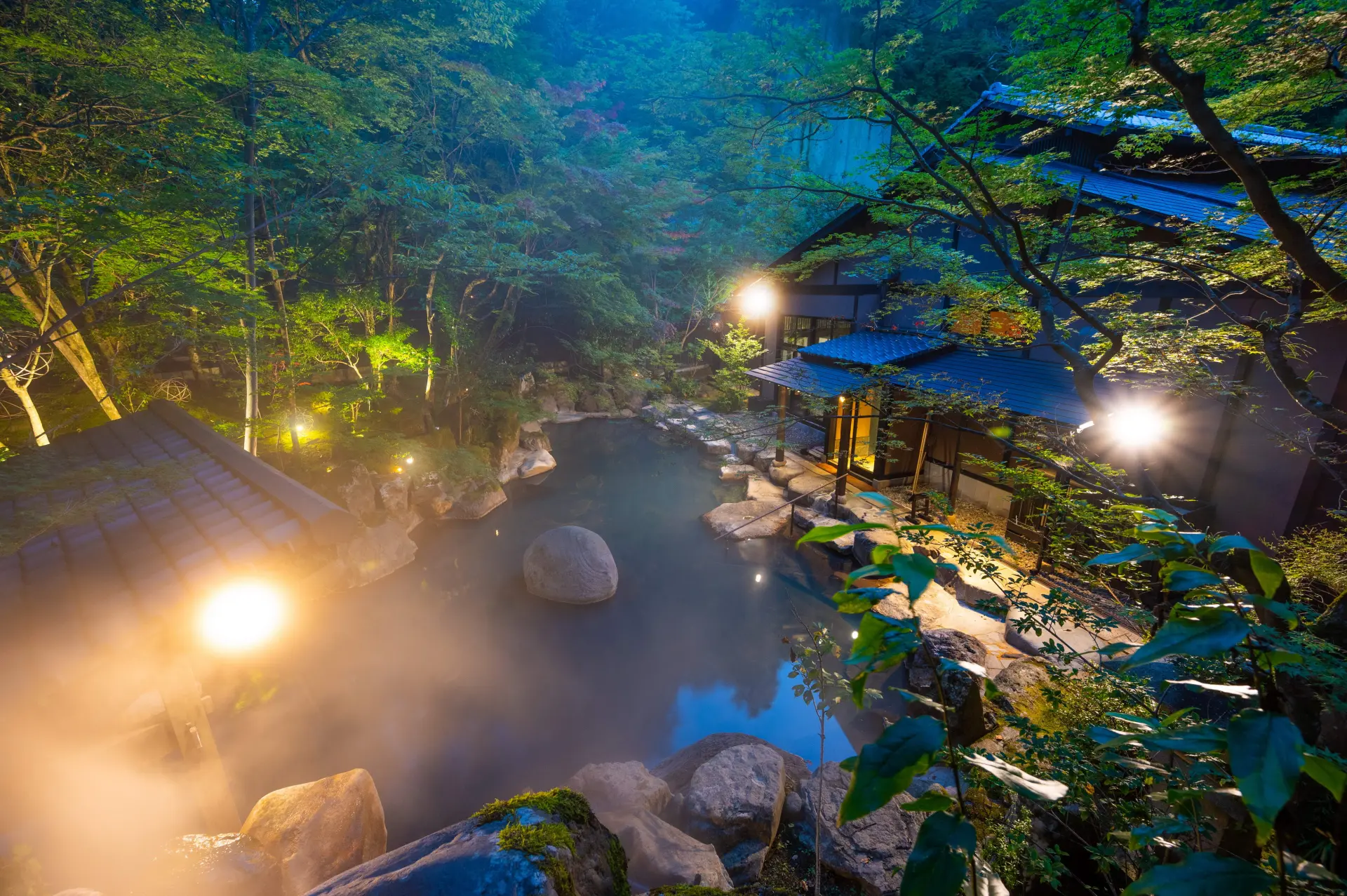
3. Kurokawaso
Located around 0.6 miles from Kurokawa Onsen’s town area, this inn offers a quiet stay away from the bustle.
It consists of the main building and separate annexes, and while the guest rooms are traditional Japanese style, they also have stylish touches that feel modern in places.
Soft lighting creates a relaxing atmosphere.
The annexes are standalone cottages with an irori hearth and open-air bath, like hidden retreats blending into nature.
FAQ about Aso Sightseeing
Q
Is it possible for Mt. Aso to erupt?
A
Mt. Aso is one of Japan’s active volcanoes, so an eruption is possible.
Q
What should I be careful about when sightseeing at Mt. Aso?
A
Depending on conditions, some areas may be restricted, so check the restriction information before your visit.
Summary
We’ve introduced Aso’s highlights, along with popular sightseeing spots and restaurants—what did you think?
Use this article as a guide to fully enjoy the stunning scenery of Mt. Aso, Aso’s biggest draw, and be sure to visit the attractions scattered around the area as well.
The article below features a carefully selected list of sightseeing spots in Kumamoto.
Kumamoto has many great attractions beyond Aso, so use that guide too and explore Kumamoto to the fullest.