

A Travel Guide to Enjoy Yamagata’s Scenic Views, Food, and History to the Fullest
Yamagata is blessed with beautiful nature, offering stunning views and plenty of great food.
With nostalgic streets where long-standing traditions still thrive and many historic buildings, it’s a region full of charm—perfect for a getaway.
Covering a wide area, Yamagata is broadly divided into four regions, each with its own distinct culture shaped by differences in climate and dialects.
In this article, we’ll introduce the appeal of each region and its popular sightseeing spots, along with local food and major transportation options that are useful for travel.
We also suggest a 1-night, 2-day model itinerary that covers classic must-see spots, so if you’re planning a trip to Yamagata, read to the end and use it as a reference.
Experience Yamagata’s Rich History and Nature With All Five Senses
Located in the southwestern part of the Tohoku region, Yamagata is a nature-rich area with forests covering Approx. 72% of the prefecture.
It’s surrounded on all sides by mountains counted among Japan’s 100 Famous Mountains, such as Mt. Chokai, the Dewa Hills, and the Iide Mountains.
These geographic features support the production of high-quality agricultural and livestock products, and there are also hot springs scattered throughout with excellent water quality.
Yamagata is especially known for cherries, producing nearly 80% of Japan’s total—ranking No. 1 in the country.
In addition to historic buildings such as Dewa Sanzan and Uesugi Shrine, traditional townscapes are also a key highlight.

Yamagata’s Average Temperatures and What to Wear
Yamagata is large and each region has different climate characteristics, but overall, summers are extremely hot and winters are snowy and cold.
In other words, the seasons are clearly defined, and you can enjoy beautiful, nature-made landscapes throughout the year.
Average Monthly Temperatures in Yamagata
| - | Jan | Feb | Mar | Apr | May | Jun | Jul | Aug | Sep | Oct | Nov | Dec |
|---|---|---|---|---|---|---|---|---|---|---|---|---|
| Avg. temperature (°C) | -0.1 | 0.4 | 4.0 | 10.2 | 16.2 | 20.3 | 23.9 | 25.0 | 20.6 | 14.1 | 7.7 | 2.4 |
What to Wear in Yamagata by Season
- Spring (March - May): Jacket and sweater
- Summer (June - August): Light clothing
- Fall (September - November): Sweater or cardigan
- Winter (December - February): Coat, wool suit, thick sweaters and jackets
Access to Yamagata
With both an airport and Shinkansen stations, Yamagata is easy to reach from major cities.
From Tokyo, it takes Approx. 2 hours 50 minutes by Shinkansen or Approx. 1 hour by plane.
From Osaka, you can also arrive in Approx. 1 hour 20 minutes by plane.

Access from Sendai Airport to Major Stations
Here’s how to get from Sendai Airport, the main air gateway to Tohoku, to Yamagata Station.
Yamagata Airport has international flights, but they are generally irregular charter flights.
Depending on the season, scheduled international flights may operate between Taiwan and Yamagata, so it’s a good idea to check the official website.
A direct highway bus is convenient, but it only runs twice a day at 10:00am and 5:30pm. *As of April 2024
Reservations aren’t required, but seats are first-come, first-served and services are limited, so if you want to be sure to ride, it’s recommended to line up early.
If the times don’t work for you or you can’t get on the bus, take the train instead.
Access by Bus
- Route
-
1. Walk from “Sendai Airport” to “Sendai Airport 1F Bus Stop No. 2”
2. At “Sendai Airport 1F Bus Stop No. 2,” board the Yamakō Bus bound for Yamagata Station and get off at “Yamagata-Ekimae”
3. Arrive after a few minutes on foot from “Yamagata-Ekimae” - Travel time
- Approx. 1 hour 30 minutes
Access by Train
- Route
-
1. Walk from “Sendai Airport” to “Sendai Airport Station”
2. From “Sendai Airport Station,” take the Sendai Airport Access Line bound for Sendai and get off at “Sendai Station”
3. From “Sendai Station,” take the JR Senzan Line bound for Yamagata and get off at “Yamagata Station” to arrive - Travel time
- Approx. 2 hours 10 minutes
Main Ways to Get Around Yamagata
The two main ways to get around for sightseeing in Yamagata are trains and local buses.
If you use them based on the area and your destination, you can visit most sightseeing spots, so make the most of them.
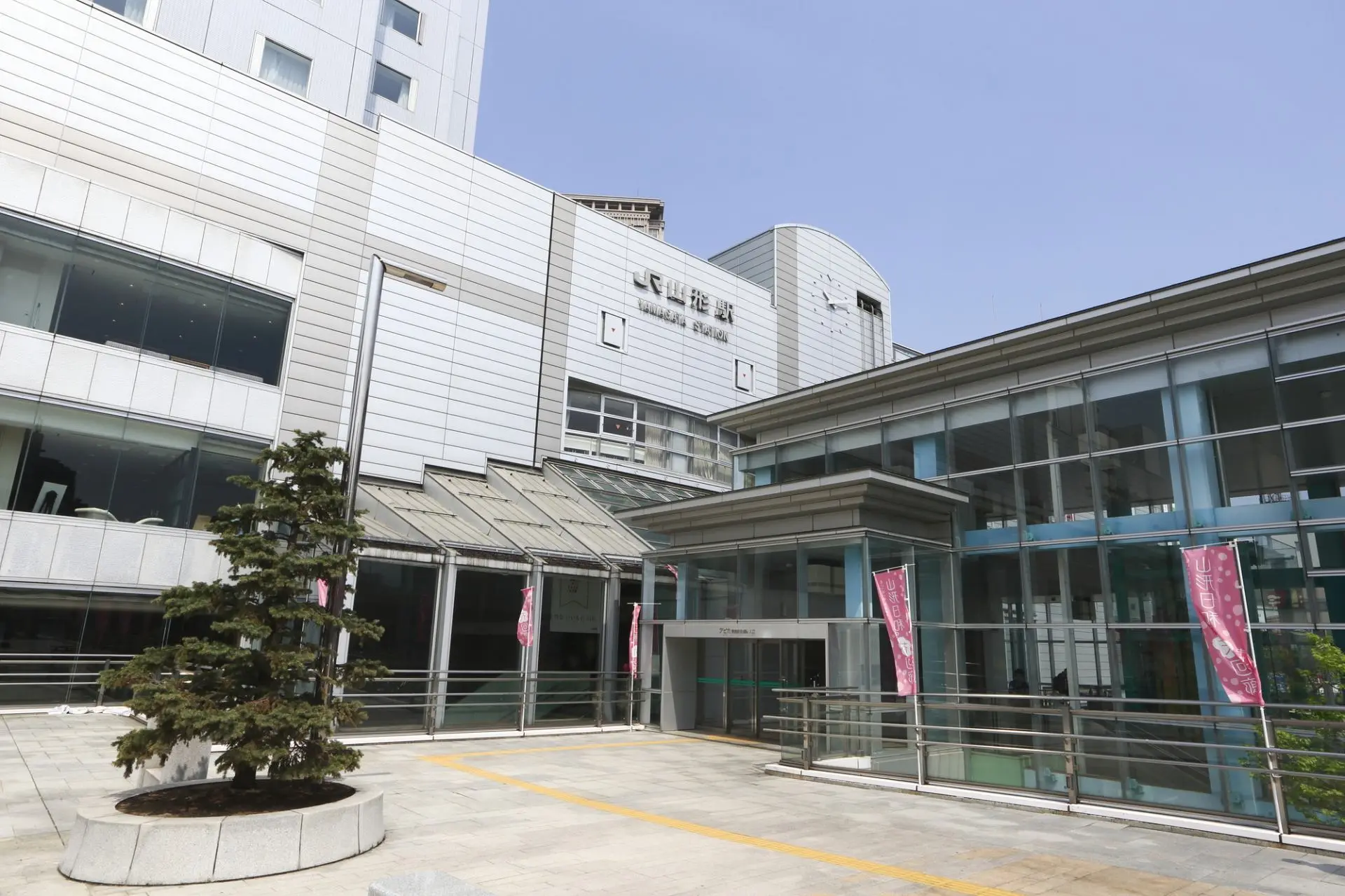
For trains, the main lines are the Senzan Line, the JR Aterazawa Line, and the Ou Main Line, all of which run into Yamagata Station, the terminal where the Shinkansen also stops.
For local buses, you’ll generally use Yamakō Bus, so be careful not to board the wrong route or bound-for destination.
If you’re sightseeing within Yamagata City, the Benichan Bus, which loops to nearby spots from Yamagata Station, is also recommended.
It operates as two types—“Higashi Kururin” and “Nishi Kururin”—with four routes in total, and using it well can help you tour efficiently.
Four Regions to Know Before Traveling in Yamagata
Yamagata Prefecture, the 9th largest in Japan by area, is divided into four regions with distinct characteristics such as culture and dialect.
Since it’s difficult to visit everything in a single trip, it’s recommended to narrow down your spots when planning.
We’ll introduce each region’s appeal and popular destinations, so use this as a guide.
Murayama Area: Home to Many Popular Sightseeing Spots
The Murayama area is located in the center of Yamagata.
It’s the prefecture’s central hub, including Yamagata City—your gateway for sightseeing—as well as popular scenic spots like Kajo Park, Yamadera, and the Zao Snow Monsters.
As a basin surrounded by mountains, it’s also a great place to enjoy seasonal fruit picking year-round, including cherries, watermelon, and La France pears.
If you’re sightseeing in the Murayama area, consider staying overnight at atmospheric hot spring towns like Ginzan Onsen or Zao Onsen, known for historic architecture and a charming ambiance.


Mogami Area: A Nostalgic Region Rich in History
Located in northeastern Yamagata, the Mogami area centers on Shinjo City, which also has a Shinkansen terminal station.
It’s a nature-rich region dotted with retro hot spring towns like Hijiori Onsen, evoking classic Japanese scenery.
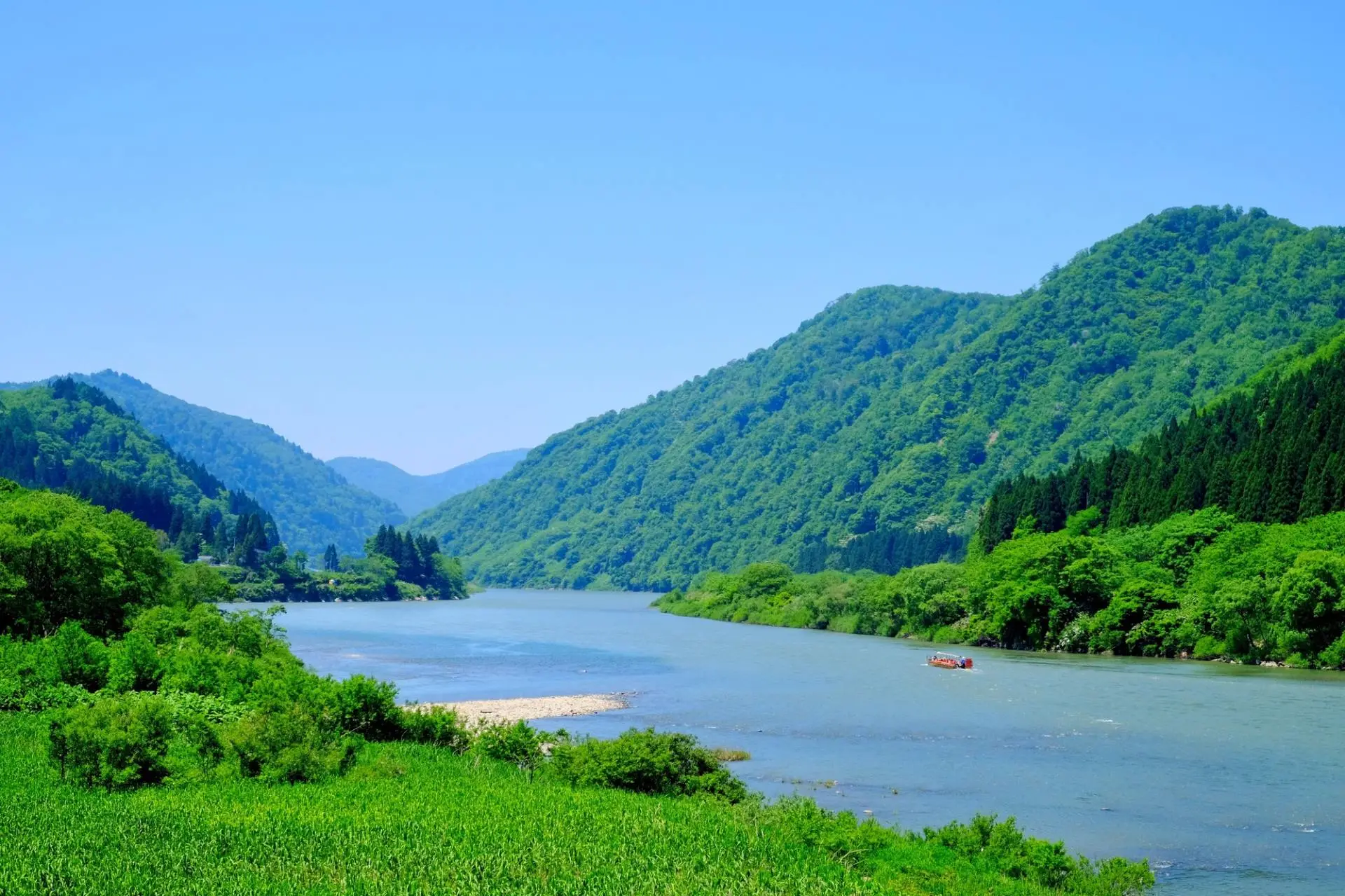
Popular sightseeing spots include the Mogami River, one of Japan’s three fastest-flowing rivers, and the historic former Ariji Family Residence, designated an Important Cultural Property in 1969.
Another popular attraction is Natagiri Pass, a mountain pass trail at an elevation of Approx. 470m, crossed by haiku poet Matsuo Basho and his disciple after staying at the former Ariji Family Residence mentioned above.
It’s an appealing area where you can enjoy stunning views and great food while soaking up a nostalgic mood.
Okitama Area: Yamagata’s History and Gourmet Highlights
The Okitama area covers much of southern Yamagata and is best known for the castle town of Yonezawa.
It’s characterized by many tourist sites connected to the Sengoku-period warlord Uesugi Kenshin.
One of them is Uesugi Shrine, built on the former honmaru (main enclosure) site of Matsugasaki Park, where Yonezawa Castle once stood.
It’s also popular as a hidden hot spring kingdom, with unique secluded hot springs scattered throughout.
Along with the famous brand beef Yonezawa Beef, you won’t want to miss its top-tier gourmet offerings like grapes (wine) and ramen.
Also in the Okitama area is Kumano Taisha, one of the prefecture’s leading power spots, especially famous for matchmaking. It’s counted as one of Japan’s Three Kumano Shrines, along with Kumano Sanzan (Wakayama) and Kumano Kōtaijingū (Nagano).


Shonai Area: Diverse Scenic Views to Enjoy
Located in northwestern Yamagata, the Shonai area is filled with beautiful, abundant nature where the sea, mountains, rivers, and plains create a varied landscape.
It’s also home to the sacred site of mountain worship, Dewa Sanzan (Mt. Gassan, Mt. Haguro, and Mt. Yudono), which attracts many visitors from overseas as well.
It’s the only one of the four regions that faces the sea, making it a great place to enjoy fresh sashimi and seafood.


A 1-Night, 2-Day Model Course to Feel Yamagata’s History and Traditional Culture
From here, we’ll introduce a 1-night, 2-day model itinerary to explore vast Yamagata efficiently.
We planned it so you can visit popular spots in the Shonai area, plus the Murayama and Okitama areas, over two days.
The itinerary is packed with highlights so you can experience each place’s unique character and traditions even in a short time.
If you’re unsure how to plan your trip to Yamagata, use this as a reference.
Please note that the Day 1 starting point, JR Tsuruoka Station, is about 2 to 3 hours away from Yamagata Station.
Day 1: Visit Spots That Bring Shonai’s History to Life
On the first day of the model course, explore the Shonai area and connect with the history and traditions that Yamagata has cultivated over time.
The plan includes not only Yamagata’s famous natural beauty, but also a tour of stunning architecture that’s sure to catch your eye.
Each spot has its own unique character, and you’ll likely be impressed by the variety and fine craftsmanship.
Another highlight is the charming old-town streets that blend into the surrounding landscape.
End the day by heading to Ginzan Onsen, known for its nostalgic atmosphere, to relax and ease your body and mind after a fulfilling day.
10:40am Start at JR Tsuruoka Station
Day 1 starts at JR Tsuruoka Station.
Hop on a Shonai Bus and head to your first destination: the Haguro Five-Story Pagoda.

11:30am Enjoy the Stunning View Where the Historic Haguro Five-Story Pagoda and Nature Blend
The National Treasure Haguro Five-Story Pagoda, said to be the oldest pagoda in the Tohoku region, is a historic structure believed to have been founded by Taira no Masakado Approx. 600 years ago.
The 29m-tall pagoda stands quietly among Haguro’s cedar grove, and its beauty is enhanced by the rich surrounding nature and the nearby 1,000-year-old giant cedar, Jiji-sugi.
Built from natural wood with a shingle roof, its graceful form is picture-perfect from every angle.
Be sure to see up close the exquisite craftsmanship used to build it without a single nail.
*Please note: Roof renovation work will continue until around spring 2025, and it cannot be seen during the construction period (scheduled for May 13–September 30, 2024). Please check the official website

12:35pm Receive Blessings at Sanjin Gosaiden
After the Haguro Five-Story Pagoda, take a bus up to the summit of Mt. Haguro and head to Sanjin Gosaiden, one of Japan’s finest shrine pavilions, which enshrines the three deities of Dewa Sanzan (Mt. Gassan, Mt. Haguro, and Mt. Yudono).
By worshiping here, it’s said you have paid respects to all three deities and can receive their blessings.
It’s also appreciated that this is the only one of the three mountains where you can still worship after November.
There’s plenty to see, including a precious thatched wooden structure that retains medieval design, one of Japan’s largest thatched roofs, and a vivid vermilion interior.
Another highlight is Mitarai Pond in front of the main hall, which has drawn worship since ancient times.

1:50pm Feel Local History and Atmosphere at the Chido Museum
After getting energized at Sanjin Gosaiden, take the bus to Uchikawa-dori.
After walking Approx. 10 minutes from the bus stop, you’ll see the Chido Museum, built on the former site of a residence used by the Sakai family, the lords of the old Shonai Domain.
This museum is an essential place to learn about Tsuruoka’s history.
On the grounds, many historic buildings—including the Important Cultural Property Former Nishitagawa District Office and a multi-story farmhouse—have been relocated and are open for viewing and exhibition along with historical materials.
The atmosphere is also appealing, with a harmonious blend of Japanese and Western styles, such as retro Western-style architecture and a Japanese garden.

3:30pm Soak Up History at the National Historic Site Sannokura Storehouses
After exploring the Chido Museum, return to Tsuruoka Station, take a limited express train to Sakata Station, then take a taxi to Shonai’s symbol, the Sannokura Storehouses.
Still in active use today, the storehouses are a national historic site built in 1893.
Its beautiful atmosphere has made it a filming location for many works, including the NHK morning drama series Oshin.
The striking zelkova tree-lined path—over 150 years old—not only looks beautiful, but also serves as protection from the afternoon sun and strong winds. Be sure to notice the practical wisdom of those who came before, seen throughout the site.

7:40pm Unwind With a Nostalgic Atmosphere and Hot Springs in Ginzan Onsen
After enjoying the Sannokura Storehouses, take a taxi back to Tsuruoka Station and ride the train to Oishida Station.
From Oishida Station, take a taxi to your final destination for Day 1: Ginzan Onsen.
Surrounded by rich nature, Ginzan Onsen is a hot spring town that captivates visitors with its nostalgic streetscape.
Wooden ryokan line the onsen town, built from the late Taisho era to the early Showa era, and walking through feels like stepping back in time.
Especially at dusk, when the gas lamps light up, the area takes on a cinematic charm.
Be sure to enjoy the footbaths and free public baths, known for their beneficial hot spring water.

Day 2: Visit Popular Spots in the Murayama and Okitama Areas
Day 2 of the model course focuses on classic sightseeing spots in the Murayama and Okitama areas.
It starts at Yamadera (Hojusan Risshakuji Temple), known for its stone steps said to ward off worldly desires, and ends at Uesugi Shrine, where you can receive various blessings.
By properly recharging your luck and spirit, your momentum should be rising by the time your trip ends.
Other highlights include filming locations from the movie Rurouni Kenshin and a museum where you can sample rare Japanese sake, making for a varied and enjoyable itinerary.
Also, since the first bus from Ginzan Onsen to the station is at 9:50am, please use a taxi in the morning (travel time Approx. 35 minutes).
7:30am Start at Oishida Station
Day 2 starts from Oishida Station, the nearest station to Ginzan Onsen.
From Oishida Station, take the JR Ou Main Line bound for Yamagata, transfer at Uzen-Chitose Station to the JR Senzan Line bound for Sendai, and get off at Yamadera Station.
It’s about a 5-minute walk from the station to the first destination, Yamadera (Hojusan Risshakuji Temple).
Please note that trains run only about once every two hours, so give yourself plenty of time and be careful not to miss or take the wrong train. *As of April 2024, the train departs at 7:51am

9:30am Enjoy Historic Sites and Scenic Views at Yamadera (Hojusan Risshakuji Temple)
Yamadera (Hojusan Risshakuji Temple), a Tendai Buddhist temple, is a historic temple founded in 860 by the priest Jikaku Daishi Ennin.
The entire mountain serves as a place of training, and it has long been revered for cutting off bad ties.
The most famous feature is the 1,015-step stone staircase, the classic route to worship at the Okunoin.
It’s also known for being visited by Matsuo Basho, and it’s said that each step you climb dispels worldly desires.
Along the approach, you’ll find historical sites of all sizes and spectacular scenery, making it enjoyable both intellectually and sensorially.

12:00pm Be Impressed by Craftsmanship at the Yamagata Prefectural Folk Museum: Bunshokan
After Yamadera (Hojusan Risshakuji Temple), head to Bunshokan, the Yamagata Prefectural Folk Museum, known for its striking brickwork in the British Neo-Renaissance style.
The exterior has a dignified presence covered in granite, while the interior features marble columns, stained glass, and chandeliers—lavish decorations that evoke Taisho-era romance.
Its iconic clock tower is the second-oldest in Japan, and it’s moving to see it still keeping time over 100 years later.
Admission is free, which is also a plus—you can take your time appreciating the architectural beauty and delicate craftsmanship.

3:00pm Discover the Appeal of Sake at the Sake Brewing Museum: Toko Sake Brewery
After enjoying Bunshokan’s scenery, take buses and JR lines to Yonezawa Station.
From the station, it’s about a 10-minute bus ride to the Sake Brewing Museum: Toko Sake Brewery, one of the largest in Tohoku.
Run by the long-established Kojima Sohonten, the museum’s interiors have an atmospheric feel that brings to mind a Meiji-era sake brewery, and you can learn about the history and culture of sake brewing through exhibits and an audio guide.
You can also taste the rare label “Toko,” so if you’re comfortable with alcohol, give it a try.
You’ll be able to feel the deep appeal of Japanese sake, as well as the craftsmanship and spirit behind the brewing process.

4:00pm Recharge at Uesugi Shrine
After enjoying sake at the Toko Sake Brewery, head to Uesugi Shrine by bus (or on foot).
Uesugi Shrine enshrines Uesugi Kenshin, famed as one of the strongest warlords of the Sengoku period, and was built on the former site of Yonezawa Castle’s honmaru.
In addition to a bronze statue of Uesugi Kenshin and military banners, the Keishoden hall within the grounds displays valuable Important Cultural Properties connected to the Uesugi clan, including armor.
As a power spot believed to bring good luck and prosperity in business, wrap up your Yamagata trip by properly receiving a boost of winning luck.

3 Local Yamagata Foods You Should Try
From traditional local dishes to fruit grown in its rich natural environment, Yamagata is a treasure trove of food with delicious options across many genres.
Among them, we’ve carefully selected three local specialties that reflect the region’s history and are deeply loved by locals.
All are popular dishes that represent Yamagata, so if you visit, be sure to try them.
1. Tama Konnyaku
Tama konnyaku, affectionately called “tama-kon,” is a local soul food you’re almost guaranteed to see when traveling in Yamagata.
Sold all over the prefecture—near tourist spots and at roadside stations—you can eat it anytime, anywhere.
Typically, it’s 0.8–1.2 in (2–3 cm) ball-shaped konnyaku simmered in soy sauce with dried squid broth, served skewered on a bamboo stick (3–4 pieces).
Its simple seasoning and bouncy texture are popular, and you can really taste the natural flavor of the konnyaku itself.
Dipping it in the accompanying Japanese mustard adds a zesty kick.
It’s easy for all ages to enjoy, and it’s also nice that it’s low-calorie yet satisfying.
We also recommend the local specialty “Chikara Konnyaku” sold around Yamadera (Hojusan Risshakuji Temple), featured in the model itinerary.

2. Hiyashi Ramen (Chilled Ramen)
Yamagata may bring snowy images to mind, but its climate is known for scorching summers and bitterly cold winters.
The summer heat is especially intense—until 2007, it held Japan’s record high temperature (105.4°F / 40.8°C) for 74 years.
Because of this, Yamagata has developed various chilled food cultures to help beat the heat.
One of the most iconic is hiyashi ramen (chilled ramen), said to have originated in Yamagata.
With ice floating in the broth—something you won’t see in regular ramen—you’ll likely be surprised by its refreshing look.
It still has ramen’s signature richness, yet it’s easy to eat even when summer fatigue hits, with a deep flavor you can enjoy.
Another appeal is that even after the ice melts, the soy sauce-based broth and overall taste and aroma don’t change, offering a unique dining experience.
It’s truly a Yamagata-style dish, so if you visit, be sure to try it.

3. Dondon-yaki
Yamagata’s traditional B-grade gourmet, dondon-yaki, is a flour-based dish similar to okonomiyaki.
It’s generally made by spreading wheat-flour batter thin and grilling it, then topping it with items like fish sausage and nori, and rolling it into a tube around chopsticks for serving.
With roots in monjayaki, a classic dish from Tokyo’s downtown areas, dondon-yaki is said to have originated in the Taisho era (1912–1926) and developed in various regional styles.
In Yamagata, where it spread around the Showa era, a tangy sauce flavor is common, and it remains a cherished taste enjoyed by families.
The name is said to come from vendors beating drums “don-don” when selling it at stalls.
It’s a nostalgic, addictive flavor, and it’s also great as an easy snack or treat when you’re a little hungry.
Since it’s sold at food stalls and supermarkets, it’s also fun to buy one and eat as you explore.

Cherry Blossom Spots to Visit on a Spring Trip to Yamagata
Yamagata shows a special look in every season, and its charm is being able to enjoy spring, summer, fall, and winter.
If you visit in spring, plan a trip that includes famous cherry blossom spots.
Kajo Park, also featured as a spring scenic spot, is one of the prefecture’s top must-visit places.
The dreamy nighttime cherry blossoms along the moat, lit up with illuminations, are also not to be missed.
Also recommended is Eboshiyama Park in Nanyo City (Okitama area), known as one of Japan’s largest colonies of Edo-higan (a cherry tree variety that’s rare even worldwide).
The breathtaking scene of Approx. 1,000 cherry trees across about 25 varieties—including second-generation trees of nationally famous cherry blossoms—blooming as if to cover the mountain is truly stunning.
The panoramic view from the nearby hot spring town is also well worth seeing.
In the Shonai area, the 700 cherry trees blooming at Tsuruoka Park in Tsuruoka City, which retains traces of the domain-government era, are also a great sight.
Use the table below as a reference for typical peak bloom timing and flowering dates.
However, since Yamagata is large, timing may vary depending on the area and climate, so keep that in mind.
- First bloom
- April 13
- Full bloom
- April 18
- Best viewing period
- April 18–April 24
Reference: Japan Meteorological Agency: Cherry blossom flowering status
Reference: Japan Meteorological Agency: Cherry blossom full bloom status


Best Places for Fall Foliage in Yamagata
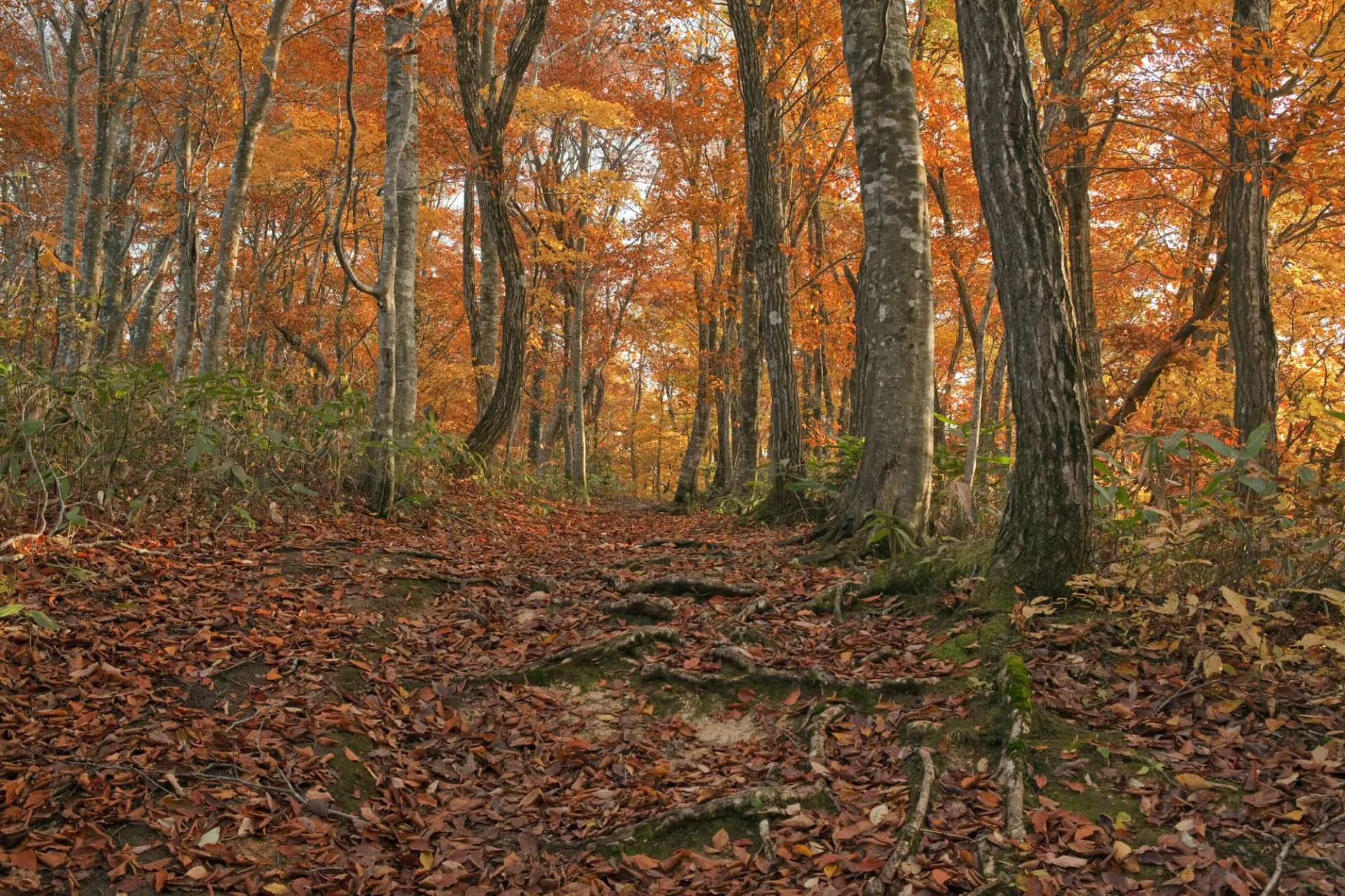
Yamagata is also blessed with beautiful fall foliage, with famous spots scattered throughout the prefecture.
Yamadera (Hojusan Risshakuji Temple) and Ginzan Onsen, both frequently mentioned among the fall scenic spots, are 대표 examples.
Shirogane Park, located near Ginzan Onsen, is a perfect place to enjoy the scenery created by colorful leaves and a clear stream.
All of these are in the Murayama area and are included in the model itinerary above, so if you’re traveling to Yamagata in autumn, we hope you’ll use that plan.
The view from the Tengendai Ropeway over Nishi-Azuma Sky Valley in Yonezawa City (Okitama area) is also spectacular.
There are also fall foliage spots in the Mogami and Shonai areas, such as Mogami Gorge and Tsuruma Pond, so you can look for places near where you’re staying as well.
Many spots are best from mid-October to late November, but as with cherry blossoms, timing depends on the year’s climate and the area.
It’s recommended to check peak timing and current foliage conditions before sightseeing.


Must-Visit Winter Scenic Spot in Yamagata: Zao
Zao in Yamagata Prefecture is one of the largest mountain resorts in the Tohoku region.
In winter, many visitors come for winter sports and to see the “snow monsters,” formed when snow and ice stick to trees.
Because they form only when special conditions align—such as temperature, wind direction, and snowfall—this rare landscape can be seen only in parts of the Ou Mountains.
If you’re traveling to Yamagata in winter, add Zao sightseeing to your model itinerary.

FAQ about Traveling in Yamagata
Q
What season is recommended for traveling in Yamagata?
A
Late June to July, when cherry picking is at its peak, and November, when the weather is comfortable and the contrast between fields and fall foliage is beautiful, are recommended seasons.
Q
What sightseeing spots in Yamagata are recommended for a parent-child trip?
A
We recommend the Tsuruoka City Kamo Aquarium, where you can see displays of over 60 types of jellyfish and try jellyfish dishes, as well as Ginzan Onsen, which has a nostalgic atmosphere.
Summary
We’ve introduced Yamagata’s appeal by region and its popular sightseeing landmarks, along with recommended local food and a model itinerary.
With many spots that evoke Showa-era retro nostalgia and Taisho-era romance, Yamagata has a charm that brings a sense of longing you can’t experience in the city.
You can also rediscover the timeless appeal of Japan, making it a recommended region to visit at least once on a trip.
Also check out this article, which explains Yamagata’s classic sightseeing spots in detail.