
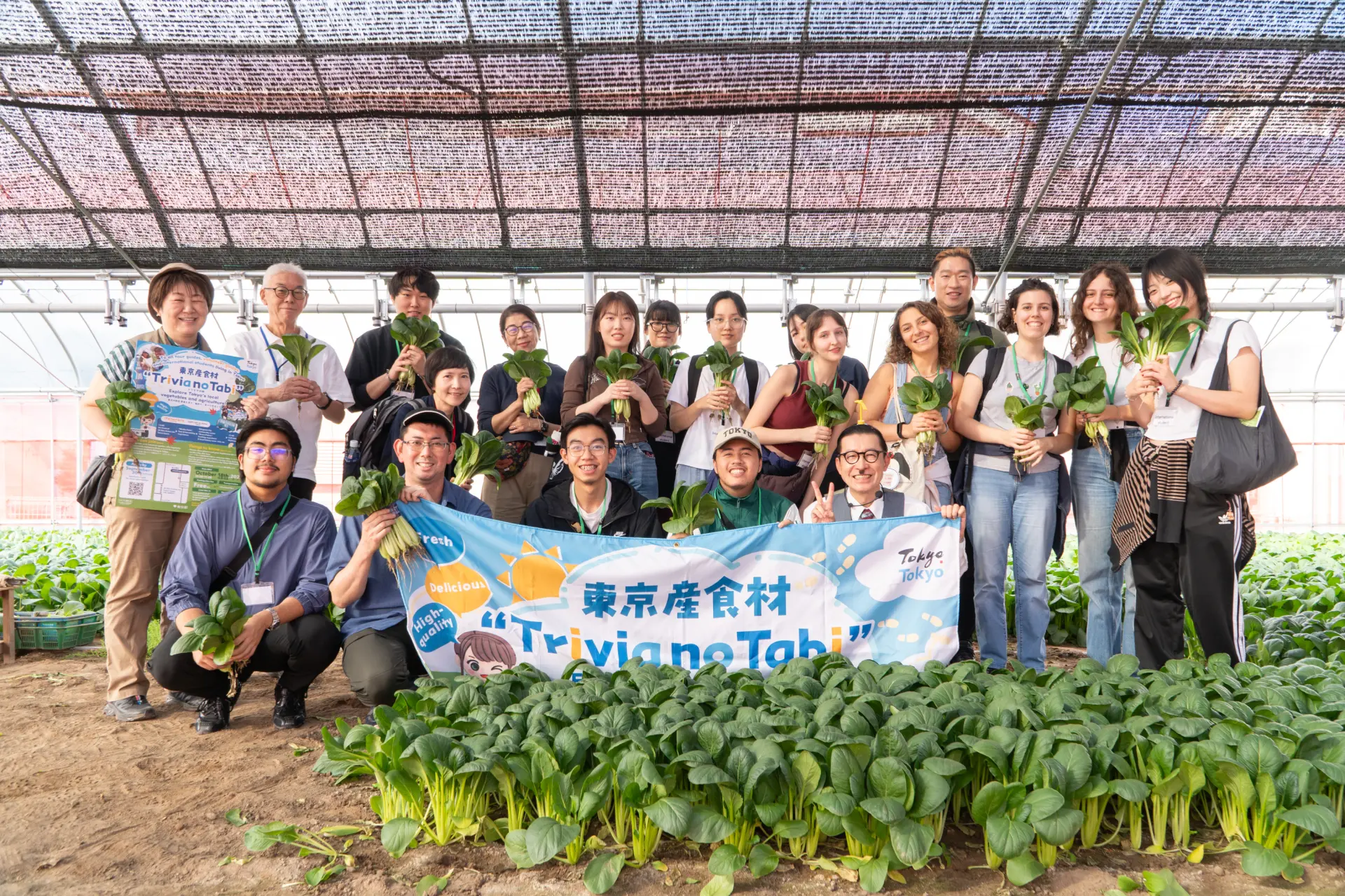
Head to Edogawa, Tokyo's Old Downtown: Let's Go Find Edo-Tokyo Vegetables!
Did you know there is a vegetable that originated in Tokyo and, in recent years, has spread not only across Japan but also overseas? That vegetable is komatsuna. It is named after a place in Edogawa City on the eastern side of Tokyo (the Komatsugawa area). Komatsuna is one of Tokyo's local vegetables known as "Edo-Tokyo vegetables." Using this familiar vegetable as our theme, we will explore the history and traditions of Edo and Tokyo, and the secrets behind Tokyo ingredients that blend tradition with innovation.
(This article shares trivia about Tokyo-grown ingredients, based on the second Tokyo Local Food Trivia Tour-Komatsuna Edition-an agricultural experience tour for sightseeing guide volunteers and international students in Tokyo held on October 18, 2025.)
Why Tokyo Has Such a Diverse Range of Ingredients
Tokyo has a strong image as a major metropolis, yet many vegetables and food ingredients are produced here. While the amount of farmland is by no means large, Tokyo spans varied landforms and climates, from mountains to old downtown neighborhoods and even island areas, and vegetables and fruits suited to each are grown. A relatively mild climate within Japan, fertile soil, and abundant blessings from the sea support this diversity.
1. From Edo to Tokyo: History That Nurtures Vegetables and Food Culture
Edo (later Tokyo), surrounded by the inlets and rivers of Tokyo Bay, developed rapidly after the shogunate was established there during the Edo period. It was once an area of expansive rice paddies and fields, with thriving fisheries as well. You can even see the former rural scenery and rich inlets depicted in ukiyo-e (woodblock prints).
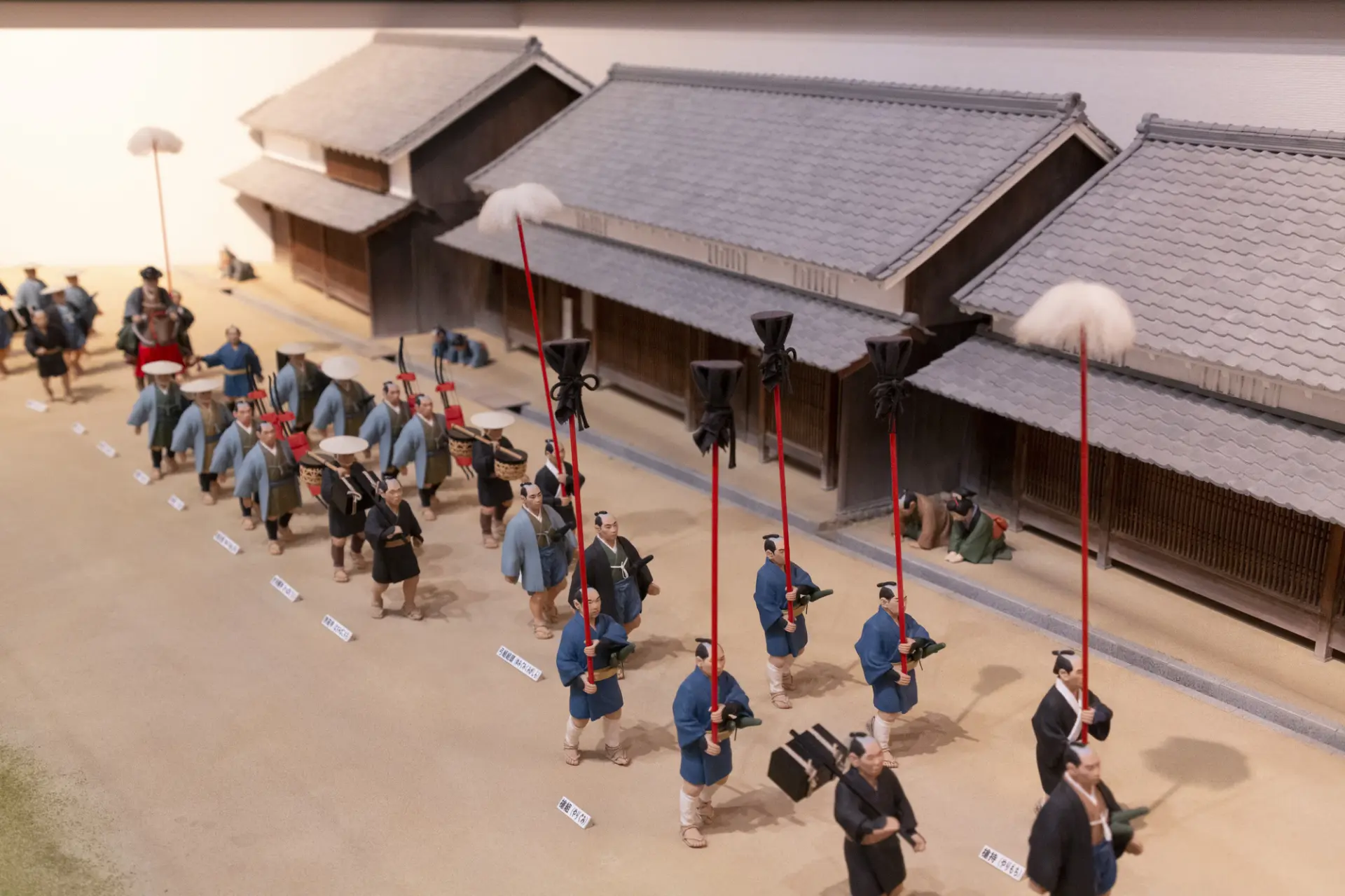
During the Edo period (1603-1868), there was a system called sankin-kotai (alternate attendance), under which feudal lords regularly traveled back and forth between Edo (present-day Tokyo) and their home domains. This system brought many people to Edo from across the country and promoted active exchange with other regions. As workers gathered from around Japan-and through the influence of the feudal lords’ sankin-kotai-foods and food culture from across Japan flowed into Edo (the former Tokyo). In Edo, a food culture different from that of cities in western Japan, such as Kyoto and Osaka, was cultivated.
In the Meiji and Taisho periods (1868-1926), Western food culture was also introduced to Tokyo early on. Western vegetables were brought in as well, and from there they spread throughout Japan. For example, cabbage, a key supporting player for tonkatsu, was introduced to Tokyo, and varieties suited to Japanese eating habits were adopted.
Even today, many types of vegetables are grown in Tokyo, and farmers are well-versed in cultivation methods for a wide range of crops. From traditional vegetables to the latest trends, an extraordinarily diverse array of vegetables and ingredients has been incorporated into Tokyo and remains rooted here.
2. "Edo-Tokyo Vegetables" That Carry on Edo-Tokyo History
"Edo-Tokyo vegetables" refers to vegetables that carry on Tokyo’s vegetable culture dating back to the Edo era. They include so-called native varieties from up to the mid-Showa period-when most seeds and seedlings were secured through self-sufficiency or from nearby seed merchants-as well as vegetables rooted in traditional cultivation methods.
Edo-Tokyo vegetables supported Tokyo's diet from the Edo period onward, but as eating habits have changed in modern times, there was a period when they nearly disappeared from the table. However, with a sense that the life that has been passed down to the present must not be lost, efforts to promote traditional vegetables are now spreading. Komatsuna, which originated in Edogawa City, is one of them.
3. Farmers Who Carry Deliciousness and Tradition Into the Present
Tokyo also has a history as a leading region in horticulture, and Tokyo farmers have long taken on the challenge of cultivating many kinds of vegetables. They use every corner of their fields efficiently and work to grow delicious vegetables that delight consumers. In Tokyo, you can see craftsmanship-like techniques as an everyday sight.
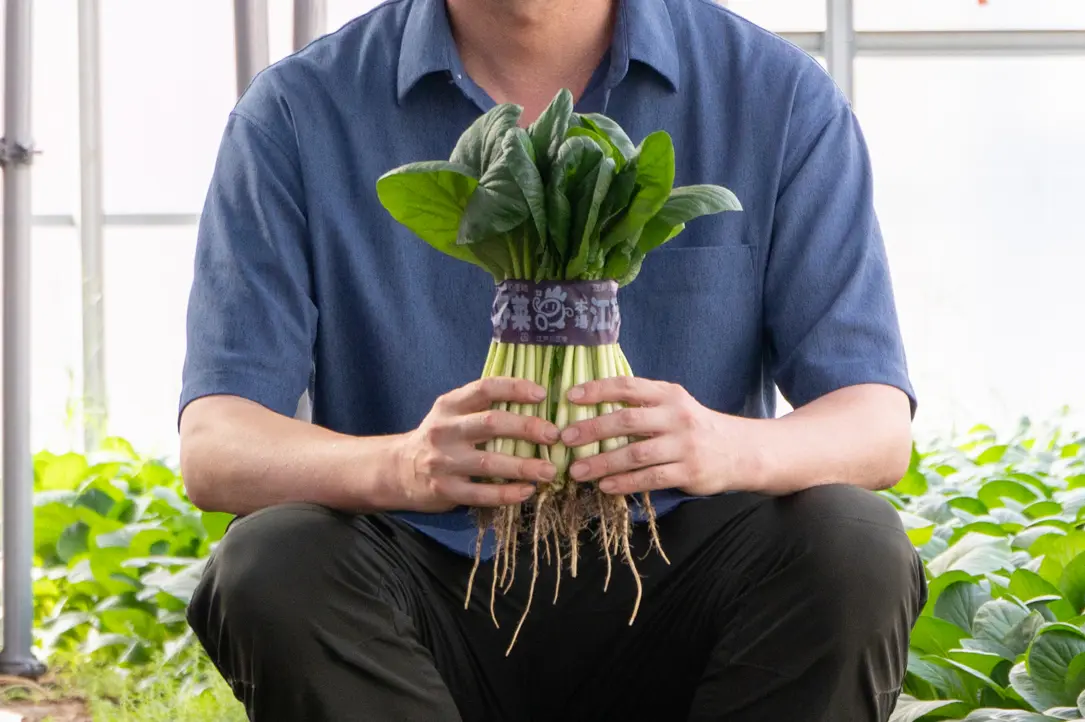
Komatsuna has been continuously improved from traditional varieties. Improved komatsuna has become easier to grow, and it is now shipped year-round. As a leafy vegetable that is easy to use in any dish, it has spread in cultivation not only across Japan but also overseas.
4. Taste Komatsuna Where It Began
Komatsuna is often described as having a slightly bitter taste, but komatsuna from Tokyo, where it originated, is not bitter and lets you enjoy a crisp, crunchy texture.
It pairs exceptionally well with many dishes, including hot pots, stir-fries, ohitashi (blanched greens) and namul (seasoned vegetables). Because the stems are also tender, it’s also great raw in salads.
Spots Where You Can Savor Dishes Made With "Tokyo-grown Vegetables"
Even if you want to try Tokyo-grown vegetables, their limited distribution often makes them difficult to obtain in central Tokyo.
Here, we introduce spots where you can fully enjoy Tokyo-grown vegetables.
Restaurants Where You Can Enjoy Tokyo-grown Vegetables Prepared in the Best Ways
Restaurants serving dishes made with Tokyo-grown vegetables are scattered throughout Tokyo.
From cafes and Japanese restaurants to Italian restaurants, you can enjoy the flavors of Tokyo-grown ingredients in many kinds of cuisine.
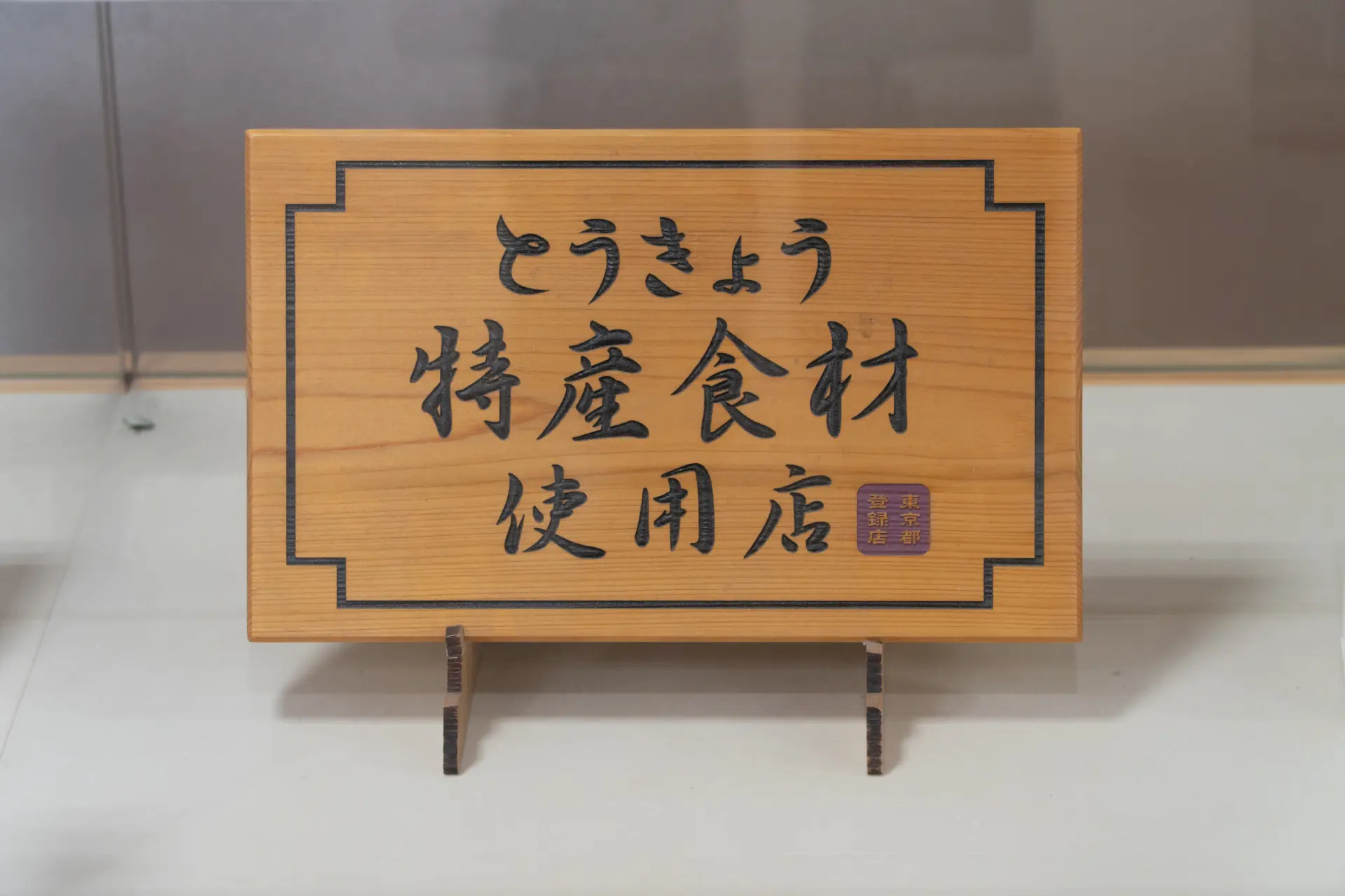
There is a restaurant list where you can experience Tokyo's seasonal flavors, so it may be a good idea to add it to your Tokyo travel itinerary. In Edogawa City, Katsushika City, and Adachi City, where komatsuna is widely cultivated, many restaurants also serve local komatsuna.
Taking the Appeal of "Tokyo-grown Vegetables" to the World: What Is the Tokyo Local Food Trivia Tour Led by the Tokyo Metropolitan Government?
In 2025, the Tokyo Metropolitan Government launched the Tokyo Local Food Trivia Tour as a promotion for regional ingredients. This is one of the initiatives to share information about Tokyo-grown ingredients with the world. It is a project in which sightseeing guide volunteers who know Tokyo well and international students in Tokyo see, learn about, and eat Tokyo vegetables to discover their appeal, and then share that appeal with the world in their own words.
The second tour featured komatsuna, a vegetable that represents Tokyo, and participants learned about its appeal in Edogawa City, where it originated. A total of 16 international students and sightseeing guides participated from five countries and regions, including Japan, China, South Korea, Brunei, and Italy.
Tokyo-grown Vegetable Trivia Shared on the Bus Ride
As with the first tour, the workshop began as participants boarded the bus together with comedian Jonio Iwai.
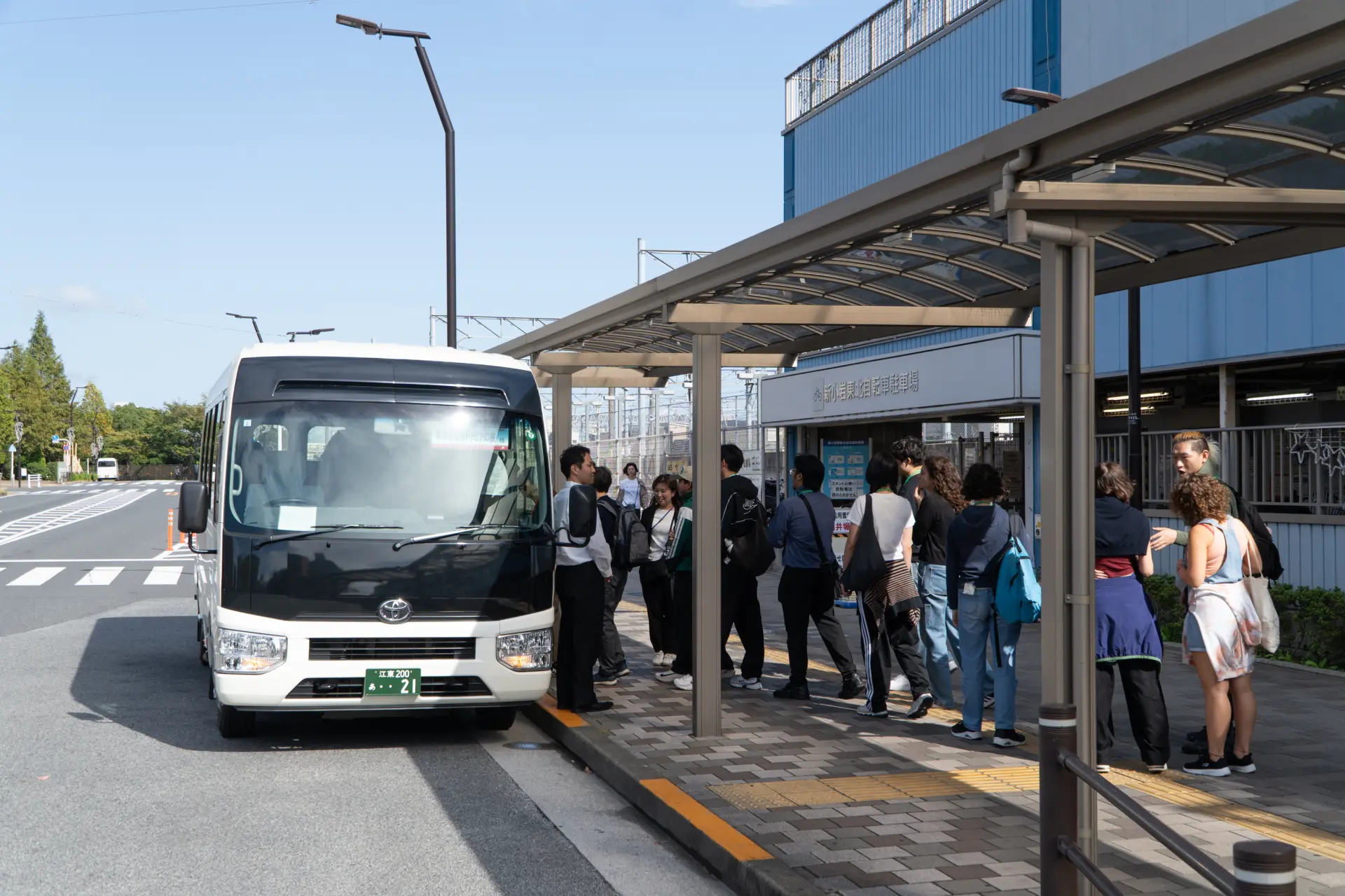
While traveling to a farm in Edogawa City for the harvesting experience, trivia about Edogawa City and komatsuna was shared right away.
Harvesting Tokyo-grown Vegetables and Komatsuna at "Mariko Farm"
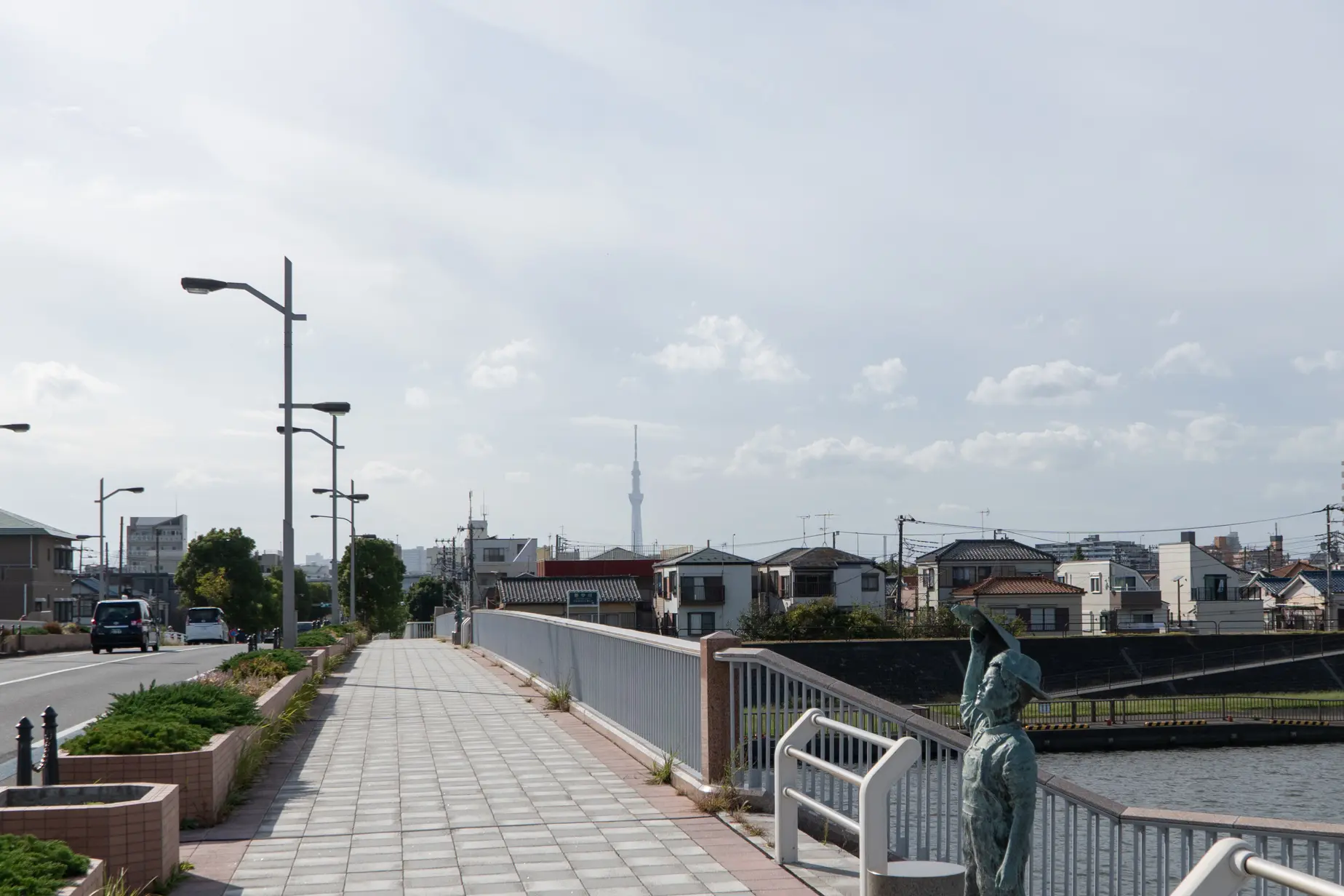
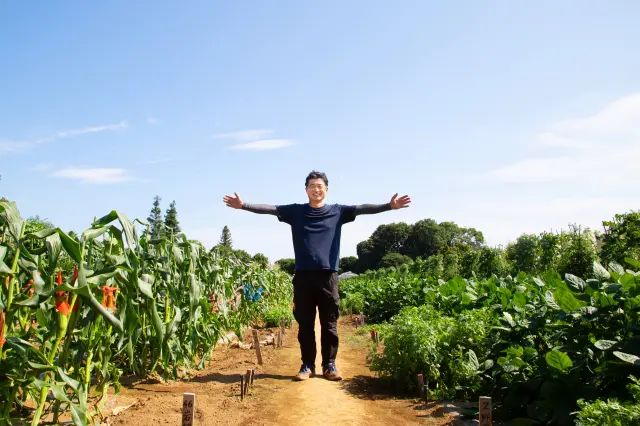
The bus arrived at Mariko Farm, located in Matsumoto, Edogawa City.
It is a farm with a long history dating back to the Edo period.
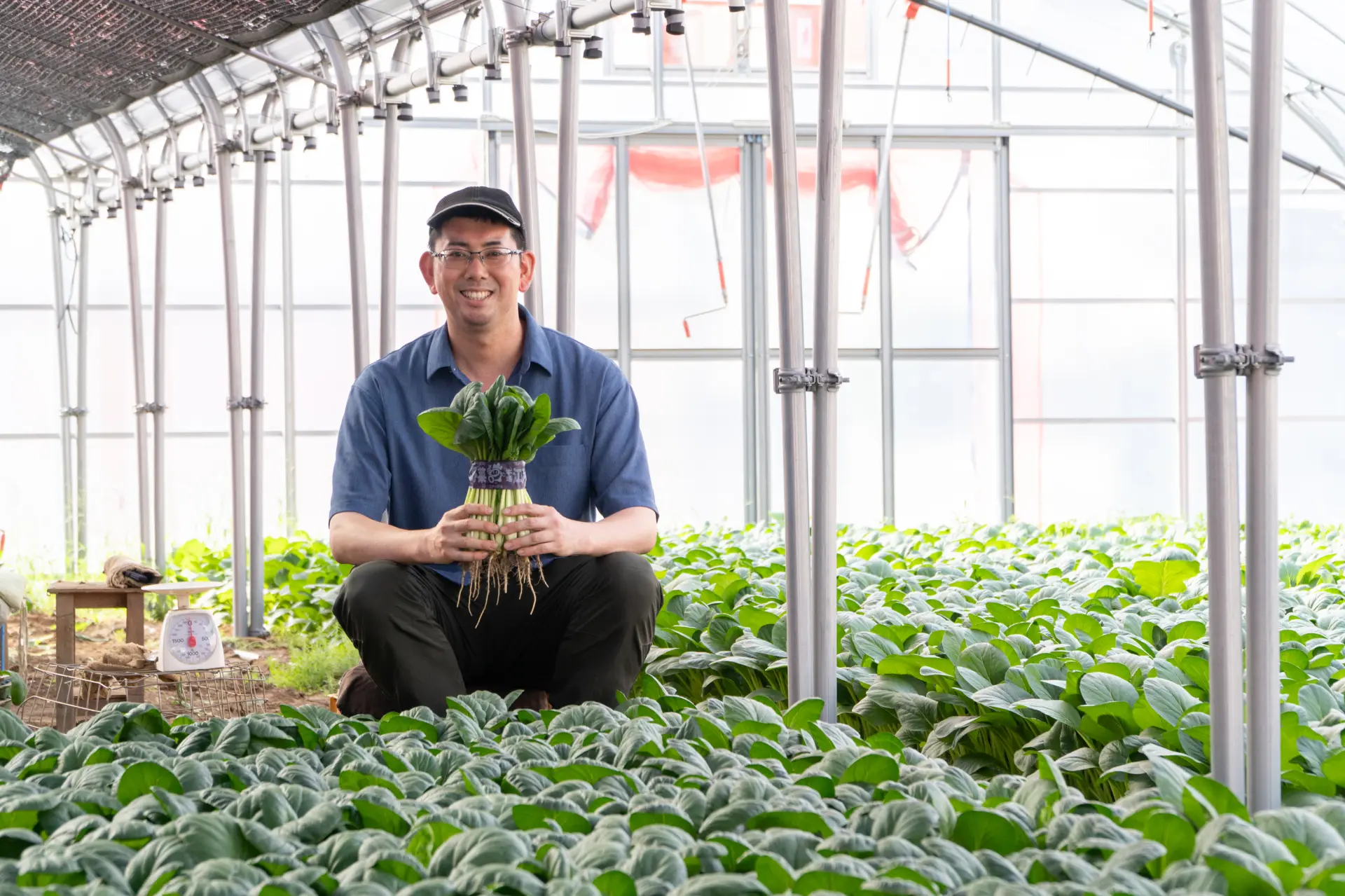
Farmer Mr. Ryotaro Mariko introduced the characteristics of komatsuna, a local specialty vegetable of the area.
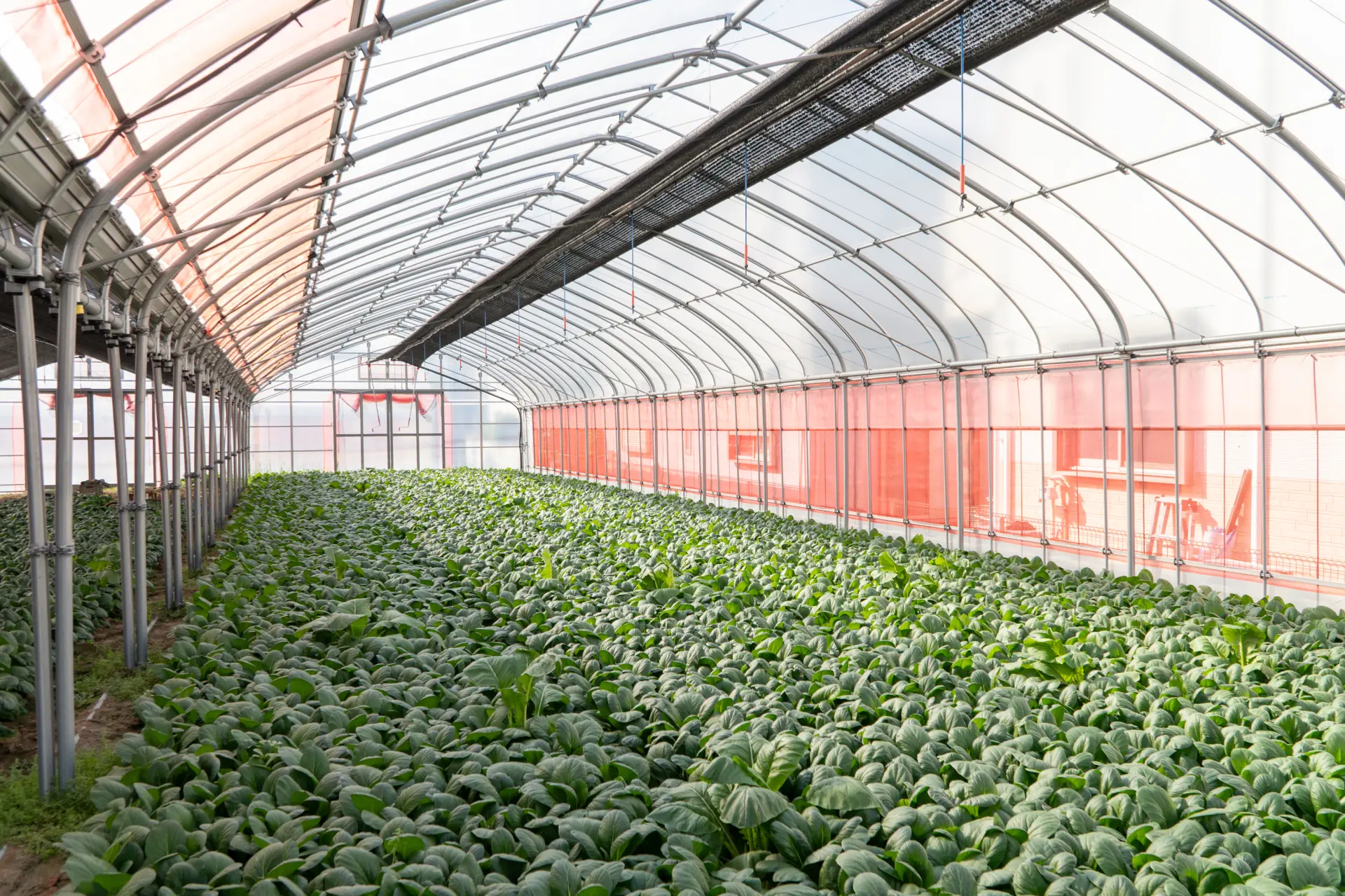
At Mariko Farm, komatsuna can be harvested about 40 days after sowing, and they harvest it six times a year.
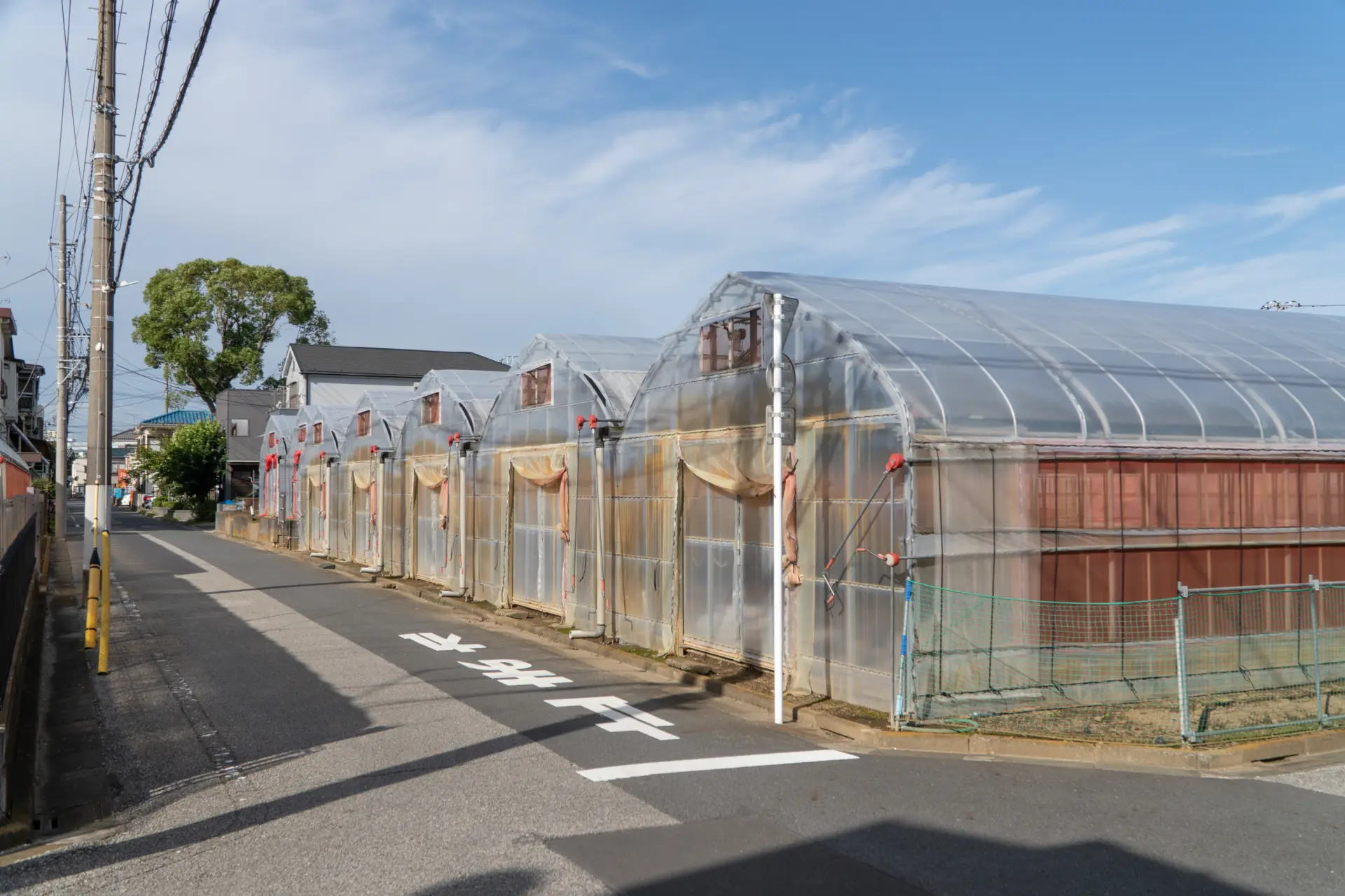
By growing the plants densely at equal intervals inside plastic greenhouses on the farm, they can produce efficiently. There was also an explanation from a Tokyo Metropolitan Government guide that the uniform size of the komatsuna is actually achieved through skilled techniques, which made perfect sense.
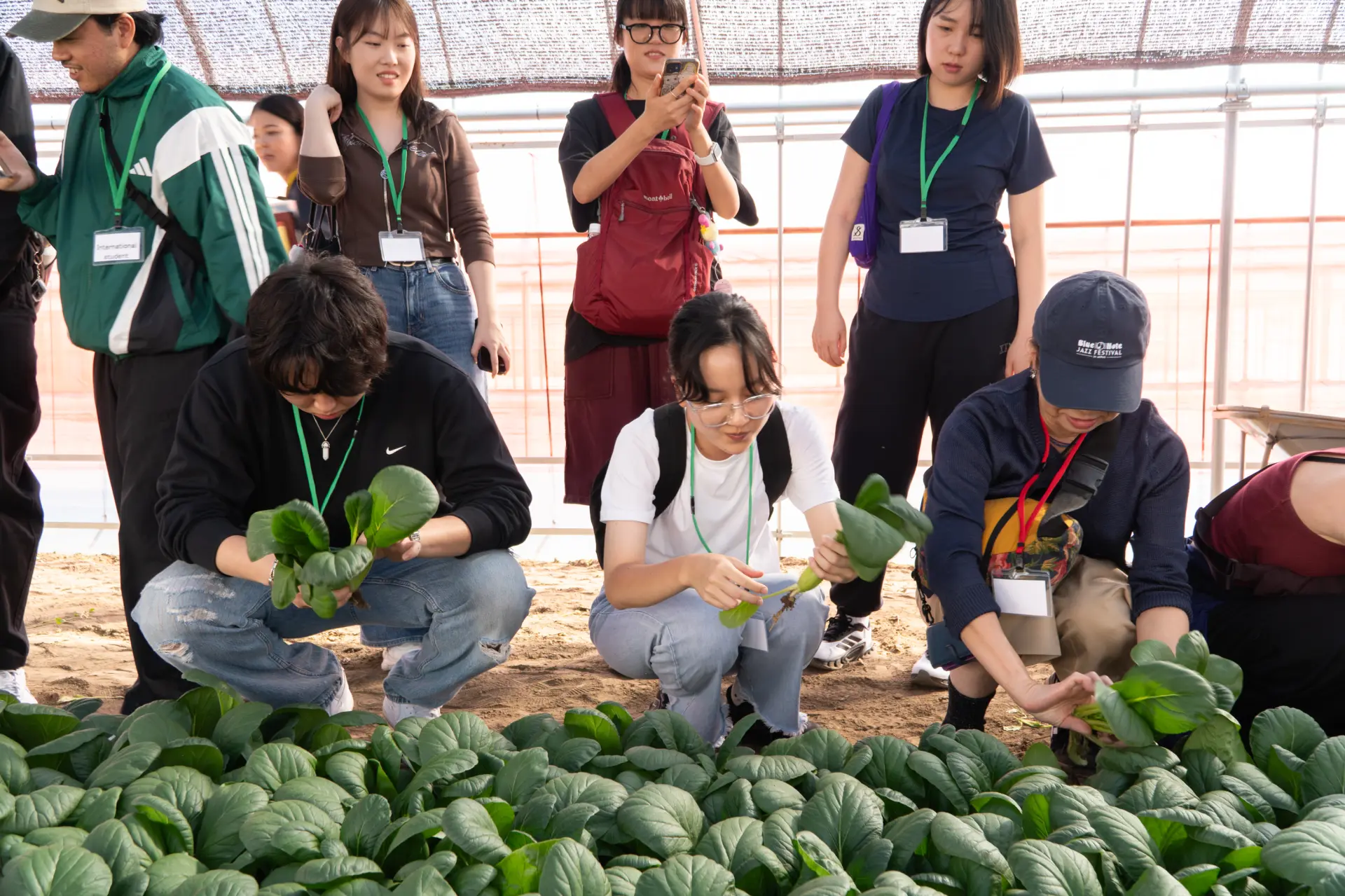
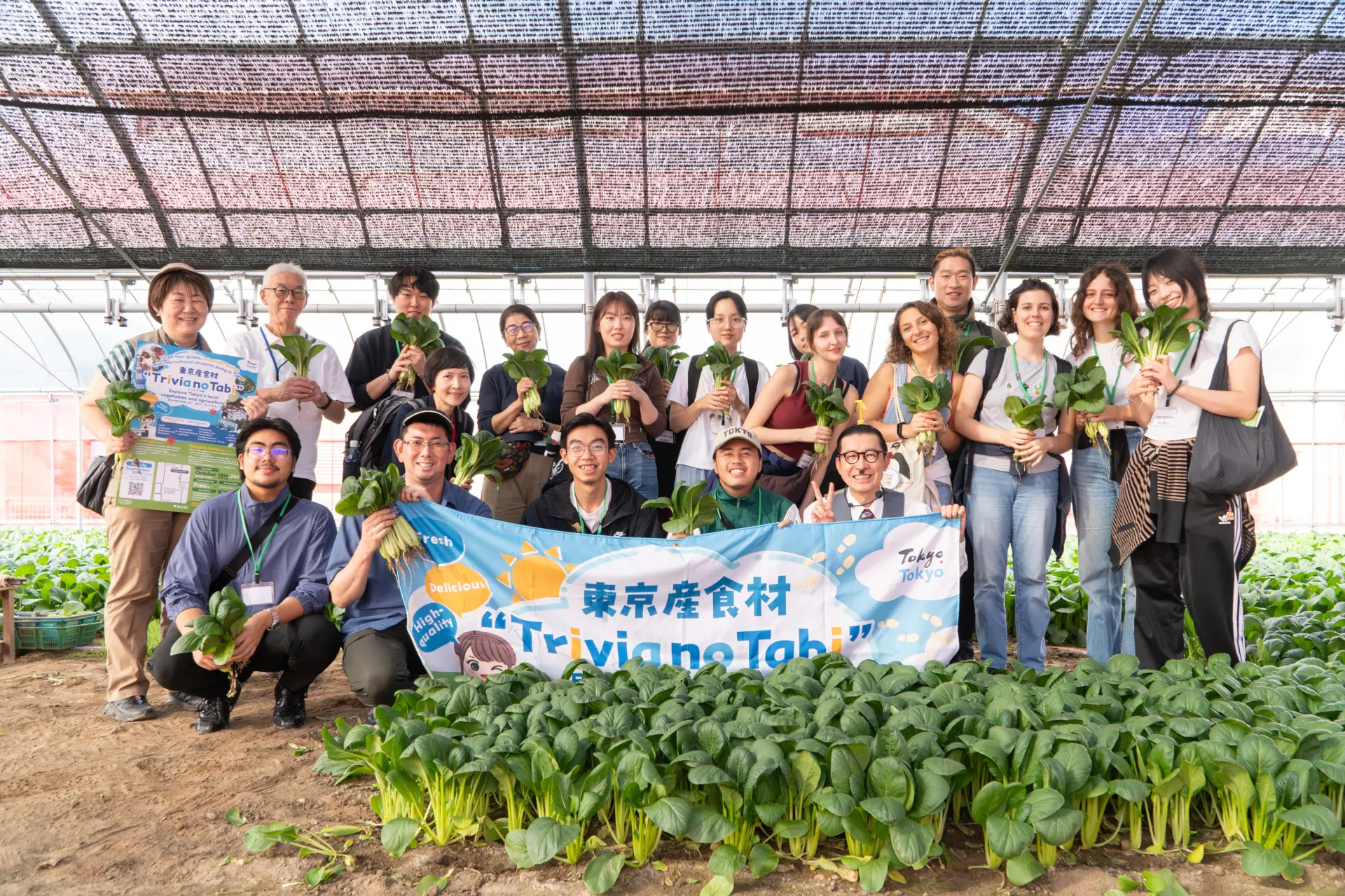
After receiving a lecture on komatsuna, participants harvested komatsuna carefully grown by Mr. Mariko. In front of the freshly harvested komatsuna, some participants brushed off the soil and tasted it on the spot.
Explore History, Daily Life, and Culture at the Edogawa City Local History Room
After the harvesting experience, the group headed to the Edogawa City Local History Room.
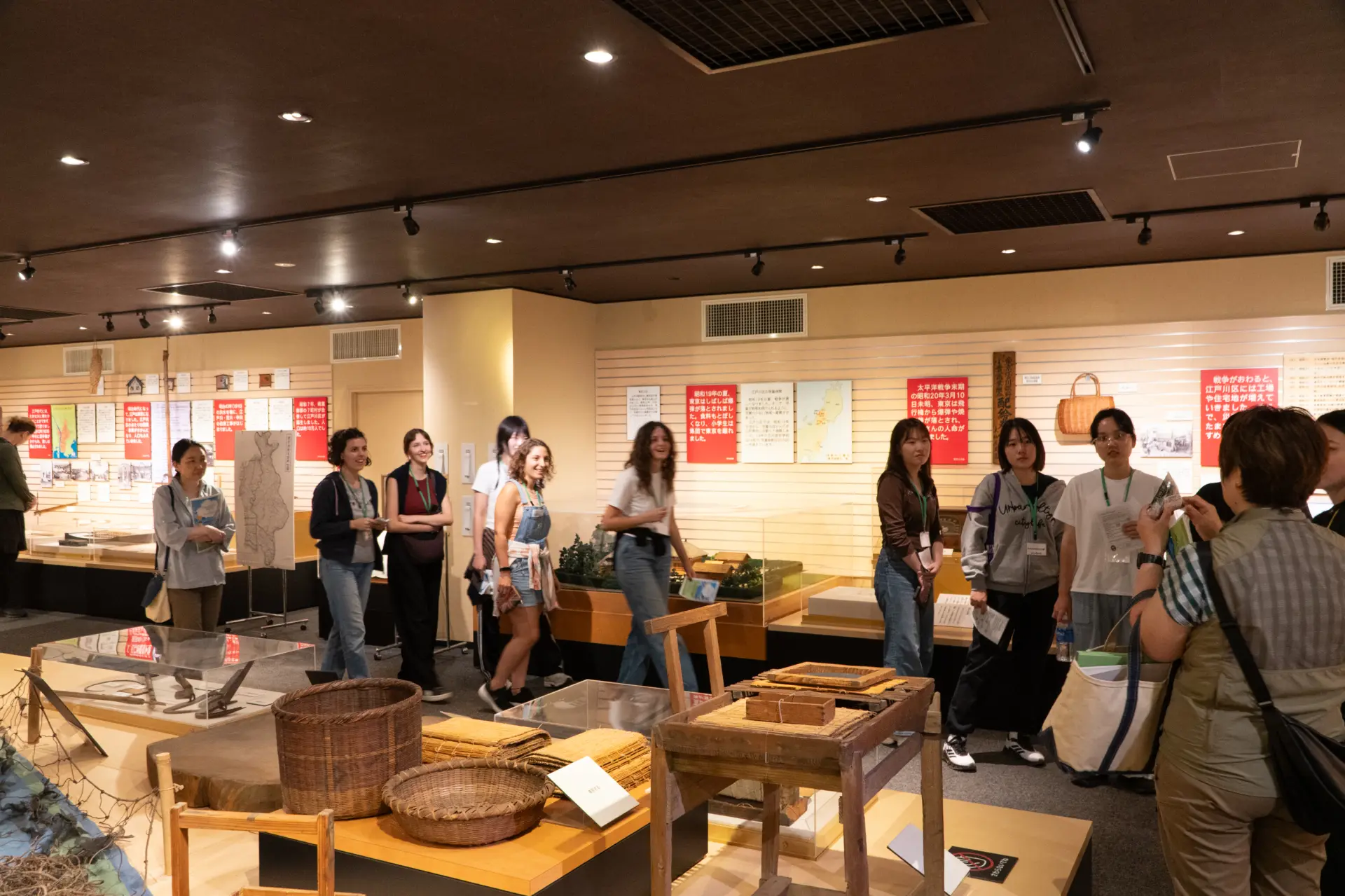
Participants toured exhibits such as old houses, kitchens, and farming tools. In particular, they showed strong interest in tools for cultivating nori (seaweed) and making sheet nori. Nori, familiar as an ingredient in onigiri (rice balls), was once a specialty ingredient widely cultivated along the Tokyo Bay coast, and this was a moment when international students connected Tokyo's history through a familiar food.
Taste a Variety of Japanese Dishes Made With Komatsuna
Next came a tasting introduction by culinary expert Keiko Shimada.
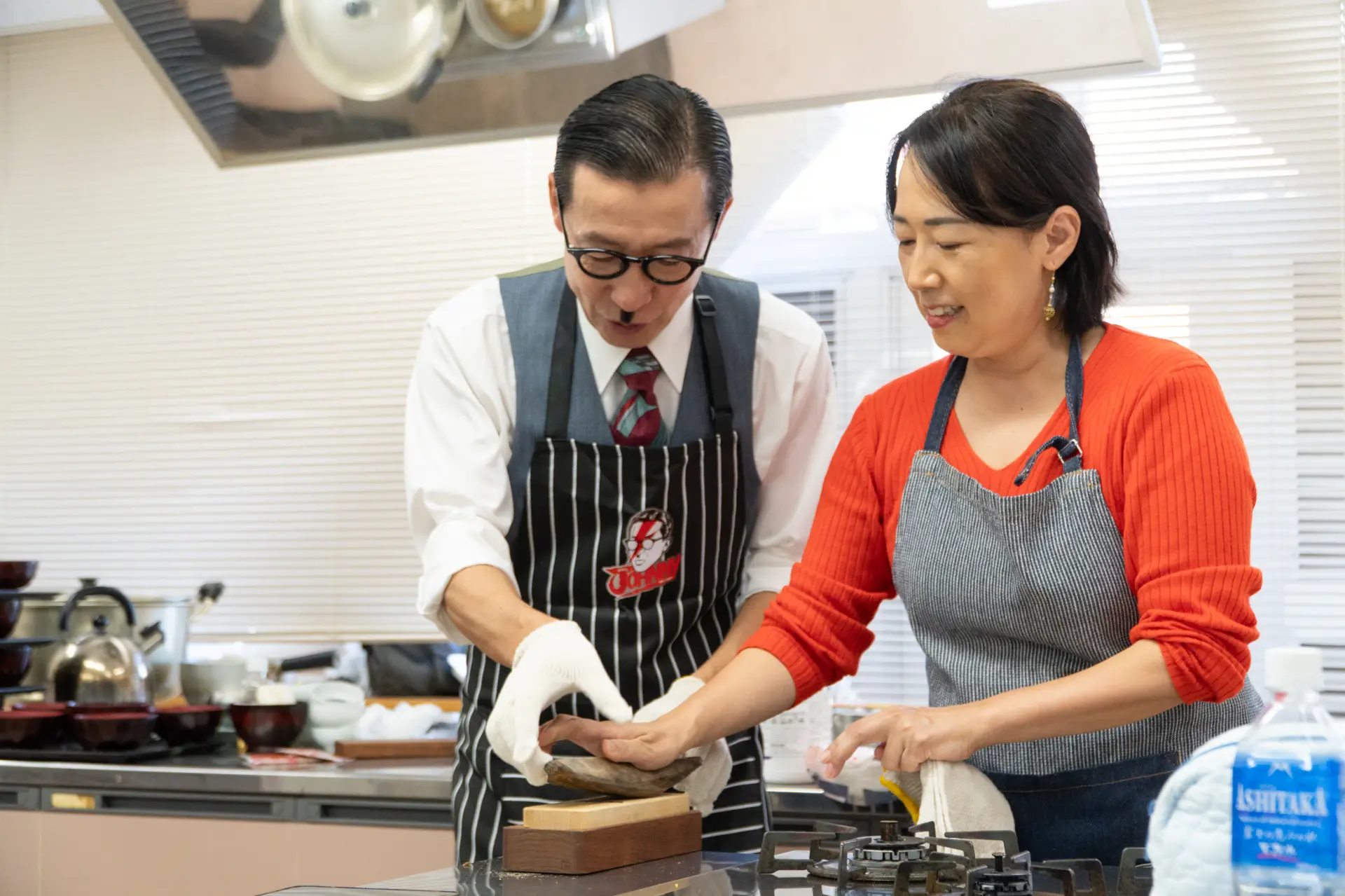
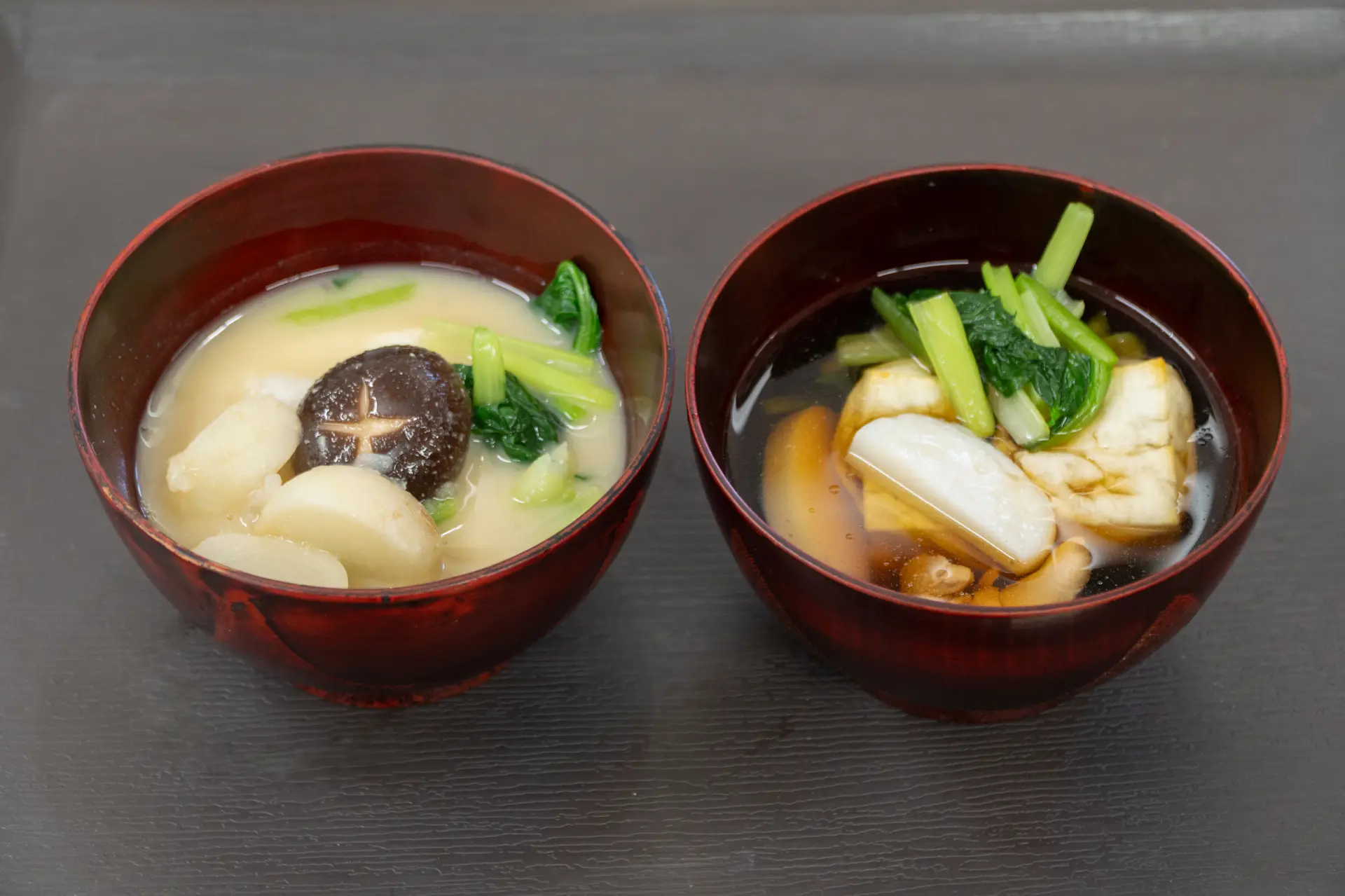
She presented dishes featuring komatsuna from the harvesting experience along with cooking focused on Tokyo-grown ingredients. Six dishes were prepared: zoni, temaki sushi, salad, asazuke, ohitashi, and shiratama (mochi) sweets. First was zoni, indispensable for Japan's New Year. She demonstrated making dashi (soup stock) for zoni. You shave katsuobushi (dried bonito flakes), as hard as stone, into thin flakes using a shaving tool, and then extract dashi from it. A wonderful aroma spread from the freshly shaved katsuobushi.
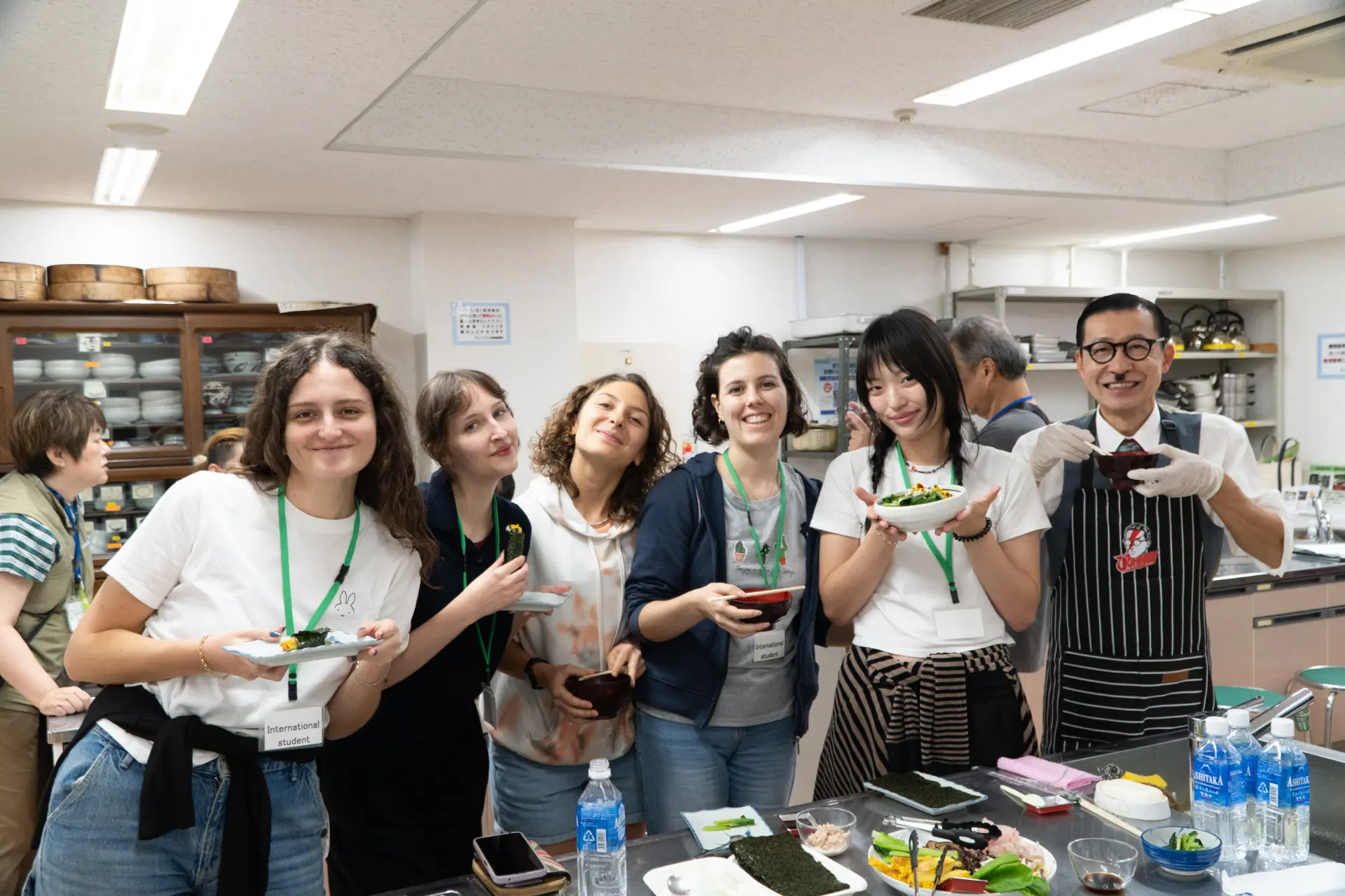
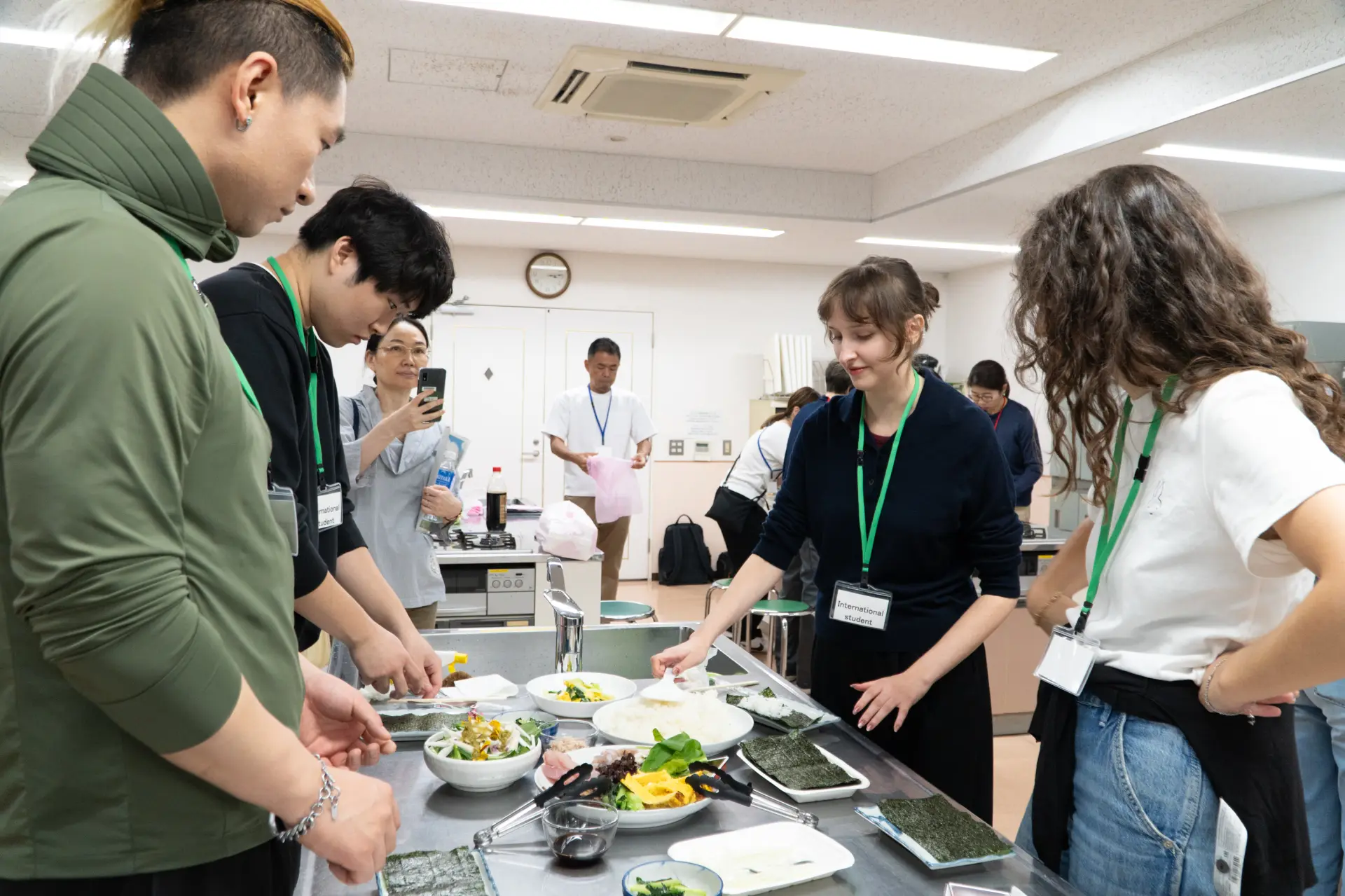
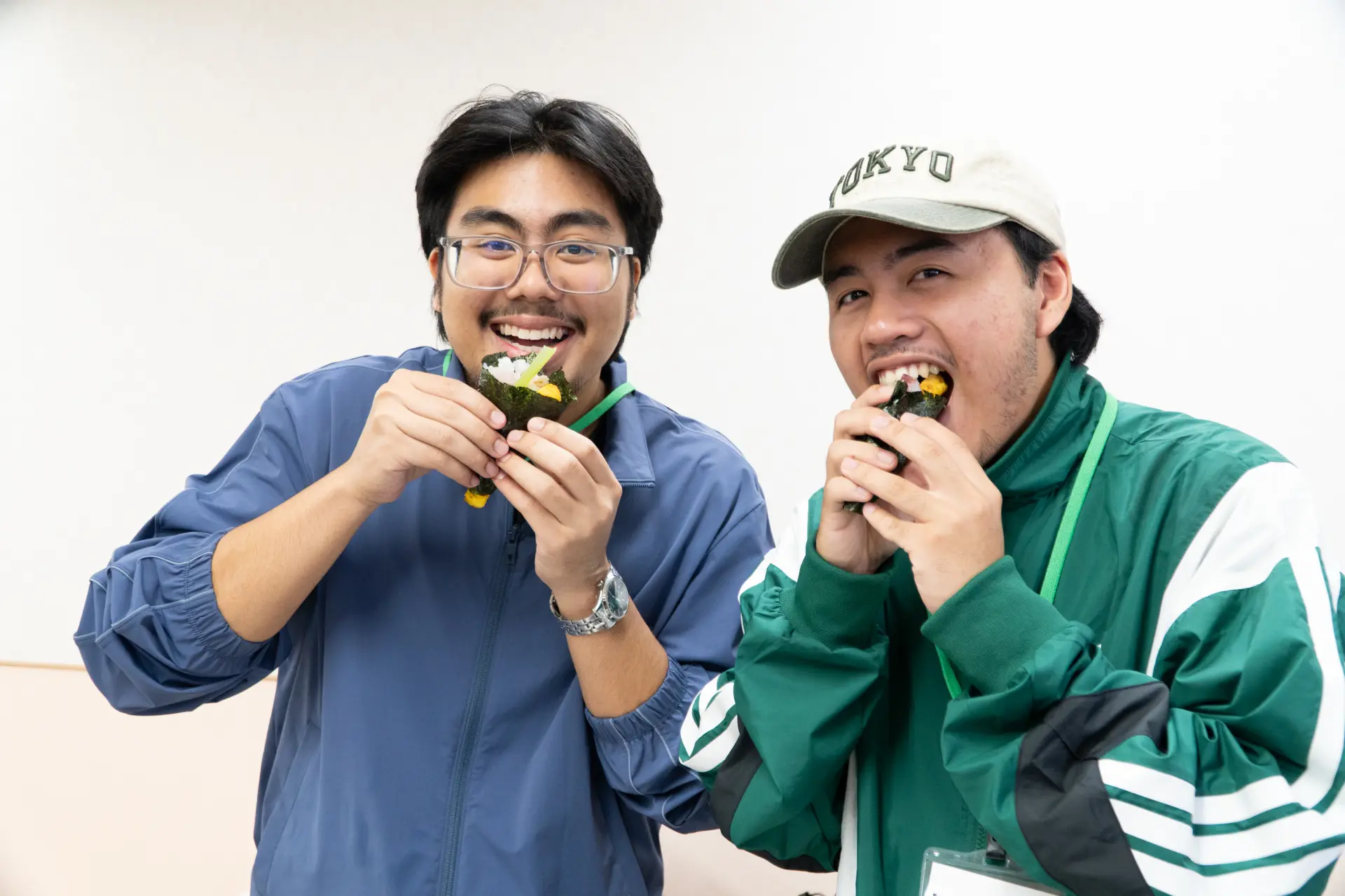
She introduced temaki sushi as a dish everyone can enjoy. Ingredients prepared included raw and boiled komatsuna, marinated nijimasu (rainbow trout) and kelp-marinated sea bream (tai), tuna mayo, crab-flavored sticks, simmered shiitake mushrooms, tamagoyaki, and wasabi. Participants combined ingredients to their liking, wrapped them in nori, and enjoyed their own customized flavors.
Participants Share the Appeal of Tokyo-grown Ingredients-and Receive Tokyo-grown Souvenirs to Enjoy at Home
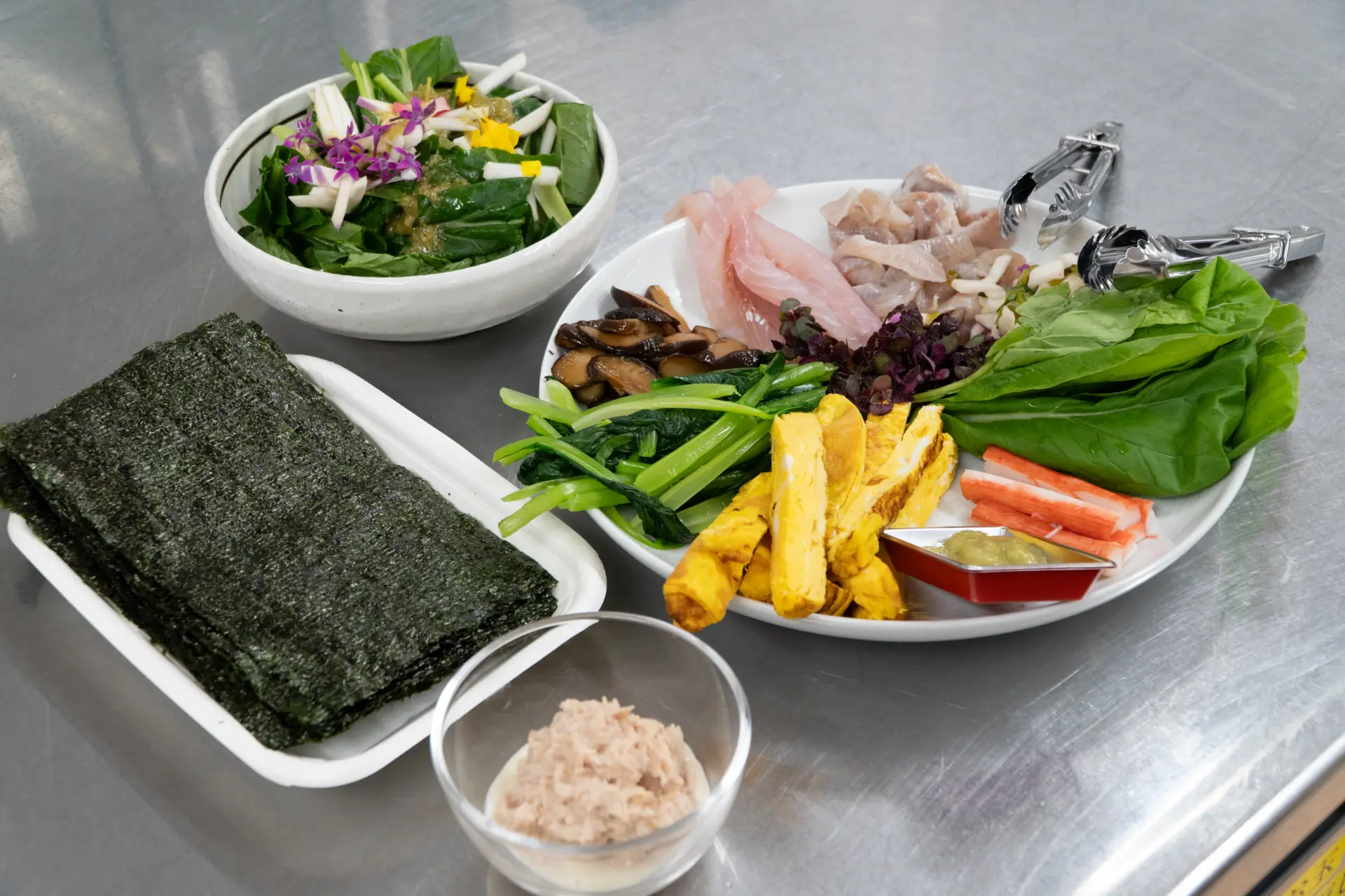
After the meal, participants took a quiz related to komatsuna as a wrap-up of what they had learned, followed by a Q&A session. After that, it was time for them to share the appeal of the Tokyo-grown ingredients they experienced on social media.
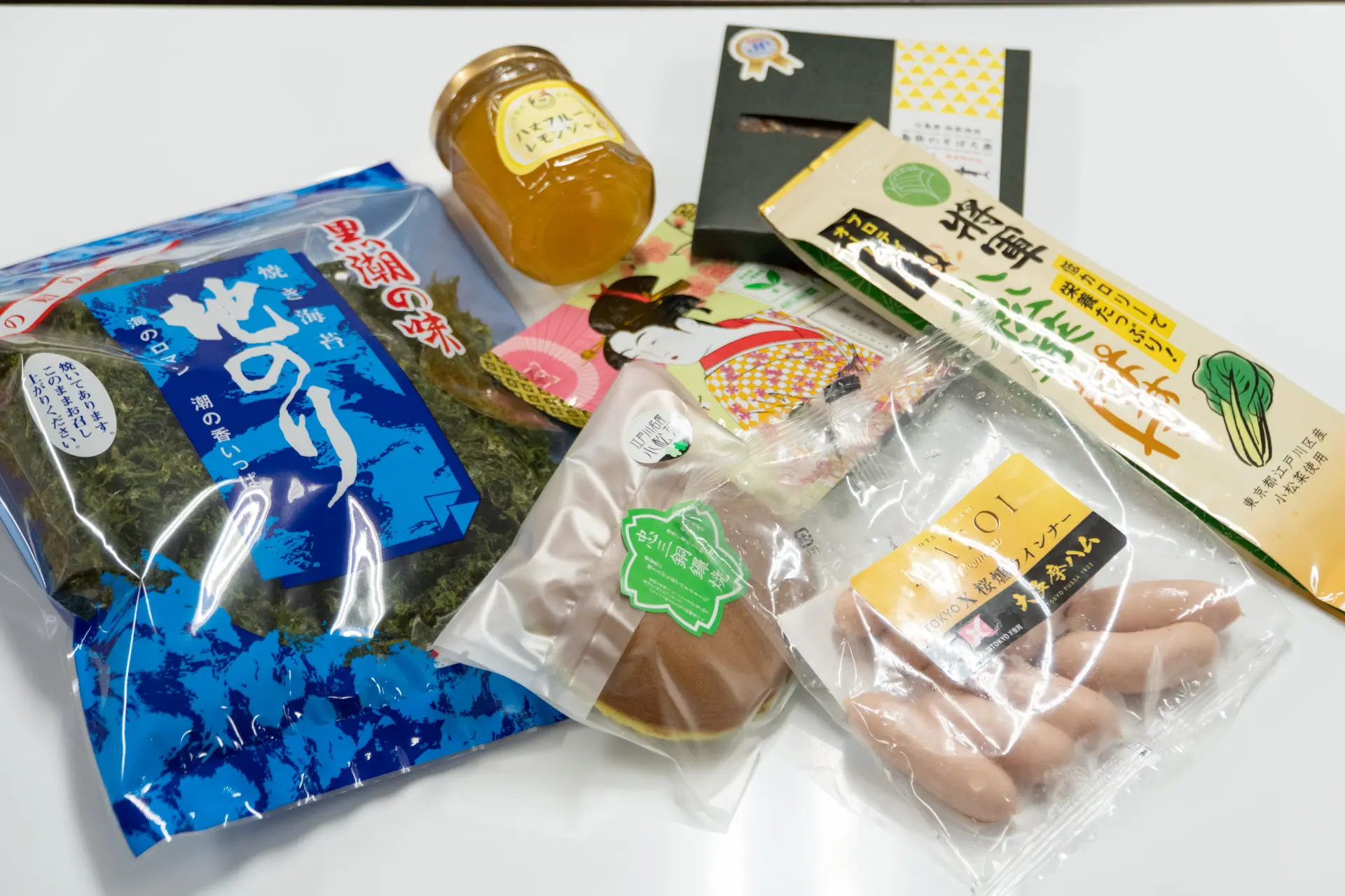
Finally, as Tokyo-grown ingredients to enjoy at home, participants were given Tokyo-themed souvenirs such as komatsuna from Mariko Farm, komatsuna pasta and cake, nori from the Izu Islands, and island lemon jam, and the workshop concluded.
It was a half-day trip themed around komatsuna, and many participants commented, "I want to join again next time," and "The fresh komatsuna was delicious."

FAQ About Tokyo-grown Vegetables
Q
What vegetables are produced in large quantities in Tokyo?
A
By cultivated area, komatsuna, spinach, and potatoes are the top three.
By production value, tomatoes, komatsuna, and eggplants are the top three. (2023)
Q
What are some of Tokyo's local specialty ingredients?
A
In addition to vegetables, there are also delicious meat and fish, Japanese tea, and other processed products. If you want to look up Tokyo's local specialties, see here (https://tokyogrown.jp/product/).
Q
Where do you recommend buying "Tokyo-grown" products as souvenirs?
A
Options include the "TOKYO GIFTS 62" souvenir corner at the Tokyo Metropolitan Government Building (https://www.sangyo-rodo1.metro.tokyo.lg.jp/tourism/tokyogifts62/), the "JA Tokyo AgriPark" located near Shinjuku Station, and the "TOKYO ISLANDS SHOP" at Takeshiba Pier, a gateway to the Tokyo Islands.
Wrap-up
Komatsuna is produced with remarkable efficiency even on small, limited plots of land, and its deliciousness is nurtured by agriculture that draws on the blessings of the sea and rivers and is carried on by people who inherit tradition.
Learning about Tokyo's vegetables and ingredients leads to learning about Tokyo's history, climate, and culture.
During your trip to Tokyo, why not stop by restaurants that use Tokyo-grown vegetables, experience Tokyo's still little-known "food story," and savor it for yourself?