
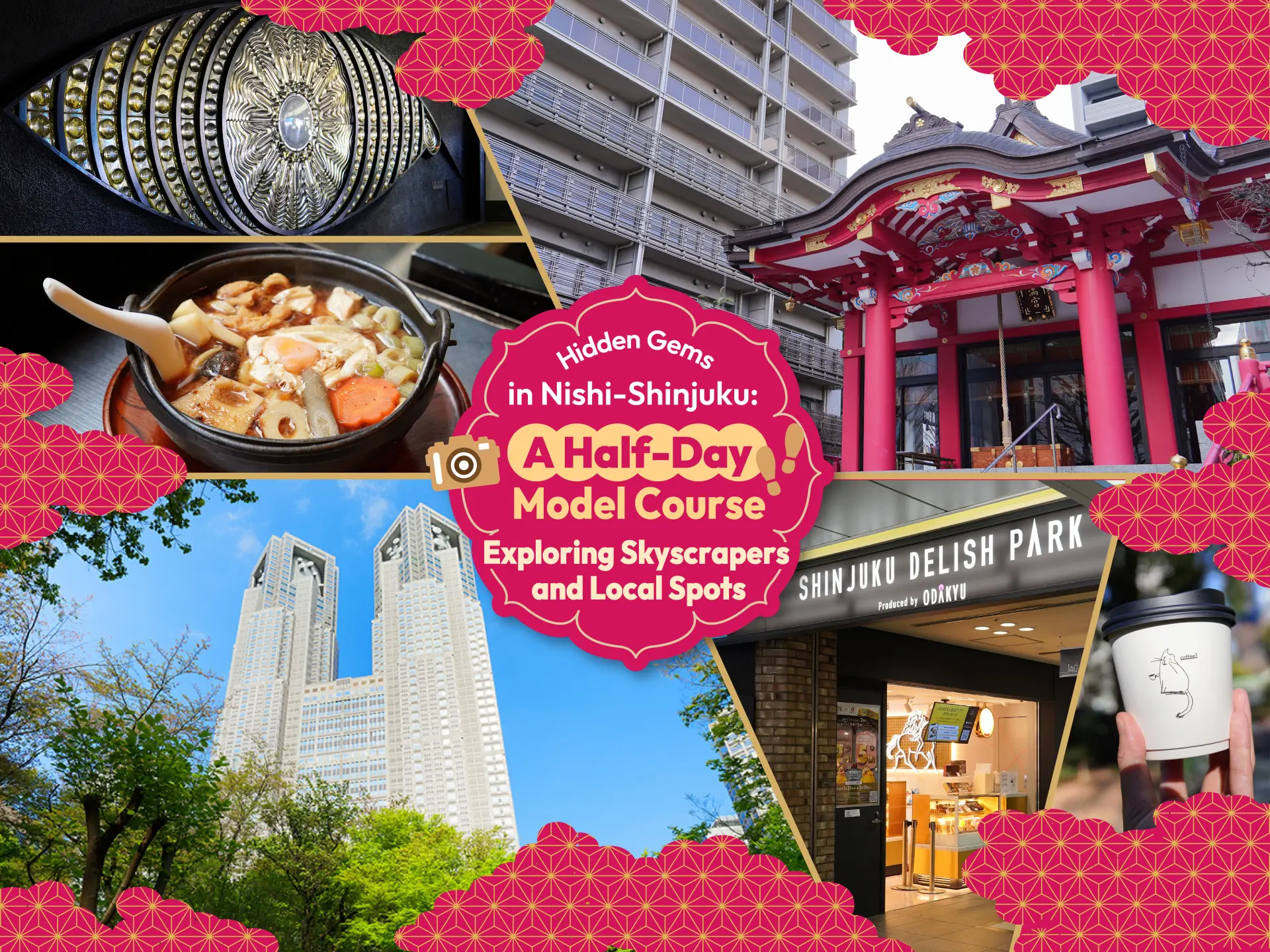
Hidden Gems in Nishi-Shinjuku: A Half-Day Model Course Exploring Skyscrapers and Local Spots
Did you know that on the opposite side of Shinjuku Station’s bustling East Exit, Nishi-Shinjuku opens onto a deeper, more local world?
At the base of the skyscrapers around Shinjuku Station’s West Exit, little-known local spots are scattered throughout.
From shrines tucked quietly between towers to coffee stands and udon shops beloved by locals, and shops where you can take your time looking for souvenirs, you can discover a more authentic side of Shinjuku that feels a little different from the typical big-city image.
In this article, we introduce a half-day model course for enjoying Nishi-Shinjuku.
If you want to walk through a deeper Shinjuku that feels a bit different from the usual, use this as a guide.
A Half-Day Model Course Enjoying the Contrast Between Skyscrapers and Local Spots in Nishi-Shinjuku
As a major transport hub, Shinjuku thrives and is strongly associated with its entertainment districts.
Yet even while surrounded by high-rise towers, it is also a place where traces of everyday life from Japan’s good old days still linger.
This time, we introduce a half-day stroll through Nishi-Shinjuku as a model course where you can see the contrast between past and present.
Enjoy it between other parts of your itinerary or in the hours before a flight.
9:30 am|Start at “The Eye of Shinjuku” in the Shinjuku Station West Exit Underground Plaza
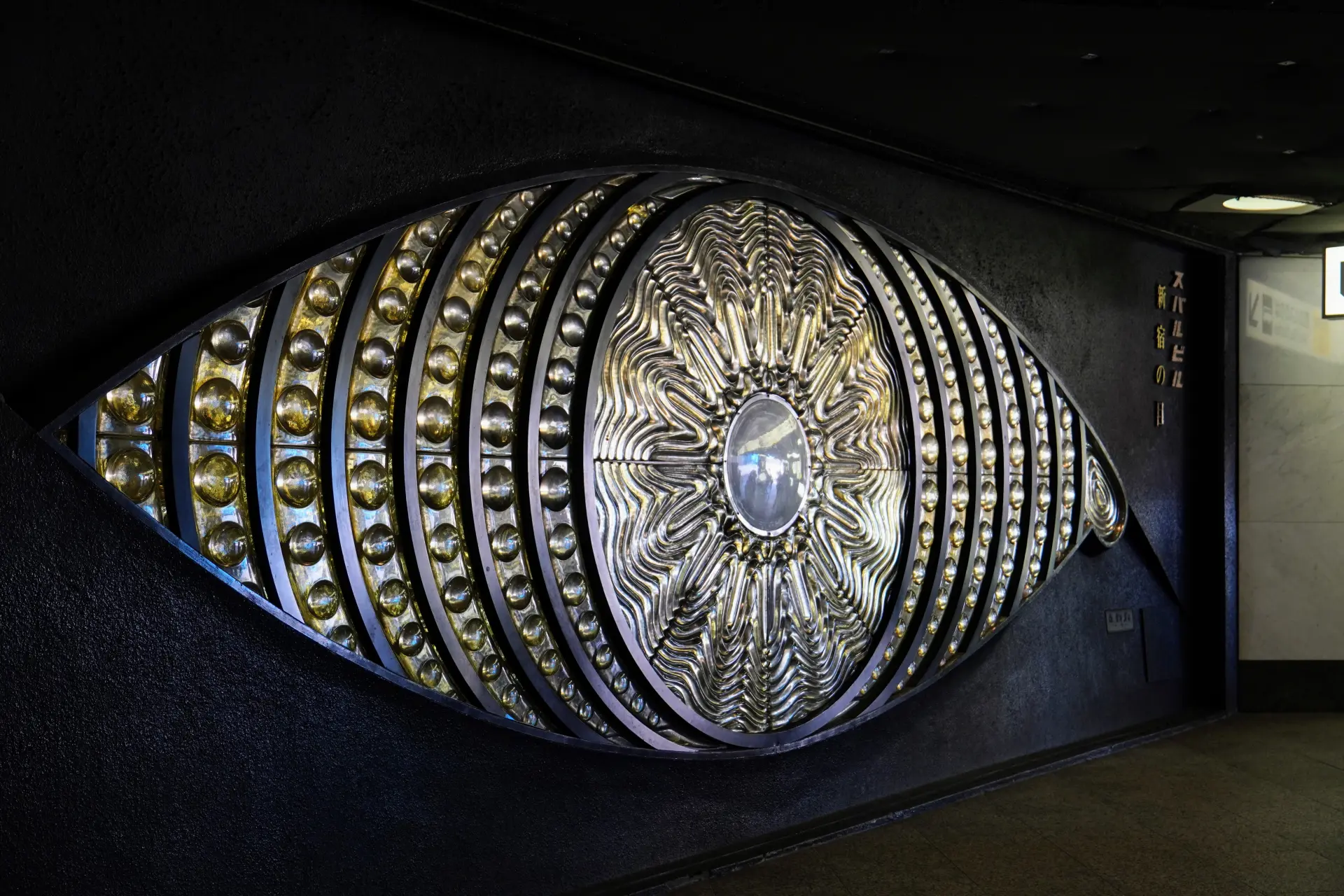
Start with the public art piece “The Eye of Shinjuku,” standing in the Shinjuku Station West Exit underground plaza.
Created in 1969 by sculptor Yoshiko Miyashita, it has watched the people passing through this spot for over 50 years.
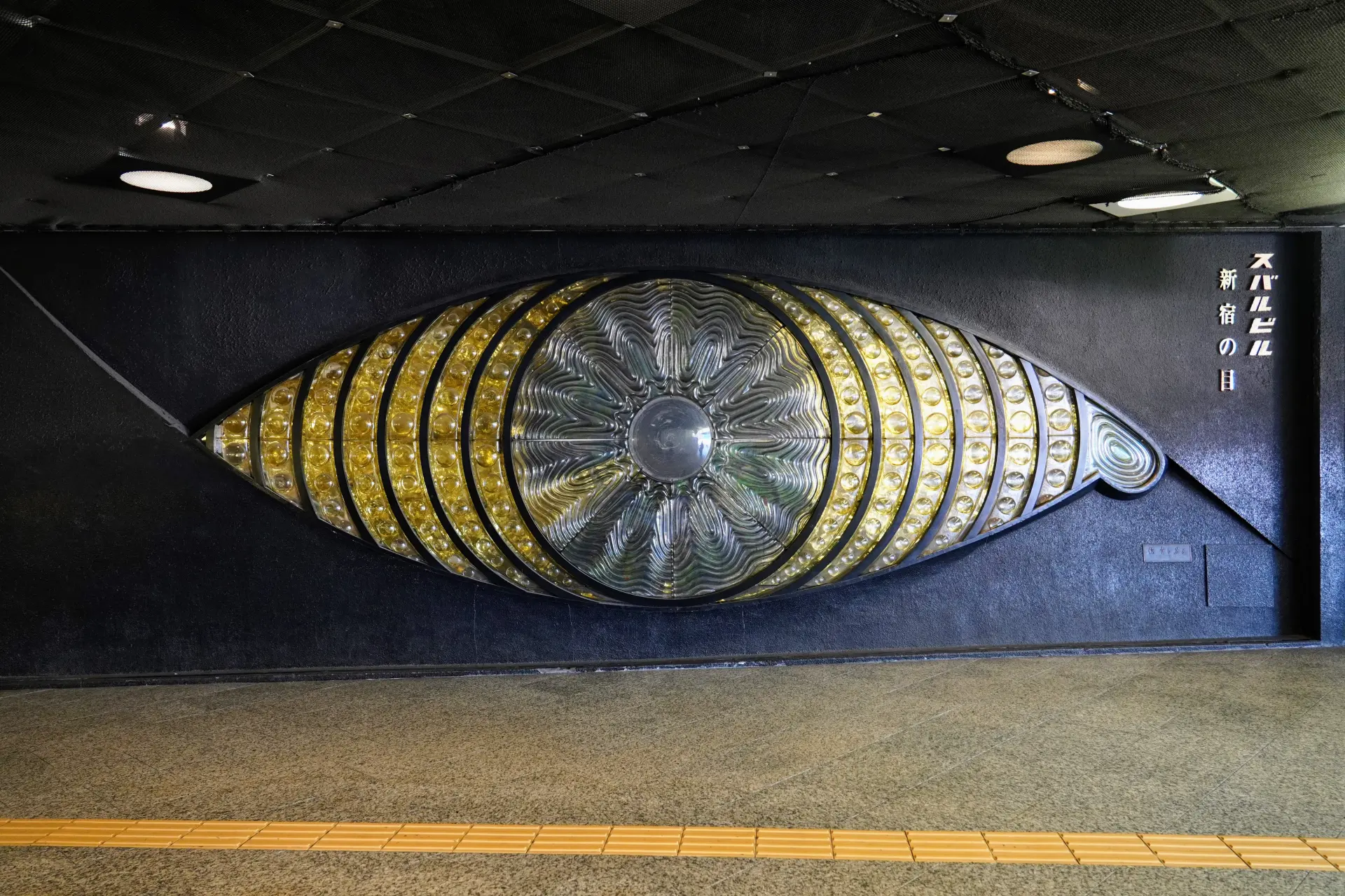
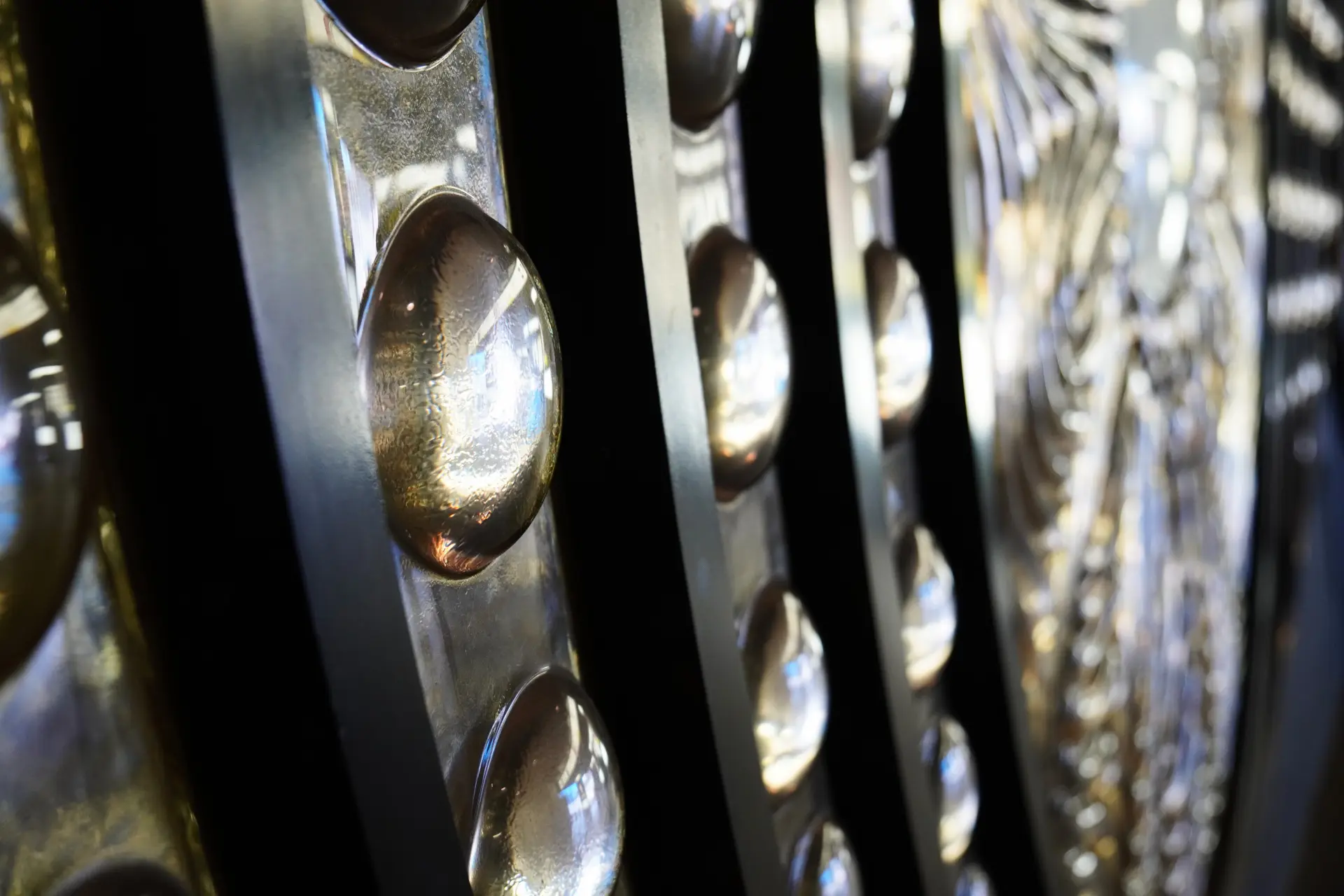
This massive artwork stands about 3.4 meters tall at eye level and stretches about 10 meters wide.
It is said that lights inside once illuminated the eye, and the pupil even rotated slowly, though the rotating mechanism has since been stopped.
At 9:30 am, the underground plaza is past the peak of the morning rush, and there are only a few people around.
The atmosphere is quiet and calm here, unlike midday or evening.
Those who pass by are businesspeople heading to Shinjuku Station and local residents going shopping.
Along with “The Eye of Shinjuku,” take in the everyday rhythm of the city as you watch the people who work and live in Shinjuku.
- Name in Japanese
- 《新宿の目》
- Address
- SHINJUKU ODAKYU PARK B1F 1-7-2 Nishi-Shinjuku, Shinjuku-ku, Tokyo Google Maps
10:00 am|Visit Shinjuku Tenmangu Naruko Tenjinsha and Feel Traces of History and Local Faith
From “The Eye of Shinjuku,” walk about 10 minutes through the underground passage to Naruko Tenjinsha, known as the guardian shrine of Nishi-Shinjuku.
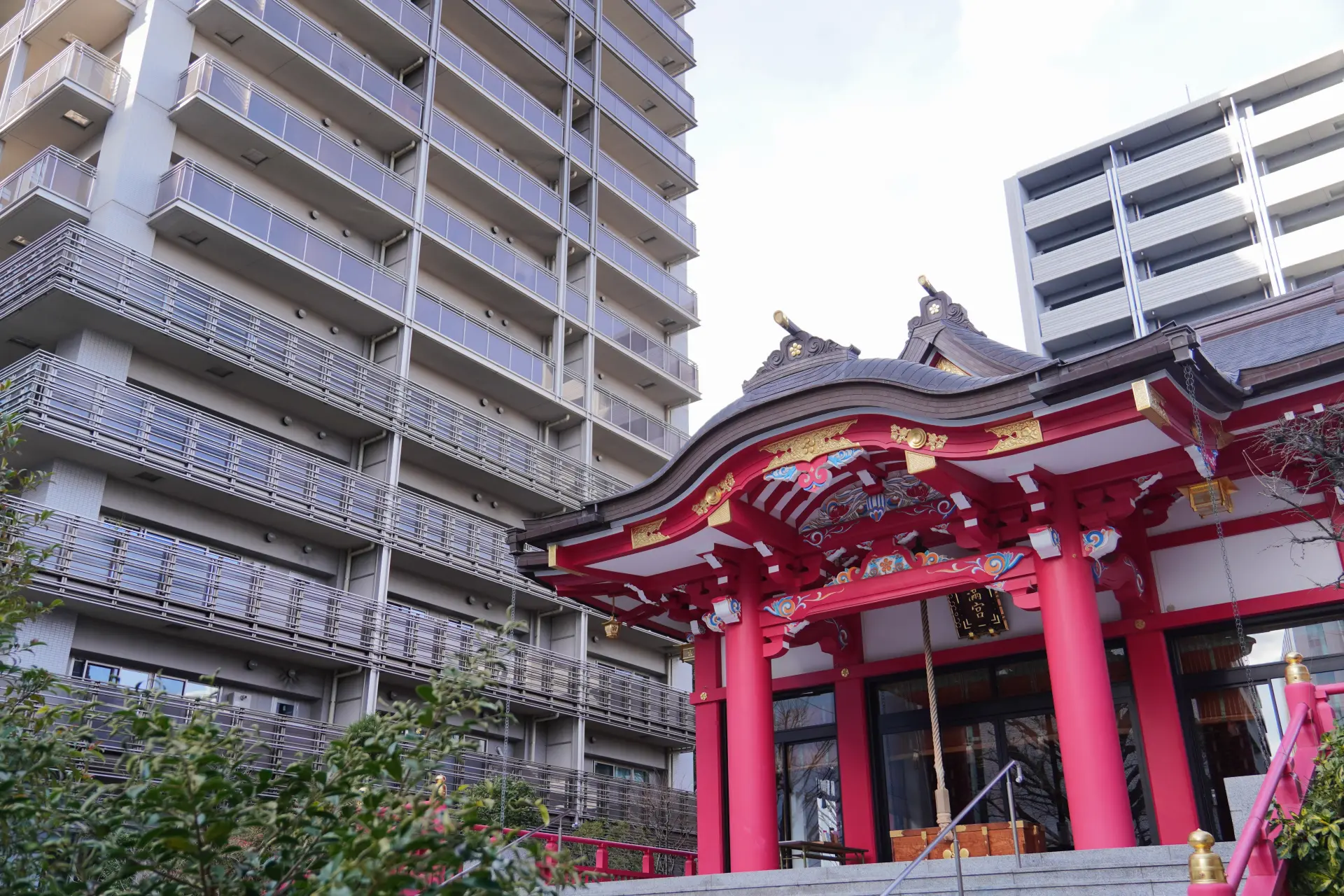
Hidden quietly between skyscrapers, this shrine’s history spans an astonishing 1,100 years.
Since being relocated to its current site in the Edo period, it has continued watching over Shinjuku as it developed.
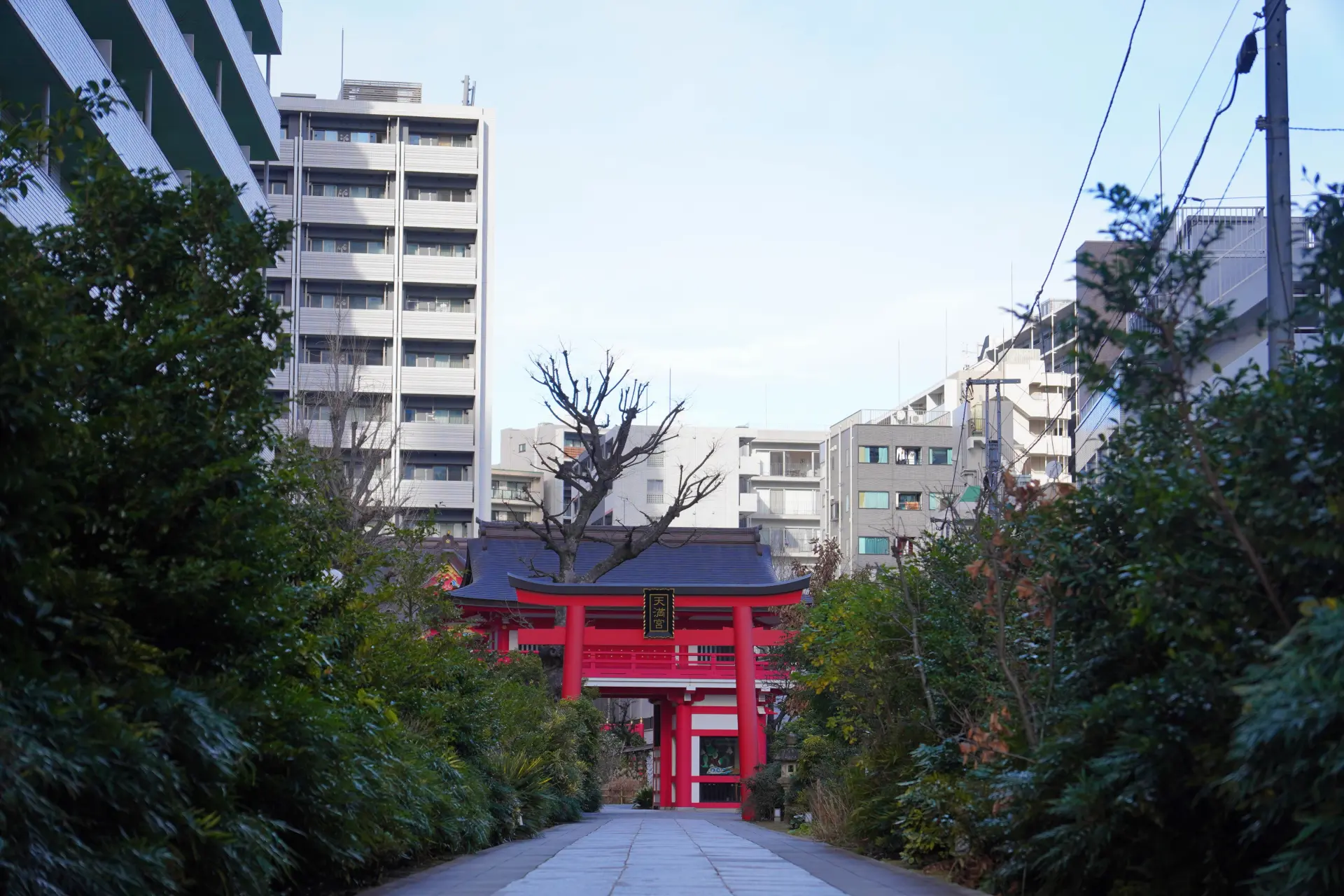
Although the entrance faces a main street, once you step inside, a calm and sacred atmosphere surrounds you.
The contrast between modern high-rises and shrine buildings that have marked the passage of time feels like a scene from another world.
Naruko Tenjinsha is known as a god of learning and a god for warding off misfortune.
It is not overly touristy, and many locals and businesspeople stop by between work, which is one of Nishi-Shinjuku’s charms.
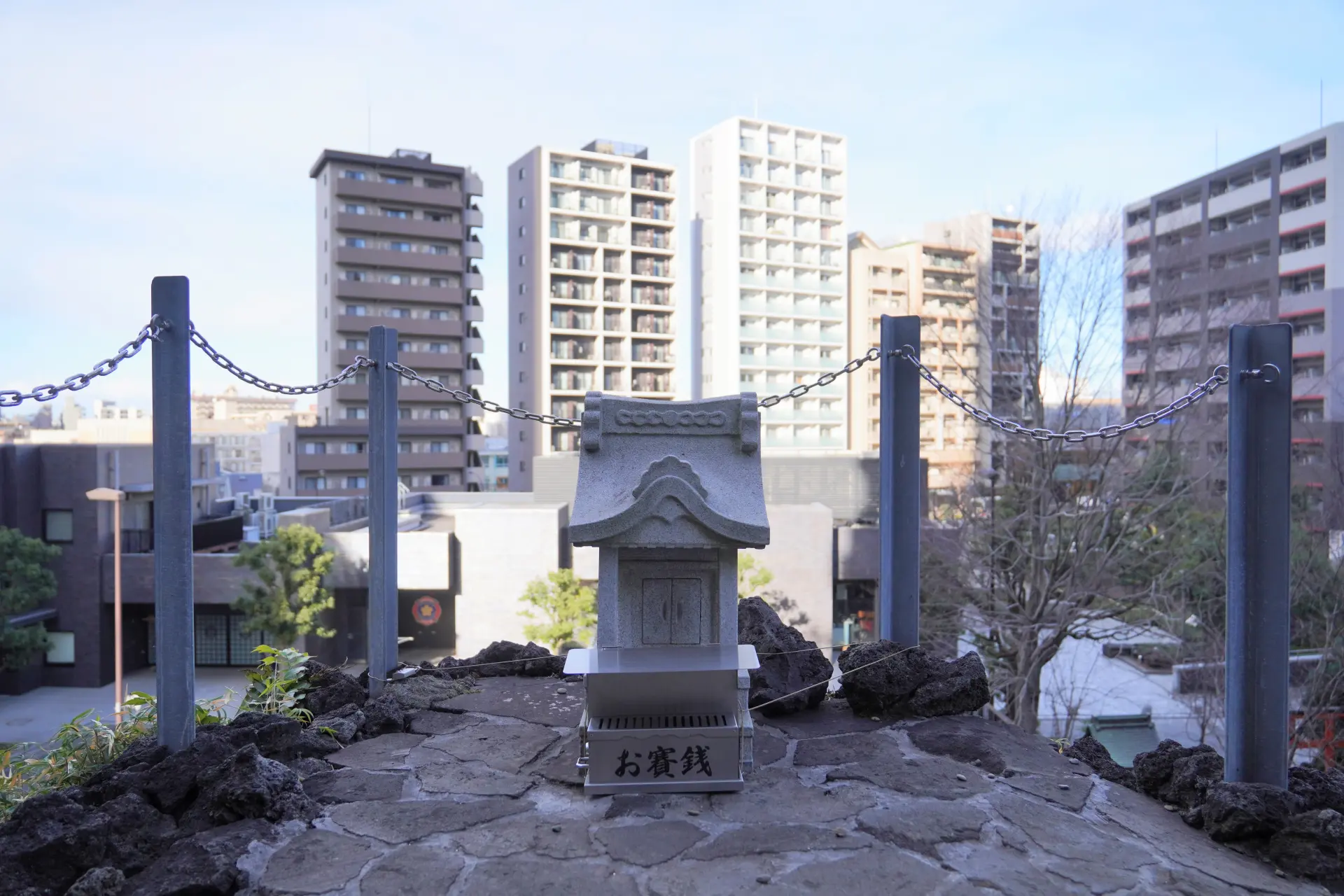
Within the grounds is a Fujizuka mound made of Mt. Fuji lava, and you can enjoy a small stroll, as well as walk around while visiting stone statues of the Seven Lucky Gods.
That’s another highlight here.
- Name in Japanese
- 新宿天満宮 成子天神社
- Address
- 8-14-10 Nishi-Shinjuku, Shinjuku-ku, Tokyo Google Maps
- Worship Hours
- 24 hours (amulet office: 9:00 am-3:30 pm; prayer applications: 9:00 am-3:30 pm)
10:30 am|Stroll Around the Old-Style Streets Still Found Near Nishi-Shinjuku 8-chome
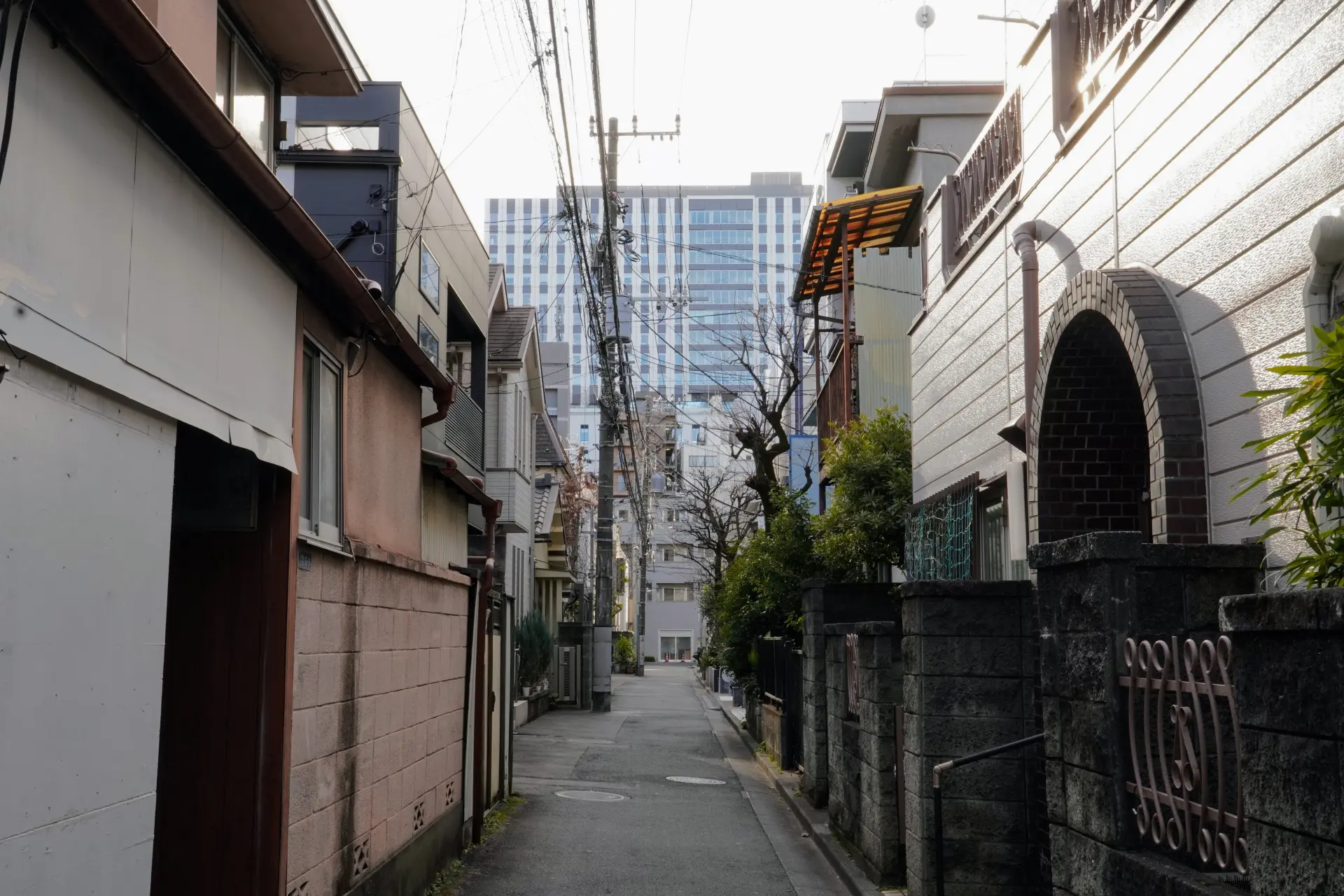
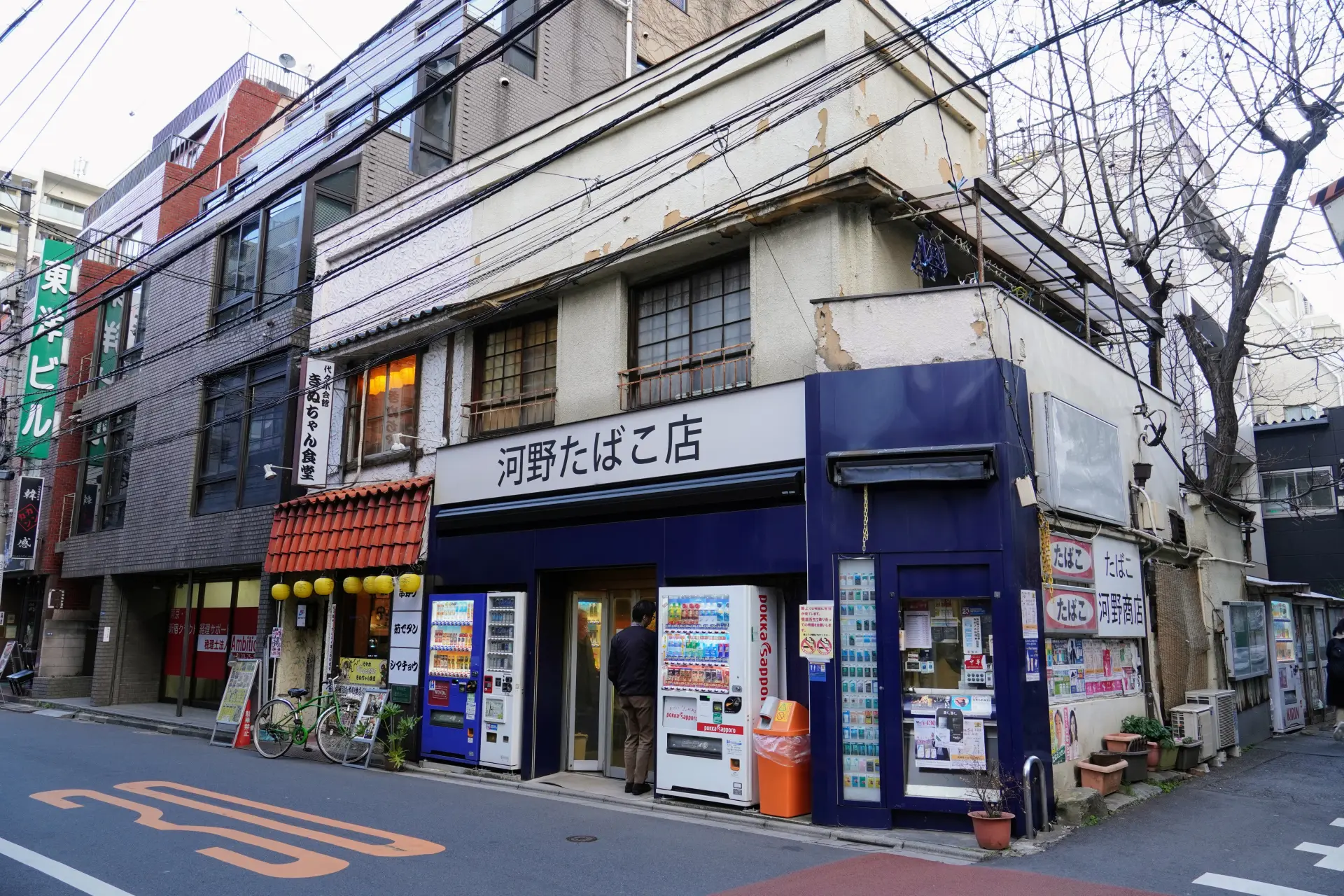
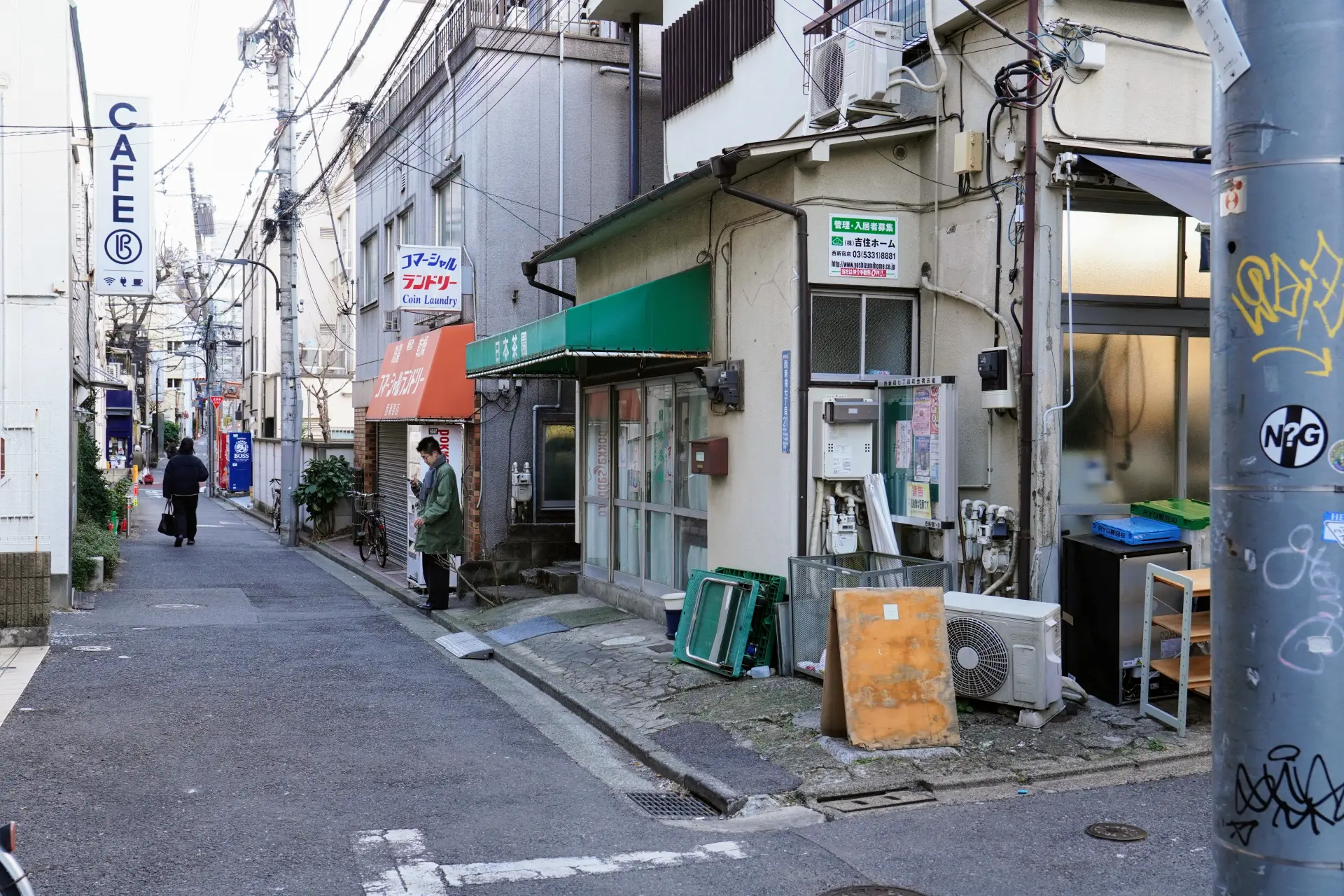
After leaving Naruko Tenjinsha, head into the backstreets and stroll around the Nishi-Shinjuku 8-chome area.
This neighborhood is a downtown-style area where older buildings and homes remain, along with long-running eateries and produce shops, giving it a lived-in feel that is, in a way, “not very Shinjuku.”
You may even come across scenes where passersby wave and greet each other, making you forget for a moment that you are in one of Tokyo’s biggest cities.
Look up and you are surrounded by high-rise towers, yet ahead of you are rows of traditional homes, and here and there you will find buildings that feel as if time has stopped.
It is an area where you can enjoy a curious view where Shinjuku’s present and past overlap.
Nishi-Shinjuku 8-chome is not a tourist destination, but a place where local residents live.
Of course, do not enter private property such as apartment grounds, and when taking photos or walking through, be considerate and keep your stroll quiet.
- Address
- Around Nishi-Shinjuku 8-chome, Shinjuku-ku, Tokyo
11:00 am|Have an Early Lunch at the Local Favorite Nikomi Udon Daimyonabe Nakajin
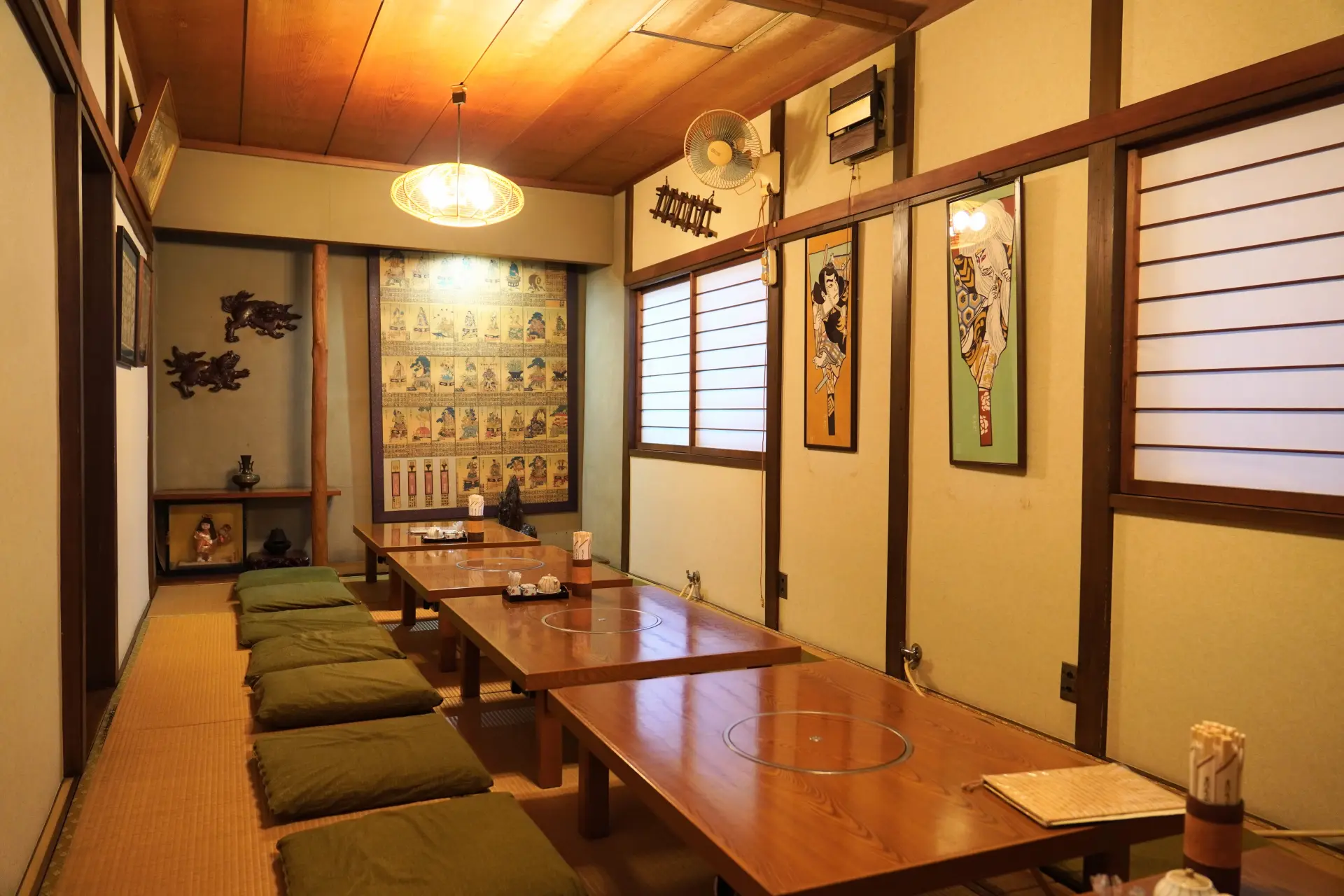
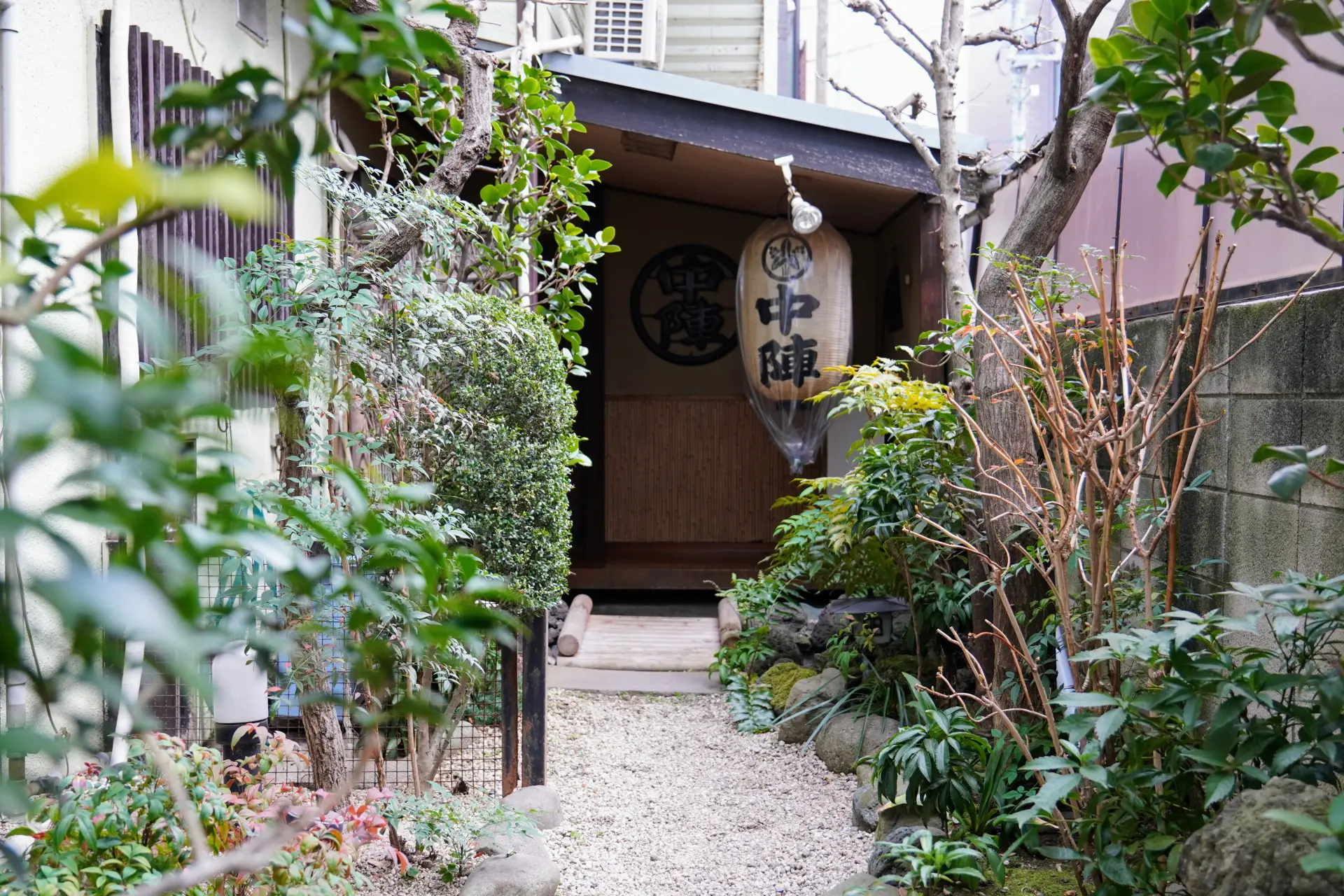
Nikomi Udon Daimyonabe Nakajin has been operating here for about 50 years, and it is an udon shop long loved by businesspeople working in nearby offices and by local residents.
The cheerful owner, who says, “I grew up in this neighborhood,” is the second-generation proprietor.
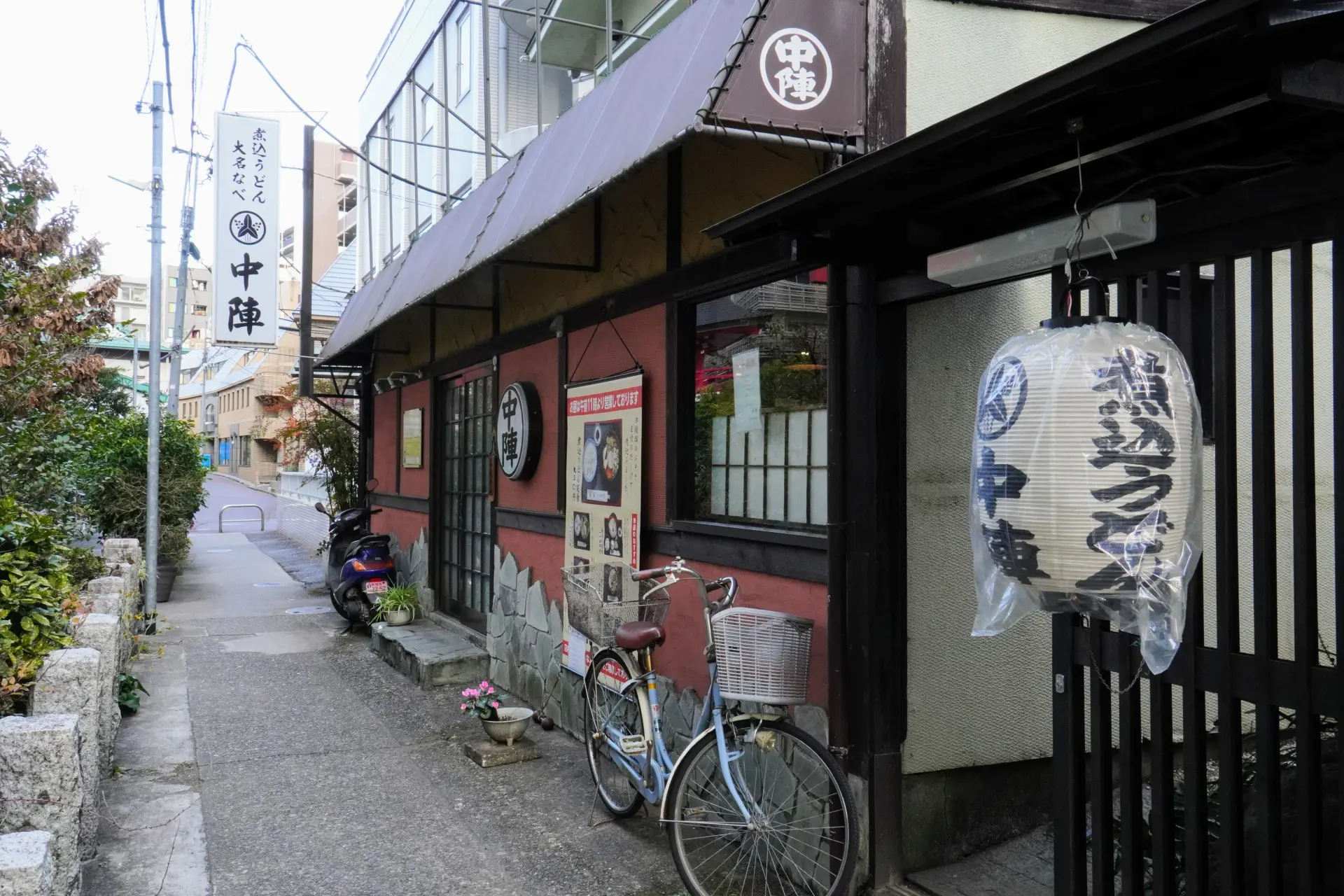
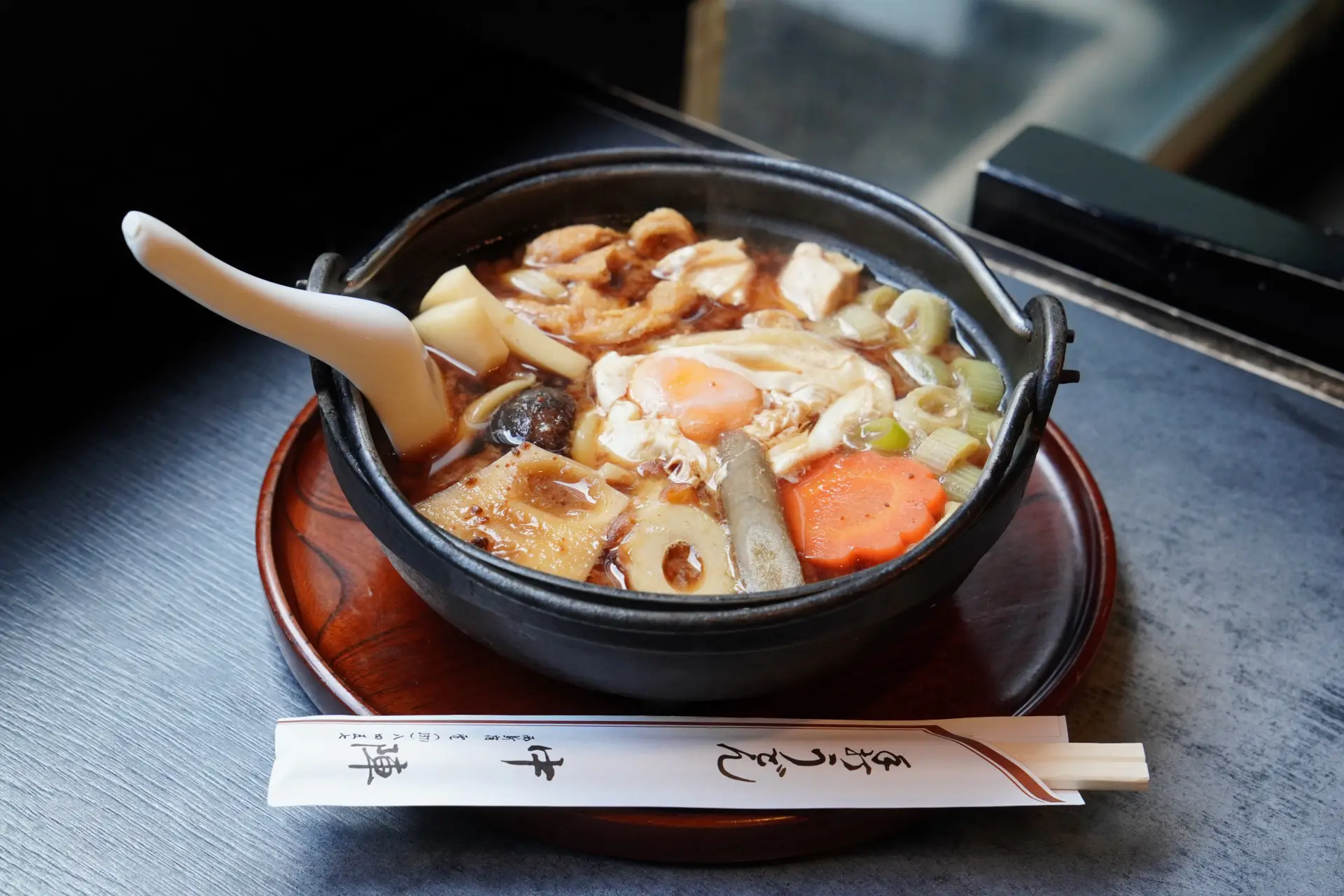
The highlight of Nikomi Udon Daimyonabe Nakajin is, above all, its hand-made udon with an irresistible chewy bite.
When you think of simmered udon, you might imagine soft noodles, but Nakajin’s udon is thick, springy, and satisfyingly chewy.
A popular menu item, “Sanzoku Udon,” is packed with roughly 10 kinds of ingredients and is very filling.
Because all noodles are hand-made, quantities are limited, and service ends once they sell out.
We recommend visiting a bit early, before the lunch rush begins.
Also note that payment is cash only, so be sure to bring some with you.
- Name in Japanese
- 煮込うどん大名なべ 中陣
- Address
- 8-12-7 Nishi-Shinjuku, Shinjuku-ku, Tokyo Google Maps
- Hours
- 11:00am - 2:30pm, 5:30pm - 8:00pm
- Closed
- Saturdays, Sundays
12:15 pm|Take Coffee to Go at the Hideaway Coffee Shop KEMURISOU
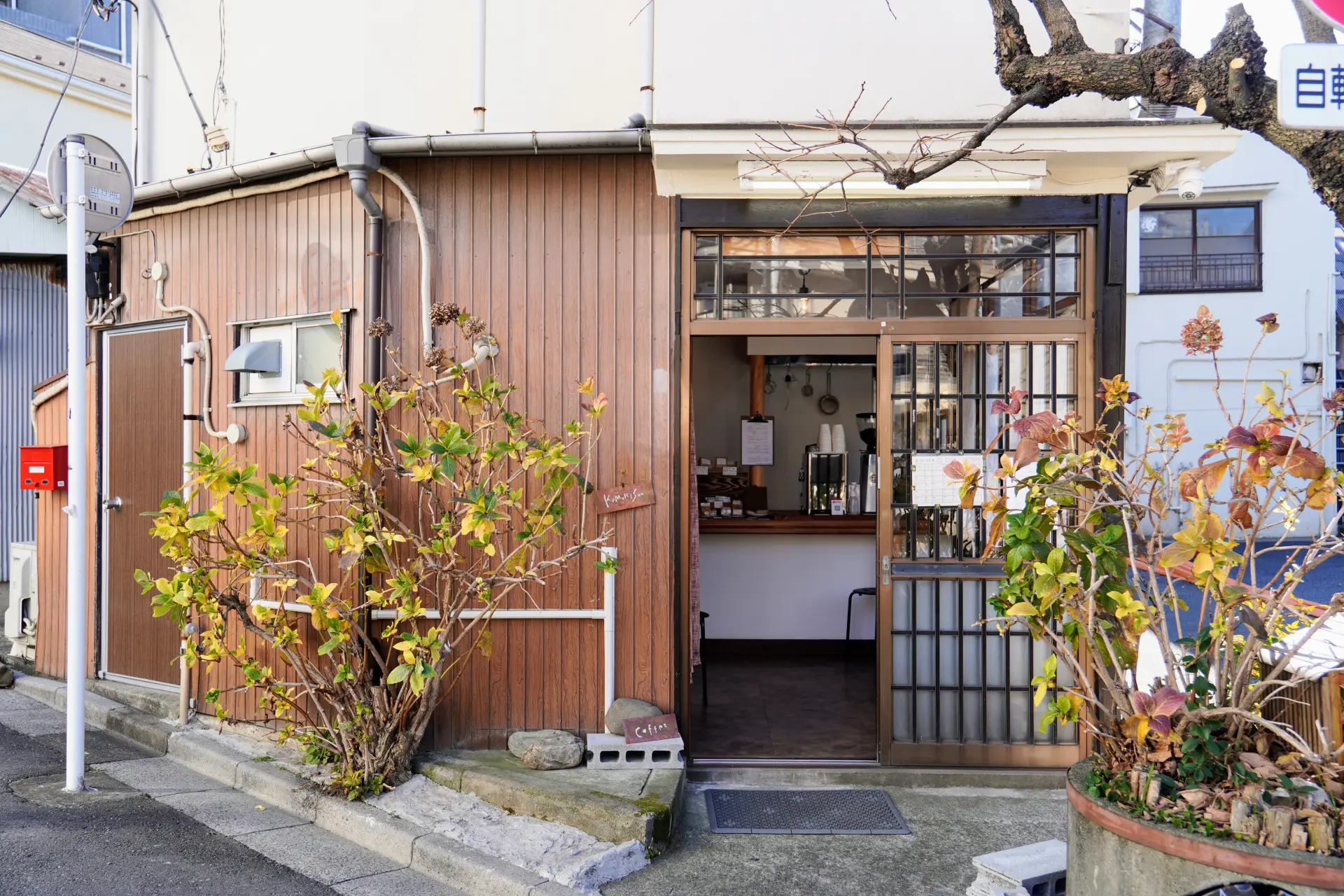
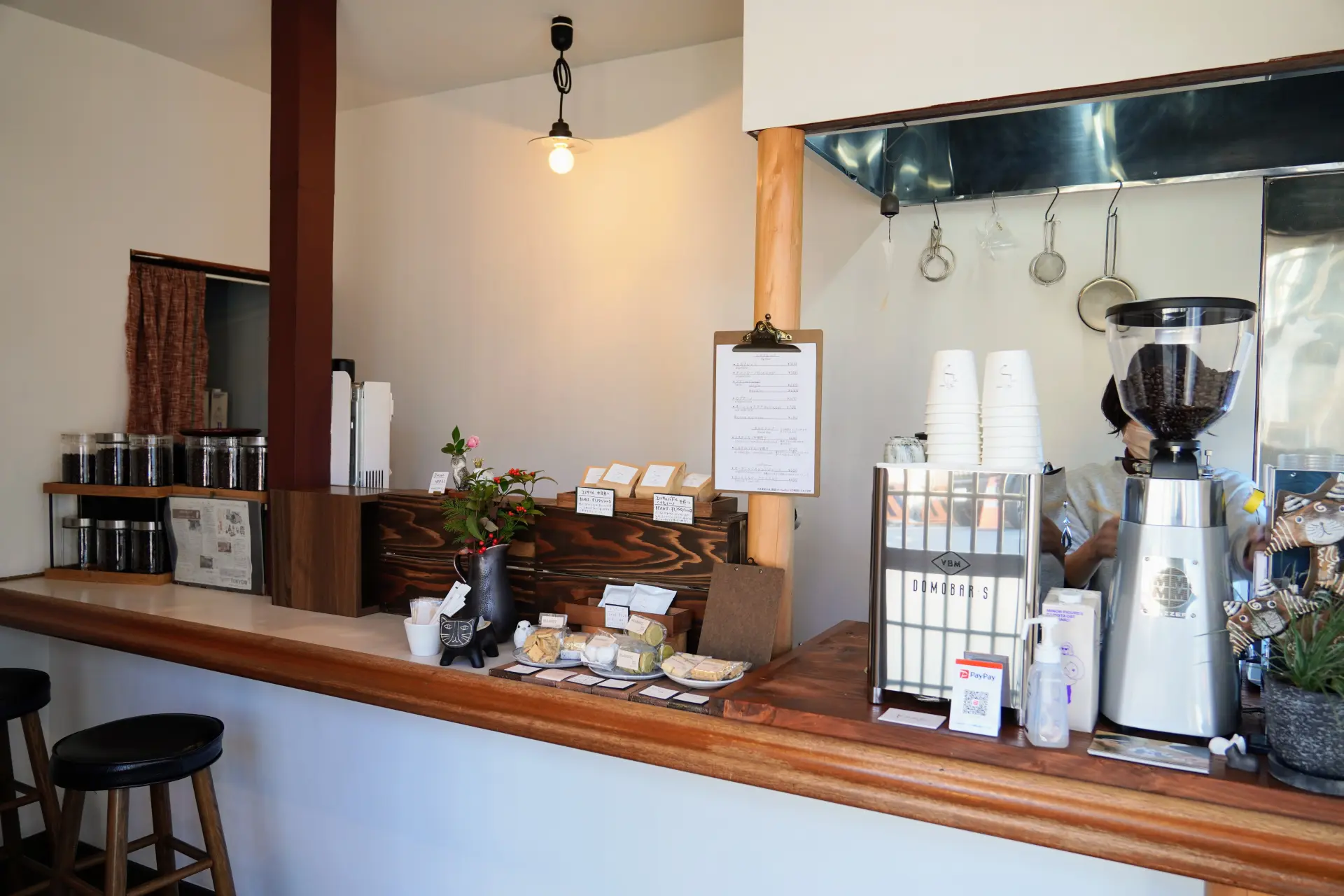
KEMURISOU, tucked on the first floor of a retro apartment building, is a coffee stand favored by locals.
Inside, renovated from a small Japanese restaurant, the aroma of coffee drifts softly through the air, and casual conversations like “Good morning” and “The weather is nice today” are exchanged.
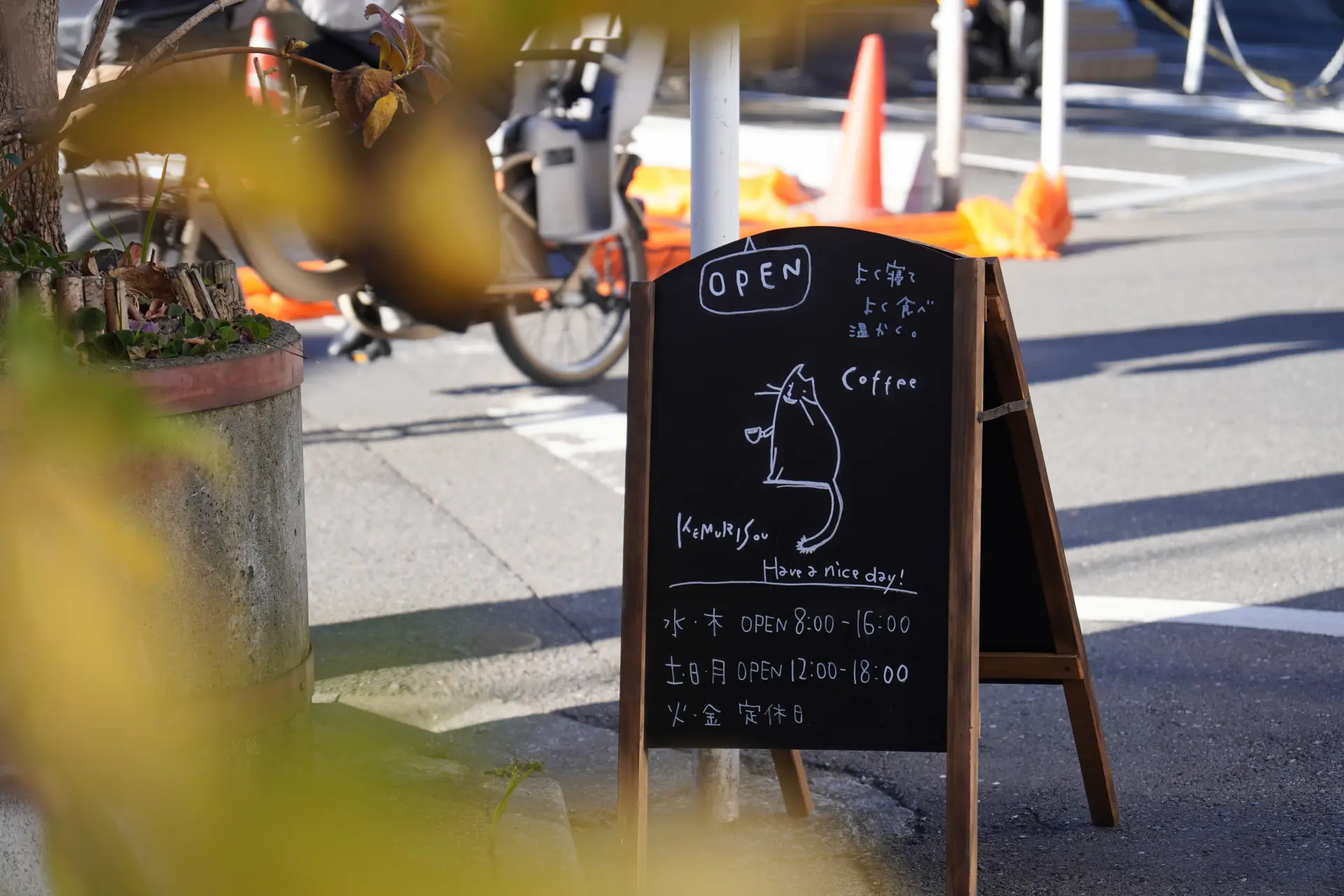
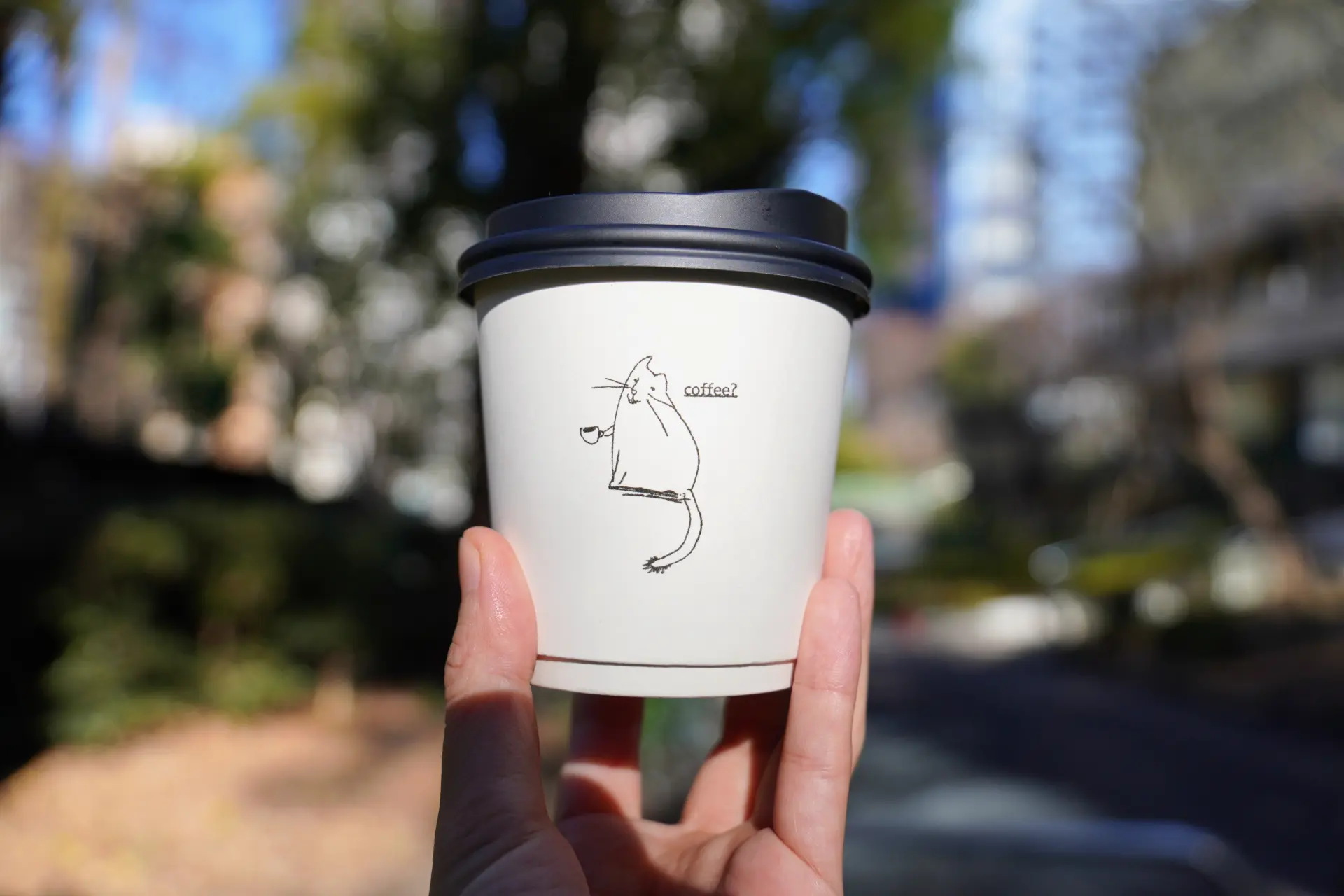
All of their coffee roasted in-house is excellent, but one especially recommended option is the cafe latte “Double.”
Using twice the espresso of a regular cafe latte, it offers a rich aroma and deep flavor.
The espresso is carefully extracted to pair well with milk, and the balance of bitterness and sweetness is exquisite.
Even if you are not a coffee expert, you can still enjoy an authentic taste with ease.
Once you order the cup that catches your interest, take it to go and head to Shinjuku Central Park next.
Note that payment at KEMURISOU is cash or PayPay only, so plan ahead before you go.
- Name in Japanese
- KEMURISOU
- Address
- 5-18-15 Nishi-Shinjuku, Shinjuku-ku, Tokyo Google Maps
- Hours
-
8:00am - 4:00pm
Saturday, Sunday, Monday 12:00pm - 6:00pm - Closed
- Tuesdays, Fridays
12:45 pm|Take a Breather in the Urban Oasis of Shinjuku Central Park
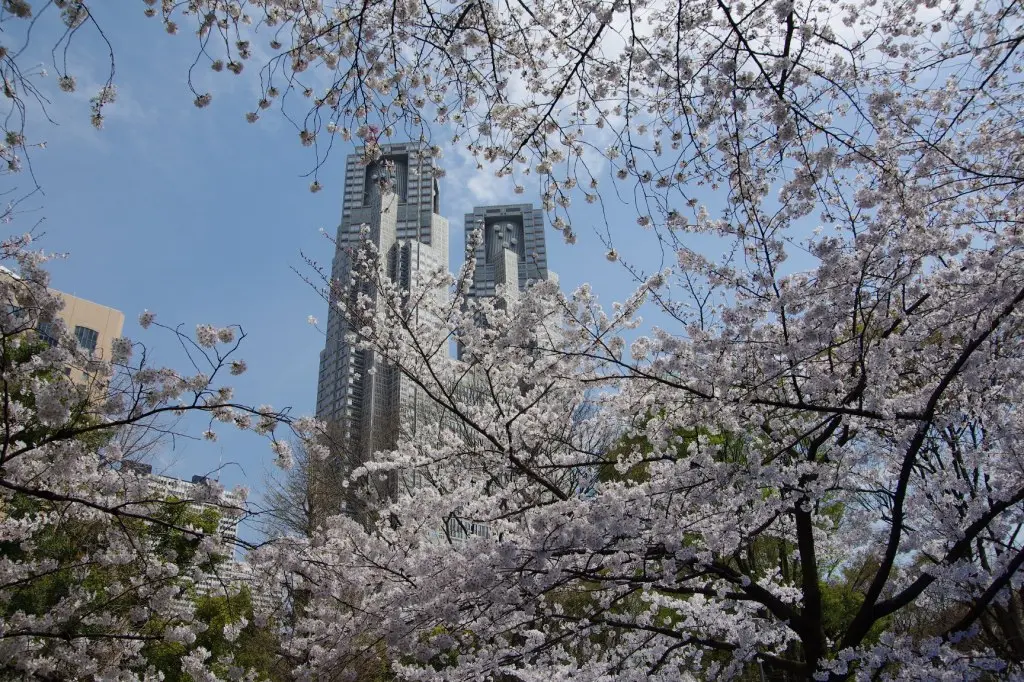
With coffee in hand, head to Shinjuku Central Park, surrounded by Nishi-Shinjuku’s towers.
It is an urban oasis where people who live in Shinjuku, work in Shinjuku, and visit Shinjuku naturally intersect.
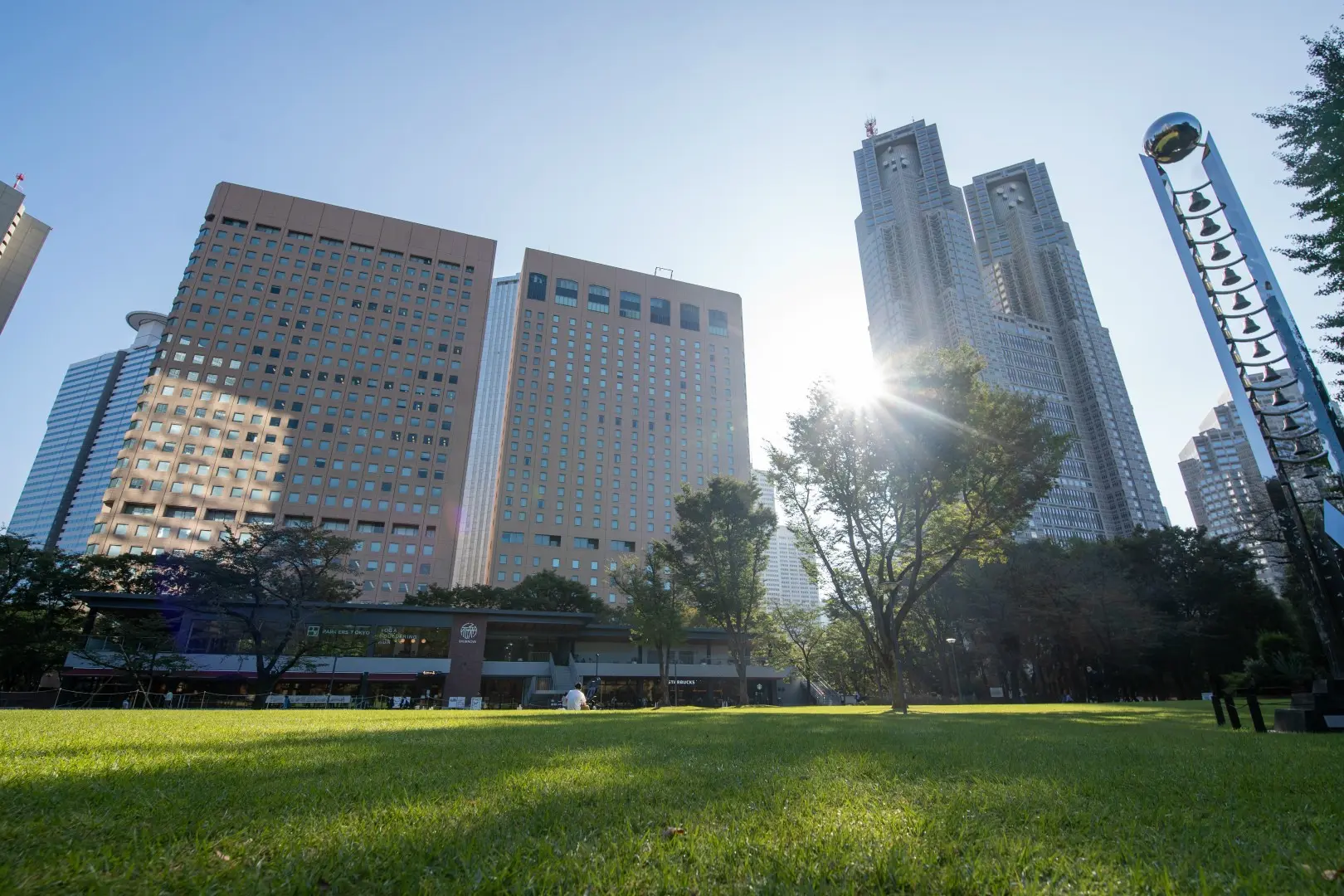
As you step into the park, the sound of cars feels a little farther away, and you can hear wind passing through the trees and the sound of water.
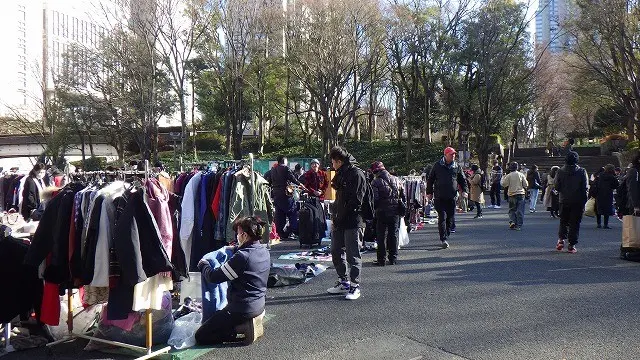
Walking the lawn area and paths, you will spot businesspeople resting after lunch and people reading on benches.
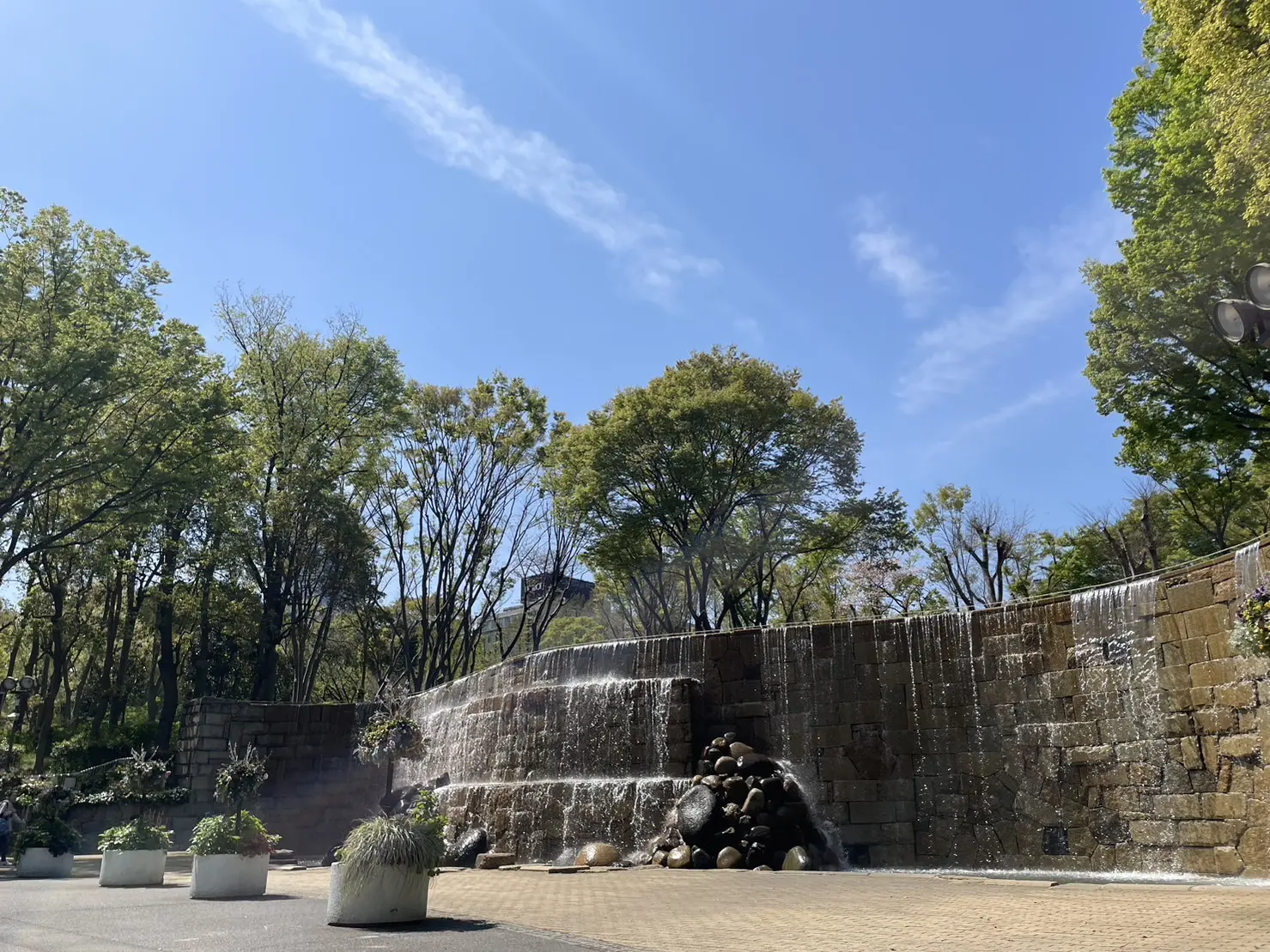
The area around Shinjuku Niagara Falls, where the sound of the cascade is soothing, is a spot that makes you want to pause.
One charm of this park is that such gentle time flows right next to energetic Shinjuku.
If you are tired from walking, sit on a bench and take a short break while you sip your coffee.
Before heading to your next destination, this is a place where you can take a breath in the middle of the city.
1:45 pm|Shop for Souvenirs at the Local Favorite Underground Mall Odakyu Ace
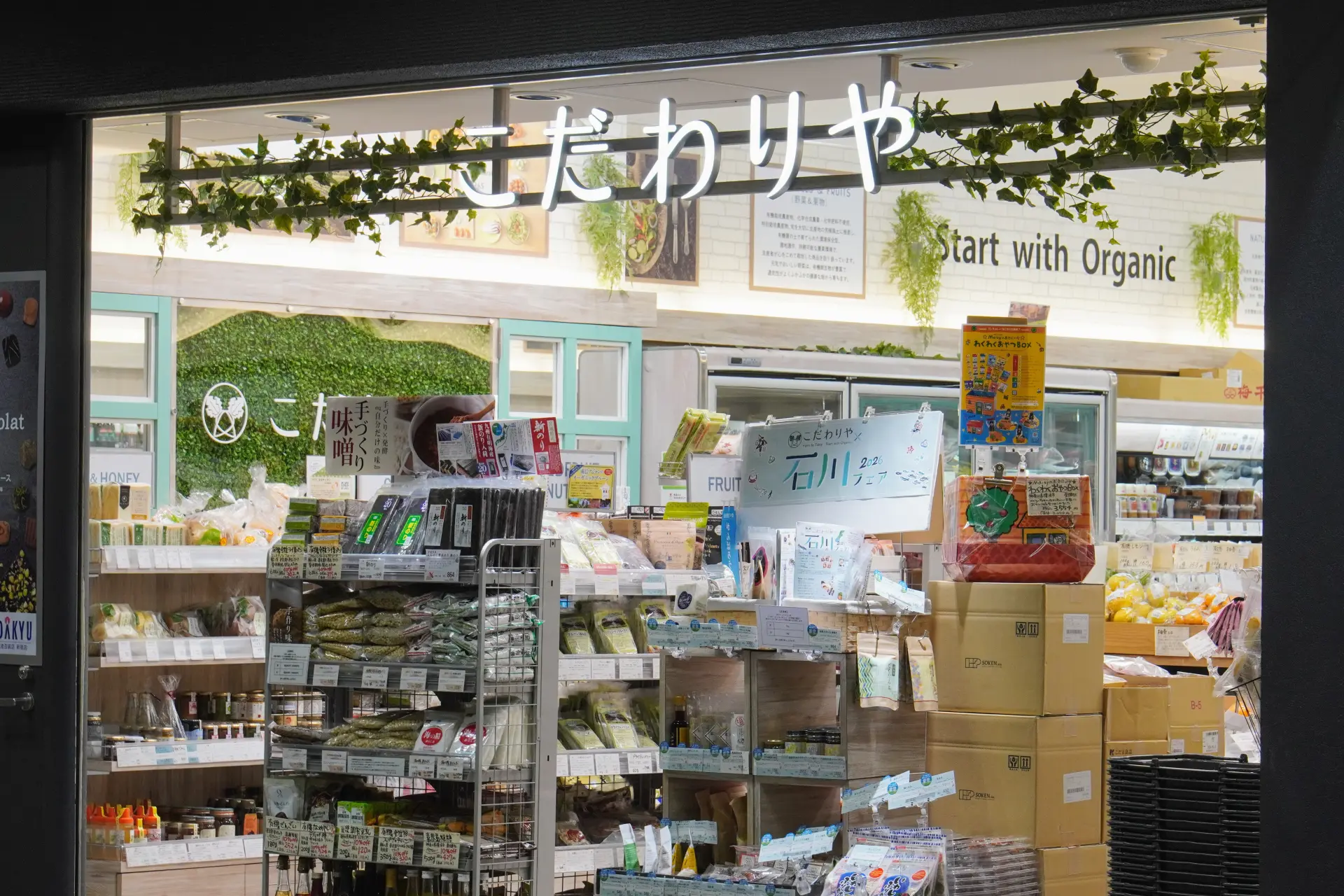
Odakyu Ace is an underground mall directly connected to Shinjuku Station, offering everything from fashion to food and gifts.
Rather than being aimed at tourists, it is a place used daily by people working nearby and local residents, making it perfect for souvenir hunting.
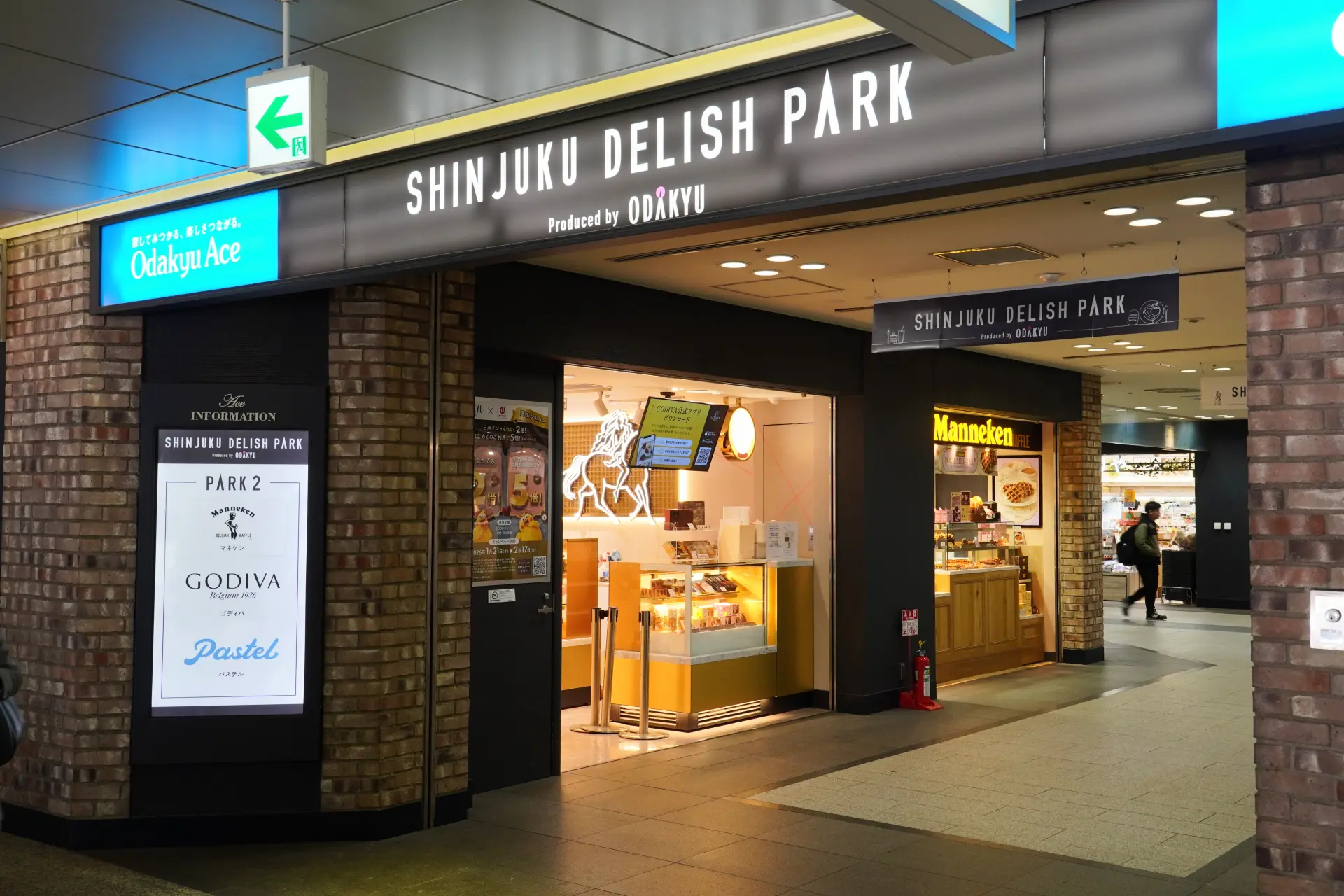
Kodawariya, in particular, is a specialty shop for organic and domestically produced foods, using as few pesticides, chemical fertilizers, and additives as possible.
Items like richly flavored soy sauce made from organic whole soybeans and powdered green tea that lets you easily enjoy Japanese tea are popular, and you will often see locals casually stopping in to buy them.
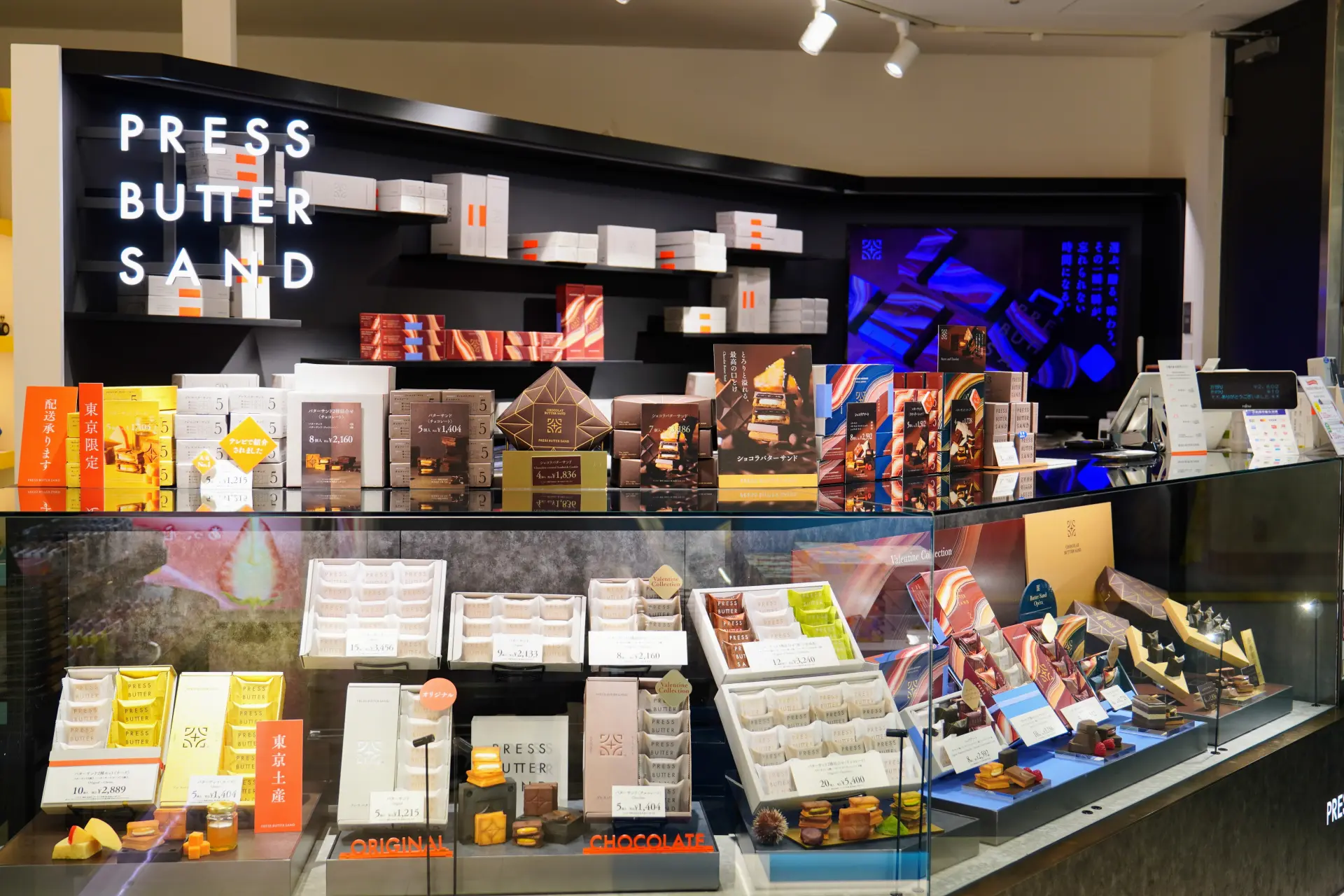
At PRESS BUTTER SAND, in addition to standard items, you can also purchase the Tokyo-limited “Butter Sand (Cheese).”
The shop is spacious, and it is a nice point that you can choose products calmly and at your own pace.
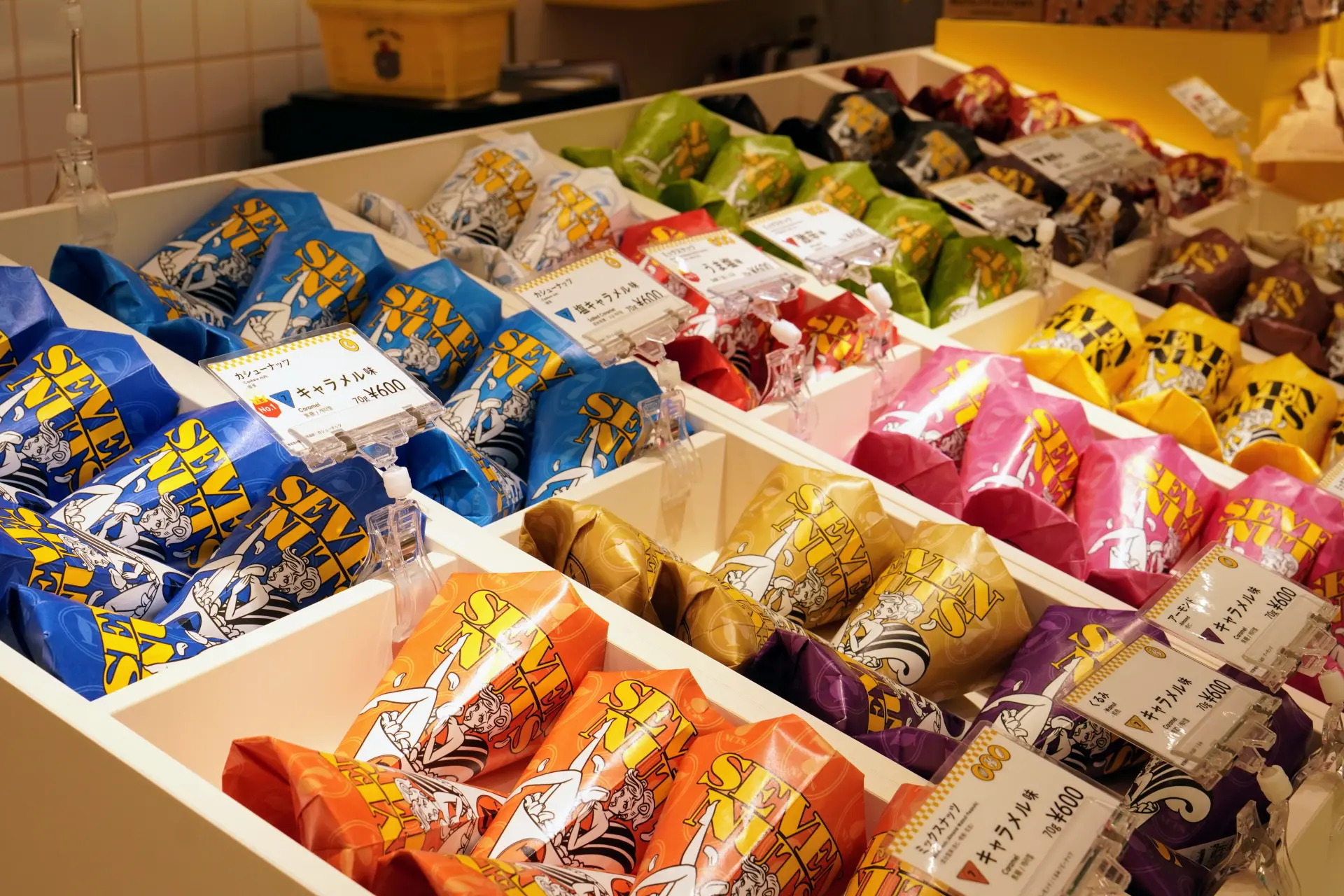
Next door, NUTS FACTORY sells four kinds of nuts roasted with sugar, without using oil.
There are more than 10 flavors, and the colorful packaging alone is enough to lift your mood.
- Name in Japanese
- 小田急エース
- Address
- 1 Nishi-Shinjuku, Shinjuku-ku, Tokyo Google Maps
- Hours
- 11:00am - 9:00pm
- Closed
- Open every day
Extend Your Walk to Bunmeido Tokyo Shinjuku Honten Near Shinjuku Gyoen
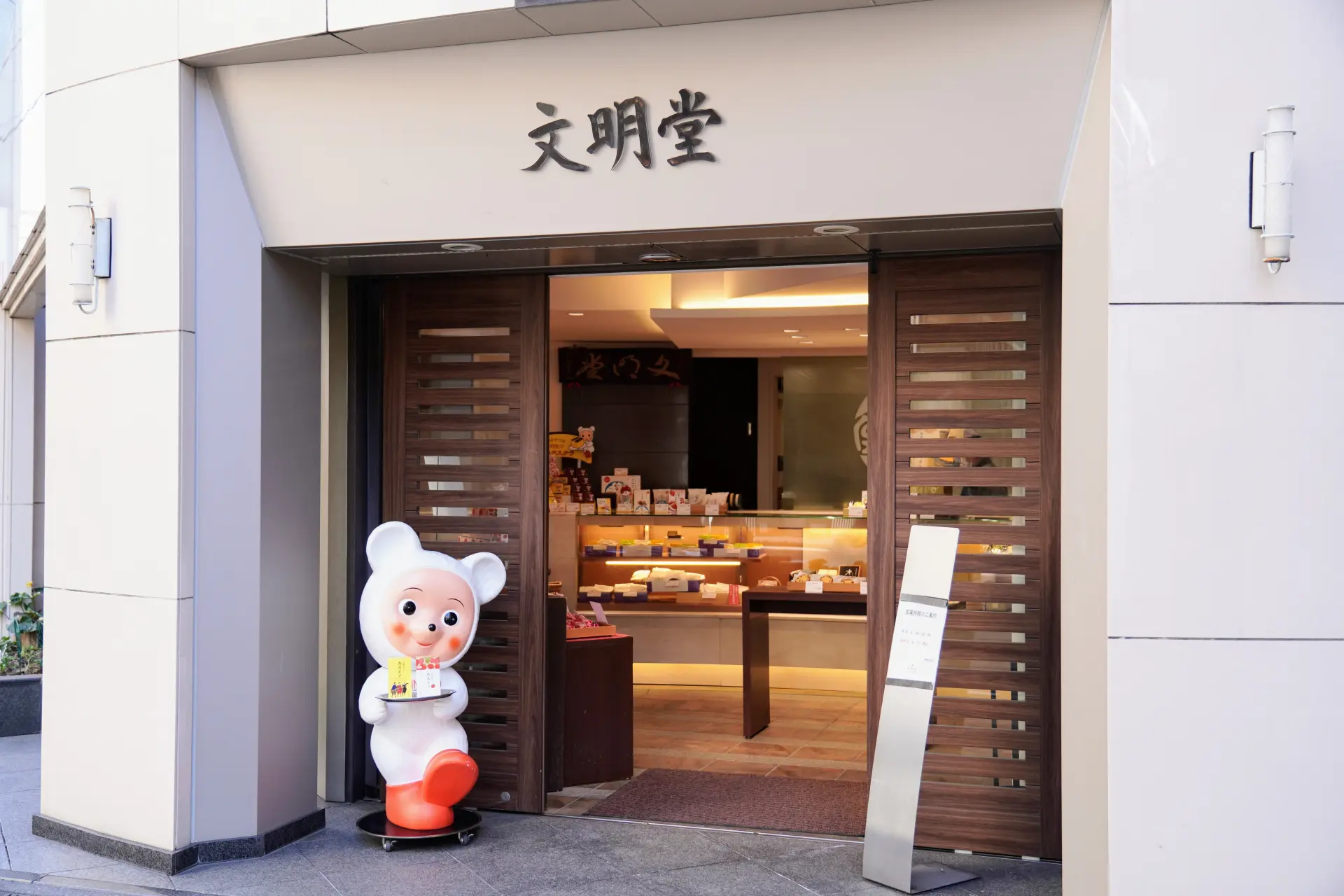
If you have extra time and energy, it is worth extending your walk to Bunmeido Tokyo Shinjuku Honten near Shinjuku Gyoenmae Station.
Since opening in Shinjuku in 1933, it has long been beloved as a classic gift for people who live locally and for those who work in Shinjuku.
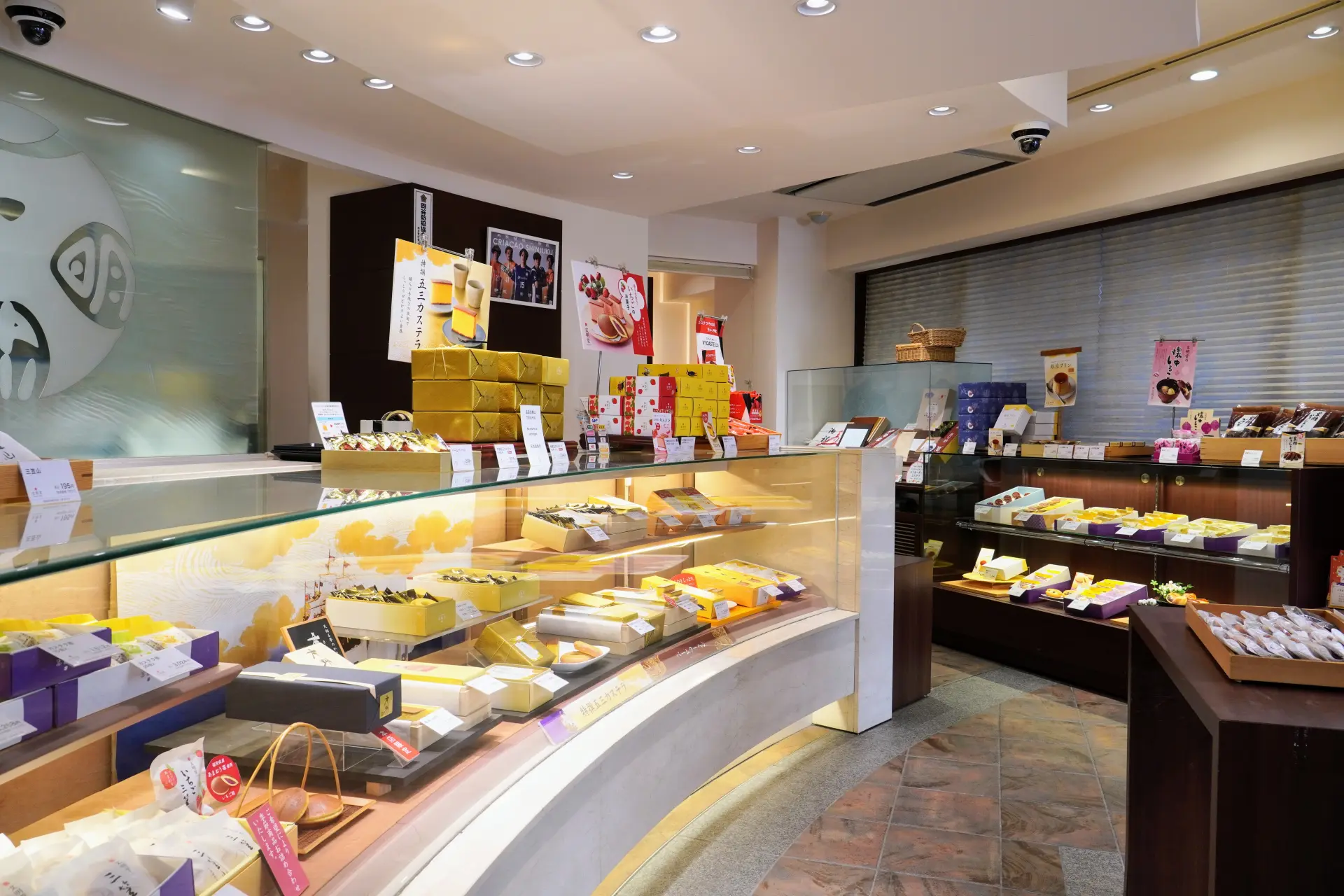
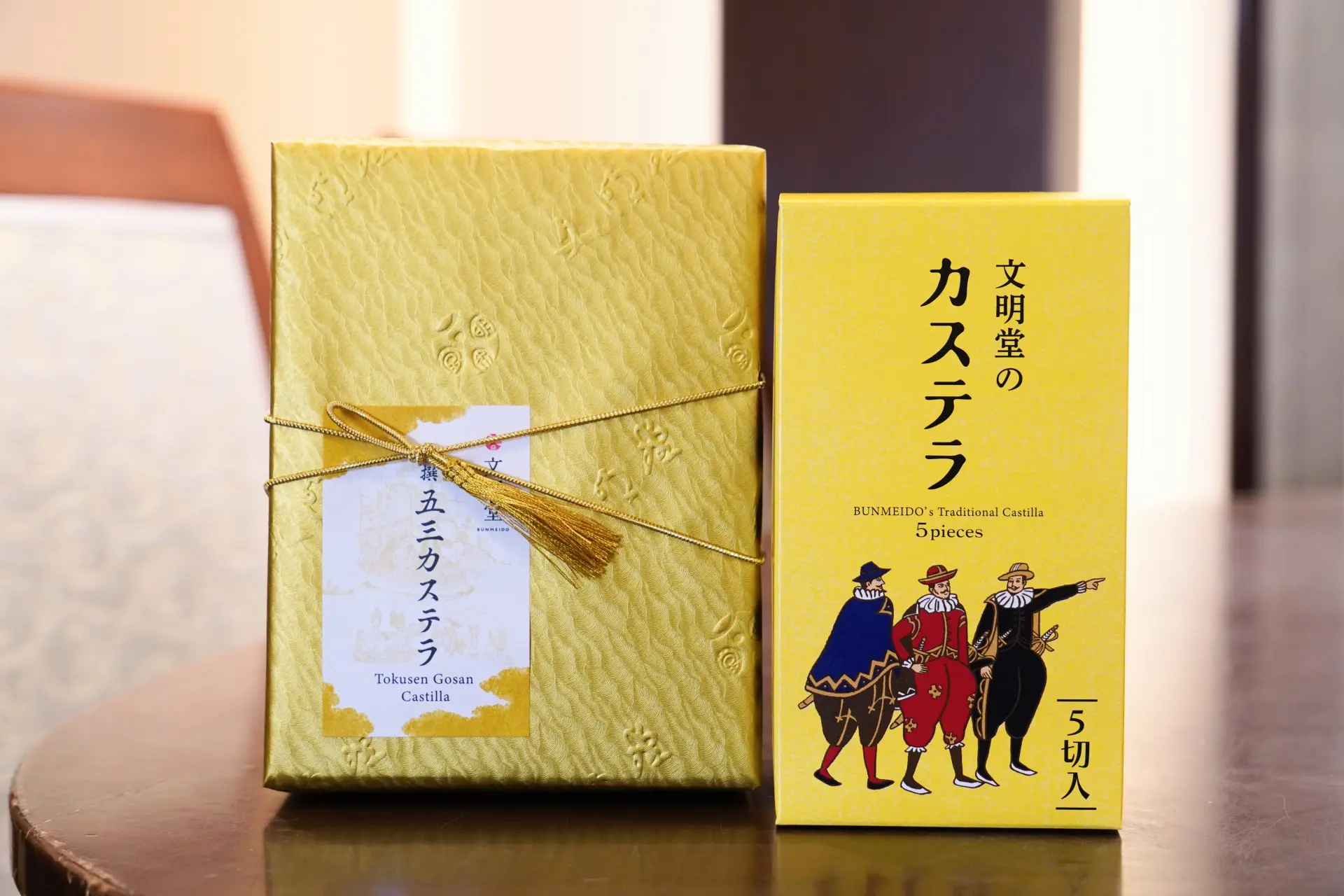
Inside, castella cakes, dorayaki, and a wide range of Japanese and Western sweets line the shelves, but one especially recommended item is “Tokusen Gosankasutera.”
By setting the weight ratio of egg yolk to egg white at “5:3” and reducing the flour as much as possible, it achieves a rich yet moist, delicate melt-in-the-mouth texture.
On your way back from your Nishi-Shinjuku stroll, make a small detour and take this treat home along with the lingering feeling of your trip.
- Name in Japanese
- 文明堂東京 新宿本店
- Address
- 1F, 1-19-4 Shinjuku, Shinjuku-ku, Tokyo Google Maps
- Hours
- 9:30am - 6:00pm
- Closed
- Saturdays, Sundays, and public holidays
3 Popular Art Spots Around the Nishi-Shinjuku Area
Around the Nishi-Shinjuku area, you will find appealing art spots where you can experience artistic culture alongside the urban landscape.
From public art spreading through a cluster of skyscrapers to world-class concert halls and museums, a wide variety of artistic experiences are possible.
Many facilities are easy to drop by as you stroll, letting you fully enjoy the urban culture unique to Nishi-Shinjuku.
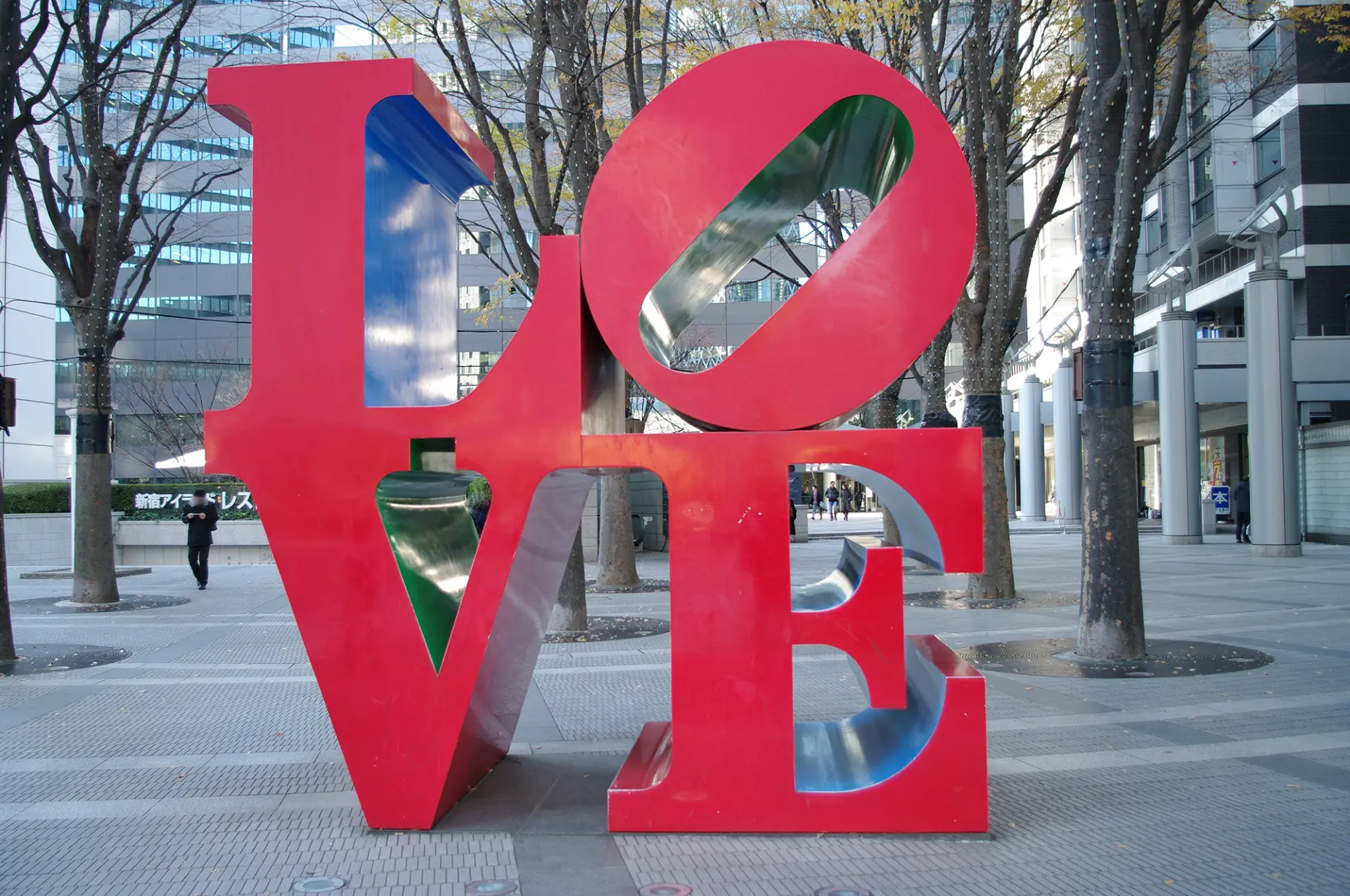
1. Shinjuku i-LAND
Shinjuku i-Land sits within Nishi-Shinjuku’s high-rise district.
Centered on the 44-story skyscraper Shinjuku i-Land Tower, it is an area with urban functions including offices, shops, residences, a school, and a plaza.
Within the grounds, numerous public artworks are scattered throughout, themed around “human love and the future.”
2. Tokyo Opera City
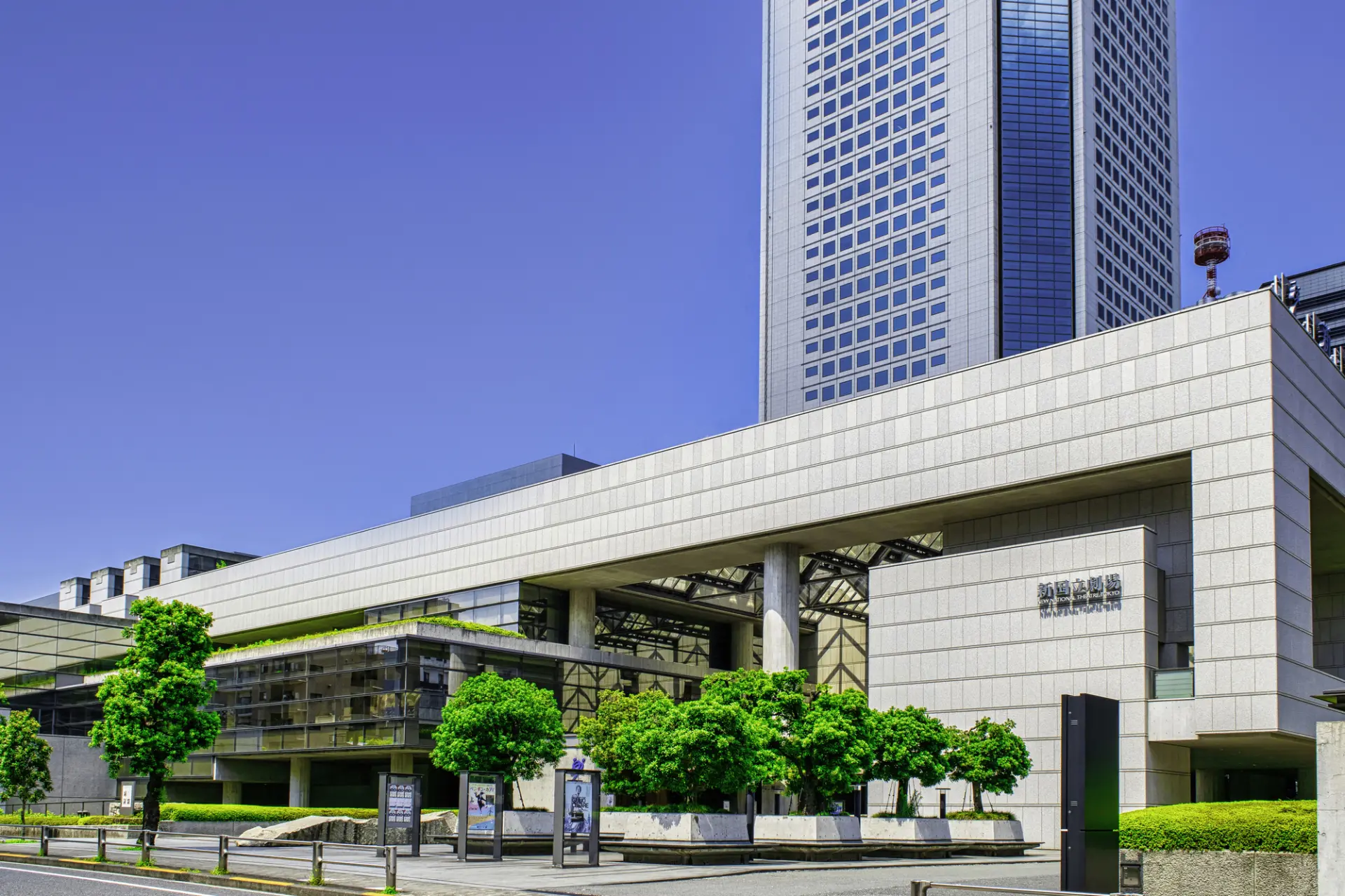
A complex facility at Hatsudai Station, one stop from Shinjuku Station, housing offices, a concert hall, art galleries, a theater, restaurants, and shops.
It includes a classical-music concert hall equipped with a pipe organ, as well as a smaller hall designed with the image of a chapel.
It is also home to the NTT InterCommunication Center (ICC) and sits next to the New National Theatre, serving as a hub for artistic expression.
3. SOMPO Museum of Art
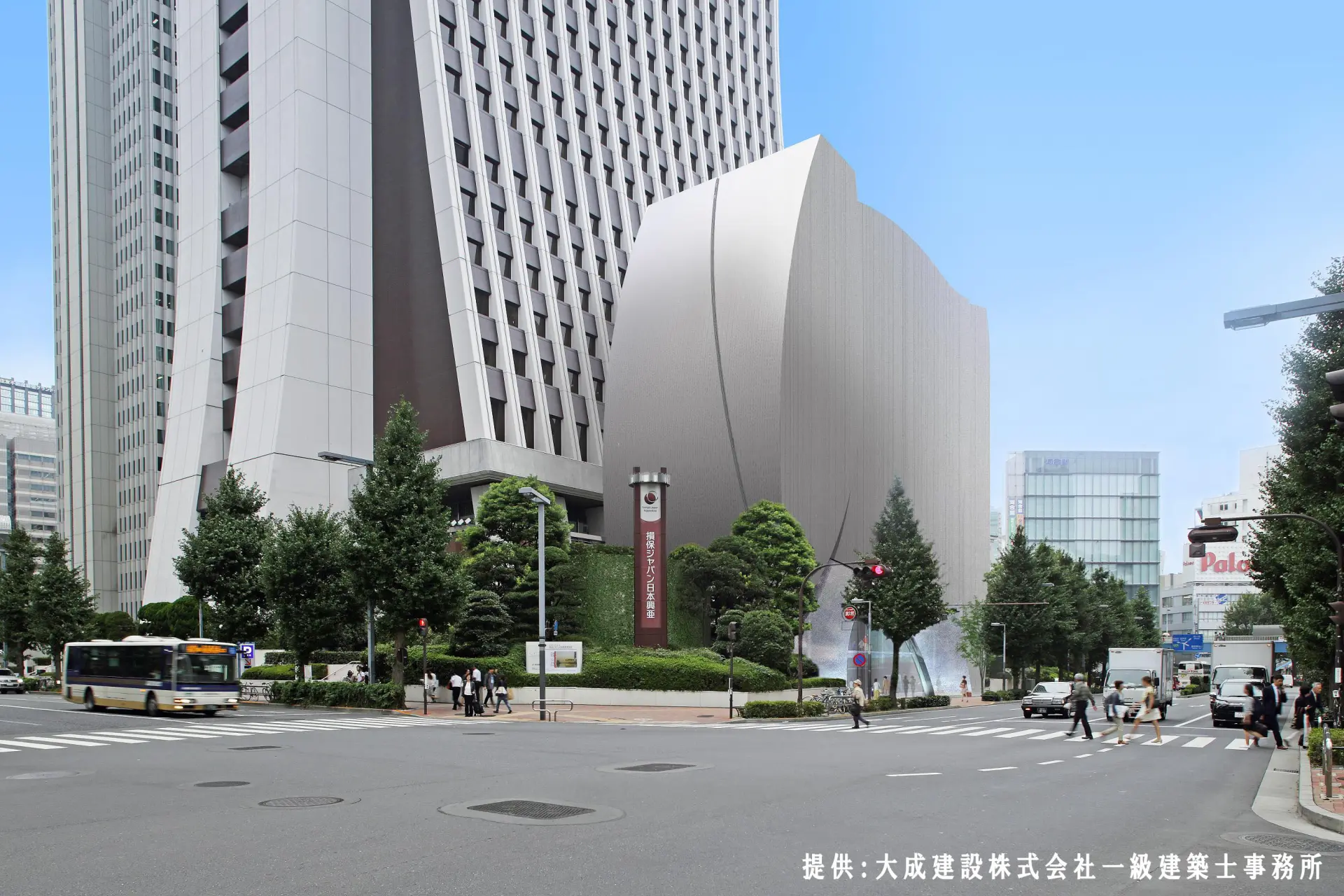
As an art landmark in Shinjuku, Sompo Museum of Art showcases a wide range of art and culture.
The first floor is an entrance hall, the second floor houses a museum shop and rest area, and the third through fifth floors are exhibition galleries.
In front of the entrance, a ceramic panel reproduction of Vincent van Gogh’s “Sunflowers” is on display.
It draws the attention of passersby.
Summary
When people hear “Shinjuku,” many may picture the bustle of the East Exit.
Yet on the opposite side, in Nishi-Shinjuku, there is a deep, local face with shrines, backstreets, and shops rooted in the community.
Enjoy a Nishi-Shinjuku stroll while feeling the everyday lives of the people around you.