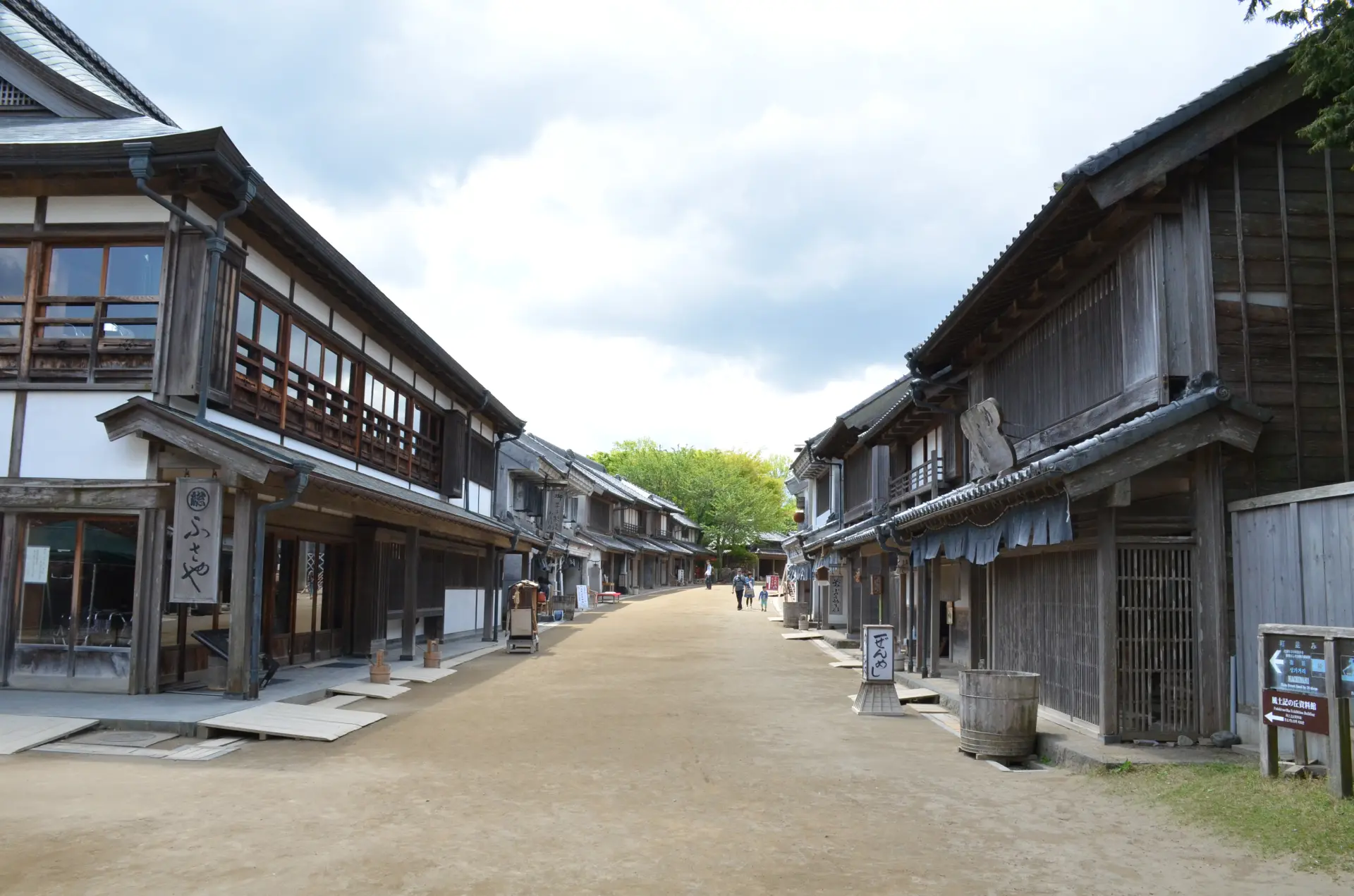
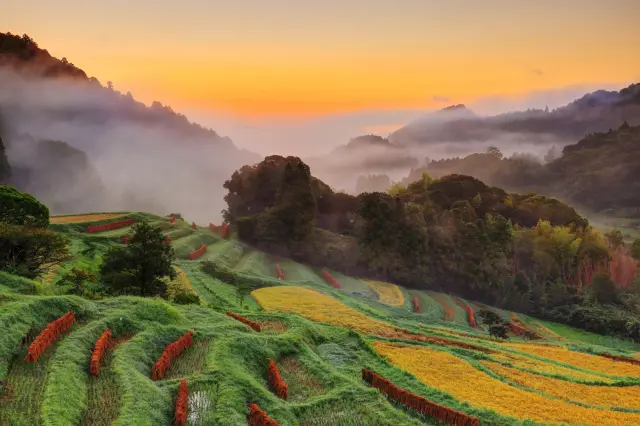
This museum recreates buildings and landscapes from the late Edo period to the early Meiji period based on traditional townscapes and farmhouses that remain in Sawara and other areas of the prefecture.
In the merchant district, there are recreations of Inari, Jizo, and fire viewing stables, which are well worth seeing. In the farm area, visitors will feel as if they are time travelers who have wandered into this era. Visitors can experience traditional skills such as weaving and papier-mâché painting, and enjoy getting a taste of old culture. This facility allows visitors to experience the traditional lifestyle and skills of Boso.
In addition to samurai residences, merchant houses, and farmhouses, the museum also recreates a water mill hut that existed in the Boso region until the early Showa period, and a rural kabuki stage where jishibai (local theatrical performances) were held. At the Fudoki-no-Oka Museum, visitors can see a reconstructed skeleton of a Naumann elephant excavated from the Inba Marsh, as well as artifacts excavated from an ancient burial mound. The Ryukakuji tumulus cluster, one of the largest in the prefecture, is spread out and includes haniwa terra-cotta tombs and reconstructed tombs.
Another attraction is the relocated buildings, such as the former Gakushuin Elementary School Main Hall, designated as a national important cultural property, located in a satoyama rich in nature.
Highlights
-
There are also a number of hands-on workshops that can be applied for on the day, such as "making tortoise candy," "making chiyogami candles," and "making tatami coasters" (a fee is required).
-
Some of them require advance reservations, so it is advisable to check the website in advance.
-
There are many things to see and do, and considering that you will be participating in hands-on events, it is recommended that you go from the time the park opens.