

Recharge Your Mind and Body at Spiritual Sites: 22 Top Attractions in Mie
Mie Prefecture is home to many sacred sites, including Ise Jingu, one of Japan's most revered spiritual destinations, and the Kumano Kodo, a UNESCO World Heritage pilgrimage route.
Its picturesque landscapes, surrounded by mountains and the sea, offer a refreshing escape.
Visitors can also savor excellent cuisine made with ingredients from both land and sea.
Why not visit Mie for a journey that will recharge your mind and body?
What Is Mie Like?
Mie Prefecture is located in central Japan.
It has approximately 620 miles of coastline and is also known as the setting of the 2016 G7 Ise-Shima Summit.
In Japan's oldest historical texts, the Kojiki and Nihon Shoki, Mie is described as “Umashikuni,” or a beautiful and abundant land. Its deeply satisfying scenery, blessed with seas, mountains, and rivers, remains one of its greatest attractions.
Mie is also famous for its excellent food, including Matsusaka beef, one of Japan's best-known premium beef brands, as well as spiny lobster, clams, and Akafuku mochi.
It is also home to Ise Jingu, one of Japan's most revered spiritual sites, which has drawn worshippers from across the country for around 400 years.
Why not set out on a journey to enjoy delicious food and recharge your spirit amid beautiful natural scenery and sacred sites?

When Is the Best Time to Visit Mie?
Mie's natural scenery is beautiful throughout all four seasons.
January is an especially good time to visit, when you can make a New Year's shrine visit to Ise Jingu and enjoy seasonal seafood.
If you prefer milder weather, September through October is recommended for the refreshing climate and colorful fall foliage.
What to Wear in Mie by Season
- Spring (March-May): A light jacket and thin sweater
- Summer (June-August): Lightweight clothing and short sleeves
- Fall (September-November): A light jacket or coat
- Winter (December-February): A coat, thick sweater, or warm jacket
How Do You Get to Mie?
As Mie Prefecture does not have an airport, travelers generally reach it via a major city such as Nagoya, Osaka, or Kyoto.
From Tokyo Station, take the Shinkansen to Nagoya Station, then transfer to a JR train or Kintetsu Limited Express. The journey takes approximately 3 hours and 20 minutes.
From Osaka-Namba Station, the Kintetsu Limited Express takes approximately 1 hour and 40 minutes.
Enjoy a station bento and the scenery from the train window on your way to Mie.
Main Ways to Get Around Mie
Using trains and taxis effectively makes sightseeing around Mie convenient and comfortable.
Buses and rental cars are also readily available, so consider traveling by car as well as by train when planning your itinerary.
Spiritual Sites and More: 22 Top Attractions in Mie
When most people think of Mie, Ise Jingu, with its approximately 2,000-year history, and the World Heritage-listed Kumano Kodo likely come to mind.
However, the prefecture also has numerous historic shrines, beautiful natural landscapes, and other spiritually significant destinations.
Here are some of the top attractions to visit during a trip to Mie.
1. Nabana no Sato
This theme park features seasonal flowers blooming across its expansive grounds.
In recent years, its main attraction has been the Nabana no Sato Illumination, held annually from fall through around spring.
The theme changes each year, but the display's sophisticated programming technology and state-of-the-art LED lights never fail to captivate visitors.

2. Ise Jingu
Affectionately known as O-Ise-san and commonly called Ise Jingu, its official name is simply Jingu.
Jingu comprises 125 shrines. These include the Inner Shrine, or Kotai Jingu, dedicated to Amaterasu Omikami, the ancestral deity of the Imperial Family, and the Outer Shrine, or Toyouke Daijingu, dedicated to the guardian deity of food, clothing, shelter, and industry, as well as auxiliary, subordinate, and affiliated shrines.
The shrine buildings are constructed from Japanese cypress in the ancient Japanese shinmei-zukuri architectural style. At the two main sanctuaries and 14 auxiliary shrines, the buildings are reconstructed and the sacred objects transferred to the new structures every 20 years in a ritual known as Shikinen Sengu.

3. Toba Aquarium
This historic aquarium opened in 1955. The number of species in its care grew from approximately 50 at the time of opening to more than 1,200 in 2013, the largest collection in Japan.
It is also the only aquarium in Japan that keeps dugongs and features a wide variety of shows and exhibits.
Highlights include African manatees and the Kingdom of Sea Animals, where visitors can walk through transparent tubes submerged in the water. In the Sea of Ise-Shima and Japanese Waters area, visitors can also see charming finless porpoises.

4. Nagashima Spa Land
One of Japan's largest amusement parks, Nagashima Spa Land features some of the country's most thrilling attractions.
Its most popular ride is HAKUGEI, a world-class hybrid roller coaster.
From a height of 180 feet, it plunges down an 80-degree slope and races along at a top speed of 66 mph. The sheer excitement evokes a ferocious white whale charging through rough seas.

5. Suzuka Circuit
Suzuka Circuit is known for hosting numerous races, including the Formula 1 Japanese Grand Prix and the Suzuka 8 Hours.
In addition to its international racing course, the complex includes an amusement park, hotel, and restaurants, making it an enjoyable theme park destination as well.

6. Shima Spain Village
This theme park offers attractions, parades, shows, and more.
Many of its features are inspired by Spain, and an authentic flamenco show is among the highlights.
The park also has numerous photogenic locations where visitors can capture memorable images unlike those from everyday life.

7. Oharai-machi and Okage Yokocho
In front of the torii gate at Ise Jingu's Inner Shrine is Oharai-machi, a street resembling a traditional shrine town that welcomes large numbers of worshippers every year.
From the Edo period through the early Meiji period, many religious guides known as onshi lived here and performed sacred kagura dances for the worshippers in their care. This is said to be how the area came to be called Oharai-machi.

8. Sarutahiko Shrine
The shrine is dedicated to Sarutahiko Okami, a deity said to appear at the beginning of important endeavors and guide everything in a positive direction.
The deity also has deep ties to Ise Jingu. Ota-no-Mikoto, a descendant of Sarutahiko Okami, recommended a location upstream on the Isuzu River as the site of Ise Jingu's Inner Shrine.
The Ujitsuchigimi family, direct descendants of Sarutahiko Okami and Ota-no-Mikoto, held a special position at Jingu and played an important role in the Shikinen Sengu reconstruction ceremonies.

9. Shinmei Shrine (Ishigami-san)
Located deep within a quiet forest at the end of the approach, Shinmei Shrine is the guardian shrine of the Osatsu area and is dedicated to Amaterasu Omikami.
Beside the shrine stands an old, withered camphor tree revered as a sacred tree that protects longevity.
The tree is hollow inside, and legend says that defeated Genji soldiers once took shelter within it.

10. Gozaisho Ropeway
The ropeway connects Yunoyama-Onsen Station, located at an elevation of 1,312 feet near the base of Mount Gozaisho, with Sanjo-Koen Station at an elevation of 3,871 feet in 15 minutes.
The gondolas offer panoramic views of Ise Bay, while the observation restaurant at the upper station serves meals.
Maintained walking paths through Sanjo Park make it easy to reach the 3,976-foot summit of Mount Gozaisho. Those looking for an even easier route can use the single-seat sightseeing lift, which also operates as a ski lift.

11. Kumano Kodo
The Kumano Kodo is a network of pilgrimage routes leading to the Kumano Sanzan, the collective name for Kumano Hongu Taisha, Kumano Hayatama Taisha, Kumano Nachi Taisha, and Seiganto-ji Temple on Mount Nachi.
As devotion to Kumano grew, members of the Imperial Family traveled these routes on pilgrimages. The practice eventually spread to ordinary people as well.

12. Mikimoto Pearl Island
This is the island where Kokichi Mikimoto succeeded in cultivating pearls for the first time in the world in 1893.
Visitors can explore the Pearl Museum and Kokichi Mikimoto Memorial Hall and watch diving demonstrations by ama female divers.
The Pearl Museum displays antique jewelry from the era of natural pearls and arts and crafts made with pearls. Another section uses real objects, specimens, and videos as expert staff explain how pearls are formed.

13. Iga-ryu Ninja Museum
The museum began as the Iga-ryu Ninja House, which opened in 1964.
Today, the Iga-ryu Ninja Museum includes the ninja house as well as collections of historical documents related to ninja and ninjutsu from across Japan, an interactive experience hall, and a tradition hall.

14. Ago Bay
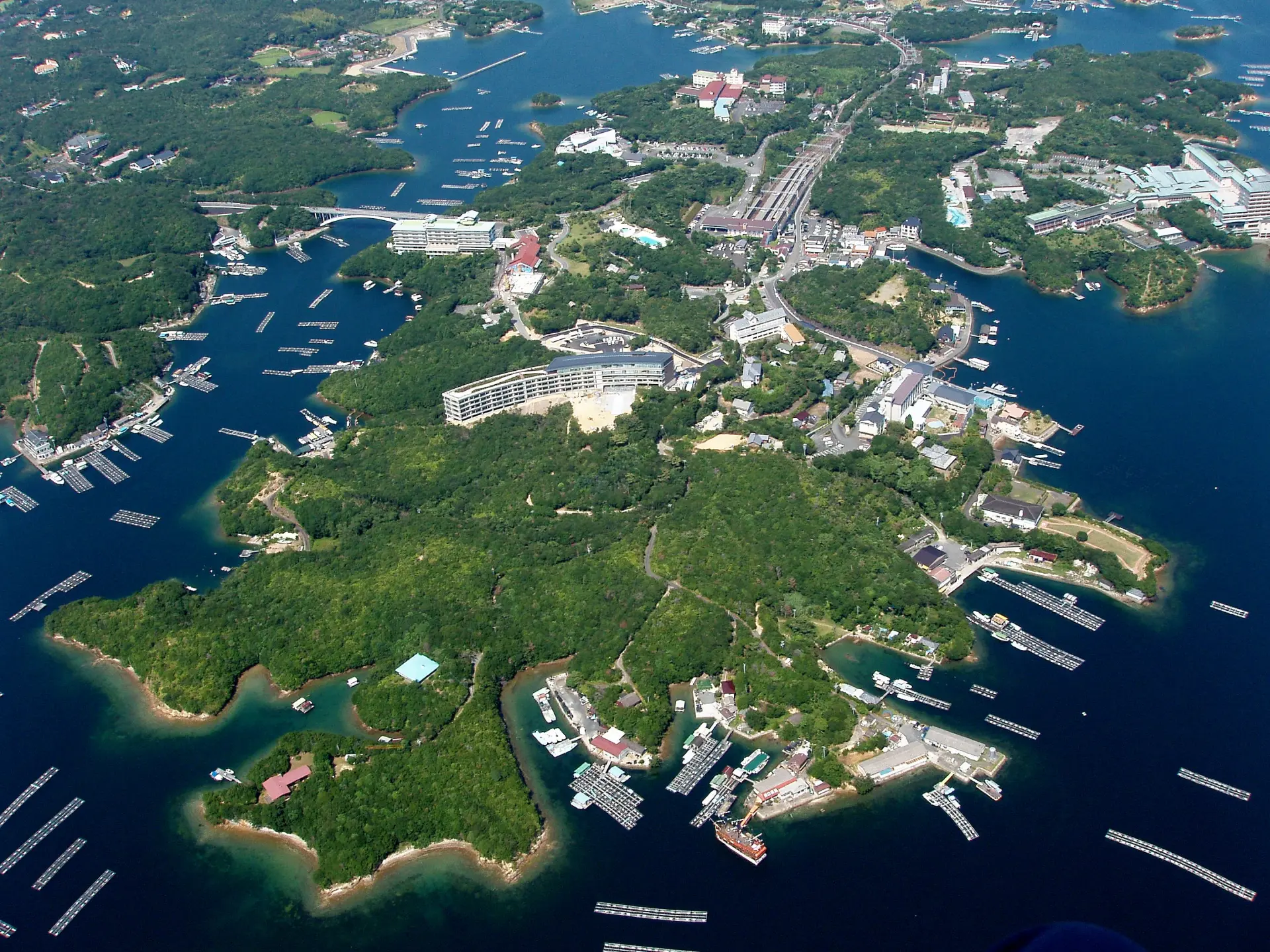
Known for its deeply indented ria coastline, Ago Bay contains 60 islands of various sizes.
It is also a production area for the green seaweed locally known as aosa. Kashikojima Island, the setting of the Ise-Shima Summit, is connected to the main island of Honshu by a bridge, making it relatively easy to reach. It also has hotels offering excellent views.

15. Historic Streets of Ise Kawasaki
Located northeast of Ise Jingu, Kawasaki prospered from the Edo period onward as the “Kitchen of Ise,” supplying goods to pilgrims visiting the shrine.
The district extends along the middle reaches of the Seta River in Ise. Although some traditional townhouses and warehouses were lost during river improvement work following flood damage, the historic streetscape remains today.
Gabled townhouses and warehouses line Kawasaki Hon-dori, which runs parallel to the Seta River.
A walk along the street is especially enjoyable, with cafés, shops serving Ise udon, and stores selling miscellaneous goods to explore along the way.

16. Ise Sea Paradise
Ise Sea Paradise is an aquarium in Ise located near Meoto Iwa, a pair of large and small rocks rising from the sea. The facility is popular for its exceptionally close encounters with marine mammals, fish, and other sea creatures.

17. Meoto Iwa
Meoto Iwa is known for the sight of two rocks standing side by side off the coast of Futamiura: the 30-foot-high male rock and the 13-foot-high female rock.
Regarded as a symbol of marital harmony, it is also a spiritual destination visited by many women and couples praying for good relationships.
The rocks have long been revered as a torii gate through which people worship the sacred Okitama Shinseki rock, located approximately 2,300 feet offshore beneath the water, and the rising sun. Meoto Iwa can be viewed from the approach to Futami Okitama Shrine.

18. Futami Okitama Shrine
Dedicated to Sarutahiko Okami, this shrine is believed to offer blessings for finding a good match, marital harmony, and traffic safety.
From the approach, visitors can see Meoto Iwa: the 30-foot-high male rock and the 13-foot-high female rock standing side by side.

19. Yunoyama Onsen
This hot spring resort surrounded by nature lies at the foot of Mount Gozaisho. Traditional inns and hotels are scattered along the Mitaki River valley, making the area a lively base for exploring nearby attractions.
The hot spring has a long history dating to 718 in the Nara period. It is also known as Shika-no-Yu, or Deer Hot Spring, after a legend in which a deer healed its wounds in the water.

20. Akame 48 Waterfalls
The Takigawa River flows through Akame-cho in Nabari City. Upstream, numerous waterfalls cascade along the valley, collectively known as the Akame 48 Waterfalls.
Long regarded as sacred ground, the area is a spiritual destination with a history of being used for training by monks and ninja.

21. Yokoyama Observatory
Located on 459-foot-high Mount Yokoyama, this observation area overlooks a beautiful coastline dotted with 60 islands of various sizes.
It was renovated in 2018, when a modern observation terrace opened.
Yokoyama Tenku Café Terrace Mirador Shima, located on the observation terrace, serves drinks and food for takeout, allowing visitors to relax while admiring sweeping views of the coastal landscape.

22. Kashikojima Island
Kashikojima Island, where the 2016 Ise-Shima Summit was held, lies in Ago Bay on the southern Shima Peninsula. Its location is unusual, as it is only approximately 33 feet from the main island of Honshu.
It is also widely known as the location of Kashikojima Station, the final stop on the Kintetsu Shima Line.
Taste Local Ingredients: 3 Popular Restaurants in Mie
Mie is famous for excellent ingredients, including premium Matsusaka beef and spiny lobster.
While sightseeing in Mie, be sure to try some of the regional cuisine made with local ingredients.
1. Sushikyu
Sushikyu is located in Okage Yokocho, the town outside Ise Jingu lined with restaurants and souvenir shops.
The business began when its founder, Kyuzo Morita, opened a sushi restaurant during the Tenpo era of the Edo period (1830-1844). It later grew into a restaurant and inn.
The current Sushikyu building was restored and renovated in 1989.

2. Fukusuke
This udon restaurant is located in Okage Yokocho, roughly midway along the lively Oharai-machi street in front of Ise Jingu's Inner Shrine. It serves Ise udon, a local specialty long loved as an essential part of a pilgrimage to Ise.
Ise udon is distinguished by its thick, soft noodles and dark sauce.
Fukusuke remains faithful to this tradition, serving thick noodles with a soft yet pleasantly chewy texture.

3. Butasute Main Store
This long-established wagyu specialty store has been in business for more than 110 years. It sells only Japanese Black beef from heifers carefully raised by contracted farms near Ise.
The cattle are raised with specially formulated, carefully selected feed and a thorough focus on meat quality, resulting in beef celebrated for its fine marbling and rich flavor.
Butasute's widely known croquettes quickly became popular after takeout sales began at its Okage Yokocho location. Made generously with ground Japanese Black beef, they offer the distinctive taste of a specialty butcher shop and an easy way to savor premium Ise beef.

Discover the Region: 3 Shopping Destinations in Mie
Mie has many shopping destinations that showcase the character of the region, allowing visitors to discover its appeal through shopping.
Here are three carefully selected places to visit when shopping in Mie.
1. Mitsui Outlet Park Jazz Dream Nagashima
Mitsui Outlet Park Jazz Dream Nagashima opened in 2002.
With approximately 300 stores, it is popular as one of Japan's largest outlet malls.
Its two-story buildings, designed to resemble the streets of New Orleans, house renowned Japanese and international manufacturers, select shops, and coveted luxury brands.

2. Ise Meotoiwa Meoto Yokocho
This is one of Ise-Shima's largest indoor shopping facilities, attached to Ise Sea Paradise, an aquarium known for exhibits that bring visitors exceptionally close to the animals.
It stands along the approach to Meoto Iwa, a spiritual site associated with marital harmony, successful relationships, and other forms of good fortune, and attracts many tourists throughout the year.

3. D&DEPARTMENT MIE by VISON
D&DEPARTMENT is a community shop and network project that uncovers enduring local designs and communicates the distinctive appeal of each region.
It currently operates nine stores in Japan and three overseas, each presenting the character of its local area.

Relax at a Premium Resort: 3 Places to Stay in Mie
In addition to its many spiritual sites, Mie is home to a number of premium resort facilities.
After recharging your spirit at sacred destinations, relax at a resort hotel and restore your physical energy as well.
1. NEMU RESORT
Located within Ise-Shima National Park, NEMU RESORT is an integrated resort where guests can enjoy both active pursuits and relaxing stays amid abundant natural surroundings bordered by the sea and greenery.
The expansive grounds offer a variety of activities, including refreshing seaside golf at NEMU GOLF CLUB, a garden pool, and marine cruises.

2. Amanemu
Nestled quietly in the hills overlooking Ago Bay, Amanemu is the first property in the globally renowned Aman luxury resort collection to feature hot springs. All 24 suites and eight villas have private indoor baths supplied with hot spring water, allowing guests to enjoy the springs without leaving their rooms.

3. Shima Mediterranean Village
This expansive resort features white townscapes inspired by Mediterranean destinations and sweeping views of Ago Bay.
Across its approximately 8.2-acre grounds are several distinct areas: the Mykonorca Zone, recreating the streets of places such as Mykonos in Greece and Menorca in Spain; the exotic Alhambra Zone; the Castilla Zone, inspired by the rugged atmosphere and vast, dry landscapes of central Spain; the Sardinia Zone, modeled after the Mediterranean island west of the Italian mainland; and the bright, festive Andalusia Zone.

Summary
No trip to Mie is complete without visiting Ise Jingu, one of Japan's most revered spiritual destinations.
The prefecture is also home to many other historic sites and shrines, including the Kumano Kodo and Sarutahiko Shrine.
Visit Mie's spiritual sites and seek the blessings of their deities.
After recharging in Mie, consider continuing your exploration of Japanese history in Nara Prefecture, approximately two hours away by Shinkansen.
Author
Writers & Editors
GOOD LUCK TRIP Editors
Sharing lesser-known ways to experience Japan with the world!