

"Kitano Tenmangu Shrine Travel Guide" Enjoy Lavish Historic Architecture and Scenic Nature
Kitano Tenmangu Shrine is well known as a shrine dedicated to the deity of learning and the arts.
Along with splendid Momoyama-period architecture, you can also enjoy beautiful natural scenery.
There are highlights you might miss if you don’t know about them, so a little prep will help you fully enjoy your visit.
In this article, we’ll introduce the history and must-see sights you should know, Tenjin-sama’s Seven Mysteries, and nearby spots to help you fully enjoy Kitano Tenmangu Shrine.
What is Kitano Tenmangu Shrine Like?
Located north of central Kyoto City in Kyoto Prefecture, Kitano Tenmangu Shrine is a Shinto shrine founded in 947 with over 1,000 years of history.
It is the head shrine of 12,000 Tenmangu and Tenjin shrines across Japan and enshrines Sugawara no Michizane, an outstanding scholar and statesman from the Heian period.
It is especially revered as a god of learning, and many students from across Japan come here to pray for success on entrance exams.
The current Main Hall was built in 1607 by Toyotomi Hideyori and is designated a National Treasure as a rare surviving example of the gorgeous Momoyama-period style.
The Sankomon Gate is also built in the Momoyama style like the Main Hall and is designated an Important Cultural Property of Japan.
How Kitano Tenmangu Shrine Began
In 947, following a divine oracle, the shrine was built in the Kitano area northwest of Heian-kyo, the Heian-period capital, to enshrine Sugawara no Michizane.
An envoy of Emperor Ichijo was dispatched to pray for peace in Japan.
At that time, Emperor Ichijo granted the divine name “Kitano Tenman Daijizai Tenjin,” and Sugawara no Michizane came to be enshrined as “Tenjin-sama.”
Toyotomi Hideyoshi held a large-scale tea gathering on the grounds of Kitano Tenmangu Shrine, and “Yayako Odori,” said to be the origin of kabuki, was performed, and the shrine came to be recognized as a hub for sharing Japanese culture.
It is said that at terakoya schools that taught reading and writing in the Edo period, talismans depicting Sugawara no Michizane were displayed and people prayed for academic success.
Because of this, Sugawara no Michizane became widely known as the god of learning and the arts.

Was the Deity Actually One of Japan’s Three Great Vengeful Spirits?
A vengeful spirit is said to be a spirit of someone who died with resentment and hatred and brings misfortune, and Sugawara no Michizane is actually counted as one of the “Three Great Vengeful Spirits of Japan.”
From a young age, Sugawara no Michizane devoted himself to studying and had exceptional talent, even composing excellent waka and Chinese poetry.
When he became a statesman, he demonstrated his abilities, rose through the ranks in an unprecedented way, and was appointed to the important post of Minister of the Right.
Alongside Fujiwara no Tokihira, the Minister of the Left, he oversaw the affairs of state.
Through Fujiwara no Tokihira’s scheme, he was falsely accused and exiled to a government office in Kyushu with little work and little pay.
Two years later, in 903, Sugawara no Michizane died.
Six years after his death, Fujiwara no Tokihira, who caused his exile, died of illness.
In 913, the Minister of the Right, Minamoto no Hikaru, died while out hunting, and in 923, the Crown Prince also died.
In 930, a building where the emperor spent his daily life was struck by lightning and burned down, killing several people working nearby. Three months after the lightning strike, Emperor Daigo also died.
It was feared that the reason people in important positions kept dying was the curse of Sugawara no Michizane’s vengeful spirit, and it is said that Kitano Tenmangu Shrine was founded and he was enshrined there to calm the spirit.
Knowing that Sugawara no Michizane was originally seen as a vengeful spirit before later becoming the god of learning and the arts will help you enjoy Kitano Tenmangu Shrine on a deeper level.

Access to Kitano Tenmangu Shrine
Although it’s outside central Kyoto City, it’s easy to get to: take a city bus from JR Kyoto Station and you’ll arrive in Approx. 35 minutes.
It takes Approx. 1 hour from Itami Airport, and a little over 1 hour 40 minutes from Kansai International Airport.
Kitano Tenmangu Shrine Hours and Admission
Kitano Tenmangu Shrine can be visited for free.
Hours vary by season, so before your trip, be sure to check the Official website.
- Hours
- 7:00am–5:00pm
- Admission
- Free
What’s the Best Season to Visit Kitano Tenmangu Shrine?
If you’re visiting Kitano Tenmangu Shrine, early February to late March—when the plum blossoms are at their best—is highly recommended.
About 1,500 plum trees of Approx. 50 varieties, beloved by Sugawara no Michizane, are planted across the grounds, and the shrine has long been known as a famous plum-blossom spot.
At the shrine’s plum garden, Hanano-niwa (Flower Garden), you can view red and white plum blossoms in full bloom from the walking paths and observation deck.
With illuminations and events such as the Baikasai Plum Blossom Festival and Baikasai Nodate Grand Tea Ceremony, there are many ways to enjoy the season, so be sure to visit during peak bloom.

Enjoy History, Nature, and Events! 5 Highlights of Kitano Tenmangu Shrine
Kitano Tenmangu Shrine is packed with highlights, including the National Treasure Main Hall and the Sankomon Gate, designated an Important Cultural Property.
Visit the five highlights below to fully enjoy what the shrine has to offer.
1. The “Main Hall,” Featuring Lavish Momoyama-Period Architecture
The Main Hall is a valuable historic structure that conveys the history of shrine architecture and is designated a National Treasure.
It features a distinctive structure known as yattsumune-zukuri (gongen-zukuri) and a magnificent worship hall, and it became the prototype for gongen-zukuri, an architectural style that became popular in the Edo period.
The current Main Hall was built in 1607 by Toyotomi Hideyori, and its lavish Momoyama-period design is truly impressive.
In front of the Main Hall are plum trees that have been carefully protected since the shrine’s founding.
The elegant view of the plum trees alongside the Main Hall is also not to be missed.

2. The “Sankomon Gate,” Completed Only When the North Star Shines
Built in the Momoyama period like the Main Hall, the Sankomon Gate is lavish and beautiful, and it is also designated an Important Cultural Property.
“Sanko” means the sun, moon, and stars, and carvings of the sun and moon can be found on the beam.
It’s said there is no star carving because when you look toward Kitano from the Daigokuden, once the emperor’s residence, the North Star shines above the gate—making the “three lights” complete.

3. Blessing-Bringing Nadeushi (Rubbing Oxen) Found Around the Grounds
At Kitano Tenmangu Shrine, you’ll find ox statues said to bring blessings when rubbed, scattered around the grounds.
Because Sugawara no Michizane was born in the Year of the Ox, and because he left instructions to bury him where the ox pulling his body sat down, oxen became strongly associated with him.
Oxen were chosen as his messengers in part because deities said to be the origin of names such as “Tenman Daijizai Tenjin” and “Nihon Daijoi Tokuten” are also connected to oxen.
Since the blessing is believed to relate to the part you rub, rub the ox’s head if you’re praying for academic success.

4. The “Maple Garden,” a Must for Early Summer and Fall Visits
Kitano Tenmangu Shrine is famous for plum blossoms, but it’s also a well-known fall foliage spot.
The breathtaking deep-crimson scenery comes from Approx. 350 maple trees planted along the walking path beside the Kamiyagawa River on the west side of the grounds.
The vivid green maples of early summer are also beautiful, making it a popular scenic spot.
During peak seasons for both fall foliage and green maples, the area is lit up at night, creating a magical view.
If you’re sightseeing in early summer or fall, the Maple Garden is a spot you should definitely visit.


5. The “Tenjin Market,” an Event with Food Stalls and Illuminated Shrine Grounds
The 25th of every month is considered “Tenjin-san Day” (Sugawara no Michizane’s day), and the shrine holds its temple and shrine fair.
Food stalls line the approach, where you can enjoy classic festival favorites like yakisoba and takoyaki, and you can also shop for antiques and handmade items such as wallets and bags.
At night, 350 stone lanterns and 250 hanging lanterns are lit, creating a dreamy atmosphere that feels different from daytime.
If you’ll be sightseeing or staying in Kyoto on the 25th, try adjusting your schedule and stopping by.

Make Your Visit Even More Fun! Tenjin-sama’s Seven Mysteries
As you explore the highlights of Kitano Tenmangu Shrine, pay attention to the “Seven Mysteries of Tenjin-sama” introduced below as well.
They’re easy to miss if you don’t know what to look for, so do a bit of prep to make the most of your visit.
1. Does Tenjin Appear? “Yogo no Matsu”
Kitano Tenmangu Shrine has a legend that if the first snowfall falls between Ritto (the start of winter) and the day before Risshun (the start of spring), Tenjin (Sugawara no Michizane) will descend.
The place where Tenjin (Sugawara no Michizane) descends is a sacred tree called “Yogo no Matsu.”
Don’t miss Yogo no Matsu either: a single pine tree surrounded by a stone fence, immediately to the right after passing through the large torii gate at the front approach.

2. A Curious Layout: The “Off-Axis Main Hall”
In most shrines, the Main Hall enshrining the principal deity is located directly in front of the approach.
However, at Kitano Tenmangu Shrine, what you see straight ahead is not the Main Hall, but a Tochi-nushi-sha shrine that enshrines the local deity of the land.
This unusual layout is because Kitano Tenmangu Shrine was built on land where the Jishu Shrine originally stood.

3. An Incomplete Structure? The “Star-Missing Sankomon Gate”
The Sankomon Gate, also introduced as a highlight, is also called the “Star-Missing Sankomon Gate.”
“Sanko” means the sun, moon, and stars, but the Sankomon Gate has carvings only of the sun and moon.
A traditional theory holds that the remaining “star” is the North Star, which actually shines in the sky.

4. Daikokuten’s Lantern: A Must-Try Spot for Those Seeking Financial Luck
On the base of a stone lantern near the Sankomon Gate, there is an engraved image of Daikokuten, a deity believed to bring prosperity in business.
It is said that if you place a small stone on Daikokuten’s mouth and it doesn’t fall, then keep the stone in your wallet and pray, you won’t have trouble with money.
Because it “doesn’t fall,” it came to be seen as a good omen and is also known among students.

5. A Must-Find: The Only Standing Ox
The oxen at Kitano Tenmangu Shrine come from stories about Sugawara no Michizane, and reclining ox statues are scattered around the grounds.
Among them, only one ox is shown standing.
The standing ox is carved into the transom of the Worship Hall, so be sure to look for it.

6. The Quietly Standing “Ura-no-mori” (Rear Shrine)
Most shrines are designed to be worshipped from the front, but at Kitano Tenmangu Shrine, there is also a shrine on the back side of the Main Hall that enshrines deities.
Enshrined in the Rear Shrine are three deities: Ame-no-hohi-no-mikoto, an ancestor of Sugawara no Michizane; his grandfather Sugawara no Kiyokimi; and his father Sugawara no Koreyoshi.

7. “Tengu-yama,” Believed to Be Home to Tengu
A “Shato Ko-ezu” (old illustrated map of the shrine grounds) depicting Kitano Tenmangu Shrine from the Muromachi period includes a karasu-tengu (crow tengu), suggesting that people may have believed tengu lived on “Tengu-yama” to the northwest.
Since there is also a nadeushi for granting one wish, it should be fun to stroll around the area while imagining the tengu.

3 Nearby Sightseeing Spots Around Kitano Tenmangu Shrine
Around Kitano Tenmangu Shrine, you’ll find many popular temples and shrines.
If you’re visiting shrines and temples around Kyoto, start with the three spots below.
1. Kinkaku-ji Temple
A temple that traces its origins to the “Kitayama-dono,” the residence of Ashikaga Yoshimitsu, the third shogun of the Muromachi shogunate.
Named Rokuon-ji after Yoshimitsu’s Buddhist name, it is a detached sub-temple of Shokoku-ji (a retirement hermitage built away from the main temple, later made into a temple).
The bell in the belfry just past the gate is said to date back to the Kamakura period and is tuned to oshiki (close to the note A in Western music).
Kinkaku-ji’s common name comes from the gold-leaf-covered Shariden (reliquary hall) standing in front of the pond.
Its kokera-buki roof made of thin sawara cypress shingles, and the pure gold applied in the second and third stories using lacquer as an adhesive, still convey the splendor of Ashikaga Yoshimitsu today.

2. Ryoan-ji Temple
A Zen temple of the Rinzai school (Myoshin-ji branch) registered as a UNESCO World Cultural Heritage Site as one of the “Historic Monuments of Ancient Kyoto.”
In 1450 (Hotoku 2) during the Muromachi period, Hosokawa Katsumoto, a shogunate kanrei (deputy), received a mountain villa from the Tokudaiji family and founded the temple, inviting Giten Gensho Zenji, the fifth patriarch of Myoshin-ji, as its founding abbot.
Although it was later destroyed in the Onin War, it was revived under Katsumoto’s son Masamoto through the efforts of the Myoshin-ji monk Tokuho Zenketsu. The hojo and rock garden are also said to have been built around this time.

3. Ninna-ji Temple
The head temple of the Omuro branch of Shingon Buddhism, registered as a UNESCO World Cultural Heritage Site as one of the “Historic Monuments of Ancient Kyoto.”
Construction began in 886 (Ninna 2) in the early Heian period by imperial vow of Emperor Koko, the 58th emperor, and the temple was founded in 888 (Ninna 4) by the next emperor, Emperor Uda. The temple name Ninna comes from the era name.
The Kondo (Golden Hall) deep in the grounds was relocated in the early Edo period during the Kanei era (1624–1645) from the Shishinden of the Kyoto Imperial Palace, which was built in the Momoyama period.
As a valuable surviving example of palace architecture from that time, it is the only National Treasure at Ninna-ji Temple.
Inside are enshrined the principal icon of Amida Triad as well as statues of the Four Heavenly Kings and Bonten, and vividly colored Pure Land paintings cover the walls.

3 Popular Places to Eat Near Kitano Tenmangu Shrine
After strolling through the grounds and enjoying seasonal nature like plum blossoms and fall foliage, treat yourself to Kyoto flavors nearby.
From obanzai to cafes perfect for a sightseeing break, here are some great options.
Enjoy a relaxed meal while soaking in the afterglow of Kitano Tenmangu Shrine.
1. Inoda Coffee Honten
The main shop of a long-established coffeehouse founded in 1940.
In a calm space with machiya-style architecture lined with classic lighting and chairs, you can enjoy carefully crafted coffee and light meals.
The signature blend served since the founding, “Arabia no Shinju” (Pearl of Arabia), is a dark, mocha-based roast balanced for aroma, richness, and acidity.

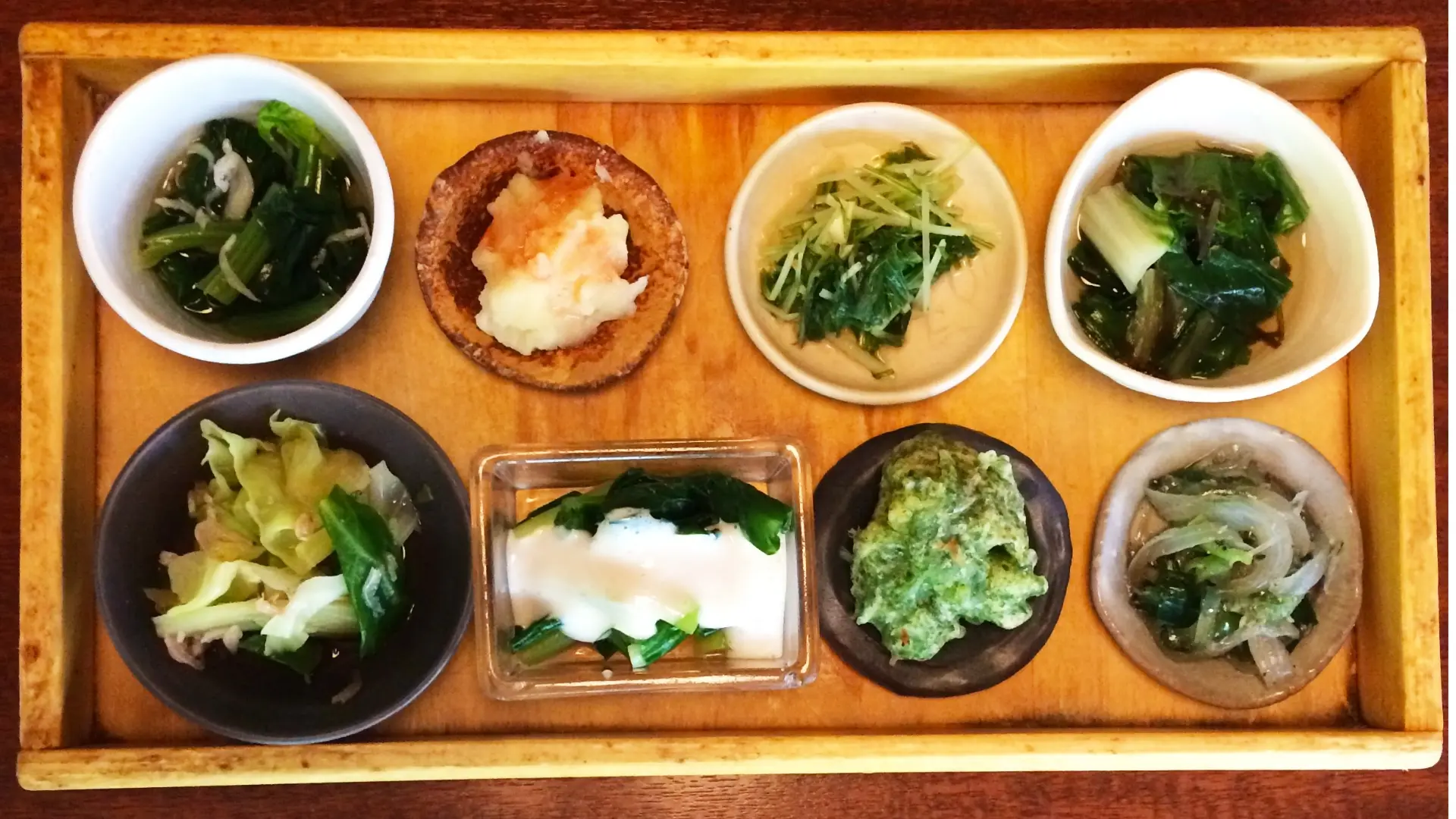
2. Demachi Rororo
A small Japanese restaurant in the Shimogamo Shrine area that makes use of an old machiya townhouse.
Its obanzai made with plenty of pesticide-free vegetables from Ohara, Kyoto is especially popular.
Lunch is offered in two options: the “Rororo Box Bento,” and the “Mini Kaiseki,” which must be reserved by the day before, with a combined limit of 30 meals.
3. Sushi Fukagawa
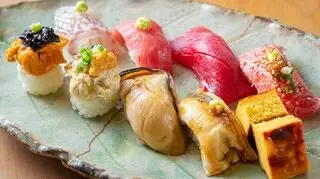
A sushi restaurant with an adults-only atmosphere and just 10 counter seats.
The nearest stations are the subway’s “Kyoto Shiyakusho-mae” and “Marutamachi,” and Kyoto Gyoen National Garden is nearby, with a residential neighborhood around the area.
The owner sources carefully selected seafood from trusted brokers across various regions, choosing by season, and serves sushi that lets you feel the four seasons.
Reviews of Kitano Tenmangu Shrine
3.87
Some reviews are AI-translated.
-
This is the temple that Japanese students always visit to pray for academic success.
-
After mid-February, this is the best place to see plum blossoms. The Tenjin Market, held on the 25th of every month, is also a big event for locals in Kyoto.
FAQ about Kitano Tenmangu Shrine
Q
When is the best time to see the plum blossoms at Kitano Tenmangu Shrine?
A
You can enjoy them for a long period, from early February to mid-March.
Q
When is the best time to see the fall foliage at Kitano Tenmangu Shrine?
A
Mid-November to early December is the best time.
Q
What about goshuin at Kitano Tenmangu Shrine?
A
There are various types of goshuin at Kitano Tenmangu Shrine, but the handwritten goshuin written directly in your goshuincho is especially popular.
Summary
Kitano Tenmangu Shrine offers not only lavish architecture, but also seasonal scenery like plum blossoms and fall foliage.
With so many highlights and the unmissable “Seven Mysteries of Tenjin-sama,” it’s a shrine full of charm.
Kyoto has many more popular sightseeing spots beyond the shrines and temples introduced as nearby destinations, so use the article below as a reference and enjoy exploring Kyoto.