

Enjoy History, Nature, and Art! A Visitor's Guide to Dazaifu Tenmangu Shrine
Dazaifu Tenmangu Shrine is known as one of Kyushu’s leading tourist destinations.
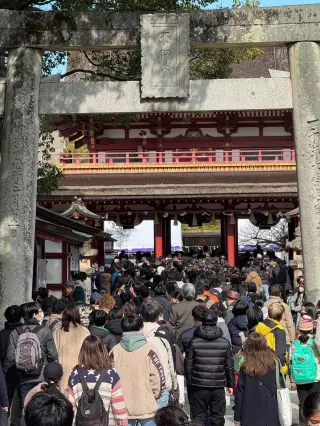
It is especially lively during exam season and New Year visits, when large numbers of worshippers come here.
This article covers the basic information and highlights you should know before visiting Dazaifu Tenmangu Shrine, along with the best season to visit and recommended local food.
If you are planning to visit Dazaifu Tenmangu Shrine or are interested in it, this guide is well worth checking out.
What is Dazaifu Tenmangu Shrine Like?
Located in Dazaifu City, Fukuoka Prefecture, Dazaifu Tenmangu Shrine is also close to Hakata and Tenjin, two of Fukuoka’s most popular sightseeing areas.
Dazaifu Tenmangu Shrine is the head shrine of about 10,000 Tenmangu shrines across Japan, and enshrines Sugawara no Michizane as its deity.
Sugawara no Michizane is beloved as the god of learning, and because the shrine is said to bring blessings for academic success and passing exams, it is especially popular with students.
From charms for academic achievement to charms for many other blessings, there are various kinds available, so try choosing one that suits you when you visit.
Dazaifu Tenmangu Shrine is also popular as a famous plum blossom spot, where you can enjoy beautiful natural scenery throughout the four seasons.
Within the shrine grounds, 11 sacred ox statues have been dedicated, and it is said that stroking their heads brings wisdom, so see if you can find them.
The approach to Dazaifu Tenmangu Shrine is also full of charm.
You can enjoy street food and shop for souvenirs there, so be sure to explore it as well.

The Origins of Dazaifu Tenmangu Shrine
Sugawara no Michizane, the enshrined deity of Dazaifu Tenmangu Shrine, passed away at the age of 59.
Sugawara no Michizane was a nobleman and politician of the Heian period (794–1185).
He excelled not only in politics but also in scholarship, rose to prominence in an exceptional way, and left behind many achievements.
According to his final wishes, his remains were buried in Dazaifu, and a mausoleum called a shibyo was built there.
A shibyo is a building constructed to enshrine Sugawara no Michizane, essentially a tomb.
Sugawara no Michizane died in 903, and his burial at the site where the main sanctuary now stands marked the founding of Dazaifu Tenmangu Shrine.
Later, in 905, the shibyo was built there.
After that, in 919, the shrine buildings were constructed by imperial order of Emperor Daigo.
Access to Dazaifu Tenmangu Shrine
Here, we will introduce how to get to Dazaifu Tenmangu Shrine starting from Hakata Station, a main transportation hub for sightseeing in Fukuoka.
- Route
-
1. Take the direct bus from Hakata Bus Terminal and get off at Nishitetsu Dazaifu Line, Dazaifu Station
2. Then walk for Approx. 5 minutes - Travel time
- Approx. 45 minutes
Hours and Admission at Dazaifu Tenmangu Shrine
The worship hours and admission fees for Dazaifu Tenmangu Shrine are summarized in the table below for your reference.
Depending on the season, the opening and closing times may vary by about 30 minutes to 1 hour from the times shown below.
There is no admission fee to enter the shrine grounds, but the Treasure Hall and Kanko Historical Museum require admission.
- Hours
- 6:30am–7:00pm (Treasure Hall / Kanko Historical Museum 9:00am–4:30pm)
- Admission
-
Free
(Treasure Hall: Adults 500 yen / University and high school students 200 yen / Junior high and elementary school students 100 yen)
(Kanko Historical Museum: Adults 200 yen / University and high school students 150 yen / Junior high and elementary school students 100 yen)
*Hours vary by season, so please see the Official website (Japanese) for details.
What Is the Best Season to Visit Dazaifu Tenmangu Shrine?
If you are planning to visit Dazaifu Tenmangu Shrine, spring, when the plum blossoms are at their best, is the recommended season.
About 6,000 plum trees of 200 varieties are planted within the grounds, and their vivid colors create scenery that is both gorgeous and full of elegance.
Sugawara no Michizane is also said to have loved plum blossoms, and there is even a story known as the Flying Plum Legend.
It begins when Sugawara no Michizane, then the Minister of the Right, spoke to the plum tree at his residence through a waka poem as he was being exiled to Dazaifu.
It is said that, devoted to him, the plum tree flew overnight from Kyoto to Dazaifu.
With such a legend attached to it, the best time to see the plum blossoms at Dazaifu Tenmangu Shrine is from late January to early March.

6 Must-See Highlights of Dazaifu Tenmangu Shrine
Dazaifu Tenmangu Shrine is home to many places with excellent scenery and historic buildings.
One of its main attractions and highlights is the way you can admire beautiful landscapes and architecture while reflecting on the past and the lives of people who lived in those times.
From here, we will introduce a carefully selected list of highlights you should not miss when visiting Dazaifu Tenmangu Shrine.
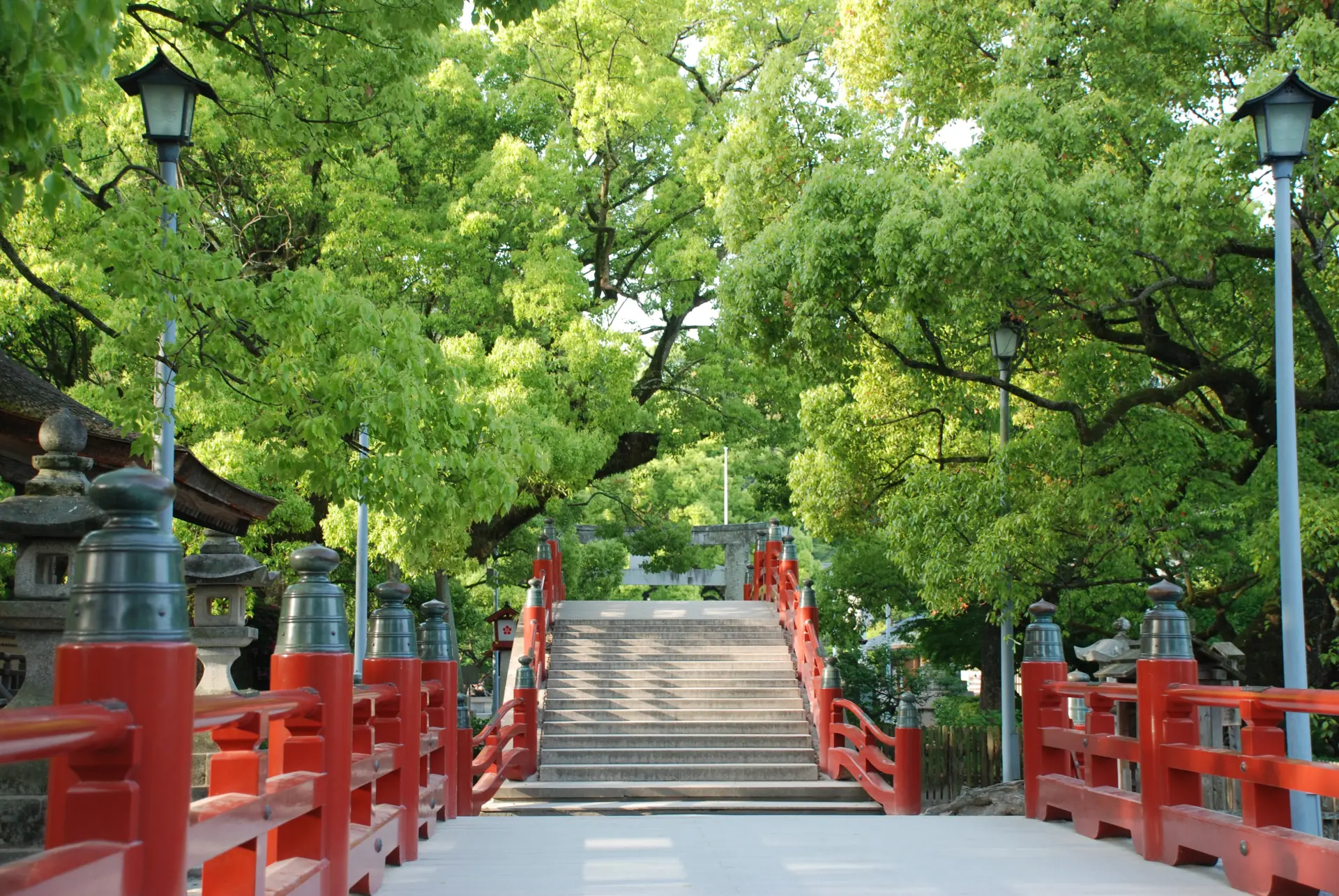
1. The Drum Bridges and Shinji-ike Pond, Which Purify Worshippers
Shinji-ike Pond is said to have been named because the curves along its shore and its small island resemble the cursive form of the character for “heart.”
Three bridges span Shinji-ike Pond: two drum bridges and one flat bridge.
A drum bridge is an arched bridge shaped like a drum, and is a distinctive style found in Japan and China.
The three bridges represent the past, present, and future, expressing the Buddhist concept of the three ages in a single thought.
Crossing these bridges is also said to purify worshippers before they pray.
The beautiful scenery, with vermilion structures standing out against the lush green trees, is not to be missed.

2. The Shrine Grounds Museum, Where You Can Discover and Experience Something New
The Shrine Grounds Museum lets visitors see, enjoy, and learn about a variety of art within the grounds of Dazaifu Tenmangu Shrine, which enshrines Sugawara no Michizane, the god of learning, culture, and the arts.
At the Dazaifu Tenmangu Treasure Hall, the base of the Shrine Grounds Museum, many important cultural properties are preserved and displayed, including the National Treasure Kannen, the Important Cultural Property Kenukigata Tachi sword, old documents, statues of Sugawara no Michizane, maps of the shrine grounds, ritual implements, and old books.
- Hours
- 9:00am–4:30pm (Last admission at 4:00pm)
- Closed on
- Monday
- Admission
-
Adults: 500 yen
University and high school students: 200 yen
Junior high and elementary school students: 100 yen

3. The Tower Gate, with Its Overwhelming Solemn Atmosphere
Built by Sugawara no Sukemasa, the great-grandson of Sugawara no Michizane, and later supported by a donation from Ishida Mitsunari after it was lost to fire, the Tower Gate has a long history.
The current structure was rebuilt in 1914.
The Tower Gate of Dazaifu Tenmangu Shrine has a rare design: from the drum bridge side, its roof appears to have two tiers, while from the main sanctuary side, it appears to have only one.
Like a torii gate, the Tower Gate serves as a boundary marking the entrance to a sacred space.
Its powerful and solemn atmosphere leaves a strong impression on visitors.

4. Josui no Ido, a Must-Visit Spot for History Lovers
Josui was the name adopted by Kuroda Kanbei when he became a Buddhist monk.
Kuroda Kanbei, blessed with military talent, was also a close advisor to Toyotomi Hideyoshi.
When he used this area as a temporary residence before the construction of Fukuoka Castle, he is said to have used water from this well for tea ceremony and other purposes.
Because he deeply revered Sugawara no Michizane, he also worked hard toward the restoration of Dazaifu Tenmangu Shrine, and he is enshrined at this Josui Shrine.

5. The Temporary Sanctuary, Which Can Only Be Seen Now
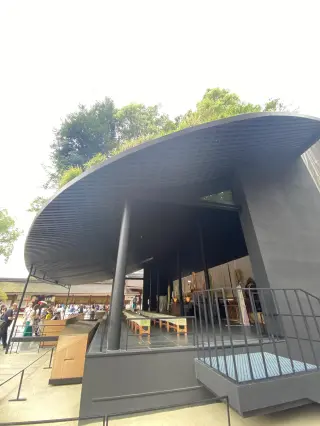
*The main sanctuary is currently not open for viewing.
Sugawara no Michizane 1125th Grand Festival
At Dazaifu Tenmangu Shrine, a grand festival is held every 25 years in honor of the number 25, which has a deep connection to Sugawara no Michizane. In 2027, the shrine will mark a major milestone with the Sugawara no Michizane 1125th Grand Festival.
For that reason, a major renovation of the main sanctuary has been underway since May 2023 and will take Approx. 3 years.
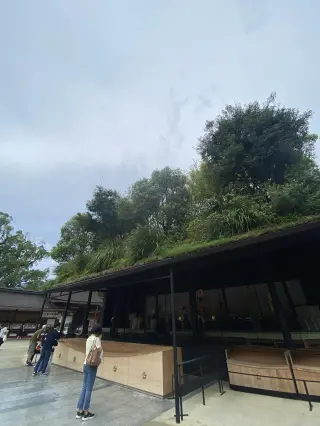
As part of this large-scale renovation, which takes Approx. 3 years, a special temporary sanctuary has been built in front of the main sanctuary for the renovation period. The temporary sanctuary was designed by Sou Fujimoto Architects, led by architect Sou Fujimoto, who is active both in Japan and overseas and also serves as the site design producer for Expo 2025 Osaka, Kansai, Japan. Harmonizing with the surrounding scenery, the design carries on tradition while connecting it to the future, welcoming worshippers throughout the renovation period.

6. The Sacred Ox Statues, Said to Grant Blessings When You Stroke Their Heads
There are 11 sacred ox statues within the grounds of Dazaifu Tenmangu Shrine, and it is said that stroking their heads grants wisdom.
It is also worth knowing that Sugawara no Michizane had a deep connection with oxen.
All of the sacred ox statues are depicted lying down, in the style known as gagyu.
It is said that when an ox was pulling Sugawara no Michizane’s remains, it lay down at a certain spot and would not move.
His disciples built his grave at that place, and later the main sanctuary was constructed there.
This is said to be the reason why the sacred ox statues within the grounds are all shown lying down.
Take a walk around the grounds while searching for the sacred ox statues in various places.

Enjoy Street Food Too! 5 Popular Places to Eat Along the Approach to Dazaifu Tenmangu Shrine
Along the approach to Dazaifu Tenmangu Shrine, you will find many restaurants and souvenir shops where you can enjoy local specialties such as Umegae Mochi and Dazaifu Burgers.
There is also a wide selection of foods made with the area’s famous plums, as well as photogenic sweets.
Among the many places to eat along the approach, here is a carefully selected list of especially popular spots.
1. Starbucks Coffee Dazaifu Tenmangu Omotesando Store
Starbucks Coffee Dazaifu Tenmangu Omotesando Store opened in 2011 right beside the torii gate facing the main approach to Dazaifu Tenmangu Shrine.
It is one of Starbucks’ Regional Landmark Stores, uniquely designed locations opened in symbolic places in each region to share the appeal of local culture with the world.
The distinctive store, featuring a wooden lattice structure inside and out, was designed by architect Kengo Kuma, known for works such as the Japan National Stadium.

2. Dazaifu Sando Tenzan Dazaifu Main Store
Its specialty is Onigawara Monaka, filled with carefully cooked chunky red bean paste made from Tokachi azuki beans from Hokkaido and sandwiched in crisp monaka wafers baked from carefully selected glutinous rice from Saga Prefecture.
With its restrained sweetness, Onigawara Monaka is modeled after the onigawara roof tile, one of Dazaifu’s symbols, making it visually unique and popular as a souvenir from Dazaifu sightseeing.
Located along the approach about a 2-minute walk from Dazaifu Tenmangu Shrine, it is well worth stopping by during your visit.

3. Ichiran Dazaifu Sando Store
This is the Dazaifu Sando branch of Ichiran, the famous tonkotsu ramen chain known for its flavor-concentrating booths, where you can enjoy your ramen without worrying about those around you.
Among Ichiran’s many locations in Japan and overseas as a specialty natural tonkotsu ramen chain, the Dazaifu Sando branch has drawn attention for serving “Pass Exam Ramen,” created to pray for the success of exam takers.

4. Fukuya Dazaifu Store
This is the Dazaifu branch of Fukuya, the original store of karashi mentaiko, which has now become one of Fukuoka’s signature specialties. In 1948, founder Toshio Kawahara created karashi mentaiko, and sales began the following year at a shop in Nakasu, marking the beginning of this famous food.
At Fukuya Dazaifu Store, located along the approach to Dazaifu Tenmangu Shrine, you can of course buy Fukuya’s mentaiko, and you can also enjoy mentaiko chazuke in the eat-in space inside the shop.

5. Chikushian Main Store
This popular local burger shop is located just off the approach to Dazaifu Tenmangu Shrine. It originally opened as a karaage specialty shop, and now sells four kinds of burgers in addition to fried chicken.
Its specialty is the Dazaifu Burger, a local burger made with the shop’s homemade jidori fried chicken.
Topped with juicy fried chicken and tartar sauce, plus vegetables, it is a hearty and satisfying item.

3 Tourist Spots Near Dazaifu Tenmangu Shrine
Around Dazaifu Tenmangu Shrine, you will find not only facilities where you can learn about Japanese culture and history, but also many attractive shrines.
They offer different scenery and atmosphere from Dazaifu Tenmangu Shrine, giving you a chance to experience Japanese culture from a new perspective.
From here, we will introduce nearby sightseeing spots that are well worth visiting together with Dazaifu Tenmangu Shrine.
1. Kyushu National Museum
Dazaifu, where the museum is located, was an important base in ancient Japanese history and a place that actively interacted with the wider world as the region overseeing Kyushu.
Against this background, the museum opened in 2005 as Japan’s fourth national museum, with the distinctive concept of viewing the formation of Japanese culture from an Asian historical perspective.
Its main feature is the large-scale Cultural Exchange Exhibition Room on the fourth floor, which introduces the history of cultural exchange between Japan and countries in Asia and Europe.

2. Homangu Kamado Shrine
Kamado Shrine is a shrine with a history of more than 1,350 years.
It enshrines Tamayorihime no Mikoto and has long been worshipped as a deity of matchmaking.
It has also been revered as a deity for protection from misfortune and evil.
Located at the foot of Mount Homan, it is also known for beautiful seasonal scenery, with cherry blossoms in spring and autumn leaves in fall.
At the summit of Mount Homan, which stands 829 meters above sea level, is the upper shrine of Kamado Shrine.
It takes Approx. 2 hours one way to reach it, and the mountain is popular with many hikers.

3. Tochoji Temple
Located in Hakata Ward, Fukuoka City, Tochoji Temple is a Shingon Buddhist temple said to have been the first temple founded by the great monk Kukai (Kobo Daishi) after returning from his training in Tang China.
Its formal name is Tocho Mitsuji, a name given by Kukai with the wish that esoteric Buddhism would be passed down far to the east.
One of its main highlights is the wooden Great Buddha known as the Fukuoka Daibutsu.
Its height of 10.8 meters, inspired by the 108 worldly desires in Buddhism, makes it one of the largest wooden seated Buddha statues in Japan.
Behind it, an incredible 5,000 small Buddha statues are enshrined.
You should also try the “Hell and Paradise Tour” installed in the pedestal.

Reviews
4.34
Some reviews are AI-translated.
-
There were quite a lot of people, but the flow was pretty smooth so it didn’t feel chaotic.
You’ve got to try the umegae mochi on the approach to the shrine.
Fresh off the grill and nice and hot, it tastes great. -
This is a famous shrine dedicated to the god of learning. Back when I was a student, I used a special pencil from Tenmangu Shrine and wished to pass my entrance exams (and I did!).
When I visited, the main hall was a temporary structure, but it was designed by the same architect who created the Grand Roof Ring for the Osaka-Kansai Expo. The building blended beautifully with the surrounding plants.
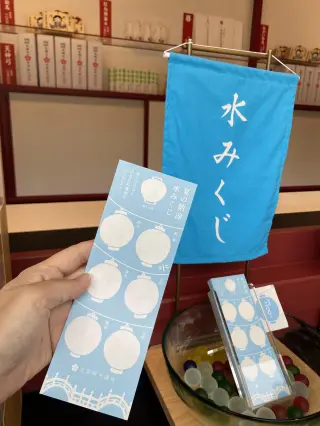
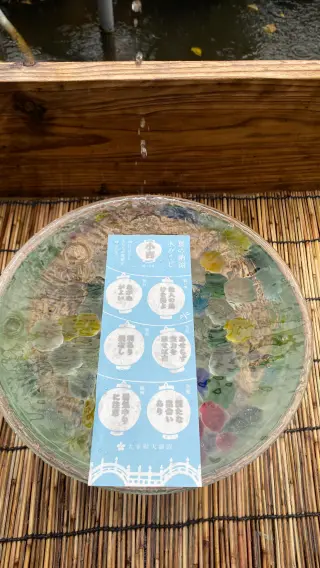
There are lots of different omikuji (fortune slips), but the "water omikuji," where the writing appears when you dip it in water, is especially fun.
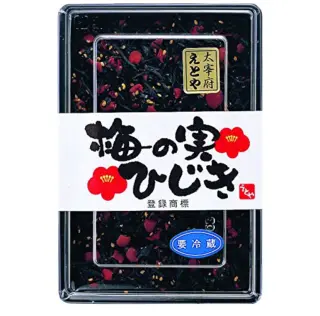
As for local specialties, I really like the ume-no-mi hijiki from Etoya. It goes perfectly with rice! -
The shopping street outside Dazaifu is full of local specialties like plum cakes, mentaiko, and handmade rice crackers. The Starbucks designed by Kengo Kuma is a super popular photo spot. There’s just so much to explore along the whole Omotesando!
FAQ about Dazaifu Tenmangu Shrine
Q
Which deity is enshrined at Dazaifu Tenmangu Shrine?
A
Sugawara no Michizane, who is beloved as the god of learning.
Q
What blessings is Dazaifu Tenmangu Shrine known for?
A
The main ones are academic success and prayers for passing exams.
Q
What local specialties can you eat along the approach to Dazaifu Tenmangu Shrine?
A
Umegae Mochi, Dazaifu Burgers, and Japanese-style sweets are especially popular.
Summary
In this article, we introduced the highlights, history, and legends of Dazaifu Tenmangu Shrine, which enshrines Sugawara no Michizane, known as the god of learning.
Be sure to visit Dazaifu Tenmangu Shrine and enjoy its beautiful scenery while reflecting on Japanese history and culture.
If you are unsure which sightseeing spots to visit in Fukuoka, please refer to the article below.