
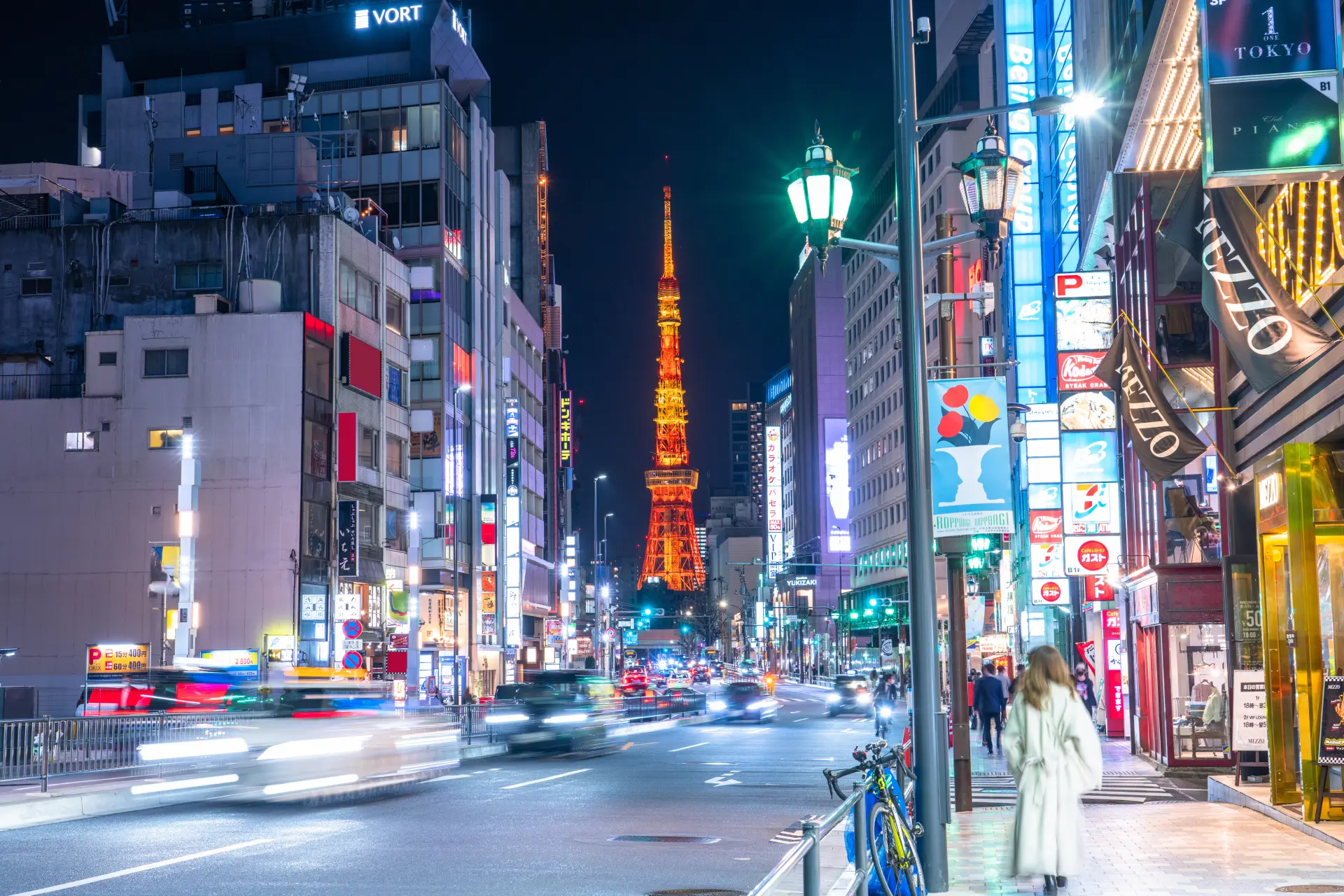
A guide to Roppongi: Enjoy Sophisticated Time in an Elegant, Refined District
Among Tokyo’s many entertainment districts, Roppongi stands out for its elegant, refined atmosphere.
Skyscrapers line the streets, with top luxury brand shops, restaurants, and hotels gathered throughout the area.
You’ll also find museums, gardens, and other places where you can enjoy Japanese culture and art, making it a great destination for a more grown-up experience.
Here, we’ll introduce some of the most popular sightseeing spots in Roppongi.
We’ll also cover places for shopping and great food, so use this guide to enjoy a sophisticated time in Roppongi.
What is Roppongi Like?
Located in the northern part of Minato City, Tokyo, Roppongi is known as one of the city’s leading entertainment districts.
With major commercial complexes such as Roppongi Hills and Tokyo Midtown, plus top-class hotels and restaurants, it is a glamorous area that also comes alive at night with bars and clubs.
At the same time, it also has many museums and spots where you can enjoy nature, giving it a more relaxed side where you can appreciate art and Japan’s four seasons.
It is also known as an affluent area, with major IT companies, foreign-owned businesses, and embassies from around the world gathered here.
Take your time and enjoy a sophisticated, grown-up experience in elegant and refined Roppongi.

What is the best season to visit Roppongi?
With so many commercial facilities and museums, Roppongi is a place where you can enjoy shopping, food, and art all year round.
It’s enjoyable whenever you visit, but winter is the best season to go sightseeing.
From around early November to late December each year, the streets are decorated with illuminations, creating a magical atmosphere.
In addition, a Christmas market is held from around late November to late December.
You can enjoy an upbeat holiday mood with authentic German food and Christmas goods.
What to wear in Roppongi by season
- Spring (March - May): Light jacket and thin sweater
- Summer (June - August): Light clothing, short sleeves
- Fall (September - November): Light jacket, coat
- Winter (December - February): Coat, thick sweater or jacket
How do you get to Roppongi?
Here are the main ways to get to Roppongi Station from major stations in Tokyo, along with Approx. travel times.
All of them take up to 30 minutes, so be sure to add Roppongi to your Tokyo sightseeing plans.
- From JR Tokyo Station
- Take the Tokyo Metro Marunouchi Line and transfer to the Tokyo Metro Hibiya Line, Approx. 15 minutes
- From JR Shinjuku Station
- Approx. 10 minutes on the Toei Oedo Line
- From JR Ueno Station
- Approx. 30 minutes on the Tokyo Metro Hibiya Line
- From JR Shinagawa Station
- Take the JR Yamanote Line and transfer to the Tokyo Metro Hibiya Line, Approx. 25 minutes
- From JR Shibuya Station
- Take the Tokyo Metro Hanzomon Line and transfer to the Toei Oedo Line, Approx. 15 minutes
Main transportation for sightseeing in Roppongi
Since Roppongi’s shopping spots and tourist attractions are concentrated around the station, getting around is mainly done on foot.
The area around Roppongi Station is visited by many tourists and businesspeople, so taxis can be hard to find, and waiting for one may actually take more time.
Enjoy Japanese Culture and Art in the Heart of the City! 8 Popular Tourist Spots in Roppongi
Roppongi has many appealing tourist attractions, including spots where you can enjoy art and Japanese culture, such as museums and Japanese gardens, as well as observatories with spectacular views.
Here, we’ve carefully selected eight of the most popular sightseeing spots in Roppongi.
1. The National Art Center, Tokyo
This museum has no permanent collection and hosts a wide variety of exhibitions focused on different kinds of art from Japan and abroad.
Its vast 14,000㎡ space includes 12 exhibition rooms, an art library, restaurants, cafes, and a museum shop.

2. Mori Art Museum
Roppongi Hills is a landmark of Roppongi, an international and sophisticated district.
Located on the top floor, the 53rd floor, of the Roppongi Hills Mori Tower is the Mori Art Museum. Roppongi Hills was developed under the concept of a “cultural city center,” and this museum plays an important role as a place where people can experience contemporary culture.
With the hope that it will be a place for open discussion, the museum carries out a variety of programs, creating opportunities for dialogue rather than simply displaying art, which is one of its distinctive features.

3. Roppongi Hills Observatory Tokyo City View / Sky Deck
Located on the 52nd floor of Roppongi Hills, it features the indoor observation gallery “Tokyo City View” at 250 meters above sea level and the rooftop observation deck “Sky Deck” at 270 meters above sea level.
Buy your ticket at the general ticket counter on the 3rd floor, then take the dedicated elevator to the 52nd floor.

4. Mohri Garden
Mohri Garden at Roppongi Hills is like an urban oasis where you can take a relaxing break amid the bustle of the area’s lively tourist spots.
The garden traces its roots to the upper residence of the Mohri family, lords of the Chofu Domain, built in the Edo period. In the Meiji era, it became the residence of Rokuichiro Masujima, founder of Chuo University. After World War II, it was the site of the Tokyo factory of Nikka Whisky, and later acquired by TV Asahi. When Roppongi Hills opened in 2003, it was developed into its current form.

5. Suntory Museum of Art
The Suntory Museum of Art first opened in Marunouchi in 1961 under Keizo Saji, then president of Suntory.
After relocating in 1975 to the Suntory Building in Akasaka, it moved again in 2007 to its current location in Tokyo Midtown, in a building designed by architect Kengo Kuma.
Using plenty of traditional Japanese materials such as wood and washi paper, it was reborn as a warm and calming Japanese-modern space filled with natural comfort.

6. Roppongi Keyakizaka Street
Roppongi Keyakizaka Street runs east-west through Roppongi Hills for Approx. 400 meters, connecting Loop Route No. 3 and TV Asahi Street.
It is a gently sloping road lined with zelkova trees, where colorful flowers in the flower beds bring a sense of the seasons.
Along the wide sidewalks, you’ll find world-famous luxury brands and well-known restaurants, making it a great place to enjoy shopping and a leisurely stroll.

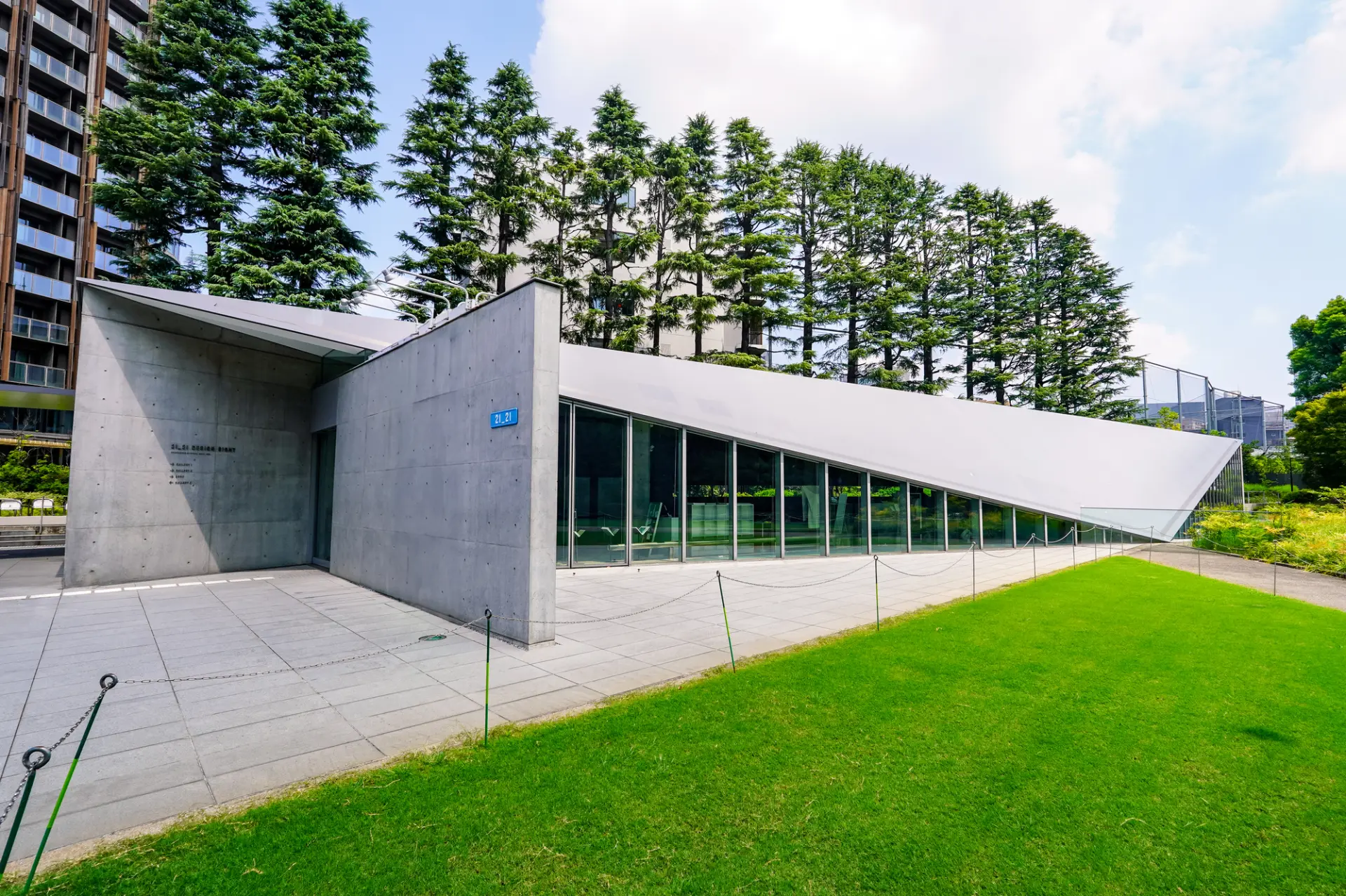
7. 21_21 DESIGN SIGHT
A museum located in Midtown Garden within Tokyo Midtown.
It presents exhibitions that reinterpret everyday events and familiar things through the perspective of design, encouraging thought and discovery.
It was designed by Tadao Ando, one of Japan’s leading architects.
Under the theme of “architecture as the face of Japan,” the building features a roof that looks like a single folded steel plate, inspired by “a piece of cloth,” the concept behind Issey Miyake’s clothing design.
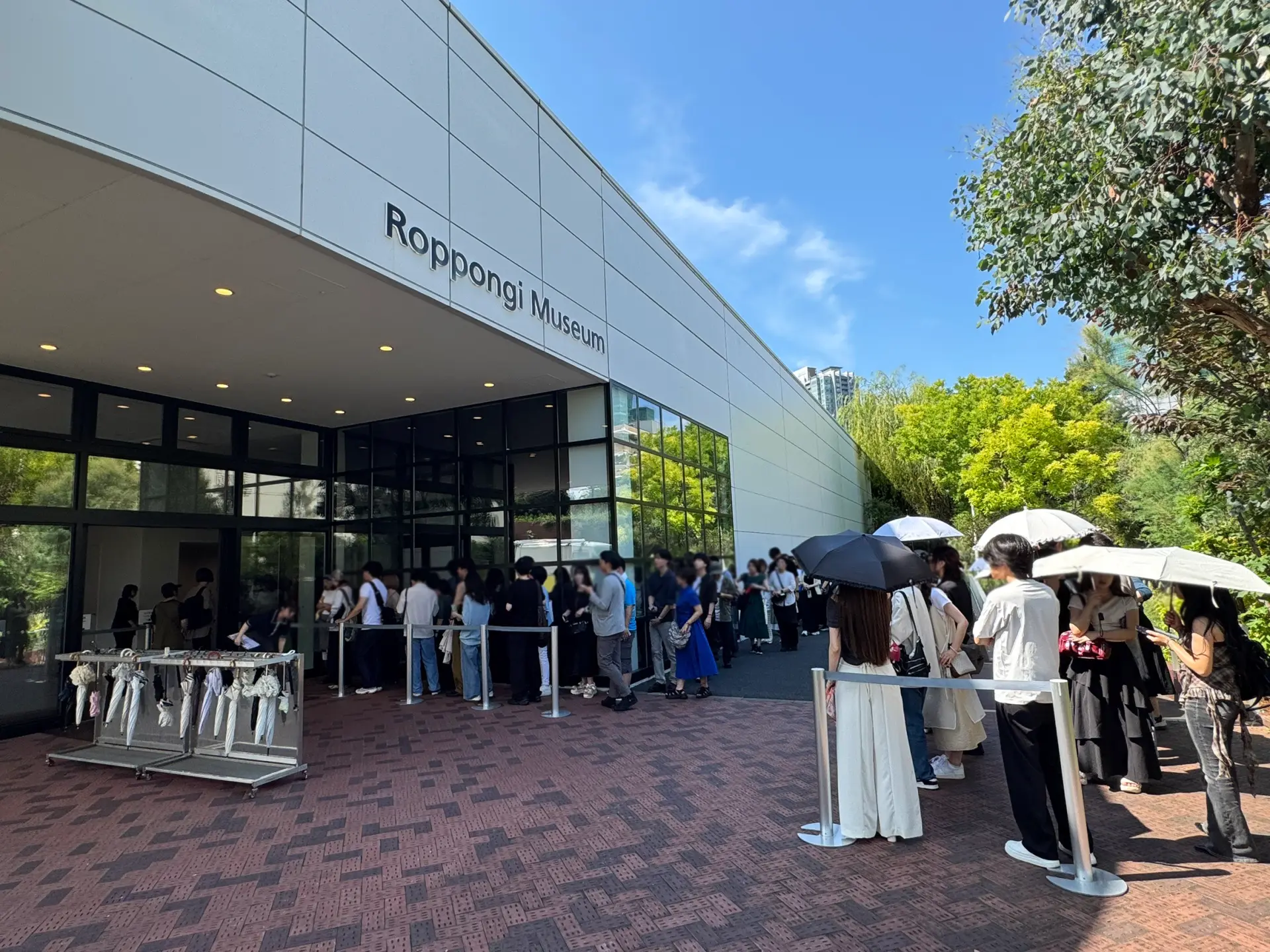
8. Roppongi Museum
Since opening in 2021, this museum has hosted exhibitions across a wide range of genres, including art and pop culture.
The facility is made up of three areas, an exhibition room, cafe, and museum shop, but one of its defining features is that the layout and interior design change significantly with each exhibition.
Past programs have included the “Nogizaka46 Artworks: Daitaizenbu-ten,” which showcased artwork by the nationally popular idol group Nogizaka46, and immersive exhibitions based on the popular anime Detective Conan, among many other diverse projects.
5 Things to Do in Roppongi
From here, we’ll introduce five experiences that deserve a place in your Roppongi sightseeing plan.
Use them as inspiration to fully enjoy the charm of Roppongi and the surrounding area.
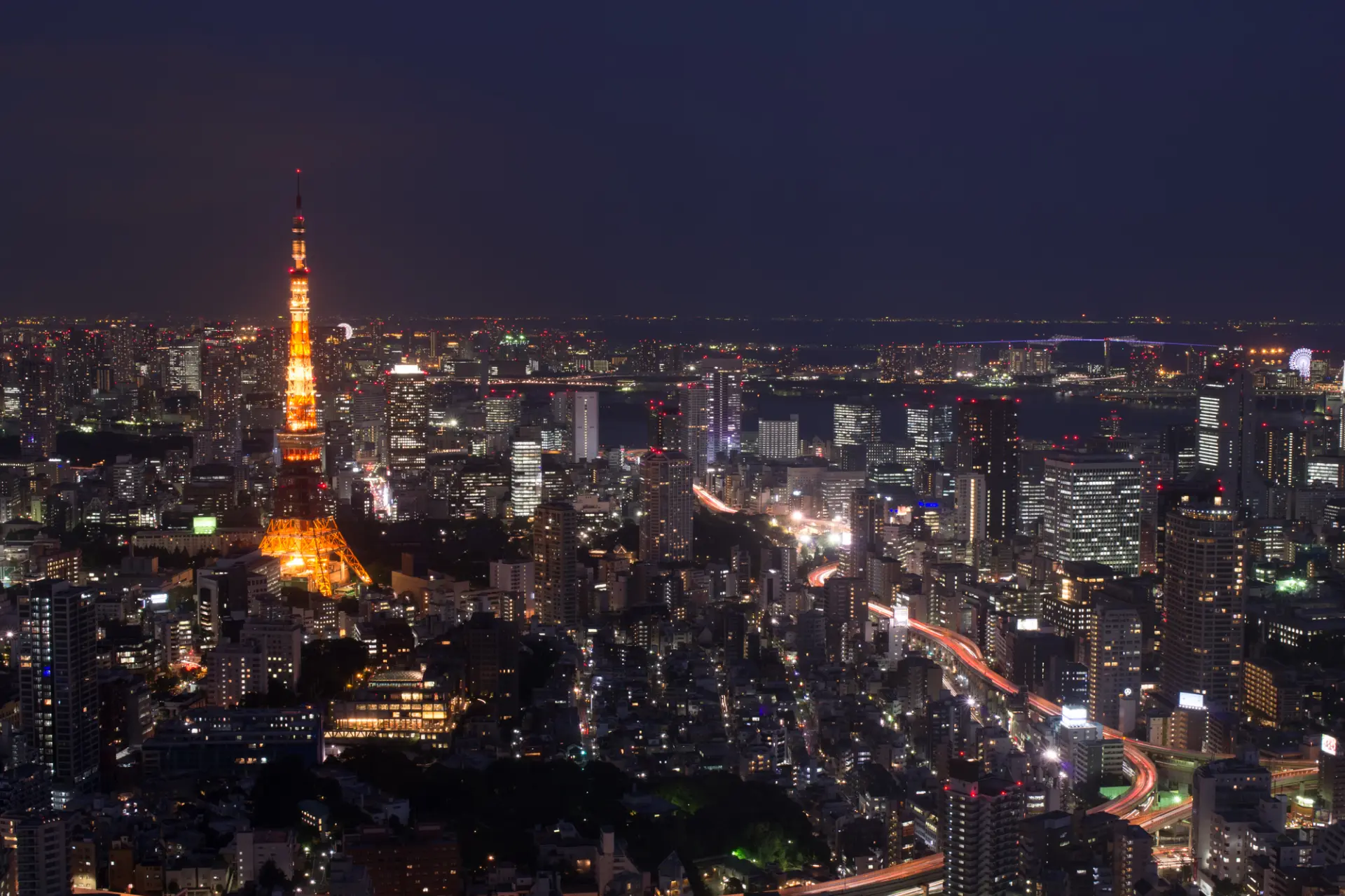
1. Take in Tokyo’s night view from Roppongi Hills
If you’re sightseeing in Roppongi, one experience you shouldn’t miss is taking in Tokyo’s night view from the indoor observation gallery Tokyo City View at Roppongi Hills.
From the gallery, you can see the beautifully illuminated Tokyo Tower and the surrounding skyscrapers, with Tokyo Skytree visible in the distance as well.
Looking out over the sparkling nightscape, you’ll strongly feel that you’ve truly arrived in Tokyo.
The view also changes during the daytime and at sunset, so visiting at different times of day is also recommended.
2. Experience art, design, and culture
Roppongi is an area with museums scattered within walking distance, making it easy to stop by during a stroll.
The National Art Center, Tokyo, where you can experience contemporary art, and Mori Art Museum inside Roppongi Hills are especially well-known spots.
There are also a variety of other museums and exhibition spaces, including 21_21 DESIGN SIGHT, which reexamines everyday life from a design perspective, and Roppongi Museum, where you can enjoy special exhibitions themed around pop culture.
In addition, public areas within Roppongi Hills are dotted with artworks specially commissioned from more than 20 world-renowned artists and designers, so simply walking around the district lets you encounter art.
While enjoying shopping, food, and the scenery, be sure to include time for art, design, and culture in your sightseeing plans as well.
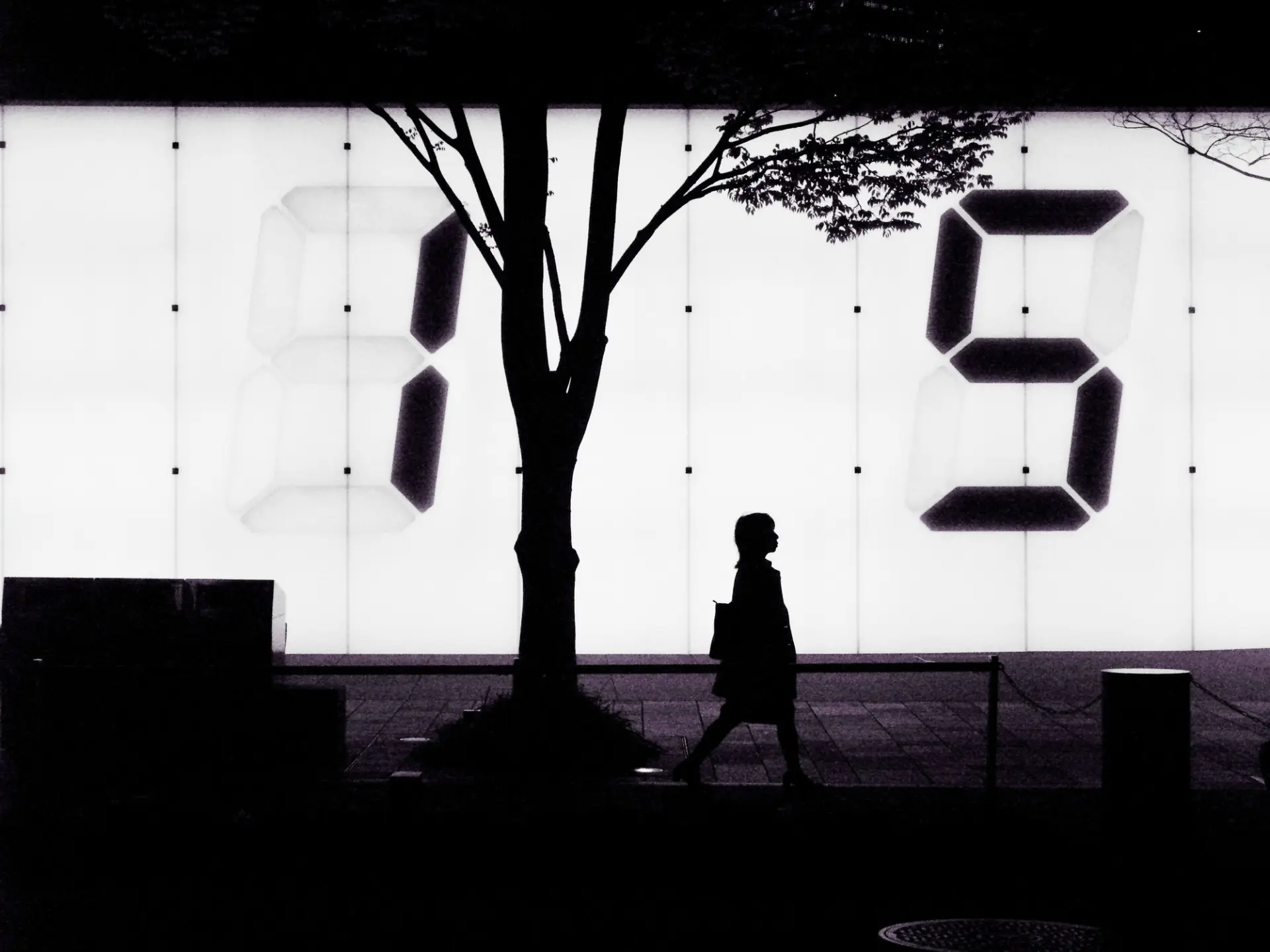
3. Savor top-class cuisine across many genres
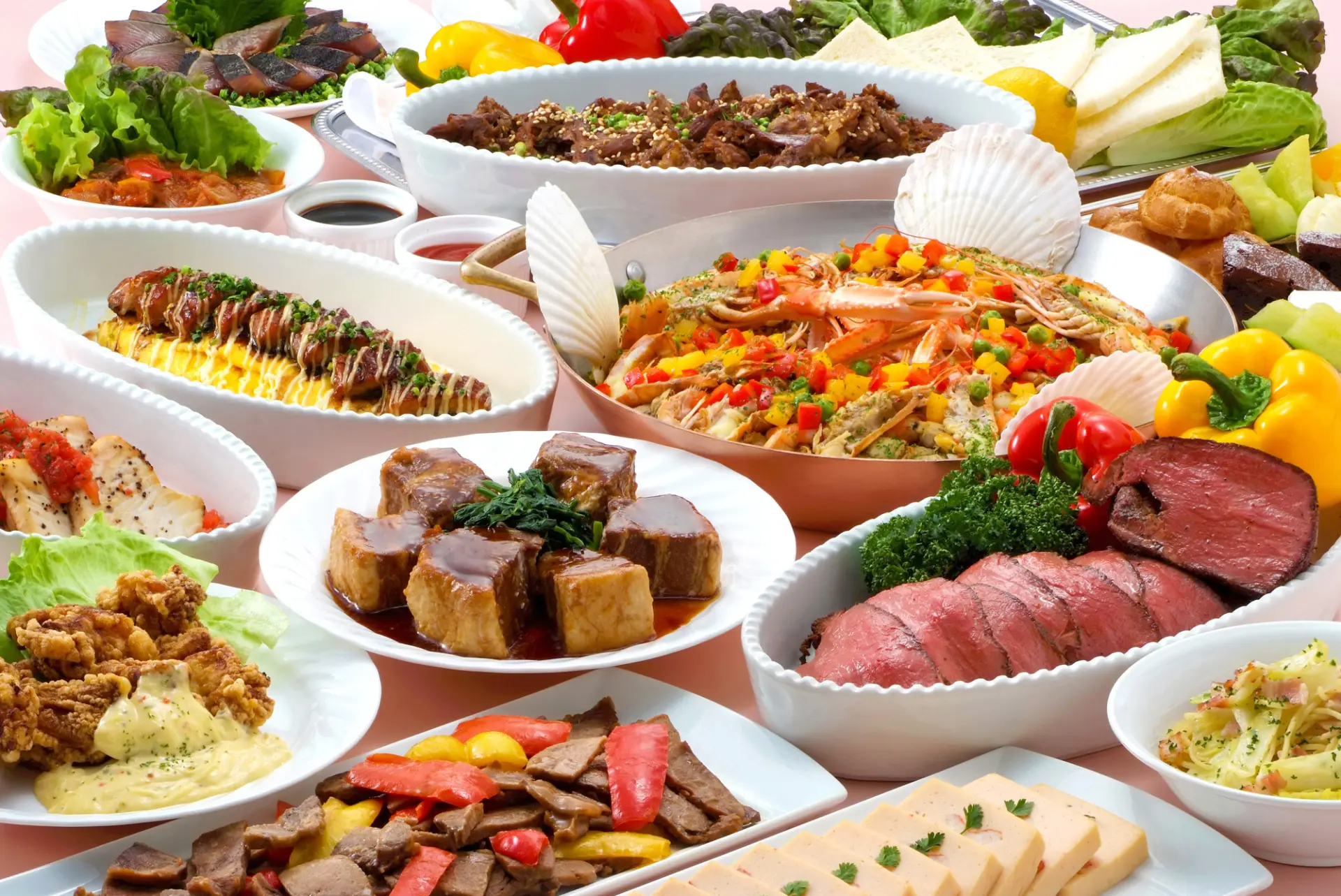
One of Roppongi’s biggest attractions is the chance to enjoy cuisine from around the world, including Japanese, Chinese, Western, Korean, Brazilian, and more.
There are also many restaurants with English menus and places that accommodate vegan and halal needs, so even travelers with religious or dietary restrictions are unlikely to have trouble finding options.
In addition, Roppongi is home to upscale restaurants led by top chefs and long-established famous eateries, making it a great place to enjoy refined dining in elegant surroundings. Be sure to enjoy the food along with your stroll through the area.
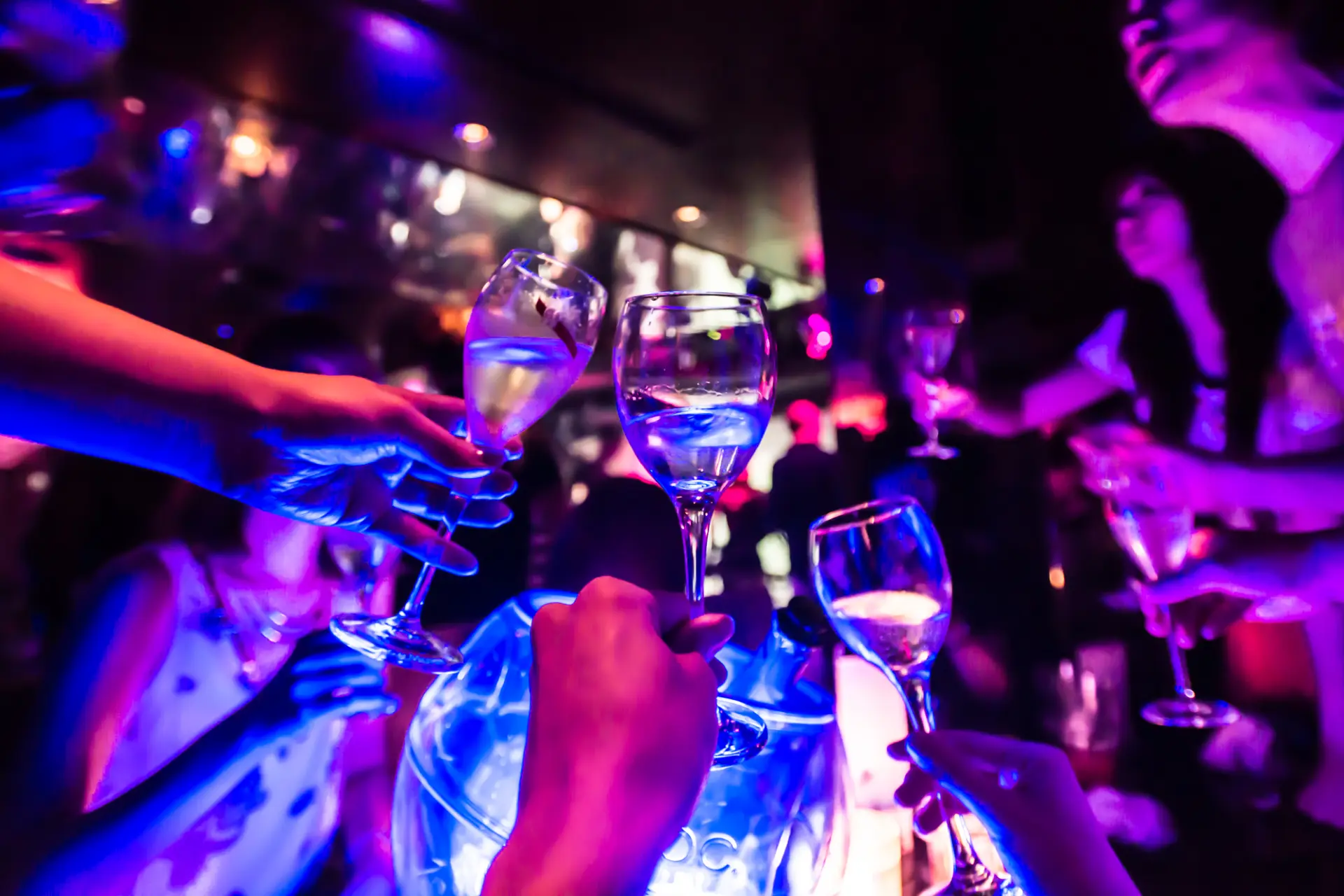
4. Enjoy nightlife unique to the city
Roppongi is home to many bars and nightclubs, where you can fully enjoy nightlife that feels uniquely Tokyo.
Some nightclubs let you enjoy music, drinks, and meeting new people, while some bars offer a calmer atmosphere where you can relax and take in Tokyo’s night views, making it easy to choose how to spend your evening based on your mood and plans.
There are also many restaurants open late into the night, so you can grab a meal after a night out at a club without worrying too much about the time, something that is also very Roppongi.
For anyone who wants to wrap up their sightseeing with a sophisticated night out, Roppongi is an area you won’t want to miss.
5. Explore the areas around Roppongi as well
If you’re sightseeing in Roppongi, it would be a shame not to visit the surrounding areas too.
Many nearby neighborhoods are easy to reach on foot or by train, and just expanding your route a little can greatly change the atmosphere and experiences you enjoy.
Here, we’ll introduce three areas that pair well with a visit to Roppongi.
- Azabu
-
Azabu is an area within walking distance of Roppongi.
Modern spots are drawing attention here, including Azabudai Hills, home to a wide range of shops and restaurants, as well as a museum created by teamLab.
At the same time, it also has shopping streets lined with long-established stores and historic temples, making it an appealing place to enjoy a walk through a neighborhood where old and new blend naturally. - Akasaka
-
Akasaka is an area with more spots where you can feel Japanese culture and history than in Roppongi.
It is also accessible on foot from Roppongi Station, and you can visit shrines, temples, and historic streetscapes.
It is well suited to travelers who want a calm, grown-up trip, such as enjoying traditional Japanese cuisine at long-established ryotei restaurants and staying at luxury hotels. - Aoyama
-
Aoyama is an area you can access from Aoyama-itchome Station, one stop from Roppongi Station.
With refined high-end brand shops and large commercial complexes lined up here, it is a great place to enjoy shopping.
It also has many restaurants and cafes with a calm atmosphere, making it easy to enjoy both shopping and strolling in good balance.
-
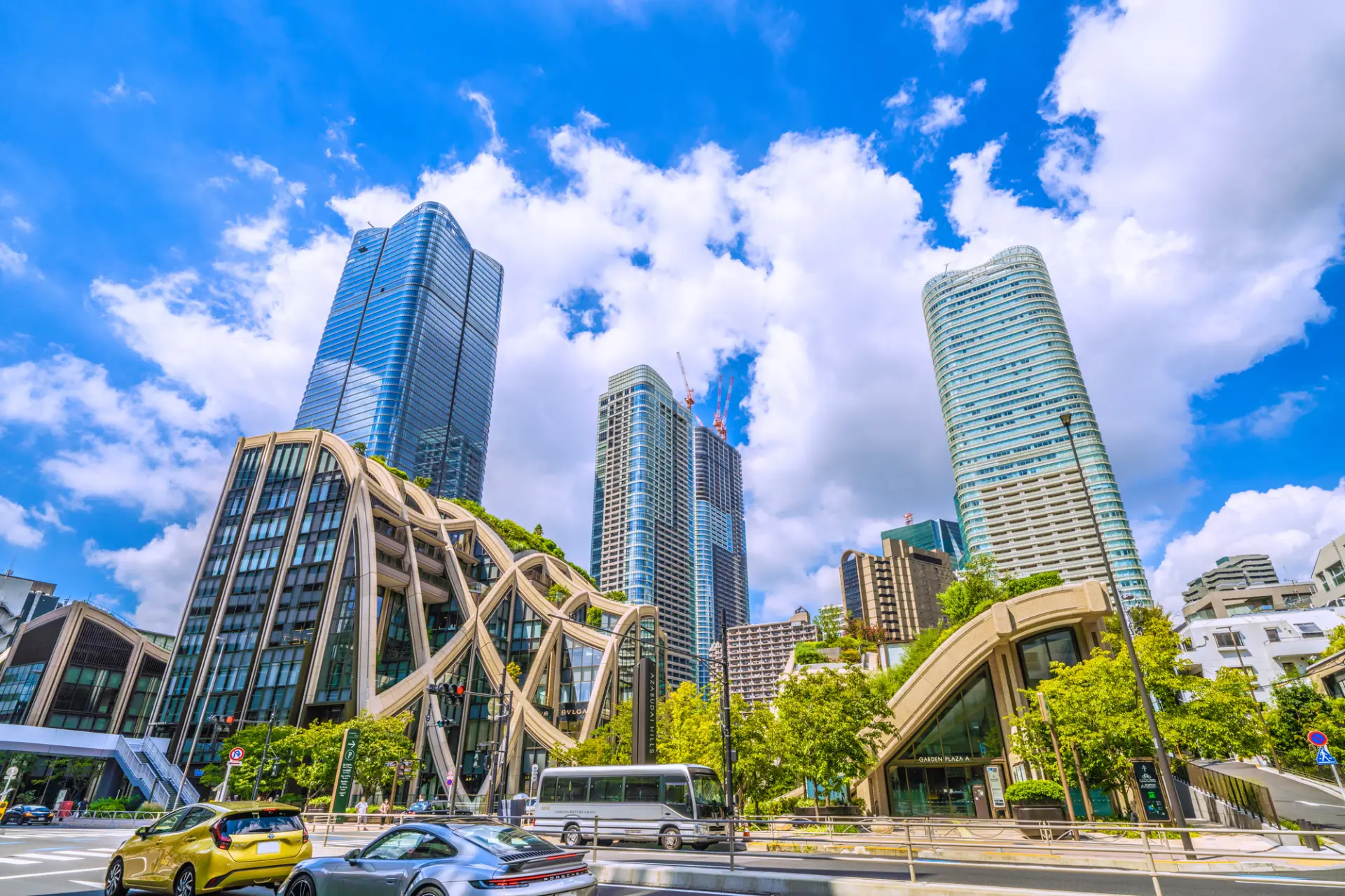
Azabudai Hills, where you can enjoy shopping, food, and entertainment
-
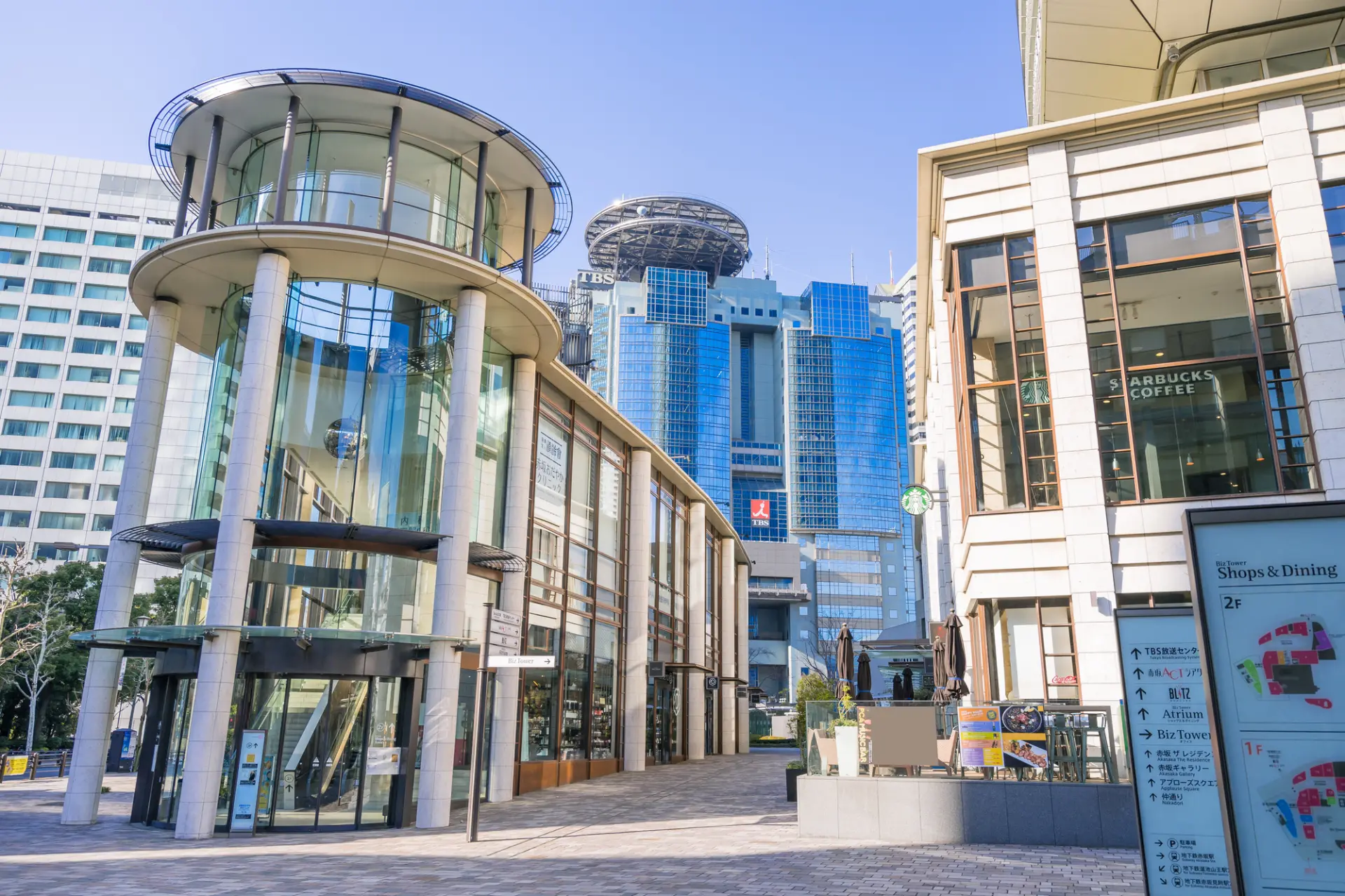
Akasaka, home to many spots where you can feel Japanese culture and history
-
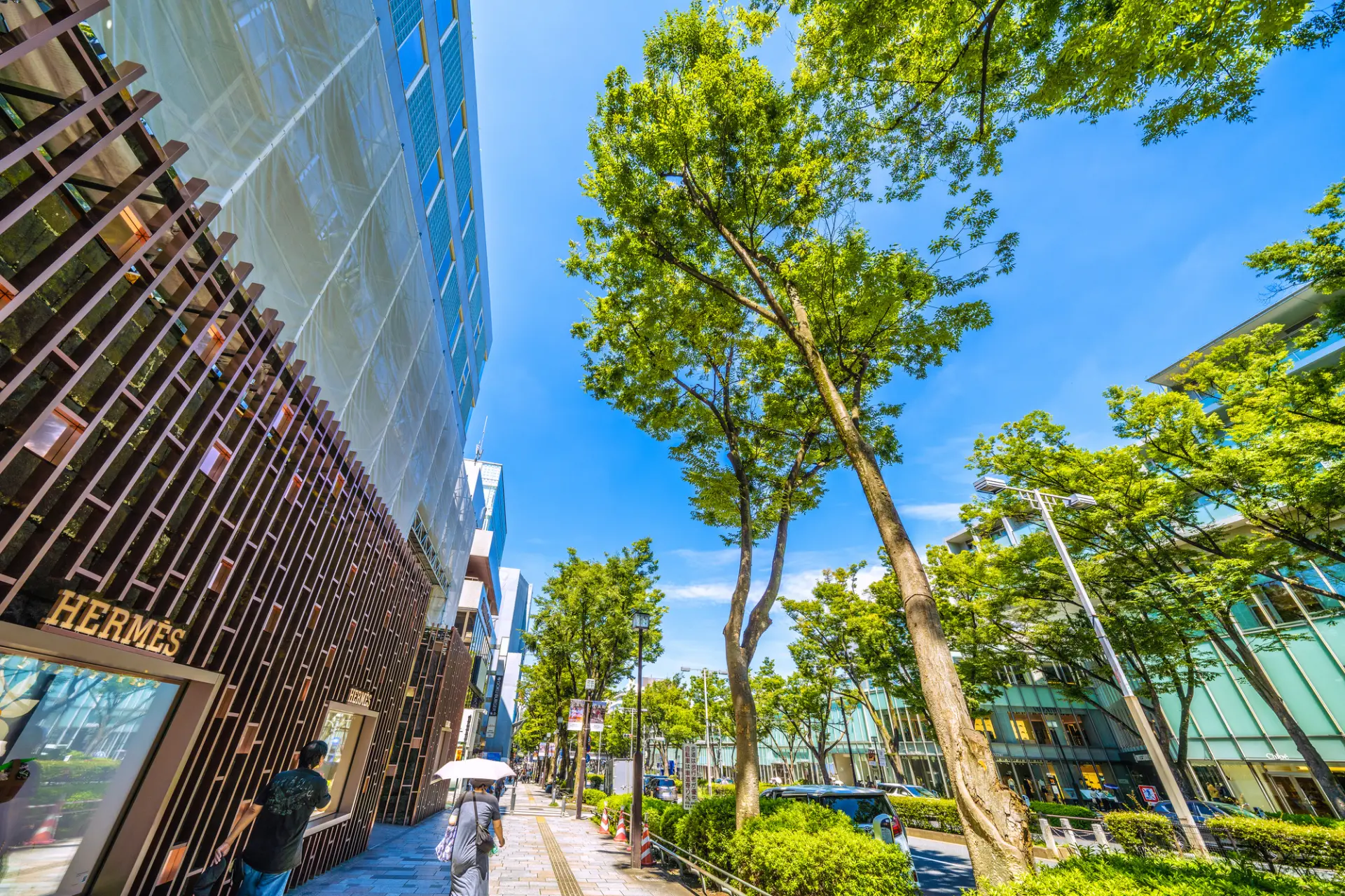
Aoyama, lined with luxury brand shops
Not Sure Where to Go? 5 Recommended Restaurants in Roppongi
Roppongi is home to a huge number of dining options, including top-class fine dining and luxury restaurants.
If it’s your first time visiting Roppongi, you may not know where to go.
In that case, be sure to stop by one of the restaurants introduced below.
You’re sure to enjoy an excellent meal.
1. Wolfgang's Steakhouse Roppongi
Founded in 2004, this is the first location in Japan and the first overseas branch of the popular New York-born steakhouse. It serves superb steaks that impress even gourmets, with a focus on quality, aging, and grilling.
The steaks use rare USDA Prime beef, said to account for only about 2% of all American beef. Dry-aged for a long time in a dedicated aging room and seared in a 900°C oven so the outside is crisp and the inside remains rare, the thick-cut steaks are expertly cooked and overflowing with flavorful juices.

2. Lamb Shabu KINNOME Roppongi
A lamb shabu-shabu restaurant serving fresh lamb delivered directly from Hokkaido every day.
It also offers all-you-can-eat courses and is popular for letting guests fully enjoy lamb, which is considered healthy and good for beauty.
It is also a popular spot with excellent access, just a 1-minute walk from Roppongi Station.

3. Gozenbo Roppongi
A pioneering Chinese restaurant that was the first to introduce Yunnan cuisine to Japan.
You can enjoy authentic Yunnan dishes made with carefully selected domestic organic vegetables, wild mushrooms sourced from Yunnan Province, and traditional medicinal ingredients, all chosen by a chef from Yunnan.
The menu also features many medicinal cuisine dishes, making it a great place to enjoy meals that are both delicious and good for your health.

4. DAL-MATTO Roppongi Hills
An Italian restaurant using vegetables delivered from contracted farms and fresh seafood shipped directly from the source.
Its main branch is in Nishiazabu, and it is also known as a famous Italian restaurant where reservations are hard to get. You can enjoy that authentic Italian cuisine at Roppongi Hills as well.
While it has a casual and modern atmosphere that makes it easy for people of all ages to enter, it still maintains a refined, grown-up sense of luxury that feels very comfortable.
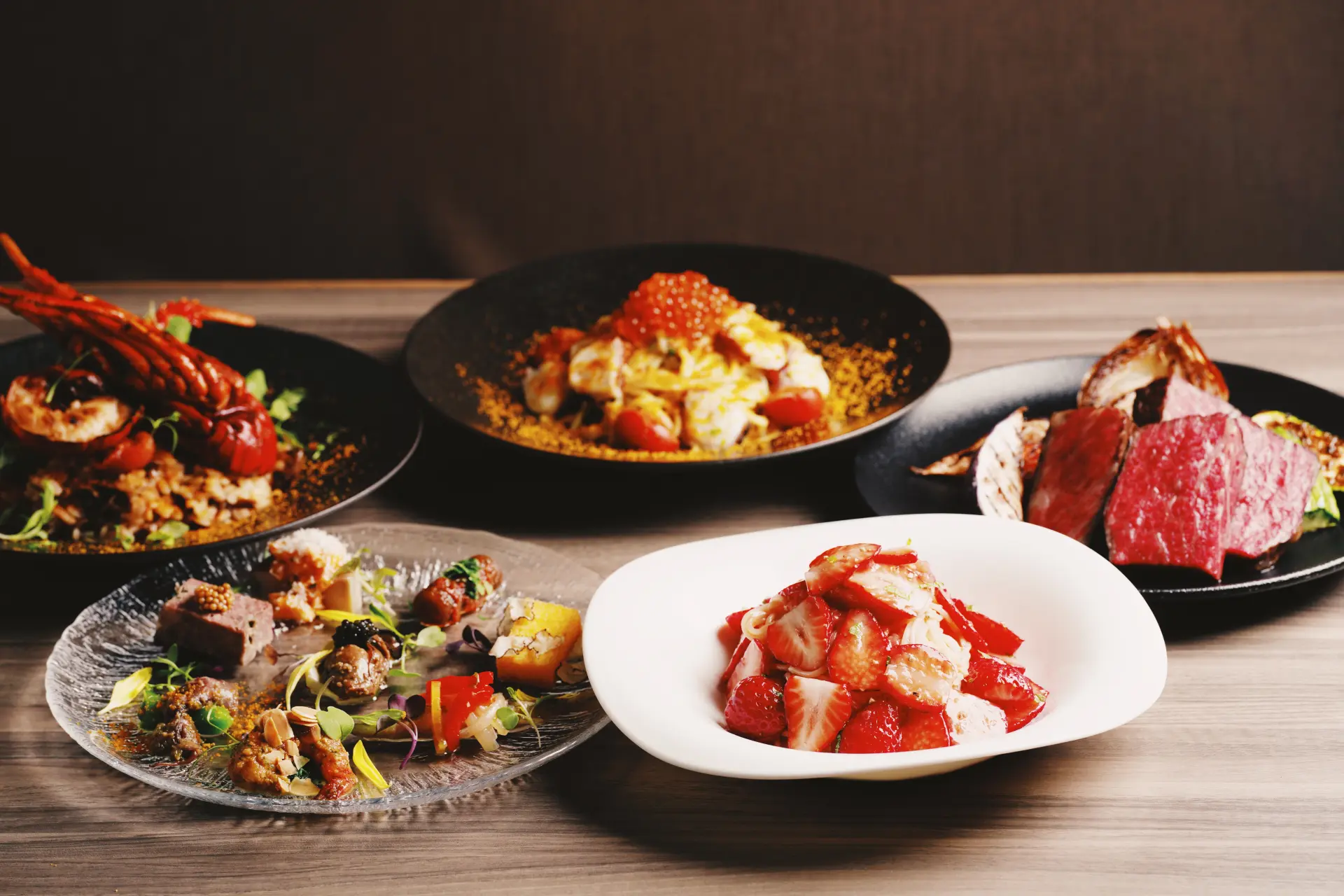
5. Yoshizawa
Yoshizawa, located in Roppongi Hills, Tokyo, is a Japanese restaurant that has earned a Michelin star for eight consecutive years.
It serves kaiseki cuisine made with an abundance of seasonal ingredients from each of Japan’s four seasons, finished with refined technique.
Take spring, for example. One soup dish features cherry sea bream, bamboo shoots, and fried domyoji, all paired with a fragrant broth blended from Rishiri kelp, bonito flakes, and tuna flakes for an exquisite flavor.
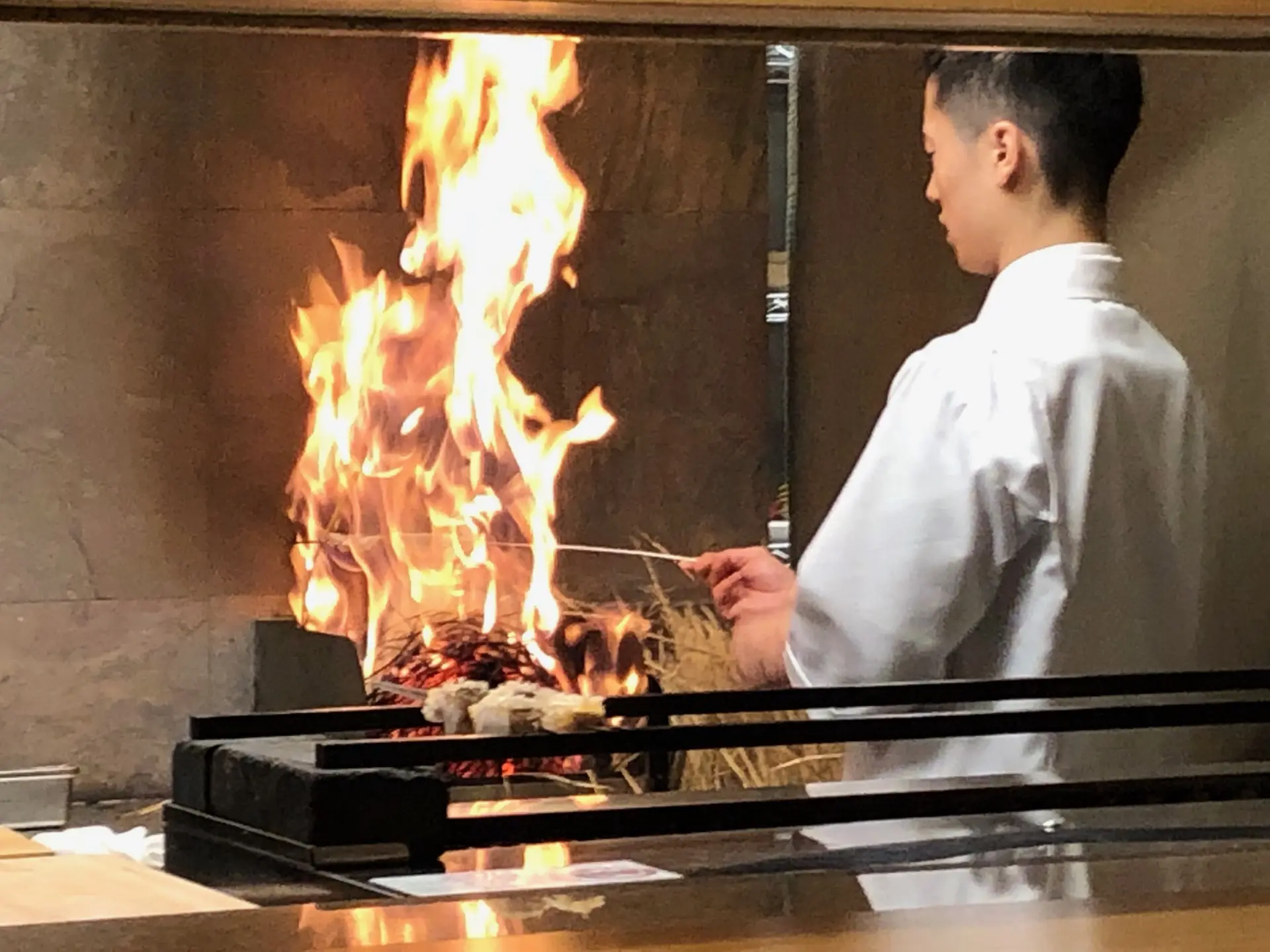
Shop in a Refined Atmosphere! 2 Classic Shopping Spots in Roppongi
Roppongi has so many shops that you could never see them all in a single day, but because many of them are concentrated in large commercial complexes, you can spend less time moving around than in other areas.
The area’s selection of elegant and refined fashion items, lifestyle goods, and more is also part of what makes Roppongi a district for adults.
If you visit Roppongi, be sure to stop by these classic shopping spots introduced below.
1. Roppongi Hills
A landmark mixed-use complex in Roppongi that opened in 2003.
At the center of Roppongi Hills is Roppongi Hills Mori Tower, a super high-rise office building with 54 floors above ground and a height of 238 meters.
The complex is lined with many luxury brand shops, and its restaurants also tend to be a cut above overall.

2. Tokyo Midtown
Tokyo Midtown is a mixed-use urban complex made up of expansive greenery and six buildings.
It brings together a variety of facilities, including shops, restaurants, offices, a hotel, green spaces, and a museum.
About 130 stores line the complex, including high-quality specialty shops and restaurants from Japan and abroad that pursue authentic flavor.

3 Recommended Places to Stay in Roppongi for an Elevated Stay
Among the many accommodation options available, we’ve carefully selected luxury hotels that offer the sophisticated atmosphere unique to Roppongi and sweeping views of Tokyo.
If you want to relax in a high-quality space or make your stay itself feel like a special experience, consider choosing one of the hotels below as your base for the trip.
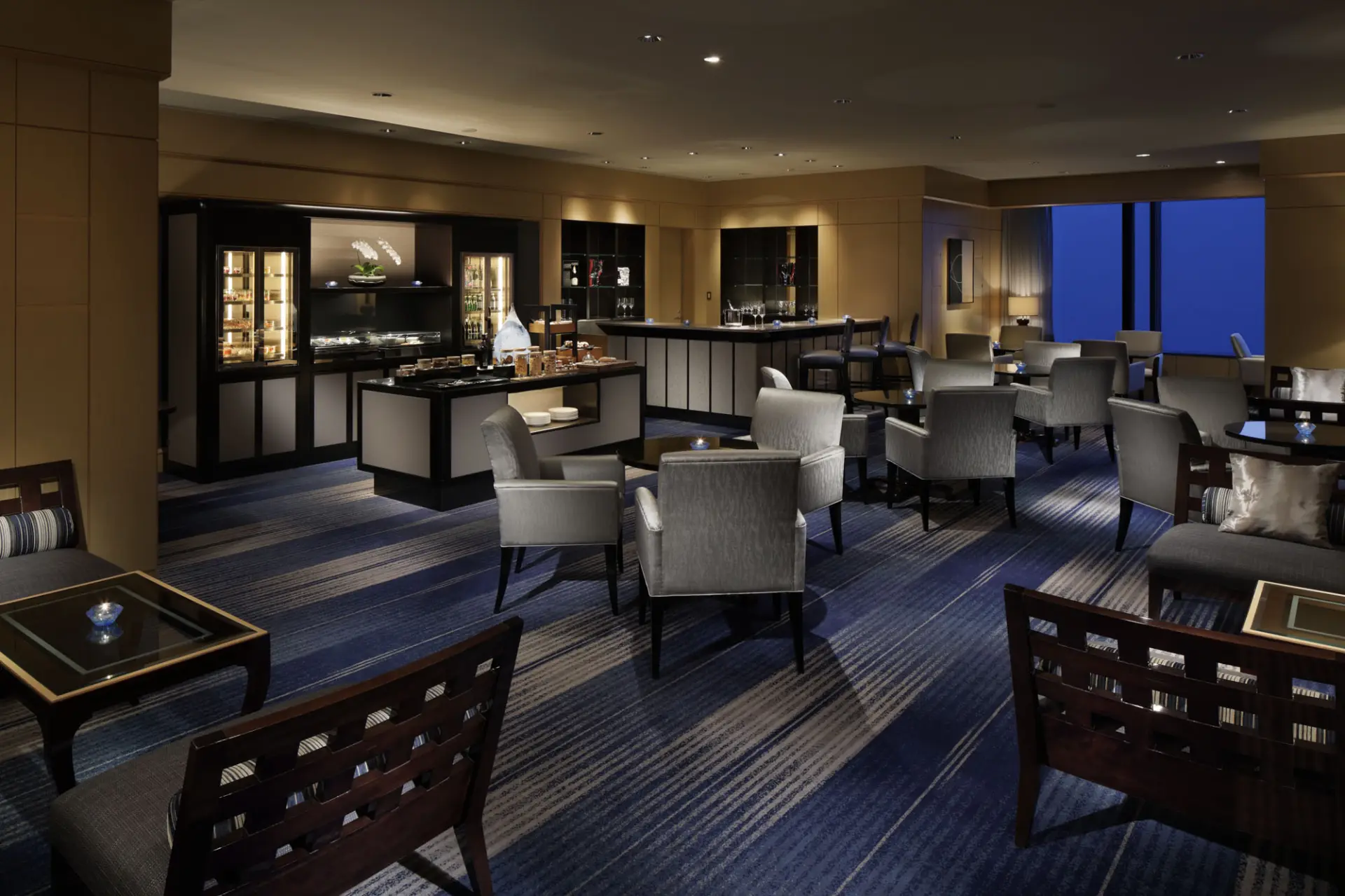
1. The Ritz-Carlton, Tokyo
A luxury hotel with 245 rooms, located on the upper floors from the 45th to 53rd floors of Tokyo Midtown, a complex directly connected to Roppongi Station in Tokyo.
The guest rooms blend Eastern and Western aesthetics in a refined setting, and their large windows offer sweeping views of areas around Tokyo, including the Imperial Palace Outer Gardens, Tokyo Bay, and Mt. Fuji.
Inside the hotel, you’ll find a diverse lineup of restaurants, including the one-Michelin-star Héritage By Kei Kobayashi, the Japanese restaurant Hinokizaka, and the bistronomy restaurant Towers.
2. Grand Hyatt Tokyo
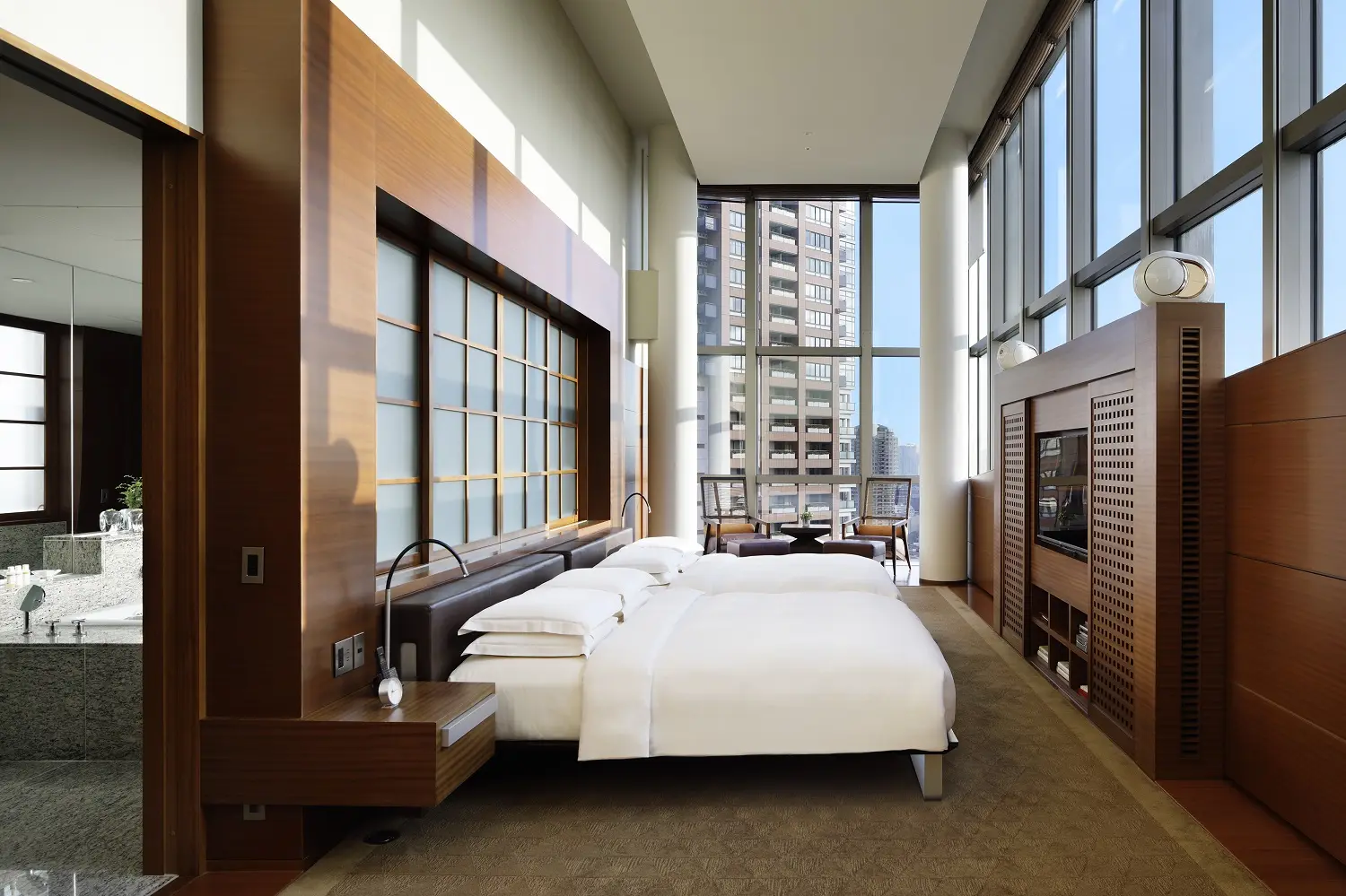
A luxury hotel located within Roppongi Hills.
Its 387 guest rooms are furnished with abundant mahogany furniture that makes use of natural materials, creating a high-quality space with warmth.
The interior has a modern and refined atmosphere, and one of its notable features is the display of more than 200 artworks throughout the property.
It also offers an excellent range of restaurants, including options serving Japanese, Chinese, and French cuisine, as well as spa facilities.
The hotel also has a bar where you can enjoy drinks and cigars accompanied by live music by international artists, making the stay itself a special experience.
3. Mitsui Garden Hotel Roppongi Premier
Approx. 5 minutes on foot from Exit 5 of Roppongi Station on the Tokyo Metro Hibiya Line and Toei Oedo Line.
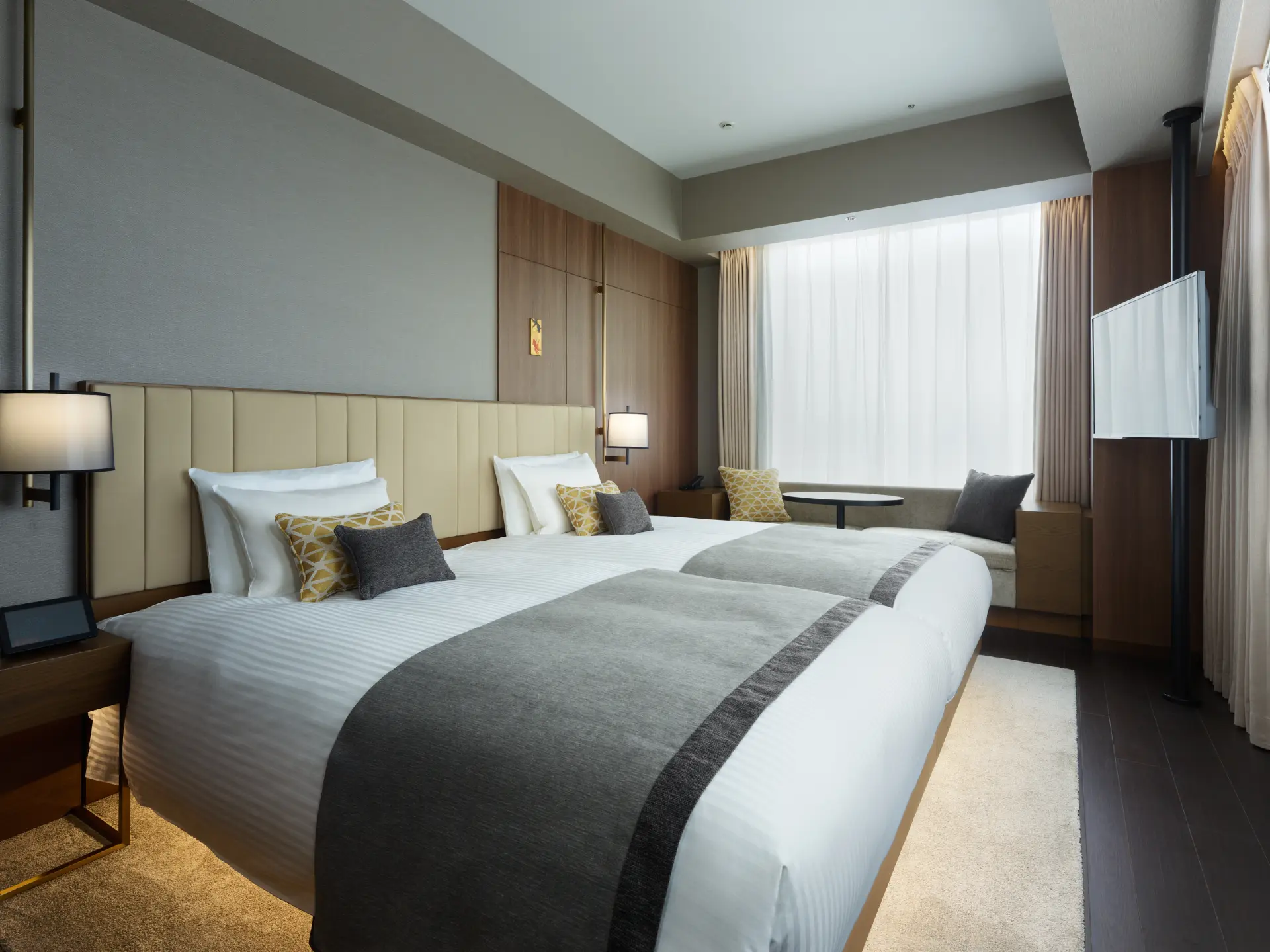
Mitsui Garden Hotel Roppongi Premier is a high-rise hotel located in central Roppongi, and one of its main attractions is its convenience as a sightseeing base.
Inside, distinctive artworks decorate the space throughout, including fabric art by internationally active textile designer Akane Moriyama, creating a refined atmosphere.
The hotel offers a total of nine room types, from Standard Double to Junior Suite King, so you can choose based on your travel purpose and style of stay.
On the top floor, the restaurant BALCÓN TOKYO offers cuisine and styles to match different times of day, along with views overlooking Tokyo’s high-rise skyline.
It also has balcony seating and a lounge space, making it suitable for many purposes from meals to bar time.
[By Season] Famous Events in Roppongi
Roppongi also hosts events where you can feel the changing seasons. Here are some of the most famous ones by season.
Experience Japan’s four seasons right in the middle of the big city.
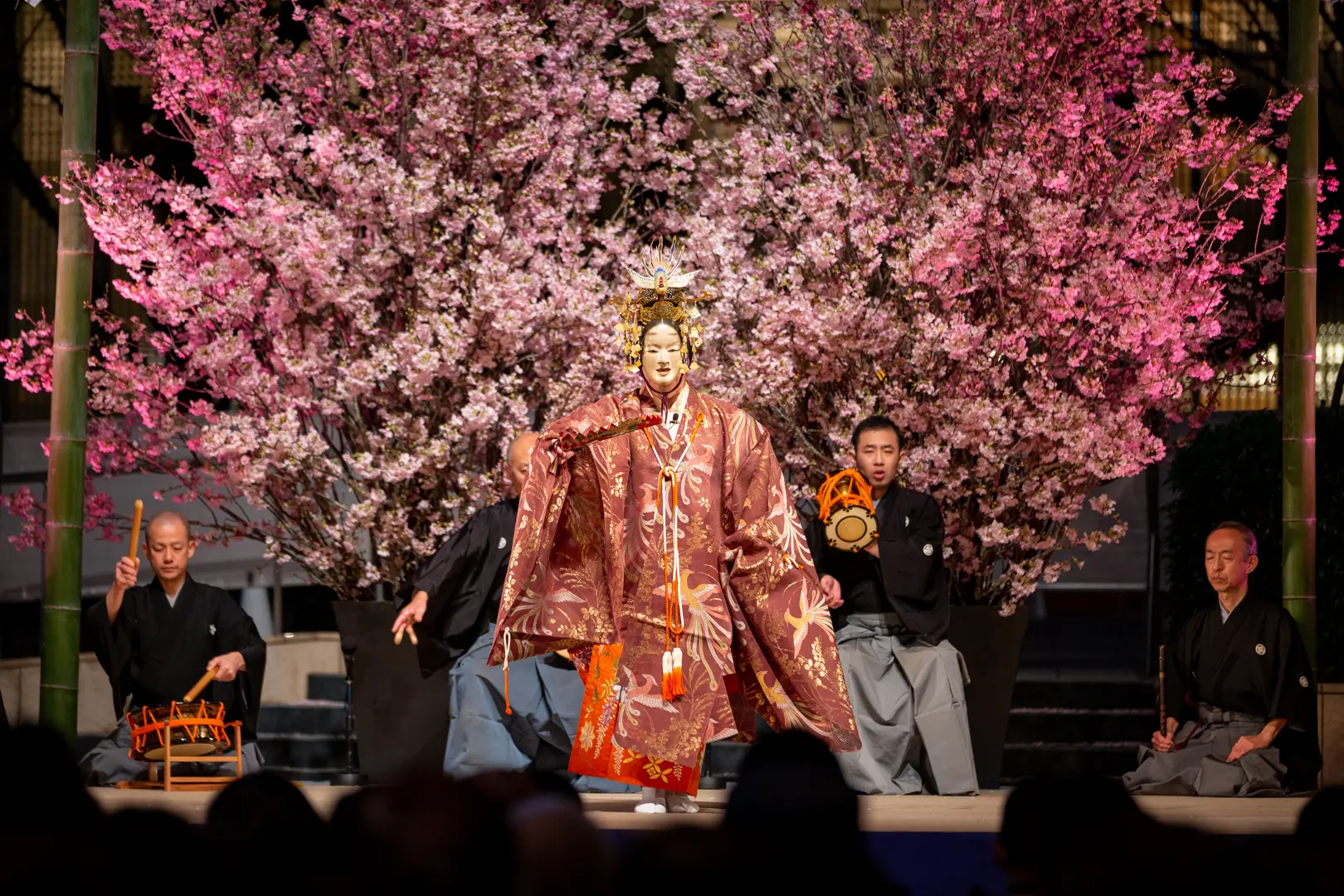
[Spring] Roppongi Hills Haru Matsuri
A seasonal spring event held every year on weekends from around late March to early April at Roppongi Hills.
The program changes each year, but it often includes stages where you can enjoy traditional Japanese performing arts and events featuring spring-inspired food, letting you feel the arrival of the season with all five senses.
During the event period, family-friendly workshops and hands-on programs are also held, making it easy to enjoy even with children.
Cherry blossoms at Mohri Garden and Roppongi Sakurazaka are also illuminated, adding a magical touch to the streets of Roppongi at night.
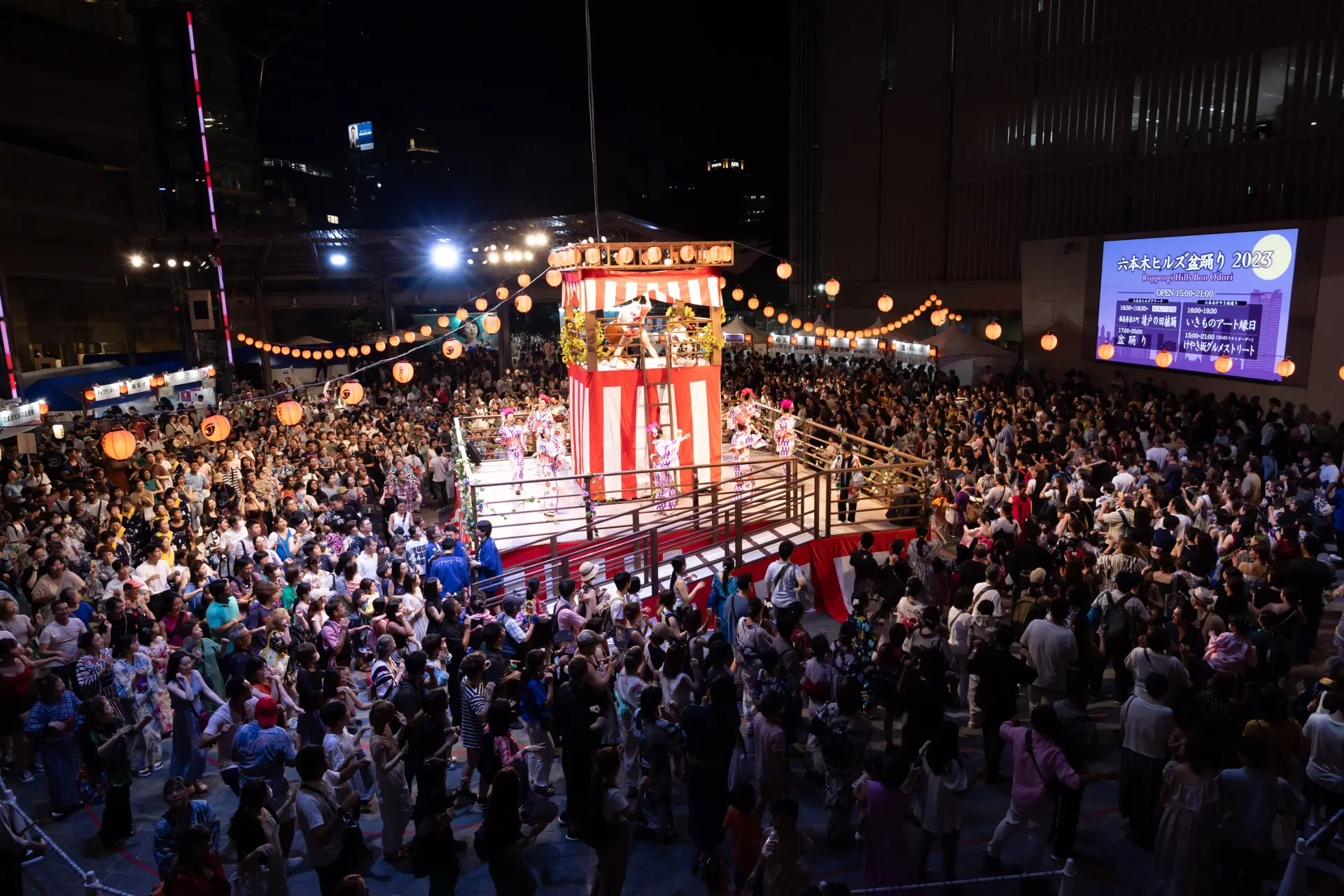
[Summer] Roppongi Hills Bon Odori
A summer tradition in Roppongi held in late August.
At the venue, Roppongi Hills Arena, you can enjoy Bon Odori dancing as well as performances such as the original Roppongi Hills performing art “Gagaku Roppongi Gaku” and traditional performing arts from the Hokuriku region, letting you experience Japanese summer culture while staying in central Tokyo.
The Bon Odori itself is a participatory event where people dance in a circle around a large yagura tower to the original Roppongi Hills song “Ropponin Ondo,” sung by artist Jiro Roppongi. Its appeal is that even tourists can easily join in. Admission to watch both the Bon Odori and “Gagaku Roppongi Gaku” is free.
[Fall] Roppongi Art Night
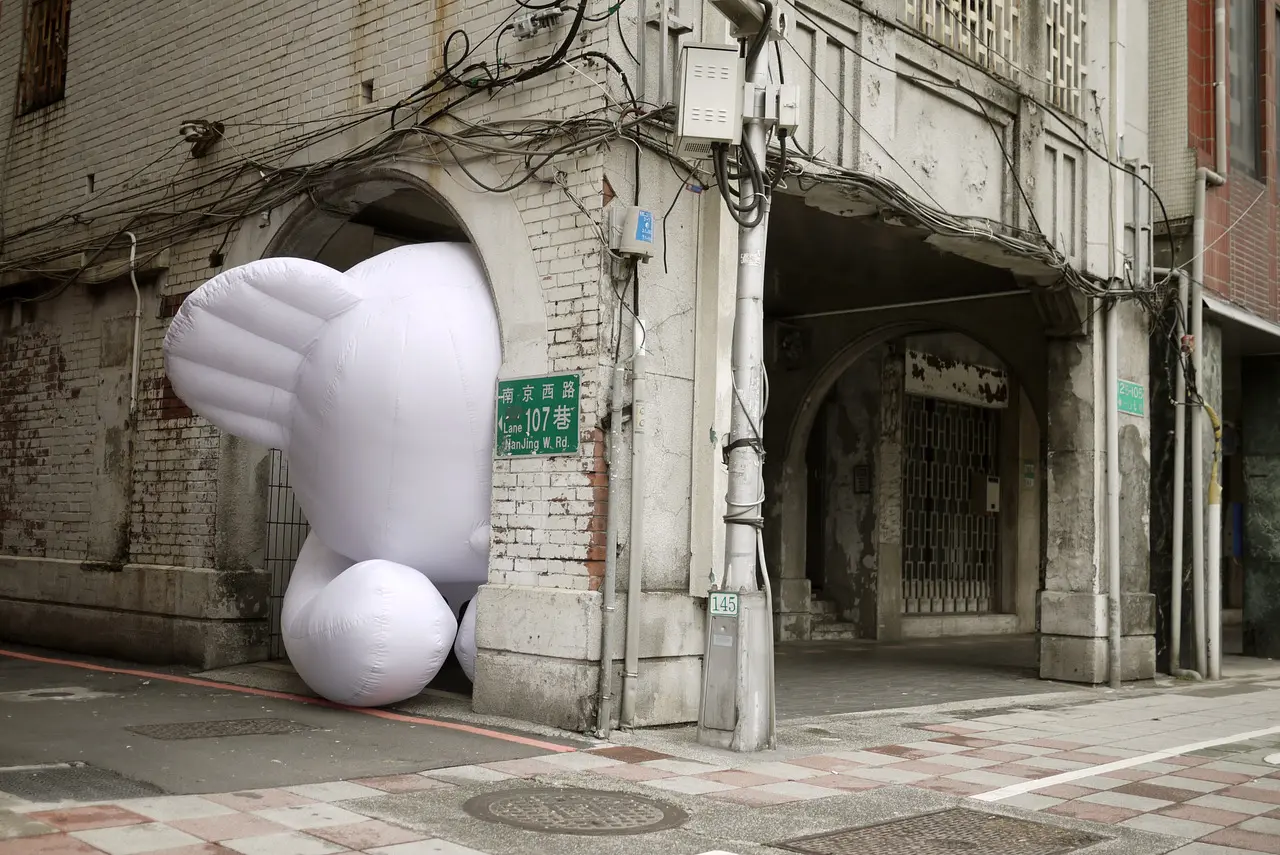
An art event held around late September each year across the entire Roppongi area.
Museums, commercial facilities, public spaces, and streets throughout Roppongi become venues, transforming the whole district into a stage for art.
During the event period, works from a wide range of genres, including installations, performances, video, and sculpture, are presented in many locations, and this breadth of styles and expression is one of its biggest attractions.
Another feature is that exhibitions and programs continue until late at night, allowing the appearance of the art to change as the day shifts into evening.
Works are displayed not only inside buildings but also in outdoor spaces, so you can encounter many kinds of art as you explore the district.
[Winter] Roppongi Hills Christmas Keyakizaka Illumination
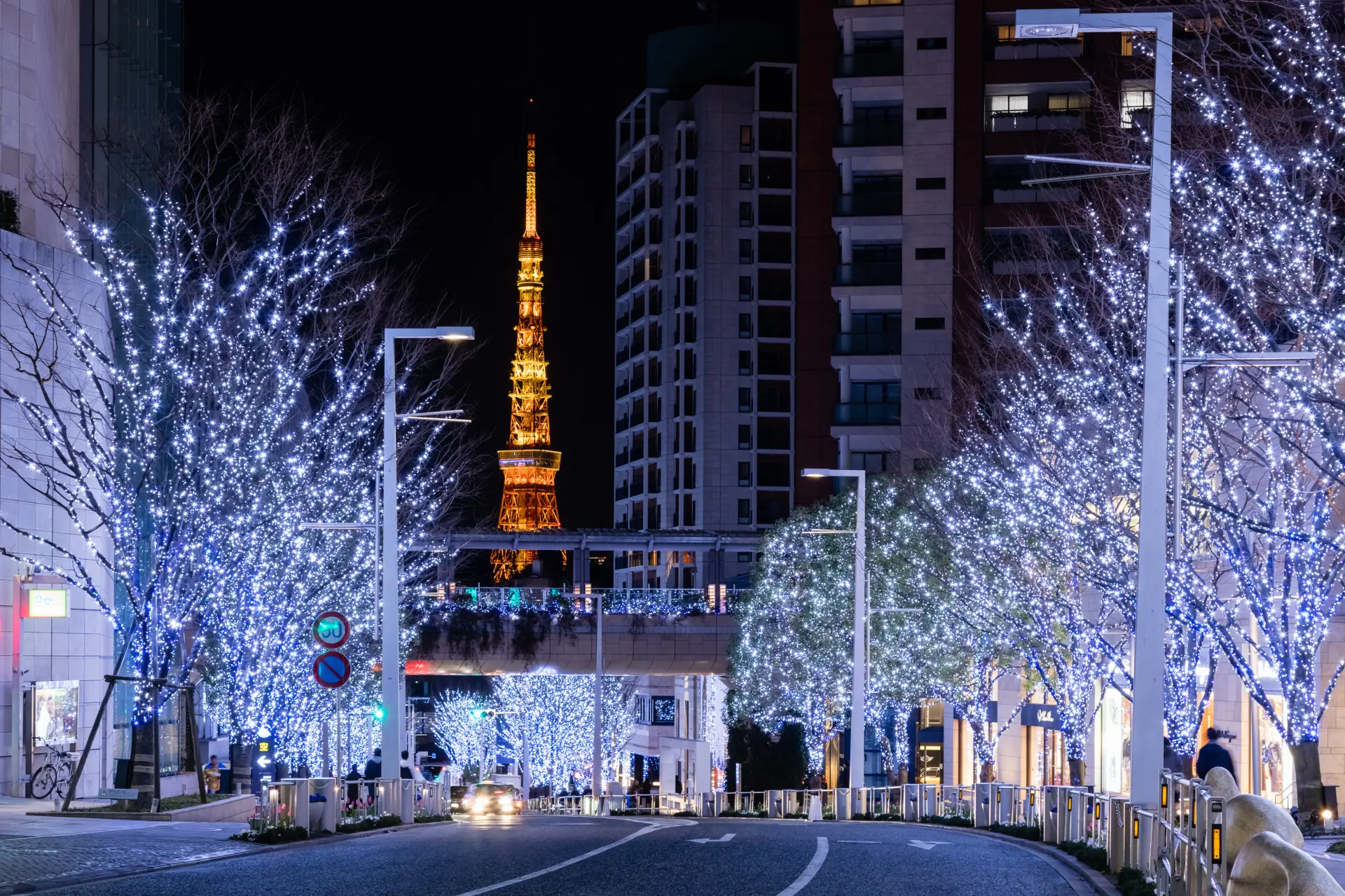
“Roppongi Hills Christmas” signals the arrival of winter in Roppongi.
At the “Keyakizaka Illumination,” Approx. 800,000 LED lights decorate the Approx. 400-meter-long tree-lined Keyakizaka slope. Bathed in “SNOW & BLUE” light, the space feels magical, as if you’ve wandered into a silver-white winter world.
Keyakizaka Street has many recommended photo spots. From around Tiffany and around Roppongi Tsutaya Books, you can capture the entire illumination from both the top and bottom of the slope.
5 Things to Keep in Mind When Sightseeing in Roppongi
To help you fully enjoy Roppongi, here are five things to know in advance.
To make your trip more comfortable, use the points below to help with your preparations and your plans while you’re there.
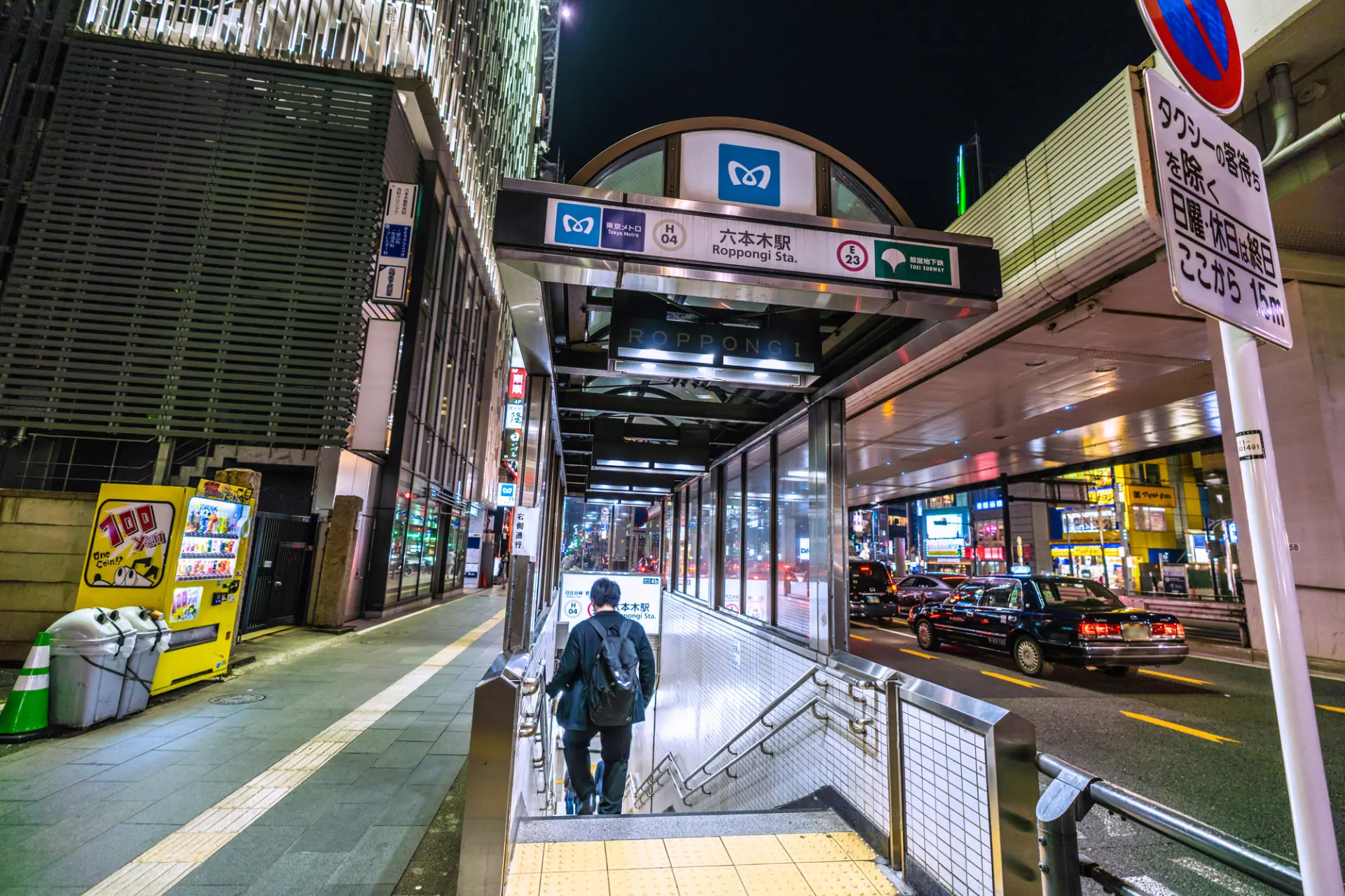
1. It takes time to reach street level from Roppongi Station on the Toei Oedo Line
When heading to Roppongi, you’ll often use Roppongi Station on the Toei Oedo Line.
Known as “the deepest subway station in Japan,” it takes around 6 to 10 minutes to get from the platform to street level.
There are also many exits, which can make it hard to know which one to use.
Because of this, if it’s your first visit, getting to your destination may take more time than expected.
If you plan to use Roppongi Station on the Toei Oedo Line, it’s a good idea to build in an extra 10 to 20 minutes to your schedule.
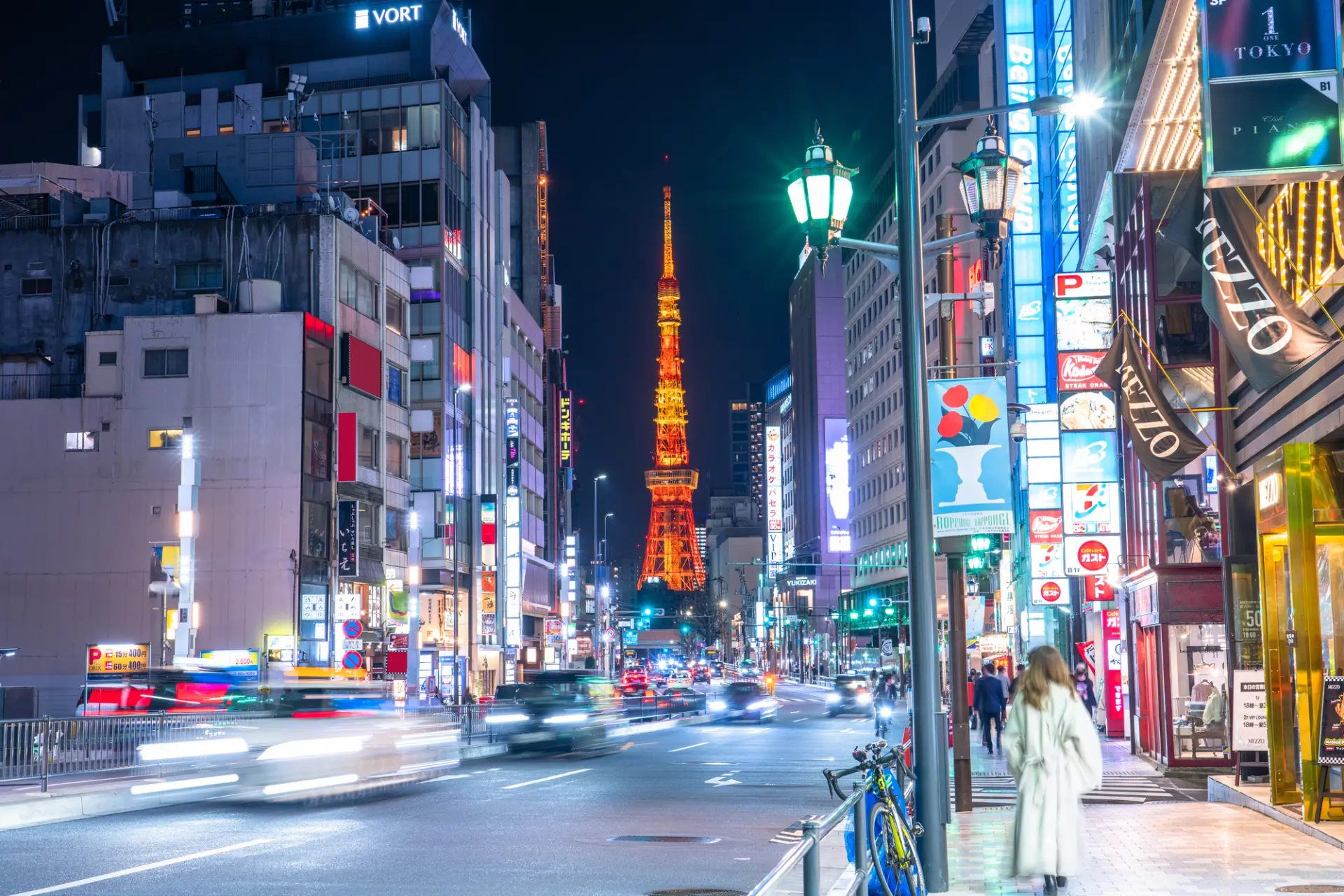
2. Do not follow street touts
In Roppongi, especially at night, you’ll often see touts for bars and clubs.
Some cases can lead to pricing trouble or unfair charges, so it’s important to be careful.
To avoid problems,
- Do not enter places that approach you on the street
- Choose places after checking reviews and reputation in advance
and make sure to follow these precautions.
To enjoy nighttime Roppongi with peace of mind, choose where you go carefully.
3. Check the pricing system before entering bars and clubs
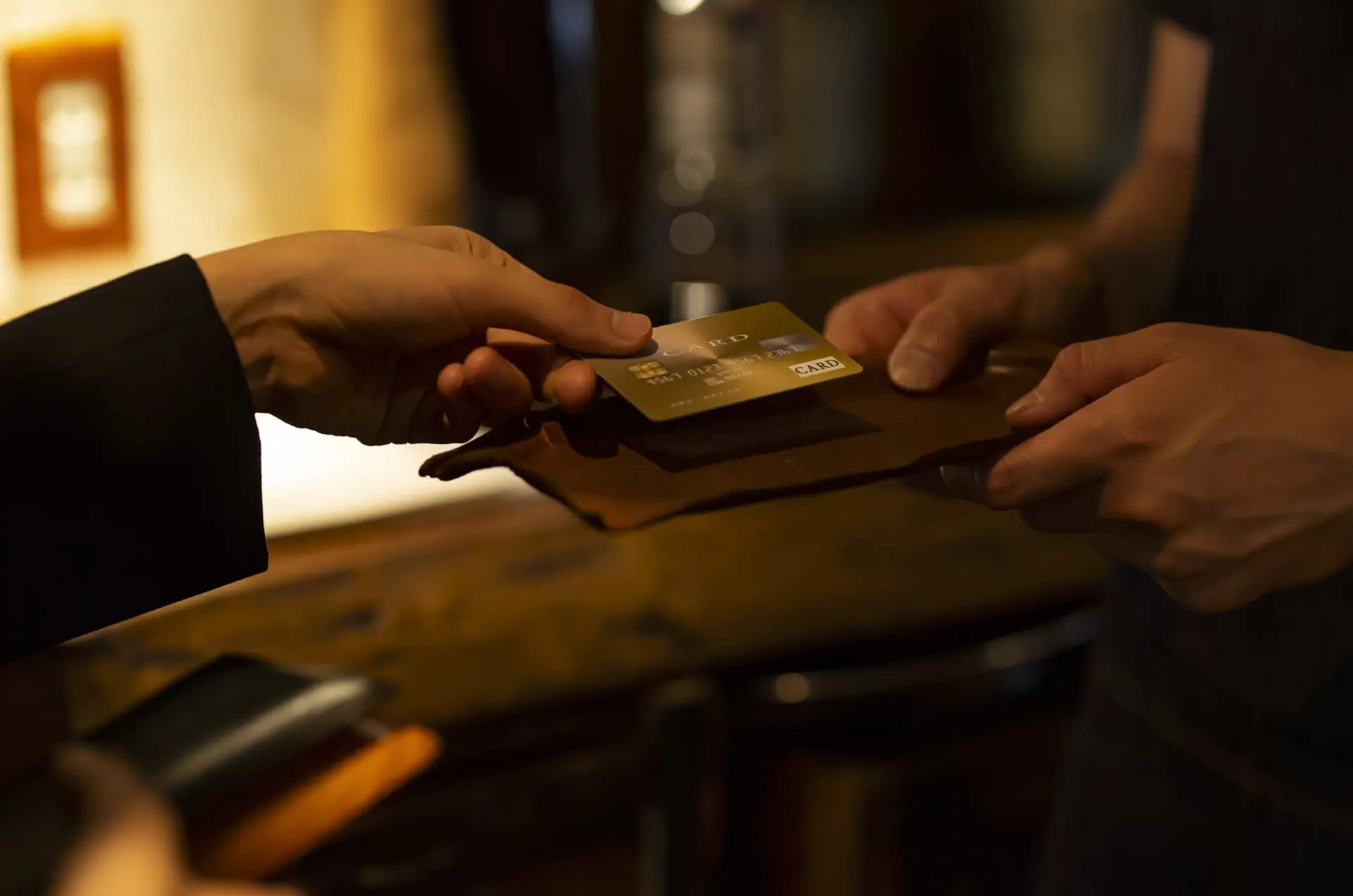
This is not limited to Roppongi, but at bars and clubs, in addition to the cost of the food and drinks you order,
- Cover charge
- Tips
may also be required, and some places have pricing systems different from ordinary restaurants.
To avoid unexpected trouble, before entering, check the
- Pricing system
- Whether a service charge applies
- Menu prices
in advance for peace of mind.
If anything is unclear, ask the staff before ordering and use the place only after you are satisfied with the explanation.
4. Check the time of the last train when planning your schedule
Roppongi has many places and spots where you can stay out late, but be careful about the time of the last train.
It depends on the line and destination, but trains in Tokyo generally stop running around midnight.
If you are staying outside Roppongi, check the last train time in advance and plan a reasonable schedule.
It is also possible to take a taxi to your hotel after the last train, but from 10pm to 5am the following morning, a late-night/early-morning surcharge of 20% is generally added, making the fare more expensive.
To avoid extra costs and travel stress, try to keep track of your time.

5. Check dress codes for shops and facilities in advance
Roppongi has many luxury restaurants and well-known establishments, and some places may have a dress code.
The same applies to hotel lounges, some bars, and nightclubs, and depending on what you wear, you may be refused entry.
In particular, be careful with flip-flops and overly casual clothing.
Check in advance whether the restaurant or lounge you plan to visit has a dress code, and prepare your outfit beforehand so you can enjoy your time without worry.

FAQ about Roppongi Sightseeing
Q
Where should I go to enjoy Roppongi in a short amount of time?
A
Roppongi Hills and Tokyo Midtown are recommended.
Q
Where can I see a beautiful night view in Roppongi?
A
At the Roppongi Hills Observatory, you can enjoy a view selected as one of Japan’s 100 best night views.
Q
Where can I get a great view of Tokyo Tower in Roppongi?
A
You can get a great view of Tokyo Tower from the Roppongi Hills Observatory.
Summary
We’ve introduced popular tourist spots in Roppongi, one of Tokyo’s leading entertainment districts, along with recommended places for shopping and dining.
If you visit the spots featured in this article, you’ll be sure to fully enjoy Roppongi, a district with a grown-up atmosphere.
Tokyo also has many other areas besides Roppongi where you can enjoy shopping and sightseeing.
If you want to make the most of your first trip to Tokyo, be sure to check out this article as well, which brings together some of the city’s most appealing spots.