

A Guide to Shirahige Shrine, Famous for Its Mystical Scenery Created by the Torii Gate in the Lake and Lake Biwa
Shirahige Shrine, the oldest shrine in Shiga Prefecture, is a popular sightseeing spot known for the spectacular view created by its torii gate standing in Lake Biwa.
Many people visiting Shiga or Lake Biwa will likely have it on their itinerary.
If you are making the trip to Shirahige Shrine, be sure to enjoy not only the torii gate but also the highlights within the shrine grounds.
This article introduces the history and highlights of Shirahige Shrine, along with access information and nearby sightseeing spots to know before your visit.
What is Shirahige Shrine Like?
Shirahige Shrine is located in the northwestern area of Lake Biwa, in central Shiga Prefecture. It is the oldest shrine in Shiga Prefecture, with a history of Approx. 2,000 years.
It enshrines Sarutahiko-no-Mikoto and has long been worshipped as the Shirahige deity of longevity and long life.
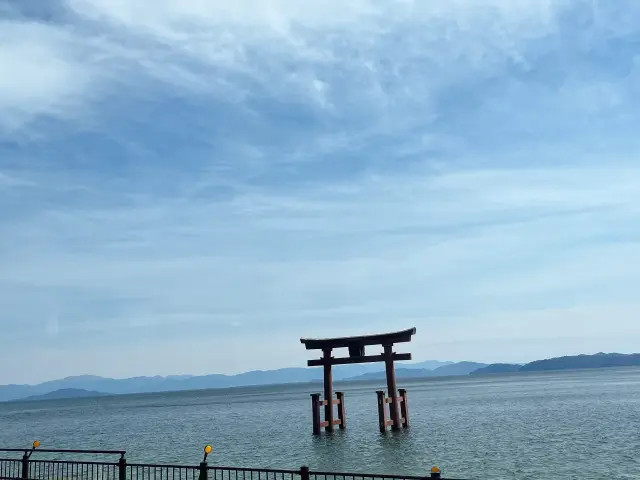
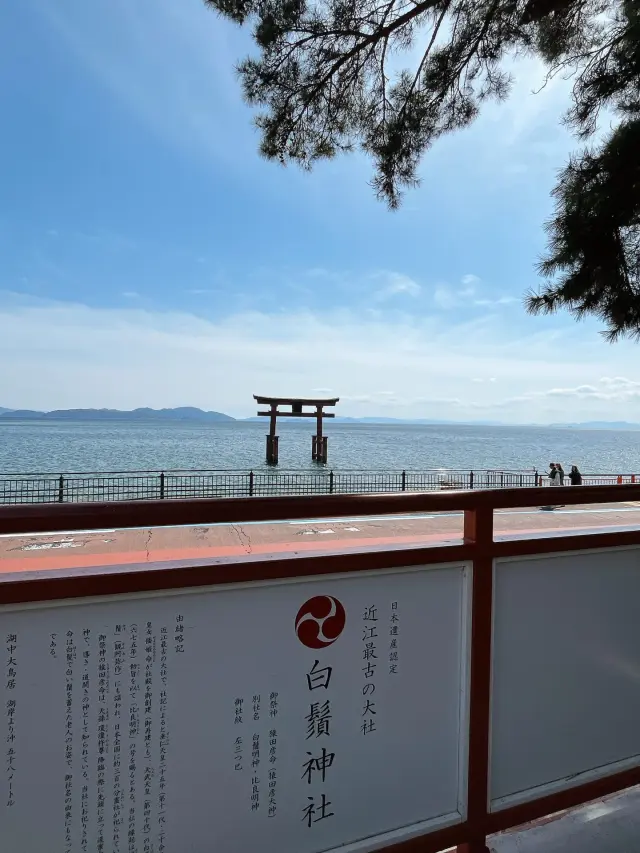
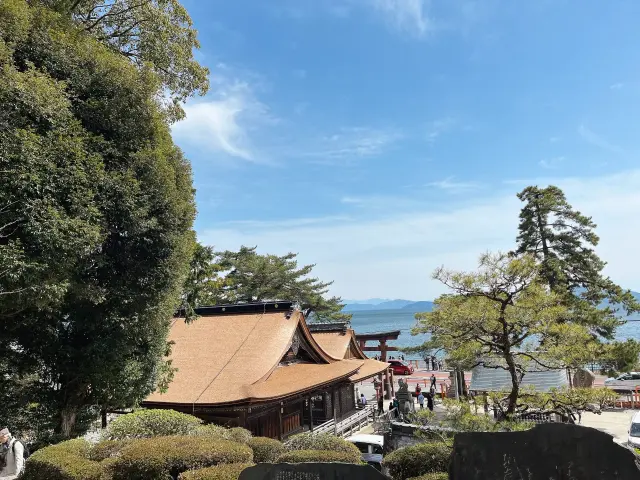
The torii gate standing on the lake across the national highway from the main hall of Shirahige Shrine is highly popular as a scenic power spot.
With Okishima, the largest island in Lake Biwa, in the background, the scenery of the torii gate floating on the lake is stunning and has been recognized as a Japan Heritage site.
Its mystical appearance has earned it the nickname "Omi no Itsukushima," as it resembles Itsukushima Shrine on Miyajima in Hiroshima Prefecture.


The Origins of Shirahige Shrine
The shrine buildings were founded by Princess Yamato-hime-no-Mikoto, daughter of Emperor Suinin.
The shrine's name comes from the appearance of the enshrined deity, Sarutahiko-no-Mikoto, who is said to look like an old man with white hair and a long white beard.
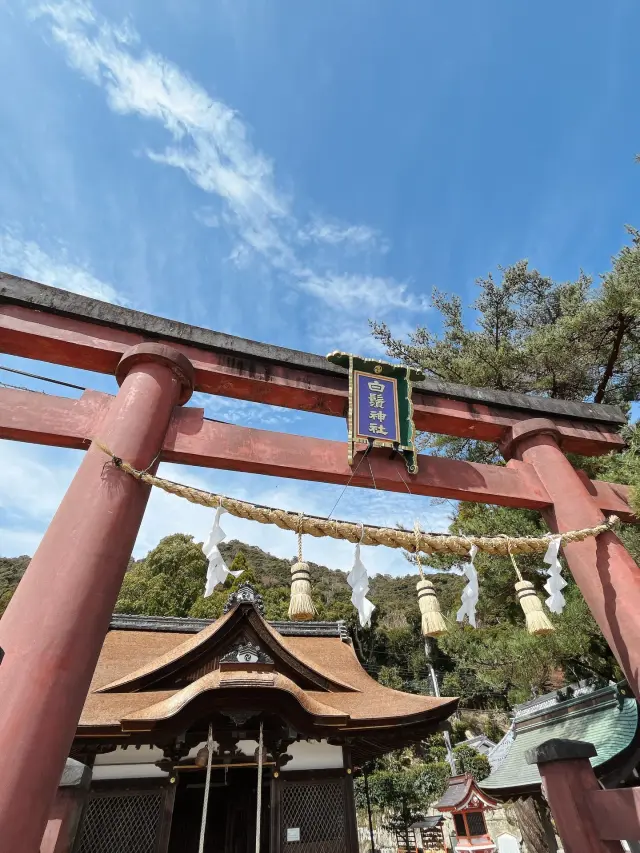
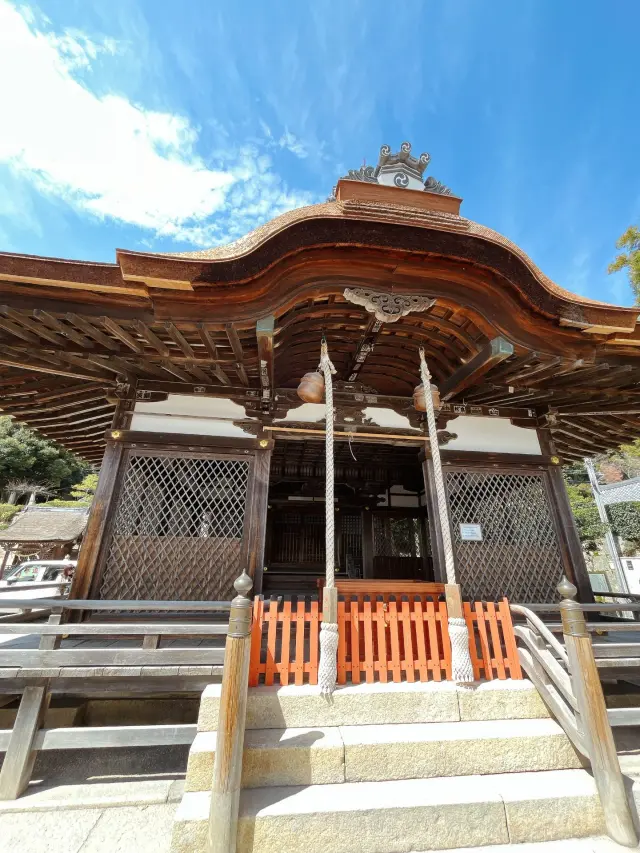
The current main hall was built by Hideyori, the third son of Toyotomi Hideyoshi, following Hideyoshi's dying wish. It dates to the Warring States period (1467–1615) and is designated as an Important Cultural Property of Japan.

Access to Shirahige Shrine
Here is how to get to Shirahige Shrine starting from Maibara Station, a Shinkansen stop and a convenient base for sightseeing in Shiga.
From the nearest station, Omi-Takashima Station, it takes 30–40 minutes on foot or Approx. 15 minutes by rental bicycle.
- Route
-
1. Take the JR Hokuriku Main Line from Maibara Station and get off at Omi-Shiotsu Station
2. Transfer to the JR Kosei Line and get off at Omi-Takashima Station
3. Take a taxi for Approx. 5 minutes from Omi-Takashima Station - Travel Time
- Approx. 1 hour 30 minutes
What Is the Best Season to Visit Shirahige Shrine?
Early summer is the best time to visit Shirahige Shrine.
The waters of Lake Biwa, where the vermilion torii gate appears to float, become clearer and shine beautifully, making the mystical atmosphere feel even stronger.
A Must-See for Sightseeing! 3 Highlights of Shirahige Shrine
Shirahige Shrine is famous for its torii gate standing in the lake, but there is also plenty to see within the shrine grounds.
Be sure not to miss the main hall and shrine office, which are designated as Important Cultural Properties and Registered Cultural Properties of Japan.
1. Giant Torii Gate in the Lake
Across the national highway from Shirahige Shrine stands a large vermilion torii gate rising from Lake Biwa.
There are several theories as to why the torii gate stands in the lake, but the exact reason remains unknown.
There is even a legend that it suddenly appeared from the lake as a sign of natural disasters or major upheaval in the nation.
This mystical giant torii gate in the lake draws many visitors as a spectacular sightseeing spot.
The view is especially captivating at sunrise, when the sun aligns with the torii gate.
Be sure to enjoy the many different scenes here, from the contrast of the blue sky and the gate's vivid vermilion to the sight of the torii blending into the evening sky.

2. Main Hall and Worship Hall
It was built and donated in 1603 by Hideyori, the third son of Toyotomi Hideyoshi, following Hideyoshi's dying wish.
The main hall features a Momoyama-period (1573–1603) architectural style, with an irimoya-style roof covered in hinoki cypress bark, and is designated as an Important Cultural Property of Japan.
When the worship hall was rebuilt in 1879, it was connected to the main hall, resulting in a complex roof structure.

3. Shrine Office
Built in 1933, the shrine office is designated as a Registered Cultural Property of Japan as a structure showcasing the architectural techniques of its time.
A shrine office is where shrine staff handle administrative and management work, and it is also where visitors can apply for prayer services and receive amulets and omikuji fortune slips.
When picking up an amulet, be sure to take a close look at the shrine office itself as well.

Add the "Nishi-Omi Seven Lucky Gods Pilgrimage" to Your Lake Biwa and Shirahige Sightseeing Plan
The Nishi-Omi Seven Lucky Gods Pilgrimage is a route that visits shrines and temples dedicated to seven deities believed to bring good fortune, a tradition said by one theory to date back to the Muromachi period (1336–1573).
You can receive all at once the blessings associated with Daikokuten, Ebisu, Bishamonten, Benzaiten, Hotei, Fukurokuju, and Jurojin.
Sarutahiko-no-Mikoto, enshrined at Shirahige Shrine, is Jurojin, one of the seven deities.
If you are already visiting Shirahige Shrine or sightseeing around Lake Biwa, why not also visit the shrines and temples dedicated to the other six deities?
The shrines and temples dedicated to those six deities are listed in the table below.
At each site, you can receive a goshuin, a stamp kept as proof of your visit to a god or Buddha, making it a great keepsake of the Nishi-Omi Seven Lucky Gods Pilgrimage.
- Gyokusenji Temple (Hoteison)
- 3459 Tanaka, Adogawa-cho, Takashima City, Shiga Prefecture
- Shodenji Temple (Daikokuten)
- 38 Asahi, Shin-Asahi-cho, Takashima City, Shiga Prefecture
- Ashitomiya Shrine / Yukisugi Tenmangu Shrine (Fukurokuju)
- 1707-1 Hirokawa, Imazu-cho, Takashima City, Shiga Prefecture
- Saikoji Temple (Benzaiten)
- 592 Iko, Imazu-cho, Takashima City, Shiga Prefecture
- Karasaki Shrine (Ebisu)
- 924 Chinai, Makino-cho, Takashima City, Shiga Prefecture
- Osakiji Temple (Bishamonten)
- 128 Kaizu, Makino-cho, Takashima City, Shiga Prefecture
3 Scenic Spots Around Lake Biwa to Visit Along with Shirahige Shrine
The area around Lake Biwa, Japan's largest lake, is filled with sightseeing spots, far too many to cover in a single day.
After enjoying Shirahige Shrine, head out to explore more spectacular places shaped by the grandeur of Lake Biwa and the surrounding nature.
1. Biwako Terrace
Biwako Terrace is a nature resort overlooking Lake Biwa, the largest lake in Japan, from an elevation of Approx. 1,100 meters.
Spend a luxurious moment relaxing over a meal while taking in the spectacular views from the two terraces spread across the summits of Mt. Uchimi and Mt. Horai.
The "The Main" area is also packed with dining options, including a terrace café, a buffet-style restaurant, and a café stand.
For the best views, take two lifts from the ropeway summit station to Mt. Horai at an elevation of 1,174 meters.
At Café 360 on the summit, you can enjoy sweeping 360-degree views centered around an arch-shaped wooden deck.

2. Ukimido Hall (Mangetsu-ji Temple)
Kaimonzan Mangetsu-ji Temple is a Zen temple of the Rinzai school's Daitoku-ji branch, located on the lakeshore south of Lake Biwa Ohashi Bridge.
Within its grounds stands a hall at the end of a bridge extending over Lake Biwa. Called Ukimido, or "Floating Hall," because it appears to float on the lake's surface, it is one of Lake Biwa's most celebrated scenic spots.
Stand inside the hall after crossing the bridge, and you can take in a sweeping panorama of Lake Biwa with nothing to block the view.
It is a view that once captivated haiku poets and literary figures, and one best appreciated in a quiet, reflective mood.

3. Omi Ohashi Bridge
This bridge spans Lake Biwa and connects Marunouchi-cho in Otsu City with Niihama-cho in Kusatsu City. It opened in 1974, originally as a toll road, before becoming free in 2013.
Lake Biwa has two bridges: this one, Omi Ohashi Bridge, and Biwako Ohashi Bridge, which connects Otsu City and Moriyama City.
Its gentle arching curve, together with the surrounding greenery, creates a beautiful lakeside landscape. The evening view is also wonderful, with the silhouette of the bridge standing out against the sunset.


Reviews
Some reviews are AI-translated.
-
Shirahige Shrine, located on the shore of Lake Biwa, has a long history. Though small and simple, it offers breathtakingly beautiful scenery. The most captivating sight is the vermilion torii gate standing in the lake. With the waves around it, it seems to float on the water, often creating the dreamlike illusion of being at Itsukushima Shrine, one of Japan's Three Scenic Views.
For the best view of this torii gate on the water, the ideal photo spot is the observation deck inside the shrine grounds. From this elevated position, you get an expansive view that captures the depth of the lake and sky blending together while also keeping you safe.
A national highway with fast-moving traffic separates the shrine from the torii gate, and there is no pedestrian crossing at all. For your own safety and that of drivers, please don't be an irresponsible traveler and risk crossing the road to the lakeshore on the other side. The best way to experience this sacred tranquility is to quietly pray in the lake breeze from the observation deck and gaze at the torii gate in the distance.
-
-
This place is pretty remote and not easy to get to. There isn’t a safe area set up for visitors to view the torii gate in the water, either. Honestly, I wouldn’t really recommend it as a sightseeing spot.
-
-
This beautiful shrine stands by the lake. I took a taxi from the station just to visit, and it was absolutely worth the trip.
-






FAQ about Shirahige Shrine
Q
How do I get to Shirahige Shrine from Kyoto Station?
Take the JR Kosei Line and get off at Omi-Takashima Station (Approx. 40 minutes), then continue on foot or by taxi from the station.
Q
Who is the enshrined deity of Shirahige Shrine?
It enshrines Sarutahiko-no-Mikoto.
Summary
We have introduced the charms of Shirahige Shrine, from its mystical giant torii gate standing in the lake to its impressive historic buildings.
It is a little far from the nearest station, but if you make your way there on foot or by taxi while enjoying the grand scenery of Lake Biwa and the surrounding nature, the journey itself should be enjoyable.
Beyond Shirahige Shrine and the sightseeing spots introduced in this article, Lake Biwa is home to many other attractive destinations. Use the article below as a reference and enjoy sightseeing in Shiga.