

Explore Around Mt. Akagi! 9 Popular Tourist Spots in Maebashi
Located near the center of Gunma Prefecture, Maebashi City.
In the area around Mt. Akagi, which rises in the northern part of the city, you can enjoy rich and diverse natural scenery.
Another of its charms is the many facilities scattered across the city center where you can enjoy art and culture.
With the shinkansen, it is accessible from Tokyo in a little over Approx. 1 hour, making it well suited for a day trip.
This article introduces popular tourist spots in Maebashi, along with access information and the best seasons to visit before your trip.
What is Maebashi Like?
Maebashi is a major city located in the south-central part of Gunma Prefecture and has the second-largest population in the prefecture.
When people think of Maebashi, Mt. Akagi, one of Japan’s 100 Famous Mountains, is what comes to mind.
In spring, you can see the beautiful cherry tree-lined road Akagi Nanmen Senbonzakura, in summer, a lush blue lake surrounded by virgin forest, in autumn, trees colored by fall foliage, and in winter, beautiful snow-covered mountain slopes, offering stunning natural scenery in every season.
Another attraction is that you can enjoy a variety of leisure activities throughout the year, such as camping, smelt fishing, and kayaking.
Nature is not its only richness. It is also known as a city of art and culture, and in 2018, works by artist Taro Okamoto were installed in the city.
There are also many worthwhile places to visit, including a facility exhibiting materials related to poets, spaces where you can enjoy art in a refined setting, and a guest house designated as an Important Cultural Property of Japan.
Maebashi is also one of Japan’s leading producers of pork, so you can enjoy a variety of local specialty dishes made with pork, such as sauce katsudon, tonkatsu, and pork rice bowls.
Be sure not to miss yakimanju, grilled buns brushed with a rich, sweet miso sauce.

What Is the Best Season to Visit Maebashi?
If you are visiting Maebashi, autumn is recommended, when the fall foliage is at its best.
In autumn, Mt. Akagi turns red and orange, creating vivid and beautiful scenery.
Enjoy a fall foliage hike in comfortable temperatures.
Akagi Nanmen Senbonzakura, a famous cherry blossom spot with more than 1,000 cherry trees, is located on the southern foot of Mt. Akagi, so if you want to see cherry blossoms, visit in spring.
What to Wear in Maebashi by Season
- Spring (March - May): Coats and light sweaters
- Summer (June - August): Light clothing, short sleeves
- Autumn (September - November): Light jackets, coats
- Winter (December - February): Coats, thick sweaters, and jackets
How Do You Get to Maebashi?
From Tokyo to Maebashi, it takes Approx. 1 hour 15 minutes by shinkansen and local train.
From Haneda Airport, it takes Approx. 2 hours by transferring between shinkansen and local trains, and from Narita Airport, Approx. 2 hours 30 minutes.
From Osaka, it is a trip of Approx. 4 hours, transferring between shinkansen lines and using local trains as well.
In any case, you need to use the shinkansen to shorten travel time.
Main Transportation for Sightseeing in Maebashi
When sightseeing in Maebashi, the main mode of transportation is the bus.
There are several stations in the city, so trains are also an option, but using buses is more efficient for getting around.
There are many bus routes and frequent services, but if you also use taxis or rent a car, you can travel even more comfortably.
9 Popular Tourist Spots You Should Visit in Maebashi
From here, we will introduce popular tourist spots in Maebashi.
In addition to Mt. Akagi, we will also introduce places where you can see beautiful flowers, a unique theme park, and spots where you can experience history and culture.
Use the places introduced here as a reference and plan your trip around Mt. Akagi and the rest of Maebashi.
1. Mt. Akagi, Akagi Shrine
Mt. Akagi is praised in the phrase “Susono wa nagashi Akagiyama” and is known for having a base length second only to Mt. Fuji.
With Mt. Kurobi as its main peak (1,828 m), several mountains surround the caldera, and these peaks are collectively called Mt. Akagi.
It has long been an object of worship, and there are many Akagi shrines at the foot of the mountain.
The distinctive north wind that blows through the Kanto region in winter is called the “Akagi Oroshi” in this area.

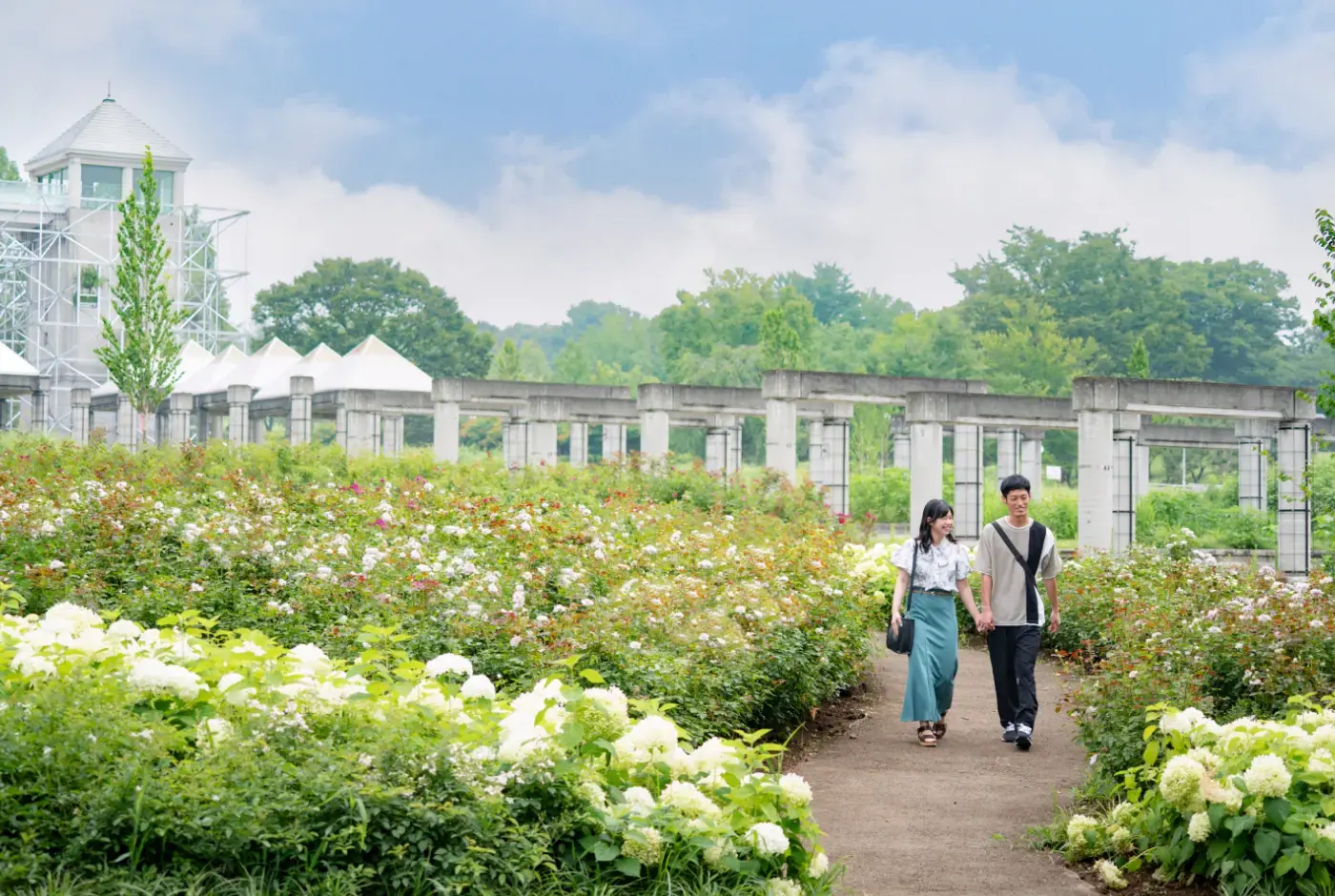
2. Gunma Flower Park+
A flower and nature-themed tourist facility in Maebashi, Gunma Prefecture, renewed in October 2025 under the concept “Enjoy! Play with Flowers.”
Centered on the signature flowers of Gunma Prefecture, roses, hydrangeas, and clematis, you can encounter many kinds of seasonal flowers. Some are original varieties that can only be seen at this park, so every visit brings new scenery and discoveries.
Events such as flower picking, plant dyeing craft experiences, and nature tours are also held regularly.
3. Akagi Nanmen Senbonzakura
Located on the southern foot of Mt. Akagi, Akagi Nanmen Senbonzakura is a beautiful cherry blossom-lined road where Approx. 1,400 Somei Yoshino cherry trees bloom on both sides of a road stretching Approx. 3.5 km.
The trees had once been cut down, leaving only the road, but the area was redeveloped over three years starting in 1956, resulting in the cherry blossom avenue seen today.
In 1990, it was selected as one of Japan’s 100 Best Cherry Blossom Spots and is known as one of the country’s leading cherry blossom destinations.

4. Shikishima Park Kadokura Techno Rose Garden
Opened in 1971 in Maebashi, Gunma Prefecture, where roses have been designated as the city flower.
Approx. 600 varieties and 7,000 rose bushes are planted in the garden, and they reach their best season twice a year, in spring and autumn.
There is an area of old roses with a sense of history and an area of modern roses divided by country of production, each designed so visitors can enjoy their different charms, making it an irresistible space for rose lovers.
One highlight is Akagi no Kagayaki, an original Maebashi rose.
Its beauty lies in how the flower changes color from yellow to orange to red as it begins to bloom.

5. Onuma
Onuma, spreading near the summit of Mt. Akagi, is a mysterious caldera lake located at an elevation of 1,350 meters.
The vast lake surface of Approx. 800,000 square meters, surrounded by virgin forest, is highly transparent and gives visitors a calm feeling.
Here, you can enjoy a variety of seasonal activities, including kayaking, boating, and camping in summer, smelt fishing in autumn, and ice smelt fishing in winter.

6. Rinkokaku
Rinkokaku is a dignified wooden Japanese-style building designated as an Important Cultural Property of Japan. Within the grounds stand three buildings, the main building, tea house, and annex, making you feel as if you have stepped back in time.
The main building, built in September 1884 as a guest house, is a historic structure where many members of the imperial family, including Emperor Meiji, stayed. Its sukiya-style architecture creates a refined space that seems to embody Japanese aesthetics.

7. Maebashi Children’s Amusement Park Lunapark
Maebashi Children’s Amusement Park Lunapark in Maebashi, Gunma Prefecture, opened in 1954. Its nostalgic atmosphere with a sense of another era is part of its charm.
Known as the “cheapest amusement park in Japan,” admission is free. Large rides cost 50 yen per ride, while electric rocking horses and small rides cost just 10 yen each, making it especially perfect for young children visiting an amusement park for the first time.
Inside the park are many nostalgic attractions, including a retro-style carousel and train rides.

8. Sekai no Meiken Bokujo
A ranch with a site area of 30,000 square meters, built around the concept of a “dog resort for dogs and dog lovers.”
It is packed with facilities for dog lovers and their pets, including one of the largest dog runs in Japan and a pool just for dogs.
There are two expansive dog runs with pools, Dog Hills and Dog Ground. Dog Hills has slopes that make it perfect for playing fetch, while the vast Dog Ground lets you run around freely with your dog.

9. Maebashi Toshogu Shrine
A shrine originally founded in Echizen Katsuyama, now Fukui Prefecture, in 1624, enshrining Tokugawa Ieyasu, the shogun who founded the Edo shogunate, as its main deity.
Later, in 1871, it was moved to its current location in Maebashi, Gunma Prefecture. Sugawara no Michizane, the god of learning, and Konohanasakuya-hime, the goddess associated with safe childbirth, are also enshrined here, so visitors can expect a variety of blessings.
This shrine has a unique custom. Those who receive prayers for protection from misfortune or a purification blessing for their car can float paper cutouts shaped like people or cars down the sacred stream called Haraigawa to cleanse away sin and impurity and ward off bad luck.

FAQ about Maebashi Sightseeing
Q
How do you get from Maebashi to Takasaki?
Take either the JR Ryomo Line, JR Ueno-Tokyo Line, or JR Shonan-Shinjuku Line, and it takes Approx. 15 minutes.
Q
When is the best time to see the autumn leaves in Maebashi?
From early October to early November.
Q
When is the best time to see cherry blossoms in Maebashi?
From late March to early April.
Summary
This article has introduced popular tourist spots in Maebashi, along with access information and the best season for sightseeing.
Use this article as a reference and head out on a trip to Maebashi to explore the diverse and beautiful natural scenery of Mt. Akagi, enjoy leisure activities in nature, and visit cultural facilities where you can experience art and culture.
If you are planning to visit other areas in Gunma besides Maebashi, be sure to check out this article as well, which introduces especially recommended tourist spots in Gunma.