
![See It with New Eyes! Kamakura Great Buddha Travel Guide [Highlights, Access, Model Course]](https://static.gltjp.com/glt/data/article/22000/21413/20260507_161551_61c5c76b_w1920.webp)
See It with New Eyes! Kamakura Great Buddha Travel Guide [Highlights, Access, Model Course]
The Kamakura Great Buddha is a beloved symbol of Kamakura for visitors from Japan and around the world.
This article covers essential information about the Kamakura Great Buddha, explains its main features, and highlights what to see.
We’ve also included a one-day model course to enjoy alongside your Kamakura sightseeing, so be sure to read to the end.
What is the Kamakura Great Buddha?
Kamakura Daibutsu Kotoku-in is a Jodo sect temple in Kamakura, Kanagawa Prefecture.
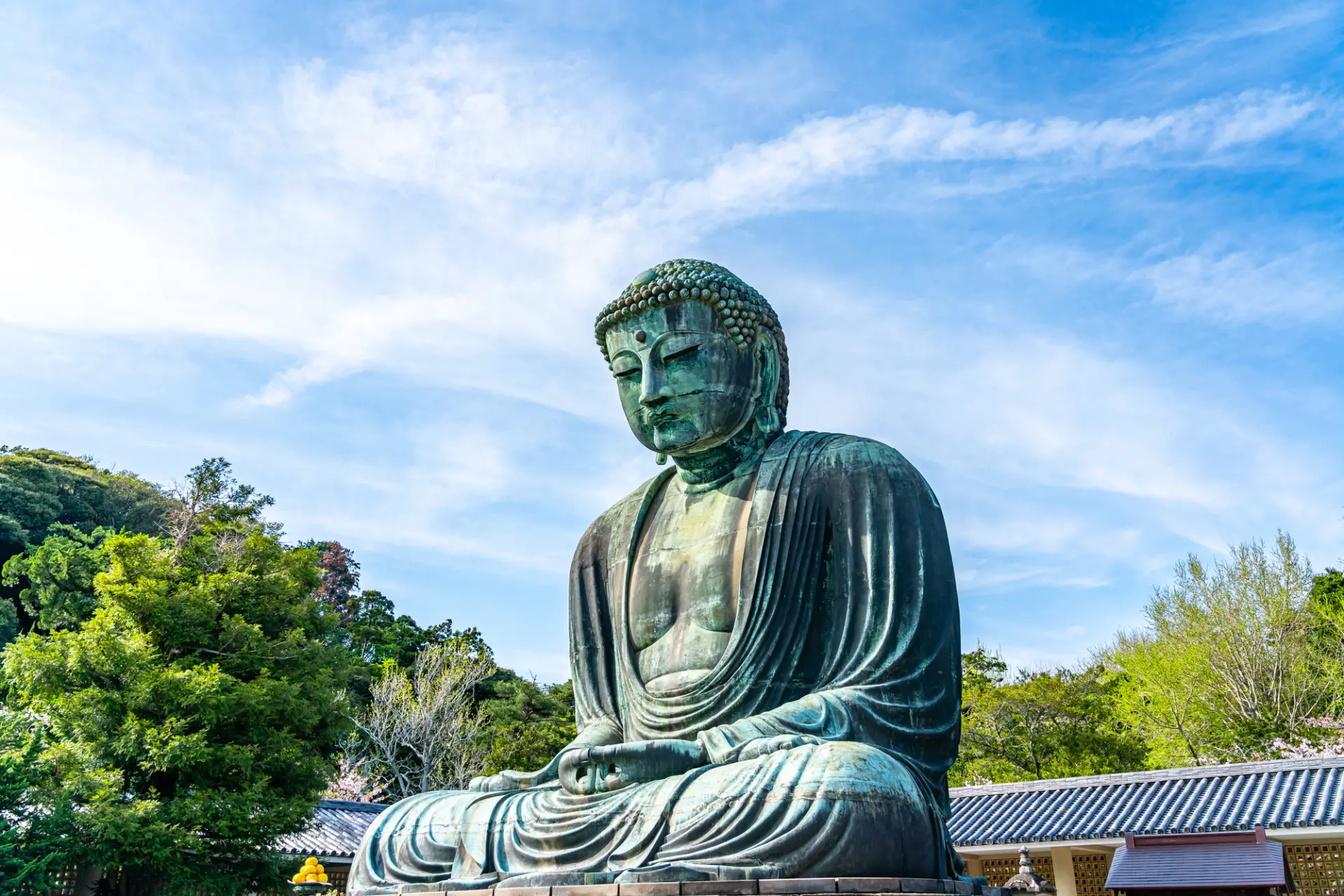
Its official name is Taiizan Kotoku-in Shojosen-ji, and it enshrines the Bronze Seated Statue of Amida Nyorai, commonly known as the Kamakura Great Buddha, the only National Treasure in the city, as its principal image.
Known as one of Japan’s three great Buddha statues, its imposing figure, Approx. 11.31 meters tall and weighing Approx. 121 tons, has a commanding presence.
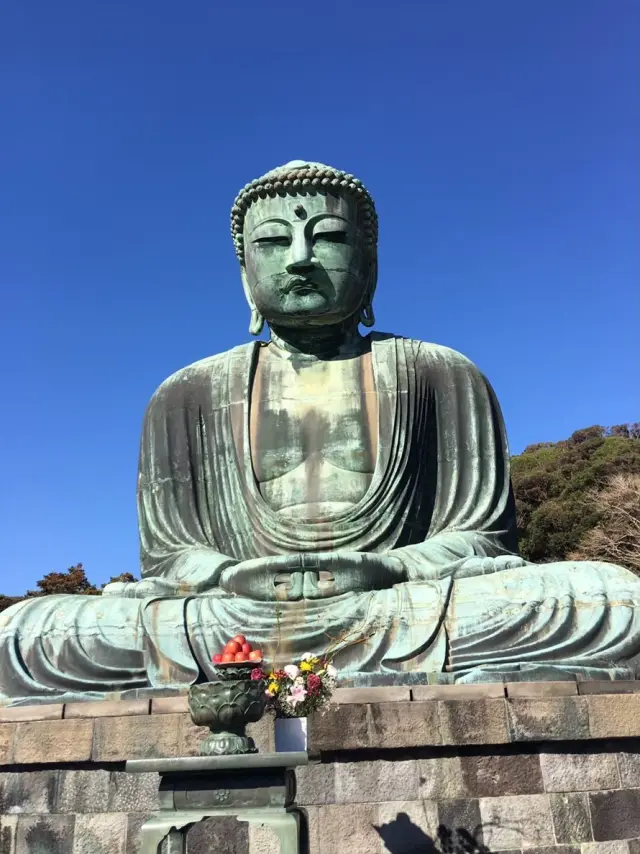
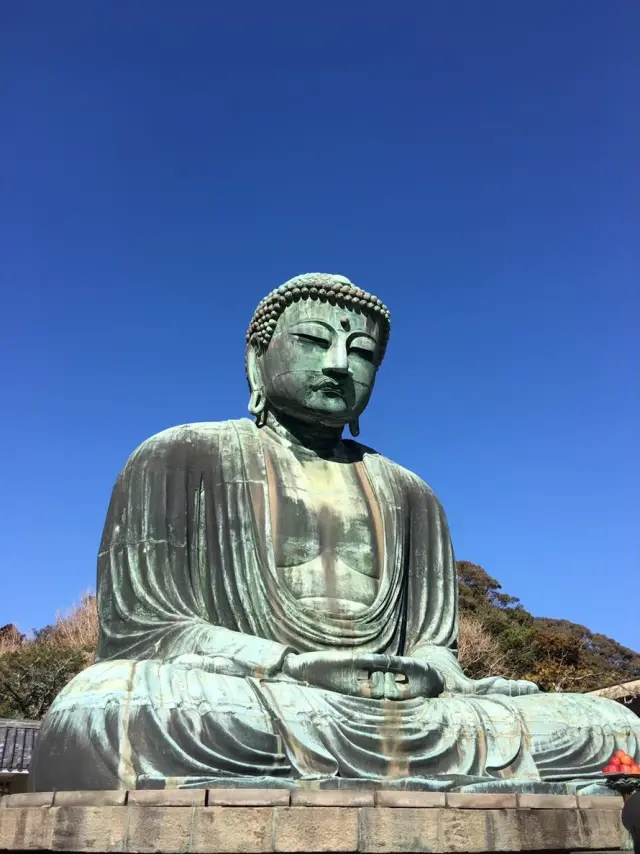
Beyond its grand scale, the statue’s weathered, verdigris-colored bronze surface, marked by a long history, is part of its appeal.
From the Kamakura period (1185–1392) to the present day, it has withstood wars, earthquakes, typhoons, and more, remaining a symbol of Kamakura.
Its weight and presence combine a power and grace that photos and videos cannot fully convey, while the quiet atmosphere in harmony with the surrounding nature surrounds visitors and leaves a deep impression.
History of the Kamakura Great Buddha
Construction of the Kamakura Great Buddha is said to have begun in 1252, but few records from its founding remain, leaving many mysteries.
It is said that donations solicited by the monk Joko were used for its creation, but who built it and for what purpose remain unknown.
When first completed, it was covered in gold leaf and housed inside a Great Buddha Hall, but the building collapsed repeatedly due to typhoons and earthquakes. After the major earthquake of 1498, the statue became the open-air Buddha seen today.
In 1712, the high priest Yuten Shonin restored the temple, and it was developed into a Jodo sect temple.
Repairs and seismic reinforcements have continued since then, preserving the statue’s appearance largely as it was at the time of its creation.
Designated a National Treasure in 1958, and with the temple grounds designated a National Historic Site in 2004 under the name “Site of Kamakura Daibutsu-den,” it remains seated as a symbol of Kamakura.
Access to the Kamakura Great Buddha
The nearest station to Kamakura Daibutsu Kotoku-in is Hase Station on the Enoshima Electric Railway.
Below are routes starting from Tokyo Station and Shinjuku Station, both convenient access points from central Tokyo.
Note that there is no general parking lot, so rental cars are not ideal. From Kamakura Station, you can take the Enoshima Electric Railway or a Keikyu bus (get off at Daibutsu-mae), or walk there in Approx. 30 minutes.
| Starting Point | Route | Travel Time |
|---|---|---|
| Tokyo Station |
1. Take the JR Yokosuka Line from JR Tokyo Station, get off at Kamakura Station, and transfer to the Enoshima Electric Railway 2. Take the Enoshima Electric Railway from Kamakura Station, get off at Hase Station, then walk Approx. 7 minutes to arrive |
Approx. 1 hour 20 minutes |
| Shinjuku Station |
1. Take the JR Shonan-Shinjuku Line from JR Shinjuku Station, get off at Kamakura Station, and transfer to the Enoshima Electric Railway 2. Take the Enoshima Electric Railway from Kamakura Station, get off at Hase Station, then walk Approx. 7 minutes to arrive |
Approx. 1 hour 30 minutes |
Kamakura Great Buddha Hours and Admission
The Hours and Admission for Kamakura Daibutsu Kotoku-in are as follows.
Remember that gate opening hours vary by season, and Admission is paid at the ticket counter.
Although the temple is generally busy with many visitors, weekdays from 8:00 am to 10:00 am or from 4:00 pm to closing tend to be relatively quiet, making these times recommended if you want to avoid crowds.
- Hours
-
April–September: 8:00 am–5:30 pm
October–March: 8:00 am–5:00 pm
*Last admission is 15 minutes before closing; gates open at 12:00 am only on January 1 - Great Buddha Interior Viewing
-
8:00 am–4:30 pm (year-round)
*Last admission is 10 minutes before closing - Official Shop (Temple Office)
- 8:30 am–4:45 pm (year-round)
- Goshuin Reception (Temple Office)
-
Goshuin book inscriptions: 9:00 am–3:00 pm
Pre-written goshuin sheets: 8:00 am–4:30 pm - Admission
-
Adults, junior high and high school students: ¥300
Elementary school students: ¥150
Great Buddha interior: ¥50
*Free for preschool children
What Is the Best Season to Visit the Kamakura Great Buddha?
Kamakura Daibutsu Kotoku-in offers changing atmospheres and highlights throughout the four seasons, making it enjoyable no matter when you visit.
Trees surround the Great Buddha, and viewing it together with the seasonal scenery created by nature gives the experience a poetic feel.
Spring and autumn are especially recommended for their atmosphere.
Spring with Beautiful Cherry Blossoms and Fresh Greenery
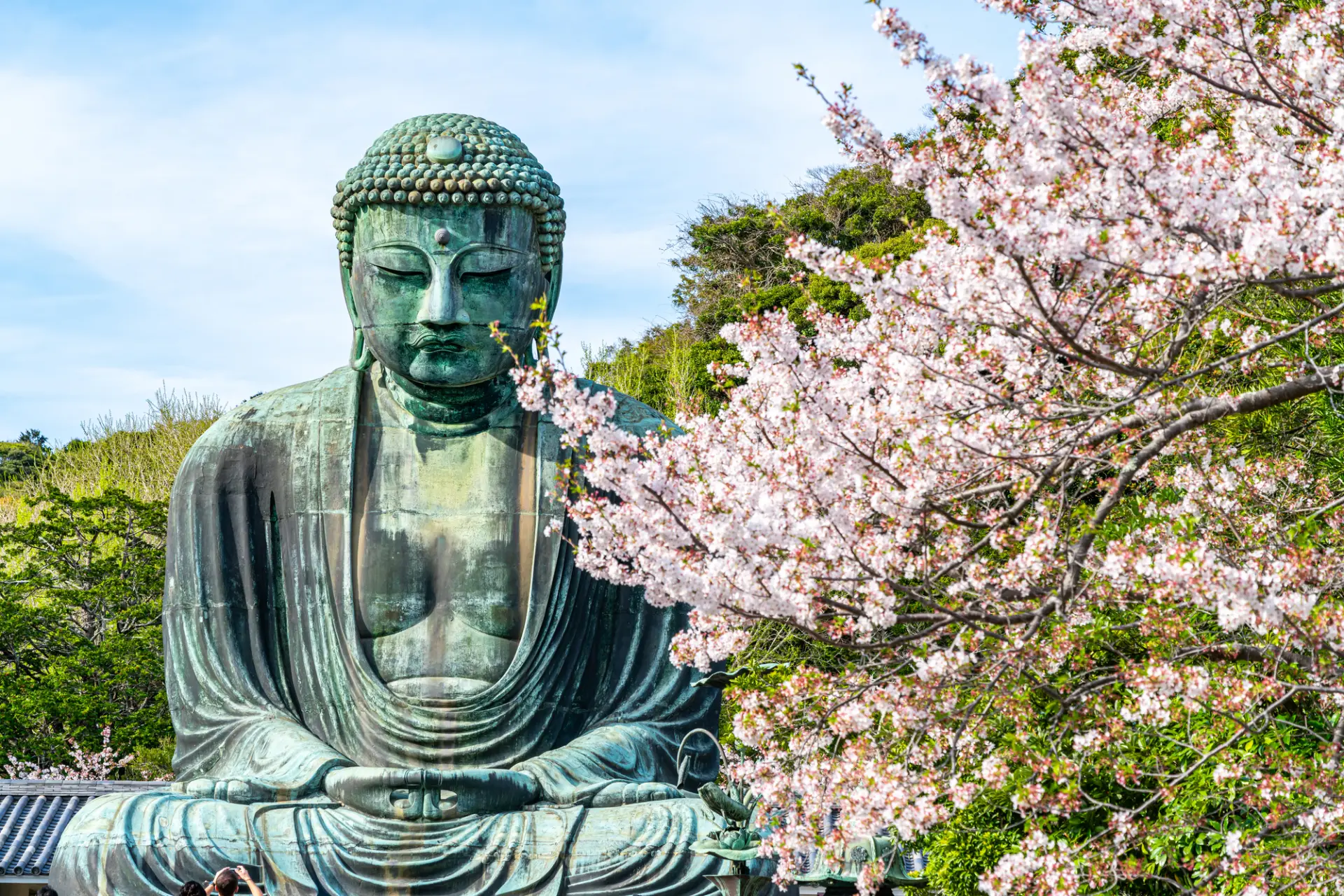
In spring, cherry blossoms blooming throughout the grounds add color behind and around the Great Buddha, while blue skies and fresh greenery create a gentle atmosphere.
The contrast between the statue’s calm expression and the pale blossoms makes for a striking, photogenic scene.
A popular springtime composition is looking up at the Great Buddha through the cherry blossoms.
With warmer, comfortable weather, it is also ideal for strolling around the area, making spring recommended for first-time visitors.
Late Autumn, When the Fall Colors Stand Out
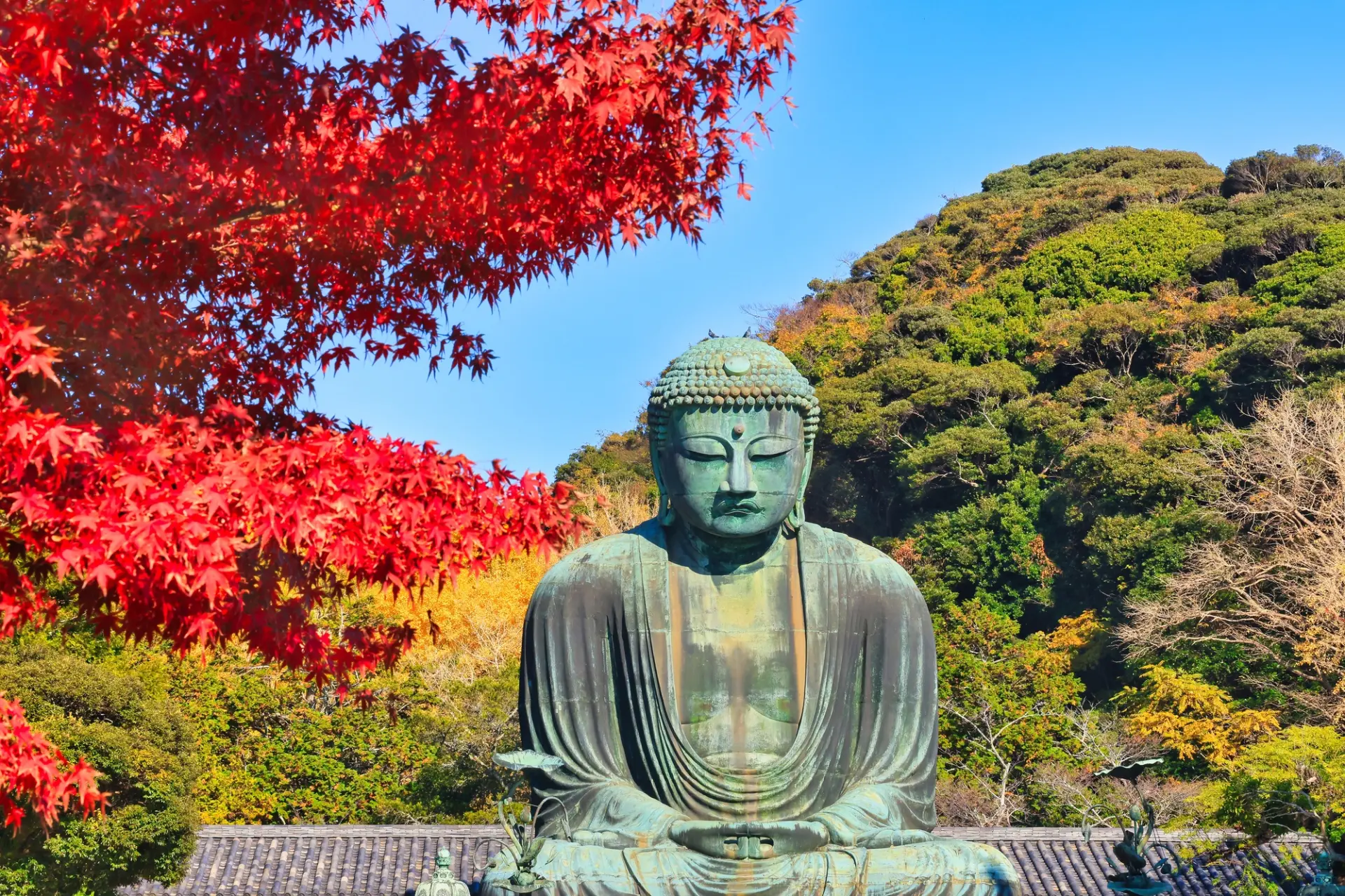
In autumn, the Kamakura Great Buddha is surrounded by trees such as maples, ginkgo, and fragrant osmanthus turning red and gold, deepening the calm atmosphere of the ancient capital.
With the clear air, the statue’s outline appears sharper, emphasizing the dignified beauty of the Great Buddha seated beneath the high sky.
The graceful plumes of pampas grass are another highlight, gently swaying in a way that captures the heart.
Kamakura’s fall foliage arrives relatively late, peaking from late November to early December, so visiting in late autumn makes it easier to enjoy the seasonal feel.
Main Features of the Kamakura Great Buddha and Their Meanings
The table below summarizes the main features of the Kamakura Great Buddha.
Each has deep meaning, and together they embody the compassion and wisdom of Amida Nyorai.
Understanding these Buddhist symbols, not just the statue’s grand appearance, will help you appreciate its deeper appeal.
| Feature | Meaning |
|---|---|
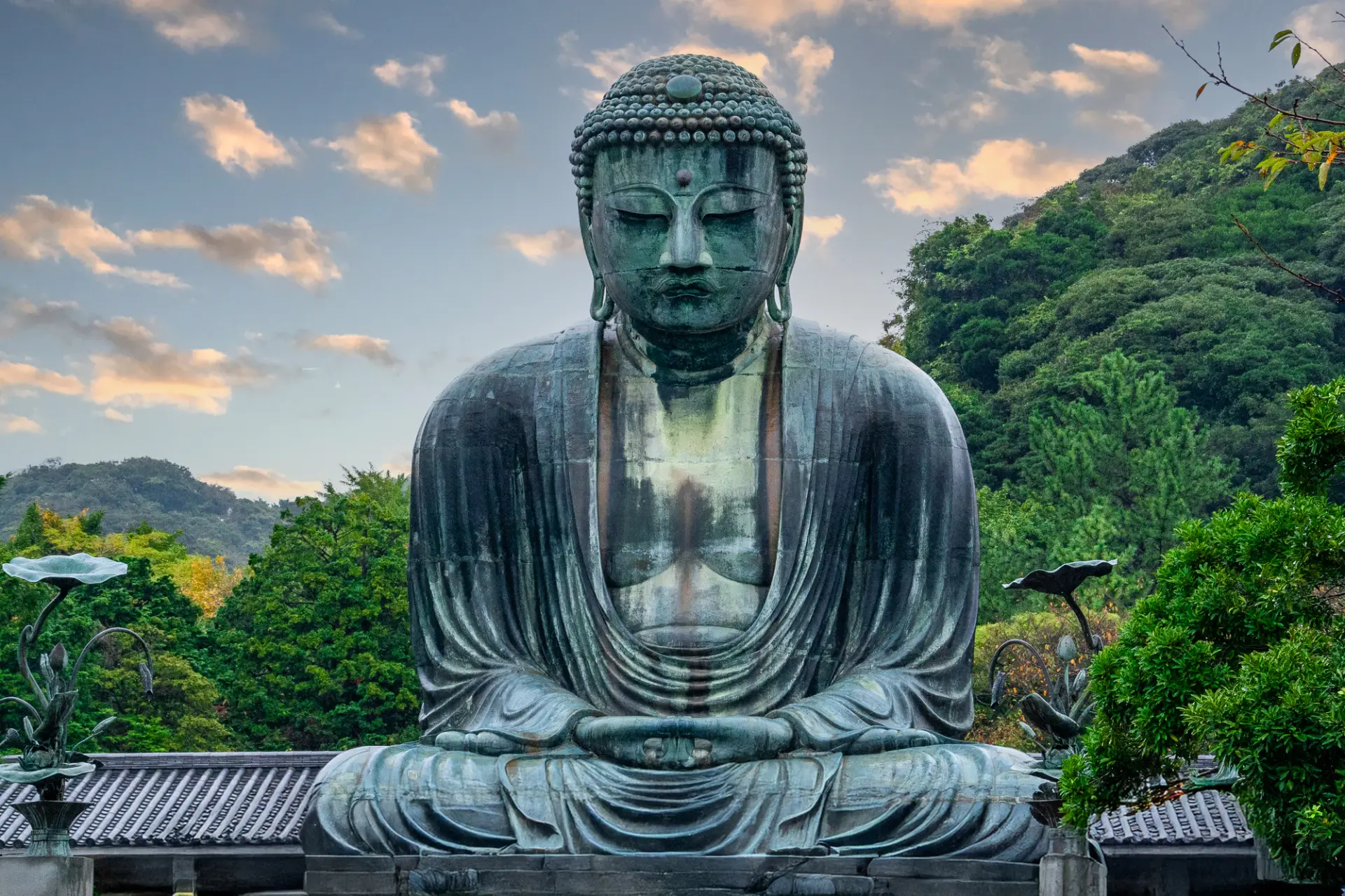
| Rahotsu (spiral curls) | A spiral-shaped hairstyle. It symbolizes the Buddha’s enlightenment and great wisdom. The Kamakura Great Buddha has fewer, thicker curls. Its rare “left-coiling” curls are a distinctive feature, and the 656 curls are more than those on the Great Buddha of Nara. |
| Byakugo | A white spiral hair between the eyebrows. One of the “32 physical marks” of a Buddha, it is said to emit light from here and illuminate the world. |
| Shinshogensou | Deep blue eyes that represent purity. The downcast, gentle expression is said to see through everything. |
| Amida Join | A hand gesture in which the fingers of both hands form circles. This mudra represents Amida Nyorai in deep meditation. |
| Ears (earlobes) | The ears are 190 cm long. They represent a being who listens to the worries and wishes of all people. |
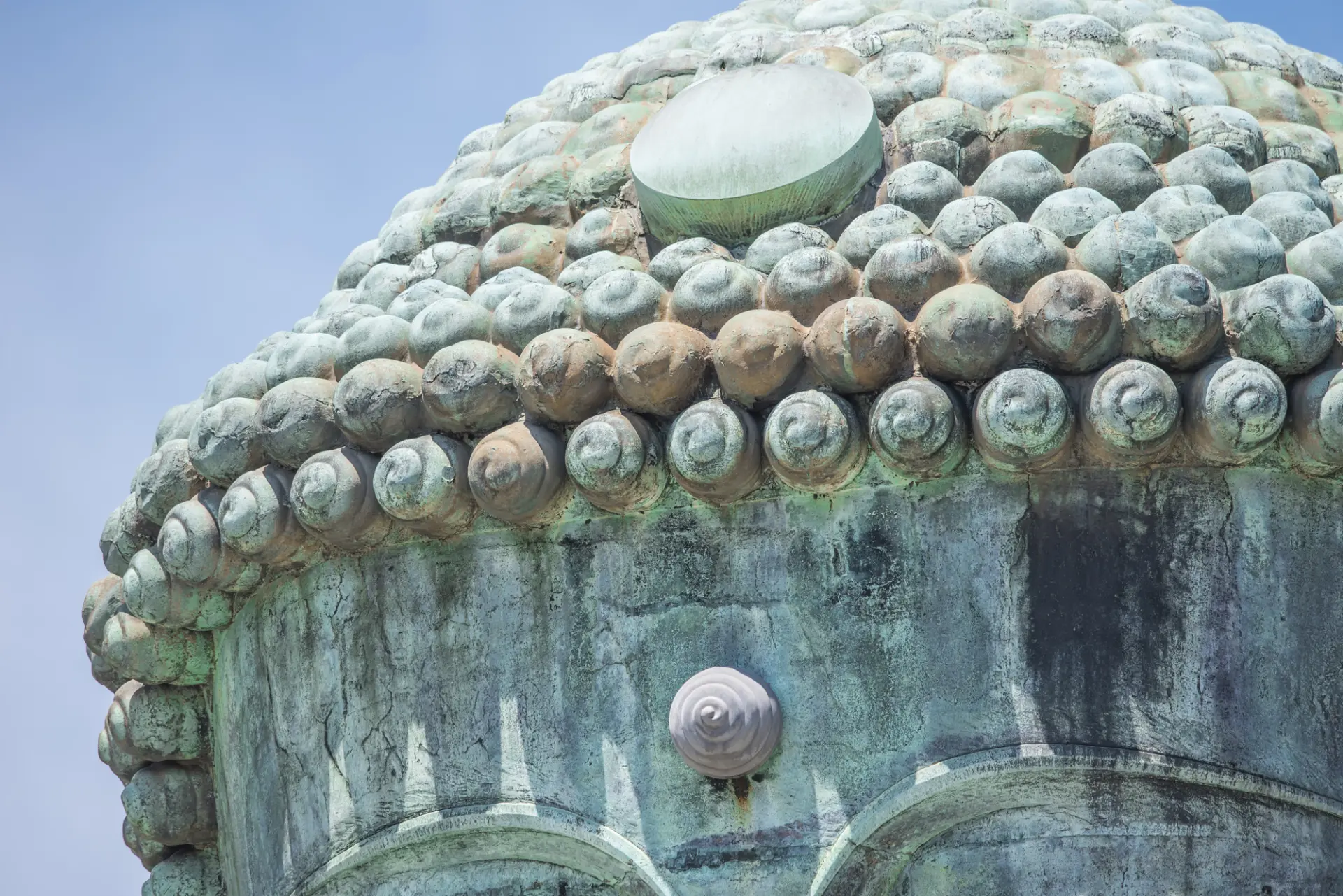
Take Your Time: 5 Highlights of the Kamakura Great Buddha
Here are the highlights of Kamakura Daibutsu Kotoku-in.
Each plays a different role and is an essential point that conveys faith, history, and design centered on the Great Buddha statue.
By paying attention not only to their appearance but also to their deeper meaning, you can enjoy their appeal even more, so use the following as a guide.
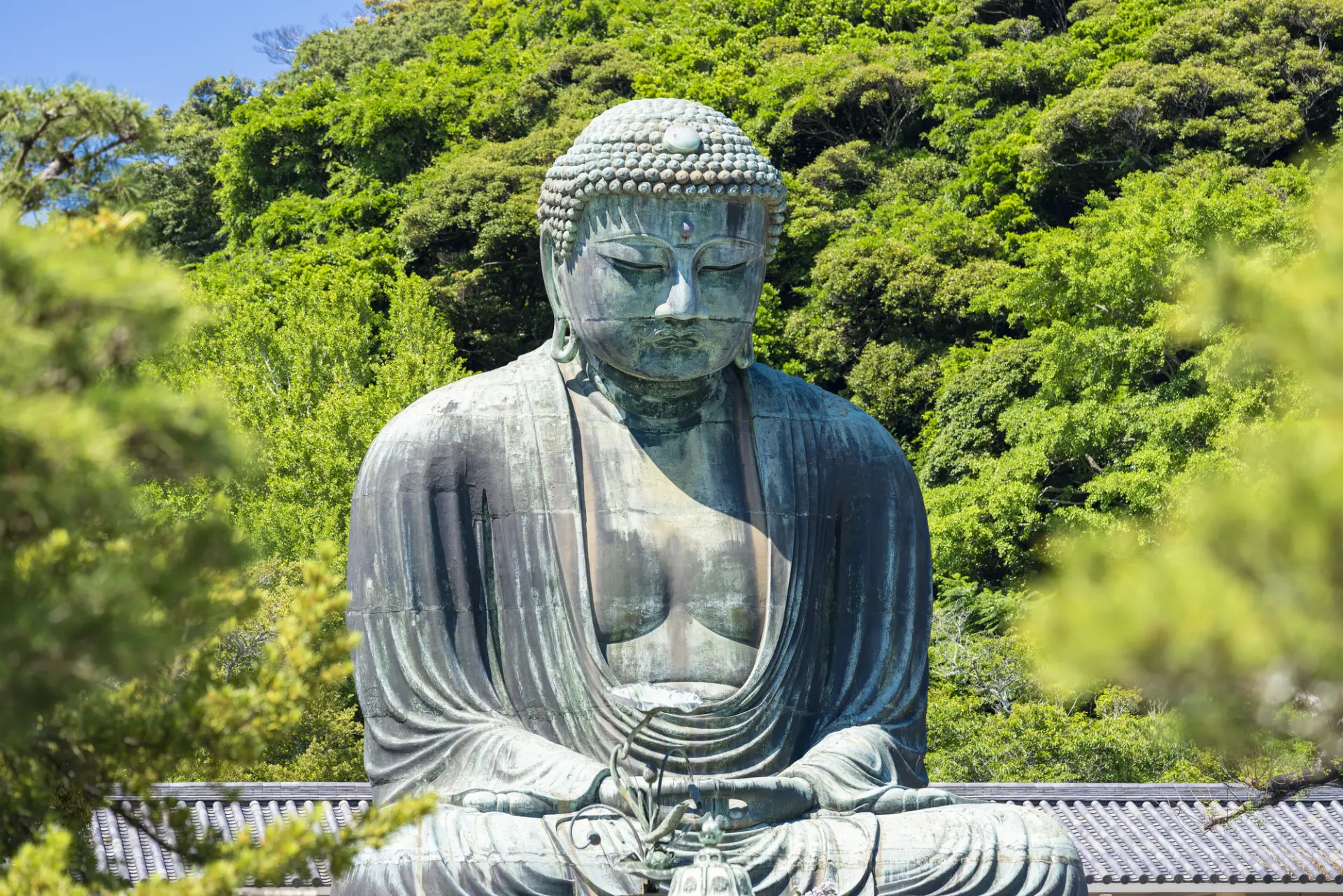
1. Bronze Seated Statue of Amida Nyorai (Kamakura Great Buddha)
The main highlight is, of course, the National Treasure Bronze Seated Statue of Amida Nyorai, better known as the Kamakura Great Buddha.
Its majestic form has an overwhelming presence, yet its mouth holds a soft smile, and its expression is surprisingly serene.
The beauty that European travelers in the 16th century praised as an “Oriental smile” still calms the hearts of visitors today.
The statue’s form is said to combine the style of the Kei school with influences from the Song dynasty, and it is crafted with exquisite detail.
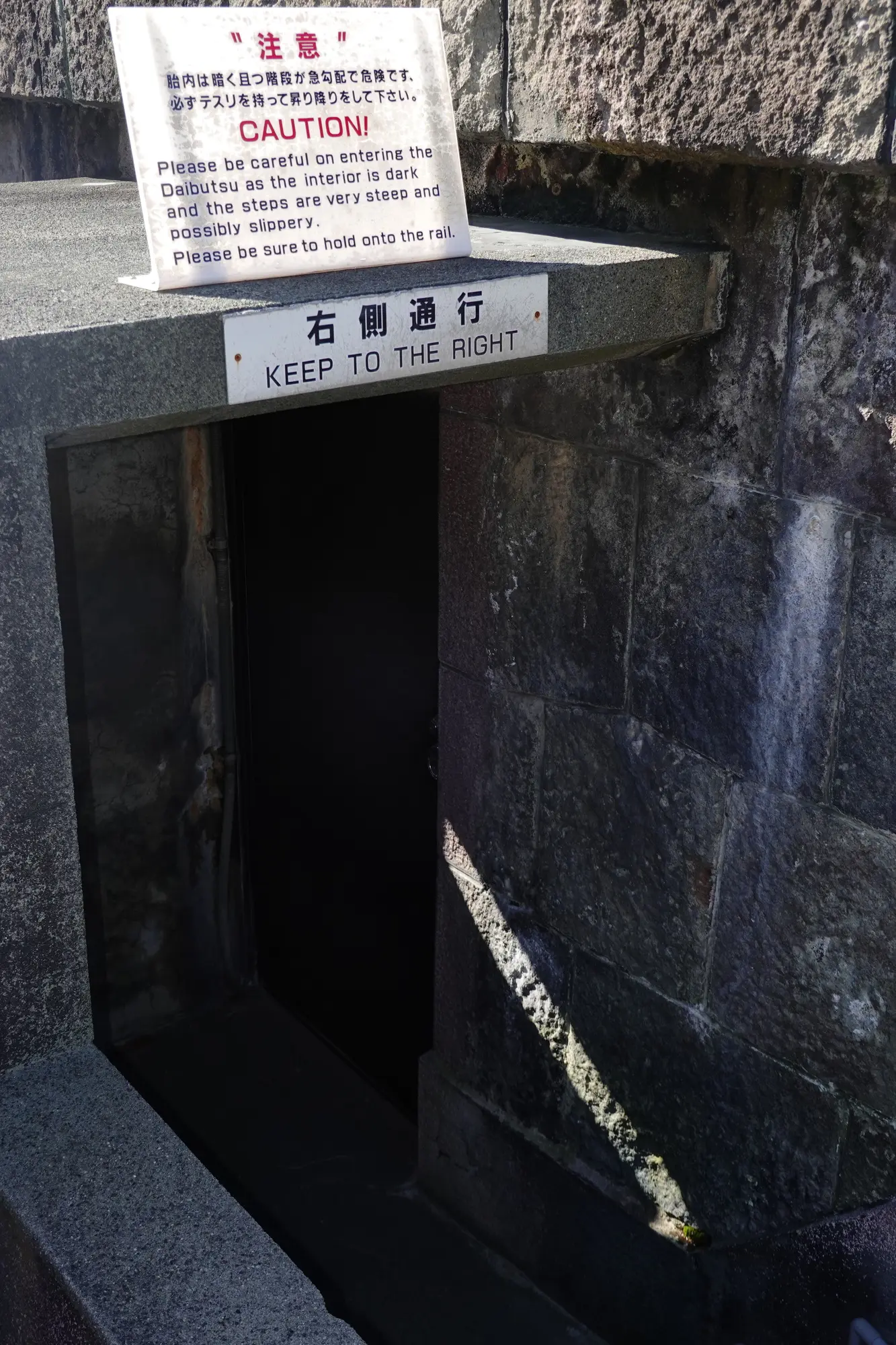
Viewing the Interior of the Great Buddha
The Kamakura Great Buddha is not only for viewing from the outside; for an Admission of ¥50, you can enter through the door at the back.
The interior is hollow, with cool air and natural light filtering in, creating a mysterious atmosphere.
Traces of casting techniques from more than 750 years ago remain on the walls, letting you sense how craftsmen of the time created such a massive Buddha statue.
Photography is prohibited, so when you visit, taking time to view the interior is also recommended.
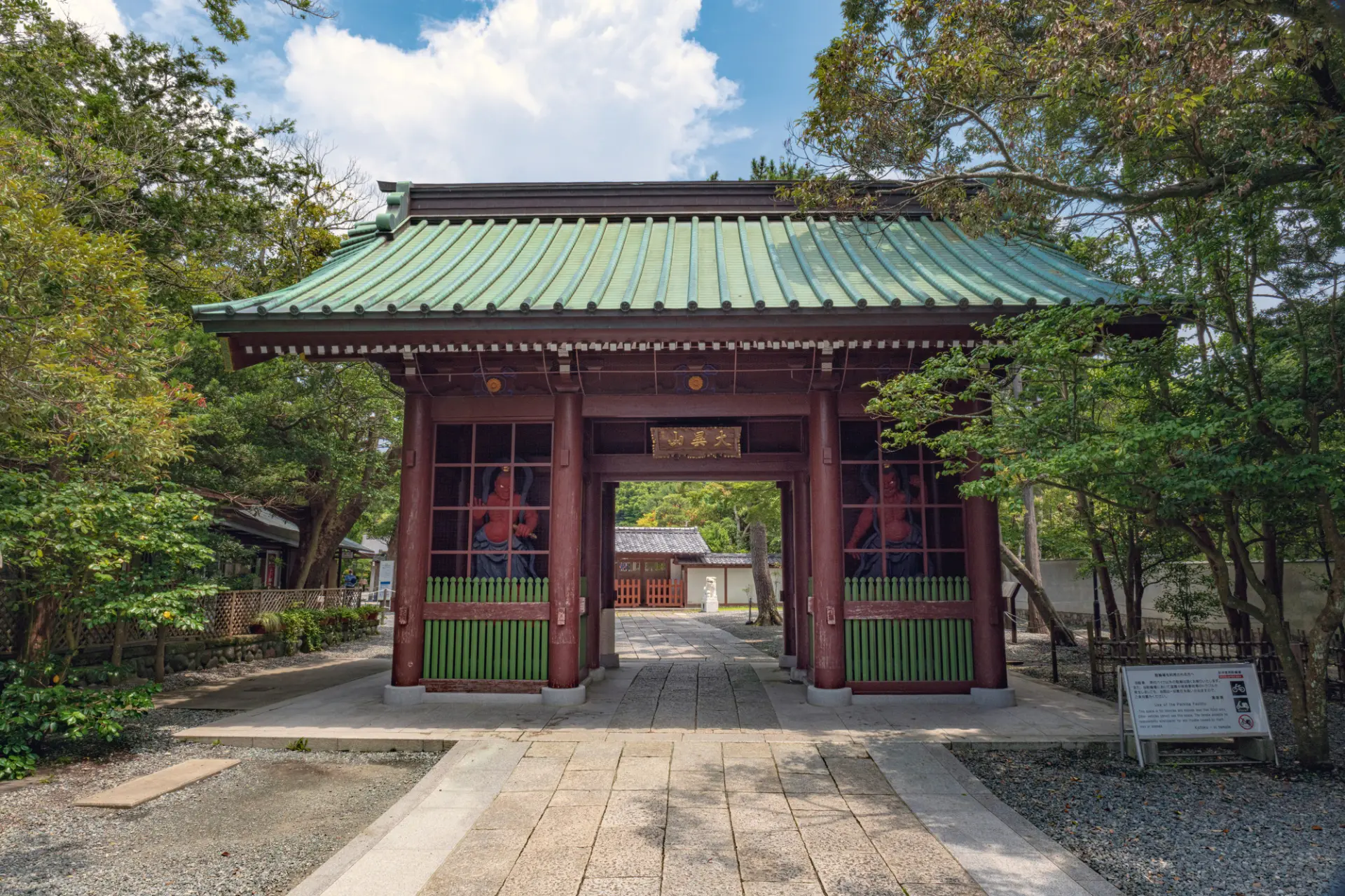
2. Niomon Gate
As you walk along the approach leading to the grounds of Kamakura Daibutsu Kotoku-in, the first thing you see is Niomon Gate.
This historic structure is said to have been relocated from another site in the early 18th century.
On the left and right are Nio guardian statues repaired in the Heisei era, standing powerfully as protectors welcoming visitors.
Incidentally, the Nio statues form a pair: the Agyo statue with an open mouth and the Ungyo statue with a closed mouth, representing the beginning and end of the universe.
3. Straw Sandals
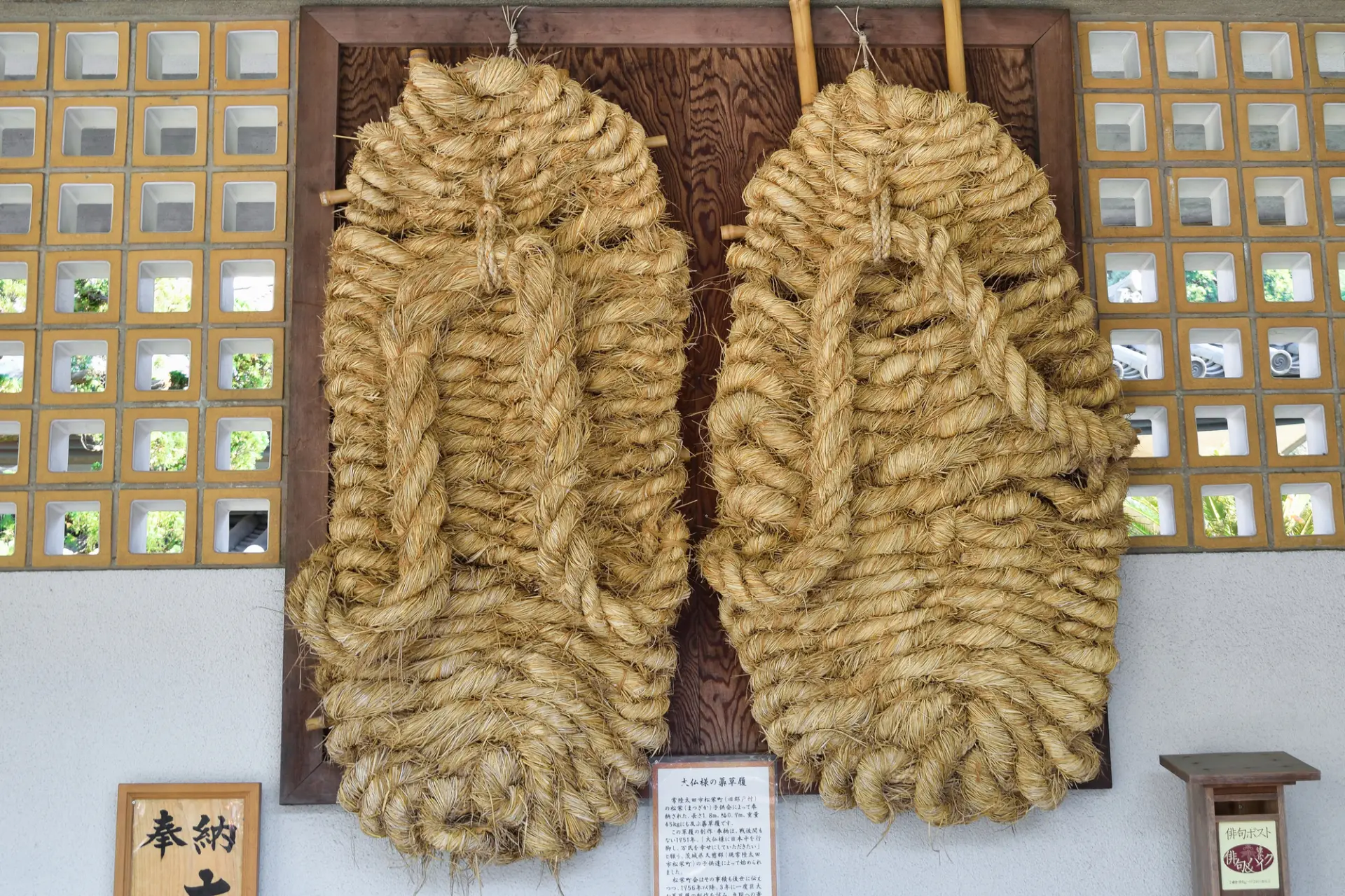
To the right of the Great Buddha statue hang enormous straw sandals measuring 1.8 meters long and weighing 45 kg.
Their creation and dedication began in 1951, shortly after World War II, by children in Ibaraki Prefecture who wished that “the Great Buddha would travel throughout Japan and bring happiness to all people.”
New sandals are still made and donated once every three years, giving them an aspect of regional exchange as well.
The pairing of the solemn National Treasure Great Buddha and the rugged straw sandals is a uniquely humorous scene at Kamakura Daibutsu Kotoku-in.
4. Lotus Petals and Foundation Stones
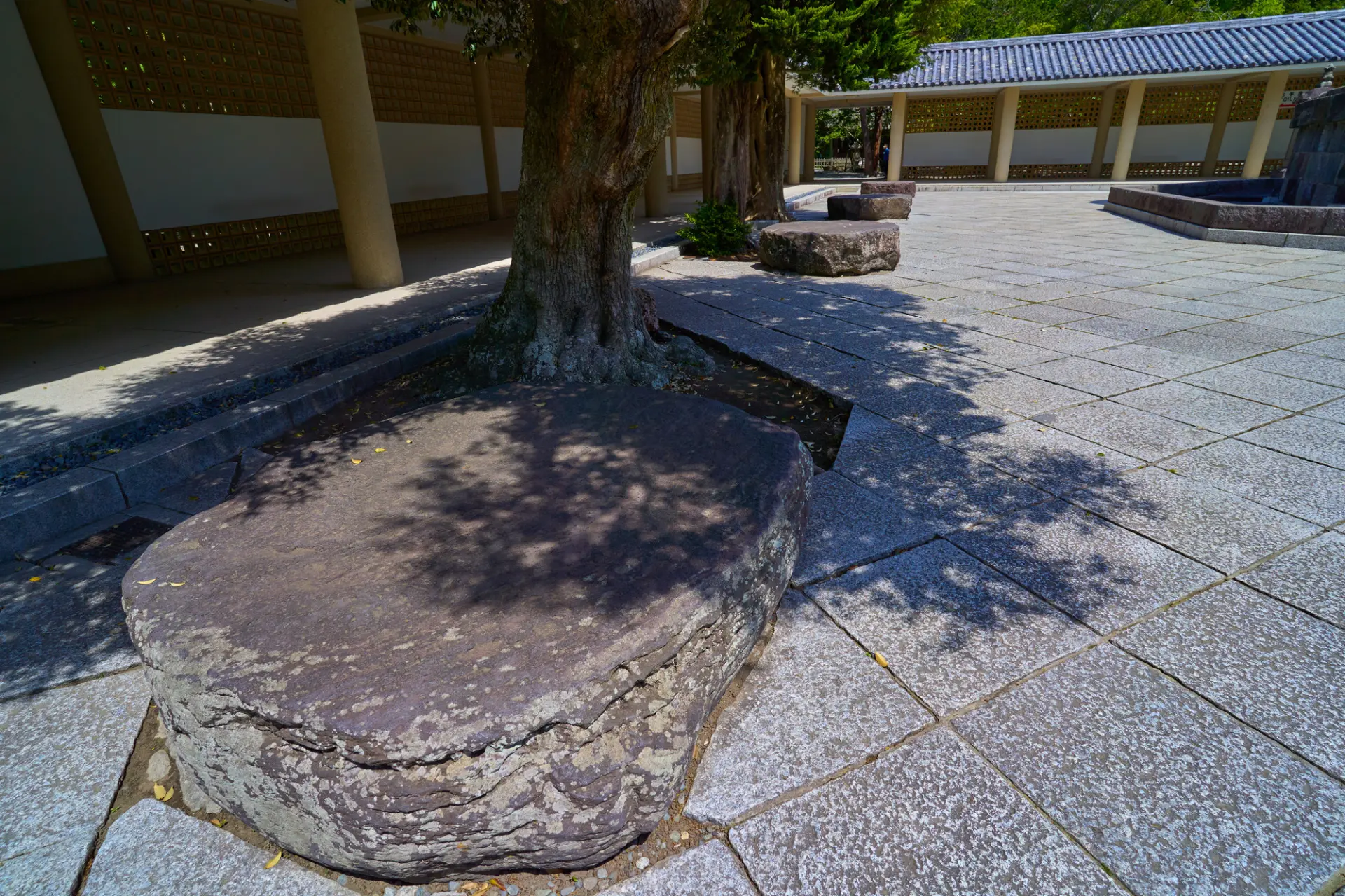
The lotus petals and foundation stones around the Great Buddha are hidden highlights that help you imagine the long history the statue has lived through.
The lotus petals are decorations for the pedestal on which the Great Buddha sits, and their lotus petal design symbolizes the purity of the Buddha.
Originally, 32 petals were planned, but only the four that were ultimately completed are placed behind the statue.
The foundation stones, meanwhile, are remnants of the Great Buddha Hall that once covered the statue.
Although the building was lost to repeated disasters, they convey the historical changes that led to the present open-air form.
5. Stone Monuments and Poetry Monuments
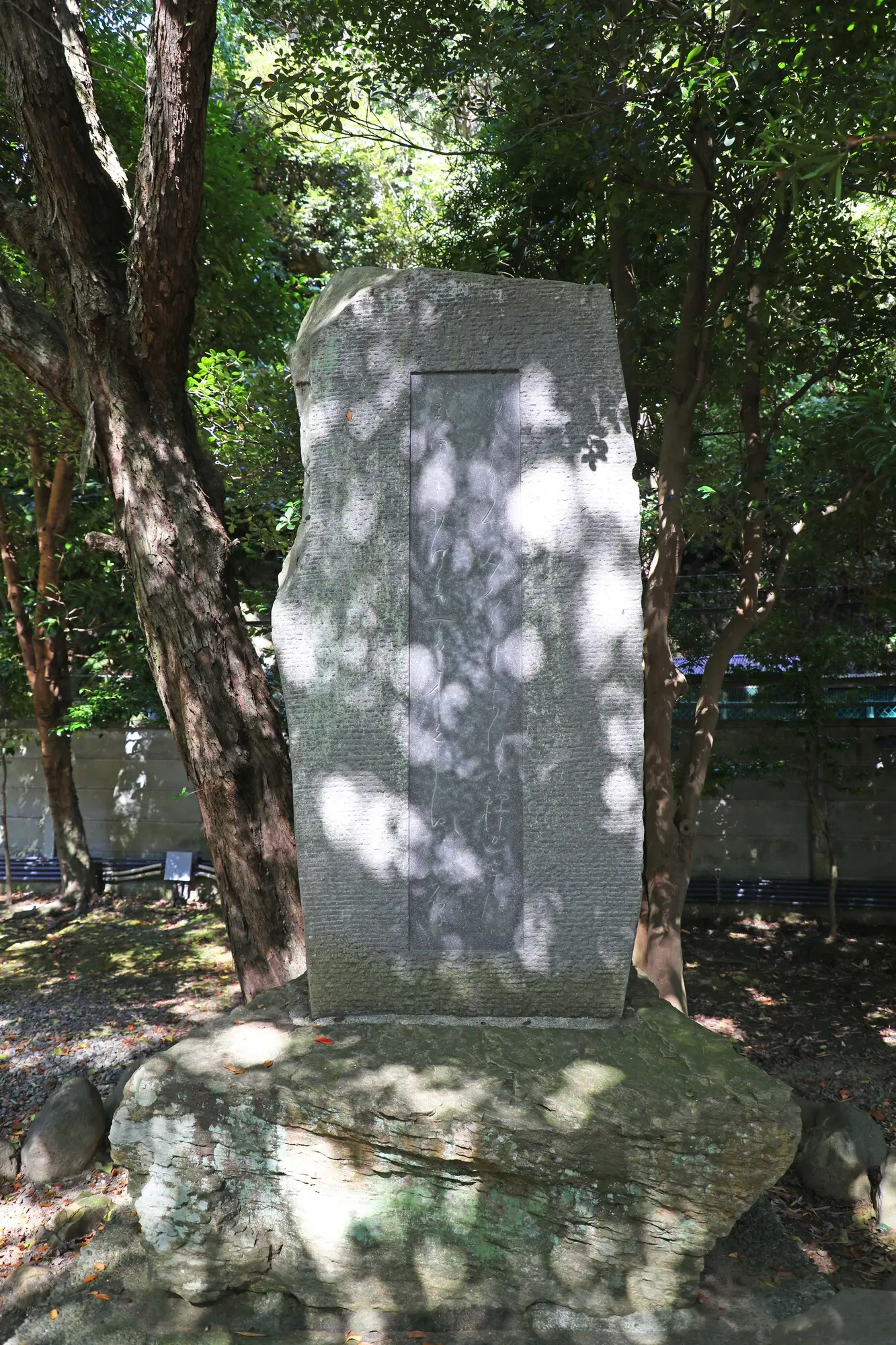
The temple grounds contain Approx. 20 monuments connected to noted literary figures and historical people, each conveying the depth of culture that lives on in Kamakura.
In contrast to the overwhelming presence of the Great Buddha, these stone and poetry monuments stand quietly, gently speaking to visitors of the passage of time.
The most famous is the poetry monument of the poet Yosano Akiko, standing behind the corridor at the rear of the Great Buddha.
Goshuin Stamps at the Kamakura Great Buddha
At Kamakura Daibutsu Kotoku-in, you can receive the following two types of goshuin stamps.
Seasonal goshuin stamps may also be offered, such as cherry blossom designs in spring or hydrangea designs in early summer.
Reception is handled at the temple office on the grounds, and both handwritten and pre-written versions are available, but it closes 1 to 2 hours before the end of visiting hours, so be aware.
- Amida Nyorai Goshuin
- The main goshuin, with “Amida Nyorai” written in ink in the center and the red seal of “Kamakura Daibutsu-den” in the lower left
- Namu Sho Kanzeon Goshuin
- A goshuin related to the 23rd temple of the Kamakura 33 Kannon Pilgrimage, with “Namu Sho Kanzeon” written in ink in the center, the red seal of “Kamakura Kannon No. 23” in the upper right, and the red seal of “Kotoku-in” in the lower left
Amulets and Temple Items at the Kamakura Great Buddha
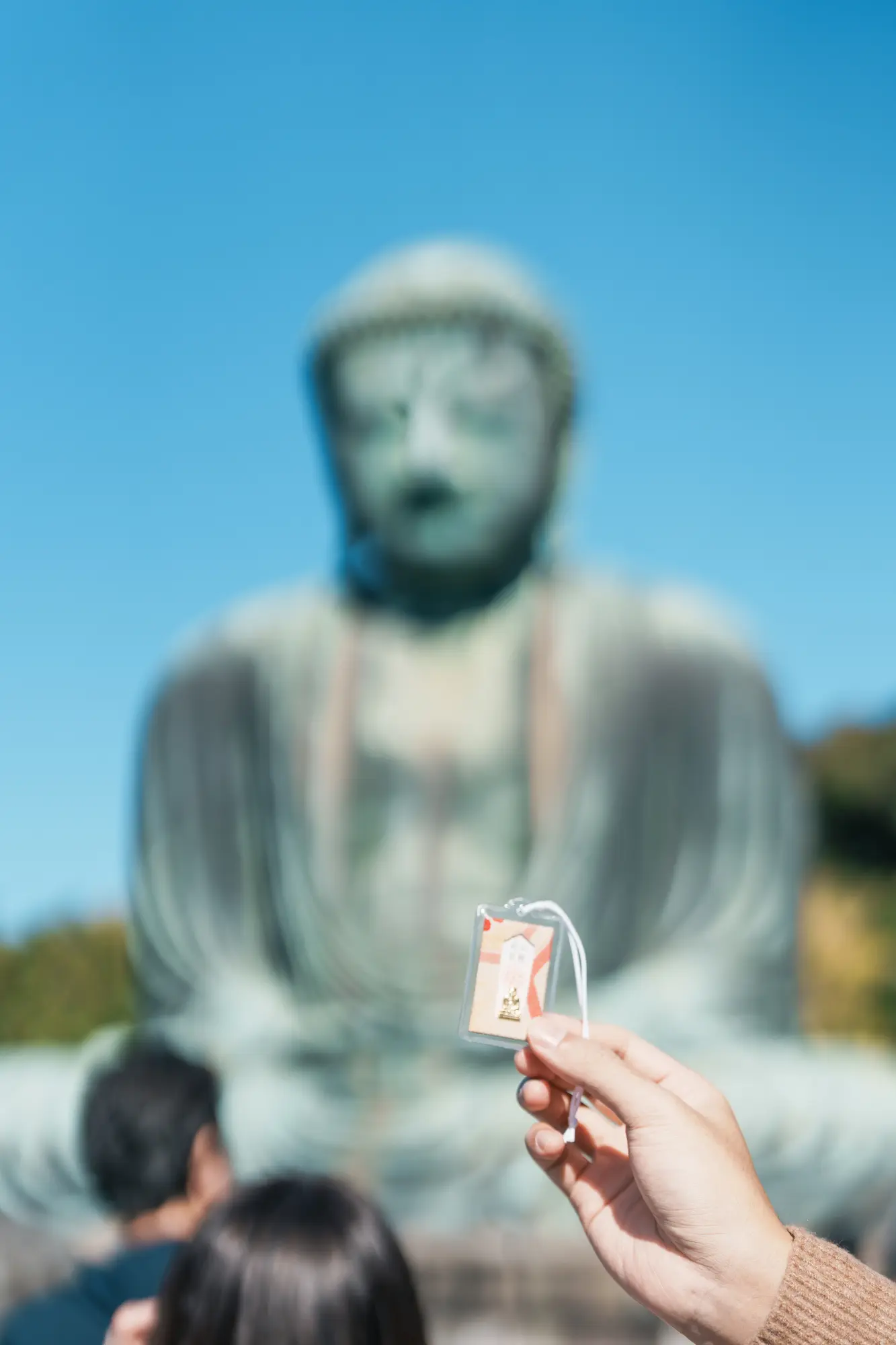
Kamakura Daibutsu Kotoku-in offers a wide variety of amulets to take home for daily protection, along with temple items such as postcards and original T-shirts.
Many feature simple, tasteful designs suited to a temple, and their mix of practicality and commemorative value is also appealing.
Items shaped like the Great Buddha, such as the “Good Fortune Strap,” are especially popular and make perfect souvenirs.
3 Popular Sightseeing Spots Near the Kamakura Great Buddha
Next, here are popular sightseeing spots around Kamakura Daibutsu Kotoku-in.
These are classic Kamakura attractions where you can experience the city’s character all at once.
In addition to history and culture, they offer many ways to enjoy the area, from walking to eating and shopping.
Use them as a guide to make your trip even more satisfying.
1. Hasedera Temple
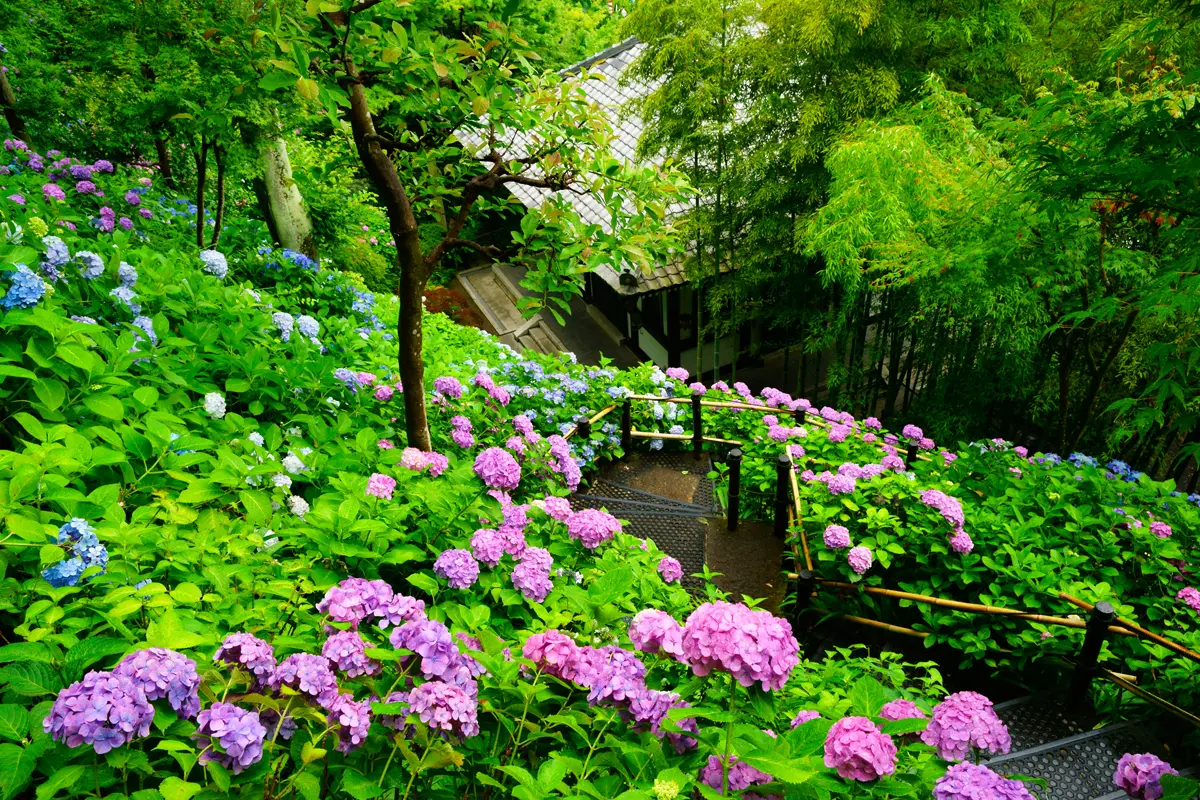
Known as one of Kamakura’s representative scenic spots, Hasedera Temple is affectionately called Hase Kannon. Its principal image is an eleven-faced Kannon Bodhisattva statue. Standing 9.18 meters tall, it is one of the largest wooden Buddhist statues in Japan.
The flowers in Hasedera’s grounds are beautiful in every season, and the hydrangeas that bloom in June are especially magnificent, making the temple a famous hydrangea spot. The autumn foliage is also beautiful, and at night you can enjoy the illuminated leaves.
2. Komachi-dori Street
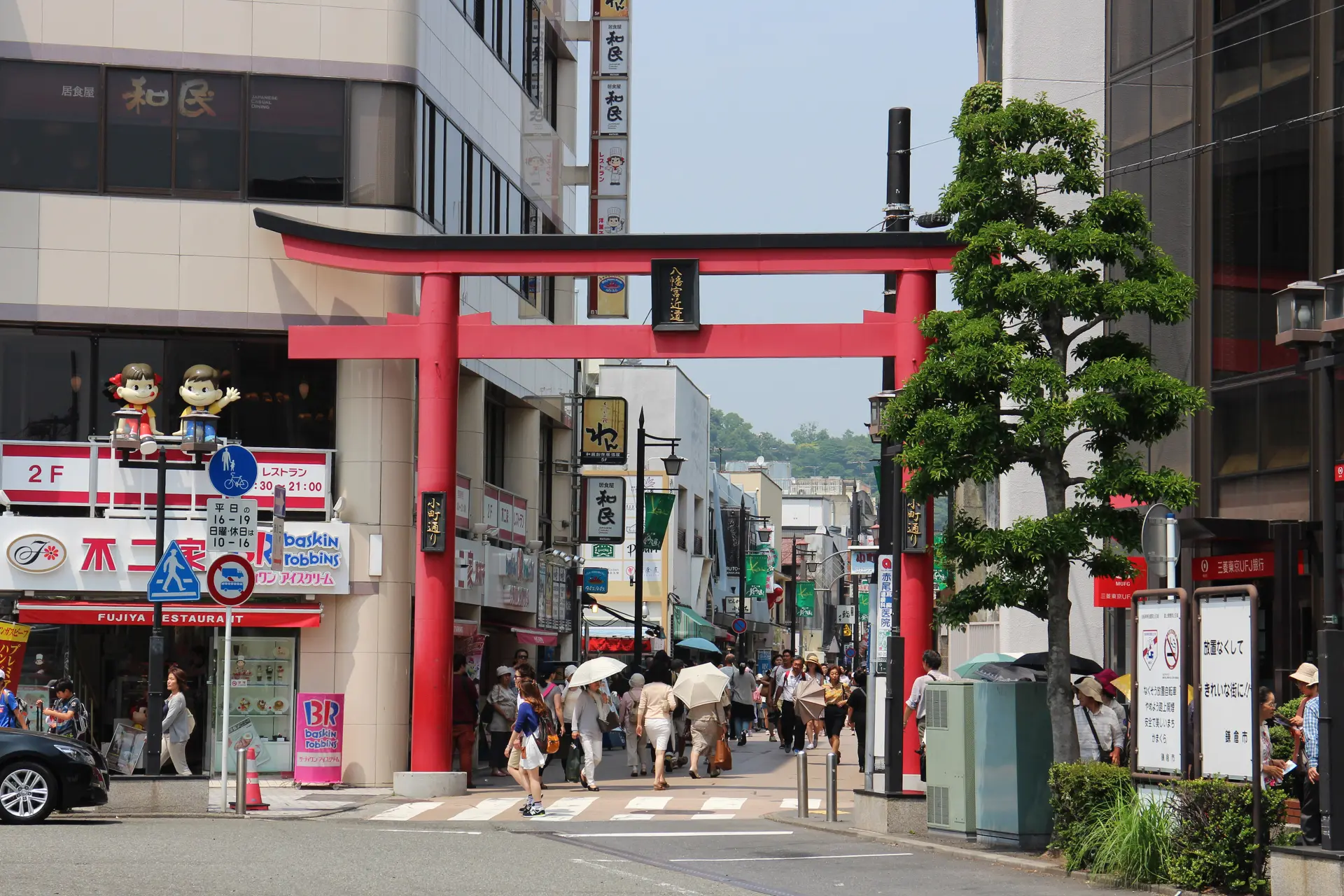
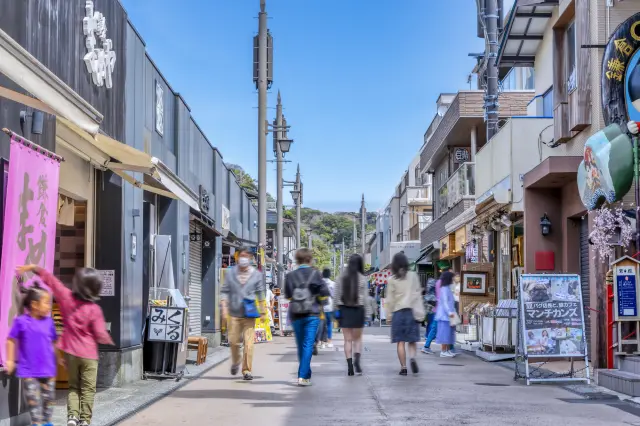
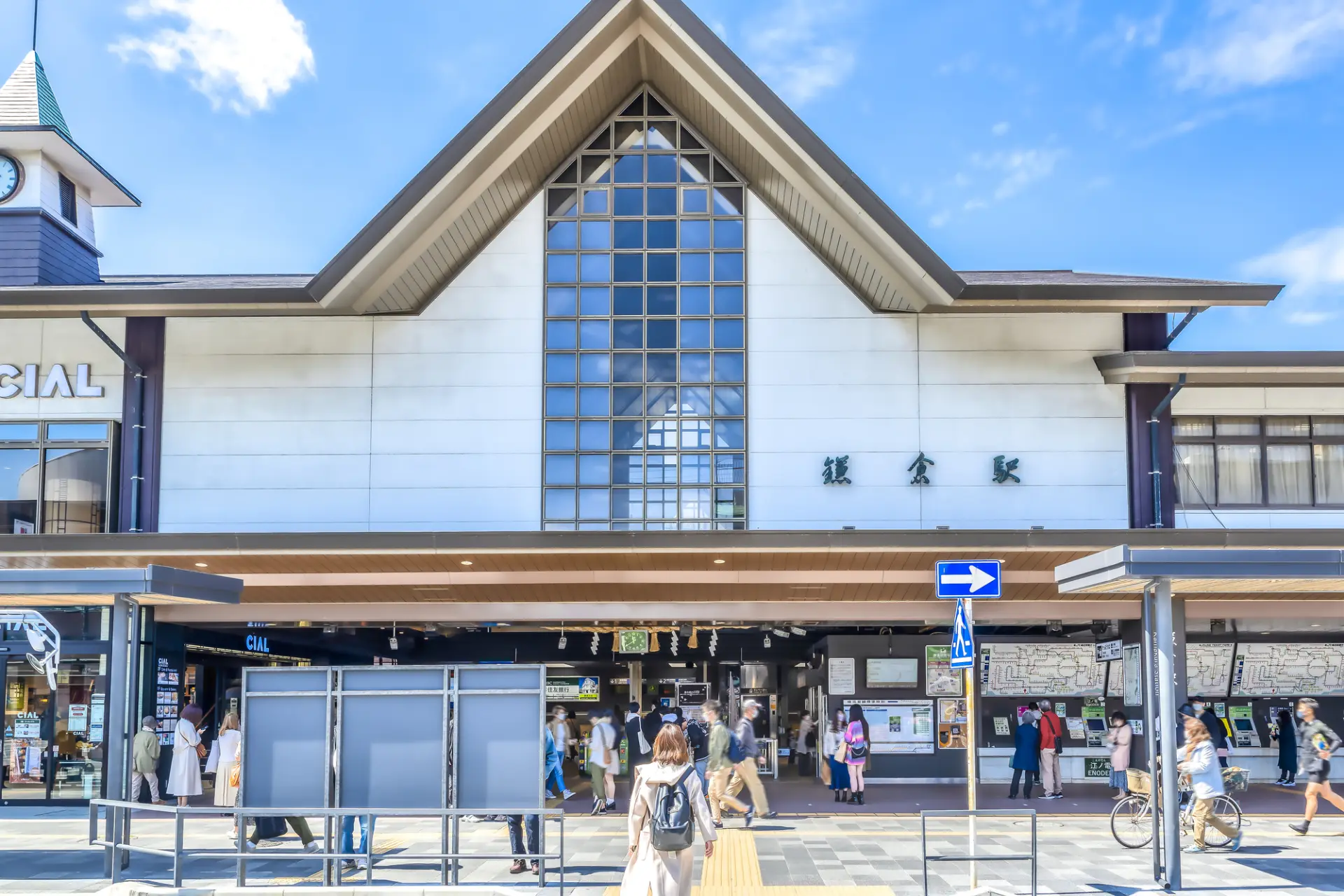
From the east exit of Kamakura Station, a red torii gate marks the entrance to a street running north for Approx. 360 meters, lined densely with Approx. 250 shops, including stores that serve local residents’ daily needs as well as restaurants and souvenir shops for tourists. It is also one of Kamakura’s top sightseeing spots and is crowded with many people regardless of the season. Although the street is narrow, it has a clean, uncluttered feel because the electric wires were placed underground in 2013.
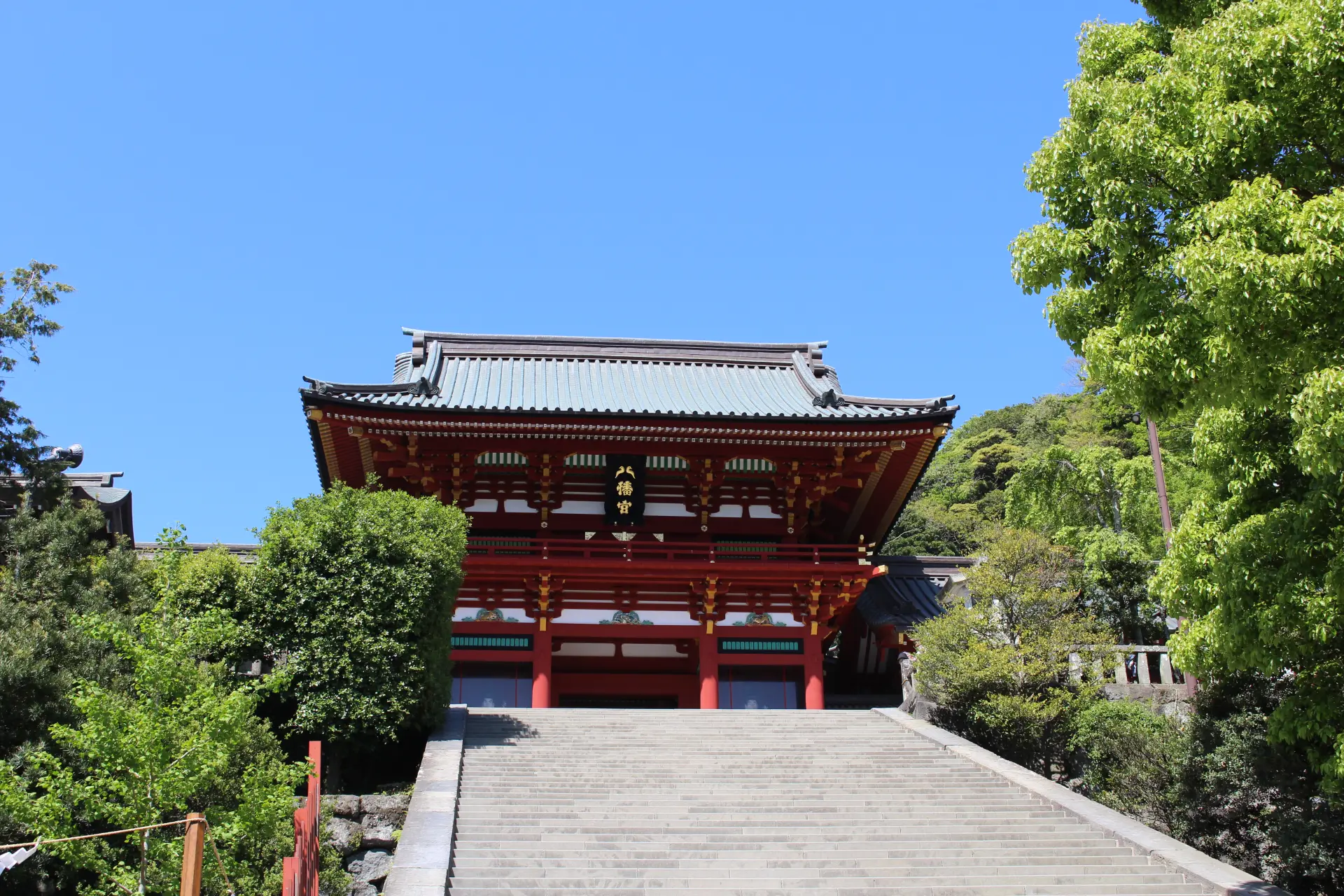
3. Tsurugaoka Hachimangu Shrine
Located in the heart of Kamakura, Tsurugaoka Hachimangu Shrine has long been loved as a symbol of the city.
It is also known as a shrine connected to Minamoto no Yoritomo, the first shogun of the Kamakura shogunate, and many worshippers visit. The current main shrine building was constructed in 1828 and is designated an Important Cultural Property of Japan. It is also famous for its beautiful natural scenery, with cherry blossoms in spring and lotus flowers in summer blooming around Genpei Pond.
3 Dining Spots Near the Kamakura Great Buddha
Here are popular restaurants around Kamakura Daibutsu Kotoku-in.
Each is a recommended place where you can enjoy carefully prepared meals in a calm setting.
Some menus reflect local character and craftsmanship through the use of quality ingredients, making them good places to take a break during a stroll.
We selected them by genre, so visit any place that catches your interest.
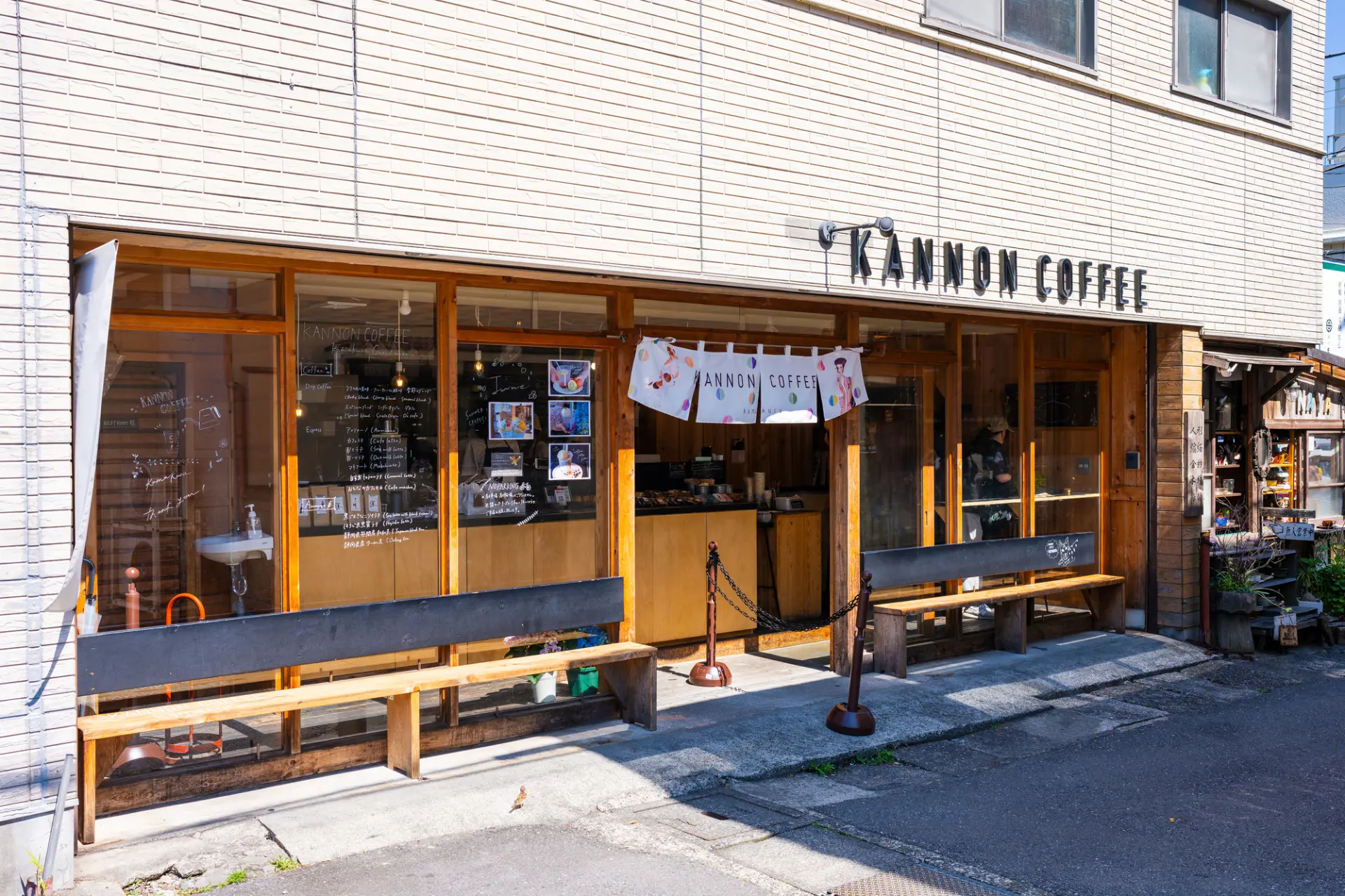
1. KANNON COFFEE kamakura
KANNON COFFEE kamakura is a small coffee stand focused mainly on takeout.
With the concept “delicious coffee anytime, even when you only have time for a quick stop,” it welcomes visitors with aromatic coffee and handmade sweets.
The warm, Japanese-modern space with wood accents includes an indoor dining area, bench seating, and photo spots, making it easy to stop by during a walk.
The menu is varied, but the most popular item is the Great Buddha Crepe topped with a Great Buddha biscuit.
It is photogenic, generously filled, and highly rated for its excellent taste.
2. Kamakura Donabe Gohan kaedena.
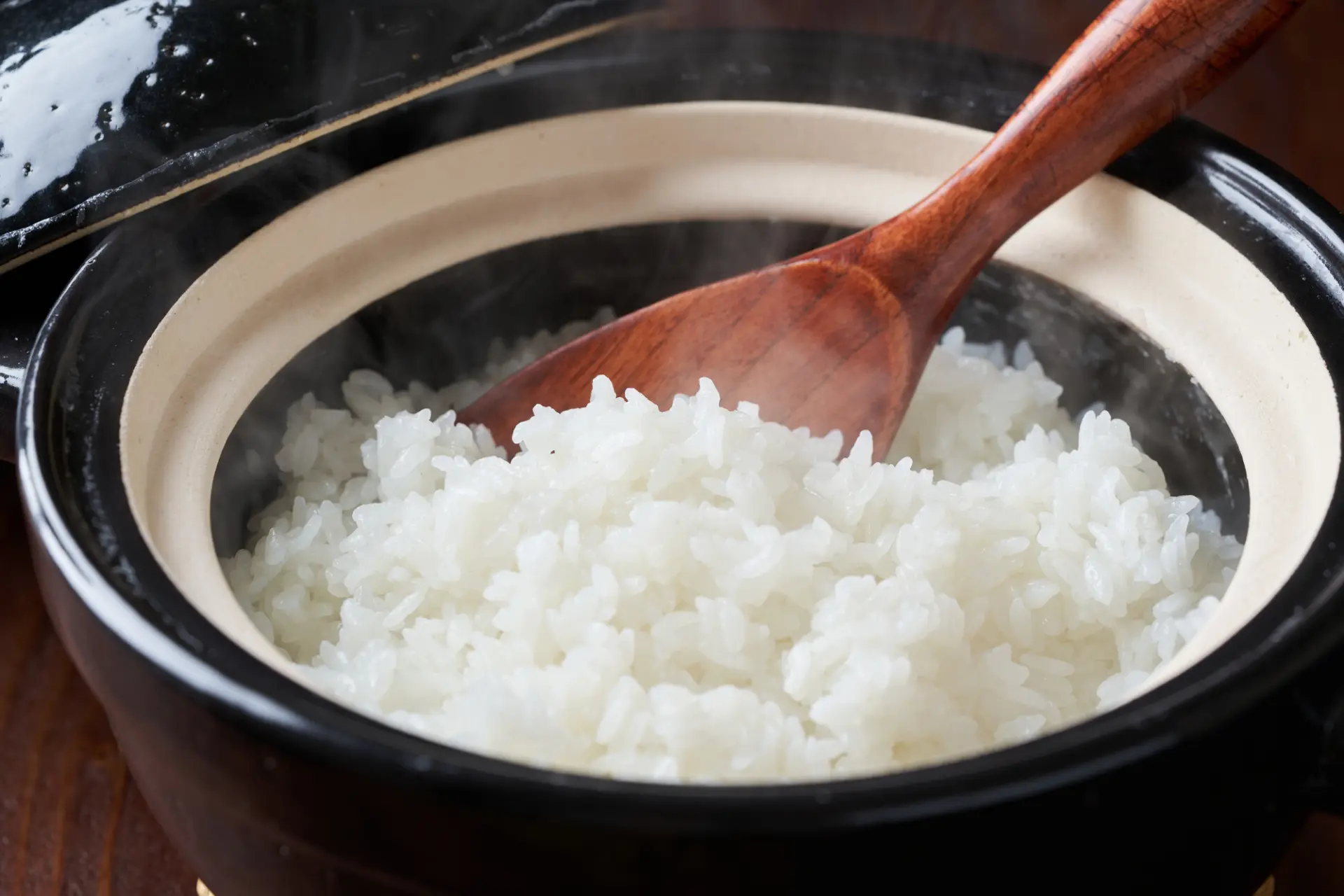
Kamakura Donabe Gohan kaedena. is a restaurant specializing in donabe clay pot rice, located on the second floor of a building along the street leading to Kamakura Daibutsu Kotoku-in.
Its greatest appeal is the fluffy rice made with Koshihikari rice from contract farmers in Tamba-Sasayama, with the umami of kombu dashi infused into each grain.
Because the rice is cooked to order, the steam rising the moment the lid is opened stimulates the appetite, and serving it into your own rice bowl adds a memorable touch to the trip.
The meal comes with seven creative small dishes and miso soup, letting you enjoy a luxurious meal like a course menu.
3. Teishokuya Shamoji
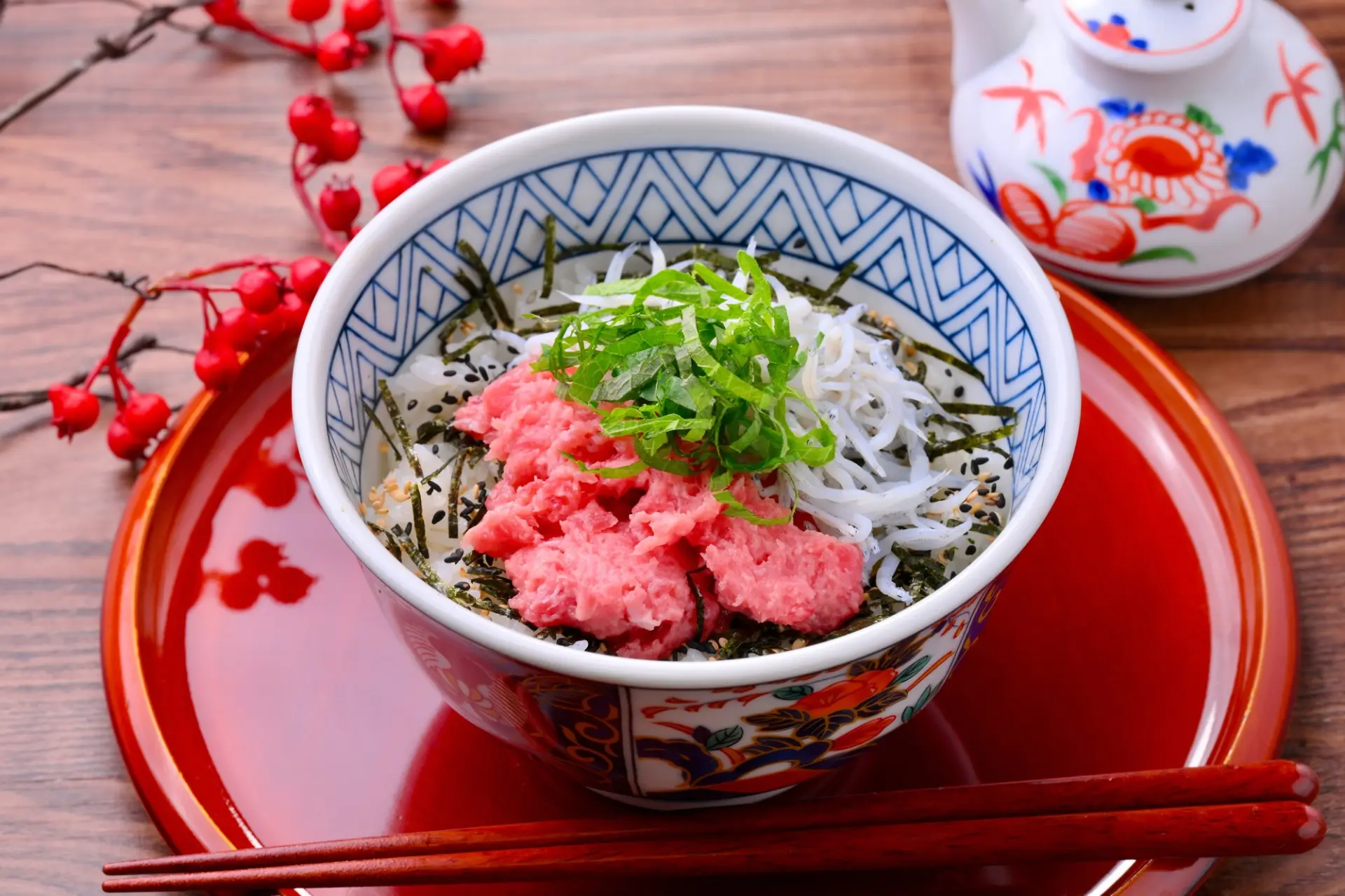
Located on Hase Kannon-dori Street, Teishokuya Shamoji is a popular set-meal restaurant loved by locals and tourists alike.
Its greatest appeal is its handmade flavor, created with fresh fish and organic pesticide-free vegetables carefully selected by the owner in cooperation with producers, and prepared using only natural dashi and seasonings.
It is especially known for Kamakura’s famous shirasu dishes, and its signature Shanghai-sen Shirasu-don is a lavish bowl topped with local octopus, young yellowtail, Spanish mackerel, medium-fatty and lean Misaki tuna, and boiled whitebait.
Green chili soy sauce and sushi vinegar are available at the table, so you can customize the dish to your taste.
Kamakura Great Buddha Sightseeing Model Course
Based on the information introduced so far, here is a one-day Kamakura sightseeing model course centered on the Kamakura Great Buddha.
It covers the main spots, so use it as a reference when planning your trip.
| Time (Approx.) | Spot | Overview |
|---|---|---|
| 10:00 am | Hase Station | Walk to Kamakura Daibutsu Kotoku-in |
| 10:10 am | Niomon Gate | View the Nio guardian statues and shift your mindset before entering the grounds |
| 10:20 am | Kamakura Great Buddha | Pay respects to the Great Buddha from the front, while observing the meanings of each feature such as the rahotsu curls, byakugo, and meditation mudra |
| 10:40 am | Interior Viewing | Enter the interior of the Great Buddha and experience the mysterious space with casting traces and natural light filtering in |
| 11:00 am | Stroll Around the Grounds | Visit the straw sandals, Yosano Akiko poetry monument, foundation stones, and more, and pick up amulets and goshuin stamps |
| 11:40 am | Hasedera Temple | Move from Kamakura Daibutsu Kotoku-in to Hasedera Temple (Approx. 10 minutes on foot) and enjoy seasonal flowers and the Kamakura townscape |
| 12:00 pm | Lunch | Take a lunch break at a restaurant of your choice |
| 1:00 pm | Yuigahama Beach | Take a relaxed stroll along the coastline while feeling the sea breeze |
| 1:30 pm | Kamakura Station | Travel from Hase Station to Kamakura Station by Enoden |
| 1:40 pm | Komachi-dori Street | Enjoy street food and souvenir shopping |
| 3:00 pm | Tsurugaoka Hachimangu Shrine | Walk through the sacred grounds where history and nature come together, and experience Kamakura culture |
| 3:30 pm | Kamakura Station | Head home |
Reviews of the Kamakura Great Buddha
Some reviews are AI-translated.
-
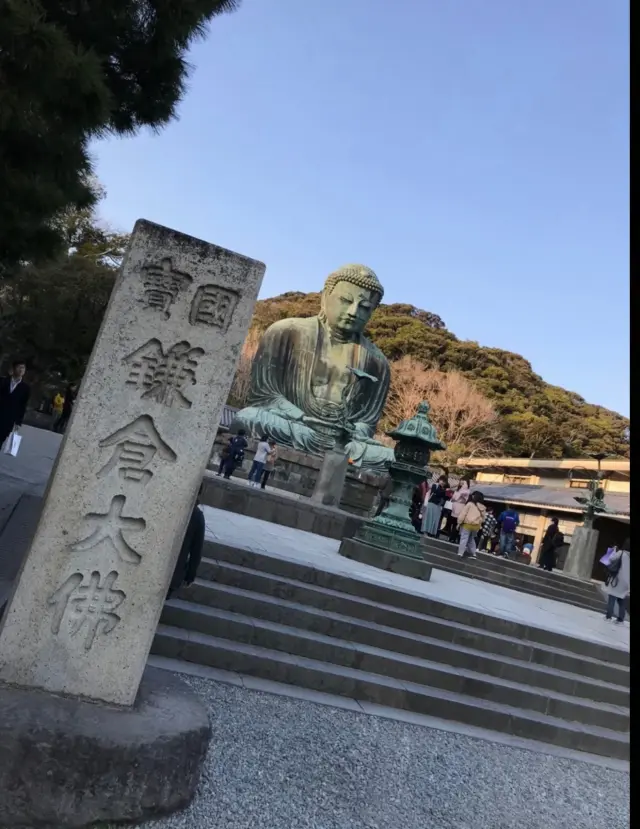
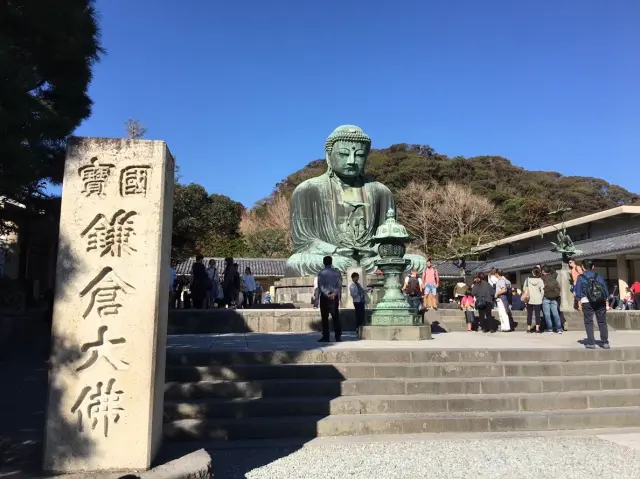
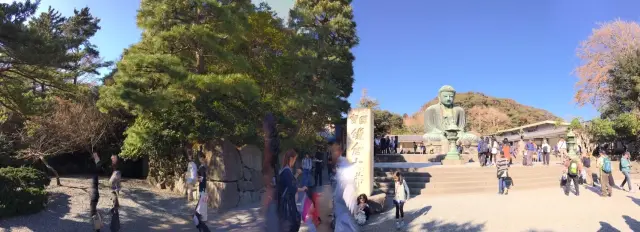
As soon as I entered Kotoku-in and saw the huge stone monument inscribed with “National Treasure: Great Buddha of Kamakura,” my anticipation went through the roof! After walking a few more steps and looking up, I saw the entire bronze statue of Amida Buddha sitting majestically between heaven and earth. The sight could only be described as “stunning and imposing”! With rolling green mountains behind it and a clear blue sky overhead, the Buddha’s kind, gentle features and slightly lowered eyes, as if deep in contemplation, looked especially solemn and serene in the open natural light.
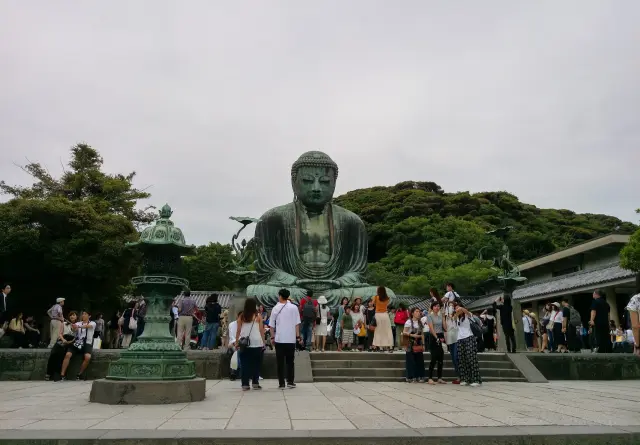
The grounds were packed with pilgrims and tourists from around the world. Everyone crowded below the steps and around the incense burner to take pictures and gaze up at the statue. Even the incredibly lively atmosphere couldn’t overpower the calming presence radiating from the Buddha. The most distinctive and coolest thing about this statue is that it’s an “open-air” Great Buddha! Apparently, it was originally sheltered by a magnificent hall long ago, but after centuries of storms and tsunamis, the wooden structure was mercilessly destroyed by nature. Only this solid bronze Buddha remained seated securely on its stone pedestal. It has been sitting there for more than 700 years, witnessing all the changes in the world. Simply standing before it and feeling the profound weight of all that accumulated history fills you with awe!
Besides standing in the plaza and looking up at it for photos, the most satisfying hidden experience that you absolutely shouldn’t miss is paying just a few dozen JPY to explore the “inside of the Great Buddha”! You enter through an inconspicuous little door behind the statue, and it feels like being enclosed in a gigantic bronze time capsule. The space inside isn’t very large, but you can clearly see the traces of how Japanese craftsmen skillfully joined and welded the bronze plates together hundreds of years ago. Faint sunlight also filters in through openings in the back. The amazing feeling of touching the warmth of history with your own hands is several times cooler than just taking pictures outside!
Walking around the stone steps with a gentle breeze blowing through the tips of the pine branches, whether you’re admiring the simple, subdued color of the bronze, examining the bronze lanterns on the stone platform, or stopping to take a deep breath and experience the peaceful yet vibrant atmosphere, all your accumulated travel fatigue instantly melts away. This relaxed pace, where you can experience the impact of ancient history and culture while casually strolling among nature and historic sites, is definitely one of the most classic, memorable, top-tier stops in Kamakura! -
-
When visiting Kamakura, of course you can’t miss the classic Kotoku-in Temple and the Great Buddha of Kamakura! As soon as you enter the temple grounds, you can see the enormous Great Buddha sitting in the courtyard from a distance. Standing in front of it in person, it really feels more impressive than it looks in photos.
The Great Buddha is one of Kamakura’s most iconic attractions, and the surrounding area is very peaceful, creating a completely different atmosphere from the bustling streets. As you slowly walk closer and admire its details, you can feel the weight of its long history.
I specifically made time to come see it on this trip to Kamakura. Although I didn’t stay very long, it was still well worth seeing the Great Buddha from textbooks and travel photos with my own eyes.
-
-
When you come to Kamakura, you have to pay your respects to the Great Buddha!
The Great Buddha at Kotoku-in has weathered the years, yet still looks solemn and serene, giving off a dignified presence.I previously saw on a TV show that the Great Buddha is given an annual “cleansing,” with specialists brought in to clean the statue. The spiral curls on its head are cleaned especially carefully, making it a major undertaking.
The Great Buddha also has a little secret—there are actually two windows on its back! These windows aren't decorative. They're there to ventilate the inside of the statue and let in light, while also helping reduce moisture for easier maintenance and preservation. That's another interesting fact I learned from the show.
-
FAQ about the Kamakura Great Buddha
Q
How long does it take to see the Kamakura Great Buddha?
A good estimate is 30 minutes to 1 hour, including worship, photos, and a short stroll.
Q
Who built the Kamakura Great Buddha?
Many mysteries surround the Kamakura Great Buddha, and it is unknown who built it or for what purpose. However, the commonly accepted theory is that the Kamakura shogunate supported its construction.
Q
What does the Kamakura Great Buddha’s pose mean?
The shape of both hands is called join, a meditation mudra, and represents Amida Nyorai in a state of deep meditation and enlightenment.
Q
Which is larger, the Great Buddha of Kamakura or the Great Buddha of Nara?
The Great Buddha of Nara (Approx. 14.98 meters tall) is larger than the Great Buddha of Kamakura (Approx. 11.31 meters tall), and it also weighs more than twice as much.
Summary
We have introduced the overview and highlights of the Kamakura Great Buddha (Kamakura Daibutsu Kotoku-in).
Simply viewing it is enough to be captivated by its overwhelming presence, but knowing its history and features will make the experience even richer.
For that reason, it is recommended to review the essential information in advance before exploring the grounds.
Be sure to also read this article, which covers basic information about Kamakura along with classic spots and recommended restaurants.