

Ever since the Hokuriku Shinkansen opened, I’ve been seeing this place pop up in a lot of YouTubers’ videos.
It’s a popular spot, and it just keeps getting busier.
The other day we went as a group for a banquet, and they served not only seafood but also dishes that felt almost like French cuisine.
That kind of surprise was seriously delicious—I was impressed.
Marusanya Tsuruga Station Front | Review by 奥田竹志
Other Reviews by 奥田竹志
-
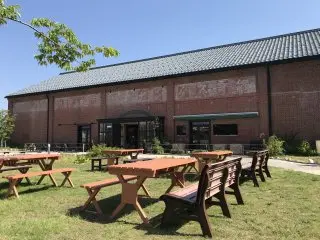
Tsuruga Red Brick Warehouse
Throughout the Meiji and Showa period, the city of Tsuruga was an international city that bridged Russia, and eventually Europe. This warehouse represents the international nature of the city. In 1905, the warehouse stored fossil fuels.
Tsuruga is a town of railways and a port.
It went through three air raids, but I was really glad I could see a diorama of what the town looked like before the war.
My dad and mom lived their lives in this town.
My father worked as an engineer in this rail yard.
That was more than 70 years ago now. -
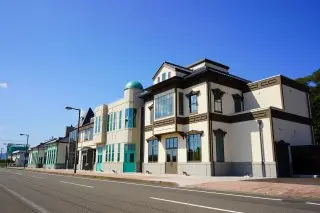
Port of Humanity Tsuruga Museum
Tsuruga Port was developed as an international port to connect Japan and Europe via the Siberian Railway from the Meiji Period through early Showa Period. In the 1920s, Polish orphans came here who lost families in Siberia during the chaos of the Russian Revolution. In the 1940s, Jewish refugees landed here who were saved with the “Visa for Life” issued by Chiune Sugihara.
This is a place where you can learn how precious life and peace are.
When you look at the world today, it feels like peace—the most important thing of all—is being left behind.
I hope this place will keep sharing a message of peace with the world. -
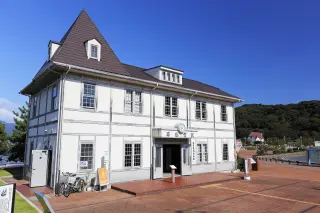
Tsuruga Railway Museum
Tsuruga Railway Museum in Tsuruga City, Fukui Prefecture, is a triangle-roofed building with a nostalgic feel. The building recreates Tsuruga Port Station, which once thrived as the departure and arrival station for the “Eurasia International Connecting Train,” an important link between Japan and Europe. Today, as a railway museum, it introduces the role Tsuruga has played as a key hub for rail and ports along the Sea of Japan.
The railway plan back in Meiji 2 was for lines from Shinbashi to Yokohama, and from Kobe to Osaka, Kyoto, and Otsu. Another route was from Tsuruga to Nagahama.
It was a plan to connect the Sea of Japan side and the Pacific side.
The Nagahama-to-Otsu connection made use of water transport on Lake Biwa.
During the Meiji era, developing Hokkaido was a major priority.
Even before the Tsuruga–Nagahama line opened in Meiji 15, the Horonai Railway opened earlier in Meiji 13.
It ran from the Yubari coal mine to Otaru.
Railway construction kept moving forward in Japan, but steam locomotives needed coal.
As the rail network expanded, it also made it possible to gather troops for the First Sino-Japanese War and the Russo-Japanese War.
You could say the railways also helped Japan’s economy grow significantly.
At the Tsuruga Railway Museum, you can really feel that kind of romance, too.