

Explore Nature, History, and Tradition: 17 Must-See Tourist Spots in Gifu Prefecture
Gifu Prefecture sits almost right in the center of Japan.
It’s not the easiest place to get to, but it still draws many visitors every year thanks to its unique charm.
You’ll find rich nature here, from mountains like Mt. Norikura to the three great Kiso rivers flowing grandly through the land.
This is also where you can really feel Japan’s history and traditional culture at sightseeing spots like the World Heritage site Shirakawa-go.
Here, we’ll introduce classic Gifu spots that attract so many visitors, from must-see sights to food and shopping areas.
What Kind of Place is Gifu Prefecture?
Gifu Prefecture is almost in the very center of Japan. It’s a nature-rich area surrounded by the Hida Mountains and crossed by the three Kiso rivers.
Because it’s so full of nature, access isn’t exactly convenient. Even so, there are many attractive sightseeing spots such as Hida Takayama, Shirakawa-go, the cultural heritage village of Gokayama, traditional old streets where you can feel “old Japan,” and Gero Onsen, one of Japan’s three most famous hot springs. That’s why so many visitors come here every year.

When is the Best Time to Visit Gifu?
Gifu is full of great nature, and autumn, when the weather is pleasant, is the best season to visit.
From October to November, beautiful fall colors light up the highlands. Be sure to visit the famous foliage spots selected for the “Hida and Mino 33 Autumn Foliage Spots.”
What to Wear in Gifu by Season
- Spring (Mar–May): Thick coat, long-sleeve shirts, light sweaters
- Summer (Jun–Aug): Light clothing, short sleeves, light cardigans
- Autumn (Sep–Nov): Light jackets and coats
- Winter (Dec–Feb): Thick coats, warm sweaters and jackets
How to Get to Gifu
From Tokyo, it takes 2 hours 10 minutes by Shinkansen plus local train. Highway buses and overnight buses take Approx 7–8 hours.
From Osaka, it takes 1.5 hours by Shinkansen and 2.5 hours by local train.
Highway buses take Approx 5.5 hours, which is a bit long, but you can enjoy the scenery as it changes along the way.
Main ways to get around Gifu
In Gifu City, the main public transport is local buses.
Using the local buses makes it easy to get around the sightseeing spots.
Trains run in various directions, with Meitetsu Gifu Station as the main hub.
JR Gifu Station is just a 5-minute walk from Meitetsu Gifu Station.
Relax in Great Nature and Famous Hot Springs! 17 Classic Sightseeing Spots in Gifu
Gifu Prefecture is one of the top travel areas in central Japan. Centered on Gifu City, home to Gifu Castle where Oda Nobunaga based his bid to unify the country, you can enjoy both great nature and nostalgic townscapes in places like Hida Takayama, Gero Onsen, Magome-juku, and Shirakawa-go.
Gifu also has Gero Onsen, one of Japan’s three most famous hot springs. It’s perfect for healing your travel fatigue in the baths.
Here are some of the classic spots among Gifu’s many charming attractions.
1. Magome Inn
The Nakasendo was one of the five major routes developed in the Edo period to link Kyoto and Edo (Tokyo).
Magome-juku is the 43rd post town along this route. The town sits on a stone-paved slope and still has the feel of the Edo period.
Shops selling freshly grilled gohei-mochi and oyaki line both sides of the street, so you can enjoy snacking as you stroll.

2. Yoro Park / Yoro Waterfall
Yoro Park sits at the foot of Mt. Yoro in Nishi-Mino, in the southwest of Gifu Prefecture. The grounds are full of nature and home to a variety of leisure facilities, including the Site of Reversible Destiny – Yoro Park and Kodomo no Kuni (Children’s Land).
At the far end of the park is its main attraction, Yoro Falls.
With a drop of approx 30 m and a width of approx 4 m, Yoro Falls is a famous waterfall selected as one of the Top 100 Waterfalls of Japan.

3. Shirakawa-go (Historic Village)
Shirakawa-go is a beautiful area where Japan’s traditional rural scenery still remains.
It has the largest number of gassho-zukuri houses in Japan, with just over 100 buildings of various sizes as of 2016.
This is the largest gassho-style village in the country and has been selected as an Important Preservation District for Groups of Traditional Buildings.

4. Hida Takayama Old Townscape
The Old Town of Hida Takayama still preserves streetscapes from the Edo period. Its traditional townhouses and long-established shops lined with noren curtains make it known as a town where Japan’s original scenery remains. Row after row of lattice-fronted townhouses creates a charming atmosphere where you can feel the history and culture.

5. Ena Gorge
This man-made lake was created when the Kiso River was dammed by the Oi Dam Approx 100 years ago. Strange and uniquely shaped rocks line both sides of the gorge, creating overwhelming scenic beauty.
In spring, Approx 200 cherry trees bloom around Sazanami Square. In early summer the fresh green leaves, and in autumn the colorful foliage, reflect vividly on the lake surface.

6. Gujo Hachiman Castle
This castle stands on the summit of Mt. Hachiman, which rises to the northeast of central Gujo Hachiman.
It began when the warlord Endo Morikazu built a fort for battle here in 1559, at the end of the Warring States period.
The current keep was rebuilt in wood in 1933, modeled after Ogaki Castle. It is the oldest existing wooden reconstructed castle in Japan.

7. Shinhotaka Ropeway
This ropeway is located deep in Takayama, in the Okuhida-Onsengo Shinhotaka Onsen area.
From Shinhotaka Onsen Station at the base to the final Nishihotakaguchi Station, you ride the first and second ropeways in succession and enjoy an Approx 3,200 m journey through the sky.

8. The Nameless Pond (Nicknamed Monet’s Pond)
This nameless pond sits beside the approach to Nemichi Shrine in Itadori, Seki City. The sight of colorful carp gracefully swimming among aquatic plants in the crystal-clear water drew attention for its resemblance to “Water Lilies,” the series of paintings by French artist Claude Monet. Over time, people began calling it “Monet’s Pond.”

9. World Freshwater Aquarium Aquatotto Gifu
This aquarium focuses on the Nagara River from its source to its mouth, as well as freshwater fish from around the world. It exhibits Approx 220 species and over 20,000 individual animals, including fish and amphibians.
In terms of freshwater species, it is one of the largest aquariums in the world.

10. Gifu Castle
A symbol of Gifu City, Gifu Castle stands atop Mt. Kinka at an elevation of 329 m. It’s a famed castle that first served as the residence of Dosan Saito in the Sengoku period, then became Nobunaga Oda’s base of operations for his campaign to unify the country.

11. Gero Hot Springs (Gero Onsen)
Gero Onsen is a historic hot spring resort said to have been discovered either in the Engi era (901–923) or the Tenryaku era (947–957).
Nobunaga Oda was especially fond of it, and records show he often visited for therapeutic soaks.
In the Edo period, the Confucian scholar Hayashi Razan, who served the Tokugawa family, praised it as one of the “Three Famous Hot Springs of Japan,” along with Arima Onsen in Hyogo and Kusatsu Onsen in Gunma.

12. Takayama Jin-ya
Takayama Jinya was a local government office in the Edo period where officials such as magistrates and district governors carried out administrative duties. The grounds include the office buildings, official residences, storehouses, and more. In the late Edo period, there were said to be over 60 shogunate jinya across Japan. Takayama Jinya is the only one where the main buildings from that time still stand, and it has been designated a National Historic Site.

13. Yoro Park, Yoro Tenmei Hantenchi
The Site of Reversible Destiny – Yoro is located inside expansive Yoro Park, which is centered around Yoro Falls.
It’s an experiential art project created by world-renowned artist Shusaku Arakawa and his partner, poet Madeline Gins, based on a concept they developed over more than 30 years.
This large-scale work consists of two main areas: the main pavilion “Critical Resemblance House” and the “Elliptical Field.”

14. Chiyobo Inari Shrine
Nicknamed “Ochobo-san,” Chiyobo Inari Shrine (Chiyoho Inari Jinja) is said to be one of Japan’s three great Inari shrines, along with Fushimi Inari Taisha in Kyoto and Toyokawa Inari in Aichi. It has a history of around 550 years. The enshrined deities are Oomioya-no-ookami, Inari-ookami, and Mioya-no-kami. The shrine is believed to bring good fortune in business and safety at home.

15. Gifu Cormorant Fishing on the Nagara River
Ukai is a traditional fishing method where cormorants are expertly handled to catch river fish.
Fishing is done from “ubune” (cormorant boats). The usho (master cormorant fisher) controls up to 12 hand ropes while guiding the birds.
You can board a boat and watch the refined skills born from the bond between the usho and the cormorants, which are cared for like family.
Fish caught in a cormorant’s beak die instantly, so the fat stays in and the freshness is said to be excellent. Sweetfish caught by ukai are considered a luxury delicacy.

16.Mt. Kinka Ropeway
The ropeway runs from Gifu Park at the foot of Mount Kinka, where Gifu Castle stands, to the 329 m-high summit in Approx 4 minutes. It usually operates every 15 minutes, and every 10 minutes during busy times. With a total length of 599.43 m and a height difference of 255.43 m, it was the first in Japan to install bladeless fans.

17. Ogaki Castle
Ogaki Castle is said to have been founded in 1535 (Tenbun 4) by Miyagawa Yasusada of the Toki clan, rulers of Mino. It is cherished by locals as a symbol of the castle town of Ogaki. In 1600 (Keicho 5), during the decisive Battle of Sekigahara, Ishida Mitsunari set up his headquarters here, giving this famous castle very high historical value.

Top 3 Popular Places to Eat in Gifu
Gifu offers plenty of gourmet food that makes the most of its rich natural surroundings.
There are also many unique local dishes, so you can enjoy great food as well as sightseeing.
Here are three must-visit places to eat when you travel in Gifu.
1. CENTER4 HAMBURGERS
A hamburger specialty restaurant in the “Old Town” area of Hida Takayama, one of Japan’s leading tourist spots. It’s hugely popular with both Japanese guests and international travelers.
The restaurant is tucked away at the very back of a traditional townhouse on a side street just off the “Old Town.” Getting to the entrance is half the fun, with a little thrill as you walk in.

2. Hida Kotte-ushi
A takeout-only shop specializing in Hida beef nigiri sushi.
It’s a hugely popular spot that always has a line of people looking for “ultimate gourmet street food” where you can enjoy Hida beef at a great value while strolling through town.
They serve carefully crafted Hida beef nigiri sushi made with rare cuts of top-grade Hida beef, ranked the highest 5-grade.

3. Men-ya Shirakawa
One local dish you should try when visiting Hida Takayama is “Takayama ramen.”
It features a simple combination of soy sauce–based broth and thin, wavy noodles, and locals call it “chuka soba.”

Packed with Local Specialties! 3 Classic Shopping Areas in Gifu
Gifu is famous for Mino ware, known as Japan’s top-quality ceramics. You’ll also find many local specialties and products nurtured by the prefecture’s rich natural environment, climate, and culture.
Enjoy shopping to your heart’s content in Gifu’s charming historic towns.
1. Toki Premium Outlets
This large outlet mall is right off the Toki-Minami Tajimi IC on the Tokai-Kanjo Expressway, offering excellent access and drawing visitors from inside and outside the prefecture.
The lush setting with views of beautiful mountain ranges is another highlight. On the vast grounds you’ll find Approx 180 shops, including many famous domestic and international brands.

2. Hida Takayama Miyagawa Morning Market
The Miyagawa Morning Market is held along the Miyagawa River from Kajibashi Bridge to Yayoibashi Bridge, close to the “Old Town” area of Hida Takayama.
This historic market dates back to the Edo period. It is known as one of Japan’s three great morning markets, along with Wajima Morning Market in Ishikawa and Katsuura Morning Market in Chiba.

3. Colorful Town Gifu
This large shopping center in Yanizu, Gifu City is operated by the Toyota Group.
It houses around 130 specialty stores and a cinema, from fashion and lifestyle goods to dining and culture. Its biggest feature is the attached “Auto Mall,” where five new car dealerships for Toyota and Daihatsu are gathered under one roof.

Refresh Your Tired Body and Mind! 3 Places to Stay in Gifu with Hot Springs
Gifu is full of hot springs. There are many hot spring areas where you can enjoy nature and townscapes.
Soak in the relaxing waters of places like the famous Gero Onsen, one of Japan’s three great hot springs, as well as Hida Takayama Onsen and Okuhida Onsen-go, and unwind from your travels.
1. Yunoshimakan
This historic ryokan opened in 1931. It has been welcoming guests since the time when Gero Onsen was known as “Yunoshima.” To offer a soothing stay in nature, it was built halfway up Mt. Nakane, which used to be called “Gero Fuji.”
It was designed around the theme of blending traditional wooden Japanese architecture with modern Western-style architecture. So even though it is a long‑established inn, the interior has a charming retro-modern atmosphere.

2. WAT HOTEL & SPA HIDA TAKAYAMA
A stylish business hotel that opened in 2018, Approx a 7-minute walk from JR Takayama Station.
It’s also close to the “Old Townscape,” one of the main sightseeing spots, making it a great base for enjoying Hida Takayama.
Another big draw is the natural hot spring large bath on the 7th-floor top level. You can enjoy spring water piped directly from the Hidamari-no-Yu hot spring in northern Takayama in the open-air bath, indoor bath, and four family baths (free private open-air baths).

3. Spa Hotel Alpina Hida Takayama
Approx a 3-minute walk from JR Takayama Station. This casual resort hotel is very popular for its excellent location within walking distance of the “Old Townscape” and its 100% natural hot spring large bath fed from its own source.
The large bath is on the 9th-floor top level. It features an observatory-style bath with sweeping views over Takayama City, plus an open-air bath, pot baths, and reclining baths.

Perfect Gifu Souvenirs! 2 Classic Picks
Picking up souvenirs is one of the fun parts of traveling.
Gifu has lots of unique local souvenirs. Here are some long-loved classics you won’t want to miss.
1. Furuya “Gohei-mochi”
Gohei-mochi from Ena became widely popular after appearing in the NHK morning drama series “Half, Blue.”
This product lets you easily enjoy at home this local specialty, loved for generations in the Higashi-Mino area of Gifu Prefecture.

2. Tamaiya Honpo “Nobori-ayu”
Tamaiya Honpo is a long-established Japanese confectionery shop founded in 1908.
“Nobori-ayu” has been its signature sweet since the very beginning. It features a gentle flavor, with gyuhi (soft rice cake) wrapped in castella-style sponge made from fine wheat flour and plenty of eggs. Its slim shape is modeled after young ayu (sweetfish) in the Nagara River.

3 Must-Join Events in Gifu
Here are some of the most famous and largest events and festivals in Gifu.
If your trip lines up with the dates, be sure to join in.
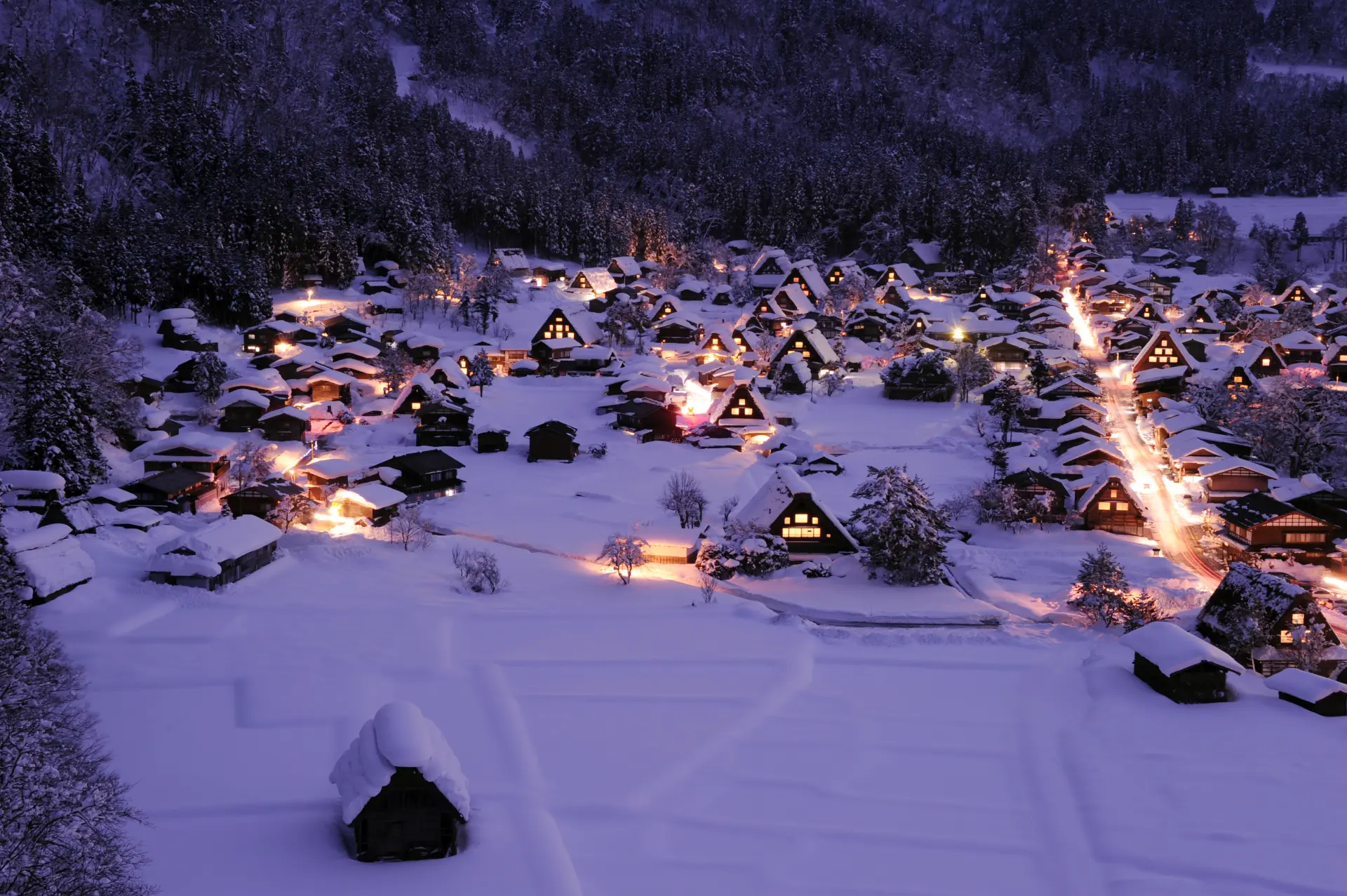
1. Shirakawa-go Light-Up Event
Shirakawa-go is famous for its gassho-zukuri villages, a UNESCO World Heritage site.
On select days in January and February, a special light-up is held, drawing large crowds every winter.
The snow-covered triangular thatched roofs glowing in the dark make you feel like you’ve stepped into a storybook. The atmosphere is truly magical.
2. Takayama Festival
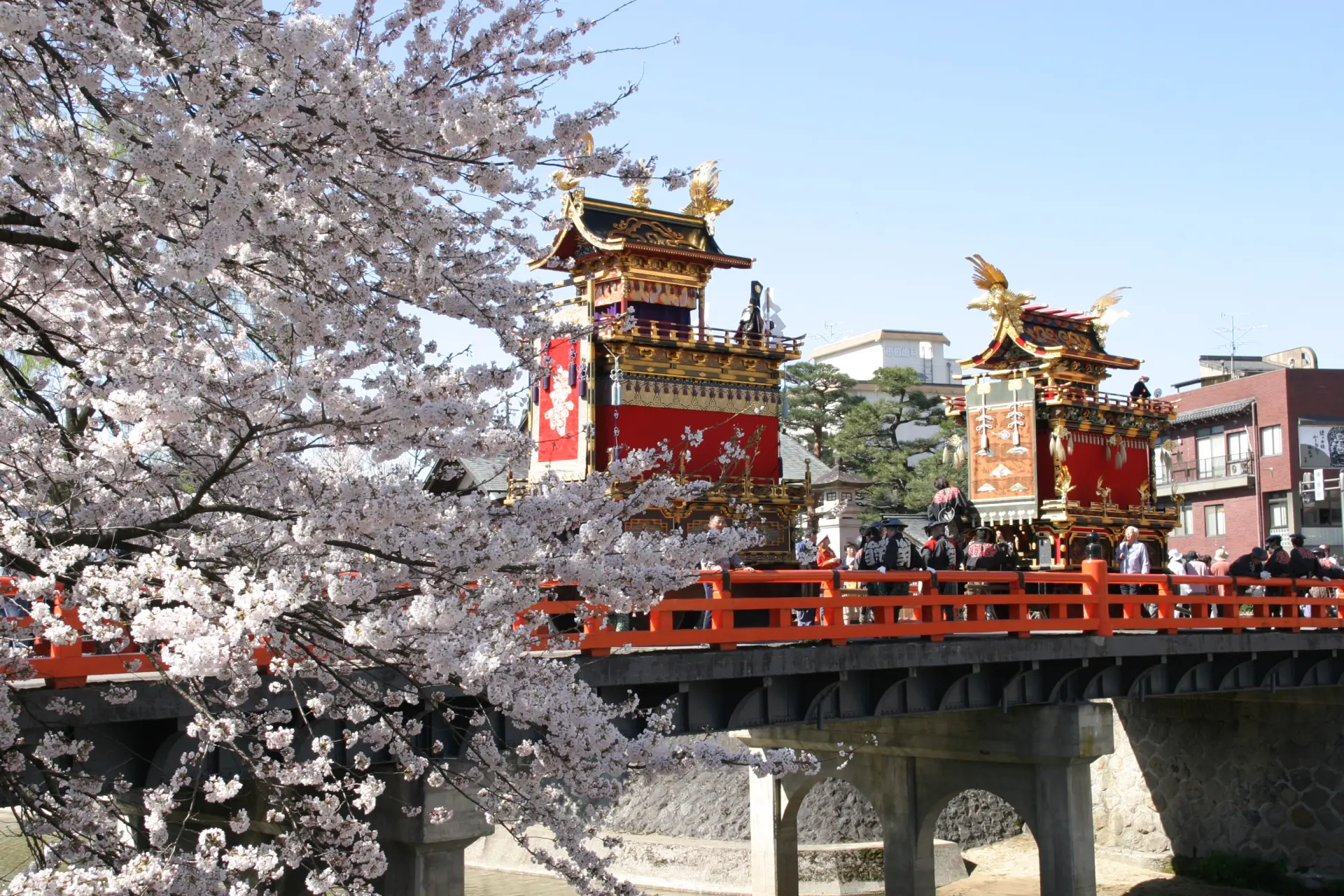
The Takayama Festival has been carefully passed down in Takayama City, Gifu, for over 300 years.
It is a collective name for two festivals: the Sanno Festival, the spring festival of Hie Shrine held in April, and the Hachiman Festival, the autumn festival of Sakurayama Hachimangu Shrine held in October.
It is also known as one of Japan’s three most beautiful festivals.
3. Gifu City Industrial and Agricultural Festival - Gifu Nobunaga Festival
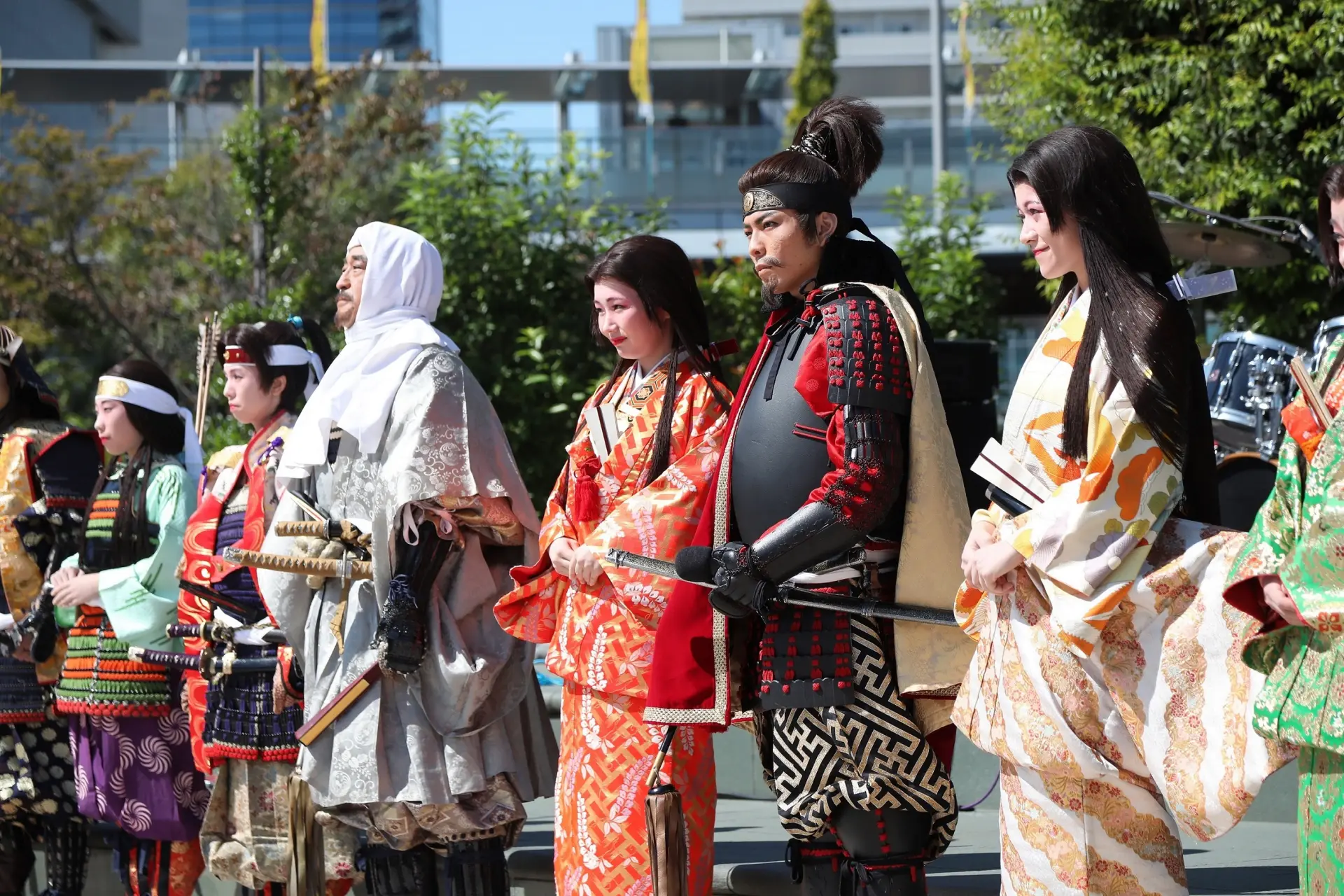
The Gifu City Industrial and Agricultural Festival – Gifu Nobunaga Festival is a major autumn event in Gifu City. It celebrates the achievements of the warlord Oda Nobunaga, who used Gifu Castle, built by Dosan Saito, as his base as he set out to unify the country.
Every year on the first Saturday and Sunday of November, various events are held around Gifu Station in the city center.
Wrap-Up
Gifu Prefecture is a relaxing destination where you can fully enjoy rich nature and history, with places like the old streets of Hida Takayama, Gero Onsen, and World Heritage-listed Shirakawa-go.
If you want to dive even deeper into Japan’s traditional culture and history, take a limited express train from Gifu to Kanazawa, where you can explore another charming historic townscape.
If you feel like a change of pace and want some big-city fun, head to Nagoya, one of Japan’s three major cities.
Both Kanazawa and Nagoya are right next to Gifu, so you can easily add them to the same trip.