
![[Fushimi Inari Taisha Visitor Guide] One of Kyoto’s Top Power Spots, Famous for Its Endless Torii Gates](https://static.gltjp.com/glt/data/article/21000/20446/20231103_002425_431c9b6b_w1920.webp)
[Fushimi Inari Taisha Visitor Guide] One of Kyoto’s Top Power Spots, Famous for Its Endless Torii Gates
With a history of more than 1,300 years, Fushimi Inari Taisha is the head shrine of roughly 30,000 Inari shrines across Japan.
Known for its many blessings, Fushimi Inari Taisha is also famous as one of Kyoto’s top power spots.
It is also an extremely popular sightseeing destination, so much so that many international visitors come specifically to see the Senbon Torii, the rows of vermilion shrine gates.
It’s no exaggeration to say that it is a must-visit spot when sightseeing in Kyoto.
This article introduces Fushimi Inari Taisha in detail for first-time visitors, covering its history, highlights, and nearby sightseeing spots.
What is Fushimi Inari Taisha Like?
Fushimi Inari Taisha is located on Mt. Inari in Fushimi, Kyoto.
It is the head shrine of about 30,000 Inari shrines across Japan and has long been beloved by many people.
The enshrined deities of Fushimi Inari Taisha are the Inari Okami, made up of five deities: Ukanomitama-no-Okami, Sadahiko-no-Okami, Omiyanome-no-Okami, Tanaka-no-Okami, and Shi-no-Okami.
It is said to bring blessings for abundant harvests, business prosperity, family safety, and the fulfillment of wishes.
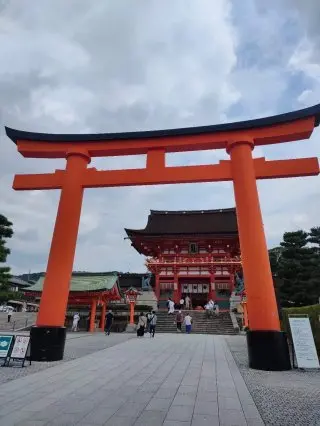
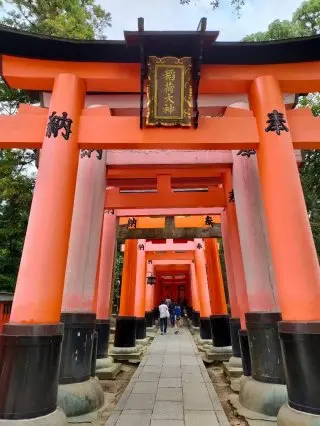
Its greatest highlight is undoubtedly the Senbon Torii, the rows of vivid vermilion shrine gates.
There are also many historic buildings designated as Important Cultural Properties, including the Romon Gate, said to have been donated by the Sengoku warlord Toyotomi Hideyoshi, as well as the Main Hall and the Okunoin Inner Shrine.
Also not to be missed are the fox statues found throughout the shrine grounds, each with its own expression and pose.
Mt. Inari is considered sacred ground in its entirety, and the Oyama Meguri pilgrimage route, which takes visitors around several power spots, is another attraction.
It is also famous as a scenic spot where you can view the setting sun in the western sky through the vermilion Senbon Torii at dusk.
If you visit at dusk, keep in mind that the whole mountain quickly grows dim after sunset and soon becomes completely dark, so be sure to return to the nearest station to Fushimi Inari Taisha by around 6pm.
It is also known as a place associated with ghost stories and many legends, and as a spot where mysterious experiences are said to happen after sunset.
The Origins of Fushimi Inari Taisha
Fushimi Inari Taisha was founded in 711, when Hata no Irogu, a descendant of the Hata clan, enshrined the Inari Okami on Mt. Inari.
The Hata clan was a family that came from the Korean Peninsula and developed this area with advanced technology and economic power.
It is said that the place name “Inari” came from “ine ga naru,” meaning rice ripens, one of the blessings associated with Fushimi Inari Taisha.
Many buildings were lost in warfare in 1467, but by 1499 all of the destroyed structures had been rebuilt.


Access to Fushimi Inari Taisha
Here is how to get to Fushimi Inari Taisha from Kyoto Station, a major transportation hub for sightseeing in Kyoto.
Taking the train from Kyoto Station is recommended.
On the JR Nara Line, trains bound for Nara, Joyo, and Uji all work, but rapid trains do not stop at Inari Station, so be sure to take a local train.
- Route
-
1. From Kyoto Station, take the JR Nara Line and get off at Inari Station
2. Approx. 1-minute walk from Inari Station - Travel time
- Approx. 10 minutes
Hours and Admission for Fushimi Inari Taisha
Fushimi Inari Taisha is open for worship 24 hours a day.
There is no admission or worship fee if you are just entering the shrine grounds.
However, prayer services and the amulet distribution office are open from 8:30am to 4:30pm.
If you would like to purchase an omamori charm, please keep the hours in mind.
What Is the Best Season to Visit Fushimi Inari Taisha?
If you are visiting Fushimi Inari Taisha, autumn is the best season.
Maples and other trees turn color throughout the grounds, and the combination of fall foliage with the vivid vermilion Senbon Torii is breathtaking.
Every year, nighttime illuminations are held to coincide with the autumn leaves season.
The area from the main approach to the Main Hall is lit up, and you can enjoy the autumn leaves along the path as well as projection mapping.
The best time to see the fall foliage is usually from mid-November to early December.
Kyoto also has many other famous autumn foliage spots, and visiting several of them together will help you enjoy Kyoto even more.

7 Highlights of Fushimi Inari Taisha
When people think of Fushimi Inari Taisha, they often think first of the Senbon Torii, the rows of vivid vermilion shrine gates, but there are many other highlights as well, such as the Romon Gate built by the Sengoku warlord Toyotomi Hideyoshi and the Main Hall, the head shrine of Inari shrines across Japan.
Here, we will introduce a carefully selected list of especially unmissable highlights.
1. Senbon Torii, the biggest highlight of Fushimi Inari Taisha
The Senbon Torii features Approx. 800 shrine gates lined up like a tunnel.
The vivid vermilion gates and the sacred trees around them create a solemn atmosphere and a breathtaking view.
There is a custom in which worshippers donate torii gates in gratitude when their wishes come true, since the word “torii” sounds similar to “tooru,” meaning to pass through or come true, and this is how the number grew to what it is today.
Since the Edo period, when these donations began, torii gates have continued to be dedicated even now.


2. The historic Romon Gate, built by Toyotomi Hideyoshi
The Romon Gate was built in 1589 by the Sengoku warlord Toyotomi Hideyoshi.
A romon generally refers to a two-story gate with no roof over the first floor section.
Toyotomi Hideyoshi prayed at the Inari Shrine, now Fushimi Inari Taisha, for the recovery of his mother, Omandokoro, from illness.
Later, after she recovered, the Romon Gate was built in gratitude and still serves today as the main gate welcoming worshippers to Fushimi Inari Taisha.
It is the oldest and largest romon gate in Kyoto and is designated as an Important Cultural Property of Japan.

3. The Main Hall, known for its distinctive architectural style and lavish decoration
The Main Hall is the head shrine of Inari shrines enshrined throughout Japan.
The deities worshipped here are collectively called the Inari Okami and include five deities beginning with Ukanomitama-no-Okami.
It is known for the Inari-zukuri architectural style, which features an exceptionally long front roof, as well as the lavish carvings under the eaves, and it is designated as an Important Cultural Property of Japan.
The current building was rebuilt in 1499 after the previous one was destroyed in warfare in 1468.

4. Ichinomine (Upper Shrine Sacred Site), the top power spot on Mt. Inari
Ichinomine (Upper Shrine Sacred Site) stands at the summit of Mt. Inari at an elevation of 233m.
Omiyanome-no-Okami is enshrined here, and it is said to grant blessings such as business prosperity, family safety, healing from illness, and protection from evil.
Ichinomine (Upper Shrine Sacred Site) is said to be the place where the Inari Okami and other deities descended, making it the most powerful power spot on Mt. Inari.
If you are doing the Oyama Meguri pilgrimage, be sure to stop and pray here.
You can draw an omikuji fortune here for free, so try your luck at one of Kyoto’s top power spots.

5. Okunoin, a power spot for worshipping the three peaks of Mt. Inari
Okunoin is located beyond the Senbon Torii.
It is said to be a place for worshipping the three peaks of Mt. Inari, where the Inari Okami is believed to have descended.
The three peaks of Mt. Inari rise behind it, giving the area a sacred atmosphere.
It is unknown when Okunoin was founded. The current shrine building was constructed in 1794, and in 1975 it was moved to its present location farther back, with a worship hall added in front.

6. Fox ema, unusual votive plaques featuring a fox motif
These fox ema are votive plaques featuring foxes, which are considered messengers of the Inari Okami.
An ema is a wooden plaque with a picture on it, offered at a shrine when making a wish or after a wish has come true.
Most ema are generally shaped like a small house, so fox-themed ema are especially unique and rare.
Another fun feature is that visitors can freely draw the fox’s expression.

7. Omo-karu Stone, where a light stone means your wish may come true?
The Omo-karu Stone sits on top of a stone lantern on the right side facing Okunoin.
It is said that if the stone feels lighter than you expected when you lift it, your wish will come true, but if it feels heavy, your wish is less likely to come true.
Simply think of your wish in front of the lantern, imagine the weight of the round stone on top, and then lift it to try this fortune-telling ritual for yourself.

3 Popular Places to Eat on and around the Approach to Fushimi Inari Taisha
The approach to Fushimi Inari Taisha and the surrounding area are lined with many restaurants and souvenir shops.
On the approach, you can enjoy local specialties connected to Inari shrines, such as inari sushi and kitsune udon.
For souvenirs, fox-themed items are especially recommended, including inari rice crackers shaped like a fox face and Suzumiso senbei with a fortune slip tucked inside.
If you are visiting Fushimi Inari Taisha, be sure to enjoy the food and souvenir shopping along the approach as well.
From here, we will introduce some especially popular places to eat on and around the approach to Fushimi Inari Taisha.
1. Teuchi Udon Kendonya
A handmade udon restaurant located just steps from Keihan Fushimi-Inari Station.
It has remained a popular local favorite for more than 25 years since the owner opened it in 1995 after 10 years of training. The name comes from the phrase “humbly, single-mindedly making udon.”
The udon is made in-house every morning by the owner using an original blend of flour.
Boiling the noodles in a pressure cooker creates their distinctive chewy and silky texture.

2. Nezameya
A restaurant located right beside the torii gate at the entrance to the back approach of Fushimi Inari.
The first thing you notice is the eel being grilled fragrantly out front. In addition to whole grilled eel, the restaurant also offers reasonably priced unadon.
The key to the flavor is the restaurant’s secret homemade sauce, which is also used for its grilled quail skewers.
As you would expect in the gate town of Inari Shrine, its easy-to-enjoy inari sushi is also popular.

3. Ra-men Hi wa Mata Noboru
This ramen shop is just a 1-minute walk from Keihan Fushimi-Inari Station and is also popular with international visitors to Fushimi Inari.
It is often mentioned in Kyoto, a city known for fierce ramen competition, and lines often form around lunchtime.
The signature dish is the Tori Tonkotsu Ramen. As the name suggests, it features a rich soup made by simmering large amounts of fresh chicken bones and pork bones for two days, perfectly paired with house-made noodles and topped with oven-roasted chashu pork, Kujo green onions, and menma bamboo shoots.

3 Sightseeing Spots to Visit Along with Fushimi Inari Taisha
The area around Fushimi Inari Taisha is full of sightseeing spots where you can experience rich nature and history.
The three places introduced below are all easy to access from Fushimi Inari Taisha, so they are well worth visiting.
1. Tofukuji Temple
The head temple of the Tofukuji school of the Rinzai sect, it was commissioned by Regent Kujo Michiie as a family temple with Shoichi Kokushi as its founding priest, and its seven main temple buildings were completed in 1255 after 19 years of construction beginning in 1236.
It is also one of the Kyoto Gozan, the five great Zen temples of Kyoto. Since its founding, it has suffered repeated war damage, and the current Sanmon Gate was rebuilt in 1425 and is known as the oldest surviving Zen temple gate in Japan.
It was designated a National Treasure in 1952 and stands 22m tall.

2. Kamo River
It is sometimes also written as Kamogawa or Kamo River using different kanji.
The Kamo River rises near Sajikigatake and flows south through central Kyoto before joining the Katsura River in Toba. Around Shijo, Gion lies to the east and Kawaramachi to the west, making it the center of Kyoto’s commercial district and one of the city’s most iconic landscapes.

3. Kyoto Tower
It rises directly in front of you as soon as you exit the ticket gates at Kyoto Station.
Built with the image of a lighthouse illuminating the city of Kyoto, it stands 131m tall and is the tallest building in central Kyoto.
Since opening in 1964, it has welcomed more than 32 million visitors.
From the observation deck 100m above the ground, you can enjoy a panoramic view of Kyoto.
On clear days, you can even see as far as Osaka using the free telescopes installed there.

3 Recommended Places to Stay near Fushimi Inari Taisha
Fushimi Inari Taisha, famous for its Senbon Torii, is one of Kyoto’s best-known landmarks.
If you want to enjoy visits early in the morning or in the evening, it is convenient to stay in an area with easy access.
The surrounding area and the Kyoto Station area offer a wide range of accommodations, from functional hotels to calm, relaxing inns, so here are some places to stay that will make sightseeing in Kyoto easier and more enjoyable.
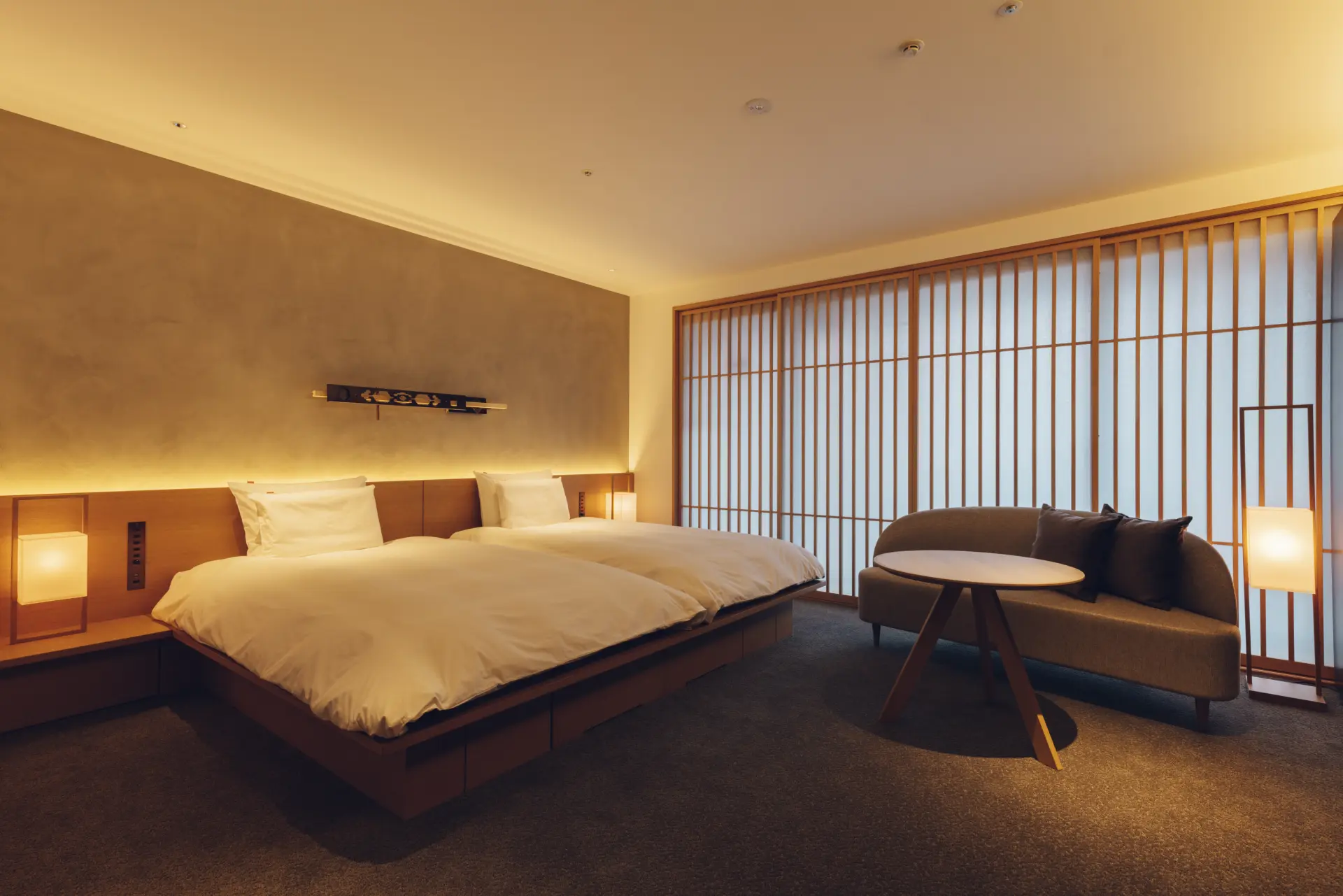
1. nol kyoto sanjo
This hotel is a renovation of a Kyoto machiya townhouse that is more than 100 years old and was used as a sales office for the sake brewer Kinshi Masamune since the Meiji era.
The Kinshi Masamune sign still remains, and the building retains so much character that at first glance you might not even realize it is a hotel.
The newly built guest room wing also includes small courtyard gardens, creating the atmosphere of a traditional Kyoto machiya.
All 48 guest rooms come with a hiba cypress bath, where you can enjoy a relaxing bath surrounded by the fragrance of wood.
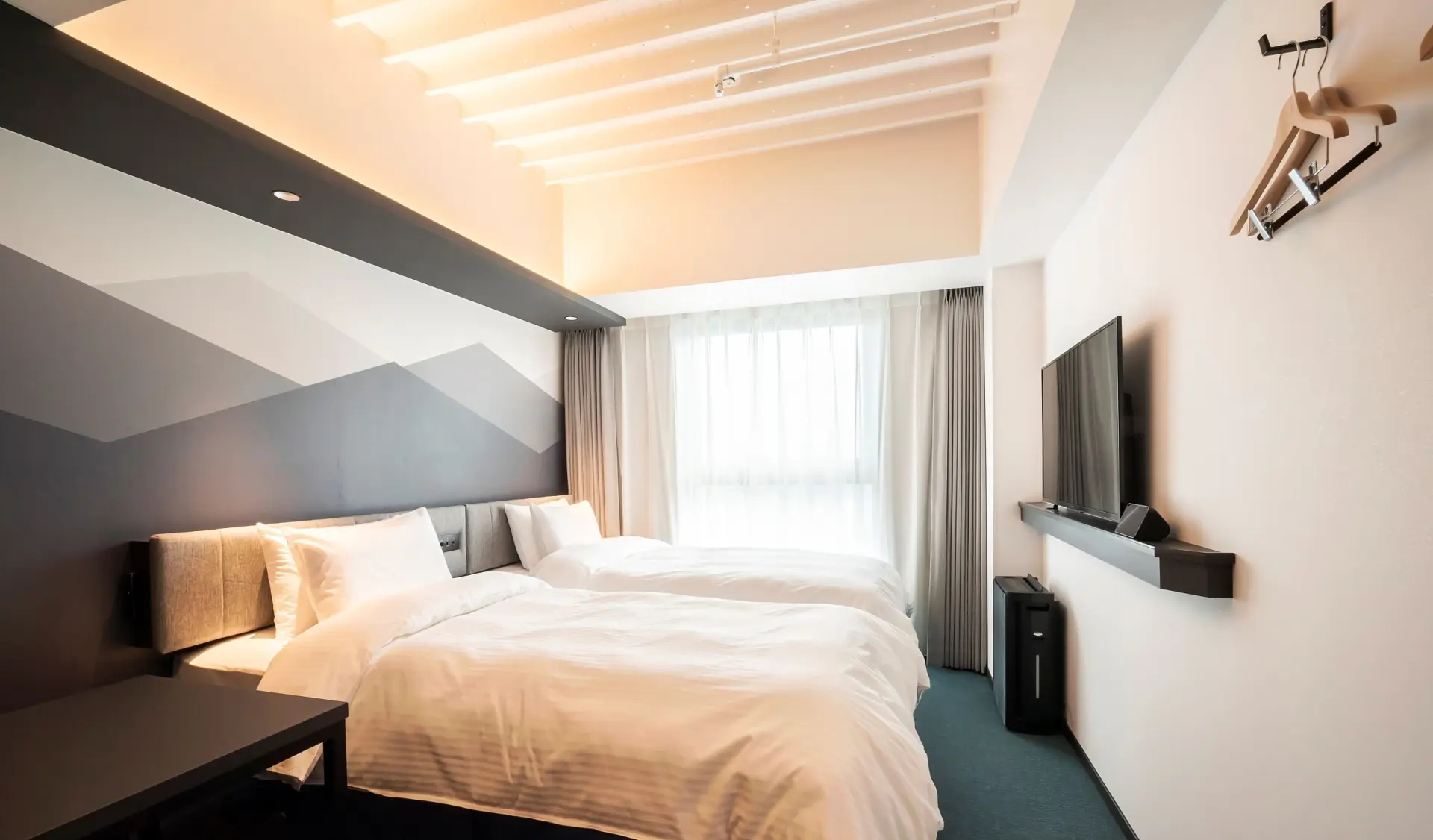
2. Prince Smart Inn Kyoto Sanjo
A next-generation hotel focused on accommodations, opened in April 2022.
Based on the concept of an accommodation-focused hotel pursuing innovation, it offers services that make full use of ICT and AI.
From booking to Check-out, everything can be completed on your smartphone using the official app.
From its exterior inspired by a modern machiya townhouse to its spaces themed around “learning from the past to create the new,” the hotel draws on traditional Kyoto while maintaining a simple, modern feel.
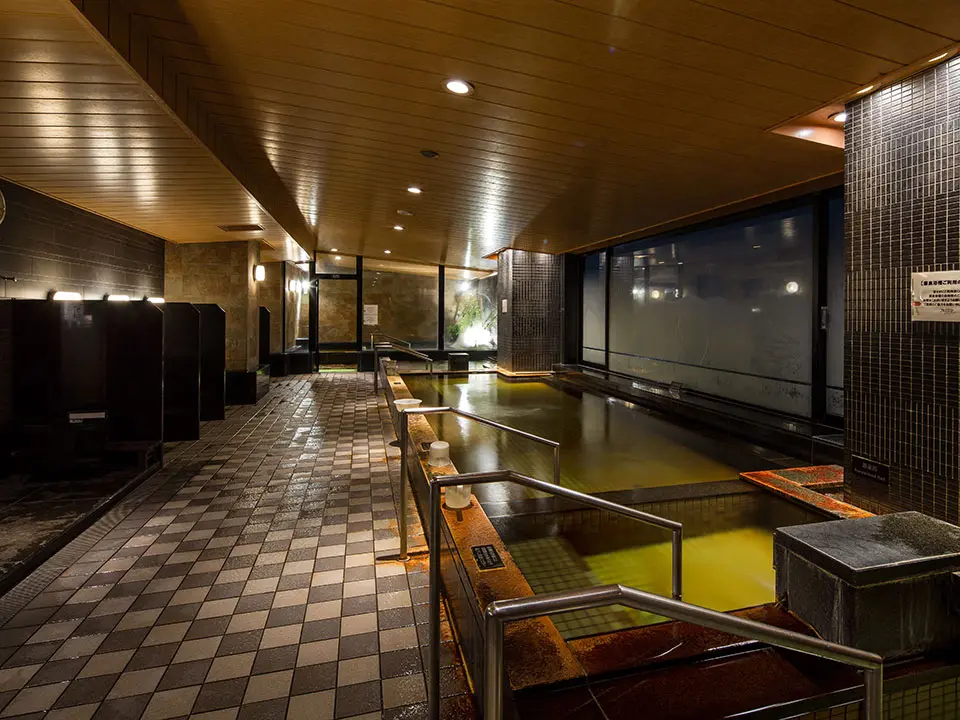
3. Hotel Monterey Kyoto
A design hotel conveniently located in Karasuma Sanjo in central Kyoto, making it a great base for sightseeing.
The interior is inspired by Edinburgh, the ancient Scottish city that is a sister city of Kyoto, creating a calming atmosphere.
The hotel has 327 guest rooms, with a wide range of room types from functional single rooms to family rooms that can accommodate up to four guests.
Reviews of Fushimi Inari Taisha
4.55
Some reviews are AI-translated.
-
The hike to the top is a bit tiring, but you get an amazing view of Kyoto city. Totally worth it!
-
The endless rows of torii gates stretching up the mountain are truly impressive. It definitely lived up to my expectations.
-
I arrived at Fushimi Inari Taisha in the evening and was surprised to see so many visitors. Since it was already dark, I didn't go further up.
FAQ about Fushimi Inari Taisha
Q
Are foxes enshrined at Fushimi Inari Taisha?
A
Foxes are considered messengers of the Inari Okami, while the enshrined deities are the five deities of the Inari Okami: Ukanomitama-no-Okami, Sadahiko-no-Okami, Omiyanome-no-Okami, Tanaka-no-Okami, and Shi-no-Okami.
Q
Is it true that some people are not supposed to go to Fushimi Inari Taisha?
A
It is said that if you start feeling unwell when trying to visit an Inari shrine, or if you get lost and cannot reach it even though you want to visit, you may not be compatible with the Inari shrine.
Summary
We have introduced the history, highlights, best season to visit, and the food and souvenirs on and around the approach that you should know to enjoy Fushimi Inari Taisha.
Using this article as your guide, you should be able not only to receive the powerful blessings of Fushimi Inari Taisha, one of Kyoto’s top power spots, but also to fully enjoy its many highlights.
Of course, Kyoto is also full of attractive spots beyond Fushimi Inari Taisha.
If you are sightseeing in Kyoto, be sure to read this article as well, which introduces Kyoto’s classic sightseeing spots.