
![[Tojinbo Travel Guide] A Beautiful Yet Powerful Scenic View Woven by Cliffs and the Sea of Japan](https://static.gltjp.com/glt/data/article/21000/20674/20240328_175448_6295cf98_w1920.webp)
[Tojinbo Travel Guide] A Beautiful Yet Powerful Scenic View Woven by Cliffs and the Sea of Japan
Tojinbo is a scenic spot that has long been well known.
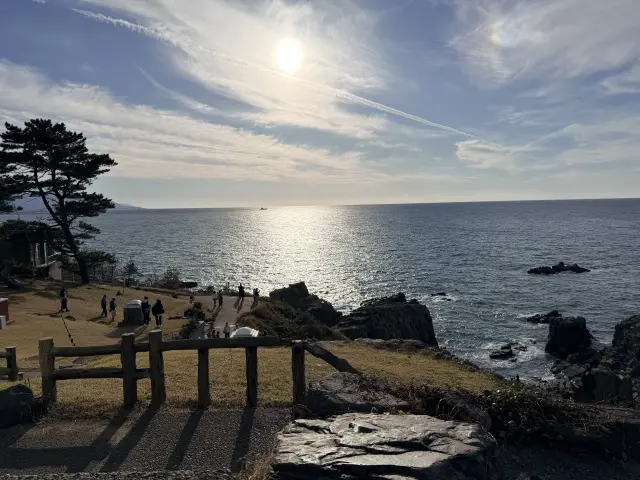
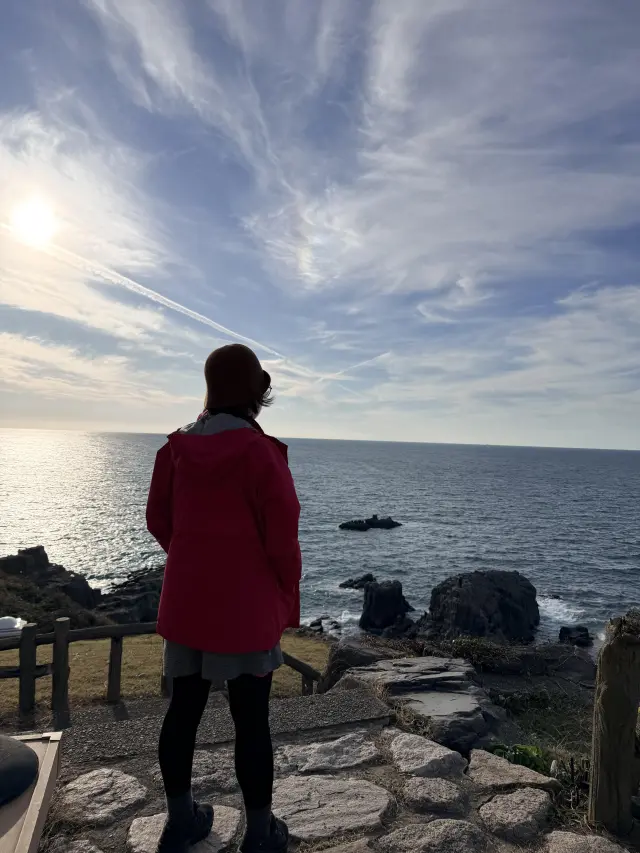
Its biggest draw is the spectacular view created by sheer cliffs and the rough Sea of Japan, and its beautiful yet powerful scenery attracts many visitors.
This article introduces the spots and ways to enjoy Tojinbo’s breathtaking scenery to the fullest.
Before visiting Tojinbo, be sure to read this guide first.
What is Tojinbo Like?
Located in Sakai City, Fukui Prefecture, Tojinbo is a nationally designated Place of Scenic Beauty that has long been well known.
The dramatic landscape of steep cliffs, roughly carved by the waves of the Sea of Japan and stretching for Approx. 1 km, has been selected as one of the “World’s Three Greatest Columnar Jointing Scenic Wonders” and one of the “World’s Three Great Natural Wonders.”
Columnar jointing is a phenomenon in which lava cools and contracts, forming regular cracks like columns.
The cliffs at Tojinbo were formed by this columnar jointing.
The pyroxene andesite columnar joints, a rare rock formation found in only three places in the world including Tojinbo and designated as a National Natural Monument, are one of Tojinbo’s highlights.
There are also many rocks that look like animals or objects, such as Lion Rock, Candle Rock, Beehive Rock, and Folding Screen Rock, so be sure to look for them.
Tojinbo is also known as a place where you may see the green flash, a phenomenon in which a green light appears after the sun sinks below the horizon.
It only occurs a few times a year, but there is also a saying that seeing it will bring you happiness.
Be sure to visit this scenic spot where you can feel both the power and beauty of nature at the same time.

Access to Tojinbo
Here is how to get to Tojinbo starting from Fukui Station.
Fukui Station is a stop on the Hokuriku Shinkansen and serves as a transportation hub for sightseeing in Fukui.
- Route
-
1. Take the Echizen Railway Mikuni Awara Line from Fukui Station and get off at Mikuni Minato Station
2. Take a bus from Mikuni Minato Ekimae and get off at Tojinbo
3. After getting off at Tojinbo, walk for Approx. 5 minutes - Travel time
- Approx. 1 hour
- Official website
- Official website (Japanese)
What Is the Best Season to Visit Tojinbo?
If you are visiting Tojinbo, autumn is recommended.
Among the four seasons, autumn is especially beautiful for sunsets, and you can enjoy the spectacular view created by the setting sun sinking below the horizon and Tojinbo.
The event “Tojinbo SUNSET,” which lets you enjoy this beautiful scenery even more, is held from mid-September to mid-October.
At the event, you can enjoy drinks purchased at the cafe and music while taking in the spectacular views of Tojinbo at dusk, and also try activities such as yoga.

3 Scenic Spots You Should Visit at Tojinbo
From here, we will introduce a carefully selected list of spots you should visit to fully enjoy the scenery of Tojinbo.
Use this article as your guide and go see the spectacular views created by Tojinbo’s signature columnar joints and the Sea of Japan.
1. Oike, the Spot That Symbolizes Tojinbo
At 25 m high, Oike is the tallest cliff at Tojinbo.
There are no railings at the edge of the cliff, so if you look down, you can enjoy a thrilling and dramatic view.
Not only that, but from this high and unobstructed spot facing the Sea of Japan, you can also truly feel the vastness of the sea and the roughness of its waters.
It is also recommended to ride the sightseeing boat and look up at Oike from the sea to experience the imposing height of the cliff and the feeling of being surrounded by massive rock walls.

2. Senjojiki, a Rare Spot Where You Can See a Cross-Section of Columnar Jointing
Senjojiki is a rare spot at Tojinbo where you can walk down to the water’s edge, and it is located in the center of Tojinbo.
Senjojiki was also once a quarry site, and the stone taken from here was used for structures such as the breakwater near Mikuni Port.
Because of this, traces of the dynamite used in quarrying still remain today.
It is a valuable place where you can see a cross-section of the columnar joints, so be sure not to miss it.

3. Tojinbo Tower, Where You Can Take In the Sea of Japan from 55 m Above Ground
Tojinbo Tower is located to the southeast of Tojinbo, about a 5-minute walk away.
The observatory is 100 m above sea level and 55 m above ground, offering sweeping views of Tojinbo, the Echizen Coast, and the Hakusan Mountain Range. The grand scenery centered around Tojinbo is a must-see.
Be sure to visit before or after sightseeing at Tojinbo.
Hours are 9:00 am–5:00 pm, and observatory admission is 500 yen for adults (junior high school students and older) and 300 yen for children (elementary school age and younger).
There are also restaurants and souvenir shops on the first and second floors, making it a convenient stop for lunch or souvenir shopping.

Tojinbo Sightseeing Boat: Spectacular Views Only Seen from the Water
The Tojinbo Sightseeing Boat is highly recommended because it lets you see Tojinbo’s columnar joints from the water.
Looking up at the cliffs from the sea offers a different kind of impact from looking down at the sea from above the cliffs.
The 30-minute ride takes you around Tojinbo’s main highlights, which is another reason it is so appealing, as you can see a variety of spectacular views created by the columnar joints and the Sea of Japan in a short time.
In principle, the boarding point is very close to Tojinbo, but depending on sea conditions, it may be the Mikuni Sunset Beach boarding point, about 10 minutes by bus from Tojinbo.
Be sure to check the official website for information on the day you plan to use it.

Don’t Miss the Beautiful Sunset Scenery That Changes Moment by Moment
Tojinbo is also beautiful at dusk, so much so that it was selected as one of Japan’s 100 Best Sunsets.
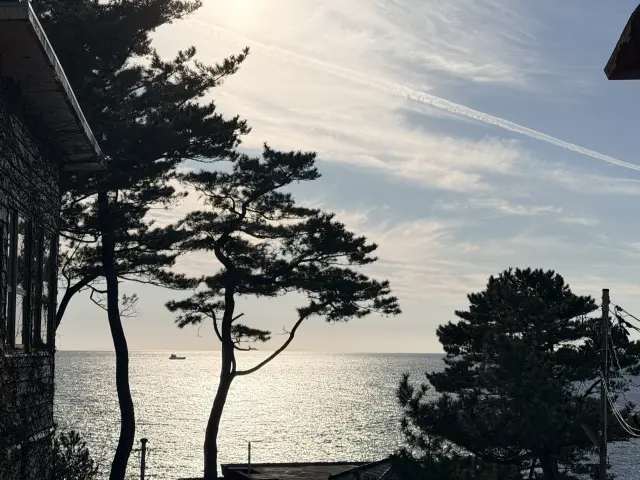
Take your time and enjoy the gradually changing scenery, from the Sea of Japan and Tojinbo glowing in the sunset, to the sun sinking into the sea, to the magic hour after sunset.
It would be a shame to enjoy only the daytime scenery, so adjust your sightseeing plans so that you arrive a little before sunset and can stay until the sun goes down.

What to Keep in Mind When Visiting Tojinbo
Tojinbo has no fences or railings at all in order to preserve its beautiful landscape.
What’s more, since you walk on the rocks, there are many places with uneven footing.
Please watch your step carefully and make sure not to fall by accident.
Wear comfortable, well-broken-in shoes such as sneakers for sightseeing. Extra caution is especially needed on rainy or windy days.

3 Nearby Sightseeing Spots Around Tojinbo
Here are some nearby attractions: street food you can enjoy right by Tojinbo, a mysterious small island visible from Tojinbo, and a temple closely connected to the area.
If you visit these spots as well, your Tojinbo trip is sure to be even more satisfying.
1. Tojinbo Shopping Street
Located right near Tojinbo, Tojinbo Shopping Street is lined with a variety of shops along Approx. 300 m.
One of the main charms of this shopping street is enjoying food as you stroll while feeling the sea breeze.
Local specialties include grilled seafood such as squid and scallops, as well as unusual squid ink soft serve ice cream.
It is also nice that there are cafes where you can take a break after sightseeing at Tojinbo.

2. Oshima
Oshima is an offshore island located off Tojinbo.
Revered as an island of the sea gods, it is a mysterious place with a torii gate and Ominato Shrine.
Because it is connected by the beautifully vermilion-painted Oshima Bridge, you can also walk there.
Including Ominato Shrine, which is designated as a cultural property of Fukui, various mysterious spots are scattered across the island.
There are also many fascinating places to see, such as Magnet Rock, which has such strong magnetism that it can shift the direction of nearby compasses, and Uriwari no Mizu, a small spring where fresh water wells up.

3. Heisenji Hakusan Shrine (Hakusan Heisenji Temple)
A sacred site opened by Taicho in 717 as a base for worship at sacred Mt. Hakusan.
Within the former precincts are highlights such as the old stone-paved approach stretching for Approx. 1.2 km and giant cedar trees said to have survived the fire that burned down the entire mountain complex.
Excavated items are displayed at Hakusan Heisenji History Museum Mahoroba, located beside the old approach.
It is also known as the temple where the monk connected to the origin of the name Tojinbo once lived.

3 Popular Restaurants Near Tojinbo
Around Tojinbo’s dramatic cliffs, you’ll find restaurants where you can enjoy local flavors.
Of course, there are dishes made with fresh seafood, but each place has its own character.
A meal enjoyed alongside such striking scenery is sure to remain a vivid part of your trip.
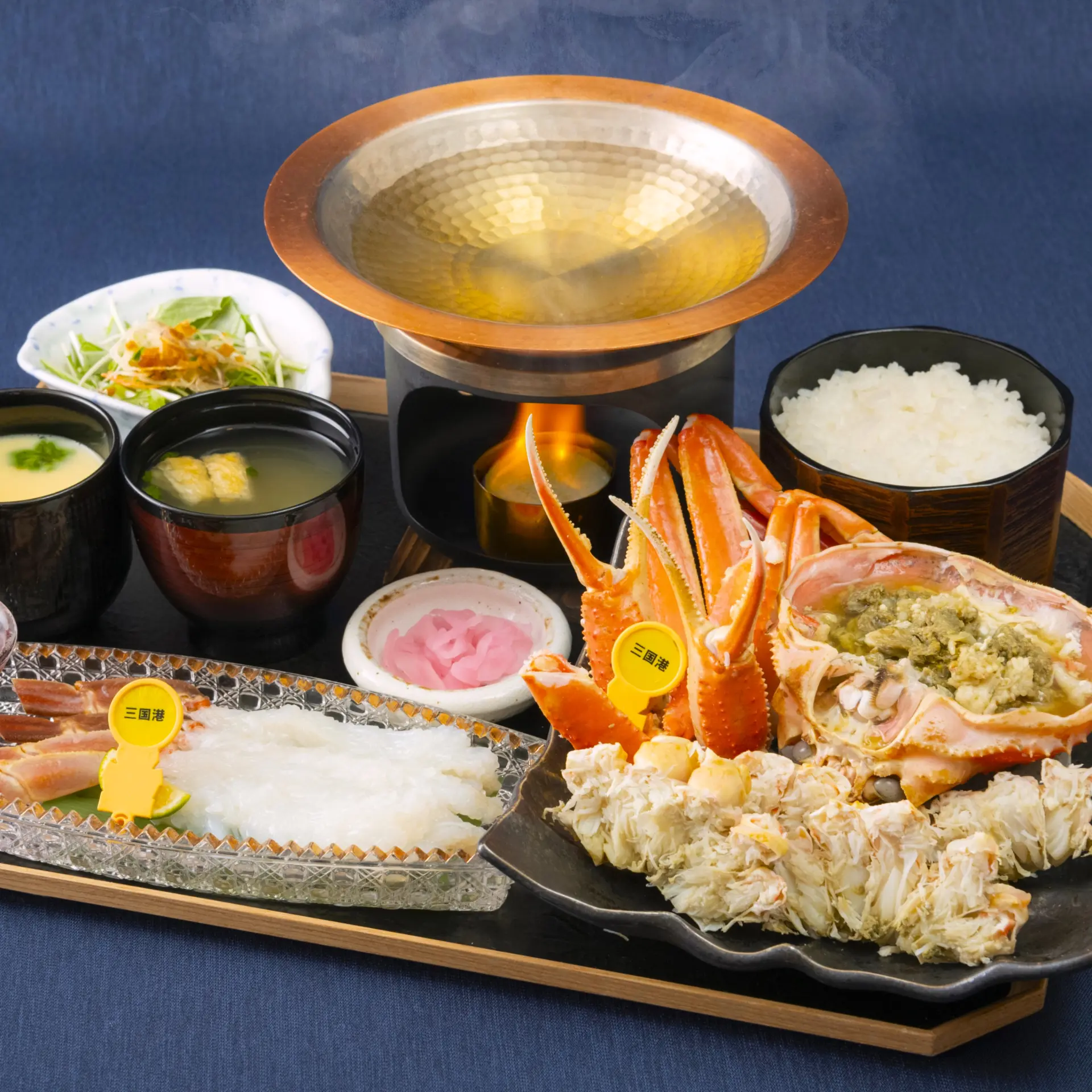
1. Mikuni Minato Echizen Crab and Seafood Specialty Restaurant Mikuni Inkyojo
A crab specialty restaurant in Sakai City, Fukui Prefecture, a gourmet town that won the Gastronomy City Award 2025, serving Echizen crab dishes from Mikuni Port.
This seaside auberge shares the Sea of Japan and the lifestyle of a port town through food. Accommodation is limited to one private group per day, while lunch and dinner at the restaurant are also available for day visitors.
Outside crab season, it serves Echizen Kitamae cuisine, which carries on the food culture brought by Kitamaebune trade into the present day. The restaurant also participates in a project certified by the Agency for Cultural Affairs, offering dishes that reflect both the area’s seasonal ingredients and historical background.
2. Fukui City Tourism and Local Products Center Fukufuku Chaya
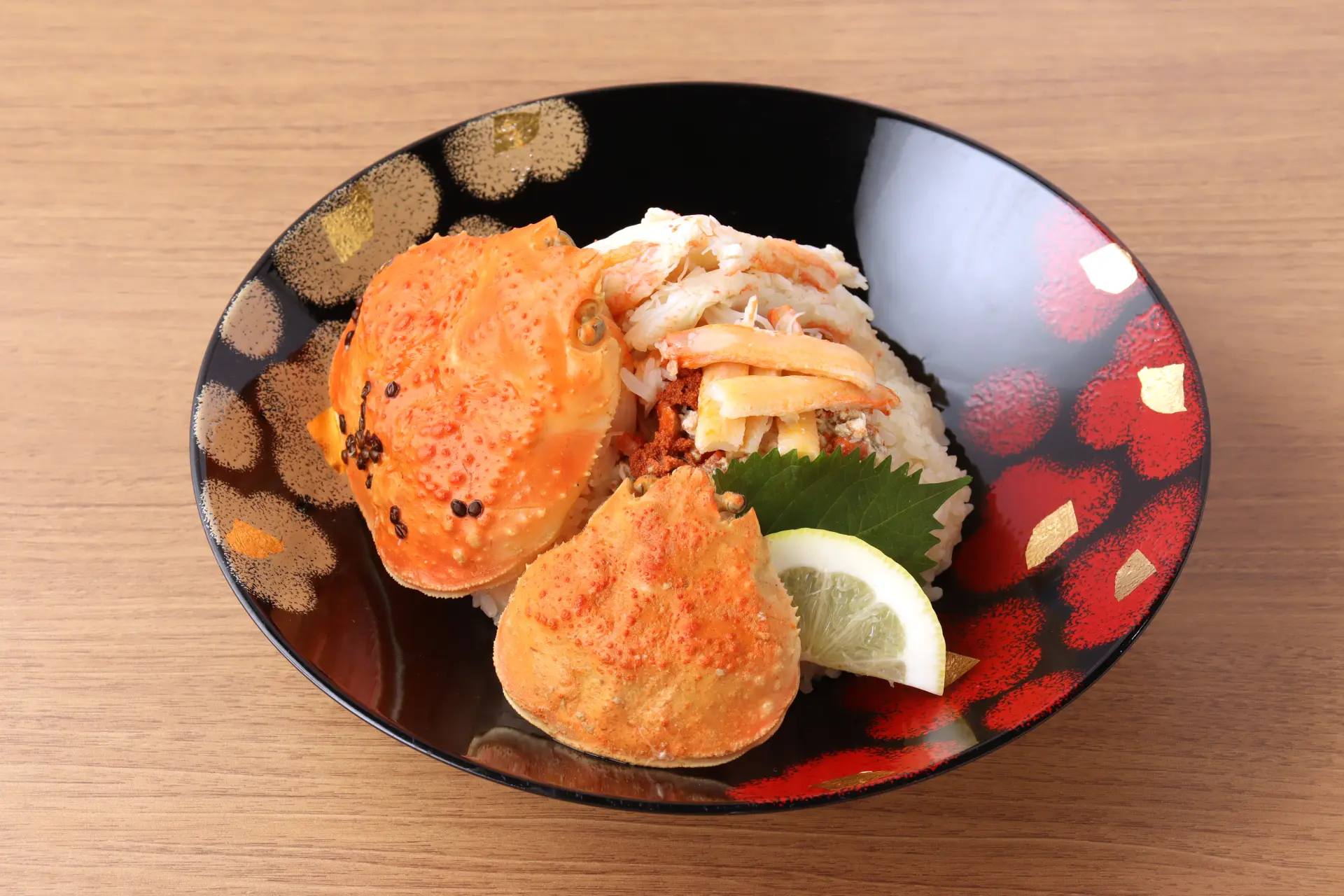
Fukufuku Chaya is a restaurant inside the Fukui City Tourism and Local Products Center “Fukufuku-kan.” It serves local dishes from Fukui and plays a role in sharing the region’s food culture with a wide audience.
The signature menu item is Echizen Crab Bowl. One of its charms is that you can enjoy the flavor and texture of crab all year round without compromising either. Echizen Oroshi Soba made with buckwheat flour from Fukui Prefecture is also popular.
3. Fukui French Aujus
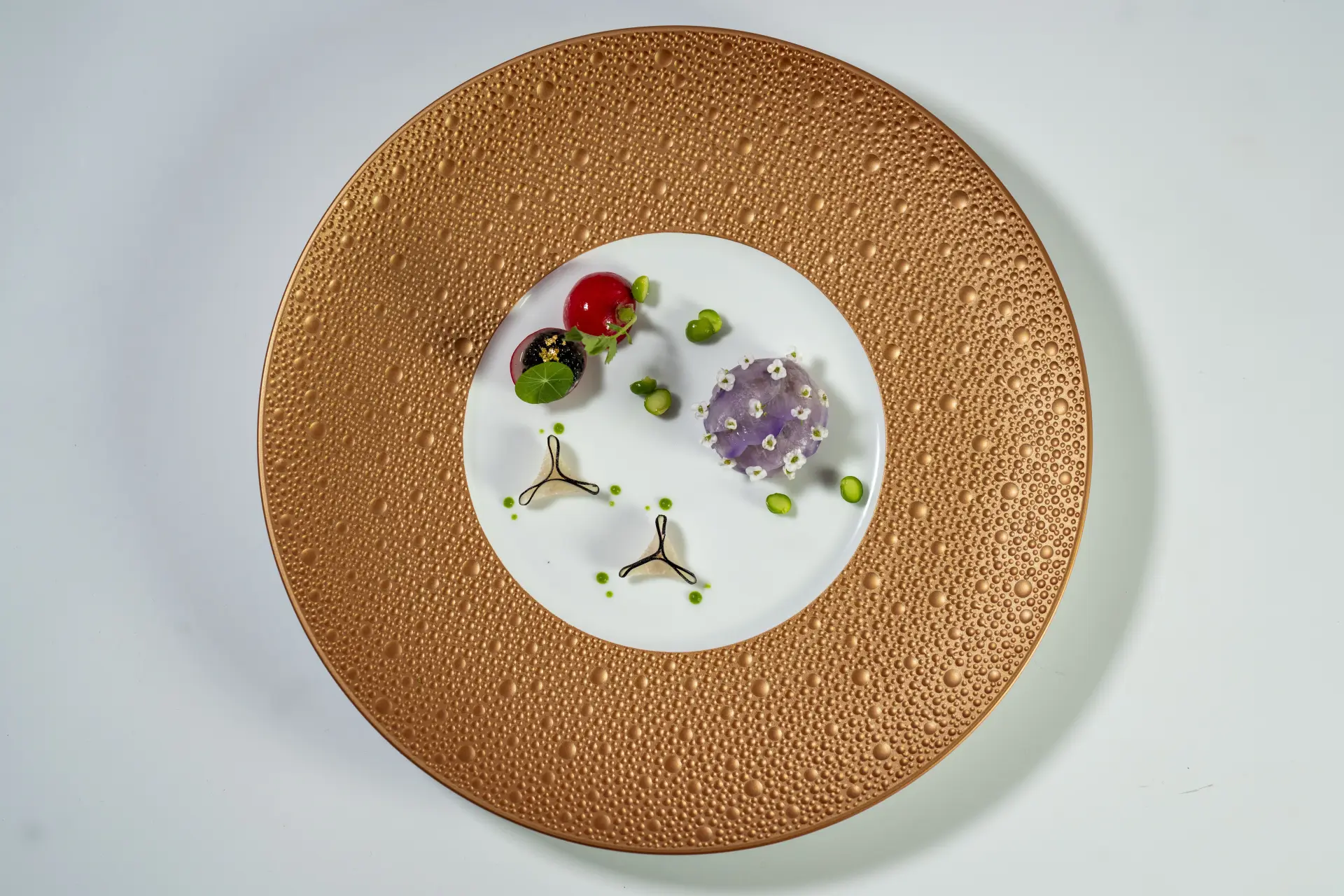
A French restaurant located inside Hotel Riverge Akebono, which stands along the Asuwa River flowing through central Fukui City.
With the concept “Make Fukui delicious and elegant,” it serves French cuisine unique to Fukui, blessed with ingredients from both the mountains and the sea.
The interior is a refined space decorated with Echizen washi paper, and in addition to the 36-seat main floor, there are also private rooms for small groups.
3 Recommended Places to Stay Near Tojinbo
A short trip from Tojinbo brings you to Awara Onsen, a peaceful hot spring town.
Within its charming streets are long-established ryokan where you can enjoy traditional hospitality and silky hot spring waters. Multi-course kaiseki meals featuring seasonal ingredients and comfortable, high-quality guest rooms are also part of the appeal.
Here are some places to stay that are perfect for a soothing night that gently melts away the fatigue of travel.
1. Dento Ryokan no Nukumori Haiya
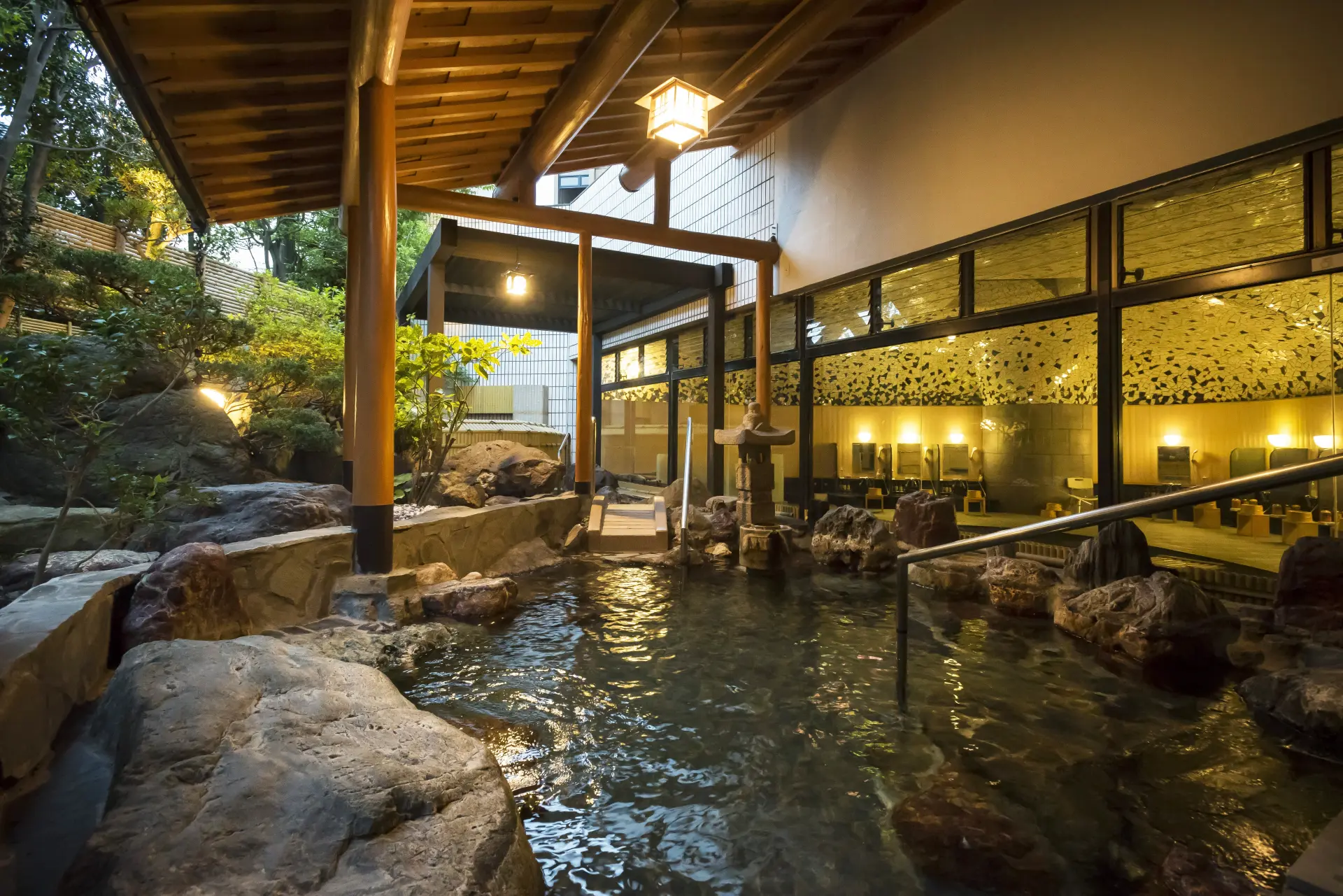
A long-established ryokan founded in 1884.
Passing through its camp headquarters-style entrance that reflects elegant Japanese architecture, you will find a Japanese-modern lobby decorated with distinctive ceilings and round pillars, and beyond that, a Japanese garden that changes with the seasons.
Each guest room has its own character, with a total of 50 rooms ranging from purely Japanese-style rooms that retain the atmosphere of the inn’s founding days, to Japanese-Western rooms suited to modern needs, to detached rooms with open-air baths and gardens. All rooms are equipped with amenities such as an electric kettle, refrigerator, and TV.
2. Seifuso
A long-established ryokan in Awara Onsen, Fukui Prefecture, originally opened in 1883 and with a history of Approx. 70 years.
It offers a wide variety of room types, including luxurious options such as “Jusan no Kaze,” a collection of 13 types of suite rooms, and “Ro-an,” limited to only two rooms and offering a hideaway-like atmosphere, as well as “Honjin,” “Gyoen,” and “Kyakuden,” where you can fully enjoy a Japanese aesthetic.
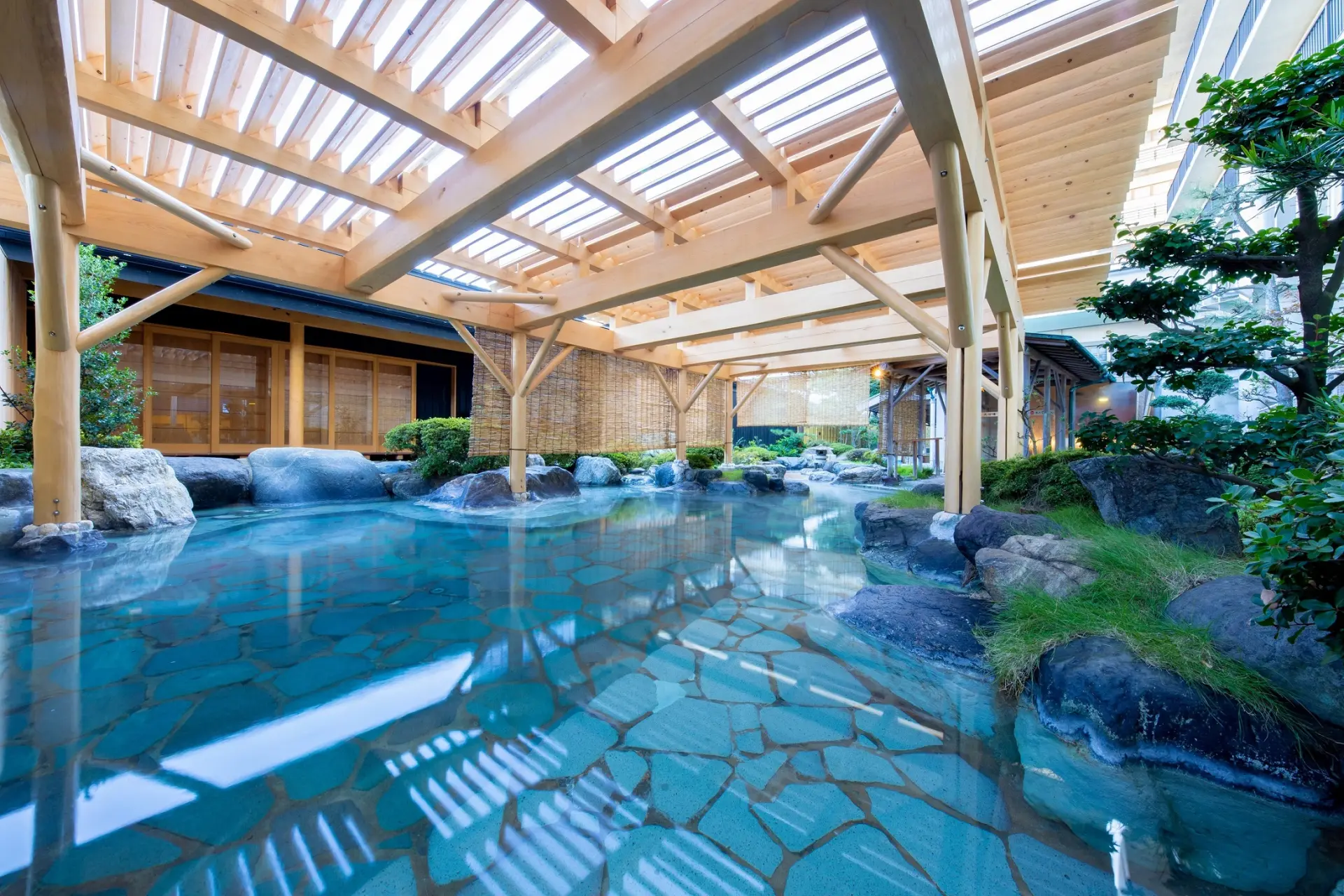
3. Grandia Hosen
A relaxing accommodation set amid peaceful rural scenery.
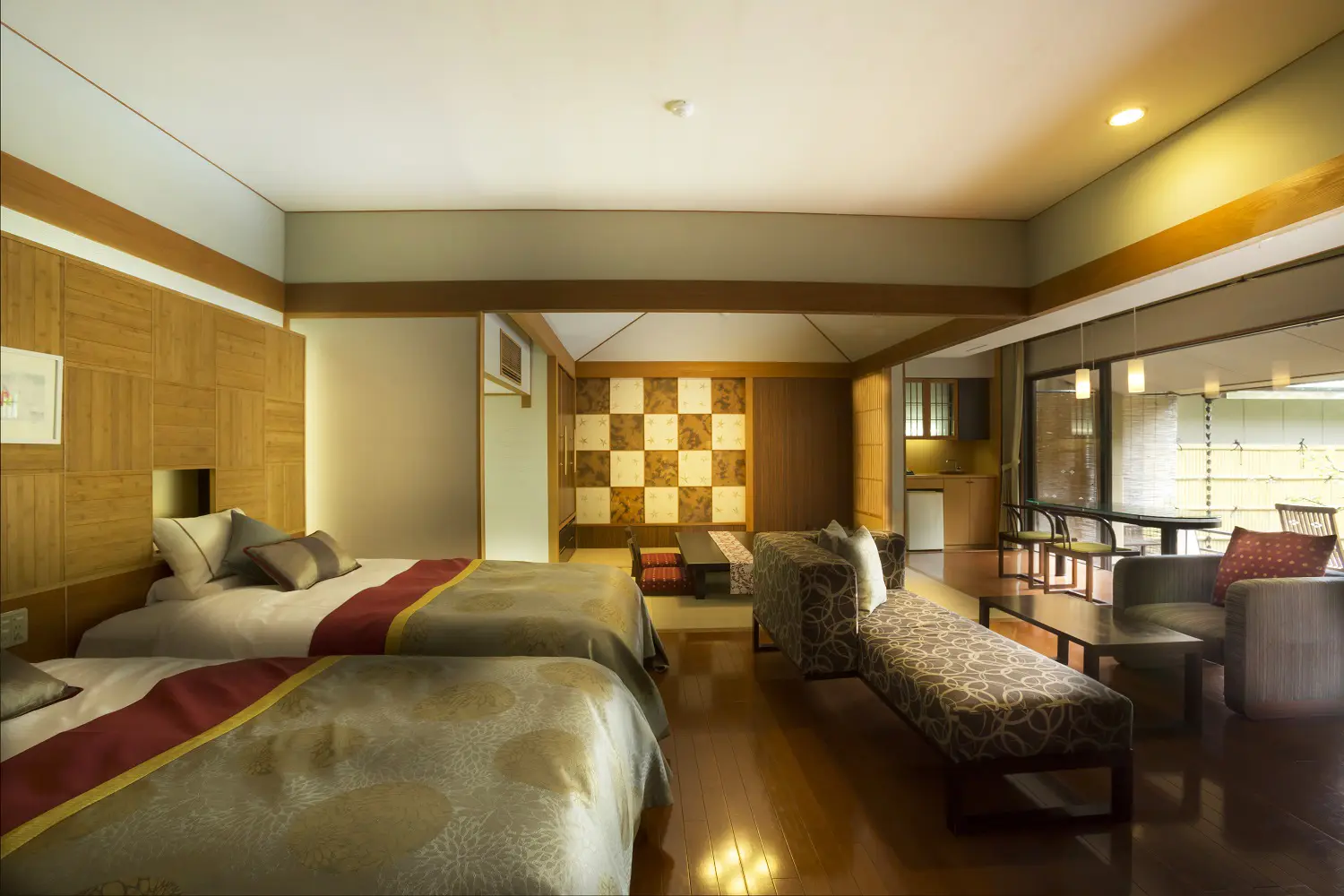
Designed with Japanese-modern interiors, it offers a selection of distinctive room types, including unique dinosaur-themed rooms, “Sakuratei SUITE” with semi-open-air baths in every room, “Yutorogitei,” detached rooms with open-air baths overlooking the garden, and the upgraded annex “Kotobukitei,” featuring open-air baths.
Reviews
Some reviews are AI-translated.
-
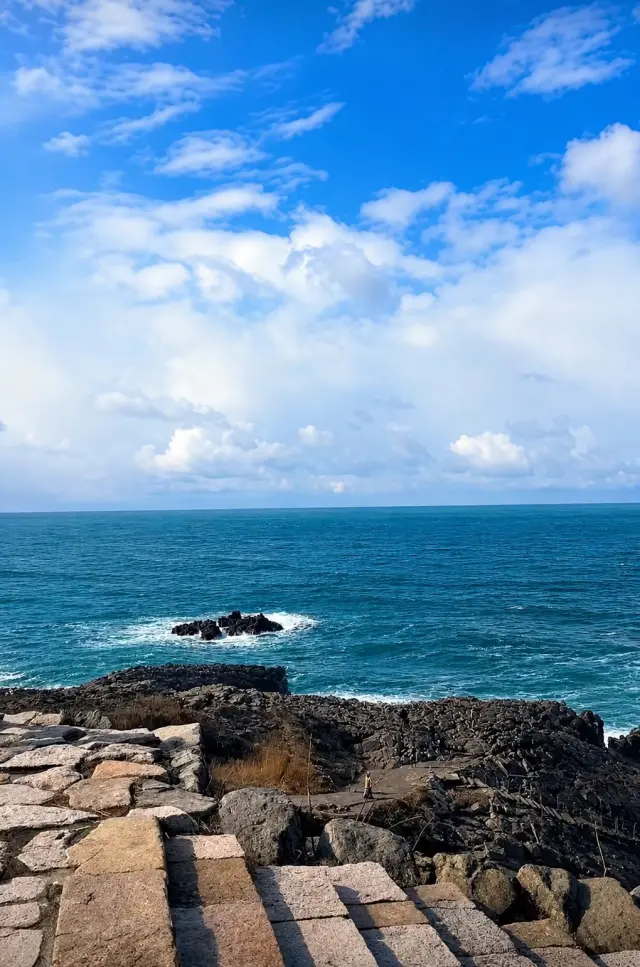
My first time at Tojinbo Cliffs, and the sheer scale of the view really took my breath away! The towering columnar-jointed rock walls stretch along the coast, with rough waves constantly crashing against the cliffs. Even from the shore, you can feel the incredible power of nature. You can enjoy beautiful views of the Sea of Japan along the walking path, or take a sightseeing boat for a close-up view of the spectacular cliffs from the water. I heard there's also a legend about a monk behind the name Tojinbo, adding an air of mystery. The sea breeze is strong and the terrain is quite rugged, so be sure to stay safe when taking photos. This breathtaking coastal scenery is truly worth experiencing in person!
-
-
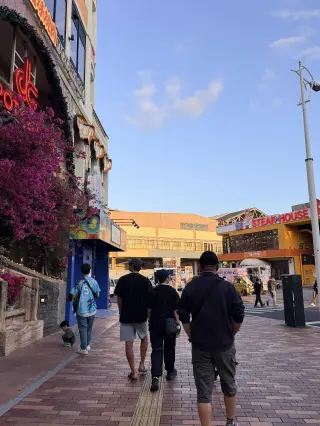
Sipping coffee, feeling the ocean breeze, and enjoying the lively shopping street.
The seafood was super fresh and sweet. -
-
I've always wanted to come here. It's famous as the dramatic cliff you always see in the final scenes of suspense dramas! The whole area is a tourist spot, so there are plenty of souvenir shops and restaurants around.
-



FAQ about Tojinbo
Q
Why did Tojinbo become famous?
It became widely known not only for the mysterious scenery created by its columnar joints, but also because it has been used as a filming location for dramas and other productions.
Q
How much is admission to Tojinbo?
There are fees for nearby facilities and sightseeing boats, but there is no admission fee to enter Tojinbo.
Summary
This article has introduced Tojinbo’s spectacular viewpoints and ways to enjoy it. What did you think?
The views you can see at Tojinbo differ depending on where and when you visit.
If you want to enjoy its appeal to the fullest, be sure to use the information in this article as your guide.
Fukui has many attractive sightseeing spots besides Tojinbo.
Please also check out the article below, which carefully selects and introduces sightseeing spots in Fukui, and make the most of your time there.