

Fukuoka Fall Foliage Guide: 16 Places to Visit in Autumn
Fukuoka is a popular destination filled with diverse attractions and shopping facilities, abundant nature, and outstanding local cuisine. There is plenty to enjoy whenever you visit, but autumn is the perfect season to admire its colorful foliage.
This article introduces Fukuoka's best fall foliage spots and when to visit them. Use it to plan a tour of these destinations and make the most of autumn in Fukuoka.
Discover a New Side of Fukuoka on a Fall Foliage Tour
In autumn, Fukuoka offers colorful foliage at shrines and temples, as well as a variety of natural landscapes painted in seasonal hues. Most visitors base their trips around Fukuoka City, where many attractions and shopping facilities are concentrated, but fall foliage spots can be found in cities throughout the prefecture.
There are also many worthwhile attractions outside Fukuoka City, so consider exploring several different areas during an autumn trip. Along the way, you may discover excellent local dishes that are not widely known.
Fukuoka City itself has plenty of foliage spots, but autumn is also an opportunity to plan a trip beyond the usual sightseeing itinerary.

Typical Fall Foliage Season in Fukuoka
Use the table below as a guide to the typical fall foliage season in Fukuoka.
These are average dates, so the actual timing may vary somewhat from year to year.
The peak period also differs by location. See the typical viewing period listed for each spot introduced below for more details.
- Fukuoka Castle Ruins
- Early November to early December
- Yusentei Park
- Late November to early December
- Momiji Hachimangu Shrine
- Late November to early December
- Homangu Kamado Shrine
- Mid- to late November
- Sennyoji Daihioin Temple
- Mid- to late November
- Nomiyama Kannonji Temple
- Late October to mid-November
- Mount Sarakura Observatory
- Mid-November to mid-December
- Katsuyama Park
- Mid-November to early December
- Shiranoe Botanical Garden
- Late November to early December
- Kawachi Wisteria Garden
- Mid-November to early December
- Mount Hiko
- Early to mid-November
- Akizuki Castle Ruins
- Late November to early December
- Eishoji Temple
- Mid- to late November
- Motoyoshizan Kiyomizudera Temple
- Late November to early December
- Taibaru Ginkgo Trees
- Mid- to late November
- Hyugami Gorge
- Late October to mid-November
2026 Fall Foliage Forecast for Fukuoka
According to a forecast for Fukuoka released by Japan Weather Association Co., Ltd. in September 2026, the foliage is expected to reach its peak around December 7.
The peak viewing period is forecast to arrive later than usual.
Reference: Japan Weather Association Co., Ltd.
16 Fall Foliage Spots to Include in Your Autumn Trip to Fukuoka
Fukuoka has many fall foliage spots offering abundant nature and traditional Japanese scenery.
Below are some of the most recommended destinations, along with their typical peak viewing periods.
Consider adding these places to your itinerary when visiting Fukuoka in autumn.
3 Recommended Fall Foliage Spots in Fukuoka City
1. Fukuoka Castle Ruins (Maizuru Park)
Fukuoka Castle Ruins, located in Maizuru Park, is a convenient place to see fall foliage in central Fukuoka. The park occupies the former site of Fukuoka Castle, whose construction began in 1601 under Nagamasa Kuroda, the first lord of the Fukuoka Domain. Its stone walls and Tamon Turret preserve traces of the castle's past.
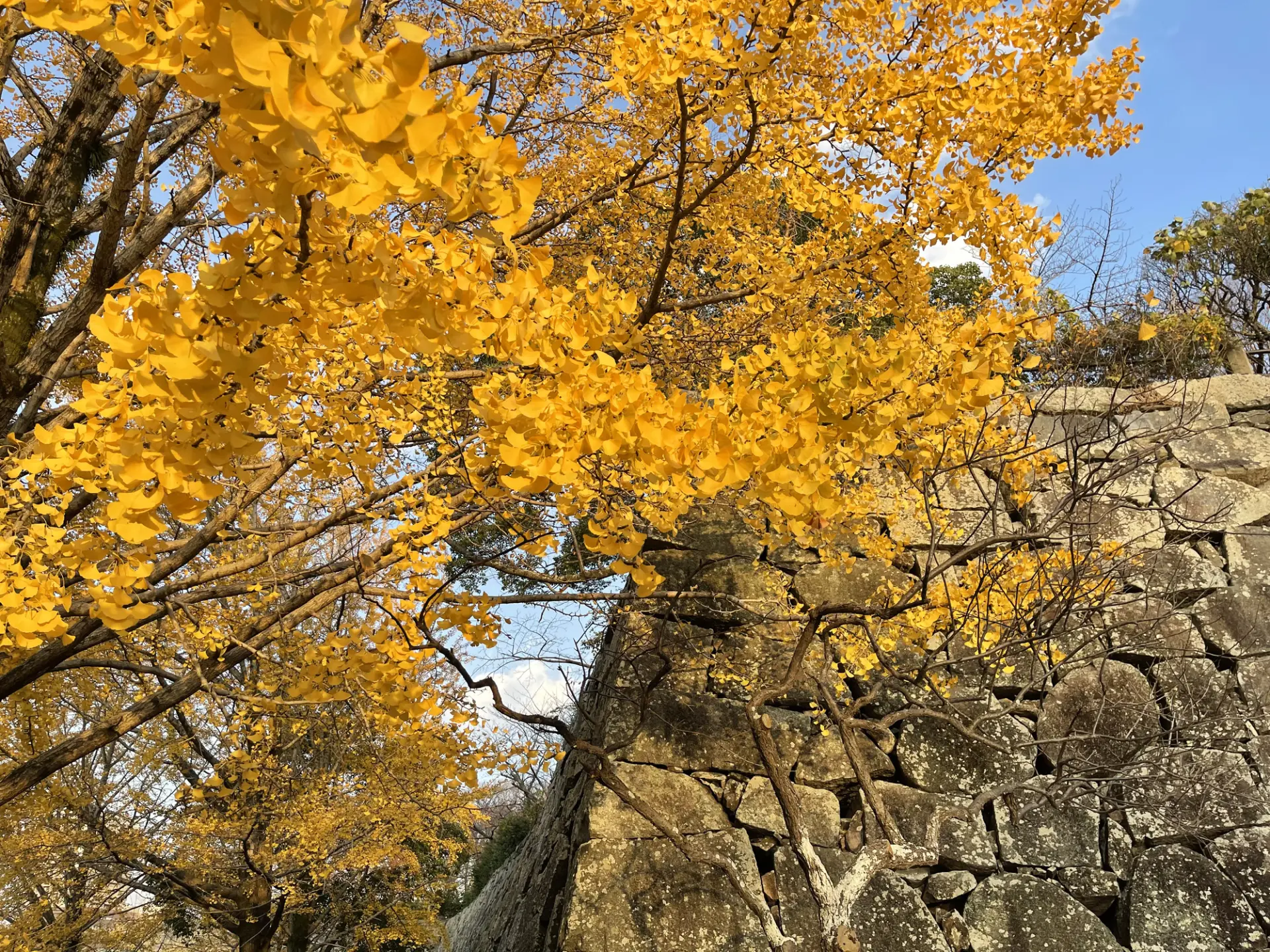
In autumn, the large ginkgo trees in the Honmaru and Ninomaru compounds turn golden, while fallen leaves form a yellow carpet at the base of the stone walls. Zelkova, cherry, and Japanese maple trees also change color, creating a varied seasonal palette.
The stone foundation of the former castle keep in the Honmaru compound is particularly recommended. From its elevated stone walls, visitors can look out over the colorful park and the Fukuoka cityscape. Admission is free, making it easy to combine a tour of the castle ruins with fall foliage viewing. Continue to neighboring Ohori Park for a half-day walk that also includes the yellow leaves around the pond.
- Typical Peak Foliage Season
- Late November to early December
- Name in Japanese
- 福岡城跡
- Postal Code
- 810-0043
- Address
-
1 Jonai, Chuo-ku, Fukuoka City, Fukuoka
Google Maps - Telephone
- 092-711-4784
- Hours
-
Walk anytime
Maizuru Park: October-March, 9:00 a.m.-6:00 p.m.; April-September, 9:00 a.m.-7:00 p.m. - Directions
- A 10-minute walk from Subway Ohorikoen(Ohori Park) Station
2. Yusentei Park
Yusentei Park was built as a villa in 1754 by Tsugutaka Kuroda, lord of Chikuzen, present-day Fukuoka, and was later developed into Fukuoka City's first traditional Japanese strolling garden centered around a pond. Its approximately 106,700-square-foot grounds feature an impressive pond surrounded by carefully planted trees and shrubs.
The Josuian tearoom in the main building and the garden viewed from the large tatami room both convey a refined, traditional atmosphere. In autumn, around 150 maple trees add color to the grounds. Sipping matcha in the tearoom while viewing the foliage is a relaxing way to appreciate the unhurried passage of time. During the evening event Momiji no Utage, projection mapping illuminates the park, transforming the garden into an atmospheric space filled with colorful leaves and light art.
- Typical Peak Foliage Season
- Late November to early December

- Name in Japanese
- 友泉亭公園
- Postal Code
- 814-0122
- Address
-
1-46 Yusentei, Jonan Ward, Fukuoka City, Fukuoka Prefecture
Google Maps - Phone
- 092-711-0415
- Closed on
- Mondays, or the following day when Monday is a public holiday; December 29 to January 1
- Hours
- 9:00 a.m.–5:00 p.m.
- Admission
- Admission: Adults JPY 200; elementary and junior high school students JPY 100; preschool children free
- Access
- 5-minute walk from the Yusentei bus stop on Nishitetsu Bus Route 12
- Official website
- Official website (Japanese)
3. Momiji Hachimangu Shrine
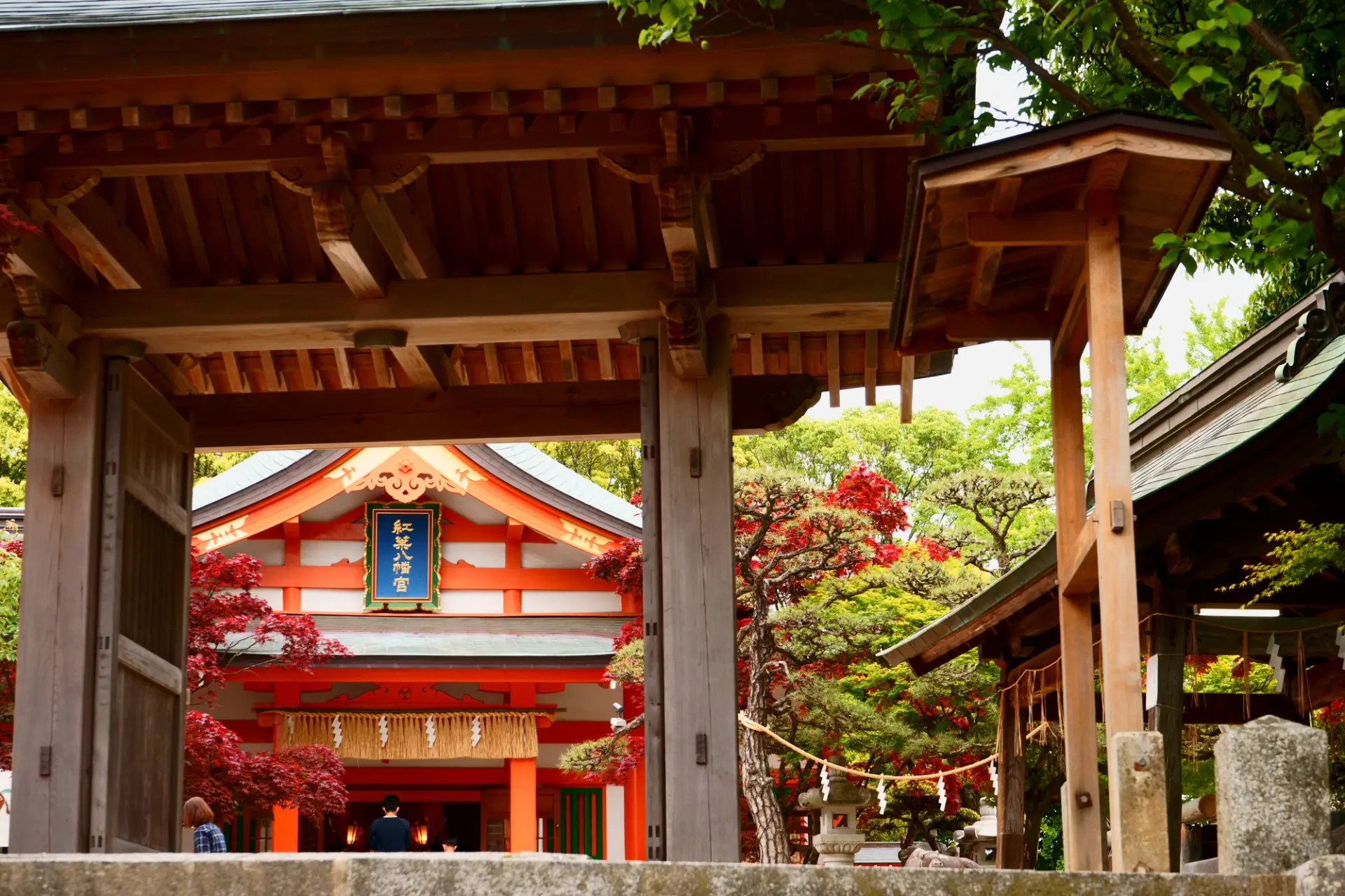
This shrine in Fukuoka City has close ties to the Kuroda family. During the Edo period, successive lords of the Fukuoka Domain worshiped it as the domain's guardian shrine. Today, it remains known as a place to pray for safe childbirth and the protection of children. Its vermilion shrine buildings stand within leafy grounds offering seasonal scenery throughout the year.
From late November to early December, the maple and ginkgo trees usually change color. Red and yellow leaves surround the vermilion shrine buildings, creating an autumnal scene along the approach. The grounds are also illuminated during the Momiji Festival, revealing the colorful leaves in a different light after dark.
- Typical Peak Foliage Season
- Late November to early December
- Name in Japanese
- 紅葉八幡宮
- Postal Code
- 814-0011
- Address
-
1-26-55 Takatori, Sawara Ward, Fukuoka City, Fukuoka Prefecture
Google Maps - Phone
- 092-821-2049
- Hours
- Prayer services accepted from 9:30 a.m.–4:30 p.m.
- Access
- 7-minute walk from Exit 4 of Fujisaki Station on the Subway Airport Line
- Official website
- Official website (Japanese)
3 Recommended Fall Foliage Spots Near Fukuoka City: Dazaifu, Itoshima, and Sasaguri
1. Homangu Kamado Shrine
Kamado Shrine in Dazaifu, Fukuoka Prefecture, has a history spanning more than 1,350 years. The shrine is dedicated to Tamayorihime-no-Mikoto and has long been worshiped for blessings in relationships and marriage. It is also associated with protection from misfortune and unfavorable directions.
It is one of Fukuoka's most prominent foliage spots, with around 300 deciduous trees, including maples and ginkgoes, adding color to the grounds. The foliage is especially concentrated around the stone steps along the approach, where vivid red, yellow, and orange leaves sway in the breeze.
The Momiji Festival is held during the peak season. After sunset, the grounds are illuminated, creating a quiet and mysterious atmosphere that contrasts with their bright daytime appearance.
- Typical Peak Foliage Season
- Mid- to late November

- Name in Japanese
- 宝満宮 竈門神社
- Postal Code
- 818-0115
- Address
-
883 Uchiyama, Dazaifu, Fukuoka
Google Maps - Telephone
- 092-922-4106
- Admission
- Free
- Closed
- Never
- Hours
-
Open all day for worship
Prayer Reception: 9:00am - 4:00pm
Conferment of Talismans and Charms: 8:30am - 6:00pm - Access
- Take the community bus “Mahoroba” from the Dazaifu Line’s Dazaifu Station of the Nishi-Nippon Railroad, then get off at the last stop, “Uchiyama.” The shrine is a short walk from there. (Approximately a 10-minute ride. 100 yen fare.)
- Official Website
- Official Website (Japanese)

2. Sennyoji Daihioin Temple
This temple stands on the slopes of 954.5-meter-high Mount Rai in Itoshima, Fukuoka Prefecture. Its wooden standing statue of the Thousand-Armed Kannon and seated statue of the monk Seiga, both created during the Kamakura period (1185–1333), are nationally designated Important Cultural Properties. The temple also houses historically valuable carvings and structures, including wooden statues of Tamonten and Jikokuten designated as cultural properties by Fukuoka Prefecture.
In autumn, colorful foliage spreads across the temple grounds. Particularly impressive is a roughly 400-year-old large maple tree, designated a Natural Monument by Fukuoka Prefecture, whose leaves turn a deep red. Around 200 maple trees also change color in Shinji Garden, a Japanese garden created during the Muromachi period (1336–1573), offering a richly traditional atmosphere.
- Typical Peak Foliage Season
- Mid- to late November

- Name in Japanese
- 千如寺大悲王院
- Postal Code
- 819-1145
- Address
-
626 Raizan, Itoshima City, Fukuoka Prefecture
Google Maps - Phone
- 092-323-3547
- Closed on
- Open daily
- Hours
- 9:00am–4:30pm
- Admission
-
Temple admission: Adults (high school students and older) 500 yen, children (junior high school students and younger) free
Mountain entry fee (November 1–30): Adults (high school students and older) 200 yen, children (junior high school students and younger) free - Access
- Approx. 20 minutes by car from JR Chikuzen-Maebaru Station
- Credit Cards
- Not accepted
- Official website
- Official website (Japanese)
3. Nomiyama Kannonji Temple
Located at the foot of Mount Hokotate, Nomiyama Kannonji is a special head temple of the Koyasan Shingon school, a status immediately below its principal head temple.
Believed to offer powerful spiritual blessings, the temple receives more than 1 million visitors annually. It also serves as a center of study and training for many Buddhist monks. Highlights include more than 3,000 Jizo statues dedicated to deceased children, Daishido Hall enshrining Kobo Daishi, and an Inari shrine dedicated to Inari Daimyojin.
The temple grounds and approach each contain more than 1,000 maples and azaleas, whose autumn colors enhance the temple's solemn atmosphere. Among its many foliage spots, the roughly 1,000 enkianthus shrubs planted behind Hyakukannondo Hall are especially striking when they turn the surrounding area vivid red.
- Typical Peak Foliage Season
- Late October to mid-November

- Name in Japanese
- 呑山観音寺
- Postal Code
- 811-2403
- Address
-
227-4 Hagino, Sasagurimachi, Kasuyagun, Fukuoka
Google Maps - Telephone
- 092-947-4423
- Business Hours
- 6:00am - 5:00pm
- Admission
- Free
- Access
- Approximately 15 minutes by car from JR Fukuhoku Yutaka Line's Sasaguri Station.
- Official Website
- Official Website (English)
4 Recommended Fall Foliage Spots in Kitakyushu
1. Katsuyama Park (Kokura Castle)
Located in Kitakyushu in northeastern Fukuoka Prefecture, this park is one of the city's best-known landmarks. Its grounds contain cultural and sightseeing facilities such as Kokura Castle, Kokura Castle Garden, and the Central Library. Recreational spaces, including the Great Lawn and Murasaki River Waterfront Plaza, also make it a popular gathering place for local residents.
Katsuyama Park is also known for its fall foliage and has many wax trees and ginkgoes, making it a worthwhile autumn destination. The mature zelkova trees around Kokura Castle's keep are particularly impressive. Seasonal illuminations are held during the foliage period, while the Kokura Castle Bamboo Lantern Festival lights 30,000 bamboo lanterns in the castle keep plaza. Do not miss the illuminated autumn scenery after dark.

- Typical Peak Foliage Season
- Mid-November to early December
- Kokura Castle Bamboo Lantern Festival
- October 23–November 3, 2026
-
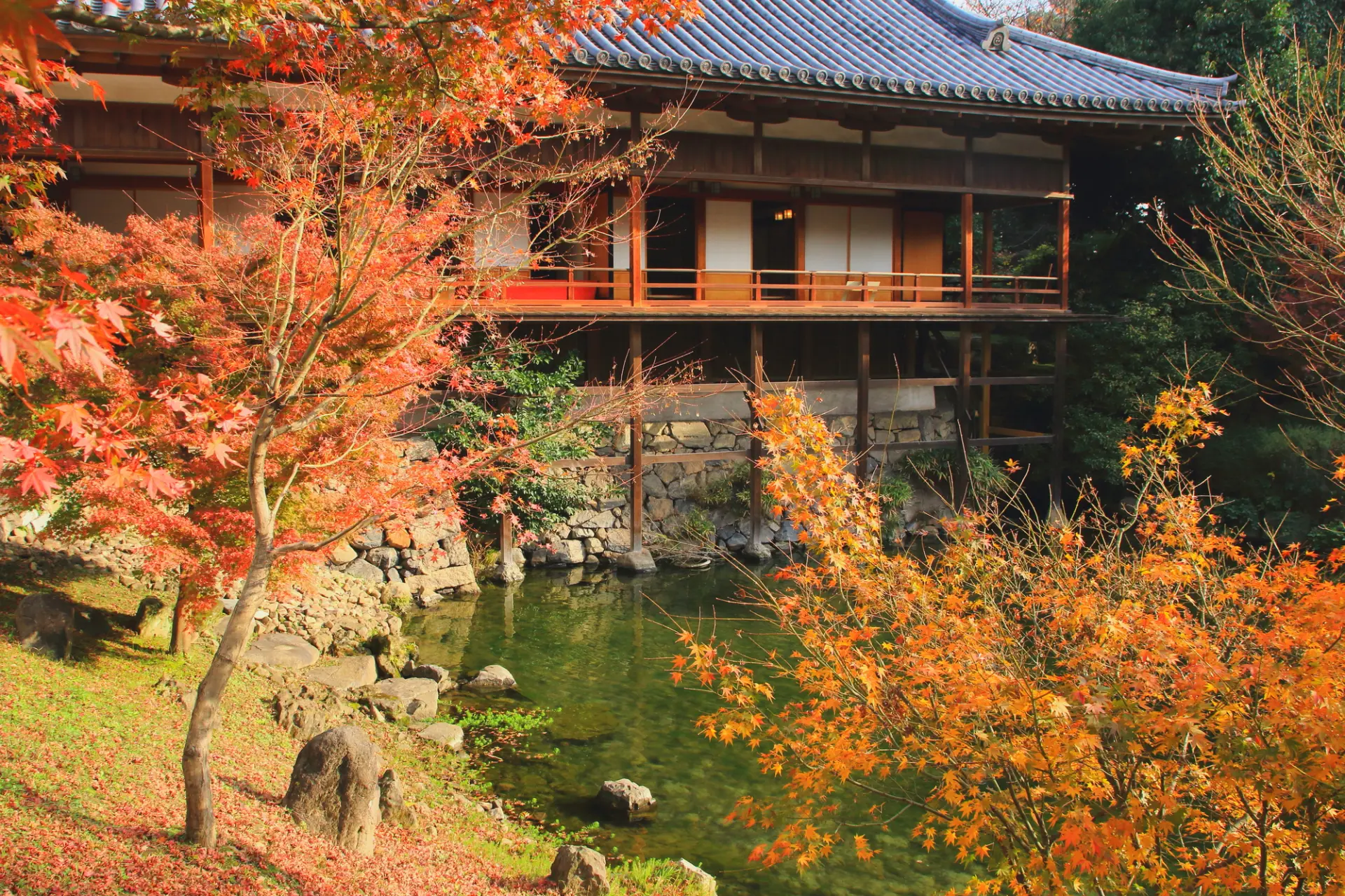
Kokura Castle Garden is especially picturesque when surrounded by fall foliage
-
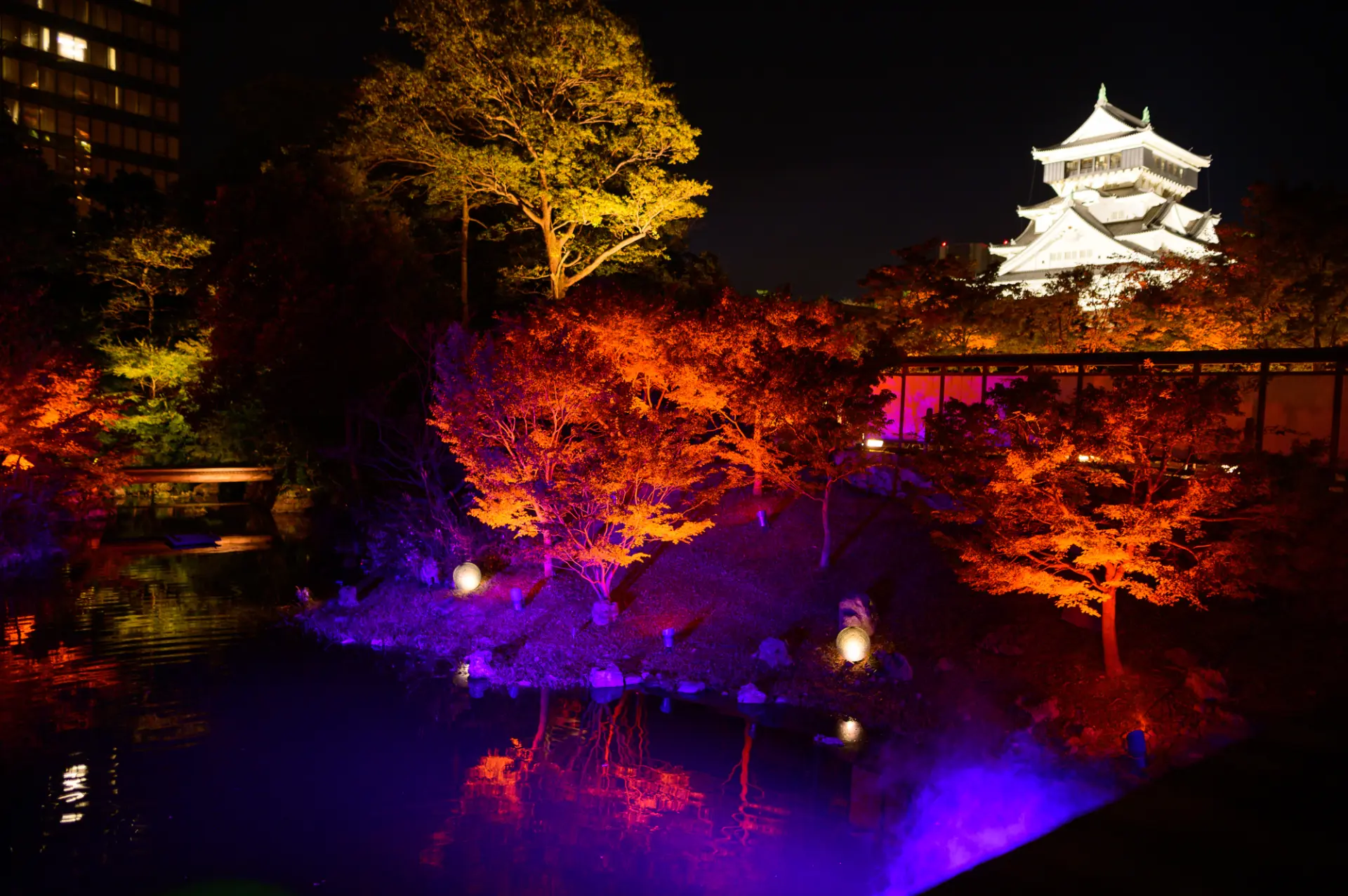
Take in the atmospheric sight of Kokura Castle and the autumn leaves illuminated at night
- Name in Japanese
- 勝山公園
- Postal Code
- 803-0813
- Address
-
3 Jonai, Kokurakita Ward, Kitakyushu, Fukuoka
Google Maps - Phone
- 093-591-6113 (Katsuyama Park Management Office)
- Closed on
- Open for strolling at any time
- Hours
- Open for strolling at any time
- Admission
- Free
- Access
- Approximately a 10-minute walk from Nishi-Kokura Station on the JR Nippo and Kagoshima Main Lines
- Official website
- Official website (Japanese)

2. Mount Sarakura Cable Car (Mount Sarakura Observatory)
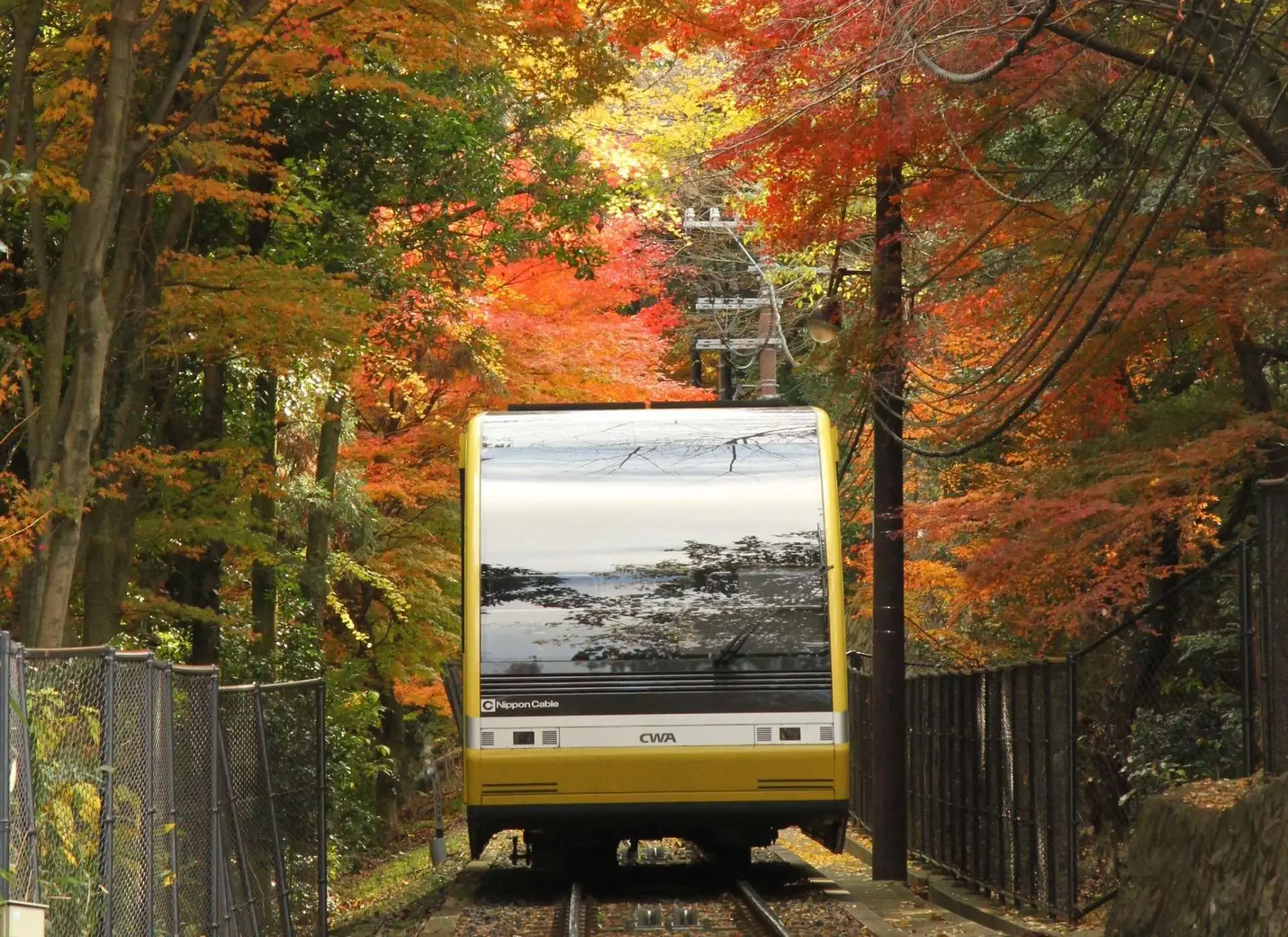
This panoramic observation deck overlooks the urban area of Kitakyushu. Visitors reach the summit observation deck, located at an elevation of 622 meters, by transferring from a cable car to a slope car. The cable car travels 1,100 meters from the base station to the upper station and climbs 440 meters, making it one of the longest routes of its kind in western Japan. Its fully glazed windows offer expansive views that change with the time of day.
In autumn, the landscape seen from the cable car turns shades of red and yellow. Looking down over the foliage through the large windows creates an impressive panorama. The changing colors of the trees can be viewed at leisure as the car gains elevation. The approximately 6-minute ride offers an aerial journey through the deepening colors of autumn.
- Typical Peak Foliage Season
- Mid-November to mid-December
3. Shiranoe Botanical Garden
With a history spanning nearly 80 years, this botanical garden covers a low hill and serves as a relaxing retreat where visitors can admire seasonal plant life throughout the year. In autumn, around 800 Japanese maple trees and other trees change color, creating a richly seasonal landscape. Since the maples grow throughout the garden, visitors can view trees covered in yellow and crimson leaves while exploring the grounds.
One recommended spot is the Sun-Dappled Path, a quiet area lined with large Japanese maple trees where visitors can fully appreciate the atmosphere of autumn. A foliage festival is held around the peak season, featuring a botanical market, concerts, tea ceremonies, and other activities amid the colorful leaves.
- Typical Peak Foliage Season
- Late November to early December

- Name in Japanese
- 北九州市立白野江植物公園
- Postal Code
- 801-0802
- Address
-
2 Shiranoe, Moji-ku, Kitakyushu City, Fukuoka
Google Maps - Telephone
- 093-341-8111
- Closed
- Tuesdays in January, July, August, December, and 12/29-1/3
- Business Hours
- 9:00am - 5:00pm (Admission allowed until 4:30pm)
- Admission
- Adults 300 yen, elementary and junior high school students 150 yen
- Access
- About 20 minutes by Nishitetsu Bus from JR Mojiko Station, get off at "Shiranoe Nichome," then about a 2-minute walk
- Credit Cards
- Accepted
- Official Website
- Official Website (Japanese)
4. Kawachi Wisteria Garden
The garden's history began in 1968, when founder Masao Higuchi and his eldest son started clearing the wooded mountain with the goal of planting wisteria and creating a garden that people would want to visit. When the Kawachi Reservoir in Kitakyushu was built, a single wisteria tree that would otherwise have been submerged was transplanted to the present garden as its founding tree. More than 50 years after the land was first cleared, the tree has grown into a large wisteria over 120 years old and continues to delight visitors each year.
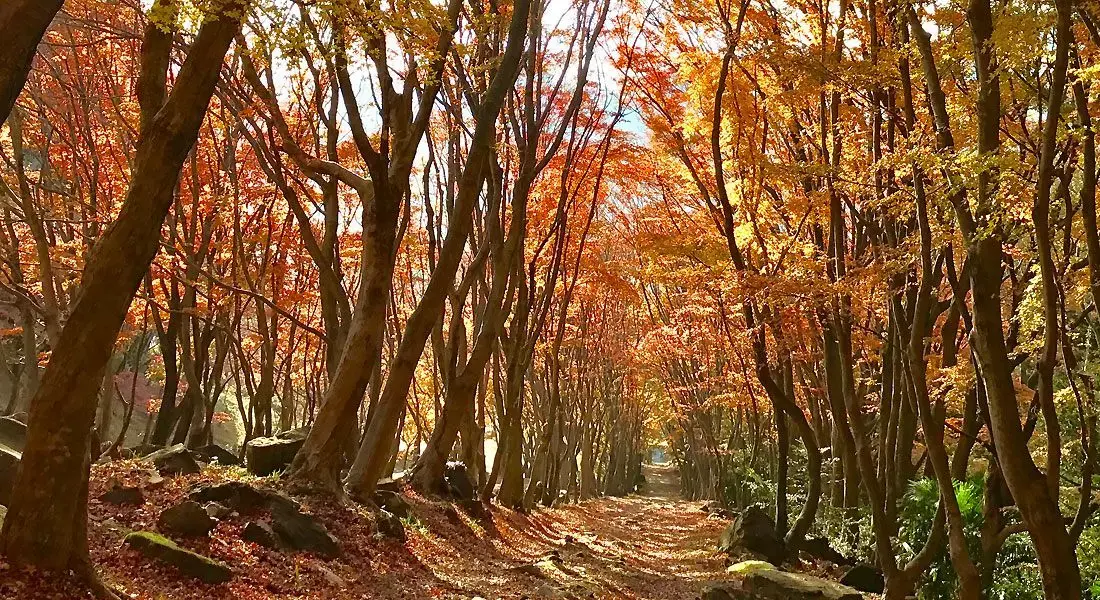
From around mid-November, 700 maple trees surrounding the wisteria trellises change color, making the garden a popular foliage destination as well.
In recent years, advance reservations and timed tickets have been required to reduce congestion, so be sure to confirm the details before visiting.
- Typical Peak Foliage Season
- Mid-November to early December
- Name in Japanese
- 河内藤園
- Postal Code
- 805-0045
- Address
-
2-2-48 Kawachi, Yahatahigashi-ku, Kitakyushu City, Fukuoka
Google Maps - Telephone
- 093-652-0334
- Open Season
- Late April to early May, mid-November to early December
- Business Hours
- 8:00am - 6:00pm (During the autumn foliage season, hours are 9:00am - 5:00pm)
- Admission Fee
- During wisteria bloom, adults (18 and over) 1,500yen, up to 2 children in high school or younger free per adult; During autumn foliage, adults 500yen, up to 2 children in high school or younger free per adult
- Access
- About a 25-minute drive from JR Yahata Station on the Kagoshima line
- Credit Cards
- Accepted
- Official Website
- Official Website (Japanese)

6 Recommended Fall Foliage Spots in Chikuho, Chikugo, and Asakura
1. Mount Hiko
Mount Hiko stands on the border between Fukuoka and Oita prefectures and consists of three peaks rising to approximately 1,200 meters. The mountain itself is regarded as sacred and has long been worshiped as a holy site. It is also known for its fall foliage, attracting many hikers during the peak season to admire sweeping autumn views from the summit.
Near the center of the mountain stands the Hoheiden of Hikosan Jingu Shrine, a shrine building designated as a national Important Cultural Property. The Hikosan Slope Car runs alongside the approach within the shrine grounds, offering a 7-minute aerial ride with views of the colorful leaves. Since the foliage begins near the summit and reaches the foothills later, visitors can enjoy the season here over an extended period.
- Typical Peak Foliage Season
- Early to mid-November

- Name in Japanese
- 英彦山
- Postal Code
- 824-0721
- Address
-
Hikosan, Soeda-machi, Tagawa-gun, Fukuoka
Google Maps - Phone
- 0947-82-1236 (Soeda Town Commerce, Tourism and Promotion Division)
- Access
- From JR Soeda Station, transfer to the town-operated bus at Hikosan Station on the Hita Hikosan Line BRT, get off at Jingushita, and walk a short distance
- Official website
- Official website (Japanese)
2. Akizuki Castle Ruins
Located near the center of Fukuoka Prefecture, Akizuki has a long history as a castle town. Development proceeded slowly after the samurai class declined during the Meiji era and the town was left away from major transportation routes. As a result, much of its historical townscape remains today.
Japan has 130 nationally designated Important Preservation Districts for Groups of Traditional Buildings. Only four are castle towns, and the entire town of Akizuki is included in the designation. Its atmospheric streets have earned it the nickname “Little Kyoto of Chikuzen.”
Akizuki is also known for its fall foliage. Colorful leaves surround Akizuki Castle Ruins, a designated Fukuoka Prefectural Historic Site, as well as the Honmon Gate, also known as the Kuromon Gate, and Nagayamon Gate, both designated Important Cultural Properties by the prefecture. Food stalls line Sugi-no-Baba Street leading to the castle ruins, allowing visitors to enjoy tea and sweets while admiring the autumn scenery of the old castle town.
- Typical Peak Foliage Season
- Late November to early December

- Name in Japanese
- 秋月城跡
- Postal Code
- 838-0011
- Address
-
Akizukinotori, Asakura City, Fukuoka
Google Maps - Telephone
- 0946-24-6758 (Asakura Tourism Association)
- Hours
- Walk anytime
- Directions
- From Nishitetsu Amagi Station, ride Amagi Tourist Bus and get off at Hakubutsukan-mae, and walk 10 min.
3. Eishoji Temple
This Soto Zen temple stands at the foot of the Mino mountain range in southwestern Fukuoka Prefecture and enshrines Yakushi Ruriko Nyorai as its principal image. Regarded as one of Japan's three great Yakushi temples, it is said to have been founded in 680 to pray for the recovery of the emperor and empress from illness. Also known as the Maple Temple, its grounds are planted with maples throughout, and their autumn colors bring seasonal beauty to the historic site. The area around the main hall is particularly striking, with golden ginkgo leaves contrasting against deep crimson maples.
The observation deck offers panoramic views of the wax tree avenue at Yanagisaka Sone and the Chikugo Plain. The Mino mountain range also has established hiking trails, where visitors can take in autumn views accompanied by the sound of birdsong.
- Typical Peak Foliage Season
- Mid- to late November

- Name in Japanese
- 柳坂山 永勝寺
- Postal Code
- 839-0827
- Address
-
2155 Toyoda, Yamamoto-machi, Kurume City, Fukuoka Prefecture
Google Maps - Phone
- 0942-44-1386
- Access
- Take Nishitetsu Bus Route 25 from Nishitetsu Kurume Station, get off at Yanagisaka, and walk approximately 15 minutes
- Official website
- Official website (Japanese)
4. Motoyoshizan Kiyomizudera Temple
Motoyoshizan Kiyomizudera Temple stands amid abundant nature deep within Mount Kiyomizu in northeastern Miyama City, Fukuoka Prefecture. The temple was founded by Saicho, an early Heian-period (794–1185) Buddhist monk who established the Tendai school, and has remained a place of worship for more than 1,200 years.
Its many highlights include Sentai Butsudo Hall, which houses 1,000 Buddhist statues, as well as a three-story pagoda and temple gate designated as Important Cultural Properties by the prefecture. The Honbo Garden, said to have been designed by the monk and painter Sesshu, is particularly noteworthy. Visitors can appreciate traditional Japanese scenery that changes with the seasons in quiet surroundings.
The temple is especially picturesque during the foliage season, when Japanese maples turn crimson. Once the yellow leaves fall, they cover the ground like a golden carpet, creating another memorable autumn scene.
- Typical Peak Foliage Season
- Late November to early December

- Name in Japanese
- 本吉山 清水寺
- Postal Code
- 835-0003
- Address
-
1119-1 Motoyoshi, Setaka-machi, Miyama City, Fukuoka Prefecture
Google Maps - Phone
- 0944-62-2001 (Main Temple Office)
- Closed on
- Honbo Garden: Mondays, except public holidays and during November
- Hours
- Honbo Garden: 9:00 a.m.–5:00 p.m.
- Admission
- Honbo Garden preservation fee: Adults JPY 500
- Access
- Approximately 10 minutes by car from JR Setaka Station or approximately 4 minutes by car from the Miyama-Yanagawa Interchange on the Kyushu Expressway
- Official website
- Official website (Japanese)
5. Taibaru Ginkgo Trees
This is one of Fukuoka Prefecture's most popular places to see golden ginkgo leaves. More than 100 ginkgo trees stand across an expansive former vineyard, turning a vivid yellow and attracting many visitors during the foliage season.
As the season progresses, fallen leaves spread across the ground like a golden carpet, complementing the rows of trees above. The sea of gold filling the entire field of view is an impressive sight.
However, this privately owned ginkgo grove is only open to the public for approximately one week.
- Typical Peak Foliage Season
- Mid- to late November
- Limited-Time Opening
- November 17–23, 2026, 9:00 a.m.–5:00 p.m.

- Name in Japanese
- 太原(たいばる)のイチョウの紅葉
- Postal Code
- 834-0112
- Address
-
1029 Hisaizumi, Hirokawamachi, Yamegun, Fukuoka
Google Maps - Telephone
- 0943-32-5555(HirokawaTown Tourist Association)
- Closed
- Open every day during the viewing period (Closed every Tuesday outside the viewing period).
- Business Hours
- during the viewing period 9:00am - 5:00pm
- Admission
- Free
- Access
- About 35 minutes by Nishitetsu Bus "Yame Sales Office" from JR Kurume Station, then about 20 minutes on foot from "Ikeda" bus stop.
- Official Website
- Official Website (Japanese)
6. Hyugami Gorge
This approximately 6-kilometer gorge lies along the upper reaches of the Yabe River in Yame City, Fukuoka Prefecture. Its scenery resembles a traditional landscape painting and is said to have been so captivating that even the gods of Hyuga came to admire it. Various enormous and unusually shaped rock formations can be found throughout the gorge, including the 10-meter-high Shomen-iwa cliff, Kehogi-iwa Rock, and rocks named after the Seven Gods of Good Fortune.
A large heart-shaped rock is popular as a spiritual spot associated with success in love. The scenery created by the mysterious rock formations and colorful foliage continues over a considerable distance, showcasing the scale and beauty of the natural landscape. There are also many other foliage spots around Hyugami Gorge.
- Typical Peak Foliage Season
- Late October to mid-November

- Name in Japanese
- 日向神峡
- Postal Code
- 834-1401
- Address
-
Hinokami, Kitayabe, Yabe Village, Yame, Fukuoka
Google Maps - Phone
- 0943-47-3111 (Regional Promotion Section, Yame City Yabe Branch Office)
- Closed on
- Open for walking year-round
- Hours
- Open for walking anytime
- Admission
- Free to explore
- Access
- Approx. 60 minutes by car from Yame IC on the Kyushu Expressway
Frequently Asked Questions About Fall Foliage Spots in Fukuoka
Q
When is the best time to see fall foliage in Fukuoka?
Across the prefecture, the main season runs from mid-November to early December. The foliage begins earlier at Nomiyama Kannonji Temple and Hyugami Gorge, from late October, and lasts later at Akizuki Castle Ruins, Kiyomizudera Temple, and Shiranoe Botanical Garden, through early December.
Q
Which foliage spots can be reached from Hakata or Tenjin by train, subway, or bus?
Maizuru Park is approximately a 10-minute walk from Akasaka Station, Momiji Hachimangu Shrine is approximately a 7-minute walk from Fujisaki Station, and Yusentei Park can be reached by Nishitetsu Bus. Kamado Shrine in Dazaifu can also be reached in approximately 1 hour using Nishitetsu trains and a bus.
Q
Which foliage spots offer evening illuminations?
Options include Kamado Shrine, Momiji Hachimangu Shrine, Yusentei Park, and Mount Sarakura.
A|Which foliage spot can be visited together with Dazaifu Tenmangu Shrine?
Homangu Kamado Shrine. It is approximately 10 minutes by bus from Dazaifu Station or approximately 30 minutes on foot from Dazaifu Tenmangu Shrine.
Q
Which places are recommended when staying in Kitakyushu or Kokura?
Options include Kokura Castle and Katsuyama Park, Mount Sarakura, and Shiranoe Botanical Garden.
Q
Which fall foliage spots are free to enter?
Free options include Maizuru Park, Momiji Hachimangu Shrine, Kamado Shrine, Nomiyama Kannonji Temple, Akizuki Castle Ruins, the Taibaru Ginkgo Trees, Hyugami Gorge, and Katsuyama Park. Admission fees apply to Kokura Castle and Kokura Castle Garden.
Summary
This article has introduced some of Fukuoka's best fall foliage spots and their typical peak viewing periods.
Fukuoka is rich in natural scenery, history, and culture, and the colorful leaves that surround them create scenes resembling works of art.
Explore foliage spots throughout the prefecture while discovering new sides of Fukuoka and sampling its local cuisine.
To make the most of Fukuoka's many attractions, use the article below to help plan your itinerary.