
![[7 Popular Tourist Spots in Dazaifu] A Town Where the History and Culture of Ancient Japan Live On](https://static.gltjp.com/glt/data/article/21000/20582/20240111_144951_fe2d29bf_w1920.webp)
[7 Popular Tourist Spots in Dazaifu] A Town Where the History and Culture of Ancient Japan Live On
Dazaifu is home to many shrines, temples, and historic sites, with Dazaifu Tenmangu Shrine leading the way.
The entire city is steeped in history and always lively with visitors from Japan and abroad.
In this article, we’ll introduce popular sightseeing spots in Dazaifu, along with the best seasons to visit, so use it as a guide as you explore the area.
Through Dazaifu’s charming streets and attractions, you’re sure to discover Japan’s history and culture.
What is Dazaifu Like?
Dazaifu City is a sightseeing city located in central Fukuoka, and in ancient times it was home to Dazaifu, the largest government office overseeing the Kyushu region.
Dazaifu was a regional administrative institution established in the 7th century, responsible not only for military affairs and diplomacy but also for domestic administration in Kyushu.
Because of this, it was called the “Distant Imperial Court” (an office that carried out government affairs under the orders of the imperial court), and it was also such a major city that it was praised as “the greatest city under heaven.”
It is especially known for having active exchange with overseas countries from ancient times through the medieval period.
Even now, many tourists visit every day, but strangely, it never feels noisy.
Instead, the city has a quiet and elegant atmosphere.
Dazaifu is rich in shrines and temples where you can feel a sense of history, and Dazaifu Tenmangu Shrine in particular is one of Fukuoka’s most popular sightseeing spots.

What is the best season to visit Dazaifu?
If you are visiting Dazaifu, spring is the best season.
That’s because in spring, you can see beautiful plum and cherry blossoms decorating shrines and temples, especially within the grounds of Dazaifu Tenmangu Shrine.
In the shrine and temple grounds, brightly colored in white and pink, you will be able to strongly feel the essence of Japan.
If you can adjust your travel schedule, be sure to visit in spring.
What to wear in Dazaifu by season
- Spring (March - May): Light jacket or cardigan
- Summer (June - August): Light clothing, short sleeves
- Fall (September - November): Light jacket, coat
- Winter (December - February): Coat, thick sweater or jacket
How do you get to Dazaifu?
You can take a direct bus from the bus terminal at Hakata Station and reach Dazaifu in about 45 minutes.
Although it requires several transfers, it is also possible to get there by train.
From Tokyo Station, take the shinkansen to Hakata Station, then head to Dazaifu by the same direct bus. The trip takes about 6 hours.
From Osaka Station, first take a train to Shin-Osaka Station, then board the shinkansen to Hakata Station. Including the direct bus ride, the trip takes about 4 hours.
Main ways to get around Dazaifu
If you plan to explore Dazaifu, the main means of transportation will be the bus.
There are a fair number of buses, but be sure to keep an eye on departure times.
If you want to visit sightseeing spots more flexibly without worrying about time, renting a car is also recommended.
It costs a bit more, but it will make for a comfortable and stress-free trip.
7 Popular Tourist Spots in Dazaifu Where You Can Experience History and Culture
Dazaifu is home to many shrines and temples, as well as Japan’s fourth national museum.
Through valuable cultural assets, you can experience Japanese culture while deeply feeling the area’s historical atmosphere.
Because Dazaifu was also a place with active exchange with overseas countries, it offers many perspectives and layers of history that are well worth seeing.
If you visit Dazaifu, we recommend centering your trip around these popular sightseeing spots where you can feel its history.
1. Dazaifu Tenmangu Shrine
The head shrine of 12,000 Tenmangu shrines across Japan, dedicated to Tenjin-sama (Sugawara no Michizane).
Sugawara no Michizane was unjustly exiled from Kyoto to Dazaifu due to political maneuvering, and he died in this land.
The main hall was built over his grave site.
The current main hall was rebuilt in 1591 and is designated as an Important Cultural Property of Japan.


2. Kyushu National Museum
Dazaifu, where the museum is located, was an important hub in ancient Japanese history and a place that oversaw the Kyushu region while maintaining active exchange with the world.
Against this background, the museum opened in 2005 as Japan’s fourth national museum, with the unique concept of “understanding the formation of Japanese culture from the perspective of Asian history.”
Its main feature is the large-scale Cultural Exchange Exhibition Room on the 4th floor, which introduces the history of cultural exchange between Japan and countries in Asia and Europe.

3. Homan-gu Kamado Shrine
Kamado Shrine has a history of more than 1,350 years. It enshrines Tamayorihime-no-Mikoto and has long been worshipped as a deity of matchmaking.
It has also been worshipped as a deity for protection from misfortune and evil.
Located at the foot of Mount Homan, it is also known for beautiful seasonal scenery, with cherry blossoms in spring and autumn leaves in fall.
Today, it is said to be a sacred place connected to Demon Slayer, and many fans visit for pilgrimage-like trips.

4. Sakamoto Hachimangu Shrine
This shrine was founded in the early 16th century and enshrines Emperor Ojin. It is revered as the local guardian deity and tutelary shrine of the Sakamoto district.
This shrine became known throughout Japan for its connection to the Japanese era name Reiwa.
Nearby is the site of the Dazaifu Government Office established in the Nara period, and the area around the shrine is said to have once been the residence of the Manyoshu poet Otomo no Tabito, who was assigned to the government office ruins.

5. Dazaifu Amusement Park
An amusement park located next to Dazaifu Tenmangu Shrine, the head shrine of all Tenmangu shrines in Japan and well known as a shrine dedicated to the god of learning.
It opened in October 1957, and one of its charms is its retro atmosphere.
The park offers around 20 attractions that even small children can enjoy.
The children’s train and Lucky Merry-Go-Round can be enjoyed from age 0 when accompanied by a guardian.
Thrill rides such as mini bikes and sky cycles are also available from age 2 with a guardian, making it an ideal spot for a child’s first amusement park visit.

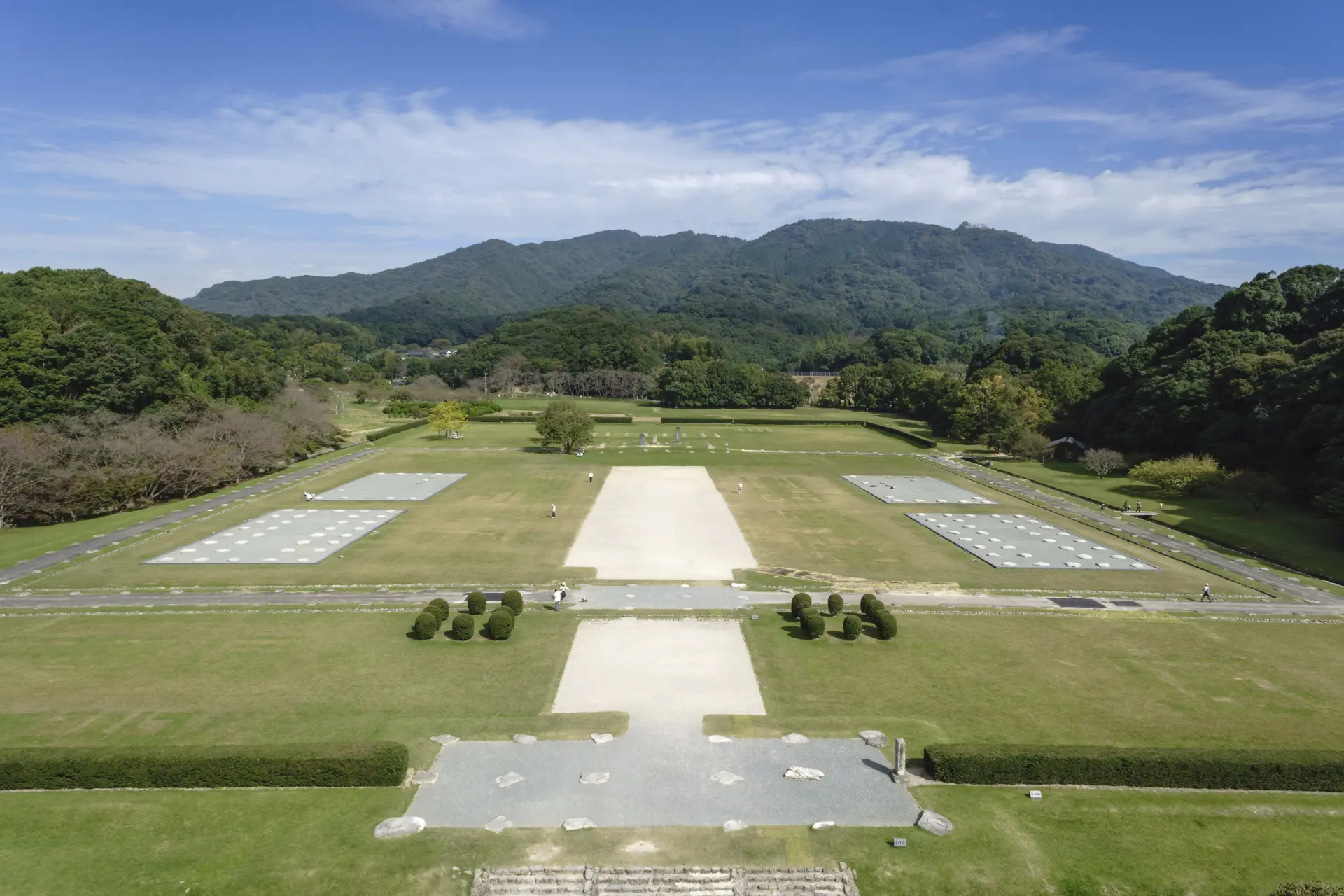
6. Dazaifu Government Office Ruins
The center of ancient administration that oversaw all of Kyushu from the latter half of the 7th century to the 12th century.
During the Ritsuryo state period, Dazaifu, known as the “Distant Imperial Court,” was established here, with government offices that handled diplomacy, military affairs, and politics standing in grand form.
What once stood here was a dignified complex of official buildings with a main hall, middle gate, and corridors.
Today, its form remains quietly in the foundation stones scattered across the lawn, telling visitors of the splendor of those times.
7. Shioji Forest Road / Iwaya Castle Ruins
Shioji Forest Road runs north to south across Mount Shioji, connecting the town in front of Dazaifu Tenmangu Shrine to Umi Town.
It is part of the Kyushu Nature Trail, and because there are also many cultural properties and heritage sites along the road, including the Ono Castle Ruins designated as a National Special Historic Site and the Thirty-Three Stone Buddhas built in the Edo period, you can enjoy a walk full of both natural and historical appeal.
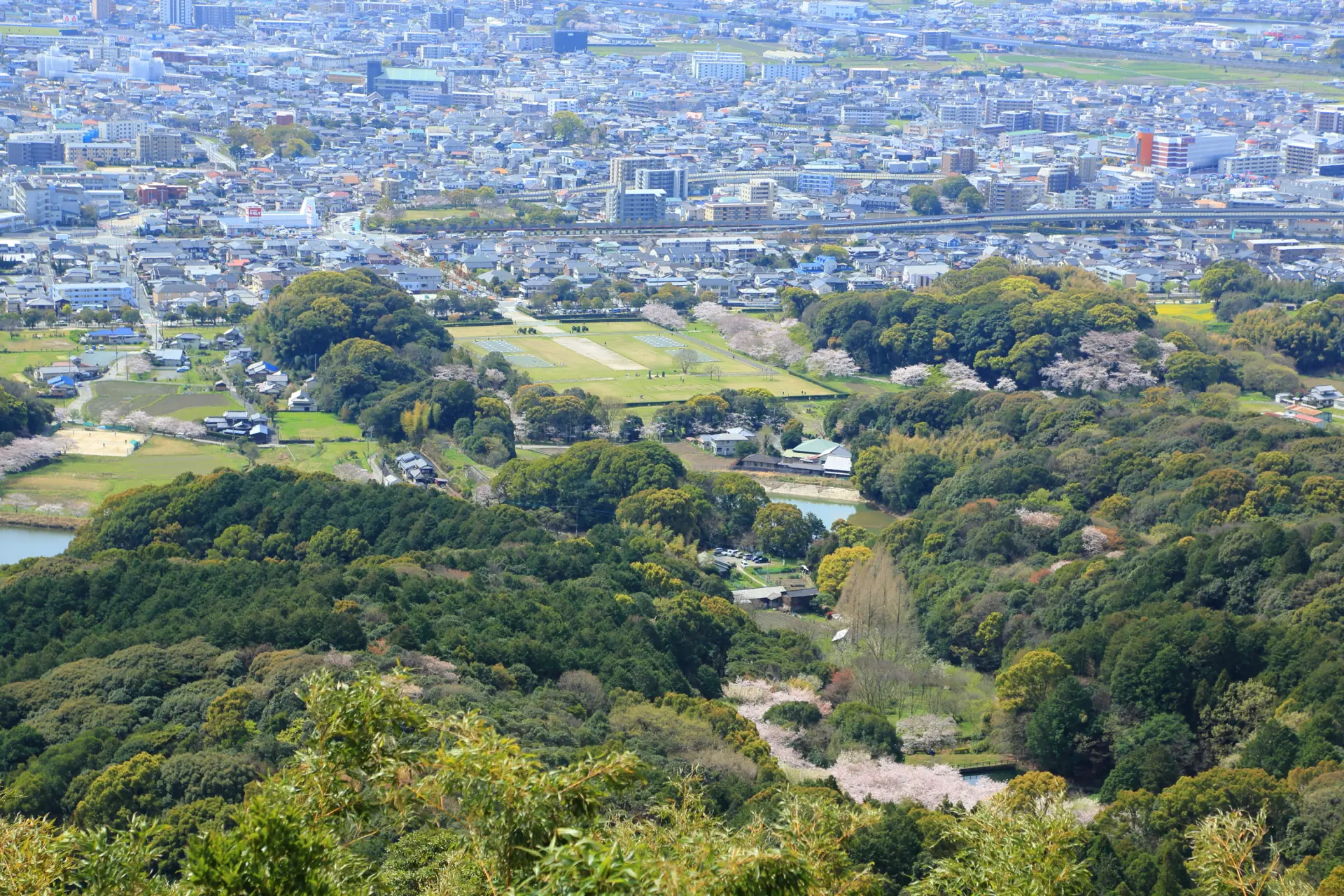
The Iwaya Castle Ruins, a mountain castle built halfway up Mount Shioji and the site of fierce battles between the Shimazu and Otomo clans during the Sengoku period, are also an excellent viewpoint overlooking the townscape of Dazaifu.
Enjoy Outstanding Local Food! 4 Popular Restaurants in Dazaifu
From here, we’ll introduce a carefully selected list of popular restaurants in Dazaifu.
The area around Dazaifu Tenmangu Shrine has long been bustling with worshippers and visitors.
As a result, the approach to the shrine is lined with shops where you can enjoy Dazaifu’s specialty foods as well as buy souvenirs.
If you want to enjoy gourmet food in Dazaifu, be sure to visit the approach to Dazaifu Tenmangu Shrine and the surrounding area.
1. Starbucks Coffee Dazaifu Tenmangu Omotesando Store
Starbucks Coffee Dazaifu Tenmangu Omotesando Store opened in 2011 right by the torii gate facing the main approach to Dazaifu Tenmangu Shrine.
It is one of Starbucks’ original-design “Regional Landmark Stores,” developed in symbolic locations across Japan to share the appeal of local culture with the world.

2. Ichiran Dazaifu Sando Store
The Dazaifu Sando branch of the famous tonkotsu ramen chain Ichiran, known for its “flavor concentration booths,” where you can enjoy your ramen without worrying about the people around you.
Among Ichiran’s many locations in Japan and overseas as a specialty natural tonkotsu ramen restaurant, this branch has become especially popular for its “Pass Ramen,” created to pray for exam success.

3. Fukuya Dazaifu Store
The Dazaifu branch of Fukuya, the original shop behind karashi mentaiko, which is now one of Fukuoka’s signature specialties.
In 1948, founder Toshio Kawahara came up with karashi mentaiko, and it first went on sale the following year at a shop in Nakasu.
At Fukuya Dazaifu Store on the approach to Dazaifu Tenmangu Shrine, you can of course buy Fukuya’s mentaiko and also enjoy mentaiko chazuke in the eat-in space inside the shop.

4. Chikushian Main Store
A popular local burger shop located just off the approach to Dazaifu Tenmangu Shrine.
It originally opened as a karaage specialty shop, and now sells four kinds of burgers in addition to fried chicken.
Its signature item is the “Dazaifu Burger,” a local burger filled with house-made jidori fried chicken.
Topped with juicy fried chicken and tartar sauce, plus vegetables, it is a hearty and satisfying dish.

FAQ about Dazaifu Sightseeing
Q
Where should I go if I want to enjoy Dazaifu in a short amount of time?
Dazaifu Tenmangu Shrine is recommended, where you can also enjoy local specialty foods along the approach.
Q
What are Dazaifu’s local specialty foods?
Umegae mochi, tonkotsu ramen, and mentaiko are among the local specialties.
Summary
In this article, we introduced popular sightseeing spots in Dazaifu, along with the best seasons to visit.
Dazaifu is home to many shrines and temples where you can feel Japan’s history and culture, and the historical atmosphere that fills the entire town is part of its charm.
There is also plenty of excellent local food, so be sure to enjoy the dining as well.
If you visit the spots introduced here, you will be able to fully enjoy seasonal nature, Japanese culture, and food.
The article below carefully introduces recommended sightseeing spots in Fukuoka.
If you plan to visit places in Fukuoka beyond Dazaifu, use it as a reference when planning your trip.