

Find the Fastest and Cheapest Way to Travel! A Guide to Getting from Kyoto to Tokyo
Kyoto, once Japan’s capital and still rich in its historic character, and Tokyo, the nation’s current capital, are both world-famous and popular travel destinations.
Many travelers are probably interested in visiting both cities.
Although they are far apart, you can get between them in as little as a little over 2 hours, making it possible to visit both on a single trip.
This article introduces five ways to get from Kyoto to Tokyo for travelers considering a Tokyo visit alongside sightseeing in Kyoto.
To make them easy to compare, we have also summarized the travel time, cost, and advantages of each option.
Read to the end, and you will likely find the best way to travel based on your needs.
Distance and Travel Time from Kyoto to Tokyo
Kyoto and Tokyo are both located on Honshu, and each has prospered as a central city of the Kansai and Kanto regions, respectively.
The straight-line distance between the two cities is Approx. 365 km, while the actual travel distance is Approx. 450 km to Approx. 500 km, so travel time varies depending on the mode of transportation and route used.
As a general guide, the Shinkansen takes Approx. 2 hours 10 minutes, a flight takes Approx. 3 to 4 hours (including access to the airport), and an express bus or rental car takes Approx. 5 to 9 hours.
There are plenty of ways to travel, so choose the option that best suits your budget and situation.
-

The ancient capital of Kyoto, where history and tradition still run deep
-

Tokyo, the current capital, where trends, cutting-edge technology, and crowds of people come together
Recommended Ways to Travel from Kyoto to Tokyo
For those who want the answer first, here is the conclusion up front.
The fastest way to get from Kyoto to Tokyo is the Shinkansen, while the cheapest is the express bus.
Both are convenient because they take you there directly with no transfers required.
As shown in the table below, there is a major difference in travel time and fare, so the best option depends on whether you want to prioritize time or transportation cost.
For reference, the Shinkansen is by far the most popular choice.
| Mode of Transportation | Access Method | Travel Time | One-way Fare |
|---|---|---|---|
| Fastest option | JR Shinkansen Nozomi (JR Kyoto Station–JR Tokyo Station) | Approx. 2 hours 10 minutes | 13,320 yen (non-reserved seat) |
| Cheapest option | Express or overnight bus (Kyoto Station–major areas in Tokyo) | Approx. 7 to 9 hours | Approx. 2,000 to Approx. 10,000 yen |
*Information as of May 2026
Transportation Options Available for Getting from Kyoto to Tokyo
Besides the Shinkansen, the main way to travel from Kyoto to Tokyo, there are also many other options, including local trains, flights, express buses, and rental cars.
Below, we introduce the advantages and disadvantages of each option along with Approx. travel time and cost.
Compare them and find the best way to travel for you.
1. The “Shinkansen,” the Fastest Way to Reach Tokyo
Within Kyoto Prefecture, the Shinkansen stops only at JR Kyoto Station, and you can reach Tokyo Station or Shinagawa Station directly without transfers.
The Shinkansen is the most common of all transportation options and is highly recommended overall for its speed, convenience, and comfort.
Travelers will also appreciate that large luggage and suitcases can be placed in a designated space. *Depending on the size, large luggage may require advance reservation.
Its drawbacks are that fares are higher than other options, and it gets crowded during peak periods such as Golden Week and the year-end/New Year holidays (tickets may sell out early, and it can be hard to get a seat in non-reserved cars). *During peak periods, Nozomi trains may operate with all seats reserved.
The travel times and fares are summarized below.
As you can see, non-reserved seat fares are the same across all train types, but travel time differs depending on the service, so be careful not to board the wrong one.
The fastest option, the Nozomi, runs very frequently at about one train every 10 minutes, so even if you think you might miss one, there is no need to panic, just wait for the next train.
| Train Type | Non-reserved Seat Fare | Reserved Seat Fare | Green Car Fare | Travel Time |
|---|---|---|---|---|
| Nozomi | 13,320 yen | 14,170 yen | 19,040 yen |
Tokyo Station: Approx. 2 hours 10 minutes Shinagawa Station: Approx. 2 hours 5 minutes |
| Hikari | 13,320 yen | 13,850 yen | 18,720 yen |
Tokyo Station: Approx. 2 hours 45 minutes Shinagawa Station: Approx. 2 hours 35 minutes |
| Kodama | 13,320 yen | 13,850 yen | 18,720 yen |
Tokyo Station: Approx. 3 hours 40 minutes Shinagawa Station: Approx. 3 hours 30 minutes |
*Information as of May 2026

2. “Local Trains,” Great for a Relaxed Journey with Stopovers Along the Way
By transferring from the JR Biwako Line to the JR Tokaido Main Line from JR Kyoto Station, you can reach JR Tokyo Station using only local trains.
The advantages of local trains are that they cost less than the Shinkansen and allow for a more flexible schedule.
For example, if you stop along the way at sightseeing destinations such as Nagoya Station or Hamamatsu Station, you can enjoy visiting attractions and trying local food.
However, even the fastest route takes at least 8 hours 30 minutes, and since there is a high chance you may not get a seat, the physical burden is very heavy.
There are also many transfers, so international visitors unfamiliar with Japan may find it even more stressful.
Also, trains do not run late at night, so if you want to reach Tokyo the same day, leaving in the morning is essential.
With that in mind, this is a recommended option for travelers who want to keep transportation costs down while enjoying the journey itself as part of the trip.
- Example Route
-
JR Biwako Line and JR Tokaido Main Line, with at least 5 transfers required
*Example stations: JR Kyoto Station → Maibara Station → Ogaki Station → Toyohashi Station → Hamamatsu Station → Atami Station → Tokyo Station - Travel Time
- Approx. 8 hours 30 minutes to Approx. 9 hours
- One-way Fare
- 8,360 yen (when using a transportation IC card)
*Information as of May 2026

3. “Flights,” with Few Advantages
Tokyo has Haneda Airport, but Kyoto has no airport.
That means if you travel by plane, you will need to go via either Kansai International Airport or Osaka International Airport (Itami Airport) in Osaka.
Please refer to the routes below for details.
While the flights themselves are short, once you include check-in (30 minutes in advance) and travel to the airport, it still takes a fair amount of time.
Also, while low-cost carriers (LCCs) may offer cheaper tickets, flights are generally expensive, so this is not usually the option people choose.
Unless you have a special reason, such as a sudden need to travel, plans in Osaka, shopping at the airport, or simply enjoying the view from the plane, the Shinkansen is recommended.
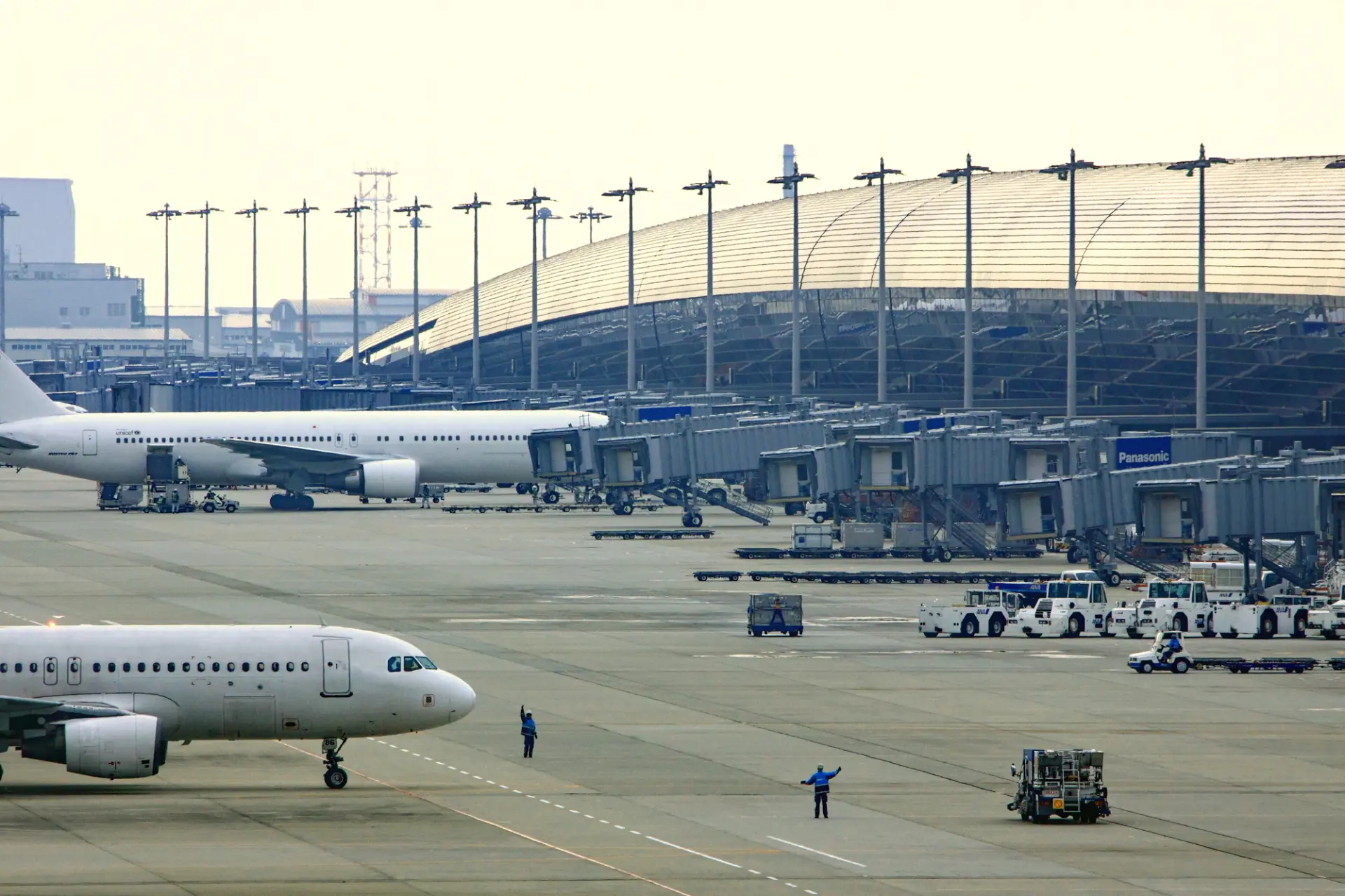
Access to Tokyo Station via Kansai International Airport
- Route
-
1. From “JR Kyoto Station,” take the JR Limited Express Haruka bound for Kansai Airport, get off at “Kansai Airport Station,” and walk to Kansai International Airport
2. From “Kansai International Airport,” board a flight such as ANA, JAL, or an LCC, arrive at “Haneda Airport,” then head to the monorail station Haneda Airport Terminal 1 Station (*ANA mainly uses Terminal 2)
3. From “Haneda Airport Terminal 1 Station,” take the Tokyo Monorail Airport Rapid bound for Hamamatsucho, get off at “Hamamatsucho Station,” and walk to the JR lines
4. From “JR Hamamatsucho Station,” take the JR Keihin-Tohoku/Negishi Line Rapid, get off at “Tokyo Station,” and arrive - Travel Time
- Approx. 3 to 4 hours
- Approx. Cost (fare + airfare)
- Around 14,000 to 40,000 yen
*Airfares vary depending on when you purchase and the season
Access to Haneda Airport via Osaka International Airport
- Route
-
1. From “JR Kyoto Station Hachijo Exit Bus Stop G3,” take the Hankyu Kanko Bus bound for Itami Airport, get off at “Itami Airport,” and walk to Osaka International Airport
2. From “Osaka International Airport,” board a flight such as JAL, ANA, or an LCC, arrive at “Haneda Airport,” and you’re there - Travel Time
- Approx. 2 hours 10 minutes
- Approx. Cost (bus ticket + airfare)
- Around 11,400 to 42,000 yen
*Airfares vary depending on when you purchase and the season
4. The “Express Bus,” the Cheapest Way to Travel
Express buses also provide direct access from Kyoto to Tokyo with no transfers.
There are direct services to major areas such as Tokyo Station, Shinjuku Station, and Ikebukuro Station, so depending on your destination, an express bus may get you closer than the Shinkansen.
The typical cost is also low at around 2,000 to 10,000 yen, and large luggage can be stored in the trunk compartment under the bus, which should give travelers peace of mind.
Also, if you use an overnight bus that arrives early in the morning, transportation and accommodation are combined, helping you save on hotel costs and secure more sightseeing time.
However, the travel time is long at Approx. 7 to 9 hours, and because you must wear a seatbelt and remain seated in the same position the whole time, it can be physically demanding.
Timing for meals and restroom breaks is also limited, which is another drawback because it reduces flexibility.
In short, this is a recommended option for travelers who want to keep costs down and have the stamina and patience for long travel times.
Fares vary by season, and onboard facilities differ by bus company, so be sure to compare options before choosing.

5. “Rental Cars,” for a More Flexible Trip
Renting a car to travel from Kyoto to Tokyo is also one option.
Unlike public transportation, you do not need to worry about schedules and can travel in a private space.
The biggest advantage is the much greater freedom to stop at sightseeing spots and service areas along the way.
Another plus is that if you travel with family or friends, the cost per person can be lower.
However, long-distance driving on expressways in an unfamiliar place can be tiring, and international visitors may also be confused by differences in traffic rules compared with their home country.
Also, renting a car requires advance preparation, and if you are not used to it, the process can still be troublesome even in Japan. This option suits larger groups of travelers who are confident about driving and want more freedom in getting around.
If you choose to travel by rental car, it is recommended to have at least 2 drivers, take proper breaks, and use a one-way rental service (which lets you rent and return the car in different locations).
- Example Route
- Meishin Expressway → Shin-Meishin Expressway → Isewangan Expressway → Shin-Tomei Expressway → Tomei Expressway → Tokyo (Approx. 450 km)
- Travel Time
- Approx. 4 hours 30 minutes to 5 hours (excluding break time, may vary depending on traffic conditions)
- Expressway Toll
- Approx. 10,000 yen and up
- Rental Car Rate for Kei Cars and Passenger Cars
- 12 hours: 7,000 yen and up *Varies depending on the vehicle, rental car company, and season
- Other Costs
- One-way rental fee (Approx. 45,000 to 55,000 yen) + gas + optional fees (insurance, ETC, etc.)

FAQ about Access from Kyoto to Tokyo
Q
How much is the Shinkansen fare from Kyoto to Tokyo?
On the Nozomi, the fare from Kyoto Station to either Tokyo Station or Shinagawa Station is 13,320 yen for a non-reserved seat (8,360 yen base fare + 4,960 yen limited express surcharge). *Fare as of January 2026.
Q
How long does it take to get from Kyoto to Tokyo?
On the Nozomi Shinkansen, it takes Approx. 2 hours 15 minutes from Kyoto Station to Tokyo Station, and Approx. 2 hours 5 minutes to Shinagawa Station.
Summary
We have introduced transportation access from Kyoto to Tokyo, along with the details, advantages, and disadvantages of each option.
The Shinkansen is the most standard choice, but depending on your目的, other options may also be strong candidates, so it is best to decide based on your priorities.
If you have enough time and budget, visit both cities and make the most of your trip to Japan.
It should be fascinating to experience firsthand the contrast in atmosphere, culture, and cityscapes between the two.
Be sure to also read this article, which comprehensively covers Tokyo’s classic sightseeing spots, gourmet food, shopping, and other attractions.