

Essential Guide for First-Time Riders: The Complete Yamanote Line Guide Around Central Tokyo
The Yamanote Line is a JR East loop line that circles central Tokyo, covering famous downtown districts and sightseeing areas including Shibuya, Shinjuku, and Ikebukuro.
This article introduces the basics of the Yamanote Line, focusing on its major stations and the attractions around them.
It also brings together key information for first-time riders, including tips for using the line and value tickets, so be sure to read to the end.
The Yamanote Line Connecting Tokyo’s Major Stations
The Yamanote Line is a JR East loop line that circles central Tokyo.
With a total length of Approx. 34.5 km, it connects all 30 stations in about one hour, with Tokyo Station, Shinjuku Station, and Shibuya Station among its major stops.
Because it is a loop line, destinations are shown not by terminal station names but by one of two directions: outer loop or inner loop.
The line color is uguisu green (light yellow-green), and another of its defining features is its frequent service, with trains running Approx. every 3 to 5 minutes.
As an essential transportation network for commuting, school, and sightseeing, it is one of Japan’s most representative rail lines and is used by large numbers of people every day.
By the way, although it is generally called a loop line, the official Yamanote Line section actually runs 20.6 km from Shinagawa Station, the starting point, to Tabata Station, the endpoint.
The section from Tabata Station to Tokyo Station is part of the Tohoku Main Line, and the section from Tokyo Station to Shinagawa Station is part of the Tokaido Main Line, so in reality the full loop combines these three lines.

5 Things You Should Know Before Using the Yamanote Line
Here are five key points to know when using the Yamanote Line.
Because it has features that differ from other lines, first-time riders in particular should read this before boarding.
If you keep these in mind, you’ll feel more confident getting around and enjoy a smoother sightseeing experience.
1. Check Whether It’s the Outer Loop or Inner Loop Before Boarding
As mentioned above, the Yamanote Line has two directions: the inner loop and the outer loop.
For example, if you start from Shinagawa Station, the outer loop goes toward Ebisu and Shinjuku, while the inner loop goes toward Tokyo and Akihabara.
Either train will eventually reach your destination station, but if you board the longer route, it can take up to Approx. 1 hour, so be careful.
This is shown on station departure boards and route maps, and the table below summarizes some easy ways to tell them apart.
| What to check | Inner loop | Outer loop |
|---|---|---|
| Travel direction | Counterclockwise | Clockwise |
| Voice used in platform announcements | Female voice | Male voice |
| Platform screen door markings | One thick line | Two thin lines |
2. Be Careful Not to Miss Your Stop Because Stations Are Close Together
Stations on the Yamanote Line are close together, so be careful not to miss your stop.
The shortest distance between stations is between Nippori Station and Nishi-Nippori Station, at only about 500 meters, and the ride takes Approx. 1 minute.
The sections between Okachimachi Station and Ueno Station, and between Kanda Station and Akihabara Station, are also so close that they take under 10 minutes on foot.
Even the longest section, between Osaki Station and Shinagawa Station, is only Approx. 2 km, so a one-stop ride usually takes about 3 to 5 minutes.
If your destination is only a few stops away, it is better to assume you will arrive sooner than expected.
So listen carefully to the onboard announcements, and when your stop is approaching, avoid chatting or using your smartphone. Also, waiting near the door when you board will help you get off smoothly, even at a station you are visiting for the first time.

3. If You Miss Your Stop, Take a Train in the Opposite Direction Back
If you miss your destination station or fall asleep and ride past it, get off once at the next station.
If you stay on and go all the way around the loop to return to your destination, it will take about one hour, so it is faster to switch to a train going in the opposite direction.
Just in case, remember that the response when you miss your stop is no different from other rail lines.

4. Avoid Peak Hours
The Yamanote Line is relatively less crowded than some other lines, but it becomes extremely crowded during the commuting and school rush from 7:00 am to 8:00 am.
In particular, crowding peaks when the outer loop runs between Ueno Station and Okachimachi Station from 7:43 am to 8:43 am, and when the inner loop runs between Shin-Okubo Station and Shinjuku Station from 7:41 am to 8:41 am, with congestion rates exceeding 125%.
It also tends to be crowded from 6:00 pm to 7:00 pm on weekdays, during the 11:00 pm hour on Fridays, and around lunchtime on weekends and holidays.
Not only the trains but also station concourses fill with people, so even Japanese passengers sometimes find it quite stressful if they are not used to it.
However, even shifting your timing a little can make getting around much more comfortable.
For that reason, tourists are advised to plan their schedules to avoid peak hours whenever possible.

5. Since It Only Makes Local Stops, Consider Other Lines Too
The Yamanote Line only runs local trains, so every train stops at your destination station.
However, depending on your departure station and destination, taking a line other than the Yamanote Line may often get you there faster.
Let’s use traveling from Shinagawa Station to Shimbashi Station as an example.
On the Yamanote Line, the train stops at three stations along the way and takes Approx. 9 minutes, while on the Tokaido Main Line, you can get there in Approx. 4 minutes with no intermediate stops.
Because there are fewer stops, there is also less chance of boarding the wrong train or missing your stop, so it is especially recommended when you are in a hurry.
Besides this example, stations served by many lines are especially likely to have faster alternatives, so check a route search app in advance.

Access to the Yamanote Line from Haneda Airport and Narita Airport
Here is an introduction to the nearest Yamanote Line stations and how to reach them from Haneda Airport and Narita Airport, Japan’s main air gateways.
In both cases, the relevant stations are surprisingly close, with direct access in about 30 minutes, and the surrounding areas are also well equipped with facilities.
Because of their convenience, they are also recommended as bases for sightseeing.
The Yamanote Line Station with the Shortest Access Time from Haneda Airport
Haneda Airport is directly connected to two lines: Keikyu Railway and the Tokyo Monorail Line.
Keikyu Railway’s Shinagawa Station and the Tokyo Monorail Line’s Hamamatsucho Station are both also served by the Yamanote Line, so you can reach stations on the Yamanote Line without changing trains.
Travel times are almost the same either way, so it is best to choose the station that is more convenient for your hotel or sightseeing destination.
The routes from each station are summarized below. Note that the one-way fare to Shinagawa Station is about 200 yen cheaper.
Route from Haneda Airport to Shinagawa Station
- Route
-
1. Walk from “Haneda Airport” to “Haneda Airport Terminal 1, 2 Station” (4 to 5 minutes)
2. Board the Keikyu Airport Line Express at “Haneda Airport Terminal 1, 2 Station,” get off at “Shinagawa Station,” and arrive
※ Depending on the time of day, you may need to transfer at “Keikyu Kamata Station”
※ If you are arriving at or departing from Terminal 3, the nearest station is “Haneda Airport Terminal 3 Station” - Hours
- Approx. 30 minutes
Route from Haneda Airport to Hamamatsucho Station
- Route
-
1. Walk from “Haneda Airport” to “Haneda Airport Terminal 2 Station” (4 to 5 minutes)
2. Board the Tokyo Monorail Airport Rapid bound for Hamamatsucho at “Haneda Airport Terminal 2 Station,” get off at “Hamamatsucho Station,” and arrive
※ Airport Rapid services are limited on weekdays from 5:00 am to 8:00 am and from 5:00 pm to 12:00 am (use a local train instead)
※ If you are arriving at or departing from Terminal 1 or 3, the nearest stations are “Haneda Airport Terminal 1 Station” and “Haneda Airport Terminal 3 Station” - Hours
- Approx. 25 minutes
The Yamanote Line Station with the Shortest Access Time from Narita Airport
The Yamanote Line station that can be reached in the shortest time from Narita Airport is Nippori Station.
As shown below, if you take the paid Skyliner train, you can arrive directly in as little as 36 minutes.
It also stops at Keisei Ueno Station, making it convenient for getting to Ueno Station as well.
Onboard facilities and service frequency are excellent, but the downside is the relatively high one-way fare of 2,567 yen.
If you want to keep costs down, it is better to head for Tokyo Station or Shinjuku Station via the Keisei Main Line.
- Route
-
1. Walk from “Narita Airport” to “Airport Terminal 2 Station” (7 to 10 minutes)
2. Board the Keisei Skyliner Limited Express bound for Keisei Ueno at “Airport Terminal 2 Station,” get off at “Nippori Station,” and arrive
※ If you are arriving at or departing from Terminal 1, the nearest station is “Narita Airport Station” - Hours
- Approx. 45 minutes
11 Yamanote Line Stations with Plenty of Tourist Attractions
Here are 11 stations that provide access to areas packed with popular sightseeing spots.
All of them are iconic Tokyo stations and neighborhoods, each with its own unique character and appeal.
Because the distances between these areas are relatively short, try hopping on the Yamanote Line and sightseeing in several different areas in a single day.
You’ll not only experience the unique charm of Tokyo, but also enjoy comparing the different atmospheres of each area.
1. Shinjuku Station
Shinjuku, located near the center of Tokyo’s 23 wards, is a district with a wide range of attractions including food, shopping, and entertainment.
At the heart of it is the massive terminal station, Shinjuku Station.
The area around the east exit is packed with commercial facilities and nightlife districts, creating a lively cityscape, while the west exit opens onto an office district lined with soaring skyscrapers.
There are many distinctive spots, such as Kabukicho with its dazzling neon lights, the Tokyo Metropolitan Government Building with observation decks offering spectacular views of high-rise buildings, and Shinjuku Gyoen, an urban oasis where you can enjoy abundant greenery.
The retro dining alley Omoide Yokocho, which preserves the atmosphere of the Showa era, is also popular, and one of Shinjuku’s great appeals is that it offers different ways to enjoy the area depending on what you are looking for.
Please also check out the article below, which summarizes the charms of Shinjuku.

2. Shibuya Station
This is the nearest station for Shibuya, an area known as a hub of youth culture and trends.
The area around the station has a lively, energetic atmosphere where fashion, music, art, and food culture all come together.
Most famous of all is Shibuya Scramble Crossing, said to be the busiest crosswalk in the world, and the dramatic sight of huge numbers of people crossing is well worth seeing.
Large commercial complexes such as Shibuya Hikarie and Shibuya Scramble Square also line the area, where you can enjoy shopping and sweeping views from the upper floors.
It is the perfect place for anyone who wants to experience cutting-edge culture or feel the dynamism that is unique to Tokyo.
More details are covered in the article below, so if you are interested, be sure to give it a read as well.

3. Ikebukuro Station
Alongside Shinjuku and Shibuya, Ikebukuro is one of Tokyo’s leading entertainment districts, an area packed with culture and entertainment.
The area around Ikebukuro Station is full of energy, lined with electronics stores, shopping complexes, movie theaters, and many other entertainment facilities.
In particular, shopping options are plentiful, including Ikebukuro Sunshine City, Seibu Department Store, and Ikebukuro PARCO.
The area also has a strong anime and manga culture, and Otome Road, lined with subculture-related shops, is especially popular with young women and tourists.
Be sure to check out this article as well for a deeper look at the charms of Ikebukuro.

4. Tokyo Station
Tokyo Station, served by many rail lines including the Shinkansen, is the center of Japan’s rail network and a major gateway for travel across the country.
The station itself is a sightseeing attraction, and the red-brick Marunouchi Station Building, opened in 1914, is designated as an Important Cultural Property of Japan.
Inside the station are commercial areas such as GRANSTA TOKYO and Tokyo Station Ichibangai, lined with gourmet food and souvenir shops, as well as the Tokyo Station Hotel, where you can also stay overnight.
The area around the station has a calm atmosphere where modern skyscrapers and historic buildings exist in harmony.
In addition to stylish shopping complexes such as KITTE and Shin-Marunouchi Building, the lush Kokyo Gaien National Garden is also nearby, making it a great place to spend quality time.
Please also read the article below, which brings together the highlights of Tokyo Station and its surrounding area.

5. Shinagawa Station
Shinagawa Station is highly convenient for transportation, served not only by the Yamanote Line but also by multiple lines including the Shinkansen and Keikyu Railway.
As a fun fact, although the station is called “Shinagawa,” it is actually located in Minato City, not Shinagawa City.
The area around the station has been undergoing redevelopment, creating a refined urban space that combines the functions of a business district and a sightseeing hub.
In addition to large commercial facilities such as atre Shinagawa and Shinagawa Intercity, there are also many leisure spots within walking distance that are great for families and couples, including the multi-use Shinagawa Prince Hotel complex with an aquarium and movie theater.
The Takanawa area, where residences of the imperial family and senior government officials lined the streets from the Meiji era (1868–1912) onward, is also nearby, along with historical scenery and old temples such as Shinagawa Shrine, one of Tokyo’s Ten Shrines.
Please also refer to this article, which summarizes the key things to know for sightseeing in Shinagawa.

6. Ueno Station
Ueno Station is one of Tokyo’s major terminal stations and serves as the city’s northern gateway for many travelers.
It is served by six rail lines plus the Shinkansen, including the Yamanote Line, and is bustling with people every day.
The area around the station retains the warmth of Tokyo’s old downtown, and its appeal lies in the concentration of diverse sightseeing spots that can be enjoyed in many ways.
Among them, the vast Ueno Park is one of Tokyo’s leading places to enjoy nature through the seasons, especially its famous cherry blossoms in spring.
Within the park are cultural facilities such as Ueno Zoo, the Tokyo National Museum, and the National Museum of Western Art, so you can fully enjoy art, nature, and history.
Ameyoko Shopping Street is also very popular for its old-fashioned atmosphere, affordable shopping, and B-grade gourmet food.
Be sure to check out the article below, which comprehensively covers the highlights of Ueno.


7. Harajuku Station
Harajuku is an area that shares “kawaii culture” with the world in ways that match the times.
The area around the station is known as a trendsetting destination and is always lively with young people who are highly attuned to fashion and culture.
Its best-known symbol is Takeshita Street, lined with casual and uniquely styled shops.
Many tourists from Japan and abroad come here in search of the latest items and sweets.
On the other hand, right behind the station is Meiji Jingu, a famous spiritual power spot, where the quiet forested grounds offer a soothing space that makes you forget the bustle of the city.
Head toward Omotesando and you will find luxury brand stores, stylish cafes, and galleries, creating an atmosphere that is also perfect for a more grown-up stroll.
Please also read the article below, which summarizes the highlights of Harajuku.

8. Akihabara Station
Akihabara, affectionately known as “Akiba,” is the center of Japanese pop culture.
The area around the station developed as an electronics district after World War II, and even today people from all over the world come here seeking the latest home appliances, electronic parts, anime, manga, and games.
The streets, lined with bright neon lights and colorful signs, blend old downtown atmosphere with modern entertainment, creating a unique vibe unlike anywhere else.
It is also known as a mecca of subculture, with specialty shops of every kind, maid cafes, and many other spots suited to a wide range of hobbies and interests.
You will also see people in cosplay and other distinctive characters walking the streets, adding to the sense of surprise for visitors.
Please also read the article below, which brings together popular sightseeing spots and places to eat in Akihabara.


9. Nippori Station
Nippori Station is a major transportation hub served not only by the Yamanote Line, but also by multiple lines such as the Keisei Main Line and the Skyliner.
The area around the station retains a strong nostalgic downtown atmosphere and is wrapped in an old-fashioned charm.
Narrow alleys are filled with long-established shopping streets, historic eateries, and distinctive variety shops, creating a diverse streetscape that never gets boring no matter how long you walk around.
One especially famous spot is Yanaka Ginza Shopping Street, where shops preserving the look of the Showa era line the street, making it a great place for street food and souvenir hunting.
There are also many small cafes and galleries, letting you experience the local culture as you stroll.
The station area is also known for fabrics, and Nippori Fabric Town, lined with about 90 specialty stores over a stretch of Approx. 1 km, is another popular attraction.
If you are interested in Nippori, be sure to read the article below as well.

10. Ebisu Station
Ebisu Station is a convenient station next to the popular neighborhoods of Daikanyama and Nakameguro.
The area around the station is known as a sophisticated district for adults, lined with stylish restaurants and refined shops in a calm atmosphere.
Even though it is in central Tokyo, it feels less noisy than many other areas, which is part of its appeal and makes it easy to enjoy an elegant moment.
The sidewalks are lined with leafy street trees and unique architecture, along with plenty of cafes, boutiques, and galleries.
At night, stylish bars add to the area’s urban charm, and in winter, dazzling illuminations color the streets.
The especially famous Ebisu Garden Place complex includes restaurants, a museum, and a movie theater, offering a wide range of ways to enjoy your visit.
Be sure to check out the article below, which summarizes sightseeing information for Ebisu.

11. Meguro Station
Meguro is a quiet and refined area with excellent access to central Tokyo.
Around the station, modern commercial facilities and a residential environment with a sense of history blend beautifully, with restaurants, select shops, and other places that add color to everyday life scattered throughout the area.
In particular, the Meguro River area, where you can enjoy the changing seasons, is perfect for a relaxing stroll.
It is famous as a cherry blossom spot, and in spring about 800 Somei Yoshino cherry trees bloom over a stretch of Approx. 4 km.
The magical scenery created by rows of cherry trees lit by lanterns and countless petals floating on the river’s surface is truly special.
Spots such as the Tokyo Metropolitan Teien Art Museum, where the beauty of Japanese and Western styles blends together, are also popular.
Please also read the article below, which summarizes the information you need for sightseeing in Meguro.

3 Great Value Rail Passes You Can Use on the Yamanote Line
Here are three rail passes you can use for sightseeing with the Yamanote Line.
Each one is a ticket that gives you unlimited rides for one day on multiple lines, including the Yamanote Line.
Because each pass covers different areas and lines, compare them with your sightseeing plans and choose the one that suits you best.
They are especially recommended if you plan to visit several areas in one day, since they can make getting around Tokyo both more efficient and more affordable.
1. Tokyo Free Ticket
The Tokyo Free Ticket is a convenient pass that offers unlimited rides for one day on major transportation systems in the Tokyo area.
Its biggest advantage is that it covers not only JR lines including the Yamanote Line, but also subways and Tokyo Metro, all with a single ticket.
For example, when visiting several popular sightseeing areas on different lines, such as Shinjuku, Ginza, and Asakusa, it is likely to be cheaper than paying each fare separately.
It also reduces the hassle of transfers and the need to buy tickets each time, making travel smoother and more stress-free.
It is especially recommended for first-time visitors to Tokyo and for those who want to explore several areas in one day.
- Admission
-
・Adults: 1,600 yen
・Children: 800 yen - Eligible lines
-
・Local JR East trains within Tokyo’s 23 wards (reserved seats on local trains and the Shinkansen are not included)
・All Toei Subway lines
・All Tokyo Metro lines
・Nippori-Toneri Liner
・Tokyo Sakura Tram (Toden Arakawa Line)
・All Toei Bus lines (excluding late-night buses and reserved-seat services) - Purchase locations
-
・Reserved seat ticket machines at major JR East stations
・Tokyo Metro stations, Toei Subway stations, etc.
2. Tokunai Pass
The Tokunai Pass is a value ticket that allows unlimited rides for one day on non-reserved seats of JR local trains within Tokyo’s 23 wards, including rapid services.
In addition to the Yamanote Line, it also covers major lines such as the Chuo Line, Sobu Line, and Keihin-Tohoku Line, making it convenient for visiting sightseeing spots and shopping areas along JR lines.
For example, you can enjoy a plan such as experiencing downtown culture in Ueno, shopping in Shibuya, and enjoying gourmet food in Shinjuku.
The price is reasonable at 760 yen for adults and 380 yen for children, so you can quickly get your money’s worth if you travel to several places.
It can be purchased at reserved seat ticket machines in JR East stations and at designated travel agencies.
Because you can buy it on the same day, it is also convenient if your plans change suddenly or if you want to decide after arriving whether to use it.
It is recommended for those planning to sightsee mainly using JR lines and for those visiting several spots in one day.

3. Holiday Pass
The Holiday Pass is a one-day free pass that allows unlimited rides on JR lines, the Rinkai Line, and the Tokyo Monorail Line in and around Tokyo’s 23 wards on weekends, holidays, and during certain periods.
Its key feature is that it covers a wider area than the two passes mentioned above, including not only Tokyo but also Narita Airport, Chiba Station, Odawara Station, and Omiya Station.
If you make full use of the day, you can visit many sightseeing spots at a good value, so it is especially recommended for train enthusiasts and people who want to take a day trip to the suburbs.
- Admission
-
・Adults: 2,720 yen
・Children: 1,360 yen - Eligible lines
-
・JR East lines within the free area (non-reserved seats, including rapid services)
・All Tokyo Waterfront Area Rapid Transit lines (Rinkai Line)
・All Tokyo Monorail lines
※ With an additional charge, you can also ride the Shinkansen and limited express trains (excluding the Tokaido Shinkansen) - Eligible dates
-
・Saturdays, Sundays, and holidays
・April 29–May 5
・July 20–August 31
・December 29–January 3 - Purchase locations
-
・Reserved seat ticket machines at major JR East stations
・Eligible travel agencies, etc.
Fun Facts About the Yamanote Line You’ll Want to Share
Finally, here are three fun facts about the Yamanote Line.
They are the kind of things you might suddenly wonder about, but surprisingly, many Japanese people do not know them either.
They also make great conversation topics to share with family or friends while waiting for a train or riding one.
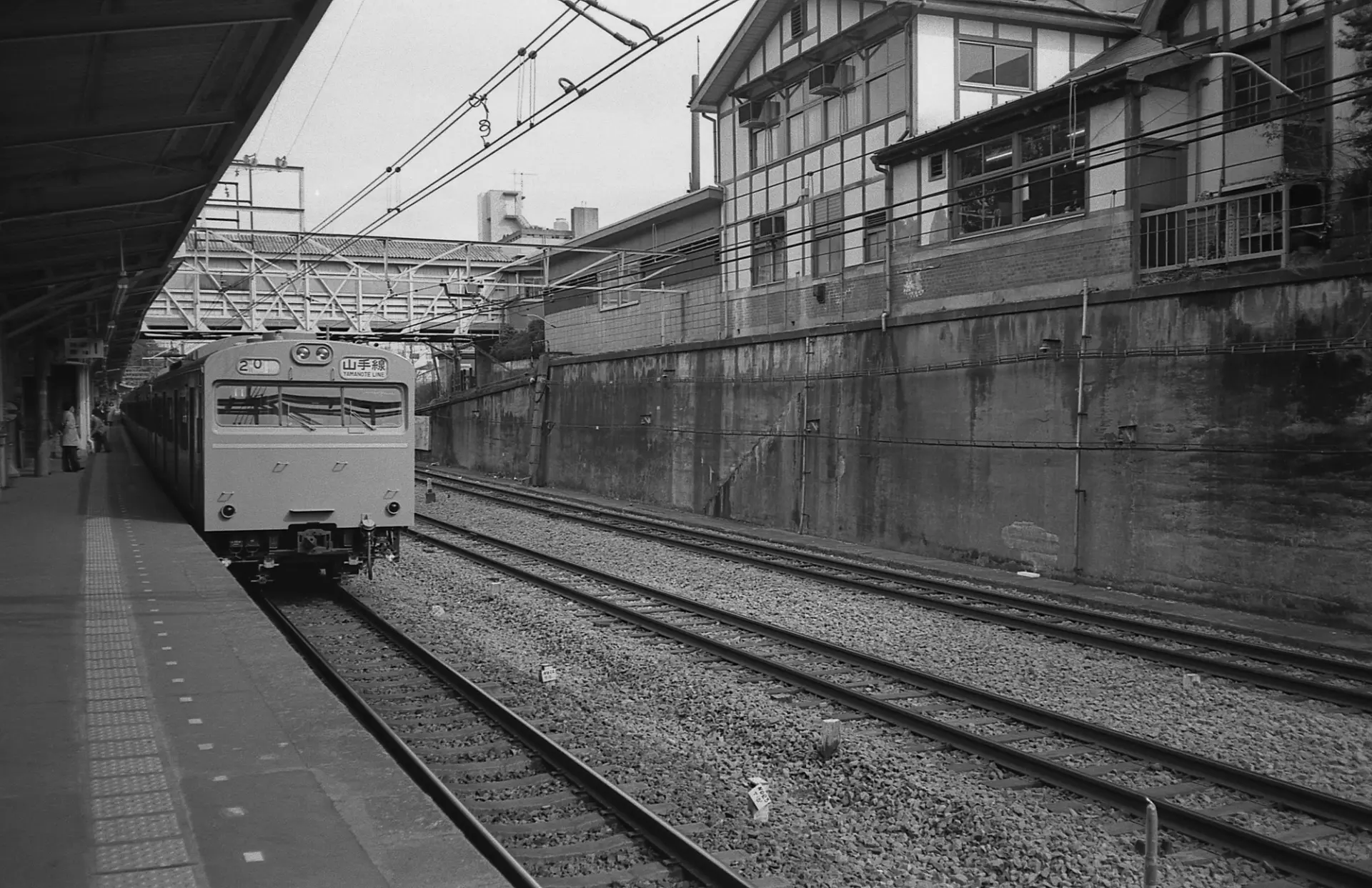
Where the Name “Yamanote” Comes From
The name of the Yamanote Line comes from the geographical divisions of old Tokyo.
From the Edo period (1603–1868) through the Meiji period, the upscale residential areas on the higher ground in western Tokyo, such as Shibuya and Shinjuku, were called “Yamanote.”
When the line first opened, it connected Shinagawa Station and Akabane Station through that Yamanote area, which is how it got its name. ※ When it opened in 1885 it was called the Shinagawa Line, and in 1909 it was officially named the “Yamanote Line”
From 1945 to 1971, the government also used the reading “Yamate-sen” for the Yamanote Line, and even today many people still feel attached to that pronunciation.
Meanwhile, the low-lying and commercially centered eastern Tokyo areas, such as Ueno and Nippori, were called “Shitamachi” (the opposite of Yamanote), and this pairing also reflects a cultural side of Tokyo.
The Newest Station Is Takanawa Gateway Station
The newest station on the Yamanote Line is Takanawa Gateway Station.
It opened in 2020 between Shinagawa Station and Tamachi Station as the line’s 30th station, and it fully opened on March 27, 2025.
The station plays a central role in TAKANAWA GATEWAY CITY, a large-scale redevelopment project led by JR East, offering a new urban space where visitors can experience the future of Tokyo.
Positioned as “a testing ground for spiritually enriched living 100 years into the future,” the area around the station has seen the successive opening of spots such as the twin towers THE LINKPILLAR1 and the shopping complex NEWoMan Takanawa.
In addition to its diverse and attractive spots, there is plenty to see and do, including free rides on the cutting-edge autonomous mobility service iino. All buildings are scheduled to be completed and open for business in spring 2026.

How Much Is the Fare for One Full Loop on the Yamanote Line?
Under JR East’s “special rule for the Tokyo suburban area,” Yamanote Line fares are calculated based on the shortest distance between the boarding station and the destination station, regardless of the actual route traveled.
There is a standard fare table based on operating distance, with fares such as 150 yen for 1 km to 3 km and 210 yen for 11 km to 15 km, meaning the fare is determined according to travel distance.
Based on this, the table below summarizes the fares for riding one full loop on the Yamanote Line. (Transportation IC cards are slightly cheaper.)
Note that a full loop trip is not generally assumed, so if you want to ride the entire loop, the Tokunai Pass mentioned above is recommended.
| Route (Tokyo Station and Kanda Station are adjacent) | Ticket fare | Notes |
|---|---|---|
|
If you board and get off at the same station (Example: board at Tokyo Station and get off again at Tokyo Station) |
500 yen |
・You cannot pass through the automatic ticket gates if you board and get off at the same station ・You need to explain the situation to station staff and receive appropriate assistance ・Calculated based on Approx. 34.5 km for one full loop under JR East’s passenger business regulations |
|
If you board and get off at different stations (Example: board at Tokyo Station and get off at Kanda Station) |
150 yen |
・Conditions include not passing through the same station more than once and not getting off the train along the way. ・The fare is the same whether you take the outer loop or inner loop |
|
If you pass through the same station and get off at a different station from where you boarded (Example: board at Tokyo Station, pass through Kanda Station once, and get off at Kanda Station) |
450 yen |
・The round-trip amount (300 yen) is added to the normal fare (150 yen) ・If you go around once unintentionally, consult station staff |
※ Information as of February 2026
FAQ about the Yamanote Line
Q
Is there Wi-Fi on the Yamanote Line?
If you register your email address, you can use the free Wi-Fi service “JR-EAST FREE Wi-Fi” at all stations. However, please note that the signal can easily become unstable, and connections may be difficult during crowded times or inside tunnels.
Q
How long does it take to make one full loop on the Yamanote Line?
It varies slightly depending on the time of day, but the full loop covering all 30 stations takes about one hour.
Summary
This article has introduced the basics of the Yamanote Line, its representative stations, and important points to keep in mind when riding it.
The Yamanote Line, one of Tokyo’s most iconic rail lines, is appealing for its convenience and extensive coverage, making it useful every day for people of all ages and for many different purposes.
Another feature is its frequent service, with trains arriving every few minutes, which means little waiting time and smooth travel around Tokyo.
A glance at the route map makes it easy to understand the positions of the stations, and because it also provides direct access to famous sightseeing spots, planning your Tokyo trip around the Yamanote Line is highly recommended.
Please also use this article together with the one below, which summarizes classic sightseeing spots, shopping areas, and accommodations in Tokyo, to help plan your trip.