
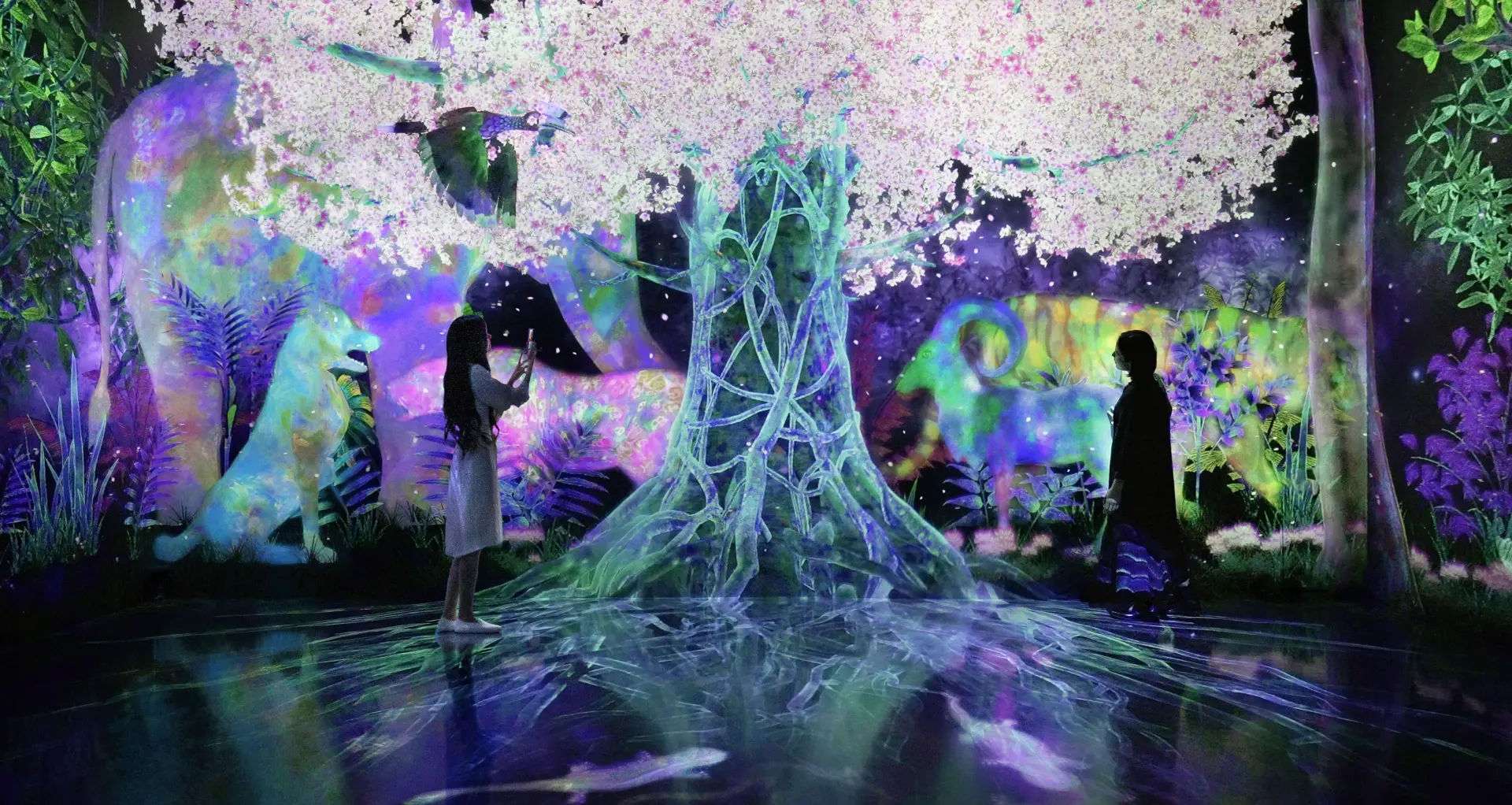
©teamLab
A Guide to Enjoying teamLab Exhibitions, Dining, and Stays
Considered a pioneer in experiential digital art, teamLab is an ultra-technologists collective made up of specialists from a wide range of fields.
With permanent and limited-time exhibitions in Japan and overseas, its innovative approach and borderless interactive art have earned high praise around the world.
This article introduces an overview of teamLab, how to enjoy its works, and the highlights of exhibitions currently on view across Japan.
By the end, you may find yourself drawn into the world of teamLab and wanting to experience it in person.
teamLab Creates Works That Cross the Boundaries of Art, Science, and Technology
teamLab is an international art collective founded in 2001.
Headquartered in Chiyoda City, Tokyo, it operates as an ultra-technologists collective of around 1,100 members.
Its members include founder Toshiyuki Inoko, as well as artists, programmers, engineers, mathematicians, architects, and other specialists from many fields.
Based on the concept of “collective creation,” teamLab aims to create works that cross the boundaries of art, science, and technology.
Its activities span a wide range of areas, with the main ones as follows.
- Art and Spatial Design
- Developing immersive installations at museums and public spaces in Japan and overseas, as well as architectural design and urban planning
- Product and Content Creation
- Developing digital content that makes use of the latest technologies, including apps, TV commercials, and stage productions
- Solutions Business:
- UI/UX design, system development, promotional strategies, facility operations, and more
Its exhibitions center on interactive art created with digital technology.
They respond in real time to touch and movement, forming a continuous “ultra-subjective space” throughout the entire venue.
They are characterized by immersive, physical experiences that visualize boundless expressions of life and the cycles of the seasons.
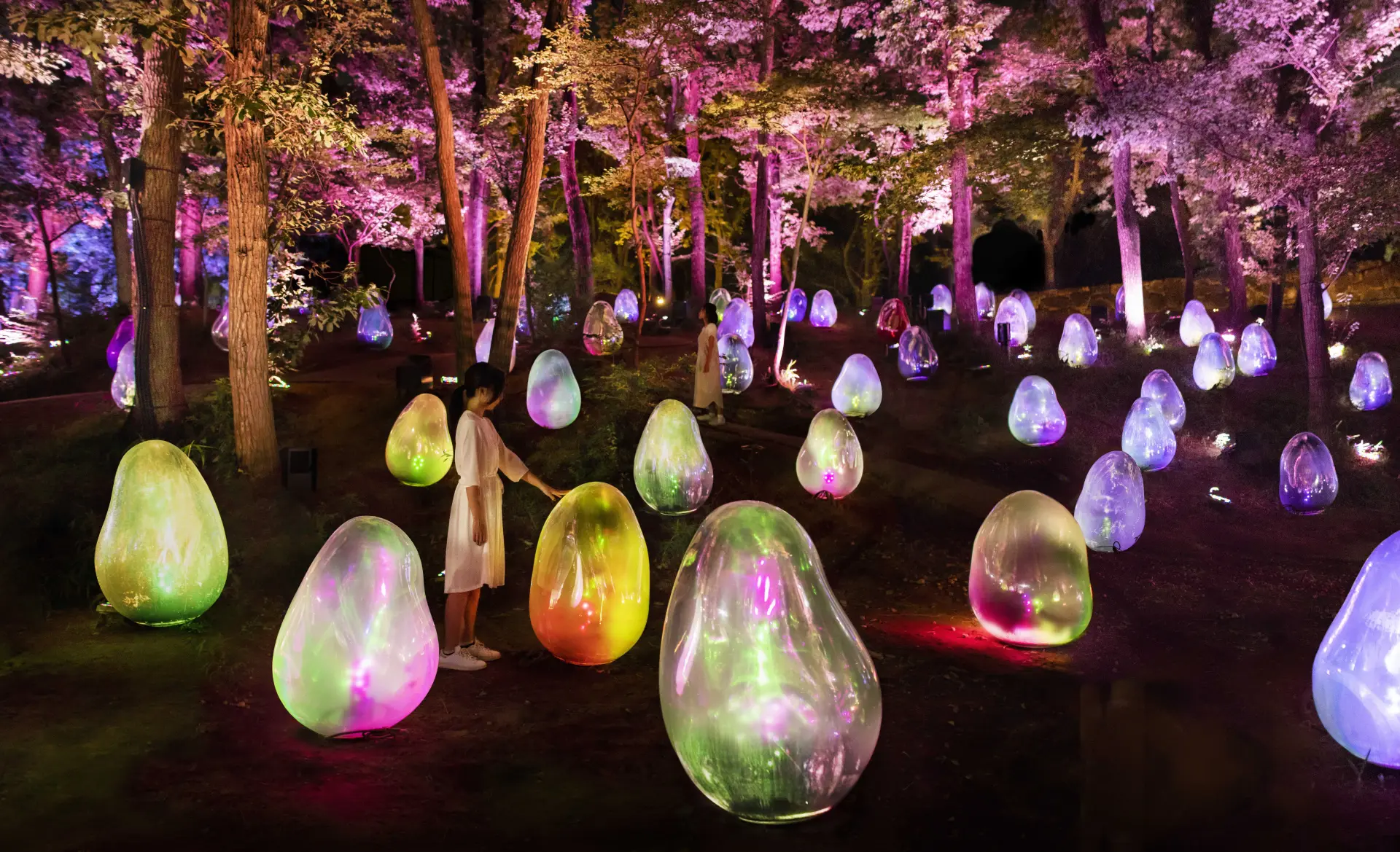
What Makes teamLab Exhibitions So Appealing
If the appeal of teamLab exhibitions could be summed up in one phrase, it would be “an experience that goes beyond looking and involves the body and senses.”
Visitors’ movements and the time they spend in the space become factors that change the works, creating installations that are only completed when people touch, walk through, and immerse themselves in them.
You may feel as if you have become part of the art, with new discoveries every time you visit and something to enjoy again and again. Here is a closer look at what makes them so engaging.
Immersive Presentations That Blur “Boundaries”
teamLab turns entire spaces, including time and movement, into art and pursues continuous worlds without boundaries.
As a result, many exhibitions evoke the feeling that everything is connected: one work to another, oneself to others, nature to humans.
Another feature is the strong sense of narrative continuity and immersion created by highly synchronized visuals, light, and sound.
The visuals flow smoothly in high resolution, the lighting shapes the texture of the space, and the sound resonates deep in the body, appealing not only to sight but also to hearing and touch.
Presentations that stimulate multiple senses directly stir visitors’ emotions and create memorable experiences.
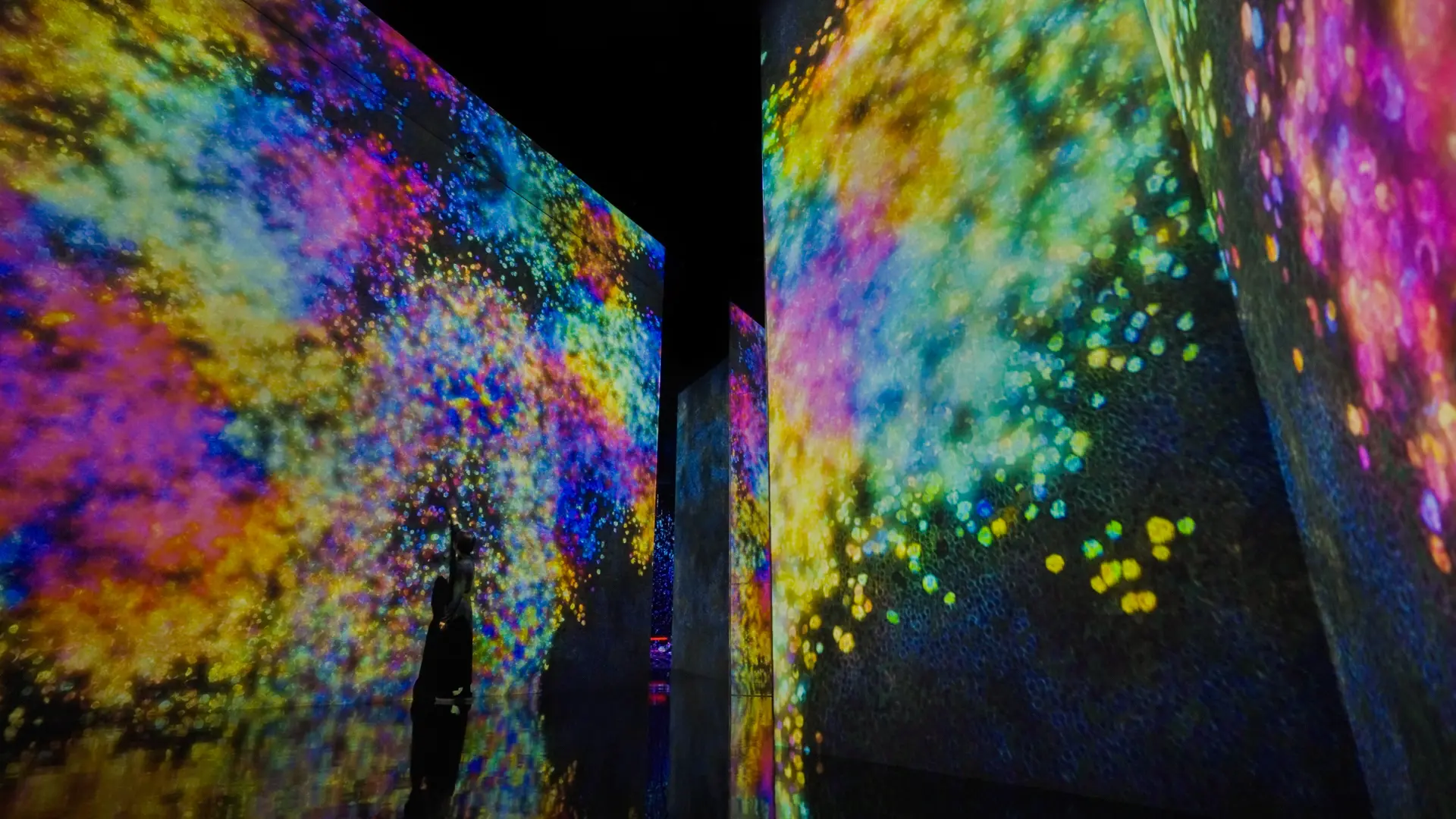
Once-in-a-Lifetime Scenes That Cannot Be Recreated
In teamLab exhibitions, interactive digital technology allows the time of day, the movements and presence of other visitors, and environmental factors to affect the works in real time.
Just like natural scenery, dynamic changes occur so that the same moment never comes twice, allowing visitors to experience “art that exists only in that moment.”
Because perception changes depending on viewpoint and body position, endless variations are created, unlike with a fixed painting. This brings a shared sense of immersion and the joy of discovery.
This variability encourages repeat visits and also pairs well with social media, especially Instagram.
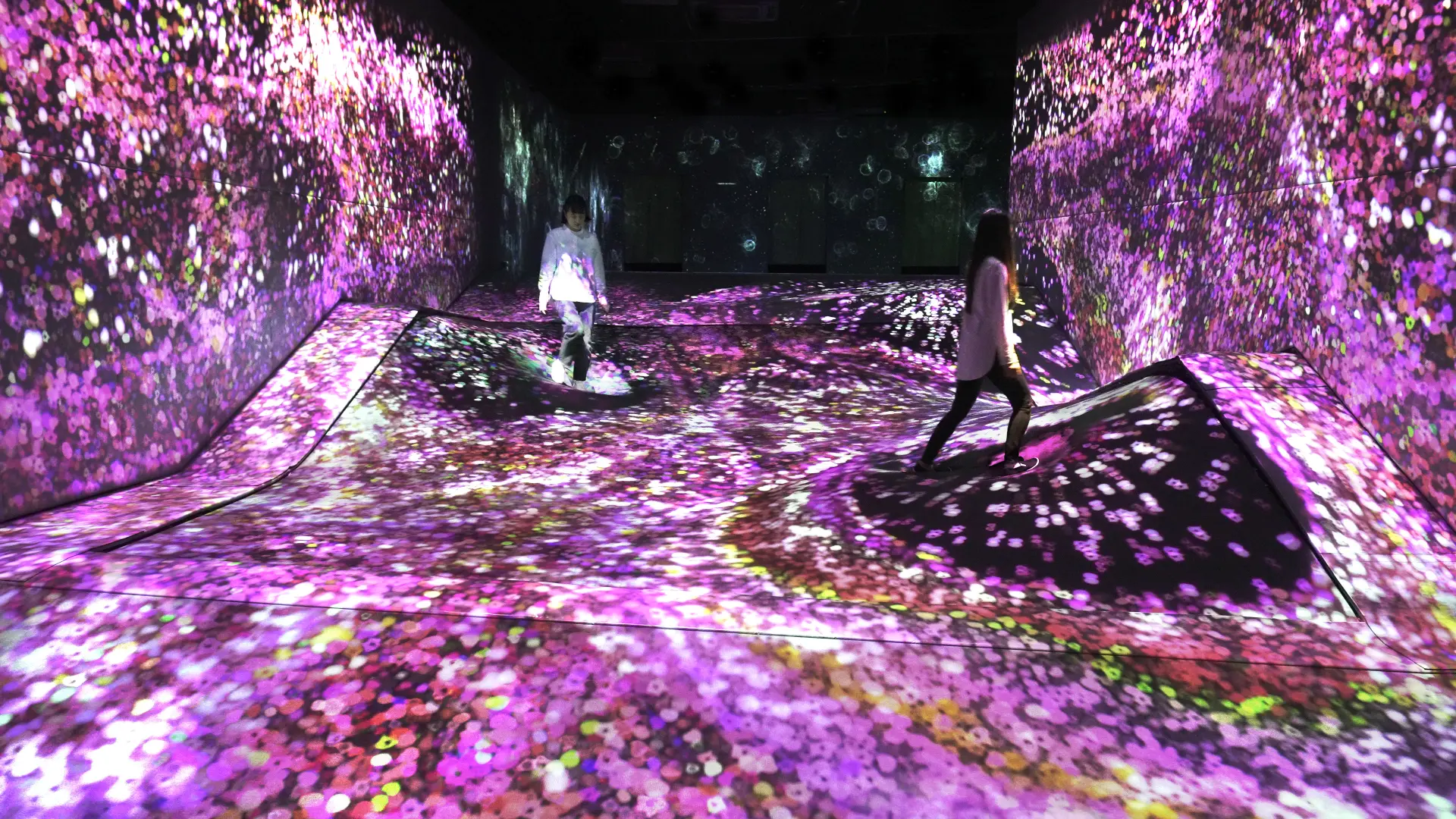
A Fusion of Nature and Digital Expression
One of teamLab’s distinctive appeals is that nature becomes art while remaining alive, without being destroyed.
Using projection mapping and sensor technology, non-material light and sound blend into nature, expressing the dynamism of the natural world through technology.
By visualizing the cycles of the seasons and the birth and death of life, visitors can realistically re-experience the changing face of nature, while the continuity of time and space adds philosophical depth.
The result is exhibitions that are both scientific and poetic, resonating with a wide range of visitors from children to adults.
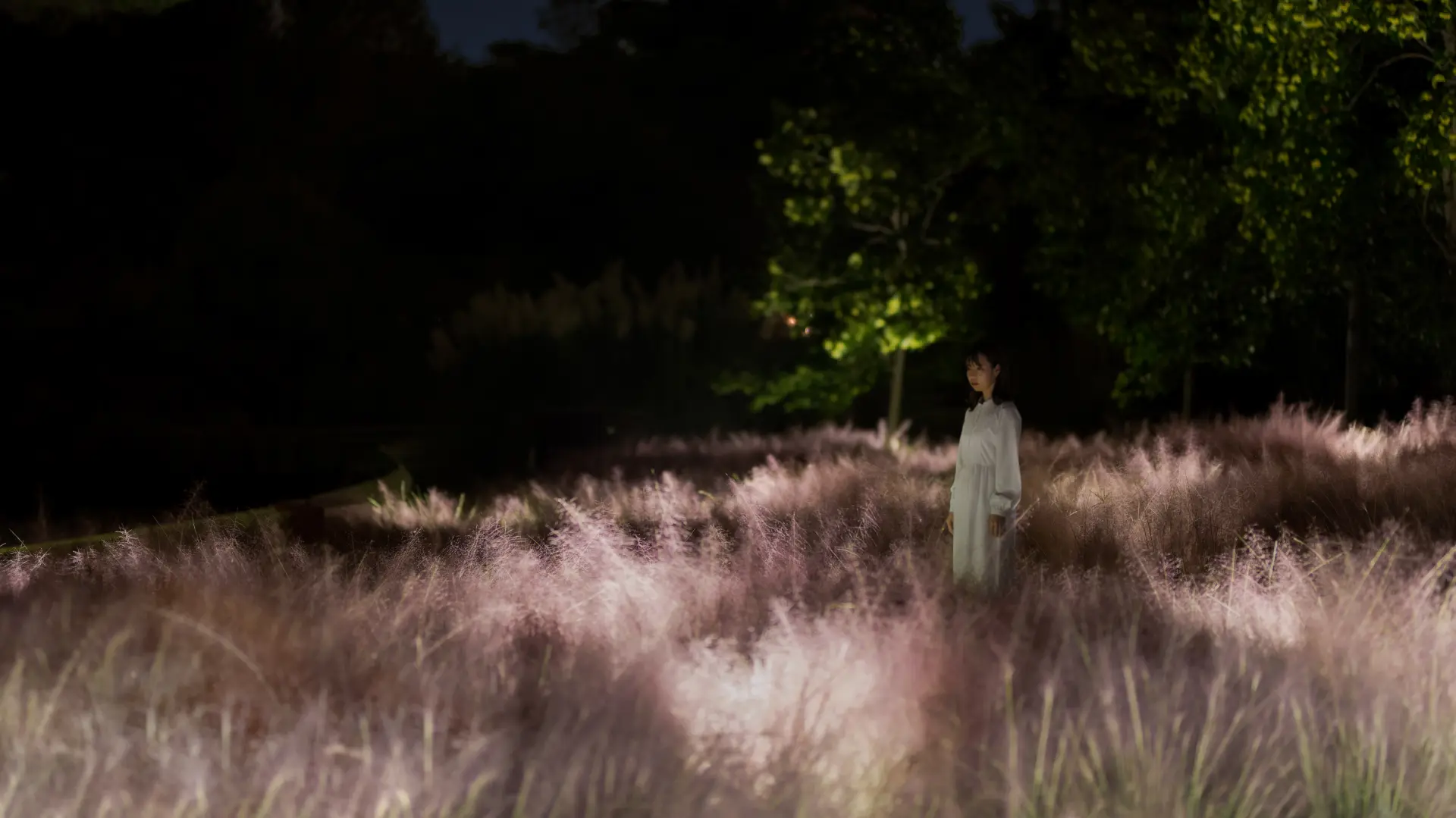
Spatial Design with “Universal Design” in Mind
Many teamLab spaces are designed with “universal design” in mind.
The flow of movement and lines of sight are carefully planned, with features that allow anyone to enjoy the experience intuitively, regardless of nationality, age, physical condition, or cultural background, and without relying on language or prior knowledge.
teamLab also has a shared commitment to a “user-first” approach, creating spaces that are easy to use and understand. This is one reason each work is so highly polished.
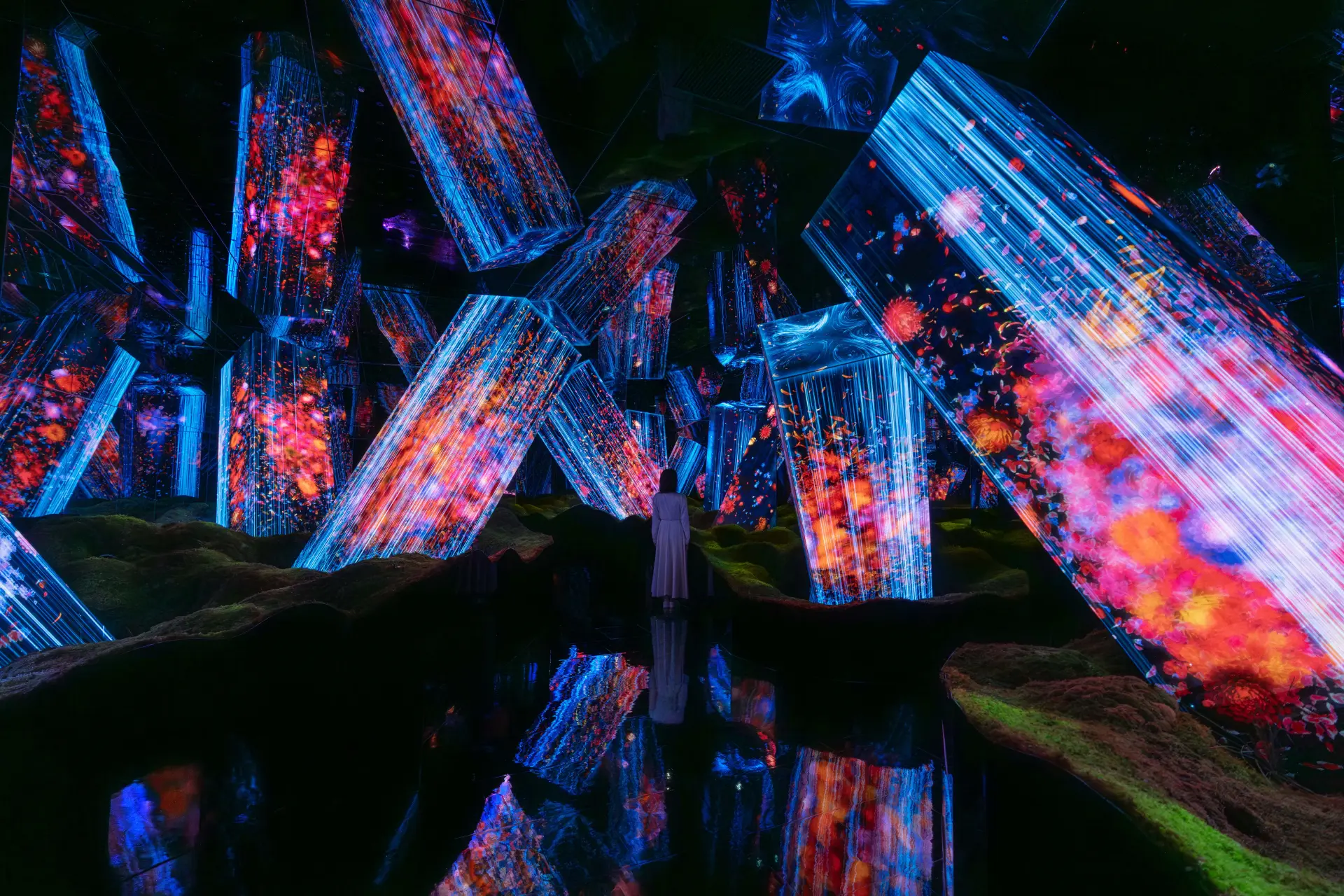
Where Can You Find teamLab Exhibitions and Works?
As of December 2025, there are 16 permanent teamLab exhibitions and works currently open to the public.
The table below lists them by area.
For the latest information, details, and operating schedules, be sure to check the official website as well.
- Hokkaido
- 【Sapporo】J Art Foundation
- Akita
-
【Nikaho】Interactive Magnetic Field Theater inside TDK Museum
Tokyo\【Toyosu】teamLab Planets TOKYO DMM.com
【Azabu】MORI Building DIGITAL ART MUSEUM: EPSON teamLab Borderless
【Ginza】MoonFlower Sagaya Ginza, Art by teamLab (restaurant)
【Shibuya】Galaxy & teamLab: Catching and Collecting Forest of Dinosaurs - Ibaraki
- 【Kitaibaraki】teamLab Hidden Traces of Rice Terraces
- Fukui
- 【Eiheiji】Bird Way - Silent Sitting
- Osaka
-
【Osaka City】teamLab Botanical Garden Osaka
【Higashiosaka】teamLab Field of Wind, Rain and Sun - Kyoto
- 【Kyoto City】teamLab Biovortex Kyoto
- Tokushima
- 【Tokushima City】Hyakunen Umi (restaurant)
- Fukuoka
- 【Fukuoka City】teamLab Forest Fukuoka - SBI SECURITIES inside BOSS E・ZO FUKUOKA
- Saga
- 【Takeo】teamLab: Ruins and Heritage: Rinkan Sauna in Mifuneyama Rakuen Hotel
- Oita
- 【Bungotakada】teamLab Gallery Matama Beach
- Okinawa
- 【Naha】teamLab Learn and Play! Future Park Okinawa
teamLab Exhibitions and Works Across Japan
From here, we will introduce overviews and highlights of teamLab exhibitions and works across Japan.
Each offers real-time experiences of the continuity between the body and others, as well as the dynamism of nature and life, through interactive and immersive digital art.
They each offer an original worldview that sparks curiosity, so consider visiting an exhibition or work in an area that matches your interests.
【Hokkaido】J Art Foundation “Massless Amorphous Sculpture - A Whole Year per Year”
“Massless Amorphous Sculpture - A Whole Year per Year” is permanently exhibited at J Art Foundation, formerly Sapporo Miyanomori Art Museum, a new art hub in Sapporo that reopened after renovation in May 2025.
Its main feature is the way visitors can experience the flow of the four seasons and the “cycle of life and death” through digital expression.
Flowers spread across the space, sprouting, blooming, and eventually withering and dying according to the seasons, following the same flow of time as the real world.
Through an installation in which visitors’ movements and touch directly affect the life and death of the flowers, each person becomes involved in the work.
Visitors can also move freely and change their viewpoints, creating an immersive feeling as if the entire space is filled with life.
The mysterious scenery created by the unusual setting of a former church leaves a lingering impression that may make you want to return at a different time of day.
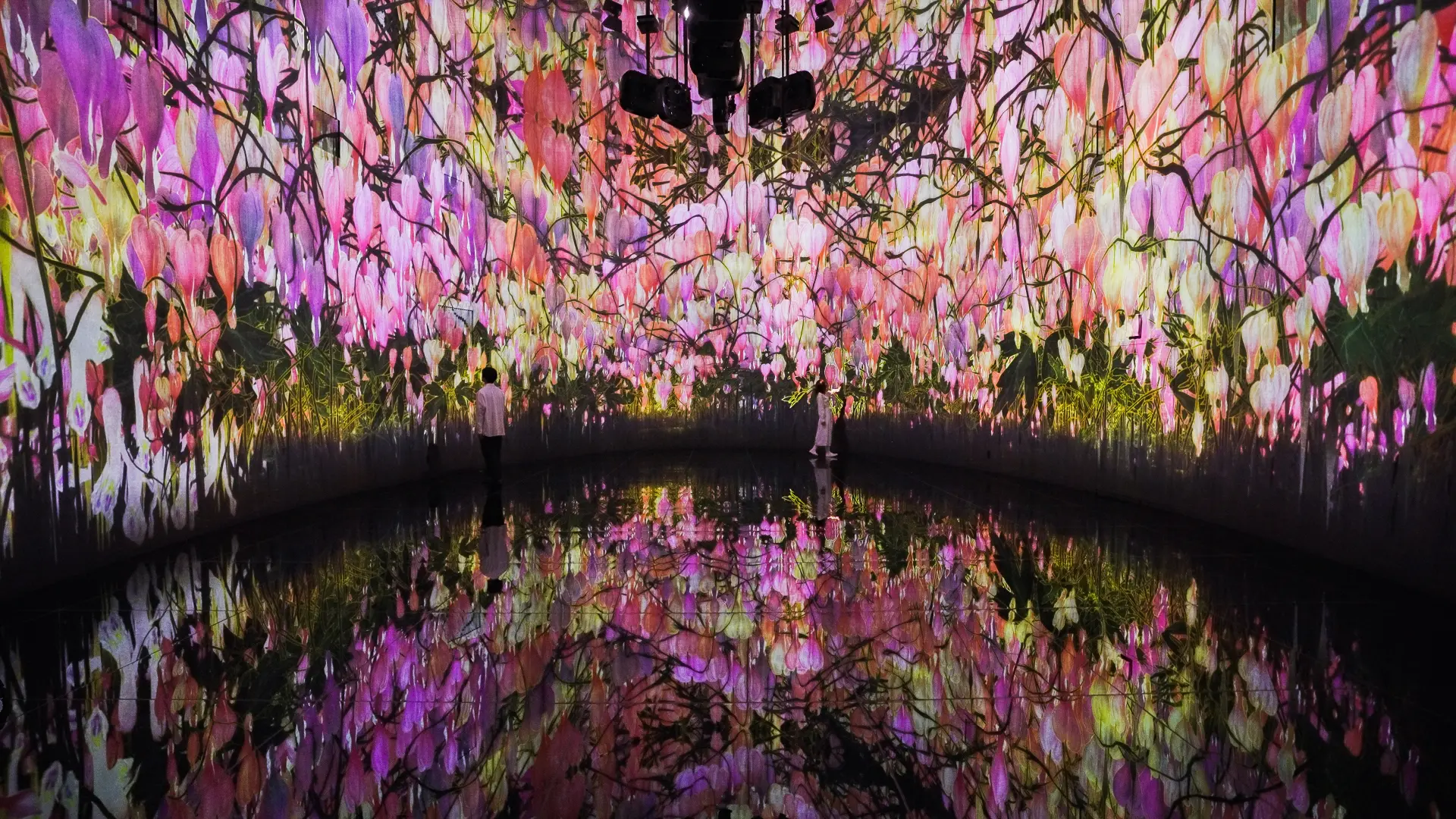
【Akita】“Interactive Magnetic Field Theater” inside TDK Museum
This work has been on permanent display since 2016 at TDK Museum, in the Future Zone, in Nikaho City, Akita Prefecture.
Its appeal lies in its interactivity, which digitally visualizes magnetism that cannot be seen with the naked eye and allows visitors to experience it physically.
Visitors can freely walk around a theater space surrounded by visuals on all sides and underfoot, touching and exploring three worlds, or modes: the universe, Earth, and electrons.
The universe mode is mainly designed to teach the “visualization of magnetism ejected from the sun and planets,” Earth mode covers “auroras and global magnetic field phenomena,” and electron mode introduces the “concept of spintronics.”
Each mode features different changes in movement and color, and the work is rendered in real time, changing according to visitors’ actions.
The same scene never appears twice, and visitors can deepen their scientific understanding through play.
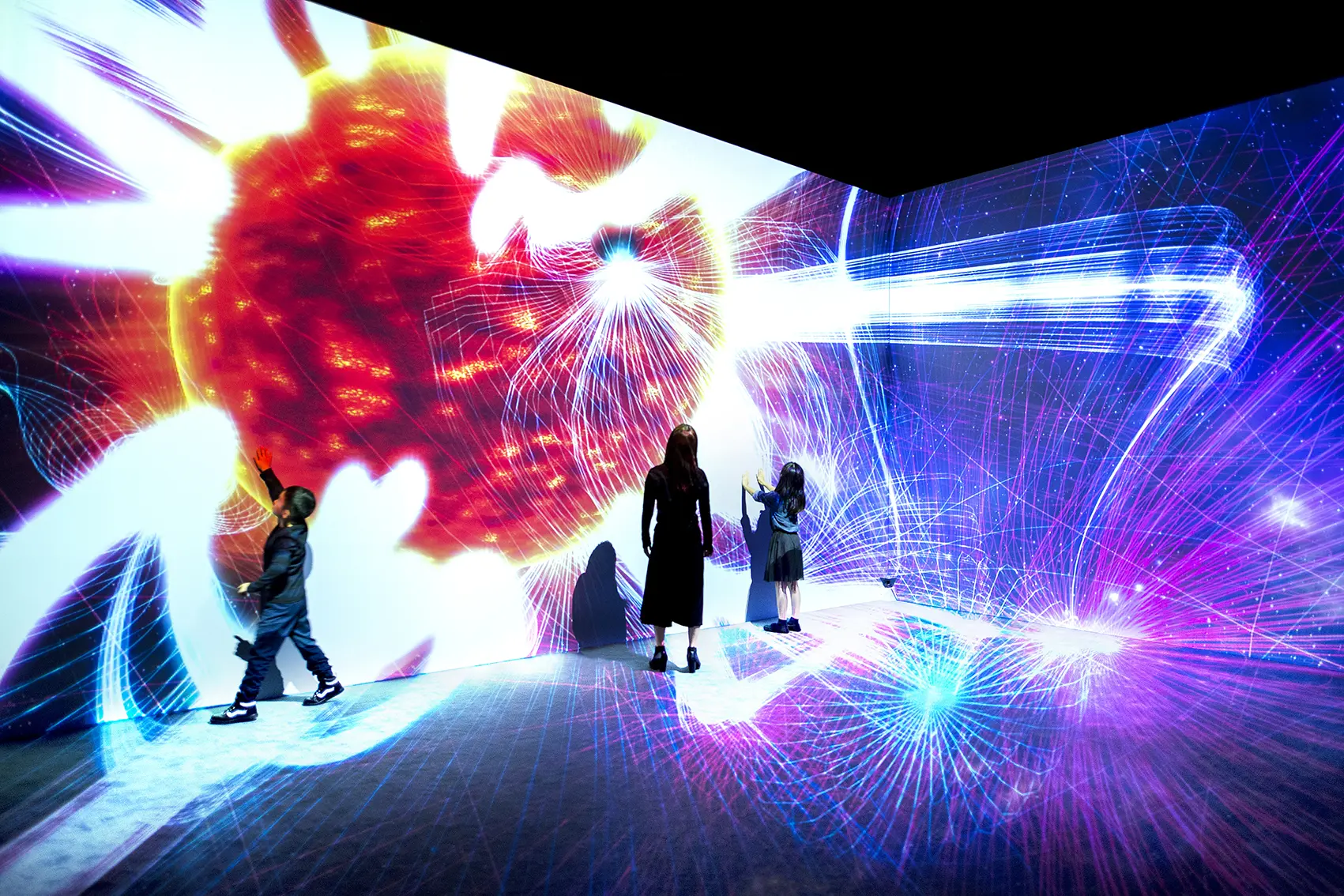
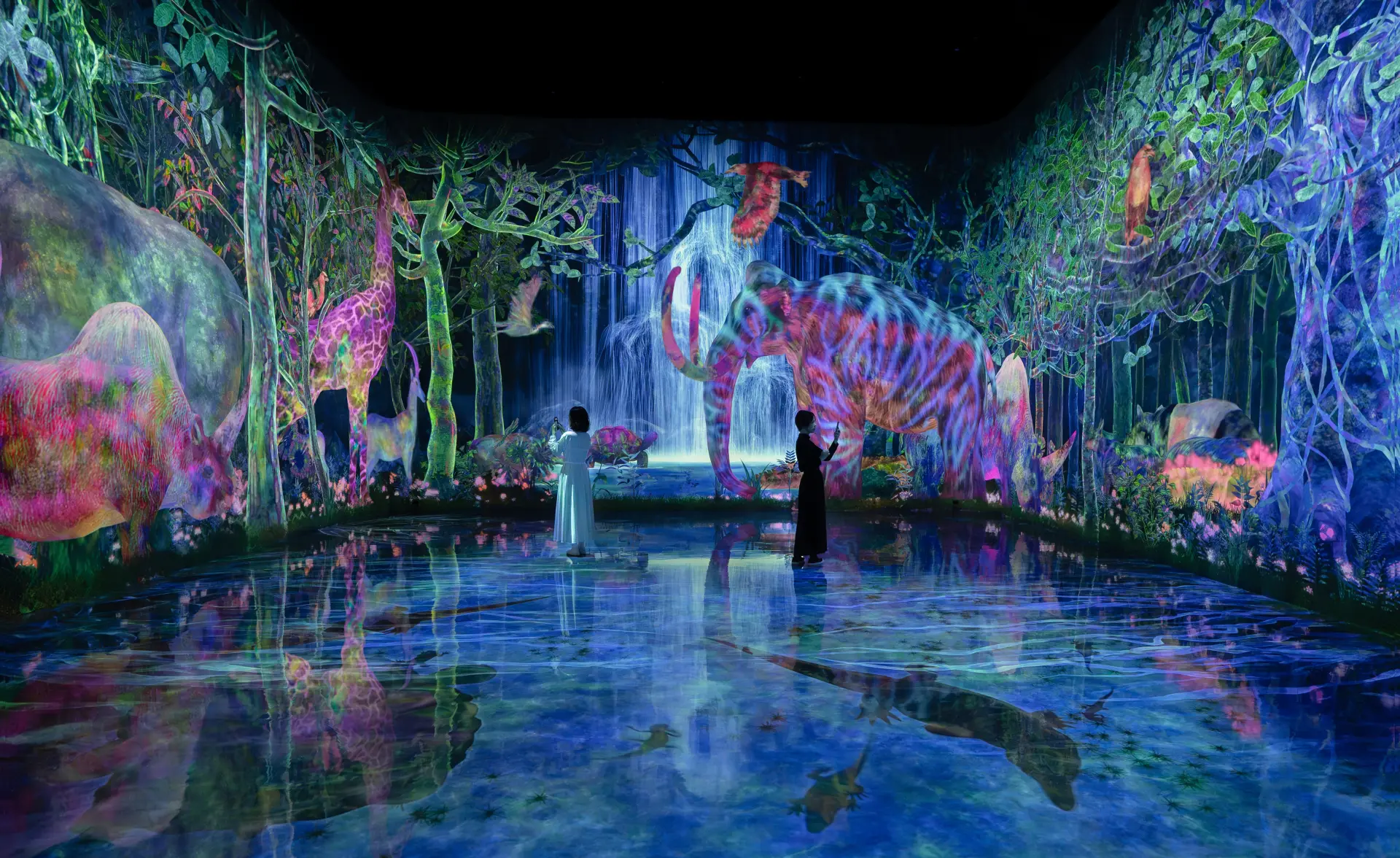
【Tokyo】teamLab Planets TOKYO DMM.com
This museum features a wide range of works that allow viewers and art to become one. In January 2025, it expanded to about 1.5 times its previous size and underwent a large-scale renewal, including its outdoor spaces.
Three new educational projects were added: “Catching and Collecting Forest,” “Athletics Forest,” and “Learn and Play! Future Park.” More than 20 works are on view in a wide variety of forms.
Another innovative point is that by linking with a smartphone app installed in advance, visitors can change the colors and shapes of the lights that make up the work “The Infinite Crystal Universe.”
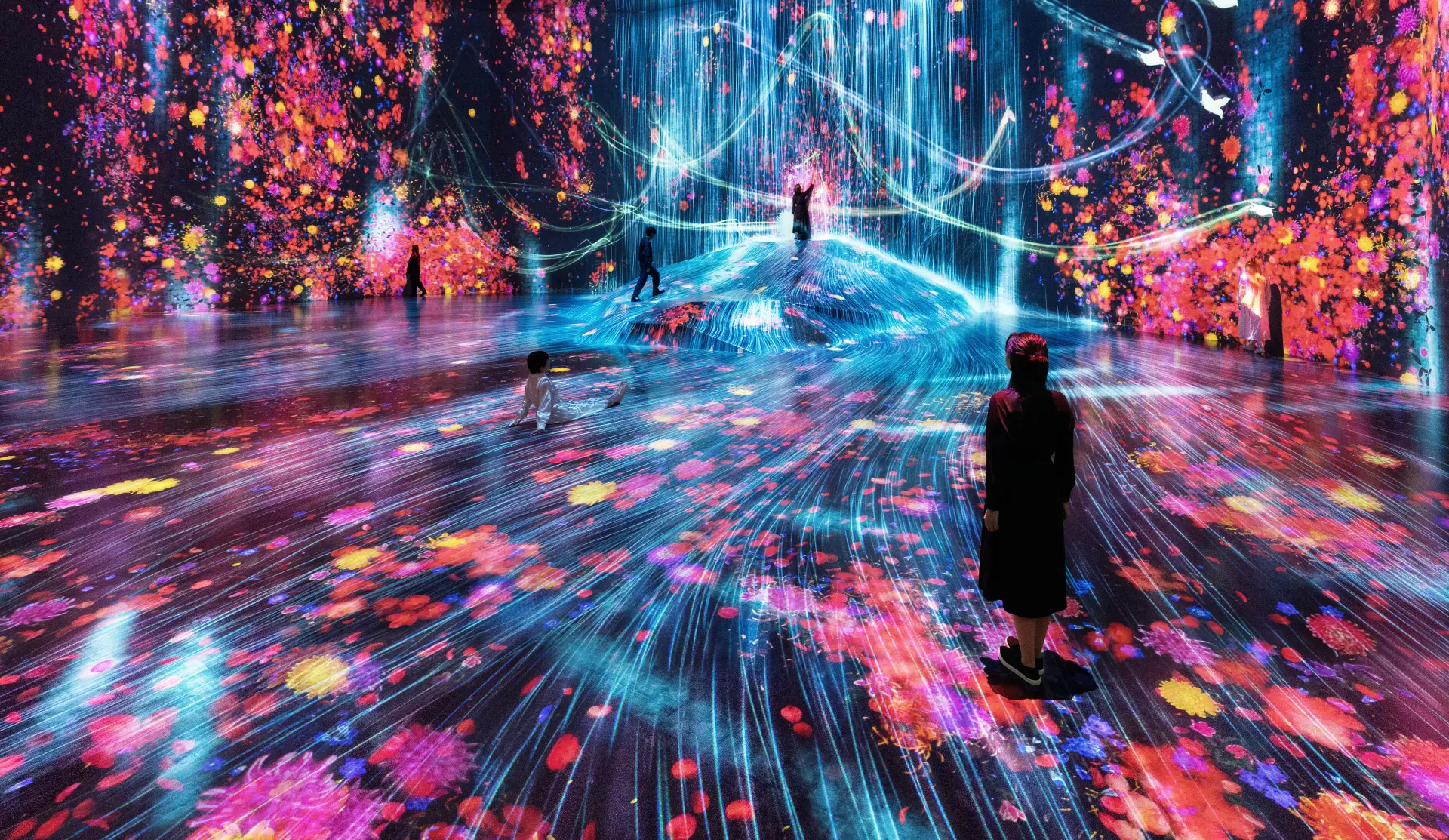
【Tokyo】MORI Building DIGITAL ART MUSEUM: EPSON teamLab Borderless
teamLab Borderless relocated from Odaiba to Azabudai Hills and opened there on February 9, 2024.
As the name “borderless” suggests, visitors encounter an entirely new kind of art, where artworks move out of rooms, influence other works, and blend together without boundaries.
The new work “Bubble Universe: Physical Light, Bubbles of Light, Wobbling Light, and Environmental Light - One Stroke” features an impressive exhibition space filled with countless spheres.
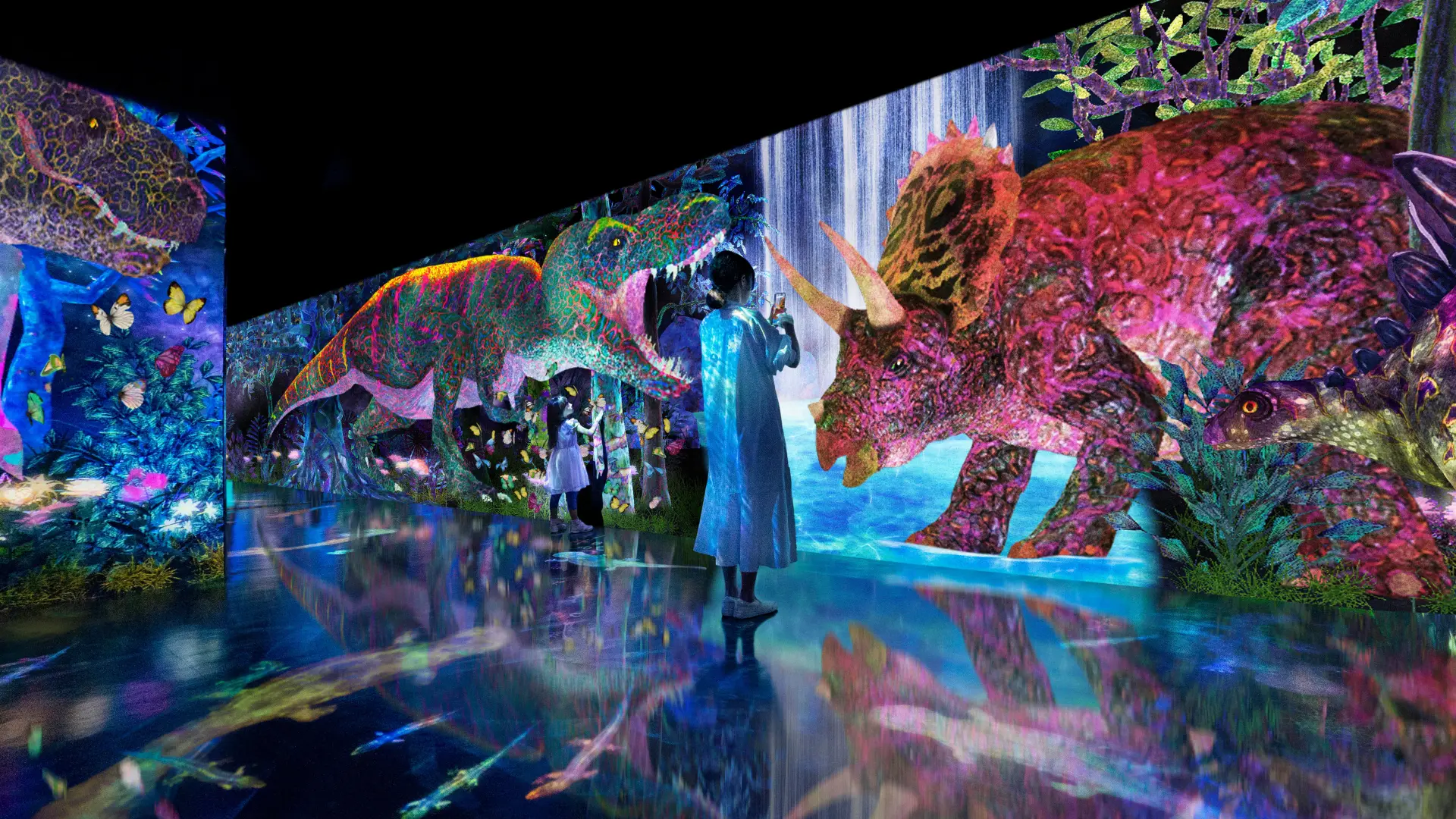
【Tokyo】Galaxy & teamLab: Catching and Collecting Forest of Dinosaurs
Since February 2025, Galaxy Harajuku in Shibuya, Tokyo, has hosted an exhibition created through a collaboration between teamLab and Samsung.
This work is an interactive educational project using Galaxy smartphones.
It seamlessly fuses the real space and digital world, creating a participatory installation that sparks curiosity as visitors use their own bodies to explore, capture, and observe dinosaurs and other prehistoric animals.
AR-like controls are combined with powerful visuals of Tyrannosaurus, Triceratops, and others moving through the space, making it intuitive for both children and adults.
Another highlight is the detailed design: the creatures react when approached and run away, while more information is added to an encyclopedia as the number of captures increases.
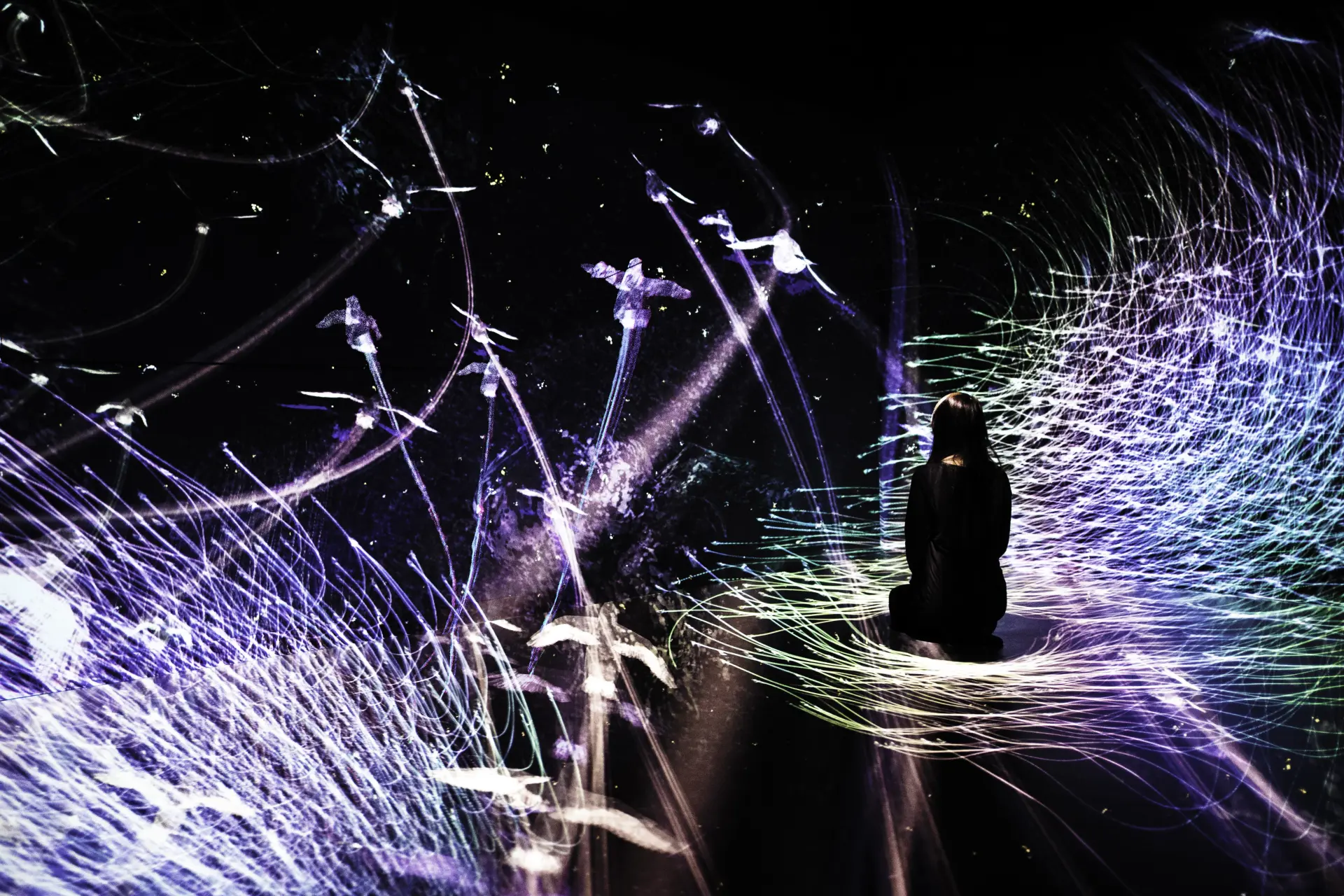
【Fukui】Bird Way - Silent Sitting
This teamLab artwork is themed around Zen.
It is located inside Eibokan, the Eiheiji Town Charm Promotion and Exchange Facility, which introduces the appeal of the town centered on Eiheiji Temple, the head temple of the Soto Zen school with more than 700 years of tradition. Admission is free.
In a space where works are drawn on all four sides and below, flocks of birds drawn in light fly around, leaving many trails of light behind them.
The birds, which fly while avoiding the people in the space, are rendered in real time, so the same work is never drawn twice and continues to change constantly.
【Osaka】teamLab Botanical Garden Osaka
This is a permanent nighttime outdoor museum created by teamLab.
By day, Nagai Botanical Garden is a botanical garden; by night, it transforms into an atmospheric art space using light and sound.
The works include a camellia garden dotted with egg-shaped “Ovoids,” whose light colors change when touched by people, blown by the wind, or hit by rain. Each interactive work is linked with natural elements such as the season, weather, and people’s movements.
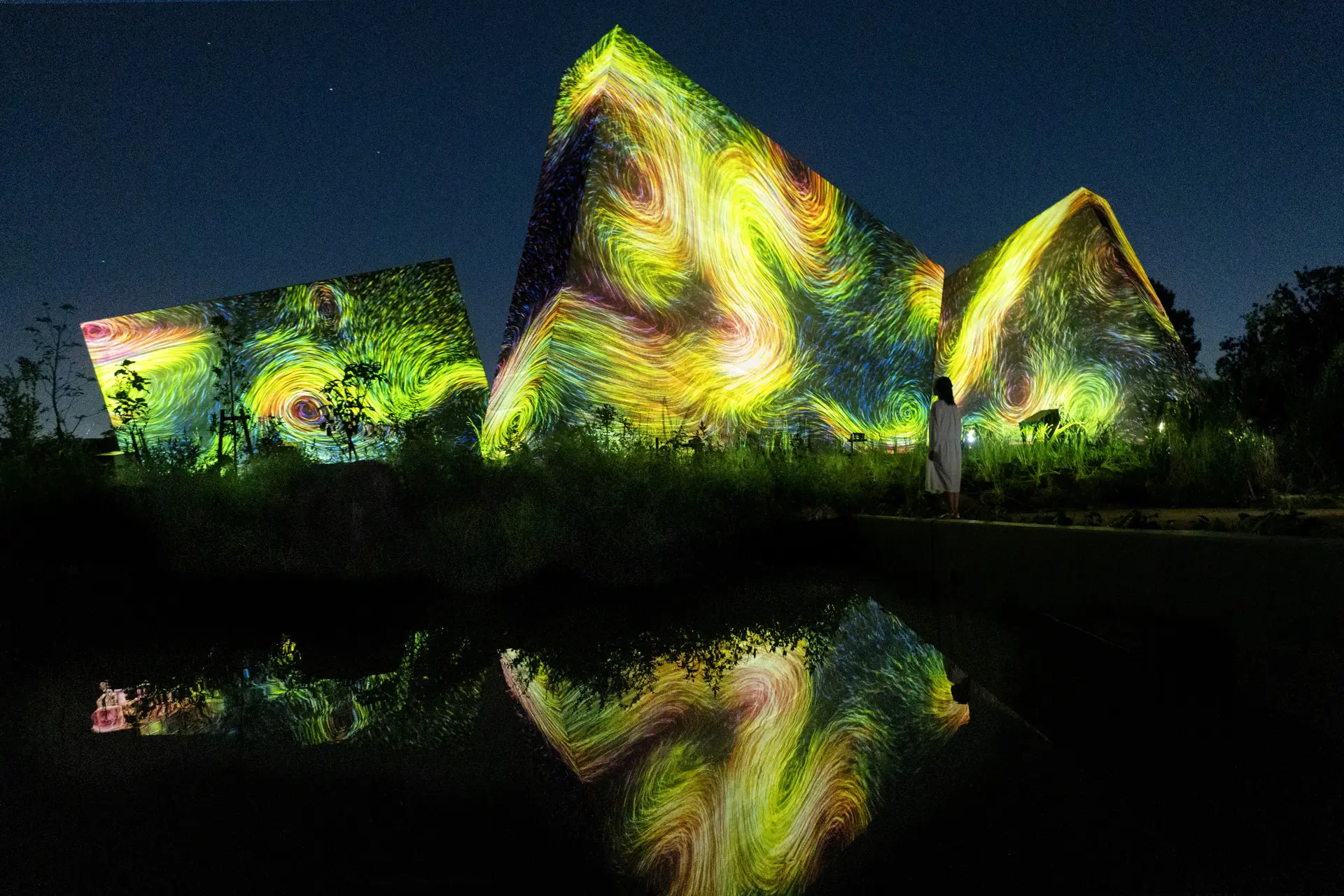
【Osaka】teamLab Field of Wind, Rain and Sun
This work has been on permanent display since October 2024 at Kankan Factory Grassland Cafe, located on the grounds of Osaka Seikan in Higashiosaka City, Osaka Prefecture.
Its defining feature is an interactive “environmental phenomenon” set in a spacious outdoor grassland, where the existence of the work is created in real time by natural elements such as wind, rain, and sunlight.
During the day, visitors encounter the physical texture of the grass and the movement of the wind; at night, glowing stones and projections create atmospheric scenes. The result is an “expression of the moment” that can only be experienced in that particular weather and time.
The contrast with the former factory site is also distinctive, giving the poetic grassland that appears in an industrial area an appeal that invites repeat visits.
The continuity of the entire space, where the music changes according to walking speed, further deepens the immersion.
*Experience available only to cafe users; advance reservations required.
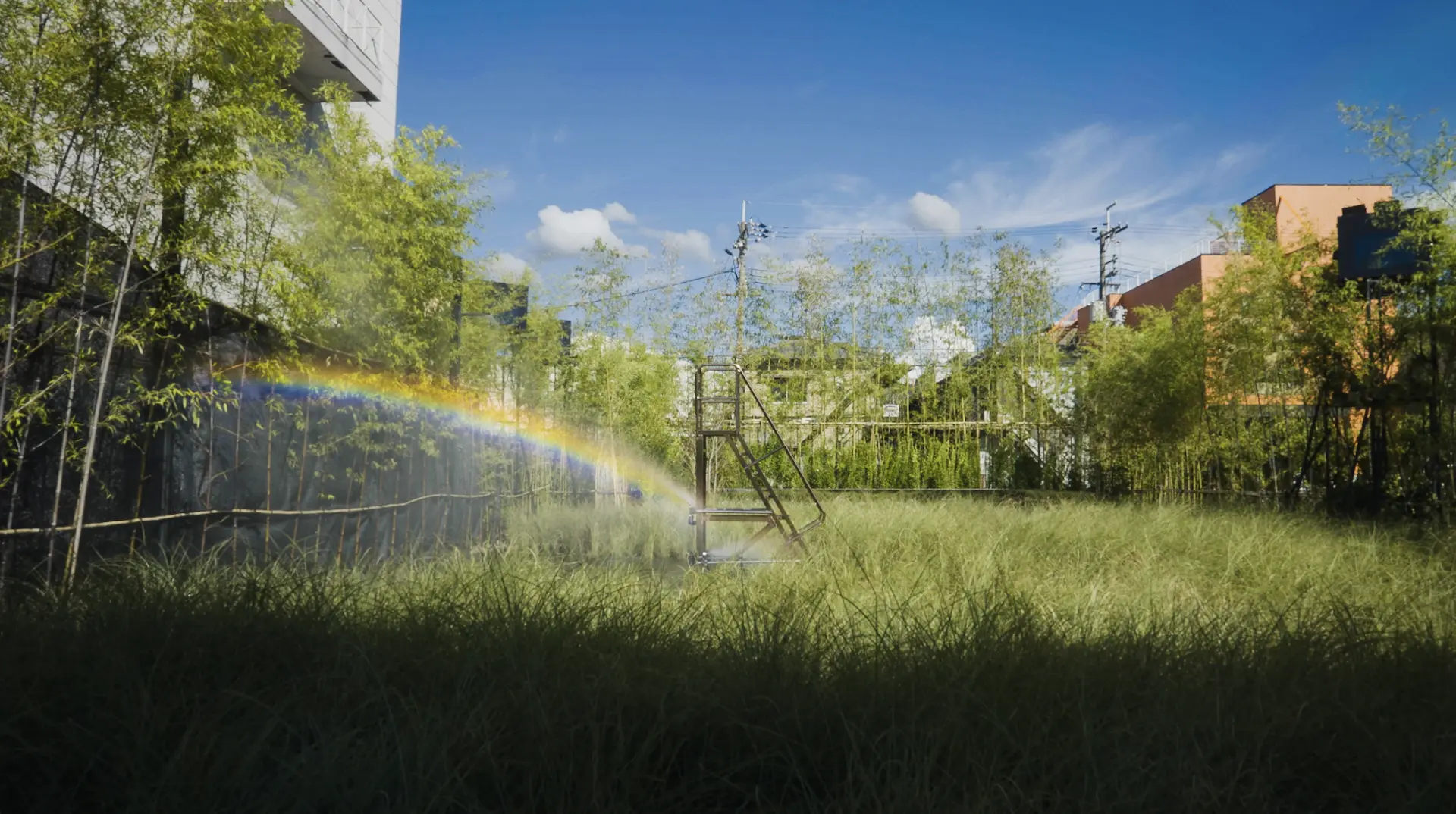
【Kyoto】teamLab Biovortex Kyoto
This new teamLab museum opened in October 2025 in the area southeast of Kyoto Station.
In a space of about 10,000 square meters, the largest total floor area in Japan for a teamLab museum, it exhibits immersive artworks created using digital technology that change in response to people’s presence and behavior.
There are more than 50 works, including pieces shown in Japan for the first time, such as “Massless Amorphous Sculpture.”
It also includes past works that were well received at other museums and works that can only be seen in Kyoto.
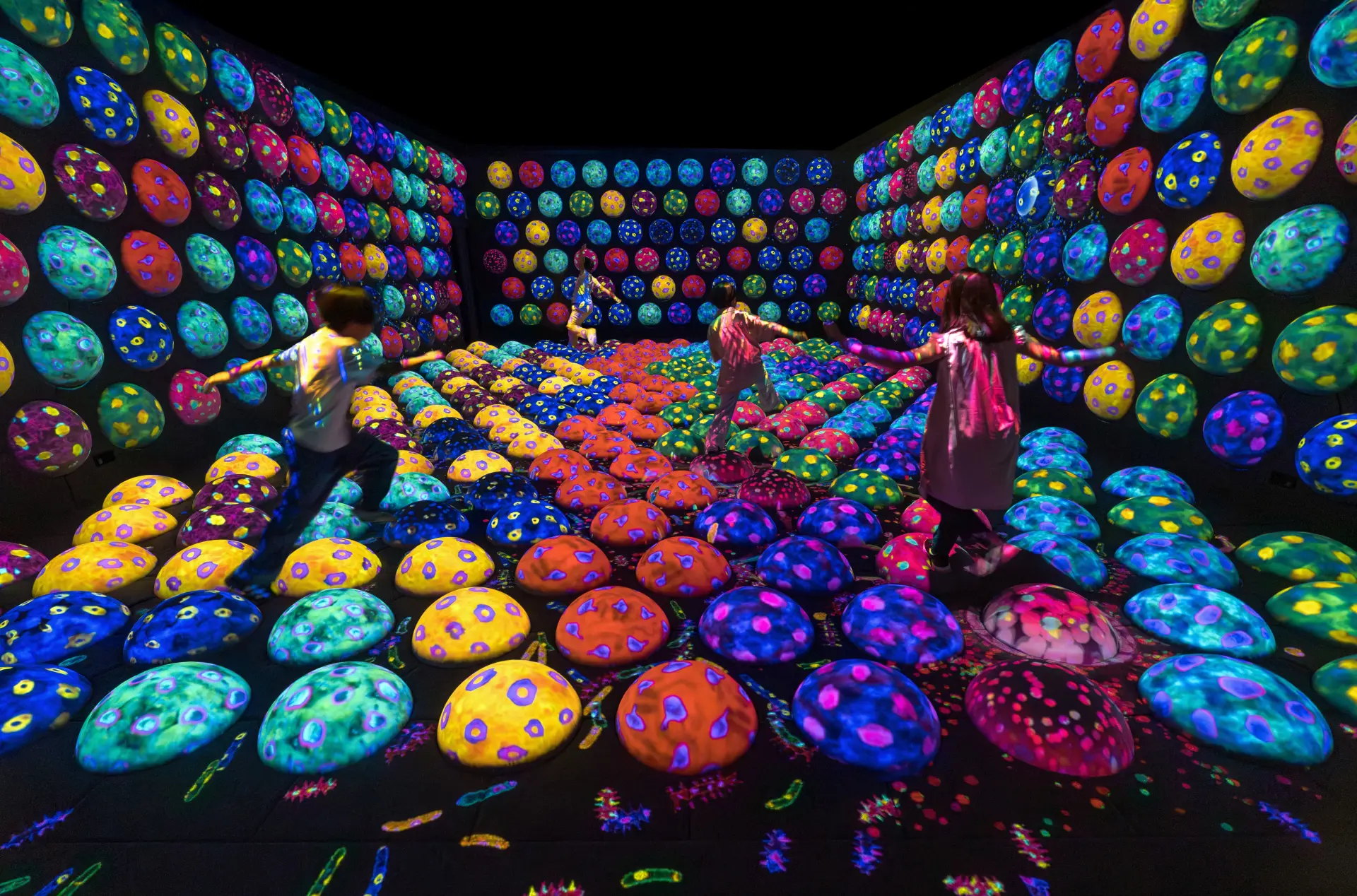
【Fukuoka】teamLab Forest Fukuoka - SBI SECURITIES inside BOSS E・ZO FUKUOKA
This permanent exhibition has been open since July 2020 on the 5th floor of BOSS E・ZO FUKUOKA, a multi-purpose entertainment facility next to Mizuho PayPay Dome Fukuoka.
The work is an interactive museum that combines play and learning, centered on two main areas: “Catching and Collecting Forest” and “Athletics Forest.”
Its defining feature is participatory experiences in which the works change as visitors actively engage with them using a dedicated smartphone app and their body movements.
For example, in “Graffiti Nature - Beating Valley,” creatures drawn by visitors come to life, while “Soft Terrain and Granular Topography” reveals various expressions depending on the time of day and season.
Another appealing point is that the drawings visitors create can be made into gifts, such as hand towels or T-shirts, to take home.
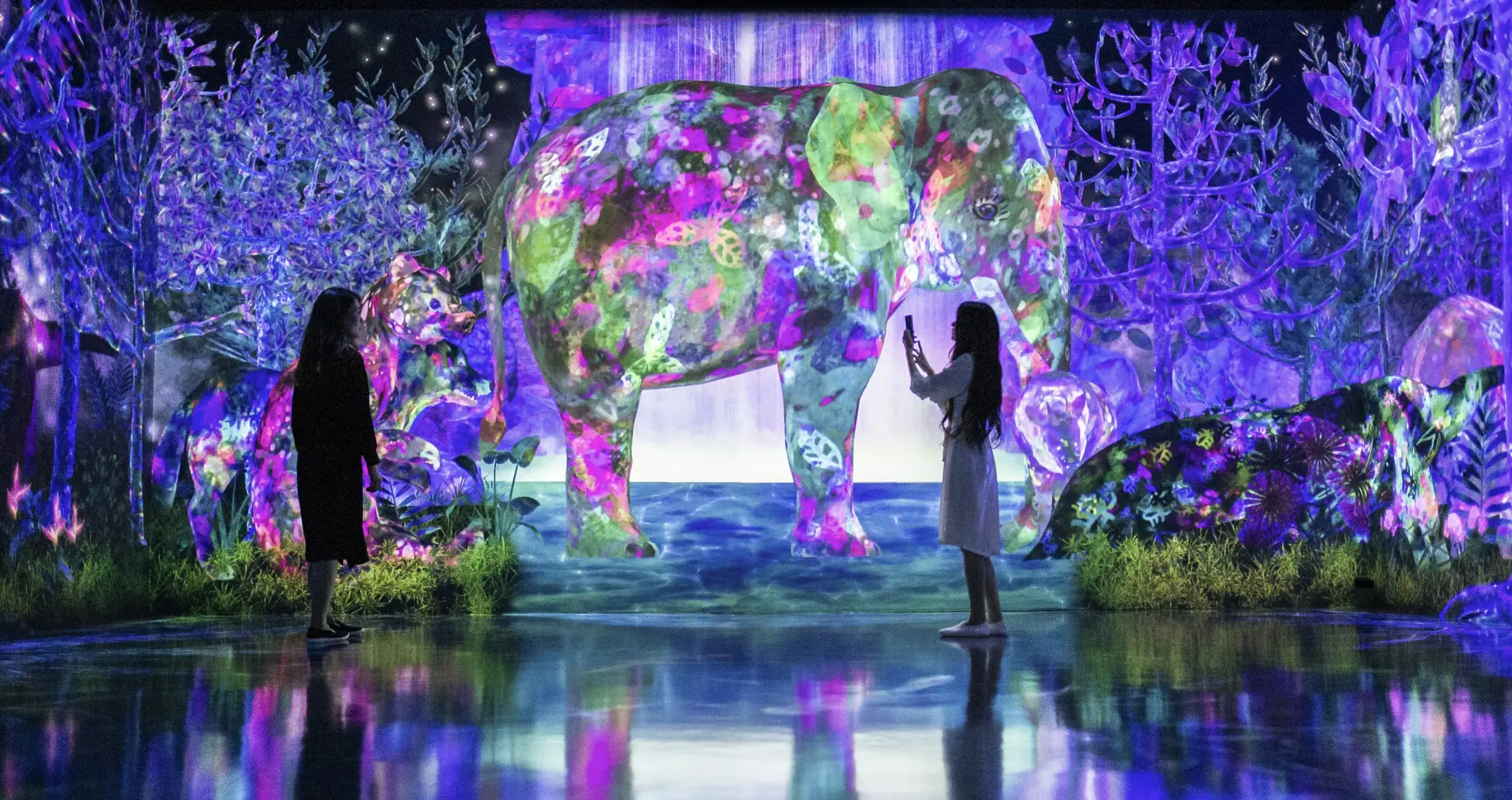
【Oita】teamLab Gallery Matama Beach
This permanent exhibition has been open since March 2015 in an approximately 250-square-meter exhibition room near Matama Beach in Bungotakada City, Oita Prefecture, renovated from a former sewing factory.
The main work on display is “Flowers and People, Cannot be Controlled but Live Together.”
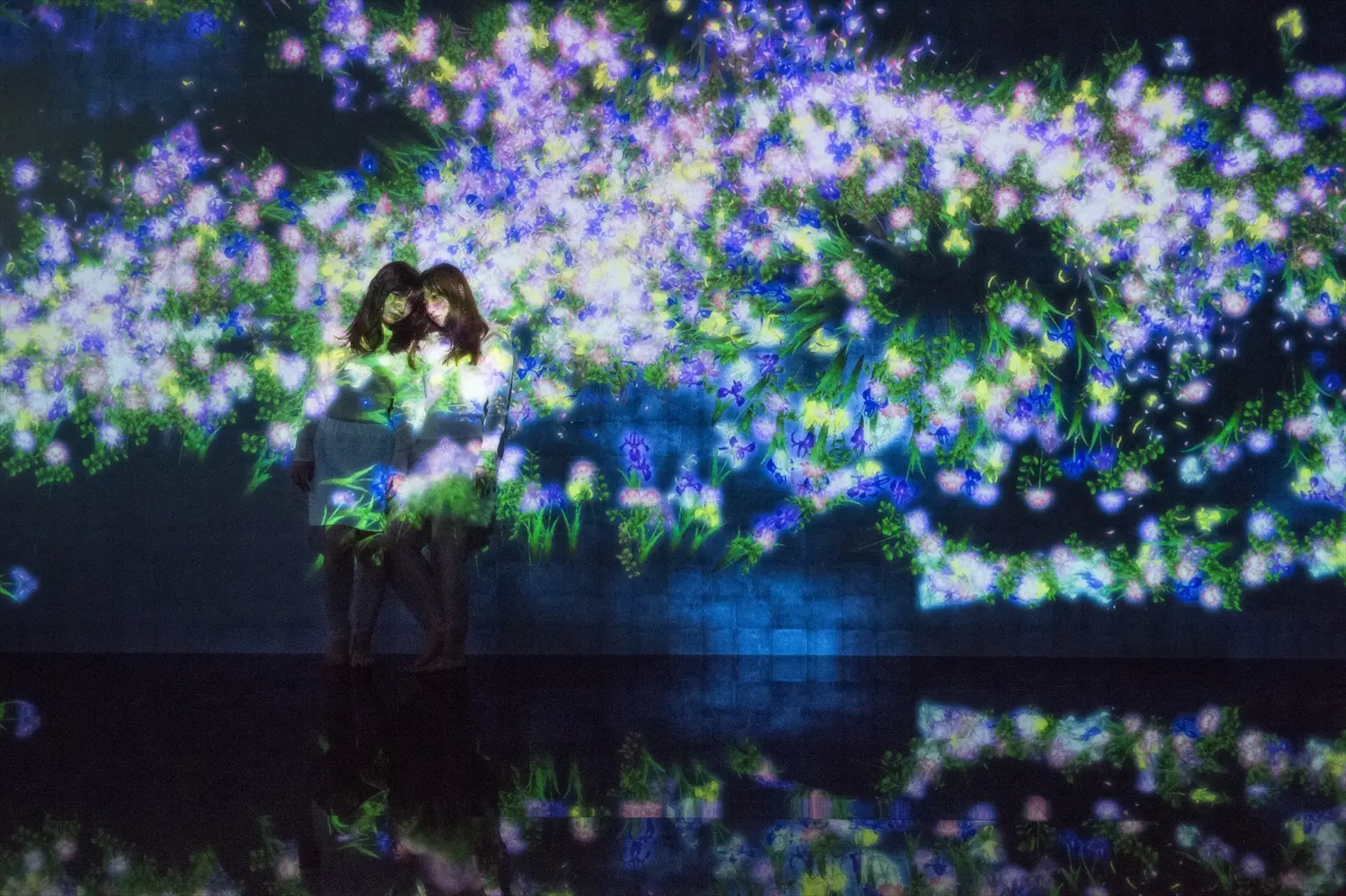
Using flowers from the Kunisaki Peninsula as motifs, this digital artwork condenses the changes of flowers over one year into one hour.
Flowers of the four seasons appear in the darkness, repeatedly sprouting, blooming, and scattering in response to visitors’ positions and behavior, so each person’s presence affects their life and death.
The fleeting nature of scenery that never appears the same way twice, together with the interactive experience that lets visitors lose track of time, makes the experience even deeper.
Matama Beach is also listed among the “100 Best Sunsets in Japan,” so visiting around sunset is recommended, as you can enjoy the contrast between the natural outdoor scenery and the digital floral scenery inside.
【Okinawa】teamLab Learn and Play! Future Park Okinawa
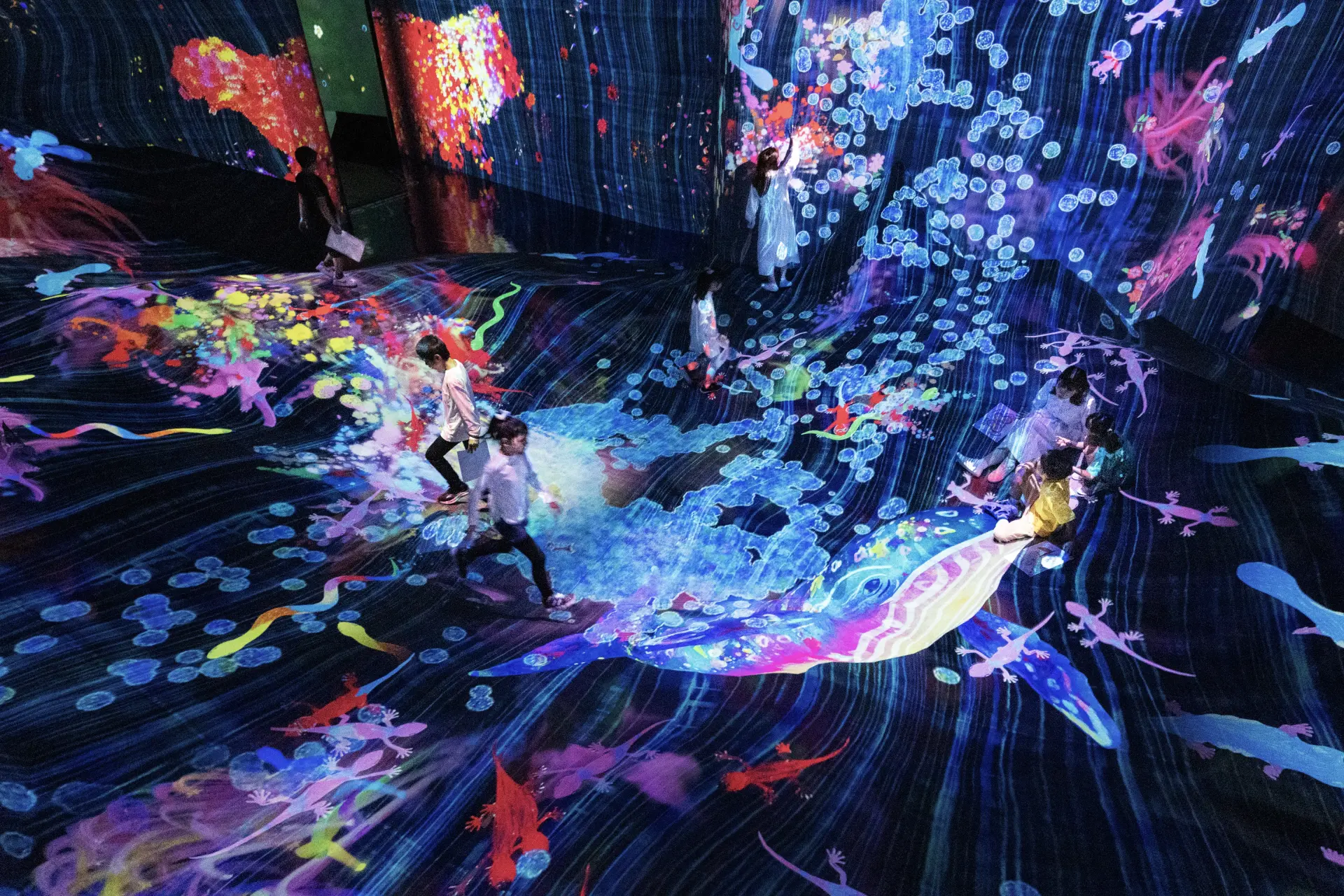
This permanent exhibition created by teamLab is based on the concept of “collaborative creativity and co-creation,” allowing families, friends, and others in the same space to freely create an art world together while having fun.
In each artwork, touching, walking, or moving something changes the work or sound, creating constant new discoveries.
Some works allow fish or animals that visitors draw themselves to appear in the artwork space, creating a sense of unity with the art.
Restaurants Where You Can Dine in Spaces Created by teamLab
Next, we will introduce two restaurants where you can savor food in spaces created by teamLab.
At both, digital art responds in real time to the cuisine and the movements of participants, allowing visitors to experience seasonal natural beauty and the continuity of life.
Another appeal is the feeling of a fleeting yet beautiful moment that is characteristic of teamLab: “this moment will never come again.”
We encourage you to visit and enjoy not only the exhibitions and artworks but also the dining experience.
【Tokyo】MoonFlower Sagaya Ginza, Art by teamLab
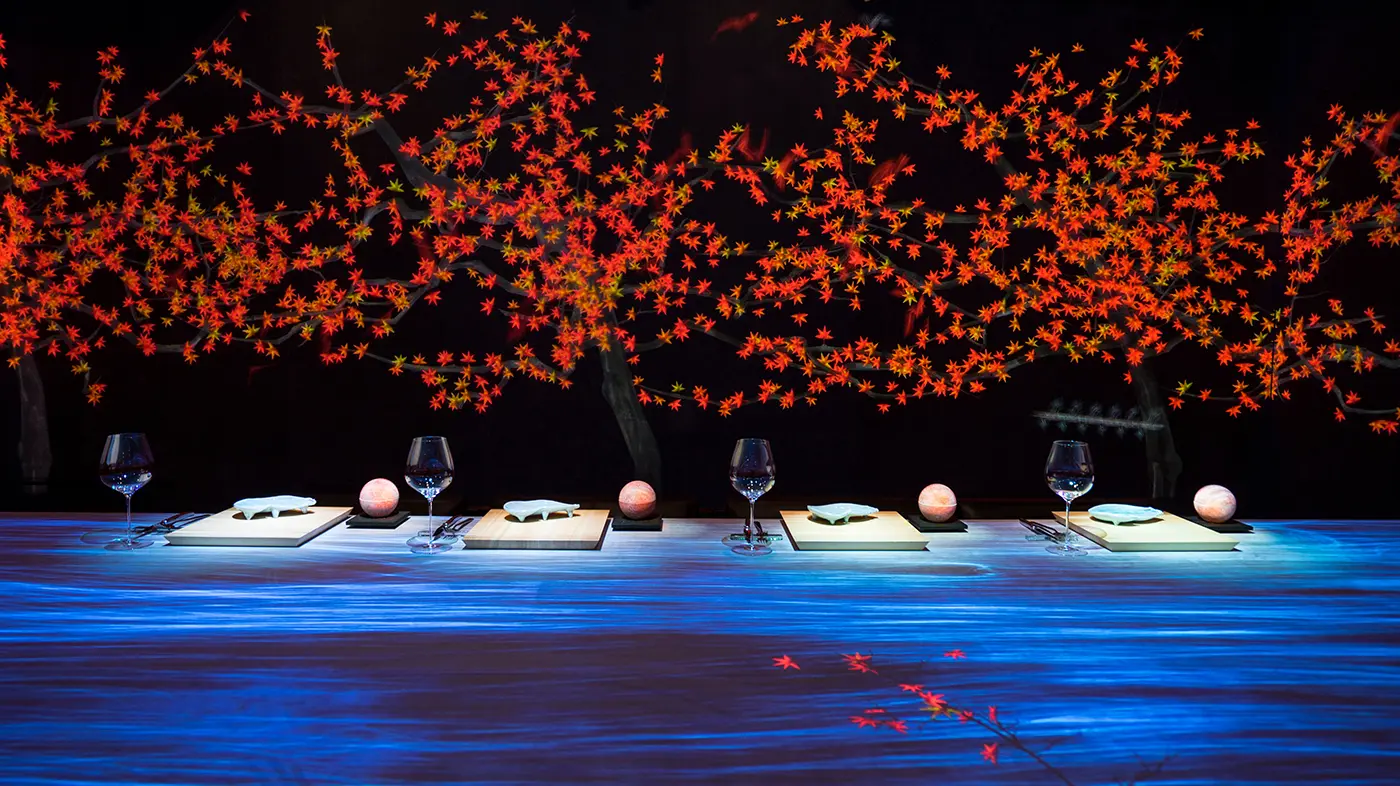
This fully reservation-only restaurant, limited to eight guests per day, is located in one corner of Sagaya Ginza, which serves dishes made with branded Saga beef and seasonal ingredients.
Created in collaboration with the art collective teamLab, it is a dining space where food and artwork merge.
The walls and tables inside are covered with teamLab works expressing the beauty of Japan’s four seasons. Because they change with the season, from cherry blossoms in full bloom in spring to red maple leaves in autumn, each visit offers fresh surprise and emotion, including through the ingredients.
【Tokushima】Hyakunen Umi
Hyakunen Umi is a distinctive Japanese restaurant in Tokushima City that opened in 2022.
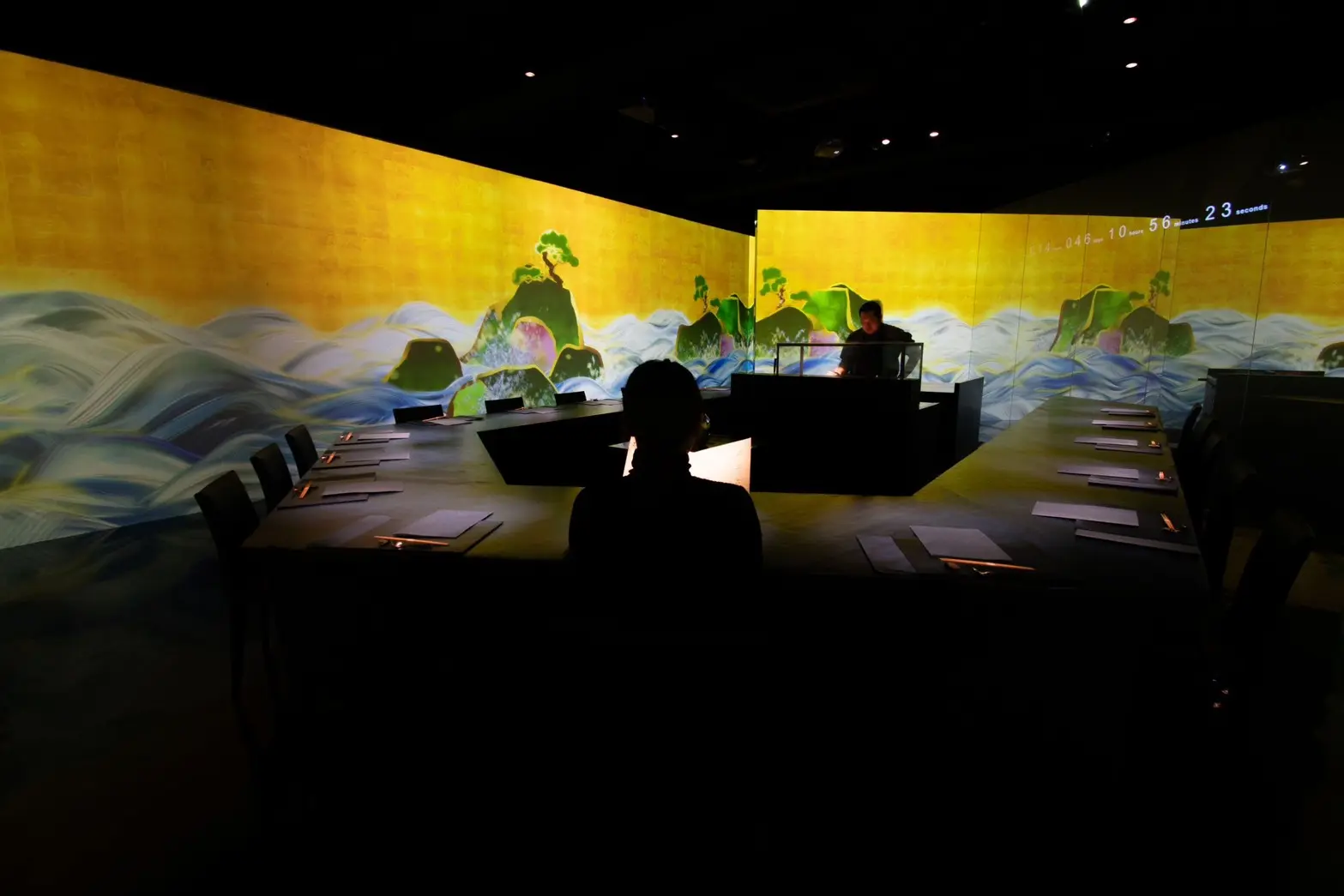
In an extraordinary space surrounded by works from teamLab, known for presenting innovative artworks one after another, guests can savor cuisine based on the theme of sustainability.
The restaurant works to reduce food loss by using non-standard natural fish and vegetables that would usually be discarded due to size, blemishes, or similar reasons.
teamLab’s artwork “100 Years Sea Animation Diorama [running time: 100 years],” which surrounds the interior like walls, was released in 2009 and is an unparalleled video work with a running time of 100 years.
Accommodations Where You Can Stay in Spaces Created by teamLab
The accommodations introduced below both turn natural and historic spaces, such as forests, former terraced rice fields, and ruins, into artworks just as they are.
They embody teamLab’s philosophy, and their appeal lies in being able to engage with nature through all five senses.
If you are planning to travel to these areas or want to fully enjoy teamLab’s worldview, consider visiting them.
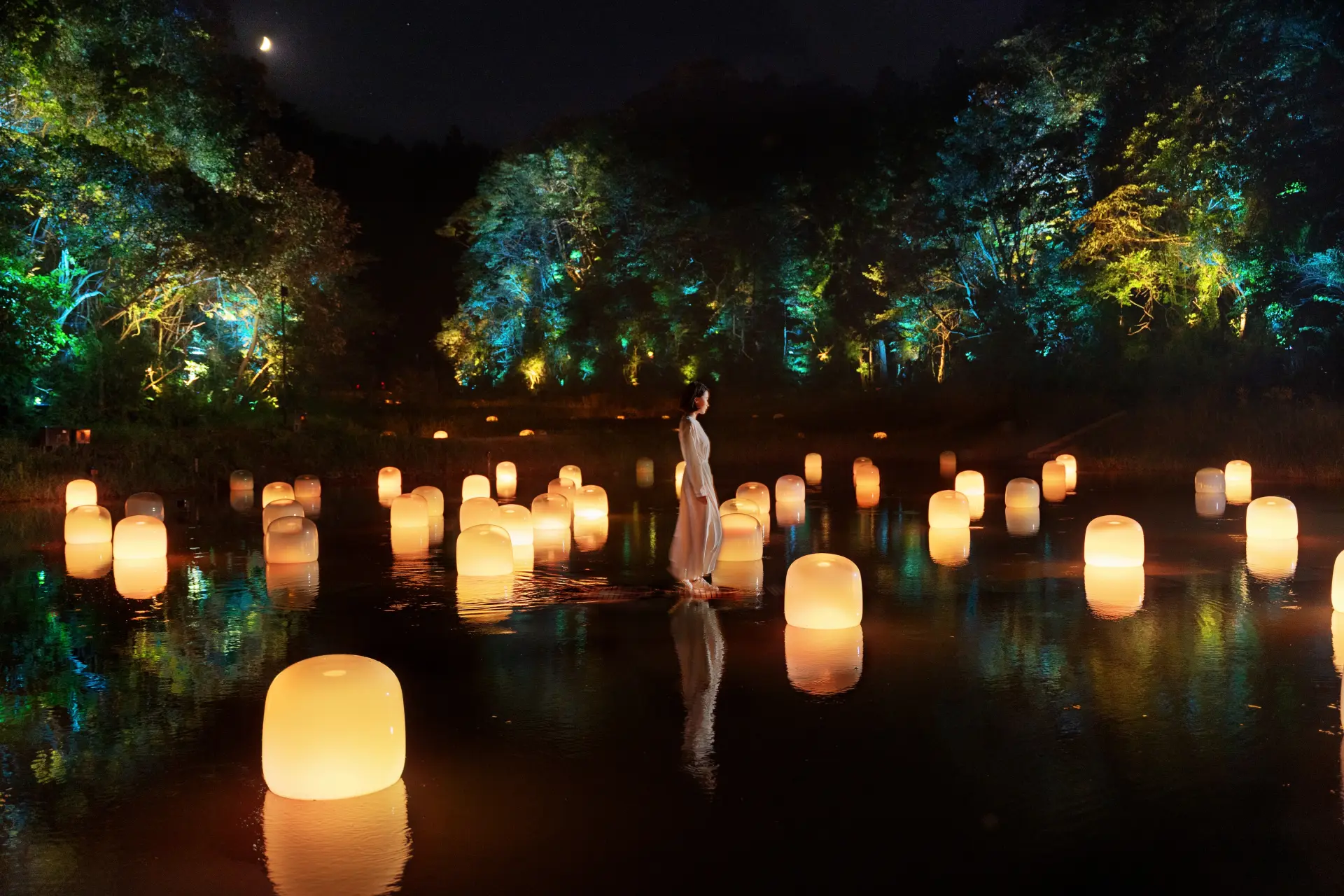
【Ibaraki】teamLab Hidden Traces of Rice Terraces & Izura Hidden Traces of Rice Terraces Hot Spring
Tenshin Okakura is an essential figure in the history of modern Japanese art.
This nighttime teamLab museum integrated with nature is located in Izura, a scenic area in Kitaibaraki City connected to him.
Centered on former terraced rice fields hidden deep in the forest that had become wetlands, the museum presents art that makes use of nature in its untouched form.
Adjacent to the museum is Izura Hidden Traces of Rice Terraces Hot Spring, which includes a free-flowing hot spring, cottages, glamping tents, and other accommodations.
Value tickets that include museum admission and day-use bathing are also available.
【Saga】teamLab: Ruins and Heritage: Rinkan Sauna in Mifuneyama Rakuen Hotel
This permanent exhibition has been open since November 2020 at Mifuneyama Rakuen Hotel in Takeo City, Saga Prefecture.
The hotel stands in one corner of Mifuneyama Rakuen, a garden created in 1845, and its appeal lies in the seasonal scenery that can be enjoyed from the guest rooms and large public bath.
Drawing on its achievement of winning the Sauna Shuran Grand Prix as Japan’s No. 1 sauna for three consecutive years from 2019 to 2021, the hotel offers a new experience through a group of artworks created with teamLab.
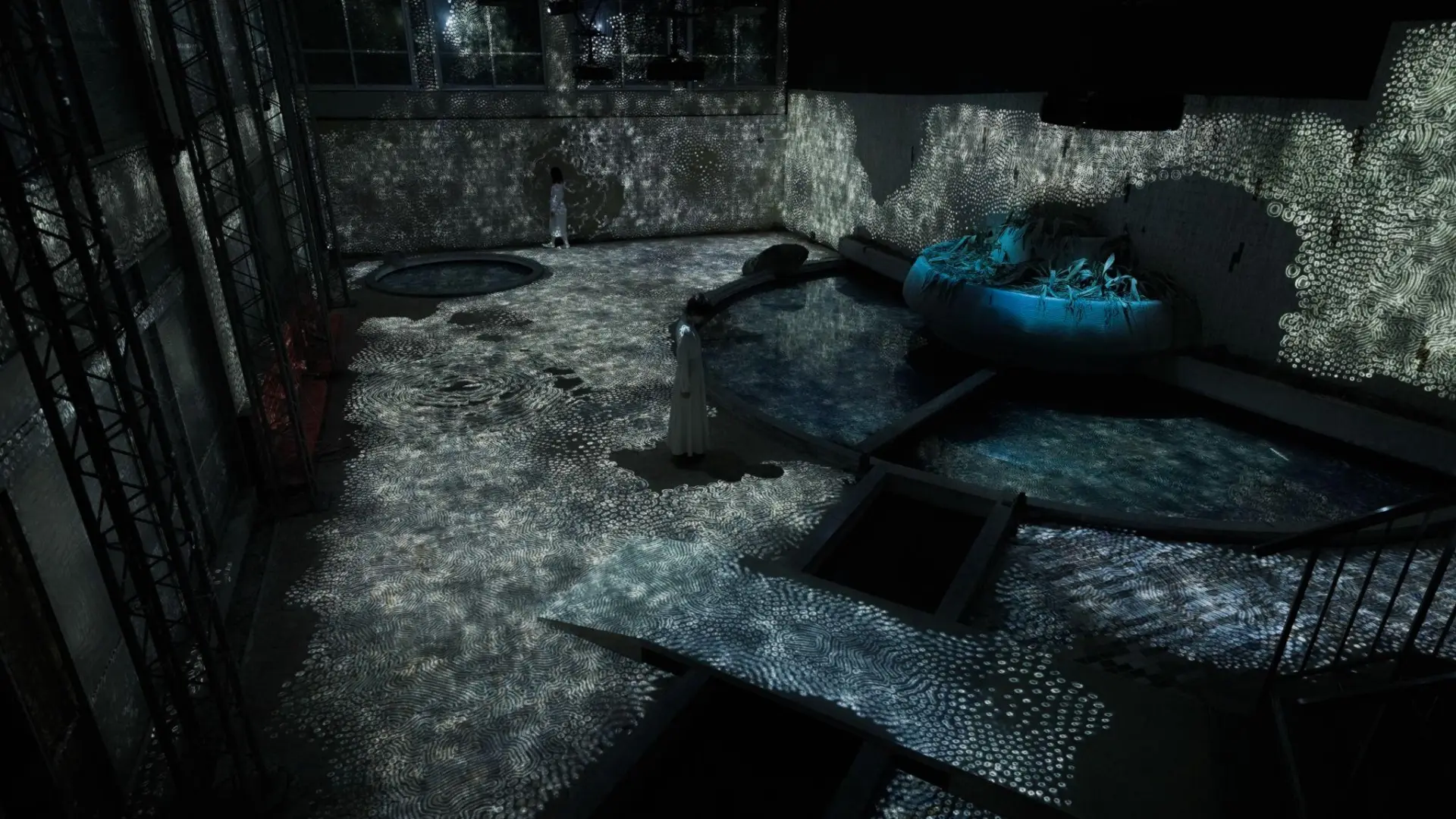
The works are set in the hotel’s bathing facility, Rakan no Yu, and garden spaces, with a structure that guides visitors into the exhibition space after their senses have been sharpened in the sauna.
Forms reminiscent of ruins and heritage sites, known as megaliths, together with subtle projections and sound, overlap with the lingering feeling after bathing to create deep immersion.
Highlights after sunset include “Continuous Existence in the Ruins of a Bathhouse” and “Forest and Spiral of Resonating Lamps.”
3 Key Tips for Getting the Most Out of teamLab Exhibitions
Finally, here are three tips for enjoying teamLab exhibitions and works.
As a starting point, it is important to immerse yourself interactively with your whole body, open your senses, and become part of the space.
Keeping the following points in mind will be useful and help each visitor have a great experience.
Be Sure to Buy Tickets in Advance
It is recommended to secure teamLab tickets in advance.
Same-day tickets may not be sold or may be sold out, and many facilities also limit admission.
Weekends, holidays, and travel seasons can be especially crowded, and popular exhibitions or limited-time programs are often unavailable without advance tickets.
To avoid the risk of tickets selling out on the day and long wait times, and to enter smoothly at your preferred time, purchase tickets in advance through each facility’s official website.

Prepare Comfortable Clothes and Shoes
Comfortable clothes and shoes are essential for fully enjoying the exhibition experience.
teamLab venues may include dark areas, steps, spaces where you may get wet, and crowded pathways, so heels or tight clothing can easily limit the experience.
Because you will repeatedly walk, stand, and move over a long period, clothing that is hard to move in can make it difficult to stay focused and may also affect safety.
As a result, your sense of immersion in the works may be reduced.
On the other hand, traveling light and nearly hands-free makes it easier to move comfortably and leaves both hands free, improving usability of smartphones and cameras. The following clothing is recommended.
- Examples of comfortable clothing
-
・Zip-up hoodie, lightweight down vest
・T-shirt, polo shirt
・Chino pants or cargo pants that can be rolled up to the knees
・Half pants or shorts (quick-drying materials recommended)
*1. If you want photos that blend with the art, white-based clothing stands out well.
*2. Be careful with reflections if wearing a long skirt or dress. - Examples of comfortable shoes
-
・Well-worn sneakers
・Slip-ons
・Flat shoes
* Some venues have exhibitions where you remove your shoes.
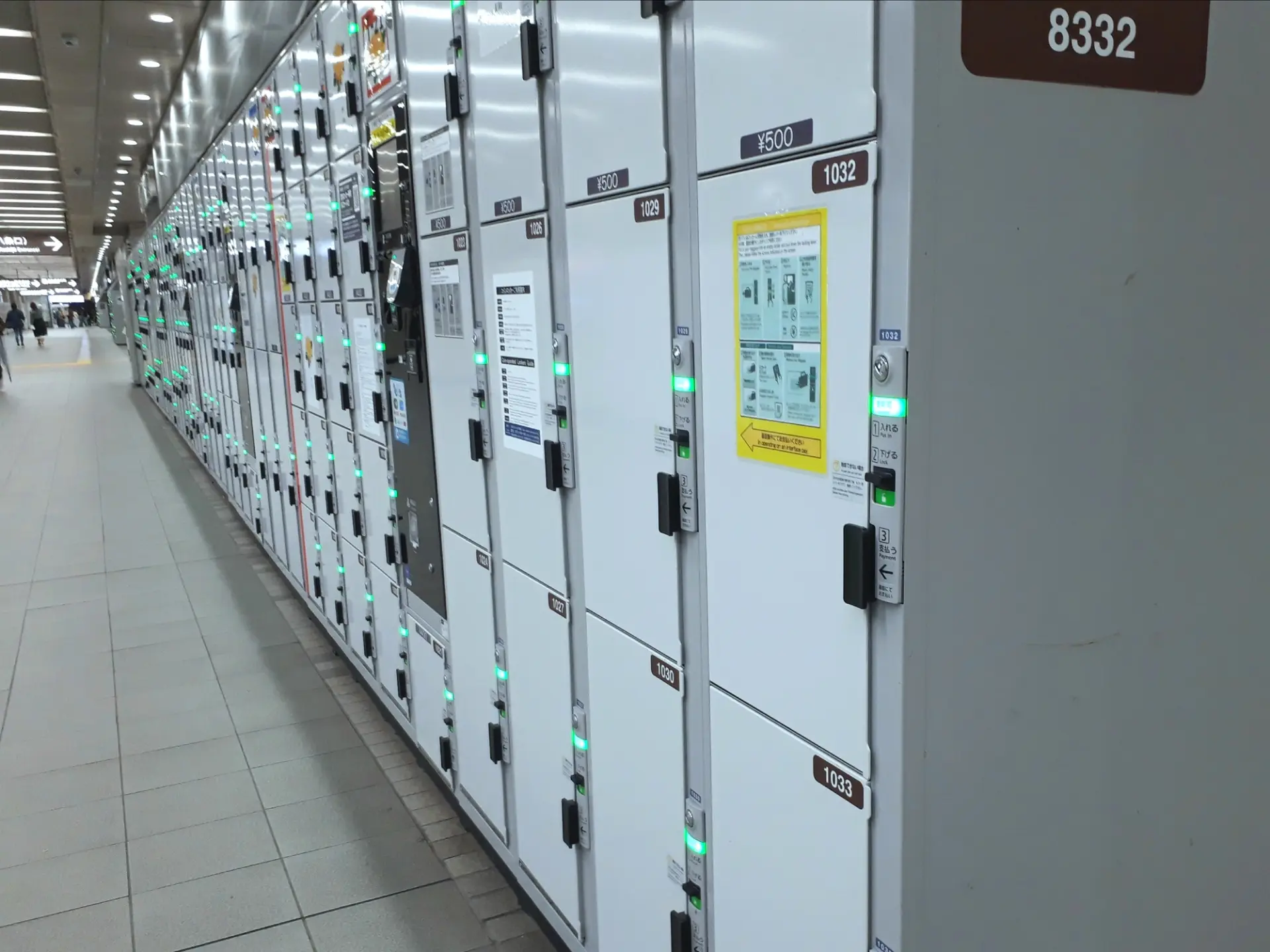
Leave Your Belongings in Coin Lockers at or Near the Facility
If you want to enjoy teamLab’s worldview to the fullest, it is best to leave your belongings before entering.
Many exhibitions include darkness, narrow passages, spaces with light projections, and works that involve physical movement, so carrying luggage can greatly reduce the quality of the experience.
In crowded venues, bags can also obstruct pathways and inconvenience others, and there is always a chance they may get scratched or dirty.
Especially if you expect to stay for a long time or visit exhibitions that use water, leaving your belongings in a coin locker or cloakroom can reduce many concerns.
Frequently Asked Questions About teamLab
Q
How can I purchase or reserve tickets for teamLab exhibitions?
The most common method is to purchase a ticket with a QR code, selecting your desired date and time, through the official website or an authorized ticket seller such as Lawson Ticket or Klook.
Q
Are there discounted tickets for teamLab exhibitions?
Discount tickets are available through coupons on partner sites such as Kkday and through Benefit Station membership. *Check the usage conditions and eligible venues in advance.
Summary
This article introduced an overview of the international art collective teamLab, its appeal, and the highlights of exhibition works currently on view across Japan.
Many people may have heard the name teamLab but may not know where it operates or what kinds of activities it carries out.
teamLab’s works, based on the idea of “borderless art,” are high in quality and allow anyone to enjoy them intuitively without relying on language or prior knowledge.
When you travel to Japan, consider visiting a teamLab exhibition and having the special experience of immersing your whole body in an art space.