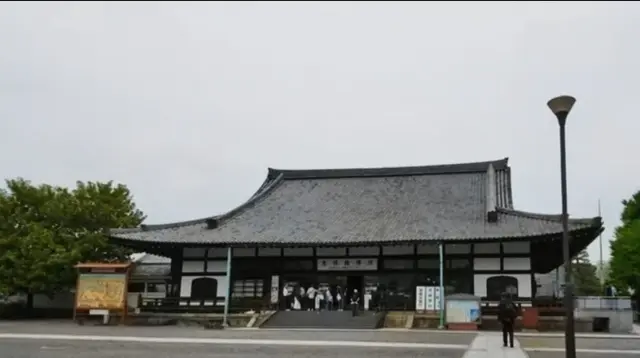
Kyoto has both an eastern and western Honganji Temple, but originally there was only one Honganji Temple. After Kennyo Shonin passed away, his eldest son Kyonyo succeeded him as head of Honganji, but Toyotomi Hideyoshi later ordered him to retire, and the position passed to his third son, Junnyo. This became the foundation for the lineage that would later develop into Nishi Honganji. Later still, Tokugawa Ieyasu granted Kyonyo land around Karasuma Rokujo and Shichijo in Kyoto, where Kyonyo reestablished Honganji, resulting in the present-day Higashi and Nishi Honganji temples.
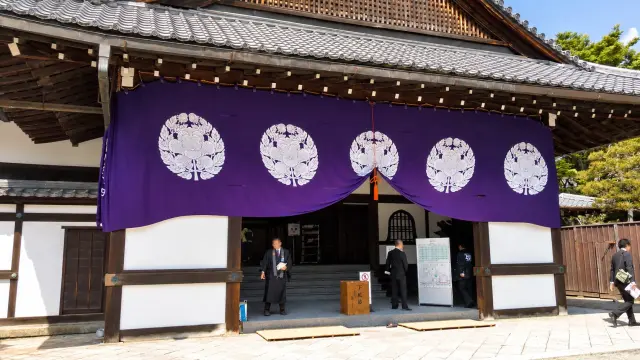
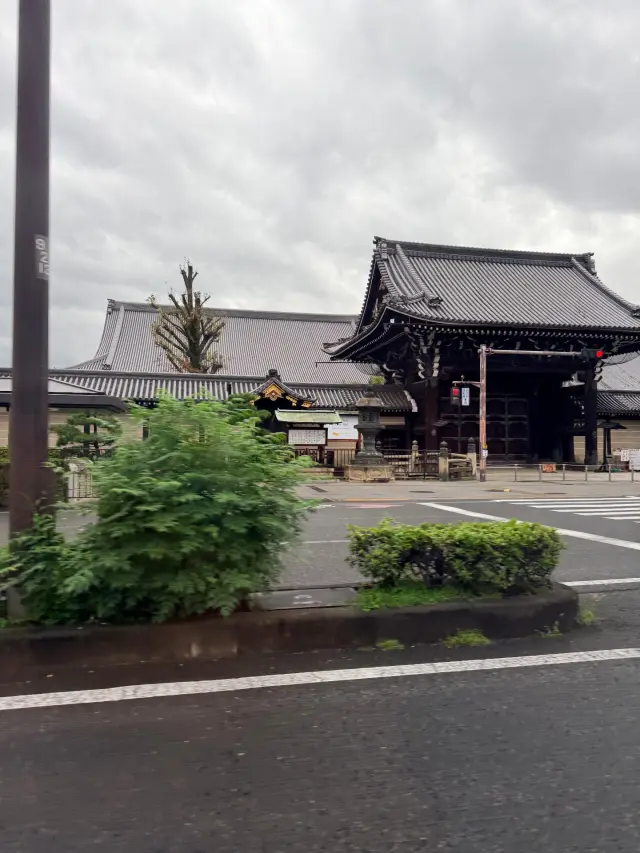
Higashi Honganji is closer to Kyoto Station than Nishi Honganji. It is about a 7-minute walk from JR Kyoto Station, so if you happen to be nearby, I highly recommend stopping by. The first time I entered Higashi Honganji, I was genuinely taken aback because the grounds were far larger than I had expected. The Founder’s Hall in particular is one of the largest wooden structures in the world, and its interior contains 927 tatami mats. Compared with the other temples I had visited over the past few days, the ones I had previously thought were huge suddenly seemed like nothing.
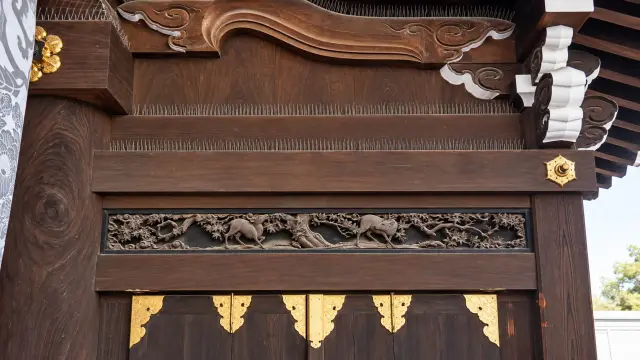
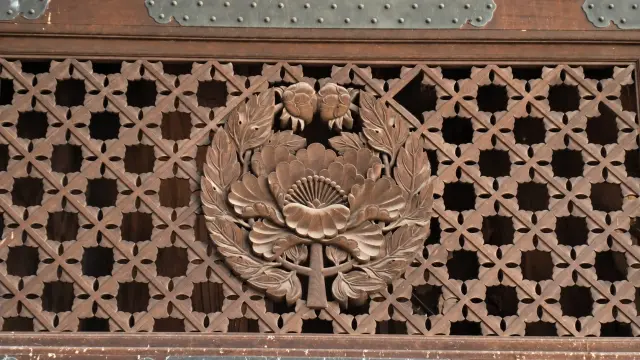
And Higashi Honganji is not just “big.” If you look closely at the buildings, you will find many interesting details. Although the main buildings you see today have been reconstructed, the architecture still has plenty of details worth taking the time to examine. On this visit, for example, I saw quite a few wooden carvings featuring animals. The rabbit in the photo is one of them, and deer, dragons, lions, and other animals can be found elsewhere on the grounds. When visiting a large temple like this, it is easy to miss these small details if you only keep staring at the main hall. Instead, slowly looking up and down will reveal quite a few interesting things.
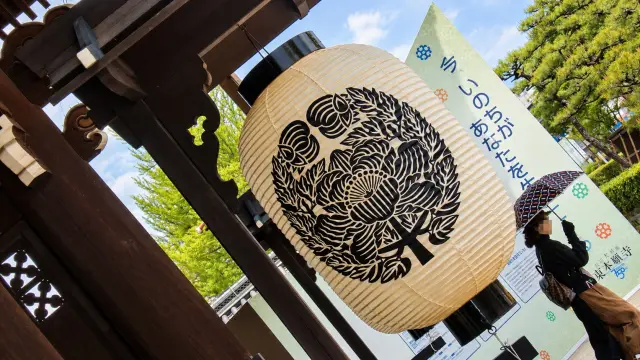
Also, it happened to be raining when I visited, and there seemed to be some kind of temple event going on. I saw the temple staff taking out a huge number of umbrellas to organize and dry them. From a distance, the sight of so many open umbrellas was actually quite impressive. This is not something an ordinary tourist would particularly expect to see, but it ended up becoming one of my strongest memories of Higashi Honganji.
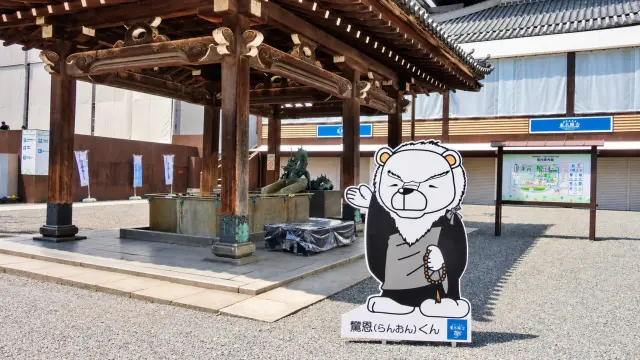
I also never expected such a solemn temple to have its own mascot. On this visit, I saw a standee of “Ran’on-kun” on the grounds. It is a lion wearing Buddhist robes and holding prayer beads, which felt like quite a contrast at first glance. I later looked it up and found that it is an official character created for events related to the 750th memorial anniversary of Shinran Shonin in 2011. It made me feel that Japanese Buddhism is really quite modern.
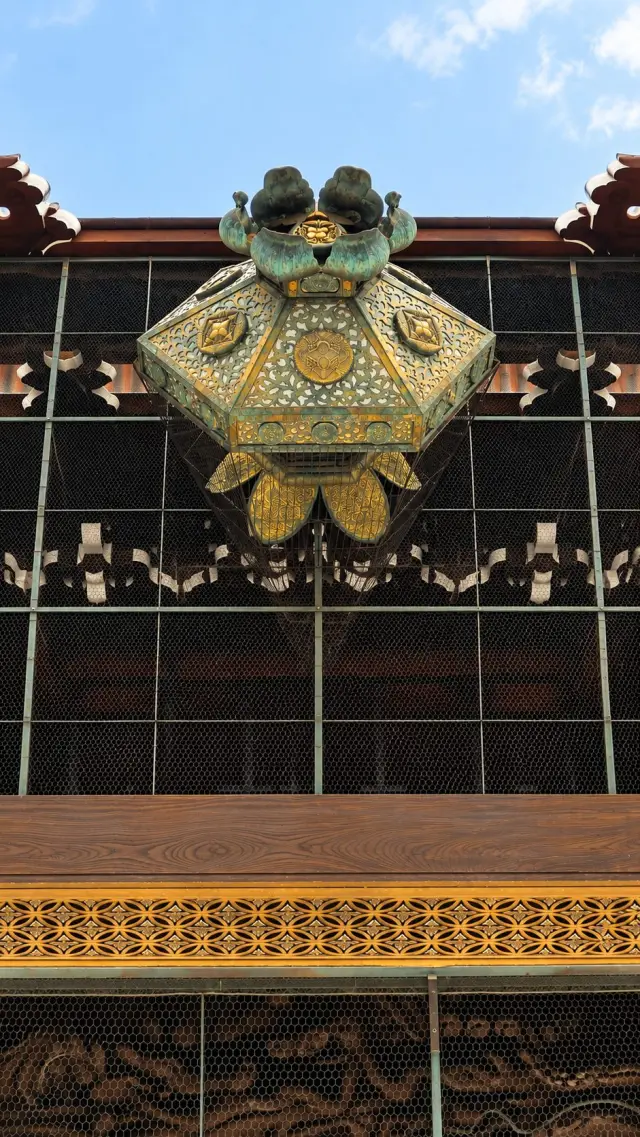
And honestly, I personally think Higashi Honganji is quite luxurious. It feels very different from the style of Buddhist temples I commonly see in Taiwan, especially because the halls are decorated with many gold elements, making the overall appearance quite ornate. I even felt that it had the same kind of glittering golden visual effect as Nijo Castle,
All Reviews of Higashi Honganji Temple, Kyoto
- Overview
- Photos
- Reviews
- Basic Information
- Newest
- With Photos
- Most Liked
Showing 1–6 of 6
-
-
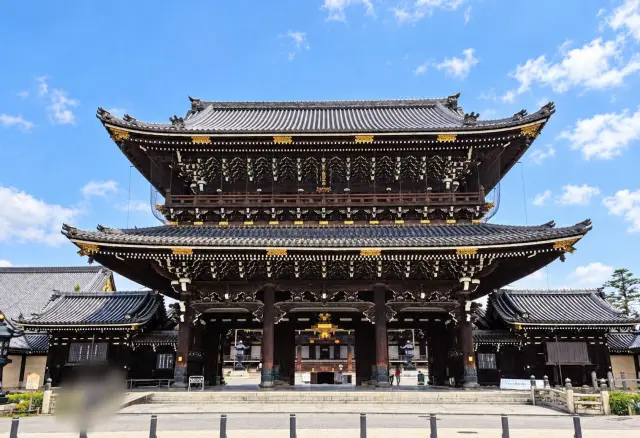
In Kyoto, Higashi Honganji Temple draws travelers with its magnificent architecture and long history. Upon entering the temple, the enormous Goei-do Hall is imposing, and its wooden architecture displays the craftsmanship and distinctive features of traditional Japanese temples, giving the place a strong sense of history.
Walking through the spacious temple grounds, the surroundings feel quiet and solemn, in contrast to Kyoto's lively streets. Seeing the buildings that have endured the passage of time and multiple reconstructions gives you a sense of Higashi Honganji Temple's important place in Kyoto's history and culture, as well as a deeper appreciation for the architectural beauty of traditional Japanese temples.
-
-
When visiting Kyoto, besides Kiyomizu-dera Temple and Fushimi Inari Taisha, there's also an incredibly impressive ancient temple hidden in the city center—Higashi Honganji Temple.
Located near Kyoto Station, it's within walking distance and very convenient to reach. When I first saw it, what struck me most was the enormous and solemn wooden building before me. Its magnificent roof, intricate layers of wooden framework, and delicate decorations really make you stop and look up for a long time.
Higashi Honganji is the head temple of the Shinshu Otani-ha school of Jodo Shinshu Buddhism and one of Kyoto's important Buddhist temples. The temple isn't only massive in scale. Once inside, you can also feel a quiet and composed atmosphere.
I especially like how it feels like a place that's worth stopping by even without making special plans.
Walking over from Kyoto Station, the bustle of the city is still behind you, but once you enter the temple grounds, the view suddenly becomes open and peaceful.Magnificent wooden architecture × Kyoto's history × a peaceful temple atmosphere. If you happen to be near Kyoto Station, consider setting aside some time for Higashi Honganji Temple and experiencing another side of Kyoto's solemn and serene beauty.
-
-
Higashi Honganji Temple is near Kyoto Station, just a short walk away, making it a convenient stop along the way.
I thought a temple near the station would be crowded with tourists, but it was actually very peaceful on a weekday, without noisy crowds. I could take my time exploring and experience the temple's solemn atmosphere. The enormous wooden buildings are truly impressive up close, especially the vast space of the Founder's Hall, which makes you naturally slow down once you're inside.
After visiting the shopping centers near Kyoto Station or before catching a train, it's worth stopping by. It doesn't take much time, but you can experience the distinctive tranquility of an old Kyoto temple. -
-
If you enjoy Kyoto’s slower pace, you’ll probably love this place. It’s a low-key temple, but it really leaves a lasting impression.
-
-
If you're visiting Kyoto, you have to check out Higashi Honganji! The ginkgo trees here are especially dense, and you can enjoy both the beautiful foliage and the historic temple itself. Highly recommended!