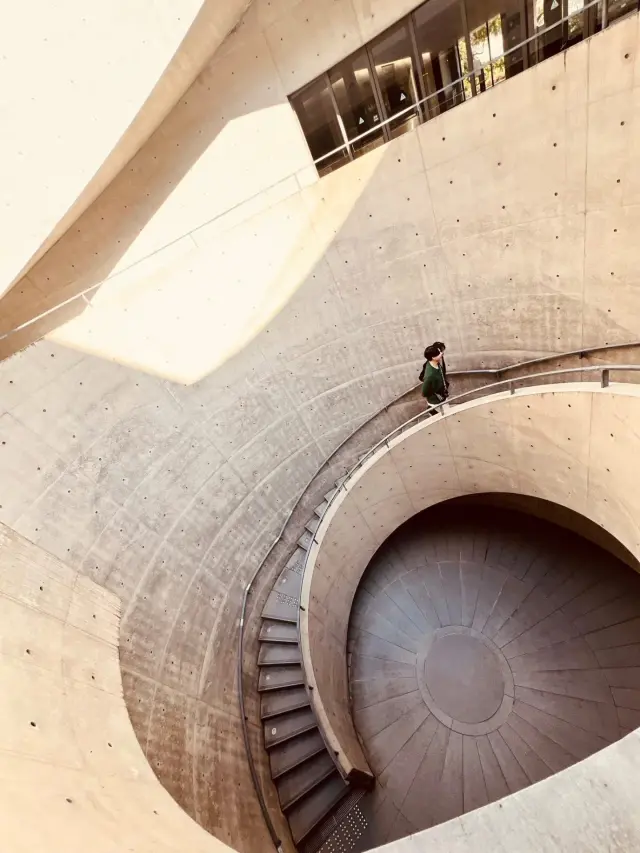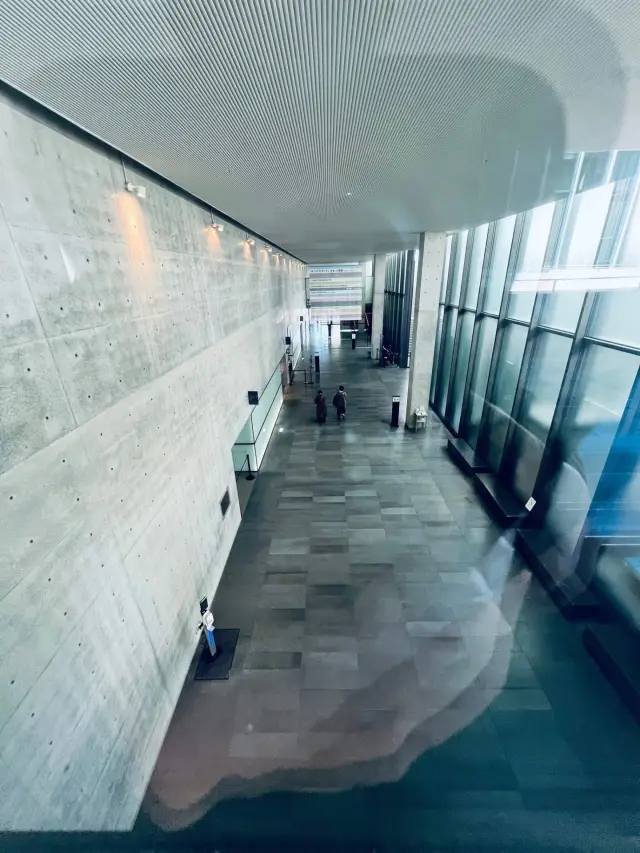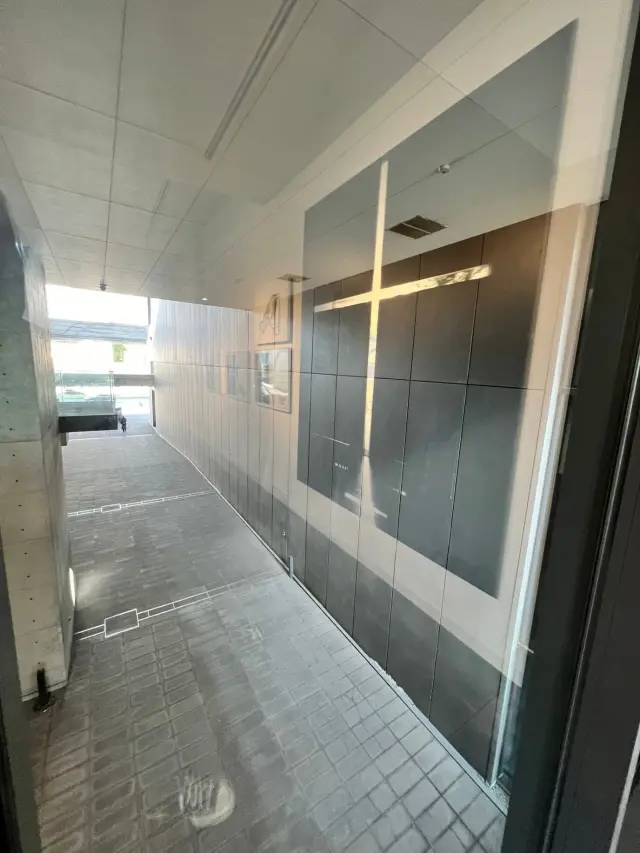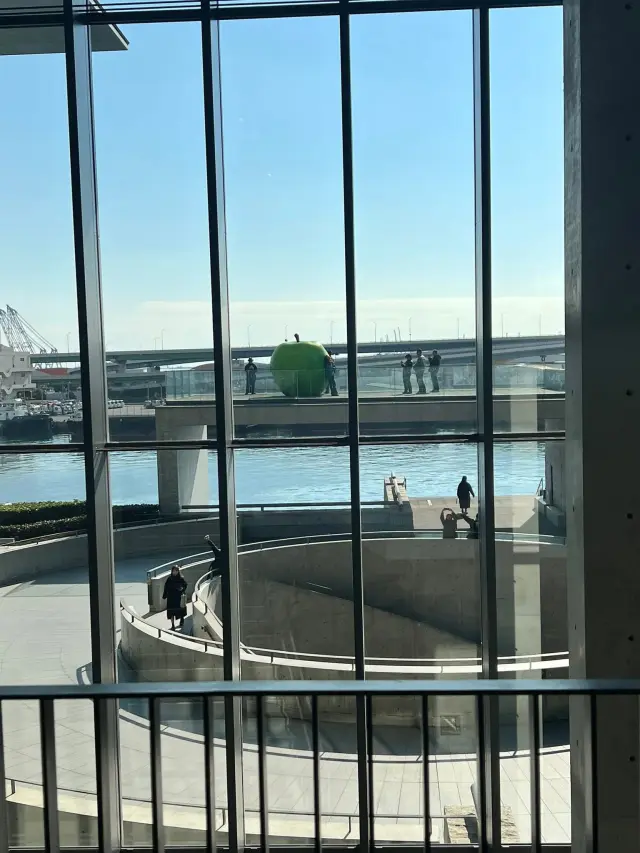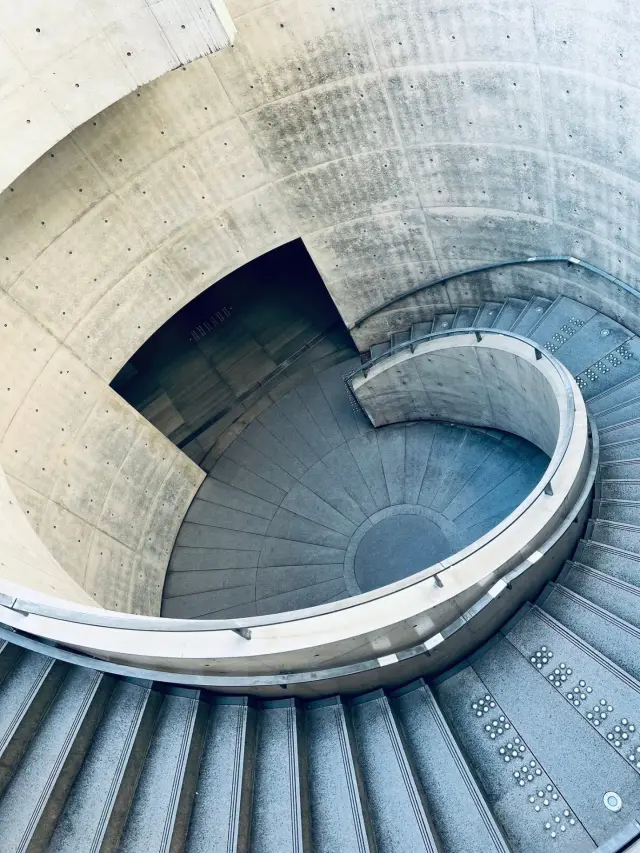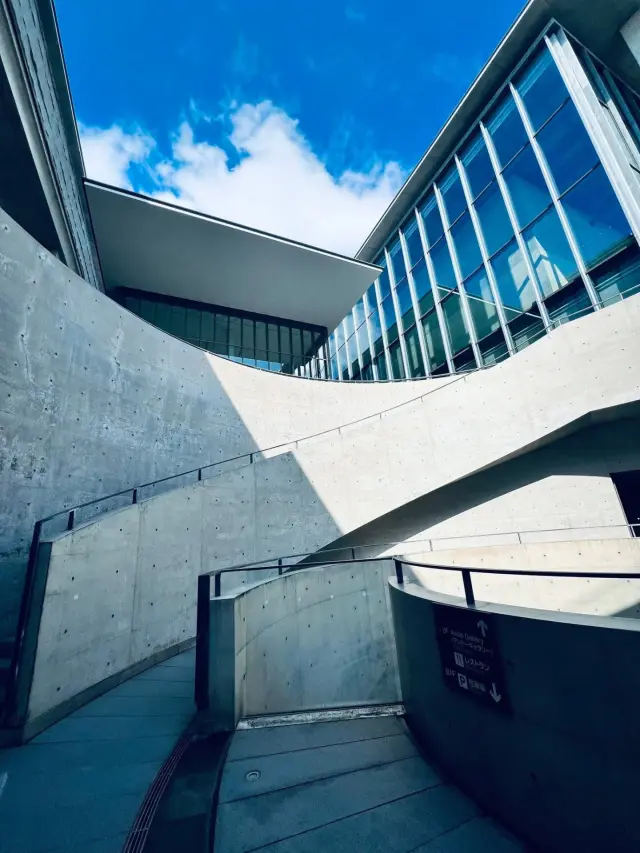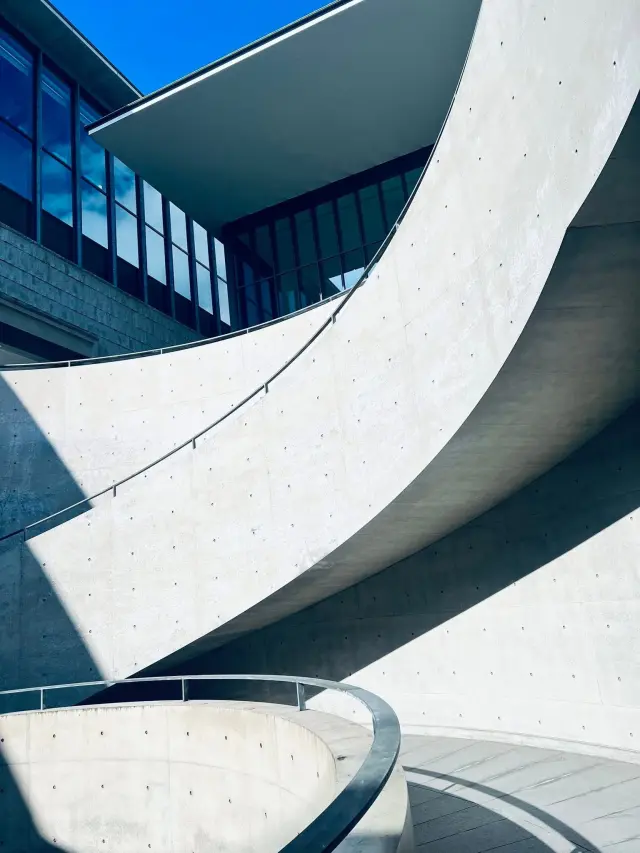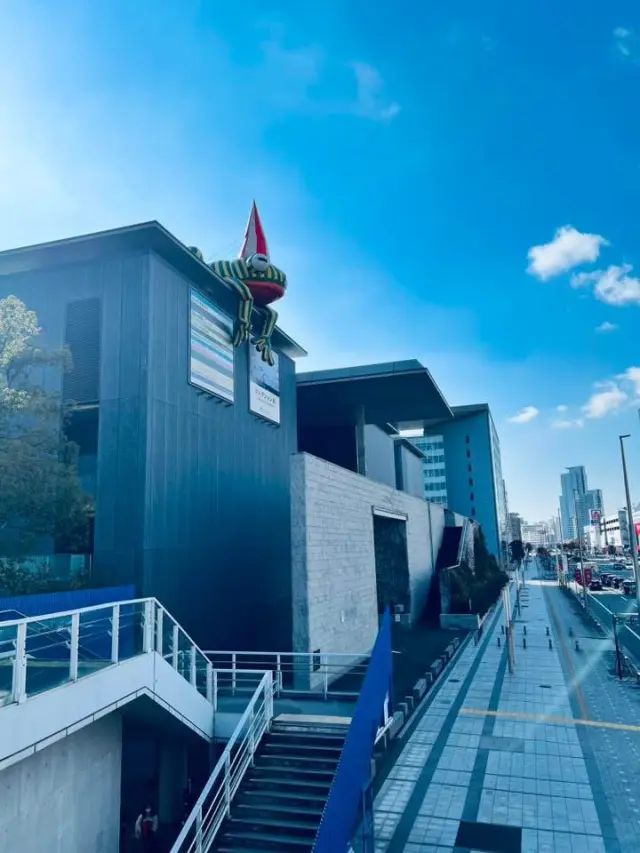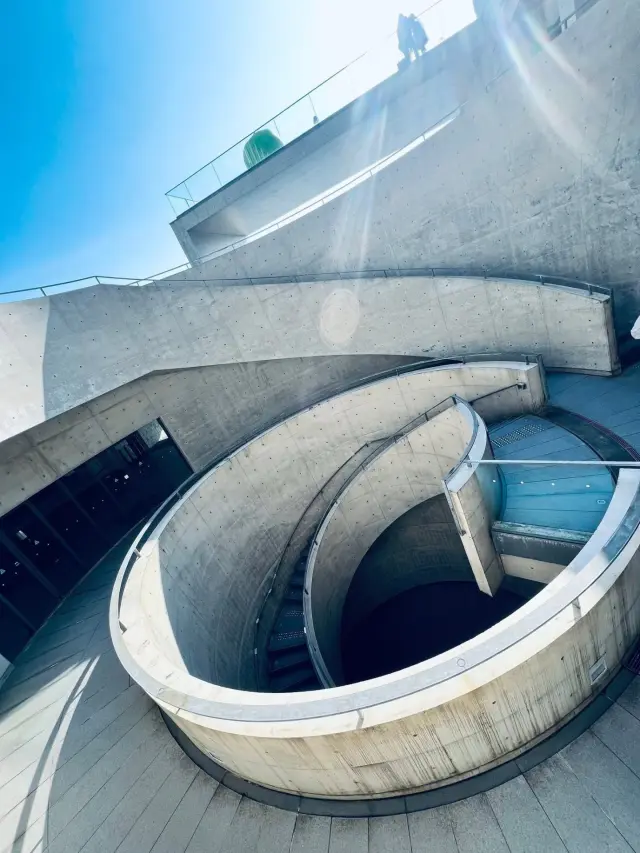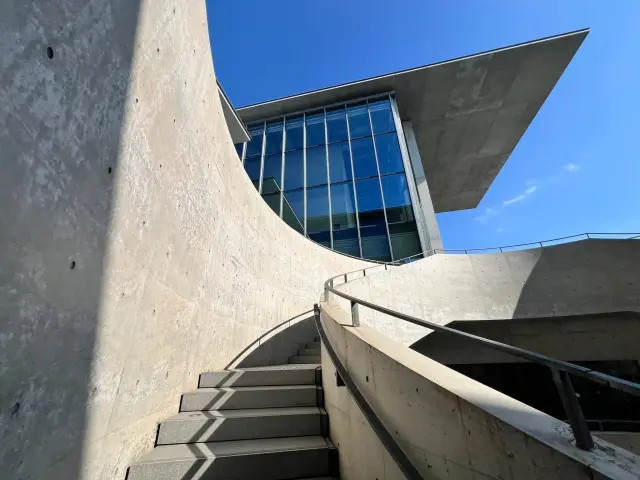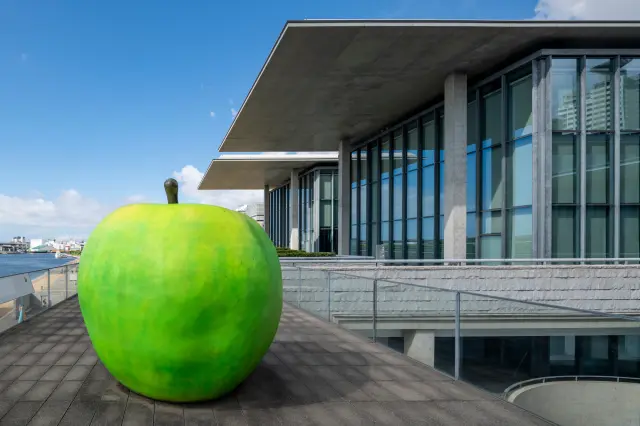

In Tadao Ando's architectural designs, the “spiral” is an important element, especially in the Circular Terrace at the Hyogo Prefectural Museum of Art.
The spiral design of the Hyogo Prefectural Museum of Art
Circular Terrace/spiral staircase: This is one of the museum's signature features, connecting the underground parking lot, the first-floor entrance hall, the gallery wing, and the second-floor outdoor space.
Spatial experience: This open spiral design is more than just a passageway; it is also an architectural statement. As visitors walk along the stairs, they can experience the rich spatial layers created by light and shadow changing over time and feel the connection between the architecture and the views of the sea and mountains.
Geometry, light, and shadow: Tadao Ando is skilled at using simple geometric forms, such as circles and squares, and exposed concrete, combining them with natural elements such as light, wind, and water to create a unique sense of space. The spiral staircase embodies fluidity and connectivity, blending form and function.
Other notable spiral designs
In addition to the Hyogo Prefectural Museum of Art, Tadao Ando has also used spiral designs elsewhere:
He Art Museum (Shunde, China): The building is based on stacked circular discs, with a pair of double-helix staircases at its core resembling the structure of DNA. Natural light pours in through the central atrium, creating a sense of sacredness.
Through these spiral designs, Tadao Ando challenges the static geometry of traditional architecture, pursues dynamic balance, and creates rich, multilayered spatial experiences.
All Reviews of Hyogo Prefectural Museum of Art
3.24
1
- Overview
- Photos
- Reviews
- Basic Information
- Newest
- With Photos
- Most Liked
Showing 1–1 of 1